EP0601635A1 - Thermoplastische Zusammensetzung, Verfahren zur deren Herstellung und deren Anwendung - Google Patents
Thermoplastische Zusammensetzung, Verfahren zur deren Herstellung und deren Anwendung Download PDFInfo
- Publication number
- EP0601635A1 EP0601635A1 EP93203353A EP93203353A EP0601635A1 EP 0601635 A1 EP0601635 A1 EP 0601635A1 EP 93203353 A EP93203353 A EP 93203353A EP 93203353 A EP93203353 A EP 93203353A EP 0601635 A1 EP0601635 A1 EP 0601635A1
- Authority
- EP
- European Patent Office
- Prior art keywords
- composition according
- polyolefin
- chosen
- thermoplastic polymer
- compound
- Prior art date
- Legal status (The legal status is an assumption and is not a legal conclusion. Google has not performed a legal analysis and makes no representation as to the accuracy of the status listed.)
- Granted
Links
Images

Classifications
-
- C—CHEMISTRY; METALLURGY
- C08—ORGANIC MACROMOLECULAR COMPOUNDS; THEIR PREPARATION OR CHEMICAL WORKING-UP; COMPOSITIONS BASED THEREON
- C08L—COMPOSITIONS OF MACROMOLECULAR COMPOUNDS
- C08L23/00—Compositions of homopolymers or copolymers of unsaturated aliphatic hydrocarbons having only one carbon-to-carbon double bond; Compositions of derivatives of such polymers
-
- C—CHEMISTRY; METALLURGY
- C08—ORGANIC MACROMOLECULAR COMPOUNDS; THEIR PREPARATION OR CHEMICAL WORKING-UP; COMPOSITIONS BASED THEREON
- C08K—Use of inorganic or non-macromolecular organic substances as compounding ingredients
- C08K5/00—Use of organic ingredients
- C08K5/01—Hydrocarbons
-
- C—CHEMISTRY; METALLURGY
- C08—ORGANIC MACROMOLECULAR COMPOUNDS; THEIR PREPARATION OR CHEMICAL WORKING-UP; COMPOSITIONS BASED THEREON
- C08F—MACROMOLECULAR COMPOUNDS OBTAINED BY REACTIONS ONLY INVOLVING CARBON-TO-CARBON UNSATURATED BONDS
- C08F255/00—Macromolecular compounds obtained by polymerising monomers on to polymers of hydrocarbons as defined in group C08F10/00
-
- C—CHEMISTRY; METALLURGY
- C08—ORGANIC MACROMOLECULAR COMPOUNDS; THEIR PREPARATION OR CHEMICAL WORKING-UP; COMPOSITIONS BASED THEREON
- C08F—MACROMOLECULAR COMPOUNDS OBTAINED BY REACTIONS ONLY INVOLVING CARBON-TO-CARBON UNSATURATED BONDS
- C08F291/00—Macromolecular compounds obtained by polymerising monomers on to macromolecular compounds according to more than one of the groups C08F251/00 - C08F289/00
-
- C—CHEMISTRY; METALLURGY
- C08—ORGANIC MACROMOLECULAR COMPOUNDS; THEIR PREPARATION OR CHEMICAL WORKING-UP; COMPOSITIONS BASED THEREON
- C08K—Use of inorganic or non-macromolecular organic substances as compounding ingredients
- C08K5/00—Use of organic ingredients
- C08K5/04—Oxygen-containing compounds
- C08K5/09—Carboxylic acids; Metal salts thereof; Anhydrides thereof
-
- C—CHEMISTRY; METALLURGY
- C08—ORGANIC MACROMOLECULAR COMPOUNDS; THEIR PREPARATION OR CHEMICAL WORKING-UP; COMPOSITIONS BASED THEREON
- C08K—Use of inorganic or non-macromolecular organic substances as compounding ingredients
- C08K5/00—Use of organic ingredients
- C08K5/04—Oxygen-containing compounds
- C08K5/15—Heterocyclic compounds having oxygen in the ring
- C08K5/151—Heterocyclic compounds having oxygen in the ring having one oxygen atom in the ring
- C08K5/1535—Five-membered rings
- C08K5/1539—Cyclic anhydrides
-
- C—CHEMISTRY; METALLURGY
- C08—ORGANIC MACROMOLECULAR COMPOUNDS; THEIR PREPARATION OR CHEMICAL WORKING-UP; COMPOSITIONS BASED THEREON
- C08L—COMPOSITIONS OF MACROMOLECULAR COMPOUNDS
- C08L23/00—Compositions of homopolymers or copolymers of unsaturated aliphatic hydrocarbons having only one carbon-to-carbon double bond; Compositions of derivatives of such polymers
- C08L23/02—Compositions of homopolymers or copolymers of unsaturated aliphatic hydrocarbons having only one carbon-to-carbon double bond; Compositions of derivatives of such polymers not modified by chemical after-treatment
- C08L23/10—Homopolymers or copolymers of propene
-
- C—CHEMISTRY; METALLURGY
- C08—ORGANIC MACROMOLECULAR COMPOUNDS; THEIR PREPARATION OR CHEMICAL WORKING-UP; COMPOSITIONS BASED THEREON
- C08L—COMPOSITIONS OF MACROMOLECULAR COMPOUNDS
- C08L25/00—Compositions of, homopolymers or copolymers of compounds having one or more unsaturated aliphatic radicals, each having only one carbon-to-carbon double bond, and at least one being terminated by an aromatic carbocyclic ring; Compositions of derivatives of such polymers
- C08L25/02—Homopolymers or copolymers of hydrocarbons
- C08L25/04—Homopolymers or copolymers of styrene
- C08L25/06—Polystyrene
Definitions
- the present invention relates to a thermoplastic composition comprising at least one polyolefin and a thermoplastic polymer whose compatibility is improved.
- the present invention also relates to a process for obtaining such a composition as well as its use for the shaping of objects by the extrusion, calendering, injection and thermoforming processes.
- Polyolefins are polymers known for their good mechanical, chemical and electrical properties. Their relatively low cost makes them a material of choice for a large number of applications such as for example the formation of shaped objects.
- compatibilizing agents into the mixture, synthesized in a separate step and which consist of copolymers containing blocks respectively compatible with one and the other of the polymers.
- Such compounds are difficult to obtain and are only really effective at relatively high concentrations.
- compatibilization is difficult to achieve economically and generally gives rise to mixtures whose certain performance is lower than that of their constituent polymers [Society of Plastics Engineers - VII Internat. Conf. - 1991, pages 575-592 (SHELL)].
- polyolefin (A) essentially means the homopolymers and copolymers of alpha-olefins containing from 2 to 20 carbon atoms such as, for example, ethylene, propylene, 1-butene, 1-pentene, 1-hexene, methyl-1-butenes , methyl-1-pentenes, 1-octene and 1-decene.
- the polyolefins are also the copolymers of the alpha-olefins described above with other unsaturated monomers such as unsaturated organic acids and their derivatives, vinyl esters, vinyl aromatic compounds, vinylsilanes as well as unconjugated aliphatic and monocyclic diolefins, alicyclic diolefins having an endocyclic bridge and conjugated aliphatic diolefins.
- these unsaturated monomers examples include acrylic acid, methacrylic acid, maleic acid, methyl methacrylate, acrylate and glycidyl methacrylate, maleic anhydride, acetate and butyrate vinyl, styrene and methylstyrene, vinyltrimethylmethoxysilane and ⁇ -methacryloyloxypropyltrimethoxysilane as well as 1,4-hexadiene, 4-vinylcyclohexene, dicyclopentadiene, methylene- and ethylidenenorbornene, butadiene.
- polyolefins (A) belong to the set of partially or semi-crystalline polymers as defined for example in "Plastics Engineering” 2nd edition, RJ CRAWFORD, PERGAMON PRESS (1987), pages 3 and 4 and called here- after more simply semi-crystalline polymers.
- the homopolymers of ethylene, propylene and 1-butene are most often used and the copolymers of these monomers with preferably one or more alpha-olefins as described above.
- the preferred polyolefins of this type are the homo- and copolymers of propylene and ethylene and more particularly the homo- and copolymers of propylene.
- these can also comprise other alpha-olefinic comonomers such as, for example, hexene or 1-butene.
- compositions according to the present invention include also a thermoplastic polymer (B).
- This thermoplastic polymer (B) is generally chosen from polyolefins as defined above different from polyolefin (A), vinyl chloride polymers, polyphenylene ethers, phenylene polysulfides, polysulfones, polyketones, polyacetals , polyetherketones, polyamides, polyimides, polyesters, polystyrenes and polycarbonates.
- Thermoplastic polymers derived from monomers containing ethylenic unsaturation such as polyolefins give good results.
- Compounds of this type which are also suitable are polyvinyl chloride and polystyrenes.
- thermoplastic polymers described above, their properties and the various processes that can be used to obtain them are well known to those skilled in the art and form part of the state of the art.
- thermoplastic polymer (B) a second polyolefin, the chemical composition of which is different from the chemical composition of the polyolefin (A), is used as the thermoplastic polymer (B).
- this thermoplastic polymer (B) is one of the polyolefins belonging to the set of semi-crystalline polymers as defined above.
- the compositions in which the thermoplastic polymer (B) is chosen from homopolymers and copolymers of alpha-olefins containing from 2 to 20 carbon atoms with a chemical composition different from that of the polyolefin (A) give good results.
- polyolefins of different chemical compositions means both polyolefins whose polymer chains comprise one or more different monomer units as well as polyolefins derived from the same monomer units but in which the respective amounts of these monomer units and / or their distribution are different.
- the polyolefin (A) and the thermoplastic polymer (B) constitute a two-phase mixture. Good results are obtained when the preponderant monomer unit by weight of the polyolefin (A) is different from that of the polymer thermoplastic (B).
- the polyolefin (A) is chosen from homoet semi-crystalline copolymers of propylene and the thermoplastic polymer (B) is chosen from homo and semi-crystalline copolymers of ethylene.
- the compositions according to the invention contain only one polymer of propylene and one polymer of ethylene.
- compositions according to the present invention comprise, in addition to the polyolefin (A) and the thermoplastic polymer (B), at least one compound (C) derived from one or more functional compounds (D) comprising one or more groups chosen from double and triple carbon-carbon bonds and substituted carboxylic groups.
- olefins As functional compounds (D) comprising one or more double or triple carbon-carbon bonds, mention may be made of olefins, diene polymers and in particular liquid diene polymers and quinones.
- olefins are aliphatic olefins such as dodecene-1 and octadecene-1, aromatic olefins such as styrene, ⁇ -methylstyrene, 1,1 diphenylethylene, stilbene, phenylacetylene, vinylpyridine and vinylnaphthalene, aromatic di- and tri-olefins such as divinylbenzene, triallylisocyanurate, unconjugated aliphatic diolefins such as 1,4-hexadiene, unconjugated monocyclic diolefins such as 4-vinylcyclohexene, diolefins alicyclics having an endocyclic bridge such as di
- liquid diene polymer of liquid polybutadiene.
- quinones mention may be made of 1,2- and 1,4-benzoquinone, 2,6-dimethylbenzoquinone, 2-chloro-1,4-benzoquinone, chloranil.
- compounds (D) comprising one or more groups substituted carboxylic compounds are understood to mean compounds comprising at least one group as defined by the following formulas: - COOR (I) - COX (II) - CONR1R2 (III) - COYCO (IV)
- R represents a hydrogen atom or an alkyl or aryl group having from 1 to 20 carbon atoms
- X represents a halogen atom
- R1 and R2 each represent, independently of one another, an atom hydrogen or an alkyl or aryl group having 1 to 10 carbon atoms
- Y represents an oxygen atom or an NH group.
- carboxylic acids and their derivatives such as for example maleic anhydride, difluoromaleic anhydride, maleimide and its derivatives, acrylic derivatives such as for example alkyl methacrylates and acrylonitrile.
- the former comprise at least one compound (C) derived from at least one functional compound (D) comprising at least two conjugated carbon-carbon double bonds.
- Functional compounds (D) of this type which give good results are isoprene, butadiene, styrene, vinylpyridine and divinylbenzene. Divinylbenzene and styrene work well. Divinylbenzene gives particularly good results.
- the second comprises at least one compound (C) derived from at least two functional compounds (D) chosen respectively from the electron donor and electro acceptor compounds.
- electro-acceptor compounds maleic anhydride, alkylmaleates, alkyl acrylates and maleimides are preferably used. Particularly preferred electro-acceptor compounds are maleic anhydride and alkyl acrylates.
- electron donor compounds styrene, divinylbenzene, butadiene are preferably used. isoprene, vinyl acetate, acrylic and methacrylic anhydrides and methylmethacrylate.
- Particularly preferred electron donor compounds are styrene and divinylbenzene.
- Particularly good results are obtained when the compound (C) is a derivative of styrene and maleic anhydride. Good results are also obtained when the compound (C) is a derivative of divinylbenzene and maleic anhydride.
- Compound (C) can also advantageously be a derivative of divinylbenzene and of an alkyl acrylate.
- the proportions of the various constituents (A), (B) and (C) depend on their exact chemical nature, on their physical and chemical properties and on the performances desired for the composition.
- the amount of compound (C) is less than or equal to 60% by weight relative to the total weight of the composition. Most often, this amount is less than or equal to 30% by weight and preferably less than or equal to 15% by weight. Particularly good results are obtained when the amount of compound (C) is less than or equal to 10% by weight and more particularly less than or equal to 5% by weight.
- the minimum amount of compound (C) can be very small.
- this amount is greater than or equal to 0.005% by weight, more particularly greater than or equal to 0.01% by weight relative to the total weight of the composition. Good results are obtained when this amount is greater than or equal to 0.05% by weight, preferably greater than or equal to 0.5% by weight, relative to the total weight of the composition.
- the respective amounts of the polyolefin (A) and of the thermoplastic polymer (B) are generally such that their weight ratio is from 0.01 to 100, preferably from 0.05 to 20 and more particularly from 0.1 to 10.
- the compositions according to the invention contain a propylene polymer as polyolefin (A) and an ethylene polymer as thermoplastic polymer (B), it may in certain cases prove advantageous that polypropylene is the constituent majority.
- the weight ratio of the polyolefin (A) to the polymer thermoplastic (B) is then from 1 to 100, most often from 1 to 20.
- compositions according to the present invention can contain other conventional additives such as, for example, stabilizers, lubricants, antistatic agents, nucleating agents, glass fibers or any other filler usually used in combination with the various constituents.
- compositions according to the present invention have the numerous advantages described below. They generally have few and most often no infusible agglomerates during their implementation. These compositions also exhibit a remarkably fine and homogeneous dispersion of the polymer phases. In addition, this dispersion is also remarkably stable, that is to say that it is preserved in the process of being melted in the absence of shearing or kneading. Such a characteristic can make it possible to use the compositions according to the present invention many times without observing significant degradation of the properties.
- compositions according to the present invention Another advantage of the compositions according to the present invention is that the polymers which constitute them retain a large part of their initial properties. For example, no significant change in their viscosity or their melt index is observed.
- the compositions according to the present invention therefore most often exhibit an optimal combination of the properties of their constituent polymers, a combination which, as seen above, is preserved during successive applications.
- compositions according to the present invention are that, when they are used, they do not give rise to the formation of agglomerates of higher viscosity capable of altering the properties of the objects thus obtained.
- the compositions according to the present invention have so unexpected rheological and viscoelastic properties.
- these compositions have a melt strength characterized by a high elongational viscosity at a low speed gradient.
- the compositions according to the invention exhibit, in the molten state, an increase in the resistance to deformation during elongation or extension. Such a phenomenon is generally called “hardening under tension” or “strain hardening”.
- compositions according to the invention particularly advantageous for obtaining by injection or by extrusion of shaped objects.
- compositions according to the present invention which have the particular rheological properties described above are particularly well suited to the formation of shaped objects by extrusion or injection blowing, thermoforming or coating. These compositions are also particularly suitable for the formation of foams. Such uses therefore constitute a second aspect of the present invention.
- compositions according to the present invention are obtained constitute a third aspect of the present invention.
- compositions according to the present invention are obtained in a process involving the melt-blending of at least one polyolefin (A) with a thermoplastic polymer (B) in the presence of one or more functional compounds (D) comprising one or more selected groups from carbon-carbon double and triple bonds and substituted carboxylic groups.
- A polyolefin
- B thermoplastic polymer
- D functional compounds
- These compositions are also generally obtained in the absence of any dispersing medium or solvent, that is to say in melt.
- melt blend is carried out under conditions such that there is at least partial reaction of the molecules of compounds (D) with each other and / or with the polymers (A) and / or (B) to form the or derivatives (C).
- the process for obtaining the compositions according to the present invention comprises only a single step of molten mixing of the polymers (A) and (B) in the presence of the compound (s) (D).
- the conditions under which this mixing is carried out are not critical insofar as they induce the at least partial melting of the polymers (A) and (B). Preferably they are such that there is complete fusion of the constituents (A), (B) and (D).
- the temperature at which the molten mixing is carried out is not critical provided that there is mixing between the various constituents which are in the molten state. Generally, this melt mixing step is carried out at a temperature above the melting temperature of the component having the highest melting temperature.
- the temperature at which this mixing is carried out does not exceed the decomposition temperature of the polymers (A) and (B). Generally one works at a temperature not exceeding 400 ° C, preferably not 300 ° C, and more particularly not 250 ° C.
- the minimum temperature at which the melt mixing is carried out is a function of the melting temperatures of the various constituents. Generally it is greater than or equal to 100 ° C, preferably greater than or equal to 130 ° C and more particularly greater than or equal to 150 ° C.
- the duration of the mixing is chosen taking into account the nature of the constituents used and the mixing temperature. This duration generally varies from 5 seconds to 120 minutes, most often from 10 seconds to 30 minutes.
- the amount of functional compound (D) used to produce such mixtures is greater than or equal to 0.01 part, more particularly greater than or equal to 0.02 part by weight per 100 parts of the polyolefin assembly (A) and polymer (B). Good results are obtained when this quantity is greater than or equal to 0.1 parts by weight.
- This amount is generally less than or equal to 60 parts by weight, preferably less than or equal to 30 parts by weight per 100 parts of the polyolefin (A) and polymer (B) combination.
- Particularly good results are obtained when the amount of functional compound (D) is less than or equal to 15 parts by weight and more particularly less than or equal to 10 parts by weight.
- the respective amount of these compounds is not critical provided that the total amount of functional compound used is respected. It may nevertheless be desirable to use these two functional compounds (D) in molar ratios close to unity.
- the molar ratio between the electron-donor compound and the electro-acceptor compound varies from 0.5 to 2, preferably from 0.7 to 1.5 and more particularly from 0.8 to 1.2.
- respective amounts of polyolefin (A) and of thermoplastic polymer (B) are used such that their weight ratio is from 0.01 to 100, preferably from 0.05 to 20 and more particularly from 0.1 to 10.
- a propylene polymer as polyolefin (A) and an ethylene polymer as polymer (B) it may be advantageous to use them. use in weight ratios from 1 to 20.
- mixers of external or internal type are the most suitable and among them the batch mixers of the BRABENDER type and the continuous mixers such as the extruders.
- the mixing can be carried out under the usual conditions well known to those skilled in the art.
- the order of introduction of the components into the mixer is not critical. It is equally possible to introduce them individually and successively or to make a premix of the polyolefin (A) with the thermoplastic polymer (B) or with the compound (D), of the thermoplastic polymer (B) with the compound (D) or also of the polymers ( A) and (B) and compound (D) simultaneously.
- a compound generally capable of generating free radicals is also used.
- halogenated imides such as for example N-bromosuccinimide, organic peroxides such as benzoyl and dicumyl peroxide, cumene hydroperoxide, 2,5-dimethyl-2,5-ditertiobutylperoxyhexane, persulfates such as potassium or ammonium persulfates and diazo compounds such as azobisisobutyronitrile etc.
- organic peroxides such as benzoyl and dicumyl peroxide
- cumene hydroperoxide 2,5-dimethyl-2,5-ditertiobutylperoxyhexane
- persulfates such as potassium or ammonium persulfates
- diazo compounds such as azobisisobutyronitrile etc.
- the compounds capable of generating free radicals are chosen so that they decompose at the temperatures at which the mixture is melted.
- thermoplastic polymer (B) When such compounds are used, they are used in amounts less than or equal to 1 part by weight per 100 parts of the whole of the polyolefin (A) and of the thermoplastic polymer (B), preferably less than or equal to 0.5 part and more particularly less than or equal to 0.1 part by weight per 100 parts of the whole of the polyolefin (A) and of the thermoplastic polymer (B). These compounds are generally used in amounts greater than or equal to 0.0025 parts, preferably greater than or equal to 0.005 parts. and more particularly greater than or equal to 0.01 part per 100 parts of the whole of the polyolefin (A) and of the thermoplastic polymer (B).
- the method according to the present invention has the advantage of being particularly simple to implement. It also makes it possible to obtain, in a reproducible manner and in particularly short periods of time, the thermoplastic compositions described above.
- Zone 2 is isolated from zones 1 and 3 by two restriction rings.
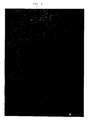
- the composition obtained is analyzed by optical micro-photography in phase contrast at a magnification of 750 X (fig. 1).
- the minority phase (polyethylene) is in the form of small nodules (1 to 2 ⁇ m) distributed in a remarkably homogeneous manner.
- the morphological stability of this composition is analyzed as described below.
- composition resulting from this treatment has an appearance similar to the composition resulting directly from the extruder (identical size of nodules and homogeneous distribution of the latter).
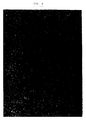
- the elongational viscosity of the composition from the extruder is determined using a rheometer sold by RHEOMETRICS under the name RHEOMETRICS EXTENSIONAL RHEOMETRE RER-9000 (Fig. 3).
- the curves of this figure, taken at 190 ° C, show the variation of the elongational viscosity in the molten state (expressed in Pa.s) as a function of time (expressed in s) for elongation speeds (expressed in s ⁇ 1) equal to 1 (curve (1)), 0.3 (curve (2)) and 0.1 (curve (3)).
- Example 1 is repeated, but using a mixture containing per kilo 692.5 g of polypropylene, 297 g of polyethylene, 0.5 g of DHBP and 10 g of maleic anhydride. In zone 2, 12 g of styrene are introduced per kg of mixture.
- the composition thus obtained has a melt index of 3.2 g / 10 min at 230 ° C under 2.16 kg and has a dispersion of the homogeneous phases, the average size of the nodules of the minority phase being between 3 and 4 ⁇ m. . Again, no significant modification of this dispersion is observed during the heat treatment described in Example 1.
- Example 1 is reproduced, but omitting to introduce DHBP, maleic anhydride and styrene. A composition is then obtained whose melt index is 2.6 g / 10 min. The dispersion of the phases is homogeneous, the minority phase being in the form of nodules of 3 to 4 ⁇ m.
- Example 2 During the heat treatment described in Example 1, a coalescence of the minority phase is observed. The latter is then in the form of nodules of variable dimensions which can be greater than 20 ⁇ m, distributed in a non-uniform manner.
- Compositions are prepared by reproducing Example 1 except as regards the nature of the polymers used and their respective amounts.
- zone 2 13 g of styrene are introduced per kg of mixture.
- zone 2 37 g of styrene are introduced per kg of mixture.
- compositions are thus obtained in which the minority phase is in the form of nodules of dimensions less than 4 ⁇ m for example 4 and less than 6 ⁇ m for example 5.
- the melt flow indices measured at 230 ° C. under 2, 16 kg are 5.1 g / 10 min for composition 4 and 2.6 for composition 5.
- the nodules are distributed homogeneously.
- the comparative example 3R is reproduced with a composition containing per kilo 700 g of polypropylene ELTEX P HF001P and 300 g of polystyrene GEDEX 1070. This composition has nodules of dimensions greater than 20 ⁇ m. The adhesion between the phases is weak and delamination is observed during granulation.
- Examples 7 and 8 serve to illustrate the invention.
- Example 9R is given for comparison.
- a mixture containing polypropylene ELTEX P HY202, polystyrene GEDEX 1070 and optionally one or more agents are introduced into a discontinuous internal mixer of the PLASTICORDER PL 2000-3 type equipped with a W50E mixer marketed by the company BRABENDER. functional (D) and DHBP.
Landscapes
- Chemical & Material Sciences (AREA)
- Health & Medical Sciences (AREA)
- Chemical Kinetics & Catalysis (AREA)
- Medicinal Chemistry (AREA)
- Polymers & Plastics (AREA)
- Organic Chemistry (AREA)
- Compositions Of Macromolecular Compounds (AREA)
- Addition Polymer Or Copolymer, Post-Treatments, Or Chemical Modifications (AREA)
Applications Claiming Priority (2)
| Application Number | Priority Date | Filing Date | Title |
|---|---|---|---|
| BE9201073A BE1006477A3 (fr) | 1992-12-07 | 1992-12-07 | Composition thermoplastique, procede pour sa preparation, et utilisation. |
| BE9201073 | 1992-12-07 |
Publications (2)
| Publication Number | Publication Date |
|---|---|
| EP0601635A1 true EP0601635A1 (de) | 1994-06-15 |
| EP0601635B1 EP0601635B1 (de) | 1997-09-10 |
Family
ID=3886564
Family Applications (1)
| Application Number | Title | Priority Date | Filing Date |
|---|---|---|---|
| EP93203353A Expired - Lifetime EP0601635B1 (de) | 1992-12-07 | 1993-12-01 | Thermoplastische Zusammensetzung, Verfahren zur deren Herstellung und deren Anwendung |
Country Status (10)
| Country | Link |
|---|---|
| US (1) | US5494962A (de) |
| EP (1) | EP0601635B1 (de) |
| JP (1) | JPH06207054A (de) |
| KR (1) | KR100327302B1 (de) |
| AT (1) | ATE158006T1 (de) |
| BE (1) | BE1006477A3 (de) |
| CA (1) | CA2110747A1 (de) |
| DE (1) | DE69313795T2 (de) |
| ES (1) | ES2109427T3 (de) |
| FI (1) | FI110118B (de) |
Cited By (2)
| Publication number | Priority date | Publication date | Assignee | Title |
|---|---|---|---|---|
| NL1002121C2 (nl) * | 1995-08-16 | 1997-02-18 | Univ Groningen | Werkwijze voor het vervaardigen van mengpolymeren, en op deze wijze verkregen produkten. |
| US6020437A (en) * | 1995-07-11 | 2000-02-01 | Solvay Polyolefins Europe - Belgium (Societete Anonyme) | Propylene polymer and process for obtaining it |
Families Citing this family (26)
| Publication number | Priority date | Publication date | Assignee | Title |
|---|---|---|---|---|
| US6699946B1 (en) * | 1991-12-13 | 2004-03-02 | Solvay (Societe Anonyme) | Polyphenylene sulphide-based compositions with improved impact strength and process for preparing them |
| EP1278781A4 (de) * | 1999-10-01 | 2005-01-26 | Ballina Pty Ltd | Strahlungspolymerisierbare zusammensetzungen |
| JP3531159B2 (ja) * | 2000-03-31 | 2004-05-24 | 日本製紙株式会社 | 変性ポリオレフィン樹脂組成物及びその用途 |
| US6660794B2 (en) | 2000-12-28 | 2003-12-09 | General Electric Company | Glass-filled poly(arylene ether)-polyolefin composition and articles derived therefrom |
| US6855767B2 (en) | 2000-12-28 | 2005-02-15 | General Electric | Poly(arylene ether)-polyolefin composition and articles derived therefrom |
| US6545080B2 (en) * | 2000-12-28 | 2003-04-08 | General Electric Company | Glass-filled poly(arylene ether)-polyolefin composition and articles derived therefrom |
| US6495630B2 (en) | 2000-12-28 | 2002-12-17 | General Electric Company | Poly(arylene ether)-polyolefin compositions and articles derived therefrom |
| US6815491B2 (en) | 2000-12-28 | 2004-11-09 | General Electric | Reinforced thermoplastic composition and articles derived therefrom |
| US6861472B2 (en) | 2000-12-28 | 2005-03-01 | General Electric Company | Poly(arylene ether)-polyolefin compositions and articles derived therefrom |
| US6627701B2 (en) * | 2000-12-28 | 2003-09-30 | General Electric Company | Method for the preparation of a poly(arylene ether)-polyolefin composition, and composition prepared thereby |
| US6872777B2 (en) * | 2001-06-25 | 2005-03-29 | General Electric | Poly(arylene ether)-polyolefin composition, method for the preparation thereof, and articles derived therefrom |
| JP4421145B2 (ja) * | 2001-07-02 | 2010-02-24 | Sabicイノベーティブプラスチックスジャパン合同会社 | 配管部材 |
| US6810333B2 (en) * | 2002-02-12 | 2004-10-26 | General Electric Company | Method, system, storage medium, and data signal for supplying a multi-component composition |
| US7271209B2 (en) * | 2002-08-12 | 2007-09-18 | Exxonmobil Chemical Patents Inc. | Fibers and nonwovens from plasticized polyolefin compositions |
| EP1530611B1 (de) * | 2002-08-12 | 2013-12-04 | ExxonMobil Chemical Patents Inc. | Plastifizierte polyolefinzusammensetzungen |
| US7531594B2 (en) * | 2002-08-12 | 2009-05-12 | Exxonmobil Chemical Patents Inc. | Articles from plasticized polyolefin compositions |
| US8003725B2 (en) * | 2002-08-12 | 2011-08-23 | Exxonmobil Chemical Patents Inc. | Plasticized hetero-phase polyolefin blends |
| US7998579B2 (en) * | 2002-08-12 | 2011-08-16 | Exxonmobil Chemical Patents Inc. | Polypropylene based fibers and nonwovens |
| US7795366B2 (en) * | 2002-08-12 | 2010-09-14 | Exxonmobil Chemical Patents Inc. | Modified polyethylene compositions |
| JP2006500440A (ja) * | 2002-09-20 | 2006-01-05 | ゼネラル・エレクトリック・カンパニイ | アンダーフード部品 |
| US8192813B2 (en) * | 2003-08-12 | 2012-06-05 | Exxonmobil Chemical Patents, Inc. | Crosslinked polyethylene articles and processes to produce same |
| US7022765B2 (en) * | 2004-01-09 | 2006-04-04 | General Electric | Method for the preparation of a poly(arylene ether)-polyolefin composition, and composition prepared thereby |
| US8389615B2 (en) * | 2004-12-17 | 2013-03-05 | Exxonmobil Chemical Patents Inc. | Elastomeric compositions comprising vinylaromatic block copolymer, polypropylene, plastomer, and low molecular weight polyolefin |
| ATE453683T1 (de) * | 2005-02-02 | 2010-01-15 | Exxonmobil Chem Patents Inc | Modifizierte polyethylenzusammensetzungen |
| CN101218296B (zh) | 2005-07-15 | 2010-12-08 | 埃克森美孚化学专利公司 | 弹性体组合物 |
| JP6034202B2 (ja) * | 2013-01-16 | 2016-11-30 | 帝人株式会社 | 熱可塑性樹脂組成物およびその成形品 |
Citations (6)
| Publication number | Priority date | Publication date | Assignee | Title |
|---|---|---|---|---|
| EP0024120A1 (de) * | 1979-08-08 | 1981-02-25 | Sumitomo Chemical Company, Limited | Harzzusammensetzungen, enthaltend Polyphenyleneoxyd, Polyamid und eine Verbindung zur Verbesserung der Schlagfestigkeit |
| EP0043022A1 (de) * | 1980-06-25 | 1982-01-06 | Bayer Ag | Modifizierte Olefinpolymerisate |
| EP0210307A1 (de) * | 1985-06-27 | 1987-02-04 | Du Pont Canada Inc. | Verfahren zur Pfropfung von Monomeren auf Polyolefinen |
| US4739011A (en) * | 1986-06-06 | 1988-04-19 | Japan Synthetic Rubber Co., Ltd. | Thermoplastic resin composition |
| EP0317359A2 (de) * | 1987-11-20 | 1989-05-24 | Sumitomo Chemical Company, Limited | Modifiziertes Polyolefinharz |
| EP0440922A1 (de) * | 1989-12-11 | 1991-08-14 | Sumitomo Chemical Company, Limited | Harzzusammensetzungen |
Family Cites Families (3)
| Publication number | Priority date | Publication date | Assignee | Title |
|---|---|---|---|---|
| DE2822815C2 (de) * | 1977-05-26 | 1994-02-17 | Mitsui Petrochemical Ind | Verfahren zur Herstellung einer teilweise vulkanisierten thermoplastischen Masse |
| FR2641540B1 (de) * | 1989-01-12 | 1992-08-14 | Solvay | |
| JP2987711B2 (ja) * | 1989-12-11 | 1999-12-06 | 住友化学工業株式会社 | 樹脂組成物およびその製造方法 |
-
1992
- 1992-12-07 BE BE9201073A patent/BE1006477A3/fr not_active IP Right Cessation
-
1993
- 1993-12-01 AT AT93203353T patent/ATE158006T1/de not_active IP Right Cessation
- 1993-12-01 EP EP93203353A patent/EP0601635B1/de not_active Expired - Lifetime
- 1993-12-01 DE DE69313795T patent/DE69313795T2/de not_active Expired - Fee Related
- 1993-12-01 ES ES93203353T patent/ES2109427T3/es not_active Expired - Lifetime
- 1993-12-01 US US08/158,790 patent/US5494962A/en not_active Expired - Fee Related
- 1993-12-06 CA CA002110747A patent/CA2110747A1/fr not_active Abandoned
- 1993-12-06 KR KR1019930026629A patent/KR100327302B1/ko not_active Expired - Fee Related
- 1993-12-06 JP JP5305079A patent/JPH06207054A/ja active Pending
- 1993-12-07 FI FI935465A patent/FI110118B/fi active
Patent Citations (6)
| Publication number | Priority date | Publication date | Assignee | Title |
|---|---|---|---|---|
| EP0024120A1 (de) * | 1979-08-08 | 1981-02-25 | Sumitomo Chemical Company, Limited | Harzzusammensetzungen, enthaltend Polyphenyleneoxyd, Polyamid und eine Verbindung zur Verbesserung der Schlagfestigkeit |
| EP0043022A1 (de) * | 1980-06-25 | 1982-01-06 | Bayer Ag | Modifizierte Olefinpolymerisate |
| EP0210307A1 (de) * | 1985-06-27 | 1987-02-04 | Du Pont Canada Inc. | Verfahren zur Pfropfung von Monomeren auf Polyolefinen |
| US4739011A (en) * | 1986-06-06 | 1988-04-19 | Japan Synthetic Rubber Co., Ltd. | Thermoplastic resin composition |
| EP0317359A2 (de) * | 1987-11-20 | 1989-05-24 | Sumitomo Chemical Company, Limited | Modifiziertes Polyolefinharz |
| EP0440922A1 (de) * | 1989-12-11 | 1991-08-14 | Sumitomo Chemical Company, Limited | Harzzusammensetzungen |
Cited By (3)
| Publication number | Priority date | Publication date | Assignee | Title |
|---|---|---|---|---|
| US6020437A (en) * | 1995-07-11 | 2000-02-01 | Solvay Polyolefins Europe - Belgium (Societete Anonyme) | Propylene polymer and process for obtaining it |
| NL1002121C2 (nl) * | 1995-08-16 | 1997-02-18 | Univ Groningen | Werkwijze voor het vervaardigen van mengpolymeren, en op deze wijze verkregen produkten. |
| WO1997007148A1 (en) * | 1995-08-16 | 1997-02-27 | Rijksuniversiteit Groningen | Method for the preparation of mixed polymers and products obtainable in this manner |
Also Published As
| Publication number | Publication date |
|---|---|
| FI935465L (fi) | 1994-06-08 |
| ES2109427T3 (es) | 1998-01-16 |
| FI110118B (fi) | 2002-11-29 |
| EP0601635B1 (de) | 1997-09-10 |
| ATE158006T1 (de) | 1997-09-15 |
| BE1006477A3 (fr) | 1994-09-06 |
| CA2110747A1 (fr) | 1994-06-08 |
| KR100327302B1 (ko) | 2002-08-21 |
| DE69313795D1 (de) | 1997-10-16 |
| DE69313795T2 (de) | 1998-04-02 |
| US5494962A (en) | 1996-02-27 |
| KR940014579A (ko) | 1994-07-18 |
| JPH06207054A (ja) | 1994-07-26 |
| FI935465A0 (fi) | 1993-12-07 |
Similar Documents
| Publication | Publication Date | Title |
|---|---|---|
| BE1006477A3 (fr) | Composition thermoplastique, procede pour sa preparation, et utilisation. | |
| KR100196968B1 (ko) | 프로필렌 중합체 물질의 그라프트 공중합체와 올레핀계 고무 물질의 그라프트 공중합체의 블렌드 | |
| DE69709022T2 (de) | Pfropfpolymere kontrollierter Viskosität | |
| CN102690378B (zh) | 改性丙烯聚合物 | |
| CN101024710B (zh) | 热塑性树脂组合物的制造方法 | |
| CA2091533C (en) | Thermoplastic blends containing graft copolymers of polyacrylates as impact modifiers | |
| CN105037656A (zh) | 一种聚丙烯/聚苯乙烯合金及其制备方法 | |
| EP0754711B1 (de) | Propylenpolymer, Verfahren zu seiner Herstellung, Verwendung desselben und Objekte daraus | |
| CN100368453C (zh) | 改性聚烯烃树脂的生产方法 | |
| BE1008432A3 (fr) | Composition a base de polymere du propylene, procede pour son obtention et utilisation. | |
| JP2009040957A (ja) | 変性ポリオレフィン樹脂の製造方法 | |
| JP5292664B2 (ja) | 多層ペレットおよびその製造方法 | |
| JP2009040958A (ja) | 変性ポリオレフィン樹脂の製造方法 | |
| KR20030030591A (ko) | 화학적 개질에 의한 폴리올레핀 탄성체 조성물 | |
| JP4274455B2 (ja) | 変性エチレンビニルシクロヘキサン共重合体樹脂の製造方法及び変性エチレンビニルシクロヘキサン共重合体樹脂 | |
| EP0915929B1 (de) | Vulkanisationsmittel enthaltende masterbatches | |
| CA2165394A1 (fr) | Polymere du propylene, procede pour son obtention et utilisation | |
| JP2004307538A (ja) | 変性ポリオレフィン系樹脂の製造方法及び変性ポリオレフィン系樹脂 | |
| EP0044233B1 (de) | Verfahren zur Herstellung von Pfropfcopolymerisaten aus Styrol und Kautschukpolymeren | |
| JPH06145261A (ja) | 変性ポリオレフィン | |
| JP2004307537A (ja) | 変性ポリエチレン系樹脂の製造方法及び変性ポリエチレン系樹脂 | |
| JP2006282930A (ja) | 変性ポリオレフィン樹脂の製造方法及び変性ポリオレフィン樹脂 | |
| JPS6289716A (ja) | 熱可塑性エラストマーの製法 | |
| JP2006321081A (ja) | 多層ペレットおよびその製造方法 | |
| EP0728808A1 (de) | Zusammensetzungen auf der Basis eines Vinylaromatpolymerisat, ein Polyolefin und zwei lineare Copolymerisate |
Legal Events
| Date | Code | Title | Description |
|---|---|---|---|
| PUAI | Public reference made under article 153(3) epc to a published international application that has entered the european phase |
Free format text: ORIGINAL CODE: 0009012 |
|
| AK | Designated contracting states |
Kind code of ref document: A1 Designated state(s): AT BE CH DE ES FR GB IT LI NL |
|
| RAP1 | Party data changed (applicant data changed or rights of an application transferred) |
Owner name: SOLVAY (SOCIETE ANONYME) |
|
| 17P | Request for examination filed |
Effective date: 19941215 |
|
| 17Q | First examination report despatched |
Effective date: 19951010 |
|
| GRAG | Despatch of communication of intention to grant |
Free format text: ORIGINAL CODE: EPIDOS AGRA |
|
| GRAH | Despatch of communication of intention to grant a patent |
Free format text: ORIGINAL CODE: EPIDOS IGRA |
|
| GRAH | Despatch of communication of intention to grant a patent |
Free format text: ORIGINAL CODE: EPIDOS IGRA |
|
| GRAA | (expected) grant |
Free format text: ORIGINAL CODE: 0009210 |
|
| RAP1 | Party data changed (applicant data changed or rights of an application transferred) |
Owner name: SOLVAY POLYOLEFINS EUROPE-BELGIUM |
|
| RAP3 | Party data changed (applicant data changed or rights of an application transferred) |
Owner name: SOLVAY POLYOLEFINS EUROPE - BELGIUM (SOCIETE ANONY |
|
| AK | Designated contracting states |
Kind code of ref document: B1 Designated state(s): AT BE CH DE ES FR GB IT LI NL |
|
| REF | Corresponds to: |
Ref document number: 158006 Country of ref document: AT Date of ref document: 19970915 Kind code of ref document: T |
|
| REG | Reference to a national code |
Ref country code: CH Ref legal event code: EP |
|
| REF | Corresponds to: |
Ref document number: 69313795 Country of ref document: DE Date of ref document: 19971016 |
|
| ITF | It: translation for a ep patent filed | ||
| GBT | Gb: translation of ep patent filed (gb section 77(6)(a)/1977) |
Effective date: 19971201 |
|
| REG | Reference to a national code |
Ref country code: CH Ref legal event code: NV Representative=s name: E. BLUM & CO. PATENTANWAELTE |
|
| REG | Reference to a national code |
Ref country code: ES Ref legal event code: FG2A Ref document number: 2109427 Country of ref document: ES Kind code of ref document: T3 |
|
| PLBE | No opposition filed within time limit |
Free format text: ORIGINAL CODE: 0009261 |
|
| 26N | No opposition filed | ||
| REG | Reference to a national code |
Ref country code: GB Ref legal event code: IF02 |
|
| REG | Reference to a national code |
Ref country code: CH Ref legal event code: PUE Owner name: SOLVAY POLYOLEFINS EUROPE - BELGIUM (SOCIETE ANONY |
|
| REG | Reference to a national code |
Ref country code: GB Ref legal event code: 732E |
|
| REG | Reference to a national code |
Ref country code: FR Ref legal event code: TP |
|
| NLS | Nl: assignments of ep-patents |
Owner name: SOLVAY (SOCIETE ANONYME) |
|
| REG | Reference to a national code |
Ref country code: ES Ref legal event code: PC2A |
|
| PGFP | Annual fee paid to national office [announced via postgrant information from national office to epo] |
Ref country code: GB Payment date: 20021127 Year of fee payment: 10 |
|
| PGFP | Annual fee paid to national office [announced via postgrant information from national office to epo] |
Ref country code: CH Payment date: 20021129 Year of fee payment: 10 |
|
| PGFP | Annual fee paid to national office [announced via postgrant information from national office to epo] |
Ref country code: DE Payment date: 20021205 Year of fee payment: 10 |
|
| PGFP | Annual fee paid to national office [announced via postgrant information from national office to epo] |
Ref country code: FR Payment date: 20021210 Year of fee payment: 10 |
|
| PGFP | Annual fee paid to national office [announced via postgrant information from national office to epo] |
Ref country code: AT Payment date: 20021211 Year of fee payment: 10 |
|
| PGFP | Annual fee paid to national office [announced via postgrant information from national office to epo] |
Ref country code: NL Payment date: 20021227 Year of fee payment: 10 |
|
| PGFP | Annual fee paid to national office [announced via postgrant information from national office to epo] |
Ref country code: ES Payment date: 20030121 Year of fee payment: 10 |
|
| PGFP | Annual fee paid to national office [announced via postgrant information from national office to epo] |
Ref country code: BE Payment date: 20030218 Year of fee payment: 10 |
|
| PG25 | Lapsed in a contracting state [announced via postgrant information from national office to epo] |
Ref country code: GB Free format text: LAPSE BECAUSE OF NON-PAYMENT OF DUE FEES Effective date: 20031201 Ref country code: AT Free format text: LAPSE BECAUSE OF NON-PAYMENT OF DUE FEES Effective date: 20031201 |
|
| PG25 | Lapsed in a contracting state [announced via postgrant information from national office to epo] |
Ref country code: ES Free format text: LAPSE BECAUSE OF NON-PAYMENT OF DUE FEES Effective date: 20031202 |
|
| PG25 | Lapsed in a contracting state [announced via postgrant information from national office to epo] |
Ref country code: LI Free format text: LAPSE BECAUSE OF NON-PAYMENT OF DUE FEES Effective date: 20031231 Ref country code: CH Free format text: LAPSE BECAUSE OF NON-PAYMENT OF DUE FEES Effective date: 20031231 Ref country code: BE Free format text: LAPSE BECAUSE OF NON-PAYMENT OF DUE FEES Effective date: 20031231 |
|
| BERE | Be: lapsed |
Owner name: *SOLVAY S.A. Effective date: 20031231 |
|
| PG25 | Lapsed in a contracting state [announced via postgrant information from national office to epo] |
Ref country code: NL Free format text: LAPSE BECAUSE OF NON-PAYMENT OF DUE FEES Effective date: 20040701 Ref country code: DE Free format text: LAPSE BECAUSE OF NON-PAYMENT OF DUE FEES Effective date: 20040701 |
|
| GBPC | Gb: european patent ceased through non-payment of renewal fee |
Effective date: 20031201 |
|
| REG | Reference to a national code |
Ref country code: CH Ref legal event code: PL |
|
| PG25 | Lapsed in a contracting state [announced via postgrant information from national office to epo] |
Ref country code: FR Free format text: LAPSE BECAUSE OF NON-PAYMENT OF DUE FEES Effective date: 20040831 |
|
| NLV4 | Nl: lapsed or anulled due to non-payment of the annual fee |
Effective date: 20040701 |
|
| REG | Reference to a national code |
Ref country code: FR Ref legal event code: ST |
|
| REG | Reference to a national code |
Ref country code: ES Ref legal event code: FD2A Effective date: 20031202 |
|
| PG25 | Lapsed in a contracting state [announced via postgrant information from national office to epo] |
Ref country code: IT Free format text: LAPSE BECAUSE OF NON-PAYMENT OF DUE FEES Effective date: 20051201 |