EP0603649A1 - Substituierte 4-Phenyl-pyridone und 4-Phenyl-2-alkoxypyridine als HMG-CoA-Reductase-Inhitoren - Google Patents
Substituierte 4-Phenyl-pyridone und 4-Phenyl-2-alkoxypyridine als HMG-CoA-Reductase-Inhitoren Download PDFInfo
- Publication number
- EP0603649A1 EP0603649A1 EP93119766A EP93119766A EP0603649A1 EP 0603649 A1 EP0603649 A1 EP 0603649A1 EP 93119766 A EP93119766 A EP 93119766A EP 93119766 A EP93119766 A EP 93119766A EP 0603649 A1 EP0603649 A1 EP 0603649A1
- Authority
- EP
- European Patent Office
- Prior art keywords
- phenyl
- carbon atoms
- chain
- straight
- branched alkyl
- Prior art date
- Legal status (The legal status is an assumption and is not a legal conclusion. Google has not performed a legal analysis and makes no representation as to the accuracy of the status listed.)
- Granted
Links
- 0 *C(C(*)=C(*)N1*)=C(*)C1=O Chemical compound *C(C(*)=C(*)N1*)=C(*)C1=O 0.000 description 3
- CQMGCDHIBOVAKK-MMKWGKFASA-N CC(C)c1nc(OC)c(COC)c(-c(cc2)ccc2F)c1/C=C/[C@H](C[C@H](CC(OC)=O)O)O Chemical compound CC(C)c1nc(OC)c(COC)c(-c(cc2)ccc2F)c1/C=C/[C@H](C[C@H](CC(OC)=O)O)O CQMGCDHIBOVAKK-MMKWGKFASA-N 0.000 description 1
Classifications
-
- C—CHEMISTRY; METALLURGY
- C07—ORGANIC CHEMISTRY
- C07D—HETEROCYCLIC COMPOUNDS
- C07D213/00—Heterocyclic compounds containing six-membered rings, not condensed with other rings, with one nitrogen atom as the only ring hetero atom and three or more double bonds between ring members or between ring members and non-ring members
- C07D213/02—Heterocyclic compounds containing six-membered rings, not condensed with other rings, with one nitrogen atom as the only ring hetero atom and three or more double bonds between ring members or between ring members and non-ring members having three double bonds between ring members or between ring members and non-ring members
- C07D213/04—Heterocyclic compounds containing six-membered rings, not condensed with other rings, with one nitrogen atom as the only ring hetero atom and three or more double bonds between ring members or between ring members and non-ring members having three double bonds between ring members or between ring members and non-ring members having no bond between the ring nitrogen atom and a non-ring member or having only hydrogen or carbon atoms directly attached to the ring nitrogen atom
- C07D213/60—Heterocyclic compounds containing six-membered rings, not condensed with other rings, with one nitrogen atom as the only ring hetero atom and three or more double bonds between ring members or between ring members and non-ring members having three double bonds between ring members or between ring members and non-ring members having no bond between the ring nitrogen atom and a non-ring member or having only hydrogen or carbon atoms directly attached to the ring nitrogen atom with hetero atoms or with carbon atoms having three bonds to hetero atoms with at the most one bond to halogen, e.g. ester or nitrile radicals, directly attached to ring carbon atoms
- C07D213/62—Oxygen or sulfur atoms
- C07D213/63—One oxygen atom
- C07D213/64—One oxygen atom attached in position 2 or 6
-
- A—HUMAN NECESSITIES
- A61—MEDICAL OR VETERINARY SCIENCE; HYGIENE
- A61P—SPECIFIC THERAPEUTIC ACTIVITY OF CHEMICAL COMPOUNDS OR MEDICINAL PREPARATIONS
- A61P3/00—Drugs for disorders of the metabolism
- A61P3/06—Antihyperlipidemics
-
- A—HUMAN NECESSITIES
- A61—MEDICAL OR VETERINARY SCIENCE; HYGIENE
- A61P—SPECIFIC THERAPEUTIC ACTIVITY OF CHEMICAL COMPOUNDS OR MEDICINAL PREPARATIONS
- A61P31/00—Antiinfectives, i.e. antibiotics, antiseptics, chemotherapeutics
-
- A—HUMAN NECESSITIES
- A61—MEDICAL OR VETERINARY SCIENCE; HYGIENE
- A61P—SPECIFIC THERAPEUTIC ACTIVITY OF CHEMICAL COMPOUNDS OR MEDICINAL PREPARATIONS
- A61P43/00—Drugs for specific purposes, not provided for in groups A61P1/00-A61P41/00
-
- A—HUMAN NECESSITIES
- A61—MEDICAL OR VETERINARY SCIENCE; HYGIENE
- A61P—SPECIFIC THERAPEUTIC ACTIVITY OF CHEMICAL COMPOUNDS OR MEDICINAL PREPARATIONS
- A61P9/00—Drugs for disorders of the cardiovascular system
- A61P9/10—Drugs for disorders of the cardiovascular system for treating ischaemic or atherosclerotic diseases, e.g. antianginal drugs, coronary vasodilators, drugs for myocardial infarction, retinopathy, cerebrovascula insufficiency, renal arteriosclerosis
-
- C—CHEMISTRY; METALLURGY
- C07—ORGANIC CHEMISTRY
- C07D—HETEROCYCLIC COMPOUNDS
- C07D405/00—Heterocyclic compounds containing both one or more hetero rings having oxygen atoms as the only ring hetero atoms, and one or more rings having nitrogen as the only ring hetero atom
- C07D405/02—Heterocyclic compounds containing both one or more hetero rings having oxygen atoms as the only ring hetero atoms, and one or more rings having nitrogen as the only ring hetero atom containing two hetero rings
- C07D405/06—Heterocyclic compounds containing both one or more hetero rings having oxygen atoms as the only ring hetero atoms, and one or more rings having nitrogen as the only ring hetero atom containing two hetero rings linked by a carbon chain containing only aliphatic carbon atoms
-
- C—CHEMISTRY; METALLURGY
- C07—ORGANIC CHEMISTRY
- C07F—ACYCLIC, CARBOCYCLIC OR HETEROCYCLIC COMPOUNDS CONTAINING ELEMENTS OTHER THAN CARBON, HYDROGEN, HALOGEN, OXYGEN, NITROGEN, SULFUR, SELENIUM OR TELLURIUM
- C07F7/00—Compounds containing elements of Groups 4 or 14 of the Periodic Table
- C07F7/02—Silicon compounds
- C07F7/08—Compounds having one or more C—Si linkages
- C07F7/18—Compounds having one or more C—Si linkages as well as one or more C—O—Si linkages
- C07F7/1804—Compounds having Si-O-C linkages
-
- C—CHEMISTRY; METALLURGY
- C07—ORGANIC CHEMISTRY
- C07F—ACYCLIC, CARBOCYCLIC OR HETEROCYCLIC COMPOUNDS CONTAINING ELEMENTS OTHER THAN CARBON, HYDROGEN, HALOGEN, OXYGEN, NITROGEN, SULFUR, SELENIUM OR TELLURIUM
- C07F9/00—Compounds containing elements of Groups 5 or 15 of the Periodic Table
- C07F9/02—Phosphorus compounds
- C07F9/547—Heterocyclic compounds, e.g. containing phosphorus as a ring hetero atom
- C07F9/553—Heterocyclic compounds, e.g. containing phosphorus as a ring hetero atom having one nitrogen atom as the only ring hetero atom
- C07F9/576—Six-membered rings
- C07F9/58—Pyridine rings
Definitions
- the invention relates to substituted 4-phenyl-pyridones and 4-phenyl-2-alkoxy-pyridines, processes for their preparation and their use in medicaments.
- lactone derivatives isolated from fungal cultures are inhibitors of 3-hydroxy-3-methyl-glutaryl coenzyme A reductase (HMG-CoA reductase) [Mevinolin, EP 22 478; US 4,231,938].
- HMG-CoA reductase 3-hydroxy-3-methyl-glutaryl coenzyme A reductase
- the compounds according to the invention each have 1 or 2 asymmetric carbon atoms to which the radicals -OR6 and -OR7 are bonded. They can therefore exist in various stereochemical forms.
- the invention relates both to the individual isomers and to their mixtures.
- the substances according to the invention can be present in the erythro configuration or in the threo configuration.
- the erythro forms are preferred in each case.
- the process according to the invention can be illustrated by the following formula scheme:
- the usual organic solvents are generally suitable as solvents for the reduction. Ethers such as diethyl ether, tetrahydrofuran or dioxane are preferred. Tetrahydrofuran is particularly preferred.
- Complex metal hydrides such as, for example, lithium aluminum hydride, sodium cyanoborohydride, sodium aluminum hydride, diisobutyl aluminum hydride or sodium bis- (2-methoxyethoxy) dihydroaluminate, are suitable as reducing agents.
- Diisobutyl aluminum hydride is preferred.
- the reducing agent is generally used in an amount of 4 mol to 10 mol, preferably 4 mol to 5 mol, based on 1 mol of the compounds of the general formula (II).
- the reduction generally takes place in a temperature range from -78 ° C. to + 50 ° C., preferably from -78 ° C. to 0 ° C., particularly preferably at -78 ° C., in each case depending on the choice of the reducing agent and solvent.
- the reduction generally proceeds at normal pressure, but it is also possible to work at elevated or reduced pressure.
- the cyclization of the aldehydes to the corresponding hydroxypyrans generally takes place at room temperature or by heating in inert organic solvents, if appropriate in the presence of molecular sieves.
- Suitable solvents are hydrocarbons such as benzene, toluene, xylene, petroleum fractions, or tetralin or diglyme or triglyme. Benzene, toluene or xylene is preferably used. It is also possible to use mixtures of the solvents mentioned. Hydrocarbons, in particular toluene, are particularly preferably used in the presence of molecular sieve.
- the cyclization is generally carried out in a temperature range from -40 ° C. to + 100 ° C., preferably from -25 ° C. to + 50 ° C.
- the hydrogenation of the double bond is carried out by conventional methods with hydrogen in the presence of noble metal catalysts, such as Pd / C, Pt / C or Raney nickel in one of the solvents listed above, preferably in alcohols such as methanol, ethanol or propanol, in a temperature range of -20 ° C to + 100 ° C, preferably from 0 ° C to + 50 ° C, at normal pressure or overpressure.
- noble metal catalysts such as Pd / C, Pt / C or Raney nickel in one of the solvents listed above, preferably in alcohols such as methanol, ethanol or propanol, in a temperature range of -20 ° C to + 100 ° C, preferably from 0 ° C to + 50 ° C, at normal pressure or overpressure.
- the triple or double bond is also reduced in the above-mentioned reduction of the ester group.
- the reduction can be carried out using the customary reducing agents, preferably those which are suitable for the reduction of ketones to hydroxy compounds.
- the reduction is preferably carried out using complex metal hydrides such as, for example, lithium boranate, sodium boranate, potassium boranate, zinc boranate, lithium trialkyl hydridoboranates, sodium trialkyl hydridoboranates, sodium cyano-trihydridoboranate or lithium aluminum hydride.
- the reduction with sodium borohydride is very particularly preferably carried out in the presence of triethylborane.
- organic solvents which do not change under the reaction conditions are suitable as solvents.
- solvents preferably include ethers such as diethyl ether, dioxane, tetrahydrofuran or dimethoxyethane, or halogenated hydrocarbons such as dichloromethane, trichloromethane, Tetrachloromethane, 1,2-dichloroethane or hydrocarbons such as benzene, toluene or xylene. It is also possible to use mixtures of the solvents mentioned.
- the reduction of the ketone group to the hydroxyl group is particularly preferably carried out under conditions in which the other functional groups such as the alkoxycarbonyl group are not changed.
- the use of sodium borohydride as a reducing agent is particularly suitable for this purpose, in the presence of triethylborane in inert solvents such as preferably ethers.
- the reduction is generally carried out in a temperature range from -80 ° C to + 30 ° C, preferably from -78 ° C to 0 ° C.
- the process according to the invention is generally carried out at normal pressure. However, it is also possible to carry out the process under negative pressure or under positive pressure (e.g. in a range from 0.5 to 5 bar).
- the reducing agent is used in an amount of 1 to 2 mol, preferably 1 to 1.5 mol, based on 1 mol of the keto compound.
- the carbonyl group is generally reduced to the hydroxyl group without the double bond being reduced to the single bond.
- the bases here are the customary strongly basic compounds. These preferably include organolithium compounds such as n-butyllithium, sec. Butyllithium, tert-butyllithlum or phenyllithium or amides such as lithium diisopropylamide, sodium amide or potassium amide, or lithium hexamethyldisilylamide, or alkali hydrides such as sodium hydride or potassium hydride. It is also possible to use mixtures of the bases mentioned. N-Butyllithium or sodium hydride or a mixture thereof is particularly preferably used.
- metal halides such as e.g. Magnesium chloride, zinc chloride or zinc bromide advantageous.
- the addition of zinc halides is particularly preferred.
- organic solvents which do not change under the reaction conditions are suitable as solvents.
- solvents preferably include ethers such as diethyl ether, tetrahydrofuran, dioxane or dimethoxyethane, or hydrocarbons such as benzene, toluene, xylene, cyclohexane, hexane or petroleum fractions. It is also possible to use mixtures of the solvents mentioned. Ethers such as diethyl ether or tetrahydrofuran are particularly preferably used.
- the reaction is generally carried out in a temperature range from -80 ° C to + 50 ° C, preferably from -20 ° C to room temperature.
- the process is generally carried out under normal pressure, but it is also possible to carry out the process under negative pressure or under positive pressure, e.g. in a range from 0.5 to 5 bar.
- the acetoacetic ester is generally used in an amount of 1 to 2, preferably 1 to 1.5, mol, based on 1 mol of the aldehyde.
- acetoacetic esters of the formula (V) used as starting materials are known or can be prepared by known methods.
- acetoacetic esters for the process according to the invention are: Methyl acetoacetate, ethyl acetoacetate, propyl acetoacetate, isopropyl acetoacetate.
- compounds of the formula VIb are in the first step [1] in inert solvents such as ethers, for example diethyl ether, tetrahydrofuran or dioxane, preferably tetrahydrofuran, with metal hydrides as reducing agents, for example lithium aluminum hydride, sodium cyanoborohydride, sodium aluminum hydride, diisobutylaluminium hydride or sodium 2-methoxyethoxy) dihydroaluminate, reduced to the hydroxymethyl compounds in temperature ranges from -70 ° C to + 100 ° C, preferably from -70 ° C to room temperature, or from room temperature to + 70 ° C, depending on the reducing agent used.
- inert solvents such as ethers, for example diethyl ether, tetrahydrofuran or dioxane, preferably tetrahydrofuran
- metal hydrides as reducing agents, for example lithium aluminum hydride, sodium cyanoborohydride,
- the reduction is preferably carried out with diisobutylaluminum hydride in tetrahydrofuran in a temperature range from -78 ° C. to room temperature.
- the hydroxymethyl compounds are oxidized to the aldehydes (XIII) by customary methods.
- the oxidation can be carried out, for example, with pyridinium chlorochromate, optionally in the presence of aluminum oxide inert solvents such as chlorinated hydrocarbons, preferably methylene chloride, in a temperature range from 0 ° C. to 60 ° C., preferably at room temperature, or else with trifluoroacetic acid / dimethyl sulfoxide by the usual methods of Swern oxidation.
- the aldehydes (VIIb) are in the third step [3] with diethyl 2- (cyclohexylamino) vinylphosphonate in the presence of sodium hydride in inert solvents such as ethers, for example diethyl ether, tetrahydrofuran or dioxane, preferably in tetrahydrofuran, in a temperature range of -20 ° C to + 40 ° C, preferably from -5 ° C to room temperature to form the aldehydes (IVb).
- ethers for example diethyl ether, tetrahydrofuran or dioxane, preferably in tetrahydrofuran, in a temperature range of -20 ° C to + 40 ° C, preferably from -5 ° C to room temperature to form the aldehydes (IVb).
- the compounds of the formula (VIa, b) used here as starting materials are new. They may be obtained in Scheme B, for example for the alkoxy-dihydropyridines (IXb) shown by oxidation of 3,4-dihydropyridines.
- the oxidation of the dihydropyridines (IXb) to the pyridines (VIb), in which R14 has the meaning given above, can be carried out, for example, with chromium oxide or sodium nitrite in ice-cold in a temperature range from -20 ° C to + 150 ° C, with nitric acid in aqueous suspension or with cerium salts, such as ammonium cerium nitrate, in a mixed solvent of acetonitrile and water. Acetonitrile and water are preferably reacted with ammonium cerium nitrate in the mixture.
- the 3,4-dihydropyridines of the general formula (IXa, b) used as starting materials are new.
- the process can be carried out in bulk or in a high-boiling solvent such as, for example, ethylene glycol, either basic with alkali metal alcoholates, such as, for example, sodium or potassium methoxide at room temperature to + 200 ° C. or in glacial acetic acid at room temperature.
- a high-boiling solvent such as, for example, ethylene glycol
- alkali metal alcoholates such as, for example, sodium or potassium methoxide at room temperature to + 200 ° C. or in glacial acetic acid at room temperature.
- the reaction with alkali metal alcoholates at + 140 ° C. is preferred.
- the reaction can be explained using the following formula:
- the alkylation is generally carried out using alkyl or benzyl halides in the presence of a base such as, for example, potassium carbonate, sodium hydride or an acid halide, in the presence of a base such as imidazole, pyridine or triethylamine, the O-alkyl or O-acyl derivatives can be prepared.
- a base such as, for example, potassium carbonate, sodium hydride or an acid halide
- a base such as imidazole, pyridine or triethylamine
- the reduction can be carried out using the customary reducing agents, preferably those which are suitable for the reduction of ketones to hydroxy compounds.
- the reduction is preferably carried out with complex metal hydrides such as, for example, lithium boranate, sodium boranate, potassium boranate, zinc boranate, lithium trialkylhydridoboranate or lithium aluminum hydride.
- the reduction with sodium borohydride is very particularly preferably carried out in the presence of triethylborane.
- the reduction generally takes place in a temperature range from -78 ° C. to + 50 ° C., preferably from -78 ° C. to + 25 ° C. and normal pressure.
- the substituted 4-phenyl-pyridones and 4-phenyl-2-alkoxy-pyridines and their isomeric forms according to the invention have valuable pharmacological properties which are superior to the prior art, in particular they are highly effective inhibitors of 3-hydroxy-3- in vivo.
- methyl-glutaryl coenzyme A (HMG-CoA) reductase and, as a result, inhibitors of cholesterol biosynthesis. They can therefore be used to treat hyperlipoproteinemia or arteriosclerosis.
- the active compounds according to the invention also bring about a reduction in the cholesterol content in the blood.
- Cholesterol is built up from acetate units in the mammalian organism. In order to measure the hepatic cholesterol biosynthesis in vivo, the animals were given radiolabeled 14C-acetate and later the content of 14C-cholesterol in the liver was determined.
- the substances to be examined were tested for inhibition of hepatic cholesterol biosynthesis in vivo in male Wistar rats with a body weight between 140 and 160 g.
- the rats were weighed 18 hours before oral administration of the substances, in groups of 6 animals (Control group without substance exposure 8 animals) divided and fasted.
- the substances to be investigated were suspended in an 0.75% aqueous tragacanth suspension with an Ultra-Turrax directly before application.
- the tragacanth suspension (control animals) or the substances suspended in tragacanth were applied by means of a pharyngeal tube. 2 h after the oral administration of substance, the animals were injected with 14C-acetate (12.5 ⁇ Ci / animal) intraperitoneally.
- the present invention also includes pharmaceutical preparations which, in addition to inert, non-toxic, pharmaceutically suitable auxiliaries and excipients, contain one or more compounds of the general formula (I) or which consist of one or more active compounds of the formula (I), and processes for the preparation of these preparations.
- the active compounds of the formula (I) should be present in these preparations in a concentration of 0.1 to 99.5% by weight, preferably 0.5 to 95% by weight, of the total mixture.
- the pharmaceutical preparations can also contain other pharmaceutical active ingredients.
- the pharmaceutical preparations listed above can be prepared in a customary manner by known methods, for example using the excipient or excipients.
- the active ingredient (s) of the formula (I) in total amounts of about 0.1 ⁇ g / kg to about 100 ⁇ g / kg, preferably in total amounts of about 1 ⁇ g / kg to 50 ⁇ g / kg body weight 24 hours each, if necessary in the form of several single doses, to achieve the desired result.
- Example 13 the title compound was prepared analogously to the instructions in Examples 8-12.
Landscapes
- Chemical & Material Sciences (AREA)
- Organic Chemistry (AREA)
- Health & Medical Sciences (AREA)
- Life Sciences & Earth Sciences (AREA)
- General Health & Medical Sciences (AREA)
- Medicinal Chemistry (AREA)
- Public Health (AREA)
- Animal Behavior & Ethology (AREA)
- Chemical Kinetics & Catalysis (AREA)
- General Chemical & Material Sciences (AREA)
- Veterinary Medicine (AREA)
- Nuclear Medicine, Radiotherapy & Molecular Imaging (AREA)
- Bioinformatics & Cheminformatics (AREA)
- Pharmacology & Pharmacy (AREA)
- Engineering & Computer Science (AREA)
- Biochemistry (AREA)
- Molecular Biology (AREA)
- Communicable Diseases (AREA)
- Vascular Medicine (AREA)
- Diabetes (AREA)
- Heart & Thoracic Surgery (AREA)
- Obesity (AREA)
- Hematology (AREA)
- Cardiology (AREA)
- Urology & Nephrology (AREA)
- Oncology (AREA)
- Pyridine Compounds (AREA)
- Pharmaceuticals Containing Other Organic And Inorganic Compounds (AREA)
- Plural Heterocyclic Compounds (AREA)
Abstract
Description
- Die Erfindung betrifft substituierte 4-Phenyl-pyridone und 4-Phenyl-2-alkoxy-pyridine, Verfahren zu ihrer Herstellung, sowie ihre Verwendung in Arzneimitteln.
- Es ist bekannt, daß aus Pilzkulturen isolierte Lacton-Derivate Inhibitoren der 3-Hydroxy-3-methyl-glutaryl Coenzym A Reduktase (HMG-CoA-Reduktase) sind [Mevinolin, EP 22 478; US 4 231 938].
- Außerdem ist bekannt, daß Pyridin-substituierte Dihydroxyheptensäuren Inhibitoren der HMG-CoA-Reduktase sind [EP 325 130; EP 307 342; EP 306 929].
- Die vorliegende Erfindung betrifft jetzt substituierte 4-Phenyl-pyridone und 4-Phenyl-2-alkoxypyridine der allgemeinen Formel (I)

in welcher - R¹
- für geradkettiges oder verzweigtes Alkyl mit bis zu 8 Kohlenstoffatomen steht,
- R²
- für Cycloalkyl mit 3 bis 7 Kohlenstoffatomen steht, oder für geradkettiges oder verzweigtes Alkyl mit bis zu 8 Kohlenstoffatomen steht,
- R³
- für einen Rest der Formel

worin - X
- die Gruppe -CH₂-CH₂-, -CH=CH- oder -C≡C- bedeutet,
und - R⁶, R⁷ und R⁸
- gleich oder verschieden sind und Wasserstoff oder einen Rest der Formel -CO-R⁹ oder -COOR¹⁰ bedeuten,
worin - R⁹ und R¹⁰
- gleich oder verschieden sind und geradkettiges oder verzweigtes Alkyl mit bis zu 8 Kohlenstoffatomen oder Phenyl bedeuten,
oder - R⁶ und R⁷
- gemeinsam einen Rest der Formel
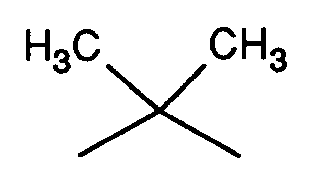
- R⁴
- für Phenyl steht, das gegebenenfalls bis zu 2-fach gleich oder verschieden durch Halogen, Trifluormethyl, Methoxy, Phenoxy oder geradkettiges oder verzweigtes Alkyl mit bis zu 8 Kohlenstoffatomen substituiert ist,
- R⁵
- die oben angegebene Bedeutung von R³ hat und mit dieser gleich oder verschieden ist, oder
für Wasserstoff, Cyano, Carboxy oder geradkettiges oder verzweigtes Alkoxycarbonyl mit bis zu 8 Kohlenstoffatomen steht, oder
für geradkettiges oder verzweigtes Alkyl mit bis zu 8 Kohlenstoffatomen steht, das gegebenenfalls durch Halogen, Hydroxy, durch geradkettiges oder verzweigtes Alkoxy mit bis zu 8 Kohlenstoffatomen, oder durch eine Gruppe der Formel -O-(CH₂)a-R¹¹ oder -O-CO-R¹² substituiert ist,
worin - a
- eine Zahl 0 oder 1 bedeutet,
- R¹¹
- Phenyl oder Benzyl bedeutet, die gegebenenfalls in Aromaten bis zu 2-fach gleich oder verschieden durch Halogen, Trifluormethyl, Cyano, Nitro oder durch geradkettiges oder verzweigtes Alkyl mit bis zu 6 Kohlenstoffatomen substituiert sind,
- R¹²
- die oben angegebene Bedeutung von R¹¹ hat und mit dieser gleich oder verschieden ist, oder
geradkettiges oder verzweigtes Alkyl mit bis zu 8 Kohlenstoffatomen bedeutet, - R⁵
- für einen Rest der Formel -CH=N-O-R¹³ steht,
worin - R¹³
- die oben angegebene Bedeutung von R¹² hat und mit dieser gleich oder verschieden ist.
- Die erfindungsgemäßen Verbindungen haben jeweils in Abhängigkeit der unter R³ und/oder R⁵ aufgeführten Seitenketten, 1 oder 2 asymmetrische Kohlerstoffatomen, an denen die Reste -OR⁶ und -OR⁷ gebunden sind. Sie können daher in verschiedenen stereochemischen Formen existieren.
- Die Erfindung betrifft sowohl die einzelnen Isomeren als auch deren Mischungen. So können die erfindungsgemäßen Stoffe je nach der relativen Stellung der Reste -OR⁶ / -OR⁷ in der Erythro-Konfiguration oder in der Threo-Konfiguration vorliegen.
- Dies soll für den Substituenten R³/R⁵ mit der Bedeutung a) wie folgt beispielhaft erläutert werden:

Sowohl von den Stoffen in Threo- als auch in Erythro-Konfiguration existieren wiederum jeweils zwei Enantiomere. - Bevorzugt sind jeweils die Erythro-Formen.
- Darüber hinaus können die erfindungsgemäßen Stoffe aufgrund der Doppelbindung (X = -CH=CH-) in den E-Konfiguration oder der Z-Konfiguration vorliegen. Bevorzugt sind diejenigen Verbindungen, die E-konfiguriert sind.
- Außerdem stehen die Aldehydreste (Subst. (c)) jeweils im Gleichgewicht mit den entsprechenden Hydroxypyranen (Subst. (d)).

Bevorzugt sind Verbindungen der allgemeinen Formel (I)
in welcher - R¹
- für geradkettiges oder verzweigtes Alkyl mit bis zu 6 Kohlenstoffatomen steht,
- R²
- für Cyclopropyl, Cyclopentyl oder Cyclohexyl steht, oder
für geradkettiges oder verzweigtes Alkyl mit bis zu 6 Kohlenstoffatomen steht, - R³
- für einen Rest der Formel

worin - X
- die Gruppe -CH₂-CH₂-, -CH=CH- oder -C≡C- bedeutet,
- R⁶, R⁷ und R⁸
- gleich oder verschieden sind und Wasserstoff oder einen Rest der Formel -CO-R⁹ oder -COO-R¹⁰ bedeuten,
worin - R⁹ und R¹⁰
- gleich oder verschieden sind und geradkettiges oder verzweigtes Alkyl mit bis zu 6 Kohlenstoffatomen oder Phenyl bedeuten,
oder - R⁶ und R⁷
- gemeinsam einen Rest der Formel

- R⁴
- für Phenyl steht, das gegebenenfalls bis zu 2-fach gleich oder verschieden durch Fluor, Chlor, Brom, Trifluormethyl oder durch geradkettiges oder verzweigtes Alkyl mit bis zu 6 Kohlenstoffatomen substituiert ist,
- R⁵
- die oben angegebene Bedeutung von R³ hat und mit dieser gleich oder verschieden ist, oder
für Wasserstoff, Cyano, Carboxy oder geradkettiges oder verzweigtes Alkoxycarbonyl mit bis zu 6 Kohlenstoffatomen steht, oder
für geradkettiges oder verzweigtes Alkyl mit bis zu 6 Kohlenstoffatomen steht, das gegebenenfalls durch Fluor, Chlor, Brom, Hydroxy oder durch geradkettiges oder verzweigtes Alkoxy mit bis zu 6 Kohlenstoffatomen substituiert ist, oder das durch eine Gruppe der Formel -O-(CH₂)a-R¹¹ oder -O-CO-R¹² substituiert ist,
worin - a
- eine Zahl 0 oder 1 bedeutet,
und - R¹¹
- Phenyl oder Benzyl bedeutet, die in Aromaten gegebenenfalls durch Fluor, Chlor, Brom, Trifluormethyl, Cyano, Nitro oder durch geradkettiges oder verzweigtes Alkyl mit bis zu 4 Kohlenstoffatomen substituiert sind,
- R¹²
- die oben angegebene Bedeutung von R¹¹ hat und mit dieser gleich oder verschieden ist, oder
geradkettiges oder verzweigtes Alkyl mit bis zu 6 Kohlenstoffatomen bedeutet, - R⁵
- für einen Rest der Formel -CH=N-O-R¹³ steht,
worin - R¹³
- die oben angegebene Bedeutung von R¹² hat und mit dieser gleich oder verschieden ist.
- Besonders bevorzugt sind Verbindungen der allgemeinen Formel (I),
in welcher - R¹
- für geradkettiges oder verzweigtes Alkyl mit bis zu 4 Kohlenstoffatomen steht,
- R²
- für Cyclopropyl oder für geradkettiges oder verzweigtes Alkyl mit bis zu 4 Kohlenstoffatomen steht,
- R³
- für einen Rest der Formel

worin - X
- die Gruppe -CH₂-CH₂- oder -CH=CH- bedeutet,
- R⁶, R⁷ und R⁸
- gleich oder verschieden sind und Wasserstoff oder einen Rest der Formel -CO-R⁹ bedeuten,
worin - R⁹
- geradkettiges oder verzweigtes Alkyl mit bis zu 4 Kohlenstoffatomen bedeutet,
- R⁴
- für Phenyl steht, das gegebenenfalls durch Fluor, Trifluormethyl oder durch geradkettiges oder verzweigtes Alkyl mit bis zu 4 Kohlenstoffatomen substituiert ist,
- R⁵
- die oben angegebene Bedeutung von R³ hat und mit dieser gleich oder verschieden ist, oder
für Wasserstoff oder
für geradkettiges oder verzweigtes Alkyl mit bis zu 4 Kohlenstoffatomen steht, das gegebenenfalls durch Hydroxy oder durch geradkettiges oder verzweigtes Alkoxy mit bis zu 4 Kohlenstoffatomen substituiert ist. - Ganz besonders bevorzugt sind Verbindungen der allgemeinen Formel (I),
in welcher - R¹
- für geradkettiges oder verzweigtes Alkyl mit bis zu 4 Kohlenstoffatomen steht,
- R²
- für Cyclopropyl oder für geradkettiges oder verzweigtes Alkyl mit bis zu 4 Kohlenstoffatomen steht,
- R³
- für einen Rest der Formel

wobei - X
- die Gruppe -CH₂-CH₂- oder -CH=CH- bedeutet,
- R⁴
- für Phenyl steht, das gegebenenfalls durch Fluor substituiert ist, und
- R⁵
- die oben angegebene Bedeutung von R³ hat oder
für gradkettiges oder verzweigtes Alkyl mit bis zu 4 Kohlenstoffatomen steht, das gegebenenfalls durch Hydroxy oder Alkoxy mit bis zu vier Kohlenstoffatomen substituiert ist. - Insbesondere bevorzugt sind die erfindungsgemäßen Verbindungen der allgemeinen Formel (I),
in welcher - R¹
- für Methyl steht
- R³
- für den Rest der Formel

- Außerdem wurde ein Verfahren zur Herstellung der erfindungsgemäßen Verbindungen der allgemeinen Formel (I) gefunden, das dadurch gekennzeichnet ist, daß man
Pyridone oder 2-Alkoxypyridine der allgemeinen Formel (II)
in welcher - R¹, R² und R⁴
- die angegebene Bedeutung haben
- D
- für einen Rest der Formel

worin - A, B, R⁶ und R⁷
- die angegebene Bedeutung haben
- R¹⁴
- für C₁-C₆-Alkyl steht
und - E
- entweder ebenfalls die oben angegebene Bedeutung von D hat oder die oben angegebene Bedeutung von R⁵ hat,
- Das erfindungsgemäße Verfahren kann durch folgendes Formelschema beispielhaft erläutert werden:

Als Lösemittel für die Reduktion eignen sich im allgemeinen die üblichen organischen Lösemittel. Bevorzugt sind Ether wie Diethylether, Tetrahydrofuran oder Dioxan. Besonders bevorzugt ist Tetrahydrofuran. - Als Reduktionsmittel eignen sich komplexe Metallhydride, wie beispielsweise Lithiumaluminiumhydrid, Natriumcyanoborhydrid, Natriumaluminiumhydrid, Diisobutylaluminiumhydrid oder Natrium-bis-(2-methoxyethoxy)dihydroaluminat. Bevorzugt ist Diisobutylaluminiumhydrid.
- Das Reduktionsmittel wird im allgemeinen in einer Menge von 4 mol bis 10 mol, bevorzugt von 4 mol bis 5 mol bezogen auf 1 mol der Verbindungen der allgemeinen Formel(II) eingesetzt.
- Die Reduktion verläuft im allgemeinen in einem Temperaturbereich von -78°C bis +50°C, bevorzugt von -78°C bis 0°C, besonders bevorzugt bei -78°C, jeweils in Abhängigkeit von der Wahl des Reduktionsmittels und Lösemittels.
- Die Reduktion verläuft im allgemeinen bei Normaldruck, es ist aber auch möglich bei erhöhtem oder erniedrigtem Druck zu arbeiten.
- Die Cyclisierung der Aldehyde zu den entsprechenden Hydroxy-Pyranen erfolgt im allgemeinen bei Raumtemperatur oder durch Erhitzen in inerten organischen Lösemitteln, gegebenenfalls in Anwesenheit von Molsieb.
- Als Lösemittel eignen sich hierbei Kohlenwasserstoffe wie Benzol, Toluol, Xylol, Erdölfraktionen, oder Tetralin oder Diglyme oder Triglyme. Bevorzugt wird Benzol, Toluol oder Xylol eingesetzt. Ebenso ist es möglich Gemische der genannten Lösemittel einzusetzen. Besonders bevorzugt verwendet man Kohlenwasserstoffe, insbesondere Toluol, in Anwesenheit von Molsieb.
- Die Cyclisierung wird im allgemeinen in einem Temperaturbereich von -40°C bis +100°C, bevorzugt von -25°C bis +50°C durchgeführt.
- Die Hydrierung der Doppelbindung erfolgt nach üblichen Methoden mit Wasserstoff in Anwesenheit von Edelmetallkatalysatoren, wie beispielsweise Pd/C, Pt/C oder Raney-Nickel in einem der oben aufgeführten Lösemittel, vorzugsweise in Alkoholen wie beispielsweise Methanol, Ethanol oder Propanol, in einem Temperaturbereich von -20°C bis +100°C, bevorzugt von 0°C bis +50°C, bei Normaldruck oder Überdruck.
- Gegebenenfalls erfolgt die Reduktion der Dreifach- bzw. Doppelbindung auch bei der oben aufgeführten Reduktion der Estergruppe.
- Die Verbindungen der allgemeinen Formel (II) in denen D und/oder E für den Rest der Formel

steht, werden hergestellt
indem man
Ketone der allgemeinen Formeln IIIa, b
in welcher - R¹ bis R⁴ und R¹⁴
- die angegebene Bedeutung haben
- Die Reduktion kann mit den üblichen Reduktionsmitteln, bevorzugt mit solchen, die für die Reduktion von Ketonen zu Hydroxyverbindungen geeignet sind, durchgeführt werden. Besonders geeignet ist hierbei die Reduktion mit Metallhydriden oder komplexen Metallhydriden in inerten Lösemitteln, gegebenenfalls in Anwesenheit eines Trialkylborans. Bevorzugt wird die Reduktion mit komplexen Metallhydriden wie beispielsweise Lithiumboranat, Natriumboranat, Kaliumboranat, Zinkboranat, Lithium-trialkyl-hydrido-boranaten, Natrium-trialkyl-hydrido-boranaten, Natrium-cyano-trihydrido-boranat oder Lithiumaluminiumhydrid durchgeführt. Ganz besonders bevorzugt wird die Reduktion mit Natriumborhydrid, in Anwesenheit von Triethylboran durchgeführt.
- Als Lösemittel eignen sich hierbei die üblichen organischen Lösemittel, die sich unter den Reaktionsbedingungen nicht verändern. Hierzu gehören bevorzugt Ether wie beispielsweise Diethylether, Dioxan, Tetrahydrofuran oder Dimethoxyethan, oder Halogenkohlenwasserstoffe wie beispielsweise Dichlormethan, Trichlormethan, Tetrachlormethan, 1,2-Dichlorethan oder Kohlenwasserstoffe wie beispielsweise Benzol, Toluol oder Xylol. Ebenso ist es möglich Gemische der genannten Lösemittel einzusetzen.
- Besonders bevorzugt wird die Reduktion der Ketongruppe zur Hydroxygruppe unter Bedingungen durchgeführt, bei denen die übrigen funktionellen Gruppen wie beispielsweise die Alkoxycarbonylgruppe nicht verändert werden. Hierzu besonders geeignet ist die Verwendung von Natriumborhydrid als Reduktionsmittel, in Anwesenheit von Triethylboran in inerten Lösemitteln wie vorzugsweise Ethern.
- Die Reduktion erfolgt im allgemeinen in einem Temperaturbereich von -80°C bis +30°C, bevorzugt von -78°C bis 0°C.
- Das erfindungsgemäße Verfahren wird im allgemeinen bei Normaldruck durchgeführt. Es ist aber auch möglich, das Verfahren bei Unterdruck oder bei Überdruck durchzuführen (z.B. in einem Bereich von 0,5 bis 5 bar).
- Im allgemeinen wird das Reduktionsmittel in einer Menge von 1 bis 2 mol, bevorzugt von 1 bis 1,5 mol, bezogen auf 1 mol der Ketoverbindung, eingesetzt.
- Unter den oben angegebenen Reaktionsbedingungen wird im allgemeinen die Carbonylgruppe zur Hydroxygruppe reduziert, ohne daß Reduktion an der Doppelbindung zur Einfachbindung erfolgt.
- Die als Ausgangsstoffe eingesetzten Ketone IIIa, b werden hergestellt, indem man Aldehyde der Formeln IVa, b

in welcher - R¹ bis R⁴
- die angegebene Bedeutung haben,
- R¹⁴
- die angegebene Bedeutung hat,
- Als Basen kommen hierbei die üblichen stark basischen Verbindungen in Frage. Hierzu gehören bevorzugt lithiumorganische Verbindungen wie beispielsweise n-Butyllithium, sec. Butyllithium, tert.Butyllithlum oder Phenyllithium oder Amide wie beispielsweise Lithiumdiisopropylamid, Natriumamid oder Kaliumamid, oder Lithiumhexamethyldisilylamid, oder Alkalihydride wie Natriumhydrid oder Kaliumhydrid. Ebenso ist es möglich, Gemische der genannten Basen einzusetzen. Besonders bevorzugt wird n-Butyllithium oder Natriumhydrid oder deren Gemisch eingesetzt.
- Eventuell sind Zusätze von Metallhalogeniden wie z.B. Magnesiumchlorid, Zinkchlorid oder Zinkbromid vorteilhaft. Besonders bevorzugt ist der Zusatz von Zinkhalogeniden.
- Als Lösemittel eignen sich hierbei die üblichen organischen Lösemittel, die sich unter den Reaktionsbedingungen nicht verändern. Hierzu gehören bevorzugt Ether wie Diethylether, Tetrahydrofuran, Dioxan oder Dimethoxyethan, oder Kohlenwasserstoffe wie Benzol, Toluol, Xylol, Cyclohexan, Hexan oder Erdölfraktionen. Ebenso ist es möglich, Gemische der genannten Lösemittel einzusetzen. Besonders bevorzugt werden Ether wie Diethylether oder Tetrahydrofuran verwendet.
- Die Reaktion wird im allgemeinen in einem Temperaturbereich von -80°C bis +50°C, bevorzugt von -20°C bis Raumtemperatur durchgeführt.
- Das Verfahren wird im allgemeinen bei Normaldruck durchgeführt, es ist aber auch möglich das Verfahren bei Unterdruck oder bei Überdruck durchzuführen, z.B. in einem Bereich von 0,5 bis 5 bar.
- Bei der Durchführung des Verfahrens wird der Acetessigester im allgemeinen in einer Menge von 1 bis 2, bevorzugt von 1 bis 1,5 mol, bezogen auf 1 mol des Aldehyds eingesetzt.
- Die als Ausgangsstoffe eingesetzten Acetessigester der Formel (V) sind bekannt oder können nach bekannten Methoden hergestellt werden.
- Als Acetessigester für das erfindungsgemäße Verfahren seien beispielsweise genannt:
Acetessigsäuremethylester, Acetessigsäureethylester, Acetessigsäurepropylester, Acetessigsäureisopropylester. - Die Herstellung der als Ausgangsstoffe eingesetzten Aldehyde der allgemeinen Formel IVa, b soll im folgenden beispielhaft für die Verbindungen des Typs (IVb) erläutert werden.

Hierbei werden gemäß Schema A Verbindungen der Formel VIb im ersten Schritt [1] in inerten Lösemitteln wie Ethern, beispielsweise Diethylether, Tetrahydrofuran oder Dioxan, vorzugsweise Tetrahydrofuran, mit Metallhydriden als Reduktionsmittel, beispielsweise Lithiumaluminiumhydrid, Natriumcyanoborhydrid, Natriumaluminiumhydrid, Diisobutylaluminiumhydrid oder Natrium-bis-(2-methoxyethoxy)-dihydroaluminat, in Temperaturbereichen von -70°C bis +100°C, vorzugsweise von -70°C bis Raumtemperatur, bzw. von Raumtemperatur bis +70°C je nach verwendetem Reduktionsmittel zu den Hydroxymethylverbindungen reduziert. Vorzugsweise wird die Reduktion mit Diisobutylaluminiumhydrid in Tetrahydrofuran in einem Temperaturbereich von -78°C bis Raumtemperatur durchgeführt. Die Hydroxymethylverbindungen werden im zweiten Schritt [2] nach üblichen Methoden zu den Aldehyden (XIII) oxidiert. Die Oxidation kann beispielsweise mit Pyridiniumchlorochromat, gegebenenfalls in Anwesenheit von Aluminiumoxid, in inerten Lösemitteln wie Chlorkohlenwasserstoffen, vorzugsweise Methylenchlorid, in einem Temperaturbereich von 0°C bis 60°C, bevorzugt bei Raumtemperatur durchgeführt werden, oder aber mit Trifluoressigsäure/Dimethylsulfoxid nach den üblichen Methoden der Swern Oxidation durchgeführt werden. Die Aldehyde (VIIb) werden im dritten Schritt [3] mit Diethyl-2-(cyclohexylamino)-vinylphosphonat in Anwesenheit von Natriumhydrid in inerten Lösemitteln wie Ethern, beipielsweise Diethylether, Tetrahydrofuran oder Dioxan, vorzugsweise in Tetrahydrofuran, in einem Temperaturbereich von -20°C bis +40°C, vorzugsweise von -5°C bis Raumtemperatur zu den Aldehyden (IVb) umgesetzt. - Die hierbei als Ausgangsstoffe eingesetzten Verbindungen der Formel (VIa, b) sind neu. Man erhält sie evtl. in Schema B beispielshaft für die Alkoxy-Dihydropyridine (IXb) gezeigt durch Oxidation von 3,4-Dihydropyridinen. Die Oxidation der Dihydropyridine (IXb) zu den Pyridinen (VIb), in welchen R¹⁴ die oben angegebene Bedeutung hat, kann beispielsweise mit Chromoxid oder Natriumnitrit in Eiseissig in einem Temperaturbereich von -20°C bis +150°C, mit Salpetersäure in wäßriger Suspension oder mit Cersalzen, wie beispielsweise Ammoniumcernitrat, in einem Lösungsmittelgemisch aus Acetonitril und Wasser durchgeführt werden. Vorzugsweise wird mit Ammoniumcernitrat in dem Gemisch Acetonnitril und Wasser umgesetzt.

Die hierbei als Ausgangsstoffe eingesetzten 3,4-Dihydropyridine der allgemeinen Formel (IXa,b) sind neu. - Man erhält sie im allgemeinen durch Reaktion geeignet substituierter α,β-ungesättigter Carbonsäureester der allgemeinen Formel (X) und entsprechend substituierten β-Amino-α,β-ungesättigten Carbonsäureestern der allgemeinen Formel (XI) und anschließende Alkylierung.
- Das Verfahren kann in Substanz oder in einem hochsiedendem Lösemittel wie beispielsweise Ethylenglykol entweder basisch mit Alkalialkoholaten, wie beispielsweise Natrium- oder Kaliummethanolat bei Raumtemperatur bis +200°C oder in Eisessig bei Raumtemperatur durchgeführt werden. Bevorzugt ist die Umsetzung mit Alkalialkoholaten bei +140°C.
- Die Reaktion kann durch folgendes Formelschema erläutert werden:
Die Alkylierung erfolgt im allgemeinen mit Alkyl- oder Benzylhalogeniden in Gegenwart einer Base wie beispielsweise Kaliumcarbonat, Natriumhydrid oder einem Säurehalogenid in Gegenwart einer Base wie Imidazol, Pyridin oder Triethylamin können die O-Alkyl bzw. O-Acylderivate hergestellt werden. - Im Fall, daß D und/oder E für den Rest der Formel

steht, sind die Verbindungen größenteils neu. - Sie können aber in Analogie zu dem oben beschriebenen Verfahren hergestellt werden, indem man ausgehend von den Verbindungen der allgemeinen Formeln

in welcher - R¹, R² und R⁴
- die oben angegebene Bedeutung haben
- L und/oder M
- für den Rest der Formel

- -X-, und R⁶ und R¹⁴
- die angegebene Bedeutung haben
- R¹⁴
- für C₁-C₆-Alkyl steht,
- Die Reduktion kann mit den üblichen Reduktionsmitteln, bevorzugt mit solchen, die für die Reduktion von Ketonen zu Hydroxyverbindungen geeignet sind, durchgeführt werden. Besonders geeignet ist hierbei die Reduktion mit Metallhydriden oder komplexen Metallhydriden in inerten Lösemitteln, gegebenenfalls in Anwesenheit eines Trialkylborans. Bevorzugt wird die Reduktion mit komplexen Metallhydriden wie beispielsweise Lithiumboranat, Natriumboranat, Kaliumboranat, Zinkboranat, Lithium-trialkylhydrido-boranat oder Lithiumaluminiumhydrid durchgeführt. Ganz besonders bevorzugt wird die Reduktion mit Natriumborhydrid, in Anwesenheit von Triethylboran durchgeführt.
- Die Reduktion verläuft im allgemeinen in einem Temperaturbereich von -78°C bis +50°C, bevorzugt von -78°C bis +25°C und Normaldruck.
- Die Verbindungen der allgemeinen Formel (III) sind größenteils neu, können aber in Analogie zu bekannten Methoden hergestellt werden [vgl. DE 38 172 98 A; US 50 91 378].
- Im Fall der enantiomerenreinen Verbindungen der allgemeinen Formel (I) werden entweder die entsprechenden enantiomerenreinen Ester der allgemeinen Formel (II) eingesetzt, die nach publizierten Verfahren durch Umsetzung der racemischen Produkten mit enantiomerenreinen Aminen zu den entsprechenden diastereomeren Amidgemischen, anschließender Trennung durch Chromatographie oder Kristallisation in die einzelnen Diastereomere und abschließender Hydrolyse erhalten werden [vgl. DOS 40 40 026] oder indem man die racemischen Endprodukte nach üblichen chromatographischen Methoden trennt.
- Die erfindungsgemäßen substituierten 4-Phenyl-pyridone und 4-Phenyl-2-alkoxy-pyridine sowie deren isomere Formen besitzen wertvolle, im Vergleich zum Stand der Technik überlegene, pharmakologische Eigenschaften, insbesondere sind sie in vivo hochwirksame Inhibitoren der 3-Hydroxy-3-methyl-glutarylCoenzym A (HMG-CoA) Reduktase und infolge dessen Inhibitoren der Cholesterolbiosynthese. Sie können deshalb zur Behandlung von Hyperlipoproteinämie oder Arteriosklerose eingesetzt werden. Die erfindungsgemäßen Wirkstoffe bewirken außerdem eine Senkung des Cholesteringehaltes im Blut.
- Die pharmakologische Wirkung der erfindungsgemäßen Stoffe wurde in folgendem Test bestimmt:
- Cholesterin wird im Säugetierorganismus aus Acetateinheiten aufgebaut. Um die hepatische Cholesterinbiosynthese in vivo zu messen, wurde den Tieren radioaktiv markiertes ¹⁴C-Acetat appliziert und später der Gehalt an ¹⁴C-Cholesterin in der Leber bestimmt.
- Die zu untersuchenden Substanzen wurden auf eine Hemmung der hepatischen Cholesterinbiosynthese in vivo an männlichen Wistar-Ratten mit einem Körpergewicht zwischen 140 und 160 g geprüft. Die Ratten wurden zu diesem Zweck 18 h vor der oralen Applikation der Substanzen gewogen, in Gruppen zu 6 Tieren (Kontrollgruppe ohne Substanzbelastung 8 Tiere) eingeteilt und nüchterngesetzt. Die zu untersuchenden Substanzen wurden direkt vor der Applikation in wäßriger 0,75 %iger Traganthsuspension mit einem Ultra-Turrax suspendiert. Die Applikation der Traganthsuspension (Kontrolltiere) bzw. der in Traganth suspendierten Substanzen erfolgte mittels einer Schlundsonde. 2 h nach der oralen Substanzgabe wurde den Tieren ¹⁴C-Acetat (12,5 µCi/Tier) intraperitoneal injiziert.
- Weitere 2 h später (4 h nach Substanzapplikation) wurden die Tiere durch Halsschnitt getötet und entblutet. Anschließend wurde der Bauchraum geöffnet und eine Leberprobe von ca. 700 mg zur Bestimmung des aus ¹⁴C-Acetat synthetisierten ¹⁴C-Cholesterins entnommen. Die Extraktion des Cholesterins erfolgte modifiziert nach Duncan et al. (J. Chromatogr. 162(1979)281-292). Die Leberprobe wurde in einem Glaspotter in Isopropanol homogenisiert Nach Schütteln und anschließender Zentrifugation wurde der Überstand mit alkoholischer KOH versetzt und die Cholesterinester verseift. Nach der Verseifung wurde das Gesamtcholesterin mit Heptan ausgeschüttelt und der Überstand eingedampft. Der Rückstand wurde in Isopropanol aufgenommen, in Szintillationsröhrchen überführt und mit LSC-Cocktail aufgefüllt. Das aus ¹⁴C-Acetat in der Leber synthetisierte ¹⁴C-Cholesterin wurde im Flüssigkeitsszintillationszähler gemessen. Der hepatische ¹⁴C-Cholesteringehalt, der nur mit Traganth behandelten Tiere diente als Kontrolle. Die inhibitorische Aktivität der Substanzen wird in % des synthetisierten hepatischen ¹⁴C-Cholesteringehaltes der Traganth-Kontrolltiere (= 100 %) angegeben.
Tabelle 1 Akute Hemmung der ¹⁴C-Cholesterinbiosynthese in vivo in der Rattenleber Bsp. Nr. Dosis, die die hepatische ¹⁴C-Cholesterinsynthese zu 50 % hemmt (µg/kg KG p.o.) I 8 II 8 - Zur vorliegenden Erfindung gehören auch pharmazeutische Zubereitungen, die neben inerten, nicht-toxischen, pharmazeutisch geeigneten Hilfs- und Trägerstoffen eine oder mehrere Verbindungen der allgemeinen Formel (I) enthalten, oder die aus einem oder mehreren Wirkstoffen der Formel (I) bestehen, sowie Verfahren zur Herstellung dieser Zubereitungen.
- Die Wirkstoffe der Formel (I) sollen in diesen Zubereitungen in einer Konzentration von 0,1 bis 99,5 Gew.-%, bevorzugt von 0,5 bis 95 Gew.-% der Gesamtmischung vorhanden sein.
- Neben den Wirkstoffen der Formel (I) können die pharmazeutischen Zubereitungen auch andere pharmazeutische Wirkstoffe enthalten.
- Die oben aufgeführten pharmazeutischen Zubereitungen können in üblicher Weise nach bekannten Methoden hergestellt werden, beispielsweise mit dem oder den Hilfs- oder Trägerstoffen.
- Im allgemeinen hat es sich als vorteilhaft erwiesen, den oder die Wirkstoffe der Formel (I) in Gesamtmengen von etwa 0,1 µg/kg bis etwa 100 µg/kg, bevorzugt in Gesamtmengen von etwa 1 µg/kg bis 50 µg/kg Körpergewicht je 24 Stunden, gegebenenfalls in Form mehrerer Einzelgaben, zur Erzielung des gewünschten Ergebnisses zu verabreichen.
- Es kann aber gegebenenfalls vorteilhaft sein, von den genannten Mengen abzuweichen, und zwar in Abhängigkeit von der Art und dem Körpergewicht des behandelten Objekts, vom individuellen Verhalten gegenüber dem Medikament, der Art und Schwere der Erkrankung, der Art der Zubereitung und Applikation, sowie dem Zeitpunkt bzw. Intervall, zu welchem die Verabreichung erfolgt.
-

Zu 500 g (3,16 mol) Isobutyrylessigsäureethylester in 1500 ml Toluol p.A. werden 10,8 g p-Toluolsulfonsäure x 4 H₂O gegeben, die Mischung unter Rühren bei Raumtemperatur mit Ammoniak-Gas gesättigt und über Nacht stehen gelassen. Anschließend wird am Wasserabscheider unter Rückfluß erhitzt und kontinuierlich Ammoniak-Gas eingeleitet, bis die berechnete Wassermenge abgeschieden ist (nach 8 Stunden Rückfluß 47 ml Wasser). Man läßt über Nacht abkühlen, saugt den ausgefallenen Niederschlag ab und wäscht mit Toluol nach. Die vereinigten Toluolphasen werden mehrfach mit Wasser gewaschen, mit Natriumsulfat getrocknet, im Vakuum eingeengt und im Hochvakuum destilliert.
Kp.: 82-85°C/1 Torr,
Ausbeute: 315 g (63,4 % der Theorie, ca. 90 %ig). -

229 ml (2 mol) Malonsäuredimethylester, 223 ml (2 mol) 4-Fluorbenzaldehyd, 40 ml Piperidin und 103 ml Eisessig werden in 1,5 l Cyclohexan über Nacht am Wasserabscheider unter Rückfluß erhitzt. Nach Abkühlen auf Raumtemperatur wird in Essigester aufgenommen, mit Wasser gewaschen, mit Natriumsulfat getrocknet und destilliert.
Sdp.: 135°C - 140°C (1 mm)
Ausbeute: 342,9 g (72 % der Theorie) -

114,3 g (0,48 mol) 1-Carbo-methoxy-2-(4-fluorphenyl)-propensäure-methylester, 75,4 g (0,48 mol) 3-Amino-4-methyl-pent-2en-säureethylester, 1 g Natriummethylat und 5 ml Ethanol wurden 60 h bei 140°C Badtemperatur gerührt und aus Ethanol umkristallisiert.
Schmp.: 124°C
Ausbeute: 115,4 g (66 % der Theorie) -

10,8 g (30 mmol) der Verbindung aus Beispiel 3 und 3,9 g (39 mmol) Chromtrioxid wurden in 100 ml Eisessig unter Rückfluß erhitzt, nach 2 h wurden nochmals 2 g (20 mmol) Chromtrioxid zugegeben und über Nacht unter Rückfluß erhitzt. Das Lösemittel wurde abdestilliert, der Rückstand in verdünnter Salzsäure gelöst, mit Ether gewaschen, die vereinigten Etherphasen mit Wasser, wässriger Natriumhydrogencarbonatlösung und Wasser gewaschen, mit Natriumsulfat getrocknet und über Kieselgel 70-230 mesh mit Essigester/Petrolether 1:1 chromatographiert.
Ausbeute: 5,5 g (51 % der Theorie)
Schmelzpunkt: 178°C -
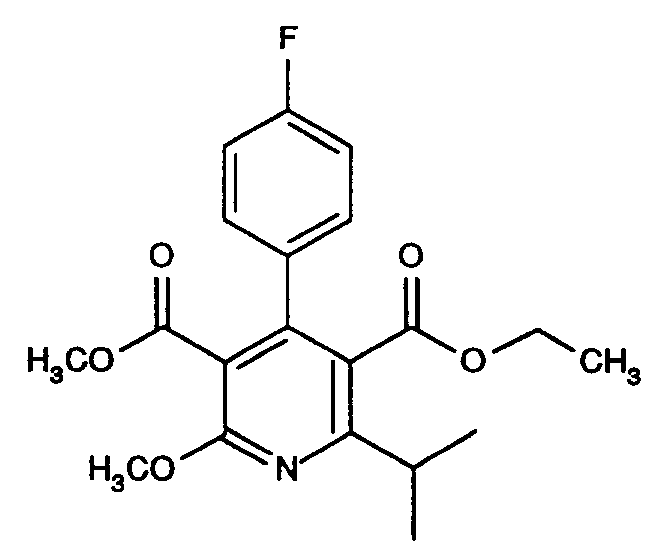
11,3 g (31 mmol) der Verbindung aus Beispiel 4, 1,2 g (50 mmol) Natriumhydrid und 4 ml (62 mmol) Methyliodid werden in 50 ml Dimethylformamid 2 h bei 80°C erhitzt, die Mischung wird bei Raumtemperatur auf 500 ml Wasser gegossen und dreimal mit 150 ml Ether extrahiert. Die vereinigten organischen Phasen werden mit Wasser gewaschen und mit Natriumsulfat getrocknet. Nach Abdestillieren des Lösemittels im Vakuum erhält man 11,1g.
Rohausbeute: 95,2 % der Theorie
Schmelzpunkt: 83°C -

1,48 g (3,95 mmol) der Verbindung aus Beispiel 5 werden in 30 ml Toluol gelöst, unter Stickstoff auf -78°C gekühlt und bei dieser Temperatur 6,6 ml (10 mmol) einer 1,5 molaren Lösung von Diisobutylaluminiumhydrid in Toluol zugetropft. Man entfernt das Kühlbad und rührt 2 h bei Raumtemperatur nach. Nach Hydrolyse mit 20 %iger wässriger Kalium-Natriumtartratlösung wird die organische Phase abgetrennt, die wässrige Phase dreimal mit Toluol gewaschen, die vereinigten organischen Phasen mit gesättigter Natriumchloridlösung gewaschen und mit Natriumsulfat getrocknet.
Nach Abdestillieren des Lösemittels im Vakuum erhält man 1,52 g Öl, das über Kieselgel (Essigester/Petrolether 1:5) chromatographiert wird.
Ausbeute: 520 mg (38 % der Theorie) und 310 mg (21 %) Edukt. -

520 mg (1,5 mmol) der Verbindung aus Beispiel 6 werden in 42 mg (1,75 mol) Natriumhydrid und 0,3 ml (4,5 mmol) Methyliodid in 4 ml Dimethylformamid 4 h bei Raumtemepratur gerührt. Das Reaktionsgemisch wird auf Eiswasser gegossen, dreimal mit Ether gewaschen, die vereinigten Etherphasen mit Wasser und gesättigter Natriumchloridlösung gewaschen und mit Natriumsulfat getrocknet. Nach Entfernen des Lösemittels am Rotationsverdampfer erhält man 520 mg Öl.
Ausbeute: 100 % der Theorie -

1,19 g (3,5 mmol) der Verbindung aus Beispiel 7 wurden analog Beispiel 6 mit 5,2 ml (7,7 mmol) einer 1,5 molaren Lösung von Diisobutylaluminiuinhydrid in Toluol reduziert. Nach Chromatographie über Kieselgel (Essigester/Petrolether 1:5) erhält man 730 mg Feststoff.
Ausbeute: 66 % der Theorie
Schmlezpunkt: -

Zu einer Lösung von 0,7 g (2,2 mmol) der Verbindung aus Beispiel 8 in 120 ml Methylenchlorid gibt man 568 mg (2,64 mmol) Pyridiniumchlorochromat, rührt über Nacht bei Raumtemperatur, saugt über Kieselgur ab, wäscht mit 200 ml Methylenchlorid nach, saugt über Kieselgel ab, wäscht mit 200 ml Methylenchlorid nach, trocknet mit Natriumsulfat und erhält nach Entfernen des Lösemittels am Rotationsverdampfer 670 mg Öl.
Ausbeute: 96 % der Theorie -
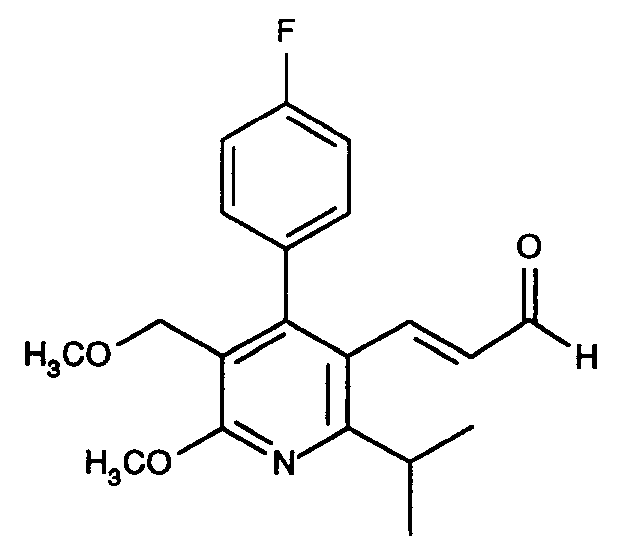
Unter Stickstoff tropft man zu einer Suspension von 59 mg (2,5 mmol) Natriumhydrid in 6 ml trockenem Tetrahydrofuran bei -5°C 804 mg (3,1 mmol) Diethyl-2(cyclohexylamino)-vinylphosphonat gelöst in 6 ml trockenem Tetrahydrofuran. Nach 30 min. werden bei derselben Temperatur 0,65 g (2,05 mmol) der Verbindung aus Beispiel 9 in 15 ml trockenem Tetrahydrofuran zugetropft und 30 min zum Rückfluß erwärmt. Nach Abkühlen auf Raumtemperatur wird der Ansatz in 200 ml eiskaltes Wasser gegeben und dreimal mit je 100 ml Essigester extrahiert. Die vereinigten organischen Phasen werden mit gesättigter Natriumchlorid-Lösung gewaschen und über Natriumsulfat getrocknet. Nach Einengen im Vakuum wird der Rückstand in 5 ml Toluol aufgenommen, mit einer Lösung von 0,9 g (7 mmol) Oxalsäure-Dihydrat in 12 ml Wasser versetzt und 90 min zum Rückfluß erhitzt. Nach Abkühlen auf Raumtemperatur werden die Phasen getrennt, die organische Phase mit gesättigter Natriumchlorid-Lösung gewaschen, über Natriumsulfat getrocknet und im Vakuum eineengt. Der Rückstand wird in Methylenchlorid gelöst und über Kieselgel filtriert.
Ausbeute: 560 mg Feststoff (79,6 % der Theorie) -

Unter Stickstof tropft man zu einer Suspension von 80 mg (3,4 mmol) Natriumhydrid in 3 ml trockenem Tetrahydrofuran bei -5°C 0,35 ml (3,3 mmol) Acetessigsäuremethylester. Nach 15 min werden bei derselben Temperatur 2,3 ml (3,3 mmol) 15 %iges Butyllithium in n-Hexan und 3,3 ml (3,3 mmol) einer 1 molaren Zinkchlorid-Lösung in Ether zugetropft und 15 min nachgerührt. Anschließend werden 530 mg (1,5 mmol) der Verbindung aus Beispiel 10 gelöst in 8 ml trockenem Tetrahydrofuran zugetropft und 30 min bei -5°C nachgerührt. Die Reaktionslösung wird vorsichtig mit 100 ml gesättigter wässriger Ammoniumchloridlösung verdünnt und die Mischung dreimal mit je 100 ml Ether extrahiert. Die vereinigten organischen Phasen werden zweimal mit gesättigter Natriumhydrogencarbonat-Lösung und einmal mit gesättigter Natriumchlorid-Lösung gewaschen, über Natriumsulfat getrocknet und im Vakkum eingeengt.
Rohausbeute: 760 mg (100 % der Theorie) -

Zu einer Lösung von 730 mg (1,6 mmol) der Verbindung aus Beispiel 11 in 13 ml trockenem Tetrahydrofuran gibt man bei Raumtemperatur 1,9 ml (1,9 mmol) 1 M Triethylboran-Lösung in Tetrahydrofuran, leitet während 5 min Luft durch die Lösung und kühlt auf -30°C Innentemperatur ab. Es werden 72 mg (1,9 mmol) Natriumborhydrid und langsam 1,3 ml Methanol zugegeben, 30 min bei -30°C gerührt und dann mit einem Gemisch von 5 ml 30 %igem Wasserstoffperoxid und 11 ml Wasser versetzt. Die Temperatur läßt man dabei bis 0°C ansteigen und rührt noch 30 min nach. Die Mischung wird dreimal mit je 70 ml Essigester extrahiert, die vereinigten organischen Phasen werden je einmal mit 10 %iger Kaliumiodidlösung, 10 %iger Natriumthiosulfatlösung, gesättigter Natriumhydrogencarbonat-Lösung und gesättigter Natriumchlorid-Lösung gewaschen, über Natriumsulfat getrocknet und im Vakkum eingeengt. Der Rückstand wird an einer Säule (100 g Kieselgel 230 - 400 mesh, Essigester/Petrolether 1:2) chromatographiert.
Ausbeute: 350 mg Öl (47,6 % der Theorie) -

Zu einer Lösung von 600 mg (1,8 mmol) der Verbindung aus Beispiel 6 in 20 ml Dimethylformamid gibt man bei Raumtemperatur 304 mg (2 mmol) tert.-Butyldimethylsilylchlorid, 262 mg (4 mmol) Imidazol und 0,05 g 4-Dimethylaminopyridin. Es wird über Nacht bei Raumtemepratur gerührt, mit 200 ml Wasser versetzt und mit 1 N Salzsäure auf pH 3 eingestellt. Die Mischung wird dreimal mit je 100 ml Ether extrahiert, die vereinigten organischen Phasen einmal mit gesättigter Natriumchlorid-Lösung gewaschen, über Magnesiumsulfat getrocknet und im Vakuum eingeengt. Der Rückstand wird an einer Säule (150 g Kieselgel, 70-230 mesh, Ø 4 cm, mit Essigester/Petrolether 1:9) chromatographiert.
Ausbeute: 700 mg (87 % der Theorie) -

Ausgehend von Beispiel 13 wurde analog zu den Vorschriften der Beispiele 8-12 die Titelverbindung hergestellt. -

100 mg (0,18 mmol) der Verbindung aus Beispiel 14 werden in einer Lösung von 1 ml 1 N-Salzsäure und 9 ml Methanol über Nacht bei Raumtemperatur gerührt. Nach dem Einengen wird mit Methylenchlorid aufgenommen, mit gesättigter Natriumhydrogencarbonatlösung gewaschen, getrocknet und über Kieselgel filtriert (Essigester/Petrolether 1:1).
Ausbeute: 46 mg (57 % der Theorie)
Schmelzpunkt: -

3,92 g (8,5 mmol) 3R,5S-(+)-Methyl-(E)-7-[4-(4-fluorphenyl)-6-isopropyl-2-methoxy-3-methoxymethyl-pyrid-5-yl]-3,5-dihydroxy-hept-6-enoat werden unter Argon in 100 ml absolutem THF gelöst Bei -78°C werden 35,8 ml (43 mmol) einer 1,2 M Diisobutylaluminiumhydrid-Lösung (in Toluol) zugetropft. Nach 12 h bei -30°C läßt man die Reaktionslösung auf 0°C kommen und gibt vorsichtig 150 ml Wasser zu. Anschließend wird 3 mal mit je 200 ml Essigester extrahiert Die organische Phase wird mit gesättigter NaCl-Lösung gewaschen, mit Na₂SO₄ getrocknet und am Rotationsverdampfer eingeengt. Nach Chromatographie über Kieselgel 60 (25 - 40 µ, Laufmittel Essigester / Petrolether 7/3) erhält man das gewünschte Produkt.
Ausbeute: 1,54 g (42% d.Th.)
¹H-NMR (CDCl₃): δ = 1,22 (m, 6H); 1,43 (m, 2H); 1,62 (m, 2H); 3,22 (s, 3H); 3,25 (sept. 1H); 3,84 (m, 2H); 4,01 (s, 3H); 4,04 (m, 1H); 4,06 (s; 2H); 4,28 (m, 1H); 5,22 (dd, 1H); 6,25 (d, 1H); 7,0 - 7,2 (m, 4H) ppm. -

Die Herstellung erfolgt analog Beispiel I aus 3R,5S-(+)-Methyl-(E)-7-[4-(4-fluorphenyl)-3-hydroxymethyl-6-isopropyl-2-methoxy-pyrid-5-yl]-3,5-dihydroxy-hept-6-enoat.
¹H-NMR (CDCl₃): δ = 1,25 (d, 6H); 1,42 (m, 2H); 1,63 (m, 2H); 3,28 (sept. 1H); 3,82 (m, 2H); 4,01 (m, 1H); 4,06 (s, 3H); 4,27 (m, 1H); 4,35 (d, 2H); 5,23 (dd, 1H); 6,22 (d, 1H); 7,0 - 7,2 (m, 4H) ppm.
und im Fall, daß -X- für die -CH₂-CH₂-Gruppe steht, die Ethengtuppe (X = -CH=CH-) oder die Ethingruppe (X = -C≡C-) schrittweise nach üblichen Methoden hydriert, und gegebenenfalls die Isomeren trennt.

in welcher
Als Lösemittel eignen sich in diesem Fall insbesondere Alkohole wie Methanol, Ethanol oder Propanol, bevorzugt Ethanol.
Claims (10)
- Substituierte 4-Phenyl-pyridone und 4-Phenyl-2-alkoxypyridine der allgemeinen Formel
 R¹ für geradkettiges oder verzweigtes Alkyl mit bis zu 8 Kohlenstoffatomen steht,R² für Cycloalkyl mit 3 bis 7 Kohlenstoffatomen steht, oder
für geradkettiges oder verzweigtes Alkyl mit bis zu 8 Kohlenstoffatomen steht,R³ für einen Rest der Formel
worinX die Gruppe -CH₂-CH₂-, -CH=CH- oder -C≡C- bedeutet,
undR⁶, R⁷ und R⁸ gleich oder verschieden sind und Wasserstoff oder einen Rest der Formel -CO-R⁹ oder -COOR¹⁰ bedeuten,
worinR⁹ und R¹⁰ gleich oder verschieden sind und geradkettiges oder verzweigtes Alkyl mit bis zu 8 Kohlenstoffatomen oder Phenyl bedeuten,
oderR⁶ und R⁷ gemeinsam einen Rest der Formel R⁴ für Phenyl steht, das gegebenenfalls bis zu 2-fach gleich oder verschieden durch Halogen, Trifluormethyl, Methoxy, Phenoxy oder geradkettiges oder verzweigtes Alkyl mit bis zu 8 Kohlenstoffatomen substituiert ist,R⁵ die oben angegebene Bedeutung von R³ hat und mit dieser gleich oder verschieden ist, oder
für Wasserstoff, Cyano, Carboxy oder geradkettiges oder verzweigtes Alkoxycarbonyl mit bis zu 8 Kohlenstoffatomen steht, oder
für geradkettiges oder verzweigtes Alkyl mit bis zu 8 Kohlenstoffatomen steht, das gegebenenfalls durch Halogen, Hydroxy, durch geradkettiges oder verzweigtes Alkoxy mit bis zu 8 Kohlenstoffatomen, oder durch eine Gruppe der Formel -O-(CH₂)a-R¹¹ oder -O-CO-R¹² substituiert ist,
worina eine Zahl 0 oder 1 bedeutet,R¹¹ Phenyl oder Benzyl bedeutet, die gegebenenfalls in Aromaten bis zu 2-fach gleich oder verschieden durch Halogen, Trifluormethyl, Cyano, Nitro oder durch geradkettiges oder verzweigtes Alkyl mit bis zu 6 Kohlenstoffatomen substituiert sind,R¹² die oben angegebene Bedeutung von R¹¹ hat und mit dieser gleich oder verschieden ist, oder
geradkettiges oder verzweigtes Alkly mit bis zu 8 Kohlenstoffatomen bedeutet,
oderR⁵ für einen Rest der Formel -CH=N-O-R¹³ steht,
worinR¹³ die oben angegebene Bedeutung von R¹² hat und mit dieser gleich oder verschieden ist - Substituierte 4-Phenyl-pyridone und 4-Phenyl-2-alkoxypyridine nach Anspruch 1,
wobeiR¹ für geradkettiges oder verzweigtes Alkyl mit bis zu 6 Kohlenstoffatomen steht,R² für Cyclopropyl, Cyclopentyl oder Cyclohexyl steht, oder für geradkettiges oder verzweigtes Alkyl mit bis zu 6 Kohlenstoffatomen steht,R³ für einen Rest der Formel
worinX die Gruppe -CH₂-CH₂-, -CH=CH- oder -C≡C- bedeutet,R⁶, R⁷ und R⁸ gleich oder verschieden sind und Wasserstoff oder einen Rest der Formel -CO-R⁹ oder -COO-R¹⁰ bedeuten,
worinR⁹ und R¹⁰ gleich oder verschieden sind und geradkettiges oder verzweigtes Alkyl mit bis zu 6 Kohlenstoffatomen oder Phenyl bedeuten,
oderR⁶ und R⁷ gemeinsam einen Rest der Formel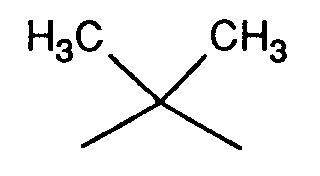 R⁴ für Phenyl steht, das gegebenenfalls bis zu 2-fach gleich oder verschieden durch Fluor, Chlor, Brom, Trifluormethyl oder durch geradkettiges oder verzweigtes Alkyl mit bis zu 6 Kohlenstoffatomen substituiert ist,R⁵ die oben angegebene Bedeutung von R³ hat und mit dieser gleich oder verschieden ist, oder
für Wasserstoff, Cyano, Carboxy oder geradkettiges oder verzweigtes Alkoxycarbonyl mit bis zu 6 Kohlenstoffatomen steht, oder
für geradkettiges oder verzweigtes Alkyl mit bis zu 6 Kohlenstoffatomen steht, das gegebenenfalls durch Fluor, Chlor, Brom, Hydroxy oder durch geradkettiges oder verzweigtes Alkoxy mit bis zu 6 Kohlenstoffatomen substituiert ist, oder das durch eine Gruppe der Formel -O-(CH₂)a-R¹¹ oder -O-CO-R¹² substituiert ist,
worina eine Zahl 0 oder 1 bedeutet,
undR¹¹ Phenyl oder Benzyl bedeutet, die in Aromaten gegebenenfalls durch Fluor, Chlor, Brom, Trifluormethyl, Cyano, Nitro oder durch geradkettiges oder verzweigtes Alkyl mit bis zu 4 Kohlenstoffatomen substituiert sind,R¹² die oben angegebene Bedeutung von R¹¹ hat und mit dieser gleich oder verschieden ist, oder
geradkettiges oder verzweigtes Alkyl mit bis zu 6 Kohlenstoffatomen bedeutet,
oderR⁵ für einen Rest der Formel -CH=N-O-R¹³ steht,
worinR¹³ die oben angegebene Bedeutung von R¹² hat und mit dieser gleich oder verschieden ist. - Substituierte 4-Phenyl-pyridone und 4-Phenyl-2-alkoxypyridine nach Anspruch 1
wobeiR¹ für geradkettiges oder verzweigtes Alkyl mit bis zu 4 Kohlenstoffatomen steht,R² für Cyclopropyl oder für geradkettiges oder verzweigtes Alkyl mit bis zu 4 Kohlenstoffatomen steht,R³ für einen Rest der Formel
worinX die Gruppe -CH₂-CH₂- oder -CH=CH- bedeutet,R⁶, R⁷ und R⁸ gleich oder verschieden sind und Wasserstoff oder einen Rest der Formel -CO-R⁹ bedeuten,
worinR⁹ geradkettiges oder verzweigtes Alkyl mit bis zu 4 Kohlenstoffatomen bedeutet,R⁴ für Phenyl steht, das gegebenenfalls durch Fluor, Trifluormethyl oder durch geradkettiges oder verzweigtes Alkyl mit bis zu 4 Kohlenstoffatomen substituiert ist,R⁵ die oben angegebene Bedeutung von R³ hat und mit dieser gleich oder verschieden ist, oder
für Wasserstoff oder
für geradkettiges oder verzweigtes Alkyl mit bis zu 4 Kohlenstoffatomen steht, das gegebenenfalls durch Hydroxy oder durch geradkettiges oder verzweigtes Alkoxy mit bis zu 4 Kohlenstoffatomen substituiert ist. - Substituierte 4-Phenyl-pyridone und 4-Phenyl-2-alkoxypyridine nach Anspruch 1
wobeiR¹ für geradkettiges oder verzweigtes Alkyl mit bis zu 4 Kohlenstoffatomen steht,R² für Cyclopropyl oder für geradkettiges oder verzweigtes Alkyl mit bis zu 4 Kohlenstoffatomen steht,R³ für einen Rest der Formel
wobeiX die Gruppe -CH₂-CH₂- oder -CH=CH- bedeutet,R⁴ für Phenyl steht, das gegebenenfalls durch Fluor substituiert ist, undR⁵ die oben angegebene Bedeutung von R³ hat oder
für gradkettiges oder verzweigtes Alkyl mit bis zu 4 Kohlenstoffatomen steht, das gegebenenfalls durch Hydroxy oder Alkoxy mit bis zu vier Kohlenstoffatomen substituiert ist. - Substituierte 4-Phenyl-pyridone und 4-Phenyl-2-alkoxypyridine nach Anspruch 1 zur therapeutischen Anwendung.
- Verfahren zur Herstellung von substituierten 4-Phenyl-pyridonen und 4-Phenyl-2-alkoxypyridinen nach Anspruch 1, dadurch gekennzeichnet, daß man Pyridone der allgemeinen Formel II
 R¹, R² und R⁴ die angegebene Bedeutung habenundD für einen Rest der Formel
worinA, B, R⁶ und R⁷ die angegebene Bedeutung habenR¹⁴ für C₁-C₆-Alkyl steht
undE entweder ebenfalls die oben angegebene Bedeutung von D hat oder die oben angegebene Bedeutung von R⁵ hat,in inerten Lösemitteln, unter Schutzgasatmosphäre, gegebenenfalls über die Stufe des Aldehyds, mit Reduktionsmitteln reduziert,
und im Fall, daß -X- für die -CH₂-CH₂-Gruppe steht, die Ethengruppe (X = -CH=CH-) oder die Ethingruppe (X = -C≡C-) schrittweise nach üblichen Methoden hydriert, und gegebenenfalls die Isomeren trennt. - Arzneimittel enthaltend mindestens ein substituiertes 4-Phenyl-pyridon oder 4-Phenyl-2-alkoxypyridin nach Anspruch 1.
- Arzneimittel nach Anspruch 1 zur Behandlung von Hyperlipoproteinämie.
- Verfahren zur Herstellung von Arzneimittel nach Anspruch 7 dadurch gekennzeichnet, daß man die substituierten 4-Phenyl-pyridone oder 4-Phenyl-2-alkoxypyridine gegebenenfalls mit Hilfe von üblichen Hilfs- und Trägerstoffen in eine geeignete Applikationsform überführt.
- Verwendung von substituierten 4-Phenyl-pyridonen und 4-Phenyl-2-alkoxypyridinen zur Herstellung von Arzneimitteln.
Applications Claiming Priority (4)
| Application Number | Priority Date | Filing Date | Title |
|---|---|---|---|
| DE4243278 | 1992-12-21 | ||
| DE4243278 | 1992-12-21 | ||
| DE4321421A DE4321421A1 (de) | 1992-12-21 | 1993-06-28 | Substituierte 4-Phenyl-pyridone und 4-Phenyl-2-alkoxypyridine |
| DE4321421 | 1993-06-28 |
Publications (2)
| Publication Number | Publication Date |
|---|---|
| EP0603649A1 true EP0603649A1 (de) | 1994-06-29 |
| EP0603649B1 EP0603649B1 (de) | 1996-07-10 |
Family
ID=25921579
Family Applications (1)
| Application Number | Title | Priority Date | Filing Date |
|---|---|---|---|
| EP93119766A Expired - Lifetime EP0603649B1 (de) | 1992-12-21 | 1993-12-08 | Substituierte 4-Phenyl-pyridone und 4-Phenyl-2-alkoxypyridine als HMG-CoA-Reductase-Inhitoren |
Country Status (21)
| Country | Link |
|---|---|
| US (1) | US5418243A (de) |
| EP (1) | EP0603649B1 (de) |
| JP (1) | JPH06234741A (de) |
| CN (1) | CN1117965A (de) |
| AT (1) | ATE140226T1 (de) |
| AU (1) | AU660132B2 (de) |
| CA (1) | CA2111778A1 (de) |
| CZ (1) | CZ284093A3 (de) |
| DE (1) | DE59303195D1 (de) |
| DK (1) | DK0603649T3 (de) |
| ES (1) | ES2089687T3 (de) |
| FI (1) | FI935728L (de) |
| GR (1) | GR3020668T3 (de) |
| HU (1) | HUT70150A (de) |
| IL (1) | IL108071A0 (de) |
| MX (1) | MX9308013A (de) |
| NO (1) | NO934706L (de) |
| NZ (1) | NZ250500A (de) |
| PH (1) | PH29953A (de) |
| PL (1) | PL301582A1 (de) |
| SK (1) | SK144893A3 (de) |
Families Citing this family (23)
| Publication number | Priority date | Publication date | Assignee | Title |
|---|---|---|---|---|
| DE19627420A1 (de) * | 1996-07-08 | 1998-01-15 | Bayer Ag | 6-(Hydroxymethyl-ethyl)pyridine |
| JP2005126340A (ja) * | 2003-10-22 | 2005-05-19 | Kureha Chem Ind Co Ltd | 置換ピリドン類の製造法、その原料化合物及びその製造方法 |
| TWI417095B (zh) * | 2006-03-15 | 2013-12-01 | Janssen Pharmaceuticals Inc | 1,4-二取代之3-氰基-吡啶酮衍生物及其作為mGluR2-受體之正向異位性調節劑之用途 |
| TW200845978A (en) * | 2007-03-07 | 2008-12-01 | Janssen Pharmaceutica Nv | 3-cyano-4-(4-tetrahydropyran-phenyl)-pyridin-2-one derivatives |
| TW200900065A (en) | 2007-03-07 | 2009-01-01 | Janssen Pharmaceutica Nv | 3-cyano-4-(4-pyridinyloxy-phenyl)-pyridin-2-one derivatives |
| KR20100080597A (ko) * | 2007-09-14 | 2010-07-09 | 오르토-맥닐-얀센 파마슈티칼스 인코포레이티드 | 1,3-이치환된-4-페닐-1h-피리딘-2-온 |
| KR20100065191A (ko) | 2007-09-14 | 2010-06-15 | 오르토-맥닐-얀센 파마슈티칼스 인코포레이티드 | 1,3-이치환된 4-(아릴-x-페닐)-1h-피리딘-2-온 |
| CA2696948C (en) * | 2007-09-14 | 2013-04-30 | Jose Maria Cid-Nunez | 1',3'-disubstituted-4-phenyl-3,4,5,6-tetrahydro-2h,1'h-[1,4']bipyridinyl-2'-ones |
| EP2220083B1 (de) * | 2007-11-14 | 2017-07-19 | Janssen Pharmaceuticals, Inc. | Imidazo[1,2-a]-pyridin-derivate und ihre verwendung als positive allosterische modulatoren von mglur2-rezeptoren |
| CA2735764C (en) | 2008-09-02 | 2016-06-14 | Ortho-Mcneil-Janssen Pharmaceuticals, Inc. | 3-azabicyclo[3.1.0]hexyl derivatives as modulators of metabotropic glutamate receptors |
| AU2009304293B2 (en) | 2008-10-16 | 2012-04-26 | Addex Pharma S.A. | Indole and benzomorpholine derivatives as modulators of metabotropic glutamate receptors |
| BRPI0921333A2 (pt) | 2008-11-28 | 2015-12-29 | Addex Pharmaceuticals Sa | derivados de indol e benzoxazina como moduladores de receptores de glutamato metabotrópicos |
| MY153913A (en) | 2009-05-12 | 2015-04-15 | Janssen Pharmaceuticals Inc | 7-aryl-1,2,4-triazolo[4,3-a]pyridine derivatives and their use as positive allosteric modulators of mglur2 receptors |
| NZ596078A (en) | 2009-05-12 | 2013-06-28 | Janssen Pharmaceuticals Inc | 1,2,4-TRIAZOLO [4,3-a] PYRIDINE DERIVATIVES AND THEIR USE FOR THE TREATMENT OR PREVENTION OF NEUROLOGICAL AND PSYCHIATRIC DISORDERS |
| EA020671B1 (ru) | 2009-05-12 | 2014-12-30 | Янссен Фармасьютикалз, Инк. | ПРОИЗВОДНЫЕ 1,2,4-ТРИАЗОЛО[4,3-a]ПИРИДИНА И ИХ ПРИМЕНЕНИЕ В КАЧЕСТВЕ ПОЛОЖИТЕЛЬНЫХ АЛЛОСТЕРИЧЕСКИХ МОДУЛЯТОРОВ РЕЦЕПТОРОВ mGluR2 |
| CN103298810B (zh) | 2010-11-08 | 2016-03-16 | 杨森制药公司 | 1,2,4-三唑并[4,3-a]吡啶衍生物及其作为MGLUR2受体的正变构调节剂的用途 |
| EP2643320B1 (de) | 2010-11-08 | 2015-03-04 | Janssen Pharmaceuticals, Inc. | 1,2,4-triazolo[4,3-a]pyridinderivate und ihre verwendung als positiv allosterische modulatoren des mglur2 receptors |
| CA2815002C (en) | 2010-11-08 | 2019-10-22 | Janssen Pharmaceuticals, Inc. | 1,2,4-triazolo[4,3-a]pyridine derivatives and their use as positive allosteric modulators of mglur2 receptors |
| JO3368B1 (ar) | 2013-06-04 | 2019-03-13 | Janssen Pharmaceutica Nv | مركبات 6، 7- ثاني هيدرو بيرازولو [5،1-a] بيرازين- 4 (5 يد)- اون واستخدامها بصفة منظمات تفارغية سلبية لمستقبلات ميجلور 2 |
| JO3367B1 (ar) | 2013-09-06 | 2019-03-13 | Janssen Pharmaceutica Nv | مركبات 2،1، 4- ثلاثي زولو [3،4-a] بيريدين واستخدامها بصفة منظمات تفارغية موجبة لمستقبلات ميجلور 2 |
| LT3431106T (lt) | 2014-01-21 | 2021-02-10 | Janssen Pharmaceutica Nv | Deriniai, apimantys 2 potipio metabotropinio glutamaterginio receptoriaus teigiamus alosterinius moduliatorius arba ortosterinius agonistus, ir jų panaudojimas |
| KR102414246B1 (ko) | 2014-01-21 | 2022-06-27 | 얀센 파마슈티카 엔.브이. | 대사 조절형 글루탐산 작동성 수용체 제2아형의 양성 알로스테릭 조절제 또는 오르토스테릭 작동제를 포함하는 조합 및 그 용도 |
| CN104370806B (zh) * | 2014-06-17 | 2017-07-07 | 中国海洋大学 | 一种吡啶酮生物碱类化合物及其制备方法和用途 |
Citations (2)
| Publication number | Priority date | Publication date | Assignee | Title |
|---|---|---|---|---|
| EP0306929A2 (de) * | 1987-09-08 | 1989-03-15 | Warner-Lambert Company | 6-[[(substituierte)Pyridin-3-yl]alkyl]- und alkenyl]-tetrahydro-4-hydroxypyran-2-one-Inhibitoren von der Cholesterol-Biosynthese |
| EP0373423A1 (de) * | 1988-12-14 | 1990-06-20 | Bayer Ag | Substituierte 2-Pyridone und Pyrid-2-thione, Verfahren zu ihrer Herstellung und ihre Verwendung in Arzneimitteln |
Family Cites Families (7)
| Publication number | Priority date | Publication date | Assignee | Title |
|---|---|---|---|---|
| US4156727A (en) * | 1975-07-31 | 1979-05-29 | Smith Kline & French Laboratories Limited | Alkoxy pyridine compounds |
| GB1564502A (en) * | 1975-07-31 | 1980-04-10 | Smith Kline French Lab | Guanidines thioureas and 1,1-diamino-2-nitroethylene derivatives |
| US4684477A (en) * | 1985-03-06 | 1987-08-04 | Chisso Corporation | Pyridine derivatives and their use in liquid crystals |
| EP0339342A1 (de) * | 1988-04-23 | 1989-11-02 | Bayer Ag | N-Substituierte N-Amino-pyrrole |
| US4916239A (en) * | 1988-07-19 | 1990-04-10 | Merck & Co., Inc. | Process for the lactonization of mevinic acids and analogs thereof |
| DE3909378A1 (de) * | 1989-03-22 | 1990-09-27 | Bayer Ag | Substituierte biphenyle |
| DE3925636A1 (de) * | 1989-08-03 | 1991-02-07 | Bayer Ag | Imino-substituierte pyridine |
-
1993
- 1993-11-25 AU AU51955/93A patent/AU660132B2/en not_active Ceased
- 1993-12-08 ES ES93119766T patent/ES2089687T3/es not_active Expired - Lifetime
- 1993-12-08 DK DK93119766.9T patent/DK0603649T3/da active
- 1993-12-08 EP EP93119766A patent/EP0603649B1/de not_active Expired - Lifetime
- 1993-12-08 AT AT93119766T patent/ATE140226T1/de not_active IP Right Cessation
- 1993-12-08 DE DE59303195T patent/DE59303195D1/de not_active Expired - Fee Related
- 1993-12-14 US US08/166,775 patent/US5418243A/en not_active Expired - Fee Related
- 1993-12-15 MX MX9308013A patent/MX9308013A/es not_active Application Discontinuation
- 1993-12-17 NZ NZ250500A patent/NZ250500A/en unknown
- 1993-12-17 IL IL10807193A patent/IL108071A0/xx unknown
- 1993-12-17 CA CA002111778A patent/CA2111778A1/en not_active Abandoned
- 1993-12-20 CZ CZ932840A patent/CZ284093A3/cs unknown
- 1993-12-20 NO NO934706A patent/NO934706L/no unknown
- 1993-12-20 SK SK1448-93A patent/SK144893A3/sk unknown
- 1993-12-20 HU HU9303675A patent/HUT70150A/hu unknown
- 1993-12-20 FI FI935728A patent/FI935728L/fi unknown
- 1993-12-20 JP JP5344533A patent/JPH06234741A/ja active Pending
- 1993-12-20 PH PH47501A patent/PH29953A/en unknown
- 1993-12-20 PL PL93301582A patent/PL301582A1/xx unknown
- 1993-12-21 CN CN93112965A patent/CN1117965A/zh active Pending
-
1996
- 1996-07-31 GR GR960402026T patent/GR3020668T3/el unknown
Patent Citations (2)
| Publication number | Priority date | Publication date | Assignee | Title |
|---|---|---|---|---|
| EP0306929A2 (de) * | 1987-09-08 | 1989-03-15 | Warner-Lambert Company | 6-[[(substituierte)Pyridin-3-yl]alkyl]- und alkenyl]-tetrahydro-4-hydroxypyran-2-one-Inhibitoren von der Cholesterol-Biosynthese |
| EP0373423A1 (de) * | 1988-12-14 | 1990-06-20 | Bayer Ag | Substituierte 2-Pyridone und Pyrid-2-thione, Verfahren zu ihrer Herstellung und ihre Verwendung in Arzneimitteln |
Non-Patent Citations (1)
| Title |
|---|
| G. BECK ET AL., JOURNAL OF MEDICINAL CHEMISTRY, vol. 33, no. 1, 1990, WASHINGTON US, pages 52 - 60 * |
Also Published As
| Publication number | Publication date |
|---|---|
| FI935728A0 (fi) | 1993-12-20 |
| HU9303675D0 (en) | 1994-04-28 |
| AU660132B2 (en) | 1995-06-08 |
| ATE140226T1 (de) | 1996-07-15 |
| GR3020668T3 (en) | 1996-10-31 |
| IL108071A0 (en) | 1994-04-12 |
| ES2089687T3 (es) | 1996-10-01 |
| CN1117965A (zh) | 1996-03-06 |
| FI935728A7 (fi) | 1994-06-22 |
| DK0603649T3 (da) | 1996-11-04 |
| JPH06234741A (ja) | 1994-08-23 |
| PL301582A1 (en) | 1994-06-27 |
| SK144893A3 (en) | 1995-02-08 |
| HUT70150A (en) | 1995-09-28 |
| US5418243A (en) | 1995-05-23 |
| NO934706D0 (no) | 1993-12-20 |
| MX9308013A (es) | 1994-08-31 |
| DE59303195D1 (de) | 1996-08-14 |
| CZ284093A3 (en) | 1994-07-13 |
| CA2111778A1 (en) | 1994-06-22 |
| NZ250500A (en) | 1996-02-27 |
| FI935728L (fi) | 1994-06-22 |
| EP0603649B1 (de) | 1996-07-10 |
| PH29953A (en) | 1996-09-16 |
| AU5195593A (en) | 1994-06-30 |
| NO934706L (no) | 1994-06-22 |
Similar Documents
| Publication | Publication Date | Title |
|---|---|---|
| EP0603649B1 (de) | Substituierte 4-Phenyl-pyridone und 4-Phenyl-2-alkoxypyridine als HMG-CoA-Reductase-Inhitoren | |
| EP0373423B1 (de) | Substituierte 2-Pyridone und Pyrid-2-thione, Verfahren zu ihrer Herstellung und ihre Verwendung in Arzneimitteln | |
| EP0325130B1 (de) | Substituierte Pyridine | |
| EP0465970A1 (de) | Substituierte Pyrrolopyridine | |
| DE3832570A1 (de) | 7-substituierte derivate der 3,5-dihydroxyhept-6-insaeure, verfahren zur ihrer herstellung, ihre verwendung als arzneimittel, sowie zwischenprodukte | |
| EP0796846A1 (de) | 2-Aryl-substituierte Pyridine | |
| EP1080086A1 (de) | Dihydropyrimidine | |
| EP0674638B1 (de) | Substituierte triole | |
| WO2000058302A1 (de) | Dihydropyrimidine und ihre verwendung zur behandlung von hepatitis b | |
| EP0325129B1 (de) | Disubstituierte Pyridine | |
| EP0716082A1 (de) | Heterocyclisch substituierte Oxy-phenyl-(phenyl) glycinolamide mit antiatherosklerotischer Wirkung | |
| EP0391185B1 (de) | Substituierte 1,8-Naphthyridine | |
| WO1998034920A1 (de) | 2-amino-substituierte pyridine verwendbar zur behandlung von arteriosklerose und hyperlipoproteinemie | |
| EP0468258B1 (de) | Substituierte Pyrido-oxazine | |
| EP0378850A2 (de) | Neue substituierte Pyrido(2,3-d)pyrimidine | |
| EP0519291A1 (de) | Aminomethyl-substituierte 2,3-Dihydropyrano(2,3-b)pyridine, Verfahren zu ihrer Herstellung und ihre Verwendung in Arzneimitteln | |
| EP0603699B1 (de) | Substituierte Pyridine als HMG-CoA-Reduktase-Inhitoren | |
| DE4321421A1 (de) | Substituierte 4-Phenyl-pyridone und 4-Phenyl-2-alkoxypyridine | |
| EP0818447B1 (de) | 6-(Hydroxymethyl-ethyl)pyridine als HMG-CoA-Reduktase Inhibitoren | |
| EP0411420A2 (de) | Imino-substituierte Pyridine | |
| EP0416383A2 (de) | Substituierte Amino-Pyridine | |
| DE3909378A1 (de) | Substituierte biphenyle | |
| DE3841991A1 (de) | Substituierte 2-pyridone und pyrid-2-thione, verfahren zu ihrer herstellung und ihre verwendung in arzneimitteln | |
| EP0704434A1 (de) | 6-Amino-1,4-Dihydropyridinen und ihre Verwendung als selektive Kaliumkanalmodulatoren | |
| DE3801440A1 (de) | Disubstituierte pyridine |
Legal Events
| Date | Code | Title | Description |
|---|---|---|---|
| PUAI | Public reference made under article 153(3) epc to a published international application that has entered the european phase |
Free format text: ORIGINAL CODE: 0009012 |
|
| AK | Designated contracting states |
Kind code of ref document: A1 Designated state(s): AT BE CH DE DK ES FR GB GR IE IT LI LU MC NL PT SE |
|
| 17P | Request for examination filed |
Effective date: 19941115 |
|
| 17Q | First examination report despatched |
Effective date: 19950719 |
|
| GRAH | Despatch of communication of intention to grant a patent |
Free format text: ORIGINAL CODE: EPIDOS IGRA |
|
| GRAH | Despatch of communication of intention to grant a patent |
Free format text: ORIGINAL CODE: EPIDOS IGRA |
|
| GRAA | (expected) grant |
Free format text: ORIGINAL CODE: 0009210 |
|
| AK | Designated contracting states |
Kind code of ref document: B1 Designated state(s): AT BE CH DE DK ES FR GB GR IE IT LI LU MC NL PT SE |
|
| PG25 | Lapsed in a contracting state [announced via postgrant information from national office to epo] |
Ref country code: GR Free format text: LAPSE BECAUSE OF FAILURE TO SUBMIT A TRANSLATION OF THE DESCRIPTION OR TO PAY THE FEE WITHIN THE PRESCRIBED TIME-LIMIT Effective date: 19960710 |
|
| REF | Corresponds to: |
Ref document number: 140226 Country of ref document: AT Date of ref document: 19960715 Kind code of ref document: T |
|
| REG | Reference to a national code |
Ref country code: CH Ref legal event code: NV Representative=s name: E. BLUM & CO. PATENTANWAELTE |
|
| REG | Reference to a national code |
Ref country code: IE Ref legal event code: FG4D Free format text: 69096 |
|
| REF | Corresponds to: |
Ref document number: 59303195 Country of ref document: DE Date of ref document: 19960814 |
|
| ET | Fr: translation filed | ||
| GBT | Gb: translation of ep patent filed (gb section 77(6)(a)/1977) |
Effective date: 19960829 |
|
| ITF | It: translation for a ep patent filed | ||
| REG | Reference to a national code |
Ref country code: GR Ref legal event code: FG4A Free format text: 3020668 |
|
| REG | Reference to a national code |
Ref country code: ES Ref legal event code: FG2A Ref document number: 2089687 Country of ref document: ES Kind code of ref document: T3 |
|
| REG | Reference to a national code |
Ref country code: DK Ref legal event code: T3 |
|
| REG | Reference to a national code |
Ref country code: ES Ref legal event code: FG2A Ref document number: 2089687 Country of ref document: ES Kind code of ref document: T3 |
|
| SC4A | Pt: translation is available |
Free format text: 960828 AVAILABILITY OF NATIONAL TRANSLATION |
|
| PG25 | Lapsed in a contracting state [announced via postgrant information from national office to epo] |
Ref country code: IE Free format text: LAPSE BECAUSE OF NON-PAYMENT OF DUE FEES Effective date: 19961208 Ref country code: AT Effective date: 19961208 |
|
| PG25 | Lapsed in a contracting state [announced via postgrant information from national office to epo] |
Ref country code: SE Effective date: 19961209 |
|
| PG25 | Lapsed in a contracting state [announced via postgrant information from national office to epo] |
Ref country code: LU Free format text: LAPSE BECAUSE OF NON-PAYMENT OF DUE FEES Effective date: 19961231 Ref country code: BE Effective date: 19961231 |
|
| PLBE | No opposition filed within time limit |
Free format text: ORIGINAL CODE: 0009261 |
|
| STAA | Information on the status of an ep patent application or granted ep patent |
Free format text: STATUS: NO OPPOSITION FILED WITHIN TIME LIMIT |
|
| BERE | Be: lapsed |
Owner name: BAYER A.G. Effective date: 19961231 |
|
| PG25 | Lapsed in a contracting state [announced via postgrant information from national office to epo] |
Ref country code: MC Effective date: 19970630 |
|
| 26N | No opposition filed | ||
| REG | Reference to a national code |
Ref country code: GR Ref legal event code: MM2A Free format text: 3020668 |
|
| EUG | Se: european patent has lapsed |
Ref document number: 93119766.9 |
|
| PG25 | Lapsed in a contracting state [announced via postgrant information from national office to epo] |
Ref country code: PT Free format text: LAPSE BECAUSE OF NON-PAYMENT OF DUE FEES Effective date: 19980630 |
|
| PG25 | Lapsed in a contracting state [announced via postgrant information from national office to epo] |
Ref country code: NL Free format text: LAPSE BECAUSE OF NON-PAYMENT OF DUE FEES Effective date: 19980701 |
|
| NLV4 | Nl: lapsed or anulled due to non-payment of the annual fee |
Effective date: 19980701 |
|
| REG | Reference to a national code |
Ref country code: PT Ref legal event code: MM4A Free format text: LAPSE DUE TO NON-PAYMENT OF FEES Effective date: 19980630 |
|
| PGFP | Annual fee paid to national office [announced via postgrant information from national office to epo] |
Ref country code: DE Payment date: 20001115 Year of fee payment: 8 |
|
| PGFP | Annual fee paid to national office [announced via postgrant information from national office to epo] |
Ref country code: FR Payment date: 20001122 Year of fee payment: 8 |
|
| PGFP | Annual fee paid to national office [announced via postgrant information from national office to epo] |
Ref country code: CH Payment date: 20001130 Year of fee payment: 8 |
|
| PGFP | Annual fee paid to national office [announced via postgrant information from national office to epo] |
Ref country code: GB Payment date: 20001206 Year of fee payment: 8 |
|
| PGFP | Annual fee paid to national office [announced via postgrant information from national office to epo] |
Ref country code: ES Payment date: 20001213 Year of fee payment: 8 |
|
| PGFP | Annual fee paid to national office [announced via postgrant information from national office to epo] |
Ref country code: DK Payment date: 20001229 Year of fee payment: 8 |
|
| PG25 | Lapsed in a contracting state [announced via postgrant information from national office to epo] |
Ref country code: GB Free format text: LAPSE BECAUSE OF NON-PAYMENT OF DUE FEES Effective date: 20011208 Ref country code: DK Free format text: LAPSE BECAUSE OF NON-PAYMENT OF DUE FEES Effective date: 20011208 |
|
| PG25 | Lapsed in a contracting state [announced via postgrant information from national office to epo] |
Ref country code: LI Free format text: LAPSE BECAUSE OF NON-PAYMENT OF DUE FEES Effective date: 20011231 Ref country code: CH Free format text: LAPSE BECAUSE OF NON-PAYMENT OF DUE FEES Effective date: 20011231 |
|
| REG | Reference to a national code |
Ref country code: GB Ref legal event code: IF02 |
|
| PG25 | Lapsed in a contracting state [announced via postgrant information from national office to epo] |
Ref country code: DE Free format text: LAPSE BECAUSE OF NON-PAYMENT OF DUE FEES Effective date: 20020702 |
|
| GBPC | Gb: european patent ceased through non-payment of renewal fee |
Effective date: 20011208 |
|
| REG | Reference to a national code |
Ref country code: CH Ref legal event code: PL |
|
| PG25 | Lapsed in a contracting state [announced via postgrant information from national office to epo] |
Ref country code: FR Free format text: LAPSE BECAUSE OF NON-PAYMENT OF DUE FEES Effective date: 20020830 |
|
| REG | Reference to a national code |
Ref country code: DK Ref legal event code: EBP |
|
| REG | Reference to a national code |
Ref country code: FR Ref legal event code: ST |
|
| PG25 | Lapsed in a contracting state [announced via postgrant information from national office to epo] |
Ref country code: ES Free format text: LAPSE BECAUSE OF NON-PAYMENT OF DUE FEES Effective date: 20021209 |
|
| REG | Reference to a national code |
Ref country code: ES Ref legal event code: FD2A Effective date: 20030113 |
|
| PG25 | Lapsed in a contracting state [announced via postgrant information from national office to epo] |
Ref country code: IT Free format text: LAPSE BECAUSE OF NON-PAYMENT OF DUE FEES Effective date: 20051208 |
|
| PG25 | Lapsed in a contracting state [announced via postgrant information from national office to epo] |
Ref country code: PT Free format text: LAPSE BECAUSE OF NON-PAYMENT OF DUE FEES Effective date: 19961208 |