EP0603742A2 - Verfahren zur potentiometrischen Bestimmung von Ionen unter Verwendung einer asymmetrischen ionenselektiven Membranelektrode mit erhöhter Selektivität - Google Patents
Verfahren zur potentiometrischen Bestimmung von Ionen unter Verwendung einer asymmetrischen ionenselektiven Membranelektrode mit erhöhter Selektivität Download PDFInfo
- Publication number
- EP0603742A2 EP0603742A2 EP93120285A EP93120285A EP0603742A2 EP 0603742 A2 EP0603742 A2 EP 0603742A2 EP 93120285 A EP93120285 A EP 93120285A EP 93120285 A EP93120285 A EP 93120285A EP 0603742 A2 EP0603742 A2 EP 0603742A2
- Authority
- EP
- European Patent Office
- Prior art keywords
- ion
- selective
- membrane
- asymmetric
- layer
- Prior art date
- Legal status (The legal status is an assumption and is not a legal conclusion. Google has not performed a legal analysis and makes no representation as to the accuracy of the status listed.)
- Granted
Links
- 239000012528 membrane Substances 0.000 title claims abstract description 240
- 150000002500 ions Chemical class 0.000 claims abstract description 171
- BVKZGUZCCUSVTD-UHFFFAOYSA-L Carbonate Chemical compound [O-]C([O-])=O BVKZGUZCCUSVTD-UHFFFAOYSA-L 0.000 claims abstract description 70
- 239000003795 chemical substances by application Substances 0.000 claims abstract description 65
- 229960001860 salicylate Drugs 0.000 claims abstract description 40
- YGSDEFSMJLZEOE-UHFFFAOYSA-M salicylate Chemical compound OC1=CC=CC=C1C([O-])=O YGSDEFSMJLZEOE-UHFFFAOYSA-M 0.000 claims abstract description 38
- 239000002555 ionophore Substances 0.000 claims abstract description 24
- 230000000236 ionophoric effect Effects 0.000 claims abstract description 24
- 239000012472 biological sample Substances 0.000 claims abstract description 19
- 239000008139 complexing agent Substances 0.000 claims abstract description 18
- 239000000523 sample Substances 0.000 claims abstract description 17
- WXTMDXOMEHJXQO-UHFFFAOYSA-N 2,5-dihydroxybenzoic acid Chemical compound OC(=O)C1=CC(O)=CC=C1O WXTMDXOMEHJXQO-UHFFFAOYSA-N 0.000 claims abstract description 12
- SAOKZLXYCUGLFA-UHFFFAOYSA-N bis(2-ethylhexyl) adipate Chemical compound CCCCC(CC)COC(=O)CCCCC(=O)OCC(CC)CCCC SAOKZLXYCUGLFA-UHFFFAOYSA-N 0.000 claims abstract description 7
- 229940114119 gentisate Drugs 0.000 claims abstract description 6
- 125000002887 hydroxy group Chemical group [H]O* 0.000 claims abstract description 6
- 238000000034 method Methods 0.000 claims description 39
- 230000008569 process Effects 0.000 claims description 29
- 239000000126 substance Substances 0.000 claims description 23
- 230000002452 interceptive effect Effects 0.000 claims description 17
- VEXZGXHMUGYJMC-UHFFFAOYSA-M Chloride anion Chemical compound [Cl-] VEXZGXHMUGYJMC-UHFFFAOYSA-M 0.000 claims description 12
- KZJRKRQSDZGHEC-UHFFFAOYSA-N 2,2,2-trifluoro-1-phenylethanone Chemical class FC(F)(F)C(=O)C1=CC=CC=C1 KZJRKRQSDZGHEC-UHFFFAOYSA-N 0.000 claims description 7
- SBHRWOBHKASWGU-UHFFFAOYSA-M tridodecyl(methyl)azanium;chloride Chemical compound [Cl-].CCCCCCCCCCCC[N+](C)(CCCCCCCCCCCC)CCCCCCCCCCCC SBHRWOBHKASWGU-UHFFFAOYSA-M 0.000 claims description 7
- 239000012470 diluted sample Substances 0.000 claims description 6
- IPKKHRVROFYTEK-UHFFFAOYSA-N dipentyl phthalate Chemical compound CCCCCOC(=O)C1=CC=CC=C1C(=O)OCCCCC IPKKHRVROFYTEK-UHFFFAOYSA-N 0.000 claims description 6
- 230000002708 enhancing effect Effects 0.000 claims description 5
- BJQHLKABXJIVAM-UHFFFAOYSA-N bis(2-ethylhexyl) phthalate Chemical compound CCCCC(CC)COC(=O)C1=CC=CC=C1C(=O)OCC(CC)CCCC BJQHLKABXJIVAM-UHFFFAOYSA-N 0.000 claims description 4
- VJHINFRRDQUWOJ-UHFFFAOYSA-N dioctyl sebacate Chemical compound CCCCC(CC)COC(=O)CCCCCCCCC(=O)OCC(CC)CCCC VJHINFRRDQUWOJ-UHFFFAOYSA-N 0.000 claims description 4
- CXVOIIMJZFREMM-UHFFFAOYSA-N 1-(2-nitrophenoxy)octane Chemical compound CCCCCCCCOC1=CC=CC=C1[N+]([O-])=O CXVOIIMJZFREMM-UHFFFAOYSA-N 0.000 claims description 2
- PYGXAGIECVVIOZ-UHFFFAOYSA-N Dibutyl decanedioate Chemical compound CCCCOC(=O)CCCCCCCCC(=O)OCCCC PYGXAGIECVVIOZ-UHFFFAOYSA-N 0.000 claims description 2
- 239000007853 buffer solution Substances 0.000 claims description 2
- HCQHIEGYGGJLJU-UHFFFAOYSA-N didecyl hexanedioate Chemical compound CCCCCCCCCCOC(=O)CCCCC(=O)OCCCCCCCCCC HCQHIEGYGGJLJU-UHFFFAOYSA-N 0.000 claims description 2
- 238000007865 diluting Methods 0.000 claims description 2
- QBVXKDJEZKEASM-UHFFFAOYSA-M tetraoctylammonium bromide Chemical compound [Br-].CCCCCCCC[N+](CCCCCCCC)(CCCCCCCC)CCCCCCCC QBVXKDJEZKEASM-UHFFFAOYSA-M 0.000 claims description 2
- 229940113720 aminosalicylate Drugs 0.000 claims 1
- OPEJZUZBJHDLPL-UHFFFAOYSA-M methyl(trioctadecyl)azanium;bromide Chemical compound [Br-].CCCCCCCCCCCCCCCCCC[N+](C)(CCCCCCCCCCCCCCCCCC)CCCCCCCCCCCCCCCCCC OPEJZUZBJHDLPL-UHFFFAOYSA-M 0.000 claims 1
- NNLVGZFZQQXQNW-ADJNRHBOSA-N [(2r,3r,4s,5r,6s)-4,5-diacetyloxy-3-[(2s,3r,4s,5r,6r)-3,4,5-triacetyloxy-6-(acetyloxymethyl)oxan-2-yl]oxy-6-[(2r,3r,4s,5r,6s)-4,5,6-triacetyloxy-2-(acetyloxymethyl)oxan-3-yl]oxyoxan-2-yl]methyl acetate Chemical compound O([C@@H]1O[C@@H]([C@H]([C@H](OC(C)=O)[C@H]1OC(C)=O)O[C@H]1[C@@H]([C@@H](OC(C)=O)[C@H](OC(C)=O)[C@@H](COC(C)=O)O1)OC(C)=O)COC(=O)C)[C@@H]1[C@@H](COC(C)=O)O[C@@H](OC(C)=O)[C@H](OC(C)=O)[C@H]1OC(C)=O NNLVGZFZQQXQNW-ADJNRHBOSA-N 0.000 abstract description 65
- 229920002284 Cellulose triacetate Polymers 0.000 abstract description 58
- -1 cellulose triacetate ion Chemical class 0.000 abstract description 14
- XIVOMWSWGCFRNB-UHFFFAOYSA-N 1-(4-butylphenyl)-2,2,2-trifluoroethanone Chemical compound CCCCC1=CC=C(C(=O)C(F)(F)F)C=C1 XIVOMWSWGCFRNB-UHFFFAOYSA-N 0.000 abstract description 5
- VLTRZXGMWDSKGL-UHFFFAOYSA-M perchlorate Inorganic materials [O-]Cl(=O)(=O)=O VLTRZXGMWDSKGL-UHFFFAOYSA-M 0.000 abstract description 4
- VLTRZXGMWDSKGL-UHFFFAOYSA-N perchloric acid Chemical compound OCl(=O)(=O)=O VLTRZXGMWDSKGL-UHFFFAOYSA-N 0.000 abstract description 4
- 239000004014 plasticizer Substances 0.000 abstract description 4
- XDUVTZGINNGNAG-UHFFFAOYSA-M tridodecyl(methyl)azanium;bromide Chemical compound [Br-].CCCCCCCCCCCC[N+](C)(CCCCCCCCCCCC)CCCCCCCCCCCC XDUVTZGINNGNAG-UHFFFAOYSA-M 0.000 abstract 1
- 230000004044 response Effects 0.000 description 63
- 210000002966 serum Anatomy 0.000 description 35
- 239000000243 solution Substances 0.000 description 30
- 150000001450 anions Chemical class 0.000 description 28
- 238000005259 measurement Methods 0.000 description 27
- YMWUJEATGCHHMB-UHFFFAOYSA-N Dichloromethane Chemical compound ClCCl YMWUJEATGCHHMB-UHFFFAOYSA-N 0.000 description 24
- 229920000642 polymer Polymers 0.000 description 24
- 230000000694 effects Effects 0.000 description 21
- 239000004800 polyvinyl chloride Substances 0.000 description 21
- 229920000915 polyvinyl chloride Polymers 0.000 description 17
- 238000006460 hydrolysis reaction Methods 0.000 description 14
- 239000003792 electrolyte Substances 0.000 description 13
- 230000007062 hydrolysis Effects 0.000 description 13
- 239000000203 mixture Substances 0.000 description 13
- 230000002209 hydrophobic effect Effects 0.000 description 12
- 239000012488 sample solution Substances 0.000 description 12
- 239000000872 buffer Substances 0.000 description 11
- 239000002904 solvent Substances 0.000 description 11
- 238000004401 flow injection analysis Methods 0.000 description 10
- 239000012086 standard solution Substances 0.000 description 10
- XLYOFNOQVPJJNP-UHFFFAOYSA-N water Chemical compound O XLYOFNOQVPJJNP-UHFFFAOYSA-N 0.000 description 10
- CURLTUGMZLYLDI-UHFFFAOYSA-N Carbon dioxide Chemical compound O=C=O CURLTUGMZLYLDI-UHFFFAOYSA-N 0.000 description 9
- HEMHJVSKTPXQMS-UHFFFAOYSA-M Sodium hydroxide Chemical compound [OH-].[Na+] HEMHJVSKTPXQMS-UHFFFAOYSA-M 0.000 description 9
- 229910052751 metal Inorganic materials 0.000 description 9
- 239000002184 metal Substances 0.000 description 9
- HEDRZPFGACZZDS-UHFFFAOYSA-N Chloroform Chemical compound ClC(Cl)Cl HEDRZPFGACZZDS-UHFFFAOYSA-N 0.000 description 8
- 229910021607 Silver chloride Inorganic materials 0.000 description 8
- 239000004020 conductor Substances 0.000 description 8
- 238000002360 preparation method Methods 0.000 description 8
- HKZLPVFGJNLROG-UHFFFAOYSA-M silver monochloride Chemical compound [Cl-].[Ag+] HKZLPVFGJNLROG-UHFFFAOYSA-M 0.000 description 8
- 238000007792 addition Methods 0.000 description 7
- 241000894007 species Species 0.000 description 7
- 230000003068 static effect Effects 0.000 description 7
- FAPWRFPIFSIZLT-UHFFFAOYSA-M Sodium chloride Chemical compound [Na+].[Cl-] FAPWRFPIFSIZLT-UHFFFAOYSA-M 0.000 description 6
- 229920002678 cellulose Polymers 0.000 description 6
- 239000008367 deionised water Substances 0.000 description 6
- 229910021641 deionized water Inorganic materials 0.000 description 6
- 239000011159 matrix material Substances 0.000 description 6
- 230000002829 reductive effect Effects 0.000 description 6
- 239000007787 solid Substances 0.000 description 6
- 229910002092 carbon dioxide Inorganic materials 0.000 description 5
- 238000005266 casting Methods 0.000 description 5
- 238000001704 evaporation Methods 0.000 description 5
- 230000008020 evaporation Effects 0.000 description 5
- 238000011049 filling Methods 0.000 description 5
- 230000007935 neutral effect Effects 0.000 description 5
- 238000012360 testing method Methods 0.000 description 5
- WUBBRNOQWQTFEX-UHFFFAOYSA-M 4-aminosalicylate(1-) Chemical compound NC1=CC=C(C([O-])=O)C(O)=C1 WUBBRNOQWQTFEX-UHFFFAOYSA-M 0.000 description 4
- UIIMBOGNXHQVGW-UHFFFAOYSA-M Sodium bicarbonate Chemical compound [Na+].OC([O-])=O UIIMBOGNXHQVGW-UHFFFAOYSA-M 0.000 description 4
- 229920002301 cellulose acetate Polymers 0.000 description 4
- 239000008151 electrolyte solution Substances 0.000 description 4
- 229940021013 electrolyte solution Drugs 0.000 description 4
- 239000012530 fluid Substances 0.000 description 4
- 239000011521 glass Substances 0.000 description 4
- 230000003301 hydrolyzing effect Effects 0.000 description 4
- 239000007788 liquid Substances 0.000 description 4
- 229910001507 metal halide Inorganic materials 0.000 description 4
- 150000005309 metal halides Chemical class 0.000 description 4
- QAOWNCQODCNURD-UHFFFAOYSA-N sulfuric acid Substances OS(O)(=O)=O QAOWNCQODCNURD-UHFFFAOYSA-N 0.000 description 4
- 239000001569 carbon dioxide Substances 0.000 description 3
- 239000001913 cellulose Substances 0.000 description 3
- 125000000524 functional group Chemical group 0.000 description 3
- 230000004927 fusion Effects 0.000 description 3
- XMBWDFGMSWQBCA-UHFFFAOYSA-N hydrogen iodide Chemical compound I XMBWDFGMSWQBCA-UHFFFAOYSA-N 0.000 description 3
- 239000012046 mixed solvent Substances 0.000 description 3
- 238000002156 mixing Methods 0.000 description 3
- 235000019799 monosodium phosphate Nutrition 0.000 description 3
- 230000035484 reaction time Effects 0.000 description 3
- 230000009467 reduction Effects 0.000 description 3
- 150000003839 salts Chemical class 0.000 description 3
- 229910052709 silver Inorganic materials 0.000 description 3
- 239000004332 silver Substances 0.000 description 3
- 239000011780 sodium chloride Substances 0.000 description 3
- 229910001868 water Inorganic materials 0.000 description 3
- GJNWUVBDBVUZKP-UHFFFAOYSA-N 1-(4-decylphenyl)-2,2,2-trifluoroethanone Chemical compound CCCCCCCCCCC1=CC=C(C(=O)C(F)(F)F)C=C1 GJNWUVBDBVUZKP-UHFFFAOYSA-N 0.000 description 2
- ALKYHXVLJMQRLQ-UHFFFAOYSA-N 3-Hydroxy-2-naphthoate Chemical compound C1=CC=C2C=C(O)C(C(=O)O)=CC2=C1 ALKYHXVLJMQRLQ-UHFFFAOYSA-N 0.000 description 2
- PHQKCVOZVPSTAF-UHFFFAOYSA-N 3-hydroxyanthracene-2-carboxylic acid Chemical compound C1=CC=C2C=C(C=C(C(C(=O)O)=C3)O)C3=CC2=C1 PHQKCVOZVPSTAF-UHFFFAOYSA-N 0.000 description 2
- CPELXLSAUQHCOX-UHFFFAOYSA-M Bromide Chemical compound [Br-] CPELXLSAUQHCOX-UHFFFAOYSA-M 0.000 description 2
- HTTJABKRGRZYRN-UHFFFAOYSA-N Heparin Chemical compound OC1C(NC(=O)C)C(O)OC(COS(O)(=O)=O)C1OC1C(OS(O)(=O)=O)C(O)C(OC2C(C(OS(O)(=O)=O)C(OC3C(C(O)C(O)C(O3)C(O)=O)OS(O)(=O)=O)C(CO)O2)NS(O)(=O)=O)C(C(O)=O)O1 HTTJABKRGRZYRN-UHFFFAOYSA-N 0.000 description 2
- 239000013060 biological fluid Substances 0.000 description 2
- BVKZGUZCCUSVTD-UHFFFAOYSA-N carbonic acid Chemical compound OC(O)=O BVKZGUZCCUSVTD-UHFFFAOYSA-N 0.000 description 2
- 210000004027 cell Anatomy 0.000 description 2
- 230000008859 change Effects 0.000 description 2
- 238000006243 chemical reaction Methods 0.000 description 2
- 239000003153 chemical reaction reagent Substances 0.000 description 2
- 238000010276 construction Methods 0.000 description 2
- 229920001577 copolymer Polymers 0.000 description 2
- 238000001514 detection method Methods 0.000 description 2
- 238000002848 electrochemical method Methods 0.000 description 2
- 239000007789 gas Substances 0.000 description 2
- 229960002897 heparin Drugs 0.000 description 2
- 229920000669 heparin Polymers 0.000 description 2
- 230000036571 hydration Effects 0.000 description 2
- 238000006703 hydration reaction Methods 0.000 description 2
- 238000004519 manufacturing process Methods 0.000 description 2
- 239000000463 material Substances 0.000 description 2
- XKBGEWXEAPTVCK-UHFFFAOYSA-M methyltrioctylammonium chloride Chemical compound [Cl-].CCCCCCCC[N+](C)(CCCCCCCC)CCCCCCCC XKBGEWXEAPTVCK-UHFFFAOYSA-M 0.000 description 2
- 238000012986 modification Methods 0.000 description 2
- 230000004048 modification Effects 0.000 description 2
- 150000007524 organic acids Chemical class 0.000 description 2
- 235000005985 organic acids Nutrition 0.000 description 2
- 210000002381 plasma Anatomy 0.000 description 2
- 229920002037 poly(vinyl butyral) polymer Polymers 0.000 description 2
- 229920001343 polytetrafluoroethylene Polymers 0.000 description 2
- 239000004810 polytetrafluoroethylene Substances 0.000 description 2
- FGIUAXJPYTZDNR-UHFFFAOYSA-N potassium nitrate Chemical compound [K+].[O-][N+]([O-])=O FGIUAXJPYTZDNR-UHFFFAOYSA-N 0.000 description 2
- 150000003242 quaternary ammonium salts Chemical class 0.000 description 2
- YGSDEFSMJLZEOE-UHFFFAOYSA-N salicylic acid Chemical compound OC(=O)C1=CC=CC=C1O YGSDEFSMJLZEOE-UHFFFAOYSA-N 0.000 description 2
- 235000017557 sodium bicarbonate Nutrition 0.000 description 2
- 229910000030 sodium bicarbonate Inorganic materials 0.000 description 2
- AJPJDKMHJJGVTQ-UHFFFAOYSA-M sodium dihydrogen phosphate Chemical compound [Na+].OP(O)([O-])=O AJPJDKMHJJGVTQ-UHFFFAOYSA-M 0.000 description 2
- 238000003892 spreading Methods 0.000 description 2
- 230000007480 spreading Effects 0.000 description 2
- CRZODROTHNKIIS-UHFFFAOYSA-N 1-(4-dodecylphenyl)-2,2,2-trifluoroethanone Chemical compound CCCCCCCCCCCCC1=CC=C(C(=O)C(F)(F)F)C=C1 CRZODROTHNKIIS-UHFFFAOYSA-N 0.000 description 1
- CBECDWUDYQOTSW-UHFFFAOYSA-N 2-ethylbut-3-enal Chemical compound CCC(C=C)C=O CBECDWUDYQOTSW-UHFFFAOYSA-N 0.000 description 1
- QTBSBXVTEAMEQO-UHFFFAOYSA-M Acetate Chemical compound CC([O-])=O QTBSBXVTEAMEQO-UHFFFAOYSA-M 0.000 description 1
- OKTJSMMVPCPJKN-UHFFFAOYSA-N Carbon Chemical compound [C] OKTJSMMVPCPJKN-UHFFFAOYSA-N 0.000 description 1
- 229920000875 Dissolving pulp Polymers 0.000 description 1
- 102000004190 Enzymes Human genes 0.000 description 1
- 108090000790 Enzymes Proteins 0.000 description 1
- IMROMDMJAWUWLK-UHFFFAOYSA-N Ethenol Chemical compound OC=C IMROMDMJAWUWLK-UHFFFAOYSA-N 0.000 description 1
- KRHYYFGTRYWZRS-UHFFFAOYSA-M Fluoride anion Chemical compound [F-] KRHYYFGTRYWZRS-UHFFFAOYSA-M 0.000 description 1
- 229910019142 PO4 Inorganic materials 0.000 description 1
- QAOWNCQODCNURD-UHFFFAOYSA-L Sulfate Chemical compound [O-]S([O-])(=O)=O QAOWNCQODCNURD-UHFFFAOYSA-L 0.000 description 1
- 239000007983 Tris buffer Substances 0.000 description 1
- 108010067973 Valinomycin Proteins 0.000 description 1
- XTXRWKRVRITETP-UHFFFAOYSA-N Vinyl acetate Chemical compound CC(=O)OC=C XTXRWKRVRITETP-UHFFFAOYSA-N 0.000 description 1
- BZHJMEDXRYGGRV-UHFFFAOYSA-N Vinyl chloride Chemical compound ClC=C BZHJMEDXRYGGRV-UHFFFAOYSA-N 0.000 description 1
- 230000002159 abnormal effect Effects 0.000 description 1
- 125000002777 acetyl group Chemical group [H]C([H])([H])C(*)=O 0.000 description 1
- 238000007605 air drying Methods 0.000 description 1
- 210000004381 amniotic fluid Anatomy 0.000 description 1
- 229940035676 analgesics Drugs 0.000 description 1
- 238000004458 analytical method Methods 0.000 description 1
- 239000000730 antalgic agent Substances 0.000 description 1
- 239000007864 aqueous solution Substances 0.000 description 1
- 238000000429 assembly Methods 0.000 description 1
- 230000000712 assembly Effects 0.000 description 1
- 239000011230 binding agent Substances 0.000 description 1
- 230000015572 biosynthetic process Effects 0.000 description 1
- 210000004369 blood Anatomy 0.000 description 1
- 239000008280 blood Substances 0.000 description 1
- 229910052799 carbon Inorganic materials 0.000 description 1
- 125000005587 carbonate group Chemical group 0.000 description 1
- 125000003178 carboxy group Chemical group [H]OC(*)=O 0.000 description 1
- 229920001727 cellulose butyrate Polymers 0.000 description 1
- 239000000919 ceramic Substances 0.000 description 1
- 210000001175 cerebrospinal fluid Anatomy 0.000 description 1
- 238000004140 cleaning Methods 0.000 description 1
- FCFNRCROJUBPLU-UHFFFAOYSA-N compound M126 Natural products CC(C)C1NC(=O)C(C)OC(=O)C(C(C)C)NC(=O)C(C(C)C)OC(=O)C(C(C)C)NC(=O)C(C)OC(=O)C(C(C)C)NC(=O)C(C(C)C)OC(=O)C(C(C)C)NC(=O)C(C)OC(=O)C(C(C)C)NC(=O)C(C(C)C)OC1=O FCFNRCROJUBPLU-UHFFFAOYSA-N 0.000 description 1
- 230000001419 dependent effect Effects 0.000 description 1
- 230000000994 depressogenic effect Effects 0.000 description 1
- 229940031954 dibutyl sebacate Drugs 0.000 description 1
- 239000003989 dielectric material Substances 0.000 description 1
- 235000014113 dietary fatty acids Nutrition 0.000 description 1
- 238000009792 diffusion process Methods 0.000 description 1
- BNIILDVGGAEEIG-UHFFFAOYSA-L disodium hydrogen phosphate Chemical compound [Na+].[Na+].OP([O-])([O-])=O BNIILDVGGAEEIG-UHFFFAOYSA-L 0.000 description 1
- 238000010494 dissociation reaction Methods 0.000 description 1
- 230000005593 dissociations Effects 0.000 description 1
- 239000012153 distilled water Substances 0.000 description 1
- 239000003651 drinking water Substances 0.000 description 1
- 235000020188 drinking water Nutrition 0.000 description 1
- 230000008030 elimination Effects 0.000 description 1
- 238000003379 elimination reaction Methods 0.000 description 1
- 230000007613 environmental effect Effects 0.000 description 1
- 150000002148 esters Chemical class 0.000 description 1
- 238000011156 evaluation Methods 0.000 description 1
- 238000002474 experimental method Methods 0.000 description 1
- 229930195729 fatty acid Natural products 0.000 description 1
- 239000000194 fatty acid Substances 0.000 description 1
- 150000004665 fatty acids Chemical class 0.000 description 1
- 238000007499 fusion processing Methods 0.000 description 1
- 230000036541 health Effects 0.000 description 1
- 229920001477 hydrophilic polymer Polymers 0.000 description 1
- 238000010348 incorporation Methods 0.000 description 1
- 238000002347 injection Methods 0.000 description 1
- 239000007924 injection Substances 0.000 description 1
- 238000004255 ion exchange chromatography Methods 0.000 description 1
- 238000005468 ion implantation Methods 0.000 description 1
- 238000012886 linear function Methods 0.000 description 1
- 239000002207 metabolite Substances 0.000 description 1
- 150000002739 metals Chemical class 0.000 description 1
- 239000011259 mixed solution Substances 0.000 description 1
- 229910000403 monosodium phosphate Inorganic materials 0.000 description 1
- JTHNLKXLWOXOQK-UHFFFAOYSA-N n-propyl vinyl ketone Natural products CCCC(=O)C=C JTHNLKXLWOXOQK-UHFFFAOYSA-N 0.000 description 1
- 239000002667 nucleating agent Substances 0.000 description 1
- 239000003960 organic solvent Substances 0.000 description 1
- FJKROLUGYXJWQN-UHFFFAOYSA-N papa-hydroxy-benzoic acid Natural products OC(=O)C1=CC=C(O)C=C1 FJKROLUGYXJWQN-UHFFFAOYSA-N 0.000 description 1
- 239000013610 patient sample Substances 0.000 description 1
- 230000002572 peristaltic effect Effects 0.000 description 1
- NBIIXXVUZAFLBC-UHFFFAOYSA-K phosphate Chemical compound [O-]P([O-])([O-])=O NBIIXXVUZAFLBC-UHFFFAOYSA-K 0.000 description 1
- 239000010452 phosphate Substances 0.000 description 1
- 238000000206 photolithography Methods 0.000 description 1
- 239000002491 polymer binding agent Substances 0.000 description 1
- 229920005597 polymer membrane Polymers 0.000 description 1
- 229920002635 polyurethane Polymers 0.000 description 1
- 239000004814 polyurethane Substances 0.000 description 1
- 229920002689 polyvinyl acetate Polymers 0.000 description 1
- 239000011118 polyvinyl acetate Substances 0.000 description 1
- 229910001414 potassium ion Inorganic materials 0.000 description 1
- 235000010333 potassium nitrate Nutrition 0.000 description 1
- 125000001453 quaternary ammonium group Chemical group 0.000 description 1
- 238000011160 research Methods 0.000 description 1
- 229960004889 salicylic acid Drugs 0.000 description 1
- 210000003296 saliva Anatomy 0.000 description 1
- 238000007650 screen-printing Methods 0.000 description 1
- 229910000162 sodium phosphate Inorganic materials 0.000 description 1
- 239000012453 solvate Substances 0.000 description 1
- 238000009987 spinning Methods 0.000 description 1
- 239000000758 substrate Substances 0.000 description 1
- 239000004094 surface-active agent Substances 0.000 description 1
- 210000001138 tear Anatomy 0.000 description 1
- LENZDBCJOHFCAS-UHFFFAOYSA-N tris Chemical compound OCC(N)(CO)CO LENZDBCJOHFCAS-UHFFFAOYSA-N 0.000 description 1
- 210000002700 urine Anatomy 0.000 description 1
- FCFNRCROJUBPLU-DNDCDFAISA-N valinomycin Chemical compound CC(C)[C@@H]1NC(=O)[C@H](C)OC(=O)[C@@H](C(C)C)NC(=O)[C@@H](C(C)C)OC(=O)[C@H](C(C)C)NC(=O)[C@H](C)OC(=O)[C@@H](C(C)C)NC(=O)[C@@H](C(C)C)OC(=O)[C@H](C(C)C)NC(=O)[C@H](C)OC(=O)[C@@H](C(C)C)NC(=O)[C@@H](C(C)C)OC1=O FCFNRCROJUBPLU-DNDCDFAISA-N 0.000 description 1
- 239000002699 waste material Substances 0.000 description 1
Images




Classifications
-
- G—PHYSICS
- G01—MEASURING; TESTING
- G01N—INVESTIGATING OR ANALYSING MATERIALS BY DETERMINING THEIR CHEMICAL OR PHYSICAL PROPERTIES
- G01N27/00—Investigating or analysing materials by the use of electric, electrochemical, or magnetic means
- G01N27/26—Investigating or analysing materials by the use of electric, electrochemical, or magnetic means by investigating electrochemical variables; by using electrolysis or electrophoresis
- G01N27/28—Electrolytic cell components
- G01N27/30—Electrodes, e.g. test electrodes; Half-cells
- G01N27/333—Ion-selective electrodes or membranes
- G01N27/3335—Ion-selective electrodes or membranes the membrane containing at least one organic component
-
- Y—GENERAL TAGGING OF NEW TECHNOLOGICAL DEVELOPMENTS; GENERAL TAGGING OF CROSS-SECTIONAL TECHNOLOGIES SPANNING OVER SEVERAL SECTIONS OF THE IPC; TECHNICAL SUBJECTS COVERED BY FORMER USPC CROSS-REFERENCE ART COLLECTIONS [XRACs] AND DIGESTS
- Y10—TECHNICAL SUBJECTS COVERED BY FORMER USPC
- Y10S—TECHNICAL SUBJECTS COVERED BY FORMER USPC CROSS-REFERENCE ART COLLECTIONS [XRACs] AND DIGESTS
- Y10S435/00—Chemistry: molecular biology and microbiology
- Y10S435/817—Enzyme or microbe electrode
Definitions
- This invention relates to a process for performing potentiometric ion determinations and more particularly to a process for performing enhanced selectivity potentiometric determinations using asymmetric ion-selective membranes.
- Electrochemical measurements are widely used to determine the concentration of specific substances in fluids. These devices, referred to as ion-selective electrodes (ISEs), can be employed in a wide variety of potentiometric ion determinations, including, for example, the activity of fluoride ion in drinking water, the pH of process streams, and the determination of electrolytes in serum.
- ISEs ion-selective electrodes
- ISEs are commonly used to measure the activity or concentration of various ions and metabolites present in blood plasma, serum and other biological fluids.
- ISEs are typically used to determine Na+, Ca++, Mg++, K+, Cl ⁇ , Li+, pH, and carbon dioxide content in such fluids.
- conventional ISEs contain an ion-selective membrane, an internal filling solution or electrolyte, and an internal reference electrode.
- An external reference electrode used in conjunction with the ISE is typically a metal/metal halide electrode such as Ag/AgCl.
- ISEs are typically bulky, expensive, difficult to clean and maintain, and tend to require an undesirably large volume of biological fluid. For these reasons, much attention has been directed towards developing more reliable ISEs of smaller size.
- These relatively small ISEs referred to as ion-selective sensors or biosensors, can be inexpensively mass produced using techniques similar to these employed in the manufacture of electronic components, including for example, photolithography, screen printing, and ion-implantation. Ion-selective sensors and biosensors can be manufactured at much lower production cost than conventional ISEs, making it economically feasible to offer a single-use or limited-use disposable device, thereby eliminating the difficulty of cleaning and maintaining conventional ISEs.
- a sensor can be either a miniature version of a conventional electrode or a device constructed using one or more of the above mentioned techniques. Maximum accuracy of the analytical or diagnostic result is obtained when the sensor responds only to the concentration or activity of the component of interest and has a response independent of the presence of interfering ions and/or underlying membrane matrix effects.
- the desired selectivity is often achieved by an ion-selective membrane containing an ion-selective agent such as an ionophore.
- ion-selective membranes are formed from a heavily plasticized polymer matrix, such as polyvinyl chloride, which contains the ionophore selective for the ion of interest.
- a heavily plasticized polymer matrix such as polyvinyl chloride
- the ionophore valinomycin has been incorporated into a layer of membrane selective for potassium ions and trifluoroacetyl-p-butylbenzene or other trifluoroacetophenone derivatives has been used as ionophores selective for carbonate ions.
- Determination of the concentration or activity of ionic species is achieved by measuring the EMF (electrical potential difference between the internal and external reference electrode, the electrodes being electrolytically connected by means of the sample solution at zero or near zero current flow) using a high impedance volt-meter.
- the reference electrode is electrolytically connected to the sample solution, typically by means of a salt bridge.
- Chapoteau U.S. Patent No. 4,810,351, issued March 7, 1989, discloses a carbonate ion-selective membrane and electrode utilizing an ionophore consisting of an alkyl substituted fluoroacetophenone. High alkyl substitution of the ionophore is suggested to reduce drift in the electrode response in very fast flow situations. Further, the addition of a hydrophobic molecule to the ion-selective membrane formulation is suggested to provide for the improved exclusion of interfering anions by repelling charged species from the solution phase. A C7-C9 quaternary ammonium surfactant is disclosed for binding the carbonate ions.
- Kim et al. U.S. Patent No. 4,272,328, issued June 9, 1981, disclose an ion-selective electrode multilayer analytical element which includes an ionophore containing membrane and a buffer zone in an amount sufficient to control the pH of the solution analyzed between about 7.5 to about 9.5. Under these conditions, it is suggested the element is comparatively less sensitive to the interfering effects of gentisate, salicylate and p-amino salicylate. Elimination of interferences from other large anions, such as, heparin and/or endogenous fatty acids is not mentioned.
- Kim U. S. Patent No. 4,199,411, issued April 22, 1980, discloses the structure of a halide ion-selective device having an overcoat made of a cellulose ester containing a polyol of from about 2 to about 6 hydroxyl groups. When added to the cellulose ester overcoat it was found the polyol "did not adversely affect the interference inhibiting characteristics of the cellulose ester layer". Hydrolysed cellulose acetate butyrate having from 6.4 to about 8.3 percent hydroxyl groups is disclosed as one example of a cellulose ester. Kim does not mention or suggest the use of an asymmetric membrane or layers.
- Detwiler et al. U. S. Patent No. 4,505,801, issued March 19, 1985, disclose an overcoat layer for an ion-selective membrane, the overcoat layer having high selectivity for carbonate ions over potentially interfering ions, such as, salicylate, particularly at high salicylate concentrations.
- the disclosed overcoat layer has a discontinuous hydrophobic solvent dispersed within a continuous hydrophilic binder, a complexing agent for extracting oleophilic anions, a buffer which provides a pH in the range 7.5 to about 9.5 and a nucleating agent.
- Cha et al. The asymmetric membranes disclosed by Cha et al. were developed for biosensor applications. Cha et al. do not mention or suggest an enhanced selectivity process for potentiometric determinations. Further Cha et al. do not mention or suggest a process for potentiometric ion determinations in which an asymmetric membrane electrode provides for reduced interference from salicylate or such a process in which the activity of the ion of interest is determined kinetically in order to achieve enhanced selectivity, as opposed to statically (at equilibrium).
- This invention relates to a process for performing potentiometric ion determinations on biological samples using an ion-selective asymmetric membrane electrode and a reference electrode electrolytically connected to the ion-selective asymmetric membrane electrode which comprises:
- Another aspect of the invention relates to a process for performing potentiometric carbonate ion determinations on biological samples using an ion-selective asymmetric membrane electrode and a reference electrode electrolytically connected to the ion-selective asymmetric membrane electrode which comprises:
- This invention relates to a process for performing potentiometric ion determinations on biological samples using an ion-selective asymmetric membrane electrode and a reference electrode electrolytically connected to the ion-selective asymmetric membrane electrode.
- the process comprises contacting a biological sample suspected of containing an ion of interest with the ion-selective asymmetric membrane electrode, the ion-selective asymmetric membrane electrode having an asymmetric membrane with an ion-selective layer and a hydrophilic layer fused to the ion-selective layer, the ion-selective layer containing an ion-selective agent and a plasticizing agent, the hydrophilic layer being in contact with the sample, measuring the potential difference between the ion-selective asymmetric membrane electrode and the reference electrode; and relating the potential difference to the concentration of the ion of interest in the sample, thereby enhancing potentiometric ion selectivity.
- ISE ion-selective electrode
- ISE a potentiometric electrochemical sensor, the potential of which is related to the activity of an ion of interest in a sample. Generally, the potential is linearly dependent on the logarithm of the activity of the ion of interest.
- the activity of an ion of interest is defined as its concentration multiplied by an activity coefficient, where the activity coefficient is generally known or available in the art.
- biological sample any fluid of biological origin including fluids of biological origin which have been chemically and/or physically treated, diluted, or concentrated prior to analysis.
- biological samples include serum, urine, plasma, whole blood, cerebrospinal fluid, amniotic fluid, saliva and tears.
- ions of interest any ion to be determined using the asymmetric membrane ISE of the present invention.
- ions of interest include but are not limited to carbonate (CO32 ⁇ ), chloride (Cl ⁇ ), bromide (Br ⁇ ), and phosphate (HPO3 ⁇ ).
- CO32 ⁇ is the preferred ion of interest.
- the process of the present invention is especially suited for the determination of small hydrophilic anions such as chloride.
- ISEs are typically composed of an ion-selective membrane, an internal filling solution, and an internal reference electrode.
- ISEs can be classified according to the nature of the membrane material, and include solid state membrane electrodes, glass membrane electrodes, liquid membrane electrodes having charged ion-selective agents, and neutral liquid membrane electrodes having membranes formed from an organic solution containing an electrically neutral, ion-selective agent such as an ionophore held in an inert polymer matrix.
- An ISE in combination with a sample solution, such as a biological sample, and an external reference electrode comprise a potentiometric cell assembly, so that by selectively transferring the ion of interest from the sample solution to the membrane a potential difference is generated between the internal filling solution and the sample solution which can be mathematically related to the concentration or activity ratio of the ion of interest in the two solutions contacting the membrane.
- the potential difference is a linear function of the logarithm of the activity ratio of the ion of interest in the two solutions contacting the membrane (Nernst equation).
- EMF the electrical potential difference between the internal and external reference electrode, the electrodes being electrolytically connected by means of the sample solution zero or near zero current flow.
- the ISE utilized in the present invention is an enhanced selectivity asymmetric membrane electrode.
- the asymmetric membrane has a hydrophilic layer fused to an ion-selective layer.
- the hydrophilic layer is prepared using a thin polymeric membrane having a hydrophilic side.
- a variety of polymers can be utilized to prepare such a polymeric membrane, including but not limited to cellulose, cellulose ester, poly(vinyl acetate), polyurethane, poly(vinyl butyral), and copolymers of vinyl chloride.
- cellulose ester is meant all ester derivatives of cellulose including but not limited to cellulose acetate, cellulose butyrate, and other members of a homologous series.
- poly(vinyl butyral) is meant a copolymer of vinyl butyral, vinyl alcohol, and vinyl acetate.
- the hydrophilic layer and ion-selective layer of the asymmetric membrane are formed by fusing a mixture of a polymer containing an ion-selective agent(s) and a placticizing agent to the polymeric membrane having a hydrophilic side.
- the polymeric membrane having a hydrophilic side can be prepared by first dissolving a polymer in an amount of solvent, or mixture of different solvents, sufficient to dissolve the polymer, casting the dissolved polymer onto a plate or other surface, and allowing the solvent to evaporate.
- the amount of polymer used should be sufficient so as to produce a membrane of suitable thickness and structural integrity to withstand the hydrolysis of one of its sides and subsequent fusion to the polymer containing the ion-selective agent and the plasticizing agent.
- the thickness of the resulting polymeric membrane having a hydrophilic side can be from about 1 ⁇ to about 1000 ⁇ in thickness and is preferably about 50 ⁇ in thickness.
- the hydrolysis of one side of the polymeric membrane can be achieved by subjecting it to a hydrolyzing agent to produce a hydrophilic side composed of hydrophilic functional groups such as -OH, -NH2, or -COOH.
- a hydrolyzing agent for example the hydrolysis can be easily achieved by floating the the polymeric membrane on a liquid hydrolyzing agent.
- hydrolyzing agent any substance capable of reacting with the polymeric membrane to produce hydrophilic functional groups on one side of the membrane.
- Bases are examples of suitable hydrolyzing agents.
- bases including, but not limited to, NaOH can be used.
- the hydrolysis is allowed to proceed for a time sufficient to produce hydrophilic functional groups on one side of the layer such that the desired maximum selectivity of the asymmetric membrane is achieved (maximum response to the ion of interest and maximum reduction of response to the interfering substance), without destroying the structural integrity of the polymeric membrane during hydrolysis.
- Extended periods for hydrolysis may result in hydrolysis of the entire polymeric membrane and can result in subsequent difficulties in fusing with the polymer having the ion-selective agent(s) and plasticizing agent; such a problem may be overcome by employing thicker polymeric membranes or shorter reaction times.
- Optimized hydrolysis times for particular polymeric membranes can be determined by subjecting the membranes to hydrolysis for various time periods and comparing the responses of the membranes thus formed.
- the reaction time for hydrolysis can vary from 30 minutes to several hours, preferably the reaction time is about three to ten hours.
- the polymeric membrane having a hydrophilic side can then be dried in preparation for the fusion process.
- the membrane can be dried using any means which allows for the evaporation of solvent without destroying the structural integrity of the membrane. Air drying at room temperature is preferred.
- the hydrophilic hydrolyzed side of the polymeric membrane is that side of the asymmetric membrane subsequently placed in direct contact with the biological sample.
- the preferred polymeric membrane having a hydrophilic side is a cellulose triacetate membrane having a hydrophilic side composed of hydroxyl groups.
- the layer can be simply prepared by dissolving cellulose triacetate in a mixed solvent such as methylene chloride and chloroform, casting the solution as a thin layer onto a flat surface to produce a layer of about 50 ⁇ thickness, and allowing the solvent to evaporate on standing.
- the cellulose triacetate layer can then be floated on a solution of NaOH for a sufficient period of time such as around 4-10 hours, washed with water, and air-dried.
- a mixture of a polymer layer containing an ion-selective agent(s) and a plasticizing agent is then fused with the polymeric membrane having a hydrophilic side.
- a solvent is added to the non-hydrophilic side of the polymeric membrane having a hydrophilic side in an amount sufficient to soften or swell the polymeric membrane without completely dissolving the membrane or destroying its structural integrity by disrupting the hydrophilic side.
- fusion is meant a process whereby a mixture of a polymer, an ion-selective agent, and a plasticizing agent is cast onto the non-hydrophilic side of the polymeric membrane having the hydrophilic side, and the solvent is allowed to evaporate.
- the hydrophilic side of the polymeric membrane is immiscible with the plasticizing agent in which the ion-selective agent is dissolved.
- the ion-selective agent(s) present in the cast polymer solution diffuses into and mixes with the polymeric matrix of the polymeric membrane having a hydrophilic side and stops upon reaching the hydrophilic side of the membrane.
- the amount of the mixture of polymer containing the ion-selective agent(s) and plasticizing agent used should be sufficient to produce an asymmetric membrane of suitable thickness and structural integrity for use in an asymmetric ion-selective electrode.
- the thickness of the resulting polymeric membrane can be from about 1 ⁇ to about 1000 ⁇ in thickness and is preferably about 100 ⁇ in thickness.
- the resulting asymmetric membrane consists of two fused layers, the hydrophilic layer and the ion-selective layer.
- the hydrophilic layer upon forming after fusion is preferably about 10 ⁇ in thickness.
- This process is depicted schematically for the preparation of an asymmetric carbonate ion membrane in Figure 7.
- a polymeric membrane having a hydrophilic side (1) is prepared using the procedure described above.
- a second polymer (2) containing ion-selective agents (TFABB as an ionophore and TDMAC as an ion-complexing agent) and a platicizing agent is cast onto the non-hydrophilic side of the first polymeric membrane. Diffusion or mixing of the ion-selective agents into the first polymeric membrane occurs (across dotted line in Figure 7) to produce an asymmetric membrane having a hydrophilic layer (3) and an ion-selective (4) layer.
- the polymeric membrane containing the ion-selective agent(s) can be cast first, and a second polymeric membrane having a hydrophilic layer subsequently fused to the polymeric membrane containing the ion-selective agent(s).
- This method of preparation is especially suited for use in a solid state planar sensor ISE format.
- an asymmetric membrane in the present invention is significant in that the fused layers allow for the incorporation of both an ion-selective agent and a hydrophilic layer in a given ion-selective membrane electrode.
- Direct hydrolysis of a membrane containing an ion-selective agent does not appear to produce a membrane having the enhanced selectivity characteristics of the asymmetric membrane of the present invention.
- the relatively slow response of an asymmetric CTA membrane in comparison with non-asymmetric membranes (as described in the Examples) towards large, hydrophobic anions may be due to the presence of the hydrophilic layer of the asymmetric membrane.
- Differences in response with respect to an asymmetric carbonate ion-selective membrane may be further explained in terms of differences in the transport rate across the hydrophilic layer resulting from to the rapid reaction of the hydration sphere of the carbonate ion relative to that of a slower, less hydrophilic ion such as salicylate.
- a variety of polymers can be used in preparing the ion-selective layer, included but not limited to those utilized to prepare the hydrophilic layer. Either the same or a different polymer can be utilized in preparing the hydrophilic layer and ion-selective layers of a particular asymmetric membrane. Use of the same polymer, such as cellulose triacetate for both the hydrophilic layer and the ion-selective layer of a particular asymmetric membrane is preferred.
- plasticizing agent any substantially water immiscible organic solvent which serves to solvate (plasticize) the polymer utilized in preparing the ion-selective layer. Further, the plasticizing agent is utilized to dissolve the ion-selective agent(s) prior to casting of the mixture of the polymer containing the ion-selective agent(s) and the plasticizing agent onto the polymeric membrane having a hydrophilic side.
- plasticizing agents can be utilized in the present invention, including, but not limited to bis (2-ethylhexyl)sebacate (DOS), bis(2-ethylhexyl)adipate (DOA), bis(2-ethylhexyl)phthalate, dicapryl adipate, dipentylphthalate (DPP), dibutylsebacate, and 2-nitrophenyloctyl ether.
- DOS bis (2-ethylhexyl)sebacate
- DOA bis(2-ethylhexyl)adipate
- DPP dipentylphthalate
- 2-nitrophenyloctyl ether 2-nitrophenyloctyl ether
- the amount of plasticizing agent used is that amount sufficient to maintain a solvated ion-selective layer without destroying the selectivity or structural integrity of the membrane.
- the amount of plasticizing agent can vary from about 45 to about 75 weight%. Preferably a concentration of 65 weight% plasticizing agent is preferred.
- ion-selective agent any substance or comibination of substances which provides for the ion-selectivity of the ion-selective layer.
- Suitable ion-selective agents include neutral ionophores and/or charged ion-complexing agents.
- One or more ion-selective agent(s) can be utilized in the same asymmetric membrane.
- an ion-selective agent can include one or more ionophores, one or more ion-complexing agents, or any combination thereof (such as an ionophore and an ion-complexing agent).
- trifluoroacetophenone derivatives any derivative of trifluoroacetophenone, including, for example, trifluoroacetyl-p-butylbenzene (TFABB), trifluoroacetyl-p-decylbenzene, and trifluoroacetyl-p-dodecylbenzene.
- the amount of ionophore used is that amount sufficient to provide for the maximum selectivity of the membrane without altering or destroying the structural integrity of the membrane.
- the amount of ionophore can vary from about 0.01 to about 65 weight% Preferably a concentration of 1 weight% ion-selective agent is preferred.
- ion-complexing agent any substance capable of forming a complex with the ion of interest, wherein the formation of the complex is attributable to differences in charge between the ion of interest and the ion-complexing agent.
- ion-complexing agent is a charged entity.
- Suitable ion-complexing agents include, but are not limited to various quaternary ammonium salts.
- examples of other ion-complexing agents include tridodecylmethylammonium chloride (TDMAC), methyltricaprylammonium chloride, tetraoctylammonium bromide, and methyltriodadecyl-ammonium bromide.
- TDMAC is preferred for use in an asymmetric membrane carbonate ISE.
- the amount of ion-complexing agent used is that amount sufficient to provide for the maximum selectivity of the membrane without altering or destroying the structural integrity of the asymmetric membrane.
- the amount of ion-complexing agent can vary from about 0.1 to about 5 weight%. Preferably a concentration of 0.5 weight% ion-selective agent is preferred.
- the asymmetric ion-selective membrane electrode of the present invention comprises an asymmetric membrane and a conductor.
- conductor is meant any electrically conductive substance which is in contact with the ion-selective layer of the asymmetric membrane.
- suitable conductors include metal/metal salts, metals, and carbon.
- contact is meant either direct or indirect contact.
- indirect contact is meant the addition of an electrolyte (typically as an electrolyte layer) between the ion-selective layer of the asymmetric membrane and an internal reference electrode.
- the conductor in a conventional ISE can be an internal reference electrode such as a metal/metal halide electrode (for example, an Ag/AgCl electrode) which is in indirect contact with the ion-selective layer of the asymmetric membrane by means of an electrolyte solution which serves as the internal filing solution.
- the electrolyte contains a common anion with the metal salt and must be of sufficiently high concentration to provide for low resistance and stable potential.
- suitable internal filing solution for use with conventional carbonate ISEs include but are not limited to NaH2PO4 , and an aqueous mixture of NaH2PO4 and NaCl.
- the asymmetric membrane can be utilized in a solid-state planar sensor electrode format in which case the electrolyte may or may not be utilized between the conductor and the asymmetric membrane.
- Solid state ion sensors are typically made by casting ion-selective polymeric membranes directly onto a solid surface, such as a metal conductor.
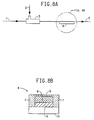
- Figure 8A depicts schematically a solid-state planar sensor format having an asymmetric membrane ISE.
- the sample solution (1) is diluted with a buffer (2) and mixed using any suitable mixing device (3), such as an in-line mixer (for example, a spinning shaft) or an elastomeric element with mutating fingers for mixing.
- the mixed solution is then contacted with the asymmetric membrane ISE (4), the response determined by measuring the difference in potential between a reference electrode (not shown) in contact with the sample and the carbonate ion-selective electrode, and the remaining waste (5) solution discarded.
- the asymmetric membrane ( Figure 8B) having a hydrophilic layer (6) and an ion-selective layer (8) is directly in contact with a conductor (9), the membrane being at least partially enclosed by a dielectric material (non-conducting substance) such as ceramic or glass.
- the asymmetric ISE is placed on a suitable substrate for support (10).
- reference electrode any suitable external reference electrode, such as a metal/metal halide electrode.
- the reference electrode maintains a virtually invariant potential under the conditions prevailing in an electrochemical measurement and serves to permit the observation, measurement, or control of the potential of the asymmetric membrane electrode.
- an Orion sleeve-type double junction Ag/AgCl electrode Model 90-02 can be utilized as a reference electrode.
- the reference electrode is electrolytically connected (such as through a salt bridge) to the sample which is in contact with the asymmetric membrane such that the potential difference between the ion-selective asymmetric membrane electrode and the reference electrode can be measured.
- the electrodes can be connected through a high impedance amplifier or by any means capable of measuring a potential difference.
- the potential difference or EMF can be determined either through static measurements or through kinetic measurements.
- Static mode potentiometric measurements can be obtained by allowing the sample and electrolyte solutions to achieve their steady-state equilibrium or near equilibrium potentials prior to potential difference measurement. Such measurements can be made using well-known procedures and equipment.
- Kinetic measurements can be obtained by measuring the potential difference with time, prior to equilibrium in a static mode measurement, or by measurements performed in flow injection analysis studies.
- Such kinetic measurements cap be performed using a flow through detector which is fitted to an electrode body, such a a Phillips electrode body; (IS-561), Glosblaserei Moller, Zurich).
- a kinetic measurement can be performed using such a flow through detector in conjunction with a standard metal/metal halide reference electrode (such as AG/AgCl), an ion sensing electrode having an asymmetric membrane, and a suitable sample flow loop system (as described in the Examples).
- the EMF or potential difference values can be recorded with time using a high impedance amplifier/analog-to-digital converter.
- One of the important features of the present invention is the ability to perform enhanced selectivity potentiometric ion determinations by reducing the undesirable effects caused by various interfering substances.
- interfering substance any substance other than the ion of interest, whose presence in the biological sample affects the measured potential of an ISE for a particular ion of interest. Such interfering substances can result in incorrect potential difference or EMF determinations, such as falsely elevated or falsely depressed activities or concentrations for the ion of interest.
- interfering substances include but are not limited to salicylate or p-amino salicylate, other salicylate-like hydrophobic organic acids, and gentisate.
- the preferred asymmetric membrane for use in the present invention is a carbonate ion-selective electrode consisting of a cellulose-triacetate hydrophilic layer composed of hydroxyl groups, fused to a cellulose triacetate ion-selective layer having TFABB as the ion-selective agent, DOA as the plasticizing agent and contains TDMAC as an ion-complexing agent.
- the carbonate species (CO32 ⁇ ) is related to gaseous CO2 by the following equilibrium relationships: CO 2(g) + H2O ⁇ -----> H2CO3 ⁇ ---K1--> H+ + HCO3 ⁇ HCO3 ⁇ ⁇ --K2---> H+ + CO3 ⁇ 2
- K1 and K2 are the dissociation constants
- At normal serum pH of 7.0 to 7.5 the majority of the species are in the bicarbonate form.
- a siginficantly higher proportion of the species present will be in the carbonate (CO3 ⁇ 2) form.
- TFABB can be prepared using known procedures such as that described by Herman, H.
- Such known derivatives include those described by Behringer et al., Anion Selectivities of Trufluoroacetophenone Derivatives of Neutral Ionophores in Solvent-Polymeric Membranes, Analytica Chimica Acta, vol 233, pp. 41-47 (1990), the disclosure of which is hereby incorporated by reference.
- a thin cellulose triacetate membrane was prepared by dissolving 100 mg of cellulose triacetate (CTA), (Fluka Chemicals, Ronkonkoma, NY) in 2.5 lilliliters (ml) of a mixed, analytical-reagent grade, solvent containing 1.5 ml of methylene chloride (Junsei Chemical Co., Ltd, Tokyo, Japan) and 1.0 ml of chloroform (Junsei Chemical Co., Ltd, Tokyo, Japan). The solution was cast on a flat plate. Spreading of the solution was confined by a 36 millimeter (mm) inside diameter ring. The solvent was allowed to evaporate overnight leaving a membrane approximately 50 micrometers ( ⁇ ) thick.
- CTA cellulose triacetate
- the solution was cast
- the acetyl groups on the lower side of the membrane were hydrolyzed by floating the membrane on an excess of 1 M (moles/liter) sodium hydroxide (Junsei Chemical Co. Ltd.) solution at room temperature for 4.5 h. This resulted in a polymeric membrane having a thin hydrophilic, hydroxylated side.
- the membrane was washed by immersing it in 500 ml of distilled water. This process was repeated a second time to insure termination of the hydrolysis reaction and allowed to air dry at room temperature.
- the dry membrane was placed on a second glass plate with the hydroxylated, hydrophilic side facing down. A 22 mm inside diameter ring was placed on the upper surface of the membrane to confine the spreading of subsequent solutions.
- 1.2 ml of methylene chloride was applied to the membrane to soften or pretreat the upper surface for 30 minutes (min). During this period the membrane was kept inside a desiccator with its vacuum tap open to reduce the rate of evaporation of the methylene chloride.
- a solution of the components for the carbonate ion-selective membrane was prepared by dissolving 35 mg of CTA; 16.6 mg of the ionophore trifluoroacetyl-p-butylbenzene (TFABB), (Specialty Organics Inc., Irwindale, CA); 100 ⁇ l of the plasticizing agent, bis(2-ethylhexyl) sebacate (Fluka Chemicals, Ronkonkoma, NY) and 2.0 milligrams (mg) of the ion-complexing agent tridodecylmethylammonium chloride (Polysciences Inc., Warrington, PA) in a mixed solvent containing 0.8 ml of methylene chloride and 0.8 ml of chloroform.
- TFABB ionophore trifluoroacetyl-p-butylbenzene
- Electrochemical properties of the membranes were evaluated in conventional ion-selective electrode devices.
- Small 5.5 mm diameter disks were cut from the asymmetric carbonate ion-selective membrane prepared as described in Example 1 and were tested using a Phillips electrode body (Glasblaserei Möller, Model IS-561, Zurich, CH).
- a disk was placed in an electrode body with the hydrophilic layer facing the outer sample solution (electrolyte).
- the internal filling solution employed contained 0.1 M sodium dihydrogen phosphate, 0.1 M disodium hydrogen phosphate, and 0.01 M sodium chloride.
- the conductor (internal reference electrode) used was a standard Ag/AgCl electrode.
- the reference electrode used was a sleeve-type double junction silver/silver chloride electrode (Orion, Model 90-02).
- the potential of the carbonate ion-selective electrode was measured using a high input impedance electrometer connected to a personal computer (Young Sun Computer Co., Ltd., Seoul, Korea, Model; compatible with an IBM 286 based computer) equipped with an analog-to-digital converter or by using an electrode switch box (Fisher Accumet, Model 157; Romulus, MI) and a pH-millivolt meter (Fisher Accumet, Model 620) All of the data of Figures 1A and 1B and Tables 1 and 2 below was obtained using the electrode switch box (Fisher Accumet, Model 157; Romulus, MI) and a pH-millivolt meter (Fisher Accumet, Model 620) All of the data of Figures 1A and 1B and Figures 3 through 6 was obtained using a high input impedance electrometer connected to a personal computer (
- asymmetric membrane electrodes were evaluated by comparison with identical assemblies in which the asymmetric CTA membrane was replaced by an ion-selective layer prepared from either unmodified (not subject to hydrolysis) CTA or polyvinyl chloride (PVC).
- ion-selective layer prepared from either unmodified (not subject to hydrolysis) CTA or polyvinyl chloride (PVC).
- FIGS. 1A and B compare the response of carbonate ion-selective electrodes incorporating three membranes, including non-asymmetric polyvinyl chloride (PVC), non-asymmetric (unmodified non hydrophilic) CTA, and asymmetric CTA carbonate ion-selective membranes, to salicylate and carbonate ions.
- PVC polyvinyl chloride
- CTA non-asymmetric (unmodified non hydrophilic) CTA
- asymmetric CTA carbonate ion-selective membranes to salicylate and carbonate ions.
- Figures 1A and 1 B indicate all three electrodes showed a similarly fast response upon the addition of carbonate ion to the sample solution in the concentration range 10 ⁇ 4 to 10 ⁇ 3 M.
- the asymmetric CTA membrane exhibited an extremely slow response when the salicylate concentration was changed from 10 ⁇ 5 to 10 ⁇ 4 M.
- the response characteristics of the non-asymmetric CTA membrane was very similar to the response of the non-asymmetric PVC membrane. Both exhibited similar kinetic (dynamic) response towards both carbonate and salicylate ions. It is hypothesized the slow response of the asymmetric CTA membrane towards large, hydrophobic anions was due to the presence of the hydrophilic layer of the asymmetric membrane.
- Figures 2A through C show the increased response with larger additions of the more hydrophobic anions.
- the asymmetric membrane exhibited consistently showed a reduced response characteristics toward these hydrophobic anions relative to the non-asymmetric membrane.
- the asymmetric membranes achieved only a small degree of response reduction as compared with the non-asymmetric CTA membranes.
- Table 2 shows the selectivity of both the non-asymmetric CTA and asymmetric CTA membrane for carbonate relative to salicylate over a concentration range of 1 x 10 ⁇ 5 to 1 x 10 ⁇ 2 M.
- the asymmetric membrane achieved a greater degree of salicylate response reduction relative to the non-asymmetric CTA membrane.
- a Phillips electrode body was fitted with a special flow cap for use as a flow through detector in a large volume wall jet configuration.
- the construction of this flow through detector is described by Trojanowicz, M. and Meyerhoff, M. E., "Potentiometric pH Detection in Suppressed Ion Chromatography" Anal. Chem., vol. 91, 787-789.(1989), the disclosure of which is hereby incorporated by reference.
- An Orion silver/silver chloride reference electrode together with the working carbonate ion-selective electrode were placed in a large beaker containing the reagent buffer (0.1 M TRIS-sulfuric acid, pH 8.6].
- the four-way injection valve (Rheodyne, Model 7125) equipped with a sample loop of 150 ⁇ l was connected to the flow cap with a length of polytetrafluoroethylene (PTFE) tubing having an internal diameter of 0.30 mm.
- the buffer stream (0.1 M Tris-sulfuric acid, pH 8.6) was pumped at a flow rate of 7.5 ml/min using a peristaltic pump (Ismatech, Model 7331-00, Zurich). Standard solutions of anions were prepared in the same buffer. Volumes of 150 ⁇ l were introduced for each test. All tests were performed at room temperature. EMF values were recorded every 0.1 second using a high impedance voltmeter equipped with an analog-to-digital converter as described earlier.
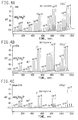
- FIGS. 4A through C provide a comparison of the potentiometric flow injection response to anions obtained using the PVC non-asymmetric, non-asymmetric CTA and asymmetric CTA membranes in electrodes.
- a significantly reduced response of the asymmetric CTA membrane was observed for large, lipophilic anions, such as iodide, salicylate and perchlorate compared with the responses of the non-asymmetric PVC and non-asymmetric CTA membranes.
- the non-asymmetric CTA membrane showed response characteristics practically the same as the non-asymmetric PVC membrane, suggesting the reduced response of the asymmetric CTA membrane towards lipophilic anions is due to the presence of the hydrophilic layer.
- Example 3 In the static mode experiment of Example 3, the asymmetric CTA membrane and unmodified CTA membrane showed nearly the same equilibrium selectivity for carbonate and iodide. In contrast, the carbonate selectivity compared to that of iodide for CTA the asymmetric membrane was substantially improved in the flow injection detection system. The selectivity of the asymmetric membrane can therefore be most effectively enhanced by employing non-equilibrium flow through arrangements.
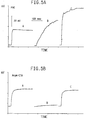
- Non-asymmetric PVC and asymmetric CTA membrane electrodes were prepared and used as described in Examples 1 and 2. The response of the electrodes was first tested with standards in aqueous solution and subsequently compared with responses obtained with serum samples. Two milliliters of an aqueous standard or reconstituted serum sample were added to 18 ml of background electrolyte (0.1 M TRIS-sulfuric acid, pH 8.6).
- Figures 5A and B show that, unlike the non-asymmetric PVC membrane, the asymmetric CTA membrane eliminated the 1.0 mM salicylate interference when used to determine 25 mM carbonate in the presence of 100 mM chloride.
- Samples having a serum matrix were also tested using the Seramchem Level 1 Clinical Chemistry Control Human Serum Assayed.serum. The membranes were washed thoroughly between samples with deionized water and samples were added in the order shown in Figures 6A and B.
- Curve A ( Figures 6A and B) was obtained by adding 2 ml of control serum to 18 ml of background buffer in order to determine the amount of carbonate initially present in the reconstituted control serum.
- the PVC non-asymmetric and asymmetric CTA membranes showed different amounts of CO32- , the PVC membrane yielding the higher level signal.
- the initial amount of CO32- present was determined from the response from the asymmetric CTA membrane since it was known that the PVC membrane suffered from interferences from organic acids.
- Sodium bicarbonate was added to adjust the reconstituted serum pool to a final CO32- concentration of 25 mM.
- the asymmetric CTA membrane is prepared using the same procedure described above in Example 1.
- a 22 mm glass ring is placed on the upper unmodified surface of the polymer membrane and 1.2 ml of methylene chloride (1.2 mL) is confined within the ring.for preconditioning the asymmetric membrane for subsequent fusing with the ion-selective CTA layer.
- the entire assembly is placed in a desiccator for approximately 30 minutes to reduce the rate of evaporation of methylene chloride.
- the polymeric membrane having a hydrophilic side is now ready for casting of the mixture of polymer containing the ion-selective agent(s) and the plasticizing agent.
- a solution of the chloride asymmetric ion-selective layer components is prepared using a mixed solvent solution of 0.8 ml of methylene chloride and 0.8 ml chloroform containing 35 mg CTA; 100 ⁇ L of a mixture containing Aliquat 336 (Aldrich, Milwaukee, Wisconsin) (5-100% Aliquat 336 can be used; 75% is preferred), and the plasticizer bis (2-ethylhexyl) adipate (Fluka) (95% - 0% plasticizer can be used; 25% is preferred) is placed on the upper unmodified (not hydrolyzed) surface of the previously prepared polymer layer in the 22 mm. ring.
- Aliquat 336 Aldrich, Milwaukee, Wisconsin
- Fluka plasticizer bis (2-ethylhexyl) adipate
- the entire assembly is then placed in a vacuum desiccator overnight with the tap only slightly opened to limit the rate of evaporation.
- the polymeric membrane having a hydrophilic side and the polymer containing the ion-selective agent(s) are fused into a single, asymmetric membrane having a hydrophilic layer and an ion-selective layer.
- the electrochemical properties of this membrane are evaluated using conventual ion-selective electrode membrane holding devices, such as the Phillips electrode body (Glasblaserei Moller, Model IS-561, Zurich,CH). Small 5.5 mm diameter disks are punched from the asymmetric CTA membrane and placed in the electrode body with the hydrophilic layer facing the sample solution.
- the inner filling solution is 0.1 M NaCl (Baker).
- the response of the membrane is obtained by using a high input electrometer to measure the potential difference between the sensor electrode and an external sleeve-type double junction silver/silver chloride electrode (Orion, Model 90-02) using 1 M KNO3 as an external salt bridge. The potential difference is recorded using an analog-to digital converter and a IBM Personal computer.
- Aqueous and serum samples are diluted 1:10 with a tris sulfate buffer pH 8.5.
- the responses are tested using normal, abnormal, low, and high chloride solutions and compared with the same solution spikes with salicylate as an interfering substance.
Landscapes
- Chemical & Material Sciences (AREA)
- Life Sciences & Earth Sciences (AREA)
- Health & Medical Sciences (AREA)
- Physics & Mathematics (AREA)
- Chemical Kinetics & Catalysis (AREA)
- Electrochemistry (AREA)
- Molecular Biology (AREA)
- Analytical Chemistry (AREA)
- Biochemistry (AREA)
- General Health & Medical Sciences (AREA)
- General Physics & Mathematics (AREA)
- Immunology (AREA)
- Pathology (AREA)
- Investigating Or Analysing Biological Materials (AREA)
- Separation Using Semi-Permeable Membranes (AREA)
Applications Claiming Priority (2)
| Application Number | Priority Date | Filing Date | Title |
|---|---|---|---|
| US99423492A | 1992-12-21 | 1992-12-21 | |
| US994234 | 1992-12-21 |
Publications (3)
| Publication Number | Publication Date |
|---|---|
| EP0603742A2 true EP0603742A2 (de) | 1994-06-29 |
| EP0603742A3 EP0603742A3 (en) | 1996-02-28 |
| EP0603742B1 EP0603742B1 (de) | 2002-03-20 |
Family
ID=25540440
Family Applications (1)
| Application Number | Title | Priority Date | Filing Date |
|---|---|---|---|
| EP93120285A Expired - Lifetime EP0603742B1 (de) | 1992-12-21 | 1993-12-16 | Verfahren zur potentiometrischen Bestimmung von Ionen unter Verwendung einer asymmetrischen ionenselektiven Membranelektrode mit erhöhter Selektivität |
Country Status (4)
| Country | Link |
|---|---|
| US (2) | US5415746A (de) |
| EP (1) | EP0603742B1 (de) |
| JP (1) | JP2725991B2 (de) |
| DE (1) | DE69331726T2 (de) |
Cited By (2)
| Publication number | Priority date | Publication date | Assignee | Title |
|---|---|---|---|---|
| WO1998038503A1 (en) * | 1997-02-26 | 1998-09-03 | Konelab Corporation | Ion-selective electrode and method for selective determination of analytes in body fluids |
| EP1020722A3 (de) * | 1999-01-13 | 2004-04-14 | Cha, Geun Sig | Chloridselektive mit hydrophilen Polyurethan beschichtete Elektroden |
Families Citing this family (18)
| Publication number | Priority date | Publication date | Assignee | Title |
|---|---|---|---|---|
| US5415746A (en) * | 1992-12-21 | 1995-05-16 | E. I. Du Pont De Nemours And Company | Potentiometric ion determinations using enhanced selectivity asymmetric ion-selective membrane |
| US5807471A (en) * | 1996-04-30 | 1998-09-15 | Medtronic, Inc. | Sensor for detecting low concentrations of polyions |
| US5755939A (en) * | 1996-04-30 | 1998-05-26 | Medtronic, Inc. | Polyion sensor with molecular weight differentiation |
| US5985117A (en) * | 1997-12-29 | 1999-11-16 | The Regents Of The University Of California | Ion-selective membrane sensors with mercuracarborand ionophore |
| KR100349000B1 (ko) * | 1998-07-09 | 2003-03-26 | 주식회사 아이센스 | 친수성폴리우레탄을사용한바이오센서의제조방법 |
| JP4448243B2 (ja) * | 2000-09-13 | 2010-04-07 | 株式会社堀場製作所 | リン酸イオン選択性電極およびその作製方法 |
| EP1469903A2 (de) * | 2001-09-28 | 2004-10-27 | BioValve Technologies, Inc. | Mikronadel mit membran |
| US6780307B2 (en) * | 2001-10-12 | 2004-08-24 | The United States Of America As Represented By The Secretary Of The Navy | Ion selective electrodes for direct organic drug analysis in saliva, sweat, and surface wipes |
| US7767068B2 (en) | 2002-12-02 | 2010-08-03 | Epocal Inc. | Heterogeneous membrane electrodes |
| US7842234B2 (en) | 2002-12-02 | 2010-11-30 | Epocal Inc. | Diagnostic devices incorporating fluidics and methods of manufacture |
| US7384523B2 (en) * | 2003-07-10 | 2008-06-10 | Radiometer Medical Aps | Chloride ion selective membrane and sensor |
| US20060065527A1 (en) * | 2004-09-24 | 2006-03-30 | Sendx Medical, Inc. | Polymeric reference electrode |
| US7678252B2 (en) * | 2005-06-14 | 2010-03-16 | Auburn University | Long lived anion-selective sensors based on a covalently attached metalloporphyrin as anion receptor |
| JP5162413B2 (ja) * | 2008-10-30 | 2013-03-13 | 株式会社インテリジェントセンサーテクノロジー | 味覚センサ |
| US9562885B2 (en) | 2013-05-17 | 2017-02-07 | Umm Al-Qura University | Ionophore and polymer membrane selective for aluminum (III) ion |
| WO2016061362A2 (en) | 2014-10-15 | 2016-04-21 | Eccrine Systems, Inc. | Sweat sensing device communication security and compliance |
| CN110879242B (zh) * | 2019-09-05 | 2023-05-26 | 南京晶捷生物科技有限公司 | 测定溶解二氧化碳的固接电化学传感器及其专用传感膜 |
| SE544889C2 (en) * | 2021-03-30 | 2022-12-20 | Oboe Ipr Ab | A system, device and method for detection and identification of species in a sample with an ionic exchange membrane |
Family Cites Families (11)
| Publication number | Priority date | Publication date | Assignee | Title |
|---|---|---|---|---|
| JPS6031257B2 (ja) * | 1979-01-12 | 1985-07-20 | 株式会社日立製作所 | 陰イオン選択性電極 |
| US4272328A (en) * | 1979-12-05 | 1981-06-09 | Eastman Kodak Company | Buffer overcoat for CO2 ion-selective electrodes |
| EP0149339B1 (de) * | 1983-12-16 | 1989-08-23 | MediSense, Inc. | Test für Nukleinsäuren |
| CA1272860A (en) * | 1984-03-09 | 1990-08-21 | Technicon Instruments Corporation | Carbonate selective membrane and electrode |
| US4810351A (en) * | 1986-09-18 | 1989-03-07 | Technicon Instruments Corporation | Carbonate selective membrane and electrode |
| JPS63228054A (ja) * | 1987-03-17 | 1988-09-22 | Fuji Photo Film Co Ltd | 炭酸濃度測定用イオン選択電極 |
| DK409188D0 (da) * | 1988-07-21 | 1988-07-21 | Radiometer As | Fremgangsmaade til maaling af en karakteristik i et fluidum |
| US5174872A (en) * | 1990-06-08 | 1992-12-29 | Technicon Instruments Corporation | Metal-free buffer for ion selective electrode-based assays |
| DE69108812T2 (de) * | 1990-07-30 | 1995-11-16 | Hitachi Ltd | Probeverdünner für Messung mit ionspezifischen Elektroden und Verfahren zur Verwendung davon. |
| US5236570A (en) * | 1992-03-10 | 1993-08-17 | University Of Michigan | Heparin-selective polymeric membrane electrode |
| US5415746A (en) * | 1992-12-21 | 1995-05-16 | E. I. Du Pont De Nemours And Company | Potentiometric ion determinations using enhanced selectivity asymmetric ion-selective membrane |
-
1993
- 1993-11-22 US US08/156,180 patent/US5415746A/en not_active Expired - Lifetime
- 1993-12-16 EP EP93120285A patent/EP0603742B1/de not_active Expired - Lifetime
- 1993-12-16 DE DE69331726T patent/DE69331726T2/de not_active Expired - Lifetime
- 1993-12-20 JP JP5344474A patent/JP2725991B2/ja not_active Expired - Fee Related
-
1995
- 1995-05-05 US US08/437,117 patent/US5531870A/en not_active Expired - Lifetime
Cited By (2)
| Publication number | Priority date | Publication date | Assignee | Title |
|---|---|---|---|---|
| WO1998038503A1 (en) * | 1997-02-26 | 1998-09-03 | Konelab Corporation | Ion-selective electrode and method for selective determination of analytes in body fluids |
| EP1020722A3 (de) * | 1999-01-13 | 2004-04-14 | Cha, Geun Sig | Chloridselektive mit hydrophilen Polyurethan beschichtete Elektroden |
Also Published As
| Publication number | Publication date |
|---|---|
| JPH06229977A (ja) | 1994-08-19 |
| DE69331726D1 (de) | 2002-04-25 |
| EP0603742A3 (en) | 1996-02-28 |
| EP0603742B1 (de) | 2002-03-20 |
| DE69331726T2 (de) | 2002-11-21 |
| JP2725991B2 (ja) | 1998-03-11 |
| US5531870A (en) | 1996-07-02 |
| US5415746A (en) | 1995-05-16 |
Similar Documents
| Publication | Publication Date | Title |
|---|---|---|
| EP0603742B1 (de) | Verfahren zur potentiometrischen Bestimmung von Ionen unter Verwendung einer asymmetrischen ionenselektiven Membranelektrode mit erhöhter Selektivität | |
| US5174872A (en) | Metal-free buffer for ion selective electrode-based assays | |
| US5397451A (en) | Current-detecting type dry-operative ion-selective electrode | |
| Solsky | Ion-selective electrodes | |
| Chen et al. | Amperometric needle-type glucose sensor based on a modified platinum electrode with diminished response to interfering materials | |
| US5286365A (en) | Graphite-based solid state polymeric membrane ion-selective electrodes | |
| US20050006237A1 (en) | Ion-selective solid-state polymeric membrane electrondes | |
| WO2005123938A1 (en) | Electrochemical urea sensors and methods of making the same | |
| Yoon et al. | Potentiometric behavior of metalloporphyrin-based ion-selective electrodes: Use of silicone rubber matrix for serum chloride analysis | |
| Markas | Rapid detection of paracetamol using a disposable, surface-modified screen-printed carbon electrode | |
| US6508921B1 (en) | Lithium ion-selective electrode for clinical applications | |
| Cha et al. | Asymmetric cellulose acetate membrane-based carbonate-and chloride-selective electrodes | |
| US4810351A (en) | Carbonate selective membrane and electrode | |
| AU2001247614A1 (en) | Lithium ion-selective electrode for clinical applications | |
| Pendley et al. | A chronoamperometric method to estimate ionophore loss from ion-selective electrode membranes | |
| US4487679A (en) | Potassium ion-selective electrode | |
| Moreno et al. | Electrocatalytic oxidation of ascorbate at glassy carbon electrodes modified with electrodeposited films derived from dihydroxybenzaldehyde isomers | |
| EP0155162B1 (de) | Karbonatselektive Membran und Elektrode | |
| O'Connor et al. | Calix [4] Arenes in the partial cone conformation as ionophores in silver ion‐selective electrodes | |
| JPS63228054A (ja) | 炭酸濃度測定用イオン選択電極 | |
| Watanabe et al. | In situ determination of phenylpyruvate in urine using a phenylpyruvate-selective membrane electrode constructed with a heptyl-4-trifluoroacetylbenzoate neutral carrier | |
| Ganjali et al. | Novel Metronidazole Membrane Sensor Based on a 2, 6‐(p‐N, N‐Dimethylaminophenyl)‐4‐Phenylthiopyrylium Perchlorate | |
| CA2313795A1 (en) | Sensor devices and analytical method | |
| Moschou et al. | Ion‐Partitioning Bulk Membrane CHEMFET as Highly Sensitive Calcium Probe | |
| Recasens | 2.4. 4 Solid contact potentiometric sensors |
Legal Events
| Date | Code | Title | Description |
|---|---|---|---|
| PUAI | Public reference made under article 153(3) epc to a published international application that has entered the european phase |
Free format text: ORIGINAL CODE: 0009012 |
|
| AK | Designated contracting states |
Kind code of ref document: A2 Designated state(s): DE FR GB IT |
|
| PUAL | Search report despatched |
Free format text: ORIGINAL CODE: 0009013 |
|
| AK | Designated contracting states |
Kind code of ref document: A3 Designated state(s): DE FR GB IT |
|
| RAP1 | Party data changed (applicant data changed or rights of an application transferred) |
Owner name: DADE CHEMISTRY SYSTEMS INC. |
|
| 17P | Request for examination filed |
Effective date: 19960823 |
|
| 17Q | First examination report despatched |
Effective date: 19990205 |
|
| RAP1 | Party data changed (applicant data changed or rights of an application transferred) |
Owner name: DADE BEHRING INC. |
|
| GRAG | Despatch of communication of intention to grant |
Free format text: ORIGINAL CODE: EPIDOS AGRA |
|
| GRAG | Despatch of communication of intention to grant |
Free format text: ORIGINAL CODE: EPIDOS AGRA |
|
| GRAG | Despatch of communication of intention to grant |
Free format text: ORIGINAL CODE: EPIDOS AGRA |
|
| GRAH | Despatch of communication of intention to grant a patent |
Free format text: ORIGINAL CODE: EPIDOS IGRA |
|
| GRAH | Despatch of communication of intention to grant a patent |
Free format text: ORIGINAL CODE: EPIDOS IGRA |
|
| REG | Reference to a national code |
Ref country code: GB Ref legal event code: IF02 |
|
| GRAA | (expected) grant |
Free format text: ORIGINAL CODE: 0009210 |
|
| AK | Designated contracting states |
Kind code of ref document: B1 Designated state(s): DE FR GB IT |
|
| REF | Corresponds to: |
Ref document number: 69331726 Country of ref document: DE Date of ref document: 20020425 |
|
| ET | Fr: translation filed | ||
| PLBE | No opposition filed within time limit |
Free format text: ORIGINAL CODE: 0009261 |
|
| STAA | Information on the status of an ep patent application or granted ep patent |
Free format text: STATUS: NO OPPOSITION FILED WITHIN TIME LIMIT |
|
| 26N | No opposition filed |
Effective date: 20021223 |
|
| PGFP | Annual fee paid to national office [announced via postgrant information from national office to epo] |
Ref country code: IT Payment date: 20091222 Year of fee payment: 17 |
|
| REG | Reference to a national code |
Ref country code: GB Ref legal event code: 732E Free format text: REGISTERED BETWEEN 20101021 AND 20101027 |
|
| PG25 | Lapsed in a contracting state [announced via postgrant information from national office to epo] |
Ref country code: IT Free format text: LAPSE BECAUSE OF NON-PAYMENT OF DUE FEES Effective date: 20101216 |
|
| REG | Reference to a national code |
Ref country code: FR Ref legal event code: TP Owner name: SIEMENS HEALTHCARE DIAGNOSTICS INC., US Effective date: 20120127 Ref country code: FR Ref legal event code: CD Owner name: SIEMENS HEALTHCARE DIAGNOSTICS INC., US Effective date: 20120127 |
|
| PGFP | Annual fee paid to national office [announced via postgrant information from national office to epo] |
Ref country code: GB Payment date: 20121212 Year of fee payment: 20 |
|
| PGFP | Annual fee paid to national office [announced via postgrant information from national office to epo] |
Ref country code: FR Payment date: 20130131 Year of fee payment: 20 Ref country code: DE Payment date: 20130218 Year of fee payment: 20 |
|
| REG | Reference to a national code |
Ref country code: DE Ref legal event code: R071 Ref document number: 69331726 Country of ref document: DE |
|
| REG | Reference to a national code |
Ref country code: GB Ref legal event code: PE20 Expiry date: 20131215 |
|
| PG25 | Lapsed in a contracting state [announced via postgrant information from national office to epo] |
Ref country code: GB Free format text: LAPSE BECAUSE OF EXPIRATION OF PROTECTION Effective date: 20131215 Ref country code: DE Free format text: LAPSE BECAUSE OF EXPIRATION OF PROTECTION Effective date: 20131217 |