EP0606884B1 - Kornorientiertes Elektroblech mit sehr geringen Eisenverlusten und Herstellungsverfahren - Google Patents
Kornorientiertes Elektroblech mit sehr geringen Eisenverlusten und Herstellungsverfahren Download PDFInfo
- Publication number
- EP0606884B1 EP0606884B1 EP94100292A EP94100292A EP0606884B1 EP 0606884 B1 EP0606884 B1 EP 0606884B1 EP 94100292 A EP94100292 A EP 94100292A EP 94100292 A EP94100292 A EP 94100292A EP 0606884 B1 EP0606884 B1 EP 0606884B1
- Authority
- EP
- European Patent Office
- Prior art keywords
- grain
- strip
- core loss
- steel sheet
- oriented electrical
- Prior art date
- Legal status (The legal status is an assumption and is not a legal conclusion. Google has not performed a legal analysis and makes no representation as to the accuracy of the status listed.)
- Expired - Lifetime
Links
Images

Classifications
-
- C—CHEMISTRY; METALLURGY
- C21—METALLURGY OF IRON
- C21D—MODIFYING THE PHYSICAL STRUCTURE OF FERROUS METALS; GENERAL DEVICES FOR HEAT TREATMENT OF FERROUS OR NON-FERROUS METALS OR ALLOYS; MAKING METAL MALLEABLE, e.g. BY DECARBURISATION OR TEMPERING
- C21D8/00—Modifying the physical properties of ferrous metals or ferrous alloys by deformation combined with, or followed by, heat treatment
- C21D8/12—Modifying the physical properties of ferrous metals or ferrous alloys by deformation combined with, or followed by, heat treatment during manufacturing of articles with special electromagnetic properties
-
- C—CHEMISTRY; METALLURGY
- C21—METALLURGY OF IRON
- C21D—MODIFYING THE PHYSICAL STRUCTURE OF FERROUS METALS; GENERAL DEVICES FOR HEAT TREATMENT OF FERROUS OR NON-FERROUS METALS OR ALLOYS; MAKING METAL MALLEABLE, e.g. BY DECARBURISATION OR TEMPERING
- C21D8/00—Modifying the physical properties of ferrous metals or ferrous alloys by deformation combined with, or followed by, heat treatment
- C21D8/12—Modifying the physical properties of ferrous metals or ferrous alloys by deformation combined with, or followed by, heat treatment during manufacturing of articles with special electromagnetic properties
- C21D8/1244—Modifying the physical properties of ferrous metals or ferrous alloys by deformation combined with, or followed by, heat treatment during manufacturing of articles with special electromagnetic properties characterised by the heat treatment
- C21D8/1272—Final recrystallisation annealing
-
- C—CHEMISTRY; METALLURGY
- C21—METALLURGY OF IRON
- C21D—MODIFYING THE PHYSICAL STRUCTURE OF FERROUS METALS; GENERAL DEVICES FOR HEAT TREATMENT OF FERROUS OR NON-FERROUS METALS OR ALLOYS; MAKING METAL MALLEABLE, e.g. BY DECARBURISATION OR TEMPERING
- C21D3/00—Diffusion processes for extraction of non-metals; Furnaces therefor
- C21D3/02—Extraction of non-metals
- C21D3/04—Decarburising
-
- C—CHEMISTRY; METALLURGY
- C21—METALLURGY OF IRON
- C21D—MODIFYING THE PHYSICAL STRUCTURE OF FERROUS METALS; GENERAL DEVICES FOR HEAT TREATMENT OF FERROUS OR NON-FERROUS METALS OR ALLOYS; MAKING METAL MALLEABLE, e.g. BY DECARBURISATION OR TEMPERING
- C21D8/00—Modifying the physical properties of ferrous metals or ferrous alloys by deformation combined with, or followed by, heat treatment
- C21D8/12—Modifying the physical properties of ferrous metals or ferrous alloys by deformation combined with, or followed by, heat treatment during manufacturing of articles with special electromagnetic properties
- C21D8/1244—Modifying the physical properties of ferrous metals or ferrous alloys by deformation combined with, or followed by, heat treatment during manufacturing of articles with special electromagnetic properties characterised by the heat treatment
-
- C—CHEMISTRY; METALLURGY
- C21—METALLURGY OF IRON
- C21D—MODIFYING THE PHYSICAL STRUCTURE OF FERROUS METALS; GENERAL DEVICES FOR HEAT TREATMENT OF FERROUS OR NON-FERROUS METALS OR ALLOYS; MAKING METAL MALLEABLE, e.g. BY DECARBURISATION OR TEMPERING
- C21D8/00—Modifying the physical properties of ferrous metals or ferrous alloys by deformation combined with, or followed by, heat treatment
- C21D8/12—Modifying the physical properties of ferrous metals or ferrous alloys by deformation combined with, or followed by, heat treatment during manufacturing of articles with special electromagnetic properties
- C21D8/1244—Modifying the physical properties of ferrous metals or ferrous alloys by deformation combined with, or followed by, heat treatment during manufacturing of articles with special electromagnetic properties characterised by the heat treatment
- C21D8/1255—Modifying the physical properties of ferrous metals or ferrous alloys by deformation combined with, or followed by, heat treatment during manufacturing of articles with special electromagnetic properties characterised by the heat treatment with diffusion of elements, e.g. decarburising, nitriding
-
- C—CHEMISTRY; METALLURGY
- C21—METALLURGY OF IRON
- C21D—MODIFYING THE PHYSICAL STRUCTURE OF FERROUS METALS; GENERAL DEVICES FOR HEAT TREATMENT OF FERROUS OR NON-FERROUS METALS OR ALLOYS; MAKING METAL MALLEABLE, e.g. BY DECARBURISATION OR TEMPERING
- C21D9/00—Heat treatment, e.g. annealing, hardening, quenching or tempering, adapted for particular articles; Furnaces therefor
- C21D9/52—Heat treatment, e.g. annealing, hardening, quenching or tempering, adapted for particular articles; Furnaces therefor for wires; for strips ; for rods of unlimited length
- C21D9/54—Furnaces for treating strips or wire
- C21D9/56—Continuous furnaces for strip or wire
- C21D9/62—Continuous furnaces for strip or wire with direct resistance heating
Definitions
- the present invention relates to a grain-oriented electrical steel sheet with very low core loss owing to a Si content of 2.5 - 7.0%, high density grain orientation in the (110) [001] direction and an unprecedentedly fine grain diameter.
- the magnetic properties of a grain-oriented electrical steel sheet are generally evaluated in terms of both core loss property and magnetization property. Improving the magnetization property is an effective way of reducing equipment size by increasing the designed magnetic flux density. On the other hand, lowering core loss reduces the amount of energy that a piece of electrical equipment utilizing the grain-oriented electrical steel sheet loses in the form of heat energy and is therefore an effective way of lowering power consumption. Improvement of magnetization property and reduction of core loss is also possible by aligning the ⁇ 100> axes of the product grains in the rolling direction and, in recent years, considerable research toward enhancing this alignment has led to the development of various production technologies.
- JP-B-30-3651 is a two-pass cold rolling method utilizing MnS as an inhibitor. Although this method achieves a relatively good core loss property owing to the small diameter of the secondary recrystallization grains, it is unable to provide a high magnetic flux density.
- JP-B-40-15644 proposes a second method aimed at obtaining a high flux density.
- This production method utilizes a combination AlN + MnS as inhibitor and conducts the final cold rolling at a strong reduction ratio of 80%. Since the secondary recrystallization grain (110) [001] orientation density is high according to this method, the method can provide a grain-oriented electrical steel sheet with a high flux density, namely with a B 8 value of not less than 1.870 (T).
- JP-B-51-13469 teaches the third production method, which adopts MnS or a combination of MnSe + Sb as inhibitor and utilizes two-pass cold rolling.
- Core loss can be broadly divided into hysteresis loss and eddy current loss.
- Physical factors that affect hysteresis loss include not only the aforesaid grain orientation but also the steel purity and internal strain.
- Physical factors that affect eddy current loss include the electrical resistance of the steel sheet (content of Si etc.), the sheet thickness, the size of the magnetic domains (grain size) and the tensile force acting on the sheet. Since eddy current loss accounts for more than three-fourths of the total core loss of ordinary grain-oriented electrical steel sheet, the total core loss can be more effectively lowered by reducing the eddy core loss than by reducing the hysteresis loss.
- the fact that its secondary recrystallization grain diameter is on the order of 10 mm means that it is left with the problem of wide magnetic domains that affect the eddy current loss.
- Various methods of subdividing magnetic domains have been proposed to overcome this problem, such as the method of treating steel sheet with a laser beam taught by JP-B-57-2252 and the method of imparting mechanical strain to steel sheet taught by JP-B-58-2569.
- JP-A-1-2907106 teaches a method characterized in that steel strip rolled at normal temperature is subjected to ultra-fast annealing to a temperature of 675 °C or higher at a heating rate of at least 100 °C/s, decarburized, and then subjected to final high-temperature annealing for secondary grain growth, whereby the strip is able to maintain the reduced secondary grain recrystallization size and remain without significant change even after relief annealing, thus achieving an improved core loss property. While this method is in fact able to achieve some degree of reduction in secondary recrystallization grain size, the secondary recrystallization grain (110) [001] orientation density is not high and, as a result, it has been found that the core loss value is not so good.
- One object of this invention is to provide a grain-oriented electrical steel sheet which has very low core loss and exhibits both high secondary recrystallization grain (110) [001] orientation density and small secondary recrystallization grain diameter and another is to provide a method of producing the grain-oriented electrical steel sheet.
- the object of the present invention is solved with the features of the claims.
- the invention is characterized by rapid heating immediately followed by cooling. The invention will be described in detail in connection with the drawings, in which:
- Fig. 1(a) and 1(b) are pole figures showing how the orientation of secondary recrystallization grains measuring 5 mm or less in diameter varies depending on whether or not the steel sheet is cooled after rapid heating.
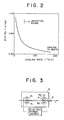
- Fig. 2 is a graph showing the relationship between core loss value and the cooling rate by an exit side roll.
- Fig. 3 is a schematic view of an example of an electric heating method according to the invention.
- the grain-oriented electrical steel sheet according to the aforesaid production method features an orientation of the crystal grains with respect to the ideal (110) [001] direction which, on average, deviates by not more than 4° in the rolling direction and 1 - 3° in the plane direction of the sheet, while also exhibiting grain diameters of 1 - 10 mm. As a result, it has very low core loss.
- a high degree of secondary recrystallization is induced during the final annealing step of the production process so as to obtain what is referred to as a Goss texture.
- the Goss texture is obtained by suppressing the growth of coarse primary recrystallization grains and within a certain temperature range selectively growing only recrystallization grains with (110) [001] orientation.
- Fig. 1(a) and 1(b) are (100) pole figures of fine secondary recrystallization grains measuring not more than 5 mm in diameter. The thickness of the product sheets was 0.22 mm.
- Fig. 1(a) shows the orientation of fine secondary recrystallization grains by a prior art method in which heating was conducted at the rate of 300 °C/s at the time of decarburization annealing and Fig.
- FIG. 1(b) shows the orientation of fine secondary recrystallization grains by the present invention in which, at the time of decarburization annealing, heating was conducted at the rate of 300 °C/s up to 850 °C and then within 0.1 second cooling was conducted at the rate of 200 °C/s down to 750 °C, followed by secondary recrystallization.
- the fine secondary recrystallization grains exhibited (110) [001] orientation aligned in the rolling direction.
- the inventors also discovered that in addition to controlling primary recrystallization it is also important to control the oxide coating. That is to say, the secondary recrystallization has to be well timed with respect to the formation of forsterite by the reaction with MgO.
- the inventors sought to suppress fayalite formation during the heating phase as much as possible and found that when the rapid heating is conducted in a non-oxidizing atmosphere, the formation of fayalite is suppressed and the formation of forsterite by coating with MgO during the following final annealing is achieved in excellent condition, thus providing a method of producing grain-oriented electrical steel sheet with a very low core loss.
- heat treatment at a prescribed temperature conducted at an intermediate sheet thickness stage of the cold rolling causes interstitial solid solution elements such as solute C to attach to the dislocations formed by the cold rolling and thus alter the deformation mechanism and modify the cold rolled texture.
- a heat treatment to a temperature of not less than 700 °C at a heating rate of not less than 80 °C/s immediately before decarburization annealing followed by prescribed cooling makes it possible to obtain fine secondary recrystallization grains which measure not more than several millimeters and whose (110) [001] direction is as close as 2° to the sheet plane direction.
- the heat effect obtained when the steel strip is held in the temperature range of 50 - 350 °C for not less than one minute during cold rolling enables production of a grain-oriented electrical steel sheet exhibiting extremely good magnetic properties.
- this production method does not achieve a preferable core loss value, however, because the macro secondary recrystallization value is still large (on the 10 mm order).
- C is limited to a maximum content of 0.10% because at higher content the time required for decarburization becomes so long as to be uneconomical.
- Si content is set to a lower limit of 2.5% for improving core loss property and to an upper limit of 7.0% because at higher content cracking is apt to occur during cold rolling, making it difficult to work the steel sheet.
- the steel is preferably added with the following component elements as ordinary inhibitor components.
- MnS When MnS is used as an inhibitor, Mn and S are added.
- the Mn content is preferably 0.02 - 0.15%.
- S is an element required for the formation of MnS, (Mn ⁇ Fe) S.
- it is preferably present at 0.001 - 0.05%.
- acid soluble Al and N are added.
- the acid soluble Al content is preferably 0.01 - 0.04%.
- N is preferably present at 0.003 - 0.02%.
- One or more of Cu, Sn, Sb, Cr and Bi can also be added up to not more than 1.0% for strengthening the inhibitors.
- the aforesaid steel melt is formed into a strip of intermediate thickness by the ordinary ingotting or continuous casting method and hot rolling.
- the strip casting method at this time can also be applied to the invention.
- nitride When a nitride is required as an inhibitor, it is preferable to conduct intermediate annealing for 30 seconds - 30 minutes at 950 - 1200 °C for precipitating AlN or the like.
- a strip of final product thickness is obtained by a single rolling or two or more rollings with intermediate annealing.
- a final reduction rate of not less than 50%.
- the lower limit of the reduction ratio is set at 50% for obtaining the required Goss nuclei.
- the cold rolling is conducted in a plurality of passes so that the strip thickness passes through different stages before reaching the final thickness.
- the strip may be imparted with a heat effect by holding it in a temperature range of not lower than 100 °C for not less than one minute.
- the lower limit of the temperature is set at 100 °C and the lower limit of the soaking time is set at 1 minute because at below these limits the solute C or the like does not attach to the dislocations, making it difficult to thereafter alter the primary recrystallization texture and sufficiently develop fine secondary recrystallization with (110) [001] aligned with the rolling direction.
- These cold rollings can be conducted by conventional reverse rolling (e.g., rolling with a Sendzimir mill) or by one-direction rolling (tandem rolling).
- the strip rolled to the final product thickness is heat treated by heating to a temperature range of not less than 700 °C at a heating rate of not less than 80 °C/s.
- the lower limit of the heating rate is set at 80 °C/sec because at a lower rate the number of (110) [001] oriented grains present after primary recrystallization and serving as nuclei for secondary recrystallization is too small to ensure growth of fine secondary recrystallization grains.
- the lower limit of the temperature is set at 700 °C because recrystallization does take place at lower temperatures. For preventing enlargement of the fine precipitates in the temperature range to which the strip is heated, the strip is cooled at a cooling rate of not less than 50 °C/s.
- the upper limit of the soaking time after reaching the maximum temperature is set at 0.1 second because a longer soaking time causes enlargement of the precipitants.
- the lower limit of the temperature range is preferably set at 800 °C because at lower temperatures the precipitation nose shifts greatly.
- Figure 2 shows the relationship between the product core loss property and the cooling rate to 650 °C in a 0.22 mm strip that was heated to 825 °C at a heating rate of 180 °C/s. A good core loss value was obtained when the cooling rate was not less than 50 °C/s.
- FIG. 3 is a schematic view showing an example of this method according to the invention.
- the strip is passed between two pairs of upper and lower rolls and electric current is passed through the strip S between rolls R1 and R2.
- the strip S is heated to a temperature range of 700 °C or higher at a heating rate of 80 °C/s or higher and then within 0.1 second of reaching its maximum temperature is, owing to the cooling of the point P of the roll R2 on the heated side, cooled by the roll on the heated side at a cooling rate of not less than 50 °C/s.
- By the introduction of slight strain in this way it is further possible to improve the shape of the heated strip.
- the properties of the product are further improved when, in the light of concerns relating to film formation and the like, the rapid heating and cooling treatment is conducted in a non-oxidizing atmosphere which, preferably, has a P H20 /P H2 of not more than 0.2, because in other atmospheres the formation of fayalite is not suppressed and highly favorable formation of forsterite by coating with MgO cannot be obtained during the ensuing final annealing.
- non-oxidizing atmosphere either one containing 1 to 3 members selected from among not more than 0.2% O 2 , 2% CO 2 and H 2 O with a dew point of not higher than 5 °C and the balance of N 2 , Ar or other inert gas or one consisting of H 2 , CO or other reducing gas.
- P H2O /P H2 it is necessary for P H2O /P H2 to be not greater than 0.2 or for P CO2 /P CO to be not greater than 1.0
- the aforesaid rapid heating and cooling treatment can be conducted before the decarburization annealing is conducted or can be incorporated into the heating phase of the decarburization annealing.
- the latter arrangement is preferable because it involves fewer steps.
- Decarburization annealing is then conducted in a wet hydrogen atmosphere. To prevent degradation of the product's magnetic properties at this time, the carbon content has to be reduced to not more than 0.005%.
- an additional step of nitriding in an ammonia atmosphere may be conducted.
- the grain-oriented electrical steel sheet obtained by the aforesaid production method has a grain diameter of 1 - 10 mm and a grain orientation whose average deviation from the ideal (110) [001] direction is not more than 4° in the rolling direction and between 1 and 3° in the sheet plane direction, it exhibits a very low core loss.
- the upper limit of the grain diameter is set at not more than 10 mm in order to reduce the eddy current component of the core loss and the lower limit thereof is set at 1 mm because secondary recrystallization is difficult to achieve below this value. Since the larger number of grain boundaries at such a small grain diameter is liable to reduce the magnetic flux density, the deviation of grain orientation from the rolling direction is set at not more than 4°.
- the upper limit is set at 4° because the lower magnetic flux density at higher values makes it impossible to achieve a reducing effect with respect to the hysteresis component of the core loss.
- the orientation deviation in the sheet plane direction is limited to 1 - 3° because at higher than 3° a decrease in flux density makes it impossible to achieve a reducing effect with respect to the hysteresis component of the core loss and at lower than 1° no core loss reducing effect is obtained by imparting tension.
- the aforesaid grain-oriented electrical steel sheet can also be subjected to magnetic domain subdivision treatment for further enhancing the core loss property of the product.
- the rapid heating and rapid cooling method according to the present invention makes it possible to produce a grain-oriented electrical steel sheet which, being of unprecedentedly small secondary recrystallization grain diameter, exhibits high flux density and very low core loss.
- a steel melt including the components shown in Table 1 was cast and the resulting slab was heated and then hot rolled into a 2.3 mm hot rolled strip.
- the strip was annealed at 1100 °C for 5 min, pickled, and then cold rolled to a thickness of 0.22 mm.
- the resulting rolled strip was heated under various conditions in a direct electric heater equipped with a pair of heating electrodes.
- the strip was subjected to various soaking times and cooling conditions immediately after heating. The heating rates, maximum temperatures reached and post-heating cooling conditions are shown in Table 2.
- the strip was then decarburization annealed in wet hydrogen, coated with MgO powder, and high-temperature annealed in a hydrogen gas atmosphere at 1200 °C for 10 hours.
- Table 2 also shows the secondary recrystallization grain diameter and magnetic properties of the products obtained.
- the steel strip was cooled at a cooling rate of not less than 50 °C/s, there was obtained a grain-oriented electrical steel sheet with unprecedentedly fine secondary recrystallization grains and exhibiting a very low core loss.
- (wt%) C Si Mn P S sol.Al N 0.070 3.15 0.083 0.008 0.023 0.0280 0.0087 Test conditions Heating rate Max temp. Soaking time Cooling rate Min. cooling temp. Mag. flux density B 8 Core loss W 17/50 2ndry recrystalligation grain dia.
- a steel melt including the components shown in Table 3 was cast and the resulting slab was heated and then hot rolled into a 2.3 mm hot rolled strip.
- the strip was annealed at 1100 °C for 5 min, pickled, and then cold rolled to a thickness of 0.22 mm.
- the resulting rolled strip was heated under various conditions in the roll-type direct electric heater shown in Figure 3.
- the exit side roll was preheated and the pass speed controlled to subject the strip to various soaking times and cooling conditions immediately after heating. The heating rates, maximum temperatures reached and exit side roll cooling conditions are shown in Table 4.
- the strip was then decarburization annealed in wet hydrogen, nitrided in an ammonia atmosphere, coated with MgO powder, and high-temperature annealed in a hydrogen gas atmosphere at 1200 °C for 10 hours.
- Table 4 also shows the secondary recrystallization grain diameter and magnetic properties of the products obtained.
- the steel strip was cooled at a cooling rate of not less than 50 °C/s, there was obtained a grain-oriented electrical steel sheet with unprecedentedly fine secondary recrystallization grains and exhibiting a very low core loss.
- (wt%) C Si Mn P S sol.Al N 0.050 3.15 0.083 0.008 0.0002 0.0280 0.0087 Test conditions Heating rate Max temp. Soaking time Cooling rate Min. cooling temp. Mag. flux density B 8 Core loss W 17/50 2ndry recrystallization grain dia.
- a steel melt including the components shown in Table 5 was cast and the resulting slab was heated and then hot rolled into a 2.3 mm hot rolled strip.
- the strip was annealed at 1100 °C for 5 min, pickled, and then cold rolled to a thickness of 0.22 mm.
- the rolled strip was heated to 851 °C at a heating rate of 250 °C/s by two pairs of direct electric heating rolls and 0.01 second after reaching its maximum temperature was cooled by the exit side roll to 810 °C at a cooling rate of 24500 °C/s. It was then carbonization annealed in wet hydrogen.
- An identical steel strip was induction heated to 746 °C at a heating rate of 250 °C/s and then, without being cooled, was heated to 850 °C at 15 °C/s and decarburization annealed in wet hydrogen.
- the two types of decarburization annealed strips were coated with MgO powder and then high-temperature annealed in a hydrogen gas atmosphere at 1200 °C for 10 hours.
- Table 6 shows the magnetic properties of the products obtained.
- a product with satisfactory magnetic properties was obtained by the electric heating roll method. (wt%) C Si Mn P S sol.Al N Cu Sn 0.070 3.05 0.082 0.010 0.022 0.0267 0.0090 0.073 0.113
- Test conditions Mag. flux density B 8 (T) Core loss W 17/80 (kg/W) Remark Electric rolls 1.95 0.78 Invention Induction heating 1.92 0.89 Comparative Example
- Table 8 shows the magnetic properties of the products obtained.
- the invention produced grain-oriented electrical steel sheets with excellent core loss property. (wt%) C Si Mn P S sol.Al N 0.070 3.15 0.083 0.008 0.023 0.0280 0.0087 Test conditions Decarb annealing heating rate P H20 /P H2 Mag.
- the two types of rolled strips were heated to 845 °C at a heating rate of 290 °C/s by two pairs of direct electric heating rolls and then cooled to 750 °C at 24000 °C/s.
- Each strip was then decarburization annealed in wet hydrogen at a uniform temperature of 845 °C, coated with MgO powder and then high-temperature annealed in a hydrogen gas atmosphere at 1200 °C for 10 hours. Excess MgO was removed from the resulting strips and an insulating film was applied over the forsterite film that had formed thereon.
- Table 10 shows the magnetic properties of the products obtained.
- the invention produced grain-oriented electrical steel sheets with excellent core loss property.
- Table 11 shows the secondary recrystallization grain diameter and the average deviations of the orientation of the secondary recrystallization grains with diameters not greater than 10 mm from the rolling direction and the sheet plane direction with respect to the ideal (110) [001] orientation.
- the grain-oriented electrical steel sheets according to the invention have a grain diameter of 1 - 10 mm and exhibit grain orientations that on average deviate from the ideal (110) [001] direction by not more than 4° in the rolling direction and between 1 and 3° in the sheet plane direction, they have very low core losses.
- Test conditions Heating rate Max temp. Cooling rate Mag. flux density B 8 Core loss W 17/50 2ndry recrystallization grain dia. (mm) Dev. from rolling direction Dev.
- a steel melt including the components shown in Table 12 was cast and the resulting slab was heated and then hot rolled into a 2.3 mm hot rolled strip.
- the strip was annealed at 1100 °C for 5 min, pickled, and then cold rolled to a thickness of 0.22 mm.
- the rolled strip was heated to 851 °C at a heating rate of 250 °C/s by two pairs of direct electric heating rolls and 0.01 second after reaching its maximum temperature was cooled by the exit side roll to 790 °C at a cooling rate of 24500 °C/s. It was then decarburization annealed in wet hydrogen.
- the decarburization annealed strip was coated with MgO powder and then high-temperature annealed in a hydrogen gas atmosphere at 1200 °C for 10 hours.
- the so-obtained grain-oriented electrical steel sheet had a grain diameter of 2.3 mm and exhibited a grain orientation that on average deviated from the ideal (110) [001] direction by 1.2° in the rolling direction and 1.7° in the sheet plane direction, it had a very low core loss W 17/50 of 0.66 ( W /kg) a magnetic flux density B 8 of 1.96 (T). (wt%) C Si Mn P S sol.Al N Bi 0.070 3.15 0.083 0.008 0.023 0.0280 0.0087 0.0067
Landscapes
- Chemical & Material Sciences (AREA)
- Engineering & Computer Science (AREA)
- Physics & Mathematics (AREA)
- Materials Engineering (AREA)
- Crystallography & Structural Chemistry (AREA)
- Mechanical Engineering (AREA)
- Thermal Sciences (AREA)
- Metallurgy (AREA)
- Organic Chemistry (AREA)
- Electromagnetism (AREA)
- Manufacturing & Machinery (AREA)
- Manufacturing Of Steel Electrode Plates (AREA)
- Soft Magnetic Materials (AREA)
Claims (4)
- Verfahren zum Herstellen eines kornorientierten Elektrostahlblechs mit sehr niedrigem Eisenverlust, mit den Schritten: Erhalten eines gewalzten Bandes mit einer Erzeugnisenddicke, wobei als Ausgangsmaterial geschmolzener Stahl verwendet wird, der aus nicht mehr als 0,10 Gew.-% C, 2,5 bis 7,0 Gew.-% Si, normalen Inhibitorkomponenten und dem Rest Eisen und unvermeidlichen Verunreinigungen besteht, und Durchführen einer Entkohlungsglühung und einer abschließenden Fertigglühung des Bandes, wobei die Entkohlungsglühung einen Schritt der Erwärmung des Bandes mit einer Erwärmungsgeschwindigkeit von nicht weniger als 80 °C/s auf einen Temperaturbereich von nicht weniger als 700 °C und innerhalb 0,1 s nach Erreichung der Höchsttemperatur Abkühlung des Bandes mit einer Abkühlgeschwindigkeit von nicht weniger als 50 °C/s aufweist und wobei der Schritt der schnellen Erwärmung und Abkühlung des Bandes durch Fließenlassen von elektrischem Strom durch das Band zwischen Walzen, um das Band zu erwärmen, und durch Abkühlen des Bandes durch eine Walze auf der erwärmten Seite erfolgt.
- Verfahren zum Herstellen eines kornorientierten Elektrostahlblechs mit sehr niedrigem Eisenverlust nach Anspruch 1, wobei der Schritt der schnellen Erwärmung und Abkühlung der Bandes in einer nichtoxidierenden Atmosphäre erfolgt.
- Verfahren zum Herstellen eines kornorientierten Elektrostahlblechs mit sehr niedrigem Eisenverlust nach einem der Ansprüche 1 und 2, wobei das Band wärmebehandelt wird, indem es im Verlaufe des Walzens auf die Erzeugnisenddicke ein- oder mehrmals in Zwischendickenstufen für nicht weniger als eine Minute in einem Temperaturbereich nicht niedriger als 100 °C gehalten wird.
- Verfahren zum Herstellen eines kornorientierten Elektrostahlblechs mit sehr niedrigem Eisenverlust nach einem der Ansprüche 1 bis 3, ferner mit einem Schritt des Unterziehens des kornorientierten Elektrostahlblechs einer Behandlung zur Unterteilung von magnetischen Domänen.
Applications Claiming Priority (9)
| Application Number | Priority Date | Filing Date | Title |
|---|---|---|---|
| JP343993 | 1993-01-12 | ||
| JP3439/93 | 1993-01-12 | ||
| JP5003439A JP2679927B2 (ja) | 1993-01-12 | 1993-01-12 | 極めて低い鉄損をもつ一方向性電磁鋼板の製造方法 |
| JP209576/93 | 1993-08-24 | ||
| JP5209576A JP2983129B2 (ja) | 1993-08-24 | 1993-08-24 | 極めて低い鉄損をもつ一方向性電磁鋼板の製造方法 |
| JP209575/93 | 1993-08-24 | ||
| JP5209575A JP2983128B2 (ja) | 1993-08-24 | 1993-08-24 | 極めて低い鉄損をもつ一方向性電磁鋼板の製造方法 |
| JP20957593 | 1993-08-24 | ||
| JP20957693 | 1993-08-24 |
Publications (2)
| Publication Number | Publication Date |
|---|---|
| EP0606884A1 EP0606884A1 (de) | 1994-07-20 |
| EP0606884B1 true EP0606884B1 (de) | 1999-08-18 |
Family
ID=27275826
Family Applications (1)
| Application Number | Title | Priority Date | Filing Date |
|---|---|---|---|
| EP94100292A Expired - Lifetime EP0606884B1 (de) | 1993-01-12 | 1994-01-11 | Kornorientiertes Elektroblech mit sehr geringen Eisenverlusten und Herstellungsverfahren |
Country Status (4)
| Country | Link |
|---|---|
| US (1) | US5833768A (de) |
| EP (1) | EP0606884B1 (de) |
| KR (1) | KR0182802B1 (de) |
| DE (1) | DE69420058T2 (de) |
Cited By (1)
| Publication number | Priority date | Publication date | Assignee | Title |
|---|---|---|---|---|
| CN100334785C (zh) * | 2000-05-31 | 2007-08-29 | 皮雷利·卡维系统有限公司 | 屏蔽由电力传输线产生磁场的方法和电力传输线 |
Families Citing this family (16)
| Publication number | Priority date | Publication date | Assignee | Title |
|---|---|---|---|---|
| CN1088475C (zh) | 1997-04-16 | 2002-07-31 | 新日本制铁株式会社 | 具有优异氧化膜特性和磁性能的晶粒取向电工钢板和其生产方法以及该方法中使用的脱碳退火设备 |
| EP1006207B1 (de) * | 1998-03-11 | 2009-07-15 | Nippon Steel Corporation | Elektrostahlblech mit kornorientierung und verfahren zu dessen herstellung |
| KR100359622B1 (ko) * | 1999-05-31 | 2002-11-07 | 신닛뽄세이테쯔 카부시키카이샤 | 고자장 철손 특성이 우수한 고자속밀도 일방향성 전자 강판 및 그의 제조방법 |
| CA2451778C (en) | 2001-06-29 | 2011-08-16 | Pirelli & C. S.P.A. | Method for shielding the magnetic field generated by an electrical power transmission line, and magnetically shielded electrical power transmission line |
| US7622669B2 (en) | 2003-07-30 | 2009-11-24 | Prysmian Cavi E Sistemi Energia S.R.L. | Method for shielding the magnetic field generated by an electrical power transmission line and electrical power transmission line so shielded |
| CN101643881B (zh) * | 2008-08-08 | 2011-05-11 | 宝山钢铁股份有限公司 | 一种含铜取向硅钢的生产方法 |
| JP5031934B2 (ja) * | 2010-03-17 | 2012-09-26 | 新日本製鐵株式会社 | 方向性電磁鋼板の製造方法 |
| JP5854182B2 (ja) * | 2010-08-30 | 2016-02-09 | Jfeスチール株式会社 | 無方向性電磁鋼板の製造方法 |
| JP5994981B2 (ja) * | 2011-08-12 | 2016-09-21 | Jfeスチール株式会社 | 方向性電磁鋼板の製造方法 |
| JP5360272B2 (ja) | 2011-08-18 | 2013-12-04 | Jfeスチール株式会社 | 方向性電磁鋼板の製造方法 |
| US9805851B2 (en) * | 2011-10-20 | 2017-10-31 | Jfe Steel Corporation | Grain-oriented electrical steel sheet and method of producing the same |
| CN104066857B (zh) * | 2012-02-13 | 2016-06-01 | 索拉劳尼克斯股份有限公司 | 有涂层的片状金属带材的冷却 |
| JP6156646B2 (ja) | 2013-10-30 | 2017-07-05 | Jfeスチール株式会社 | 磁気特性および被膜密着性に優れる方向性電磁鋼板 |
| EP2933350A1 (de) * | 2014-04-14 | 2015-10-21 | Mikhail Borisovich Tsyrlin | Herstellungsverfahren für kornorientierten Elektrostrahl mit hoher Permeabilität |
| KR101988142B1 (ko) | 2014-09-04 | 2019-06-11 | 제이에프이 스틸 가부시키가이샤 | 방향성 전기 강판의 제조 방법 및 질화 처리 설비 |
| US20210087690A1 (en) * | 2018-03-30 | 2021-03-25 | Jfe Steel Corporation | Method for producing grain-oriented electrical sheet and continuous film-forming device |
Citations (1)
| Publication number | Priority date | Publication date | Assignee | Title |
|---|---|---|---|---|
| JPH0539526A (ja) * | 1990-11-30 | 1993-02-19 | Kawasaki Steel Corp | 一方向性けい素鋼板の製造方法 |
Family Cites Families (22)
| Publication number | Priority date | Publication date | Assignee | Title |
|---|---|---|---|---|
| US2473156A (en) * | 1944-11-16 | 1949-06-14 | Armco Steel Corp | Process for developing high magnetic permeability and low core loss in very thin silicon steel |
| US2599340A (en) * | 1948-10-21 | 1952-06-03 | Armco Steel Corp | Process of increasing the permeability of oriented silicon steels |
| GB873149A (en) * | 1956-11-08 | 1961-07-19 | Yawata Iron & Steel Co | Method of producing oriented silicon steel |
| DE1252220B (de) * | 1963-04-05 | 1968-04-25 | ||
| DE1508414A1 (de) * | 1966-04-16 | 1969-10-30 | Babcock & Wilcox Dampfkessel W | Verfahren zum Durchlauf-Schlussgluehen von Transformatorenstahl od.dgl. |
| JPS5113469B2 (de) * | 1972-10-13 | 1976-04-28 | ||
| JPS5413846B2 (de) * | 1973-06-18 | 1979-06-02 | ||
| AT329358B (de) * | 1974-06-04 | 1976-05-10 | Voest Ag | Schwingmuhle zum zerkleinern von mahlgut |
| ZA783651B (en) * | 1977-07-01 | 1979-06-27 | Lucas Industries Ltd | Starter motor |
| JPS5518566A (en) * | 1978-07-26 | 1980-02-08 | Nippon Steel Corp | Improving method for iron loss characteristic of directional electrical steel sheet |
| JPS583008B2 (ja) * | 1979-11-19 | 1983-01-19 | 新日本製鐵株式会社 | 鋼板面への与歪装置 |
| GR75219B (de) * | 1980-04-21 | 1984-07-13 | Merck & Co Inc | |
| JPS5920745B2 (ja) * | 1980-08-27 | 1984-05-15 | 川崎製鉄株式会社 | 鉄損の極めて低い一方向性珪素鋼板とその製造方法 |
| JPS582569A (ja) * | 1981-06-26 | 1983-01-08 | 富士電機株式会社 | 水冷蓄熱式飲料冷却装置 |
| EP0101321B1 (de) * | 1982-08-18 | 1990-12-05 | Kawasaki Steel Corporation | Verfahren zum Herstellen kornorientierter Bleche oder Bänder aus Siliziumstahl mit hoher magnetischer Induktion und geringen Eisenverlusten |
| JPS59177349A (ja) * | 1983-08-29 | 1984-10-08 | Nippon Steel Corp | 低鉄損一方向性珪素鋼板 |
| US4595426A (en) * | 1985-03-07 | 1986-06-17 | Nippon Steel Corporation | Grain-oriented silicon steel sheet and process for producing the same |
| JPS63130747A (ja) * | 1986-11-20 | 1988-06-02 | Kawasaki Steel Corp | 磁気特性の優れた一方向性けい素鋼板およびその製造方法 |
| RU1770399C (ru) * | 1987-02-24 | 1992-10-23 | Мгту Им.Н.Э.Баумана | Способ текстурировани металлов |
| MX167814B (es) * | 1987-06-04 | 1993-04-13 | Allegheny Ludlum Corp | Metodo para producir acero al silicio orientado engrano con adiciones pequeñas de boro |
| US4898626A (en) * | 1988-03-25 | 1990-02-06 | Armco Advanced Materials Corporation | Ultra-rapid heat treatment of grain oriented electrical steel |
| JPH0551640A (ja) * | 1991-08-19 | 1993-03-02 | Kobayashi Reiko | 珪素鋼板のゴス方位結晶粒の高密度化法 |
-
1994
- 1994-01-11 EP EP94100292A patent/EP0606884B1/de not_active Expired - Lifetime
- 1994-01-11 KR KR1019940000334A patent/KR0182802B1/ko not_active Expired - Lifetime
- 1994-01-11 DE DE69420058T patent/DE69420058T2/de not_active Expired - Lifetime
-
1996
- 1996-03-08 US US08/612,611 patent/US5833768A/en not_active Expired - Lifetime
Patent Citations (1)
| Publication number | Priority date | Publication date | Assignee | Title |
|---|---|---|---|---|
| JPH0539526A (ja) * | 1990-11-30 | 1993-02-19 | Kawasaki Steel Corp | 一方向性けい素鋼板の製造方法 |
Cited By (1)
| Publication number | Priority date | Publication date | Assignee | Title |
|---|---|---|---|---|
| CN100334785C (zh) * | 2000-05-31 | 2007-08-29 | 皮雷利·卡维系统有限公司 | 屏蔽由电力传输线产生磁场的方法和电力传输线 |
Also Published As
| Publication number | Publication date |
|---|---|
| DE69420058T2 (de) | 2000-04-27 |
| KR940018471A (ko) | 1994-08-18 |
| KR0182802B1 (ko) | 1999-04-01 |
| DE69420058D1 (de) | 1999-09-23 |
| EP0606884A1 (de) | 1994-07-20 |
| US5833768A (en) | 1998-11-10 |
Similar Documents
| Publication | Publication Date | Title |
|---|---|---|
| US6444051B2 (en) | Method of manufacturing a grain-oriented electromagnetic steel sheet | |
| US5833768A (en) | Grain-oriented electrical steel sheet with very low core loss and method of producing the same | |
| JPH0762436A (ja) | 極めて低い鉄損をもつ一方向性電磁鋼板の製造方法 | |
| JP3392669B2 (ja) | 極めて低い鉄損をもつ一方向性電磁鋼板の製造方法 | |
| JP3359449B2 (ja) | 超高磁束密度一方向性電磁鋼板の製造方法 | |
| EP0475710B1 (de) | Verfahren zum Herstellen von kornorientierten Siliciumstahlblechen mit verbesserten magnetischen Eigenschaften | |
| JP3392664B2 (ja) | 極めて低い鉄損をもつ一方向性電磁鋼板の製造方法 | |
| KR100831756B1 (ko) | 그레인 방향성 전기 강 스트립의 제조시 억제제 분포를조절하는 방법 | |
| EP4575009A1 (de) | Verfahren zur herstellung eines kornorientierten elektromagnetischen stahlblechs und induktionsheizer | |
| CA2033059C (en) | Process for producing grain oriented silicon steel sheets having excellent magnetic properties | |
| JP3392579B2 (ja) | 極めて低い鉄損をもつ一方向性電磁鋼板の製造方法 | |
| JP4205816B2 (ja) | 磁束密度の高い一方向性電磁鋼板の製造方法 | |
| WO2023277170A1 (ja) | 方向性電磁鋼板の製造方法及び方向性電磁鋼板製造用圧延設備 | |
| CN117062921A (zh) | 取向性电磁钢板的制造方法 | |
| CN117203355A (zh) | 取向性电磁钢板的制造方法 | |
| JPH10280040A (ja) | 鉄損特性の極めて優れた一方向性電磁鋼板の製造方法 | |
| JP2983129B2 (ja) | 極めて低い鉄損をもつ一方向性電磁鋼板の製造方法 | |
| JP3498978B2 (ja) | 極めて低い鉄損をもつ一方向性電磁鋼板の製造方法 | |
| JP2679927B2 (ja) | 極めて低い鉄損をもつ一方向性電磁鋼板の製造方法 | |
| EP4575010A1 (de) | Verfahren zur herstellung eines kornorientierten elektromagnetischen stahlblechs und induktionsheizer | |
| JP3392699B2 (ja) | 極低鉄損特性を有する方向性電磁鋼板の製造方法 | |
| JP3392695B2 (ja) | 極めて優れた鉄損特性を有する一方向性電磁鋼板の製造方法 | |
| JPH01162725A (ja) | 磁気特性の良好な珪素鋼板の製造方法 | |
| JPH06240358A (ja) | 磁束密度が高く、鉄損の低い無方向性電磁鋼板の製造方法 | |
| KR20030052139A (ko) | 응력제거소둔 후 철손이 낮고 자속밀도가 높은 무방향성전기강판의 제조방법 |
Legal Events
| Date | Code | Title | Description |
|---|---|---|---|
| PUAI | Public reference made under article 153(3) epc to a published international application that has entered the european phase |
Free format text: ORIGINAL CODE: 0009012 |
|
| AK | Designated contracting states |
Kind code of ref document: A1 Designated state(s): DE FR GB IT |
|
| 17P | Request for examination filed |
Effective date: 19940811 |
|
| 17Q | First examination report despatched |
Effective date: 19970611 |
|
| GRAG | Despatch of communication of intention to grant |
Free format text: ORIGINAL CODE: EPIDOS AGRA |
|
| GRAG | Despatch of communication of intention to grant |
Free format text: ORIGINAL CODE: EPIDOS AGRA |
|
| GRAG | Despatch of communication of intention to grant |
Free format text: ORIGINAL CODE: EPIDOS AGRA |
|
| GRAH | Despatch of communication of intention to grant a patent |
Free format text: ORIGINAL CODE: EPIDOS IGRA |
|
| GRAH | Despatch of communication of intention to grant a patent |
Free format text: ORIGINAL CODE: EPIDOS IGRA |
|
| GRAA | (expected) grant |
Free format text: ORIGINAL CODE: 0009210 |
|
| AK | Designated contracting states |
Kind code of ref document: B1 Designated state(s): DE FR GB IT |
|
| ITF | It: translation for a ep patent filed | ||
| REF | Corresponds to: |
Ref document number: 69420058 Country of ref document: DE Date of ref document: 19990923 |
|
| ET | Fr: translation filed | ||
| PLBE | No opposition filed within time limit |
Free format text: ORIGINAL CODE: 0009261 |
|
| STAA | Information on the status of an ep patent application or granted ep patent |
Free format text: STATUS: NO OPPOSITION FILED WITHIN TIME LIMIT |
|
| 26N | No opposition filed | ||
| REG | Reference to a national code |
Ref country code: GB Ref legal event code: IF02 |
|
| PGFP | Annual fee paid to national office [announced via postgrant information from national office to epo] |
Ref country code: IT Payment date: 20080128 Year of fee payment: 15 |
|
| PG25 | Lapsed in a contracting state [announced via postgrant information from national office to epo] |
Ref country code: IT Free format text: LAPSE BECAUSE OF NON-PAYMENT OF DUE FEES Effective date: 20090111 |
|
| REG | Reference to a national code |
Ref country code: DE Ref legal event code: R082 Ref document number: 69420058 Country of ref document: DE Representative=s name: VOSSIUS & PARTNER, DE Effective date: 20130227 Ref country code: DE Ref legal event code: R081 Ref document number: 69420058 Country of ref document: DE Owner name: NIPPON STEEL & SUMITOMO METAL CORPORATION, JP Free format text: FORMER OWNER: NIPPON STEEL CORP., TOKIO/TOKYO, JP Effective date: 20130227 |
|
| PGFP | Annual fee paid to national office [announced via postgrant information from national office to epo] |
Ref country code: DE Payment date: 20130109 Year of fee payment: 20 Ref country code: GB Payment date: 20130109 Year of fee payment: 20 Ref country code: FR Payment date: 20130204 Year of fee payment: 20 |
|
| REG | Reference to a national code |
Ref country code: FR Ref legal event code: CD Owner name: NIPPON STEEL & SUMITOMO METAL CORPORATION, JP Effective date: 20130913 Ref country code: FR Ref legal event code: CA Effective date: 20130913 |
|
| REG | Reference to a national code |
Ref country code: DE Ref legal event code: R071 Ref document number: 69420058 Country of ref document: DE |
|
| REG | Reference to a national code |
Ref country code: GB Ref legal event code: PE20 Expiry date: 20140110 |
|
| PG25 | Lapsed in a contracting state [announced via postgrant information from national office to epo] |
Ref country code: DE Free format text: LAPSE BECAUSE OF EXPIRATION OF PROTECTION Effective date: 20140114 Ref country code: GB Free format text: LAPSE BECAUSE OF EXPIRATION OF PROTECTION Effective date: 20140110 |