EP0608532A2 - Screening basé en mécanisme pour identifier d'agonistes et antagonistes du récepteur réfinoide x - Google Patents
Screening basé en mécanisme pour identifier d'agonistes et antagonistes du récepteur réfinoide x Download PDFInfo
- Publication number
- EP0608532A2 EP0608532A2 EP93120050A EP93120050A EP0608532A2 EP 0608532 A2 EP0608532 A2 EP 0608532A2 EP 93120050 A EP93120050 A EP 93120050A EP 93120050 A EP93120050 A EP 93120050A EP 0608532 A2 EP0608532 A2 EP 0608532A2
- Authority
- EP
- European Patent Office
- Prior art keywords
- rxrα
- yeast
- receptor
- site
- retinoid
- Prior art date
- Legal status (The legal status is an assumption and is not a legal conclusion. Google has not performed a legal analysis and makes no representation as to the accuracy of the status listed.)
- Withdrawn
Links
- 102000034527 Retinoid X Receptors Human genes 0.000 title claims abstract description 24
- 108010038912 Retinoid X Receptors Proteins 0.000 title claims abstract description 24
- 229940044601 receptor agonist Drugs 0.000 title claims abstract 3
- 239000000018 receptor agonist Substances 0.000 title claims abstract 3
- 229940044551 receptor antagonist Drugs 0.000 title claims abstract 3
- 239000002464 receptor antagonist Substances 0.000 title claims abstract 3
- 230000007246 mechanism Effects 0.000 title description 3
- 240000004808 Saccharomyces cerevisiae Species 0.000 claims abstract description 107
- 108010059886 Apolipoprotein A-I Proteins 0.000 claims abstract description 62
- 102000005962 receptors Human genes 0.000 claims abstract description 37
- 108020003175 receptors Proteins 0.000 claims abstract description 37
- 230000000694 effects Effects 0.000 claims abstract description 36
- 239000013612 plasmid Substances 0.000 claims abstract description 33
- 230000014509 gene expression Effects 0.000 claims abstract description 18
- 238000000034 method Methods 0.000 claims abstract description 16
- 150000001875 compounds Chemical class 0.000 claims abstract description 11
- 239000003593 chromogenic compound Substances 0.000 claims abstract description 8
- 238000011161 development Methods 0.000 claims abstract description 7
- 102000003702 retinoic acid receptors Human genes 0.000 claims abstract description 7
- 108090000064 retinoic acid receptors Proteins 0.000 claims abstract description 7
- 238000012216 screening Methods 0.000 claims abstract description 7
- 229940121908 Retinoid X receptor agonist Drugs 0.000 claims abstract description 5
- 229940116327 Retinoid X receptor antagonist Drugs 0.000 claims abstract description 5
- 239000013604 expression vector Substances 0.000 claims description 49
- 239000002773 nucleotide Substances 0.000 claims description 22
- 125000003729 nucleotide group Chemical group 0.000 claims description 22
- 241000588724 Escherichia coli Species 0.000 claims description 12
- 108020004445 glyceraldehyde-3-phosphate dehydrogenase Proteins 0.000 claims description 12
- 102000006602 glyceraldehyde-3-phosphate dehydrogenase Human genes 0.000 claims description 11
- OPIFSICVWOWJMJ-AEOCFKNESA-N 5-bromo-4-chloro-3-indolyl beta-D-galactoside Chemical group O[C@@H]1[C@@H](O)[C@@H](O)[C@@H](CO)O[C@H]1OC1=CNC2=CC=C(Br)C(Cl)=C12 OPIFSICVWOWJMJ-AEOCFKNESA-N 0.000 claims description 8
- 102000044159 Ubiquitin Human genes 0.000 claims description 6
- 108090000848 Ubiquitin Proteins 0.000 claims description 6
- 230000002441 reversible effect Effects 0.000 claims description 6
- 230000004927 fusion Effects 0.000 claims description 4
- 239000002299 complementary DNA Substances 0.000 claims description 3
- 101001093899 Homo sapiens Retinoic acid receptor RXR-alpha Proteins 0.000 abstract description 201
- 102100035178 Retinoic acid receptor RXR-alpha Human genes 0.000 abstract description 199
- 229930002330 retinoic acid Natural products 0.000 description 114
- 235000014680 Saccharomyces cerevisiae Nutrition 0.000 description 95
- SHGAZHPCJJPHSC-YCNIQYBTSA-N all-trans-retinoic acid Chemical compound OC(=O)\C=C(/C)\C=C\C=C(/C)\C=C\C1=C(C)CCCC1(C)C SHGAZHPCJJPHSC-YCNIQYBTSA-N 0.000 description 95
- 229960001727 tretinoin Drugs 0.000 description 94
- 210000004027 cell Anatomy 0.000 description 87
- SHGAZHPCJJPHSC-UHFFFAOYSA-N Panrexin Chemical compound OC(=O)C=C(C)C=CC=C(C)C=CC1=C(C)CCCC1(C)C SHGAZHPCJJPHSC-UHFFFAOYSA-N 0.000 description 62
- 108010035563 Chloramphenicol O-acetyltransferase Proteins 0.000 description 60
- 239000000284 extract Substances 0.000 description 49
- 102100023606 Retinoic acid receptor alpha Human genes 0.000 description 46
- 108091008726 retinoic acid receptors α Proteins 0.000 description 46
- 125000006850 spacer group Chemical group 0.000 description 33
- 210000005253 yeast cell Anatomy 0.000 description 30
- 102000006752 Hepatocyte Nuclear Factor 4 Human genes 0.000 description 26
- 108091008634 hepatocyte nuclear factors 4 Proteins 0.000 description 26
- 230000023603 positive regulation of transcription initiation, DNA-dependent Effects 0.000 description 24
- 238000009739 binding Methods 0.000 description 23
- 230000027455 binding Effects 0.000 description 22
- 230000004043 responsiveness Effects 0.000 description 21
- 210000004962 mammalian cell Anatomy 0.000 description 19
- 102000005666 Apolipoprotein A-I Human genes 0.000 description 18
- 239000003446 ligand Substances 0.000 description 18
- 108091034117 Oligonucleotide Proteins 0.000 description 16
- 108010005774 beta-Galactosidase Proteins 0.000 description 16
- 239000000523 sample Substances 0.000 description 16
- 238000013518 transcription Methods 0.000 description 16
- 230000035897 transcription Effects 0.000 description 16
- 238000003556 assay Methods 0.000 description 15
- 238000002474 experimental method Methods 0.000 description 14
- 239000000203 mixture Substances 0.000 description 14
- 230000015572 biosynthetic process Effects 0.000 description 13
- 238000002337 electrophoretic mobility shift assay Methods 0.000 description 13
- SHGAZHPCJJPHSC-ZVCIMWCZSA-N 9-cis-retinoic acid Chemical compound OC(=O)/C=C(\C)/C=C/C=C(/C)\C=C\C1=C(C)CCCC1(C)C SHGAZHPCJJPHSC-ZVCIMWCZSA-N 0.000 description 12
- 229960001445 alitretinoin Drugs 0.000 description 12
- 239000000556 agonist Substances 0.000 description 11
- 108090000623 proteins and genes Proteins 0.000 description 11
- 230000004044 response Effects 0.000 description 11
- 108091008761 retinoic acid receptors β Proteins 0.000 description 11
- 102100033909 Retinoic acid receptor beta Human genes 0.000 description 10
- ISAKRJDGNUQOIC-UHFFFAOYSA-N Uracil Chemical compound O=C1C=CNC(=O)N1 ISAKRJDGNUQOIC-UHFFFAOYSA-N 0.000 description 10
- 229940088597 hormone Drugs 0.000 description 10
- 239000005556 hormone Substances 0.000 description 10
- 230000001965 increasing effect Effects 0.000 description 10
- 239000013598 vector Substances 0.000 description 10
- 239000005557 antagonist Substances 0.000 description 9
- 108020004414 DNA Proteins 0.000 description 8
- RJKFOVLPORLFTN-LEKSSAKUSA-N Progesterone Chemical compound C1CC2=CC(=O)CC[C@]2(C)[C@@H]2[C@@H]1[C@@H]1CC[C@H](C(=O)C)[C@@]1(C)CC2 RJKFOVLPORLFTN-LEKSSAKUSA-N 0.000 description 8
- MUMGGOZAMZWBJJ-DYKIIFRCSA-N Testostosterone Chemical compound O=C1CC[C@]2(C)[C@H]3CC[C@](C)([C@H](CC4)O)[C@@H]4[C@@H]3CCC2=C1 MUMGGOZAMZWBJJ-DYKIIFRCSA-N 0.000 description 8
- WQZGKKKJIJFFOK-FPRJBGLDSA-N beta-D-galactose Chemical compound OC[C@H]1O[C@@H](O)[C@H](O)[C@@H](O)[C@H]1O WQZGKKKJIJFFOK-FPRJBGLDSA-N 0.000 description 8
- 239000000833 heterodimer Substances 0.000 description 8
- 239000000710 homodimer Substances 0.000 description 8
- 230000029279 positive regulation of transcription, DNA-dependent Effects 0.000 description 8
- 238000011144 upstream manufacturing Methods 0.000 description 8
- 108010066463 Retinoid X Receptor alpha Proteins 0.000 description 7
- 102000026043 Retinoid X Receptor alpha Human genes 0.000 description 7
- AUYYCJSJGJYCDS-LBPRGKRZSA-N Thyrolar Chemical class IC1=CC(C[C@H](N)C(O)=O)=CC(I)=C1OC1=CC=C(O)C(I)=C1 AUYYCJSJGJYCDS-LBPRGKRZSA-N 0.000 description 7
- 108091023040 Transcription factor Proteins 0.000 description 7
- JLCPHMBAVCMARE-UHFFFAOYSA-N [3-[[3-[[3-[[3-[[3-[[3-[[3-[[3-[[3-[[3-[[3-[[5-(2-amino-6-oxo-1H-purin-9-yl)-3-[[3-[[3-[[3-[[3-[[3-[[5-(2-amino-6-oxo-1H-purin-9-yl)-3-[[5-(2-amino-6-oxo-1H-purin-9-yl)-3-hydroxyoxolan-2-yl]methoxy-hydroxyphosphoryl]oxyoxolan-2-yl]methoxy-hydroxyphosphoryl]oxy-5-(5-methyl-2,4-dioxopyrimidin-1-yl)oxolan-2-yl]methoxy-hydroxyphosphoryl]oxy-5-(6-aminopurin-9-yl)oxolan-2-yl]methoxy-hydroxyphosphoryl]oxy-5-(6-aminopurin-9-yl)oxolan-2-yl]methoxy-hydroxyphosphoryl]oxy-5-(6-aminopurin-9-yl)oxolan-2-yl]methoxy-hydroxyphosphoryl]oxy-5-(6-aminopurin-9-yl)oxolan-2-yl]methoxy-hydroxyphosphoryl]oxyoxolan-2-yl]methoxy-hydroxyphosphoryl]oxy-5-(5-methyl-2,4-dioxopyrimidin-1-yl)oxolan-2-yl]methoxy-hydroxyphosphoryl]oxy-5-(4-amino-2-oxopyrimidin-1-yl)oxolan-2-yl]methoxy-hydroxyphosphoryl]oxy-5-(5-methyl-2,4-dioxopyrimidin-1-yl)oxolan-2-yl]methoxy-hydroxyphosphoryl]oxy-5-(5-methyl-2,4-dioxopyrimidin-1-yl)oxolan-2-yl]methoxy-hydroxyphosphoryl]oxy-5-(6-aminopurin-9-yl)oxolan-2-yl]methoxy-hydroxyphosphoryl]oxy-5-(6-aminopurin-9-yl)oxolan-2-yl]methoxy-hydroxyphosphoryl]oxy-5-(4-amino-2-oxopyrimidin-1-yl)oxolan-2-yl]methoxy-hydroxyphosphoryl]oxy-5-(4-amino-2-oxopyrimidin-1-yl)oxolan-2-yl]methoxy-hydroxyphosphoryl]oxy-5-(4-amino-2-oxopyrimidin-1-yl)oxolan-2-yl]methoxy-hydroxyphosphoryl]oxy-5-(6-aminopurin-9-yl)oxolan-2-yl]methoxy-hydroxyphosphoryl]oxy-5-(4-amino-2-oxopyrimidin-1-yl)oxolan-2-yl]methyl [5-(6-aminopurin-9-yl)-2-(hydroxymethyl)oxolan-3-yl] hydrogen phosphate Polymers Cc1cn(C2CC(OP(O)(=O)OCC3OC(CC3OP(O)(=O)OCC3OC(CC3O)n3cnc4c3nc(N)[nH]c4=O)n3cnc4c3nc(N)[nH]c4=O)C(COP(O)(=O)OC3CC(OC3COP(O)(=O)OC3CC(OC3COP(O)(=O)OC3CC(OC3COP(O)(=O)OC3CC(OC3COP(O)(=O)OC3CC(OC3COP(O)(=O)OC3CC(OC3COP(O)(=O)OC3CC(OC3COP(O)(=O)OC3CC(OC3COP(O)(=O)OC3CC(OC3COP(O)(=O)OC3CC(OC3COP(O)(=O)OC3CC(OC3COP(O)(=O)OC3CC(OC3COP(O)(=O)OC3CC(OC3COP(O)(=O)OC3CC(OC3COP(O)(=O)OC3CC(OC3COP(O)(=O)OC3CC(OC3COP(O)(=O)OC3CC(OC3CO)n3cnc4c(N)ncnc34)n3ccc(N)nc3=O)n3cnc4c(N)ncnc34)n3ccc(N)nc3=O)n3ccc(N)nc3=O)n3ccc(N)nc3=O)n3cnc4c(N)ncnc34)n3cnc4c(N)ncnc34)n3cc(C)c(=O)[nH]c3=O)n3cc(C)c(=O)[nH]c3=O)n3ccc(N)nc3=O)n3cc(C)c(=O)[nH]c3=O)n3cnc4c3nc(N)[nH]c4=O)n3cnc4c(N)ncnc34)n3cnc4c(N)ncnc34)n3cnc4c(N)ncnc34)n3cnc4c(N)ncnc34)O2)c(=O)[nH]c1=O JLCPHMBAVCMARE-UHFFFAOYSA-N 0.000 description 7
- 102000005936 beta-Galactosidase Human genes 0.000 description 7
- 230000001419 dependent effect Effects 0.000 description 7
- 239000013613 expression plasmid Substances 0.000 description 7
- 150000003431 steroids Chemical class 0.000 description 7
- 239000012138 yeast extract Substances 0.000 description 7
- 102000004190 Enzymes Human genes 0.000 description 6
- 108090000790 Enzymes Proteins 0.000 description 6
- 102000015779 HDL Lipoproteins Human genes 0.000 description 6
- 108010010234 HDL Lipoproteins Proteins 0.000 description 6
- 230000006698 induction Effects 0.000 description 6
- 150000004492 retinoid derivatives Chemical class 0.000 description 6
- 229940036555 thyroid hormone Drugs 0.000 description 6
- 239000005495 thyroid hormone Substances 0.000 description 6
- 238000001890 transfection Methods 0.000 description 6
- VOXZDWNPVJITMN-ZBRFXRBCSA-N 17β-estradiol Chemical compound OC1=CC=C2[C@H]3CC[C@](C)([C@H](CC4)O)[C@@H]4[C@@H]3CCC2=C1 VOXZDWNPVJITMN-ZBRFXRBCSA-N 0.000 description 5
- 201000001320 Atherosclerosis Diseases 0.000 description 5
- QIVBCDIJIAJPQS-VIFPVBQESA-N L-tryptophane Chemical compound C1=CC=C2C(C[C@H](N)C(O)=O)=CNC2=C1 QIVBCDIJIAJPQS-VIFPVBQESA-N 0.000 description 5
- 102000007399 Nuclear hormone receptor Human genes 0.000 description 5
- 108020005497 Nuclear hormone receptor Proteins 0.000 description 5
- 102000016978 Orphan receptors Human genes 0.000 description 5
- 108070000031 Orphan receptors Proteins 0.000 description 5
- QIVBCDIJIAJPQS-UHFFFAOYSA-N Tryptophan Natural products C1=CC=C2C(CC(N)C(O)=O)=CNC2=C1 QIVBCDIJIAJPQS-UHFFFAOYSA-N 0.000 description 5
- 101150066555 lacZ gene Proteins 0.000 description 5
- 230000001404 mediated effect Effects 0.000 description 5
- 230000037230 mobility Effects 0.000 description 5
- 230000035772 mutation Effects 0.000 description 5
- 102000004169 proteins and genes Human genes 0.000 description 5
- 150000004508 retinoic acid derivatives Chemical class 0.000 description 5
- 229940035893 uracil Drugs 0.000 description 5
- IJGRMHOSHXDMSA-UHFFFAOYSA-N Atomic nitrogen Chemical compound N#N IJGRMHOSHXDMSA-UHFFFAOYSA-N 0.000 description 4
- 230000004568 DNA-binding Effects 0.000 description 4
- 102000040945 Transcription factor Human genes 0.000 description 4
- 230000006978 adaptation Effects 0.000 description 4
- 230000001580 bacterial effect Effects 0.000 description 4
- 239000000872 buffer Substances 0.000 description 4
- 238000000338 in vitro Methods 0.000 description 4
- XIXADJRWDQXREU-UHFFFAOYSA-M lithium acetate Chemical compound [Li+].CC([O-])=O XIXADJRWDQXREU-UHFFFAOYSA-M 0.000 description 4
- 210000004185 liver Anatomy 0.000 description 4
- 230000003389 potentiating effect Effects 0.000 description 4
- 239000000047 product Substances 0.000 description 4
- 229960003387 progesterone Drugs 0.000 description 4
- 239000000186 progesterone Substances 0.000 description 4
- 229960003604 testosterone Drugs 0.000 description 4
- 102000004217 thyroid hormone receptors Human genes 0.000 description 4
- 108090000721 thyroid hormone receptors Proteins 0.000 description 4
- QTBSBXVTEAMEQO-UHFFFAOYSA-N Acetic acid Chemical compound CC(O)=O QTBSBXVTEAMEQO-UHFFFAOYSA-N 0.000 description 3
- 229920001817 Agar Polymers 0.000 description 3
- MFYSYFVPBJMHGN-UHFFFAOYSA-N Cortisone Natural products O=C1CCC2(C)C3C(=O)CC(C)(C(CC4)(O)C(=O)CO)C4C3CCC2=C1 MFYSYFVPBJMHGN-UHFFFAOYSA-N 0.000 description 3
- 102100028991 Cytochrome c1, heme protein, mitochondrial Human genes 0.000 description 3
- IAZDPXIOMUYVGZ-UHFFFAOYSA-N Dimethylsulphoxide Chemical compound CS(C)=O IAZDPXIOMUYVGZ-UHFFFAOYSA-N 0.000 description 3
- LFQSCWFLJHTTHZ-UHFFFAOYSA-N Ethanol Chemical compound CCO LFQSCWFLJHTTHZ-UHFFFAOYSA-N 0.000 description 3
- PEDCQBHIVMGVHV-UHFFFAOYSA-N Glycerine Chemical compound OCC(O)CO PEDCQBHIVMGVHV-UHFFFAOYSA-N 0.000 description 3
- 101000916041 Homo sapiens Cytochrome c1, heme protein, mitochondrial Proteins 0.000 description 3
- OKKJLVBELUTLKV-UHFFFAOYSA-N Methanol Chemical compound OC OKKJLVBELUTLKV-UHFFFAOYSA-N 0.000 description 3
- 108091028043 Nucleic acid sequence Proteins 0.000 description 3
- 108091027981 Response element Proteins 0.000 description 3
- 101000947508 Saccharomyces cerevisiae (strain ATCC 204508 / S288c) Cytochrome c isoform 1 Proteins 0.000 description 3
- HEMHJVSKTPXQMS-UHFFFAOYSA-M Sodium hydroxide Chemical compound [OH-].[Na+] HEMHJVSKTPXQMS-UHFFFAOYSA-M 0.000 description 3
- 239000008272 agar Substances 0.000 description 3
- 238000006243 chemical reaction Methods 0.000 description 3
- 238000010367 cloning Methods 0.000 description 3
- 238000010276 construction Methods 0.000 description 3
- 238000012217 deletion Methods 0.000 description 3
- 230000037430 deletion Effects 0.000 description 3
- 239000012634 fragment Substances 0.000 description 3
- 239000000499 gel Substances 0.000 description 3
- 230000005764 inhibitory process Effects 0.000 description 3
- 108020004999 messenger RNA Proteins 0.000 description 3
- 231100000252 nontoxic Toxicity 0.000 description 3
- 230000003000 nontoxic effect Effects 0.000 description 3
- SQGYOTSLMSWVJD-UHFFFAOYSA-N silver(1+) nitrate Chemical compound [Ag+].[O-]N(=O)=O SQGYOTSLMSWVJD-UHFFFAOYSA-N 0.000 description 3
- 102000005969 steroid hormone receptors Human genes 0.000 description 3
- 108020003113 steroid hormone receptors Proteins 0.000 description 3
- 230000004936 stimulating effect Effects 0.000 description 3
- 238000006467 substitution reaction Methods 0.000 description 3
- 238000003146 transient transfection Methods 0.000 description 3
- XLYOFNOQVPJJNP-UHFFFAOYSA-N water Substances O XLYOFNOQVPJJNP-UHFFFAOYSA-N 0.000 description 3
- FUFLCEKSBBHCMO-UHFFFAOYSA-N 11-dehydrocorticosterone Natural products O=C1CCC2(C)C3C(=O)CC(C)(C(CC4)C(=O)CO)C4C3CCC2=C1 FUFLCEKSBBHCMO-UHFFFAOYSA-N 0.000 description 2
- NKDFYOWSKOHCCO-YPVLXUMRSA-N 20-hydroxyecdysone Chemical compound C1[C@@H](O)[C@@H](O)C[C@]2(C)[C@@H](CC[C@@]3([C@@H]([C@@](C)(O)[C@H](O)CCC(C)(O)C)CC[C@]33O)C)C3=CC(=O)[C@@H]21 NKDFYOWSKOHCCO-YPVLXUMRSA-N 0.000 description 2
- HXWZQRICWSADMH-SEHXZECUSA-N 20-hydroxyecdysone Natural products CC(C)(C)CC[C@@H](O)[C@@](C)(O)[C@H]1CC[C@@]2(O)C3=CC(=O)[C@@H]4C[C@@H](O)[C@@H](O)C[C@]4(C)[C@H]3CC[C@]12C HXWZQRICWSADMH-SEHXZECUSA-N 0.000 description 2
- WEVYAHXRMPXWCK-UHFFFAOYSA-N Acetonitrile Chemical compound CC#N WEVYAHXRMPXWCK-UHFFFAOYSA-N 0.000 description 2
- 229930024421 Adenine Natural products 0.000 description 2
- 108091026890 Coding region Proteins 0.000 description 2
- MFYSYFVPBJMHGN-ZPOLXVRWSA-N Cortisone Chemical compound O=C1CC[C@]2(C)[C@H]3C(=O)C[C@](C)([C@@](CC4)(O)C(=O)CO)[C@@H]4[C@@H]3CCC2=C1 MFYSYFVPBJMHGN-ZPOLXVRWSA-N 0.000 description 2
- UPEZCKBFRMILAV-JNEQICEOSA-N Ecdysone Natural products O=C1[C@H]2[C@@](C)([C@@H]3C([C@@]4(O)[C@@](C)([C@H]([C@H]([C@@H](O)CCC(O)(C)C)C)CC4)CC3)=C1)C[C@H](O)[C@H](O)C2 UPEZCKBFRMILAV-JNEQICEOSA-N 0.000 description 2
- WQZGKKKJIJFFOK-GASJEMHNSA-N Glucose Natural products OC[C@H]1OC(O)[C@H](O)[C@@H](O)[C@@H]1O WQZGKKKJIJFFOK-GASJEMHNSA-N 0.000 description 2
- 101000640876 Homo sapiens Retinoic acid receptor RXR-beta Proteins 0.000 description 2
- CSNNHWWHGAXBCP-UHFFFAOYSA-L Magnesium sulfate Chemical compound [Mg+2].[O-][S+2]([O-])([O-])[O-] CSNNHWWHGAXBCP-UHFFFAOYSA-L 0.000 description 2
- WCUXLLCKKVVCTQ-UHFFFAOYSA-M Potassium chloride Chemical compound [Cl-].[K+] WCUXLLCKKVVCTQ-UHFFFAOYSA-M 0.000 description 2
- 102100034253 Retinoic acid receptor RXR-beta Human genes 0.000 description 2
- 108700009124 Transcription Initiation Site Proteins 0.000 description 2
- 239000002253 acid Substances 0.000 description 2
- 150000007513 acids Chemical class 0.000 description 2
- 229960000643 adenine Drugs 0.000 description 2
- UPEZCKBFRMILAV-UHFFFAOYSA-N alpha-Ecdysone Natural products C1C(O)C(O)CC2(C)C(CCC3(C(C(C(O)CCC(C)(C)O)C)CCC33O)C)C3=CC(=O)C21 UPEZCKBFRMILAV-UHFFFAOYSA-N 0.000 description 2
- NKDFYOWSKOHCCO-UHFFFAOYSA-N beta-ecdysone Natural products C1C(O)C(O)CC2(C)C(CCC3(C(C(C)(O)C(O)CCC(C)(O)C)CCC33O)C)C3=CC(=O)C21 NKDFYOWSKOHCCO-UHFFFAOYSA-N 0.000 description 2
- 101150055766 cat gene Proteins 0.000 description 2
- 239000003795 chemical substances by application Substances 0.000 description 2
- HVYWMOMLDIMFJA-DPAQBDIFSA-N cholesterol Chemical compound C1C=C2C[C@@H](O)CC[C@]2(C)[C@@H]2[C@@H]1[C@@H]1CC[C@H]([C@H](C)CCCC(C)C)[C@@]1(C)CC2 HVYWMOMLDIMFJA-DPAQBDIFSA-N 0.000 description 2
- 238000007796 conventional method Methods 0.000 description 2
- 229960004544 cortisone Drugs 0.000 description 2
- 239000000287 crude extract Substances 0.000 description 2
- 239000008121 dextrose Substances 0.000 description 2
- 230000003292 diminished effect Effects 0.000 description 2
- UPEZCKBFRMILAV-JMZLNJERSA-N ecdysone Chemical compound C1[C@@H](O)[C@@H](O)C[C@]2(C)[C@@H](CC[C@@]3([C@@H]([C@@H]([C@H](O)CCC(C)(C)O)C)CC[C@]33O)C)C3=CC(=O)[C@@H]21 UPEZCKBFRMILAV-JMZLNJERSA-N 0.000 description 2
- 230000008030 elimination Effects 0.000 description 2
- 238000003379 elimination reaction Methods 0.000 description 2
- 229960005309 estradiol Drugs 0.000 description 2
- 102000037865 fusion proteins Human genes 0.000 description 2
- 108020001507 fusion proteins Proteins 0.000 description 2
- 125000001475 halogen functional group Chemical group 0.000 description 2
- 238000005734 heterodimerization reaction Methods 0.000 description 2
- 238000006317 isomerization reaction Methods 0.000 description 2
- 239000006166 lysate Substances 0.000 description 2
- 238000013507 mapping Methods 0.000 description 2
- 239000003550 marker Substances 0.000 description 2
- 238000002156 mixing Methods 0.000 description 2
- 231100000350 mutagenesis Toxicity 0.000 description 2
- 229910052757 nitrogen Inorganic materials 0.000 description 2
- LRMQCJCMKQSEJD-UHFFFAOYSA-N oligo b Polymers O1C(N2C3=NC=NC(N)=C3N=C2)C(OC)C(OC(=O)C=2C=C3C4(OC(=O)C3=CC=2)C2=CC=C(O)C=C2OC2=CC(O)=CC=C24)C1COP(O)(=O)OC1C(C(O2)N3C(N=C(N)C(C)=C3)=O)OCC12COP(O)(=O)OC(C1OC)C(COP(O)(=O)OC2C3(COP(O)(=O)OC4C(C(OC4COP(O)(=O)OC4C(C(OC4COP(O)(=O)OC4C(C(OC4COP(O)(=O)OC4C5(COP(O)(=O)OC6C(C(OC6COP(O)(=O)OC6C7(COP(O)(=O)OC8C(C(OC8COP(O)(=O)OC8C9(CO)COC8C(O9)N8C(N=C(N)C(C)=C8)=O)N8C(NC(=O)C=C8)=O)OC)COC6C(O7)N6C(N=C(N)C(C)=C6)=O)N6C(N=C(N)C=C6)=O)OC)COC4C(O5)N4C(N=C(N)C(C)=C4)=O)N4C5=NC=NC(N)=C5N=C4)OC)N4C5=C(C(NC(N)=N5)=O)N=C4)OC)N4C5=C(C(NC(N)=N5)=O)N=C4)OC)COC2C(O3)N2C(N=C(N)C(C)=C2)=O)OC1N1C=CC(=O)NC1=O LRMQCJCMKQSEJD-UHFFFAOYSA-N 0.000 description 2
- 230000036470 plasma concentration Effects 0.000 description 2
- 238000002360 preparation method Methods 0.000 description 2
- 230000019491 signal transduction Effects 0.000 description 2
- 230000011664 signaling Effects 0.000 description 2
- 239000001488 sodium phosphate Substances 0.000 description 2
- 229910000162 sodium phosphate Inorganic materials 0.000 description 2
- 239000003270 steroid hormone Substances 0.000 description 2
- 230000000638 stimulation Effects 0.000 description 2
- 108091008023 transcriptional regulators Proteins 0.000 description 2
- 238000013519 translation Methods 0.000 description 2
- RYFMWSXOAZQYPI-UHFFFAOYSA-K trisodium phosphate Chemical compound [Na+].[Na+].[Na+].[O-]P([O-])([O-])=O RYFMWSXOAZQYPI-UHFFFAOYSA-K 0.000 description 2
- DGVVWUTYPXICAM-UHFFFAOYSA-N β‐Mercaptoethanol Chemical compound OCCS DGVVWUTYPXICAM-UHFFFAOYSA-N 0.000 description 2
- NCYCYZXNIZJOKI-HPNHMNAASA-N 11Z-retinal Natural products CC(=C/C=O)C=C/C=C(C)/C=C/C1=C(C)CCCC1(C)C NCYCYZXNIZJOKI-HPNHMNAASA-N 0.000 description 1
- KUWPCJHYPSUOFW-YBXAARCKSA-N 2-nitrophenyl beta-D-galactoside Chemical compound O[C@@H]1[C@@H](O)[C@@H](O)[C@@H](CO)O[C@H]1OC1=CC=CC=C1[N+]([O-])=O KUWPCJHYPSUOFW-YBXAARCKSA-N 0.000 description 1
- NCYCYZXNIZJOKI-MKOSUFFBSA-N 9-cis-retinal Chemical compound O=C/C=C(\C)/C=C/C=C(/C)\C=C\C1=C(C)CCCC1(C)C NCYCYZXNIZJOKI-MKOSUFFBSA-N 0.000 description 1
- 101710129138 ATP synthase subunit 9, mitochondrial Proteins 0.000 description 1
- 101710168506 ATP synthase subunit C, plastid Proteins 0.000 description 1
- 101710114069 ATP synthase subunit c Proteins 0.000 description 1
- 101710197943 ATP synthase subunit c, chloroplastic Proteins 0.000 description 1
- 101710187091 ATP synthase subunit c, sodium ion specific Proteins 0.000 description 1
- GFFGJBXGBJISGV-UHFFFAOYSA-N Adenine Chemical compound NC1=NC=NC2=C1N=CN2 GFFGJBXGBJISGV-UHFFFAOYSA-N 0.000 description 1
- 102000002260 Alkaline Phosphatase Human genes 0.000 description 1
- 108020004774 Alkaline Phosphatase Proteins 0.000 description 1
- 241000894006 Bacteria Species 0.000 description 1
- 108091003079 Bovine Serum Albumin Proteins 0.000 description 1
- 102000008523 COUP Transcription Factor II Human genes 0.000 description 1
- 108010020650 COUP Transcription Factor II Proteins 0.000 description 1
- 108020004705 Codon Proteins 0.000 description 1
- XZMCDFZZKTWFGF-UHFFFAOYSA-N Cyanamide Chemical compound NC#N XZMCDFZZKTWFGF-UHFFFAOYSA-N 0.000 description 1
- 102000012410 DNA Ligases Human genes 0.000 description 1
- 108010061982 DNA Ligases Proteins 0.000 description 1
- 238000001712 DNA sequencing Methods 0.000 description 1
- KCXVZYZYPLLWCC-UHFFFAOYSA-N EDTA Chemical compound OC(=O)CN(CC(O)=O)CCN(CC(O)=O)CC(O)=O KCXVZYZYPLLWCC-UHFFFAOYSA-N 0.000 description 1
- 108010058643 Fungal Proteins Proteins 0.000 description 1
- 108010001496 Galectin 2 Proteins 0.000 description 1
- 102100021735 Galectin-2 Human genes 0.000 description 1
- 101000609762 Gallus gallus Ovalbumin Proteins 0.000 description 1
- 101001123318 Gallus gallus Progesterone receptor Proteins 0.000 description 1
- 108700039691 Genetic Promoter Regions Proteins 0.000 description 1
- 102100036263 Glutamyl-tRNA(Gln) amidotransferase subunit C, mitochondrial Human genes 0.000 description 1
- 101150009006 HIS3 gene Proteins 0.000 description 1
- 101001001786 Homo sapiens Glutamyl-tRNA(Gln) amidotransferase subunit C, mitochondrial Proteins 0.000 description 1
- 101000640882 Homo sapiens Retinoic acid receptor RXR-gamma Proteins 0.000 description 1
- 101000756365 Homo sapiens Retinol-binding protein 2 Proteins 0.000 description 1
- 101000641550 Homo sapiens Vitamin D3 receptor Proteins 0.000 description 1
- 102100024319 Intestinal-type alkaline phosphatase Human genes 0.000 description 1
- 101710184243 Intestinal-type alkaline phosphatase Proteins 0.000 description 1
- 102000004195 Isomerases Human genes 0.000 description 1
- 108090000769 Isomerases Proteins 0.000 description 1
- 241000124008 Mammalia Species 0.000 description 1
- 101100494726 Neurospora crassa (strain ATCC 24698 / 74-OR23-1A / CBS 708.71 / DSM 1257 / FGSC 987) pep-4 gene Proteins 0.000 description 1
- 239000002202 Polyethylene glycol Substances 0.000 description 1
- 108010021757 Polynucleotide 5'-Hydroxyl-Kinase Proteins 0.000 description 1
- 102000008422 Polynucleotide 5'-hydroxyl-kinase Human genes 0.000 description 1
- 108700008625 Reporter Genes Proteins 0.000 description 1
- 102100034262 Retinoic acid receptor RXR-gamma Human genes 0.000 description 1
- 102100033912 Retinoic acid receptor gamma Human genes 0.000 description 1
- 101100394989 Rhodopseudomonas palustris (strain ATCC BAA-98 / CGA009) hisI gene Proteins 0.000 description 1
- 108091081024 Start codon Proteins 0.000 description 1
- 101150006914 TRP1 gene Proteins 0.000 description 1
- 108010006785 Taq Polymerase Proteins 0.000 description 1
- 239000007983 Tris buffer Substances 0.000 description 1
- LVTKHGUGBGNBPL-UHFFFAOYSA-N Trp-P-1 Chemical compound N1C2=CC=CC=C2C2=C1C(C)=C(N)N=C2C LVTKHGUGBGNBPL-UHFFFAOYSA-N 0.000 description 1
- 230000009471 action Effects 0.000 description 1
- 230000004913 activation Effects 0.000 description 1
- 150000004347 all-trans-retinol derivatives Chemical class 0.000 description 1
- XAGFODPZIPBFFR-UHFFFAOYSA-N aluminium Chemical compound [Al] XAGFODPZIPBFFR-UHFFFAOYSA-N 0.000 description 1
- 229910052782 aluminium Inorganic materials 0.000 description 1
- 238000004458 analytical method Methods 0.000 description 1
- 238000000137 annealing Methods 0.000 description 1
- 238000003149 assay kit Methods 0.000 description 1
- 238000000211 autoradiogram Methods 0.000 description 1
- 239000011324 bead Substances 0.000 description 1
- 229940098773 bovine serum albumin Drugs 0.000 description 1
- 244000309466 calf Species 0.000 description 1
- 229940041514 candida albicans extract Drugs 0.000 description 1
- 238000005119 centrifugation Methods 0.000 description 1
- 235000012000 cholesterol Nutrition 0.000 description 1
- 239000000470 constituent Substances 0.000 description 1
- 208000029078 coronary artery disease Diseases 0.000 description 1
- UWFYSQMTEOIJJG-FDTZYFLXSA-N cyproterone acetate Chemical compound C1=C(Cl)C2=CC(=O)[C@@H]3C[C@@H]3[C@]2(C)[C@@H]2[C@@H]1[C@@H]1CC[C@@](C(C)=O)(OC(=O)C)[C@@]1(C)CC2 UWFYSQMTEOIJJG-FDTZYFLXSA-N 0.000 description 1
- 229960000978 cyproterone acetate Drugs 0.000 description 1
- 230000007812 deficiency Effects 0.000 description 1
- 230000004069 differentiation Effects 0.000 description 1
- 230000029087 digestion Effects 0.000 description 1
- 230000008034 disappearance Effects 0.000 description 1
- 238000002224 dissection Methods 0.000 description 1
- VHJLVAABSRFDPM-QWWZWVQMSA-N dithiothreitol Chemical compound SC[C@@H](O)[C@H](O)CS VHJLVAABSRFDPM-QWWZWVQMSA-N 0.000 description 1
- 231100000673 dose–response relationship Toxicity 0.000 description 1
- 239000003623 enhancer Substances 0.000 description 1
- 230000002708 enhancing effect Effects 0.000 description 1
- 229930182833 estradiol Natural products 0.000 description 1
- 102000015694 estrogen receptors Human genes 0.000 description 1
- 108010038795 estrogen receptors Proteins 0.000 description 1
- 239000000706 filtrate Substances 0.000 description 1
- 239000011888 foil Substances 0.000 description 1
- 230000002068 genetic effect Effects 0.000 description 1
- 239000011521 glass Substances 0.000 description 1
- 238000004128 high performance liquid chromatography Methods 0.000 description 1
- 238000013537 high throughput screening Methods 0.000 description 1
- 239000011539 homogenization buffer Substances 0.000 description 1
- 102000051544 human VDR Human genes 0.000 description 1
- 238000003119 immunoblot Methods 0.000 description 1
- 238000011534 incubation Methods 0.000 description 1
- 239000000411 inducer Substances 0.000 description 1
- 238000003780 insertion Methods 0.000 description 1
- 230000037431 insertion Effects 0.000 description 1
- 230000010354 integration Effects 0.000 description 1
- 210000000936 intestine Anatomy 0.000 description 1
- 230000003834 intracellular effect Effects 0.000 description 1
- 102000019758 lipid binding proteins Human genes 0.000 description 1
- 150000002632 lipids Chemical class 0.000 description 1
- 210000005229 liver cell Anatomy 0.000 description 1
- 229910052943 magnesium sulfate Inorganic materials 0.000 description 1
- 235000019341 magnesium sulphate Nutrition 0.000 description 1
- 238000012423 maintenance Methods 0.000 description 1
- 230000014759 maintenance of location Effects 0.000 description 1
- 238000004519 manufacturing process Methods 0.000 description 1
- 244000005700 microbiome Species 0.000 description 1
- 238000013508 migration Methods 0.000 description 1
- 230000005012 migration Effects 0.000 description 1
- 238000012986 modification Methods 0.000 description 1
- 230000004048 modification Effects 0.000 description 1
- 238000002703 mutagenesis Methods 0.000 description 1
- 230000000869 mutational effect Effects 0.000 description 1
- 238000010606 normalization Methods 0.000 description 1
- 230000037361 pathway Effects 0.000 description 1
- 239000008188 pellet Substances 0.000 description 1
- 239000013600 plasmid vector Substances 0.000 description 1
- 229920002401 polyacrylamide Polymers 0.000 description 1
- 229920001223 polyethylene glycol Polymers 0.000 description 1
- 239000001103 potassium chloride Substances 0.000 description 1
- 235000011164 potassium chloride Nutrition 0.000 description 1
- 229940124606 potential therapeutic agent Drugs 0.000 description 1
- 230000002028 premature Effects 0.000 description 1
- 230000002265 prevention Effects 0.000 description 1
- 238000002731 protein assay Methods 0.000 description 1
- 238000000746 purification Methods 0.000 description 1
- 239000011541 reaction mixture Substances 0.000 description 1
- 230000003362 replicative effect Effects 0.000 description 1
- 108091008146 restriction endonucleases Proteins 0.000 description 1
- 230000000717 retained effect Effects 0.000 description 1
- 210000001995 reticulocyte Anatomy 0.000 description 1
- 230000002207 retinal effect Effects 0.000 description 1
- 108091008760 retinoic acid receptors γ Proteins 0.000 description 1
- 238000007423 screening assay Methods 0.000 description 1
- 239000007787 solid Substances 0.000 description 1
- 230000002269 spontaneous effect Effects 0.000 description 1
- 238000010561 standard procedure Methods 0.000 description 1
- 230000009044 synergistic interaction Effects 0.000 description 1
- 238000003786 synthesis reaction Methods 0.000 description 1
- 238000012360 testing method Methods 0.000 description 1
- 230000001225 therapeutic effect Effects 0.000 description 1
- 210000001685 thyroid gland Anatomy 0.000 description 1
- 231100000331 toxic Toxicity 0.000 description 1
- 230000002588 toxic effect Effects 0.000 description 1
- 230000002103 transcriptional effect Effects 0.000 description 1
- 230000009466 transformation Effects 0.000 description 1
- 230000001131 transforming effect Effects 0.000 description 1
- 230000010474 transient expression Effects 0.000 description 1
- LENZDBCJOHFCAS-UHFFFAOYSA-N tris Chemical compound OCC(N)(CO)CO LENZDBCJOHFCAS-UHFFFAOYSA-N 0.000 description 1
- 238000012795 verification Methods 0.000 description 1
- 238000003260 vortexing Methods 0.000 description 1
Images






Classifications
-
- G—PHYSICS
- G01—MEASURING; TESTING
- G01N—INVESTIGATING OR ANALYSING MATERIALS BY DETERMINING THEIR CHEMICAL OR PHYSICAL PROPERTIES
- G01N33/00—Investigating or analysing materials by specific methods not covered by groups G01N1/00 - G01N31/00
- G01N33/48—Biological material, e.g. blood, urine; Haemocytometers
- G01N33/50—Chemical analysis of biological material, e.g. blood, urine; Testing involving biospecific ligand binding methods; Immunological testing
- G01N33/68—Chemical analysis of biological material, e.g. blood, urine; Testing involving biospecific ligand binding methods; Immunological testing involving proteins, peptides or amino acids
- G01N33/6893—Chemical analysis of biological material, e.g. blood, urine; Testing involving biospecific ligand binding methods; Immunological testing involving proteins, peptides or amino acids related to diseases not provided for elsewhere
-
- G—PHYSICS
- G01—MEASURING; TESTING
- G01N—INVESTIGATING OR ANALYSING MATERIALS BY DETERMINING THEIR CHEMICAL OR PHYSICAL PROPERTIES
- G01N33/00—Investigating or analysing materials by specific methods not covered by groups G01N1/00 - G01N31/00
- G01N33/48—Biological material, e.g. blood, urine; Haemocytometers
- G01N33/50—Chemical analysis of biological material, e.g. blood, urine; Testing involving biospecific ligand binding methods; Immunological testing
- G01N33/53—Immunoassay; Biospecific binding assay; Materials therefor
- G01N33/566—Immunoassay; Biospecific binding assay; Materials therefor using specific carrier or receptor proteins as ligand binding reagents where possible specific carrier or receptor proteins are classified with their target compounds
-
- C—CHEMISTRY; METALLURGY
- C07—ORGANIC CHEMISTRY
- C07K—PEPTIDES
- C07K14/00—Peptides having more than 20 amino acids; Gastrins; Somatostatins; Melanotropins; Derivatives thereof
- C07K14/435—Peptides having more than 20 amino acids; Gastrins; Somatostatins; Melanotropins; Derivatives thereof from animals; from humans
- C07K14/705—Receptors; Cell surface antigens; Cell surface determinants
- C07K14/70567—Nuclear receptors, e.g. retinoic acid receptor [RAR], RXR, nuclear orphan receptors
-
- C—CHEMISTRY; METALLURGY
- C07—ORGANIC CHEMISTRY
- C07K—PEPTIDES
- C07K14/00—Peptides having more than 20 amino acids; Gastrins; Somatostatins; Melanotropins; Derivatives thereof
- C07K14/435—Peptides having more than 20 amino acids; Gastrins; Somatostatins; Melanotropins; Derivatives thereof from animals; from humans
- C07K14/775—Apolipopeptides
-
- C—CHEMISTRY; METALLURGY
- C12—BIOCHEMISTRY; BEER; SPIRITS; WINE; VINEGAR; MICROBIOLOGY; ENZYMOLOGY; MUTATION OR GENETIC ENGINEERING
- C12N—MICROORGANISMS OR ENZYMES; COMPOSITIONS THEREOF; PROPAGATING, PRESERVING, OR MAINTAINING MICROORGANISMS; MUTATION OR GENETIC ENGINEERING; CULTURE MEDIA
- C12N15/00—Mutation or genetic engineering; DNA or RNA concerning genetic engineering, vectors, e.g. plasmids, or their isolation, preparation or purification; Use of hosts therefor
- C12N15/09—Recombinant DNA-technology
- C12N15/63—Introduction of foreign genetic material using vectors; Vectors; Use of hosts therefor; Regulation of expression
- C12N15/79—Vectors or expression systems specially adapted for eukaryotic hosts
- C12N15/80—Vectors or expression systems specially adapted for eukaryotic hosts for fungi
- C12N15/81—Vectors or expression systems specially adapted for eukaryotic hosts for fungi for yeasts
-
- C—CHEMISTRY; METALLURGY
- C12—BIOCHEMISTRY; BEER; SPIRITS; WINE; VINEGAR; MICROBIOLOGY; ENZYMOLOGY; MUTATION OR GENETIC ENGINEERING
- C12Q—MEASURING OR TESTING PROCESSES INVOLVING ENZYMES, NUCLEIC ACIDS OR MICROORGANISMS; COMPOSITIONS OR TEST PAPERS THEREFOR; PROCESSES OF PREPARING SUCH COMPOSITIONS; CONDITION-RESPONSIVE CONTROL IN MICROBIOLOGICAL OR ENZYMOLOGICAL PROCESSES
- C12Q1/00—Measuring or testing processes involving enzymes, nucleic acids or microorganisms; Compositions therefor; Processes of preparing such compositions
- C12Q1/68—Measuring or testing processes involving enzymes, nucleic acids or microorganisms; Compositions therefor; Processes of preparing such compositions involving nucleic acids
- C12Q1/6897—Measuring or testing processes involving enzymes, nucleic acids or microorganisms; Compositions therefor; Processes of preparing such compositions involving nucleic acids involving reporter genes operably linked to promoters
-
- C—CHEMISTRY; METALLURGY
- C12—BIOCHEMISTRY; BEER; SPIRITS; WINE; VINEGAR; MICROBIOLOGY; ENZYMOLOGY; MUTATION OR GENETIC ENGINEERING
- C12Y—ENZYMES
- C12Y102/00—Oxidoreductases acting on the aldehyde or oxo group of donors (1.2)
- C12Y102/01—Oxidoreductases acting on the aldehyde or oxo group of donors (1.2) with NAD+ or NADP+ as acceptor (1.2.1)
- C12Y102/01012—Glyceraldehyde-3-phosphate dehydrogenase (phosphorylating) (1.2.1.12)
-
- C—CHEMISTRY; METALLURGY
- C12—BIOCHEMISTRY; BEER; SPIRITS; WINE; VINEGAR; MICROBIOLOGY; ENZYMOLOGY; MUTATION OR GENETIC ENGINEERING
- C12Y—ENZYMES
- C12Y102/00—Oxidoreductases acting on the aldehyde or oxo group of donors (1.2)
- C12Y102/01—Oxidoreductases acting on the aldehyde or oxo group of donors (1.2) with NAD+ or NADP+ as acceptor (1.2.1)
- C12Y102/01013—Glyceraldehyde-3-phosphate dehydrogenase (NADP+) (phosphorylating) (1.2.1.13)
-
- G—PHYSICS
- G01—MEASURING; TESTING
- G01N—INVESTIGATING OR ANALYSING MATERIALS BY DETERMINING THEIR CHEMICAL OR PHYSICAL PROPERTIES
- G01N2333/00—Assays involving biological materials from specific organisms or of a specific nature
- G01N2333/37—Assays involving biological materials from specific organisms or of a specific nature from fungi
- G01N2333/39—Assays involving biological materials from specific organisms or of a specific nature from fungi from yeasts
- G01N2333/395—Assays involving biological materials from specific organisms or of a specific nature from fungi from yeasts from Saccharomyces
-
- G—PHYSICS
- G01—MEASURING; TESTING
- G01N—INVESTIGATING OR ANALYSING MATERIALS BY DETERMINING THEIR CHEMICAL OR PHYSICAL PROPERTIES
- G01N2333/00—Assays involving biological materials from specific organisms or of a specific nature
- G01N2333/435—Assays involving biological materials from specific organisms or of a specific nature from animals; from humans
- G01N2333/705—Assays involving receptors, cell surface antigens or cell surface determinants
-
- G—PHYSICS
- G01—MEASURING; TESTING
- G01N—INVESTIGATING OR ANALYSING MATERIALS BY DETERMINING THEIR CHEMICAL OR PHYSICAL PROPERTIES
- G01N2333/00—Assays involving biological materials from specific organisms or of a specific nature
- G01N2333/435—Assays involving biological materials from specific organisms or of a specific nature from animals; from humans
- G01N2333/705—Assays involving receptors, cell surface antigens or cell surface determinants
- G01N2333/70567—Nuclear receptors, e.g. retinoic acid receptor [RAR], RXR, nuclear orphan receptors
-
- G—PHYSICS
- G01—MEASURING; TESTING
- G01N—INVESTIGATING OR ANALYSING MATERIALS BY DETERMINING THEIR CHEMICAL OR PHYSICAL PROPERTIES
- G01N2500/00—Screening for compounds of potential therapeutic value
-
- G—PHYSICS
- G01—MEASURING; TESTING
- G01N—INVESTIGATING OR ANALYSING MATERIALS BY DETERMINING THEIR CHEMICAL OR PHYSICAL PROPERTIES
- G01N2500/00—Screening for compounds of potential therapeutic value
- G01N2500/04—Screening involving studying the effect of compounds C directly on molecule A (e.g. C are potential ligands for a receptor A, or potential substrates for an enzyme A)
Definitions
- the present invention relates to a novel screening method for the retinoid X receptor using a yeast-based expression system.
- the use of this yeast system enhances the ability to screen for agonists and/or antagonists of the steroid/thyroid receptor superfamily.
- HDL high density lipoproteins
- the major protein constituent of HDL is apolipoprotein AI (apoAI), a lipid binding protein involved in the transport of cholesterol and other lipids in the plasma. Mutations that inactivate the gene coding for apoAI cause deficiencies in apoAI and HDL plasma levels associated with severe premature atherosclerosis.
- apoAI apolipoprotein AI
- Retinoic acids or vitamin A derivatives are essential for diverse aspects of development and differentiation.
- RXR ⁇ retinoid X receptor
- One of the potent targets for RXR ⁇ action is the gene encoding for apoAI.
- the apoAI gene In mammals, the apoAI gene is expressed predominantly in the liver and the intestine.
- Increase transcription rates of the gene coding for apoAI are associated with increased liver apoAI mRNA steady state levels and increased plasma apoAI and HDL levels which are thought to prevent atherosclerosis. Liver specific expression (i.e.
- transcriptional activation of the apoAI gene in liver cells depends on synergistic interactions between transcription factors bound to three distinct sites, sites A(-214 to -192), B(-169 to -146) and C(-134 to -119), within a powerful liver specific enhancer located between nucleotides -222 to -110 upstream from the apoAI gene transcription start site (+1).
- sites A (-214 to -192), B(-169 to -146) and C(-134 to -119)
- C -134 to -119
- Several members of the steroid/thyroid nuclear hormone receptor superfamily bind with high affinity to site A.
- the recently identified retinoic acid (RA) responsive receptor RXR ⁇ binds to site A either as a heterodimer with the retinoic acid receptors RAR ⁇ , RAR ⁇ and RAR ⁇ or the orphan receptor ARP-1 in the absence of retinoids, or as a homodimer in the presence of 9- cis -RA.
- RA retinoic acid
- the previously characterized RA receptors RAR ⁇ and RAR ⁇ do not bind to site A.
- site A responds selectively to RXR ⁇ over RAR ⁇ and RAR ⁇ , it nevertheless binds efficiently to RXR ⁇ /RAR ⁇ and RXR ⁇ /RAR ⁇ heterodimers.
- RXR ⁇ activates transcription of nearby basal promoters from site A in the presence of low concentrations (10 ⁇ 7M) of 9- cis -RA but not in response to similarly low concentrations of all- trans -retinoic acid (all- trans -RA).
- RXR ⁇ and RAR ⁇ together can activate transcription in response to low concentrations of either 9- cis -RA or all- trans -RA.
- the orphan receptor ARP-1 binds to site A and antagonizes this RXR ⁇ and RA dependent transactivation.
- the specific aims of the present invention are: (1) Development of a high throughput receptor-based screen to identify novel nontoxic ligands for the retinoid X receptor; and (2) Production of yeast recombinant retinoid X receptor for in vitro DNA-binding studies (gel shift assays), which can be exploited as a fast screening assay to identify new ligands for RXR ⁇ or to identify new factors which heterodimerize with RXR ⁇ .
- the chicken progesterone receptor and the human Vitamin D3 receptor can be functionally expressed in yeast. It has not, however, been reported or suggested in the art that the retinoid X receptor can be expressed in yeast and, if expressed, can be useful for a screening method in which nontoxic agonists and antagonists of RXR ⁇ may be determinable.
- the present invention relates to a novel screening method for the retinoid X receptor ("RXR") agonists or antagonists.
- the purpose of this method is to study and/or identify compounds which act as agonists and/or antagonists of retinoids.
- the present invention also relates to the identification of RXR ⁇ selective target sites that are similar, but not identical, to a site, i.e. , site A, which is involved in transcriptional activation of the apolipoprotein AI gene ("apoAI").
- a yeast-based expression system is used in the present invention thereby enhancing the ease and rapidity in which screening is accomplished.
- the expression of a fusion protein of the retinoid X receptor and a yeast ubiquitin fusion system is under the control of a constitutive yeast promoter, triosephosphate dehydrogenase (TDH3).
- TDH3 triosephosphate dehydrogenase
- the receptors expressed in yeast cells exhibit hormone responsiveness with affinity and specificity characteristics of the authentic RXR ⁇ .
- Hormone-dependent transcriptional activation of the expressed receptor is determined by transforming yeast cells with a reporter plasmid that contains two copies of the apoAI site A element upstream of the yeast proximal CYC1 promoter fused to the lac Z gene of E . coli .
- derivatives of RXR ⁇ such as heterodimers between RXR ⁇ and ARP-1, may be developed to produce new therapeutic compounds.
- the functional expression of the retinoid X receptor in yeast Saccharomyces cerevisiae ), mapping of site A of the apolipoprotein AI gene and a series of mutants of site A in yeast cells are provided to obtain a novel screen for identifying agonists and/or antagonists of RXR ⁇ .
- the goal of the screen is to express RXR ⁇ in yeast cells containing the retinoid X responsive reporter plasmid.
- yeast expression plasmid YEpRXR ⁇ (Fig. 1A) is constructed to express RXR ⁇ as a ubiquitin fusion protein under the control of a constitutive yeast promoter, triosephosphate dehydrogenase (TDH3).
- yeast cells are cotransformed with the receptor expression plasmid (YEpRXR ⁇ ) and the reporter plasmid (YRpA), which contain two copies of the apoAI gene site A upstream of the CYC1 promoter fused to the lac Z gene of E .
- Fig. 1B Hormone responsiveness is examined in these yeast transformants (YEpRXR ⁇ /YRpA) by measuring the induction of the reporter enzyme, ⁇ -galactosidase. As shown in Fig. 5, the transcriptional activation of RXR ⁇ in yeast cells is ligand-specific.
- the reporter enzyme can be induced by 9- cis retinoic acid (12-14 fold) and all- trans -retinoic acids (3-4 fold) whereas other hormones examined are not effective to activate the reporter gene.
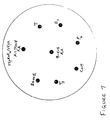
- 9- cis retinoic acid (“9- cis -RA”) is a potent inducer of RXR ⁇ mediated transactivation when compared to the all- trans -retinoic acids (“all- trans -RA”) (Fig. 6). Consequently, functional expression of the RXR ⁇ receptor in yeast cells allows for the development of a high throughput screen (Fig. 7) to identify novel ligands, which can be exploited as potential therapeutic agents for atherosclerosis.
- the present invention shows that RXR ⁇ expressed in yeast, which is devoid of endogenous RARs, binds efficiently to site A as a heterodimer with ARP-1 or RAR ⁇ produced in mammalian cells in the absence of 9- cis -RA and as a homodimer in the presence of 9- cis -RA. It is also shown that these heterodimers bind to site A with an affinity significantly greater than the affinity of ARP-1 homodimer binding to the same site.
- Transcriptional activation assays in yeast show that in the presence of 9- cis -RA, but not in the presence of various steroids, thyroid hormone or all- trans -RA, RXR ⁇ transactivates efficiently a yeast basal promoter linked to site A.
- An objective of this invention is to determine whether RXR ⁇ alone transactivates basal promoters from the apoAI gene site A in response to 9- cis -RA.
- site A responds preferentially to RXR ⁇ over the retinoic acid receptors RAR ⁇ and RXR ⁇
- the finding that RXR ⁇ forms heterodimers with RAR ⁇ , RAR ⁇ , RXR ⁇ and the orphan receptor ARP-1 that bind very efficiently to site A together with the observation that mammalian cells contain endogenous RARs and ARP-1 preclude unequivocal identification of the RXR ⁇ form (homo- or heterodimer) that activates site A in response to 9- cis -RA.
- Yeast does not seem to contain such endogenous receptors. If RXR ⁇ alone activates transcription from the apoAI gene site A, then it may be able to transactivate a yeast basal promoter linked to site A. Further experiments determine the choice of the yeast CYC1 basal promoter for the invention.
- RXR ⁇ As a first step towards reconstitution of the RXR ⁇ and 9- cis -RA signaling system in yeast, it is determined whether RXR ⁇ can be produced in yeast using the yeast high copy number expression vector YEpRXR ⁇ (see Fig. 1A) in which the RXR ⁇ cDNA is placed under the control of the yeast constitutive promoter of the triosephosphate dehydrogenase gene (TDH3).
- Yeast transformants containing this vector are viable and crude extracts from these cells contain an activity that participates in formation of heterodimers with either ARP-1 or RAR ⁇ which bind very efficiently to site A. In addition, while this activity alone is not capable of binding to site A, its binding seems to be enhanced by 9- cis -RA.
- RXR ⁇ binds as a homodimer which is resistant to conversion to heterodimers in the presence of ARP-1 or RAR ⁇
- RXR ⁇ binds as a heterodimer which is resistant to conversion to homodimers in the presence of 9- cis -RA.
- Transcription activation assays show that in the presence of 9- cis -RA, RXR ⁇ transactivates the yeast CYC1 basal promoter from the apoAI gene site A in yeast cells. This is a highly specific response because it does not occur in the absence of 9- cis -RA or in the presence of many different steroid/thyroid hormone ligands.
- the relatively low level of transactivation with high concentrations of all- trans -RA may reflect the presence of isomerases in yeast that convert RA to 9- cis -RA or, more likely, photochemical isomerization of RA to 9- cis -RA.
- the present invention includes a novel screen for detecting compounds having retinoid X receptor agonist or antagonist activity by the following steps: (1) Providing a yeast strain which expresses the retinoic acid receptor and activates the reporter plasmid containing apoAI gene site A or a mutated variant thereof; (2) incubating the compound in suitable media and a colorless chromogenic substrate; and (3) examining the media for development of color.
- Figure 7 illustrates the screen as a plate assay which detects RXR ⁇ agonists.
- Yeast cells containing the RXR ⁇ expression plasmid and the reporter construct are inoculated in yeast media containing the chromogenic substrate, X-GAL® (a registered trademark of 5-bromo-4-chloro-3-indolyl- ⁇ -D-galactopyranoside, commercially available from Gibco BRL, Bethesda, MD).
- X-GAL® a registered trademark of 5-bromo-4-chloro-3-indolyl- ⁇ -D-galactopyranoside, commercially available from Gibco BRL, Bethesda, MD.
- Other well-known chromogenic substrates may substitute for X-GAL®.
- discs containing different test compounds may be placed on top of the agar plate. Induction of the reporter enzyme by the ligands of RXR ⁇ is reflected by the formation of a color.
- Site A is a specialized RA responsive element that responds preferentially to RXR ⁇ over RAR ⁇ or RAR ⁇ .
- the current invention showing that site A can be transactivated efficiently by RXR ⁇ alone in the presence of 9- cis -RA confirm that site A is a target for transactivation by RXR ⁇ alone. Although this does not exclude the possibility that site A can also be transactivated by RXR ⁇ /RAR ⁇ or RXR ⁇ /RAR ⁇ heterodimers, it shows clearly that RXR ⁇ can function as a transactivator on its own.
- the present invention demonstrates that RXR ⁇ can be produced and is stable in yeast, and that it is biologically active in transactivation of the yeast basal transcription machinery from the apoAI gene site A.
- This system allows for the genetic dissection of this retinoid signaling pathway in yeast and the identification of other retinoids and retinoid mimics capable of transactivating genes via this pathway.
- Such agents may be useful for raising apoAI and HDL plasma levels and for prevention or regression of atherosclerosis.
- the invention may utilize any prokaryotic or eukaryotic host cell stably transformed or transfected by the expression vector containing a cDNA sequence which encodes a retinoid X receptor or the reporter plasmid containing apolipoprotein AI gene site A or a mutated variant thereof.
- Other host cells which may be adequate in the practice of this invention are well-known to those persons having ordinary skill in the art.
- the invention encompasses the "biologically active equivalents" of the yeast and bacterial strains disclosed herein. These equivalents would include the natural mutations of the strains ( e.g. , spontaneous mutations) as well as the artificial mutations ( e.g. , mutations induced by conventional techniques within the ordinary skill of the art) whereby the mutants retain the ability to carry the expression vector and the reporter plasmid of the invention.
- site A in addition to RXR ⁇ and retinoic acid, site A also responds efficiently to the orphan receptor HNF4, but it responds only weakly or not at all to the RAR ⁇ , RAR ⁇ , thyroid hormone receptor, estrogen receptor and andogen receptor in the presence or absence of their corresponding ligands or to the orphan receptors ARP-1 and EAR3-COUP-TF.
- RXR ⁇ and RA orphan receptors
- site A has established and preserved critical structural requirements for selective recognition and transactivation by RXR ⁇ and RA while accommodating structural adaptations required for binding and transactivation by HNF4.
- mutated variants of site A may be used in the yeast system hereindescribed as a screen for identifying agonists and antagonists selectively for RXR ⁇ /ARP-1 heterodimers and HNF4.
- the restriction enzymes, T4 polynucleotide kinase and T4 DNA ligase used in the following examples are purchased from New England Biolabs. Calf intestinal alkaline phosphatase is purchased from United States Biochemical Corporation. Taq polymerase is bought from Perkin-Elmer Cetus. Radioinert steroids, cyproterone acetate adenine sulfate, o-nitrophenyl ⁇ -D-galactopyranoside and uracil are acquired from Sigma. Casamino acids, yeast nitrogen base and dextrose are purchased from Difco. Glassperlen is bought from B. Braun Melsungen AG. The alkaline phosphatase conjugate immunoblot assay kit is purchased from BioRad. All- trans -retinoic acid is purchased from Sigma and dissolved in DMSO at stock concentration of 10 ⁇ 3 M.
- the homogenization buffer employed in the illustrations of the invention contains 10 mM Tris, 0.1 mM EDTA, 2 mM dithiothreitol and 10% glycerol, pH 8.1 at room temperature (TEDG buffer).
- the transcription buffer for ⁇ -galactosidase assay contains 0.12 M sodium phosphate (dibasic), 0.04 M sodium phosphate (monobasic), 10 mM potassium chloride, 1 mM magnesium sulfate and 0.27% 2-mercaptoethanol, pH 7.0 at room temperature.
- Saccharomyces cerevisiae strain used in the present invention is BJ3505 (Mat ⁇ pep4::his3 PR61 ⁇ 1.6R his3lys2-208trp1- ⁇ 101 ura3-52 gal2) obtained from that source.
- Expression of the retinoid X receptor is under the control of a constitutive yeast promoter, triosephosphate dehydrogenase (TDH3). Growth and transformation of yeast cells is performed according to standard procedures.
- yeast cells are grown in 10 mL of YEPD medium overnight at 30 o C until cell density reaches an O.D. of 1.0. Cells are then collected by centrifugation and washed with 10 mL of 0.1M lithium acetate. Cells are then resuspended in 10 mL 0.1M lithium acetate and incubated at 30 o C for 1 hour. Cells are collected and resuspended in 0.5 mL 0.1M lithium acetate. Aliquots of cells (50 mL) are incubated with 1-2mg DNA and incubated for 10 minutes at 30 o C followed by 1 hour incubation in the presence of 0.5 mL 40% polyethyleneglycol (4000). The cell mixture is heated for 5 minutes at 42 o C. Cells are then collected and plated onto appropriate yeast media. Transformants are selected by tryptophan auxotrophy.
- the plasmids, DNA sequences and microorganisms deposited in connection with the present patent application, except where specified to the contrary, are deposited in American Cyanamid Company's culture collection maintained in Princeton, New Jersey and are deposited pursuant to the Budapest Treaty with the American Type Culture Collection (ATCC) in Rockville, Maryland 20952, U.S.A.
- the E . coli bacterial strains which were deposited in the ATCC on December 3, 1992 include the strains carrying the expression vector and reporter plasmid YEpRXR ⁇ (ATCC 69145) and YRpA (ATCC 69144), respectively.
- the Saccharomyces cerevisiae yeast strains which were deposited in the ATCC on December 3, 1992 include the strains carrying the reporter plasmid, the expression vector/reporter plasmid and the expression vector BJ YRpA (ATCC 74195), BJ YEpRXR ⁇ /YRpA (ATCC 74196) and BJ YEpRXR ⁇ (ATCC 74197), respectively.
- the E . coli bacterial strains which were deposited in the ATCC on December 3, 1992 include the strains carrying the expression vector and reporter plasmid YEpRXR ⁇ (ATCC 69145) and YRpA (ATCC 69144), respectively.
- coli bacterial strains which were deposited in the ATCC on December 22, 1992 include the strains carrying the reporter plasmids [M3]-41AI.CAT (ATCC 69168), [M6]-41AI.CAT (ATCC 69169), [M4]-41AI.CAT (ATCC 69170) and [A5']-41AI.CAT (ATCC 69171).
- Two unique restriction sites are engineered at the 5' and 3' ends of the RXR ⁇ coding sequence for insertion into the yeast expression vector (YEpV5). This is achieved by PCR-mediated mutagenesis.
- the first two primers used to amplify the N-terminal portion of the gene (658 bp) are: 5'-TACGGCCGATGGACACCAAACATTTCCTG-3' 5'-TAGTCGACTCCACCTCATTCTCGTTCCG-3'
- the resulting 658 base pairs fragment contains an EagI site in front of the start codon and an AccI site at the C-terminus.
- the second set of primers used to amplify the other half of the RXR ⁇ gene (729 bp) are: 5'-ATGTCGACCAGCAGCGCCAACGAGGAC-3' 5'-TACACACAGTGCTAACTCATTTGGTGCGGCGCCTC-3'
- the resulting 729 base pairs PCR fragment contains an AccI site at the 5' end and a DraIII site right after the stop codon.
- TDH3 constitutive yeast promoter
- an oligonucleotide containing an EagI and a DraIII site is inserted into the AflII-KpnI sites of the yeast expression vector (YEpV5).
- the expression vector is ligated to the 658 base pairs and the 729 base pairs PCR fragments of the RXR ⁇ receptor.
- the resulting receptor expression vector (YEpRXR ⁇ ) (Fig. 1A) is used to transform Trp-1 deleted yeast strain, BJ3515, using conventional lithium acetate protocol. Transformants are selected by tryptophan auxotrophy.
- YRpA oligonucleotide containing the apoAI gene site A which has been shown to function as retinoic acid response element in mammalian cells
- YRpA yeast reporter plasmid
- Fig. 1B contains the two copies of site A at nucleotide position -250 upstream of the iso-1-cytochrome C (CYC1) promoter which is fused to the ⁇ -galactosidase gene of E . coli .
- This reporter is used to transform yeast cells expressing the RXR ⁇ receptor (YEpRXR ⁇ ).
- the double transformant yeast cells (YEpRXR ⁇ /YRpA) are selected by tryptophan and uracil auxotrophy.
- Yeast cells containing the RXR ⁇ receptor expression construct are grown overnight at 30 o C in minimal medium (2% dextrose, 0.1% casamino acids, 0.67% yeast nitrogen base, 0.001% adenine and 0.002% uracil).
- minimal medium 2% dextrose, 0.1% casamino acids, 0.67% yeast nitrogen base, 0.001% adenine and 0.002% uracil.
- TMG receptor buffer
- the final cell pellets are suspended in TEDG buffer and mixed with an equal volume of glass beads. Cells are disrupted by vortexing. The homogenate is centrifuged at 100,000x g for 30 minutes to obtain yeast extracts which are used for gel retardation assays. Protein concentration is determined by Bio-Rad protein assay according to the manufacturer's published protocol using bovine serum albumin as standard.
- EMSA are performed using a 32P-labeled double stranded oligonucleotide with a sequence corresponding to the apoAI gene site A (oligo A probe).
- 40 ⁇ g of yeast extract is used in all binding reactions except in the 9- cis -RA experiment in which 60 ⁇ g extract is used.
- 9- cis -RA is used (5 x 10 ⁇ 5 M)
- it is preincubated with yeast extracts at room temperature for 20 minutes before addition of the probe.
- All receptors are produced by transfecting CMT cells which are similar to Cos-1 cells with various expression plasmids including pMT2-ARP-1, pMT2-ARP ⁇ A1, pMT2-ARP ⁇ A6, pMT2-ARP ⁇ A7 and pMT2-RAR ⁇ .
- Mixtures of yeast and CMT cell extracts contain 2 ⁇ g of CMT cell extracts.
- Protein-DNA complexes are analyzed by 6% non-denaturing polyacrylamide gel by conventional procedures.
- the reaction mixture is acidified by adding acetic acid and 5 mL of water and then filtered with 0.45 ⁇ Whatman disk. The filtrate is pumped through a 900 mg C18 cartridge. 9- cis -retinoic acid is retained on the column. The column is then desalted with a water wash (40 mL). The retinoic acid is washed out with MeOH/MeCN (2:1). The product is concentrated under reduced pressure to dryness. Yield is about 25 mg of title product (25% yield).
- Yeast strains containing the RXR ⁇ receptor expression construct and the reporter plasmid are grown in minimal medium (without tryptophan and uracil) in the absence or presence of all- trans -RA, 9- cis -RA or other steroid hormones.
- yeast extracts are prepared and assayed for ⁇ -galactosidase activity.
- yeast produced RXR ⁇ can also form heterodimers with ARP-1 or RAR ⁇ that bind efficiently to site A
- crude extracts prepared either from yeast cells containing the RXR ⁇ yeast expression vector YEpRXR ⁇ (yRXR ⁇ extracts) or from untransformed yeast control cells (yCONT extracts) are mixed with whole cell extracts from CMT cells transiently transfected with mammalian cell expression vectors expressing ARP-1, various ARP-1 deletion mutants (see below) or RAR ⁇ .
- the ARP-1 deletion mutants are ARP ⁇ A1, ARP ⁇ A6 and ARP ⁇ A7 all of which contain the ARP-1 DNA binding domain.
- ARP ⁇ A1 lacks the ARP-1 amino-terminal domain
- ARP ⁇ A6 lacks the ARP-1 carboxy-terminal domain
- ARP ⁇ A7 lacks both the amino- and carboxy-terminal domains.
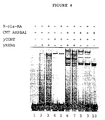
- yRXR ⁇ or yCONT extracts mixed with extracts from CMT cells transfected with the ARP-1 expression vector form intense slow migrating retardation complexes with similar electrophoretic mobilities (lanes 2 and 8).
- yRXR ⁇ extracts mixed with extracts from CMT cells transfected with the ARP ⁇ A1 expression vector form two relatively faster migrating complexes while yCONT extracts mixed with the same CMT cell extracts form only one complex with an electrophoretic mobility similar to the faster migrating complex formed with yRXR ⁇ and these CMT cell extracts (compare lanes 3 and 9).
- yRXR ⁇ or yCONT extracts mixed with extracts from CMT cells transfected with the ARP ⁇ A6 expression vector form even faster migrating retardation complexes with similar electrophoretic mobilities (lanes 4 and 10) and yRXR ⁇ or yCONT extracts mixed with extracts from CMT cells transfected with the ARP ⁇ A7 expression vector form very fast migrating complexes with similar electrophoretic mobilities (lanes 5 and 11).
- yRXR ⁇ extracts mixed with extracts from CMT cells transfected with the RAR ⁇ expression vector form an intense, relatively diffuse slow migrating retardation complex, while yCONT extracts mixed with the same CMT cell extracts do not form this retardation complex (compare lanes 6 and 12).
- RXR ⁇ /ARP-1 heterodimers formed with RXR ⁇ and ARP-1 produced in Cos-1 cells bind to the apoAI gene site A with an affinity approximately ten times greater than the affinity of binding of either ARP-1 or RXR ⁇ alone to the same site.
- yRXR ⁇ extracts are mixed with either CMT cell produced ARP ⁇ A1 or CMT cell produced RAR ⁇ and the mixtures are used for EMSA with the oligo A probe in the presence of increasing amounts of unlabeled oligo A.
- the results in Fig. 3 show that while ARP ⁇ A1 binding is effectively eliminated with 25-fold molar excess of unlabeled oligo A over the oligo A probe (lane 3), elimination of either the RXR ⁇ /ARP ⁇ A1 or the RXR ⁇ /RAR ⁇ heterodimers requires at least 50-fold molar excess of unlabeled oligo A over the oligo A probe (lanes 4, 5, 12 and 13).
- RXR ⁇ prepared by translation of RXR ⁇ mRNA in reticulocyte lysates in vitro does not bind to the apoAI gene site A unless these lysates are supplemented with either cell extracts or 9- cis -RA and to the lesser extent with all- trans -RA.
- yeast produced RXR ⁇ binds to site A in the presence of 9- cis -RA
- yRXR ⁇ and the control yCONT extracts are tested for binding to the oligo A probe in the presence or absence of 5 x 10 ⁇ 5 M 9- cis -RA by EMSA.
- the retardation complex observed with yRXR ⁇ extracts in the presence of 9- cis -RA is specific for the oligo A probe because it is efficiently competed by a 50-fold molar excess of unlabeled oligo A but not by a 100-fold molar excess of a mutated version of oligo A (oligo Amut) which neither binds RXR ⁇ nor is it transactivated by RXR ⁇ and RA in mammalian cells.
- formation of this complex seems to be relatively inefficient compared to the formation of yRXR ⁇ /ARP-1 and yRXR ⁇ /RAR ⁇ complexes (compare Fig. 4, lane 3 with Fig. 2, lanes 3 and 6).
- yeast produced RXR ⁇ binds to the apoAI site A as a homodimer in the presence of 9- cis -RA.
- yeast produced RXR ⁇ binds to the apoAI site A as a homodimer in the presence of 9- cis -RA.
- RXR ⁇ also binds to site A as a heterodimer with ARP-1 or RAR ⁇ in the absence of 9- cis -RA raise the possibility that in vitro the ratio of the intracellular concentrations of retinoids, ARP-1 and RAR ⁇ may play a fundamental role in determining whether site A is occupied by RXR ⁇ homodimers or heterodimers.
- RXR ⁇ binds to the apoAI gene site A either as a homodimer in the presence of 9- cis -RA, or as a heterodimer with ARP-1 in the absence of 9- cis -RA
- RXR ⁇ in these heterodimers is unresponsive to 9- cis -RA in formation of RXR ⁇ homodimers.
- RXR ⁇ in RXR ⁇ /ARP-1 heterodimers does not form RXR ⁇ homodimers in response to 9- cis -RA.
- yeast produced RXR ⁇ appears to be distributed into two distinct and separate pools: One capable of homodimerization in the presence of 9- cis -RA but incapable of heterodimerization with ARP-1, and another capable of heterodimerization with ARP-1 but incapable of forming homodimers in response to 9- cis -RA.
- a reporter plasmid containing two copies of the apoAI gene site A upstream of the yeast proximal iso-1-cytochrome C (CYC1) promoter fused to the E . coli lac Z gene is constructed.
- the resulting reporter construct (YRpA) is used to transform yeast cells containing the RXR ⁇ expression vector YEpRXR ⁇ and the resulting transformed yeast cells (YEpRXR ⁇ /YRpA) are tested for their ability to express the lac Z gene product, ⁇ -galactosidase ( ⁇ -gal), in the absence of any ligands (Con) and in the presence of 10 ⁇ 6 M of all- trans -RA (RA), 9- cis -RA (9-Cis), testosterone (T), estradiol (E2), progesterone (P4), ecdysone (Ecdy) and thyroid hormone (T3).
- RA ⁇ -galactosidase
- Con ⁇ -gal
- RA 9- cis -RA (9-Cis
- T estradiol
- E2 estradiol
- P4 progesterone
- Ecdysone Ecdy
- Example 11 The specificity for retinoids in transactivation of yeast basal promoters from site A by RXR ⁇ is illustrated in Example 11.
- all- trans -RA can be isomerized to 9- cis -RA but there is no evidence in support of a similar mechanism in yeast.
- yeast RXR ⁇ responds selectively to 9- cis -RA and raise the possibility that yeast contain enzymes for isomerization of all- trans -RA to 9- cis -RA.
- yeast cells containing the RXR ⁇ receptor expression plasmid and the reporter construct are inoculated in yeast media containing the chromogenic substrate, X-GAL® (a registered trademark of 5-bromo-4-chloro-3-indolyl- ⁇ -D-galactopyranoside, commercially available from Gibco BRL, Bethesda, MD).
- X-GAL® a registered trademark of 5-bromo-4-chloro-3-indolyl- ⁇ -D-galactopyranoside, commercially available from Gibco BRL, Bethesda, MD.
- Discs containing different hormones are placed on top of the agar plate. Induction of the reporter enzyme as reflected by the formation of the blue halo is observed for 9- cis retinoic acid and all- trans -retinoic acids only.
- All reporter constructs are made by cloning different double stranded oligonucleotides into a BamHI site engineered at nucleotide position -41 upstream of the apoAI gene transcription start site (+1) in a previously described construct in which the apoAI gene promoter region from -41 to +397 is fused to the bacterial chloramphenicol acetyltransferase (CAT) gene (construct - 41AI.CAT). Synthesis of single stranded oligonucleotides, their annealing into double stranded oligonucleotides, their ligation into the BamHI site of -41AI.CAT, and their verification by DNA sequencing are as previously described in the literature.
- CAT chloramphenicol acetyltransferase
- Each of these single stranded oligonucleotides is synthesized with a 5' GATC overhang to facilitate cloning into the BamHI site in - 41AI.CAT.
- the nucleotide sequence (from 5' to 3') of each of these oligonucleotides and its relative orientation in the corresponding constructs is as follows: ACTGAACCCTTGACCCCTG (Reverse) construct A5'; CTTGACCCCTGCCCTGCAG (Reverse) construct A3'; ACTGAACTGATGACCCCTG (Forward) construct M2; ACTGAACTTTTGACCCCTG (Reverse) construct M3; ACTGACCCCTTGACCCCTG (Forward) construct M4; ACTGACCTGACCCCTG (Forward) construct M5; ACTGACCTTTTGACCCCTG (Forward) construct M6; ACTGAACCCTTGAACCCTG (Reverse) construct M7; ACTGAACTGAACCCTG (Forward) construct M8; ACTGAACTGTG
- the vectors expressing the retinoic acid receptors RXR ⁇ , RAR ⁇ , and RAR ⁇ , pMT2-RXR ⁇ , pMT2-RAR ⁇ , and pMT2-RAR ⁇ respectively and the vectors expressing the hepatocyte nuclear factor 4 (HNF4), the apolipoprotein AI regulatory protein-1 (ARP-1), and the chicken ovalbumin upstream factor (Ear3-COUP-TF), pMT2-HNF4, pMT2-ARP-1 and pMT2-Ear3-COUP-TF respectively can be constructed by well-known techniques described in the literature.
- the transfection mixtures contained 5 ⁇ g of each reporter plasmid, 5 ⁇ g of the ⁇ -gal expression vector pRSV- ⁇ -gal, the amounts of the pMT2-RXR ⁇ , pMT2-RAR ⁇ , pMT2-RAR ⁇ , pMT2-ARP-1 and pMT2-Ear3-COUP-TF expression vectors and the appropriate amounts of the previously described control vector pMT2-UT to bring the final amount of the plasmid DNA in the transfection mixtures to a total of 17 ⁇ g.
- transfection mixtures containing the expression vectors pMT2-HNF4 or pSG5-AR, 1 ⁇ g of the ⁇ -gal expression vector pCMV- ⁇ -gal instead of the vector pRSV- ⁇ -gal is used and the final amount of plasmid DNA in the transfection mixture is adjusted to a total of 13 ⁇ g as described above.
- construct -41AI.CAT which contains the apoAI basal promoter from nucleotide -41 to nucleotide +397 fused to the CAT gene and constructs [A]-41AI.CAT and [2XA]-41AI.CAT which contain one and two copies of site A, respectively, proximal to the apoAI basal promoter in - 41AI.CAT are cotransfected with various vectors expressing different members of the nuclear hormone receptor superfamily into CV-1 cells in the presence or absence of the corresponding ligands. The CAT activity in extracts from these cells is determined, normalized for DNA uptake by the cells and expressed relative to the normalized CAT activity of the construct -41AI.CAT (relative CAT activity).
- the minimal DNA sequence requirements are determined for responsiveness of site A to RXR ⁇ in the presence of RA and to HNF4.
- two oligonucleotides spanning different portions of site A are cloned proximal to the apoAI basal promoter in the construct -41AI.CAT and the resulting constructs are tested for their responsiveness to RXR ⁇ in the presence of RA and to HNF4 in CV-1 cells.
- site A,5'-AC TGAAC CCT TGACC CC TGCCCT -3' is composed of three imperfect TGACC repeats (underlined) and one of these oligonucleotides spans the two 5' repeats, 5'-AC TGAAC CCT TGACC TG-3' (oligo A5'), while the other oligonucleotide spans the two 3' repeats, 5'-CT TGACC CC TGCCC T-3' (oligo A3').
- the constructs containing the oligos A5' and A3' are named [A5']-41AI.CAT and [A3']-41AI.CAT respectively.
- the construct [A5']-41AI.CAT, but not the construct [A3']-41AI.CAT, is efficiently transactivated by RXR ⁇ in the presence of RA, and both of these constructs are transactivated by HNF4.
- a similar construct containing a mutated version of site A, 5'-AC TGAAC CC G G GACC CC TGCCC T-3' (oligo Amut), in which two T residues in site A have been substituted by G residues (bolded), does not respond to either RXR ⁇ in the presence of RA or to HNF4.
- the CAT activity expressed by the constructs M3, M4 and M6 in the presence of RA is 4.5, 2.5 and 1.9-fold greater, respectively, than that expressed from the same constructs in the absence of RA, suggesting that all three of these constructs respond to RA receptors endogenous in CV-1 cells.
- the constructs M3, M4 and M6 express CAT activity at levels substantially greater than that expressed from the construct -41AI.CAT, although the levels of expression are generally lower than those expressed from the same constructs in the presence of RA but in the absence of cotransfected RXR ⁇ .
- constructs [A5']-41AI.CAT, M3, M4 and M6 express 4.8, 3, 7 and 3.1-fold greater levels of CAT activity, respectively, compared to that expressed from the same constructs cotransfected with RXR ⁇ in the absence of RA.
- constructs M3 and M6 nearly all of this stimulation of CAT activity can be accounted for by the transactivation from the CV-1 cell endogenous RA receptors (Fig. 8, compare the relative CAT activities of constructs M3 and M6 in the presence of RA with those of the same constructs in the presence of cotransfected RXR ⁇ and RA) and thus it seems to be independent of the cotransfected RXR ⁇ .
- the nucleotide sequence in the spacer of this element appears to play an important role in both the level of responsiveness to RXR ⁇ and its ability to discriminate between CV-1 cell endogenous RA receptors and RXR ⁇ .
- site A5' responds preferentially to RXR ⁇ over these endogenous RA receptors
- the variant site A5' in which the spacer is TTT instead of CCT responds efficiently to these endogenous receptors while the site A5' variant in which the spacer is TGA instead of CCT (construct M2) responds very poorly to both RXR ⁇ and these endogenous RA receptors (Fig. 8).
- the spacing between the two repeats seem to play an important role in the level of responsiveness to both RXR ⁇ and endogenous RA receptors.
- both repeats are TGACC (construct M5) or TGAAC (construct M8).
- the nucleotide sequence in these repeats seems to play a determinant role in the level of responsiveness to both RXR ⁇ and CV-1 cell endogenous RA receptors.
- the variant site A5' in which the second repeat is TGAAC instead of TGACC responds poorly to both RXR ⁇ and CV-1 cell endogenous RA receptors.
- the cotransfection experiments with the HNF4 expression vector show that all of these constructs express CAT activity at levels substantially higher than the level expressed from the construct -41AI.CAT (Fig. 8).
- constructs -41AI.CAT, [A5']-41AI.CAT and M4 are transfected into CV-1 cells alone, in the presence of RA and in the presence of cotransfected RXR ⁇ in the absence or presence of RA. The CAT activity in extracts from these cells is determined and normalized.
- the CAT activity expressed by the constructs M9 and M10 in the presence of RXR ⁇ and RA is less than 3-fold greater than that expressed by the same construct in the presence of cotransfected RXR ⁇ but in the absence of RA. Similar results are also obtained with the construct M2 which contains a site A5' variant in which the spacer is TGA instead of CCT (see Fig. 8). In striking contrast, and consistent with the data in Fig. 8, the CAT activity expressed by the constructs [A5']-41AI.CAT and M4 in the presence of cotransfected RXR ⁇ and RA is at least 5-fold greater than that expressed by the same constructs in the presence of cotransfected RXR ⁇ but in the absence of RA.
- nucleotide sequences TG or TGA in the spacer region between the two TGACC direct repeats does not interfere with the ability of RA responsive elements to respond selectively to RXR ⁇ over other RA receptors endogenous to CV-1 cells, the magnitude of this responsiveness is drastically diminished compared to that of RA responsive elements containing the nucleotide sequence CCT in the spacer region between these two repeats.
- construct 2XM3 a construct similar to M3, but containing two copies of the same oligonucleotide used to generate M3 (construct 2XM3) is cotransfected with increasing amounts (10, 20, 50, 100 and 200 ng) of the ARP-1 expression vector, or a constant amount (50 ng) of the ARP-1 expression vector and increasing amounts (50 and 500 ng) of the RXR ⁇ expression vector or, as a control, a constant amount (50 ng) of the ARP-1 expression vector and increasing amounts (50 and 500 ng) of the RAR ⁇ expression vector.
- the CAT activity in extracts from these cells is determined, normalized, and used to construct the bar plots in Fig. 9.
- the results in Fig. 9 show that the high levels of CAT activity expressed from the construct 2XM3 in CV-1 cells in the presence of RA is completely eliminated by increasing amounts of cotransfected ARP-1.
- the results show that the presence of only 50 ng of the ARP-1 expression vector in the cotransfection mixtures inhibits CAT expression by over 80% and that inclusion of 50 ng or 500 ng of the RXR ⁇ expression in these mixtures does not reverse this inhibition.
- inclusion of only 50 ng of the RAR ⁇ expression vector in these mixtures completely reverses the ARP-1 mediated inhibition (Fig. 9).
- sequence CCT in the spacer region between the two TGACC direct repeats in site A5' plays a determinant role in the capacity of this site to respond selectively to RXR ⁇ over other RA receptors endogenous to CV-1 cells in the presence of RA.
- sequence TTT in the spacer region between the two TGACC repeats in RA responsive elements may determine their capacity to respond selectively to RA receptors other than RXR ⁇ .
- Heterodimeric receptor complexes determine 3,5,3'-triiodothyronine and retinoid signaling specificities. Mol. Endo. 6 :1153-1162. Heyman, R.A., Mangelsdorf, D.J., Dyck, J.A., Stein, R.B., Eichele, G., Evans, R.M., and Thaller, C. (1992). 9- Cis -retinoic acid is a high affinity ligand for the retinoid X receptor. Cell 68 :397-406. Hope, I. and Struhl, K. (1986). Functional dissection of a eukaryotic transcriptional activator protein, GCN4 of yeast. Cell 46 :885.
- Karathanasis S.K. (1992). Apolipoprotein AI gene regulation by members of the steroid/thyroid hormone receptor superfamily of ligand dependent transcription factors. In High Density Lipoproteins and Atherosclerosis III; Miller, N.E. and Tall, A. (Eds.) Elsevier. pp. 21-32. Klein-Hitpass, L., Schorpp, M., Wagner, U. and Ryffel, G.U. (1986). An estrogen-responsive element de-cells. Cell 46 :1053-1061. Kliewer, S.A., Umesono, K., Mangelsdorf, D.J. and Evans, R.M.
- Retinoid X receptor interacts with nuclear receptors in retinoic acid, thyroid hormone and vitamin D3 signalling. Nature (London) 355 :446-449. Leroy, P., Nakshatri, H. and Chambron, P. (1991). Mouse retinoic acid receptor ⁇ 2 isoform is transcribed from a promoter that contains a retinoic acid response element. Proc. Natl. Acad. Sci. U.S.A. 88 :10138-10142.
- Protease B of Saccharomyces cerevisiae isolation and regulation of PRB1 structural gene. Genetics 115 :255-265. O'Malley, B.W. (1990). The steroid receptor superfamily: more excitement predicted for future. Mol.Endocrinol. 4 :363-369. Peterson, M.G., Tanese, N., Pugh, B.F. and Tjian, R. (1990). Functional domains and upstream activation properties of cloned human TATA binding protein. Science 248 :1625-1630. Picard, D., Khursheed, B., Garabedian M.J., Fortin, M.G., Lindquist, S. and Yamamoto, K.R.
- the N-terminal region of chicken progesterone receptor specifies target gene activation. Nature 33 :185-188. Trapman, J., Klaassen, P., Kuiper G.G.J.M., van der Korput, J.A.G.M., Faber, P.W., van Rooij, J.C.J., Geurts van Kessel, A., Voorhorst,M.M., Mulder, E. and Brinkmann, A.O. (1988). Cloning, structure and expression of a cDNA encoding the human androgen receptor. Biochem. Biphys. Res. Commun. 153 :241-248. Walsh, A., Ito, Y.
- HDL high density lipoprotein
- Repression by ARP-1 sensitizes apolipoprotein AI gene responsiveness to RXR ⁇ and retinoic acid. Mol. Cell Biol. 12 :3380-3389. Yamamoto, K.R. (1985). Steroid receptor regulated transcription of specific genes and gene networks. Annu. Rev. Genet. 19 :209-252. Zhang, X-K., Hoffmann, B. B-V, P., Graupner, G. and Pfahl, M. (1992). Retinoid X receptor is an auxiliary protein for thyroid hormone and retinoic acid receptors. Nature (London) 355 :441-446.
Landscapes
- Health & Medical Sciences (AREA)
- Life Sciences & Earth Sciences (AREA)
- Chemical & Material Sciences (AREA)
- Engineering & Computer Science (AREA)
- Organic Chemistry (AREA)
- Molecular Biology (AREA)
- Immunology (AREA)
- Genetics & Genomics (AREA)
- Biochemistry (AREA)
- Zoology (AREA)
- General Health & Medical Sciences (AREA)
- Proteomics, Peptides & Aminoacids (AREA)
- Biomedical Technology (AREA)
- Physics & Mathematics (AREA)
- Biophysics (AREA)
- Medicinal Chemistry (AREA)
- Biotechnology (AREA)
- Hematology (AREA)
- Urology & Nephrology (AREA)
- Microbiology (AREA)
- Wood Science & Technology (AREA)
- Cell Biology (AREA)
- Analytical Chemistry (AREA)
- Gastroenterology & Hepatology (AREA)
- General Engineering & Computer Science (AREA)
- Bioinformatics & Cheminformatics (AREA)
- Toxicology (AREA)
- Food Science & Technology (AREA)
- General Physics & Mathematics (AREA)
- Pathology (AREA)
- High Energy & Nuclear Physics (AREA)
- Mycology (AREA)
- Plant Pathology (AREA)
- Micro-Organisms Or Cultivation Processes Thereof (AREA)
- Measuring Or Testing Involving Enzymes Or Micro-Organisms (AREA)
Applications Claiming Priority (2)
| Application Number | Priority Date | Filing Date | Title |
|---|---|---|---|
| US07/999,071 US5691196A (en) | 1992-12-31 | 1992-12-31 | Recombinant nucleic acid containing a response element |
| US999071 | 1992-12-31 |
Publications (2)
| Publication Number | Publication Date |
|---|---|
| EP0608532A2 true EP0608532A2 (fr) | 1994-08-03 |
| EP0608532A3 EP0608532A3 (fr) | 1995-11-15 |
Family
ID=25545860
Family Applications (1)
| Application Number | Title | Priority Date | Filing Date |
|---|---|---|---|
| EP93120050A Withdrawn EP0608532A3 (fr) | 1992-12-31 | 1993-12-13 | Screening basé en mécanisme pour identifier d'agonistes et antagonistes du récepteur réfinoide x. |
Country Status (6)
| Country | Link |
|---|---|
| US (4) | US5691196A (fr) |
| EP (1) | EP0608532A3 (fr) |
| JP (1) | JPH06292580A (fr) |
| KR (1) | KR940014779A (fr) |
| CA (1) | CA2112527A1 (fr) |
| TW (1) | TW284787B (fr) |
Cited By (5)
| Publication number | Priority date | Publication date | Assignee | Title |
|---|---|---|---|---|
| FR2735370A1 (fr) * | 1995-06-19 | 1996-12-20 | Cird Galderma | Procede pour identifier des composes agonistes des recepteurs rxrs |
| WO2000036092A3 (fr) * | 1998-12-17 | 2000-11-23 | Biogen Inc | Methode permettant d"obtenir un haut niveau d"expression de proteines chimeres immunoglobulines actives receptrices de la lymphotoxine-beta, et purification desdites proteines |
| WO2001051045A3 (fr) * | 2000-01-13 | 2001-12-20 | Tularik Inc | Modulateurs de car : criblage et traitement de l'hypercholesterolemie |
| US8067375B2 (en) | 2006-10-20 | 2011-11-29 | Biogen Idec Ma Inc. | Treatment of demyelinating disorders with soluble lymphotoxin-β-receptor |
| US8338376B2 (en) | 2006-10-20 | 2012-12-25 | Biogen Idec Ma Inc. | Compositions comprising variant LT-B-R-IG fusion proteins |
Families Citing this family (17)
| Publication number | Priority date | Publication date | Assignee | Title |
|---|---|---|---|---|
| ES2237764T3 (es) | 1995-03-03 | 2005-08-01 | Syngenta Participations Ag | Control de la expresion genica en plantas por transactivacion mediada por un receptor en presencia de un ligando quimico. |
| CA2231833A1 (fr) * | 1995-09-20 | 1997-03-27 | Novo Nordisk A/S | Nouveaux composes a base de furyl-pyridone, employes comme fongicides et obtenus a partir du fungus cladobotryum |
| CA2232712A1 (fr) | 1995-10-10 | 1997-04-17 | Lyle Dean Crossland | Hormone juvenile ou l'un de ses agonistes utilises en tant que ligand chimique aux fins de reguler l'expression genique dans des plantes, a l'aide d'une transactivation induite par des recepteurs |
| WO2000030628A2 (fr) * | 1998-11-20 | 2000-06-02 | Genentech, Inc. | Methode d'inhibition de l'angiogenese |
| AU3349900A (en) * | 1999-01-26 | 2000-08-07 | Du Pont Pharmaceuticals Company | Electrophoretic assays to assess conformational changes of integrins induced by ligand binding |
| JP2003508042A (ja) * | 1999-09-01 | 2003-03-04 | アンスティテュー・ナシオナル・ドゥ・ラ・サンテ・エ・ドゥ・ラ・ルシェルシュ・メディカル・(イ・エヌ・エス・ウ・エール・エム) | インビトロ転写系および用途 |
| US6432427B1 (en) * | 2000-06-30 | 2002-08-13 | Unilever Hope & Personal Care Usa, Division Of Conopco, Inc. | Cosmetic compositions containing substituted sulfonamide derivatives |
| US20030165873A1 (en) * | 2001-03-02 | 2003-09-04 | Come Jon H. | Three hybrid assay system |
| US20020193403A1 (en) * | 2001-05-03 | 2002-12-19 | Allergan Sales, Inc. | Methods of treating hyperlipidemia |
| US6921762B2 (en) * | 2001-11-16 | 2005-07-26 | Amgen Inc. | Substituted indolizine-like compounds and methods of use |
| US7223726B2 (en) * | 2002-01-14 | 2007-05-29 | The Regents Of The University Of California | Apolipoprotein A-I mutant proteins having cysteine substitutions and polynucleotides encoding same |
| US20030155328A1 (en) * | 2002-02-15 | 2003-08-21 | Huth Mark C. | Laser micromachining and methods and systems of same |
| US20030170724A1 (en) * | 2002-03-08 | 2003-09-11 | Anderson David C. | Methods of identifying target polypeptides |
| KR100492514B1 (ko) * | 2002-05-03 | 2005-06-03 | 학교법인 포항공과대학교 | 레티노산에 의해 발현이 조절되는 재조합 리포터 유전자를가지는 형질전환 세포주 및 이를 이용한 레티노산유사물질 및 저해물질의 생물학적 검색방법 |
| JP5226353B2 (ja) * | 2008-03-26 | 2013-07-03 | 長瀬産業株式会社 | 形質転換酵母、それを用いた分析方法および分析キット |
| MX365321B (es) | 2012-06-07 | 2019-05-29 | Los Angeles Childrens Hospital | Métodos para el tratamiento de neutropenia mediante agonistas retinoides. |
| AU2015219038B2 (en) | 2014-02-18 | 2018-10-18 | Children's Hospital Los Angeles | Compositions and methods for treating neutropenia |
Family Cites Families (3)
| Publication number | Priority date | Publication date | Assignee | Title |
|---|---|---|---|---|
| GB8826062D0 (en) * | 1988-11-07 | 1988-12-14 | Raychem Sa Nv | Splice case for optical fibre cable |
| CA2034220A1 (fr) * | 1990-01-16 | 1991-07-17 | Donald P. Mcdonnell | Vecteurs d'expression produisant des recepteurs de steroides, chimeres de recepteurs de steroides, analyses des recepteurs de steroides et analyses cliniques faisant appel a de |
| US5552271A (en) * | 1992-06-16 | 1996-09-03 | La Jolla Cancer Research Foundation | RXR homodimer formation |
-
1992
- 1992-12-31 US US07/999,071 patent/US5691196A/en not_active Expired - Fee Related
-
1993
- 1993-12-13 EP EP93120050A patent/EP0608532A3/fr not_active Withdrawn
- 1993-12-15 TW TW082110648A patent/TW284787B/zh active
- 1993-12-29 JP JP5349809A patent/JPH06292580A/ja active Pending
- 1993-12-29 CA CA002112527A patent/CA2112527A1/fr not_active Abandoned
- 1993-12-30 KR KR1019930032310A patent/KR940014779A/ko not_active Withdrawn
-
1995
- 1995-06-06 US US08/465,783 patent/US5700682A/en not_active Expired - Fee Related
- 1995-06-06 US US08/469,122 patent/US5700650A/en not_active Expired - Fee Related
- 1995-06-06 US US08/469,120 patent/US5714595A/en not_active Expired - Fee Related
Cited By (9)
| Publication number | Priority date | Publication date | Assignee | Title |
|---|---|---|---|---|
| FR2735370A1 (fr) * | 1995-06-19 | 1996-12-20 | Cird Galderma | Procede pour identifier des composes agonistes des recepteurs rxrs |
| EP0749754A3 (fr) * | 1995-06-19 | 1997-01-15 | Centre International De Recherches Dermatologiques Galderma - Cird Galderma | Procédé pour identifier des composés agonistes des récepteurs RXRs |
| US5696104A (en) * | 1995-06-19 | 1997-12-09 | Centre International De Recherches Dermatologiques Galderma | Process for identifying RXR-receptor-agonist compounds |
| WO2000036092A3 (fr) * | 1998-12-17 | 2000-11-23 | Biogen Inc | Methode permettant d"obtenir un haut niveau d"expression de proteines chimeres immunoglobulines actives receptrices de la lymphotoxine-beta, et purification desdites proteines |
| US8283138B2 (en) | 1998-12-17 | 2012-10-09 | Biogen Idec Ma Inc. | Method for the high level expression of active tumor necrosis receptor family member immunoglobulin fusion proteins |
| US8709759B2 (en) | 1998-12-17 | 2014-04-29 | Biogen Idec Ma Inc. | Method for increasing expression of active tumor necrosis factor receptor family member-Ig fusion proteins |
| WO2001051045A3 (fr) * | 2000-01-13 | 2001-12-20 | Tularik Inc | Modulateurs de car : criblage et traitement de l'hypercholesterolemie |
| US8067375B2 (en) | 2006-10-20 | 2011-11-29 | Biogen Idec Ma Inc. | Treatment of demyelinating disorders with soluble lymphotoxin-β-receptor |
| US8338376B2 (en) | 2006-10-20 | 2012-12-25 | Biogen Idec Ma Inc. | Compositions comprising variant LT-B-R-IG fusion proteins |
Also Published As
| Publication number | Publication date |
|---|---|
| US5691196A (en) | 1997-11-25 |
| KR940014779A (ko) | 1994-07-19 |
| US5700650A (en) | 1997-12-23 |
| CA2112527A1 (fr) | 1994-07-01 |
| US5700682A (en) | 1997-12-23 |
| JPH06292580A (ja) | 1994-10-21 |
| EP0608532A3 (fr) | 1995-11-15 |
| US5714595A (en) | 1998-02-03 |
| TW284787B (fr) | 1996-09-01 |
Similar Documents
| Publication | Publication Date | Title |
|---|---|---|
| US5714595A (en) | Mechanism-based screen for retinoid X receptor agonists and antagonists | |
| Forman et al. | A domain containing leucine-zipper-like motifs mediate novel in vivo interactions between the thyroid hormone and retinoic acid receptors | |
| Casanova et al. | Functional evidence for ligand-dependent dissociation of thyroid hormone and retinoic acid receptors from an inhibitory cellular factor | |
| US6410245B1 (en) | Compositions and methods for detecting ligand-dependent nuclear receptor and coactivator interactions | |
| Liden et al. | A new function for the C-terminal zinc finger of the glucocorticoid receptor: repression of RelA transactivation | |
| Carlberg et al. | RZRs, a new family of retinoid-related orphan receptors that function as both monomers and homodimers. | |
| Saatcioglu et al. | A conserved C-terminal sequence that is deleted in v-ErbA is essential for the biological activities of c-ErbA (the thyroid hormone receptor) | |
| McDONNELL et al. | In situ distinction between steroid receptor binding and transactivation at a target gene | |
| US5906920A (en) | Methods for the detection of ligands for retinoid X receptors | |
| Torres-Padilla et al. | Developmentally regulated N-terminal variants of the nuclear receptor hepatocyte nuclear factor 4α mediate multiple interactions through coactivator and corepressor-histone deacetylase complexes | |
| Krey et al. | Functional interactions of peroxisome proliferator-activated receptor, retinoid-X receptor, and Sp1 in the transcriptional regulation of the acyl-coenzyme-A oxidase promoter. | |
| Burbach et al. | Repression of estrogen-dependent stimulation of the oxytocin gene by chicken ovalbumin upstream promoter transcription factor I. | |
| Chen et al. | The vitamin D response element-binding protein: a novel dominant-negative regulator of vitamin D-directed transactivation | |
| EP0743520A2 (fr) | Utilisations nouvelles des structures de GAL4-récepteur | |
| Angulo et al. | Characterization of the sequences of the human cytomegalovirus enhancer that mediate differential regulation by natural and synthetic retinoids. | |
| Davis et al. | Endogenous retinoid X receptors can function as hormone receptors in pituitary cells | |
| CA2588646A1 (fr) | Outils permettant l'identification de ligands pour recepteurs nucleaires hormonaux | |
| US6893830B1 (en) | Method of screening oxysterol activation of LXRα | |
| Marcus et al. | Identification of COUP-TFII as a peroxisome proliferator response element binding factor using genetic selection in yeast: COUP-TFII activates transcription in yeast but anatagonizes PPAR signaling in mammalian cells | |
| Uppaluri et al. | Genetic dissection of thyroid hormone receptor β: identification of mutations that separate hormone binding and transcriptional activation | |
| Collet et al. | The human semaphorin 6B gene is down regulated by PPARs | |
| US20020137209A1 (en) | Methods of dissociating nongenotropic from genotropic activity of steroid receptors | |
| Chen et al. | A highly efficient and sensitive screening method for trans-activation activity of estrogen receptors | |
| EP0577932A2 (fr) | Développement d'un "screening" basé en mécanisme pour identifier agonistes et antagonistes du récepteur d'androgène | |
| US20110256579A1 (en) | Method for Verifying and/or Identifying Hormonally Effective Substances |
Legal Events
| Date | Code | Title | Description |
|---|---|---|---|
| PUAI | Public reference made under article 153(3) epc to a published international application that has entered the european phase |
Free format text: ORIGINAL CODE: 0009012 |
|
| AK | Designated contracting states |
Kind code of ref document: A2 Designated state(s): AT BE CH DE DK ES FR GB GR IE IT LI LU NL PT SE |
|
| PUAL | Search report despatched |
Free format text: ORIGINAL CODE: 0009013 |
|
| AK | Designated contracting states |
Kind code of ref document: A3 Designated state(s): AT BE CH DE DK ES FR GB GR IE IT LI LU NL PT SE |
|
| 17P | Request for examination filed |
Effective date: 19960404 |
|
| 17Q | First examination report despatched |
Effective date: 19980824 |
|
| STAA | Information on the status of an ep patent application or granted ep patent |
Free format text: STATUS: THE APPLICATION IS DEEMED TO BE WITHDRAWN |
|
| 18D | Application deemed to be withdrawn |
Effective date: 19990105 |