EP0609059A2 - Nukleotidsonden - Google Patents
Nukleotidsonden Download PDFInfo
- Publication number
- EP0609059A2 EP0609059A2 EP94300561A EP94300561A EP0609059A2 EP 0609059 A2 EP0609059 A2 EP 0609059A2 EP 94300561 A EP94300561 A EP 94300561A EP 94300561 A EP94300561 A EP 94300561A EP 0609059 A2 EP0609059 A2 EP 0609059A2
- Authority
- EP
- European Patent Office
- Prior art keywords
- taql
- probe
- apo
- dna
- gene
- Prior art date
- Legal status (The legal status is an assumption and is not a legal conclusion. Google has not performed a legal analysis and makes no representation as to the accuracy of the status listed.)
- Granted
Links
- 239000000523 sample Substances 0.000 title claims abstract description 117
- 239000002773 nucleotide Substances 0.000 title description 3
- 125000003729 nucleotide group Chemical group 0.000 title description 3
- 101710115418 Apolipoprotein(a) Proteins 0.000 claims abstract description 36
- 208000019622 heart disease Diseases 0.000 claims abstract description 14
- 108091033319 polynucleotide Proteins 0.000 claims abstract description 12
- 239000002157 polynucleotide Substances 0.000 claims abstract description 12
- 102000040430 polynucleotide Human genes 0.000 claims abstract description 12
- 101000889990 Homo sapiens Apolipoprotein(a) Proteins 0.000 claims abstract description 11
- 238000012408 PCR amplification Methods 0.000 claims abstract description 7
- 238000000034 method Methods 0.000 claims description 17
- 102100040214 Apolipoprotein(a) Human genes 0.000 claims description 16
- 102000054765 polymorphisms of proteins Human genes 0.000 claims description 12
- 239000003298 DNA probe Substances 0.000 claims description 8
- 108010012927 Apoprotein(a) Proteins 0.000 claims description 4
- 239000008280 blood Substances 0.000 claims description 2
- 210000004369 blood Anatomy 0.000 claims description 2
- 230000036765 blood level Effects 0.000 claims description 2
- 108700028369 Alleles Proteins 0.000 abstract description 13
- 108020004414 DNA Proteins 0.000 description 44
- 239000012634 fragment Substances 0.000 description 18
- 238000007894 restriction fragment length polymorphism technique Methods 0.000 description 18
- 108090000623 proteins and genes Proteins 0.000 description 12
- 108091034117 Oligonucleotide Proteins 0.000 description 7
- 108010054576 Deoxyribonuclease EcoRI Proteins 0.000 description 6
- 102000004895 Lipoproteins Human genes 0.000 description 6
- 108090001030 Lipoproteins Proteins 0.000 description 6
- JLCPHMBAVCMARE-UHFFFAOYSA-N [3-[[3-[[3-[[3-[[3-[[3-[[3-[[3-[[3-[[3-[[3-[[5-(2-amino-6-oxo-1H-purin-9-yl)-3-[[3-[[3-[[3-[[3-[[3-[[5-(2-amino-6-oxo-1H-purin-9-yl)-3-[[5-(2-amino-6-oxo-1H-purin-9-yl)-3-hydroxyoxolan-2-yl]methoxy-hydroxyphosphoryl]oxyoxolan-2-yl]methoxy-hydroxyphosphoryl]oxy-5-(5-methyl-2,4-dioxopyrimidin-1-yl)oxolan-2-yl]methoxy-hydroxyphosphoryl]oxy-5-(6-aminopurin-9-yl)oxolan-2-yl]methoxy-hydroxyphosphoryl]oxy-5-(6-aminopurin-9-yl)oxolan-2-yl]methoxy-hydroxyphosphoryl]oxy-5-(6-aminopurin-9-yl)oxolan-2-yl]methoxy-hydroxyphosphoryl]oxy-5-(6-aminopurin-9-yl)oxolan-2-yl]methoxy-hydroxyphosphoryl]oxyoxolan-2-yl]methoxy-hydroxyphosphoryl]oxy-5-(5-methyl-2,4-dioxopyrimidin-1-yl)oxolan-2-yl]methoxy-hydroxyphosphoryl]oxy-5-(4-amino-2-oxopyrimidin-1-yl)oxolan-2-yl]methoxy-hydroxyphosphoryl]oxy-5-(5-methyl-2,4-dioxopyrimidin-1-yl)oxolan-2-yl]methoxy-hydroxyphosphoryl]oxy-5-(5-methyl-2,4-dioxopyrimidin-1-yl)oxolan-2-yl]methoxy-hydroxyphosphoryl]oxy-5-(6-aminopurin-9-yl)oxolan-2-yl]methoxy-hydroxyphosphoryl]oxy-5-(6-aminopurin-9-yl)oxolan-2-yl]methoxy-hydroxyphosphoryl]oxy-5-(4-amino-2-oxopyrimidin-1-yl)oxolan-2-yl]methoxy-hydroxyphosphoryl]oxy-5-(4-amino-2-oxopyrimidin-1-yl)oxolan-2-yl]methoxy-hydroxyphosphoryl]oxy-5-(4-amino-2-oxopyrimidin-1-yl)oxolan-2-yl]methoxy-hydroxyphosphoryl]oxy-5-(6-aminopurin-9-yl)oxolan-2-yl]methoxy-hydroxyphosphoryl]oxy-5-(4-amino-2-oxopyrimidin-1-yl)oxolan-2-yl]methyl [5-(6-aminopurin-9-yl)-2-(hydroxymethyl)oxolan-3-yl] hydrogen phosphate Polymers Cc1cn(C2CC(OP(O)(=O)OCC3OC(CC3OP(O)(=O)OCC3OC(CC3O)n3cnc4c3nc(N)[nH]c4=O)n3cnc4c3nc(N)[nH]c4=O)C(COP(O)(=O)OC3CC(OC3COP(O)(=O)OC3CC(OC3COP(O)(=O)OC3CC(OC3COP(O)(=O)OC3CC(OC3COP(O)(=O)OC3CC(OC3COP(O)(=O)OC3CC(OC3COP(O)(=O)OC3CC(OC3COP(O)(=O)OC3CC(OC3COP(O)(=O)OC3CC(OC3COP(O)(=O)OC3CC(OC3COP(O)(=O)OC3CC(OC3COP(O)(=O)OC3CC(OC3COP(O)(=O)OC3CC(OC3COP(O)(=O)OC3CC(OC3COP(O)(=O)OC3CC(OC3COP(O)(=O)OC3CC(OC3COP(O)(=O)OC3CC(OC3CO)n3cnc4c(N)ncnc34)n3ccc(N)nc3=O)n3cnc4c(N)ncnc34)n3ccc(N)nc3=O)n3ccc(N)nc3=O)n3ccc(N)nc3=O)n3cnc4c(N)ncnc34)n3cnc4c(N)ncnc34)n3cc(C)c(=O)[nH]c3=O)n3cc(C)c(=O)[nH]c3=O)n3ccc(N)nc3=O)n3cc(C)c(=O)[nH]c3=O)n3cnc4c3nc(N)[nH]c4=O)n3cnc4c(N)ncnc34)n3cnc4c(N)ncnc34)n3cnc4c(N)ncnc34)n3cnc4c(N)ncnc34)O2)c(=O)[nH]c1=O JLCPHMBAVCMARE-UHFFFAOYSA-N 0.000 description 6
- 108020004707 nucleic acids Proteins 0.000 description 6
- 102000039446 nucleic acids Human genes 0.000 description 6
- 150000007523 nucleic acids Chemical class 0.000 description 6
- 208000029078 coronary artery disease Diseases 0.000 description 5
- 238000009396 hybridization Methods 0.000 description 5
- 230000004544 DNA amplification Effects 0.000 description 4
- 210000001106 artificial yeast chromosome Anatomy 0.000 description 4
- HVYWMOMLDIMFJA-DPAQBDIFSA-N cholesterol Chemical compound C1C=C2C[C@@H](O)CC[C@]2(C)[C@@H]2[C@@H]1[C@@H]1CC[C@H]([C@H](C)CCCC(C)C)[C@@]1(C)CC2 HVYWMOMLDIMFJA-DPAQBDIFSA-N 0.000 description 4
- 230000002068 genetic effect Effects 0.000 description 4
- 108090000790 Enzymes Proteins 0.000 description 3
- 102000004190 Enzymes Human genes 0.000 description 3
- 108010007622 LDL Lipoproteins Proteins 0.000 description 3
- 102000007330 LDL Lipoproteins Human genes 0.000 description 3
- 238000002105 Southern blotting Methods 0.000 description 3
- 238000010367 cloning Methods 0.000 description 3
- 238000005406 washing Methods 0.000 description 3
- YBJHBAHKTGYVGT-ZKWXMUAHSA-N (+)-Biotin Chemical compound N1C(=O)N[C@@H]2[C@H](CCCCC(=O)O)SC[C@@H]21 YBJHBAHKTGYVGT-ZKWXMUAHSA-N 0.000 description 2
- FWMNVWWHGCHHJJ-SKKKGAJSSA-N 4-amino-1-[(2r)-6-amino-2-[[(2r)-2-[[(2r)-2-[[(2r)-2-amino-3-phenylpropanoyl]amino]-3-phenylpropanoyl]amino]-4-methylpentanoyl]amino]hexanoyl]piperidine-4-carboxylic acid Chemical compound C([C@H](C(=O)N[C@H](CC(C)C)C(=O)N[C@H](CCCCN)C(=O)N1CCC(N)(CC1)C(O)=O)NC(=O)[C@H](N)CC=1C=CC=CC=1)C1=CC=CC=C1 FWMNVWWHGCHHJJ-SKKKGAJSSA-N 0.000 description 2
- 102000005666 Apolipoprotein A-I Human genes 0.000 description 2
- 108010059886 Apolipoprotein A-I Proteins 0.000 description 2
- 108010010234 HDL Lipoproteins Proteins 0.000 description 2
- 102000015779 HDL Lipoproteins Human genes 0.000 description 2
- 108020005187 Oligonucleotide Probes Proteins 0.000 description 2
- 108020004518 RNA Probes Proteins 0.000 description 2
- 239000003391 RNA probe Substances 0.000 description 2
- 108010062497 VLDL Lipoproteins Proteins 0.000 description 2
- 230000005856 abnormality Effects 0.000 description 2
- 238000004458 analytical method Methods 0.000 description 2
- 238000000137 annealing Methods 0.000 description 2
- 239000002299 complementary DNA Substances 0.000 description 2
- 238000004925 denaturation Methods 0.000 description 2
- 230000036425 denaturation Effects 0.000 description 2
- 208000037265 diseases, disorders, signs and symptoms Diseases 0.000 description 2
- 210000004185 liver Anatomy 0.000 description 2
- 238000010369 molecular cloning Methods 0.000 description 2
- 208000010125 myocardial infarction Diseases 0.000 description 2
- 239000002751 oligonucleotide probe Substances 0.000 description 2
- 230000008520 organization Effects 0.000 description 2
- 239000013612 plasmid Substances 0.000 description 2
- 108091008146 restriction endonucleases Proteins 0.000 description 2
- 238000012216 screening Methods 0.000 description 2
- 210000001519 tissue Anatomy 0.000 description 2
- 102000011772 Apolipoprotein C-I Human genes 0.000 description 1
- 108010076807 Apolipoprotein C-I Proteins 0.000 description 1
- 201000001320 Atherosclerosis Diseases 0.000 description 1
- 101100148606 Caenorhabditis elegans pst-1 gene Proteins 0.000 description 1
- 108020003215 DNA Probes Proteins 0.000 description 1
- 241000701959 Escherichia virus Lambda Species 0.000 description 1
- 206010020772 Hypertension Diseases 0.000 description 1
- 239000006137 Luria-Bertani broth Substances 0.000 description 1
- 239000000020 Nitrocellulose Substances 0.000 description 1
- 108091028043 Nucleic acid sequence Proteins 0.000 description 1
- 108010029485 Protein Isoforms Proteins 0.000 description 1
- 102000001708 Protein Isoforms Human genes 0.000 description 1
- 108010001267 Protein Subunits Proteins 0.000 description 1
- 102000002067 Protein Subunits Human genes 0.000 description 1
- CZMRCDWAGMRECN-UGDNZRGBSA-N Sucrose Chemical compound O[C@H]1[C@H](O)[C@@H](CO)O[C@@]1(CO)O[C@@H]1[C@H](O)[C@@H](O)[C@H](O)[C@@H](CO)O1 CZMRCDWAGMRECN-UGDNZRGBSA-N 0.000 description 1
- 229930006000 Sucrose Natural products 0.000 description 1
- AVKUERGKIZMTKX-NJBDSQKTSA-N ampicillin Chemical compound C1([C@@H](N)C(=O)N[C@H]2[C@H]3SC([C@@H](N3C2=O)C(O)=O)(C)C)=CC=CC=C1 AVKUERGKIZMTKX-NJBDSQKTSA-N 0.000 description 1
- 229960000723 ampicillin Drugs 0.000 description 1
- 238000013459 approach Methods 0.000 description 1
- 229960002685 biotin Drugs 0.000 description 1
- 235000020958 biotin Nutrition 0.000 description 1
- 239000011616 biotin Substances 0.000 description 1
- 235000012000 cholesterol Nutrition 0.000 description 1
- 235000019504 cigarettes Nutrition 0.000 description 1
- 238000003776 cleavage reaction Methods 0.000 description 1
- 239000005546 dideoxynucleotide Substances 0.000 description 1
- 230000029087 digestion Effects 0.000 description 1
- 201000010099 disease Diseases 0.000 description 1
- 208000035475 disorder Diseases 0.000 description 1
- 230000002526 effect on cardiovascular system Effects 0.000 description 1
- 238000002474 experimental method Methods 0.000 description 1
- 102000054766 genetic haplotypes Human genes 0.000 description 1
- 210000000936 intestine Anatomy 0.000 description 1
- 238000011835 investigation Methods 0.000 description 1
- 150000002632 lipids Chemical class 0.000 description 1
- 238000004519 manufacturing process Methods 0.000 description 1
- 239000002609 medium Substances 0.000 description 1
- 230000004060 metabolic process Effects 0.000 description 1
- 239000002207 metabolite Substances 0.000 description 1
- 230000035772 mutation Effects 0.000 description 1
- 229920001220 nitrocellulos Polymers 0.000 description 1
- 238000004806 packaging method and process Methods 0.000 description 1
- 230000008506 pathogenesis Effects 0.000 description 1
- 238000007747 plating Methods 0.000 description 1
- 102000004169 proteins and genes Human genes 0.000 description 1
- 230000008707 rearrangement Effects 0.000 description 1
- 230000007017 scission Effects 0.000 description 1
- 238000005204 segregation Methods 0.000 description 1
- 230000000391 smoking effect Effects 0.000 description 1
- 239000005720 sucrose Substances 0.000 description 1
- 150000003626 triacylglycerols Chemical class 0.000 description 1
Images
Classifications
-
- C—CHEMISTRY; METALLURGY
- C12—BIOCHEMISTRY; BEER; SPIRITS; WINE; VINEGAR; MICROBIOLOGY; ENZYMOLOGY; MUTATION OR GENETIC ENGINEERING
- C12Q—MEASURING OR TESTING PROCESSES INVOLVING ENZYMES, NUCLEIC ACIDS OR MICROORGANISMS; COMPOSITIONS OR TEST PAPERS THEREFOR; PROCESSES OF PREPARING SUCH COMPOSITIONS; CONDITION-RESPONSIVE CONTROL IN MICROBIOLOGICAL OR ENZYMOLOGICAL PROCESSES
- C12Q1/00—Measuring or testing processes involving enzymes, nucleic acids or microorganisms; Compositions therefor; Processes of preparing such compositions
- C12Q1/68—Measuring or testing processes involving enzymes, nucleic acids or microorganisms; Compositions therefor; Processes of preparing such compositions involving nucleic acids
- C12Q1/6876—Nucleic acid products used in the analysis of nucleic acids, e.g. primers or probes
- C12Q1/6883—Nucleic acid products used in the analysis of nucleic acids, e.g. primers or probes for diseases caused by alterations of genetic material
-
- C—CHEMISTRY; METALLURGY
- C12—BIOCHEMISTRY; BEER; SPIRITS; WINE; VINEGAR; MICROBIOLOGY; ENZYMOLOGY; MUTATION OR GENETIC ENGINEERING
- C12Q—MEASURING OR TESTING PROCESSES INVOLVING ENZYMES, NUCLEIC ACIDS OR MICROORGANISMS; COMPOSITIONS OR TEST PAPERS THEREFOR; PROCESSES OF PREPARING SUCH COMPOSITIONS; CONDITION-RESPONSIVE CONTROL IN MICROBIOLOGICAL OR ENZYMOLOGICAL PROCESSES
- C12Q2600/00—Oligonucleotides characterized by their use
- C12Q2600/156—Polymorphic or mutational markers
Definitions
- the present invention relates to polymorphisms within the apolipoprotein(a) gene, and the use of these polymorphisms in genetic studies.
- heart disease ranks as one of the most common causes of morbidity and mortality in the adult population.
- Epidemiological studies have causes multiple factors that correlate with an increased risk of coronary heart disease.
- Hypertension, cigarette smoking and hpyercholesterolemia are strongly associated with the incidence of coronary heart disease.
- Lipoproteins are macromelecular complexes of lipids and proteins which carry cholesterol and triglycerides from the intestine to the liver and other extrahepatic tissues.
- chilomicrons very low density lipoproteins (VLDL), low density lipoproteins (LDL) and high density lipoproteins (HDL).
- VLDL very low density lipoproteins
- LDL low density lipoproteins
- HDL high density lipoproteins
- aproprotein which includes eight major classes (apo A-I, A-IV, Apo B, Apo C-I, C-II, C-III, D and E).
- RFLP restriction fragment length polymorphism
- RFLPs are a powerful genetic tool which allow the study of whether a genetic locus is involved in a clinical phenotype. There are basically two types of investigations. In one the frequency of an RFLP is compared in individuals with a clinical phenotype versus those without it. If a significant difference is observed, the allele identified by the RFLP is considered to be in association with the clinical phenotype. The RFLP may cause the phenotype or may be in linkage disequilibrium with the underlying mutation.
- Taql polymorphisms Two of the RFLPs we have detected are Taql polymorphisms within two regions of the Apo(a) gene. ATaql polymorphism arises when a Taql restriction endonuclease site is found to be present in some individuals but not in others. The Taql site will be between two normally conserved Taql sites immediately 5' and 3' of the polymorphic Taql site. In the foregoing, "immediately" means the next Taql site within the genome since of course the human genome will contain may thousands of such sites. The polymorphism can thus be viewed as follows:
- T * represents the polymorphic Taql site in part of the genomic DNA in an individual, and T 1 and T 2 are the conserved Taql sites immediately 5' and 3' respectively. If an individual does not have the polymorphic Taql site then cutting his DNAwith Taql will produce a DNAfragment from T1 to T2. If the cut DNA of the individual is separated by size, blotted and probed with a probe homologous to any part of the T1-T2 fragment, then a single band of DNAwill be revealed. (This is described with reference to a single copy of genomic DNAalthough will hold true for an individual homozygous for this DNA region).
- the exact nature of the probe does not matter to any great extent, as long as it will specifically detect any part of the T1-T2 region.
- certain DNA probes which hybridize within particular T1-T2 regions are mentioned. It is not essential to use these particular probes; other probes can be derived from the same region of DNA.
- the suitability of the probes for use in detecting the T1-T2 region may be checked by reference to the probes described below; ie. any candidate probe may be tested on DNA samples whose polymorphisms have been checked by a known probe, and the results obtained with the candidate probe and known probe compared to ensure that they are the same.
- T * site on either or both copies of the piece of genomic DNA being investigated
- two fragments of DNA will be obtained when the genomic DNA is cut with Taql, ie. a T1- T * band and a T *- T2 band.
- a probe homologous to the T1-T * band is used to examine the results of the digest, the T *- T2 band will not be detected.
- such a probe could be used in place of the T1-T * band, and could be derived in the manner described above.
- T1 or T2 may exist. In a few of the cases, this may be due to large scale rearrangements of the genome, although in other cases it will be because T1 and/or T2 are themselves polymorphic, although only to a small extent. In such cases, this variation will be apparent when DNAfrom those individuals is analyzed although it will not generally prevent the determination of whether or not the T * site itself is present or absent.
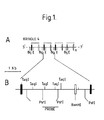
- polymorphic Taql site shown in Fig. 1 is referred to for the purposes of the invention as the "polymorphic kringle Taql site”. This site can be defined and determined further by reference to the restriction map of Fig. 1 and the PCR-generatable probe defined below.
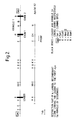
- polymorphic Taql site shown in Fig. 2 is referred to for the purposes of the invention as the "polymorphic leader Taql site". This site can be defined and determined further by reference to the restriction map of Fig. 2 and the PCR-generatable probe defined below.
- the present invention thus provides a polynucleotide probe capable of hybridizing to human genomic DNA between the Taql sites immediately 5' and 3' of the polymorphic leader Taql site of the human Apo(a) gene, said human genomic DNA being detectable with a probe generated by PCR amplification of the Apo(a) gene using the 5' and 3' primers:
- the polynucleotide probe will usually be DNA although other polynucleotide probes, for example RNA or modified DNA or RNA probes may be used.
- the probe may carry a revealing label, for example 32 P or biotin.
- the probe will hybridize to its target region of the Apo(a) gene under conditions of high stringency but not with other human genomic DNA.
- the probe will be exactly homologous to its target sequence although it will be appreciated that this will not always be necessary, as long as the probe can still selectively hybridize to its target DNA in the presence of other human DNA.
- the probe may be about at least 75%, for example 80% or 90% homologous to its target region of DNA as long as this degree of homology will allow selective hybridization.
- the probe may be an oligonucleotide probe, for example a probe of SEQ ID NO. 1 or SEQ ID NO. 2, or it may be a fragment of DNA, for example the EcoRl fragment defined by these oligonucleotides, ie. that of the Apo(a) gene which can be generated by PCR amplification of the Apo(a) gene with these oligonucleotides.
- the probe may be any suitable size which provides the necessary specificity of hybridization.
- an oligonucleotide probe may be from about 15 to 50, eg. 18 or 20 to 25 or 30 nucleotides in length.
- a probe derived from a restriction fragment may be for example from 50 base pairs to about 10 kb in size, eg from 200 to 1000 bp.
- a probe produced by a PCR of a selected piece of DNA may be any desired size capable of production by this method; 100 to 500 bp, eg 200 to 300 bp is typical.
- the probe may be targeted to either the 5' side or 3' side of the polymorphic leader Taql site, or it may span this site.
- the probe When the probe is directed to one or other side of the site (and used to probe Taql digested human DNA), the probe will reveal the 6.4 kb Taql fragment present in individuals without the polymorphic leader Taql site, and either the 1.4 kb or 5 kb fragments present in those individuals with the site. If the probe spans the polymorphic site in those individual with this site, it will reveal both the 1.4 and 5 kb fragments (assuming that the probe is of a sufficient size to hybridize to each side of the Taql site).
- the invention also provides a polynucleotide probe capable of hybridizing to human genomic DNA between the Taql sites immediately 5' and 3' of the polymorphic kringle Taql site of the human Apo(a) gene, said human genomic DNA being detectable by PCR amplification of the Apo(a) gene using the 5' and 3' primers:
- the probes may be DNA, RNA, modified DNA or RNA probes as discussed above in connection with the polymorphic leader site, and these probes may also carry a revealing label.
- Suitable probes include those of SEQ ID NO. 3 and SEQ ID NO. 4 as well as the Pst1 fragment defined by these oligonucleotides.
- the probe may be targeted to either the 5' side or 3' side of the polymorphic kringle Taql site, or it may span this site.
- the probe When the probe is directed to one or other side of the site (and used to probe Taql digested human DNA), the probe will reveal the 1.6 kb Taql fragment present in individuals without the polymorphic kringle Taql site, and either the 1.3 kb or 0.3 kb fragments present in those individuals with the site. If the probe spans the polymorphic site in those individual with this site, it will reveal both the 1.3 and 0.3 kb fragments (assuming that the probe is of a sufficient size to hybridize to each side of the Taql site).
- the invention further provides a kit containing a pair of oligonucleotides of the sequence SEQ ID NO. 1 and 2 or of the sequence SEQ ID NO. 3 and 4.
- a kit may be used to generate a probe according to the invention using a PCR on a sample of DNA containing the Apo(a) gene or a fragment thereof containing the region of the gene to which the PCR primers bind.
- the invention provides a probe or a kit as defined in any of the foregoing for use in a method of detecting Taql polymorphisms within the human Apo(a) gene.
- the probes and kits of the invention may be used to determine the Taql polymorphism within the human Apo(a) gene in a sample of human DNAwhich comprises bringing the sample of human DNA into contact with a probe as defined above, and determining the Taql polymorphism present in the sample.
- the sample of DNA may be from any human tissue. It will often be convenient to obtain the sample from a sample of blood.
- the probes according to the invention may be used forfamily studies.
- the invention provides a method for determining the parental origin of the Apo(a) genes of an individual which comprises bringing a sample of the individual's DNA into contact with a probe as defined in any one of claims 1 to 3 in order to determine the leader Taql polymorphism or a probe as defined in any one of claims 4 to 6 in order to determine the kringle Taql polymorphism present in the individual, and comparing the result obtained with the result(s) obtained when DNA from either or both biological parents is subjected to examination with a probe capable of detecting the same polymorphisms.
- the probe used to examine the individual's DNA will be the same probe as used to examine the parents DNA, although since the target region of the genome can be used to define different probes, it is not essential to use the same probe. It will be convenient to do so when the examination of the individuals and parent(s) DNA is conducted in a single experiment, for example on a single Southern blot.
- the sample or samples of DNA being examined with a second probe capable of detecting a different Taql polymorphism within the Apo(a) gene.
- a second probe capable of detecting a different Taql polymorphism within the Apo(a) gene.
- the DNA is examined with the kringle Taql probe, then the individual may be further examined with the leader Taql probe, or vice versa. Both probes may be used simultaneously because the Taql polymorphic bands each detect are of different sizes.
- the probes of the invention may also be used with other probes for the Apo(a) gene or indeed with other probes for other genes. Such genes include other genes associated with lipoprotein or cholesterol metabolism.
- the probes of the invention may also be used in population studies. It has been found in a variety of cases that certain alleles are associated within a population with the presence or absence of certain phenotypic traits. This phenomena, well known in connection with for example certain human histocompatibility (HLA) genes, is known as linkage disequilibrium.
- the probes of the invention may be used to establish linkage disequilibrium between an allele of either or both of the polymorphic alleles of the invention and the risk of heart disease, eg an increased risk of heart disease.
- the invention thus provides a method of assessing an individual member from a reference population for the risk of heart disease which comprises determining the leader Taql and/or kringle Taql polymorphisms of the Apo(a) gene in a sample of DNAfrom the individual, and assessing the risk of heart disease by reference to the estimated incidence of heart disease in the reference population of other individuals carrying the same Apo(a) leader Taql and/or kringle Taql polymorphisms.
- a linkage disequilibrium of a particular allele and a risk of disease may be found in certain ethnic populations but not in others.
- the reference population is of the same ethnic origin as the individual when the risk of heart disease in that individual is assessed.
- the population may be a Western European or North American Caucasian population, where the incidence of heart disease is relatively high compared to other populations.
- a human cosmid library made with the vector pWE1 S was purchased from Stratagene, La Jolla, California and screened with a probe derived from the first Apo (a) Kringle IV which was obtained by gene amplification using the following oligonucleotides primers Mc Lean J. et a/. Nature 300:132-239, 1987:
- Gene amplification was carried out on genomic DNAfor 32 cycles which included: denaturation 94° for 300 sec, annealing 55° for 60 sec, extension 92° for 60 sec.
- the cosmid library was plated on twenty Petri dishes (150 mm) with LB media containing 50 mg per litre of ampicillin. Dishes inoculated with approximately 40,000 colonies were incubated overnight at 37°C. Nitrocellulose fitter lifts of the plates were prepared and hybridized with Kringle IV probe in 3 ⁇ SSC/Denhardt at 65°C overnight; washings were done in 0.3xSSC at 65°C. Positive recombinants were isolated as described by Man- iatis T. etal. Molecular Cloning: a Laboratory Manual. Cold Spring Harbor Laboratory. Cold Spring Harbor, New York 1989.
- One of the positive recombinants was digested with several enzymes (Eco RI, Bgl II, Asp I, Kpn I, Taq I) separately and in combination. Due to the particular repeated Kringle structure of the Apo (a) gene, the genomic Kringle unit was found to be contained in a repeated 5.5 Kb Eco RI and Bg1 II fragments.
- the recombinant cosmid contained approximately 7 of such repeats that could easily be excised by digestion with either Eco RI (E) or Bgl II (Bg) enzymes.
- Eco RI E
- Bg Bgl II
- One of the 5.5. Kb Bgl II Kringle containing fragment was subcloned into the Bgl II cut plasmid pGEM 7 (Promega) Madison, Wisconsin.
- a restriction map of it is presented in Fig. 1.
- sequence determination was performed with oligonucleotides derived from the Apo (a) cDNA Mc. Lean J. et a/ Nature 300:132-139, 1987.
- DNA analysis was carried out by dideoxynucleotide Chain Termination method according to Biggin M.D. et a/. Proc. Natl. Acad. Sci USA 80:3963-3965,1983 and the sequence data confirmed that the cosmid derived clone contained Apo (a) specific regions, perfectly matching the DNA sequence by Mc Lean J. et al. Nature 300:132-139, 1987 (see above).
- Hybridization was carried out in 3xSSc/Denhardt at 65° overnight, post-hybridization washings in 0.3xSSC at 65°.
- the enzyme Taq I resulted to be polymorphic with two alleles whose molecular weights are 1.6 and 1.3 Kb according to the presence/absence of one of the Taq I sites. From a population screening the frequency of the minor allele was 40% and the Mendelian inheritance of the polymorphism was documented in two informative families.
- a YAC (Yeast Artificial Chromosome) library was screened by gene amplification with the same oligonucleotide pairs used in cloning the APO(a) inter-kringle probe (see above) Mc Lean J. et al. Nature 300:132-139,1987. Gene amplification was carried out on genomic DNAfor 32 cycles which included: denaturation 94° for 300 sec, annealing 55° for 60 sec, extension 72° for 60 sec. The Screening was done at the Centre d'Etude du Polymorphisme Huamine (Paris). One positive recombinant was grown and DNAwas extracted according to the procedure described by Little R. et al. Proc. Natl. Acad. Sci USA 86:1598-1602, 1989.
- the YAC DNA was partially cut with Sau 3A and fractionated on a sucrose gradient as described by Man- iatis T. et al. Molecular Cloning: a laboratory manual. Cold Spring Harbor laboratory, Cold spring Harbor, New York 1989. Fraction ranging 15-20 kb in size were ligated to Lambda Fix vector (stratagene) digested with Xho I, packaging (Gigapack II - Stratagene) and plating was done according to the manufacturers conditions.
- the Lambda Library was screened simultaneously with a probe spanning the Apo (a) leader domain Mc. Lean J. et a/ Nature 300:132-139, 1987 and a probe from the first Apo (a) Kringle IV Mc Lean J. et al. Nature 300:132-139, 1987. Several positives were obtained but only two of them hybridized to both. Fig. 2 shows the restriction map of one of them.
Landscapes
- Chemical & Material Sciences (AREA)
- Life Sciences & Earth Sciences (AREA)
- Health & Medical Sciences (AREA)
- Proteomics, Peptides & Aminoacids (AREA)
- Organic Chemistry (AREA)
- Genetics & Genomics (AREA)
- Zoology (AREA)
- Analytical Chemistry (AREA)
- Wood Science & Technology (AREA)
- Engineering & Computer Science (AREA)
- Microbiology (AREA)
- Biochemistry (AREA)
- Biotechnology (AREA)
- Molecular Biology (AREA)
- Biophysics (AREA)
- Physics & Mathematics (AREA)
- Pathology (AREA)
- Immunology (AREA)
- Bioinformatics & Cheminformatics (AREA)
- General Engineering & Computer Science (AREA)
- General Health & Medical Sciences (AREA)
- Measuring Or Testing Involving Enzymes Or Micro-Organisms (AREA)
- Saccharide Compounds (AREA)
- Investigating Or Analyzing Materials By The Use Of Ultrasonic Waves (AREA)
Applications Claiming Priority (2)
| Application Number | Priority Date | Filing Date | Title |
|---|---|---|---|
| GB9301453 | 1993-01-26 | ||
| GB939301453A GB9301453D0 (en) | 1993-01-26 | 1993-01-26 | Nucleotide proves |
Publications (3)
| Publication Number | Publication Date |
|---|---|
| EP0609059A2 true EP0609059A2 (de) | 1994-08-03 |
| EP0609059A3 EP0609059A3 (de) | 1994-12-14 |
| EP0609059B1 EP0609059B1 (de) | 2000-08-02 |
Family
ID=10729300
Family Applications (1)
| Application Number | Title | Priority Date | Filing Date |
|---|---|---|---|
| EP94300561A Expired - Lifetime EP0609059B1 (de) | 1993-01-26 | 1994-01-26 | Nukleotidsonden |
Country Status (6)
| Country | Link |
|---|---|
| US (1) | US5554509A (de) |
| EP (1) | EP0609059B1 (de) |
| JP (1) | JPH06277098A (de) |
| AT (1) | ATE195152T1 (de) |
| DE (1) | DE69425386D1 (de) |
| GB (1) | GB9301453D0 (de) |
Cited By (3)
| Publication number | Priority date | Publication date | Assignee | Title |
|---|---|---|---|---|
| EP0983381A4 (de) * | 1997-03-10 | 2004-05-12 | Interleukin Genetics Inc | Voraussage koronarer arterienerkrankung |
| EP2151507A1 (de) * | 2002-12-20 | 2010-02-10 | Celera Corporation | Herzinfarkt-Assoziierte genetische Polymorphien, Nachweisverfahren und ihre Verwendung |
| US7820383B2 (en) | 1997-03-10 | 2010-10-26 | Interleukin Genetics, Inc. | Method for diagnosing myocardial infarction |
Families Citing this family (6)
| Publication number | Priority date | Publication date | Assignee | Title |
|---|---|---|---|---|
| US6524795B1 (en) * | 1997-03-10 | 2003-02-25 | Interleukin Genetics, Inc. | Diagnostics for cardiovascular disorders |
| US6720141B1 (en) | 1999-11-01 | 2004-04-13 | Interleukin Genetics, Inc. | Diagnostics and therapeutics for restenosis |
| DE102007007913A1 (de) * | 2007-02-14 | 2008-08-21 | Alstom Technology Ltd. | Verfahren zum Betrieb einer Kraftwerksanlage |
| CN101657609B (zh) * | 2007-02-14 | 2015-09-09 | 阿尔斯托姆科技有限公司 | 用于运行发电厂设备的方法 |
| CN101611217B (zh) | 2007-02-14 | 2013-06-19 | 阿尔斯托姆科技有限公司 | 带有负载的发电站设备及其工作方法 |
| CN101657610B (zh) * | 2007-02-14 | 2015-08-19 | 阿尔斯托姆科技有限公司 | 发电站设备以及用于运行这种发电站设备的方法 |
Family Cites Families (4)
| Publication number | Priority date | Publication date | Assignee | Title |
|---|---|---|---|---|
| WO1988003175A1 (en) * | 1986-10-29 | 1988-05-05 | Biotechnology Research Partners, Ltd. | Apoai-ciii-aiv, apoaii, apob, apoci, and ldl receptor polymorphisms for genetic fingerprinting and predictive of atherosclerosis |
| FI912412A7 (fi) * | 1988-11-18 | 1991-05-17 | The Board Of Regents Of The Univ | HDL-sitovat proteiinit |
| CA2022752C (en) * | 1989-08-11 | 1998-07-07 | Naomi Kitamura | Hepatic parenchymal cell growth factor, gene encoding the same, process for producing the factor, and transformants producing the factor |
| US5192659A (en) * | 1989-08-25 | 1993-03-09 | Genetype Ag | Intron sequence analysis method for detection of adjacent and remote locus alleles as haplotypes |
-
1993
- 1993-01-26 GB GB939301453A patent/GB9301453D0/en active Pending
-
1994
- 1994-01-26 AT AT94300561T patent/ATE195152T1/de not_active IP Right Cessation
- 1994-01-26 DE DE69425386T patent/DE69425386D1/de not_active Expired - Lifetime
- 1994-01-26 EP EP94300561A patent/EP0609059B1/de not_active Expired - Lifetime
- 1994-01-26 JP JP6023712A patent/JPH06277098A/ja active Pending
- 1994-01-26 US US08/185,301 patent/US5554509A/en not_active Expired - Fee Related
Cited By (8)
| Publication number | Priority date | Publication date | Assignee | Title |
|---|---|---|---|---|
| EP0983381A4 (de) * | 1997-03-10 | 2004-05-12 | Interleukin Genetics Inc | Voraussage koronarer arterienerkrankung |
| US7820383B2 (en) | 1997-03-10 | 2010-10-26 | Interleukin Genetics, Inc. | Method for diagnosing myocardial infarction |
| EP2151507A1 (de) * | 2002-12-20 | 2010-02-10 | Celera Corporation | Herzinfarkt-Assoziierte genetische Polymorphien, Nachweisverfahren und ihre Verwendung |
| US7781168B2 (en) | 2002-12-20 | 2010-08-24 | Celera Corporation | Genetic polymorphisms associated with myocardial infarction, methods of detection and uses thereof |
| EP2474631A3 (de) * | 2002-12-20 | 2012-11-28 | Celera Corporation | Mit Myokardinfarkt assoziierte genetische Polymorphismen, Nachweisverfahren und deren Verwendungen |
| EP2500440A3 (de) * | 2002-12-20 | 2012-11-28 | Celera Corporation | Mit Myokardinfarkt assoziierte genetische Polymorphismen, Nachweisverfahren und deren Verwendungen |
| EP2474630A3 (de) * | 2002-12-20 | 2012-12-05 | Celera Corporation | Mit Myokardinfarkt assoziierte genetische Polymorphismen, Nachweisverfahren und deren Verwendungen |
| EP2474632A3 (de) * | 2002-12-20 | 2012-12-19 | Celera Corporation | Mit einem Myokardinfarkten assoziierte genetische Polymorphismen, Nachweisverfahren und deren Verwendungen |
Also Published As
| Publication number | Publication date |
|---|---|
| US5554509A (en) | 1996-09-10 |
| ATE195152T1 (de) | 2000-08-15 |
| JPH06277098A (ja) | 1994-10-04 |
| DE69425386D1 (de) | 2000-09-07 |
| GB9301453D0 (en) | 1993-03-17 |
| EP0609059A3 (de) | 1994-12-14 |
| EP0609059B1 (de) | 2000-08-02 |
Similar Documents
| Publication | Publication Date | Title |
|---|---|---|
| Soria et al. | Association between a specific apolipoprotein B mutation and familial defective apolipoprotein B-100. | |
| DiLella et al. | Tight linkage between a splicing mutation and a specific DNA haplotype in phenylketonuria | |
| Leitersdorf et al. | Polymorphic DNA haplotypes at the LDL receptor locus | |
| US4965190A (en) | Methods for the identification of mutations in the human phenylalanine hydroxylase gene using DNA probes | |
| Floros et al. | Human SP-A locus: allele frequencies and linkage disequilibrium between the two surfactant protein A genes. | |
| Levran et al. | Spectrum of sequence variations in the FANCA gene: an International Fanconi Anemia Registry (IFAR) study | |
| Thompson et al. | Polymorphisms in the CETP gene and association with CETP mass and HDL levels | |
| Pagani et al. | Human apolipoprotein AI gene promoter polymorphism: association with hyperalphalipoproteinemia. | |
| Zeng et al. | An apolipoprotein CIII marker associated with hypertriglyceridemia in Caucasians also confers increased risk in a west Japanese population | |
| Harteveld et al. | Rapid detection of point mutations and polymorphisms of the α‐globin genes by DGGE and SSCA | |
| Nabika et al. | Evaluation of the SA locus in human hypertension | |
| US9540693B2 (en) | Mutations of the parkin gene, compositions, methods and uses | |
| Sharp et al. | Human microsomal triglyceride transfer protein large subunit gene structure | |
| Newgard et al. | The polymorphic locus for glycogen storage disease VI (liver glycogen phosphorylase) maps to chromosome 14 | |
| US6623927B1 (en) | Method of detection of allelic variants of SCA2 gene | |
| EP0609059B1 (de) | Nukleotidsonden | |
| US4772549A (en) | Polymorphisms related to lipid metabolism: ApoB, ApoCII, ApoE, ApoAIV | |
| Dianzani et al. | Screening for mutations in the phenylalanine hydroxylase gene from Italian patients with phenylketonuria by using the chemical cleavage method: a new splice mutation | |
| Murdock et al. | PNA-mediated PCR clamping: Applications and methods | |
| US5908749A (en) | Methods and compositions for high resolution HLA typing | |
| Lee et al. | Identification of a common low density lipoprotein receptor mutation (C163Y) in the west of Scotland. | |
| JP2002519012A (ja) | 高血圧体質の定量方法 | |
| Iwata et al. | Mucopolysaccharidosis IVA: polymorphic haplotypes and informative RFLPs in the Japanese population | |
| Timur et al. | Molecular pathology of haemophilia A in Turkish patients: identification of 36 independent mutations | |
| AU2001239837B2 (en) | Methods and composition for diagnosing and treating pseudoxanthoma elasticum and related conditions |
Legal Events
| Date | Code | Title | Description |
|---|---|---|---|
| PUAI | Public reference made under article 153(3) epc to a published international application that has entered the european phase |
Free format text: ORIGINAL CODE: 0009012 |
|
| AK | Designated contracting states |
Kind code of ref document: A2 Designated state(s): AT BE CH DE DK ES FR GB GR IE IT LI NL PT SE |
|
| PUAL | Search report despatched |
Free format text: ORIGINAL CODE: 0009013 |
|
| AK | Designated contracting states |
Kind code of ref document: A3 Designated state(s): AT BE CH DE DK ES FR GB GR IE IT LI NL PT SE |
|
| 17P | Request for examination filed |
Effective date: 19950517 |
|
| GRAG | Despatch of communication of intention to grant |
Free format text: ORIGINAL CODE: EPIDOS AGRA |
|
| 17Q | First examination report despatched |
Effective date: 19991110 |
|
| GRAG | Despatch of communication of intention to grant |
Free format text: ORIGINAL CODE: EPIDOS AGRA |
|
| GRAH | Despatch of communication of intention to grant a patent |
Free format text: ORIGINAL CODE: EPIDOS IGRA |
|
| GRAH | Despatch of communication of intention to grant a patent |
Free format text: ORIGINAL CODE: EPIDOS IGRA |
|
| RAP1 | Party data changed (applicant data changed or rights of an application transferred) |
Owner name: CLONIT S.R.L |
|
| GRAA | (expected) grant |
Free format text: ORIGINAL CODE: 0009210 |
|
| AK | Designated contracting states |
Kind code of ref document: B1 Designated state(s): AT BE CH DE DK ES FR GB GR IE IT LI NL PT SE |
|
| PG25 | Lapsed in a contracting state [announced via postgrant information from national office to epo] |
Ref country code: NL Free format text: LAPSE BECAUSE OF FAILURE TO SUBMIT A TRANSLATION OF THE DESCRIPTION OR TO PAY THE FEE WITHIN THE PRESCRIBED TIME-LIMIT Effective date: 20000802 Ref country code: LI Free format text: LAPSE BECAUSE OF FAILURE TO SUBMIT A TRANSLATION OF THE DESCRIPTION OR TO PAY THE FEE WITHIN THE PRESCRIBED TIME-LIMIT Effective date: 20000802 Ref country code: IT Free format text: LAPSE BECAUSE OF FAILURE TO SUBMIT A TRANSLATION OF THE DESCRIPTION OR TO PAY THE FEE WITHIN THE PRE;WARNING: LAPSES OF ITALIAN PATENTS WITH EFFECTIVE DATE BEFORE 2007 MAY HAVE OCCURRED AT ANY TIME BEFORE 2007. THE CORRECT EFFECTIVE DATE MAY BE DIFFERENT FROM THE ONE RECORDED.SCRIBED TIME-LIMIT Effective date: 20000802 Ref country code: GR Free format text: LAPSE BECAUSE OF NON-PAYMENT OF DUE FEES Effective date: 20000802 Ref country code: FR Free format text: LAPSE BECAUSE OF FAILURE TO SUBMIT A TRANSLATION OF THE DESCRIPTION OR TO PAY THE FEE WITHIN THE PRESCRIBED TIME-LIMIT Effective date: 20000802 Ref country code: ES Free format text: THE PATENT HAS BEEN ANNULLED BY A DECISION OF A NATIONAL AUTHORITY Effective date: 20000802 Ref country code: CH Free format text: LAPSE BECAUSE OF FAILURE TO SUBMIT A TRANSLATION OF THE DESCRIPTION OR TO PAY THE FEE WITHIN THE PRESCRIBED TIME-LIMIT Effective date: 20000802 Ref country code: BE Free format text: LAPSE BECAUSE OF FAILURE TO SUBMIT A TRANSLATION OF THE DESCRIPTION OR TO PAY THE FEE WITHIN THE PRESCRIBED TIME-LIMIT Effective date: 20000802 Ref country code: AT Free format text: LAPSE BECAUSE OF FAILURE TO SUBMIT A TRANSLATION OF THE DESCRIPTION OR TO PAY THE FEE WITHIN THE PRESCRIBED TIME-LIMIT Effective date: 20000802 |
|
| REF | Corresponds to: |
Ref document number: 195152 Country of ref document: AT Date of ref document: 20000815 Kind code of ref document: T |
|
| REG | Reference to a national code |
Ref country code: CH Ref legal event code: EP |
|
| REG | Reference to a national code |
Ref country code: IE Ref legal event code: FG4D |
|
| REF | Corresponds to: |
Ref document number: 69425386 Country of ref document: DE Date of ref document: 20000907 |
|
| PG25 | Lapsed in a contracting state [announced via postgrant information from national office to epo] |
Ref country code: SE Free format text: LAPSE BECAUSE OF FAILURE TO SUBMIT A TRANSLATION OF THE DESCRIPTION OR TO PAY THE FEE WITHIN THE PRESCRIBED TIME-LIMIT Effective date: 20001102 Ref country code: PT Free format text: LAPSE BECAUSE OF FAILURE TO SUBMIT A TRANSLATION OF THE DESCRIPTION OR TO PAY THE FEE WITHIN THE PRESCRIBED TIME-LIMIT Effective date: 20001102 Ref country code: DK Free format text: LAPSE BECAUSE OF FAILURE TO SUBMIT A TRANSLATION OF THE DESCRIPTION OR TO PAY THE FEE WITHIN THE PRESCRIBED TIME-LIMIT Effective date: 20001102 |
|
| PG25 | Lapsed in a contracting state [announced via postgrant information from national office to epo] |
Ref country code: DE Free format text: LAPSE BECAUSE OF FAILURE TO SUBMIT A TRANSLATION OF THE DESCRIPTION OR TO PAY THE FEE WITHIN THE PRESCRIBED TIME-LIMIT Effective date: 20001103 |
|
| EN | Fr: translation not filed | ||
| NLV1 | Nl: lapsed or annulled due to failure to fulfill the requirements of art. 29p and 29m of the patents act | ||
| PG25 | Lapsed in a contracting state [announced via postgrant information from national office to epo] |
Ref country code: IE Free format text: LAPSE BECAUSE OF NON-PAYMENT OF DUE FEES Effective date: 20010126 Ref country code: GB Free format text: LAPSE BECAUSE OF NON-PAYMENT OF DUE FEES Effective date: 20010126 |
|
| REG | Reference to a national code |
Ref country code: CH Ref legal event code: PL |
|
| PLBE | No opposition filed within time limit |
Free format text: ORIGINAL CODE: 0009261 |
|
| STAA | Information on the status of an ep patent application or granted ep patent |
Free format text: STATUS: NO OPPOSITION FILED WITHIN TIME LIMIT |
|
| 26N | No opposition filed | ||
| GBPC | Gb: european patent ceased through non-payment of renewal fee |
Effective date: 20010126 |
|
| REG | Reference to a national code |
Ref country code: IE Ref legal event code: MM4A |