EP0610320B1 - Desacetylase de chitine purifiee - Google Patents
Desacetylase de chitine purifiee Download PDFInfo
- Publication number
- EP0610320B1 EP0610320B1 EP92922352A EP92922352A EP0610320B1 EP 0610320 B1 EP0610320 B1 EP 0610320B1 EP 92922352 A EP92922352 A EP 92922352A EP 92922352 A EP92922352 A EP 92922352A EP 0610320 B1 EP0610320 B1 EP 0610320B1
- Authority
- EP
- European Patent Office
- Prior art keywords
- chitin deacetylase
- liquid phase
- chitin
- activity
- column
- Prior art date
- Legal status (The legal status is an assumption and is not a legal conclusion. Google has not performed a legal analysis and makes no representation as to the accuracy of the status listed.)
- Expired - Lifetime
Links
Images



Classifications
-
- C—CHEMISTRY; METALLURGY
- C12—BIOCHEMISTRY; BEER; SPIRITS; WINE; VINEGAR; MICROBIOLOGY; ENZYMOLOGY; MUTATION OR GENETIC ENGINEERING
- C12N—MICROORGANISMS OR ENZYMES; COMPOSITIONS THEREOF; PROPAGATING, PRESERVING, OR MAINTAINING MICROORGANISMS; MUTATION OR GENETIC ENGINEERING; CULTURE MEDIA
- C12N9/00—Enzymes; Proenzymes; Compositions thereof; Processes for preparing, activating, inhibiting, separating or purifying enzymes
- C12N9/14—Hydrolases (3)
- C12N9/78—Hydrolases (3) acting on carbon to nitrogen bonds other than peptide bonds (3.5)
- C12N9/80—Hydrolases (3) acting on carbon to nitrogen bonds other than peptide bonds (3.5) acting on amide bonds in linear amides (3.5.1)
-
- A—HUMAN NECESSITIES
- A61—MEDICAL OR VETERINARY SCIENCE; HYGIENE
- A61P—SPECIFIC THERAPEUTIC ACTIVITY OF CHEMICAL COMPOUNDS OR MEDICINAL PREPARATIONS
- A61P17/00—Drugs for dermatological disorders
-
- C—CHEMISTRY; METALLURGY
- C07—ORGANIC CHEMISTRY
- C07K—PEPTIDES
- C07K16/00—Immunoglobulins [IG], e.g. monoclonal or polyclonal antibodies
- C07K16/40—Immunoglobulins [IG], e.g. monoclonal or polyclonal antibodies against enzymes
-
- C—CHEMISTRY; METALLURGY
- C12—BIOCHEMISTRY; BEER; SPIRITS; WINE; VINEGAR; MICROBIOLOGY; ENZYMOLOGY; MUTATION OR GENETIC ENGINEERING
- C12P—FERMENTATION OR ENZYME-USING PROCESSES TO SYNTHESISE A DESIRED CHEMICAL COMPOUND OR COMPOSITION OR TO SEPARATE OPTICAL ISOMERS FROM A RACEMIC MIXTURE
- C12P19/00—Preparation of compounds containing saccharide radicals
- C12P19/26—Preparation of nitrogen-containing carbohydrates
-
- Y—GENERAL TAGGING OF NEW TECHNOLOGICAL DEVELOPMENTS; GENERAL TAGGING OF CROSS-SECTIONAL TECHNOLOGIES SPANNING OVER SEVERAL SECTIONS OF THE IPC; TECHNICAL SUBJECTS COVERED BY FORMER USPC CROSS-REFERENCE ART COLLECTIONS [XRACs] AND DIGESTS
- Y10—TECHNICAL SUBJECTS COVERED BY FORMER USPC
- Y10S—TECHNICAL SUBJECTS COVERED BY FORMER USPC CROSS-REFERENCE ART COLLECTIONS [XRACs] AND DIGESTS
- Y10S435/00—Chemistry: molecular biology and microbiology
- Y10S435/8215—Microorganisms
- Y10S435/911—Microorganisms using fungi
- Y10S435/931—Mucor
Definitions
- chitin is the world's most abundant, easily obtained, and renewable biological material. It is a natural product synthesized by a wide variety of organisms. Several billion tons of the material are produced annually.
- Chitin is a carbohydrate polymer, the N-acetylated polymer of ⁇ (1 ⁇ 4) linked N-acetylglucosamine, or poly-N-acetyl glucosamine.
- chitin is a cell wall constituent replacing cellulose or sometimes occurring together with cellulose.
- chitin is usually organized as a cuticle at one surface of the epithelial tissue.
- structurally similar to cellulose chitin has distinctly different chemical properties. It is an extremely insoluble material, with limited industrial applicability.
- Chitosan is positively charged, thus, it can be used as a protein precipitant and a metal chelating agent. It can be formulated as a solution, gel, membrane, film or fiber. Such formulations are useful, for example, in the areas of precious metal recovery, crop protection, chromatography and enzyme immobilization.
- Chitosan is a biologically benign, non-immunogenic, material making it ideal for use in the agricultural, food, drug and cosmetic industries. It can form complexes with other natural polymers, such as collagen and keratin, to form materials with unique biomedical properties. For example, such materials can be used as wound healing accelerants, components of artificial skin and blood vessels, anticoagulants, and controlled drug release vehicles.
- Chitin comprises about 20-50% of the dry weight of crustacean cuticles, the balance being primarily calcium carbonate, calcium phosphate and other proteins.
- Chitin is first isolated by treating ground crustacean shells with dilute acid and alkali to remove proteins and minerals. The raw chitin is then deacetylated by exposure to concentrated alkali at high temperature to generate chitosan.
- the chitosan produced in this manner has many useful features, it is impossible to effectively control the production process, which leads to the production of a material having a broad range of molecular weight and a heterogenous extent of deacetylation. Such a product is not of great value, since many of the potentially important. app lications, particularly in the biomedical area, require uniform material with very specific physical and chemical properties.
- the subject invention relates to an essentially pure preparation of chitin deacetylase and methods for isolating same from a cellullar extract.
- the present invention relates to a pure chitin deacetylase characterised in that the chitin deacetylase has a molecular weight of about 75-80 Kilodalton, a pI of about 30, an optimum temperature of activity of about 50°C a pH optimum of activity of about 4.5, and it is a monomer and a glycoprotein.
- Preferred embodiment of the invention are further disclosed in claims 2 to 4.
- the purified enzyme is useful, for example, in the conversion of chitin to chitosan.
- the enzymatic conversion of chitin to chitosan provides an attractive alternative to presently employed chemical methods which suffer from a variety of technical drawbacks, some of which have been discussed above.
- the present invention was made possible by the discovery of a method for purifying chitin deacetylase from a cellular extract of an organism which produces chitin deacetylase.
- the enzyme chitin deacetylase is produced by a variety of genera including, for example, Micor, Phycomyces, Absidia, and Choanenphora. Other potentially useful genera include Zygorhynchus, Actinomucor, Circinella, Rhizopus, Colletotrichum and Rhizomucor.
- a preferred source for chitin deacetylase is the cell wall of fungal mycelia. Such mycelia are produced in great quantities as a byproduct of the fermentation industry.
- the growth of Mucor rouxii in standard fermentors has been described in the literature.
- the use of a fungus such as Mucor rouxii offers a number of advantages.
- the organism can be grown using inexpensive nutrients. It can be grown to a high cell density (grams of cell dry weight per liter of culture medium) in a large scale fermentation system.
- the culture time required to achieve high cell density is as low as 12 hours/batch.
- cellular extract is prepared from an organism which produces chitin deacetylase.
- the organism is a fungus (e.g., Mucor rouxii) mycelial cells are disrupted in the presence of an extraction buffer.
- the extraction buffer may contain protease inhibitors, other degradative enzyme inhibitors and stabilizers to maintain enzyme activity and facilitate its extraction.
- Non-soluble material is removed from the liquid phase of the extraction mixture, for example, by filtration or centrifugation.
- the cellular extract is subjected to a thermal cycling step which results in the precipitation of undesirable protein (i.e., protein other than chitin deacetylase).
- undesirable protein i.e., protein other than chitin deacetylase
- the extract can be incubated at about 50°C for a period of about 15-30 minutes.
- the precipitated protein is subsequently removed, for example, by filtration or centrifugation.
- solubility properties of proteins in solutions having high salt concentrations vary over a wide range. This difference in solubility can be exploited to achieve separation of protein in a solution by precipitation at high ionic strength.
- Many salts can be used for this purpose, but ammonium sulfate is preferred by virtue of the fact that it does not appreciably alter pH, it is highly soluble, and it does not destabilize proteins.
- an ammonium sulfate concentration of about 2.1 M effectively precipitates a wide variety of proteins from the liquid phase described above, without precipitating the chitin deacetylase. Proteins which precipitate in an ammonium sulfate concentration of about 2.1 M are removed from the solution by standard techniques (e.g., filtration or centrifugation).
- hydrophobic interaction chromatography is widely employed for the purification of macromolecules on the basis of their varying strength of hydrophobic interaction with hydrophobic groups attached to an uncharged gel matrix. This technique is usually performed in the presence of moderately high concentrations of anti-chaotropic salts (salt promoted adsorption chromatography).
- anti-chaotropic salts salt promoted adsorption chromatography.
- An example of a hydrophobic column resin is Phenyl Sepharose® 6 Fast Flow. Material bound by a hydrophobic adsorbent is removed from the column by passing, for example, water over the column.
- an ion exchanger is a solid support that has chemically bound charged groups to which ions are electrostatically bound. A negatively charged group will exchange positive ions and is a cation exchanger. A positively charged group will exchange negative ions and is an anion exchanger.
- Ion exchangers can be characterized as strong or weak ion exchangers. Strong ion exchangers function over a wide pH range and thus are useful for isolating a weakly ionized substance that requires very low or high pH for ionization.
- the pH of the material which is recovered from the hydrophobic column is adjusted to about 8 and passed over a strong anion exchange column (e.g., Q Sepharose® Fast Flow). Fractions are collected and assayed for chitin deacetylase activity as described in the Exemplification section below. Fractions possessing chitin deacetylase activity are pooled and the pH of the pooled fractions is adjusted to about 3.5.
- a strong anion exchange column e.g., Q Sepharose® Fast Flow
- the solution is then passed over a column which contains a strong cation exchange resin (e.g., S Sepharose® Fast Flow) and the flow through is collected.
- a strong cation exchange resin e.g., S Sepharose® Fast Flow
- the flow through fraction contains an electrophoretically homogenous protein species.
- the term essentially pure, as used herein, refers to a chitin deacetylase preparation which resolves substantially as a single band when analyzed by gel electrophoresis.
- Chitin deacetylase prepared as described herein, can be used in a method for converting chitin to chitosan. Reaction parameters affecting enzyme activity are discussed in the Examples.
- Mucor rouxii was obtained from the American Type Culture Collection (ATCC 24905). The fungus was grown in minimal medium as described by Bartnicki-Garcia and Nickerson (Bacteriol. 84: 841-858 (1962)) in 16 liters batches. Media was inoculated with 2 x 10 8 spores per liter and was stirred and aerated with sterile air for 24 hours at 28°C. Mycelia were harvested at mid-log phase by filtration. Cultures yielded approximately 20 gr of mycelia (wet weight) per liter.
- the crude extract was then incubated in a waterbath set at 50°C for 30 minutes and the precipitated material was removed by centrifugation at 8000g for 30 minutes at 4°C.
- the supernatant from the 50° incubation was made 2.1 M in ammonium sulfate and the precipitated proteins were removed by centrifugation at 10000g for 45 minutes.
- the supernatant (850ml) was then passed over a column (44 x 230mm) of Phenyl Sepharose® CL-4B equilibrated with 20mM Tris HCl (pH 7.5) containing 2.1 M ammonium sulfate.
- Chitin deacetylase activity was estimated using as substrate partially O-hydroxyethylated chitin (glycol chitin) radiolabeled in N-acetyl groups.
- the substrate preparation as well as the assay conditions were as described by Araki and Ito (Eur. J. Biochem. 55 :71-78 (1975)) with the following modifications.
- the assay mixture contained 0.1 mg/ml BSA buffered by 25 mM sodium glutamate at pH 4.5 (50°C). Incubation time was 30 minutes at 50°C.
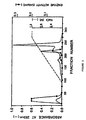
- the sample of partially purified chitin deacetylase from the previous step was dialyzed against 20 mM Tris HCl (pH 8), and then passed over a column of Q Sepharose® Fast Flow (26 x 340 mm) equilibrated with the same buffer. After the column was washed, a linear gradient of NaCl (2000 ml, 0-0.75 M) buffered with 20 mM Tris HCl (pH 8), was established. Flow rate was 300 ml/h and fractions of 11.5 ml were collected. The elution profile is shown in Figure 2. Chitin deacetylase activity was detected in fractions 105-150 corresponding to -0.13 M NaCl. These fractions were pooled for further processing.
- the pooled fractions were dialyzed against 25 mM sodium formate buffer, (pH 3.5), and the sample was loaded on an S Sepharose® Fast Flow column (26 x 280 mm) equilibrated with the same buffer.
- the column was eluted at a flow rate of 250 ml/h with a linear gradient of NaCl (2000 ml, 0-1.2 M) in the buffer mentioned above. Fractions of 12 ml were collected. The elution profile is shown in Figure 3. The majority of chitin deacetylase activity was not retained by the column and was detected in the flow through fractions in an electrophoretically homogenous form.
- the results of the purification scheme are summarized in Table 1.
- the enzyme purified by this procedure was judged to be electrophoretically homogeneous, as tested by both native and SDS-PAGE. On a gradient (5-20%) SDS polyacrylamide gel the enzyme band migrated at a distance corresponding to molecular weight of -75 kDa.
- purified chitin deacetylase was subjected to gel filtration on Sephacryl® S-200 HR it was eluted as a single peak with an apparent size of -80 kDa indicating that the native enzyme exists as a monomer.
- chitin deacetylase is a glycoprotein. After electrophoresis, the enzyme band gave a positive stain with periodate-Schiff's reagent on polyacrylamide gels. The enzyme was retained by a column of concanavalin A-Sepharose® 4B and recovered as a single peak by elution with a gradient of ⁇ -methyl mannoside at a position corresponding to approximately 25 mM. As shown in Table 2, direct carbohydrate analysis of the enzyme revealed that the protein contains 6 residues of fucose, 85 residues of mannose and 22 residues of N-acetylglucosamine per molecule contributing approximately 30% to its molecular weight. Sialic acid and other sugars were not found in significant amounts.
- Monosaccharide analysis was carried out by gas-liquid chromatography and gas-liquid chromatography-mass spectrometry.
- the sample was hydrolyzed in 4M trifluoroacetic acid at 100°C for 4 hours.
- the molar ratio of carbohydrates per molecule was estimated by direct carbohydrate and amino acid composition analysis.
- Carbohydrate mol/mol of protein Nearest integer Fucose 5.81 6 Mannose 81.92 82 N-Acetylglucosamine 20.73 21 Sialic acid 0
- mRNA encoding the enzyme was translated in vitro followed by immunoprecipitation.
- mRNA was extracted from mycelia (15 g wet weight) harvested at the early log phase by grinding in liquid nitrogen. mRNA was purified by the guanidinium thiocyanate method of Chirwin et al. ( Biochem. 18 :5294-5299 (1979)) followed by pelleting in cesium chloride by ultracentrifugation.
- Poly (A) + RNA ( ⁇ 120 ⁇ g) was isolated by 3 passes through an oligo(dT)-cellulose column as described by Aviv and Leder (Proc. Natl. Acad.
- Polyclonal antisera was prepared by emulsifying pure chitin deacetylase (500 pg, 1 mg/ml in PBS) with an equal volume of Freund's complete adjuvant. The mixture was injected intradermally into a rabbit after preimmune serum was obtained. The animal was reimmunized and bled after four and six weeks with 200 ⁇ g of enzyme in Freund's incomplete adjuvant, also injected intradermally. Antisera obtained were monitored for the presence of anti-chitin deacetylase antibodies by ELISA and by enzyme activity inhibition assays.
- Immunoprecipitates were boiled for 5 min in SDS-PAGE loading buffer and analyzed by gel electrophoresis. The gel was fixed for 30 min in 10% acetic acid, 30% methanol, incubated for 30 min in EN 3 HANCE® (New England Nuclear) and then dried and exposed.
- the temperature optimum of the enzyme activity was estimated to be -50°C using labeled glycol chitin, as substrate as described above.
- the temperature dependence of the chitin deacetylase activity is shown graphically in Figure 4.
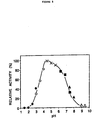
- the pH optimum was estimated to be ⁇ 4.5, tested with a combination of overlapping buffers, as shown graphically in Figure 5.
- Chitin deacetylase (5mU) when incubated with 1 mg of partially chemically deacetylated chitosan (81%) for one hour, released 0.22 ⁇ moles of acetic acid corresponding to an increment of ⁇ 5.3% in deacetylation degree.
- the enzyme was also active on microcrystalline chitin (colloidal chitin) and carboxymethyl chitin (soluble derivative).
- the amino acid composition of chitin deacetylase is shown in Table 3. Basic amino acids accounted only for ⁇ 8% of the total amino acids, a value ⁇ 40% lower than the average.
- Amino acid composition of purified chitin deacetylase was determined after 24 hour hydrolysis with 6M HCl at 100°C. The values are means of two different sample determinations. The number of residues per molecule of protein is based on the estimated molecular weight of 49000 Da from SDS-PAGE of the immunoprecipitated product from in vitro translation of mRNA.
Landscapes
- Chemical & Material Sciences (AREA)
- Health & Medical Sciences (AREA)
- Life Sciences & Earth Sciences (AREA)
- Organic Chemistry (AREA)
- Engineering & Computer Science (AREA)
- Zoology (AREA)
- Wood Science & Technology (AREA)
- Genetics & Genomics (AREA)
- Bioinformatics & Cheminformatics (AREA)
- General Health & Medical Sciences (AREA)
- Biochemistry (AREA)
- Molecular Biology (AREA)
- Medicinal Chemistry (AREA)
- Biotechnology (AREA)
- Microbiology (AREA)
- General Engineering & Computer Science (AREA)
- General Chemical & Material Sciences (AREA)
- Chemical Kinetics & Catalysis (AREA)
- Biomedical Technology (AREA)
- Immunology (AREA)
- Biophysics (AREA)
- Proteomics, Peptides & Aminoacids (AREA)
- Pharmacology & Pharmacy (AREA)
- Nuclear Medicine, Radiotherapy & Molecular Imaging (AREA)
- Dermatology (AREA)
- Animal Behavior & Ethology (AREA)
- Public Health (AREA)
- Veterinary Medicine (AREA)
- Enzymes And Modification Thereof (AREA)
- Preparation Of Compounds By Using Micro-Organisms (AREA)
- Polysaccharides And Polysaccharide Derivatives (AREA)
- Peptides Or Proteins (AREA)
- Medicines Containing Antibodies Or Antigens For Use As Internal Diagnostic Agents (AREA)
- Pharmaceuticals Containing Other Organic And Inorganic Compounds (AREA)
Claims (4)
- Chitine déacétylase pure caractérisée en ce que la chitine déacétylase a un poids moléculaire d'environ 75 à 80 kilodaltons, un point isoélectrique (pl) d'environ 3,0, une température optimale d'activité d'environ 50 °C, un pH optimal d'activité d'environ 4,5 et est un monomère et une glycoprotéine.
- Procédé destiné à isoler la chitine déacétylase comprenant :a) la mise à disposition d'un extrait cellulaire provenant d'un organisme qui produit de la chitine déacétylase ;b) l'ajout de sulfate d'ammonium à l'extrait cellulaire à une concentration de 2,1 M environ ;c) l'extraction de la matière non soluble de la phase liquide ;d) le passage de la phase liquide de l'étape c) dans une colonne hydrophobe ;e) l'élution de la matière liée dans la colonne hydrophobe ;f) l'ajustement du pH de la matière éluée de l'étape e) afin de produire une solution ayant un pH de 8 environ ;g) le passage de la solution de l'étape f) dans une colonne de forts échanges d'anions ;h) le prélèvement de fractions provenant de la colonne de forts échanges d'anions et le regroupement des fractions grâce à l'activité de la chitine déacétylase ;i) l'ajustement du pH des fractions regroupées de l'étape h) à 3,5 environ etj) le passage de la solution de l'étape i) dans une colonne de forts échanges de cations et le prélèvement du flux le long de la colonne.
- Procédé selon la revendication 2 destiné à isoler la chitine déacétylase pure d'un champignon qui produit l'enzyme, qui comprend les étapes préliminaires suivantes :suivies des étapes restantes c) à j) de la revendication 2.k) mise à disposition de mycelia provenant d'une culture fongique ;l) perturbation des mycelia dans un tampon d'extraction ;m) extraction de la matière non soluble de la phase liquide ;n) incubation de la phase liquide de l'étape m) à une température de 50°C environ pendant 30 minutes environ ;o) extraction de la matière non soluble de la phase liquide ; etp) ajout de sulfate d'ammonium à la phase liquide de l'étape o) à une concentration de 2,1 M environ.
- Procédé selon la revendication 2 ou la revendication 3, dans lequel ledit organisme ou champignon est Mucor rouxii.
Applications Claiming Priority (3)
| Application Number | Priority Date | Filing Date | Title |
|---|---|---|---|
| US07/773,724 US5219749A (en) | 1991-10-09 | 1991-10-09 | Process for isolating and preparing purified chitin deacetylase |
| US773724 | 1991-10-09 | ||
| PCT/US1992/008529 WO1993007262A2 (fr) | 1991-10-09 | 1992-10-07 | Desacetylase de chitine purifiee |
Publications (2)
| Publication Number | Publication Date |
|---|---|
| EP0610320A1 EP0610320A1 (fr) | 1994-08-17 |
| EP0610320B1 true EP0610320B1 (fr) | 2004-01-21 |
Family
ID=25099129
Family Applications (1)
| Application Number | Title | Priority Date | Filing Date |
|---|---|---|---|
| EP92922352A Expired - Lifetime EP0610320B1 (fr) | 1991-10-09 | 1992-10-07 | Desacetylase de chitine purifiee |
Country Status (9)
| Country | Link |
|---|---|
| US (1) | US5219749A (fr) |
| EP (1) | EP0610320B1 (fr) |
| JP (1) | JPH07501937A (fr) |
| KR (1) | KR100286078B1 (fr) |
| AT (1) | ATE258225T1 (fr) |
| AU (1) | AU669676B2 (fr) |
| CA (1) | CA2120328A1 (fr) |
| DE (1) | DE69233287D1 (fr) |
| WO (1) | WO1993007262A2 (fr) |
Cited By (1)
| Publication number | Priority date | Publication date | Assignee | Title |
|---|---|---|---|---|
| WO2014140167A1 (fr) | 2013-03-14 | 2014-09-18 | Dsm Ip Assets B.V. | Enzymes de décomposition de la paroi cellulaire issues de malbranchea cinnamomea et leurs utilisations |
Families Citing this family (40)
| Publication number | Priority date | Publication date | Assignee | Title |
|---|---|---|---|---|
| US6004795A (en) * | 1991-10-09 | 1999-12-21 | Institute For Molecular Biology And Biotechnology | DNA encoding chitin deacetylase preparations |
| US5525502A (en) * | 1991-10-09 | 1996-06-11 | Institute For Molecular Biology & Biotechnology/Forth | DNA encoding chitin deacetylase |
| CA2158056A1 (fr) * | 1993-03-29 | 1994-10-13 | William H. Velander | Methode pour la combinaison de ligands a l'interieur de supports poreux (p.e. azlactone) et utilisation |
| SE509662C2 (sv) * | 1993-04-29 | 1999-02-22 | Tetra Laval Holdings & Finance | Förpackningslaminat belagt med en vattenolöslig chitosanförening samt sätt att tillverka förpackningslaminatet |
| US6063911A (en) * | 1993-12-01 | 2000-05-16 | Marine Polymer Technologies, Inc. | Methods and compositions for treatment of cell proliferative disorders |
| US5624679A (en) * | 1993-12-01 | 1997-04-29 | Marine Polymer Technologies, Inc. | Methods and compositions for poly-β-1-4-N-acetylglucosamine biological barriers |
| US6743783B1 (en) * | 1993-12-01 | 2004-06-01 | Marine Polymer Technologies, Inc. | Pharmaceutical compositions comprising poly-β-1→4-N-acetylglucosamine |
| US5846952A (en) * | 1993-12-01 | 1998-12-08 | Marine Polymer Technologies, Inc. | Methods and compositions for poly-β-1-4-N-acetylglucosamine drug delivery |
| US5858350A (en) | 1993-12-01 | 1999-01-12 | Marine Polymer Technologies | Methods and compositions for poly-β-1→4-N-acetylglucosamine cell therapy system |
| US5635493A (en) * | 1993-12-01 | 1997-06-03 | Marine Polymer Technologies, Inc. | Methods and compositions for poly-β-1-4-N-acetylglucosamine chemotherapeutics |
| US5686115A (en) * | 1993-12-01 | 1997-11-11 | Marine Polymer Technologies, Inc. | Poly-β-1→4-N-acetylucosamine copolymer composition with collagen |
| US5622834A (en) * | 1993-12-01 | 1997-04-22 | Marine Polymer Technologies, Inc. | Method of isolating poly-β-1-4-N-acetylglucosamine from microalgal culture |
| WO1995033773A1 (fr) * | 1994-06-02 | 1995-12-14 | Vitaphore Corporation | Biomateriaux degradables par la lysozyme |
| US5762903A (en) * | 1995-03-10 | 1998-06-09 | Korea Atomic Energy Research Institute | Radioactive chitosan complex for radiation therapy |
| JP2615443B2 (ja) * | 1995-03-13 | 1997-05-28 | 工業技術院長 | N−アセチル−d−グルコサミンデアセチラーゼの製造方法 |
| JP3062591B2 (ja) * | 1997-05-30 | 2000-07-10 | 農林水産省食品総合研究所長 | p−ニトロフェニル 2−アセチルアミノ−4−O−(2−アミノ−2−デオキシ−β−D −グルコピラノシル)−2−デオキシ−β−D −グルコピラノシドおよびその塩並びにその製造法 |
| JP3030431B2 (ja) * | 1997-12-02 | 2000-04-10 | 農林水産省食品総合研究所長 | キチン脱アセチル化酵素遺伝子、該遺伝子を含むベクター及び形質転換体 |
| CA2313836C (fr) * | 2000-03-15 | 2009-06-09 | Cargill, Incorporated | Chitosane et methode de preparation |
| US7041657B2 (en) | 2001-02-12 | 2006-05-09 | Marine Polymer Technologies Inc. | Compositions and methods for modulation of vascular structure and/or function |
| US7816514B2 (en) | 2001-02-16 | 2010-10-19 | Cargill, Incorporated | Glucosamine and method of making glucosamine from microbial biomass |
| US7923437B2 (en) * | 2001-02-16 | 2011-04-12 | Cargill, Incorporated | Water soluble β-glucan, glucosamine, and N-acetylglucosamine compositions and methods for making the same |
| US20020115639A1 (en) * | 2001-02-16 | 2002-08-22 | Weiyu Fan | Glucosamine and method of making glucosamine from microbial blomass |
| US8222232B2 (en) * | 2001-02-16 | 2012-07-17 | Cargill, Incorporated | Glucosamine and N-acetylglucosamine compositions and methods of making the same fungal biomass |
| US6693188B2 (en) | 2001-08-08 | 2004-02-17 | Cargill Incorporated | N-acetyl-D-glucosamine and process for producing N-acetyl-D-glucosamine |
| US20060246114A1 (en) * | 2002-11-01 | 2006-11-02 | Rogers Brent D | Multiple component food product useful for delivering glucosamine and/or nacetyl-d-glucosamine |
| BE1014638A6 (fr) | 2002-02-12 | 2004-02-03 | Univ Liege | Methode de preparation de derives de la paroi cellulaire a partir de biomasse. |
| EP1497335A4 (fr) * | 2002-04-02 | 2009-08-12 | Cargill Inc | Production de chitosane |
| US20060003965A1 (en) * | 2002-11-01 | 2006-01-05 | Fosdick Lawrence D | N-acetyl-d-glucosamine (nag) supplemented food products and beverages |
| US20060058263A1 (en) * | 2002-11-01 | 2006-03-16 | Rogers Brent D | Heat pasturized liquids containing glucosamine |
| US20040229341A1 (en) * | 2003-02-12 | 2004-11-18 | Marie-France Versali | Method for the production of chitin deacetylase |
| ES2552842T3 (es) | 2007-02-19 | 2015-12-02 | Marine Polymer Technologies, Inc. | Composiciones hemostáticas y regímenes terapéuticos |
| CN101735337B (zh) * | 2009-12-31 | 2012-05-30 | 中国科学院微生物研究所 | 制备几丁质和壳聚糖的方法 |
| AU2011239466B2 (en) | 2010-04-15 | 2015-01-22 | Marine Polymer Technologies, Inc. | Anti-bacterial applications of poly -N-acetylglucosamine nanofibers |
| MX356877B (es) | 2011-04-15 | 2018-06-19 | Marine Polymer Tech Inc | Tratamiento de enfermedades con nanofibras de poli-n-acetil-glucosamina. |
| CN103980344A (zh) * | 2014-04-09 | 2014-08-13 | 中国药科大学 | 一种分离纯化含几丁质结合结构域的融合蛋白的方法 |
| CN104262507B (zh) * | 2014-10-31 | 2016-05-18 | 江苏财经职业技术学院 | 一种超声波协同cda酶制备龙虾壳壳聚糖的方法 |
| CN107384883B (zh) * | 2017-08-24 | 2021-03-16 | 河北民族师范学院 | 一种制备类胡萝卜素裂解酶的方法 |
| CN109609485B (zh) * | 2019-01-02 | 2022-06-28 | 吉林中粮生化有限公司 | 一种甲壳素脱乙酰酶及其应用 |
| CN113373134B (zh) * | 2021-07-30 | 2024-02-20 | 江苏海飞生物科技有限公司 | 一种n-乙酰氨基葡萄糖脱乙酰酶的提取方法 |
| CN117384894B (zh) * | 2023-12-04 | 2024-02-09 | 中国水产科学研究院黄海水产研究所 | 脱乙酰酶及其编码基因、重组质粒、重组菌与应用 |
Family Cites Families (3)
| Publication number | Priority date | Publication date | Assignee | Title |
|---|---|---|---|---|
| IT1104351B (it) * | 1978-06-14 | 1985-10-21 | Muzzarelli Riccardo | Il complesso glucano chitosano il metodo della sua produzione a partire da muffe funghi e lieviti e i suoi usi |
| US4958011A (en) * | 1983-06-27 | 1990-09-18 | Bade Maria L | Ester-stabilized chitin |
| US4806474A (en) * | 1985-06-10 | 1989-02-21 | Miles Inc. | Preparation of mycelial chitosan and glucan fractions from microbial biomass |
-
1991
- 1991-10-09 US US07/773,724 patent/US5219749A/en not_active Expired - Lifetime
-
1992
- 1992-10-07 KR KR1019940701182A patent/KR100286078B1/ko not_active Expired - Fee Related
- 1992-10-07 DE DE69233287T patent/DE69233287D1/de not_active Expired - Lifetime
- 1992-10-07 EP EP92922352A patent/EP0610320B1/fr not_active Expired - Lifetime
- 1992-10-07 CA CA002120328A patent/CA2120328A1/fr not_active Abandoned
- 1992-10-07 WO PCT/US1992/008529 patent/WO1993007262A2/fr not_active Ceased
- 1992-10-07 JP JP5507159A patent/JPH07501937A/ja active Pending
- 1992-10-07 AT AT92922352T patent/ATE258225T1/de not_active IP Right Cessation
- 1992-10-07 AU AU27968/92A patent/AU669676B2/en not_active Ceased
Cited By (1)
| Publication number | Priority date | Publication date | Assignee | Title |
|---|---|---|---|---|
| WO2014140167A1 (fr) | 2013-03-14 | 2014-09-18 | Dsm Ip Assets B.V. | Enzymes de décomposition de la paroi cellulaire issues de malbranchea cinnamomea et leurs utilisations |
Also Published As
| Publication number | Publication date |
|---|---|
| WO1993007262A3 (fr) | 1993-07-22 |
| CA2120328A1 (fr) | 1993-04-15 |
| DE69233287D1 (de) | 2004-02-26 |
| US5219749A (en) | 1993-06-15 |
| AU669676B2 (en) | 1996-06-20 |
| ATE258225T1 (de) | 2004-02-15 |
| WO1993007262A2 (fr) | 1993-04-15 |
| KR100286078B1 (ko) | 2001-05-02 |
| JPH07501937A (ja) | 1995-03-02 |
| EP0610320A1 (fr) | 1994-08-17 |
| AU2796892A (en) | 1993-05-03 |
Similar Documents
| Publication | Publication Date | Title |
|---|---|---|
| US5219749A (en) | Process for isolating and preparing purified chitin deacetylase | |
| Devi et al. | Fractionation, purification, and preliminary characterization of polygalacturonases produced by Aspergillus carbonarius | |
| US5525502A (en) | DNA encoding chitin deacetylase | |
| Kadner et al. | A Repressible Alkaline Phosphatase in Neurospora crassa: II. Isolation and Chemical Properties | |
| Aoki et al. | Chemical composition and molecular weight of yeast tannase | |
| Kohno et al. | Purification and properties of 4-L-aspartylglycosylamine amidohydrolase from hog kidney | |
| US6297040B1 (en) | Chitin deacetylase preparations | |
| Veerkamp et al. | The composition of the cell wall of Lactobacillius bifidus var. pennsylvanicus | |
| Wang et al. | Purification and properties of Arthrobacter neuraminidase | |
| EP0367302A2 (fr) | Procédé pour la semi-synthèse d'insuline humaine protéase I d'Achromobacter réticulée soluble dans l'eau pour sa mise en oeuvre et procédé pour la préparation de celle-ci | |
| US4581332A (en) | Novel alkaline protease | |
| Jin et al. | Preparation of immobilized papain covalently bound on natural cellulose for treatment of beer | |
| WO2021262041A1 (fr) | Procédé de production d'inhibiteur recombinant hautement purifié de c1-estérase humaine | |
| EP0059182B1 (fr) | Procede d'isolation d'amino-acylase a partir d'un extrait de reins de mammiferes | |
| CN1348010A (zh) | 金属硫蛋白的制备方法 | |
| GB2156821A (en) | Process for purifying chymopapain | |
| JPS6222600B2 (fr) | ||
| Davranov et al. | Some properties of the malate dehydrogenase of cotton seeds | |
| JPH0121956B2 (fr) | ||
| JPS6151879B2 (fr) | ||
| JPS63258899A (ja) | ヒト胎盤由来レクチン | |
| JPH0143548B2 (fr) | ||
| JPH0387178A (ja) | 新規エンドデキストラナーゼ、その製造方法及び本酵素を用いたイソマルトオリゴ糖の製造方法 | |
| JPH0568550A (ja) | 新規なアミノペプチダーゼ及びその製造法 | |
| JPH05260966A (ja) | リゾチームの精製回収方法 |
Legal Events
| Date | Code | Title | Description |
|---|---|---|---|
| PUAI | Public reference made under article 153(3) epc to a published international application that has entered the european phase |
Free format text: ORIGINAL CODE: 0009012 |
|
| 17P | Request for examination filed |
Effective date: 19940410 |
|
| AK | Designated contracting states |
Kind code of ref document: A1 Designated state(s): AT BE CH DE DK ES FR GB GR IE IT LI LU MC NL SE |
|
| 17Q | First examination report despatched |
Effective date: 19980624 |
|
| GRAP | Despatch of communication of intention to grant a patent |
Free format text: ORIGINAL CODE: EPIDOSNIGR1 |
|
| RIC1 | Information provided on ipc code assigned before grant |
Ipc: 7C 12P 19/26 B Ipc: 7C 07K 14/37 B Ipc: 7C 12N 9/80 A |
|
| GRAS | Grant fee paid |
Free format text: ORIGINAL CODE: EPIDOSNIGR3 |
|
| GRAA | (expected) grant |
Free format text: ORIGINAL CODE: 0009210 |
|
| AK | Designated contracting states |
Kind code of ref document: B1 Designated state(s): AT BE CH DE DK ES FR GB GR IE IT LI LU MC NL SE |
|
| PG25 | Lapsed in a contracting state [announced via postgrant information from national office to epo] |
Ref country code: NL Free format text: LAPSE BECAUSE OF FAILURE TO SUBMIT A TRANSLATION OF THE DESCRIPTION OR TO PAY THE FEE WITHIN THE PRESCRIBED TIME-LIMIT Effective date: 20040121 Ref country code: LI Free format text: LAPSE BECAUSE OF FAILURE TO SUBMIT A TRANSLATION OF THE DESCRIPTION OR TO PAY THE FEE WITHIN THE PRESCRIBED TIME-LIMIT Effective date: 20040121 Ref country code: IT Free format text: LAPSE BECAUSE OF FAILURE TO SUBMIT A TRANSLATION OF THE DESCRIPTION OR TO PAY THE FEE WITHIN THE PRE;WARNING: LAPSES OF ITALIAN PATENTS WITH EFFECTIVE DATE BEFORE 2007 MAY HAVE OCCURRED AT ANY TIME BEFORE 2007. THE CORRECT EFFECTIVE DATE MAY BE DIFFERENT FROM THE ONE RECORDED.SCRIBED TIME-LIMIT Effective date: 20040121 Ref country code: FR Free format text: LAPSE BECAUSE OF FAILURE TO SUBMIT A TRANSLATION OF THE DESCRIPTION OR TO PAY THE FEE WITHIN THE PRESCRIBED TIME-LIMIT Effective date: 20040121 Ref country code: ES Free format text: LAPSE BECAUSE OF FAILURE TO SUBMIT A TRANSLATION OF THE DESCRIPTION OR TO PAY THE FEE WITHIN THE PRESCRIBED TIME-LIMIT Effective date: 20040121 Ref country code: CH Free format text: LAPSE BECAUSE OF FAILURE TO SUBMIT A TRANSLATION OF THE DESCRIPTION OR TO PAY THE FEE WITHIN THE PRESCRIBED TIME-LIMIT Effective date: 20040121 Ref country code: BE Free format text: LAPSE BECAUSE OF FAILURE TO SUBMIT A TRANSLATION OF THE DESCRIPTION OR TO PAY THE FEE WITHIN THE PRESCRIBED TIME-LIMIT Effective date: 20040121 Ref country code: AT Free format text: LAPSE BECAUSE OF FAILURE TO SUBMIT A TRANSLATION OF THE DESCRIPTION OR TO PAY THE FEE WITHIN THE PRESCRIBED TIME-LIMIT Effective date: 20040121 |
|
| REG | Reference to a national code |
Ref country code: GB Ref legal event code: FG4D |
|
| REG | Reference to a national code |
Ref country code: CH Ref legal event code: EP |
|
| REG | Reference to a national code |
Ref country code: IE Ref legal event code: FG4D |
|
| REF | Corresponds to: |
Ref document number: 69233287 Country of ref document: DE Date of ref document: 20040226 Kind code of ref document: P |
|
| PG25 | Lapsed in a contracting state [announced via postgrant information from national office to epo] |
Ref country code: SE Free format text: LAPSE BECAUSE OF FAILURE TO SUBMIT A TRANSLATION OF THE DESCRIPTION OR TO PAY THE FEE WITHIN THE PRESCRIBED TIME-LIMIT Effective date: 20040421 Ref country code: GR Free format text: LAPSE BECAUSE OF FAILURE TO SUBMIT A TRANSLATION OF THE DESCRIPTION OR TO PAY THE FEE WITHIN THE PRESCRIBED TIME-LIMIT Effective date: 20040421 Ref country code: DK Free format text: LAPSE BECAUSE OF FAILURE TO SUBMIT A TRANSLATION OF THE DESCRIPTION OR TO PAY THE FEE WITHIN THE PRESCRIBED TIME-LIMIT Effective date: 20040421 |
|
| PG25 | Lapsed in a contracting state [announced via postgrant information from national office to epo] |
Ref country code: DE Free format text: LAPSE BECAUSE OF FAILURE TO SUBMIT A TRANSLATION OF THE DESCRIPTION OR TO PAY THE FEE WITHIN THE PRESCRIBED TIME-LIMIT Effective date: 20040422 |
|
| NLV1 | Nl: lapsed or annulled due to failure to fulfill the requirements of art. 29p and 29m of the patents act | ||
| REG | Reference to a national code |
Ref country code: CH Ref legal event code: PL |
|
| PG25 | Lapsed in a contracting state [announced via postgrant information from national office to epo] |
Ref country code: LU Free format text: LAPSE BECAUSE OF NON-PAYMENT OF DUE FEES Effective date: 20041007 Ref country code: IE Free format text: LAPSE BECAUSE OF NON-PAYMENT OF DUE FEES Effective date: 20041007 Ref country code: GB Free format text: LAPSE BECAUSE OF NON-PAYMENT OF DUE FEES Effective date: 20041007 |
|
| PG25 | Lapsed in a contracting state [announced via postgrant information from national office to epo] |
Ref country code: MC Free format text: LAPSE BECAUSE OF NON-PAYMENT OF DUE FEES Effective date: 20041031 |
|
| PLBE | No opposition filed within time limit |
Free format text: ORIGINAL CODE: 0009261 |
|
| STAA | Information on the status of an ep patent application or granted ep patent |
Free format text: STATUS: NO OPPOSITION FILED WITHIN TIME LIMIT |
|
| 26N | No opposition filed |
Effective date: 20041022 |
|
| EN | Fr: translation not filed | ||
| EN | Fr: translation not filed | ||
| REG | Reference to a national code |
Ref country code: FR Ref legal event code: ERR Free format text: BOPI DE PUBLICATION N: 05/03 PAGES: 237 PARTIE DU BULLETIN CONCERNEE: BREVETS EUROPEENS DONT LA TRADUCTION N'A PAS ETE REMISE A I'INPI IL Y A LIEU DE SUPPRIMER: LA MENTION DE LA NON REMISE. |
|
| GBPC | Gb: european patent ceased through non-payment of renewal fee |
Effective date: 20041007 |
|
| REG | Reference to a national code |
Ref country code: IE Ref legal event code: MM4A |