EP0610554A2 - Appareil et méthode pour la détermination du contenu en NO - Google Patents
Appareil et méthode pour la détermination du contenu en NO Download PDFInfo
- Publication number
- EP0610554A2 EP0610554A2 EP93117553A EP93117553A EP0610554A2 EP 0610554 A2 EP0610554 A2 EP 0610554A2 EP 93117553 A EP93117553 A EP 93117553A EP 93117553 A EP93117553 A EP 93117553A EP 0610554 A2 EP0610554 A2 EP 0610554A2
- Authority
- EP
- European Patent Office
- Prior art keywords
- analyzed
- liquids
- inert gas
- liquid
- nitrogen oxide
- Prior art date
- Legal status (The legal status is an assumption and is not a legal conclusion. Google has not performed a legal analysis and makes no representation as to the accuracy of the status listed.)
- Withdrawn
Links
- 238000000034 method Methods 0.000 title claims abstract description 22
- 239000007788 liquid Substances 0.000 claims abstract description 26
- WEVYAHXRMPXWCK-UHFFFAOYSA-N Acetonitrile Chemical compound CC#N WEVYAHXRMPXWCK-UHFFFAOYSA-N 0.000 claims abstract description 15
- 239000011261 inert gas Substances 0.000 claims abstract description 14
- VLTRZXGMWDSKGL-UHFFFAOYSA-N perchloric acid Chemical compound OCl(=O)(=O)=O VLTRZXGMWDSKGL-UHFFFAOYSA-N 0.000 claims abstract description 12
- 230000002378 acidificating effect Effects 0.000 claims abstract description 5
- 239000012159 carrier gas Substances 0.000 claims abstract description 5
- MWUXSHHQAYIFBG-UHFFFAOYSA-N Nitric oxide Chemical compound O=[N] MWUXSHHQAYIFBG-UHFFFAOYSA-N 0.000 claims description 44
- 239000000243 solution Substances 0.000 claims description 11
- 239000007789 gas Substances 0.000 claims description 6
- 239000011541 reaction mixture Substances 0.000 claims description 6
- 238000002347 injection Methods 0.000 claims description 4
- 239000007924 injection Substances 0.000 claims description 4
- 239000011521 glass Substances 0.000 claims description 3
- 238000010828 elution Methods 0.000 claims description 2
- 239000000463 material Substances 0.000 claims 1
- 239000000203 mixture Substances 0.000 abstract description 2
- 150000002500 ions Chemical class 0.000 abstract 1
- 238000006243 chemical reaction Methods 0.000 description 7
- QTBSBXVTEAMEQO-UHFFFAOYSA-N Acetic acid Chemical compound CC(O)=O QTBSBXVTEAMEQO-UHFFFAOYSA-N 0.000 description 6
- 210000004027 cell Anatomy 0.000 description 6
- LPXPTNMVRIOKMN-UHFFFAOYSA-M sodium nitrite Chemical compound [Na+].[O-]N=O LPXPTNMVRIOKMN-UHFFFAOYSA-M 0.000 description 6
- 238000001816 cooling Methods 0.000 description 5
- OKTJSMMVPCPJKN-UHFFFAOYSA-N Carbon Chemical compound [C] OKTJSMMVPCPJKN-UHFFFAOYSA-N 0.000 description 4
- 239000001307 helium Substances 0.000 description 4
- 229910052734 helium Inorganic materials 0.000 description 4
- SWQJXJOGLNCZEY-UHFFFAOYSA-N helium atom Chemical compound [He] SWQJXJOGLNCZEY-UHFFFAOYSA-N 0.000 description 4
- CBENFWSGALASAD-UHFFFAOYSA-N Ozone Chemical compound [O-][O+]=O CBENFWSGALASAD-UHFFFAOYSA-N 0.000 description 3
- 238000004458 analytical method Methods 0.000 description 3
- 238000001514 detection method Methods 0.000 description 3
- 238000005259 measurement Methods 0.000 description 3
- 235000010288 sodium nitrite Nutrition 0.000 description 3
- HVBSAKJJOYLTQU-UHFFFAOYSA-N 4-aminobenzenesulfonic acid Chemical compound NC1=CC=C(S(O)(=O)=O)C=C1 HVBSAKJJOYLTQU-UHFFFAOYSA-N 0.000 description 2
- 239000004809 Teflon Substances 0.000 description 2
- 229920006362 Teflon® Polymers 0.000 description 2
- QVGXLLKOCUKJST-UHFFFAOYSA-N atomic oxygen Chemical compound [O] QVGXLLKOCUKJST-UHFFFAOYSA-N 0.000 description 2
- 238000009835 boiling Methods 0.000 description 2
- 239000003638 chemical reducing agent Substances 0.000 description 2
- 239000000498 cooling water Substances 0.000 description 2
- 239000012895 dilution Substances 0.000 description 2
- 238000010790 dilution Methods 0.000 description 2
- 210000002889 endothelial cell Anatomy 0.000 description 2
- 239000000706 filtrate Substances 0.000 description 2
- 239000001301 oxygen Substances 0.000 description 2
- 229910052760 oxygen Inorganic materials 0.000 description 2
- 239000012429 reaction media Substances 0.000 description 2
- 230000001105 regulatory effect Effects 0.000 description 2
- XLYOFNOQVPJJNP-UHFFFAOYSA-N water Substances O XLYOFNOQVPJJNP-UHFFFAOYSA-N 0.000 description 2
- -1 1-naphthyl diamine Chemical class 0.000 description 1
- 241000283690 Bos taurus Species 0.000 description 1
- 102000029816 Collagenase Human genes 0.000 description 1
- 108060005980 Collagenase Proteins 0.000 description 1
- IOVCWXUNBOPUCH-UHFFFAOYSA-M Nitrite anion Chemical compound [O-]N=O IOVCWXUNBOPUCH-UHFFFAOYSA-M 0.000 description 1
- 108010064719 Oxyhemoglobins Proteins 0.000 description 1
- 210000000709 aorta Anatomy 0.000 description 1
- 229960002424 collagenase Drugs 0.000 description 1
- 230000008878 coupling Effects 0.000 description 1
- 238000010168 coupling process Methods 0.000 description 1
- 238000005859 coupling reaction Methods 0.000 description 1
- 238000009795 derivation Methods 0.000 description 1
- 238000006193 diazotization reaction Methods 0.000 description 1
- 230000000694 effects Effects 0.000 description 1
- 238000011156 evaluation Methods 0.000 description 1
- 238000004128 high performance liquid chromatography Methods 0.000 description 1
- 229910052756 noble gas Inorganic materials 0.000 description 1
- 150000002835 noble gases Chemical class 0.000 description 1
- 230000003647 oxidation Effects 0.000 description 1
- 238000007254 oxidation reaction Methods 0.000 description 1
- 239000002245 particle Substances 0.000 description 1
- 239000011148 porous material Substances 0.000 description 1
- 230000003449 preventive effect Effects 0.000 description 1
- 238000011158 quantitative evaluation Methods 0.000 description 1
- 238000011946 reduction process Methods 0.000 description 1
- 230000035945 sensitivity Effects 0.000 description 1
- 210000002023 somite Anatomy 0.000 description 1
- 239000000758 substrate Substances 0.000 description 1
- 229950000244 sulfanilic acid Drugs 0.000 description 1
- 210000003556 vascular endothelial cell Anatomy 0.000 description 1
Images
Classifications
-
- G—PHYSICS
- G01—MEASURING; TESTING
- G01N—INVESTIGATING OR ANALYSING MATERIALS BY DETERMINING THEIR CHEMICAL OR PHYSICAL PROPERTIES
- G01N31/00—Investigating or analysing non-biological materials by the use of the chemical methods specified in the subgroup; Apparatus specially adapted for such methods
- G01N31/005—Investigating or analysing non-biological materials by the use of the chemical methods specified in the subgroup; Apparatus specially adapted for such methods investigating the presence of an element by oxidation
-
- G—PHYSICS
- G01—MEASURING; TESTING
- G01N—INVESTIGATING OR ANALYSING MATERIALS BY DETERMINING THEIR CHEMICAL OR PHYSICAL PROPERTIES
- G01N33/00—Investigating or analysing materials by specific methods not covered by groups G01N1/00 - G01N31/00
- G01N33/0004—Gaseous mixtures, e.g. polluted air
- G01N33/0009—General constructional details of gas analysers, e.g. portable test equipment
- G01N33/0027—General constructional details of gas analysers, e.g. portable test equipment concerning the detector
- G01N33/0036—General constructional details of gas analysers, e.g. portable test equipment concerning the detector specially adapted to detect a particular component
- G01N33/0037—NOx
-
- Y—GENERAL TAGGING OF NEW TECHNOLOGICAL DEVELOPMENTS; GENERAL TAGGING OF CROSS-SECTIONAL TECHNOLOGIES SPANNING OVER SEVERAL SECTIONS OF THE IPC; TECHNICAL SUBJECTS COVERED BY FORMER USPC CROSS-REFERENCE ART COLLECTIONS [XRACs] AND DIGESTS
- Y02—TECHNOLOGIES OR APPLICATIONS FOR MITIGATION OR ADAPTATION AGAINST CLIMATE CHANGE
- Y02A—TECHNOLOGIES FOR ADAPTATION TO CLIMATE CHANGE
- Y02A50/00—TECHNOLOGIES FOR ADAPTATION TO CLIMATE CHANGE in human health protection, e.g. against extreme weather
- Y02A50/20—Air quality improvement or preservation, e.g. vehicle emission control or emission reduction by using catalytic converters
-
- Y—GENERAL TAGGING OF NEW TECHNOLOGICAL DEVELOPMENTS; GENERAL TAGGING OF CROSS-SECTIONAL TECHNOLOGIES SPANNING OVER SEVERAL SECTIONS OF THE IPC; TECHNICAL SUBJECTS COVERED BY FORMER USPC CROSS-REFERENCE ART COLLECTIONS [XRACs] AND DIGESTS
- Y10—TECHNICAL SUBJECTS COVERED BY FORMER USPC
- Y10T—TECHNICAL SUBJECTS COVERED BY FORMER US CLASSIFICATION
- Y10T436/00—Chemistry: analytical and immunological testing
- Y10T436/17—Nitrogen containing
- Y10T436/177692—Oxides of nitrogen
-
- Y—GENERAL TAGGING OF NEW TECHNOLOGICAL DEVELOPMENTS; GENERAL TAGGING OF CROSS-SECTIONAL TECHNOLOGIES SPANNING OVER SEVERAL SECTIONS OF THE IPC; TECHNICAL SUBJECTS COVERED BY FORMER USPC CROSS-REFERENCE ART COLLECTIONS [XRACs] AND DIGESTS
- Y10—TECHNICAL SUBJECTS COVERED BY FORMER USPC
- Y10T—TECHNICAL SUBJECTS COVERED BY FORMER US CLASSIFICATION
- Y10T436/00—Chemistry: analytical and immunological testing
- Y10T436/17—Nitrogen containing
- Y10T436/177692—Oxides of nitrogen
- Y10T436/178459—Only nitrogen dioxide
Definitions
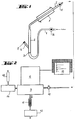
- the present invention relates to a device and a method for determining the NO content in liquids, with the aid of an inert carrier gas, which is characterized in that the device consists of a microreaction part 1, which is structured, in the inert gas inlet connection 1, the microreaction vessel 2 with frit base 3, at least one inlet nozzle for the liquid 4 to be analyzed, and a coolable outlet nozzle for the inert gas 5 loaded with NO and a detector 6 by means of which the NO content of the analyzed liquid is determined and evaluated.
- Nitrogen oxide is a very reactive gas that oxidizes very easily to the NO2 ⁇ ion, especially in the presence of oxygen. In order to determine the exact origin of NO in liquids, it is necessary to reduce the intermediate nitrite back into NO.
- the invention has for its object to use a particularly mild reducing agent in particularly mild conditions. Especially because physiological liquids are analyzed, for example as an eluate from an elution fresh, organic cells can be obtained.
- Such physiological liquids may also contain various organic components that could be subject to a reduction.
- the supply of reducing agents is limited in a microreaction vessel.
- reaction vessel with boiling acetic acid with 1% NaI is used for this.
- NO / water solutions serve as control standards.
- Helium is introduced into the solution at constant pressure, which leads the freed NO into the NO detector 6.
- a basic cold trap prevents acidic vapors from entering the NO detector.
- the aim of the inventive reduction process was therefore to eliminate all these inadequacies, to simplify the process so that work can be carried out at room temperature in order to reduce measurement fluctuations and to ensure a high sensitivity of the overall process by minimizing the volume of the device.
- the task was solved by a process for the reduction of NO2 ⁇ ions, in liquids containing nitrogen oxide, to nitrogen oxide, which is characterized in that the method takes place in the device according to FIG. 1, at a temperature between 5 o to 50 o C, consisting of a reducing solution, of 1,1 'dimethylferocene in acetonitrile, in an acidic medium, and the mixing of the reaction mixture is carried out by means of an inert gas stream which flows through the reaction mixture via a frit, the inert gas simultaneously serving as carrier gas for the nitrogen oxide gas , which is transported into the detector 6 via the discharge nozzle 5 and is determined as total nitrogen oxide.
- the preferred acidic medium is about 70% perchloric acid.
- the preferred working temperature range is that of room temperature. Due to the low reaction temperature and the relatively high-boiling liquid reaction media used, as well as the very low volume flow of the carrier inert gas through the reaction mixture, the vapor partial pressure of the reaction mixture is only increased so little that it cannot be taken into account.
- the discharge nozzle 5 is therefore only a flow tube, surrounded by a cooling jacket 7. It is cooled by the usual cooling water through the cooling jacket.
- Inert gases that are used are the usual noble gases, preferably helium.
- a further advantage of the new method for examining liquids, in particular physiological liquids, obtained as an eluate from organic cells, is that the liquid to be analyzed for the nitrogen oxide content is passed directly through one of the inlet ports 4 into the device of FIG. 1 through the stopper 8 is injected into the reaction medium in vessel 2. This prevents errors due to the otherwise possible surface adhesion of the liquid to the glass parts.
- the 1,1 'dimethylferocene / acetonitrile / perchloric acid reduction medium used in the new process also has the advantage that it is hardly influenced by dilutions.
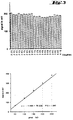
- FIG. 3 shows a series of measurements in which 500 pmol sodium nitrite dissolved in 100 ⁇ l water were added to 2.15 ml reduction medium. The signal expressed in mV remains practically the same for each measurement.
- the detection and quantitative evaluation of the nitrogen oxide values to be determined can be carried out using various methods.
- the prior art knows methods for detecting nitrogen oxide, for example as a color complex with the aid of sulfanilic acid (diazotization by NO and coupling with N (1-naphthyl diamine) or with oxyhemoglobin, ESR spectroscopic, mass spectroscopic, by means of spin traps (R) , electrochemical (R) and by means of chemiluminescence.
- the chemiluminescence method uses the reaction of NO with ozone to NO2 * and O2. During the subsequent decay, light in the range of 600 to 875 nm is released, which is measured by means of a photo cell.
- the NO release of vascular endothelial cells is determined. Freshly obtained cells are used for this. The endothelial cells are removed from the inner wall of bovine aortas with collagenase and then transferred to microcarrier pads. After determination of the cell density defined aliquots of cells are applied to a filter with 105 micron pore size and 37 o C warm superperfundiert Krebs-Henseleit solution. The filtrate (eluate) is used to determine the NO concentration in the device Fig.1 and detection in Fig.2.
- a reduction solution consisting of 30 mg of 1,1 'dimethylferocene dissolved in 3 ml of acetonitrile HPLC is used for this purpose, which is acidified with 49 ⁇ l of 70% perchloric acid.
- the NO to be determined enters the chemiluminescence generator 9 in which a corresponding light lumen of wavelength 600-875 nm is released, which is detected in the NO detector 6 as NO and on the recorder 10 is detected.
- Ozone generator 14, activated carbon filter 14 and the vacuum pump 12 are auxiliary units for analysis using the chemiluminescence method and the flow principle of the analysis method.
- the amount of NO is given in pmol / ml. Five different tests gave the following NO values expressed in pmol on the analysis substrate (eluate) used attempt 1 232 2nd 162 3rd 874 4th 675 5 426
- Some exemplary dimension data illustrate the volume content minimization of the device according to FIG. 1 total volume, the device up to the inlet in the discharge nozzle 5, 35 ml, the microreaction vessel 2 from the glass frit up to the inlet in the discharge nozzle 5, 20 ml, inlet and outlet nozzle diameter inside 4 mm, inner diameter of the micro reaction vessel 2, 20 mm.
- the high measuring accuracy and exact reproducibility of the new method could be confirmed by means of NO standard curves, created on the basis of exact amounts of solutions containing sodium nitrite, which was reduced to NO according to the inventive method described, as is shown in FIG. 4.
Landscapes
- Chemical & Material Sciences (AREA)
- Life Sciences & Earth Sciences (AREA)
- Health & Medical Sciences (AREA)
- General Physics & Mathematics (AREA)
- Pathology (AREA)
- Analytical Chemistry (AREA)
- Biochemistry (AREA)
- General Health & Medical Sciences (AREA)
- Engineering & Computer Science (AREA)
- Immunology (AREA)
- Physics & Mathematics (AREA)
- Molecular Biology (AREA)
- Combustion & Propulsion (AREA)
- Food Science & Technology (AREA)
- Medicinal Chemistry (AREA)
- Investigating Or Analyzing Non-Biological Materials By The Use Of Chemical Means (AREA)
- Measuring Or Testing Involving Enzymes Or Micro-Organisms (AREA)
Applications Claiming Priority (2)
| Application Number | Priority Date | Filing Date | Title |
|---|---|---|---|
| DE4236944 | 1992-11-02 | ||
| DE4236944A DE4236944A1 (de) | 1992-11-02 | 1992-11-02 | Vorrichtung und Verfahren zur Ermittlung des NO-Gehaltes |
Publications (2)
| Publication Number | Publication Date |
|---|---|
| EP0610554A2 true EP0610554A2 (fr) | 1994-08-17 |
| EP0610554A3 EP0610554A3 (en) | 1996-10-02 |
Family
ID=6471898
Family Applications (1)
| Application Number | Title | Priority Date | Filing Date |
|---|---|---|---|
| EP93117553A Withdrawn EP0610554A3 (en) | 1992-11-02 | 1993-10-29 | Apparatus and method for the determination of the no - content. |
Country Status (5)
| Country | Link |
|---|---|
| US (2) | US5374397A (fr) |
| EP (1) | EP0610554A3 (fr) |
| JP (1) | JPH06201677A (fr) |
| CA (1) | CA2102146A1 (fr) |
| DE (1) | DE4236944A1 (fr) |
Families Citing this family (5)
| Publication number | Priority date | Publication date | Assignee | Title |
|---|---|---|---|---|
| US5885842A (en) * | 1996-11-08 | 1999-03-23 | Medinox, Inc. | Methods for the detection of nitric oxide in fluid media |
| WO2000000630A1 (fr) * | 1998-06-26 | 2000-01-06 | Shukla Ashok K | Chambre de reaction en forme de goutte |
| DE102006042501B4 (de) * | 2006-09-07 | 2010-11-25 | Eisenmann Anlagenbau Gmbh & Co. Kg | Verfahren und Anlage zum Trocknen von Gegenständen |
| WO2008089282A2 (fr) | 2007-01-16 | 2008-07-24 | Silver James H | Capteurs destinés à détecter des substances indicatives d'accident vasculaire cérébral, d'ischémie, d'infection ou d'inflammation |
| CA3109594A1 (fr) * | 2018-08-14 | 2020-02-20 | Sanotize Research And Development Corp. | Dispositifs et procedes pour quantifier l'oxyde nitrique |
Family Cites Families (7)
| Publication number | Priority date | Publication date | Assignee | Title |
|---|---|---|---|---|
| USB283761I5 (fr) * | 1971-05-26 | |||
| NL7707839A (nl) * | 1977-07-14 | 1979-01-16 | Philips Nv | Inrichting voor het kwantitatief reduceren van stikstofdioxyde in gasmengsels. |
| EP0013661A1 (fr) * | 1979-01-10 | 1980-07-23 | Ciba-Geigy Ag | Procédé et dispositif pour la détermination quantitative de l'azote |
| JPS586906B2 (ja) * | 1979-08-15 | 1983-02-07 | 株式会社 堀場製作所 | 金属中ガス分析装置 |
| CH670706A5 (fr) * | 1986-06-20 | 1989-06-30 | Tecan Ag | |
| CA2133994A1 (fr) * | 1992-04-21 | 1993-10-28 | Tadeusz Malinski | Detecteur d'oxyde nitrique |
| US5248616A (en) * | 1992-06-04 | 1993-09-28 | Beckman Joseph S | Method and apparatus for detection of aqueous nitric oxide from biological samples |
-
1992
- 1992-11-02 DE DE4236944A patent/DE4236944A1/de not_active Withdrawn
-
1993
- 1993-10-27 US US08/144,198 patent/US5374397A/en not_active Expired - Fee Related
- 1993-10-29 EP EP93117553A patent/EP0610554A3/de not_active Withdrawn
- 1993-11-01 CA CA002102146A patent/CA2102146A1/fr not_active Abandoned
- 1993-11-02 JP JP5306968A patent/JPH06201677A/ja active Pending
-
1994
- 1994-06-20 US US08/262,627 patent/US5514594A/en not_active Expired - Fee Related
Also Published As
| Publication number | Publication date |
|---|---|
| DE4236944A1 (de) | 1994-05-05 |
| US5514594A (en) | 1996-05-07 |
| JPH06201677A (ja) | 1994-07-22 |
| CA2102146A1 (fr) | 1994-05-03 |
| US5374397A (en) | 1994-12-20 |
| EP0610554A3 (en) | 1996-10-02 |
Similar Documents
| Publication | Publication Date | Title |
|---|---|---|
| EP0461392B1 (fr) | Support d'essai pour la détermination d'ions | |
| DE4115425C1 (fr) | ||
| DE2520444C3 (de) | Vorrichtung zur kontinuierlichen Messung der Wasserstoffkonzentration in Argongas | |
| WO1994001767A1 (fr) | Procede et dispositif permettant de determiner une partie d'un melange gazeux | |
| AT398003B (de) | Vorrichtung zur bestimmung des materieflusses | |
| DE102009028165A1 (de) | Verfahren und Vorrichtung zur automatisierten Bestimmung des chemischen Sauerstoffbedarfs einer Flüssigkeitsprobe | |
| DE2948912C2 (de) | Verfahren zum Analysieren azidischer Substanzen durch Hochgeschwindigkeits-Flüssigkeitschromatographie | |
| DE2801081A1 (de) | Chromatographisches system und chromatographisches analysenverfahren | |
| DE2424689B2 (de) | Verfahren und vorrichtung zum analysieren von quecksilber | |
| EP0610554A2 (fr) | Appareil et méthode pour la détermination du contenu en NO | |
| DE3535029A1 (de) | Verfahren und vorrichtung zum kontinuierlichen ueberwachen eines waessrigen probenstroms auf organische bestandteile | |
| DE1598351B2 (de) | Verfahren zur Bestimmung des Sauerstoffbedarfs einer wäßrigen Dispersion und Vorrichtung zur Durchführung des Verfahrens | |
| DE3641251C2 (fr) | ||
| EP0637376B1 (fr) | Procede et dispositif pour mesurer la concentration d'un gaz indicateur dans un gaz de mesure contenant un gaz pertubateur | |
| EP1285266B1 (fr) | Procédé de mesure du contenu de SO2 dans le vin | |
| EP0031149B1 (fr) | Procédé pour calibrer un appareil de mesure pour déterminer la pression partielle de l'oxygène dans le sang | |
| DE19942519C1 (de) | Verfahren zur naßchemischen Bestimmung des Edelmetallgehaltes von Autoabgaskatalysatoren | |
| DE2759961C2 (de) | Verfahren zur quantitativen Bestimmung von Harnstoff | |
| EP0340511B2 (fr) | Système à plusieurs composants attaché à un support pour l'analyse colorimétrique de substances d'estérolyse et/ou de protéolyse actives dans des fluides corporels | |
| DE10012730C1 (de) | Verfahren zur quantitativen Bestimmung oxidierbarer Wasserinhaltsstoffe und Vorrichtung zur Durchführung des Verfahrens | |
| Calatayud et al. | Fluorometric determination of diphenhydramine by flow-injection analysis | |
| DE10058046A1 (de) | Verfahren zur Quantifizierzng und chromatographischen Charakterisierung des organisch gebundenen Kohlenstoffs in Reinstwässern | |
| DD149118A5 (de) | Verfahren und vorrichtung zur vorbereitung von proben fuer fluessigkeitsscintallations-radio-aktivitaetsmessungen | |
| DE1598366B2 (de) | Verfahren und Vorrichtung zur Bestimmung des Sauerstoffbedarfs oxidierbarer Stoffe | |
| Ryan et al. | The determination of dexamethasone and prednisolone esters by infrared spectroscopy with long-path cells |
Legal Events
| Date | Code | Title | Description |
|---|---|---|---|
| PUAI | Public reference made under article 153(3) epc to a published international application that has entered the european phase |
Free format text: ORIGINAL CODE: 0009012 |
|
| AK | Designated contracting states |
Kind code of ref document: A2 Designated state(s): BE CH DE DK ES FR GB IE IT LI NL SE |
|
| RBV | Designated contracting states (corrected) |
Designated state(s): CH FR GB IT LI |
|
| RBV | Designated contracting states (corrected) |
Designated state(s): CH FR GB IT LI |
|
| REG | Reference to a national code |
Ref country code: DE Ref legal event code: 8566 |
|
| PUAL | Search report despatched |
Free format text: ORIGINAL CODE: 0009013 |
|
| STAA | Information on the status of an ep patent application or granted ep patent |
Free format text: STATUS: THE APPLICATION IS DEEMED TO BE WITHDRAWN |
|
| AK | Designated contracting states |
Kind code of ref document: A3 Designated state(s): BE CH DE DK ES FR GB IE IT LI NL SE |
|
| 18D | Application deemed to be withdrawn |
Effective date: 19960501 |