EP0614079A2 - Verfahren zur direkten Überwachung von Konzentrationen von Bioziden in wässrigen Systemen - Google Patents
Verfahren zur direkten Überwachung von Konzentrationen von Bioziden in wässrigen Systemen Download PDFInfo
- Publication number
- EP0614079A2 EP0614079A2 EP94250045A EP94250045A EP0614079A2 EP 0614079 A2 EP0614079 A2 EP 0614079A2 EP 94250045 A EP94250045 A EP 94250045A EP 94250045 A EP94250045 A EP 94250045A EP 0614079 A2 EP0614079 A2 EP 0614079A2
- Authority
- EP
- European Patent Office
- Prior art keywords
- biocide
- biocides
- concentrations
- concentration
- systems
- Prior art date
- Legal status (The legal status is an assumption and is not a legal conclusion. Google has not performed a legal analysis and makes no representation as to the accuracy of the status listed.)
- Withdrawn
Links
Images




Classifications
-
- G—PHYSICS
- G01—MEASURING; TESTING
- G01N—INVESTIGATING OR ANALYSING MATERIALS BY DETERMINING THEIR CHEMICAL OR PHYSICAL PROPERTIES
- G01N21/00—Investigating or analysing materials by the use of optical means, i.e. using sub-millimetre waves, infrared, visible or ultraviolet light
- G01N21/84—Systems specially adapted for particular applications
- G01N21/85—Investigating moving fluids or granular solids
-
- G—PHYSICS
- G01—MEASURING; TESTING
- G01N—INVESTIGATING OR ANALYSING MATERIALS BY DETERMINING THEIR CHEMICAL OR PHYSICAL PROPERTIES
- G01N25/00—Investigating or analyzing materials by the use of thermal means
- G01N25/02—Investigating or analyzing materials by the use of thermal means by investigating changes of state or changes of phase; by investigating sintering
-
- C—CHEMISTRY; METALLURGY
- C12—BIOCHEMISTRY; BEER; SPIRITS; WINE; VINEGAR; MICROBIOLOGY; ENZYMOLOGY; MUTATION OR GENETIC ENGINEERING
- C12Q—MEASURING OR TESTING PROCESSES INVOLVING ENZYMES, NUCLEIC ACIDS OR MICROORGANISMS; COMPOSITIONS OR TEST PAPERS THEREFOR; PROCESSES OF PREPARING SUCH COMPOSITIONS; CONDITION-RESPONSIVE CONTROL IN MICROBIOLOGICAL OR ENZYMOLOGICAL PROCESSES
- C12Q1/00—Measuring or testing processes involving enzymes, nucleic acids or microorganisms; Compositions therefor; Processes of preparing such compositions
- C12Q1/02—Measuring or testing processes involving enzymes, nucleic acids or microorganisms; Compositions therefor; Processes of preparing such compositions involving viable microorganisms
- C12Q1/18—Testing for antimicrobial activity of a material
-
- G—PHYSICS
- G01—MEASURING; TESTING
- G01N—INVESTIGATING OR ANALYSING MATERIALS BY DETERMINING THEIR CHEMICAL OR PHYSICAL PROPERTIES
- G01N21/00—Investigating or analysing materials by the use of optical means, i.e. using sub-millimetre waves, infrared, visible or ultraviolet light
- G01N21/17—Systems in which incident light is modified in accordance with the properties of the material investigated
- G01N21/25—Colour; Spectral properties, i.e. comparison of effect of material on the light at two or more different wavelengths or wavelength bands
- G01N21/31—Investigating relative effect of material at wavelengths characteristic of specific elements or molecules, e.g. atomic absorption spectrometry
-
- G—PHYSICS
- G01—MEASURING; TESTING
- G01N—INVESTIGATING OR ANALYSING MATERIALS BY DETERMINING THEIR CHEMICAL OR PHYSICAL PROPERTIES
- G01N33/00—Investigating or analysing materials by specific methods not covered by groups G01N1/00 - G01N31/00
- G01N33/18—Water
- G01N33/1826—Organic contamination in water
-
- G—PHYSICS
- G01—MEASURING; TESTING
- G01N—INVESTIGATING OR ANALYSING MATERIALS BY DETERMINING THEIR CHEMICAL OR PHYSICAL PROPERTIES
- G01N2201/00—Features of devices classified in G01N21/00
- G01N2201/12—Circuits of general importance; Signal processing
- G01N2201/129—Using chemometrical methods
-
- Y—GENERAL TAGGING OF NEW TECHNOLOGICAL DEVELOPMENTS; GENERAL TAGGING OF CROSS-SECTIONAL TECHNOLOGIES SPANNING OVER SEVERAL SECTIONS OF THE IPC; TECHNICAL SUBJECTS COVERED BY FORMER USPC CROSS-REFERENCE ART COLLECTIONS [XRACs] AND DIGESTS
- Y02—TECHNOLOGIES OR APPLICATIONS FOR MITIGATION OR ADAPTATION AGAINST CLIMATE CHANGE
- Y02A—TECHNOLOGIES FOR ADAPTATION TO CLIMATE CHANGE
- Y02A20/00—Water conservation; Efficient water supply; Efficient water use
- Y02A20/20—Controlling water pollution; Waste water treatment
Definitions
- the present invention is directed to a method for directly monitoring the concentration of biocides in aqueous systems and more particularly to a direct spectrometric method for quantifying biocides which have an absorbance or emission spectrum in a wavelength range of from 200 to 2500 nm wherein the spectrum of the aqueous system containing the biocides is determined and chemometric algorithms are applied to the spectrum.
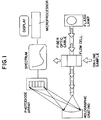
- Figure 1 is a schematic of an on-line analyzer.
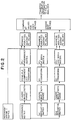
- Figure 2 is a schematic of a multisample laboratory calibration.
- Figure 3 is a graph showing actual 5-chloro-2-methyl-4-isothiazoline-3-one levels versus calibration predictions for a learning set used in a trial on a synthetic cooling tower.
- the diagonal line in the figure represents the perfect match and the absolute error of a prediction is represented by the vertical distance between the line and the predicted point.
- Figure 4 is a graph of HPLC results versus the corresponding analyzer readings for the synthetic cooling tower trial grab samples of 5-chloro-2-methyl-4-isothiazoline-3-one.
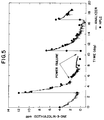
- Figure 5 is a line plot of analyzer readings and HPLC results (filled circles) for the concentrations of 5-chloro-2-methyl-4-isothiazoline-3-one in the synthetic cooling tower study.
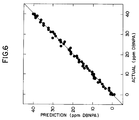
- Figure 6 is a graph showing actual 2,2-dibromo-3-nitrilpropionamide levels versus calibration predictions in a trial on a synthetic cooling tower.
- the diagonal line in the figure represents the perfect match and the absolute error of a prediction is represented by the vertical distance between the line and the predicted point.
- Figure 7 is a graph of titration vs the corresponding analyzer readings for a synthetic cooling tower trial containing 2,2-dibromo-3-nitrilpropionamide.
- Figure 8 is a line plot of analyzer readings and titration results (filled circles) for the concentrations of 2,2-dibromo-3-nitrilpropionamide in the synthetic cooling tower study.
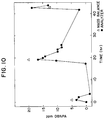
- Figures 9 and 10 are graphical summaries of field results where concentrations of 5-chloro-2-methl-4-isothiazoline-3-one and 2,2-dibromo-3-nitrilpropionamide are plotted against mass balance concentrations.
- the present invention is directed to a novel method for directly monitoring the concentrations of one or more biocides in an aqueous system.
- the method in general, involves directly determining an absorbance or emission spectrum of the system water containing the biocide(s) in the ultraviolet, visible and/or near infrared wavelength range, and then applying chemometrics algorithms to the spectrum to determine the concentration(s) of the biocide(s).
- the method of the present invention is generally unaffected by the presence of background matrix interferences in the system water such as pH changes or the presence of other active water treating components, and thus does not require time consuming, off-line separation or derivatization techniques.
- the method of the present invention does not require or involve the use of additional colorizing agents, dyes, titrations or other indirect monitoring techniques.
- the present invention is of general applicability with respect to biocides which are presently used to treat aqueous systems, provided of course, that the particular biocide(s) of interest has a detectable absorbance or emission spectrum in the ultraviolet, visible and/or near infrared range (i.e. in the wavelength range of from 200 to 2500 nm).
- a biocide is considered detectable if it has a chromophore with at least about 0.1 absorbance units (or a corresponding measurable response with an emissivity spectrometer) in the wavelength range of from 200 to 2500 nm under normal biocide treatment dosages. It is preferred that the biocide has between 0.1 to 1.5 absorbance units in the above wavelength range and dosage amounts.
- biocides that have been found to be easily monitorable in accordance with this invention include, but are not limited to isothiazolones, glutaraldehydes, thiones, halogenated nitrilalkylamides, carbamates, halogenated alkyl nitrodioxanic, halogenated alkylhydantoins, halogenated nitroalkyldiols, thiocyanates, alkylphosphonium halides, guanidines, benzyl ammonium halides, alkylsulfonium methosulfates and the like.
- Table 1 provides a list of specific examples of these biocides and their typical active dosage amounts that have been found to be monitorable using the method of this invention.
- Table 1 Biocides Used as Cooling Water Treatments ppm Active Active Ingredient 1.5% 5-chloro-2-methyl-4-isothiazoline-3-one 2-methyl-4-isothiazolin-3-one 10% methylene bis(thiocyanate) 20% tetrahydro-3,5-dimethyl-2H-1,3,5-thiadiazine-2-thione 15% sodium dimethyldithio carbamate 15% disodium ethylene-bis-dithiocarbamate 12.5% N-alkyl-dimethyl benzyl ammonium chloride 2.14% bis(tri-n-butyl) tinoxide 20% 2,2-dibromo-3-nitrilpropionamide 45% glutaraldehyde 60% 1-bromo-3-chloro-5,5-dimethylhydantoin 27.4% 1,3-dichloro-5,5-
- the individual concentrations of mixtures of two or more biocides may also be simultaneously monitored in accordance with the present invention.
- a particularly preferred biocide combination comprises a mixture of glutaraldehyde and isothiazolones in a weight ratio of from 10:90 to 90:10 and is most preferably in a weight ratio of 1.5 to 10 of isothiazolones:glutaraldehyde, respectively.
- Suitable isothiazolones for use in this invention are commercially available from Rohm & Haas Company under the Kathon® trademark.
- the respective concentrations of both of these biocides can be directly and simultaneously monitored by determining the spectrum of the aqueous system containing the biocides, and then applying chemometrics algorithms to the spectrum.
- chemometrics algorithms to a spectrum of an aqueous system is a powerful tool which provides the ability to simultaneously determine the concentrations of multiple components even in a complex matrix such as a cooling water system containing a plurality of biocides as well as other water treatment compositions or interferences.
- biocide protector refers to a composition which inhibits the degradation of biocides in the presence of deleterious materials. For example, it is known that isothiazolone degrades under certain pH ranges or in the presence of iron metal.
- biocide protectors such as acetate, carbonates, chlorides, bromides, sulfates, phosphates, metal oxides, molybdates, chromates, zinc salts, copper salts, cadmium salts, dialkylthioureas, alkoxylated rosin amines, azoles, phosphonates, zinc dust, metal nitrates, or nitrites and the like, and mixtures thereof.
- biocide protectors such as acetate, carbonates, chlorides, bromides, sulfates, phosphates, metal oxides, molybdates, chromates, zinc salts, copper salts, cadmium salts, dialkylthioureas, alkoxylated rosin amines, azoles, phosphonates, zinc dust, metal nitrates, or nitrites and the like, and mixtures thereof.
- Another embodiment of this invention is directed to a combination of monitoring methods to provide not only the concentration of one or more biocides in an aqueous system, but also the total biomass of living organisms in the system.
- the combined use of these technologies provides fast accurate tracking of biocide levels. This information is critical for determining system control parameters such as biocidal kill rates, effective biocide concentrations (and thereby avoid overdosing the biocides) as well as frequency of biocide addition.
- the method comprises directly determining the biocide concentration in accordance with the method of the present invention in combination with a bioassay technique such as an Adenosine triphosphate (ATP) test (as disclosed more fully in "Standard Methods for Examination of Water and Wastewater 17th Edition" (Washington, D.C.:American Public Health Association, 1989) pp 9-37 which is incorporated herein in its entirety), Deposit Accumulation Test System (DATS), a biofilm coupon as disclosed in U.S. Patent 5,051,359 (which is incorporated herein by reference in its entirety), infrared monitoring systems which monitor biofilm growth as a function of infrared absorbance and the like.
- ATP Adenosine triphosphate
- DATS Deposit Accumulation Test System
- biofilm coupon as disclosed in U.S. Patent 5,051,359
- infrared monitoring systems which monitor biofilm growth as a function of infrared absorbance and the like.
- Aqueous systems which are suitable for monitoring in accordance with the method of this invention generally include any aqueous systems where the system water is clear enough to obtain an absorbance or emission spectrum.
- aqueous systems where the system water is clear enough to obtain an absorbance or emission spectrum.
- process water systems such as e.g. pulp and paper making systems, air washers, metal working fluids, and the like.
- the system water is generally sampled in an area that is well mixed to assure that it is representative of this aqueous system. If the particular aqueous system is known to have relatively large amounts of particulate matter, it is advisable to filter the system water prior to obtaining its spectrum.
- any commercial grade UV, visible and/or near infrared spectrometer may be used in accordance with this invention.
- Charged coupled device (CCD) analyzers may also be used. It is preferred that the spectrometer have a resolution of at least 10 nm, preferably 2 nm and most preferably 1 nm.
- a diode array spectrometer having a wavelength range of from 200 to 2500 nm is preferred for use in this invention and most preferably has a wavelength range of from 200 to 800 nm.
- Instrument stability is an important consideration when operating in areas with a high potential for electrical and mechanical noise.
- the spectrometer is preferably designed to operate at 40°C to eliminate any varying temperature effects.
- the spectrometer may be used to monitor off-line samples, or in a preferred embodiment, is equipped with an on-line fiber optic probe.
- a flow through optical chamber (optrode) is preferred.
- light from a xenon flash lamp (or other suitable source) is transmitted to the optrode via a quartz fiber optic cable.
- the light is transmitted through the steam generator aqueous solution and collected in a second fiber optic cable which transmits the light to the diode array spectrometer.
- the spectrometer the light is converted into an analog voltage for each pixel of the array.
- the array is then read by a computer and by subtracting a previously stored deionized water scan from the sample scan a true absorption spectrum is generated.
- the resultant spectrum is then processed by a chemometrics calibration algorithm to generate a quantitative multicomponent analysis for any and all of the water treatment compositions of interest.
- Chemometrics is the application of statistical and pattern recognition techniques to chemical analysis. Quantitative estimates of chemical concentration in reagentless UV-vis-NIR spectroscopy are based on algorithms, the parameters of which are determined in calibration sequences called learning sets. Learning sets consist of a large number of known samples that are used to determine the parameters of the algorithms. The number of samples required depends on the complexity of the matrix, the number of spectroscopic interferences that are present, and the number of variables used in the algorithm. In general, the number of samples should be at least 10 times the number of independent variables employed. In the presence of known and unknown interferences, a multiple sample calibration averages out the effects of these interferences.
- the learning set solutions are prepared in a manner to typify the interferences and their variability that will be experienced in the steam generating system.
- the invention preferably uses a multi-sample calibration based on either principle component regression analysis or rotated principle component analysis of absorbance or emissivity, and subsequent derivative data.
- the rotated principle component analysis method is most preferred and involves a rotation of the principle components which allows the concentration of all the relevant information for a particular analyte into a single rotated principle component.
- the use of rotated principle components enables one to detect weak UV-vis-NIR species that would not normally be quantifiable using more conventional chemometric techniques.
- the use of rotated principle components gives the invention the ability to detect weak UV-vis-NIR species that would normally not be quantifiable using more conventional chemometric techniques.
- the most accurate calibration method for each analyte may be determined by selecting the particular method having the highest coefficient of determination (r2) value.
- On-line analyzer Resolution 2 nm. Solution path length 1.3 cm. Operating temperature 40°C. Static solution measurements.
- Wavelength range for calibration (30 wavelengths in the range 230-346 nm).
- This example demonstrates the ability to monitor biocides on-line.
- This experiment was run on a common cooling water microbiocide, 5-chloro-2-methyl-4-isothiazolin-3-one, in a simulated cooling tower (SCT) which comprised an automated 36 liter capacity pilot cooling tower equipped with an evaporative column, heat exchangers and controller.
- SCT simulated cooling tower
- This controller monitors and controls various functions such as pH, conductivity, makeup and blowdown.
- the typical half-life of the system is 18 hours.
- the tower was treated with a standard corrosion/scale control product during the evaluations.
- the analyzer was set-up so that water samples were removed from areas of good circulation and returned to the basin of the cooling tower.
- the analyzer's digital outputs were recorded by a commercial telecommunication program via a RS-232 connection.
- a common cooling water biocide containing 5-chloro-2-methyl-3-isothiazolin-3-one and 2-methyl-4-isothiazolin-3-one was tested in the SCT unit with the analyzer monitoring the active constituents concentration.
- This biocide was chosen as a test biocide since it possesses absorbance characteristics suitable for the required chemometric algorithms and there is a High Pressure Liquid Chromatography (HPLC) reference method available to validate analyzer predictions.
- HPLC High Pressure Liquid Chromatography
- Figure 3 shows actual isothiazolin-3-one levels versus calibration predictions for the learning set used in the trial.
- the diagonal line in the figure represents the perfect match and the absolute error of a prediction is represented by the vertical distance between the line and the predicted point.
- Figure 4 is a plot of HPLC results versus the corresponding analyzer readings for the trial grab samples. Although prediction error for Figure 4 is slightly larger than that obtained for the learning set, it is easily seen that the analyser can produce extremely reliable numbers in an on-line analysis situation.
- the calculated correlation coefficient (R2) for the data in Figure 4 is 0.99 where 1.0 represents the ideal.
- the SCT rig operating conditions were modified slightly to extend the half-life of DBNPA in the cooling tower.
- the conditions were as follows: pH 7.0 Conductivity 1.33 mmhos Calcium Hardness 570 ppm as CaCO3 Total Hardness 950 ppm as CaCO3 M-Alkalinity 10 ppm as CaCO3 Ortho-Phosphate 0.4 ppm Total Phosphate 1.7 ppm Temperature 38°C (100°F)
- the DBNPA learning set consisted of 70 samples and was established in the same manner as described in the previous example.
- DBNPA spikes were made to the basin of the cooling tower to achieve 15, 3, 20, 7 and 30 ppm as active DBNPA. After each spike, biocide levels were allowed to deplete to near 0 ppm before an additional spike was made. Again, the analyzer took a reading every 20 minutes and several grab samples were collected daily for immediate titration.
- Figure 8 shows the corresponding analyser readings (line plot) and titration results (filled circles) over the ten day evaluation period. Shorter but consistent exponential decay patterns were observed following each spike of DBNPA when compared to those obtained in the isothiazolin-3-one trial. This difference may be related to the relative degradation rates of the two biocides.
- the analyzer showed very good predictions for the mid-concentration range and slightly lower predictions for the upper and lower concentration ranges.
Landscapes
- Chemical & Material Sciences (AREA)
- Health & Medical Sciences (AREA)
- Life Sciences & Earth Sciences (AREA)
- Physics & Mathematics (AREA)
- Analytical Chemistry (AREA)
- Biochemistry (AREA)
- General Health & Medical Sciences (AREA)
- Immunology (AREA)
- General Physics & Mathematics (AREA)
- Pathology (AREA)
- Organic Chemistry (AREA)
- Engineering & Computer Science (AREA)
- Wood Science & Technology (AREA)
- Proteomics, Peptides & Aminoacids (AREA)
- Zoology (AREA)
- Spectroscopy & Molecular Physics (AREA)
- Food Science & Technology (AREA)
- Bioinformatics & Cheminformatics (AREA)
- Microbiology (AREA)
- Molecular Biology (AREA)
- Medicinal Chemistry (AREA)
- Biophysics (AREA)
- Toxicology (AREA)
- Biotechnology (AREA)
- General Engineering & Computer Science (AREA)
- Genetics & Genomics (AREA)
- Investigating Or Analysing Materials By The Use Of Chemical Reactions (AREA)
- Investigating Or Analysing Materials By Optical Means (AREA)
- Investigating Or Analyzing Non-Biological Materials By The Use Of Chemical Means (AREA)
- Investigating, Analyzing Materials By Fluorescence Or Luminescence (AREA)
Applications Claiming Priority (2)
| Application Number | Priority Date | Filing Date | Title |
|---|---|---|---|
| US25693 | 1979-03-30 | ||
| US2569393A | 1993-03-03 | 1993-03-03 |
Publications (2)
| Publication Number | Publication Date |
|---|---|
| EP0614079A2 true EP0614079A2 (de) | 1994-09-07 |
| EP0614079A3 EP0614079A3 (de) | 1995-07-05 |
Family
ID=21827547
Family Applications (1)
| Application Number | Title | Priority Date | Filing Date |
|---|---|---|---|
| EP94250045A Withdrawn EP0614079A3 (de) | 1993-03-03 | 1994-02-23 | Verfahren zur direkten Überwachung von Konzentrationen von Bioziden in wässrigen Systemen. |
Country Status (10)
| Country | Link |
|---|---|
| EP (1) | EP0614079A3 (de) |
| JP (1) | JPH06317522A (de) |
| KR (1) | KR940022083A (de) |
| CN (1) | CN1101128A (de) |
| AU (1) | AU5522594A (de) |
| BR (1) | BR9400789A (de) |
| CA (1) | CA2116815A1 (de) |
| FI (1) | FI941003A7 (de) |
| NZ (1) | NZ250934A (de) |
| ZA (1) | ZA941234B (de) |
Cited By (6)
| Publication number | Priority date | Publication date | Assignee | Title |
|---|---|---|---|---|
| US6077445A (en) * | 1998-03-03 | 2000-06-20 | Betzdearborn Inc. | Method to minimize corrosion in aqueous systems |
| NL1011905C2 (nl) * | 1999-04-27 | 2000-10-30 | Co Peratie Rundveeverbetering | Inrichting voor het analyseren van melk en daarvoor bestemde sensor. |
| WO2001023868A1 (en) * | 1999-09-28 | 2001-04-05 | Bran + Luebbe Gmbh | Pcb measurement in pork fat with nir |
| WO2006066120A1 (en) * | 2004-12-17 | 2006-06-22 | Johnsondiversey, Inc. | Method of lubricating a conveyor system |
| WO2006089773A3 (de) * | 2005-02-25 | 2007-04-26 | Merck Patent Gmbh | Verfahren und vorrichtung zur konzentrationsermittlung von organisch gebundenen halogenen |
| WO2021251941A1 (en) * | 2020-06-08 | 2021-12-16 | Kimberly-Clark Worldwide, Inc. | Method for determining residual carbamate compounds on an elastomeric article |
Families Citing this family (3)
| Publication number | Priority date | Publication date | Assignee | Title |
|---|---|---|---|---|
| US5242602A (en) * | 1992-03-04 | 1993-09-07 | W. R. Grace & Co.-Conn. | Spectrophotometric monitoring of multiple water treatment performance indicators using chemometrics |
| CZ297391B6 (cs) * | 2002-02-08 | 2006-11-15 | Geotest Brno, A. S. | Zpusob stanovení chlorovaných pesticidu ve vodáchpomocí selektivního vnitrního standardu vysokotlakou kapalinovou chromatografií |
| US9772287B2 (en) * | 2014-04-16 | 2017-09-26 | Saudi Arabian Oil Company | Sensor for monitoring for the presence and measurement of aqueous aldehyde biocides |
Family Cites Families (8)
| Publication number | Priority date | Publication date | Assignee | Title |
|---|---|---|---|---|
| ZA801052B (en) * | 1979-03-10 | 1981-09-30 | British Petroleum Co | Apparatus and method for the determination of biocide concentration in aqueous systems |
| GB2118925B (en) * | 1982-04-19 | 1985-06-26 | Dearborn Chemical Limited | Biocide |
| CA1220739A (en) * | 1983-05-17 | 1987-04-21 | Herbert J. Hatcher | Two component biocidal system |
| EP0337624B1 (de) * | 1988-04-11 | 1993-10-27 | Rohm And Haas Company | Verfahren zur Bekämpfung von biologischen Verschmutzungen bei der Erdölförderung |
| JPH0235338A (ja) * | 1988-05-31 | 1990-02-05 | Hercules Inc | 処理される水/セルロース・スラリー中の化学成分の保有量を監視し、制御する方法 |
| US5004749A (en) * | 1989-04-20 | 1991-04-02 | Imperial Chemical Industries Plc | Concentrated aqueous solution of glutaraldehyde and 1,2-benzisothiazolin-3-one |
| CA2058252A1 (en) * | 1991-03-18 | 1992-09-19 | Linda R. Robertson | Synergistic product selection test for biocides |
| US5242602A (en) * | 1992-03-04 | 1993-09-07 | W. R. Grace & Co.-Conn. | Spectrophotometric monitoring of multiple water treatment performance indicators using chemometrics |
-
1994
- 1994-02-18 AU AU55225/94A patent/AU5522594A/en not_active Abandoned
- 1994-02-21 NZ NZ250934A patent/NZ250934A/en unknown
- 1994-02-23 EP EP94250045A patent/EP0614079A3/de not_active Withdrawn
- 1994-02-23 ZA ZA941234A patent/ZA941234B/xx unknown
- 1994-03-02 KR KR1019940004194A patent/KR940022083A/ko not_active Withdrawn
- 1994-03-02 BR BR9400789A patent/BR9400789A/pt not_active Application Discontinuation
- 1994-03-02 CA CA002116815A patent/CA2116815A1/en not_active Abandoned
- 1994-03-02 FI FI941003A patent/FI941003A7/fi not_active Application Discontinuation
- 1994-03-02 JP JP6056724A patent/JPH06317522A/ja active Pending
- 1994-03-03 CN CN94102232A patent/CN1101128A/zh active Pending
Cited By (9)
| Publication number | Priority date | Publication date | Assignee | Title |
|---|---|---|---|---|
| US6077445A (en) * | 1998-03-03 | 2000-06-20 | Betzdearborn Inc. | Method to minimize corrosion in aqueous systems |
| NL1011905C2 (nl) * | 1999-04-27 | 2000-10-30 | Co Peratie Rundveeverbetering | Inrichting voor het analyseren van melk en daarvoor bestemde sensor. |
| WO2001023868A1 (en) * | 1999-09-28 | 2001-04-05 | Bran + Luebbe Gmbh | Pcb measurement in pork fat with nir |
| WO2006066120A1 (en) * | 2004-12-17 | 2006-06-22 | Johnsondiversey, Inc. | Method of lubricating a conveyor system |
| AU2005316346B2 (en) * | 2004-12-27 | 2010-12-16 | Diversey, Inc. | Method of lubricating a conveyor system |
| US8119578B2 (en) | 2004-12-27 | 2012-02-21 | Diversey, Inc. | Method of lubricating a conveyor system |
| WO2006089773A3 (de) * | 2005-02-25 | 2007-04-26 | Merck Patent Gmbh | Verfahren und vorrichtung zur konzentrationsermittlung von organisch gebundenen halogenen |
| WO2021251941A1 (en) * | 2020-06-08 | 2021-12-16 | Kimberly-Clark Worldwide, Inc. | Method for determining residual carbamate compounds on an elastomeric article |
| US11988601B2 (en) | 2020-06-08 | 2024-05-21 | Kimberly-Clark Worldwide, Inc. | Method for determining residual carbamate compounds on an elastomeric article |
Also Published As
| Publication number | Publication date |
|---|---|
| BR9400789A (pt) | 1994-12-13 |
| NZ250934A (en) | 1995-07-26 |
| CA2116815A1 (en) | 1994-09-04 |
| FI941003A0 (fi) | 1994-03-02 |
| FI941003L (fi) | 1994-09-04 |
| FI941003A7 (fi) | 1994-09-04 |
| CN1101128A (zh) | 1995-04-05 |
| AU5522594A (en) | 1994-09-08 |
| EP0614079A3 (de) | 1995-07-05 |
| ZA941234B (en) | 1994-09-19 |
| JPH06317522A (ja) | 1994-11-15 |
| KR940022083A (ko) | 1994-10-20 |
Similar Documents
| Publication | Publication Date | Title |
|---|---|---|
| US5242602A (en) | Spectrophotometric monitoring of multiple water treatment performance indicators using chemometrics | |
| Langergraber et al. | A multivariate calibration procedure for UV/VIS spectrometric quantification of organic matter and nitrate in wastewater | |
| EP0566902B1 (de) | Verfahren zur Überwachung und Regelung der Dosierung von Korrosionsinhibitoren in Wassersystemen | |
| EP2212687B1 (de) | Verfahren zur überwachung der meisten (gesamten) mikrobiologischen aktivität in prozessströmen | |
| EP0362435B1 (de) | Vorrichtung zur Überwachung chemischer Behandlungen unter Verwendung fluoreszierender Indikatoren | |
| DE68914581T2 (de) | Kontinuierliche Prüfung von Kühlturmwasser. | |
| US5641966A (en) | Process of measuring chemical and physical parameters for characterization and classification of aqueous suspensions | |
| SE503644C2 (sv) | Sätt att bestämma halten organiskt material i effluenter från massa- och pappersbruk | |
| EP0614079A2 (de) | Verfahren zur direkten Überwachung von Konzentrationen von Bioziden in wässrigen Systemen | |
| Madrakian et al. | Simultaneous spectrofluorimetric determination of levodopa and propranolol in urine using feed-forward neural networks assisted by principal component analysis | |
| Yu et al. | Research on the water quality detection method based on fluorescence spectrometry and PSO-RBF network | |
| Merás et al. | Simultaneous fluorimetric determination of glyphosate and its metabolite, aminomethylphosphonic acid, in water, previous derivatization with NBD-Cl and by partial least squares calibration (PLS) | |
| Sinitsa et al. | Optical sensor system for early warning of inflow organic matter breach in large-scale irrigation systems and water treatment systems | |
| Yusof et al. | Npk detection spectroscopy on non-agriculture soil | |
| EP0614085A1 (de) | Verfahren zum direkten Nachweis der Inhalte an Wasserbehandlungsstoffen bei dampferzeugenden Einrichtungen | |
| Cardia et al. | Water Quality Estimation Through Machine Learning Multivariate Analysis | |
| Do et al. | Nitrite quantification by second derivative chemometric models mitigates natural organic matter interferences under chloraminated drinking water distribution system conditions | |
| EP0773298A1 (de) | Überwachung der mikrobiologischen Aktivität in einem Flüssigkeitssystem | |
| AU2018311350A1 (en) | Biocide detection | |
| EP0613863A1 (de) | Ultraviolett-licht empfindliche Polymere zur Aufbereitung von wässrigen Systemen | |
| van Den Broeke et al. | Monitoring of organic micro contaminants in drinking water using a submersible UV/vis spectrophotometer | |
| White et al. | Remote Biological Monitoring in an Open Finished‐Water Reservoir | |
| Tully et al. | Monitoring and Controlling Gaseous Chlorine Alternatives in Open Recirculating Systems | |
| Moriarty | On-line monitoring of water treatment chemicals | |
| Johnson et al. | Historical perspective on the development of procedures for conducting on-site toxicity tests and for measuring concentrations of lampricides in the sea lamprey control program during 1957 to 1999 |
Legal Events
| Date | Code | Title | Description |
|---|---|---|---|
| PUAI | Public reference made under article 153(3) epc to a published international application that has entered the european phase |
Free format text: ORIGINAL CODE: 0009012 |
|
| AK | Designated contracting states |
Kind code of ref document: A2 Designated state(s): AT BE CH DE DK ES FR GB GR IE IT LI LU MC NL PT SE |
|
| PUAL | Search report despatched |
Free format text: ORIGINAL CODE: 0009013 |
|
| AK | Designated contracting states |
Kind code of ref document: A3 Designated state(s): AT BE CH DE DK ES FR GB GR IE IT LI LU MC NL PT SE |
|
| RHK1 | Main classification (correction) |
Ipc: G01N 33/18 |
|
| 17P | Request for examination filed |
Effective date: 19960105 |
|
| STAA | Information on the status of an ep patent application or granted ep patent |
Free format text: STATUS: THE APPLICATION IS DEEMED TO BE WITHDRAWN |
|
| 18D | Application deemed to be withdrawn |
Effective date: 19970902 |