EP0614140A2 - System und Verfahren zur Vermeidung von Verklemmung in einem Rechner - Google Patents
System und Verfahren zur Vermeidung von Verklemmung in einem Rechner Download PDFInfo
- Publication number
- EP0614140A2 EP0614140A2 EP94301385A EP94301385A EP0614140A2 EP 0614140 A2 EP0614140 A2 EP 0614140A2 EP 94301385 A EP94301385 A EP 94301385A EP 94301385 A EP94301385 A EP 94301385A EP 0614140 A2 EP0614140 A2 EP 0614140A2
- Authority
- EP
- European Patent Office
- Prior art keywords
- application program
- operating system
- tasking
- deadlock
- components
- Prior art date
- Legal status (The legal status is an assumption and is not a legal conclusion. Google has not performed a legal analysis and makes no representation as to the accuracy of the status listed.)
- Granted
Links
Images

Classifications
-
- G—PHYSICS
- G06—COMPUTING OR CALCULATING; COUNTING
- G06F—ELECTRIC DIGITAL DATA PROCESSING
- G06F9/00—Arrangements for program control, e.g. control units
- G06F9/06—Arrangements for program control, e.g. control units using stored programs, i.e. using an internal store of processing equipment to receive or retain programs
- G06F9/46—Multiprogramming arrangements
- G06F9/52—Program synchronisation; Mutual exclusion, e.g. by means of semaphores
- G06F9/524—Deadlock detection or avoidance
Definitions
- the present invention generally relates to the avoidance of deadlock in a multi-tasking environment and, more particularly, to a system and method for using interprocess communication to maximize background processing and avoid deadlock in a multi-threaded application running in a non-preemptive multi-tasking environment.
- an application program requests a resource, and if the resource is not available at that time, the application program enters a wait state. It may happen that the waiting application program will never again change state, because the resource it has requested is held by another waiting processes. This situation is called deadlock. To prevent deadlock, or recover from one if it occurs, the system may take some relatively extreme action, such as preemption of resources from one or more of the deadlocked application programs.
- a set of processes is in a deadlock state when two or more processes in the set is waiting for an event that can only be caused by another process in the set.
- a deadlock situation can arise if and only if the following four conditions hold simultaneously in the system.
- any application which consists of more than one component which voluntarily shares control of the processor risks starvation of all other components when any component has control of the processor. This situation results in poor background-processing performance in general, and can degenerate into deadlock when the component which has control requires input from another component. Deadlock occurs because the starved component is unable to run and provide the input, because the component which has control will not release until it receives this input from the starved component.
- Microsoft® Windows provides a non-preemptive multi-tasking environment for running application programs. This means that several applications can share the processor in a sequential manner provided that each application is "well-behaved" and voluntarily gives up the processor periodically.
- the Microsoft® Windows operating system for example, has no mechanism to detect or remedy deadlock or starvation situations that may arise if an application program is not well-behaved.
- Figure 1 is a conceptual representation of several application programs running in a Windows operating system (OS) 110.
- the Windows operating system is a multi-tasking operating system. Multi-tasking means that more than one application program can run at a time.
- Non-preemptive means that once an application program, for example, application program A 120 is granted access by the Windows operating system 110 to the processor (not shown) it cannot be preempted by application programs B 130, C 140, or D 150. Thus, while application program A 120 is running, all other application programs 130, 140, 150 are starved. Accepted Windows programming practices dictate that application programs 120-150 voluntarily give up access to the processor (i.e., the application program is well behaved). Thus, each application program receives a timeslice of time with the processor. A timeslice is a unit of time an operating system allows an application program to run. In a non-preemptive system, a timeslice has no pre-defined limit.
- the Windows operating system 110 can then grant (schedule) another application program 120-150 access to the processor.
- Some application programs provide their own internal non-preemptive multi-tasking through separate tasks, or threads within the application program.
- a multi-tasker within an application program is similar to the multi-tasker found in the Windows operating system 110 For example, one thread is responsible for accessing data on the disk, while another thread accesses data from the tape, and another thread interacts with the user to determine what operations to perform.
- the goal of this design is to provide quicker responses to user requests because the data is immediately available through "background" processing.
- Threads have control of the processor during their timeslice, and communicate with other threads via message passing. This timeslicing between threads, and message passing between threads takes place within one application program 120-150, during one Window operating system 110 timeslice.
- the Windows operating system 110 provides application programs 120-150 with an interface to standard methods for communicating with the user, for example: dialog boxes, list boxes, scrollbars, edit controls, cursors, icons, etc.
- the user interface thread of an application program uses dialog boxes to obtain different types of information from the user.
- Dialog boxes as provided by the Windows application interface contain their own Windows message loop.
- a dialog box put up by an application program 120-150 is well-behaved, and yields to Windows software 110 allowing other application programs 120-150 to run.
- the message loop within the application program's dialog box receives all the Window software 110 messages for that particular application program.
- the user manager thread puts up a dialog box to allow the user to choose what to print, and to control the printing process.
- the user manager thread sends a request for each item in the directory to the tape manager thread.
- the tape manager thread would then return the name of each file to be printed.
- the other threads within the application program will not run until the dialog box is removed.
- the tape manager thread will not receive a timeslice. With no timeslice, the tape manager thread cannot perform any background processing (such as reading the list of files from the tape). Since the dialog box requires information from the tape manager thread in order to complete it's job, and the tape manager thread is never able to run because the dialog box has control of the application, deadlock occurs.
- the present invention provides a system and method of avoiding deadlock in application programs that multi-task within themselves in a non-preemptive manner.
- the application programs operate in an operating system that also provides a non-preemptive multi-tasking environment. All components of the application program which will not yield to internal timeslicing until all their resource needs are met, must be isolated into separate executables (i.e., separate application programs). Isolating the components into a separate executables allows maximum background processing performance and deadlock avoidance. Internal timeslicing for these components is replaced with external, operating system timesliciiig which insures that all other components within the application program can have an opportunity to execute their assignments.
- a protocol is defined for communicating between executables that does not cause one executable to directly or indirectly execute a function in another executable.
- the component that will not release to internal timeslicing is placed into its own executable. All other components and a stub of the offending component are placed into another executable (the main executable). A communication link between the two executables is then established. Each time the main executable determines that it is the offending components turn to run it calls the stub for the offending component.
- the stub is responsible for receiving and forwarding messages between the main executable and the offending component which is now in its own separate executable.
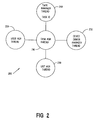
- Figure 2 shows an example of a non-preemptive multi-tasking application program 200.
- the application program 200 includes a task manager 210, a user interface manager thread 220, a list manager thread 230, tape manager thread 240, and device driver manager thread 250. Note that these are only exemplary threads, and other threads can be substituted or added as needed.
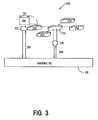
- Figure 3 shows a more detailed view of the non-preemptive multi-tasking application program 200.
- the task manager 210 inside application program 200 takes control.
- the task manager 210 grants permission to the user interface thread 220 to run.
- the user interface thread 220 puts up a dialog box 310.
- the dialog box 310 might request services from another task 230, 240, and 250.
- the user interface thread 220 (via dialog box 310) waits for a response from the other task before removing the dialog box 310.
- the other task never responds because the task manager 210 never gives it permission to run because the task manager 210 is wailing for the user interface thread 220 to give up its timeslice.
- the user interface thread 220 will never give up its timeslice since the dialog box 310 will not be removed until it receives a response to its request. The result is deadlock.
- the user interface thread 210 does voluntarily yield to the windows timeslicing mechanism via link 330 (and associated message loop 350). However, it does not relinquish its timeslice via link 340 (and associated message loop 320), which would allow the task manager 210 to regain control of internal timeslicing scheduling.
- the application since the application is non-preemptive and it has a component that is currently executing, no other components of the application can be started until the applications task manager receives control back from the component that is currently executing. Since that component will not stop executing until it receives input from some other component, the application program 200 is deadlocked.
- a general solution to resource contention is to isolate the demands for resources in a single component. If information from another thread is viewed as a resource, then the dialog box in the user interface thread 310 may require several resources at one time (e.g., the processor and information from another thread).
- the offending component in this case the user interface thread 220, must be placed in a separate executable (i.e., a separate application program), allowing the rest of the system (containing all other threads) to receive control from the Windows operating system 110 when the offending component does not to yield to the internal timeslicing mechanism.
- the application program 200 according to this solution comprises two separate executables which each receive operating system (Windows) timeslices, alleviating the potential for starvation and deadlock within a single application program. According to this solution, however, a method of inter-process communication is required to send information between the two executables.
- dialog box-induced starvation (and the deadlock problem in the Windows operating system) can be avoided by recognizing that dialog boxes yield to the Windows operating system 110 and allow other application programs to run.
- the user interface thread 220 is no longer required to yield to an internal timeslicing mechanism to permit the rest of the system to receive regular external Windows timeslices. Accordingly, background processing can occur even in the presence of a dialog box.
- interprocess (i.e., between application programs) communication is accomplished using Windows Dynamic Data Exchange (DDE) protocol, which is supported by Microsoft' Windows 3.x operating systems.
- DDE Windows Dynamic Data Exchange
- the DDE protocol is used to communicate between the two executables.
- the DDE protocol also enables an application program to place data in a shared memory location, and then signal another application program that data is available.
- Microsoft Windows 3.1 Guide to Programming programmers reference library, Microsoft Press, Chapter 22, 1987-1992.
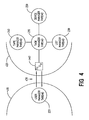
- Figure 4 illustrates the present invention. That is, the user interface thread 220 is placed in its own application program 410. All other threads 220-250 are placed in their own application program 420.
- a DDE link 430 connects the two application programs 410 and 420.
- Application program 420 further includes a user interface stub 440.
- the user interface stub is a piece of software that "looks" like the user interface thread 220 to the application program 420, but is only responsible for receiving and forwarding messages between the user interface thread 220 in the now separate application program 410 and the task manager 210.
- the previous deadlock-inducing scenario now works as follows.
- the user wishes to print the contents of a directory on tape.
- the separate user interface application 410 puts up a dialog box to allow the user to choose what to print, and to control the printing process.
- the dialog box sends a request for each item in the directory to the tape manager thread 240 in the rest of the system's separate application program 420 using the DDE protocol and communication link 430.
- the dialog box 310 yields to the Windows operating system 110, and the rest of the system's application programs get control from the Windows operating system 110.
- the tape manager thread 240 receives the message from the user manager stub 440, and returns the name of a file to be printed.
- the rest of the system's application programs eventually yields to the Windows operating system 110, and the user interface application 410 eventually regains control from the Windows operating system 110.
- the user interface application 410 retrieves the message from the tape manager via the DDE link 430, and sends the name of the file to be printed to the printer (not shown). The cycle repeats until all requested file names have been printed. Deadlock has been avoided.
- the problem with deadlocks is not unique to the Windows environment.
- the present invention should not be limited to window based applications.
- any operating system environment which operates in a non-preemptive multi-tasking manner can benefit from the teachings of present invention.
Landscapes
- Engineering & Computer Science (AREA)
- Software Systems (AREA)
- Theoretical Computer Science (AREA)
- Physics & Mathematics (AREA)
- General Engineering & Computer Science (AREA)
- General Physics & Mathematics (AREA)
- Debugging And Monitoring (AREA)
Applications Claiming Priority (2)
| Application Number | Priority Date | Filing Date | Title |
|---|---|---|---|
| US2500793A | 1993-03-02 | 1993-03-02 | |
| US25007 | 1993-03-02 |
Publications (3)
| Publication Number | Publication Date |
|---|---|
| EP0614140A2 true EP0614140A2 (de) | 1994-09-07 |
| EP0614140A3 EP0614140A3 (de) | 1995-04-26 |
| EP0614140B1 EP0614140B1 (de) | 1999-04-28 |
Family
ID=21823537
Family Applications (1)
| Application Number | Title | Priority Date | Filing Date |
|---|---|---|---|
| EP94301385A Expired - Lifetime EP0614140B1 (de) | 1993-03-02 | 1994-02-28 | System und Verfahren zur Vermeidung von Verklemmung in einem Rechner |
Country Status (4)
| Country | Link |
|---|---|
| US (1) | US6507861B1 (de) |
| EP (1) | EP0614140B1 (de) |
| JP (1) | JP3717951B2 (de) |
| DE (1) | DE69418082T2 (de) |
Families Citing this family (13)
| Publication number | Priority date | Publication date | Assignee | Title |
|---|---|---|---|---|
| US7124302B2 (en) * | 1995-02-13 | 2006-10-17 | Intertrust Technologies Corp. | Systems and methods for secure transaction management and electronic rights protection |
| US8639625B1 (en) | 1995-02-13 | 2014-01-28 | Intertrust Technologies Corporation | Systems and methods for secure transaction management and electronic rights protection |
| US5892900A (en) * | 1996-08-30 | 1999-04-06 | Intertrust Technologies Corp. | Systems and methods for secure transaction management and electronic rights protection |
| US7140015B1 (en) * | 1999-09-29 | 2006-11-21 | Network Appliance, Inc. | Microkernel for real time applications |
| US6961934B2 (en) * | 2000-05-08 | 2005-11-01 | Microtune (San Diego), Inc. | Portable thread environment |
| US6954933B2 (en) * | 2000-10-30 | 2005-10-11 | Microsoft Corporation | Method and apparatus for providing and integrating high-performance message queues in a user interface environment |
| US20030163595A1 (en) * | 2002-02-26 | 2003-08-28 | John Ta | Task manager - method of forwarding messages among task blocks |
| JP2005038076A (ja) * | 2003-07-17 | 2005-02-10 | Fujitsu Ltd | プログラムテスト用会話型スタブ装置およびスタブプログラム記憶媒体 |
| US7278057B2 (en) * | 2003-07-31 | 2007-10-02 | International Business Machines Corporation | Automated hang detection in Java thread dumps |
| US20050289505A1 (en) * | 2004-06-25 | 2005-12-29 | Williams Stanley N | Method and system for improving performance and scalability of applications that utilize a flow-based-programming methodology |
| US9053072B2 (en) * | 2007-01-25 | 2015-06-09 | Hewlett-Packard Development Company, L.P. | End node transactions at threshold-partial fullness of storage space |
| US9123106B2 (en) * | 2012-12-13 | 2015-09-01 | Microsoft Technology Licensing, Llc | Watermarking screen capture content |
| US10147158B2 (en) | 2014-12-13 | 2018-12-04 | Microsoft Technology Licensing, Llc | Frame invalidation control with causality attribution |
Family Cites Families (1)
| Publication number | Priority date | Publication date | Assignee | Title |
|---|---|---|---|---|
| US5301326A (en) * | 1991-09-24 | 1994-04-05 | Microsoft Corporation | Method and system for controlling the execution of an application program |
-
1994
- 1994-02-25 JP JP05288294A patent/JP3717951B2/ja not_active Expired - Fee Related
- 1994-02-28 DE DE69418082T patent/DE69418082T2/de not_active Expired - Fee Related
- 1994-02-28 EP EP94301385A patent/EP0614140B1/de not_active Expired - Lifetime
-
1995
- 1995-02-16 US US08/389,676 patent/US6507861B1/en not_active Expired - Fee Related
Non-Patent Citations (3)
| Title |
|---|
| JOURNAL OF PARALLEL AND DISTRIBUTED COMPUTING., vol.11, no.3, March 1991, DULUTH, MN US pages 188 - 197 Y. WEI ET AL 'The design of a stub generator for heterogeneous RPC systems' * |
| 'Microsoft Windows 3.1 Guide to Programming' 1992 , MICROSOFT PRESS , REDMOND, USA * paragraph 22.2.4 * * page 22.3 * * |
| PC MAGAZINE, 15 May 1990 pages 293 - 299 C. PETZOLD 'Why you need to multitask in the OS/2 presentation manager' * |
Also Published As
| Publication number | Publication date |
|---|---|
| DE69418082T2 (de) | 1999-08-19 |
| US6507861B1 (en) | 2003-01-14 |
| JPH06259266A (ja) | 1994-09-16 |
| EP0614140A3 (de) | 1995-04-26 |
| EP0614140B1 (de) | 1999-04-28 |
| JP3717951B2 (ja) | 2005-11-16 |
| DE69418082D1 (de) | 1999-06-02 |
Similar Documents
| Publication | Publication Date | Title |
|---|---|---|
| US6237024B1 (en) | Method and apparatus for the suspension and continuation of remote processes | |
| US7130905B2 (en) | System and method for coordinating access to data for a distributed application | |
| EP0783152B1 (de) | Verfahren und Gerät zur automatischen Verwaltung von gleichzeitigem Zugriff auf gemeinsame Betriebsmittel in einer Multifaden-Programmierbetriebsumgebung | |
| US6035321A (en) | Method for enforcing a hierarchical invocation structure in real time asynchronous software applications | |
| EP0321723B1 (de) | Vorrichtung für ein Datenverarbeitungssystem mit gleichmengiger Beziehung zwischen einer Vielzahl von zentralen Datenverarbeitungseinheiten | |
| EP0614140B1 (de) | System und Verfahren zur Vermeidung von Verklemmung in einem Rechner | |
| US7281050B2 (en) | Distributed token manager with transactional properties | |
| US8572626B2 (en) | Symmetric multi-processor system | |
| EP1031925B1 (de) | Kooperative Verarbeitung von Aufgaben in einem Multithread-Rechnersystem | |
| GB2237130A (en) | Failure notification in a computer network | |
| US7103631B1 (en) | Symmetric multi-processor system | |
| EP1057108A1 (de) | Verfahren und gerät zur aufhebung und fortsetzung von entfernten verfahren | |
| US8528006B1 (en) | Method and apparatus for performing real-time commands in a non real-time operating system environment | |
| US6148325A (en) | Method and system for protecting shared code and data in a multitasking operating system | |
| AU603876B2 (en) | Multiple i/o bus virtual broadcast of programmed i/o instructions | |
| EP0955584A2 (de) | Schnelle Synchronisierung für in der Programmiersprache Java geschriebene Programme | |
| Pöhnl et al. | A middleware journey from microcontrollers to microprocessors | |
| JPH0468461A (ja) | 資源管理方式 | |
| EP2256627B1 (de) | Warteschlangen für Locks auf Daten | |
| Feiler | Real-time application development with OSEK: A review of the OSEK standards | |
| Mejia-Alvarez et al. | Interrupt handling in classic operating systems | |
| JP3422504B2 (ja) | タスク間排他制御方法 | |
| JPH09330241A (ja) | デッドロック防止排他制御方式 | |
| Gupta et al. | Operating system | |
| Nakajima et al. | Real-Time Synchronization in Real-Time Mach |
Legal Events
| Date | Code | Title | Description |
|---|---|---|---|
| PUAI | Public reference made under article 153(3) epc to a published international application that has entered the european phase |
Free format text: ORIGINAL CODE: 0009012 |
|
| AK | Designated contracting states |
Kind code of ref document: A2 Designated state(s): DE FR GB |
|
| PUAL | Search report despatched |
Free format text: ORIGINAL CODE: 0009013 |
|
| AK | Designated contracting states |
Kind code of ref document: A3 Designated state(s): DE FR GB |
|
| 17P | Request for examination filed |
Effective date: 19950502 |
|
| 17Q | First examination report despatched |
Effective date: 19970523 |
|
| GRAG | Despatch of communication of intention to grant |
Free format text: ORIGINAL CODE: EPIDOS AGRA |
|
| GRAG | Despatch of communication of intention to grant |
Free format text: ORIGINAL CODE: EPIDOS AGRA |
|
| GRAH | Despatch of communication of intention to grant a patent |
Free format text: ORIGINAL CODE: EPIDOS IGRA |
|
| GRAH | Despatch of communication of intention to grant a patent |
Free format text: ORIGINAL CODE: EPIDOS IGRA |
|
| GRAA | (expected) grant |
Free format text: ORIGINAL CODE: 0009210 |
|
| AK | Designated contracting states |
Kind code of ref document: B1 Designated state(s): DE FR GB |
|
| REF | Corresponds to: |
Ref document number: 69418082 Country of ref document: DE Date of ref document: 19990602 |
|
| ET | Fr: translation filed | ||
| PLBE | No opposition filed within time limit |
Free format text: ORIGINAL CODE: 0009261 |
|
| STAA | Information on the status of an ep patent application or granted ep patent |
Free format text: STATUS: NO OPPOSITION FILED WITHIN TIME LIMIT |
|
| 26N | No opposition filed | ||
| REG | Reference to a national code |
Ref country code: GB Ref legal event code: 732E |
|
| REG | Reference to a national code |
Ref country code: FR Ref legal event code: TP |
|
| REG | Reference to a national code |
Ref country code: GB Ref legal event code: IF02 |
|
| PGFP | Annual fee paid to national office [announced via postgrant information from national office to epo] |
Ref country code: GB Payment date: 20090227 Year of fee payment: 16 |
|
| PGFP | Annual fee paid to national office [announced via postgrant information from national office to epo] |
Ref country code: DE Payment date: 20090331 Year of fee payment: 16 |
|
| PGFP | Annual fee paid to national office [announced via postgrant information from national office to epo] |
Ref country code: FR Payment date: 20090217 Year of fee payment: 16 |
|
| GBPC | Gb: european patent ceased through non-payment of renewal fee |
Effective date: 20100228 |
|
| REG | Reference to a national code |
Ref country code: FR Ref legal event code: ST Effective date: 20101029 |
|
| PG25 | Lapsed in a contracting state [announced via postgrant information from national office to epo] |
Ref country code: FR Free format text: LAPSE BECAUSE OF NON-PAYMENT OF DUE FEES Effective date: 20100301 |
|
| PG25 | Lapsed in a contracting state [announced via postgrant information from national office to epo] |
Ref country code: DE Free format text: LAPSE BECAUSE OF NON-PAYMENT OF DUE FEES Effective date: 20100901 |
|
| PG25 | Lapsed in a contracting state [announced via postgrant information from national office to epo] |
Ref country code: GB Free format text: LAPSE BECAUSE OF NON-PAYMENT OF DUE FEES Effective date: 20100228 |