EP0621508B1 - Composition à base de résine, sensible aux radiations - Google Patents
Composition à base de résine, sensible aux radiations Download PDFInfo
- Publication number
- EP0621508B1 EP0621508B1 EP94302640A EP94302640A EP0621508B1 EP 0621508 B1 EP0621508 B1 EP 0621508B1 EP 94302640 A EP94302640 A EP 94302640A EP 94302640 A EP94302640 A EP 94302640A EP 0621508 B1 EP0621508 B1 EP 0621508B1
- Authority
- EP
- European Patent Office
- Prior art keywords
- triazine
- bis
- trichloromethyl
- radiation sensitive
- tribromomethyl
- Prior art date
- Legal status (The legal status is an assumption and is not a legal conclusion. Google has not performed a legal analysis and makes no representation as to the accuracy of the status listed.)
- Expired - Lifetime
Links
- 230000005855 radiation Effects 0.000 title claims description 45
- 239000011342 resin composition Substances 0.000 title claims description 21
- 229920005989 resin Polymers 0.000 claims description 31
- 239000011347 resin Substances 0.000 claims description 31
- 229920003986 novolac Polymers 0.000 claims description 28
- 150000001875 compounds Chemical class 0.000 claims description 24
- 150000002989 phenols Chemical class 0.000 claims description 24
- 239000002253 acid Substances 0.000 claims description 20
- 125000000219 ethylidene group Chemical group [H]C(=[*])C([H])([H])[H] 0.000 claims description 20
- 229920001665 Poly-4-vinylphenol Polymers 0.000 claims description 19
- 125000005843 halogen group Chemical group 0.000 claims description 9
- 125000004435 hydrogen atom Chemical group [H]* 0.000 claims description 8
- JYEUMXHLPRZUAT-UHFFFAOYSA-N 1,2,3-triazine Chemical compound C1=CN=NN=C1 JYEUMXHLPRZUAT-UHFFFAOYSA-N 0.000 claims description 7
- 125000000217 alkyl group Chemical group 0.000 claims description 7
- 239000004793 Polystyrene Substances 0.000 claims description 6
- 125000003545 alkoxy group Chemical group 0.000 claims description 6
- 238000005227 gel permeation chromatography Methods 0.000 claims description 6
- 125000002887 hydroxy group Chemical group [H]O* 0.000 claims description 6
- 229920002223 polystyrene Polymers 0.000 claims description 6
- QNOLNVUUEJLNON-UHFFFAOYSA-N 2-(3-chlorophenyl)-4,6-bis(trichloromethyl)-1,3,5-triazine Chemical compound ClC1=CC=CC(C=2N=C(N=C(N=2)C(Cl)(Cl)Cl)C(Cl)(Cl)Cl)=C1 QNOLNVUUEJLNON-UHFFFAOYSA-N 0.000 claims description 5
- MCNPOZMLKGDJGP-QPJJXVBHSA-N 2-[(e)-2-(4-methoxyphenyl)ethenyl]-4,6-bis(trichloromethyl)-1,3,5-triazine Chemical compound C1=CC(OC)=CC=C1\C=C\C1=NC(C(Cl)(Cl)Cl)=NC(C(Cl)(Cl)Cl)=N1 MCNPOZMLKGDJGP-QPJJXVBHSA-N 0.000 claims description 5
- FVNIIPIYHHEXQA-UHFFFAOYSA-N 2-(4-methoxynaphthalen-1-yl)-4,6-bis(trichloromethyl)-1,3,5-triazine Chemical compound C12=CC=CC=C2C(OC)=CC=C1C1=NC(C(Cl)(Cl)Cl)=NC(C(Cl)(Cl)Cl)=N1 FVNIIPIYHHEXQA-UHFFFAOYSA-N 0.000 claims description 4
- 125000001624 naphthyl group Chemical group 0.000 claims description 4
- 125000001997 phenyl group Chemical group [H]C1=C([H])C([H])=C(*)C([H])=C1[H] 0.000 claims description 4
- 125000004953 trihalomethyl group Chemical group 0.000 claims description 4
- JIHQDMXYYFUGFV-UHFFFAOYSA-N 1,3,5-triazine Chemical compound C1=NC=NC=N1 JIHQDMXYYFUGFV-UHFFFAOYSA-N 0.000 claims description 3
- 238000004132 cross linking Methods 0.000 claims description 3
- URJAUSYMVIZTHC-UHFFFAOYSA-N 2,4,6-tris(tribromomethyl)-1,3,5-triazine Chemical compound BrC(Br)(Br)C1=NC(C(Br)(Br)Br)=NC(C(Br)(Br)Br)=N1 URJAUSYMVIZTHC-UHFFFAOYSA-N 0.000 claims description 2
- DXUMYHZTYVPBEZ-UHFFFAOYSA-N 2,4,6-tris(trichloromethyl)-1,3,5-triazine Chemical group ClC(Cl)(Cl)C1=NC(C(Cl)(Cl)Cl)=NC(C(Cl)(Cl)Cl)=N1 DXUMYHZTYVPBEZ-UHFFFAOYSA-N 0.000 claims description 2
- XLBRKTCROWUVDK-UHFFFAOYSA-N 2-(3-chlorophenyl)-4,6-bis(tribromomethyl)-1,3,5-triazine Chemical compound ClC1=CC=CC(C=2N=C(N=C(N=2)C(Br)(Br)Br)C(Br)(Br)Br)=C1 XLBRKTCROWUVDK-UHFFFAOYSA-N 0.000 claims description 2
- HLHJJODNHGNWCY-UHFFFAOYSA-N 2-(4-chlorophenyl)-4,6-bis(tribromomethyl)-1,3,5-triazine Chemical compound C1=CC(Cl)=CC=C1C1=NC(C(Br)(Br)Br)=NC(C(Br)(Br)Br)=N1 HLHJJODNHGNWCY-UHFFFAOYSA-N 0.000 claims description 2
- WJKHYAJKIXYSHS-UHFFFAOYSA-N 2-(4-chlorophenyl)-4,6-bis(trichloromethyl)-1,3,5-triazine Chemical compound C1=CC(Cl)=CC=C1C1=NC(C(Cl)(Cl)Cl)=NC(C(Cl)(Cl)Cl)=N1 WJKHYAJKIXYSHS-UHFFFAOYSA-N 0.000 claims description 2
- NOJWDUHYIQFUIL-UHFFFAOYSA-N 2-(4-methoxynaphthalen-1-yl)-4,6-bis(tribromomethyl)-1,3,5-triazine Chemical compound C12=CC=CC=C2C(OC)=CC=C1C1=NC(C(Br)(Br)Br)=NC(C(Br)(Br)Br)=N1 NOJWDUHYIQFUIL-UHFFFAOYSA-N 0.000 claims description 2
- QRHHZFRCJDAUNA-UHFFFAOYSA-N 2-(4-methoxyphenyl)-4,6-bis(trichloromethyl)-1,3,5-triazine Chemical compound C1=CC(OC)=CC=C1C1=NC(C(Cl)(Cl)Cl)=NC(C(Cl)(Cl)Cl)=N1 QRHHZFRCJDAUNA-UHFFFAOYSA-N 0.000 claims description 2
- SIPXOOBIVVNYPK-UHFFFAOYSA-N 2-naphthalen-1-yl-4,6-bis(tribromomethyl)-1,3,5-triazine Chemical compound BrC(Br)(Br)C1=NC(C(Br)(Br)Br)=NC(C=2C3=CC=CC=C3C=CC=2)=N1 SIPXOOBIVVNYPK-UHFFFAOYSA-N 0.000 claims description 2
- LCMFKNJVGBDDNM-UHFFFAOYSA-N 2-phenyl-4,6-bis(tribromomethyl)-1,3,5-triazine Chemical compound BrC(Br)(Br)C1=NC(C(Br)(Br)Br)=NC(C=2C=CC=CC=2)=N1 LCMFKNJVGBDDNM-UHFFFAOYSA-N 0.000 claims description 2
- 239000007983 Tris buffer Substances 0.000 claims 2
- IXJJELULBDAIMY-UHFFFAOYSA-N 1,2,5,6-tetrahydrotriazine Chemical compound C1CC=NNN1 IXJJELULBDAIMY-UHFFFAOYSA-N 0.000 claims 1
- JJPKWNXRUDKBQT-UHFFFAOYSA-N 2,4-bis(trichloromethyl)-6-[2-(3,4,5-trimethoxyphenyl)ethenyl]-1,3,5-triazine Chemical compound COC1=C(OC)C(OC)=CC(C=CC=2N=C(N=C(N=2)C(Cl)(Cl)Cl)C(Cl)(Cl)Cl)=C1 JJPKWNXRUDKBQT-UHFFFAOYSA-N 0.000 claims 1
- DQMOHZLFVGYNAN-UHFFFAOYSA-N 2-(2-phenylethenyl)-4,6-bis(trichloromethyl)-1,3,5-triazine Chemical compound ClC(Cl)(Cl)C1=NC(C(Cl)(Cl)Cl)=NC(C=CC=2C=CC=CC=2)=N1 DQMOHZLFVGYNAN-UHFFFAOYSA-N 0.000 claims 1
- FSARVVADCCRCGJ-UHFFFAOYSA-N 2-[2-(4-methoxyphenyl)ethenyl]-4,6-bis(tribromomethyl)-1,3,5-triazine Chemical compound C1=CC(OC)=CC=C1C=CC1=NC(C(Br)(Br)Br)=NC(C(Br)(Br)Br)=N1 FSARVVADCCRCGJ-UHFFFAOYSA-N 0.000 claims 1
- DQGAYRDIWBGSNU-UHFFFAOYSA-N 4-[2-(3-methylfuran-2-yl)ethylidene]-2,6-bis(tribromomethyl)-1h-1,3,5-triazine Chemical compound C1=COC(CC=C2N=C(N=C(N2)C(Br)(Br)Br)C(Br)(Br)Br)=C1C DQGAYRDIWBGSNU-UHFFFAOYSA-N 0.000 claims 1
- FEUWRAHOWZMUKO-UHFFFAOYSA-N 4-[2-(4,5-dimethylfuran-2-yl)ethylidene]-2,6-bis(tribromomethyl)-1h-1,3,5-triazine Chemical compound O1C(C)=C(C)C=C1CC=C1N=C(C(Br)(Br)Br)NC(C(Br)(Br)Br)=N1 FEUWRAHOWZMUKO-UHFFFAOYSA-N 0.000 claims 1
- LWOSKNALBLCQEI-UHFFFAOYSA-N 4-[2-(4-methoxyfuran-2-yl)ethylidene]-2,6-bis(tribromomethyl)-1h-1,3,5-triazine Chemical compound COC1=COC(CC=C2N=C(N=C(N2)C(Br)(Br)Br)C(Br)(Br)Br)=C1 LWOSKNALBLCQEI-UHFFFAOYSA-N 0.000 claims 1
- 239000000203 mixture Substances 0.000 description 33
- 239000000243 solution Substances 0.000 description 26
- RLSSMJSEOOYNOY-UHFFFAOYSA-N m-cresol Chemical compound CC1=CC=CC(O)=C1 RLSSMJSEOOYNOY-UHFFFAOYSA-N 0.000 description 18
- -1 quinonediazide compound Chemical class 0.000 description 15
- WGTYBPLFGIVFAS-UHFFFAOYSA-M tetramethylammonium hydroxide Chemical compound [OH-].C[N+](C)(C)C WGTYBPLFGIVFAS-UHFFFAOYSA-M 0.000 description 12
- 238000011161 development Methods 0.000 description 11
- 230000018109 developmental process Effects 0.000 description 11
- ISWSIDIOOBJBQZ-UHFFFAOYSA-N Phenol Chemical compound OC1=CC=CC=C1 ISWSIDIOOBJBQZ-UHFFFAOYSA-N 0.000 description 10
- WSFSSNUMVMOOMR-UHFFFAOYSA-N formaldehyde Substances O=C WSFSSNUMVMOOMR-UHFFFAOYSA-N 0.000 description 9
- 239000004971 Cross linker Substances 0.000 description 8
- OKKJLVBELUTLKV-UHFFFAOYSA-N Methanol Chemical group OC OKKJLVBELUTLKV-UHFFFAOYSA-N 0.000 description 8
- 238000000034 method Methods 0.000 description 8
- 239000000178 monomer Substances 0.000 description 8
- XUIMIQQOPSSXEZ-UHFFFAOYSA-N Silicon Chemical compound [Si] XUIMIQQOPSSXEZ-UHFFFAOYSA-N 0.000 description 7
- 239000000654 additive Substances 0.000 description 7
- 238000012545 processing Methods 0.000 description 7
- 229910052710 silicon Inorganic materials 0.000 description 7
- 239000010703 silicon Substances 0.000 description 7
- 239000002904 solvent Substances 0.000 description 7
- ZWEHNKRNPOVVGH-UHFFFAOYSA-N 2-Butanone Chemical compound CCC(C)=O ZWEHNKRNPOVVGH-UHFFFAOYSA-N 0.000 description 6
- LFQSCWFLJHTTHZ-UHFFFAOYSA-N Ethanol Chemical compound CCO LFQSCWFLJHTTHZ-UHFFFAOYSA-N 0.000 description 6
- IWDCLRJOBJJRNH-UHFFFAOYSA-N p-cresol Chemical compound CC1=CC=C(O)C=C1 IWDCLRJOBJJRNH-UHFFFAOYSA-N 0.000 description 6
- 230000035945 sensitivity Effects 0.000 description 6
- 230000000052 comparative effect Effects 0.000 description 5
- 238000005259 measurement Methods 0.000 description 5
- BDJSOPWXYLFTNW-UHFFFAOYSA-N methyl 3-methoxypropanoate Chemical compound COCCC(=O)OC BDJSOPWXYLFTNW-UHFFFAOYSA-N 0.000 description 5
- 239000011148 porous material Substances 0.000 description 5
- 239000004094 surface-active agent Substances 0.000 description 5
- 238000012360 testing method Methods 0.000 description 5
- TUAMRELNJMMDMT-UHFFFAOYSA-N 3,5-xylenol Chemical compound CC1=CC(C)=CC(O)=C1 TUAMRELNJMMDMT-UHFFFAOYSA-N 0.000 description 4
- 239000012528 membrane Substances 0.000 description 4
- BNCADMBVWNPPIZ-UHFFFAOYSA-N 2-n,2-n,4-n,4-n,6-n,6-n-hexakis(methoxymethyl)-1,3,5-triazine-2,4,6-triamine Chemical compound COCN(COC)C1=NC(N(COC)COC)=NC(N(COC)COC)=N1 BNCADMBVWNPPIZ-UHFFFAOYSA-N 0.000 description 3
- CSCPPACGZOOCGX-UHFFFAOYSA-N Acetone Chemical compound CC(C)=O CSCPPACGZOOCGX-UHFFFAOYSA-N 0.000 description 3
- XEKOWRVHYACXOJ-UHFFFAOYSA-N Ethyl acetate Chemical compound CCOC(C)=O XEKOWRVHYACXOJ-UHFFFAOYSA-N 0.000 description 3
- ZMXDDKWLCZADIW-UHFFFAOYSA-N N,N-Dimethylformamide Chemical compound CN(C)C=O ZMXDDKWLCZADIW-UHFFFAOYSA-N 0.000 description 3
- MUBZPKHOEPUJKR-UHFFFAOYSA-N Oxalic acid Chemical compound OC(=O)C(O)=O MUBZPKHOEPUJKR-UHFFFAOYSA-N 0.000 description 3
- KWYUFKZDYYNOTN-UHFFFAOYSA-M Potassium hydroxide Chemical compound [OH-].[K+] KWYUFKZDYYNOTN-UHFFFAOYSA-M 0.000 description 3
- YXFVVABEGXRONW-UHFFFAOYSA-N Toluene Chemical compound CC1=CC=CC=C1 YXFVVABEGXRONW-UHFFFAOYSA-N 0.000 description 3
- ZMANZCXQSJIPKH-UHFFFAOYSA-N Triethylamine Chemical compound CCN(CC)CC ZMANZCXQSJIPKH-UHFFFAOYSA-N 0.000 description 3
- 239000011248 coating agent Substances 0.000 description 3
- 238000000576 coating method Methods 0.000 description 3
- 238000010894 electron beam technology Methods 0.000 description 3
- FUZZWVXGSFPDMH-UHFFFAOYSA-N hexanoic acid Chemical compound CCCCCC(O)=O FUZZWVXGSFPDMH-UHFFFAOYSA-N 0.000 description 3
- 238000005468 ion implantation Methods 0.000 description 3
- 239000000758 substrate Substances 0.000 description 3
- XLYOFNOQVPJJNP-UHFFFAOYSA-N water Substances O XLYOFNOQVPJJNP-UHFFFAOYSA-N 0.000 description 3
- KBPLFHHGFOOTCA-UHFFFAOYSA-N 1-Octanol Chemical compound CCCCCCCCO KBPLFHHGFOOTCA-UHFFFAOYSA-N 0.000 description 2
- OGRAOKJKVGDSFR-UHFFFAOYSA-N 2,3,5-trimethylphenol Chemical compound CC1=CC(C)=C(C)C(O)=C1 OGRAOKJKVGDSFR-UHFFFAOYSA-N 0.000 description 2
- QWBBPBRQALCEIZ-UHFFFAOYSA-N 2,3-dimethylphenol Chemical compound CC1=CC=CC(O)=C1C QWBBPBRQALCEIZ-UHFFFAOYSA-N 0.000 description 2
- OJVAMHKKJGICOG-UHFFFAOYSA-N 2,5-hexanedione Chemical compound CC(=O)CCC(C)=O OJVAMHKKJGICOG-UHFFFAOYSA-N 0.000 description 2
- NKTOLZVEWDHZMU-UHFFFAOYSA-N 2,5-xylenol Chemical compound CC1=CC=C(C)C(O)=C1 NKTOLZVEWDHZMU-UHFFFAOYSA-N 0.000 description 2
- OZAIFHULBGXAKX-UHFFFAOYSA-N 2-(2-cyanopropan-2-yldiazenyl)-2-methylpropanenitrile Chemical compound N#CC(C)(C)N=NC(C)(C)C#N OZAIFHULBGXAKX-UHFFFAOYSA-N 0.000 description 2
- YEJRWHAVMIAJKC-UHFFFAOYSA-N 4-Butyrolactone Chemical compound O=C1CCCO1 YEJRWHAVMIAJKC-UHFFFAOYSA-N 0.000 description 2
- HCFAJYNVAYBARA-UHFFFAOYSA-N 4-heptanone Chemical compound CCCC(=O)CCC HCFAJYNVAYBARA-UHFFFAOYSA-N 0.000 description 2
- IKHGUXGNUITLKF-UHFFFAOYSA-N Acetaldehyde Chemical compound CC=O IKHGUXGNUITLKF-UHFFFAOYSA-N 0.000 description 2
- QGZKDVFQNNGYKY-UHFFFAOYSA-N Ammonia Chemical compound N QGZKDVFQNNGYKY-UHFFFAOYSA-N 0.000 description 2
- RTZKZFJDLAIYFH-UHFFFAOYSA-N Diethyl ether Chemical compound CCOCC RTZKZFJDLAIYFH-UHFFFAOYSA-N 0.000 description 2
- QUSNBJAOOMFDIB-UHFFFAOYSA-N Ethylamine Chemical compound CCN QUSNBJAOOMFDIB-UHFFFAOYSA-N 0.000 description 2
- QIGBRXMKCJKVMJ-UHFFFAOYSA-N Hydroquinone Chemical compound OC1=CC=C(O)C=C1 QIGBRXMKCJKVMJ-UHFFFAOYSA-N 0.000 description 2
- KFZMGEQAYNKOFK-UHFFFAOYSA-N Isopropanol Chemical compound CC(C)O KFZMGEQAYNKOFK-UHFFFAOYSA-N 0.000 description 2
- NQRYJNQNLNOLGT-UHFFFAOYSA-N Piperidine Chemical compound C1CCNCC1 NQRYJNQNLNOLGT-UHFFFAOYSA-N 0.000 description 2
- 239000002202 Polyethylene glycol Substances 0.000 description 2
- KAESVJOAVNADME-UHFFFAOYSA-N Pyrrole Chemical compound C=1C=CNC=1 KAESVJOAVNADME-UHFFFAOYSA-N 0.000 description 2
- CDBYLPFSWZWCQE-UHFFFAOYSA-L Sodium Carbonate Chemical compound [Na+].[Na+].[O-]C([O-])=O CDBYLPFSWZWCQE-UHFFFAOYSA-L 0.000 description 2
- 239000004115 Sodium Silicate Substances 0.000 description 2
- WYURNTSHIVDZCO-UHFFFAOYSA-N Tetrahydrofuran Chemical compound C1CCOC1 WYURNTSHIVDZCO-UHFFFAOYSA-N 0.000 description 2
- 150000001299 aldehydes Chemical class 0.000 description 2
- 239000012670 alkaline solution Substances 0.000 description 2
- 125000004849 alkoxymethyl group Chemical group 0.000 description 2
- QUKGYYKBILRGFE-UHFFFAOYSA-N benzyl acetate Chemical compound CC(=O)OCC1=CC=CC=C1 QUKGYYKBILRGFE-UHFFFAOYSA-N 0.000 description 2
- IISBACLAFKSPIT-UHFFFAOYSA-N bisphenol A Chemical compound C=1C=C(O)C=CC=1C(C)(C)C1=CC=C(O)C=C1 IISBACLAFKSPIT-UHFFFAOYSA-N 0.000 description 2
- WTEOIRVLGSZEPR-UHFFFAOYSA-N boron trifluoride Chemical compound FB(F)F WTEOIRVLGSZEPR-UHFFFAOYSA-N 0.000 description 2
- YCIMNLLNPGFGHC-UHFFFAOYSA-N catechol Chemical compound OC1=CC=CC=C1O YCIMNLLNPGFGHC-UHFFFAOYSA-N 0.000 description 2
- 239000003795 chemical substances by application Substances 0.000 description 2
- JHIVVAPYMSGYDF-UHFFFAOYSA-N cyclohexanone Chemical compound O=C1CCCCC1 JHIVVAPYMSGYDF-UHFFFAOYSA-N 0.000 description 2
- LZCLXQDLBQLTDK-UHFFFAOYSA-N ethyl 2-hydroxypropanoate Chemical compound CCOC(=O)C(C)O LZCLXQDLBQLTDK-UHFFFAOYSA-N 0.000 description 2
- MTZQAGJQAFMTAQ-UHFFFAOYSA-N ethyl benzoate Chemical compound CCOC(=O)C1=CC=CC=C1 MTZQAGJQAFMTAQ-UHFFFAOYSA-N 0.000 description 2
- XLLIQLLCWZCATF-UHFFFAOYSA-N ethylene glycol monomethyl ether acetate Natural products COCCOC(C)=O XLLIQLLCWZCATF-UHFFFAOYSA-N 0.000 description 2
- 238000010438 heat treatment Methods 0.000 description 2
- CATSNJVOTSVZJV-UHFFFAOYSA-N heptan-2-one Chemical compound CCCCCC(C)=O CATSNJVOTSVZJV-UHFFFAOYSA-N 0.000 description 2
- NGAZZOYFWWSOGK-UHFFFAOYSA-N heptan-3-one Chemical compound CCCCC(=O)CC NGAZZOYFWWSOGK-UHFFFAOYSA-N 0.000 description 2
- HJOVHMDZYOCNQW-UHFFFAOYSA-N isophorone Chemical compound CC1=CC(=O)CC(C)(C)C1 HJOVHMDZYOCNQW-UHFFFAOYSA-N 0.000 description 2
- 238000004519 manufacturing process Methods 0.000 description 2
- QSHDDOUJBYECFT-UHFFFAOYSA-N mercury Chemical compound [Hg] QSHDDOUJBYECFT-UHFFFAOYSA-N 0.000 description 2
- 229910052753 mercury Inorganic materials 0.000 description 2
- LPEKGGXMPWTOCB-UHFFFAOYSA-N methyl 2-hydroxypropionate Chemical compound COC(=O)C(C)O LPEKGGXMPWTOCB-UHFFFAOYSA-N 0.000 description 2
- ZWRUINPWMLAQRD-UHFFFAOYSA-N nonan-1-ol Chemical compound CCCCCCCCCO ZWRUINPWMLAQRD-UHFFFAOYSA-N 0.000 description 2
- QWVGKYWNOKOFNN-UHFFFAOYSA-N o-cresol Chemical compound CC1=CC=CC=C1O QWVGKYWNOKOFNN-UHFFFAOYSA-N 0.000 description 2
- WWZKQHOCKIZLMA-UHFFFAOYSA-N octanoic acid Chemical compound CCCCCCCC(O)=O WWZKQHOCKIZLMA-UHFFFAOYSA-N 0.000 description 2
- 229920001223 polyethylene glycol Polymers 0.000 description 2
- 229920000642 polymer Polymers 0.000 description 2
- 239000003505 polymerization initiator Substances 0.000 description 2
- WGYKZJWCGVVSQN-UHFFFAOYSA-N propylamine Chemical compound CCCN WGYKZJWCGVVSQN-UHFFFAOYSA-N 0.000 description 2
- WQGWDDDVZFFDIG-UHFFFAOYSA-N pyrogallol Chemical compound OC1=CC=CC(O)=C1O WQGWDDDVZFFDIG-UHFFFAOYSA-N 0.000 description 2
- GHMLBKRAJCXXBS-UHFFFAOYSA-N resorcinol Chemical compound OC1=CC=CC(O)=C1 GHMLBKRAJCXXBS-UHFFFAOYSA-N 0.000 description 2
- NTHWMYGWWRZVTN-UHFFFAOYSA-N sodium silicate Chemical compound [Na+].[Na+].[O-][Si]([O-])=O NTHWMYGWWRZVTN-UHFFFAOYSA-N 0.000 description 2
- 229910052911 sodium silicate Inorganic materials 0.000 description 2
- 238000001228 spectrum Methods 0.000 description 2
- 230000005469 synchrotron radiation Effects 0.000 description 2
- CNHDIAIOKMXOLK-UHFFFAOYSA-N toluquinol Chemical compound CC1=CC(O)=CC=C1O CNHDIAIOKMXOLK-UHFFFAOYSA-N 0.000 description 2
- NTRTZCSPPXVNJO-UHFFFAOYSA-N (2-hydroxy-3-methoxybutyl) acetate Chemical compound COC(C)C(O)COC(C)=O NTRTZCSPPXVNJO-UHFFFAOYSA-N 0.000 description 1
- VKOQDQSVHAOFJL-UHFFFAOYSA-N (3-methoxy-3-methylbutyl) butanoate Chemical compound CCCC(=O)OCCC(C)(C)OC VKOQDQSVHAOFJL-UHFFFAOYSA-N 0.000 description 1
- OWSKJORLRSWYGK-UHFFFAOYSA-N (3-methoxy-3-methylbutyl) propanoate Chemical compound CCC(=O)OCCC(C)(C)OC OWSKJORLRSWYGK-UHFFFAOYSA-N 0.000 description 1
- FFJCNSLCJOQHKM-CLFAGFIQSA-N (z)-1-[(z)-octadec-9-enoxy]octadec-9-ene Chemical compound CCCCCCCC\C=C/CCCCCCCCOCCCCCCCC\C=C/CCCCCCCC FFJCNSLCJOQHKM-CLFAGFIQSA-N 0.000 description 1
- FIDRAVVQGKNYQK-UHFFFAOYSA-N 1,2,3,4-tetrahydrotriazine Chemical compound C1NNNC=C1 FIDRAVVQGKNYQK-UHFFFAOYSA-N 0.000 description 1
- NGFUWANGZFFYHK-UHFFFAOYSA-N 1,3,3a,4,6,6a-hexahydroimidazo[4,5-d]imidazole-2,5-dione;formaldehyde Chemical compound O=C.N1C(=O)NC2NC(=O)NC21 NGFUWANGZFFYHK-UHFFFAOYSA-N 0.000 description 1
- SGUVLZREKBPKCE-UHFFFAOYSA-N 1,5-diazabicyclo[4.3.0]-non-5-ene Chemical compound C1CCN=C2CCCN21 SGUVLZREKBPKCE-UHFFFAOYSA-N 0.000 description 1
- BOGFHOWTVGAYFK-UHFFFAOYSA-N 1-[2-(2-propoxyethoxy)ethoxy]propane Chemical compound CCCOCCOCCOCCC BOGFHOWTVGAYFK-UHFFFAOYSA-N 0.000 description 1
- RRQYJINTUHWNHW-UHFFFAOYSA-N 1-ethoxy-2-(2-ethoxyethoxy)ethane Chemical compound CCOCCOCCOCC RRQYJINTUHWNHW-UHFFFAOYSA-N 0.000 description 1
- LIPRQQHINVWJCH-UHFFFAOYSA-N 1-ethoxypropan-2-yl acetate Chemical compound CCOCC(C)OC(C)=O LIPRQQHINVWJCH-UHFFFAOYSA-N 0.000 description 1
- BPIUIOXAFBGMNB-UHFFFAOYSA-N 1-hexoxyhexane Chemical compound CCCCCCOCCCCCC BPIUIOXAFBGMNB-UHFFFAOYSA-N 0.000 description 1
- DMFAHCVITRDZQB-UHFFFAOYSA-N 1-propoxypropan-2-yl acetate Chemical compound CCCOCC(C)OC(C)=O DMFAHCVITRDZQB-UHFFFAOYSA-N 0.000 description 1
- GQHTUMJGOHRCHB-UHFFFAOYSA-N 2,3,4,6,7,8,9,10-octahydropyrimido[1,2-a]azepine Chemical compound C1CCCCN2CCCN=C21 GQHTUMJGOHRCHB-UHFFFAOYSA-N 0.000 description 1
- HTQNYBBTZSBWKL-UHFFFAOYSA-N 2,3,4-trihydroxbenzophenone Chemical compound OC1=C(O)C(O)=CC=C1C(=O)C1=CC=CC=C1 HTQNYBBTZSBWKL-UHFFFAOYSA-N 0.000 description 1
- SMZOUWXMTYCWNB-UHFFFAOYSA-N 2-(2-methoxy-5-methylphenyl)ethanamine Chemical compound COC1=CC=C(C)C=C1CCN SMZOUWXMTYCWNB-UHFFFAOYSA-N 0.000 description 1
- SBASXUCJHJRPEV-UHFFFAOYSA-N 2-(2-methoxyethoxy)ethanol Chemical compound COCCOCCO SBASXUCJHJRPEV-UHFFFAOYSA-N 0.000 description 1
- ZBVFUHJJOMZVPJ-UHFFFAOYSA-N 2-(4-methoxyphenyl)-4,6-bis(tribromomethyl)-1,3,5-triazine Chemical compound C1=CC(OC)=CC=C1C1=NC(C(Br)(Br)Br)=NC(C(Br)(Br)Br)=N1 ZBVFUHJJOMZVPJ-UHFFFAOYSA-N 0.000 description 1
- XNWFRZJHXBZDAG-UHFFFAOYSA-N 2-METHOXYETHANOL Chemical compound COCCO XNWFRZJHXBZDAG-UHFFFAOYSA-N 0.000 description 1
- POAOYUHQDCAZBD-UHFFFAOYSA-N 2-butoxyethanol Chemical compound CCCCOCCO POAOYUHQDCAZBD-UHFFFAOYSA-N 0.000 description 1
- ZVUNTIMPQCQCAQ-UHFFFAOYSA-N 2-dodecanoyloxyethyl dodecanoate Chemical compound CCCCCCCCCCCC(=O)OCCOC(=O)CCCCCCCCCCC ZVUNTIMPQCQCAQ-UHFFFAOYSA-N 0.000 description 1
- ZNQVEEAIQZEUHB-UHFFFAOYSA-N 2-ethoxyethanol Chemical compound CCOCCO ZNQVEEAIQZEUHB-UHFFFAOYSA-N 0.000 description 1
- SVONRAPFKPVNKG-UHFFFAOYSA-N 2-ethoxyethyl acetate Chemical compound CCOCCOC(C)=O SVONRAPFKPVNKG-UHFFFAOYSA-N 0.000 description 1
- CRWNQZTZTZWPOF-UHFFFAOYSA-N 2-methyl-4-phenylpyridine Chemical compound C1=NC(C)=CC(C=2C=CC=CC=2)=C1 CRWNQZTZTZWPOF-UHFFFAOYSA-N 0.000 description 1
- ZTEVZRQIBGJEHG-UHFFFAOYSA-N 2-naphthalen-1-yl-4,6-bis(trichloromethyl)-1,3,5-triazine Chemical compound ClC(Cl)(Cl)C1=NC(C(Cl)(Cl)Cl)=NC(C=2C3=CC=CC=C3C=CC=2)=N1 ZTEVZRQIBGJEHG-UHFFFAOYSA-N 0.000 description 1
- WHFKYDMBUMLWDA-UHFFFAOYSA-N 2-phenoxyethyl acetate Chemical compound CC(=O)OCCOC1=CC=CC=C1 WHFKYDMBUMLWDA-UHFFFAOYSA-N 0.000 description 1
- HAZQZUFYRLFOLC-UHFFFAOYSA-N 2-phenyl-4,6-bis(trichloromethyl)-1,3,5-triazine Chemical compound ClC(Cl)(Cl)C1=NC(C(Cl)(Cl)Cl)=NC(C=2C=CC=CC=2)=N1 HAZQZUFYRLFOLC-UHFFFAOYSA-N 0.000 description 1
- YEYKMVJDLWJFOA-UHFFFAOYSA-N 2-propoxyethanol Chemical compound CCCOCCO YEYKMVJDLWJFOA-UHFFFAOYSA-N 0.000 description 1
- QQOMQLYQAXGHSU-UHFFFAOYSA-N 236TMPh Natural products CC1=CC=C(C)C(O)=C1C QQOMQLYQAXGHSU-UHFFFAOYSA-N 0.000 description 1
- BRPSWMCDEYMRPE-UHFFFAOYSA-N 4-[1,1-bis(4-hydroxyphenyl)ethyl]phenol Chemical compound C=1C=C(O)C=CC=1C(C=1C=CC(O)=CC=1)(C)C1=CC=C(O)C=C1 BRPSWMCDEYMRPE-UHFFFAOYSA-N 0.000 description 1
- HRXGLXQYLAIPFT-UHFFFAOYSA-N 4-[2-(3-methoxyfuran-2-yl)ethylidene]-2,6-bis(tribromomethyl)-1h-1,3,5-triazine Chemical compound C1=COC(CC=C2N=C(N=C(N2)C(Br)(Br)Br)C(Br)(Br)Br)=C1OC HRXGLXQYLAIPFT-UHFFFAOYSA-N 0.000 description 1
- FXPOEZVJURCDSU-UHFFFAOYSA-N 4-[2-(4,5-dimethoxyfuran-2-yl)ethylidene]-2,6-bis(tribromomethyl)-1h-1,3,5-triazine Chemical compound O1C(OC)=C(OC)C=C1CC=C1N=C(C(Br)(Br)Br)N=C(C(Br)(Br)Br)N1 FXPOEZVJURCDSU-UHFFFAOYSA-N 0.000 description 1
- BYPCKXCDSZHGRV-UHFFFAOYSA-N 4-[2-(5-methylfuran-2-yl)ethylidene]-2,6-bis(trichloromethyl)-1h-1,3,5-triazine Chemical compound O1C(C)=CC=C1CC=C1N=C(C(Cl)(Cl)Cl)N=C(C(Cl)(Cl)Cl)N1 BYPCKXCDSZHGRV-UHFFFAOYSA-N 0.000 description 1
- QKZQQGNXRPWLBP-UHFFFAOYSA-N 4-[2-[4-hydroxy-3,5-bis(methoxymethyl)phenyl]propan-2-yl]-2,6-bis(methoxymethyl)phenol Chemical compound COCC1=C(O)C(COC)=CC(C(C)(C)C=2C=C(COC)C(O)=C(COC)C=2)=C1 QKZQQGNXRPWLBP-UHFFFAOYSA-N 0.000 description 1
- UNDXPKDBFOOQFC-UHFFFAOYSA-N 4-[2-nitro-4-(trifluoromethyl)phenyl]morpholine Chemical compound [O-][N+](=O)C1=CC(C(F)(F)F)=CC=C1N1CCOCC1 UNDXPKDBFOOQFC-UHFFFAOYSA-N 0.000 description 1
- RNMDNPCBIKJCQP-UHFFFAOYSA-N 5-nonyl-7-oxabicyclo[4.1.0]hepta-1,3,5-trien-2-ol Chemical compound C(CCCCCCCC)C1=C2C(=C(C=C1)O)O2 RNMDNPCBIKJCQP-UHFFFAOYSA-N 0.000 description 1
- 229910015900 BF3 Inorganic materials 0.000 description 1
- 239000004342 Benzoyl peroxide Substances 0.000 description 1
- OMPJBNCRMGITSC-UHFFFAOYSA-N Benzoylperoxide Chemical compound C=1C=CC=CC=1C(=O)OOC(=O)C1=CC=CC=C1 OMPJBNCRMGITSC-UHFFFAOYSA-N 0.000 description 1
- DKPFZGUDAPQIHT-UHFFFAOYSA-N Butyl acetate Natural products CCCCOC(C)=O DKPFZGUDAPQIHT-UHFFFAOYSA-N 0.000 description 1
- 239000005635 Caprylic acid (CAS 124-07-2) Substances 0.000 description 1
- 229920003270 Cymel® Polymers 0.000 description 1
- IEPRKVQEAMIZSS-UHFFFAOYSA-N Di-Et ester-Fumaric acid Natural products CCOC(=O)C=CC(=O)OCC IEPRKVQEAMIZSS-UHFFFAOYSA-N 0.000 description 1
- IEPRKVQEAMIZSS-WAYWQWQTSA-N Diethyl maleate Chemical compound CCOC(=O)\C=C/C(=O)OCC IEPRKVQEAMIZSS-WAYWQWQTSA-N 0.000 description 1
- XXRCUYVCPSWGCC-UHFFFAOYSA-N Ethyl pyruvate Chemical compound CCOC(=O)C(C)=O XXRCUYVCPSWGCC-UHFFFAOYSA-N 0.000 description 1
- KMTRUDSVKNLOMY-UHFFFAOYSA-N Ethylene carbonate Chemical compound O=C1OCCO1 KMTRUDSVKNLOMY-UHFFFAOYSA-N 0.000 description 1
- FPVVYTCTZKCSOJ-UHFFFAOYSA-N Ethylene glycol distearate Chemical compound CCCCCCCCCCCCCCCCCC(=O)OCCOC(=O)CCCCCCCCCCCCCCCCC FPVVYTCTZKCSOJ-UHFFFAOYSA-N 0.000 description 1
- YCKRFDGAMUMZLT-UHFFFAOYSA-N Fluorine atom Chemical compound [F] YCKRFDGAMUMZLT-UHFFFAOYSA-N 0.000 description 1
- 229920000877 Melamine resin Polymers 0.000 description 1
- CERQOIWHTDAKMF-UHFFFAOYSA-N Methacrylic acid Chemical compound CC(=C)C(O)=O CERQOIWHTDAKMF-UHFFFAOYSA-N 0.000 description 1
- NTIZESTWPVYFNL-UHFFFAOYSA-N Methyl isobutyl ketone Chemical compound CC(C)CC(C)=O NTIZESTWPVYFNL-UHFFFAOYSA-N 0.000 description 1
- UIHCLUNTQKBZGK-UHFFFAOYSA-N Methyl isobutyl ketone Natural products CCC(C)C(C)=O UIHCLUNTQKBZGK-UHFFFAOYSA-N 0.000 description 1
- WRQNANDWMGAFTP-UHFFFAOYSA-N Methylacetoacetic acid Chemical compound COC(=O)CC(C)=O WRQNANDWMGAFTP-UHFFFAOYSA-N 0.000 description 1
- FXHOOIRPVKKKFG-UHFFFAOYSA-N N,N-Dimethylacetamide Chemical compound CN(C)C(C)=O FXHOOIRPVKKKFG-UHFFFAOYSA-N 0.000 description 1
- SECXISVLQFMRJM-UHFFFAOYSA-N N-Methylpyrrolidone Chemical compound CN1CCCC1=O SECXISVLQFMRJM-UHFFFAOYSA-N 0.000 description 1
- UEEJHVSXFDXPFK-UHFFFAOYSA-N N-dimethylaminoethanol Chemical compound CN(C)CCO UEEJHVSXFDXPFK-UHFFFAOYSA-N 0.000 description 1
- CTQNGGLPUBDAKN-UHFFFAOYSA-N O-Xylene Chemical compound CC1=CC=CC=C1C CTQNGGLPUBDAKN-UHFFFAOYSA-N 0.000 description 1
- JPYHHZQJCSQRJY-UHFFFAOYSA-N Phloroglucinol Natural products CCC=CCC=CCC=CCC=CCCCCC(=O)C1=C(O)C=C(O)C=C1O JPYHHZQJCSQRJY-UHFFFAOYSA-N 0.000 description 1
- 229920003171 Poly (ethylene oxide) Polymers 0.000 description 1
- GSEJCLTVZPLZKY-UHFFFAOYSA-N Triethanolamine Chemical compound OCCN(CCO)CCO GSEJCLTVZPLZKY-UHFFFAOYSA-N 0.000 description 1
- 229920001807 Urea-formaldehyde Polymers 0.000 description 1
- 238000010521 absorption reaction Methods 0.000 description 1
- 239000003377 acid catalyst Substances 0.000 description 1
- 239000002671 adjuvant Substances 0.000 description 1
- 150000001298 alcohols Chemical class 0.000 description 1
- GZCGUPFRVQAUEE-SLPGGIOYSA-N aldehydo-D-glucose Chemical compound OC[C@@H](O)[C@@H](O)[C@H](O)[C@@H](O)C=O GZCGUPFRVQAUEE-SLPGGIOYSA-N 0.000 description 1
- 229910021529 ammonia Inorganic materials 0.000 description 1
- 238000004458 analytical method Methods 0.000 description 1
- 239000002518 antifoaming agent Substances 0.000 description 1
- 238000013459 approach Methods 0.000 description 1
- 235000019400 benzoyl peroxide Nutrition 0.000 description 1
- 229940007550 benzyl acetate Drugs 0.000 description 1
- 230000015572 biosynthetic process Effects 0.000 description 1
- 238000009835 boiling Methods 0.000 description 1
- 125000004432 carbon atom Chemical group C* 0.000 description 1
- 238000010538 cationic polymerization reaction Methods 0.000 description 1
- 239000007859 condensation product Substances 0.000 description 1
- 229920001577 copolymer Polymers 0.000 description 1
- 239000003431 cross linking reagent Substances 0.000 description 1
- 229960002887 deanol Drugs 0.000 description 1
- WYACBZDAHNBPPB-UHFFFAOYSA-N diethyl oxalate Chemical compound CCOC(=O)C(=O)OCC WYACBZDAHNBPPB-UHFFFAOYSA-N 0.000 description 1
- HPNMFZURTQLUMO-UHFFFAOYSA-N diethylamine Chemical compound CCNCC HPNMFZURTQLUMO-UHFFFAOYSA-N 0.000 description 1
- 229940019778 diethylene glycol diethyl ether Drugs 0.000 description 1
- XXJWXESWEXIICW-UHFFFAOYSA-N diethylene glycol monoethyl ether Chemical compound CCOCCOCCO XXJWXESWEXIICW-UHFFFAOYSA-N 0.000 description 1
- 229940075557 diethylene glycol monoethyl ether Drugs 0.000 description 1
- SBZXBUIDTXKZTM-UHFFFAOYSA-N diglyme Chemical compound COCCOCCOC SBZXBUIDTXKZTM-UHFFFAOYSA-N 0.000 description 1
- 239000012972 dimethylethanolamine Substances 0.000 description 1
- WEHWNAOGRSTTBQ-UHFFFAOYSA-N dipropylamine Chemical compound CCCNCCC WEHWNAOGRSTTBQ-UHFFFAOYSA-N 0.000 description 1
- 229920001971 elastomer Polymers 0.000 description 1
- 239000003480 eluent Substances 0.000 description 1
- CKSRFHWWBKRUKA-UHFFFAOYSA-N ethyl 2-ethoxyacetate Chemical compound CCOCC(=O)OCC CKSRFHWWBKRUKA-UHFFFAOYSA-N 0.000 description 1
- GFUIDHWFLMPAGY-UHFFFAOYSA-N ethyl 2-hydroxy-2-methylpropanoate Chemical compound CCOC(=O)C(C)(C)O GFUIDHWFLMPAGY-UHFFFAOYSA-N 0.000 description 1
- ZANNOFHADGWOLI-UHFFFAOYSA-N ethyl 2-hydroxyacetate Chemical compound CCOC(=O)CO ZANNOFHADGWOLI-UHFFFAOYSA-N 0.000 description 1
- BHXIWUJLHYHGSJ-UHFFFAOYSA-N ethyl 3-ethoxypropanoate Chemical compound CCOCCC(=O)OCC BHXIWUJLHYHGSJ-UHFFFAOYSA-N 0.000 description 1
- XYIBRDXRRQCHLP-UHFFFAOYSA-N ethyl acetoacetate Chemical compound CCOC(=O)CC(C)=O XYIBRDXRRQCHLP-UHFFFAOYSA-N 0.000 description 1
- 229940117360 ethyl pyruvate Drugs 0.000 description 1
- 238000011156 evaluation Methods 0.000 description 1
- 238000001914 filtration Methods 0.000 description 1
- 229910052731 fluorine Inorganic materials 0.000 description 1
- 239000011737 fluorine Substances 0.000 description 1
- MSYLJRIXVZCQHW-UHFFFAOYSA-N formaldehyde;6-phenyl-1,3,5-triazine-2,4-diamine Chemical compound O=C.NC1=NC(N)=NC(C=2C=CC=CC=2)=N1 MSYLJRIXVZCQHW-UHFFFAOYSA-N 0.000 description 1
- ZNNYSTVISUQHIF-UHFFFAOYSA-N formaldehyde;thiourea Chemical compound O=C.NC(N)=S ZNNYSTVISUQHIF-UHFFFAOYSA-N 0.000 description 1
- 229940100608 glycol distearate Drugs 0.000 description 1
- XMBWDFGMSWQBCA-UHFFFAOYSA-N hydrogen iodide Chemical compound I XMBWDFGMSWQBCA-UHFFFAOYSA-N 0.000 description 1
- 229910000043 hydrogen iodide Inorganic materials 0.000 description 1
- NWVVVBRKAWDGAB-UHFFFAOYSA-N hydroquinone methyl ether Natural products COC1=CC=C(O)C=C1 NWVVVBRKAWDGAB-UHFFFAOYSA-N 0.000 description 1
- 230000010354 integration Effects 0.000 description 1
- 238000010884 ion-beam technique Methods 0.000 description 1
- 150000002576 ketones Chemical class 0.000 description 1
- JDSHMPZPIAZGSV-UHFFFAOYSA-N melamine Chemical compound NC1=NC(N)=NC(N)=N1 JDSHMPZPIAZGSV-UHFFFAOYSA-N 0.000 description 1
- WSFSSNUMVMOOMR-NJFSPNSNSA-N methanone Chemical compound O=[14CH2] WSFSSNUMVMOOMR-NJFSPNSNSA-N 0.000 description 1
- 125000002496 methyl group Chemical group [H]C([H])([H])* 0.000 description 1
- 238000002156 mixing Methods 0.000 description 1
- GNVRJGIVDSQCOP-UHFFFAOYSA-N n-ethyl-n-methylethanamine Chemical compound CCN(C)CC GNVRJGIVDSQCOP-UHFFFAOYSA-N 0.000 description 1
- UIAGMCDKSXEBJQ-UHFFFAOYSA-N nimodipine Chemical compound COCCOC(=O)C1=C(C)NC(C)=C(C(=O)OC(C)C)C1C1=CC=CC([N+]([O-])=O)=C1 UIAGMCDKSXEBJQ-UHFFFAOYSA-N 0.000 description 1
- 229960002446 octanoic acid Drugs 0.000 description 1
- 239000003960 organic solvent Substances 0.000 description 1
- 125000005375 organosiloxane group Chemical group 0.000 description 1
- 235000006408 oxalic acid Nutrition 0.000 description 1
- WVDDGKGOMKODPV-ZQBYOMGUSA-N phenyl(114C)methanol Chemical compound O[14CH2]C1=CC=CC=C1 WVDDGKGOMKODPV-ZQBYOMGUSA-N 0.000 description 1
- QCDYQQDYXPDABM-UHFFFAOYSA-N phloroglucinol Chemical compound OC1=CC(O)=CC(O)=C1 QCDYQQDYXPDABM-UHFFFAOYSA-N 0.000 description 1
- 229960001553 phloroglucinol Drugs 0.000 description 1
- 229920000259 polyoxyethylene lauryl ether Polymers 0.000 description 1
- 238000002360 preparation method Methods 0.000 description 1
- RUOJZAUFBMNUDX-UHFFFAOYSA-N propylene carbonate Chemical compound CC1COC(=O)O1 RUOJZAUFBMNUDX-UHFFFAOYSA-N 0.000 description 1
- LLHKCFNBLRBOGN-UHFFFAOYSA-N propylene glycol methyl ether acetate Chemical compound COCC(C)OC(C)=O LLHKCFNBLRBOGN-UHFFFAOYSA-N 0.000 description 1
- 229940079877 pyrogallol Drugs 0.000 description 1
- 238000010526 radical polymerization reaction Methods 0.000 description 1
- 230000007261 regionalization Effects 0.000 description 1
- 229910000029 sodium carbonate Inorganic materials 0.000 description 1
- 235000019795 sodium metasilicate Nutrition 0.000 description 1
- JBJWASZNUJCEKT-UHFFFAOYSA-M sodium;hydroxide;hydrate Chemical compound O.[OH-].[Na+] JBJWASZNUJCEKT-UHFFFAOYSA-M 0.000 description 1
- 239000007787 solid Substances 0.000 description 1
- 238000004528 spin coating Methods 0.000 description 1
- 239000003381 stabilizer Substances 0.000 description 1
- 238000003860 storage Methods 0.000 description 1
- 239000000126 substance Substances 0.000 description 1
- 230000008961 swelling Effects 0.000 description 1
- 229940073455 tetraethylammonium hydroxide Drugs 0.000 description 1
- LRGJRHZIDJQFCL-UHFFFAOYSA-M tetraethylazanium;hydroxide Chemical compound [OH-].CC[N+](CC)(CC)CC LRGJRHZIDJQFCL-UHFFFAOYSA-M 0.000 description 1
- YLQBMQCUIZJEEH-UHFFFAOYSA-N tetrahydrofuran Natural products C=1C=COC=1 YLQBMQCUIZJEEH-UHFFFAOYSA-N 0.000 description 1
- 239000008096 xylene Substances 0.000 description 1
Classifications
-
- G—PHYSICS
- G03—PHOTOGRAPHY; CINEMATOGRAPHY; ANALOGOUS TECHNIQUES USING WAVES OTHER THAN OPTICAL WAVES; ELECTROGRAPHY; HOLOGRAPHY
- G03F—PHOTOMECHANICAL PRODUCTION OF TEXTURED OR PATTERNED SURFACES, e.g. FOR PRINTING, FOR PROCESSING OF SEMICONDUCTOR DEVICES; MATERIALS THEREFOR; ORIGINALS THEREFOR; APPARATUS SPECIALLY ADAPTED THEREFOR
- G03F7/00—Photomechanical, e.g. photolithographic, production of textured or patterned surfaces, e.g. printing surfaces; Materials therefor, e.g. comprising photoresists; Apparatus specially adapted therefor
- G03F7/004—Photosensitive materials
- G03F7/038—Macromolecular compounds which are rendered insoluble or differentially wettable
-
- G—PHYSICS
- G03—PHOTOGRAPHY; CINEMATOGRAPHY; ANALOGOUS TECHNIQUES USING WAVES OTHER THAN OPTICAL WAVES; ELECTROGRAPHY; HOLOGRAPHY
- G03F—PHOTOMECHANICAL PRODUCTION OF TEXTURED OR PATTERNED SURFACES, e.g. FOR PRINTING, FOR PROCESSING OF SEMICONDUCTOR DEVICES; MATERIALS THEREFOR; ORIGINALS THEREFOR; APPARATUS SPECIALLY ADAPTED THEREFOR
- G03F7/00—Photomechanical, e.g. photolithographic, production of textured or patterned surfaces, e.g. printing surfaces; Materials therefor, e.g. comprising photoresists; Apparatus specially adapted therefor
- G03F7/004—Photosensitive materials
- G03F7/0045—Photosensitive materials with organic non-macromolecular light-sensitive compounds not otherwise provided for, e.g. dissolution inhibitors
Definitions
- This invention relates to a radiation sensitive resin composition, and more particularly, to a radiation sensitive resin composition suitable as a negative type resist for preparing an integrated circuit sensitive to radiations such as ultraviolet rays, deep ultraviolet rays, X rays, electron beams, molecular beams, ⁇ rays, synchrotron radiations, proton beams and the like.
- radiations such as ultraviolet rays, deep ultraviolet rays, X rays, electron beams, molecular beams, ⁇ rays, synchrotron radiations, proton beams and the like.
- the negative type resist fine patterns contact one another owing to the swelling of the resist during development.
- the positive type resist is irradiated with deep ultraviolet rays
- the absorption of the rays by the resist is too strong and the sectional shape of the pattern becomes a triangle.
- the positive type resist is irradiated with a high energy radiation such as electron beam or X rays the resist is cured to be converted into a negative type. Accordingly, it has been difficult to obtain a suitable fine pattern.
- all the above resists have low thermal resistance at high temperatures of 150°C or more and are not suitable for use in the high-energy ion implantation processing.
- An object of this invention is to provide a radiation sensitive resin composition which has a good sensitivity in such a wavelength range as g ray (wavelength 435. 8 nm; g - line of High Pressure Mercury Arc Lamp Spectrum), i ray (wavelength 365nm; i - line of High Pressure Mercury Arc Lamp Spectrum), deep ultraviolet ray (e.g. deep UV) and the like and has a good developability, can form an excellent pattern and is suitable as a negative type resist having a high yield of residual film thickness and high thermal resistance.
- a radiation sensitive resin composition which comprises:
- the novolak resin used in this invention is alkali-soluble and obtained by polycondensing a phenol, preferably a phenol mixture containing m-cresol, with an aldehyde.
- a phenol preferably a phenol mixture containing m-cresol
- an aldehyde As other phenols than m-cresol used in the production of such a novolak resin (said other phenols are referred to hereinafter merely as the phenolic monomers), there are advantageously used, for example, phenol, p-cresol, o-cresol, 2,3-xylenol, 2,5-xylenol, 3,5-xylenol, 2,3,5-trimethylphenol, catechol, resorcinol, hydroquinone, methylhydroquinone, pyrogallol, phloroglucinol and the like.
- phenolic monomers may be used alone or in combination of two or more, preferably in combination with m-cresol.
- the blending ratio of m-cresol to the phenolic monomers is preferably in the range of 20/80 to 100/0 by mole, more preferably in the range of 30/70 to 100/0.
- the proportion of m-cresol is less than 20 mole %, the resolution of the composition shows a tendency to lower.
- the objective novolak resin is obtained by polycondensing these phenols with aldehydes such as formaldehyde, acetaldehyde and the like in the presence of an acid catalyst such as oxalic acid or the like.
- the novolak resin used in this invention has preferably a standard polystyrene-reduced weight average molecular weight (referred to hereinafter as Mw) of 2,000 to 30,000, particularly preferably 3,500 to 20,000.
- Mw standard polystyrene-reduced weight average molecular weight
- the above-mentioned novolak resins may be used alone or in combination of two or more.
- the phenolic compounds used in this invention are polyvinylphenols having Mw of 10,000 or less and other phenolic compounds having Mw of 1,000 or less (said other phenolic compound is referred to hereinafter as the low molecular weight phenolic compound). Particularly preferable are polyvinylphenols having Mw of 10,000 or less.
- the polyvinylphenols include, for example, poly(o-vinylphenol), poly(m-vinylphenol), poly(p-vinylphenol), poly( ⁇ -methyl-p-hydroxystyrene), poly(4-hydroxy-3-methylstyrene), copolymer of them and the like.
- These polyvinylphenols can be obtained by cationic polymerization of monomers, which is composed of the corresponding monomers, using boron trifluoride, hydrogen iodide or the like as a polymerization initiator or by radical polymerization of the monomers using azobisisobutyronitrile, benzoyl peroxide or the like as a polymerization initiator.
- the Mw of the polyvinylphenol used in this invention is preferably in the range of 1,000 to 10,000. When the Mw exceeds 10,000, undeveloped portions remain in the pattern formed and hence said Mw is not desirable.
- the amount of the polyvinylphenol used is preferably 0.1 to 300 parts by weight, more preferably 1 to 150 parts by weight, per 100 parts by weight of the novolak resin of the component (A). When the amount is less than 0.1 part by weight, the yield of residual film thickness of the composition of this invention is deteriorated and when the amount is more than 300 parts by weight, the resolution of the composition is deteriorated.
- These polyvinylphenols may be used alone or in combination of two or more.
- the low molecular weight phenolic compound used in this invention is a phenolic compound having a molecular weight of 1,000 or less. When the molecular weight of the low molecular weight phenolic compound exceeds 1,000, the resolution is deteriorated.
- Such low molecular weight phenolic compounds include those having the structures represented by the following structural formulas: wherein R 2 's may be the same as or different from one another and each represents a hydrogen atom or a methyl group, each of a, b, c, d, k, 1, m and n represents an integer of 0 to 3, provided that a + b + c + d ⁇ 2.
- low molecular weight phenolic compounds may be used alone or in combination of two or more, and also in combination with the above-mentioned polyvinylphenols.
- the amount of the low molecular weight phenolic compound used is preferably 0.1 to 200 by weight, more preferably 1 to 100 parts by weight, per 100 parts by weight of the novolak resin of the component (A).
- the amount is less than 0.1 part by weight, the yield of residual film thickness of the composition of this invention tends to be deteriorated, and when the amount is more than 200 parts by weight, the sensitivity of the composition tends to be reduced.
- the total amount of them is preferably 0.1 to 300 parts by weight, more preferably 1 to 150 parts by weight, per 100 parts by weight of the novolak resin.
- the total amount is less than 0.1 part, the yield of residual film thickness of the composition of this invention is deteriorated and when the total amount exceeds 300 parts by weight, the resolution of the composition becomes low.
- the crosslinker used in this invention is a compound capable of cross-linking the component (A) and the component (B) by, for example, heating, in the presence of an acid and includes those having a methylol group and/or an alkoxymethyl group.
- a crosslinker preferable are, for example, a urea-formaldehyde resin, a thiourea-formaldehyde resin, a melamine-formaldehyde resin, a guanamine-formaldehyde resin, a benzoguanamine-formaldehyde resin, a glycoluril-formaldehyde resin and the above-mentioned polyvinylphenols or low molecular weight phenolic compound having introduced thereinto a methylol group and/or an alkoxymethyl group and the like, and particularly preferable are compounds represented by the following formulas (IV) to (VII) and/or oligomers whose monomers are these compounds and whose Mw is, for example, 1,500 or less: wherein R's may be the same as or different from one another and each represents a hydrogen atom or an alkyl group having 1 to 6 carbon atoms.
- the most preferable crosslinker is the compound represented by formula (IV) and/or oligomers whose monomer is this compound and whose Mw is 1,500 or less.
- the compounds represented by formula (IV) are commercially available as, for example, CYMEL (a trade name of Mitsui Cyanamid Co., Ltd.) and Nikalac (a trade name of Sanwa Chemical Co., Ltd.). These crosslinkers may be used alone or in combination of two or more.
- the amount of the crosslinker used is preferably 1 to 100 parts by weight, more preferably 5 to 75 parts by weight, per 100 parts by weight in total of the novolak resin of the component (A) and the phenolic compound of the component (B) [the component (A) and the component (B) are collectively referred to hereinafter as the alkali-soluble compound].
- the amount of the crosslinker used is less than 1 part by weight, the sufficient curing of the irradiated portions of the composition becomes difficult, and when the amount exceeds 100 parts by weight, the resolution of the composition tends to be reduced.
- the radiation sensitive acid generator agent used in this invention is a compound represented by the following formulas (I), (II) and (III) which generates an acid upon irradiation with a radiation: wherein R 01 represents a trihalomethyl group, a substituted or unsubstituted phenyl group or a substituted or unsubstituted naphthyl group, and X's may be the same as or different from one another and each represents a halogen atom, wherein X's may be the same as or different from one another and each represents a halogen atom, Y represents in which R 02 represents a hydrogen atom, an alkyl group, a hydroxyl group or an alkoxy group, and m is an integer of 1 to 5, provided that when m is 2 or more, the plural R 02 groups may be the same as or different from one another, and wherein R 03 represents a hydrogen atom, an alkyl group, a hydroxyl group or an alkoxy group, X's may be
- the compounds represented by formula (I) include, for example, 2,4,6-tris(trichloromethyl)-1,3,5-triazine, 2,4,6-tris(tribromomethyl)-1,3,5-triazine, 2-phenyl-4,6-bis(trichloromethyl)-1,3,5-triazine, 2-phenyl-4,6-bis(tribromomethyl)-1,3,5-triazine, 2-(4-methoxyphenyl)-4,6-bis(trichloromethyl)-1,3,5-triazine, 2-(4-methoxyphenyl)-4,6-bis(tribromomethyl)-1,3,5-triazine, 2-(1-naphthyl)-4,6-bis(trichloromethyl)-1,3,5-triazine, 2-(1-naphthyl)-4,6-bis(trichloromethyl)-1,3,5-triazine, 2-(1-naphth
- the compounds represented by formula (II) include, for example, 2-styryl-4,6-bis(trichloromethyl)1,3,5-triazine, 2-styryl-4,6-bis(tribromomethyl)-1,3,5-triazine, 2-(4-methoxystyryl)-4,6-bis(trichloromethyl)1,3,5-triazine, 2-(4-methoxystyryl)-4,6-bis(tribromomethyl)-1,3,5-triazine, 2-(3,4,5-trimethoxystyryl)-4,6-bis(trichloromethyl)-1,3,5-triazine, 2-(3,4,5-trimethoxystyryl)-4,6-bis(tribromomethyl)-1,3,5-triazine, 2-(2-furylethylidene)-4,6-bis(trichloromethyl)-1,3,5-triazine, 2-[2-(5-methylfuryl)ethy
- the compounds represented by formula (III) include, for example, 2-[1-(3,4-benzodioxolyl)]-4,6-bis(trichloromethyl)-1,3,5-triazine, 2-[1-(2,3-benzodioxolyl)]-4,6-bis(trichloromethyl)-1,3,5-triazine, 2-[1-(3,4-benzodioxolyl)]-4,6-bis(tribromomethyl)-1,3,5-triazine, 2-[1-(2,3-benzodioxolyl)]-4,6-bis(tribromomethyl)-1,3,5-triazine and the like.
- These radiation sensitive acid generators may be used alone or in combination of two or more. Also, they may be used in combination with other radiation sensitive acid generators having different structures from the above-mentioned compounds.
- the amount of the radiation sensitive acid generator used is preferably 0.01 to 20 parts by weight, more preferably 0.1 to 10 parts by weight, per 100 parts by weight of the alkali-soluble compounds.
- the amount of the radiation sensitive acid generator is less than 0.01 part by weight or exceeds 20 parts by weight, the shape of the resist pattern obtained tends to become inferior.
- composition of this invention may, if necessary, have added thereto various additives.
- Such additives include, for example, surfactants for improving the coatability of the composition, a striation of the resist film and the developability of the irradiated portions after the formation of a resist film.
- surfactant includes, for example, polyoxyethylene lauryl ether, polyoxyethylene stearyl ether, polyoxyethylene oleyl ether, polyoxyethylene octylphenol ether, polyoxyethylene nonylphenol ether, polyethylene glycol dilaurate, polyethylene glycol distearate and the like.
- fluorine-containing surfactant such as F Top EF301, EF303 and EF352 (trade names of Shin Akita Kasei K.
- the amount of the surface active agent used is preferably 2 parts by weight or less per 100 parts by weight of the alkali-soluble compound.
- additives there are mentioned, for example, sensitizers, halation-preventing agents, adhesion adjuvants, storage stabilizers, defoaming agents and the like.
- composition of this invention can be prepared in the form of a solution by dissolving the novolak resin, the phenolic compound, the crosslinker, the radiation sensitive acid generator and optional various additives in the respective necessary amounts in a solvent.
- the solution thus prepared is usually filtered through a filter having a pore diameter of about 0.2 ⁇ m.
- the solvent used in this case includes, for example, ethylene glycol monomethyl ether, ethylene glycol monoethyl ether, ethylene glycol monopropyl ether, ethylene glycol monobutyl ether, diethylene glycol dimethyl ether, diethylene glycol diethyl ether, diethylene glycol dipropyl ether, diethylene glycol dibutyl ether, ethylene glycol monomethyl ether acetate, ethylene glycol monoethyl ether acetate, propylene glycol monomethyl ether acetate, propylene glycol monoethyl ether acetate, propylene glycol monopropyl ether acetate, toluene, xylene, methyl ethyl ketone, cyclohexanone, 2-heptanone, 3-heptanone, 4-heptanone, methyl 2-hydroxypropionate, ethyl 2-hydroxypropionate, ethyl 2-hydroxy-2-methylpropionate, ethyl
- solvents may, if necessary, have added thereto a high-boiling point solvent such as benzyl ethyl ether, dihexyl ether, diethylene glycol monomethyl ether, diethylene glycol monoethyl ether, acetonylacetone, isophorone, caproic acid, caprylic acid, 1-octanol, 1-nonanol, benzyl alcohol, benzyl acetate, ethyl benzoate, diethyl oxalate, diethyl maleate, ⁇ -butyrolactone, ethylene carbonate, propylene carbonate, ethylene glycol monophenyl ether acetate and the like.
- a high-boiling point solvent such as benzyl ethyl ether, dihexyl ether, diethylene glycol monomethyl ether, diethylene glycol monoethyl ether, acetonylacetone, isophorone, caproic acid, cap
- the composition of this invention is applied in the form of the above-mentioned solution to a substrate such as silicon wafer or the like and then dried to form a resist film.
- the application to the substrate is, for example, effected by dissolving the composition of this invention in the above-mentioned solvent so that the solids concentration becomes 5 to 60% by weight, filtering the resulting solution and thereafter coating the solution on the substrate by a spin coating, a flow coating, a roll coating or the like.
- the resist film thus formed is partially irradiated with a radiation to form a fine pattern.
- a radiation there may be used radiations, for example, ultraviolet rays, deep ultraviolet rays (including excimer laser), X rays, ⁇ rays, electron beam, molecular beam, synchrotron radiation, proton beam and the like depending upon the kind of the radiation sensitive compound used.
- the irradiation conditions such as radiation dose and the like may be appropriately varied depending upon the proportions of the components in the composition, the kind of the additives and the like.
- the heating temperature may be varied depending on the proportions of the components in the composition, the kind of the additives and the like; however, it is preferably 30° to 200°C, more preferably 50° to 150°C.
- the developer used in the development to be subsequently effected includes, for example, aqueous alkaline solutions prepared by dissolving in water sodium hydroxide, potassium hydroxide, sodium carbonate, sodium silicate, sodium metasilicate, ammonia, ethylamine, n-propylamine, diethylamine, di-n-propylamine, triethylamine, methyldiethylamine, dimethylethanolamine, triethanolamine, tetramethylammonium hydroxide, tetraethylammonium hydroxide, pyrrole, piperidine, 1,8-diazabicyclo[5.4.0]-7-undecene, 1,5-diazabicyclo[4.3.0]-5-nonene or the like.
- the above developer may have appropriately added thereto a water-soluble organic solvent, for example, an alcohol such as methanol, ethanol or the like and a surfactant.
- a water-soluble organic solvent for example, an alcohol such as methanol, ethanol or the like and a surfactant.
- the resist film is rinsed with water after the development with the above developer and then dried.
- the developer it is also possible to use those solvents which are used in the preparation of the above composition solution; ketones such as acetone, methyl ethyl ketone, methyl isobutyl ketone and the like; and alcohols such as methanol, ethanol, isopropanol and the like; however, the above-mentioned aqueous alkaline solution is more preferable in respect of resolution.
- the radiation sensitive resin composition of this invention is not swollen with a developer, is excellent in sensitivity (photospeed) and resolution in a wavelength range of g rays, i rays, deep ultraviolet rays and the like, can form an excellent pattern, and is suitable as a negative type resist having a high yield of residual film thickness and high thermal resistance.
- Exposure was effected at a varying exposure time using g rays having a wavelength of 436 nm in a NSR-1505G6E stepper manufactured by NIKON CORP. (numerical aperture of lens: 0.54), or at a varying exposure time using i rays having a wavelength of 365 nm in a NSR-1755i7A stepper manufactured by NIKON CORP. (numerical aperture of lens: 0.50), or at a varying exposure time using excimer laser having a wavelength of 248 nm in a MBK-400TL-N exposure device manufactured by ADMON SCIENCE INC.
- Exposure was effected at a varying exposure time using i rays having a wavelength of 365 nm in a NSR-1505i6A stepper (numerical aperture of lens: 0.45), or at a varying exposure time using g rays having a wavelength of 435 nm in a NSR-1505G4D stepper (numerical aperture of lens: 0.45). Subsequently, development was effected with a 2.38% by weight aqueous tetramethylammonium hydroxide solution, and the developed resist was rinsed with water and then dried to form a resist pattern on a wafer.
- the exposure dose in which a line-and-space pattern of 0.5 ⁇ m (1L1S) was formed in a 1:1 width was determined and when the film thickness was 5.6 ⁇ m, the exposure dose in which a line-and-space pattern of 2.0 ⁇ m (1L1S) was formed in a 1:1 width was determined (said exposure doses are each referred to hereinafter as the optimum exposure dose).
- the dimension of the minimum resist pattern resolved when exposure was effected in the optimum exposure dose was measured.
- the thickness of the pattern after the development in the optimum exposure dose was divided by the thickness of the resist film before the development and the value thus obtained was multiplied by 100 to determine the percentage.
- a wafer having formed thereon a resist pattern was heated for 120 seconds, and thereafter, the sectional shape of the resist pattern was observed to determine the temperature at which the rectangular shape of the resist pattern was broken.
- This composition solution was spin-coated on a 4-inch silicon wafer by a spinner so that the film thickness became 1.0 ⁇ m, and prebaked on a hot plate at 90°C for 120 seconds to form a resist film.
- This resist film was exposed to i rays through a test reticle and then baked on a hot plate at 90°C for 120 seconds. This was developed with a 2.38% by weight aqueous tetramethylammonium hydroxide solution at 23°C for 60 seconds. After the development, the resist film was observed by a scanning type electron microscope to find that the photospeed was 130 mJ/cm 2 , and a negative type line-and-space pattern of 0.36 ⁇ m was obtained. In this case, the yield of residual film thickness was 95%.
- This composition solution was spin-coated on a 4-inch silicon wafer by a spinner so that the film thickness became 1.0 ⁇ m, and prebaked on a hot plate at 90°C for 120 seconds to form a resist film.
- a mask was intimately contacted with this resist film and the resulting assembly was exposed through the mask to excimer laser and then baked on a hot plate at 100°C for 120 seconds.
- This resist film was developed in the same manner as in Example 1 to find that the photospeed was 30 mJ/cm 2 , and a negative type line-and-space pattern of 0.34 ⁇ m was obtained. In this case, the yield of residual film thickness was 93%.
- Mw 7,800
- Example 2 The same procedure as in Example 2 was repeated, except that the 0.25 g of 2-(3-chlorophenyl)-4,6-bis(trichloromethyl)-1,3,5-triazine was replaced with 0.25 g of a condensation product of 1.0 mole of 2,3,4-trihydroxybenzophenone with 2.6 moles of 1,2-naphthoquinonediazide-4-sulfonic acid chloride. A resolution of only 0.6 ⁇ m was obtained and the yield of residual film thickness was 81%.
- Example 2 The same procedure as in Example 1 was repeated, except that the amount of the novolak resin A was changed to 10.0 g and the polyvinylphenol was not used. A resolution of only 0.7 ⁇ m was obtained and the yield of residual film thickness was 74%.
- the wafer having formed thereon said resist pattern was subjected to measurement of thermal resistance on a hot plate to find that the pattern was not deformed even at 200°C.
- Example 5 The composition solution obtained in Example 5 was spin-coated on a 4-inch silicon wafer by a spinner so that the film thickness became 1.0 ⁇ m and then prebaked on a hot plate at 90°C for 120 seconds. This was exposed through a test reticle to g rays and then baked on a hot plate at 110°C for 120 seconds. The resulting resist was developed in the same manner as in Example 5 to find that the photospeed was 75 mJ/cm 2 , and a negative type line-and-space pattern of 0.46 ⁇ m was obtained. In this case, the yield of residual film thickness was 93%.
- the wafer having formed thereon said resist pattern was subjected to measurement of thermal resistance to find that the pattern was not deformed even at 200°C.
- Example 6 The same procedure as in Example 6 was repeated, except that the 0.1 g of 2-(4-methoxystyryl)4,6-bis(trichloromethyl)-1,3,5-triazine in the composition solution was replaced with 0.05 g of 2-[2-(5-methylfuryl)ethylidene]-4,6-bis(trichloromethyl)-1,3,5-triazine.
- the photospeed was 55 mJ/cm 2 , and a negative type line-and-space pattern of 0.46 ⁇ m was obtained. In this case, the yield of residual film thickness was 93%.
- the wafer having formed thereon said resist pattern was subjected to measurement of thermal resistance on a hot plate to find that the pattern was not deformed even at 200°C.
- This composition solution was spin-coated on a 4-inch silicon wafer by a spinner so that the film thickness became 5.6 ⁇ m and then prebaked on a hot plate at 90°C for 70 seconds.
- the wafer having formed thereon said resist pattern was subjected to measurement of thermal resistance on a hot plate to find that the pattern was not deformed even at 200°C.
- Example 8 The same procedure as in Example 8 was repeated, except that the polyvinylphenol was replaced with 10.0 g of the novolak resin B. The unexposed portions were not developed and no resist pattern was obtained.
Landscapes
- Physics & Mathematics (AREA)
- Spectroscopy & Molecular Physics (AREA)
- General Physics & Mathematics (AREA)
- Materials For Photolithography (AREA)
Claims (14)
- Composition résineuse sensible à une radiation, comprenant :(A) une résine novolaque soluble en milieu basique,(B) un composé phénolique consistant (B-1) en un polyvinylphénol ayant un poids moléculaire moyen en poids par rapport à un polystyrène étalon, de 10 000 ou moins, d'après mesure par chromatographie par perméation de gel, ou (B-2) en un composé phénolique de faible poids moléculaire ayant un poids moléculaire moyen en poids par rapport à un polystyrène étalon, de 1 000 ou moins d'après mesure par chromatographie par perméation de gel,(C) un composé capable de réticuler les composants (A) et (B) en présence d'un acide, et(D) un générateur d'acide sensible à une radiation, représenté par la formule (I) :


- Composition résineuse sensible à une radiation selon la revendication 1, dans laquelle le générateur d'acide sensible à une radiation (D) est une tris(trihalogénométhyl)triazine représentée par la formule (I) dans laquelle R01 est un groupe trihalogénométhyle.
- Composition résineuse sensible à une radiation selon la revendication 2, dans laquelle la tris(trihalogénométhyl)triazine est la 2,4,6-tris(trichlorométhyl)-1,3,5-triazine ou la 2,4,6-tris(tribromométhyl)-1,3,5-triazine.
- Composition résineuse sensible à une radiation selon la revendication 1, dans laquelle le générateur d'acide sensible à une radiation (D), est une (phényl substitué ou non substitué) bis(trihalogénométhyl)triazine représentée par la formule (I) dans laquelle R01 est un groupe phényle substitué ou non substitué.
- Composition résineuse sensible à une radiation selon la revendication 4, dans laquelle la (phényl substitué ou non substitué)bis(trihalogénométhyl)triazine, est la 2-phényl-4,6-(trichlorométhyl)-1,3,5-triazine, la 2-phényl-4,6-bis(tribromométhyl)-1,3,5-triazine, la 2-(4-méthoxyphényl)-4,6-bis(trichlorométhyl)-1,3,5-triazine, la 2-(4-méthoxyphényl)-4,6-bis(tribromométhyl)-1,3,5-triazine, la 2-(4-chlorophényl)-4,6-bis(trichlorométhyl)-1,3,5-triazine, la 2-(4-chlorophényl)-4,6-bis(tribromométhyl)-1,3,5-triazine, la 2-(3-chlorophényl)-4,6-bis(trichlorométhyl)-1,3,5-triazine ou la 2-(3-chlorophényl)-4,6-bis(tribromométhyl)-1,3,5-triazine.
- Composition résineuse sensible à une radiation selon la revendication 1, dans laquelle le générateur d'acide sensible à une radiation (D) est une (naphtyl substitué ou non substitué)bis(trihalogénométhyl)triazine représentée par la formule (I) dans laquelle R01 représente un groupe naphtyle substitué ou non substitué.
- Composition résineuse sensible à une radiation selon la revendication 6, dans laquelle la (naphtyl substitué ou non substitué)bis(trihalogénométhyl)triazine, est la 2-(1-naphtyl)-4,6-bis-trichlorométhyl)-1,3,5-triazine, la 2-(1-naphtyl)-4,6-bis(tribromométhyl)-1,3,5-triazine, la 2-(4-méthoxy-1-naphtyl)-4,6-bis(trichloromèthyl)-1,3,5-triazine ou la 2-(4-méthoxy-1-naphtyl)-4,6-bis(tribromométhyl)-1,3,5-triazine.
- Composition résineuse sensible à une radiation selon la revendication 1, dans laquelle le générateur d'acide sensible à une radiation (D) est un composé de formule (II) dans laquelle Y représente un groupe

- Composition résineuse sensible à une radiation selon la revendication 8, dans laquelle le composé de formule (II) dans laquelle Y représente un groupe de formule

- Composition résineuse sensible à une radiation selon la revendication 1, dans laquelle le générateur d'acide sensible à une radiation (D) est un composé représenté par la formule (II) dans laquelle Y représente un groupe

- Composition résineuse sensible à une radiation selon la revendication 10, dans laquelle le composé représenté par la formule (II) dans laquelle Y représente un groupe
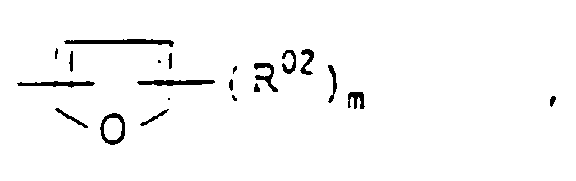
- Composition résineuse sensible à une radiation selon la revendication 1, dans laquelle le générateur d'acide sensible à une radiation (D) est un composé représenté par la formule (III).
- Composition résineuse sensible à une radiation selon la revendication 12, dans laquelle le composé représenté par la formule (III), est la 2-[1-(3,4-benzodioxolyl)]-4,6-bis(trichlorométhyl)-1,3,5-triazine, la 2-[1-(2,3-benzodioxolyl)]-4,6-bis(trichlorométhyl)-1,3,5-triazine, la 2-[1-(3,4-benzodioxolyl)]-4,6-bis(tribromométhyl)-1,3,5-triazine ou la 2-[1-(2,3-benzodioxolyl)]-4,6-bis(tribromométhyl)-1,3,5-triazine.
- Composition résineuse sensible à une radiation selon la revendication 1, dans laquelle le générateur d'acide sensible à une radiation (D), est la 2-(4-méthoxy-1-naphtyl)-4,6-bis(trichlorométhyl)-1,3,5-triazine ou la 2,4-bis(trichlorométhyl)-6-(3-chlorophényl)-1,3,5-triazine, la 2-(4-méthoxystyryl)-4,6-bis(trichlorométhyl)-1,3,5-triazine, la 2-([2-(5-méthylfuryl)éthylidène]-4,6-bis(trichlorométhyl)-1,3,5-triazine ou la 2-[1-(3,4-benzodioxolyl)]-4,6-bis(trichlorométhyl)-1,3,5-triazine.
Applications Claiming Priority (2)
| Application Number | Priority Date | Filing Date | Title |
|---|---|---|---|
| JP93332/93 | 1993-04-20 | ||
| JP09333293A JP3198491B2 (ja) | 1992-04-22 | 1993-04-20 | 感放射線性樹脂組成物 |
Publications (2)
| Publication Number | Publication Date |
|---|---|
| EP0621508A1 EP0621508A1 (fr) | 1994-10-26 |
| EP0621508B1 true EP0621508B1 (fr) | 1996-09-25 |
Family
ID=14079318
Family Applications (1)
| Application Number | Title | Priority Date | Filing Date |
|---|---|---|---|
| EP94302640A Expired - Lifetime EP0621508B1 (fr) | 1993-04-20 | 1994-04-13 | Composition à base de résine, sensible aux radiations |
Country Status (4)
| Country | Link |
|---|---|
| US (1) | US5494777A (fr) |
| EP (1) | EP0621508B1 (fr) |
| KR (1) | KR100305449B1 (fr) |
| DE (1) | DE69400595T2 (fr) |
Families Citing this family (18)
| Publication number | Priority date | Publication date | Assignee | Title |
|---|---|---|---|---|
| US5580695A (en) * | 1992-02-25 | 1996-12-03 | Japan Synthetic Rubber Co., Ltd. | Chemically amplified resist |
| JP3633179B2 (ja) * | 1997-01-27 | 2005-03-30 | Jsr株式会社 | ポジ型フォトレジスト組成物 |
| US6190833B1 (en) * | 1997-03-30 | 2001-02-20 | Jsr Corporation | Radiation-sensitive resin composition |
| US5866299A (en) * | 1997-06-18 | 1999-02-02 | Shipley Company, L.L.C. | Negative photoresist composition |
| US6323287B1 (en) * | 1999-03-12 | 2001-11-27 | Arch Specialty Chemicals, Inc. | Hydroxy-amino thermally cured undercoat for 193 NM lithography |
| US6576394B1 (en) * | 2000-06-16 | 2003-06-10 | Clariant Finance (Bvi) Limited | Negative-acting chemically amplified photoresist composition |
| TW594390B (en) * | 2001-05-21 | 2004-06-21 | Tokyo Ohka Kogyo Co Ltd | Negative photoresist compositions for the formation of thick films, photoresist films and methods of forming bumps using the same |
| TWI242689B (en) * | 2001-07-30 | 2005-11-01 | Tokyo Ohka Kogyo Co Ltd | Chemically amplified negative photoresist composition for the formation of thick films, photoresist base material and method of forming bumps using the same |
| US7314699B2 (en) * | 2002-04-29 | 2008-01-01 | Agfa Graphics Nv | Radiation-sensitive mixture and recording material produced therewith |
| US6994615B2 (en) * | 2002-07-10 | 2006-02-07 | Diamond Innovations, Inc. | Cutting tools with two-slope profile |
| US6902871B2 (en) * | 2002-10-03 | 2005-06-07 | Lumera Corporation | Method for manufacturing polymer microstructures and polymer waveguides |
| KR20040092550A (ko) * | 2003-04-24 | 2004-11-04 | 클라리언트 인터내셔널 리미티드 | 레지스트 조성물 및 레지스트 제거용 유기용제 |
| JP4376706B2 (ja) | 2004-06-30 | 2009-12-02 | 東京応化工業株式会社 | ネガ型ホトレジスト組成物を用いたメッキ形成物の形成方法 |
| KR100852380B1 (ko) * | 2004-06-30 | 2008-08-14 | 도오꾜오까고오교 가부시끼가이샤 | 네거티브 포토레지스트 조성물을 이용한 도금품 성형 방법및 이에 사용된 감광성 조성물 |
| US7816069B2 (en) * | 2006-06-23 | 2010-10-19 | International Business Machines Corporation | Graded spin-on organic antireflective coating for photolithography |
| JP2008077057A (ja) | 2006-08-21 | 2008-04-03 | Jsr Corp | 感光性絶縁樹脂組成物及びその硬化物並びにそれを備える電子部品 |
| JP5464131B2 (ja) * | 2009-12-02 | 2014-04-09 | 信越化学工業株式会社 | 化学増幅レジスト材料並びにこれを用いたパターン形成方法 |
| CN104656373B (zh) * | 2015-01-08 | 2018-10-12 | 苏州瑞红电子化学品有限公司 | 一种用于玻璃钝化整流芯片工艺中不含光敏剂的光刻胶组合物及其应用 |
Family Cites Families (13)
| Publication number | Priority date | Publication date | Assignee | Title |
|---|---|---|---|---|
| US3954475A (en) * | 1971-09-03 | 1976-05-04 | Minnesota Mining And Manufacturing Company | Photosensitive elements containing chromophore-substituted vinyl-halomethyl-s-triazines |
| US3987037A (en) * | 1971-09-03 | 1976-10-19 | Minnesota Mining And Manufacturing Company | Chromophore-substituted vinyl-halomethyl-s-triazines |
| US4189323A (en) * | 1977-04-25 | 1980-02-19 | Hoechst Aktiengesellschaft | Radiation-sensitive copying composition |
| JPH01501176A (ja) * | 1986-10-20 | 1989-04-20 | マクダーミッド,インコーポレーテッド | 像反転可能なシステム及びプロセス |
| JP2505033B2 (ja) * | 1988-11-28 | 1996-06-05 | 東京応化工業株式会社 | 電子線レジスト組成物及びそれを用いた微細パタ―ンの形成方法 |
| JP2583600B2 (ja) * | 1989-02-20 | 1997-02-19 | 東京応化工業株式会社 | ネガ型電子線レジスト組成物 |
| DE69130003T2 (de) * | 1990-05-25 | 1999-02-11 | Mitsubishi Chemical Corp., Tokio/Tokyo | Negative lichtempfindliche Zusammensetzung und Verfahren zur Bildung eines Photolackmusters |
| JP2538117B2 (ja) * | 1990-09-28 | 1996-09-25 | 東京応化工業株式会社 | ネガ型放射線感応レジスト組成物 |
| EP0483693B1 (fr) * | 1990-10-29 | 1998-12-30 | Toyo Gosei Kogyo Co., Ltd. | Résine photosensible colorée, image colorée, méthode de fabrication de filtres couleurs et méthode de fabrication pour une matrice noire |
| AU654698B2 (en) * | 1991-03-13 | 1994-11-17 | Toshiba Monofrax Co., Ltd. | A method and apparatus for producing fibers |
| DE4120174A1 (de) * | 1991-06-19 | 1992-12-24 | Hoechst Ag | Strahlungsempfindliche sulfonsaeureester und deren verwendung |
| US5258257A (en) * | 1991-09-23 | 1993-11-02 | Shipley Company Inc. | Radiation sensitive compositions comprising polymer having acid labile groups |
| JP2566098B2 (ja) * | 1992-05-01 | 1996-12-25 | 東京応化工業株式会社 | ネガ型放射線感応性レジスト組成物 |
-
1994
- 1994-04-13 DE DE69400595T patent/DE69400595T2/de not_active Expired - Lifetime
- 1994-04-13 EP EP94302640A patent/EP0621508B1/fr not_active Expired - Lifetime
- 1994-04-14 KR KR1019940007797A patent/KR100305449B1/ko not_active Expired - Lifetime
- 1994-04-19 US US08/229,677 patent/US5494777A/en not_active Expired - Lifetime
Also Published As
| Publication number | Publication date |
|---|---|
| EP0621508A1 (fr) | 1994-10-26 |
| KR100305449B1 (ko) | 2001-11-22 |
| DE69400595D1 (de) | 1996-10-31 |
| DE69400595T2 (de) | 1997-04-30 |
| US5494777A (en) | 1996-02-27 |
Similar Documents
| Publication | Publication Date | Title |
|---|---|---|
| EP0621508B1 (fr) | Composition à base de résine, sensible aux radiations | |
| EP0594452B1 (fr) | Composition résineuse sensible aux radiations pour la fabrication de microlentilles | |
| JP3235771B2 (ja) | 橋かけポリマー | |
| EP0718317B1 (fr) | Compositions photoréserves | |
| KR100456254B1 (ko) | 감방사선성조성물 | |
| JP3495503B2 (ja) | 架橋されたポリマー | |
| US5529885A (en) | Negative photosensitive composition and method for forming patterns using the composition | |
| EP0621509B1 (fr) | Utilisation d'une composition photosensible pour la fabrication d'un dispositif d'affichage à cristaux liquides | |
| US6569596B1 (en) | Negative working chemical amplification type resist compositions | |
| JPH11352702A (ja) | 耐熱性に優れたレジストパターンの形成方法及びそれに用いられるポジ型レジスト組成物 | |
| EP0917000A2 (fr) | Composition de photoréserve positive et méthode pour la formation d'un motif dans une photoréserve | |
| JP3453392B2 (ja) | 酸硬化フォトレジスト | |
| JPH0643647A (ja) | 感放射線性樹脂組成物 | |
| JP3638058B2 (ja) | 反射防止膜材料用組成物 | |
| JP3064286B2 (ja) | ネガ型感放射線性樹脂組成物 | |
| JP4006492B2 (ja) | 酸に不安定な保護基を有するフェノール樹脂 | |
| JP3198491B2 (ja) | 感放射線性樹脂組成物 | |
| KR19990007041A (ko) | 네가티브 감광성 내식막 조성물 | |
| JPH08339086A (ja) | 不活性閉塞基を有する重合体を含む感照射線性組成物 | |
| JP3050215B2 (ja) | ネガ型感放射線性樹脂組成物 | |
| JP3141376B1 (ja) | ネガ型感放射線性樹脂組成物溶液 | |
| KR20010021160A (ko) | 화학증폭형 네거티브 레지스트 조성물 | |
| JPH04246651A (ja) | 感放射線性組成物 | |
| JPH05134411A (ja) | ネガ型レジスト組成物 | |
| JPH09325495A (ja) | ネガ型感放射線性樹脂組成物 |
Legal Events
| Date | Code | Title | Description |
|---|---|---|---|
| PUAI | Public reference made under article 153(3) epc to a published international application that has entered the european phase |
Free format text: ORIGINAL CODE: 0009012 |
|
| AK | Designated contracting states |
Kind code of ref document: A1 Designated state(s): DE FR GB IT NL |
|
| 17P | Request for examination filed |
Effective date: 19950118 |
|
| 17Q | First examination report despatched |
Effective date: 19950214 |
|
| GRAH | Despatch of communication of intention to grant a patent |
Free format text: ORIGINAL CODE: EPIDOS IGRA |
|
| GRAH | Despatch of communication of intention to grant a patent |
Free format text: ORIGINAL CODE: EPIDOS IGRA |
|
| GRAA | (expected) grant |
Free format text: ORIGINAL CODE: 0009210 |
|
| AK | Designated contracting states |
Kind code of ref document: B1 Designated state(s): DE FR GB IT NL |
|
| ITF | It: translation for a ep patent filed | ||
| ET | Fr: translation filed | ||
| REF | Corresponds to: |
Ref document number: 69400595 Country of ref document: DE Date of ref document: 19961031 |
|
| PLBE | No opposition filed within time limit |
Free format text: ORIGINAL CODE: 0009261 |
|
| STAA | Information on the status of an ep patent application or granted ep patent |
Free format text: STATUS: NO OPPOSITION FILED WITHIN TIME LIMIT |
|
| 26N | No opposition filed | ||
| REG | Reference to a national code |
Ref country code: GB Ref legal event code: IF02 |
|
| PGFP | Annual fee paid to national office [announced via postgrant information from national office to epo] |
Ref country code: NL Payment date: 20120425 Year of fee payment: 19 |
|
| PGFP | Annual fee paid to national office [announced via postgrant information from national office to epo] |
Ref country code: GB Payment date: 20130418 Year of fee payment: 20 Ref country code: DE Payment date: 20130419 Year of fee payment: 20 |
|
| PGFP | Annual fee paid to national office [announced via postgrant information from national office to epo] |
Ref country code: FR Payment date: 20130515 Year of fee payment: 20 Ref country code: IT Payment date: 20130424 Year of fee payment: 20 |
|
| REG | Reference to a national code |
Ref country code: NL Ref legal event code: V1 Effective date: 20131101 |
|
| PG25 | Lapsed in a contracting state [announced via postgrant information from national office to epo] |
Ref country code: NL Free format text: LAPSE BECAUSE OF NON-PAYMENT OF DUE FEES Effective date: 20131101 |
|
| REG | Reference to a national code |
Ref country code: DE Ref legal event code: R071 Ref document number: 69400595 Country of ref document: DE |
|
| REG | Reference to a national code |
Ref country code: DE Ref legal event code: R071 Ref document number: 69400595 Country of ref document: DE |
|
| REG | Reference to a national code |
Ref country code: GB Ref legal event code: PE20 Expiry date: 20140412 |
|
| PG25 | Lapsed in a contracting state [announced via postgrant information from national office to epo] |
Ref country code: GB Free format text: LAPSE BECAUSE OF EXPIRATION OF PROTECTION Effective date: 20140412 |
|
| PG25 | Lapsed in a contracting state [announced via postgrant information from national office to epo] |
Ref country code: DE Free format text: LAPSE BECAUSE OF EXPIRATION OF PROTECTION Effective date: 20140415 |