EP0627461A1 - Spannungsrissbeständige Formmassen auf der Basis von PMMA/SAN-Blends - Google Patents
Spannungsrissbeständige Formmassen auf der Basis von PMMA/SAN-Blends Download PDFInfo
- Publication number
- EP0627461A1 EP0627461A1 EP94108062A EP94108062A EP0627461A1 EP 0627461 A1 EP0627461 A1 EP 0627461A1 EP 94108062 A EP94108062 A EP 94108062A EP 94108062 A EP94108062 A EP 94108062A EP 0627461 A1 EP0627461 A1 EP 0627461A1
- Authority
- EP
- European Patent Office
- Prior art keywords
- alkyl
- weight
- mixture
- molding compositions
- stands
- Prior art date
- Legal status (The legal status is an assumption and is not a legal conclusion. Google has not performed a legal analysis and makes no representation as to the accuracy of the status listed.)
- Granted
Links
- 239000000203 mixture Substances 0.000 title claims abstract description 53
- 238000000465 moulding Methods 0.000 title claims abstract description 26
- 229920003229 poly(methyl methacrylate) Polymers 0.000 title description 18
- 239000004926 polymethyl methacrylate Substances 0.000 title description 3
- 238000005336 cracking Methods 0.000 claims abstract description 16
- 229920000642 polymer Polymers 0.000 claims abstract description 14
- 239000000178 monomer Substances 0.000 claims abstract description 13
- 125000004178 (C1-C4) alkyl group Chemical group 0.000 claims abstract description 12
- NLHHRLWOUZZQLW-UHFFFAOYSA-N Acrylonitrile Chemical compound C=CC#N NLHHRLWOUZZQLW-UHFFFAOYSA-N 0.000 claims abstract description 12
- NIXOWILDQLNWCW-UHFFFAOYSA-N 2-Propenoic acid Natural products OC(=O)C=C NIXOWILDQLNWCW-UHFFFAOYSA-N 0.000 claims abstract description 11
- 125000003837 (C1-C20) alkyl group Chemical group 0.000 claims abstract description 10
- 229910052739 hydrogen Inorganic materials 0.000 claims abstract description 9
- 239000001257 hydrogen Substances 0.000 claims abstract description 9
- CERQOIWHTDAKMF-UHFFFAOYSA-N Methacrylic acid Chemical compound CC(=C)C(O)=O CERQOIWHTDAKMF-UHFFFAOYSA-N 0.000 claims abstract description 8
- QRUDEWIWKLJBPS-UHFFFAOYSA-N benzotriazole Chemical compound C1=CC=C2N[N][N]C2=C1 QRUDEWIWKLJBPS-UHFFFAOYSA-N 0.000 claims abstract description 8
- 125000002496 methyl group Chemical group [H]C([H])([H])* 0.000 claims abstract description 8
- SMZOUWXMTYCWNB-UHFFFAOYSA-N 2-(2-methoxy-5-methylphenyl)ethanamine Chemical compound COC1=CC=C(C)C=C1CCN SMZOUWXMTYCWNB-UHFFFAOYSA-N 0.000 claims abstract description 7
- 150000002148 esters Chemical class 0.000 claims abstract description 7
- GYCMBHHDWRMZGG-UHFFFAOYSA-N Methylacrylonitrile Chemical compound CC(=C)C#N GYCMBHHDWRMZGG-UHFFFAOYSA-N 0.000 claims abstract description 6
- 150000001412 amines Chemical class 0.000 claims abstract description 6
- 239000012964 benzotriazole Substances 0.000 claims abstract description 6
- 125000004400 (C1-C12) alkyl group Chemical group 0.000 claims abstract description 5
- ISWSIDIOOBJBQZ-UHFFFAOYSA-N Phenol Chemical compound OC1=CC=CC=C1 ISWSIDIOOBJBQZ-UHFFFAOYSA-N 0.000 claims abstract description 5
- 229920002554 vinyl polymer Polymers 0.000 claims abstract description 5
- 150000005840 aryl radicals Chemical class 0.000 claims abstract description 4
- OJMIONKXNSYLSR-UHFFFAOYSA-N phosphorous acid Chemical compound OP(O)O OJMIONKXNSYLSR-UHFFFAOYSA-N 0.000 claims abstract description 3
- -1 C5-C8-cycloalkyl Chemical group 0.000 claims description 28
- 230000000379 polymerizing effect Effects 0.000 claims description 7
- 238000000034 method Methods 0.000 claims description 5
- 125000000041 C6-C10 aryl group Chemical group 0.000 claims description 4
- 125000000484 butyl group Chemical group [H]C([*])([H])C([H])([H])C([H])([H])C([H])([H])[H] 0.000 claims description 4
- 125000004435 hydrogen atom Chemical group [H]* 0.000 claims description 4
- 238000004519 manufacturing process Methods 0.000 claims description 4
- 239000000654 additive Substances 0.000 claims description 2
- 239000000155 melt Substances 0.000 claims 1
- UFHFLCQGNIYNRP-UHFFFAOYSA-N Hydrogen Chemical compound [H][H] UFHFLCQGNIYNRP-UHFFFAOYSA-N 0.000 abstract description 4
- 125000000999 tert-butyl group Chemical group [H]C([H])([H])C(*)(C([H])([H])[H])C([H])([H])[H] 0.000 abstract description 4
- 150000002431 hydrogen Chemical class 0.000 abstract description 3
- VVQNEPGJFQJSBK-UHFFFAOYSA-N Methyl methacrylate Chemical compound COC(=O)C(C)=C VVQNEPGJFQJSBK-UHFFFAOYSA-N 0.000 description 15
- HEDRZPFGACZZDS-UHFFFAOYSA-N Chloroform Chemical compound ClC(Cl)Cl HEDRZPFGACZZDS-UHFFFAOYSA-N 0.000 description 12
- PPBRXRYQALVLMV-UHFFFAOYSA-N Styrene Chemical compound C=CC1=CC=CC=C1 PPBRXRYQALVLMV-UHFFFAOYSA-N 0.000 description 12
- OWYWGLHRNBIFJP-UHFFFAOYSA-N Ipazine Chemical compound CCN(CC)C1=NC(Cl)=NC(NC(C)C)=N1 OWYWGLHRNBIFJP-UHFFFAOYSA-N 0.000 description 11
- 150000001875 compounds Chemical class 0.000 description 10
- BAPJBEWLBFYGME-UHFFFAOYSA-N Methyl acrylate Chemical compound COC(=O)C=C BAPJBEWLBFYGME-UHFFFAOYSA-N 0.000 description 9
- KFZMGEQAYNKOFK-UHFFFAOYSA-N Isopropanol Chemical compound CC(C)O KFZMGEQAYNKOFK-UHFFFAOYSA-N 0.000 description 6
- 229920000638 styrene acrylonitrile Polymers 0.000 description 6
- 125000001449 isopropyl group Chemical group [H]C([H])([H])C([H])(*)C([H])([H])[H] 0.000 description 5
- SCUZVMOVTVSBLE-UHFFFAOYSA-N prop-2-enenitrile;styrene Chemical compound C=CC#N.C=CC1=CC=CC=C1 SCUZVMOVTVSBLE-UHFFFAOYSA-N 0.000 description 5
- 239000000243 solution Substances 0.000 description 5
- VYPSYNLAJGMNEJ-UHFFFAOYSA-N Silicium dioxide Chemical compound O=[Si]=O VYPSYNLAJGMNEJ-UHFFFAOYSA-N 0.000 description 4
- 239000000741 silica gel Substances 0.000 description 4
- 229910002027 silica gel Inorganic materials 0.000 description 4
- 229960001866 silicon dioxide Drugs 0.000 description 4
- XITRBUPOXXBIJN-UHFFFAOYSA-N bis(2,2,6,6-tetramethylpiperidin-4-yl) decanedioate Chemical compound C1C(C)(C)NC(C)(C)CC1OC(=O)CCCCCCCCC(=O)OC1CC(C)(C)NC(C)(C)C1 XITRBUPOXXBIJN-UHFFFAOYSA-N 0.000 description 3
- 229920001577 copolymer Polymers 0.000 description 3
- MCPKSFINULVDNX-UHFFFAOYSA-N drometrizole Chemical compound CC1=CC=C(O)C(N2N=C3C=CC=CC3=N2)=C1 MCPKSFINULVDNX-UHFFFAOYSA-N 0.000 description 3
- 238000005259 measurement Methods 0.000 description 3
- 238000006116 polymerization reaction Methods 0.000 description 3
- 239000000523 sample Substances 0.000 description 3
- 125000002914 sec-butyl group Chemical group [H]C([H])([H])C([H])([H])C([H])(*)C([H])([H])[H] 0.000 description 3
- 239000000126 substance Substances 0.000 description 3
- 238000005496 tempering Methods 0.000 description 3
- 125000005919 1,2,2-trimethylpropyl group Chemical group 0.000 description 2
- 125000005918 1,2-dimethylbutyl group Chemical group 0.000 description 2
- 125000006218 1-ethylbutyl group Chemical group [H]C([H])([H])C([H])([H])C([H])([H])C([H])(*)C([H])([H])C([H])([H])[H] 0.000 description 2
- 125000006219 1-ethylpentyl group Chemical group [H]C([H])([H])C([H])([H])C([H])([H])C([H])([H])C([H])(*)C([H])([H])C([H])([H])[H] 0.000 description 2
- 125000003542 3-methylbutan-2-yl group Chemical group [H]C([H])([H])C([H])(*)C([H])(C([H])([H])[H])C([H])([H])[H] 0.000 description 2
- SOGAXMICEFXMKE-UHFFFAOYSA-N Butylmethacrylate Chemical compound CCCCOC(=O)C(C)=C SOGAXMICEFXMKE-UHFFFAOYSA-N 0.000 description 2
- JKIJEFPNVSHHEI-UHFFFAOYSA-N Phenol, 2,4-bis(1,1-dimethylethyl)-, phosphite (3:1) Chemical compound CC(C)(C)C1=CC(C(C)(C)C)=CC=C1OP(OC=1C(=CC(=CC=1)C(C)(C)C)C(C)(C)C)OC1=CC=C(C(C)(C)C)C=C1C(C)(C)C JKIJEFPNVSHHEI-UHFFFAOYSA-N 0.000 description 2
- 229920005372 Plexiglas® Polymers 0.000 description 2
- 239000004793 Polystyrene Substances 0.000 description 2
- 239000007983 Tris buffer Substances 0.000 description 2
- 238000000149 argon plasma sintering Methods 0.000 description 2
- 238000005452 bending Methods 0.000 description 2
- 239000012965 benzophenone Substances 0.000 description 2
- 238000012662 bulk polymerization Methods 0.000 description 2
- CQEYYJKEWSMYFG-UHFFFAOYSA-N butyl acrylate Chemical compound CCCCOC(=O)C=C CQEYYJKEWSMYFG-UHFFFAOYSA-N 0.000 description 2
- 238000005260 corrosion Methods 0.000 description 2
- 230000007797 corrosion Effects 0.000 description 2
- 125000000113 cyclohexyl group Chemical group [H]C1([H])C([H])([H])C([H])([H])C([H])(*)C([H])([H])C1([H])[H] 0.000 description 2
- 239000000839 emulsion Substances 0.000 description 2
- 238000007720 emulsion polymerization reaction Methods 0.000 description 2
- 238000005516 engineering process Methods 0.000 description 2
- 125000001495 ethyl group Chemical group [H]C([H])([H])C([H])([H])* 0.000 description 2
- 238000010528 free radical solution polymerization reaction Methods 0.000 description 2
- 238000001746 injection moulding Methods 0.000 description 2
- 125000000959 isobutyl group Chemical group [H]C([H])([H])C([H])(C([H])([H])[H])C([H])([H])* 0.000 description 2
- 239000004611 light stabiliser Substances 0.000 description 2
- 125000004108 n-butyl group Chemical group [H]C([H])([H])C([H])([H])C([H])([H])C([H])([H])* 0.000 description 2
- GLDOVTGHNKAZLK-UHFFFAOYSA-N octadecan-1-ol Chemical compound CCCCCCCCCCCCCCCCCCO GLDOVTGHNKAZLK-UHFFFAOYSA-N 0.000 description 2
- 239000000123 paper Substances 0.000 description 2
- 125000003538 pentan-3-yl group Chemical group [H]C([H])([H])C([H])([H])C([H])(*)C([H])([H])C([H])([H])[H] 0.000 description 2
- 229920003023 plastic Polymers 0.000 description 2
- 239000004033 plastic Substances 0.000 description 2
- 125000003548 sec-pentyl group Chemical group [H]C([H])([H])C([H])([H])C([H])([H])C([H])(*)C([H])([H])[H] 0.000 description 2
- 239000002904 solvent Substances 0.000 description 2
- 239000000725 suspension Substances 0.000 description 2
- 238000010557 suspension polymerization reaction Methods 0.000 description 2
- 230000002195 synergetic effect Effects 0.000 description 2
- 229920001897 terpolymer Polymers 0.000 description 2
- 125000001973 tert-pentyl group Chemical group [H]C([H])([H])C([H])([H])C(*)(C([H])([H])[H])C([H])([H])[H] 0.000 description 2
- LENZDBCJOHFCAS-UHFFFAOYSA-N tris Chemical compound OCC(N)(CO)CO LENZDBCJOHFCAS-UHFFFAOYSA-N 0.000 description 2
- 238000004383 yellowing Methods 0.000 description 2
- FGHOOJSIEHYJFQ-UHFFFAOYSA-N (2,4-ditert-butylphenyl) dihydrogen phosphite Chemical compound CC(C)(C)C1=CC=C(OP(O)O)C(C(C)(C)C)=C1 FGHOOJSIEHYJFQ-UHFFFAOYSA-N 0.000 description 1
- GDACHVUBONYTFV-UHFFFAOYSA-N 1-(benzotriazol-2-yl)-3-(2-methylheptyl)pentadecan-2-ol Chemical compound C1=CC=CC2=NN(CC(O)C(CC(C)CCCCC)CCCCCCCCCCCC)N=C21 GDACHVUBONYTFV-UHFFFAOYSA-N 0.000 description 1
- SBYMUDUGTIKLCR-UHFFFAOYSA-N 2-chloroethenylbenzene Chemical compound ClC=CC1=CC=CC=C1 SBYMUDUGTIKLCR-UHFFFAOYSA-N 0.000 description 1
- 125000006176 2-ethylbutyl group Chemical group [H]C([H])([H])C([H])([H])C([H])(C([H])([H])*)C([H])([H])C([H])([H])[H] 0.000 description 1
- 125000004493 2-methylbut-1-yl group Chemical group CC(C*)CC 0.000 description 1
- 125000003229 2-methylhexyl group Chemical group [H]C([H])([H])C([H])([H])C([H])([H])C([H])([H])C([H])(C([H])([H])[H])C([H])([H])* 0.000 description 1
- 125000005916 2-methylpentyl group Chemical group 0.000 description 1
- RUMACXVDVNRZJZ-UHFFFAOYSA-N 2-methylpropyl 2-methylprop-2-enoate Chemical compound CC(C)COC(=O)C(C)=C RUMACXVDVNRZJZ-UHFFFAOYSA-N 0.000 description 1
- CFVWNXQPGQOHRJ-UHFFFAOYSA-N 2-methylpropyl prop-2-enoate Chemical compound CC(C)COC(=O)C=C CFVWNXQPGQOHRJ-UHFFFAOYSA-N 0.000 description 1
- DXIJHCSGLOHNES-UHFFFAOYSA-N 3,3-dimethylbut-1-enylbenzene Chemical compound CC(C)(C)C=CC1=CC=CC=C1 DXIJHCSGLOHNES-UHFFFAOYSA-N 0.000 description 1
- 125000003469 3-methylhexyl group Chemical group [H]C([H])([H])C([H])([H])C([H])([H])C([H])(C([H])([H])[H])C([H])([H])C([H])([H])* 0.000 description 1
- 125000005917 3-methylpentyl group Chemical group 0.000 description 1
- 229920002972 Acrylic fiber Polymers 0.000 description 1
- SNRUBQQJIBEYMU-UHFFFAOYSA-N Dodecane Natural products CCCCCCCCCCCC SNRUBQQJIBEYMU-UHFFFAOYSA-N 0.000 description 1
- JIGUQPWFLRLWPJ-UHFFFAOYSA-N Ethyl acrylate Chemical compound CCOC(=O)C=C JIGUQPWFLRLWPJ-UHFFFAOYSA-N 0.000 description 1
- 241001295925 Gegenes Species 0.000 description 1
- XBDQKXXYIPTUBI-UHFFFAOYSA-M Propionate Chemical compound CCC([O-])=O XBDQKXXYIPTUBI-UHFFFAOYSA-M 0.000 description 1
- 235000021355 Stearic acid Nutrition 0.000 description 1
- 150000001298 alcohols Chemical class 0.000 description 1
- XYLMUPLGERFSHI-UHFFFAOYSA-N alpha-Methylstyrene Chemical compound CC(=C)C1=CC=CC=C1 XYLMUPLGERFSHI-UHFFFAOYSA-N 0.000 description 1
- 150000001408 amides Chemical class 0.000 description 1
- 239000003963 antioxidant agent Substances 0.000 description 1
- 230000003078 antioxidant effect Effects 0.000 description 1
- 239000002216 antistatic agent Substances 0.000 description 1
- RWCCWEUUXYIKHB-UHFFFAOYSA-N benzophenone Chemical compound C=1C=CC=CC=1C(=O)C1=CC=CC=C1 RWCCWEUUXYIKHB-UHFFFAOYSA-N 0.000 description 1
- 150000008366 benzophenones Chemical class 0.000 description 1
- 150000001565 benzotriazoles Chemical class 0.000 description 1
- 230000005540 biological transmission Effects 0.000 description 1
- CJZGTCYPCWQAJB-UHFFFAOYSA-L calcium stearate Chemical class [Ca+2].CCCCCCCCCCCCCCCCCC([O-])=O.CCCCCCCCCCCCCCCCCC([O-])=O CJZGTCYPCWQAJB-UHFFFAOYSA-L 0.000 description 1
- 238000004364 calculation method Methods 0.000 description 1
- 238000003490 calendering Methods 0.000 description 1
- 239000012459 cleaning agent Substances 0.000 description 1
- 230000000052 comparative effect Effects 0.000 description 1
- 238000007334 copolymerization reaction Methods 0.000 description 1
- 125000000582 cycloheptyl group Chemical group [H]C1([H])C([H])([H])C([H])([H])C([H])([H])C([H])(*)C([H])([H])C1([H])[H] 0.000 description 1
- 125000000640 cyclooctyl group Chemical group [H]C1([H])C([H])([H])C([H])([H])C([H])([H])C([H])(*)C([H])([H])C([H])([H])C1([H])[H] 0.000 description 1
- 125000001511 cyclopentyl group Chemical group [H]C1([H])C([H])([H])C([H])([H])C([H])(*)C1([H])[H] 0.000 description 1
- 125000002704 decyl group Chemical group [H]C([H])([H])C([H])([H])C([H])([H])C([H])([H])C([H])([H])C([H])([H])C([H])([H])C([H])([H])C([H])([H])C([H])([H])* 0.000 description 1
- 239000006185 dispersion Substances 0.000 description 1
- 125000003438 dodecyl group Chemical group [H]C([H])([H])C([H])([H])C([H])([H])C([H])([H])C([H])([H])C([H])([H])C([H])([H])C([H])([H])C([H])([H])C([H])([H])C([H])([H])C([H])([H])* 0.000 description 1
- 238000001035 drying Methods 0.000 description 1
- 239000000975 dye Substances 0.000 description 1
- 230000000694 effects Effects 0.000 description 1
- SUPCQIBBMFXVTL-UHFFFAOYSA-N ethyl 2-methylprop-2-enoate Chemical compound CCOC(=O)C(C)=C SUPCQIBBMFXVTL-UHFFFAOYSA-N 0.000 description 1
- 239000008187 granular material Substances 0.000 description 1
- 238000010102 injection blow moulding Methods 0.000 description 1
- 125000004491 isohexyl group Chemical group C(CCC(C)C)* 0.000 description 1
- 125000001972 isopentyl group Chemical group [H]C([H])([H])C([H])(C([H])([H])[H])C([H])([H])C([H])([H])* 0.000 description 1
- 239000002655 kraft paper Substances 0.000 description 1
- 239000007788 liquid Substances 0.000 description 1
- 150000004668 long chain fatty acids Chemical class 0.000 description 1
- 239000000314 lubricant Substances 0.000 description 1
- FPYJFEHAWHCUMM-UHFFFAOYSA-N maleic anhydride Chemical compound O=C1OC(=O)C=C1 FPYJFEHAWHCUMM-UHFFFAOYSA-N 0.000 description 1
- 125000005395 methacrylic acid group Chemical group 0.000 description 1
- 239000006082 mold release agent Substances 0.000 description 1
- 239000012778 molding material Substances 0.000 description 1
- GOQYKNQRPGWPLP-UHFFFAOYSA-N n-heptadecyl alcohol Natural products CCCCCCCCCCCCCCCCCO GOQYKNQRPGWPLP-UHFFFAOYSA-N 0.000 description 1
- 125000003136 n-heptyl group Chemical group [H]C([H])([H])C([H])([H])C([H])([H])C([H])([H])C([H])([H])C([H])([H])C([H])([H])* 0.000 description 1
- 125000001280 n-hexyl group Chemical group C(CCCCC)* 0.000 description 1
- 125000000740 n-pentyl group Chemical group [H]C([H])([H])C([H])([H])C([H])([H])C([H])([H])C([H])([H])* 0.000 description 1
- 125000001624 naphthyl group Chemical group 0.000 description 1
- 125000001971 neopentyl group Chemical group [H]C([*])([H])C(C([H])([H])[H])(C([H])([H])[H])C([H])([H])[H] 0.000 description 1
- 125000001400 nonyl group Chemical group [H]C([*])([H])C([H])([H])C([H])([H])C([H])([H])C([H])([H])C([H])([H])C([H])([H])C([H])([H])C([H])([H])[H] 0.000 description 1
- QIQXTHQIDYTFRH-UHFFFAOYSA-N octadecanoic acid Chemical compound CCCCCCCCCCCCCCCCCC(O)=O QIQXTHQIDYTFRH-UHFFFAOYSA-N 0.000 description 1
- OQCDKBAXFALNLD-UHFFFAOYSA-N octadecanoic acid Natural products CCCCCCCC(C)CCCCCCCCC(O)=O OQCDKBAXFALNLD-UHFFFAOYSA-N 0.000 description 1
- SSDSCDGVMJFTEQ-UHFFFAOYSA-N octadecyl 3-(3,5-ditert-butyl-4-hydroxyphenyl)propanoate Chemical compound CCCCCCCCCCCCCCCCCCOC(=O)CCC1=CC(C(C)(C)C)=C(O)C(C(C)(C)C)=C1 SSDSCDGVMJFTEQ-UHFFFAOYSA-N 0.000 description 1
- 125000002347 octyl group Chemical group [H]C([*])([H])C([H])([H])C([H])([H])C([H])([H])C([H])([H])C([H])([H])C([H])([H])C([H])([H])[H] 0.000 description 1
- WXZMFSXDPGVJKK-UHFFFAOYSA-N pentaerythritol Chemical compound OCC(CO)(CO)CO WXZMFSXDPGVJKK-UHFFFAOYSA-N 0.000 description 1
- PNJWIWWMYCMZRO-UHFFFAOYSA-N pent‐4‐en‐2‐one Natural products CC(=O)CC=C PNJWIWWMYCMZRO-UHFFFAOYSA-N 0.000 description 1
- 125000001997 phenyl group Chemical group [H]C1=C([H])C([H])=C(*)C([H])=C1[H] 0.000 description 1
- AQSJGOWTSHOLKH-UHFFFAOYSA-N phosphite(3-) Chemical class [O-]P([O-])[O-] AQSJGOWTSHOLKH-UHFFFAOYSA-N 0.000 description 1
- 229920002285 poly(styrene-co-acrylonitrile) Polymers 0.000 description 1
- 229920002223 polystyrene Polymers 0.000 description 1
- HJWLCRVIBGQPNF-UHFFFAOYSA-N prop-2-enylbenzene Chemical compound C=CCC1=CC=CC=C1 HJWLCRVIBGQPNF-UHFFFAOYSA-N 0.000 description 1
- 125000001436 propyl group Chemical group [H]C([*])([H])C([H])([H])C([H])([H])[H] 0.000 description 1
- 238000005204 segregation Methods 0.000 description 1
- 239000003381 stabilizer Substances 0.000 description 1
- 239000008117 stearic acid Substances 0.000 description 1
- 208000024891 symptom Diseases 0.000 description 1
- SJMYWORNLPSJQO-UHFFFAOYSA-N tert-butyl 2-methylprop-2-enoate Chemical compound CC(=C)C(=O)OC(C)(C)C SJMYWORNLPSJQO-UHFFFAOYSA-N 0.000 description 1
- ISXSCDLOGDJUNJ-UHFFFAOYSA-N tert-butyl prop-2-enoate Chemical compound CC(C)(C)OC(=O)C=C ISXSCDLOGDJUNJ-UHFFFAOYSA-N 0.000 description 1
- 229920001169 thermoplastic Polymers 0.000 description 1
- 239000012815 thermoplastic material Substances 0.000 description 1
- 239000004416 thermosoftening plastic Substances 0.000 description 1
- 229920006352 transparent thermoplastic Polymers 0.000 description 1
- WGKLOLBTFWFKOD-UHFFFAOYSA-N tris(2-nonylphenyl) phosphite Chemical compound CCCCCCCCCC1=CC=CC=C1OP(OC=1C(=CC=CC=1)CCCCCCCCC)OC1=CC=CC=C1CCCCCCCCC WGKLOLBTFWFKOD-UHFFFAOYSA-N 0.000 description 1
- 125000002948 undecyl group Chemical group [H]C([*])([H])C([H])([H])C([H])([H])C([H])([H])C([H])([H])C([H])([H])C([H])([H])C([H])([H])C([H])([H])C([H])([H])C([H])([H])[H] 0.000 description 1
- XLYOFNOQVPJJNP-UHFFFAOYSA-N water Substances O XLYOFNOQVPJJNP-UHFFFAOYSA-N 0.000 description 1
Images

Classifications
-
- C—CHEMISTRY; METALLURGY
- C08—ORGANIC MACROMOLECULAR COMPOUNDS; THEIR PREPARATION OR CHEMICAL WORKING-UP; COMPOSITIONS BASED THEREON
- C08K—Use of inorganic or non-macromolecular organic substances as compounding ingredients
- C08K5/00—Use of organic ingredients
- C08K5/16—Nitrogen-containing compounds
- C08K5/34—Heterocyclic compounds having nitrogen in the ring
- C08K5/3467—Heterocyclic compounds having nitrogen in the ring having more than two nitrogen atoms in the ring
- C08K5/3472—Five-membered rings
- C08K5/3475—Five-membered rings condensed with carbocyclic rings
-
- C—CHEMISTRY; METALLURGY
- C08—ORGANIC MACROMOLECULAR COMPOUNDS; THEIR PREPARATION OR CHEMICAL WORKING-UP; COMPOSITIONS BASED THEREON
- C08K—Use of inorganic or non-macromolecular organic substances as compounding ingredients
- C08K5/00—Use of organic ingredients
- C08K5/0008—Organic ingredients according to more than one of the "one dot" groups of C08K5/01 - C08K5/59
-
- C—CHEMISTRY; METALLURGY
- C08—ORGANIC MACROMOLECULAR COMPOUNDS; THEIR PREPARATION OR CHEMICAL WORKING-UP; COMPOSITIONS BASED THEREON
- C08K—Use of inorganic or non-macromolecular organic substances as compounding ingredients
- C08K5/00—Use of organic ingredients
- C08K5/16—Nitrogen-containing compounds
- C08K5/34—Heterocyclic compounds having nitrogen in the ring
- C08K5/3412—Heterocyclic compounds having nitrogen in the ring having one nitrogen atom in the ring
- C08K5/3432—Six-membered rings
- C08K5/3435—Piperidines
-
- C—CHEMISTRY; METALLURGY
- C08—ORGANIC MACROMOLECULAR COMPOUNDS; THEIR PREPARATION OR CHEMICAL WORKING-UP; COMPOSITIONS BASED THEREON
- C08K—Use of inorganic or non-macromolecular organic substances as compounding ingredients
- C08K5/00—Use of organic ingredients
- C08K5/49—Phosphorus-containing compounds
- C08K5/51—Phosphorus bound to oxygen
- C08K5/52—Phosphorus bound to oxygen only
- C08K5/524—Esters of phosphorous acids, e.g. of H3PO3
- C08K5/526—Esters of phosphorous acids, e.g. of H3PO3 with hydroxyaryl compounds
Definitions
- C1-C20-alkyl esters of methacrylic acid are preferably the C1-C4-alkyl esters such as methyl methacrylate (“MMA”), ethyl methacrylate, n-, i-propyl methacrylate, n-butyl methacrylate, isobutyl methacrylate and tert-butyl methacrylate, methyl methacrylate being particularly preferred is, and mixtures of these monomers.
- MMA methyl methacrylate
- ethyl methacrylate ethyl methacrylate
- n- ethyl methacrylate
- i-propyl methacrylate n-butyl methacrylate
- isobutyl methacrylate and tert-butyl methacrylate isobutyl methacrylate and tert-butyl methacrylate
- methyl methacrylate being particularly preferred is, and mixtures of these monomers.
- the C1-C4-alkyl esters such as methyl acrylate ("MA"), ethyl acrylate, n-, i-propyl acrylate, n-butyl acrylate, isobutyl acrylate and tert-butyl acrylate are preferably used, with methyl acrylate being particularly preferred , as well as mixtures of these monomers.
- MA methyl acrylate
- ethyl acrylate ethyl acrylate
- n- ethyl acrylate
- n-butyl acrylate ethyl acrylate
- i-propyl acrylate n-butyl acrylate
- isobutyl acrylate and tert-butyl acrylate preferably used, with methyl acrylate being particularly preferred , as well as mixtures of these monomers.
- the amount of component A, based on the total weight of the transparent, impact-resistant molding compositions, is 49 to 99, preferably 60 to 80% by weight, according to the invention.
- Component A) is generally prepared by known polymerization processes, such as bulk, solution, emulsion or bead polymerization. Such processes are described, for example, in the Kunststoff Handbuch, Vol. 9, Vieweg and Esser; Polymethyl methacrylate, Carl-Hanser-Verlag, Kunststoff 1975, pp. 36 ff.
- the copolymers (SAN copolymers) contained as component B) can be obtained by polymerizing a monomer mixture from 75 to 82% by weight, preferably 78 to 81% by weight, of a vinyl aromatic monomer, and 18 to 25 wt .-%, preferably 19 to 22 wt .-%, acrylonitrile or methacrylonitrile or mixtures thereof.
- Suitable vinyl aromatic monomers are preferably styrene, ⁇ -methystyrene, tert-butylstyrene, monochlorostyrene and vinyltoluene, particularly preferably styrene and ⁇ -methylstyrene.
- the amount of component B), based on the total weight of the transparent, impact-resistant molding compositions, is, according to the invention, 0.95 to 50, preferably 20 to 40,% by weight.
- Component B) is generally prepared by known polymerization processes, such as bulk, solution, emulsion or bead polymerization. Such methods are described, for example, in Kunststoff Handbuch, Ed. Vieweg and Daumiller, Volume V; Polystyrene, Carl-Hanser-Verlag, Kunststoff 1969, p. 124 ff. And described in GB-PS 14 72 195.
- Component C) is a mixture containing components c1) to c3 and, if desired, c4).
- triaryl phosphites of the general formula I are used as component c 1) in which R1 and R2 for C1-C12-alkyl such as methyl, ethyl, propyl, 1-methylethyl, n-butyl, 1-methylpropyl, 2-methylpropyl, 1,1-dimethylethyl, n-pentyl, 1-methylbutyl, 2- Methylbutyl, 3-methylbutyl, 1,2-dimethylpropyl, 1,1-dimethylpropyl, 2,2-dimethylpropyl, 1-ethylpropyl, n-hexyl, 1-methylpentyl, 2-methylpentyl, 3-methylpentyl, 4-methylpentyl, 1,2-dimethylbutyl, 1,3-dimethylbutyl, 2,3-dimethylbutyl, 1,1-dimethylbutyl, 2,2-dimethylbutyl, 3,3-dimethylbutyl, 1,
- Examples of compounds I which are of particular importance with regard to the present invention are the commercially available tris (2,4-di-tert-butylphenyl) phosphite (Irgafos®168, Ciby-Geigy) and tris (nonylphenyl) phosphite, preferably tris (2,4-di-tert-butylphenyl) phosphite.
- an amine of the general formula II is used as component c2) in which n stands for the values 2 to 10, preferably 2 to 8.
- Compounds of this type are also known under the name HALS (hindered amine light stabilizer) compounds and are commercially available.
- a benzotriazole of the general formula III is used in which R4, R5 and R6 have the meaning of R1.
- Examples of compounds III which are of particular importance with regard to the present invention are 2- (2'-hydroxy-5'-methylphenyl) benzotriazole (commercially available under the name Tinuvin®P (Ciba Geigy)), or 2- (2'-hydroxy-3'-dodecyl-5'-methyl-decyl) benzotriazole.
- component c4) can in some cases lead to a further improvement in the resistance to stress cracking after weathering.
- Examples of compounds IV which are of particular importance with regard to the present invention are octadecyl 3- (3,5-di-tert-butyl-4-hydroxyphenyl) propionate (under the name Irganox®1076 (Ciba Geigy) in trade), as well
- Essential to the invention is the presence of all three components c1), c2) and c3) in component C). If at least one of the components c1) to c3) is missing, there is no synergistic effect with regard to the improvement of the stress crack resistance after weathering.
- the amounts of components c1) to c3) are each in the range from 1 to 50, preferably from 30 to 50 wt .-%, based on the sum of the amounts of components c1) to c3), the individual amounts adding up to 100 .
- the amount of component c4) is chosen in the range from 0 to 25% by weight, preferably 10 to 25% by weight, based on the total amount of components c1) to c3).
- the amount of component C), based on the total weight of the cracking-resistant molding materials, is 0.05 to 1, preferably 0.1 to 0.5% by weight, according to the invention.
- the molding compositions according to the invention can, based on the mixture of components A) to C), contain up to 20% by weight of conventional additives.
- conventional additives examples include: Dyes; Lubricants and mold release agents which can generally be added to up to 3% by weight of the thermoplastic composition, for example stearic acid, stearates, stearyl alcohol, alkyl stearates and amides, and esters of pentaerythritol with long-chain fatty acids and antistatic agents.
- Mixing of components A) to C) can generally be carried out in conventional melt mixing devices such as twin-screw extruders.
- the components are generally processed at temperatures in the range from 200 to 300 ° C.
- the processing range of the transparent, impact-resistant molding compositions according to the invention above 200 ° C. is not restricted by incompatibility symptoms.
- the mixtures of components A) to C) can be processed between 200 and 300 ° C without loss of transparency, without noticeable yellowing and without an annoying odor.
- Moldings can be produced from the molding compositions according to the invention by injection molding or blow molding.
- the molding compounds can also be pressed, calendered, extruded or vacuum formed.
- the molding compositions according to the invention which are resistant to stress cracking have a very good resistance to stress cracking when weathered compared with those from the prior art.
- test specimens pretreated in this way were first subjected to the above-mentioned force for 10 minutes and then, under further loading, a mixture of water and isopropanol (50% by volume / 50% by volume) was added to produce stress corrosion.
- the isopropanol was applied to the surface of the stressed part of the shoulder bar at the level of the support bar.
- a piece of filter paper with a length of 1 cm and a width of 1 cm was placed at this point. This filter paper was kept moist during the measurement period with isopropanol as the test liquid.
- the period between the start of moistening and the occurrence of the first stress crack was measured. 10 test specimens of each mixture were used for a test series. The arithmetic mean was formed from the measured times.
- the weather resistance was carried out in accordance with DIN 53.384-A-8-60 by first exposing the test specimens to UV light for 0, 500, 1000 and 2000 h. The stress crack resistance was then determined as described above.
- the weather resistance is expressed by the stress crack resistance after exposure.
- the resistance to stress cracking means that the test specimens only showed the first stress crack after the time specified in the table.
Landscapes
- Chemical & Material Sciences (AREA)
- Health & Medical Sciences (AREA)
- Chemical Kinetics & Catalysis (AREA)
- Medicinal Chemistry (AREA)
- Polymers & Plastics (AREA)
- Organic Chemistry (AREA)
- Compositions Of Macromolecular Compounds (AREA)
- Addition Polymer Or Copolymer, Post-Treatments, Or Chemical Modifications (AREA)
- Polymerisation Methods In General (AREA)
Abstract
Description
- Die vorliegende Erfindung betrifft spannungsrißbeständige Formmassen, enthaltend im wesentlichen
- A) 49 bis 99 Gew.-% eines Polymerisates, erhältlich durch Polymerisation eines C₁-C₂₀-Alkylesters der Methacryl- oder Acrylsäure oder Mischungen solcher Ester,
- B) 0,95 bis 50 Gew.-% eines Polymerisates, erhältlich durch Polymerisation eines Monomerengemisches aus
- b₁) 75 bis 82 Gew.-% eines vinylaromatischen Monomeren und
- b₂) 18 bis 25 Gew.-% Acrylnitril oder Methacrylnitril oder eine Mischung davon,
- C) 0,05 bis 1 Gew.-% einer Mischung, enthaltend
- c₁) ein Triarylphosphit der allgemeinen Formel I

- c₂) ein Amin der allgemeinen Formel II

- c₃) ein Benzotriazol der allgemeinen Formel III

- c₄) ein Phenol der allgemeinen Formel IV
ABk IV
wobei k 1, 2 oder 4 bedeutet und, falls k = 1 ist, A für -COOR⁷, -CONHR⁷,
wobei R⁷ C₁-C₂₁-Alkyl bedeutet, und
falls k = 2 ist, A für -CONH-(CH₂)n-CONH-,
wobei p und m ganze Zahlen von 1 bis 10 bedeuten, und falls k = 4 ist, A für
wobei q eine ganze Zahl von 1 bis 4 bedeutet, und
B für
wobei R⁸ und R⁹ für Wasserstoff, Methyl oder tert. Butyl stehen.
Außerdem betrifft die Erfindung ein Verfahren zur Herstellung dieser spannungsrißbeständigen Formmassen, ihre Verwendung zur Herstellung von Formkörpern sowie Formkörper, enthaltend diese spannungsrißbeständigen Formmassen.
Polymethylmethacrylat (PMMA) zeichnet sich bekanntermaßen durch eine sehr gute Bewitterungsstabilität, eine hohe Transparenz und hohe Kratzfestigkeit aus. Im Vergleich zu anderen transparenten thermoplastischen Kunststoffen, neigt PMMA jedoch bei Einwirkung von Chemikalien (z. B. Alkoholen, Reinigungsmitteln etc.) zur Ausbildung von Spannungsrissen, die teilweise zum Bruch des Formteils führen können. Aus diesem Grund sind dem PMMA einige potentielle Anwendungen verschlossen.
Es hat nicht an Versuchen gefehlt, die Chemikalienbeständigkeit von Acryl-Kunststoffen zu verbessern. So wird z. B. von Röhm, Darmstadt, ein Terpolymer aus MMA/S/MSA (MMA = Methylmethacrylate, S = Styrol, MSA = Maleinsäureanhydrid) (Plexiglas® HW 55) mit einer erhöhten Wärmeformbeständigkeit sowie einer verbesserten Resistenz gegenüber verschiedenen Lösungsmitteln angeboten.
Bekannterweise läßt sich die Spannungsrißbeständigkeit von MMA-Polymeren auch durch Copolymerisation mit Acrylnitril verbessern (Chemie, Physik und Technologie der Kunststoffe, Bd. 9, Acryl- und Methacrylverbindungen, Springer-Verlag, 1967, S. 254 ff.) Nachteilig hierbei ist allerdings die verringerte Lichtdurchlässigkeit in Folge von Entmischungen während der Polymerisation.
Blends aus PMMA und SAN-(Styrol-Acrylnitril)-Copolymeren mit einem Acrylnitrilgehalt von ca. 19 - 25 Gew.-% sind in der Regel molekulardispers mischbar und ergeben transparente Massen (Polymer, 28, (1987), S. 1177). Aus früheren Untersuchungen ist bekannt, daß solche Mischungen ebenfalls eine deutlich geringere Neigung zur Spannungsrißkorrosion aufweisen als "reines" PMMA (EP-A 508173). Ein Mischungsverhältnis von 75 Gew.-% PMMA : 25 Gew.-% SAN hat sich dabei als optimal erwiesen.
Auf Grund des relativ hohen Styrol- bzw. Acrylnitrilanteils weisen diese Mischungen im Vergleich zum PMMA nur eine geringe Bewitterungsstabilität auf. Die Zugabe der üblichen Stabilisatoren gegen UV-Licht wie z. B. Benzotriazole, Benzophenone oder Verbindungen des HALS-(hindered amine light stabilizer)-Typs bewirken zwar im allgemeinen eine Verringerung der Vergilbungsrate, doch leidet unabhängig davon die Spannungsrißbeständigkeit im Laufe der Bestrahlungsdauer. Auch Kombinationen aus einem Benzotriazol und einer HALS-Verbindung bewirken nach bisherigen Beobachtungen keinen synergistischen Effekt (siehe EP 243 319) der Chemikalienbeständigkeit.
Aufgabe der vorliegenden Erfindung war es daher, spannungsrißbeständige Formmassen, mit einer verbesserten Bewitterungsstabilität zur Verfügung zu stellen.
Demgemäß wurden die eingangs definierten spannungsrißbeständigen Formmassen gefunden.
Die als Komponente A) enthaltenden Polymerisate sind erfindungsgemäß erhältlich durch Polymerisation eines C₁-C₂₀-Alkylesters der Methacryl- oder Acrylsäure oder Mischungen solcher Ester, vorzugsweise durch Polymerisation eines Monomerengemisches, bestehend aus- a₁) 80 bis 100 Gew.-%, bevorzugt 90 bis 99 Gew.-%, eines C₁-C₂₀-Alkylesters der Methacrylsäure, und
- a₂) 0 bis 20 Gew.-%, bevorzugt 1 bis 10 Gew.-%, eines C₁-C₂₀-Alkylesters der Acrylsäure.
- c₁) ein Triarylphosphit der allgemeinen Formel I
- Als C₁-C₂₀-Alkylester der Methacrylsäure kommen bevorzugt die C₁-C₄-Alkylester wie Methylmethacrylat ("MMA"), Ethylmethacrylat, n-, i-Propylmethacrylat, n-Butylmethacrylat, Isobutylmethacrylat und tert.-Butylmethacrylat in Betracht, wobei Methylmethacrylat besonders bevorzugt ist, sowie Mischungen dieser Monomere.
- Als C₁-C₂₀-Alkylester der Acrylsäure verwendet man bevorzugt die C₁-C₄-Alkylester wie Methylacrylat ("MA"), Ethylacrylat, n-, i-Propylacrylat, n-Butylacrylat, Isobutylacrylat und tert.-Butylacrylat, wobei Methylacrylat besonders bevorzugt ist, sowie Mischungen dieser Monomeren.
- Als besonders vorteilhaft haben sich nach den bisherigen Beobachtungen Polymerisate aus 99 Gew.-% Methylmethacrylat und 1 Gew.-% Methylacrylat mit einem Molekulargewicht (Gewichtsmittelwert Mw) von 60.000 bis 300.000 g/mol, insbesondere 80.000 bis 150.000 g/mol, sowie Polymerisate aus 96 Gew.-% Methylmethacrylat und 4 Gew.-% Butylacrylat mit einem Molekulargewicht (Gewichtsmittelwert Mw) von 60.000 bis 300.000 g/mol, insbesondere 110.000 g/mol, erwiesen.
- Die Menge der Komponente A, bezogen auf das Gesamtgewicht der transparenten, schlagzähen Formmassen, beträgt erfindungsgemäß 49 bis 99, bevorzugt 60 bis 80 Gew.-%.
- Die Herstellung der Komponente A) führt man im allgemeinen nach bekannten Polymerisationsverfahren wie Masse-, Lösungs-, Emulsions- oder Perlpolymerisation durch. Solche Verfahren sind beispielsweise im Kunststoffhandbuch, Bd. 9, Vieweg und Esser; Polymethylmethacrylat, Carl-Hanser-Verlag, München 1975, S. 36 ff beschrieben.
- Die als Komponente B) enthaltenen Copolymerisate (SAN-Copolymere) sind erhältlich durch Polymerisation eines Monomerengemisches aus
75 bis 82 Gew.-%,vorzugsweise 78 bis 81 Gew.-%, eines vinylaromatischen Monomeren, und
18 bis 25 Gew.-%,vorzugsweise 19 bis 22 Gew.-%, Acrylnitril oder Methacrylnitril oder deren Mischungen. - Außerhalb dieses Bereiches der Zusammensetzung erhält man in der Regel bei Verarbeitungstemperaturen über 240°C trübe Formteile, die Bindenähte aufweisen.
- Als vinylaromatische Monomere eignen sich vorzugsweise Styrol, α-Methystyrol, tert.-Butylstyrol, Monochlorstyrol und Vinyltoluol, besonders bevorzugt Styrol und α-Methylstyrol.
- Der Zusatz von Acrylnitril und/oder Methacrylnitril bewirkt in der Regel eine Erhöhung der Spannungsrißbeständigkeit.
- Als besonders geeignet haben sich SAN-Copolymere mit einem Molekulargewicht (Gewichtsmittelwert Mw) von 60 000 bis 300 000 g/mol, vorzugsweise von 100 000 bis 200 000 g/mol, erwiesen, die nach dem in der GB-PS 14 72 195 beschriebenen Verfahren hergestellt wurden.
- Die Menge der Komponente B), bezogen auf das Gesamtgewicht der transparenten, schlagzähen Formmassen, beträgt erfindungsgemäß 0,95 bis 50, bevorzugt 20 bis 40 Gew.-%.
- Die Herstellung der Komponente B) führt man in der Regel nach bekannten Polymerisationsverfahren wie Masse-, Lösungs-, Emulsions- oder Perlpolymerisation durch. Solche Verfahren sind beispielsweise in Kunststoffhandbuch, Hrsg. Vieweg und Daumiller, Band V; Polystyrol, Carl-Hanser-Verlag, München 1969, S. 124 ff. und in der GB-PS 14 72 195 beschrieben.
- Als Komponente C) setzt man eine Mischung ein, enthaltend die Komponenten c₁) bis c₃ und gewünschtenfalls c₄).
- Als Komponente c₁) verwendet man erfindungsgemäß Triarylphosphite der allgemeinen Formel I

in denen R¹ und R² für C₁-C₁₂-Alkyl wie Methyl, Ethyl, Propyl, 1-Methylethyl, n-Butyl, 1-Methylpropyl, 2-Methylpropyl, 1,1-Dimethylethyl, n-Pentyl, 1-Methylbutyl, 2-Methylbutyl, 3-Methylbutyl, 1,2-Dimethylpropyl, 1,1-Dimethylpropyl, 2,2-Dimethylpropyl, 1-Ethylpropyl, n-Hexyl, 1-Methylpentyl, 2-Methylpentyl, 3-Methylpentyl, 4-Methylpentyl, 1,2-Dimethylbutyl, 1,3-Dimethylbutyl, 2,3-Dimethylbutyl, 1,1-Dimethylbutyl, 2,2-Dimethylbutyl, 3,3-Dimethylbutyl, 1,1,2-Trimethylpropyl, 1,2,2-Trimethylpropyl, 1-Ethylbutyl, 2-Ethylbutyl, 1-Ethyl-2-methylpropyl, n-Heptyl, 1-Methylhexyl, 2-Methylhexyl, 3-Methylhexyl, 4-Methylhexyl, 5-Methylhexyl, 1-Ethylpentyl, 2-Ethylpentyl, 1-Propylbutyl, Octyl, Nonyl, Decyl, Undecyl und Dodecyl, vorzugsweise in 1-Position (α) verzweigte C₃-C₁₂-Alkylreste, insbesondere C₃-C₇-Alkylreste, wie 1-Methylethyl, 1-Methylpropyl, 1,1-Dimethylethyl, 1-Methylbutyl, 1,2-Dimethylpropyl, 1,1-Dimethylpropyl, 1-Ethylpropyl, 1-Methylpentyl, 1,2-Dimethylbutyl, 1,3-Dimethylbutyl, 1,1-Dimethylbutyl, 1,1,2-Trimethylpropyl, 1,2,2-Trimethylpropyl, 1-Ethylbutyl, 1-Ethyl-2-methylpropyl, 1-Methylhexyl, 1-Ethylpentyl und 1-Propylbutyl sowie 1,1,3,3-Tetramethylbutyl, 1,1,2,2,5,5-Hexamethylhexyl,
C₅-C₈-Cycloalkyl wie Cyclopentyl, Cyclohexyl, Cycloheptyl und Cyclooctyl, bevorzugt Cyclohexyl,
C₆-C₁₀-Aryl und C₆-C₁₀-Aryl-C₁-C₄-Alkyl, deren Arylreste bis zu dreifach mit C₁-C₄-Alkyl substituiert sein können, wie Phenyl, Naphthyl oder 2,2-Dimethylbenzyl, stehen, und R³ Wasserstoff und C₁-C₄-Alkyl wie Methyl, Ethyl, n-, i-Propyl, n-, i-, sek.- und tert.-Butyl, bevorzugt Wasserstoff und Methyl, bedeutet. - Beispiele für Verbindungen I, denen im Hinblick auf die vorliegende Erfindung besondere Bedeutung zukommt, sind die im Handel erhältlichen Tris-(2,4-di-tert.-butylphenyl)phosphit (Irgafos®168, Ciby-Geigy) und Tris(nonylphenyl)phosphit, bevorzugt Tris-(2,4-di-tert.-butylphenyl)-phosphit.
- Als Komponente c₂) setzt man erfindungsgemäß ein Amin der allgemeinen Formel II

in der n für die Werte 2 bis 10, bevorzugt 2 bis 8, steht. Verbindungen dieses Typs sind auch unter der Bezeichnung HALS (hindered amine light stabilizer)-Verbindungen bekannt und im Handel erhältlich. - Ein Beispiel für Verbindungen II, dem im Hinblick auf die vorliegende Erfindung besondere Bedeutung zukommt, ist Bis-(2,2,6,6-tetramethyl-4-piperidyl)-sebacat (unter dem Namen Tinuvin®770 DF (Ciba Geigy) im Handel).
- Als Komponente c₃) setzt man erfindungsgemäß ein Benzotriazol der allgemeinen Formel III ein

in der R⁴, R⁵ und R⁶ die Bedeutung von R¹ haben. - Beispiele für Verbindungen III, denen im Hinblick auf die vorliegende Erfindung besondere Bedeutung zukommt, sind 2-(2'-Hydroxy-5'-methyl-phenyl)-benzotriazol (unter dem Namen Tinuvin®P (Ciba Geigy) im Handel erhältlich), oder 2-(2'-Hydroxy-3'-dodecyl-5'-methyl-decyl)benzotriazol.
- Als Komponente c₄) kann man als Antioxidans ein Phenol der allgemeinen Formel IV
ABk IV
wobei k 1, 2 oder 4 bedeutet und, falls k = 1 ist, A für -COOR⁷, -CONHR⁷,
steht,
wobei R⁷ C₁-C₂₁-Alkyl bedeutet, und
falls k = 2 ist, A für -CONH-(CH₂)n-CONH-,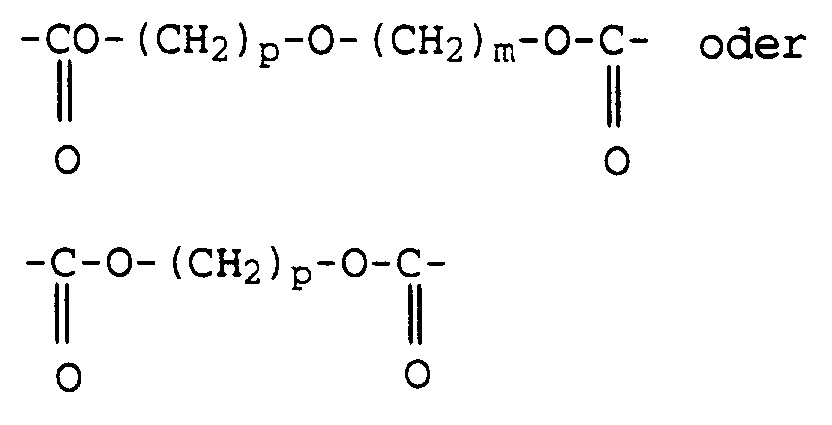
steht,
wobei p und m ganze Zahlen von 1 bis 10 bedeuten, und falls k = 4 ist, A für
steht,
wobei q eine ganze Zahl von 1 bis 4 bedeutet, und
B für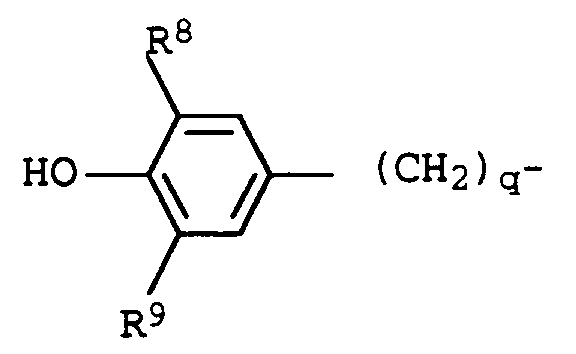
steht,
wobei R⁸ und R⁹ für Wasserstoff, Methyl oder tert. Butyl stehen, einsetzen. - Die Zugabe der Komponente c₄) kann in einigen Fällen zu einer weiteren Verbesserung der Spanßungsrißbeständigkeit nach Bewitterung führen.
- Beispiele für Verbindungen IV, denen im Hinblick auf die vorliegende Erfindung besondere Bedeutung zukommt, sind Octadecyl-3-(3,5-di-tert.-butyl-4-hydroxyphenyl)-propionat (unter dem Namen Irganox®1076 (Ciba Geigy) im Handel), sowie

- Erfindungswesentlich ist die Anwesenheit aller drei Komponenten c₁), c₂) und c₃) in der Komponente C). Fehlt wenigstens eine der Komponenten c₁) bis c₃), so tritt kein synergistischer Effekt hinsichtlich der Verbesserung der Spannungsrißbeständigkeit nach Bewitterung auf.
- Die Mengen der Komponenten c₁) bis c₃) liegen jeweils im Bereich von 1 bis 50, bevorzugt von 30 bis 50 Gew.-%, bezogen auf die Summe der Mengen der Komponenten c₁) bis c₃), wobei sich die einzelnen Mengen zu 100 addieren.
- Die Menge der Komponente c₄) wählt man im Bereich von 0 bis 25 Gew.-%, vorzugsweise 10 bis 25 Gew.-%, bezogen auf die Gesamtmenge der Komponenten c₁) bis c₃).
- Die Menge der Komponente C), bezogen auf das Gesamtgewicht der spannungsrißbeständigen Formmassen, beträgt erfindungsgemäß 0,05 bis 1, vorzugsweise 0,1 bis 0,5 Gew.-%.
- Die erfindungsgemäßen Formmassen können, bezogen auf das Gemisch der Komponenten A) bis C), noch bis zu 20 Gew.-% üblicher Zusatzstoffe enthalten. Als solche kommen beispielsweise in Betracht: Farbstoffe;
Gleit- und Entformungsmittel, die man in der Regel bis zu 3 Gew.-% der thermoplastischen Masse zusetzen kann, beispielsweise Stearinsäure, Stearate, Stearylalkohol, Stearinsäurealkylester und -amide sowie Ester des Pentaerythrits mit langkettigen Fettsäuren
und Antistatika. - Das Vermischen der Komponenten A) bis C) kann in der Regel in den üblichen Vorrichtungen zur Schmelzvermischung wie Doppelschneckenextruder durchgeführt werden. Die Komponenten werden hierbei im allgemeinen bei Temperaturen im Bereich von 200 bis 300°C, verarbeitet. Prinzipiell ist es auch möglich, Lösungen oder Suspensionen der erfindungsgemäßen Komponenten zu vermischen und das Lösungs- oder Suspensionsmittel anschließend zu entfernen.
- Die Verarbeitungsbreite der erfindungsgemäßen, transparenten, schlagzähen Formmassen oberhalb 200°C ist nach den bisherigen Beobachtungen nicht durch Unverträglichkeitserscheinungen eingeschränkt. Die Mischungen der Komponenten A) bis C) kann man zwischen 200 und 300°C ohne Einbußen in der Transparenz, ohne merkbare Vergilbung und ohne eine lästige Geruchsbildung verarbeiten.
- Aus den erfindungsgemäßen Formmassen kann man durch Spritzgießen oder Blasformen Formkörper herstellen. Man kann die Formmassen auch verpressen, kalandrieren, extrudieren oder vakuumformen.
- Die erfindungsgemäßen spannungsrißbeständigen Formmassen weisen gegenüber solchen aus dem Stand der Technik eine sehr gute Spannungsrißbeständigkeit bei Bewitterung auf.
- Für die nachstehenden Beispiele und Vergleichsbeispiele wurden folgende Bestandteile eingesetzt:
-
- A: Copolymerisat aus 99 Gew.-Tl. Methylmethacrylat (MMA) und 1 Gew.-Tl. Methylacrylat, Mw = 110.000 (bestimmt durch Lichtstreuung in Chloroform, Viskositätszahl VZ = 74 ml/g; gemessen in 0,26 gew.-%iger Lösung in CHCl₃)
- B: Copolymerisat aus Styrol und Acrylnitril im Verhältnis 81 : 19 (n²⁵D = 1,575), Mw = 250.000 (bestimmt durch Lichtstreuung in CHCl₃)
- C₁: Tris=(2,4-di-tert.-butylphenyl)-phosphit (Irgafos®168 der Ciba Geigy)
- C₂: Bis-(2,2,6,6-tetramethyl-4-piperidyl)-sebacat (Tinuvin®770 DF der Ciba Geigy)
- C₃: 2-(2'-Hydroxy-5'-methyl-phenyl)-benzotriazol (Tinuvin®P der Ciby Geigy)
- C₄: Octadecyl-3-(3,5-ditert.-butyl-4-hydroxyphenyl)-propionat (Irganox®1076 der Ciba Geigy)
- Anschließend wurde jeweils ein Teil der Granulate auf einer Spritzgußmaschine (Allrounder, Fa. Arburg) bei einer Temperatur von 200°C zu Schulterstäben, wie sie für Festigkeitsmessungen nach DIN 53 455 verwendet werden, verarbeitet.
- Für die Prüfung der Spannungsrißbeständigkeit diente eine Vorrichtung (s. Figur), in die ein Normschulterstab mit den Maßen
- Länge 149 mm (nach der Temperung; vor der Temperung: 150 mm)
- Breite 20 mm (am Ende)
- Breite 10 mm (Stabmitte)
- Höhe 4 mm
- Am freien Ende des Prüfkörpers wurde ein Gewicht von 509 g angebracht. Damit wurde an der Auflagestelle des Stabes eine Biegespannung (σB) von σB = 147,87 N/cm² erzeugt. Die Berechnung erfolgte nach

(aus Technische Formelsammlung, K. Gieck-Verlag, Heilbronn, 1972, S. P3)
wobei - σB =
- Biegespannung in N/cm²
- b =
- Probenbreite in cm (gemessen in der Mitte der Schulterstäbe)
- h =
- Höhe der Probe
- l =
- Stützweite in cm
- F =
- Kraft in N = 509 g * 980,665 *10⁻⁵ N/g = 4,9916 N
- Die so vorbehandelten Prüfkörper wurden zuerst 10 min mit der oben angegebenen Kraft belastet und dann, unter weiterer Belastung, mit einer Mischung aus Wasser und Isopropanol (50 Vol.-%/50 Vol.-%) zur Erzeugung der Spannungskorrosion versetzt.
- Das Isopropanol wurde dabei auf die Oberfläche des beanspruchten Teils des Schulterstabes in Höhe des Auflagestabes aufgebracht. Um einen guten Kontakt des Prüfmediums mit der Kunststoffoberfläche zu gewährleisten, wurde an dieser Stelle ein Filterpapierstück der Länge 1 cm und der Breite 1 cm gelegt. Dieses Filterpapier wurde während des Meßzeitraumes mit Isopropanol als Prüfflüssigkeit stets feucht gehalten.
- Gemessen wurde der Zeitraum zwischen dem Beginn des Anfeuchtens und dem Auftreten des ersten Spannungsrisses. Jeweils 10 Prüfkörper der jeweiligen Mischungen wurden für eine Testreihe eingesetzt. Von den gemessenen Zeiten wurde jeweils der arithmetische Mittelwert gebildet.
- Die Witterungsbeständigkeit wurde nach DIN 53.384-A-8-60 durchgeführt, indem die Prüfkörper zunächst mit UV-Licht jeweils 0, 500, 1000 und 2000 h belichtet wurden. Dann wurde anschließend die Spannungsrißbeständigkeit wie oben beschrieben ermittelt.
- Dabei drückt sich die Witterungs-Beständigkeit durch die Spannungsrißbeständigkeit nach Belichtung aus. Die Spannungsrißbeständigkeit bedeutet, daß die Prüfkörper erst nach der in der Tabelle angegebenen Zeit den ersten Spannungsriß aufwiesen.
- Die Ergebnisse sind in der Tabelle zusammengefaßt.

Zur Herstellung der erfindungsgemäßen Formmassen wurden die Komponenten A) bis C) in einen Extruder (ZSK-25 von Werner & Pfleiderer, Schneckendurchmesser 25 mm; Länge:Durchmesser = 30) entsprechend ihrem Mischungsverhältnis mit einem Durchsatz von 10 kg/h bei einer Temperatur von 240°C aufgeschmolzen und bei 200 U/min vermischt. Die jeweilige Mischung wurde als Strang ausgetragen, gekühlt und granuliert.
Claims (6)
- Spannungsrißbeständige Formmassen, enthaltend im wesentlichenA) 49 bis 99 Gew.-% eines Polymerisates, erhältlich durch Polymerisation eines C₁-C₂₀-Alkylesters der Methacryl- oder Acrylsäure oder Mischungen solcher Ester,B) 0,95 bis 50 Gew.-% eines Polymerisates, erhältlich durch Polymerisation eines Monomerengemisches ausb₁) 75 bis 82 Gew.-% eines vinylaromatischen Monomeren undb₂) 18 bis 25 Gew.-% Acrylnitril oder Methacrylnitril oder eine Mischung davon,sowieC) 0,05 bis 1 Gew.-% einer Mischung, enthaltendc₁) ein Triarylphosphit der allgemeinen Formel I
 c₂) ein Amin der allgemeinen Formel II
 c₃) ein Benzotriazol der allgemeinen Formel III
 c₄) ein Phenol der allgemeinen Formel IV
ABk IV
wobei k 1, 2 oder 4 bedeutet und, falls k = 1 ist, A für -COOR⁷, -CONHR⁷,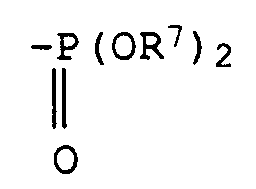
wobei R⁷ C₁-C₂₁-Alkyl bedeutet, und falls k = 2 ist, A für
-CONH-(CH₂)n-CONH-,
wobei p und m ganze Zahlen von 1 bis 10 bedeuten, und falls k = 4 ist, A für
wobei q eine ganze Zahl von 1 bis 4 bedeutet, und
B für
wobei R⁸ und R⁹ für Wasserstoff, Methyl oder tert. Butyl stehen. - Spannungsrißbeständige Formmassen nach Anspruch 1, dadurch gekennzeichnet, daß die Komponenten c₁ bis c₃ jeweils in Mengen im Bereich von 1 bis 50 Gew.-% vorliegen, bezogen auf die Gesamtmenge der Komponenten c₁ bis c₃, mit der Maßgabe, daß sich die Gesamtsumme der Mengen zu 100 addiert, und wobei die Komponente c₄ bis zu 25 Gew.-%, bezogen auf die Gesamtmenge der Komponenten c₁ bis c₃, in der Mischung enthalten ist.
- Spannungsrißbeständige Formmassen nach den Ansprüchen 1 bis 2, dadurch gekennzeichnet, daß die Komponente A) aus einem Monomerengemisch ausa₁) 80 bis 100 Gew.-% eines C₁-C₂₀-Alkylesters der Methacrylsäure, unda₂) 0 bis 20 Gew.-% eines C₁-C₂₀-Alkylesters der Acrylsäurehergestellt ist.
- Verfahren zur Herstellung von spannungsrißbeständigen Formmassen gemäß den Ansprüchen 1 bis 3, dadurch gekennzeichnet, daß man die Komponenten A) bis C) sowie gewünschtenfalls übliche Zusatzstoffe in der Schmelze mischt.
- Verwendung der spannungsrißbeständigen Formmassen gemäß den Ansprüchen 1 bis 3 zur Herstellung von Formkörpern.
- Formkörper, enthaltend spannungsrißbeständige Formmassen gemäß den Ansprüchen 1 bis 3.
Applications Claiming Priority (2)
| Application Number | Priority Date | Filing Date | Title |
|---|---|---|---|
| DE4318077 | 1993-06-01 | ||
| DE4318077A DE4318077A1 (de) | 1993-06-01 | 1993-06-01 | Spannungsrißbeständige Formmassen auf der Basis von PMMA/SAN-Blends |
Publications (2)
| Publication Number | Publication Date |
|---|---|
| EP0627461A1 true EP0627461A1 (de) | 1994-12-07 |
| EP0627461B1 EP0627461B1 (de) | 1998-02-18 |
Family
ID=6489300
Family Applications (1)
| Application Number | Title | Priority Date | Filing Date |
|---|---|---|---|
| EP94108062A Expired - Lifetime EP0627461B1 (de) | 1993-06-01 | 1994-05-26 | Spannungsrissbeständige Formmassen auf der Basis von PMMA/SAN-Blends |
Country Status (4)
| Country | Link |
|---|---|
| US (1) | US5489633A (de) |
| EP (1) | EP0627461B1 (de) |
| DE (2) | DE4318077A1 (de) |
| ES (1) | ES2112444T3 (de) |
Cited By (3)
| Publication number | Priority date | Publication date | Assignee | Title |
|---|---|---|---|---|
| EP0733671A1 (de) * | 1995-03-18 | 1996-09-25 | Röhm Gmbh | Gegen Verfärbung bei thermischer Belastung stabilisierte Polymethacrylat-Formmassen |
| WO2008148595A1 (de) * | 2007-06-04 | 2008-12-11 | Evonik Röhm Gmbh | Zusammensetzung mit erhöhter spannungsrissbeständigkeit |
| WO2008148587A1 (de) * | 2007-06-04 | 2008-12-11 | Evonik Röhm Gmbh | Eingefärbte zusammensetzung mit erhöhter spannungsrissbeständigkeit |
Families Citing this family (3)
| Publication number | Priority date | Publication date | Assignee | Title |
|---|---|---|---|---|
| DE19713895A1 (de) * | 1997-04-03 | 1998-10-08 | Basf Ag | Transparente, schlagzähmodifizierte thermoplastische Formmassen |
| CN107974018B (zh) * | 2016-10-25 | 2020-12-18 | 中国石油化工股份有限公司 | 一种高耐候pmma薄膜专用料及其制备方法和应用 |
| US11807699B2 (en) | 2018-12-19 | 2023-11-07 | Röhm Gmbh | Acrylic composition having an increased resistance to alcohols, oils and fats |
Citations (1)
| Publication number | Priority date | Publication date | Assignee | Title |
|---|---|---|---|---|
| EP0508173A1 (de) * | 1991-04-08 | 1992-10-14 | BASF Aktiengesellschaft | Thermoplastische transparente Formmassen auf PMMA-Basis mit erhöhter Spannungsrissbeständigkeit |
Family Cites Families (3)
| Publication number | Priority date | Publication date | Assignee | Title |
|---|---|---|---|---|
| JPS5266551A (en) * | 1975-12-01 | 1977-06-02 | Adeka Argus Chem Co Ltd | Stabilizer for plastics |
| US5096949A (en) * | 1983-11-07 | 1992-03-17 | The B. F. Goodrich Company | N,N-disubstituted, α-(3,5-dialkyl-4-hydroxyphenyl)-α,α-disubstituted acetamides and composition stabilized therewith |
| EP0243319A3 (de) * | 1986-04-25 | 1989-02-15 | Ciba-Geigy Ag | Gegen Lichteinwirkung stabilisierte Thermoplasten |
-
1993
- 1993-06-01 DE DE4318077A patent/DE4318077A1/de not_active Withdrawn
-
1994
- 1994-05-26 EP EP94108062A patent/EP0627461B1/de not_active Expired - Lifetime
- 1994-05-26 DE DE59405266T patent/DE59405266D1/de not_active Expired - Lifetime
- 1994-05-26 US US08/249,704 patent/US5489633A/en not_active Expired - Lifetime
- 1994-05-26 ES ES94108062T patent/ES2112444T3/es not_active Expired - Lifetime
Patent Citations (1)
| Publication number | Priority date | Publication date | Assignee | Title |
|---|---|---|---|---|
| EP0508173A1 (de) * | 1991-04-08 | 1992-10-14 | BASF Aktiengesellschaft | Thermoplastische transparente Formmassen auf PMMA-Basis mit erhöhter Spannungsrissbeständigkeit |
Cited By (5)
| Publication number | Priority date | Publication date | Assignee | Title |
|---|---|---|---|---|
| EP0733671A1 (de) * | 1995-03-18 | 1996-09-25 | Röhm Gmbh | Gegen Verfärbung bei thermischer Belastung stabilisierte Polymethacrylat-Formmassen |
| WO2008148595A1 (de) * | 2007-06-04 | 2008-12-11 | Evonik Röhm Gmbh | Zusammensetzung mit erhöhter spannungsrissbeständigkeit |
| WO2008148587A1 (de) * | 2007-06-04 | 2008-12-11 | Evonik Röhm Gmbh | Eingefärbte zusammensetzung mit erhöhter spannungsrissbeständigkeit |
| US8178624B2 (en) | 2007-06-04 | 2012-05-15 | Evonik Röhm Gmbh | Coloured composition with increased stress cracking resistance |
| US8227549B2 (en) | 2007-06-04 | 2012-07-24 | Evonik Röhm Gmbh | Composition with increased stress cracking resistance |
Also Published As
| Publication number | Publication date |
|---|---|
| US5489633A (en) | 1996-02-06 |
| EP0627461B1 (de) | 1998-02-18 |
| DE59405266D1 (de) | 1998-03-26 |
| ES2112444T3 (es) | 1998-04-01 |
| DE4318077A1 (de) | 1994-12-08 |
Similar Documents
| Publication | Publication Date | Title |
|---|---|---|
| EP2150582B1 (de) | Zusammensetzung mit erhöhter spannungsrissbeständigkeit | |
| DE3037520C2 (de) | ||
| DE60026780T2 (de) | Flammhemmende thermoplastische Harzzusammensetzung | |
| EP2150581B1 (de) | Eingefärbte zusammensetzung mit erhöhter spannungsrissbeständigkeit | |
| EP0000583B2 (de) | Hochschlagzähe Polyamidmasse und deren Verwendung in Formkörpern | |
| EP2268731B1 (de) | Flammfeste pmma-formmasse | |
| EP0470618B1 (de) | Thermoplastische Polyoxymethylen-Formmasse mit hoher Zähigkeit und ihre Verwendung | |
| EP0062223B1 (de) | Transparente, schlagzähe Formmasse | |
| EP0627461B1 (de) | Spannungsrissbeständige Formmassen auf der Basis von PMMA/SAN-Blends | |
| EP0508173B1 (de) | Thermoplastische transparente Formmassen auf PMMA-Basis mit erhöhter Spannungsrissbeständigkeit | |
| EP0101903B1 (de) | Formmassen aus Vinylchloridpolymerisat, Pfropfpolymeren und polymeren Weichmachern mit hoher Alterungsbeständigkeit | |
| EP0971978B1 (de) | Transparente, schlagzähmodifizierte thermoplastische formmassen | |
| DE19842713B4 (de) | Thermoplastische Harzzusammensetzung | |
| EP0352455A1 (de) | Schlagzähe Polymethylmethacrylat-Formmasse | |
| DE69218199T2 (de) | Polyacetal zusammensetzung | |
| DE69304369T2 (de) | Acetalharzzusammensetzung | |
| DE2654168C2 (de) | Polyamidlegierungen | |
| EP0915130B1 (de) | Alterungsschutzmittel für Co- und Terpolymere des Styrols | |
| DE69326178T2 (de) | Polyacetal Harzzusammensetzung | |
| DE2828517A1 (de) | Transparente schlagzaehe formmassen | |
| EP0869150A2 (de) | Flammwidrige thermoplastische Polycarbonatformmassen mit guter Fliessfähigkeit | |
| EP0591804B1 (de) | Transparente Formmasse | |
| EP0200184A1 (de) | Verstärkte thermoplastische Formmasse | |
| DE2713537B2 (de) | Polyamidlegierungen | |
| EP0562330B1 (de) | Gegenstände aus schwer brennbaren Polymerisaten mit verträglichen (Meth)acrylat-Beschichtungen |
Legal Events
| Date | Code | Title | Description |
|---|---|---|---|
| PUAI | Public reference made under article 153(3) epc to a published international application that has entered the european phase |
Free format text: ORIGINAL CODE: 0009012 |
|
| 17P | Request for examination filed |
Effective date: 19941007 |
|
| AK | Designated contracting states |
Kind code of ref document: A1 Designated state(s): BE CH DE ES FR GB IT LI NL |
|
| GRAG | Despatch of communication of intention to grant |
Free format text: ORIGINAL CODE: EPIDOS AGRA |
|
| GRAG | Despatch of communication of intention to grant |
Free format text: ORIGINAL CODE: EPIDOS AGRA |
|
| GRAH | Despatch of communication of intention to grant a patent |
Free format text: ORIGINAL CODE: EPIDOS IGRA |
|
| 17Q | First examination report despatched |
Effective date: 19970707 |
|
| GRAH | Despatch of communication of intention to grant a patent |
Free format text: ORIGINAL CODE: EPIDOS IGRA |
|
| GRAA | (expected) grant |
Free format text: ORIGINAL CODE: 0009210 |
|
| AK | Designated contracting states |
Kind code of ref document: B1 Designated state(s): BE CH DE ES FR GB IT LI NL |
|
| REG | Reference to a national code |
Ref country code: CH Ref legal event code: EP |
|
| GBT | Gb: translation of ep patent filed (gb section 77(6)(a)/1977) |
Effective date: 19980227 |
|
| REF | Corresponds to: |
Ref document number: 59405266 Country of ref document: DE Date of ref document: 19980326 |
|
| REG | Reference to a national code |
Ref country code: ES Ref legal event code: FG2A Ref document number: 2112444 Country of ref document: ES Kind code of ref document: T3 |
|
| ITF | It: translation for a ep patent filed | ||
| ET | Fr: translation filed | ||
| PLBE | No opposition filed within time limit |
Free format text: ORIGINAL CODE: 0009261 |
|
| STAA | Information on the status of an ep patent application or granted ep patent |
Free format text: STATUS: NO OPPOSITION FILED WITHIN TIME LIMIT |
|
| 26N | No opposition filed | ||
| REG | Reference to a national code |
Ref country code: FR Ref legal event code: TP |
|
| REG | Reference to a national code |
Ref country code: CH Ref legal event code: PUE Owner name: BASF AKTIENGESELLSCHAFT TRANSFER- BARLO PLASTICS G Ref country code: CH Ref legal event code: NV Representative=s name: SCHMAUDER & PARTNER AG PATENTANWALTSBUERO |
|
| REG | Reference to a national code |
Ref country code: GB Ref legal event code: 732E |
|
| REG | Reference to a national code |
Ref country code: ES Ref legal event code: PC2A |
|
| BECA | Be: change of holder's address |
Free format text: 19990722 *BARLO PLASTICS G.M.B.H.:GASSNERALLEE 40, 55120 MAINZ |
|
| REG | Reference to a national code |
Ref country code: GB Ref legal event code: IF02 |
|
| REG | Reference to a national code |
Ref country code: CH Ref legal event code: PFA Owner name: QUINN PLASTICS GMBH Free format text: BARLO PLASTICS GMBH#GASSNERALLEE 40#55120 MAINZ (DE) -TRANSFER TO- QUINN PLASTICS GMBH#GASSNERALLEE 40#55120 MAINZ (DE) |
|
| REG | Reference to a national code |
Ref country code: GB Ref legal event code: 732E |
|
| NLT1 | Nl: modifications of names registered in virtue of documents presented to the patent office pursuant to art. 16 a, paragraph 1 |
Owner name: QUINN PLASTICS GMBH |
|
| REG | Reference to a national code |
Ref country code: FR Ref legal event code: CD |
|
| REG | Reference to a national code |
Ref country code: CH Ref legal event code: PLI Owner name: INEOS ACRYLICS HOLLAND B.V. Free format text: QUINN PLASTICS GMBH#GASSNERALLEE 40#55120 MAINZ (DE) -TRANSFER TO- INEOS ACRYLICS HOLLAND B.V.#MERSEYWEG 10#3197 KG BOTLEK RT (NL) |
|
| REG | Reference to a national code |
Ref country code: FR Ref legal event code: CL |
|
| REG | Reference to a national code |
Ref country code: FR Ref legal event code: CD |
|
| REG | Reference to a national code |
Ref country code: CH Ref legal event code: PFA Owner name: QUINN PLASTICS GMBH Free format text: QUINN PLASTICS GMBH#GASSNERALLEE 40#55120 MAINZ (DE) -TRANSFER TO- QUINN PLASTICS GMBH#GASSNERALLEE 40#55120 MAINZ (DE) |
|
| NLUE | Nl: licence registered with regard to european patents |
Effective date: 20060411 |
|
| REG | Reference to a national code |
Ref country code: ES Ref legal event code: GD2A Effective date: 20070129 |
|
| REG | Reference to a national code |
Ref country code: CH Ref legal event code: PCAR Free format text: SCHMAUDER & PARTNER AG PATENT- UND MARKENANWAELTE VSP;ZWAENGIWEG 7;8038 ZUERICH (CH) |
|
| PGFP | Annual fee paid to national office [announced via postgrant information from national office to epo] |
Ref country code: ES Payment date: 20120525 Year of fee payment: 19 |
|
| PGFP | Annual fee paid to national office [announced via postgrant information from national office to epo] |
Ref country code: DE Payment date: 20130531 Year of fee payment: 20 Ref country code: CH Payment date: 20130523 Year of fee payment: 20 Ref country code: GB Payment date: 20130521 Year of fee payment: 20 |
|
| PGFP | Annual fee paid to national office [announced via postgrant information from national office to epo] |
Ref country code: NL Payment date: 20130521 Year of fee payment: 20 Ref country code: FR Payment date: 20130603 Year of fee payment: 20 Ref country code: IT Payment date: 20130529 Year of fee payment: 20 Ref country code: BE Payment date: 20130521 Year of fee payment: 20 |
|
| REG | Reference to a national code |
Ref country code: DE Ref legal event code: R071 Ref document number: 59405266 Country of ref document: DE |
|
| BE20 | Be: patent expired |
Owner name: *QUINN PLASTICS G.M.B.H. Effective date: 20140526 |
|
| REG | Reference to a national code |
Ref country code: NL Ref legal event code: V4 Effective date: 20140526 |
|
| REG | Reference to a national code |
Ref country code: CH Ref legal event code: PL |
|
| REG | Reference to a national code |
Ref country code: GB Ref legal event code: PE20 Expiry date: 20140525 |
|
| PG25 | Lapsed in a contracting state [announced via postgrant information from national office to epo] |
Ref country code: GB Free format text: LAPSE BECAUSE OF EXPIRATION OF PROTECTION Effective date: 20140525 |
|
| PG25 | Lapsed in a contracting state [announced via postgrant information from national office to epo] |
Ref country code: DE Free format text: LAPSE BECAUSE OF EXPIRATION OF PROTECTION Effective date: 20140527 |
|
| REG | Reference to a national code |
Ref country code: ES Ref legal event code: FD2A Effective date: 20140926 |
|
| PG25 | Lapsed in a contracting state [announced via postgrant information from national office to epo] |
Ref country code: ES Free format text: LAPSE BECAUSE OF EXPIRATION OF PROTECTION Effective date: 20140527 |