EP2150581B1 - Eingefärbte zusammensetzung mit erhöhter spannungsrissbeständigkeit - Google Patents
Eingefärbte zusammensetzung mit erhöhter spannungsrissbeständigkeit Download PDFInfo
- Publication number
- EP2150581B1 EP2150581B1 EP08717918.0A EP08717918A EP2150581B1 EP 2150581 B1 EP2150581 B1 EP 2150581B1 EP 08717918 A EP08717918 A EP 08717918A EP 2150581 B1 EP2150581 B1 EP 2150581B1
- Authority
- EP
- European Patent Office
- Prior art keywords
- weight
- acrylate
- meth
- composition
- polymer
- Prior art date
- Legal status (The legal status is an assumption and is not a legal conclusion. Google has not performed a legal analysis and makes no representation as to the accuracy of the status listed.)
- Not-in-force
Links
- 239000000203 mixture Substances 0.000 title claims description 98
- 238000005336 cracking Methods 0.000 title claims description 18
- 229920001577 copolymer Polymers 0.000 claims description 70
- HEDRZPFGACZZDS-UHFFFAOYSA-N Chloroform Chemical compound ClC(Cl)Cl HEDRZPFGACZZDS-UHFFFAOYSA-N 0.000 claims description 34
- PPBRXRYQALVLMV-UHFFFAOYSA-N Styrene Chemical compound C=CC1=CC=CC=C1 PPBRXRYQALVLMV-UHFFFAOYSA-N 0.000 claims description 33
- 238000000465 moulding Methods 0.000 claims description 32
- VVQNEPGJFQJSBK-UHFFFAOYSA-N Methyl methacrylate Chemical compound COC(=O)C(C)=C VVQNEPGJFQJSBK-UHFFFAOYSA-N 0.000 claims description 24
- 238000012360 testing method Methods 0.000 claims description 21
- 239000000178 monomer Substances 0.000 claims description 19
- 239000000243 solution Substances 0.000 claims description 16
- FPYJFEHAWHCUMM-UHFFFAOYSA-N maleic anhydride Chemical compound O=C1OC(=O)C=C1 FPYJFEHAWHCUMM-UHFFFAOYSA-N 0.000 claims description 15
- 238000000034 method Methods 0.000 claims description 13
- 239000000835 fiber Substances 0.000 claims description 11
- NLHHRLWOUZZQLW-UHFFFAOYSA-N Acrylonitrile Chemical compound C=CC#N NLHHRLWOUZZQLW-UHFFFAOYSA-N 0.000 claims description 10
- BAPJBEWLBFYGME-UHFFFAOYSA-N Methyl acrylate Chemical compound COC(=O)C=C BAPJBEWLBFYGME-UHFFFAOYSA-N 0.000 claims description 8
- GLDOVTGHNKAZLK-UHFFFAOYSA-N octadecan-1-ol Chemical compound CCCCCCCCCCCCCCCCCCO GLDOVTGHNKAZLK-UHFFFAOYSA-N 0.000 claims description 8
- 238000004519 manufacturing process Methods 0.000 claims description 7
- GYCMBHHDWRMZGG-UHFFFAOYSA-N Methylacrylonitrile Chemical compound CC(=C)C#N GYCMBHHDWRMZGG-UHFFFAOYSA-N 0.000 claims description 6
- 230000008859 change Effects 0.000 claims description 6
- 230000008569 process Effects 0.000 claims description 5
- 238000002347 injection Methods 0.000 claims description 4
- 239000007924 injection Substances 0.000 claims description 4
- 239000000314 lubricant Substances 0.000 claims description 4
- 239000003795 chemical substances by application Substances 0.000 claims description 3
- 239000008187 granular material Substances 0.000 claims description 3
- 239000000155 melt Substances 0.000 claims description 3
- 238000004891 communication Methods 0.000 claims description 2
- GOQYKNQRPGWPLP-UHFFFAOYSA-N n-heptadecyl alcohol Natural products CCCCCCCCCCCCCCCCCO GOQYKNQRPGWPLP-UHFFFAOYSA-N 0.000 claims description 2
- 238000010276 construction Methods 0.000 claims 1
- 239000011265 semifinished product Substances 0.000 claims 1
- NIXOWILDQLNWCW-UHFFFAOYSA-M Acrylate Chemical compound [O-]C(=O)C=C NIXOWILDQLNWCW-UHFFFAOYSA-M 0.000 description 26
- -1 aromatic vinyl compound Chemical class 0.000 description 26
- 229920000642 polymer Polymers 0.000 description 17
- 229920003229 poly(methyl methacrylate) Polymers 0.000 description 16
- 239000004926 polymethyl methacrylate Substances 0.000 description 16
- 230000035882 stress Effects 0.000 description 15
- 238000006116 polymerization reaction Methods 0.000 description 14
- 150000001875 compounds Chemical class 0.000 description 12
- KFZMGEQAYNKOFK-UHFFFAOYSA-N Isopropanol Chemical compound CC(C)O KFZMGEQAYNKOFK-UHFFFAOYSA-N 0.000 description 10
- 239000000654 additive Substances 0.000 description 9
- 239000011159 matrix material Substances 0.000 description 9
- IPCSVZSSVZVIGE-UHFFFAOYSA-N hexadecanoic acid Chemical compound CCCCCCCCCCCCCCCC(O)=O IPCSVZSSVZVIGE-UHFFFAOYSA-N 0.000 description 8
- 238000001746 injection moulding Methods 0.000 description 8
- 229920002285 poly(styrene-co-acrylonitrile) Polymers 0.000 description 7
- 239000000945 filler Substances 0.000 description 6
- 229920002554 vinyl polymer Polymers 0.000 description 6
- XLYOFNOQVPJJNP-UHFFFAOYSA-N water Substances O XLYOFNOQVPJJNP-UHFFFAOYSA-N 0.000 description 6
- 239000000975 dye Substances 0.000 description 5
- 230000003287 optical effect Effects 0.000 description 5
- 229920002959 polymer blend Polymers 0.000 description 5
- 238000002360 preparation method Methods 0.000 description 5
- 235000021314 Palmitic acid Nutrition 0.000 description 4
- 239000012963 UV stabilizer Substances 0.000 description 4
- 150000001412 amines Chemical class 0.000 description 4
- 239000003086 colorant Substances 0.000 description 4
- 238000005227 gel permeation chromatography Methods 0.000 description 4
- 125000002496 methyl group Chemical group [H]C([H])([H])* 0.000 description 4
- WQEPLUUGTLDZJY-UHFFFAOYSA-N n-Pentadecanoic acid Natural products CCCCCCCCCCCCCCC(O)=O WQEPLUUGTLDZJY-UHFFFAOYSA-N 0.000 description 4
- 239000004609 Impact Modifier Substances 0.000 description 3
- OWYWGLHRNBIFJP-UHFFFAOYSA-N Ipazine Chemical compound CCN(CC)C1=NC(Cl)=NC(NC(C)C)=N1 OWYWGLHRNBIFJP-UHFFFAOYSA-N 0.000 description 3
- 239000004793 Polystyrene Substances 0.000 description 3
- 230000006750 UV protection Effects 0.000 description 3
- 238000010521 absorption reaction Methods 0.000 description 3
- XITRBUPOXXBIJN-UHFFFAOYSA-N bis(2,2,6,6-tetramethylpiperidin-4-yl) decanedioate Chemical compound C1C(C)(C)NC(C)(C)CC1OC(=O)CCCCCCCCC(=O)OC1CC(C)(C)NC(C)(C)C1 XITRBUPOXXBIJN-UHFFFAOYSA-N 0.000 description 3
- 238000006243 chemical reaction Methods 0.000 description 3
- 238000004040 coloring Methods 0.000 description 3
- 230000000052 comparative effect Effects 0.000 description 3
- 238000001125 extrusion Methods 0.000 description 3
- 229910052739 hydrogen Inorganic materials 0.000 description 3
- 239000001257 hydrogen Substances 0.000 description 3
- 230000006872 improvement Effects 0.000 description 3
- 125000001449 isopropyl group Chemical group [H]C([H])([H])C([H])(*)C([H])([H])[H] 0.000 description 3
- 238000005259 measurement Methods 0.000 description 3
- 239000000049 pigment Substances 0.000 description 3
- 229920000193 polymethacrylate Polymers 0.000 description 3
- 239000002516 radical scavenger Substances 0.000 description 3
- 125000002914 sec-butyl group Chemical group [H]C([H])([H])C([H])([H])C([H])(*)C([H])([H])[H] 0.000 description 3
- 125000000999 tert-butyl group Chemical group [H]C([H])([H])C(*)(C([H])([H])[H])C([H])([H])[H] 0.000 description 3
- DGVVWUTYPXICAM-UHFFFAOYSA-N β‐Mercaptoethanol Chemical compound OCCS DGVVWUTYPXICAM-UHFFFAOYSA-N 0.000 description 3
- FCKXGFANXSHGAW-DTXPUJKBSA-N (2s)-n,n'-bis[(2s)-1-(2-chloro-4-nitroanilino)-1-oxo-3-phenylpropan-2-yl]-2-hydroxybutanediamide Chemical compound C([C@H](NC(=O)C[C@H](O)C(=O)N[C@@H](CC=1C=CC=CC=1)C(=O)NC=1C(=CC(=CC=1)[N+]([O-])=O)Cl)C(=O)NC=1C(=CC(=CC=1)[N+]([O-])=O)Cl)C1=CC=CC=C1 FCKXGFANXSHGAW-DTXPUJKBSA-N 0.000 description 2
- 125000005919 1,2,2-trimethylpropyl group Chemical group 0.000 description 2
- 125000005918 1,2-dimethylbutyl group Chemical group 0.000 description 2
- 125000006218 1-ethylbutyl group Chemical group [H]C([H])([H])C([H])([H])C([H])([H])C([H])(*)C([H])([H])C([H])([H])[H] 0.000 description 2
- 125000006219 1-ethylpentyl group Chemical group [H]C([H])([H])C([H])([H])C([H])([H])C([H])([H])C([H])(*)C([H])([H])C([H])([H])[H] 0.000 description 2
- CARSMBZECAABMO-UHFFFAOYSA-N 3-chloro-2,6-dimethylbenzoic acid Chemical compound CC1=CC=C(Cl)C(C)=C1C(O)=O CARSMBZECAABMO-UHFFFAOYSA-N 0.000 description 2
- 125000003542 3-methylbutan-2-yl group Chemical group [H]C([H])([H])C([H])(*)C([H])(C([H])([H])[H])C([H])([H])[H] 0.000 description 2
- UFHFLCQGNIYNRP-UHFFFAOYSA-N Hydrogen Chemical compound [H][H] UFHFLCQGNIYNRP-UHFFFAOYSA-N 0.000 description 2
- JKIJEFPNVSHHEI-UHFFFAOYSA-N Phenol, 2,4-bis(1,1-dimethylethyl)-, phosphite (3:1) Chemical class CC(C)(C)C1=CC(C(C)(C)C)=CC=C1OP(OC=1C(=CC(=CC=1)C(C)(C)C)C(C)(C)C)OC1=CC=C(C(C)(C)C)C=C1C(C)(C)C JKIJEFPNVSHHEI-UHFFFAOYSA-N 0.000 description 2
- 235000021355 Stearic acid Nutrition 0.000 description 2
- 229920006383 Tyril Polymers 0.000 description 2
- 239000006096 absorbing agent Substances 0.000 description 2
- 239000012964 benzotriazole Substances 0.000 description 2
- RSOILICUEWXSLA-UHFFFAOYSA-N bis(1,2,2,6,6-pentamethylpiperidin-4-yl) decanedioate Chemical compound C1C(C)(C)N(C)C(C)(C)CC1OC(=O)CCCCCCCCC(=O)OC1CC(C)(C)N(C)C(C)(C)C1 RSOILICUEWXSLA-UHFFFAOYSA-N 0.000 description 2
- GOJOVSYIGHASEI-UHFFFAOYSA-N bis(2,2,6,6-tetramethylpiperidin-4-yl) butanedioate Chemical compound C1C(C)(C)NC(C)(C)CC1OC(=O)CCC(=O)OC1CC(C)(C)NC(C)(C)C1 GOJOVSYIGHASEI-UHFFFAOYSA-N 0.000 description 2
- 238000012662 bulk polymerization Methods 0.000 description 2
- 125000004432 carbon atom Chemical group C* 0.000 description 2
- 125000000113 cyclohexyl group Chemical group [H]C1([H])C([H])([H])C([H])([H])C([H])(*)C([H])([H])C1([H])[H] 0.000 description 2
- RJRFVJDPTHVIRV-UHFFFAOYSA-N decane-2,5-dione Chemical compound CCCCCC(=O)CCC(C)=O RJRFVJDPTHVIRV-UHFFFAOYSA-N 0.000 description 2
- 230000003247 decreasing effect Effects 0.000 description 2
- MCPKSFINULVDNX-UHFFFAOYSA-N drometrizole Chemical compound CC1=CC=C(O)C(N2N=C3C=CC=CC3=N2)=C1 MCPKSFINULVDNX-UHFFFAOYSA-N 0.000 description 2
- 125000001495 ethyl group Chemical group [H]C([H])([H])C([H])([H])* 0.000 description 2
- 238000010528 free radical solution polymerization reaction Methods 0.000 description 2
- BXWNKGSJHAJOGX-UHFFFAOYSA-N hexadecan-1-ol Chemical compound CCCCCCCCCCCCCCCCO BXWNKGSJHAJOGX-UHFFFAOYSA-N 0.000 description 2
- 125000000959 isobutyl group Chemical group [H]C([H])([H])C([H])(C([H])([H])[H])C([H])([H])* 0.000 description 2
- 230000007774 longterm Effects 0.000 description 2
- 239000000463 material Substances 0.000 description 2
- 238000002844 melting Methods 0.000 description 2
- 230000008018 melting Effects 0.000 description 2
- 238000002156 mixing Methods 0.000 description 2
- 239000006082 mold release agent Substances 0.000 description 2
- 125000004108 n-butyl group Chemical group [H]C([H])([H])C([H])([H])C([H])([H])C([H])([H])* 0.000 description 2
- QUAMTGJKVDWJEQ-UHFFFAOYSA-N octabenzone Chemical compound OC1=CC(OCCCCCCCC)=CC=C1C(=O)C1=CC=CC=C1 QUAMTGJKVDWJEQ-UHFFFAOYSA-N 0.000 description 2
- QIQXTHQIDYTFRH-UHFFFAOYSA-N octadecanoic acid Chemical compound CCCCCCCCCCCCCCCCCC(O)=O QIQXTHQIDYTFRH-UHFFFAOYSA-N 0.000 description 2
- OQCDKBAXFALNLD-UHFFFAOYSA-N octadecanoic acid Natural products CCCCCCCC(C)CCCCCCCCC(O)=O OQCDKBAXFALNLD-UHFFFAOYSA-N 0.000 description 2
- 239000003960 organic solvent Substances 0.000 description 2
- MUBZPKHOEPUJKR-UHFFFAOYSA-N oxalic acid Substances OC(=O)C(O)=O MUBZPKHOEPUJKR-UHFFFAOYSA-N 0.000 description 2
- 239000003973 paint Substances 0.000 description 2
- 125000003538 pentan-3-yl group Chemical group [H]C([H])([H])C([H])([H])C([H])(*)C([H])([H])C([H])([H])[H] 0.000 description 2
- 229920003023 plastic Polymers 0.000 description 2
- 239000004033 plastic Substances 0.000 description 2
- 238000013001 point bending Methods 0.000 description 2
- 239000003505 polymerization initiator Substances 0.000 description 2
- 238000012545 processing Methods 0.000 description 2
- 239000011814 protection agent Substances 0.000 description 2
- 125000003548 sec-pentyl group Chemical group [H]C([H])([H])C([H])([H])C([H])([H])C([H])(*)C([H])([H])[H] 0.000 description 2
- 230000000087 stabilizing effect Effects 0.000 description 2
- 239000000126 substance Substances 0.000 description 2
- 125000001973 tert-pentyl group Chemical group [H]C([H])([H])C([H])([H])C(*)(C([H])([H])[H])C([H])([H])[H] 0.000 description 2
- 230000000007 visual effect Effects 0.000 description 2
- YAXWOADCWUUUNX-UHFFFAOYSA-N 1,2,2,3-tetramethylpiperidine Chemical group CC1CCCN(C)C1(C)C YAXWOADCWUUUNX-UHFFFAOYSA-N 0.000 description 1
- GDACHVUBONYTFV-UHFFFAOYSA-N 1-(benzotriazol-2-yl)-3-(2-methylheptyl)pentadecan-2-ol Chemical compound C1=CC=CC2=NN(CC(O)C(CC(C)CCCCC)CCCCCCCCCCCC)N=C21 GDACHVUBONYTFV-UHFFFAOYSA-N 0.000 description 1
- MEZZCSHVIGVWFI-UHFFFAOYSA-N 2,2'-Dihydroxy-4-methoxybenzophenone Chemical compound OC1=CC(OC)=CC=C1C(=O)C1=CC=CC=C1O MEZZCSHVIGVWFI-UHFFFAOYSA-N 0.000 description 1
- ZXDDPOHVAMWLBH-UHFFFAOYSA-N 2,4-Dihydroxybenzophenone Chemical compound OC1=CC(O)=CC=C1C(=O)C1=CC=CC=C1 ZXDDPOHVAMWLBH-UHFFFAOYSA-N 0.000 description 1
- GJDRKHHGPHLVNI-UHFFFAOYSA-N 2,6-ditert-butyl-4-(diethoxyphosphorylmethyl)phenol Chemical compound CCOP(=O)(OCC)CC1=CC(C(C)(C)C)=C(O)C(C(C)(C)C)=C1 GJDRKHHGPHLVNI-UHFFFAOYSA-N 0.000 description 1
- JQOWEGFTJQAHAV-UHFFFAOYSA-N 2-(2-hydroxypiperidin-1-yl)butanedioic acid Chemical compound OC1N(CCCC1)C(CC(=O)O)C(=O)O JQOWEGFTJQAHAV-UHFFFAOYSA-N 0.000 description 1
- ZMWRRFHBXARRRT-UHFFFAOYSA-N 2-(benzotriazol-2-yl)-4,6-bis(2-methylbutan-2-yl)phenol Chemical compound CCC(C)(C)C1=CC(C(C)(C)CC)=CC(N2N=C3C=CC=CC3=N2)=C1O ZMWRRFHBXARRRT-UHFFFAOYSA-N 0.000 description 1
- OLFNXLXEGXRUOI-UHFFFAOYSA-N 2-(benzotriazol-2-yl)-4,6-bis(2-phenylpropan-2-yl)phenol Chemical compound C=1C(N2N=C3C=CC=CC3=N2)=C(O)C(C(C)(C)C=2C=CC=CC=2)=CC=1C(C)(C)C1=CC=CC=C1 OLFNXLXEGXRUOI-UHFFFAOYSA-N 0.000 description 1
- LHPPDQUVECZQSW-UHFFFAOYSA-N 2-(benzotriazol-2-yl)-4,6-ditert-butylphenol Chemical compound CC(C)(C)C1=CC(C(C)(C)C)=CC(N2N=C3C=CC=CC3=N2)=C1O LHPPDQUVECZQSW-UHFFFAOYSA-N 0.000 description 1
- IYAZLDLPUNDVAG-UHFFFAOYSA-N 2-(benzotriazol-2-yl)-4-(2,4,4-trimethylpentan-2-yl)phenol Chemical compound CC(C)(C)CC(C)(C)C1=CC=C(O)C(N2N=C3C=CC=CC3=N2)=C1 IYAZLDLPUNDVAG-UHFFFAOYSA-N 0.000 description 1
- RTNVDKBRTXEWQE-UHFFFAOYSA-N 2-(benzotriazol-2-yl)-6-butan-2-yl-4-tert-butylphenol Chemical compound CCC(C)C1=CC(C(C)(C)C)=CC(N2N=C3C=CC=CC3=N2)=C1O RTNVDKBRTXEWQE-UHFFFAOYSA-N 0.000 description 1
- QSRJVOOOWGXUDY-UHFFFAOYSA-N 2-[2-[2-[3-(3-tert-butyl-4-hydroxy-5-methylphenyl)propanoyloxy]ethoxy]ethoxy]ethyl 3-(3-tert-butyl-4-hydroxy-5-methylphenyl)propanoate Chemical compound CC(C)(C)C1=C(O)C(C)=CC(CCC(=O)OCCOCCOCCOC(=O)CCC=2C=C(C(O)=C(C)C=2)C(C)(C)C)=C1 QSRJVOOOWGXUDY-UHFFFAOYSA-N 0.000 description 1
- SBYMUDUGTIKLCR-UHFFFAOYSA-N 2-chloroethenylbenzene Chemical compound ClC=CC1=CC=CC=C1 SBYMUDUGTIKLCR-UHFFFAOYSA-N 0.000 description 1
- 125000006176 2-ethylbutyl group Chemical group [H]C([H])([H])C([H])([H])C([H])(C([H])([H])*)C([H])([H])C([H])([H])[H] 0.000 description 1
- 125000004493 2-methylbut-1-yl group Chemical group CC(C*)CC 0.000 description 1
- 125000003229 2-methylhexyl group Chemical group [H]C([H])([H])C([H])([H])C([H])([H])C([H])([H])C([H])(C([H])([H])[H])C([H])([H])* 0.000 description 1
- 125000005916 2-methylpentyl group Chemical group 0.000 description 1
- 125000003903 2-propenyl group Chemical group [H]C([*])([H])C([H])=C([H])[H] 0.000 description 1
- 125000003469 3-methylhexyl group Chemical group [H]C([H])([H])C([H])([H])C([H])([H])C([H])(C([H])([H])[H])C([H])([H])C([H])([H])* 0.000 description 1
- 125000005917 3-methylpentyl group Chemical group 0.000 description 1
- UWSMKYBKUPAEJQ-UHFFFAOYSA-N 5-Chloro-2-(3,5-di-tert-butyl-2-hydroxyphenyl)-2H-benzotriazole Chemical compound CC(C)(C)C1=CC(C(C)(C)C)=CC(N2N=C3C=C(Cl)C=CC3=N2)=C1O UWSMKYBKUPAEJQ-UHFFFAOYSA-N 0.000 description 1
- ZVVFVKJZNVSANF-UHFFFAOYSA-N 6-[3-(3,5-ditert-butyl-4-hydroxyphenyl)propanoyloxy]hexyl 3-(3,5-ditert-butyl-4-hydroxyphenyl)propanoate Chemical compound CC(C)(C)C1=C(O)C(C(C)(C)C)=CC(CCC(=O)OCCCCCCOC(=O)CCC=2C=C(C(O)=C(C=2)C(C)(C)C)C(C)(C)C)=C1 ZVVFVKJZNVSANF-UHFFFAOYSA-N 0.000 description 1
- 0 C*O*C(*OC(C)=O)N Chemical compound C*O*C(*OC(C)=O)N 0.000 description 1
- SNRUBQQJIBEYMU-UHFFFAOYSA-N Dodecane Natural products CCCCCCCCCCCC SNRUBQQJIBEYMU-UHFFFAOYSA-N 0.000 description 1
- OKOBUGCCXMIKDM-UHFFFAOYSA-N Irganox 1098 Chemical compound CC(C)(C)C1=C(O)C(C(C)(C)C)=CC(CCC(=O)NCCCCCCNC(=O)CCC=2C=C(C(O)=C(C=2)C(C)(C)C)C(C)(C)C)=C1 OKOBUGCCXMIKDM-UHFFFAOYSA-N 0.000 description 1
- 239000006057 Non-nutritive feed additive Substances 0.000 description 1
- ISWSIDIOOBJBQZ-UHFFFAOYSA-N Phenol Chemical compound OC1=CC=CC=C1 ISWSIDIOOBJBQZ-UHFFFAOYSA-N 0.000 description 1
- BGYHLZZASRKEJE-UHFFFAOYSA-N [3-[3-(3,5-ditert-butyl-4-hydroxyphenyl)propanoyloxy]-2,2-bis[3-(3,5-ditert-butyl-4-hydroxyphenyl)propanoyloxymethyl]propyl] 3-(3,5-ditert-butyl-4-hydroxyphenyl)propanoate Chemical compound CC(C)(C)C1=C(O)C(C(C)(C)C)=CC(CCC(=O)OCC(COC(=O)CCC=2C=C(C(O)=C(C=2)C(C)(C)C)C(C)(C)C)(COC(=O)CCC=2C=C(C(O)=C(C=2)C(C)(C)C)C(C)(C)C)COC(=O)CCC=2C=C(C(O)=C(C=2)C(C)(C)C)C(C)(C)C)=C1 BGYHLZZASRKEJE-UHFFFAOYSA-N 0.000 description 1
- NIXOWILDQLNWCW-UHFFFAOYSA-N acrylic acid group Chemical group C(C=C)(=O)O NIXOWILDQLNWCW-UHFFFAOYSA-N 0.000 description 1
- 150000001253 acrylic acids Chemical class 0.000 description 1
- 229920000800 acrylic rubber Polymers 0.000 description 1
- 125000002252 acyl group Chemical group 0.000 description 1
- 230000000996 additive effect Effects 0.000 description 1
- 239000002671 adjuvant Substances 0.000 description 1
- 230000002411 adverse Effects 0.000 description 1
- 230000032683 aging Effects 0.000 description 1
- 125000003545 alkoxy group Chemical group 0.000 description 1
- 125000005250 alkyl acrylate group Chemical group 0.000 description 1
- 125000000217 alkyl group Chemical group 0.000 description 1
- XYLMUPLGERFSHI-UHFFFAOYSA-N alpha-Methylstyrene Chemical compound CC(=C)C1=CC=CC=C1 XYLMUPLGERFSHI-UHFFFAOYSA-N 0.000 description 1
- 239000003963 antioxidant agent Substances 0.000 description 1
- 238000000149 argon plasma sintering Methods 0.000 description 1
- 150000005840 aryl radicals Chemical class 0.000 description 1
- 238000000418 atomic force spectrum Methods 0.000 description 1
- IUKQLMGVFMDQDP-UHFFFAOYSA-N azane;piperidine Chemical compound N.C1CCNCC1 IUKQLMGVFMDQDP-UHFFFAOYSA-N 0.000 description 1
- 239000012965 benzophenone Substances 0.000 description 1
- 150000008366 benzophenones Chemical class 0.000 description 1
- QRUDEWIWKLJBPS-UHFFFAOYSA-N benzotriazole Chemical compound C1=CC=C2N[N][N]C2=C1 QRUDEWIWKLJBPS-UHFFFAOYSA-N 0.000 description 1
- 150000001565 benzotriazoles Chemical class 0.000 description 1
- 230000005540 biological transmission Effects 0.000 description 1
- WXNRYSGJLQFHBR-UHFFFAOYSA-N bis(2,4-dihydroxyphenyl)methanone Chemical compound OC1=CC(O)=CC=C1C(=O)C1=CC=C(O)C=C1O WXNRYSGJLQFHBR-UHFFFAOYSA-N 0.000 description 1
- SODJJEXAWOSSON-UHFFFAOYSA-N bis(2-hydroxy-4-methoxyphenyl)methanone Chemical compound OC1=CC(OC)=CC=C1C(=O)C1=CC=C(OC)C=C1O SODJJEXAWOSSON-UHFFFAOYSA-N 0.000 description 1
- 125000000484 butyl group Chemical group [H]C([*])([H])C([H])([H])C([H])([H])C([H])([H])[H] 0.000 description 1
- 238000003490 calendering Methods 0.000 description 1
- 229910052799 carbon Inorganic materials 0.000 description 1
- 239000011248 coating agent Substances 0.000 description 1
- 238000000576 coating method Methods 0.000 description 1
- 239000000470 constituent Substances 0.000 description 1
- 238000007334 copolymerization reaction Methods 0.000 description 1
- 125000000582 cycloheptyl group Chemical group [H]C1([H])C([H])([H])C([H])([H])C([H])([H])C([H])(*)C([H])([H])C1([H])[H] 0.000 description 1
- 125000000640 cyclooctyl group Chemical group [H]C1([H])C([H])([H])C([H])([H])C([H])([H])C([H])(*)C([H])([H])C([H])([H])C1([H])[H] 0.000 description 1
- 125000001511 cyclopentyl group Chemical group [H]C1([H])C([H])([H])C([H])([H])C([H])(*)C1([H])[H] 0.000 description 1
- 125000002704 decyl group Chemical group [H]C([H])([H])C([H])([H])C([H])([H])C([H])([H])C([H])([H])C([H])([H])C([H])([H])C([H])([H])C([H])([H])C([H])([H])* 0.000 description 1
- 239000003599 detergent Substances 0.000 description 1
- 238000010586 diagram Methods 0.000 description 1
- 125000003438 dodecyl group Chemical group [H]C([H])([H])C([H])([H])C([H])([H])C([H])([H])C([H])([H])C([H])([H])C([H])([H])C([H])([H])C([H])([H])C([H])([H])C([H])([H])C([H])([H])* 0.000 description 1
- 229920001971 elastomer Polymers 0.000 description 1
- 239000000839 emulsion Substances 0.000 description 1
- 238000007720 emulsion polymerization reaction Methods 0.000 description 1
- 230000007613 environmental effect Effects 0.000 description 1
- IAJNXBNRYMEYAZ-UHFFFAOYSA-N ethyl 2-cyano-3,3-diphenylprop-2-enoate Chemical compound C=1C=CC=CC=1C(=C(C#N)C(=O)OCC)C1=CC=CC=C1 IAJNXBNRYMEYAZ-UHFFFAOYSA-N 0.000 description 1
- DNJIEGIFACGWOD-UHFFFAOYSA-N ethyl mercaptane Natural products CCS DNJIEGIFACGWOD-UHFFFAOYSA-N 0.000 description 1
- 238000002474 experimental method Methods 0.000 description 1
- 150000002191 fatty alcohols Chemical class 0.000 description 1
- 239000010408 film Substances 0.000 description 1
- 230000006870 function Effects 0.000 description 1
- 150000002431 hydrogen Chemical class 0.000 description 1
- 125000002887 hydroxy group Chemical group [H]O* 0.000 description 1
- 230000001771 impaired effect Effects 0.000 description 1
- 230000005764 inhibitory process Effects 0.000 description 1
- 229910052500 inorganic mineral Inorganic materials 0.000 description 1
- 125000004491 isohexyl group Chemical group C(CCC(C)C)* 0.000 description 1
- 125000001972 isopentyl group Chemical group [H]C([H])([H])C([H])(C([H])([H])[H])C([H])([H])C([H])([H])* 0.000 description 1
- 238000004898 kneading Methods 0.000 description 1
- 239000004922 lacquer Substances 0.000 description 1
- 239000004611 light stabiliser Substances 0.000 description 1
- 125000005395 methacrylic acid group Chemical group 0.000 description 1
- 239000011707 mineral Substances 0.000 description 1
- 125000003136 n-heptyl group Chemical group [H]C([H])([H])C([H])([H])C([H])([H])C([H])([H])C([H])([H])C([H])([H])C([H])([H])* 0.000 description 1
- 125000001280 n-hexyl group Chemical group C(CCCCC)* 0.000 description 1
- 125000000740 n-pentyl group Chemical group [H]C([H])([H])C([H])([H])C([H])([H])C([H])([H])C([H])([H])* 0.000 description 1
- 125000001624 naphthyl group Chemical group 0.000 description 1
- 125000001971 neopentyl group Chemical group [H]C([*])([H])C(C([H])([H])[H])(C([H])([H])[H])C([H])([H])[H] 0.000 description 1
- 125000001400 nonyl group Chemical group [H]C([*])([H])C([H])([H])C([H])([H])C([H])([H])C([H])([H])C([H])([H])C([H])([H])C([H])([H])C([H])([H])[H] 0.000 description 1
- SSDSCDGVMJFTEQ-UHFFFAOYSA-N octadecyl 3-(3,5-ditert-butyl-4-hydroxyphenyl)propanoate Chemical compound CCCCCCCCCCCCCCCCCCOC(=O)CCC1=CC(C(C)(C)C)=C(O)C(C(C)(C)C)=C1 SSDSCDGVMJFTEQ-UHFFFAOYSA-N 0.000 description 1
- 125000002347 octyl group Chemical group [H]C([*])([H])C([H])([H])C([H])([H])C([H])([H])C([H])([H])C([H])([H])C([H])([H])C([H])([H])[H] 0.000 description 1
- DXGLGDHPHMLXJC-UHFFFAOYSA-N oxybenzone Chemical compound OC1=CC(OC)=CC=C1C(=O)C1=CC=CC=C1 DXGLGDHPHMLXJC-UHFFFAOYSA-N 0.000 description 1
- GJVFBWCTGUSGDD-UHFFFAOYSA-L pentamethonium bromide Chemical compound [Br-].[Br-].C[N+](C)(C)CCCCC[N+](C)(C)C GJVFBWCTGUSGDD-UHFFFAOYSA-L 0.000 description 1
- 230000008447 perception Effects 0.000 description 1
- FCJSHPDYVMKCHI-UHFFFAOYSA-N phenyl benzoate Chemical class C=1C=CC=CC=1C(=O)OC1=CC=CC=C1 FCJSHPDYVMKCHI-UHFFFAOYSA-N 0.000 description 1
- 125000001997 phenyl group Chemical group [H]C1=C([H])C([H])=C(*)C([H])=C1[H] 0.000 description 1
- AQSJGOWTSHOLKH-UHFFFAOYSA-N phosphite(3-) Chemical class [O-]P([O-])[O-] AQSJGOWTSHOLKH-UHFFFAOYSA-N 0.000 description 1
- 229920002223 polystyrene Polymers 0.000 description 1
- 239000000843 powder Substances 0.000 description 1
- HJWLCRVIBGQPNF-UHFFFAOYSA-N prop-2-enylbenzene Chemical compound C=CCC1=CC=CC=C1 HJWLCRVIBGQPNF-UHFFFAOYSA-N 0.000 description 1
- 125000001436 propyl group Chemical group [H]C([*])([H])C([H])([H])C([H])([H])[H] 0.000 description 1
- 238000010526 radical polymerization reaction Methods 0.000 description 1
- 150000003254 radicals Chemical class 0.000 description 1
- 238000005096 rolling process Methods 0.000 description 1
- 229920006395 saturated elastomer Polymers 0.000 description 1
- 235000003441 saturated fatty acids Nutrition 0.000 description 1
- 150000004671 saturated fatty acids Chemical class 0.000 description 1
- 150000003384 small molecules Chemical class 0.000 description 1
- 230000006641 stabilisation Effects 0.000 description 1
- 238000011105 stabilization Methods 0.000 description 1
- 239000007858 starting material Substances 0.000 description 1
- 239000008117 stearic acid Substances 0.000 description 1
- 229920000638 styrene acrylonitrile Polymers 0.000 description 1
- 125000001424 substituent group Chemical group 0.000 description 1
- 238000010557 suspension polymerization reaction Methods 0.000 description 1
- 230000002195 synergetic effect Effects 0.000 description 1
- KQYLUTYUZIVHND-UHFFFAOYSA-N tert-butyl 2,2-dimethyloctaneperoxoate Chemical compound CCCCCCC(C)(C)C(=O)OOC(C)(C)C KQYLUTYUZIVHND-UHFFFAOYSA-N 0.000 description 1
- 238000004154 testing of material Methods 0.000 description 1
- 239000003017 thermal stabilizer Substances 0.000 description 1
- 230000036962 time dependent Effects 0.000 description 1
- 230000009466 transformation Effects 0.000 description 1
- 238000002834 transmittance Methods 0.000 description 1
- WGKLOLBTFWFKOD-UHFFFAOYSA-N tris(2-nonylphenyl) phosphite Chemical compound CCCCCCCCCC1=CC=CC=C1OP(OC=1C(=CC=CC=1)CCCCCCCCC)OC1=CC=CC=C1CCCCCCCCC WGKLOLBTFWFKOD-UHFFFAOYSA-N 0.000 description 1
- 125000002948 undecyl group Chemical group [H]C([*])([H])C([H])([H])C([H])([H])C([H])([H])C([H])([H])C([H])([H])C([H])([H])C([H])([H])C([H])([H])C([H])([H])C([H])([H])[H] 0.000 description 1
- 239000002966 varnish Substances 0.000 description 1
- 239000003039 volatile agent Substances 0.000 description 1
- 238000009736 wetting Methods 0.000 description 1
Images
Classifications
-
- C—CHEMISTRY; METALLURGY
- C08—ORGANIC MACROMOLECULAR COMPOUNDS; THEIR PREPARATION OR CHEMICAL WORKING-UP; COMPOSITIONS BASED THEREON
- C08L—COMPOSITIONS OF MACROMOLECULAR COMPOUNDS
- C08L33/00—Compositions of homopolymers or copolymers of compounds having one or more unsaturated aliphatic radicals, each having only one carbon-to-carbon double bond, and only one being terminated by only one carboxyl radical, or of salts, anhydrides, esters, amides, imides or nitriles thereof; Compositions of derivatives of such polymers
- C08L33/04—Homopolymers or copolymers of esters
- C08L33/06—Homopolymers or copolymers of esters of esters containing only carbon, hydrogen and oxygen, which oxygen atoms are present only as part of the carboxyl radical
- C08L33/08—Homopolymers or copolymers of acrylic acid esters
-
- C—CHEMISTRY; METALLURGY
- C08—ORGANIC MACROMOLECULAR COMPOUNDS; THEIR PREPARATION OR CHEMICAL WORKING-UP; COMPOSITIONS BASED THEREON
- C08J—WORKING-UP; GENERAL PROCESSES OF COMPOUNDING; AFTER-TREATMENT NOT COVERED BY SUBCLASSES C08B, C08C, C08F, C08G or C08H
- C08J5/00—Manufacture of articles or shaped materials containing macromolecular substances
- C08J5/18—Manufacture of films or sheets
-
- C—CHEMISTRY; METALLURGY
- C08—ORGANIC MACROMOLECULAR COMPOUNDS; THEIR PREPARATION OR CHEMICAL WORKING-UP; COMPOSITIONS BASED THEREON
- C08L—COMPOSITIONS OF MACROMOLECULAR COMPOUNDS
- C08L33/00—Compositions of homopolymers or copolymers of compounds having one or more unsaturated aliphatic radicals, each having only one carbon-to-carbon double bond, and only one being terminated by only one carboxyl radical, or of salts, anhydrides, esters, amides, imides or nitriles thereof; Compositions of derivatives of such polymers
- C08L33/04—Homopolymers or copolymers of esters
- C08L33/06—Homopolymers or copolymers of esters of esters containing only carbon, hydrogen and oxygen, which oxygen atoms are present only as part of the carboxyl radical
- C08L33/10—Homopolymers or copolymers of methacrylic acid esters
-
- C—CHEMISTRY; METALLURGY
- C08—ORGANIC MACROMOLECULAR COMPOUNDS; THEIR PREPARATION OR CHEMICAL WORKING-UP; COMPOSITIONS BASED THEREON
- C08L—COMPOSITIONS OF MACROMOLECULAR COMPOUNDS
- C08L25/00—Compositions of, homopolymers or copolymers of compounds having one or more unsaturated aliphatic radicals, each having only one carbon-to-carbon double bond, and at least one being terminated by an aromatic carbocyclic ring; Compositions of derivatives of such polymers
- C08L25/02—Homopolymers or copolymers of hydrocarbons
- C08L25/04—Homopolymers or copolymers of styrene
- C08L25/08—Copolymers of styrene
- C08L25/12—Copolymers of styrene with unsaturated nitriles
Definitions
- the present invention relates to a colored composition having increased stress cracking resistance and to its use.
- PMMA compositions have long been used in the automotive field, especially as tail lamp covers and instrument covers. In recent years, this material is also increasingly used for covered colored molded parts. Applications are here u. a. Spoilers, pillar covers, window guide rails, exterior mirrors and exterior mirror feet.
- PMMA compositions are usually processed via extrusion, coextrusion, injection molding or multi-component injection molding into molded articles for outdoor use.
- at least the uppermost layer is PMMA. Due to the weathering stability and surface hardness of PMMA, it protects the underlying matrices.
- the moldings are often colored dark (the PMMA layer itself or underlying layers), they are strongly heated under sunlight. Therefore, a requirement for the PMMA composition is a high heat distortion resistance, so that the corresponding environmental tests of the molded articles are passed and no softening of the molded article occurs.
- the moldings must have a high stress cracking resistance and a high chemical resistance, since these applications often with Detergents, gasoline and other aggressive agents come into contact.
- EP 0 508 173 B1 describes the use of polymer blends of 55 wt .-% to 98 wt .-% PMMA, 2 wt .-% to 45 wt .-% of a styrene-acrylonitrile copolymer (SAN) and optional other processing aids for the production of various molded parts.
- the PMMA is reported to contain at least 80% by weight of methyl methacrylate (MMA) units.
- stress cracking is observed after 2.1 minutes to 5.5 minutes. However, this value is not comparable to the results available after the ESCR test.
- the Vicat softening temperature of an exemplary PMMA-SAN polymer blend is 106 ° C.
- EP 0 627 461 B1 a weather-resistant blend of 49 wt .-% to 99 wt .-% PMMA and 0.95 wt .-% to 50 wt .-% SAN and 0.05 wt .-% to 1 wt .-% of a particular stabilization package.
- PMMA contains at least 80 wt% MMA units.
- stress cracking is observed after 680 s to 750 s. However, this value is not comparable to the results available after the ESCR test. An improvement in the heat resistance is not described.
- JP 03-217446 A2 relates to a blend of a copolymer of vinyl aromatic monomers and (meth) acrylic acids, PMMA and SAN.
- the blends have comparatively high heat distortion values (114 ° C.).
- the transmission of the shaped body is only 84%.
- the refractive index difference between the mixture of components a) and b) and component c) should be at most 0.005. Nevertheless, such compositions show a strong dependence of the optical properties, in particular the transparency and / or the color impression, of the temperature.
- the present invention was based on the object of demonstrating possibilities for improving the stress cracking resistance of colored compositions and of moldings.
- the highest possible heat resistance and the best possible optical properties should be achieved.
- the lowest possible temperature dependence of the visual appearance of the compositions and the moldings was desired.
- the best possible mechanical properties, the best possible processability and the highest possible long-term stability and weathering resistance should be realized.
- Particularly expedient processes for the preparation of the novel compositions and moldings as well as particularly advantageous applications should also be mentioned.
- the invention relates to a molding composition which contains at least one (meth) acrylate (co) polymer A).
- the (meth) acrylate (co) polymer can be present both as a single polymer and as a mixture of several polymers.
- the composition is u. a. characterized in that it comprises at least one (meth) acrylate (co) polymer a) having a solution viscosity in chloroform at 25 ° C. (ISO 1628 - Part 6) of greater than 55 ml / g, preferably greater than or equal to 65 ml / g, in particular in the range of 68 ml / g to 75 ml / g.
- This may correspond to a molecular weight M w (weight average) of 160000 g / mol (determination of M w by gel permeation chromatography with reference to polymethyl methacrylate as calibration standard).
- M w weight average
- the determination of the molecular weight Mw can be carried out, for example, by gel permeation chromatography or by scattered light method (see, for example, US Pat. BHF Mark et al., Encyclopedia of Polymer Science and Engineering, 2nd. Edition, Vol. 10, pages 1 ff., J. Wiley, 1989 ).
- the (meth) acrylate (co) polymer a) is a copolymer of methyl methacrylate, styrene and maleic anhydride.
- Corresponding copolymers can be obtained in a known manner by free-radical polymerization.
- EP-A 264 590 describes z.
- Example a method for producing a molding composition from a monomer mixture of methyl methacrylate, vinyl aromatic, maleic anhydride and optionally from a lower alkyl acrylate, wherein the polymerization is carried out to a conversion of 50% in the presence or absence of a non-polymerizable organic solvent and in which the polymerization is continued from a conversion of at least 50% in the temperature range from 75 ° C to 150 ° C in the presence of an organic solvent to a conversion of at least 80% and then the low molecular weight volatiles are evaporated.
- JP-A 60-147 417 a method for producing a highly heat-resistant polymethacrylate molding composition is described in which a monomer mixture of methyl methacrylate, maleic anhydride and at least one vinyl aromatic in a polymerization reactor, which is suitable for solution or bulk polymerization, fed at a temperature of 100 ° C to 180 ° C and is polymerized.
- DE-OS 44 40 219 describes another manufacturing process.
- the proportion of (meth) acrylate (co) polymer a), based on the total weight of all (meth) acrylate (co) polymers, is preferably at least 75% by weight, preferably at least 85% by weight, in particular at least 95% by weight. -%.
- the (meth) acrylate (co) polymer a) is a Copolymer of 95 wt .-% to 99.5 wt .-% of methyl methacrylate and 0.5 wt .-% to 5 wt .-%, preferably 1 wt .-% to 4 wt .-% of methyl acrylate.
- the composition further contains at least one low molecular weight (meth) acrylate (co) polymer b) having a solution viscosity in chloroform at 25 ° C. (ISO 1628 part 6) of less than or equal to 55 ml / g, preferably less than or equal to 50 ml / g , in particular 45 ml / g to 55 ml / g.
- low molecular weight (meth) acrylate (co) polymer b) having a solution viscosity in chloroform at 25 ° C.
- This may correspond to a weight average molecular weight M w of 95,000 g / mol (determination of M w by gel permeation chromatography with reference to polymethyl methacrylate as calibration standard).
- the determination of the molecular weight Mw can be carried out, for example, by gel permeation chromatography or by scattered light method (see, for example, US Pat. BHF Mark et al., Encyclopedia of Polymer Science and Engineering, 2nd. Edition, Vol. 10, pages 1 ff., J. Wiley, 1989 ).
- the (meth) acrylate (co) polymer b) is a copolymer of methyl methacrylate, styrene and maleic anhydride.
- Valuable instructions for the preparation of such copolymers may include the EP-A 264 590 , of the JP-A 60-147 417 and the DE-OS 44 40 219 be removed.
- the (meth) acrylate (co) polymer b) may, for. Example, be prepared by reacting a monomer mixture of z. B. 6355 g of methyl methacrylate, 1271 g of styrene and 847 g of maleic anhydride with 1.9 g of tert-Butylperneodecanoat and 0.85 g of tert-butyl peroxy-3,5,5-trimethylhexanoate as a polymerization initiator and 19.6 g of 2-mercaptoethanol Molecular weight regulator and added to 4.3 g of palmitic acid. The resulting mixture can be filled in a polymerization chamber and z. B. degassed for 10 minutes.
- the (meth) acrylate (co) polymers a) and b) are advantageously present in the following proportions, which are preferably at least 75 wt .-%, preferably at least 90 wt .-%, in particular to 100 wt .-%, based on the total weight of all (meth) acrylate (co) polymers.
- Suitable vinylaromatic monomers are, in particular, styrene, .alpha.-methystyrene, tert.-butylstyrene, monochlorostyrene and vinyltoluene, particularly preferably styrene and .alpha.-methylstyrene.
- the molecular weight is determined in a manner known per se, in particular by light scattering methods.
- the amount of component B), based on the total weight of the molding composition, according to the invention is 0.5 wt .-% to 50.0 wt .-%, preferably 20.0 wt .-% to 40.0 wt .-%.
- the amounts of components A) and B) preferably add up to at least 75 wt .-%, preferably at least 90 wt .-%, in particular to 100 wt .-%, based on the total weight of the composition.
- component B) is generally carried out by known polymerization processes, such as bulk, solution, emulsion or bead polymerization. Such methods are for example in Kunststoffhandbuch, ed. Vieweg and Daumiller, volume V; Polystyrene, Carl-Hanser-Verlag, Kunststoff 1969, p. 124 ff , and in the GB-PS 14 72 195 described.
- composition of the invention may still conventional additives, auxiliaries and / or fillers, such as.
- additives such as.
- thermal stabilizers UV stabilizers, UV absorbers, antioxidants, provided that the properties of the composition according to the invention are not adversely affected by these additives.
- UV stabilizers and radical scavengers UV stabilizers and radical scavengers
- Optional UV protectants are z.
- benzophenone whose substituents such as hydroxyl and / or alkoxy groups are usually in the 2- and / or 4-position. These include 2-hydroxy-4-n-octoxybenzophenone, 2,4-dihydroxybenzophenone, 2,2'-dihydroxy-4-methoxybenzophenone, 2,2 ', 4,4'-tetrahydroxybenzophenone, 2,2'-dihydroxy-4, 4'-dimethoxy benzophenone, 2-hydroxy-4-methoxybenzophenone.
- substituted benzotriazoles are very suitable as UV protection additive, including especially 2- (2-hydroxy-5-methylphenyl) benzotriazole, 2- [2-hydroxy-3,5-di- (alpha, alpha-dimethyl -benzyl) -phenyl] -benzotriazole, 2- (2-hydroxy-3,5-di-t-butylphenyl) -benzotriazole, 2- (2-hydroxy-3, 5-butyl-5-methylphenyl) -5-chlorobenzotriazole , 2- (2-hydroxy-3,5-di-t-butylphenyl) -5-chlorobenzotriazole, 2- (2-hydroxy-3,5-di-t-amylphenyl) -benzotriazole, 2- (2-hydroxybenzoyl) 5-t-butylphenyl) -benzotriazole, 2- (2-hydroxy-3-sec-butyl-5-t-butylphenyl) -benzotriazole and 2- (2-hydroxy
- UV protectants which can be used furthermore are 2-cyano-3,3-diphenylacrylic acid ethyl ester, 2-ethoxy-2'-ethyl-oxalic acid bisanilide, 2-ethoxy-5-t-butyl-2'-ethyl-oxalic acid bisanilide and substituted phenyl benzoate.
- the UV protectants can be present as low molecular weight compounds, as indicated above, in the polymethacrylate compositions to be stabilized. But it can also UV-absorbing groups in the matrix polymer molecules covalently after copolymerization with polymerizable UV absorption compounds, such as. As acrylic, methacrylic or allyl derivatives of benzophenone or Benztriazolderivaten be bound.
- the proportion of UV protection agents is generally from 0.01% by weight to 1.0% by weight, in particular from 0.01% by weight to 0 , 5 wt .-%, in particular 0.02 wt .-% to 0.2 wt .-%, based on the totality of all constituents of Polymethacrylatharzes invention.
- radical scavengers / UV stabilizers are sterically hindered amines here, under the name HALS (H indered A mine L ight S tabilizer) known are called. They can be used for the inhibition of aging processes in Paints and plastics, especially in Polyolefinbuchstoffen be used (Kunstscher, 74 (1984) 10, pp 620-623 ; Paint + lacquer, 96 vintage, 9/1990, pp. 689-693 ).
- the stabilizing effect of the HALS compounds is due to the tetramethylpiperidine group contained therein. This class of compounds may be both unsubstituted on the piperidine nitrogen and substituted with alkyl or acyl groups.
- the sterically hindered amines do not absorb in the UV range. They catch formed radicals, which the UV absorbers can not do.
- the radical scavenger / UV stabilizers are used in the compositions according to the invention in amounts of from 0.01% by weight to 1.5% by weight, in particular in amounts of from 0.02% by weight to 1.0% by weight. %, in particular in amounts of 0.02 wt .-% to 0.5 wt .-% based on the totality of all components.
- Lubricants or mold release agents are of particular importance for the injection molding process, which can reduce or completely prevent possible adhesion of the molding compound to the injection mold.
- As adjuvants can therefore lubricants, for. B. selected from the group of saturated fatty acids having less than C 20 , preferably C 16 to C 18 carbon atoms or the saturated fatty alcohols containing less than C 20 , preferably C 16 to C 18 carbon atoms. Preference is given to small amounts of at most 0.25 wt .-%, z. B. 0.05 wt .-% to 0.2 wt .-%, based on the molding composition.
- Suitable z As stearic acid, palmitic acid, technical mixtures of stearic and palmitic acid. Further suitable z. For example, n-hexadecanol, n-octadecanol, and technical mixtures of n-hexadecanol and n-octadecanol.
- a particularly preferred slip-release agent is stearyl alcohol.
- Component C 1 denotes triaryl phosphites of the general formula (I) in which R 1 and R 2 are C 1 -C 12 -alkyl, such as methyl, ethyl, propyl, 1-methylethyl, n-butyl, 1-methylpropyl, 2-methylpropyl, 1,1-dimethylethyl, n-pentyl, 1 Methylbutyl, 2-methylbutyl, 3-methylbutyl, 1,2-dimethylpropyl, 1,1-dimethylpropyl, 2,2-dimethylpropyl, 1-ethylpropyl, n-hexyl, 1-methylpentyl, 2-methylpentyl, 3-methylpentyl, 4-methylpentyl , 1,2-dimethylbutyl, 1,3-dimethylbutyl, 2,3-dimethylbutyl, 1,1-dimethylbutyl, 2,2-dimethylbutyl, 3,3-dimethylbutyl
- Examples of compounds (I) of particular importance in view of the present invention are the commercially available tris (2,4-di-tert-butylphenyl) phosphites (Irgafos TM 168, Ciby-Geigy) and Tris ( nonylphenyl) phosphite, preferably tris (2,4-di-tert-butylphenyl) phosphite.
- Component c 2 denotes an amine of the general formula (II) in which n stands for the values 2 to 10, preferably 2 to 8.
- n stands for the values 2 to 10, preferably 2 to 8.
- HALS hindered amine light stabilizer
- An example of compounds (II) of particular importance in the present invention is bis (2,2,6,6-tetramethyl-4-piperidyl) sebacate (under the name Tinuvin TM 770 DF (Ciba Geigy ) in the trade).
- Component c 3 denotes a benzotriazole of the general formula (III) in which R 4 , R 5 and R 6 have the meaning of R 1 .
- Examples of compounds (III) of particular importance in view of the present invention are 2- (2'-hydroxy-5'-methylphenyl) benzotriazole (commercially available under the name Tinuvin TM P (Ciba Geigy) ), or 2- (2'-hydroxy-3'-dodecyl-5'-methyl-decyl) benzotriazole.
- component c 4 may in some cases lead to a further improvement in the stress cracking resistance after weathering.
- Examples of compounds (IV) of particular importance in view of the present invention are octadecyl-3- (3,5-di-tert-butyl-4-hydroxyphenyl) propionate (under the name Irganox TM 1076 (Ciba Geigy) in the trade), as well IRGANOX 1098 IRGANOX 1010 IRGANOX 1222 IRGANOX 245 IRGANOX 259
- the components c 1 ), c 2 ) and c 3 ) are preferably used in mixture in order to achieve a synergistic effect with regard to the improvement of the stress cracking resistance after weathering.
- the preferred amounts of components c 1 ) to c 3 ) are each in the range of 1 wt .-% to 50 wt .-%, preferably from 30 wt .-% to 50 wt .-%, based on the sum of the amounts of Components c 1 ) to c 3 ), wherein the individual amounts add up to 100.
- the amount of component c 4 ) is preferably selected in the range of 0 wt .-% to 25 wt .-%, preferably in the range of 10 wt .-% to 25 wt .-%, based on the total amount of components c 1 ) to c 3 ).
- the total amount of components c 1 ) to c 4 ), based on the total weight of the composition, is advantageously from 0.05% by weight to 1% by weight, preferably from 0.1% by weight to 0.5% by weight. %.
- the composition is colored.
- the coloring is preferably carried out by colorants, which may be dyes or pigments.
- Dyes are preferably composed of dye molecules which dissolve in the polymer matrix largely molecular or more or less molecularly absorbed on the surface or are chemically bonded.
- pigments in particular comprise aggregates of dye molecules or minerals which are insoluble in the polymer matrix.
- a colorant may further be insoluble even at a temperature in the polymer matrix and behave like a pigment. At another, usually higher, temperature, it may dissolve in the same polymer matrix as a dye. In the context of the present invention, however, such Colorants are particularly preferred whose solubility in the polymer matrix in the temperature range of 23 ° C to 100 ° C by at most 10% varies, based on the solubility at 23 ° C.
- the coloring leads in the present case to at least one absorption in the visible range, d. H. at least one wavelength in the range of 380 nm to 750 nm.
- the absorption at 23 ° C is preferably at least 1%, preferably at least 5%, in particular at least 10%, compared with a sample of the same nature without colorant.
- the hue of the composition is described herein after the Lab color system. It is standardized, equidistant, device-independent and based on human perception.
- ⁇ E is preferably less than 0.3.
- additives such as impact modifiers, with significantly different temperature behavior of the refractive indices, compared with the polymer matrix is to avoid as far as possible, since otherwise a significant temperature dependence of the visual appearance is observed.
- the composition preferably has a volume of melt index MVR, measured according to ISO 1133 at 230 ° C and 3.8 kg min of greater than 1.2 cm 3/10, preferably greater than 1.5 cm 3/10 min, in particular in the range 1.7 cm 3/10 min to 4.0 cm 3/10 min.
- the composition may be prepared by dry blending the components which may be in the form of powders, granules or preferably granules.
- the composition can also be processed by melting and blending the individual components in the melt state or by melting dry premixes of the individual components to give a ready-to-use molding composition.
- This can be z. B. in single or twin-screw extruders respectively.
- the resulting extrudate can then be granulated.
- Usual additives, auxiliaries and / or fillers can be added directly or added later by the end user as needed.
- the composition according to the invention is suitable as a starting material for the production of moldings with improved chemical resistance and stress cracking resistance.
- the transformation of the composition can in a known manner, for. B. by processing over the elastoviskosen state, d. H. by kneading, rolling, calendering, extruding or injection molding, wherein extrusion and injection molding, in particular injection molding, are particularly preferred in the present case.
- the injection molding of the composition can be carried out in a manner known per se at temperatures in the range of 220 ° C - 260 ° C (melt temperature) and a mold temperature of preferably 60 ° C to 90 ° C.
- the extrusion is preferably carried out at a temperature of 220 ° C to 260 ° C.
- the moldings obtainable in this way are characterized in that they have a ⁇ E of less than 0.15, more preferably less than 0.11, at 50 ° C. and a ⁇ E of less than 0.3, particularly preferably less than 0.2, at 80 ° C. , exhibit.
- the Vicat softening temperature of the moldings according to ISO 306-B50 is favorably at least 109 ° C, preferably at least 112 ° C.
- the nominal elongation at break of the moldings according to ISO 527 should preferably be at least 3.0%, particularly preferably 3.2%.
- the modulus of elasticity of the moldings according to ISO 527 is favorably greater than 3200 MPa, preferably 3500 MPa.
- particularly suitable shaped bodies exhibit a standardized stress cracking factor greater than 0.80 after 30 minutes at an edge fiber elongation of 1% in the stress cracking resistance test according to the ESCR method.
- the moldings according to the invention can be used in particular as a coating, varnish or film.
- Injection molded articles can be used as parts of household appliances, communication devices, hobby or sports equipment, body parts or parts of body parts in the automotive, ship or aircraft. Typical examples of body parts or parts of body parts of automobiles are z. As spoilers, panels, roof modules or exterior mirror housing.
- component a1 A commercial copolymer of 75% by weight of methyl methacrylate, 15% by weight of styrene and 10% by weight of maleic anhydride having a solution viscosity number according to ISO 1628-6, 25 ° C., chloroform of 68 ml / g
- component a2 a commercial copolymer of 99 wt .-% methyl methacrylate and 1 wt .-% methyl acrylate having a solution viscosity in chloroform at 25 ° C (ISO 1628 - Part 6) of about 72 ml / g.
- a monomer mixture of 6355 g of methyl methacrylate, 1271 g of styrene and 847 g of maleic anhydride is treated with 1.9 g of tert-butylperneodecanoate and 0.85 g of tert-butyl peroxy-3,5,5-trimethylhexanoate as a polymerization initiator and 19.6 g of 2- Added mercaptoethanol as a molecular weight regulator and with 4.3 g of palmitic acid.
- the resulting mixture is placed in a polymerization chamber and degassed for 10 minutes. Thereafter, it is polymerized in a water bath for 6 hours at 60 ° C, followed by 30 hours at 55 ° C water bath temperature. After about 30 hours, the polymerization mixture reaches its maximum temperature at 126 ° C. After removal of the polymerization from the water bath, the polymer is annealed in the polymerization for 7 hours at 117 ° C in an air cabinet.
- the resulting copolymer is clear and almost colorless and has a VN (solution viscosity number according to ISO 1628-6, 25 ° C, chloroform) of 48.7 ml / g.
- VN solution viscosity number according to ISO 1628-6, 25 ° C, chloroform
- Component b is thus a copolymer of 75% by weight of methyl methacrylate, 15% by weight of styrene and 10% by weight of maleic anhydride.
- component c a commercial copolymer of 99 wt .-% methyl methacrylate and 1 wt .-% methyl acrylate having a solution viscosity in chloroform at 25 ° C (ISO 1628 - Part 6) of about 53 ml / g.
- the SAN copolymer used was ® TYRIL 905UV from Dow Plastics.
- a dry blend was prepared by means of a tumble mixer, which was then compounded on a Leistritz LSM 30/34 twin-screw extruder.
- Table 1 Polymer matrix ([% by weight]) ® TYRIL 905UV [% by weight] Example B1 Component a1) (70) 30 Comparative Example VB1 Component a1) (100) Example B2 Component a2) (35) 30 Component b) (35) Comparative Example VB2 Component b) (50) Component c) (50) Comparative Example CB3 Component b) (35) 30 Component c) (35)
- the volume flow index MVR (test standard ISO 1133: 1997) was determined.
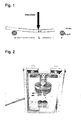
- FIG. 1 schematically shows the three-point bending arrangement in the ESCR test.
- Fig. 2 shows an ESCR test apparatus (the arrangement of Fig. 1 is upside down here).
- the cylindrical bearings and the pressure fin have a radius of 10 mm.
- e T standard F l m ⁇ t ⁇ F l ⁇ 1 n ⁇ t F l ⁇ 1 m ⁇ t ⁇ F l n ⁇ t
Landscapes
- Chemical & Material Sciences (AREA)
- Health & Medical Sciences (AREA)
- Chemical Kinetics & Catalysis (AREA)
- Medicinal Chemistry (AREA)
- Polymers & Plastics (AREA)
- Organic Chemistry (AREA)
- Engineering & Computer Science (AREA)
- Manufacturing & Machinery (AREA)
- Materials Engineering (AREA)
- Compositions Of Macromolecular Compounds (AREA)
- Paints Or Removers (AREA)
Description
- Die vorliegende Erfindung betrifft eine eingefärbte Zusammensetzung mit erhöhter Spannungsrissbeständigkeit sowie ihre Verwendung.
- Polymethylmethacrylat (PMMA)-Zusammensetzungen werden seit langem im Automobilbereich, insbesondere als Heckleuchtenabdeckungen und Instrumentenabdeckungen, eingesetzt. In den letzten Jahren wird dieses Material auch zunehmend für gedeckt eingefärbte Formteile verwendet. Anwendungen sind hier u. a. Spoiler, Säulenblenden, Fensterführungsleisten, Außenspiegel und Außenspiegelfüße.
- Diese PMMA Zusammensetzungen werden üblicherweise über Extrusion, Coextrusion, Spritzguss oder Mehrkomponenten-Spritzguss zu Formkörper für den Außenbereich verarbeitet. Somit besteht bei diesen Anwendungen zumindest die oberste Schicht aus PMMA. Sie bewirkt aufgrund der Witterungsstabilität und Oberflächenhärte von PMMA einen Schutz der darunter liegenden Matrices.
- Da die Formkörper häufig dunkel eingefärbt sind (die PMMA-Schicht selbst oder darunter liegende Schichten), werden diese unter Sonneneinstrahlung stark aufgeheizt. Daher ist eine Anforderung an die PMMA-Zusammensetzung eine hohe Wärmeformbeständigkeit, damit die entsprechenden Klimatests der Formkörper bestanden werden und keine Erweichung des Formkörpers auftritt.
- Daneben müssen die Formkörper eine hohe Spannungsrissbeständigkeit und eine hohe Chemikalienbeständigkeit ausweisen, da diese Anwendungen oft mit Reinigungsmittel, Benzin und anderen aggressiven Agenzien in Kontakt kommen.
- Weiterhin müssen die bekannten Eigenschaften von PMMA-Zusammensetzungen oder PMMA-Formkörper, wie Verarbeitbarkeit und Mechanik, bestehen bleiben.
-
EP 0 508 173 B1 beschreibt die Verwendung von Polymerblends aus 55 Gew.-% bis 98 Gew.-% PMMA, 2 Gew.-% bis 45 Gew.-% eines Styrol-Acrylnitril-Copolymers (SAN) und optionalen weiteren Verarbeitungshilfsmitteln zur Herstellung verschiedener Formteile. Das PMMA enthält laut Beschreibung mindestens 80 Gew.-% Methylmethacrylat (MMA)-Einheiten. In den Beispielen wird eine Spannungsrissbildung nach 2,1 min bis 5,5 min beobachtet. Dieser Wert ist jedoch mit den vorliegenden Ergebnissen nach dem ESCR-Test nicht vergleichbar. Die Vicat-Erweichungstemperatur eines exemplarischen PMMA-SAN-Polymerblends ist 106°C. - In ähnlicher Weise offenbart
EP 0 627 461 B1 ein witterungsbeständiges Blend aus 49 Gew.-% bis 99 Gew.-% PMMA und 0,95 Gew.-% bis 50 Gew.-% SAN sowie 0,05 Gew.-% bis 1 Gew.-% eines bestimmten Stabilisierungspakets. Auch hier enthält PMMA mindestens 80 Gew.-% MMA-Einheiten. In den Beispielen wird eine Spannungsrissbildung nach 680 s bis 750 s beobachtet. Dieser Wert ist jedoch mit den vorliegenden Ergebnissen nach dem ESCR-Test nicht vergleichbar. Eine Verbesserung der Wärmeformbeständigkeit wird nicht beschrieben. -
JP 03-217446 A2 -
JP 02-272050 A2 - a) einem Copolymer von 40 Gew.-% bis 90 Gew.-% MMA, 5 Gew.-% bis 20 Gew.-% Maleinsäureanhydrid, 5 Gew.-% bis 40 Gew.-% Styrol und 1 Gew.-% bis 15 Gew.-% C1-4-Alkylacrylat,
- b) einem Copolymer von Acrylnitril und aromatischen Vinylverbindungen oder einem MMA-C1-4-Alkylacrylat-Copolymer
- c) einem Schlagzähmodifizierungsmittel aus mit Acrylnitril und einer aromatischen Vinylverbindung gepfropftem Gummi.
- Der Brechungsindex-Unterschied zwischen der Mischung der Komponenten a) und b) sowie der Komponente c) soll höchstens 0,005 sein. Trotzdem zeigen derartige Zusammensetzungen eine starke Abhängigkeit der optischen Eigenschaften, insbesondere der Transparenz und/oder des Farbeindrucks, von der Temperatur.
- Die Anmeldung
WO 2005/047392A1 offenbart eine Polymermischung, die folgende Komponenten enthält: - a) ein niedermolekulares (Meth)acrylat(co)polymer, charakterisiert durch eine Lösungsviskosität in Chloroform bei 25°C (ISO 1628 - Teil 6) von kleiner/gleich 55 ml/g,
- b) ein Schlagzähmodifizierungsmittel auf Basis von vernetzten Poly(meth)acrylaten,
- c) ein höhermolekulares (Meth)acrylat(co)polymer, charakterisiert durch eine Lösungsviskosität in Chloroform bei 25°C (ISO 1628 - Teil 6) von größer/gleich 65 ml/g und/oder
- d) ein weiteres von a) verschiedenes (Meth)acrylat(co)polymer, charakterisiert durch eine Lösungsviskosität in Chloroform bei 25°C (ISO 1628 - Teil 6) von 50 bis 55 ml/g,
- Der vorliegenden Erfindung lag nun die Aufgabe zugrunde, Möglichkeiten zur Verbesserung der Spannungsrissbeständigkeit von eingefärbten Zusammensetzungen und von Formkörpern aufzuzeigen. Gleichzeitig sollte eine möglichst hohe Wärmeformbeständigkeit und möglichst gute optische Eigenschaften erreicht werden. Insbesondere wurde eine möglichst geringe Temperaturabhängigkeit des optischen Erscheinungsbildes der Zusammensetzungen und der Formkörper gewünscht. Weiterhin sollten möglichst gute mechanische Eigenschaften, eine möglichst gute Verarbeitbarkeit sowie eine möglichst hohe Langzeitstabilität und Witterungsbeständigkeit realisiert werden. Besonders zweckmäßige Verfahren zur Herstellung der neuen Zusammensetzungen und Formkörper sowie besonders vorteilhafte Anwendungsmöglichkeiten sollten ebenfalls angegeben werden.
- Gelöst werden diese sowie weitere Aufgaben, die sich aus den obigen Überlegungen zwangsläufig ableiten lassen oder sich unmittelbar ergeben, durch eine eingefärbte Zusammensetzung mit allen Merkmalen des vorliegenden Anspruchs 1. Die auf diesen Anspruch rückbezogenen Unteransprüche beschreiben besonders zweckmäßige Ausgestaltungen der Zusammensetzung und die weiteren Ansprüche betreffen besonders vorteilhafte Anwendungen der Zusammensetzung.
- Dadurch, dass man eine eingefärbte Zusammensetzung bereitstellt, die, jeweils bezogen auf ihr Gesamtgewicht,
- A) 50,0 Gew.-% bis 99,5 Gew.-% mindestens eines (Meth)acrylat(co)polymers und
- B) 0,5 Gew.-% bis 50,0 Gew.-% mindestens eines Copolymerisats, erhältlich durch Polymerisation eines Monornerengemischs aus
- i. 70 Gew.-% bis 92 Gew.-% eines vinylaromatischen Monomers und
- ii. 8 Gew.-% bis 30 Gew.-% Acrylnitril oder Methacrylnitril oder deren Mischungen
- iii. 0 Gew.- % bis 22 Gew.-% mindestens eines weiteren Monomeren enthält, wobei die Zusammensetzung bei 50°C einen ΔE kleiner 0,15 aufweist, wobei ΔE wie nachstehend definiert ist, und die Zusammensetzung mindestens ein (Meth)acrylat(co)polymer a) mit einer Lösungsviskosität in Chloroform bei 25°C (ISO 1628 - Teil 6) von größer 55 ml/g enthält, gelingt es auf nicht ohne weiteres vorhersehbare Weise eine eingefärbte Zusammensetzung zugänglich zu machen, die sich für die Herstellung von Formkörpern mit verbesserter Spannungsrissbeständigkeit hervorragend eignet. Dabei ist die Zusammensetzung auf vergleichbar einfache Art und Weise, insbesondere mit relativ geringem energetischen Aufwand herstellbar und verarbeitbar und ermöglicht auch die Verwirklichung von anspruchsvollen Teilegeometrien.
- Gleichzeitig zeichnen sich die aus der Zusammensetzung herstellbaren Gegenstände durch eine Kombination vorteilhafter Eigenschaften aus:
- ➢ Sie haben sehr gute optische Eigenschaften, insbesondere eine hohe Farbkonstanz und zeigen eine vergleichsweise geringe Abhängigkeit des optischen Erscheinungsbildes von der Temperatur.
- ➢ Sie besitzen eine sehr hohe Wärmeformstabilität.
- ➢ Sie zeigen hervorragende mechanische Eigenschaften, insbesondere ein hohes E-Modul und eine vergleichsweise hohe Vicat-Erweichungstemperatur.
- ➢ Die Langzeitstabilität und Witterungsbeständigkeit der Formkörper ist ebenfalls hervorragend.
- Die Erfindung betrifft eine Formmasse, die mindestens ein (Meth)acrylat(co)polymer A) enthält. Dabei kann das (Meth)acrylat(co)polymer sowohl als einzelnes Polymere als auch als Mischung mehrerer Polymere vorliegen.
- Das oder die (Meth)acrylat(co)polymer(e) wird/werden in den Mengenanteilen und in der Zusammensetzung vorzugsweise so gewählt, dass ein aus dem/den (Meth)acrylat(co)polymer(en) hergestellter Probekörper gleichzeitig folgende Eigenschaften aufweist:
- I. ein Zugmodul (ISO 527) von mindestens 2600 MPa, bevorzugt mindestens 2750 MPa, besonders bevorzugt mindestens 2850 MPa, insbesondere mindestens 3000 MPa,
- II. eine Vicaterweichungstemperatur VET (ISO 306-B50) von mindestens 109°C, bevorzugt mindestens 110°C, besonders bevorzugt mindestens 112°C, insbesondere im Bereich von 110°C bis 125°C,
- III. eine Schlagzähigkeit (ISO 179-2D, flatwise) von mindestens 17 kJ/m2, bevorzugt mindestens 18 KJ/m2, vorzugsweise mindestens 20 kJ/m2, besonders bevorzugt mindestens 25 kJ/m2, insbesondere mindestens 30 kJ/m2
- IV. einen Schmelzindex MVR (ISO 1133, 230°C / 3,8 kg) von mindestens 1,5 cm3/10 min, bevorzugt mindestens 1,65 cm3/10 min, besonders bevorzugt mindestens 2,0 cm3/10 min, insbesondere mindestens 3,0 cm3/10 min.
- Übliche Zusatz, Hilfs- und/oder Füllstoffe werden zweckmäßigerweise derart gewählt, dass das oben genannte Eigenschaftsprofil möglichst nicht oder höchstens geringfügig beeinträchtigt wird.
- Weiterhin liegt/liegen das/die (Meth)acrylat(co)polymer(e) in den Mengenanteilen und in der Zusammensetzung vorzugsweise so vor, dass ein aus dem/den (Meth)acrylat(co)polymer(en) hergestellter Probekörper auch zumindest einige der folgenden Eigenschaften aufweist:
- Eigenfarbe
Lichttransmissionsgrad TD65 nach DIN 5033/7 von mindestens 50 %, bevorzugt mindestens 55 %. - Gelbwert
Der Gelbwert, bestimmbar nach DIN 6167 (Lichtart D65, 10° an 3 mm Schichtdicke), soll vorzugsweise weniger als 20, bevorzugt weniger als 17 betragen. - Spannungsrissbeständigkeit (ESCR-Methode)
Bruchzeit bei Benetzung der Oberfläche mit Isopropanol bei konstanter Randfaserdehnung von- ■ 0,39 %: > 1800 s
- ■ 0,50 %: > 700 s
- Oberflächenglanz
R (60°): > 48 %, bevorzugt > 50 % - Erfindungsgemäß zeichnet sich die Zusammensetzung u. a. dadurch aus, dass sie mindestens ein (Meth)acrylat(co)polymer a) mit einer Lösungsviskosität in Chloroform bei 25°C (ISO 1628 - Teil 6) von größer 55 ml/g, bevorzugt größer/gleich 65 ml/g, insbesondere im Bereich von 68 ml/g bis 75 ml/g, enthält.
- Dies kann einem Molekulargewicht Mw (Gewichtsmittel) von 160000 g/mol (Bestimmung von Mw mittels Gelpermeationschromatographie unter Bezug auf Polymethylmethacrylat als Eichstandard) entsprechen. Die Bestimmung des Molekulargewichts Mw kann beispielsweise per Gelpermeationschromatographie oder per Streulichtmethode erfolgen (siehe z. B. H. F. Mark et al., Encyclopedia of Polymer Science and Engineering, 2nd. Edition, Vol. 10, Seiten 1 ff., J. Wiley, 1989).
- Im Rahmen einer ersten Variante der vorliegenden Erfindung ist das (Meth)acrylat(co)polymer a) ein Copolymer aus Methylmethacrylat, Styrol und Maleinsäureanhydrid.
- Geeignete Mengenanteile können z. B. sein:
- 50 Gew.-% bis 90 Gew.-%, bevorzugt 70 Gew.-% bis 80 Gew.-% Methylmethacrylat,
- 10 Gew.-% bis 20 Gew.-%, bevorzugt 12 Gew.-% bis 18 Gew.-% Styrol und
- 5 Gew.-% bis 15 Gew.-%, bevorzugt 8 Gew.-% bis 12 Gew.-% Maleinsäureanhydrid.
- Entsprechende Copolymere können in sich bekannter Weise durch radikalische Polymerisation erhalten werden.
EP-A 264 590 - In
JP-A 60-147 417 DE-OS 44 40 219 - Der Anteil des (Meth)acrylat(co)polymers a), bezogen auf das Gesamtgewicht aller (Meth)acrylat(co)polymere, beträgt vorzugsweise mindestens 75 Gew.-%, bevorzugt mindestens 85 Gew.-%, insbesondere mindestens 95 Gew.-%.
- Im Rahmen einer zweiten Variante der vorliegenden Erfindung ist das (Meth)acrylat(co)polymer a) ein Copolymers aus 95 Gew.-% bis 99,5 Gew.-% Methylmethacrylat und 0,5 Gew.-% bis 5 Gew.-%, bevorzugt 1 Gew.-% bis 4 Gew.-% Methylacrylat.
- Die Zusammensetzung enthält weiterhin mindestens ein niedermolekularen (Meth)acrylat(co)polymer b) mit einer Lösungsviskosität in Chloroform bei 25°C (ISO 1628 - Teil 6) von kleiner/gleich 55 ml/g, bevorzugt kleiner/gleich 50 ml/g, insbesondere 45 ml/g bis 55 ml/g.
- Dies kann einem Molekulargewicht Mw (Gewichtsmittel) von 95000 g/mol (Bestimmung von Mw mittels Gelpermeationschromatographie unter Bezug auf Polymethylmethacrylat als Eichstandard) entsprechen. Die Bestimmung des Molekulargewichts Mw kann beispielsweise per Gelpermeationschromatographie oder per Streulichtmethode erfolgen (siehe z. B. H. F. Mark et al., Encyclopedia of Polymer Science and Engineering, 2nd. Edition, Vol. 10, Seiten 1 ff., J. Wiley, 1989).
- Das (Meth)acrylat(co)polymer b) ist ein Copolymer aus Methylmethacrylat, Styrol und Maleinsäureanhydrid.
- Geeignete Mengenanteile können z. B. sein:
- 50 Gew.-% bis 90 Gew.-%, bevorzugt 70 Gew.-% bis 80 Gew.-% Methylmethacrylat,
- 10 Gew.-% bis 20 Gew.-%, bevorzugt 12 Gew.-% bis 18 Gew.-% Styrol und
- 5 Gew.-% bis 15 Gew.-%, bevorzugt 8 Gew.-% bis 12 Gew.-% Maleinsäureanhydrid.
- Wertvolle Hinweise zur Herstellung derartiger Copolymere können u. a. der
EP-A 264 590 JP-A 60-147 417 DE-OS 44 40 219 - Das (Meth)acrylat(co)polymer b) kann z. B. hergestellt werden, indem man eine Monomermischung aus z. B. 6355 g Methylmethacrylat, 1271 g Styrol und 847 g Maleinsäureanhydrid mit 1,9 g tert.-Butylperneodecanoat und 0,85 g tert.-Butylperoxi-3,5,5-trimethylhexanoat als Polymerisationsinitiator und 19,6 g 2-Mercaptoethanol als Molekulargewichtsregler sowie mit 4,3 g Palmitinsäure versetzt. Das resultierende Gemisch kann in eine Polymerisationskammer gefüllt und z. B. 10 Minuten entgast werden. Danach kann im Wasserbad z. B. 6 Stunden bei 60°C, nachfolgend 30 Stunden bei 55°C Wasserbadtemperatur polymerisiert werden. Nach etwa 30 Stunden erreicht das Polymerisationsgemisch mit etwa 126°C seine Maximaltemperatur. Nach Entfernung der Polymerisationskammer aus dem Wasserbad wird das Polymerisat entsprechend in der Polymerisationskammer noch etwa 7 Stunden z. B. bei 117°C im Luftschrank getempert.
- Die (Meth)acrylat(co)polymere a) und b) liegen günstigerweise in folgenden Mengenverhältnissen vor, die sich vorzugsweise zu mindestens 75 Gew.-%, bevorzugt zu mindestens 90 Gew.-%, insbesondere zu 100 Gew.-%, bezogen auf das Gesamtgewicht aller (Meth)acrylat(co)polymere, addieren.
- (Meth)acrylat(co)polymer a): 25 Gew.-% bis 75 Gew.-%, bevorzugt 40 Gew.-% bis 60 Gew.-%, insbesondere 45 Gew.-% bis 55 Gew.-%,
(Meth)acrylat(co)polymer b): 25 Gew.-% bis 75 Gew.-%, bevorzugt 40 Gew.-% bis 60 Gew.-%, insbesondere 45 Gew.-% bis 55 Gew.-%. - Neben dem (Meth)acrylat(co)polymer enthält die erfindungsgemäße Formmasse mindestens ein weiteres Copolymerisat (SAN-Copolymer) B), das durch Polymerisation eines Monomerengemisches aus
- i. 70 Gew.-% bis 92 Gew.-%, bevorzugt 75 Gew.-% bis 82 Gew.-%, insbesondere 78 Gew.-% bis 81 Gew.-% mindestens eines vinylaromatischen Monomers und
- ii. 8 Gew.-% bis 30 Gew.-%, bevorzugt 18 Gew.-% bis 25 Gew.-%, insbesondere 19 Gew.-% bis 22 Gew.-% Acrylnitril oder Methacrylnitril oder deren Mischungen
- iii. 0 Gew.- % bis 22 Gew.-% mindestens eines weiteren Monomeren erhältlich ist.
- Als vinylaromatische Monomere eignen sich insbesondere Styrol, α-Methystyrol, tert.-Butylstyrol, Monochlorstyrol und Vinyltoluol, besonders bevorzugt Styrol und α-Methylstyrol.
- Weiterhin haben sich SAN-Copolymere mit einem Molekulargewicht (Gewichtsmittelwert Mw) von 60 000 g/mol bis 300 000 g/mol, vorzugsweise von 100 000 g/mol bis 200 000 g/mol, ganz besonders bewährt, die vorzugsweise nach dem in der
GB-PS 14 72 195 - Die Menge der Komponente B), bezogen auf das Gesamtgewicht der Formmasse, beträgt erfindungsgemäß 0,5 Gew.-% bis 50,0 Gew.-%, bevorzugt 20,0 Gew.-% bis 40,0 Gew.-%.
- Die Mengen der Komponenten A) und B) addieren sich vorzugsweise zu mindestens 75 Gew.-%, bevorzugt zu mindestens 90 Gew.-%, insbesondere zu 100 Gew.-%, bezogen auf das Gesamtgewicht der Zusammensetzung.
- Die Herstellung der Komponente B) führt man in der Regel nach bekannten Polymerisationsverfahren, wie Masse-, Lösungs-, Emulsions- oder Perlpolymerisation, durch. Solche Verfahren sind beispielsweise im Kunststoffhandbuch, Hrsg. Vieweg und Daumiller, Band V; Polystyrol, Carl-Hanser-Verlag, München 1969, S. 124 ff. und in der
GB-PS 14 72 195 - Die erfindungsgemäße Zusammensetzung kann noch übliche Zusatz-, Hilfs-und/oder Füllstoffe, wie z. B. Thermostabilisatoren, UV-Stabilisatoren, UV-Absorber, Antioxidantien, enthalten, sofern die Eigenschaften der erfindungsgemäßen Zusammensetzung durch diese Zusätze nicht nachteilig beeinflusst werden.
- Optional enthaltene UV-Schutzmittel sind z. B. Derivate des Benzophenons, dessen Substituenten wie Hydroxyl- und/oder Alkoxygruppen sich meist in 2-und/oder 4-Stellung befinden. Hierzu zählen 2-Hydroxy-4-n-octoxybenzophenon, 2,4-Dihydroxybenzophenon, 2,2'-Dihydroxy-4-methoxybenzophenon, 2,2',4,4'-Tetrahydroxybenzophenon, 2,2'-Dihydroxy-4,4'-dimethoxybenzophenon, 2-Hydroxy-4-methoxybenzophenon. Des weiteren sind substituierte Benztriazole als UV-Schutz-Zusatz sehr geeignet, wozu vor allem 2-(2-Hydroxy-5-methylphenyl)-benztriazol, 2-[2-Hydroxy-3,5-di-(alpha,alpha-dimethyl-benzyl)-phenyl]-benztriazol, 2-(2-Hydroxy-3,5-di-t-butylphenyl)-benztriazol, 2-(2-Hydroxy-3-5-butyl-5-methylphenyl)-5-chlorbenztriazol, 2-(2-Hydroxy-3,5-di-t-butylphenyl)-5-chlorbenztriazol, 2-(2-Hydroxy-3,5-di-t-amylphenyl)-benztriazol, 2-(2-Hydroxy-5-t-butylphenyl)-benztriazol, 2-(2-Hydroxy-3-sek-butyl-5-t-butylphenyl)-benztriazol und 2-(2-Hydroxy-5-t-octylphenyl)-benztriazol zählen.
- Weiterhin einsetzbare UV-Schutzmittel sind 2-Cyano-3,3-diphenylacrylsäureethylester, 2-Ethoxy-2'-ethyl-oxalsäurebisanilid, 2-Ethoxy-5-t-butyl-2'-ethyl-oxalsäurebisanilid und substituierte Benzoesäurephenylester.
- Die UV-Schutzmittel können als niedermolekulare Verbindungen, wie sie vorstehend angegeben sind, in den zu stabilisierenden Polymethacrylatmassen enthalten sein. Es können aber auch UV-absorbierende Gruppen in den Matrixpolymermolekülen kovalent nach Copolymerisation mit polymerisierbaren UV-Absorptionsverbindungen, wie z. B. Acryl-, Methacryl oder Allylderivaten von Benzophenon- oder Benztriazolderivaten, gebunden sein.
- Der Anteil von UV-Schutzmitteln, wobei dies auch Gemische chemisch verschiedener UV-Schutzmittel sein können, beträgt in der Regel 0,01 Gew.-% bis 1,0 Gew.-%, vor allem 0,01 Gew.-% bis 0,5 Gew.-%, insbesondere 0,02 Gew.-% bis 0,2 Gew.-%, bezogen auf die Gesamtheit aller Bestandteile des erfindungsgemäßen Polymethacrylatharzes.
- Als Beispiel für Radikalfänger/UV-Stabilisatoren seien hier sterisch gehinderte Amine, die unter dem Namen HALS (Hindered Amine Light Stabilizer) bekannt sind, genannt. Sie können für die Inhibierung von Alterungsvorgängen in Lacken und Kunststoffen, vor allem in Polyolefinkunststoffen, eingesetzt werden (Kunststoffe, 74 (1984) 10, S. 620 bis 623; Farbe + Lack, 96 Jahrgang, 9/1990, S. 689 bis 693). Für die Stabilisierungswirkung der HALS-Verbindungen ist die darin enthaltene Tetramethylpiperidingruppe verantwortlich. Diese Verbindungsklasse kann am Piperidinstickstoff sowohl unsubstituiert als auch mit Alkyl- oder Acylgruppen substituiert sein. Die sterisch gehinderten Amine absorbieren im UV-Bereich nicht. Sie fangen gebildete Radikale ab, was die UV-Absorber wiederum nicht können.
- Beispiele für stabilisierend wirkende HALS-Verbindungen, die auch als Gemische eingesetzt werden können sind:
- Bis-(2,2,6,6-tetramethyl-4-piperidyl)-sebacat, 8-Acetyl-3-dodecyl-7,7,9,9-tetramethyl-1,3-8-triazaspiro(4,5)-decan-2,5-dion, Bis-(2,2,6,6-tetramethyl-4-piperidyl)-succinat, Poly-(N-ß-hydroxyethyl-2,2,6,6-tetramethyl-4-hydroxypiperidin-bernsteinsäureester) und Bis-(N-methyl-2,2,6,6-tetramethyl-4-piperidyl)-sebacat.
- Angewendet werden die Radikalfänger/UV-Stabilisatoren in den erfindungsgemäßen Zusammensetzungen in Mengen von 0,01 Gew.-% bis 1,5 Gew.-%, vor allem in Mengen von 0,02 Gew.-% bis 1,0 Gew.-%, insbesondere in Mengen von 0,02 Gew.-% bis 0,5 Gew.-% bezogen auf die Gesamtheit aller Bestandteile.
- Für das Spritzgussverfahren sind insbesondere Gleitmittel bzw. Formtrennmittel von Bedeutung, die ein mögliches Anhaften der Formmasse an die Spritzgussform vermindern bzw. ganz verhindern können.
- Als Hilfsstoffe können demnach Gleitmittel, z. B. ausgewählt aus der Gruppe der gesättigten Fettsäuren mit weniger als C20, bevorzugt C16 bis C18 Kohlenstoffatomen oder der gesättigten Fettalkohole mit weniger als C20, bevorzugt C16 bis C18 Kohlenstoffatomen enthalten sein. Bevorzugt sind geringe Mengenanteile von höchstens 0,25 Gew.-%, z. B. 0,05 Gew.-% bis 0,2 Gew.-%, bezogen auf die Formmasse enthalten.
- Geeignet sind z. B. Stearinsäure, Palmitinsäure, technische Gemische aus Stearin- und Palmitinsäure. Weiterhin geeignet sind z. B. n-Hexadecanol, n-Octadecanol, sowie technische Gemische aus n-Hexadecanol und n-Octadecanol.
- Ein besonders bevorzugtes Gleit- bzw. Formtrennmittel ist Stearylalkohol.
- Im Rahmen der vorliegenden Erfindung hat sich auch der Zusatz der Komponenten C1), C2), C3) und/oder C4) ganz besonders bewährt.
- Die Komponente C1) bezeichnet Triarylphosphite der allgemeinen Formel (I)

C5-C8-Cycloalkyl, wie Cyclopentyl, Cyclohexyl, Cycloheptyl und Cyclooctyl, bevorzugt Cyclohexyl,
C6-C10-Aryl und C6-C10-Aryl-C1-C4-Alkyl, deren Arylreste bis zu dreifach mit C1-C4-Alkyl substituiert sein können, wie Phenyl, Naphthyl oder 2,2-Dimethylbenzyl, stehen, und R3 Wasserstoff und C1-C4-Alkyl, wie Methyl, Ethyl, n-, i-Propyl, n-, i-, sek.- und tert.-Butyl, bevorzugt Wasserstoff und Methyl, bedeutet. - Beispiele für Verbindungen (l), denen im Hinblick auf die vorliegende Erfindung besondere Bedeutung zukommt, sind die im Handel erhältlichen Tris-(2,4-di-tert.-butylphenyl)phosphit (Irgafos TM 168, Ciby-Geigy) und Tris(nonylphenyl)phosphit, bevorzugt Tris-(2,4-di-tert.-butylphenyl)-phosphit.
- Die Komponente c2) bezeichnet ein Amin der allgemeinen Formel (II)

- Ein Beispiel für Verbindungen (II), dem im Hinblick auf die vorliegende Erfindung besondere Bedeutung zukommt, ist Bis-(2,2,6,6-tetramethyl-4-piperidyl)-sebacat (unter dem Namen Tinuvin TM 770 DF (Ciba Geigy) im Handel).
- Die Komponente c3) bezeichnet ein Benzotriazol der allgemeinen Formel (III)

- Beispiele für Verbindungen (III), denen im Hinblick auf die vorliegende Erfindung besondere Bedeutung zukommt, sind 2-(2'-Hydroxy-5'-methyl-phenyl)-benzotriazol (unter dem Namen Tinuvin TM P (Ciba Geigy) im Handel erhältlich), oder 2-(2'-Hydroxy-3'-dodecyl-5'-methyl-decyl)benzotriazol.
- Die Komponente c4) bezeichnet ein Phenol der allgemeinen Formel (IV)
ABk (IV)
wobei k 1, 2 oder 4 bedeutet und, falls k = 1 ist, A für -COOR7, -CONHR7,
wobei R7 C1-C21-Alkyl bedeutet, und
falls k = 2 ist, A für -CONH-(CH2)n-CONH-,


B für
wobei R8 und R9 für Wasserstoff, Methyl oder tert. Butyl stehen. - Die Zugabe der Komponente c4) kann in einigen Fällen zu einer weiteren Verbesserung der Spannungsrissbeständigkeit nach Bewitterung führen.
- Beispiele für Verbindungen (IV), denen im Hinblick auf die vorliegende Erfindung besondere Bedeutung zukommt, sind Octadecyl-3-(3,5-di-tert.-butyl-4-hydroxyphenyl)-propionat (unter dem Namen Irganox TM 1076 (Ciba Geigy) im Handel), sowie
IRGANOX 1098 IRGANOX 1010 

IRGANOX 1222 IRGANOX 245 

IRGANOX 259 
- Bevorzugt werden die Komponenten c1), c2) und c3) in Mischung eingesetzt, um einen synergistischer Effekt hinsichtlich der Verbesserung der Spannungsrissbeständigkeit nach Bewitterung zu erreichen.
- Die bevorzugten Mengen der Komponenten c1) bis c3) liegen jeweils im Bereich von 1 Gew.-% bis 50 Gew.-%, bevorzugt von 30 Gew.-% bis 50 Gew.-%, bezogen auf die Summe der Mengen der Komponenten c1) bis c3), wobei sich die einzelnen Mengen zu 100 addieren.
- Die Menge der Komponente c4) wählt man vorzugsweise im Bereich von 0 Gew.-% bis 25 Gew.-%, bevorzugt im Bereich von 10 Gew.-% bis 25 Gew.-%, bezogen auf die Gesamtmenge der Komponenten c1) bis c3).
- Die Gesamtmenge der Komponenten c1) bis c4), bezogen auf das Gesamtgewicht der Zusammensetzung, beträgt günstigerweise 0,05 Gew.-% bis 1 Gew.-%, vorzugsweise 0,1 Gew.-% bis 0,5 Gew.-%.
- Erfindungsgemäß ist die Zusammensetzung eingefärbt. Die Farbgebung erfolgt dabei vorzugsweise durch Farbmittel, die Farbstoffe oder Pigmente sein können. Farbstoffe bestehen vorzugsweise aus Farbstoffmolekülen, die sich in der Polymermatrix weitgehend molekular lösen oder mehr oder weniger molekular auf der Oberfläche absorbiert oder chemisch gebunden werden. Pigmente umfassen dagegen insbesondere Aggregate von Farbstoffmolekülen oder Mineralstoffen, die in der Polymermatrix unlöslich sind.
- Ein Farbmittel kann weiterhin auch bei einer Temperatur in der Polymermatrix unlöslich sein und sich wie ein Pigment verhalten. Bei einer anderen, zumeist höheren, Temperatur kann es sich dagegen in der gleichen Polymermatrix als Farbstoff lösen. Im Rahmen der vorliegenden Erfindung werden jedoch solche Farbmittel besonders bevorzugt, deren Löslichkeit in der Polymermatrix im Temperaturbereich von 23°C bis 100°C um höchstens 10 % schwankt, bezogen auf die Löslichkeit bei 23°C.
- Die Einfärbung führt vorliegend zu mindestens einer Absorption im sichtbaren Bereich, d. h. bei mindestens einer Wellenlänge im Bereich von 380 nm bis 750 nm. Die Absorption bei 23°C beträgt vorzugsweise mindestens 1 %, bevorzugt mindestens 5 %, insbesondere mindestens 10 %, verglichen mit eine Probe gleicher Beschaffenheit ohne Farbmittel.
- Der Farbton der Zusammensetzung wird vorliegend nach dem Lab-Farbsystem beschrieben. Es ist standardisiert, gleichabständig, geräteunabhängig und baut auf der menschlichen Wahrnehmung auf.
- Der Farbraum des L*a*b*-Systems ist wie folgt definiert:
- L* = Helligkeit (0 = Schwarz, 100 = Weiß)
- a* = Rot - Grün (-128 = Grün, +127 = Rot)
- b* = Gelb - Blau (-128 = Blau, +127 = Gelb)
- Die erfindungsgemäße Zusammensetzung zeichnet sich durch eine außerordentliche Farbkonstanz aus. So zeigt sie bei 50°C einen ΔE kleiner 0,15, wobei ΔE gemäß der Beziehung (1) definiert ist:

in welcher - ΔL* :
- die Änderung der Farbkoordinate L* verglichen mit der Farbkoordinate L* bei 23°C
- Δa* :
- die Änderung der Farbkoordinate a* verglichen mit der Farbkoordinate a* bei 23°C
- Δb* :
- die Änderung der Farbkoordinate b* verglichen mit der Farbkoordinate b* bei 23°C
- Bei 80°C ist ΔE vorzugsweise kleiner 0,3.
- Der Zusatz von Additiven, wie z. B. Schlagzähmodifizierungsmitteln, mit deutlich abweichenden Temperaturverhalten des Brechungsindizes, verglichen mit der Polymermatrix, ist nach Möglichkeit zu vermeiden, da ansonsten ein signifikante Temperaturabhängigkeit des optischen Erscheinungsbildes zu beobachten ist.
- Im Rahmen der vorliegenden Erfindung hat die Zusammensetzung vorzugsweise einen Volumen-Schmelzindex MVR, gemessen nach ISO 1133 bei 230°C und 3,8 kg, von größer 1,2 cm3 / 10 min, bevorzugt von größer 1,5 cm3 / 10 min, insbesondere im Bereich von 1,7 cm3 / 10 min bis 4,0 cm3 / 10 min.
- Die Zusammensetzung kann durch trockenes Abmischen der Komponenten, die als Pulver, Körner oder bevorzugt Granulate vorliegen können, hergestellt werden.
- Die Zusammensetzung kann auch durch Schmelzen und Vermengen der Einzelkomponenten im Schmelzezustand oder durch Schmelzen trockener Vormischungen der Einzelkomponenten zu einer gebrauchsfertigen Formmasse verarbeitet werden. Dies kann z. B. in Ein- oder Zweischneckenextrudern erfolgen. Das erhaltene Extrudat kann anschließend granuliert werden. Übliche Zusatz, Hilfs- und/oder Füllstoffe können direkt zugemischt oder später von Endverbraucher nach Bedarf zugegeben werden.
- Die erfindungsgemäße Zusammensetzung eignet sich als Ausgangsstoff für die Herstellung von Formkörpern mit verbesserter Chemikalienbeständigkeit und Spannungsrissbeständigkeit. Die Umformung der Zusammensetzung kann auf an sich bekannte Weise, z. B. durch Verarbeitung über den elastoviskosen Zustand, d. h. durch Kneten, Walzen, Kalandrieren, Extrudieren oder Spritzgießen, erfolgen, wobei das Extrudieren und das Spritzgießen, insbesondere das Spritzgießen, vorliegend besonders bevorzugt werden.
- Das Spritzgießen der Zusammensetzung kann auf an sich bekannte Weise bei Temperaturen im Bereich von 220°C - 260°C (Massetemperatur) und einer Werkzeugtemperatur von vorzugsweise 60°C bis 90°C erfolgen.
- Die Extrusion wird vorzugsweise bei einer Temperatur von 220°C bis 260°C durchgeführt.
- Die auf diese Weise erhältlichen Formkörper zeichnen sich dadurch aus, dass sie bei 50°C einen ΔE kleiner 0,15, besonders bevorzugt kleiner 0,11, und bei 80°C einen ΔE kleiner 0,3, besonders bevorzugt kleiner 0,2, aufweisen.
- Die Vicaterweichungstemperatur der Formkörper nach ISO 306-B50 ist günstigerweise mindestens 109°C, bevorzugt mindestens 112°C.
- Die nominelle Bruchdehnung der Formkörper nach ISO 527 soll vorzugsweise mindestens 3,0 %, besonders bevorzugt 3,2 % sein.
- Das E-Modul der Formkörper nach ISO 527 ist günstigerweise größer 3200 MPa, bevorzugt 3500 MPa.
- Weiterhin weisen besonders geeignete Formkörper beim Spannungsrissbeständigkeitstest gemäß ESCR-Methode nach 30 Minuten bei einer Randfaserdehnung von 1 % einen normierten Spannungsrissbeständigkeitsfaktor größer 0,80 auf.
- Die erfindungsgemäßen Formkörper können insbesondere als Überzug, Lack oder Folie eingesetzt verwendet werden. Spritzgegossene Formkörper können als Teile von Haushaltsgeräten, Kommunikationsgeräten, Hobby- oder Sportgeräten, Karosserieteile oder Teile von Karosserieteilen im Automobil-, Schiffs- oder Flugzeugbau verwendet werden. Typische Beispiele für Karosserieteile oder Teile von Karosserieteilen von Automobilen sind z. B. Spoiler, Blenden, Dachmodule oder Außenspiegelgehäuse.
- Im folgenden wird die Erfindung durch Beispiele näher erläutert, ohne dass hierdurch eine Beschränkung des Erfindungsgedankens erfolgen soll.
- Für die Polymermatrix wurden die folgenden Komponenten a1), a2), b) und/oder c) verwendet.
- Als Komponente a1) wurde eingesetzt: Ein handelsübliches Copolymerisat aus 75 Gew.-% Methylmethacrylat, 15 Gew.-% Styrol und 10 Gew.-% Maleinsäureanhydrid mit einer Lösungsviskositätszahl nach ISO 1628-6, 25°C, Chloroform von 68 ml/g
- Als Komponente a2) wurde eingesetzt: ein handelsübliches Copolymerisat aus 99 Gew.-% Methylmethacrylat und 1 Gew.-% Methylacrylat mit einer Lösungsviskosität in Chloroform bei 25°C (ISO 1628 - Teil 6) von etwa 72 ml/g.
- Eine Monomermischung aus 6355 g Methylmethacrylat, 1271 g Styrol und 847 g Maleinsäureanhydrid wird mit 1,9 g tert.-Butylperneodecanoat und 0,85 g tert.-Butylperoxi-3,5,5-trimethylhexanoat als Polymerisationsinitiator und 19,6 g 2-Mercaptoethanol als Molekulargewichtsregler sowie mit 4,3 g Palmitinsäure versetzt.
- Das resultierende Gemisch wird in eine Polymerisationskammer gefüllt und 10 Minuten entgast. Danach wird im Wasserbad 6 Stunden bei 60°C, nachfolgend 30 Stunden bei 55°C Wasserbadtemperatur polymerisiert. Nach etwa 30 Stunden erreicht das Polymerisationsgemisch mit 126°C seine Maximaltemperatur. Nach Entfernung der Polymerisationskammer aus dem Wasserbad wird das Polymerisat in der Polymerisationskammer noch 7 Stunden bei 117°C im Luftschrank getempert.
- Das resultierende Copolymerisat ist klar und nahezu farblos und besitzt eine V.N. (Lösungsviskositätszahl nach ISO 1628-6, 25°C, Chloroform) von 48,7ml/g. Die Fließfähigkeit des Copolymerisats wurde nach ISO 1133 bei 230°C und 3,8kg mit MVR = 3,27 cm3/10min bestimmt.
- Die Komponente b) ist somit ein Copolymerisat aus 75 Gew.-% Methylmethacrylat, 15 Gew.-% Styrol und 10 Gew.-% Maleinsäureanhydrid.
- Als Komponente c) wurde eingesetzt: ein handelsübliches Copolymerisat aus 99 Gew.-% Methylmethacrylat und 1 Gew.-% Methylacrylat mit einer Lösungsviskosität in Chloroform bei 25°C (ISO 1628 - Teil 6) von etwa 53 ml/g.
- Als SAN-Copolymer wurde ®TYRIL 905UV der Fa. Dow Plastics eingesetzt.
- Aus den einzelnen Komponenten wurden mittels Taumelmischer ein Dryblend hergestellt, der dann auf einem Doppelschneckenextruder Leistritz LSM 30/34 compoundiert wurde.
- Die Zusammensetzungen der einzelnen Beispiele sind in Tabelle 1 dokumentiert.
Tabelle 1: Polymermatrix ([Gew.-%]) ®TYRIL 905UV [Gew.-%] Beispiel B1 Komponente a1) (70) 30 Vergleichsbeispiel VB1 Komponente a1) (100) Beispiel B2 Komponente a2) (35) 30 Komponente b) (35) Vergleichsbeispiel VB2 Komponente b) (50) Komponente c) (50) Vergleichsbeispiel VB3 Komponente b) (35) 30 Komponente c) (35) - Der Volumen-Fließindex MVR (Prüfnorm ISO 1133: 1997) wurde bestimmt.
- Auf einer Spritzgussmaschine Battenfeld BA 350 CD wurden aus allen Materialien Zugstäbe sowie Spritzplättchen gefertigt und hinsichtlich ihrer Eigenschaften nach folgenden Methoden geprüft:
Vicat (16h/80°C): Bestimmung der Vicat Erweichungstemperatur (Prüfnorm DIN ISO 306: August 1994) E-Modul: Bestimmung des E-Moduls (Prüfnorm: ISO 527-2) Zugfestigkeit: Bestimmung der Bruchdehnung (Prüfnorm: ISO 527) ΔE: gemessen an 3 mm Spritzgussplatten; Messgerät Color Eye 7000A, Fa. Mac Beth; Norm DIN 5033, DIN 6174 - Vor der Prüfung wurden alle Proben mindestens 24 h bei 23°C/50 % relative Feuchte gelagert.
- Beim ESCR-Test nach Prof. Bledzki (A. Bledzki, C. Barth, Materialprüfung 40, 10 (1998)) wurde eine zeitlich konstante Randfaserdehnung mittels Dreipunktbiegeanordnung aufgebracht. Der Probekörper (Maße 80 mm x 20 mm x d, Dicke d = 4 mm) ruhte flach auf zwei Lagern im Abstand L = 64 mm.
- Der konkrete Versuchsaufbau wird in den Abbildungen 1 und 2 veranschaulicht.
Fig. 1 zeigt schematisch die Dreipunktbiegeanordnung im ESCR Test.Fig. 2 zeigt eine ESCR Testapparatur (die Anordnung ausFig. 1 steht hier auf dem Kopf). Die zylindrischen Lager sowie die Druckfinne haben einen Radius von 10 mm. - Die Berechnung der notwendigen Durchbiegung s bei gegebener Randfaserdehnung ε (in der Mitte des Probekörpers auf der der Druckfinne gegenüberliegenden Seite) erfolgte wie in ISO 178 nach:

- Die Durchbiegung s wurde mittels Rändelschraube eingestellt. ε wurde auf einen Wert von 1 % eingestellt. Nach dem Anfahren der Randfaserdehnung (Zeitpunkt T0) wurde eine Haltezeit von 2 min gewartet, um erste Relaxationserscheinungen abzuwarten. Bei T = T1 = 2 min wurde das schon vorher mittig aufgelegte Filterpapier mit den Maßen 50 x 10 mm2 mit dem Medium (Isopropanol) benetzt. Gemessen wurde ab T1 die Kraft, die zur Aufrechterhaltung der Randfaserdehnung nötig war, als Funktion der Zeit. Das Filterpapier wurde im Laufe der Messung mit dem Medium stets feucht gehalten. Die Messung wurde mit dem Bruch des Probekörpers (Kraft = 0), spätestens jedoch nach 30 min beendet.
- Dieser Vorgang wurde für drei Probekörper wiederholt. Zum Vergleich wurde der Kraftverlauf auch für einen Probekörper aufgenommen, der zwar der gleichen Randfaserdehnung, jedoch keinem Medium ausgesetzt war. Bei den Proben ohne Medieneinfluss nahm der gemessene Kraftwert langsam ab, wohingegen die Proben, die unter Medieneinfluss getestet werden, je nach Resistenz einen schnelleren Kraftabfall zeigten.
- Das zeitabhängige Maß der Spannungsrissbeständigkeit


- Dabei werden die Kräfte zusätzlich auf ihren Wert bei T1 bezogen, so dass zum Zeitpunkt T1:


- Die Ergebnisse der Prüfungen an den Abmischungen und den entsprechenden Formteilen sind in Tabelle 2 zu sehen.
Tabelle 2: B1 VB1 B2 VB2 VB3 Vicat [°C] 115,5 119 113,2 115 110,3 MVR [ml/10min] 1,9 1,9 2,9 4,5 5,2 ESCR [min] Kein Bruch - kontinuierlicher Abfall 0,92 bei 30 min > 40 Kein Bruch - kontinuierlicher Abfall 0,85 bei 30 min 0,08-0,42 2,6 - 3,9 E-Modul [MPa] 3600 3702 3500 Bruchdehnung [%] 3,5 3,4 3,1
wobei a), b), c) und/oder d) sich zu 100 Gew.-% addieren,
wobei die Polymermischung noch übliche Zusatz, Hilfs- und/oder Füllstoffe enthalten kann. Ein aus der Polymermischung hergestellter Probekörper soll bei Benetzung der Oberfläche mit Isopropanol bei konstanter Randfaserdehnung von 0,39 % eine Bruchzeit größer 1800 s und bei konstanter Randfaserdehnung von 0,50 % eine Bruchzeit größer 700 s zeigen. Allerdings ist wiederum eine starke Abhängigkeit der optischen Eigenschaften, insbesondere der Transparenz und/oder des Farbeindrucks, von der Temperatur zu beobachten. Weiterhin ist insbesondere eine verbesserte Spannungsrissbeständigkeit und eine bessere Verarbeitbarkeit wünschenswert.
Claims (20)
- Eingefärbte Zusammensetzung, enthaltend, jeweils bezogen auf das Gesamtgewicht der Zusammensetzung,A) 50,0 Gew.-% bis 99,5 Gew.-% mindestens eines (Meth)acrylat(co)polymers undB) 0,5 Gew.-% bis 50,0 Gew.-% mindestens eines Copolymerisats, erhältlich durch Polymerisation eines Monomerengemischs ausdadurch gekennzeichnet, dass die Zusammensetzung bei 50°C einen ΔE kleiner 0,15 aufweist, wobei ΔE gemäß der Beziehung (1) definiert ist:i. 70 Gew.-% bis 92 Gew.-% eines vinylaromatischen Monomers undii. 8 Gew.-% bis 30 Gew.-% Acrylnitril oder Methacrylnitril oder deren Mischungeniii. 0 Gew.- % bis 22 Gew.-% mindestens eines weiteren Monomeren,

in welcherΔL* : die Änderung der Farbkoordinate L* verglichen mit der Farbkoordinate L* bei 23°CΔa* : die Änderung der Farbkoordinate a* verglichen mit der Farbkoordinate a* bei 23°CΔb* : die Änderung der Farbkoordinate b* verglichen mit der Farbkoordinate b* bei 23°Cbezeichnen,
die Zusammensetzung mindestens ein (Meth)acrylat(co)polymer a) mit einer Lösungsviskosität in Chloroform bei 25°C (ISO 1628 - Teil 6) von größer 55 ml/g enthält, und wobei- das (Meth)acrylat(co)polymer a) ein Copolymer aus Methylmethacrylat, Styrol und Maleinsäureanhydrid istoder- das (Meth)acrylat(co)polymer a) ein Copolymer aus 95 Gew.-% bis 99,5 Gew.-% Methylmethacrylat und 0,5 Gew.-% bis 5 Gew.-% Methylacrylat ist und die Zusammensetzung weiterhin mindestens ein niedermolekulares (Meth)acrylat(co)polymer b) mit einer Lösungsviskosität in Chloroform bei 25°C (ISO 1628 - Teil 6) von kleiner/gleich 55 ml/g enthält, bei welchem es sich um ein Copolymer aus Methylmethacrylat, Styrol und Maleinsäureanhydrid handelt. - Zusammensetzung nach Anspruch 1, dadurch gekennzeichnet, dass das (Meth)acrylat(co)polymer a) eine Lösungsviskosität in Chloroform bei 25°C (ISO 1628 - Teil 6) von größer/gleich 65 ml/g aufweist.
- Zusammensetzung nach Anspruch 1 oder 2, dadurch gekennzeichnet, dass das Copolymer B) durch Polymerisation eines Monomerengemischs, enthaltendi. 75 Gew.-% bis 92 Gew.-% eines vinylaromatischen Monomers undii. 18 Gew.-% bis 25 Gew.-% Acrylnitril oder Methacrylnitril oder deren Mischungen,erhältlich ist.
- Zusammensetzung nach einem der Ansprüche 1 bis 3, dadurch gekennzeichnet, dass das (Meth)acrylat(co)polymer a) ein Copolymer aus50 Gew.-% bis 90 Gew.-% Methylmethacrylat,10 Gew.-% bis 20 Gew.-% Styrol und5 Gew.-% bis 15 Gew.-% Maleinsäureanhydrid ist.
- Zusammensetzung nach Anspruch 3 oder 4, dadurch gekennzeichnet, dass sie das (Meth)acrylat(co)polymer a) in einer Menge von mindestens 75 Gew.-%, bezogen auf das Gesamtgewicht aller (Meth)acrylat(co)polymere, enthält.
- Zusammensetzung nach Anspruch 1, dadurch gekennzeichnet, dass das (Meth)acrylat(co)polymer b) ein Copolymer aus50 Gew.-% bis 90 Gew.% Methylmethacrylat,10 Gew.-% bis 20 Gew.-% Styrol und5 Gew.-% bis 15 Gew.-% Maleinsäureanhydrid ist.
- Zusammensetzung nach Anspruch 6, dadurch gekennzeichnet, dass die (Meth)acrylat(co)polymere a) und b), bezogen auf das Gesamtgewicht der (Meth)acrylat(co)polymere, in folgenden Mengenverhältnissen vorliegen:a) 25 Gew.-% bis 75 Gew.-%b) 25 Gew.-% bis 75 Gew.-%.
- Zusammensetzung nach mindestens einem der vorhergehenden Ansprüche, dadurch gekennzeichnet, dass als Hilfsstoff ein Gleitmittel enthalten ist.
- Zusammensetzung nach Anspruch 8, dadurch gekennzeichnet, dass als Formtrennmittel Stearylalkohol enthalten ist.
- Zusammensetzung nach mindestens einem der vorhergehenden Ansprüche, dadurch gekennzeichnet, dass die Zusammensetzung einen Volumen-Schmelzindex MVR, gemessen nach ISO 1133 bei 230°C und 3,8 kg, von größer 1,2 cm3/10 min aufweist.
- Zusammensetzung nach einem oder mehreren der vorangehenden Ansprüche, dadurch gekennzeichnet, dass sie in Form eines Granulats vorliegt.
- Zusammensetzung nach einem oder mehreren der vorangehenden Ansprüche, dadurch gekennzeichnet, dass die Zusammensetzung bei 80°C einen ΔE kleiner 0,3 aufweist.
- Verfahren zur Herstellung von Formkörpern, dadurch gekennzeichnet, dass man eine Zusammensetzung nach einem oder mehreren der vorangehenden Ansprüche umformt.
- Verfahren nach Anspruch 13, dadurch gekennzeichnet, dass man die Zusammensetzung extrudiert oder spritzgießt.
- Formkörper, herstellbar nach einem Verfahren gemäß Anspruch 13 oder 14, dadurch gekennzeichnet, dass der Formkörper bei 50°C einen ΔE kleiner 0,15 aufweist.
- Formkörper nach Anspruch 15, dadurch gekennzeichnet, dass er bei 80°C einen ΔE kleiner 0,3 aufweist.
- Formkörper nach Anspruch 15 oder 16, dadurch gekennzeichnet, dass er eine oder mehrere der folgenden Eigenschaften aufweista. eine Vicaterweichungstemperatur nach ISO 306-B50 von mindestens 109°C,b. eine nominelle Bruchdehnung nach ISO 527 von mindestens 3,0 % und/oderc. ein E-Modul nach ISO 527 größer 3200 MPa.
- Formkörper nach mindestens einem der Ansprüche 15 bis 17, dadurch gekennzeichnet, dass er beim Spannungsrissbeständigkeitstest gemäß ESCR-Methode nach 30 Minuten bei einer Randfaserdehnung von 1 % einen normierten Spannungsrissbeständigkeitsfaktor größer 0,80 aufweist.
- Verwendung der Formkörper nach einem oder mehreren der Ansprüche 15 bis 18 als Halbzeug, Überzug, Lack oder Folie.
- Verwendung nach Anspruch 19 als Teile von Haushaltsgeräten, Kommunikationsgeräten, Hobby- oder Sportgeräten und als Karosserieteile oder Teile von Karosserieteilen im Automobil-, Schiffs- oder Flugzeugbau.
Priority Applications (2)
| Application Number | Priority Date | Filing Date | Title |
|---|---|---|---|
| SI200831164T SI2150581T1 (sl) | 2007-06-04 | 2008-03-18 | Obarvan sestavek z izboljšano lomno trdnostjo |
| PL08717918T PL2150581T3 (pl) | 2007-06-04 | 2008-03-18 | Zabarwiona kompozycja ze zwiększoną wytrzymałością na pękanie pod wpływem naprężeń |
Applications Claiming Priority (2)
| Application Number | Priority Date | Filing Date | Title |
|---|---|---|---|
| DE102007026201A DE102007026201A1 (de) | 2007-06-04 | 2007-06-04 | Eingefärbte Zusammensetzung mit erhöhter Spannungsrissbeständigkeit |
| PCT/EP2008/053183 WO2008148587A1 (de) | 2007-06-04 | 2008-03-18 | Eingefärbte zusammensetzung mit erhöhter spannungsrissbeständigkeit |
Publications (2)
| Publication Number | Publication Date |
|---|---|
| EP2150581A1 EP2150581A1 (de) | 2010-02-10 |
| EP2150581B1 true EP2150581B1 (de) | 2014-01-01 |
Family
ID=39432527
Family Applications (1)
| Application Number | Title | Priority Date | Filing Date |
|---|---|---|---|
| EP08717918.0A Not-in-force EP2150581B1 (de) | 2007-06-04 | 2008-03-18 | Eingefärbte zusammensetzung mit erhöhter spannungsrissbeständigkeit |
Country Status (14)
| Country | Link |
|---|---|
| US (1) | US8178624B2 (de) |
| EP (1) | EP2150581B1 (de) |
| JP (1) | JP5312454B2 (de) |
| KR (1) | KR20100027125A (de) |
| CN (1) | CN101679712B (de) |
| BR (1) | BRPI0812342A2 (de) |
| CA (1) | CA2690041A1 (de) |
| DE (1) | DE102007026201A1 (de) |
| MX (1) | MX2009012869A (de) |
| PL (1) | PL2150581T3 (de) |
| RU (1) | RU2009148581A (de) |
| SI (1) | SI2150581T1 (de) |
| TW (1) | TW200911910A (de) |
| WO (1) | WO2008148587A1 (de) |
Families Citing this family (19)
| Publication number | Priority date | Publication date | Assignee | Title |
|---|---|---|---|---|
| DE10320318A1 (de) * | 2003-05-06 | 2004-12-02 | Röhm GmbH & Co. KG | Verfahren zur Herstellung von lichtstreuenden Formteilen mit hervorragenden optischen Eigenschaften |
| DE10345045A1 (de) * | 2003-09-26 | 2005-04-14 | Röhm GmbH & Co. KG | Verfahren zur Oberflächenvergütung von Werkstoffen durch Aufbringen insbesondere transparenter Schichten auf Basis von Polymethacrylaten |
| DE10349144A1 (de) * | 2003-10-17 | 2005-05-12 | Roehm Gmbh | Polymermischung für mattierte Spritzgußteile |
| MX2007008855A (es) * | 2003-10-18 | 2008-03-13 | Roehm Gmbh | Masas de pieza moldeada de poli (met) acrilato resistentes a impactos con alta estabilidad termica. |
| DE102004022540A1 (de) | 2004-05-05 | 2005-12-08 | Röhm GmbH & Co. KG | Formmasse für Formkörper mit hoher Witterungsbeständigkeit |
| DE102004045296A1 (de) * | 2004-09-16 | 2006-03-23 | Röhm GmbH & Co. KG | Verwendung von Polyalkyl (meth) acrylat-Perlpolymerisaten und Formmasse zur Herstellung von extrudierten Formteilen mit mattierter Oberfläche |
| DE102004058083A1 (de) * | 2004-12-01 | 2006-06-08 | Röhm GmbH & Co. KG | Gedeckt eingefärbte, infrarotreflektierende Kunststoffformmasse |
| DE102005055793A1 (de) | 2005-11-21 | 2007-05-24 | Röhm Gmbh | Transparente TPU (thermoplastische Polyurethane)/ PMMA (Polymethyl(meth)acrylat) Abmischungen mit verbesserter Kältesschlagzähigkeit |
| DE102006029613A1 (de) | 2006-06-26 | 2007-12-27 | Röhm Gmbh | Transparenter Kunststoff-Verbund |
| DE102007005432A1 (de) * | 2007-01-30 | 2008-07-31 | Evonik Röhm Gmbh | Formmassen für mattierte Polyacrylat-Formkörper |
| DE102007005428A1 (de) * | 2007-01-30 | 2008-07-31 | Evonik Röhm Gmbh | Formmassen für mattierte PMMI-Formkörper |
| DE102007026200A1 (de) * | 2007-06-04 | 2008-12-11 | Evonik Röhm Gmbh | Zusammensetzung mit erhöhter Spannungsrissbeständigkeit |
| DE102007028601A1 (de) * | 2007-06-19 | 2008-12-24 | Evonik Röhm Gmbh | Reaktivgemisch zur Beschichtung von Formkörpern mittels Reaktionsspritzguss sowie beschichteter Formkörper |
| DE102007029263A1 (de) * | 2007-06-22 | 2008-12-24 | Evonik Röhm Gmbh | PMMA/PVDF-Folie mit besonders hoher Witterungsbeständigkeit und hoher UV-Schutzwirkung |
| DE102007051482A1 (de) | 2007-10-25 | 2009-04-30 | Evonik Röhm Gmbh | Verfahren zur Herstellung von beschichteten Formkörpern |
| DE102008001231A1 (de) * | 2008-04-17 | 2009-10-22 | Evonik Röhm Gmbh | Flammfeste PMMA-Formmasse |
| DE102008001695A1 (de) * | 2008-05-09 | 2009-11-12 | Evonik Röhm Gmbh | Poly(meth)acrylimide mit verbesserten optischen und Farbeigenschaften, insbesondere bei thermischer Belastung |
| DE102008041338A1 (de) * | 2008-08-19 | 2010-02-25 | Evonik Röhm Gmbh | Einfärbeprozess für Poly(meth)acrylate mit Flüssigfarben auf Wasserbasis und Flüssigfarben auf Wasserbasis |
| ES2688532T3 (es) | 2013-01-18 | 2018-11-05 | Basf Se | Composiciones de recubrimiento a base de dispersión acrílica |
Family Cites Families (70)
| Publication number | Priority date | Publication date | Assignee | Title |
|---|---|---|---|---|
| DE2343871A1 (de) | 1973-08-31 | 1975-04-03 | Basf Ag | Verfahren zur herstellung von einheitlichen polymerisaten. |
| JPS60147417A (ja) | 1984-01-11 | 1985-08-03 | Mitsubishi Rayon Co Ltd | 耐熱性メタクリル系樹脂の製造法 |
| DE3631826A1 (de) | 1986-09-19 | 1988-03-31 | Roehm Gmbh | Herstellung eines methylmethacrylat-copolymerisats |
| DE3902653A1 (de) | 1989-01-30 | 1990-08-02 | Roehm Gmbh | Elastomere acrylharze |
| DE3907019A1 (de) | 1989-03-04 | 1990-09-06 | Roehm Gmbh | Thermoplastisch verarbeitbare loesungsmittelbestaendige kunststoffmischungen |
| JPH02272050A (ja) | 1989-04-14 | 1990-11-06 | Asahi Chem Ind Co Ltd | 透明性の熱可塑性樹脂組成物 |
| JPH03217446A (ja) | 1990-01-22 | 1991-09-25 | Dainippon Ink & Chem Inc | 熱可塑性樹脂組成物 |
| DE4002904A1 (de) | 1990-02-01 | 1991-08-08 | Roehm Gmbh | Verfahren zum imidieren eines methacrylester-polymerisats |
| DE4016011A1 (de) * | 1990-05-18 | 1991-11-21 | Roehm Gmbh | Polymermischungen |
| DE4111282A1 (de) * | 1991-04-08 | 1992-11-19 | Basf Ag | Thermoplastische transparente formmassen auf pmma-basis mit erhoehter spannungsrissbestaendigkeit |
| JPH04332745A (ja) * | 1991-05-09 | 1992-11-19 | Daicel Chem Ind Ltd | 透明耐熱性樹脂組成物 |
| DE4121652A1 (de) | 1991-06-29 | 1993-01-07 | Roehm Gmbh | Schlagzaeh-modifizierungsmittel |
| DE4318077A1 (de) * | 1993-06-01 | 1994-12-08 | Basf Ag | Spannungsrißbeständige Formmassen auf der Basis von PMMA/SAN-Blends |
| DE4340887A1 (de) | 1993-12-01 | 1995-06-08 | Roehm Gmbh | Polymethacrylat-Formmasse mit hoher Wärmeformbeständigkeit und hoher Stabilität gegen thermischen Abbau |
| DE4402666A1 (de) | 1994-01-29 | 1995-08-03 | Roehm Gmbh | Verfahren zum kurzzeitigen Behandeln einer Kunststoffschmelze mit einem flüssigen Behandlungsmittel und dabei hergestellter thermoplastischer Kunststoff |
| DE4419847A1 (de) * | 1994-06-07 | 1995-12-14 | Basf Ag | Verwendung von Mischungen aus Polymethylmethacrylat und Styrol/Acrylnitril-Copolymeren zur Herstellung laserbeschrifteter Formteile |
| DE9414065U1 (de) | 1994-08-31 | 1994-11-03 | Röhm GmbH & Co. KG, 64293 Darmstadt | Thermoplastischer Kunststoff für darmsaftlösliche Arznei-Umhüllungen |
| DE4440219A1 (de) | 1994-11-10 | 1996-05-15 | Roehm Gmbh | Verfahren zur Herstellung von Copolymerisaten aus Alkylmethacrylat, Vinylaromaten und Maleinsäureanhydrid |
| DE4443557A1 (de) | 1994-12-07 | 1996-06-13 | Roehm Gmbh | Hochwärmeformbeständige, spannungsrißbeständige Polymethacrylat-Formmassen |
| DE4445498A1 (de) | 1994-12-20 | 1996-06-27 | Roehm Gmbh | Universell verträgliche Pigmentdispergatoren |
| DE19544563A1 (de) | 1995-11-30 | 1997-06-05 | Roehm Gmbh | Farb- und witterungsstabile Schlagzäh-Formmassen auf Basis Polymethylmethacrylat und Verfahren zu ihrer Herstellung |
| DE19544562B4 (de) | 1995-11-30 | 2004-05-27 | Röhm GmbH & Co. KG | Verfahren zur Herstellung von Poly(meth)acrylimiden mit bei thermischer Belastung verbesserter Farbstabilität und daraus erhältliche Formkörper |
| DE19609715C2 (de) | 1996-03-13 | 1998-10-08 | Roehm Gmbh | Mehrstufiges Verfahren zur Herstellung von hochwärmeformbeständigen Polymethacrylat-Formmassen |
| DE19701441C2 (de) | 1997-01-17 | 1998-11-05 | Roehm Gmbh | Verfahren zur Herstellung farbneutraler Polymethylmethacrylat-Formmassen |
| DE19718597C1 (de) | 1997-05-02 | 1999-01-07 | Roehm Gmbh | Zweistufiges Verfahren zur Entwässerung von Kunststoffdispersionen |
| DE10220470A1 (de) | 2002-04-30 | 2003-11-20 | Roehm Gmbh | ph-sensitives Polymer |
| DE19914605A1 (de) | 1999-03-30 | 2000-10-05 | Roehm Gmbh | Polyalkylmethacrylat-Plastisole mit verbesserten Fließeigenschaften |
| DE19958007A1 (de) | 1999-12-02 | 2001-06-07 | Roehm Gmbh | Spritzgußverfahren für (Meth)acrylat-Copolymere mit teritiären Ammoniumgruppen |
| DE19961334A1 (de) | 1999-12-17 | 2001-06-21 | Roehm Gmbh | Spritzgußverfahren für neutrale und säuregruppenhaltige (Meth)acrylat-Copolymere |
| DE10011447A1 (de) | 2000-03-10 | 2001-09-20 | Roehm Gmbh | Dispersion mit nichtionischem Emulgator |
| DE10042120A1 (de) | 2000-08-28 | 2002-03-14 | Roehm Gmbh | Verfahren zur Reduzierung des Polymergehalts bei der Entwässerung von Kunststoff/Wasser-Gemischen |
| DE10043868A1 (de) | 2000-09-04 | 2002-04-04 | Roehm Gmbh | PMMA Formmassen mit verbesserter Schlagzähigkeit |
| DE10054051A1 (de) | 2000-10-31 | 2002-05-29 | Roehm Gmbh | PMMA-Formmasse mit verbesserter Kälteschlagzähigkeit |
| DE10065501A1 (de) | 2000-12-28 | 2002-07-04 | Roehm Gmbh | Verfahren zur Herstellung von Perlpolymerisaten mit einer mittleren Teilchengröße im Bereich von 1 bis 40 mum sowie Perlpolymerisat aufweisende Formmassen, Formkörper und PAMA-Plastisole |
| DE10065492A1 (de) | 2000-12-28 | 2003-06-26 | Roehm Gmbh | Diffus ausgestattete Formmassen und hieraus erhältliche Formkörper |
| CN1233765C (zh) | 2001-02-07 | 2005-12-28 | 罗姆两合公司 | 用于对聚丙烯和聚苯乙烯施用的铝箔的热封物料 |
| DE10127134A1 (de) | 2001-06-05 | 2002-12-12 | Roehm Gmbh | verfahren zur Herstellung von Formkörpern aus (Meth)acrylat-Copolymeren mittels Spritzguß |
| DE10204890A1 (de) | 2002-02-06 | 2003-08-14 | Roehm Gmbh | Schlagzähe Formmasse und Formkörper |
| DE10236240A1 (de) | 2002-02-06 | 2003-08-14 | Roehm Gmbh | Silicon-Pfropfcopolymerisate mit Kern-Hülle-Struktur, schlagzähmodifizierte Formmassen und Formkörper sowie Verfahren zu deren Herstellung |
| DE10243062A1 (de) | 2002-09-16 | 2004-03-25 | Röhm GmbH & Co. KG | Heißwasserwechseltestbeständiges Sanitärmaterial aus PMMA-Formmasse oder schlagzäher PMMA-Formmasse |
| DE10251144A1 (de) | 2002-10-31 | 2004-05-19 | Röhm GmbH & Co. KG | Makroporöses Kunststoffperlenmaterial |
| DE10260089A1 (de) | 2002-12-19 | 2004-07-01 | Röhm GmbH & Co. KG | Verfahren zur Herstellung von wässrigen Dispersionen |
| DE10260065A1 (de) | 2002-12-19 | 2004-07-01 | Röhm GmbH & Co. KG | Kern-Schale-Teilchen zur Schlagzähmodifizierung von Poly(meth)acrylat-Formmassen |
| MXPA04010956A (es) | 2003-01-30 | 2005-01-25 | Roehm Gmbh | Forma de dosis farmaceutica y metodo para la produccion de la misma. |
| DE10320318A1 (de) | 2003-05-06 | 2004-12-02 | Röhm GmbH & Co. KG | Verfahren zur Herstellung von lichtstreuenden Formteilen mit hervorragenden optischen Eigenschaften |
| DE10329938A1 (de) | 2003-07-02 | 2005-03-17 | Röhm GmbH & Co. KG | Kunststoffkörper mit mikrostrukturierter Oberfläche |
| DE10345045A1 (de) | 2003-09-26 | 2005-04-14 | Röhm GmbH & Co. KG | Verfahren zur Oberflächenvergütung von Werkstoffen durch Aufbringen insbesondere transparenter Schichten auf Basis von Polymethacrylaten |
| DE10349144A1 (de) | 2003-10-17 | 2005-05-12 | Roehm Gmbh | Polymermischung für mattierte Spritzgußteile |
| DE10349142A1 (de) | 2003-10-17 | 2005-05-12 | Roehm Gmbh | Polymermischung sowie deren Verwendung für Spritzgußteile |
| MX2007008855A (es) | 2003-10-18 | 2008-03-13 | Roehm Gmbh | Masas de pieza moldeada de poli (met) acrilato resistentes a impactos con alta estabilidad termica. |
| DE10351535A1 (de) | 2003-11-03 | 2005-06-09 | Röhm GmbH & Co. KG | Mehrschichtfolie aus (Meth)acrylatcopolymer und Polycarbonat |
| DE10354379A1 (de) | 2003-11-20 | 2005-06-23 | Röhm GmbH & Co. KG | Formmasse, enthaltend ein Mattierungsmittel |
| DE102004022540A1 (de) | 2004-05-05 | 2005-12-08 | Röhm GmbH & Co. KG | Formmasse für Formkörper mit hoher Witterungsbeständigkeit |
| DE102004045296A1 (de) | 2004-09-16 | 2006-03-23 | Röhm GmbH & Co. KG | Verwendung von Polyalkyl (meth) acrylat-Perlpolymerisaten und Formmasse zur Herstellung von extrudierten Formteilen mit mattierter Oberfläche |
| DE102004058083A1 (de) | 2004-12-01 | 2006-06-08 | Röhm GmbH & Co. KG | Gedeckt eingefärbte, infrarotreflektierende Kunststoffformmasse |
| DE102005002072A1 (de) | 2005-01-14 | 2006-07-20 | Röhm GmbH & Co. KG | Witterungsstabile Folie zur Gelbeinfärbung retroreflektierender Formkörper |
| BRPI0609111A2 (pt) | 2005-04-18 | 2010-02-23 | Roehm Gmbh | processo para a preparação de um material de moldagem ou um molde, material de moldagem ou molde e seu uso |
| DE102005021335A1 (de) | 2005-05-04 | 2006-11-09 | Röhm Gmbh | Verfahren zur Herstellung von Perlpolymerisaten mit einer mittleren Teilchengröße im Bereich von 1 µm bis 40 µm sowie Perlpolymerisat aufweisende Formmassen und Formkörper |
| DE102005055793A1 (de) | 2005-11-21 | 2007-05-24 | Röhm Gmbh | Transparente TPU (thermoplastische Polyurethane)/ PMMA (Polymethyl(meth)acrylat) Abmischungen mit verbesserter Kältesschlagzähigkeit |
| DE102005062687A1 (de) | 2005-12-23 | 2007-07-05 | Röhm Gmbh | PMMA-Folie mit besonders hoher Witterungsbeständigkeit und hoher UV-Schutzwirkung |
| DE102006029613A1 (de) | 2006-06-26 | 2007-12-27 | Röhm Gmbh | Transparenter Kunststoff-Verbund |
| DE102007021199B4 (de) | 2006-07-17 | 2016-02-11 | Evonik Degussa Gmbh | Zusammensetzungen aus organischem Polymer als Matrix und anorganischen Partikeln als Füllstoff, Verfahren zu deren Herstellung sowie deren Verwendung und damit hergestellte Formkörper |
| DE102007005432A1 (de) | 2007-01-30 | 2008-07-31 | Evonik Röhm Gmbh | Formmassen für mattierte Polyacrylat-Formkörper |
| DE102007005428A1 (de) | 2007-01-30 | 2008-07-31 | Evonik Röhm Gmbh | Formmassen für mattierte PMMI-Formkörper |
| DE102007026200A1 (de) * | 2007-06-04 | 2008-12-11 | Evonik Röhm Gmbh | Zusammensetzung mit erhöhter Spannungsrissbeständigkeit |
| DE102007028601A1 (de) | 2007-06-19 | 2008-12-24 | Evonik Röhm Gmbh | Reaktivgemisch zur Beschichtung von Formkörpern mittels Reaktionsspritzguss sowie beschichteter Formkörper |
| DE102007029263A1 (de) | 2007-06-22 | 2008-12-24 | Evonik Röhm Gmbh | PMMA/PVDF-Folie mit besonders hoher Witterungsbeständigkeit und hoher UV-Schutzwirkung |
| DE102008001231A1 (de) | 2008-04-17 | 2009-10-22 | Evonik Röhm Gmbh | Flammfeste PMMA-Formmasse |
| DE102008043719A1 (de) | 2008-11-13 | 2010-05-20 | Evonik Röhm Gmbh | Formmassen zur Herstellung von Solarzellenmodulen |
| DE102008043713A1 (de) | 2008-11-13 | 2010-05-20 | Evonik Röhm Gmbh | Herstellung von Solarzellenmodulen |
-
2007
- 2007-06-04 DE DE102007026201A patent/DE102007026201A1/de not_active Withdrawn
-
2008
- 2008-03-18 CN CN2008800175653A patent/CN101679712B/zh not_active Expired - Fee Related
- 2008-03-18 WO PCT/EP2008/053183 patent/WO2008148587A1/de not_active Ceased
- 2008-03-18 CA CA2690041A patent/CA2690041A1/en not_active Abandoned
- 2008-03-18 RU RU2009148581/05A patent/RU2009148581A/ru not_active Application Discontinuation
- 2008-03-18 SI SI200831164T patent/SI2150581T1/sl unknown
- 2008-03-18 PL PL08717918T patent/PL2150581T3/pl unknown
- 2008-03-18 EP EP08717918.0A patent/EP2150581B1/de not_active Not-in-force
- 2008-03-18 MX MX2009012869A patent/MX2009012869A/es unknown
- 2008-03-18 JP JP2010510707A patent/JP5312454B2/ja not_active Expired - Fee Related
- 2008-03-18 US US12/602,788 patent/US8178624B2/en not_active Expired - Fee Related
- 2008-03-18 KR KR1020097025252A patent/KR20100027125A/ko not_active Abandoned
- 2008-03-18 BR BRPI0812342-0A2A patent/BRPI0812342A2/pt not_active IP Right Cessation
- 2008-05-30 TW TW097120251A patent/TW200911910A/zh unknown
Also Published As
| Publication number | Publication date |
|---|---|
| CN101679712B (zh) | 2012-01-25 |
| EP2150581A1 (de) | 2010-02-10 |
| DE102007026201A8 (de) | 2009-04-23 |
| DE102007026201A1 (de) | 2008-12-11 |
| SI2150581T1 (sl) | 2014-04-30 |
| RU2009148581A (ru) | 2011-07-20 |
| HK1140785A1 (en) | 2010-10-22 |
| US8178624B2 (en) | 2012-05-15 |
| MX2009012869A (es) | 2009-12-10 |
| US20100148401A1 (en) | 2010-06-17 |
| JP2010529241A (ja) | 2010-08-26 |
| KR20100027125A (ko) | 2010-03-10 |
| TW200911910A (en) | 2009-03-16 |
| CA2690041A1 (en) | 2008-12-11 |
| PL2150581T3 (pl) | 2014-05-30 |
| WO2008148587A1 (de) | 2008-12-11 |
| CN101679712A (zh) | 2010-03-24 |
| BRPI0812342A2 (pt) | 2015-01-27 |
| JP5312454B2 (ja) | 2013-10-09 |
Similar Documents
| Publication | Publication Date | Title |
|---|---|---|
| EP2150581B1 (de) | Eingefärbte zusammensetzung mit erhöhter spannungsrissbeständigkeit | |
| EP2150582B1 (de) | Zusammensetzung mit erhöhter spannungsrissbeständigkeit | |
| EP1742997B1 (de) | Formmasse für formkörper mit hoher witterungsbeständigkeit | |
| EP1675907B1 (de) | Polymermischung für mattierte spritzgussteile | |
| DE3037520C2 (de) | ||
| EP2593507B1 (de) | Witterungsstabilisierte styrolcopolymer formmassen | |
| EP2115062A1 (de) | Formmassen für mattierte polyacrylat-formkörper | |
| EP2268731B1 (de) | Flammfeste pmma-formmasse | |
| EP0570782B1 (de) | Lichtstreuende Polymethacrylat-Formkörper mit hohen Temperatur- und Wetterechtheitswerten | |
| EP2115056A1 (de) | Formmassen für mattierte pmmi-formkörper | |
| EP4127059B1 (de) | Asa-polymerzusammensetzung mit optimierter uv-stabilität sowie gutem zähigkeits-steifigkeits-verhältnis | |
| EP0508173B1 (de) | Thermoplastische transparente Formmassen auf PMMA-Basis mit erhöhter Spannungsrissbeständigkeit | |
| KR20240055269A (ko) | 열가소성 수지 조성물, 이의 제조방법 및 이를 포함하는 성형품 | |
| KR20240055274A (ko) | 열가소성 수지 조성물, 이의 제조방법 및 이를 포함하는 성형품 | |
| KR20240055276A (ko) | 열가소성 수지 조성물, 이의 제조방법 및 이를 포함하는 성형품 | |
| KR20240055631A (ko) | 열가소성 수지 조성물, 이의 제조방법 및 이를 포함하는 성형품 | |
| KR20240055275A (ko) | 열가소성 수지 조성물, 이의 제조방법 및 이를 포함하는 성형품 | |
| HK1140785B (en) | Coloured composition with increased stress cracking resistance |
Legal Events
| Date | Code | Title | Description |
|---|---|---|---|
| PUAI | Public reference made under article 153(3) epc to a published international application that has entered the european phase |
Free format text: ORIGINAL CODE: 0009012 |
|
| 17P | Request for examination filed |
Effective date: 20091029 |
|
| AK | Designated contracting states |
Kind code of ref document: A1 Designated state(s): AT BE BG CH CY CZ DE DK EE ES FI FR GB GR HR HU IE IS IT LI LT LU LV MC MT NL NO PL PT RO SE SI SK TR |
|
| AX | Request for extension of the european patent |
Extension state: AL BA MK RS |
|
| DAX | Request for extension of the european patent (deleted) | ||
| 17Q | First examination report despatched |
Effective date: 20100914 |
|
| GRAP | Despatch of communication of intention to grant a patent |
Free format text: ORIGINAL CODE: EPIDOSNIGR1 |
|
| INTG | Intention to grant announced |
Effective date: 20130411 |
|
| GRAP | Despatch of communication of intention to grant a patent |
Free format text: ORIGINAL CODE: EPIDOSNIGR1 |
|
| INTG | Intention to grant announced |
Effective date: 20130910 |
|
| GRAP | Despatch of communication of intention to grant a patent |
Free format text: ORIGINAL CODE: EPIDOSNIGR1 |
|
| GRAS | Grant fee paid |
Free format text: ORIGINAL CODE: EPIDOSNIGR3 |
|
| GRAA | (expected) grant |
Free format text: ORIGINAL CODE: 0009210 |
|
| INTG | Intention to grant announced |
Effective date: 20131108 |
|
| AK | Designated contracting states |
Kind code of ref document: B1 Designated state(s): AT BE BG CH CY CZ DE DK EE ES FI FR GB GR HR HU IE IS IT LI LT LU LV MC MT NL NO PL PT RO SE SI SK TR |
|
| REG | Reference to a national code |
Ref country code: GB Ref legal event code: FG4D Free format text: NOT ENGLISH |
|
| REG | Reference to a national code |
Ref country code: CH Ref legal event code: EP |
|
| REG | Reference to a national code |
Ref country code: IE Ref legal event code: FG4D Free format text: LANGUAGE OF EP DOCUMENT: GERMAN |
|
| REG | Reference to a national code |
Ref country code: DE Ref legal event code: R096 Ref document number: 502008011153 Country of ref document: DE Effective date: 20140213 |
|
| REG | Reference to a national code |
Ref country code: AT Ref legal event code: REF Ref document number: 647604 Country of ref document: AT Kind code of ref document: T Effective date: 20140215 |
|
| REG | Reference to a national code |
Ref country code: NL Ref legal event code: T3 |
|
| PGFP | Annual fee paid to national office [announced via postgrant information from national office to epo] |
Ref country code: DE Payment date: 20140319 Year of fee payment: 7 Ref country code: BG Payment date: 20140313 Year of fee payment: 7 Ref country code: NL Payment date: 20140319 Year of fee payment: 7 |
|
| PGFP | Annual fee paid to national office [announced via postgrant information from national office to epo] |
Ref country code: IT Payment date: 20140324 Year of fee payment: 7 Ref country code: FR Payment date: 20140319 Year of fee payment: 7 |
|
| REG | Reference to a national code |
Ref country code: PL Ref legal event code: T3 |
|
| REG | Reference to a national code |
Ref country code: SK Ref legal event code: T3 Ref document number: E 15927 Country of ref document: SK |
|
| REG | Reference to a national code |
Ref country code: LT Ref legal event code: MG4D |
|
| PGFP | Annual fee paid to national office [announced via postgrant information from national office to epo] |
Ref country code: GB Payment date: 20140319 Year of fee payment: 7 |
|
| PG25 | Lapsed in a contracting state [announced via postgrant information from national office to epo] |
Ref country code: LT Free format text: LAPSE BECAUSE OF FAILURE TO SUBMIT A TRANSLATION OF THE DESCRIPTION OR TO PAY THE FEE WITHIN THE PRESCRIBED TIME-LIMIT Effective date: 20140101 Ref country code: IS Free format text: LAPSE BECAUSE OF FAILURE TO SUBMIT A TRANSLATION OF THE DESCRIPTION OR TO PAY THE FEE WITHIN THE PRESCRIBED TIME-LIMIT Effective date: 20140501 |
|
| PG25 | Lapsed in a contracting state [announced via postgrant information from national office to epo] |
Ref country code: CY Free format text: LAPSE BECAUSE OF FAILURE TO SUBMIT A TRANSLATION OF THE DESCRIPTION OR TO PAY THE FEE WITHIN THE PRESCRIBED TIME-LIMIT Effective date: 20140101 Ref country code: SE Free format text: LAPSE BECAUSE OF FAILURE TO SUBMIT A TRANSLATION OF THE DESCRIPTION OR TO PAY THE FEE WITHIN THE PRESCRIBED TIME-LIMIT Effective date: 20140101 Ref country code: FI Free format text: LAPSE BECAUSE OF FAILURE TO SUBMIT A TRANSLATION OF THE DESCRIPTION OR TO PAY THE FEE WITHIN THE PRESCRIBED TIME-LIMIT Effective date: 20140101 Ref country code: PT Free format text: LAPSE BECAUSE OF FAILURE TO SUBMIT A TRANSLATION OF THE DESCRIPTION OR TO PAY THE FEE WITHIN THE PRESCRIBED TIME-LIMIT Effective date: 20140502 Ref country code: ES Free format text: LAPSE BECAUSE OF FAILURE TO SUBMIT A TRANSLATION OF THE DESCRIPTION OR TO PAY THE FEE WITHIN THE PRESCRIBED TIME-LIMIT Effective date: 20140101 |
|
| PG25 | Lapsed in a contracting state [announced via postgrant information from national office to epo] |
Ref country code: HR Free format text: LAPSE BECAUSE OF FAILURE TO SUBMIT A TRANSLATION OF THE DESCRIPTION OR TO PAY THE FEE WITHIN THE PRESCRIBED TIME-LIMIT Effective date: 20140101 Ref country code: LV Free format text: LAPSE BECAUSE OF FAILURE TO SUBMIT A TRANSLATION OF THE DESCRIPTION OR TO PAY THE FEE WITHIN THE PRESCRIBED TIME-LIMIT Effective date: 20140101 |
|
| REG | Reference to a national code |
Ref country code: DE Ref legal event code: R097 Ref document number: 502008011153 Country of ref document: DE |
|
| PG25 | Lapsed in a contracting state [announced via postgrant information from national office to epo] |
Ref country code: DK Free format text: LAPSE BECAUSE OF FAILURE TO SUBMIT A TRANSLATION OF THE DESCRIPTION OR TO PAY THE FEE WITHIN THE PRESCRIBED TIME-LIMIT Effective date: 20140101 Ref country code: LU Free format text: LAPSE BECAUSE OF FAILURE TO SUBMIT A TRANSLATION OF THE DESCRIPTION OR TO PAY THE FEE WITHIN THE PRESCRIBED TIME-LIMIT Effective date: 20140318 Ref country code: EE Free format text: LAPSE BECAUSE OF FAILURE TO SUBMIT A TRANSLATION OF THE DESCRIPTION OR TO PAY THE FEE WITHIN THE PRESCRIBED TIME-LIMIT Effective date: 20140101 |
|
| REG | Reference to a national code |
Ref country code: CH Ref legal event code: PL |
|
| PLBE | No opposition filed within time limit |
Free format text: ORIGINAL CODE: 0009261 |
|
| STAA | Information on the status of an ep patent application or granted ep patent |
Free format text: STATUS: NO OPPOSITION FILED WITHIN TIME LIMIT |
|
| 26N | No opposition filed |
Effective date: 20141002 |
|
| REG | Reference to a national code |
Ref country code: IE Ref legal event code: MM4A |
|
| REG | Reference to a national code |
Ref country code: DE Ref legal event code: R097 Ref document number: 502008011153 Country of ref document: DE Effective date: 20141002 |
|
| PG25 | Lapsed in a contracting state [announced via postgrant information from national office to epo] |
Ref country code: LI Free format text: LAPSE BECAUSE OF NON-PAYMENT OF DUE FEES Effective date: 20140331 Ref country code: IE Free format text: LAPSE BECAUSE OF NON-PAYMENT OF DUE FEES Effective date: 20140318 Ref country code: CH Free format text: LAPSE BECAUSE OF NON-PAYMENT OF DUE FEES Effective date: 20140331 |
|
| PGFP | Annual fee paid to national office [announced via postgrant information from national office to epo] |
Ref country code: HU Payment date: 20140331 Year of fee payment: 7 |
|
| REG | Reference to a national code |
Ref country code: HU Ref legal event code: AG4A Ref document number: E021678 Country of ref document: HU |
|
| PGFP | Annual fee paid to national office [announced via postgrant information from national office to epo] |
Ref country code: RO Payment date: 20150227 Year of fee payment: 8 Ref country code: CZ Payment date: 20150316 Year of fee payment: 8 Ref country code: SK Payment date: 20150317 Year of fee payment: 8 |
|
| REG | Reference to a national code |
Ref country code: AT Ref legal event code: MM01 Ref document number: 647604 Country of ref document: AT Kind code of ref document: T Effective date: 20140318 |
|
| PGFP | Annual fee paid to national office [announced via postgrant information from national office to epo] |
Ref country code: SI Payment date: 20150225 Year of fee payment: 8 Ref country code: PL Payment date: 20150223 Year of fee payment: 8 Ref country code: TR Payment date: 20150225 Year of fee payment: 8 |
|
| PG25 | Lapsed in a contracting state [announced via postgrant information from national office to epo] |
Ref country code: AT Free format text: LAPSE BECAUSE OF NON-PAYMENT OF DUE FEES Effective date: 20140318 |
|
| REG | Reference to a national code |
Ref country code: DE Ref legal event code: R119 Ref document number: 502008011153 Country of ref document: DE |
|
| REG | Reference to a national code |
Ref country code: RO Ref legal event code: EPE |
|
| GBPC | Gb: european patent ceased through non-payment of renewal fee |
Effective date: 20150318 |
|
| REG | Reference to a national code |
Ref country code: NL Ref legal event code: MM Effective date: 20150401 |
|
| PG25 | Lapsed in a contracting state [announced via postgrant information from national office to epo] |
Ref country code: IT Free format text: LAPSE BECAUSE OF NON-PAYMENT OF DUE FEES Effective date: 20150318 |
|
| REG | Reference to a national code |
Ref country code: FR Ref legal event code: ST Effective date: 20151130 |
|
| PG25 | Lapsed in a contracting state [announced via postgrant information from national office to epo] |
Ref country code: GB Free format text: LAPSE BECAUSE OF NON-PAYMENT OF DUE FEES Effective date: 20150318 Ref country code: DE Free format text: LAPSE BECAUSE OF NON-PAYMENT OF DUE FEES Effective date: 20151001 |
|
| PG25 | Lapsed in a contracting state [announced via postgrant information from national office to epo] |
Ref country code: HU Free format text: LAPSE BECAUSE OF NON-PAYMENT OF DUE FEES Effective date: 20150319 Ref country code: FR Free format text: LAPSE BECAUSE OF NON-PAYMENT OF DUE FEES Effective date: 20150331 Ref country code: MT Free format text: LAPSE BECAUSE OF FAILURE TO SUBMIT A TRANSLATION OF THE DESCRIPTION OR TO PAY THE FEE WITHIN THE PRESCRIBED TIME-LIMIT Effective date: 20140101 |
|
| PG25 | Lapsed in a contracting state [announced via postgrant information from national office to epo] |
Ref country code: NO Free format text: LAPSE BECAUSE OF FAILURE TO SUBMIT A TRANSLATION OF THE DESCRIPTION OR TO PAY THE FEE WITHIN THE PRESCRIBED TIME-LIMIT Effective date: 20140401 |
|
| PG25 | Lapsed in a contracting state [announced via postgrant information from national office to epo] |
Ref country code: MC Free format text: LAPSE BECAUSE OF FAILURE TO SUBMIT A TRANSLATION OF THE DESCRIPTION OR TO PAY THE FEE WITHIN THE PRESCRIBED TIME-LIMIT Effective date: 20140101 |
|
| PG25 | Lapsed in a contracting state [announced via postgrant information from national office to epo] |
Ref country code: GR Free format text: LAPSE BECAUSE OF FAILURE TO SUBMIT A TRANSLATION OF THE DESCRIPTION OR TO PAY THE FEE WITHIN THE PRESCRIBED TIME-LIMIT Effective date: 20140402 |
|
| PG25 | Lapsed in a contracting state [announced via postgrant information from national office to epo] |
Ref country code: BE Free format text: LAPSE BECAUSE OF FAILURE TO SUBMIT A TRANSLATION OF THE DESCRIPTION OR TO PAY THE FEE WITHIN THE PRESCRIBED TIME-LIMIT Effective date: 20140331 |
|
| PG25 | Lapsed in a contracting state [announced via postgrant information from national office to epo] |
Ref country code: CZ Free format text: LAPSE BECAUSE OF NON-PAYMENT OF DUE FEES Effective date: 20160318 |
|
| REG | Reference to a national code |
Ref country code: SK Ref legal event code: MM4A Ref document number: E 15927 Country of ref document: SK Effective date: 20160318 |
|
| REG | Reference to a national code |
Ref country code: SI Ref legal event code: KO00 Effective date: 20161121 |
|
| PG25 | Lapsed in a contracting state [announced via postgrant information from national office to epo] |
Ref country code: SK Free format text: LAPSE BECAUSE OF NON-PAYMENT OF DUE FEES Effective date: 20160318 |
|
| PG25 | Lapsed in a contracting state [announced via postgrant information from national office to epo] |
Ref country code: SI Free format text: LAPSE BECAUSE OF NON-PAYMENT OF DUE FEES Effective date: 20160319 |
|
| PG25 | Lapsed in a contracting state [announced via postgrant information from national office to epo] |
Ref country code: RO Free format text: LAPSE BECAUSE OF NON-PAYMENT OF DUE FEES Effective date: 20160318 |
|
| PG25 | Lapsed in a contracting state [announced via postgrant information from national office to epo] |
Ref country code: NL Free format text: LAPSE BECAUSE OF NON-PAYMENT OF DUE FEES Effective date: 20150401 Ref country code: BG Free format text: LAPSE BECAUSE OF NON-PAYMENT OF DUE FEES Effective date: 20150331 |
|
| PG25 | Lapsed in a contracting state [announced via postgrant information from national office to epo] |
Ref country code: PL Free format text: LAPSE BECAUSE OF NON-PAYMENT OF DUE FEES Effective date: 20160318 |
|
| PG25 | Lapsed in a contracting state [announced via postgrant information from national office to epo] |
Ref country code: TR Free format text: LAPSE BECAUSE OF NON-PAYMENT OF DUE FEES Effective date: 20160318 |