EP0628253A1 - Procédé de fabrication de pickles sans étape de fermentation - Google Patents
Procédé de fabrication de pickles sans étape de fermentation Download PDFInfo
- Publication number
- EP0628253A1 EP0628253A1 EP94304025A EP94304025A EP0628253A1 EP 0628253 A1 EP0628253 A1 EP 0628253A1 EP 94304025 A EP94304025 A EP 94304025A EP 94304025 A EP94304025 A EP 94304025A EP 0628253 A1 EP0628253 A1 EP 0628253A1
- Authority
- EP
- European Patent Office
- Prior art keywords
- pickle
- pressure
- pickle stock
- stock
- vacuum
- Prior art date
- Legal status (The legal status is an assumption and is not a legal conclusion. Google has not performed a legal analysis and makes no representation as to the accuracy of the status listed.)
- Granted
Links
- 235000021110 pickles Nutrition 0.000 title claims abstract description 75
- 238000000034 method Methods 0.000 title claims description 24
- 238000000855 fermentation Methods 0.000 title description 16
- 230000004151 fermentation Effects 0.000 title description 16
- 239000007788 liquid Substances 0.000 claims abstract description 31
- 238000011282 treatment Methods 0.000 claims abstract description 19
- 239000012267 brine Substances 0.000 claims description 15
- HPALAKNZSZLMCH-UHFFFAOYSA-M sodium;chloride;hydrate Chemical compound O.[Na+].[Cl-] HPALAKNZSZLMCH-UHFFFAOYSA-M 0.000 claims description 15
- 239000000243 solution Substances 0.000 claims description 8
- VEXZGXHMUGYJMC-UHFFFAOYSA-M Chloride anion Chemical compound [Cl-] VEXZGXHMUGYJMC-UHFFFAOYSA-M 0.000 claims description 7
- XLYOFNOQVPJJNP-UHFFFAOYSA-N water Substances O XLYOFNOQVPJJNP-UHFFFAOYSA-N 0.000 claims description 7
- 235000003599 food sweetener Nutrition 0.000 claims description 2
- 239000003765 sweetening agent Substances 0.000 claims description 2
- 239000000052 vinegar Substances 0.000 claims description 2
- 235000021419 vinegar Nutrition 0.000 claims description 2
- 238000009489 vacuum treatment Methods 0.000 claims 2
- 235000010799 Cucumis sativus var sativus Nutrition 0.000 claims 1
- 244000299906 Cucumis sativus var. sativus Species 0.000 claims 1
- 239000006185 dispersion Substances 0.000 description 12
- 235000009849 Cucumis sativus Nutrition 0.000 description 8
- 240000008067 Cucumis sativus Species 0.000 description 8
- 238000006073 displacement reaction Methods 0.000 description 4
- 239000000796 flavoring agent Substances 0.000 description 4
- 235000019634 flavors Nutrition 0.000 description 4
- 239000000203 mixture Substances 0.000 description 4
- 230000001105 regulatory effect Effects 0.000 description 4
- 150000003839 salts Chemical class 0.000 description 4
- QTBSBXVTEAMEQO-UHFFFAOYSA-N Acetic acid Natural products CC(O)=O QTBSBXVTEAMEQO-UHFFFAOYSA-N 0.000 description 3
- KRKNYBCHXYNGOX-UHFFFAOYSA-N citric acid Chemical compound OC(=O)CC(O)(C(O)=O)CC(O)=O KRKNYBCHXYNGOX-UHFFFAOYSA-N 0.000 description 3
- 230000000694 effects Effects 0.000 description 3
- 238000005554 pickling Methods 0.000 description 3
- CIWBSHSKHKDKBQ-JLAZNSOCSA-N Ascorbic acid Chemical compound OC[C@H](O)[C@H]1OC(=O)C(O)=C1O CIWBSHSKHKDKBQ-JLAZNSOCSA-N 0.000 description 2
- UXVMQQNJUSDDNG-UHFFFAOYSA-L Calcium chloride Chemical compound [Cl-].[Cl-].[Ca+2] UXVMQQNJUSDDNG-UHFFFAOYSA-L 0.000 description 2
- 235000002566 Capsicum Nutrition 0.000 description 2
- 241000758706 Piperaceae Species 0.000 description 2
- FAPWRFPIFSIZLT-UHFFFAOYSA-M Sodium chloride Chemical compound [Na+].[Cl-] FAPWRFPIFSIZLT-UHFFFAOYSA-M 0.000 description 2
- 238000010923 batch production Methods 0.000 description 2
- 239000001110 calcium chloride Substances 0.000 description 2
- 229910001628 calcium chloride Inorganic materials 0.000 description 2
- 238000010924 continuous production Methods 0.000 description 2
- 230000006378 damage Effects 0.000 description 2
- JVTAAEKCZFNVCJ-UHFFFAOYSA-N lactic acid Chemical compound CC(O)C(O)=O JVTAAEKCZFNVCJ-UHFFFAOYSA-N 0.000 description 2
- 238000004519 manufacturing process Methods 0.000 description 2
- 238000005086 pumping Methods 0.000 description 2
- 238000003860 storage Methods 0.000 description 2
- CHHHXKFHOYLYRE-UHFFFAOYSA-M 2,4-Hexadienoic acid, potassium salt (1:1), (2E,4E)- Chemical compound [K+].CC=CC=CC([O-])=O CHHHXKFHOYLYRE-UHFFFAOYSA-M 0.000 description 1
- 206010000060 Abdominal distension Diseases 0.000 description 1
- 238000007792 addition Methods 0.000 description 1
- 235000010323 ascorbic acid Nutrition 0.000 description 1
- 239000011668 ascorbic acid Substances 0.000 description 1
- 229960005070 ascorbic acid Drugs 0.000 description 1
- 208000024330 bloating Diseases 0.000 description 1
- 229960002713 calcium chloride Drugs 0.000 description 1
- 235000011148 calcium chloride Nutrition 0.000 description 1
- 159000000007 calcium salts Chemical class 0.000 description 1
- 235000015165 citric acid Nutrition 0.000 description 1
- 229960004106 citric acid Drugs 0.000 description 1
- 235000009508 confectionery Nutrition 0.000 description 1
- 230000001276 controlling effect Effects 0.000 description 1
- 238000005520 cutting process Methods 0.000 description 1
- 230000007547 defect Effects 0.000 description 1
- 235000013305 food Nutrition 0.000 description 1
- 230000009746 freeze damage Effects 0.000 description 1
- 239000007789 gas Substances 0.000 description 1
- 238000010438 heat treatment Methods 0.000 description 1
- 239000004310 lactic acid Substances 0.000 description 1
- 235000014655 lactic acid Nutrition 0.000 description 1
- 239000012528 membrane Substances 0.000 description 1
- 231100000252 nontoxic Toxicity 0.000 description 1
- 230000003000 nontoxic effect Effects 0.000 description 1
- 238000004806 packaging method and process Methods 0.000 description 1
- 235000008373 pickled product Nutrition 0.000 description 1
- 235000010241 potassium sorbate Nutrition 0.000 description 1
- 239000004302 potassium sorbate Substances 0.000 description 1
- 229940069338 potassium sorbate Drugs 0.000 description 1
- 239000000843 powder Substances 0.000 description 1
- 238000004064 recycling Methods 0.000 description 1
- 238000007789 sealing Methods 0.000 description 1
- 235000020374 simple syrup Nutrition 0.000 description 1
- WXMKPNITSTVMEF-UHFFFAOYSA-M sodium benzoate Chemical compound [Na+].[O-]C(=O)C1=CC=CC=C1 WXMKPNITSTVMEF-UHFFFAOYSA-M 0.000 description 1
- 239000004299 sodium benzoate Substances 0.000 description 1
- 235000010234 sodium benzoate Nutrition 0.000 description 1
- 229960003885 sodium benzoate Drugs 0.000 description 1
- 239000011780 sodium chloride Substances 0.000 description 1
- 235000013599 spices Nutrition 0.000 description 1
- 235000000346 sugar Nutrition 0.000 description 1
- 150000008163 sugars Chemical class 0.000 description 1
- 235000013311 vegetables Nutrition 0.000 description 1
- 238000005406 washing Methods 0.000 description 1
- 239000002699 waste material Substances 0.000 description 1
Images


Classifications
-
- A—HUMAN NECESSITIES
- A23—FOODS OR FOODSTUFFS; TREATMENT THEREOF, NOT COVERED BY OTHER CLASSES
- A23B—PRESERVATION OF FOODS, FOODSTUFFS OR NON-ALCOHOLIC BEVERAGES; CHEMICAL RIPENING OF FRUIT OR VEGETABLES
- A23B7/00—Preservation of fruit or vegetables; Chemical ripening of fruit or vegetables
- A23B7/10—Preserving with acids; Acid fermentation
-
- A—HUMAN NECESSITIES
- A23—FOODS OR FOODSTUFFS; TREATMENT THEREOF, NOT COVERED BY OTHER CLASSES
- A23B—PRESERVATION OF FOODS, FOODSTUFFS OR NON-ALCOHOLIC BEVERAGES; CHEMICAL RIPENING OF FRUIT OR VEGETABLES
- A23B2/00—Preservation of foods or foodstuffs, in general
- A23B2/10—Preservation of foods or foodstuffs, in general by treatment with pressure variation, shock, acceleration or shear stress
- A23B2/103—Preservation of foods or foodstuffs, in general by treatment with pressure variation, shock, acceleration or shear stress using sub- or super-atmospheric pressures, or pressure variations transmitted by a liquid or gas
-
- Y—GENERAL TAGGING OF NEW TECHNOLOGICAL DEVELOPMENTS; GENERAL TAGGING OF CROSS-SECTIONAL TECHNOLOGIES SPANNING OVER SEVERAL SECTIONS OF THE IPC; TECHNICAL SUBJECTS COVERED BY FORMER USPC CROSS-REFERENCE ART COLLECTIONS [XRACs] AND DIGESTS
- Y02—TECHNOLOGIES OR APPLICATIONS FOR MITIGATION OR ADAPTATION AGAINST CLIMATE CHANGE
- Y02A—TECHNOLOGIES FOR ADAPTATION TO CLIMATE CHANGE
- Y02A40/00—Adaptation technologies in agriculture, forestry, livestock or agroalimentary production
- Y02A40/90—Adaptation technologies in agriculture, forestry, livestock or agroalimentary production in food processing or handling, e.g. food conservation
Definitions
- the present invention is directed to a method of producing a pickle product having a cured appearance. More particularly, the present invention is directed to a method for producing a pickle product having a cured appearance without the necessity of a traditional fermentation step.
- the expression "cured” is herein used to include cured by fermentation as well as having a cured appearance as a result of other not non-fermentation processes.
- Cured pickle products are very popular with consumers all over the world because they typically have a flavor and an appearance that clearly distinguishes them from other types of pickle products, such as "fresh pack”.
- the traditional method of curing a pickle stock typically requires the fermentation of the pickle stock.
- These traditional fermentation processes require that the raw pickle stock be placed in a vat or other suitable container containing a brine curing solution and stored in this brine curing solution for a period of time sufficient for fermentation to take place and produce a cured product.
- Traditional fermentation processes can take from three to four weeks to produce a cured product and require many large storage tanks to accommodate a pickle stock crop such as cucumbers.
- Tank yard operations in the traditional fermentation processes involve a considerable amount of labor and capital expenditure with respect to running and maintaining the tank yard.
- Disposal of the spent brine raises additional problems since many municipalities have ordinances regulating chloride discharge. Manufacturers have attempted to reduce the amount of chloride discharge by reducing the fermentation salt levels, recycling spent pickling brine and attempting to prevent tank leakage. However, these steps do not solve but merely delay the problem of disposing of the large volumes of dilute salt brine generated.
- U.S. Patent No. 4 844 929 discloses a one-step nonfermentative pickling process in which a pickle stock is placed in a solution containing pickling powders made up of acidulants, spices, flavors and certain chloride and calcium salts and stored therein for a period of time of-from 3 to 10 days to produce a pickled product.
- U.S. Patent No. 4 883 679 discloses a brine used for conserving cucumbers in bulk which contains sodium chloride, acetic or lactic acid or a nontoxic salt thereof, sodium benzoate, calcium chloride, potassium sorbate, ascorbic acid and citric acid.
- the cucumbers stored in this brine are stated to have a taste and crispiness equal to that of fresh pack cucumbers.
- U.S. Patent No. 4 789 558 discloses a method for producing sweet pickles in which a pickle stock having its outer membrane perforated is immersed in a calcium chloride brine, subjected to vacuum and pressure treatment steps and then allowed to equilibrate in a high sugar syrup.
- the invention in a first aspect, as defined in claim 1, allows one to produce a cured (i.e. having a cured appearance) pickle product without also producing a chloride solution (i.e. brine) as a waste-product.
- a chloride solution i.e. brine
- the use of water which is substantially chloride free avoids the need to handle and dispose of the waste brine associated with the prior art methods.
- the invention in second and third aspects, as defined in claims 4 and 5 respectively, allows one to quickly produce a cured product.
- the present invention is based on the discovery that a cured pickle product can be prepared without traditional fermentation treatment and in a minimum amount of time by submerging a pickle stock in a curing liquid and then subjecting the pickle stock to alternating vacuum and pressure treatment steps.
- the pickle stock used in the present invention may be whole, sliced or diced in the form of a relish.
- the pickle stock can be cucumbers, peppers or any other food stock which is typically cured by fermentation.
- the raw pickle stock is introduced into and immersed in a curing liquid.
- the curing liquid used in the present invention is not critical and can be water, sweetener solutions, vinegar, brine-containing solutions and mixtures thereof.
- the curing liquid need not be a brine solution and can be substantially chloride free.
- the present process is not limited to raw pickle stock.
- Pickle stock which has undergone traditional salt fermentation, which has not finished complete fermentation, which has been stored in a special storage brine or which has been stored in refrigerated water or brine can be used in the inventive process alone and in combination with fresh pickle stock.
- the pickle stock is immersed in the curing liquid, the pickle stock is then subjected to a vacuum pretreatment step.
- a vacuum having a pressure of from zero to about 70 kPa is particularly advantageous in the present invention in terms of expediency.
- a hold time of greater than one minute is unnecessary. In fact, once the desired vacuum level is reached, the vacuum can be released and the pressure treatment step can begin immediately.
- the pickle stock is subjected to a pressure treatment step.
- the pressure treatment step the immersed pickle stock is subjected to an overpressure for an amount of time sufficient to effect the cure of the pickle stock. It has been found that the application of a pressure greater than about 170 kPa (17,500 kilograms per square meter) is particularly desirable. At a pressure of greater than about 170 kPa (17,500 kilograms per square meter), the duration of the pressure treatment steps need not be greater than one minute. In fact, once the desired level of pressure has been reached, the pressure can be released and the cured pickle product recovered.
- the process of the present invention can be operated as either a continuous or a batch process.
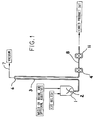
- a continuous process is illustrated.
- the raw pickle stock such as cut relish
- a tank 1 along with a sufficient amount of the curing liquid to completely immerse the raw pickle stock.
- An agitator 2 can be provided in the tank 1 in order to ensure a uniform dispersion of the pickle stock in the curing liquid.
- the mixture of the pickle stock and the curing liquid is then drawn through a pipe 3 by suction provided from a first positive displacement pump 4 and upwards to the top of pipe loop 6 provided in the pipe 3.
- a vacuum line 7 is installed at the top of the pipe loop 6, to remove the air from the pipe line upon start up and to evacuate the gases from the raw pickle stock as they are drawn out. Due to the hydraulic effect from the height of the pipeline, a vacuum is obtained at the top of the loop 6. Vacuum levels to approximately 60 kPa (6,000 kilograms per square meter absolute) can be achieved by varying the height of the loop between 6 and 10 meters.
- the first positive displacement pump draws the mixture from the pipeline and discharges it into a second pipe section 8 provided between the first positive displacement pump 4 and a second positive displacement pump 11.
- a second pipe section 8 In the second pipe section 8, an overpressure is developed as the result of the restriction in outward flow of the second pump 11.
- the pressure can be controlled in the second pipe section 8 by regulating the relative pumping rates of the two pumps.
- Figure 2 illustrates the process of the present invention operated in a batch mode. This type of process is particularly suitable for whole and large-cut pickle stock.
- the raw pickle stock and the curing liquid are introduced into a pressure-vacuum vessel 21 in relative amounts sufficient to immerse the raw pickle stock in the curing liquid.
- the curing liquid is added to the vessel 21 first in order to act as a cushion for the raw pickle stock added thereafter.
- a curing liquid to raw pickle stock ratio of greater than 1:1 is typical.
- the pressure-vacuum vessel 21 is capable of withstanding the working pressures and vacuum applied during the treatment step.
- the vessel After the curing liquid and the raw pickle stock have been introduced into the vessel 21, the vessel is hermetically sealed. A vacuum is then drawn on the vessel, held for the desired period of time and then released. An overpressure is then immediately applied to the vessel, held for the desired period of time and then released to yield the cured pickle product.
- the unloading of the pressure-vacuum vessel 21 can be accomplished by pumps or by taking advantage of the hermetic sealing of the vessel.
- the contents of the vessel 21 will not empty as long as the vessel 21 remains hermetically sealed.
- the introduction of air or liquid through valves (not shown) provided on the vessel body will result in an equal or greater volume of the vessel's contents being displaced and flowing out.
- the cured pickle products can be separated from the liquid in the tank 23 by a draining device 27.
- This draining device 27 can be a screen, mesh belt or other devices or combination of devices typically used for such a purpose.
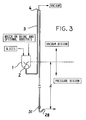
- Figure 3 illustrates an embodiment of the present invention that can be used in the curing of a sliced pickle stock or relish.
- the pickle stock along with the curing liquid is introduced into a mixing tank 1 containing an agitator 2. After a uniform dispersion of the pickle stock in the curing liquid is formed in the mixing tank 1, the dispersion is withdrawn from the mixing tank 1 and discharged from a pipe 3.
- the pipe 3 has an elevated loop 6 and a discharge 28 which is provided at a lower elevation than the liquid level in the mixing tank 11, thereby enabling the dispersion to be removed from the tank 11 by a 'siphon effect.'
- the dispersion is subjected to the maximum amount of vacuum at the top of the loop 6 and the pressure increases as the dispersion moves down in the pipe towards a valve 31.
- the pressure is hydraulically created by the height of the liquid in the pipe 3 and the rate of flow through the system can be regulated by valve 31.
- a minimum difference between the heights of the liquid level in the mixing tank 1 and the discharge 28 of "d" equal to about 10 feet is required to adequately pressurize the pickle stock.
- This embodiment of the present invention eliminates the use of pumps which could severely damage the sliced pickle stock or relish.
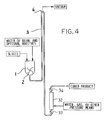
- a small pressure chamber 32 is used in place of the barometric leg of Figure 3. Both valves 33, 36 at the pressure chamber inlet and outlet are opened to admit the dispersion into the pressure chamber 32. The valves 33, 36 are then closed and the interior of the pressure chamber 32 pressurized by a suitable medium such as water, air, etc. When the pickle stock is deemed to be cured, valves 33, 36 are opened to discharge the cured pickle stock from the pressure chamber 32.
- a piston pump 37 is used as the source for both the vacuum and the overpressure, and to also serve as the means for pumping the cured pickle stock.
- the pickle stock dispersion is introduced into the piston pump 37 through a three-way valve 38.
- the valve 38 is then closed and a vacuum applied to the dispersion by retracting a piston 41 provided inside the piston pump 37.
- the piston 41 is then extended to pressurize the pickle stock dispersion.
- three-way valve 38 is opened to allow the cured pickle stock to be discharged from the piston pump 37.
- the curing liquid used in the present process may be reused many times or used only once. If the curing liquid is used only once, then the inventive process also constitutes a rinsing step in which reducing sugars and green flavors are removed. The discharge of the curing liquid into a flume for conveying the cured pickle product also constitutes a washing step if the flume of water is refreshed or not completely reused.
- the product pickle stock is then packed into finished containers or subjected to additional treatment steps, such as additional sweetening or flavor additions, as desired. Moreover, additional heating of the finished product may also be required, depending on the style of the finished product being manufactured.
Landscapes
- Life Sciences & Earth Sciences (AREA)
- Engineering & Computer Science (AREA)
- Chemical & Material Sciences (AREA)
- Wood Science & Technology (AREA)
- Zoology (AREA)
- Food Science & Technology (AREA)
- Polymers & Plastics (AREA)
- Chemical Kinetics & Catalysis (AREA)
- General Chemical & Material Sciences (AREA)
- Storage Of Fruits Or Vegetables (AREA)
- Meat, Egg Or Seafood Products (AREA)
Applications Claiming Priority (2)
| Application Number | Priority Date | Filing Date | Title |
|---|---|---|---|
| US08/075,740 US6110513A (en) | 1993-06-11 | 1993-06-11 | Method of curing pickle stock |
| US75740 | 1998-05-11 |
Publications (2)
| Publication Number | Publication Date |
|---|---|
| EP0628253A1 true EP0628253A1 (fr) | 1994-12-14 |
| EP0628253B1 EP0628253B1 (fr) | 1999-09-08 |
Family
ID=22127703
Family Applications (1)
| Application Number | Title | Priority Date | Filing Date |
|---|---|---|---|
| EP94304025A Expired - Lifetime EP0628253B1 (fr) | 1993-06-11 | 1994-06-03 | Procédé de fabrication de pickles sans étape de fermentation |
Country Status (5)
| Country | Link |
|---|---|
| US (1) | US6110513A (fr) |
| EP (1) | EP0628253B1 (fr) |
| CN (1) | CN1066616C (fr) |
| CA (1) | CA2120834C (fr) |
| DE (1) | DE69420461T2 (fr) |
Cited By (1)
| Publication number | Priority date | Publication date | Assignee | Title |
|---|---|---|---|---|
| WO1997043914A1 (fr) * | 1996-05-17 | 1997-11-27 | Unilever N.V. | Procede de conservation sous pression |
Families Citing this family (10)
| Publication number | Priority date | Publication date | Assignee | Title |
|---|---|---|---|---|
| US6242025B1 (en) * | 1999-08-04 | 2001-06-05 | James Lesky | Method and apparatus for food marinating |
| WO2002030552A1 (fr) * | 2000-10-06 | 2002-04-18 | H. J. Heinz Company | Agitation dans un recipient de remplissage |
| US7601372B2 (en) * | 2006-04-05 | 2009-10-13 | Bay Valley Foods, Llc | Continuous pickle desalting process and apparatus |
| CN102423082A (zh) * | 2011-11-09 | 2012-04-25 | 烟台市喜旺食品有限公司 | 一种肉制品变压风味渗透方法 |
| US20150110922A1 (en) * | 2013-10-18 | 2015-04-23 | Fermenting Solutions International, Llc | Quick pickle fermentation cure |
| US9585415B2 (en) | 2013-10-18 | 2017-03-07 | Fermenting Solutions International, Llc | Quick pickle fermentation cure |
| CN103610005B (zh) * | 2013-11-29 | 2015-04-08 | 西华大学 | 一种三级风干多段超高压与正反高压渗透技术制备块茎类泡菜的方法 |
| CN103766930A (zh) * | 2013-12-31 | 2014-05-07 | 江苏省农业科学院 | 一种真空与加压交替加速肉类腌制的方法 |
| CN109222023A (zh) * | 2018-09-19 | 2019-01-18 | 四川东坡中国泡菜产业技术研究院 | 一种快速真空浸渍泡菜的制备方法及装置 |
| US11584572B2 (en) | 2019-07-01 | 2023-02-21 | Michael J. Deeb | Pickling device with pressured cavity and related methods |
Citations (7)
| Publication number | Priority date | Publication date | Assignee | Title |
|---|---|---|---|---|
| FR543755A (fr) * | 1921-10-21 | 1922-09-08 | Procédé pour la conservation des denrées périssables, animales ou végétales | |
| US3070444A (en) * | 1959-09-11 | 1962-12-25 | Beatrice Foods Co | Process for preparing pickles |
| US3476078A (en) * | 1966-07-20 | 1969-11-04 | Bahnson Co | Vacuum impregnating apparatus |
| FR2421566A1 (fr) * | 1978-04-05 | 1979-11-02 | Rossignol Jean Francois | Procede de traitement de matieres alimentaires |
| US4331691A (en) * | 1980-07-10 | 1982-05-25 | Washington State University Research Foundation, Inc. | Vacuum pressure infiltration process for fresh produce |
| EP0072263A2 (fr) * | 1981-08-07 | 1983-02-16 | Société à Responsabilité Limitée SERATEC:Société dite | Procédé et installation de traitement et de conservation de denrées telles que les champignons |
| US4789558A (en) * | 1986-02-27 | 1988-12-06 | Oscar Mayer Foods Corporation | Method for producing sweet pickles |
Family Cites Families (5)
| Publication number | Priority date | Publication date | Assignee | Title |
|---|---|---|---|---|
| US1890475A (en) * | 1928-06-08 | 1932-12-13 | Pfaudler Co Inc | Method of treating products |
| US2291704A (en) * | 1939-03-30 | 1942-08-04 | George A Fisher | Method of packing food products |
| US3843810A (en) * | 1970-08-03 | 1974-10-22 | Fehmerling Ass | Process of air evacuation of foods under ultra-low pressure |
| FR2512643B1 (fr) * | 1981-09-11 | 1988-09-16 | Bournier Edgard | Procede ameliore de blanchiment de champignons et autres legumes |
| FR2552630B2 (fr) * | 1983-10-04 | 1989-06-23 | Spinoglio Mario | Procede ameliore de blanchiment de champignons et autres legumes, et appareillage pour sa mise en oeuvre |
-
1993
- 1993-06-11 US US08/075,740 patent/US6110513A/en not_active Expired - Lifetime
-
1994
- 1994-04-08 CA CA002120834A patent/CA2120834C/fr not_active Expired - Lifetime
- 1994-06-03 EP EP94304025A patent/EP0628253B1/fr not_active Expired - Lifetime
- 1994-06-03 DE DE69420461T patent/DE69420461T2/de not_active Expired - Lifetime
- 1994-06-10 CN CN94106443A patent/CN1066616C/zh not_active Expired - Fee Related
Patent Citations (7)
| Publication number | Priority date | Publication date | Assignee | Title |
|---|---|---|---|---|
| FR543755A (fr) * | 1921-10-21 | 1922-09-08 | Procédé pour la conservation des denrées périssables, animales ou végétales | |
| US3070444A (en) * | 1959-09-11 | 1962-12-25 | Beatrice Foods Co | Process for preparing pickles |
| US3476078A (en) * | 1966-07-20 | 1969-11-04 | Bahnson Co | Vacuum impregnating apparatus |
| FR2421566A1 (fr) * | 1978-04-05 | 1979-11-02 | Rossignol Jean Francois | Procede de traitement de matieres alimentaires |
| US4331691A (en) * | 1980-07-10 | 1982-05-25 | Washington State University Research Foundation, Inc. | Vacuum pressure infiltration process for fresh produce |
| EP0072263A2 (fr) * | 1981-08-07 | 1983-02-16 | Société à Responsabilité Limitée SERATEC:Société dite | Procédé et installation de traitement et de conservation de denrées telles que les champignons |
| US4789558A (en) * | 1986-02-27 | 1988-12-06 | Oscar Mayer Foods Corporation | Method for producing sweet pickles |
Cited By (2)
| Publication number | Priority date | Publication date | Assignee | Title |
|---|---|---|---|---|
| WO1997043914A1 (fr) * | 1996-05-17 | 1997-11-27 | Unilever N.V. | Procede de conservation sous pression |
| US6033717A (en) * | 1996-05-17 | 2000-03-07 | Unilever Patent Holdings | Method for preservation under pressure |
Also Published As
| Publication number | Publication date |
|---|---|
| CN1099576A (zh) | 1995-03-08 |
| DE69420461D1 (de) | 1999-10-14 |
| CA2120834C (fr) | 2003-02-25 |
| EP0628253B1 (fr) | 1999-09-08 |
| US6110513A (en) | 2000-08-29 |
| CN1066616C (zh) | 2001-06-06 |
| CA2120834A1 (fr) | 1994-12-12 |
| DE69420461T2 (de) | 1999-12-23 |
Similar Documents
| Publication | Publication Date | Title |
|---|---|---|
| EP0628253B1 (fr) | Procédé de fabrication de pickles sans étape de fermentation | |
| US3843810A (en) | Process of air evacuation of foods under ultra-low pressure | |
| US6159527A (en) | Method and apparatus for infusing fruit | |
| JP2847484B2 (ja) | フライ食品の製造装置 | |
| US4021579A (en) | Accelerated production of fermented alcoholic beverages | |
| US5384147A (en) | Method of processing avocado pulp | |
| US4143167A (en) | Process for treatment of mushrooms | |
| US4735813A (en) | Process for bleaching mushrooms and other vegetables | |
| US4789558A (en) | Method for producing sweet pickles | |
| KR20020053903A (ko) | 진공 가압식 육류 염지 장치 및 염지 방법 | |
| US5025716A (en) | Installation for processing foods in a sterilized condition | |
| US2013156A (en) | Method of embalming dead bodies | |
| JP2889793B2 (ja) | 味付け魚節の製造方法 | |
| CN115316632A (zh) | 一种即食黄花菜泡制方法 | |
| US4328251A (en) | Mushroom with edible colloidal substance | |
| US4680188A (en) | Process for improving the technical efficiency and preservation quality of canned mushrooms | |
| KR100538032B1 (ko) | 매실 고추장 장아찌 제조방법 | |
| JPH06261730A (ja) | 果実類中の空気除去方法及び装置 | |
| CN85103390A (zh) | 快速压力腌蛋方法及装置 | |
| KR790001929B1 (ko) | 천연식품의 가공방법 | |
| KR102960739B1 (ko) | 첨가물 주입 식품 제조 장치 | |
| CA1310804C (fr) | Installation de traitement d'aliments dans des conditions steriles | |
| JPH0549431A (ja) | 果実製品の製造方法 | |
| KR20260021920A (ko) | 첨가물 주입 식품 제조 장치 | |
| JPH04108372A (ja) | 果実酒の製造方法 |
Legal Events
| Date | Code | Title | Description |
|---|---|---|---|
| PUAI | Public reference made under article 153(3) epc to a published international application that has entered the european phase |
Free format text: ORIGINAL CODE: 0009012 |
|
| AK | Designated contracting states |
Kind code of ref document: A1 Designated state(s): DE FR GB IT |
|
| 17P | Request for examination filed |
Effective date: 19950608 |
|
| 17Q | First examination report despatched |
Effective date: 19970821 |
|
| GRAG | Despatch of communication of intention to grant |
Free format text: ORIGINAL CODE: EPIDOS AGRA |
|
| GRAG | Despatch of communication of intention to grant |
Free format text: ORIGINAL CODE: EPIDOS AGRA |
|
| GRAH | Despatch of communication of intention to grant a patent |
Free format text: ORIGINAL CODE: EPIDOS IGRA |
|
| GRAH | Despatch of communication of intention to grant a patent |
Free format text: ORIGINAL CODE: EPIDOS IGRA |
|
| GRAA | (expected) grant |
Free format text: ORIGINAL CODE: 0009210 |
|
| AK | Designated contracting states |
Kind code of ref document: B1 Designated state(s): DE FR GB IT |
|
| REF | Corresponds to: |
Ref document number: 69420461 Country of ref document: DE Date of ref document: 19991014 |
|
| ITF | It: translation for a ep patent filed | ||
| ET | Fr: translation filed | ||
| PLBE | No opposition filed within time limit |
Free format text: ORIGINAL CODE: 0009261 |
|
| STAA | Information on the status of an ep patent application or granted ep patent |
Free format text: STATUS: NO OPPOSITION FILED WITHIN TIME LIMIT |
|
| 26N | No opposition filed | ||
| REG | Reference to a national code |
Ref country code: GB Ref legal event code: IF02 |
|
| REG | Reference to a national code |
Ref country code: GB Ref legal event code: 732E |
|
| REG | Reference to a national code |
Ref country code: FR Ref legal event code: TP |
|
| REG | Reference to a national code |
Ref country code: FR Ref legal event code: CD Ref country code: FR Ref legal event code: CA |
|
| PGFP | Annual fee paid to national office [announced via postgrant information from national office to epo] |
Ref country code: FR Payment date: 20110630 Year of fee payment: 18 |
|
| PGFP | Annual fee paid to national office [announced via postgrant information from national office to epo] |
Ref country code: GB Payment date: 20110620 Year of fee payment: 18 |
|
| PGFP | Annual fee paid to national office [announced via postgrant information from national office to epo] |
Ref country code: DE Payment date: 20110622 Year of fee payment: 18 |
|
| PGFP | Annual fee paid to national office [announced via postgrant information from national office to epo] |
Ref country code: IT Payment date: 20110625 Year of fee payment: 18 |
|
| GBPC | Gb: european patent ceased through non-payment of renewal fee |
Effective date: 20120603 |
|
| PG25 | Lapsed in a contracting state [announced via postgrant information from national office to epo] |
Ref country code: IT Free format text: LAPSE BECAUSE OF NON-PAYMENT OF DUE FEES Effective date: 20120603 |
|
| REG | Reference to a national code |
Ref country code: FR Ref legal event code: ST Effective date: 20130228 |
|
| REG | Reference to a national code |
Ref country code: DE Ref legal event code: R119 Ref document number: 69420461 Country of ref document: DE Effective date: 20130101 |
|
| PG25 | Lapsed in a contracting state [announced via postgrant information from national office to epo] |
Ref country code: GB Free format text: LAPSE BECAUSE OF NON-PAYMENT OF DUE FEES Effective date: 20120603 Ref country code: DE Free format text: LAPSE BECAUSE OF NON-PAYMENT OF DUE FEES Effective date: 20130101 Ref country code: FR Free format text: LAPSE BECAUSE OF NON-PAYMENT OF DUE FEES Effective date: 20120702 |