EP0629641B1 - Polyisobutènes polyfonctionnels, leur préparation, leur formulation et leur utilisation - Google Patents
Polyisobutènes polyfonctionnels, leur préparation, leur formulation et leur utilisation Download PDFInfo
- Publication number
- EP0629641B1 EP0629641B1 EP94401290A EP94401290A EP0629641B1 EP 0629641 B1 EP0629641 B1 EP 0629641B1 EP 94401290 A EP94401290 A EP 94401290A EP 94401290 A EP94401290 A EP 94401290A EP 0629641 B1 EP0629641 B1 EP 0629641B1
- Authority
- EP
- European Patent Office
- Prior art keywords
- composition according
- polyisobutene
- fuel
- weight
- maleic anhydride
- Prior art date
- Legal status (The legal status is an assumption and is not a legal conclusion. Google has not performed a legal analysis and makes no representation as to the accuracy of the status listed.)
- Expired - Lifetime
Links
Classifications
-
- C—CHEMISTRY; METALLURGY
- C10—PETROLEUM, GAS OR COKE INDUSTRIES; TECHNICAL GASES CONTAINING CARBON MONOXIDE; FUELS; LUBRICANTS; PEAT
- C10L—FUELS NOT OTHERWISE PROVIDED FOR; NATURAL GAS; SYNTHETIC NATURAL GAS OBTAINED BY PROCESSES NOT COVERED BY SUBCLASSES C10G OR C10K; LIQUIFIED PETROLEUM GAS; USE OF ADDITIVES TO FUELS OR FIRES; FIRE-LIGHTERS
- C10L1/00—Liquid carbonaceous fuels
- C10L1/10—Liquid carbonaceous fuels containing additives
- C10L1/14—Organic compounds
- C10L1/18—Organic compounds containing oxygen
- C10L1/192—Macromolecular compounds
- C10L1/198—Macromolecular compounds obtained otherwise than by reactions involving only carbon-to-carbon unsaturated bonds homo- or copolymers of compounds having one or more unsaturated aliphatic radicals, each having only one carbon to carbon double bond, and at least one being terminated by an acyloxy radical of a saturated carboxylic acid, of carbonic acid
-
- C—CHEMISTRY; METALLURGY
- C08—ORGANIC MACROMOLECULAR COMPOUNDS; THEIR PREPARATION OR CHEMICAL WORKING-UP; COMPOSITIONS BASED THEREON
- C08F—MACROMOLECULAR COMPOUNDS OBTAINED BY REACTIONS ONLY INVOLVING CARBON-TO-CARBON UNSATURATED BONDS
- C08F255/00—Macromolecular compounds obtained by polymerising monomers on to polymers of hydrocarbons as defined in group C08F10/00
- C08F255/08—Macromolecular compounds obtained by polymerising monomers on to polymers of hydrocarbons as defined in group C08F10/00 on to polymers of olefins having four or more carbon atoms
- C08F255/10—Macromolecular compounds obtained by polymerising monomers on to polymers of hydrocarbons as defined in group C08F10/00 on to polymers of olefins having four or more carbon atoms on to butene polymers
-
- C—CHEMISTRY; METALLURGY
- C10—PETROLEUM, GAS OR COKE INDUSTRIES; TECHNICAL GASES CONTAINING CARBON MONOXIDE; FUELS; LUBRICANTS; PEAT
- C10L—FUELS NOT OTHERWISE PROVIDED FOR; NATURAL GAS; SYNTHETIC NATURAL GAS OBTAINED BY PROCESSES NOT COVERED BY SUBCLASSES C10G OR C10K; LIQUIFIED PETROLEUM GAS; USE OF ADDITIVES TO FUELS OR FIRES; FIRE-LIGHTERS
- C10L1/00—Liquid carbonaceous fuels
- C10L1/10—Liquid carbonaceous fuels containing additives
- C10L1/14—Organic compounds
- C10L1/146—Macromolecular compounds according to different macromolecular groups, mixtures thereof
-
- C—CHEMISTRY; METALLURGY
- C10—PETROLEUM, GAS OR COKE INDUSTRIES; TECHNICAL GASES CONTAINING CARBON MONOXIDE; FUELS; LUBRICANTS; PEAT
- C10L—FUELS NOT OTHERWISE PROVIDED FOR; NATURAL GAS; SYNTHETIC NATURAL GAS OBTAINED BY PROCESSES NOT COVERED BY SUBCLASSES C10G OR C10K; LIQUIFIED PETROLEUM GAS; USE OF ADDITIVES TO FUELS OR FIRES; FIRE-LIGHTERS
- C10L1/00—Liquid carbonaceous fuels
- C10L1/10—Liquid carbonaceous fuels containing additives
- C10L1/14—Organic compounds
- C10L1/22—Organic compounds containing nitrogen
- C10L1/221—Organic compounds containing nitrogen compounds of uncertain formula; reaction products where mixtures of compounds are obtained
-
- C—CHEMISTRY; METALLURGY
- C10—PETROLEUM, GAS OR COKE INDUSTRIES; TECHNICAL GASES CONTAINING CARBON MONOXIDE; FUELS; LUBRICANTS; PEAT
- C10M—LUBRICATING COMPOSITIONS; USE OF CHEMICAL SUBSTANCES EITHER ALONE OR AS LUBRICATING INGREDIENTS IN A LUBRICATING COMPOSITION
- C10M143/00—Lubricating compositions characterised by the additive being a macromolecular hydrocarbon or such hydrocarbon modified by oxidation
- C10M143/08—Lubricating compositions characterised by the additive being a macromolecular hydrocarbon or such hydrocarbon modified by oxidation containing aliphatic monomer having more than 4 carbon atoms
-
- C—CHEMISTRY; METALLURGY
- C10—PETROLEUM, GAS OR COKE INDUSTRIES; TECHNICAL GASES CONTAINING CARBON MONOXIDE; FUELS; LUBRICANTS; PEAT
- C10M—LUBRICATING COMPOSITIONS; USE OF CHEMICAL SUBSTANCES EITHER ALONE OR AS LUBRICATING INGREDIENTS IN A LUBRICATING COMPOSITION
- C10M145/00—Lubricating compositions characterised by the additive being a macromolecular compound containing oxygen
- C10M145/02—Macromolecular compounds obtained by reactions only involving carbon-to-carbon unsaturated bonds
- C10M145/10—Macromolecular compounds obtained by reactions only involving carbon-to-carbon unsaturated bonds containing monomers having an unsaturated radical bound to a carboxyl radical, e.g. acrylate
- C10M145/16—Macromolecular compounds obtained by reactions only involving carbon-to-carbon unsaturated bonds containing monomers having an unsaturated radical bound to a carboxyl radical, e.g. acrylate polycarboxylic
-
- C—CHEMISTRY; METALLURGY
- C10—PETROLEUM, GAS OR COKE INDUSTRIES; TECHNICAL GASES CONTAINING CARBON MONOXIDE; FUELS; LUBRICANTS; PEAT
- C10M—LUBRICATING COMPOSITIONS; USE OF CHEMICAL SUBSTANCES EITHER ALONE OR AS LUBRICATING INGREDIENTS IN A LUBRICATING COMPOSITION
- C10M149/00—Lubricating compositions characterised by the additive being a macromolecular compound containing nitrogen
- C10M149/02—Macromolecular compounds obtained by reactions only involving carbon-to-carbon unsaturated bonds
-
- C—CHEMISTRY; METALLURGY
- C10—PETROLEUM, GAS OR COKE INDUSTRIES; TECHNICAL GASES CONTAINING CARBON MONOXIDE; FUELS; LUBRICANTS; PEAT
- C10M—LUBRICATING COMPOSITIONS; USE OF CHEMICAL SUBSTANCES EITHER ALONE OR AS LUBRICATING INGREDIENTS IN A LUBRICATING COMPOSITION
- C10M149/00—Lubricating compositions characterised by the additive being a macromolecular compound containing nitrogen
- C10M149/02—Macromolecular compounds obtained by reactions only involving carbon-to-carbon unsaturated bonds
- C10M149/06—Macromolecular compounds obtained by reactions only involving carbon-to-carbon unsaturated bonds containing monomers having an unsaturated radical bound to an amido or imido group
-
- C—CHEMISTRY; METALLURGY
- C10—PETROLEUM, GAS OR COKE INDUSTRIES; TECHNICAL GASES CONTAINING CARBON MONOXIDE; FUELS; LUBRICANTS; PEAT
- C10M—LUBRICATING COMPOSITIONS; USE OF CHEMICAL SUBSTANCES EITHER ALONE OR AS LUBRICATING INGREDIENTS IN A LUBRICATING COMPOSITION
- C10M157/00—Lubricating compositions characterised by the additive being a mixture of two or more macromolecular compounds covered by more than one of the main groups C10M143/00 - C10M155/00, each of these compounds being essential
-
- C—CHEMISTRY; METALLURGY
- C10—PETROLEUM, GAS OR COKE INDUSTRIES; TECHNICAL GASES CONTAINING CARBON MONOXIDE; FUELS; LUBRICANTS; PEAT
- C10M—LUBRICATING COMPOSITIONS; USE OF CHEMICAL SUBSTANCES EITHER ALONE OR AS LUBRICATING INGREDIENTS IN A LUBRICATING COMPOSITION
- C10M157/00—Lubricating compositions characterised by the additive being a mixture of two or more macromolecular compounds covered by more than one of the main groups C10M143/00 - C10M155/00, each of these compounds being essential
- C10M157/04—Lubricating compositions characterised by the additive being a mixture of two or more macromolecular compounds covered by more than one of the main groups C10M143/00 - C10M155/00, each of these compounds being essential at least one of them being a nitrogen-containing compound
-
- C—CHEMISTRY; METALLURGY
- C10—PETROLEUM, GAS OR COKE INDUSTRIES; TECHNICAL GASES CONTAINING CARBON MONOXIDE; FUELS; LUBRICANTS; PEAT
- C10L—FUELS NOT OTHERWISE PROVIDED FOR; NATURAL GAS; SYNTHETIC NATURAL GAS OBTAINED BY PROCESSES NOT COVERED BY SUBCLASSES C10G OR C10K; LIQUIFIED PETROLEUM GAS; USE OF ADDITIVES TO FUELS OR FIRES; FIRE-LIGHTERS
- C10L1/00—Liquid carbonaceous fuels
- C10L1/10—Liquid carbonaceous fuels containing additives
- C10L1/14—Organic compounds
- C10L1/22—Organic compounds containing nitrogen
- C10L1/234—Macromolecular compounds
- C10L1/238—Macromolecular compounds obtained otherwise than by reactions involving only carbon-to-carbon unsaturated bonds
- C10L1/2383—Polyamines or polyimines, or derivatives thereof (poly)amines and imines; derivatives thereof (substituted by a macromolecular group containing 30C)
-
- C—CHEMISTRY; METALLURGY
- C10—PETROLEUM, GAS OR COKE INDUSTRIES; TECHNICAL GASES CONTAINING CARBON MONOXIDE; FUELS; LUBRICANTS; PEAT
- C10M—LUBRICATING COMPOSITIONS; USE OF CHEMICAL SUBSTANCES EITHER ALONE OR AS LUBRICATING INGREDIENTS IN A LUBRICATING COMPOSITION
- C10M2205/00—Organic macromolecular hydrocarbon compounds or fractions, whether or not modified by oxidation as ingredients in lubricant compositions
- C10M2205/02—Organic macromolecular hydrocarbon compounds or fractions, whether or not modified by oxidation as ingredients in lubricant compositions containing acyclic monomers
- C10M2205/028—Organic macromolecular hydrocarbon compounds or fractions, whether or not modified by oxidation as ingredients in lubricant compositions containing acyclic monomers containing aliphatic monomers having more than four carbon atoms
-
- C—CHEMISTRY; METALLURGY
- C10—PETROLEUM, GAS OR COKE INDUSTRIES; TECHNICAL GASES CONTAINING CARBON MONOXIDE; FUELS; LUBRICANTS; PEAT
- C10M—LUBRICATING COMPOSITIONS; USE OF CHEMICAL SUBSTANCES EITHER ALONE OR AS LUBRICATING INGREDIENTS IN A LUBRICATING COMPOSITION
- C10M2209/00—Organic macromolecular compounds containing oxygen as ingredients in lubricant compositions
- C10M2209/02—Macromolecular compounds obtained by reactions only involving carbon-to-carbon unsaturated bonds
- C10M2209/08—Macromolecular compounds obtained by reactions only involving carbon-to-carbon unsaturated bonds containing monomers having an unsaturated radical bound to a carboxyl radical, e.g. acrylate type
- C10M2209/086—Macromolecular compounds obtained by reactions only involving carbon-to-carbon unsaturated bonds containing monomers having an unsaturated radical bound to a carboxyl radical, e.g. acrylate type polycarboxylic, e.g. maleic acid
-
- C—CHEMISTRY; METALLURGY
- C10—PETROLEUM, GAS OR COKE INDUSTRIES; TECHNICAL GASES CONTAINING CARBON MONOXIDE; FUELS; LUBRICANTS; PEAT
- C10M—LUBRICATING COMPOSITIONS; USE OF CHEMICAL SUBSTANCES EITHER ALONE OR AS LUBRICATING INGREDIENTS IN A LUBRICATING COMPOSITION
- C10M2215/00—Organic non-macromolecular compounds containing nitrogen as ingredients in lubricant Compositions
- C10M2215/02—Amines, e.g. polyalkylene polyamines; Quaternary amines
- C10M2215/04—Amines, e.g. polyalkylene polyamines; Quaternary amines having amino groups bound to acyclic or cycloaliphatic carbon atoms
-
- C—CHEMISTRY; METALLURGY
- C10—PETROLEUM, GAS OR COKE INDUSTRIES; TECHNICAL GASES CONTAINING CARBON MONOXIDE; FUELS; LUBRICANTS; PEAT
- C10M—LUBRICATING COMPOSITIONS; USE OF CHEMICAL SUBSTANCES EITHER ALONE OR AS LUBRICATING INGREDIENTS IN A LUBRICATING COMPOSITION
- C10M2215/00—Organic non-macromolecular compounds containing nitrogen as ingredients in lubricant Compositions
- C10M2215/24—Organic non-macromolecular compounds containing nitrogen as ingredients in lubricant Compositions having hydrocarbon substituents containing thirty or more carbon atoms, e.g. nitrogen derivatives of substituted succinic acid
- C10M2215/26—Amines
-
- C—CHEMISTRY; METALLURGY
- C10—PETROLEUM, GAS OR COKE INDUSTRIES; TECHNICAL GASES CONTAINING CARBON MONOXIDE; FUELS; LUBRICANTS; PEAT
- C10M—LUBRICATING COMPOSITIONS; USE OF CHEMICAL SUBSTANCES EITHER ALONE OR AS LUBRICATING INGREDIENTS IN A LUBRICATING COMPOSITION
- C10M2217/00—Organic macromolecular compounds containing nitrogen as ingredients in lubricant compositions
-
- C—CHEMISTRY; METALLURGY
- C10—PETROLEUM, GAS OR COKE INDUSTRIES; TECHNICAL GASES CONTAINING CARBON MONOXIDE; FUELS; LUBRICANTS; PEAT
- C10M—LUBRICATING COMPOSITIONS; USE OF CHEMICAL SUBSTANCES EITHER ALONE OR AS LUBRICATING INGREDIENTS IN A LUBRICATING COMPOSITION
- C10M2217/00—Organic macromolecular compounds containing nitrogen as ingredients in lubricant compositions
- C10M2217/02—Macromolecular compounds obtained from nitrogen containing monomers by reactions only involving carbon-to-carbon unsaturated bonds
-
- C—CHEMISTRY; METALLURGY
- C10—PETROLEUM, GAS OR COKE INDUSTRIES; TECHNICAL GASES CONTAINING CARBON MONOXIDE; FUELS; LUBRICANTS; PEAT
- C10M—LUBRICATING COMPOSITIONS; USE OF CHEMICAL SUBSTANCES EITHER ALONE OR AS LUBRICATING INGREDIENTS IN A LUBRICATING COMPOSITION
- C10M2217/00—Organic macromolecular compounds containing nitrogen as ingredients in lubricant compositions
- C10M2217/02—Macromolecular compounds obtained from nitrogen containing monomers by reactions only involving carbon-to-carbon unsaturated bonds
- C10M2217/024—Macromolecular compounds obtained from nitrogen containing monomers by reactions only involving carbon-to-carbon unsaturated bonds containing monomers having an unsaturated radical bound to an amido or imido group
-
- C—CHEMISTRY; METALLURGY
- C10—PETROLEUM, GAS OR COKE INDUSTRIES; TECHNICAL GASES CONTAINING CARBON MONOXIDE; FUELS; LUBRICANTS; PEAT
- C10M—LUBRICATING COMPOSITIONS; USE OF CHEMICAL SUBSTANCES EITHER ALONE OR AS LUBRICATING INGREDIENTS IN A LUBRICATING COMPOSITION
- C10M2217/00—Organic macromolecular compounds containing nitrogen as ingredients in lubricant compositions
- C10M2217/04—Macromolecular compounds from nitrogen-containing monomers obtained otherwise than by reactions only involving carbon-to-carbon unsaturated bonds
-
- C—CHEMISTRY; METALLURGY
- C10—PETROLEUM, GAS OR COKE INDUSTRIES; TECHNICAL GASES CONTAINING CARBON MONOXIDE; FUELS; LUBRICANTS; PEAT
- C10M—LUBRICATING COMPOSITIONS; USE OF CHEMICAL SUBSTANCES EITHER ALONE OR AS LUBRICATING INGREDIENTS IN A LUBRICATING COMPOSITION
- C10M2217/00—Organic macromolecular compounds containing nitrogen as ingredients in lubricant compositions
- C10M2217/04—Macromolecular compounds from nitrogen-containing monomers obtained otherwise than by reactions only involving carbon-to-carbon unsaturated bonds
- C10M2217/046—Polyamines, i.e. macromoleculars obtained by condensation of more than eleven amine monomers
-
- C—CHEMISTRY; METALLURGY
- C10—PETROLEUM, GAS OR COKE INDUSTRIES; TECHNICAL GASES CONTAINING CARBON MONOXIDE; FUELS; LUBRICANTS; PEAT
- C10M—LUBRICATING COMPOSITIONS; USE OF CHEMICAL SUBSTANCES EITHER ALONE OR AS LUBRICATING INGREDIENTS IN A LUBRICATING COMPOSITION
- C10M2217/00—Organic macromolecular compounds containing nitrogen as ingredients in lubricant compositions
- C10M2217/06—Macromolecular compounds obtained by functionalisation op polymers with a nitrogen containing compound
-
- C—CHEMISTRY; METALLURGY
- C10—PETROLEUM, GAS OR COKE INDUSTRIES; TECHNICAL GASES CONTAINING CARBON MONOXIDE; FUELS; LUBRICANTS; PEAT
- C10N—INDEXING SCHEME ASSOCIATED WITH SUBCLASS C10M RELATING TO LUBRICATING COMPOSITIONS
- C10N2040/00—Specified use or application for which the lubricating composition is intended
- C10N2040/02—Bearings
-
- C—CHEMISTRY; METALLURGY
- C10—PETROLEUM, GAS OR COKE INDUSTRIES; TECHNICAL GASES CONTAINING CARBON MONOXIDE; FUELS; LUBRICANTS; PEAT
- C10N—INDEXING SCHEME ASSOCIATED WITH SUBCLASS C10M RELATING TO LUBRICATING COMPOSITIONS
- C10N2040/00—Specified use or application for which the lubricating composition is intended
- C10N2040/08—Hydraulic fluids, e.g. brake-fluids
-
- C—CHEMISTRY; METALLURGY
- C10—PETROLEUM, GAS OR COKE INDUSTRIES; TECHNICAL GASES CONTAINING CARBON MONOXIDE; FUELS; LUBRICANTS; PEAT
- C10N—INDEXING SCHEME ASSOCIATED WITH SUBCLASS C10M RELATING TO LUBRICATING COMPOSITIONS
- C10N2040/00—Specified use or application for which the lubricating composition is intended
- C10N2040/20—Metal working
-
- C—CHEMISTRY; METALLURGY
- C10—PETROLEUM, GAS OR COKE INDUSTRIES; TECHNICAL GASES CONTAINING CARBON MONOXIDE; FUELS; LUBRICANTS; PEAT
- C10N—INDEXING SCHEME ASSOCIATED WITH SUBCLASS C10M RELATING TO LUBRICATING COMPOSITIONS
- C10N2040/00—Specified use or application for which the lubricating composition is intended
- C10N2040/25—Internal-combustion engines
-
- C—CHEMISTRY; METALLURGY
- C10—PETROLEUM, GAS OR COKE INDUSTRIES; TECHNICAL GASES CONTAINING CARBON MONOXIDE; FUELS; LUBRICANTS; PEAT
- C10N—INDEXING SCHEME ASSOCIATED WITH SUBCLASS C10M RELATING TO LUBRICATING COMPOSITIONS
- C10N2040/00—Specified use or application for which the lubricating composition is intended
- C10N2040/25—Internal-combustion engines
- C10N2040/251—Alcohol-fuelled engines
-
- C—CHEMISTRY; METALLURGY
- C10—PETROLEUM, GAS OR COKE INDUSTRIES; TECHNICAL GASES CONTAINING CARBON MONOXIDE; FUELS; LUBRICANTS; PEAT
- C10N—INDEXING SCHEME ASSOCIATED WITH SUBCLASS C10M RELATING TO LUBRICATING COMPOSITIONS
- C10N2040/00—Specified use or application for which the lubricating composition is intended
- C10N2040/25—Internal-combustion engines
- C10N2040/252—Diesel engines
-
- C—CHEMISTRY; METALLURGY
- C10—PETROLEUM, GAS OR COKE INDUSTRIES; TECHNICAL GASES CONTAINING CARBON MONOXIDE; FUELS; LUBRICANTS; PEAT
- C10N—INDEXING SCHEME ASSOCIATED WITH SUBCLASS C10M RELATING TO LUBRICATING COMPOSITIONS
- C10N2040/00—Specified use or application for which the lubricating composition is intended
- C10N2040/25—Internal-combustion engines
- C10N2040/252—Diesel engines
- C10N2040/253—Small diesel engines
-
- C—CHEMISTRY; METALLURGY
- C10—PETROLEUM, GAS OR COKE INDUSTRIES; TECHNICAL GASES CONTAINING CARBON MONOXIDE; FUELS; LUBRICANTS; PEAT
- C10N—INDEXING SCHEME ASSOCIATED WITH SUBCLASS C10M RELATING TO LUBRICATING COMPOSITIONS
- C10N2040/00—Specified use or application for which the lubricating composition is intended
- C10N2040/25—Internal-combustion engines
- C10N2040/255—Gasoline engines
-
- C—CHEMISTRY; METALLURGY
- C10—PETROLEUM, GAS OR COKE INDUSTRIES; TECHNICAL GASES CONTAINING CARBON MONOXIDE; FUELS; LUBRICANTS; PEAT
- C10N—INDEXING SCHEME ASSOCIATED WITH SUBCLASS C10M RELATING TO LUBRICATING COMPOSITIONS
- C10N2040/00—Specified use or application for which the lubricating composition is intended
- C10N2040/25—Internal-combustion engines
- C10N2040/255—Gasoline engines
- C10N2040/26—Two-strokes or two-cycle engines
-
- C—CHEMISTRY; METALLURGY
- C10—PETROLEUM, GAS OR COKE INDUSTRIES; TECHNICAL GASES CONTAINING CARBON MONOXIDE; FUELS; LUBRICANTS; PEAT
- C10N—INDEXING SCHEME ASSOCIATED WITH SUBCLASS C10M RELATING TO LUBRICATING COMPOSITIONS
- C10N2040/00—Specified use or application for which the lubricating composition is intended
- C10N2040/25—Internal-combustion engines
- C10N2040/255—Gasoline engines
- C10N2040/28—Rotary engines
Definitions
- the present invention relates to novel polyfunctional polyisobutenes free chlorine, their preparation, their chemical modification and their use, in particular as additives for fuels and lubricants.
- the polyisobutenyl succinic anhydrides sought are prepared according to three main processes.
- the first consists of the anhydride condensation maleic on polyisobutene following an ene-synthesis reaction.
- Such a reaction requires a high temperature (220-235 ° C) and the use of an excess of anhydride maleic so as to obtain yields of the order of 65 to 75% after 24 hours.
- resins resulting from the polymerization of maleic anhydride which requires a filtration step, made very delicate by the consistency of these secondary products.
- a third technique for manufacturing polyisobutenyl succinic anhydride consists of reacting the polyisobutene and maleic anhydride in the presence of chlorine.
- This technique has the advantage of being able to lead to polyisobutenes containing more 1 and up to 2 molecules of succinic anhydride per molecule of polyisobutene.
- Such a characteristic makes it possible to obtain, after reaction with polyethylene polyamines, more molecular weight polycondensation products higher than those resulting from the same reaction but using anhydrides polyisobutenyl succinics from the first two types of processes described.
- Such derivatives, of high molecular weight are particularly appreciated in the field ashless dispersant additives for engine lubricants.
- the present invention provides new polyfunctional polyisobutenes, free chlorine and advantageously usable for the preparation of petroleum additives, in particular detergents for motor fuels and ashless dispersants for engine lubricants.
- polyfunctional polyisobutenes which can be used in particular, after modification by amines, alcohols and / or amino alcohols, as additives in fuels engines and engine lubricants, can be broadly defined as obtained by radical terpolymerization of isobutene, maleic anhydride and polyisobutene.
- the polyisobutenes used for such a polymerization are preferably obtained in presence of catalyst containing no chlorine and having a double content "exo" links greater than 50%.
- Their number average molecular mass is between 400 and 10,000 and preferably between 400 and 3000.
- the isobutene-maleic anhydride-polyisobutene terpolymerization reaction is conducted according to any technique involving a radical mechanism but of preferably in solution in an organic solvent, in the presence of an initiator radical at a temperature between 40 and 150 ° C.
- initiators radicals which can be used, mention will be made of dicumyl peroxide, ditertiobutyl peroxide, benzoyl peroxide, lauryl peroxide, lauryl hydroperoxide, tert-butyl hydroperoxide, azobisisobutyronitrile, sodium persulfate, diethyl peroxydicarbonate, sodium peroxydicarbonate diisopropyl, dicyclohexyl peroxydicarbonate, tert-butyl peroxypivalate, tertiary butyl perbenzoate, tertiary butyl peroctoate, tertiary butyl peracetate or 2,4-pentane dione peroxide.
- concentration of the initiator radical is between 0.05 and 0.5% by weight of the total mass of the mixture reactive.
- the solvent content in the reaction mixture will be between 0 and 80% by weight. The choice of solvent will be guided by the field use of final products (fuel additives or lubricant additives).
- the polyisobutene could also be this solvent in the absence of any other solvent additional.
- the proportions of maleic anhydride, isobutene and polyisobutene in the mixture reaction will be chosen such that the terpolymer obtained is soluble in the selected reaction solvent. Preferably, they will be chosen so that the molar maleic anhydride content is less than or at most equal to the sum isobutene + polyisobutene.
- the terpolymers of the invention thus obtained can be modified to lead to additives used in the petroleum field.
- chemical agents used for such modifications particular mention will be made of amines, polyamines, alcohols, polyols and amino alcohols which will advantageously be chosen from those containing at most 10 carbon atoms.
- the following polyamines are more particularly mentioned: dimethylaminopropylamine, diethylene triamine, triethylene tetramine and tetraethylene pentamine, but preference will be given to mixtures based on dimethyl amino propylamine and polyethylene polyamines such as diethylene triamine, triethylene tetramine, tetraethylene pentamine.
- dimethylamino propylamine will be added in a first step and then polyethylene polyamine, preferably tetraethylenepentamine will be added to the reaction mixture.
- alcohols used mention will be made of methanol, ethanol, isopropanol, ethylhexanol or polyols such as trimethylolpropane, pentaerythritol or dipentaerythritol.
- amino alcohols compounds preferably having a function will be used primary amine and from 1 to 3 hydroxyl functions, such as for example amino-2 2-methyl propanol or trishydroxymethylaminomethane.
- modification reactions of the functional polyisobutenes of the invention are preferably conducted in the organic solvents used in the step of copolymerization at temperatures usually between 60 and 250 ° C and preferably between 80 and 200 ° C.
- the additives of the invention can be used in fuels or in lubricants, alone or in combination with other conventional additives.
- detergent additives in fuels they will be used in proportions ranging from 50 to 2000 ppm by weight and preferably from 100 to 1000 ppm by weight.
- an oil carrier preferably of the polyethylene glycol or ethylene oxide-oxide copolymer type propylene, and other additives commonly used in gasoline.
- detergent additives of the invention may be used in combination with generally used additives such as demulsifier, anti-foam, anti-corrosion, odor mask, improving cetane number and improving resistance to cold.
- the additives of the invention can also be used as dispersing additives in lubricants alone or in combination with other conventional additives. In such an application, they can be used in proportions ranging from 0.1 to 20% by weight of the lubricant, depending on the use for which the lubricant is intended and according to the presence or absence of other specially dispersing additives and / or detergents.
- additives of the invention can be incorporated into various oils of mineral bases, synthetic or mixed, used for various purposes, such as lubricants for internal combustion engines with positive ignition or with compression ignition (such as automobile or truck engines, two engine time, piston aircraft engines, marine engines or even Diesel railway).
- lubricants for internal combustion engines with positive ignition or with compression ignition such as automobile or truck engines, two engine time, piston aircraft engines, marine engines or even Diesel railway.
- automatic transmission, gear, and working fluids metals, hydraulics and greases can also benefit from incorporation additives of the invention.
- the products of the invention may be used in admixture with other conventional additives.
- additives include phosphorus products or sulfur improving the extreme pressure properties, organometallic detergents, such as phenate sulfides, sulfonates and metal salicylates alkaline earth, ashless dispersants, thickening polymers, as well as anti-freeze agents, oxidation inhibitors, anti-corrosive agents, anti-rust and defoamer.
- reaction mixture is stirred for 5 to 6 hours at 80-85 ° C, leading to a yellow solution containing a mixture of 60% by weight of terpolymer isobutene-maleic anhydride-polyisobutene and 40% by weight of polyisobutene in solution in the aromatic cut used as solvent.
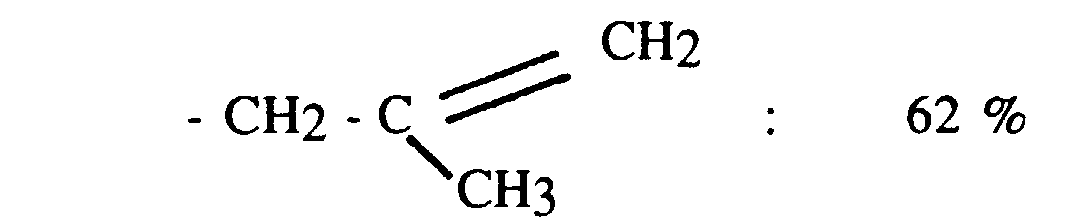
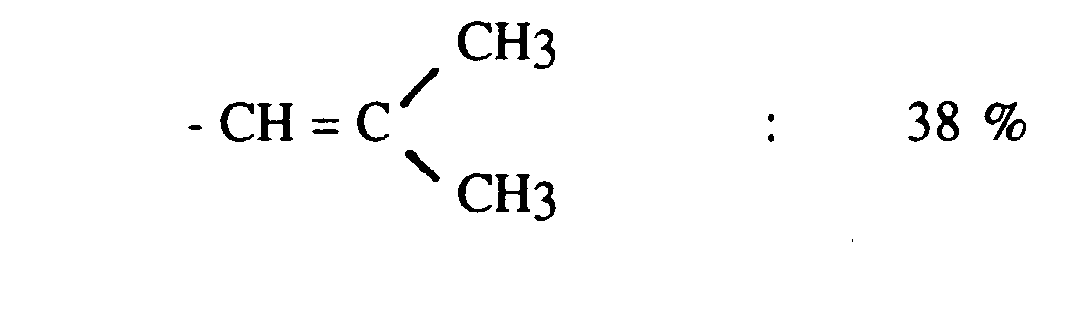
- Example 1 If in Example 1, all other things being equal, the polyisobutene used is replaced by a polyisobutene of the same molecular weight but the composition of the terminal double bonds determined by NMR is as follows: the reaction mixture obtained at the end of the reaction is composed of the starting polyisobutene and of alternating isobutene-maleic anhydride copolymer insoluble in the solvent.
- the reaction mixture obtained at the end of the reaction is composed of alternating isobutene-maleic anhydride copolymer insoluble in the solvent used.
- reaction mixture is stirred for 6 hours at 85 ° C resulting in a mixture of 50% by weight of isobutene-maleic anhydride-polyisobutene terpolymer and 50% by weight of polyisobutene in solution in the aromatic solvent cut.
- Example 4 If in Example 4, all other things being equal, the solvent is replaced by 150 N mineral oil, a mixture of polyisobutene and terpolymer is obtained in solution in said mineral oil.
- Example 4 To 395 g of the reaction mixture obtained in Example 4, 5.8 g of dimethylaminopropylamine and 5.8 g of the aromatic cut used in Example 4. The reaction mixture thus obtained is stirred for 2 hours at 160 ° C. and then supplemented with 10.8 g of tetraethylenepentamine and 10.8 g of the aromatic cut used as a solvent. After reaction for 3 hours at 160 ° C. The mixture reaction thus obtained has a nitrogen content of 1.3% and a TBN of 28.
- the carburetor cleanliness test method uses an engine RENAULT R5 and lasts 12 hours (CEC F-03-T-81 method). The fuel used is unleaded fuel. At the end of the test, the throttle body of the carburetor is rated visually and a value of "MERITE" is assigned to it.
- the merits obtained with non-additive reference gasoline and additive reference gasoline with 750 ppm of the formulation based on the additive of Example 4 and of polypropylene glycol are 5.8 and 9.2 respectively.
- the test method carried out in order to evaluate the influence of the additives of the invention on the cleanliness of the intake valves uses a Mercedes type M 102 E engine and it operates cyclically according to a door-to-door scheme, for 60 hours.
- the reference fuel used is a lead-free fuel with a "RESEARCH” octane number of 96.8.
- Two tests are carried out, the first in the absence of an additive and the second in the presence of 750 ppm of the formulation based on the additive of Example 6 and of polypropylene glycol.
- the products obtained in Examples 8, 10 and 11 are added in an amount of 3% by weight of active ingredients in a mineral oil formulated but not containing ashless dispersant additive.
- the dispersing effectiveness of the products of the invention is evaluated by the spot test on filter paper, in the presence of carbonaceous material from used engine oil Diesel.
- the ratio between the diameters of the black spot and the oil halo is determined after 48 hours, the mixture having undergone, before depositing on the filter paper, different treatments.
- the conditions of the spot test and the results obtained are collated in table 4. In this table also appear the results obtained under the same conditions, with the oil formulated in the absence of dispersing additive without ash (mixture 0).
Landscapes
- Chemical & Material Sciences (AREA)
- Oil, Petroleum & Natural Gas (AREA)
- Chemical Kinetics & Catalysis (AREA)
- Organic Chemistry (AREA)
- General Chemical & Material Sciences (AREA)
- Engineering & Computer Science (AREA)
- Health & Medical Sciences (AREA)
- Medicinal Chemistry (AREA)
- Polymers & Plastics (AREA)
- Emergency Medicine (AREA)
- Addition Polymer Or Copolymer, Post-Treatments, Or Chemical Modifications (AREA)
- Liquid Carbonaceous Fuels (AREA)
- Lubricants (AREA)
- Compositions Of Macromolecular Compounds (AREA)
- Other Resins Obtained By Reactions Not Involving Carbon-To-Carbon Unsaturated Bonds (AREA)
Description
- 786 g d'une coupe aromatique ayant un point initial de distillation de 186°C et un point final de 214°C;
- 117,7 g d'anhydride maléïque ;
- 600 g de polyisobutène de masse moléculaire moyenne en nombre voisine de 1000 et
dont la composition des doubles liaisons terminales, déterminée par RMN, est la
suivante :
- 66 g d'isobutène ; et
- 3,1 g de per 2-éthyl hexanoate de tertiobutyle


- 938 g d'une coupe aromatique ayant un point initial de distillation de 186°C et un point final de 214°C ;
- 117,7 g d'anhydride maléïque ;
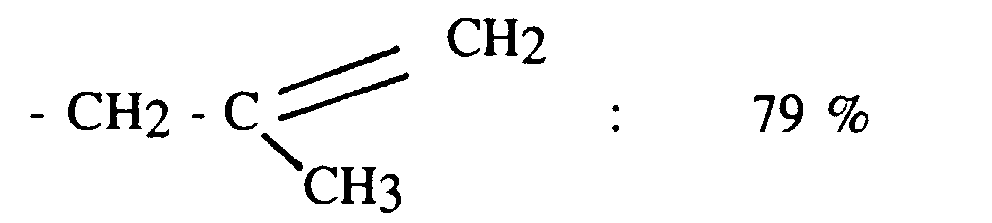
- 750 g de polyisobutène de masse moléculaire moyenne voisine de 1250 et dont la
composition des doubles liaisons terminales, déterminée par RMN, est la suivante :

- 66 g d'isobutène ; et
- 4,5 g de per 2-éthyl hexanoate de tertiobutyle.
- Un test d'encrassement des injecteurs sur moteur XUD9 est effectué en utilisant comme carburant un gazole dont les caractéristiques sont détaillées dans le Tableau 1.
Des tests d'encrassement des injecteurs sont réalisés en utilisant le même gazole mais additivé avec 500 ppm de la solution obtenue dans l'exemple 6.
Les résultats obtenus dans les deux essais et rassemblés dans le Tableau 2 montrent qu'à la fin de l'essai, les injecteurs ayant fonctionné avec le carburant contenant l'additif selon l'invention sont beaucoup moins calaminés que les injecteurs ayant fonctionné avec le carburant non additivé.
- Une formulation à base de 100 parties de l'additif de l'exemple 6 et de 50 parties de polypropylène glycol de masse moléculaire voisine de 1000 est préparée.
Les résultats obtenus (Tableau 3) exprimés en poids (gramme) de dépôts mesurés sur les tulipes de chaque soupape (côté chapelle d'admission), montrent que la quantité de dépôts sur les soupapes d'admission obtenue en utilisant la formulation contenant l'additif selon l'invention est nettement inférieure à celle obtenue en l'absence d'additif.
| CARACTERISTIQUES DU GAZOLE UTILISE DANS L'EXEMPLE 9 | |
| masse volumique | 0,834 g/ml |
| teneur en soufre | 0,29% poids |
| P. de trouble °C | 0 |
| TLF°C | -6 |
| Pt d'écoulement °C | -9 |
| indice de cétane | 52 |
| distillation-Pt initial | 179°C |
| 5 % | 203 |
| 10 % | 214 |
| 20 % | 234 |
| 30 % | 251 |
| 40 % | 266 |
| 50 % | 280 |
| 60 % | 294 |
| 70 % | 309 |
| 80 % | 326 |
| 90 % | 349 |
| 95 % | 367 |
| Point final | 375 |

| ESSAI M 102 E - QUANTITE DE DEPOTS (en grammes) | ||
| Sans additif | Avec additif | |
| Teneur en ppm | 0 | 750 |
| soupape 1 | 0,347 | 0,193 |
| soupape 2 | 0,324 | 0,008 |
| soupape 3 | 0,331 | - |
| soupape 4 | 0,169 | 0,008 |
| Total | 1,171 | 0,209 |
| Dépôt moyen/soupape (g) | 0,293 | 0,052 |
| Références Produit de l'exemple | Matières actives | 20°C | 10 min | 10 min | + 1 % eau | ||
| % en poids | 200°C | 250°C | 20°C | 1 min 200°C | 10 min 200°C | ||
| mélange (0) | 0 | 50 | 48 | 46 | 42 | 22 | 28 |
| Ex 8 | 3 | 69 | 75 | 75 | 71 | 77 | 76 |
| Ex 10 | 3 | 68 | 70 | 70 | 68 | 67 | 67 |
| Ex 12 | 3 | 70 | 75 | 74 | 72 | 76 | 76 |
Claims (14)
- Composition de terpolymère isobutène-anhydride maléïque-polyisobutène exempte de chlore et soluble en milieu hydrocarboné liquide, caractérisée en ce qu'elle est obtenue par terpolymérisation radicalaire d'isobutène, d'anhydride maléïque et de polyisobutène ayant une teneur moyenne en double liaisons terminales "exo" d'au moins 50 % et une masse moléculaire moyenne en nombre comprise entre 400 et 10000.
- Composition selon la revendication 1, caractérisée en ce que ladite terpolymérisation radicalaire est conduite dans un solvant organique, en présence d'un initiateur radicalaire, et à une température comprise entre 40 et 150°C.
- Composition selon la revendication 2, caractérisée en ce que la concentration de l'initiateur radicalaire est comprise entre 0,05 et 0,5 % en poids de la masse totale du mélange réactionnel.
- Composition selon l'une des revendications 2 et 3, caractérisée en ce que la teneur en solvant dans le mélange réactionnel est d'au plus 80 % en poids.
- Composition selon l'une des revendications 1 à 4, caractérisée en ce que dans sa préparation, la quantité molaire en anhydride maléique est au plus égale à la somme des quantités molaires d'isobutène et de polyisobutène.
- Composition de terpolymère isobutène-anhydride maléïque-polyisobutène modifiée, caractérisée en ce qu'elle est préparée à partir d'une composition selon l'une des revendications 1 à 5 par réaction avec au moins un composé choisi parmi les amines, les polyamines, les alcools, les polyols et les aminoalcools.
- Composition modifiée selon la revendication 6, caractérisée en ce que, dans sa préparation, on effectue la réaction d'abord avec de la diméthylaminopropylamine, puis avec de la tétraéthylènepentamine.
- Composition modifiée selon l'une des revendications 6 et 7, caractérisée en ce que ladite réaction est conduite dans un solvant organique à une température comprise entre 60 et 250°C.
- Composition de carburant caractérisée en ce qu'elle comprend une proportion majeure d'au moins un carburant et, à titre d'additif, une proportion mineure suffisante pour en améliorer les propriétés détergentes d'au moins une composition modifiée selon l'une des revendications 6 à 8.
- Composition selon la revendication 9, caractérisée en ce que ledit carburant est une essence.
- Composition selon la revendication 9, caractérisée en ce que ledit carburant est un gazole.
- Composition selon l'une des revendications 9 à 11, caractérisée en ce que ladite proportion mineure est de 50 à 2000 ppm en poids.
- Composition de lubrifiant caractérisée en ce qu'elle comprend une proportion majeure d'au moins une huile lubrifiante et, à titre d'additif, une proportion mineure suffisante pour en améliorer les propriétés détergentes d'une composition modifiée selon l'une des revendications 6 à 8.
- Composition selon la revendication 13, caractérisée en ce que ladite proportion mineure est de 0,1 à 20 % en poids.
Applications Claiming Priority (2)
| Application Number | Priority Date | Filing Date | Title |
|---|---|---|---|
| FR9307354A FR2706469B1 (fr) | 1993-06-16 | 1993-06-16 | Polyisobutènes polyfonctionnels, leur préparation, leur formulation et leur utilisation. |
| FR9307354 | 1993-06-16 |
Publications (2)
| Publication Number | Publication Date |
|---|---|
| EP0629641A1 EP0629641A1 (fr) | 1994-12-21 |
| EP0629641B1 true EP0629641B1 (fr) | 1998-01-28 |
Family
ID=9448268
Family Applications (1)
| Application Number | Title | Priority Date | Filing Date |
|---|---|---|---|
| EP94401290A Expired - Lifetime EP0629641B1 (fr) | 1993-06-16 | 1994-06-08 | Polyisobutènes polyfonctionnels, leur préparation, leur formulation et leur utilisation |
Country Status (6)
| Country | Link |
|---|---|
| US (1) | US5445657A (fr) |
| EP (1) | EP0629641B1 (fr) |
| JP (1) | JPH0753811A (fr) |
| DE (1) | DE69408211T2 (fr) |
| ES (1) | ES2115891T3 (fr) |
| FR (1) | FR2706469B1 (fr) |
Families Citing this family (14)
| Publication number | Priority date | Publication date | Assignee | Title |
|---|---|---|---|---|
| EP0733697B1 (fr) * | 1995-03-24 | 2000-05-10 | Ethyl Petroleum Additives Limited | Dispersants post-traités |
| EP0733696B1 (fr) * | 1995-03-24 | 2002-10-30 | Ethyl Petroleum Additives Limited | Dispersants pour huile lubrifiante |
| GB9506102D0 (en) * | 1995-03-24 | 1995-05-10 | Ethyl Petroleum Additives Ltd | Dispersants for lubricating oil |
| DE19519042A1 (de) * | 1995-05-24 | 1996-11-28 | Basf Ag | Herstellung von Polyalkenylbernsteinsäure-Derivaten und ihre Verwendung als Kraft- und Schmierstoffadditive |
| HU213255B (en) * | 1995-09-25 | 1997-05-28 | Mol Magyar Olaj Es Gazipari Rt | Multiple- stage engineoil and lubricant composition and additive-pocket |
| US5753597A (en) * | 1996-08-20 | 1998-05-19 | Chevron Chemical Company | Polymeric dispersants |
| US5792729A (en) | 1996-08-20 | 1998-08-11 | Chevron Chemical Corporation | Dispersant terpolymers |
| DE102005049327A1 (de) * | 2005-10-12 | 2007-04-19 | Basf Ag | Verfahren zur Herstellung wässriger Emulsionen und Dispersionen |
| US7682491B2 (en) * | 2007-03-26 | 2010-03-23 | Nalco Company | Antifoulant for hydrocarbon processing equipment |
| CN101659717B (zh) * | 2009-09-18 | 2011-08-10 | 济南开发区星火科学技术研究院 | 用于汽油清净剂的苯甲酰聚异丁烯胺及制备方法 |
| US9573347B2 (en) * | 2009-12-15 | 2017-02-21 | Teknor Apex Company | Thermoplastic elastomer with desirable grip especially during wet conditions |
| KR101241387B1 (ko) * | 2010-11-08 | 2013-03-11 | 석종호 | 연료 첨가제 조성물 및 이를 포함하는 연료 조성물 |
| WO2012072536A2 (fr) * | 2010-11-30 | 2012-06-07 | Basf Se | Préparation de dérivés de copolymérisats d'isobutène |
| US9562117B2 (en) | 2010-11-30 | 2017-02-07 | Basf Se | Preparation of derivatives of isobutene copolymers |
Family Cites Families (8)
| Publication number | Priority date | Publication date | Assignee | Title |
|---|---|---|---|---|
| DE203553C (fr) * | ||||
| BE634099A (fr) * | 1962-06-25 | |||
| DE3108100A1 (de) * | 1981-03-04 | 1982-09-16 | Basf Ag, 6700 Ludwigshafen | Verfahren zur herstellung von copolymerisaten des maleinsaeureanhydrids |
| JPS59126496A (ja) * | 1983-01-11 | 1984-07-21 | Nippon Zeon Co Ltd | 燃料油組成物 |
| JPS6371015A (ja) * | 1986-09-14 | 1988-03-31 | Maruishi Sangyo:Kk | 粉粒体搬送装置 |
| KR900701720A (ko) * | 1988-09-29 | 1990-12-04 | 원본미기재 | 교체되는 폴리알킬렌과 호박산 그룹을 갖는 신규 중합 분산제 |
| GB8912271D0 (en) * | 1989-05-27 | 1989-07-12 | Bp Chem Int Ltd | Cationic polymerisation of 1-olefins |
| ATE140475T1 (de) * | 1991-09-13 | 1996-08-15 | Chevron Chem Co | Polyisobutenylsuccinimide enthaltende brennstoffzusammensetzungen |
-
1993
- 1993-06-16 FR FR9307354A patent/FR2706469B1/fr not_active Expired - Fee Related
-
1994
- 1994-06-08 DE DE69408211T patent/DE69408211T2/de not_active Expired - Fee Related
- 1994-06-08 EP EP94401290A patent/EP0629641B1/fr not_active Expired - Lifetime
- 1994-06-08 ES ES94401290T patent/ES2115891T3/es not_active Expired - Lifetime
- 1994-06-16 JP JP6134053A patent/JPH0753811A/ja active Pending
- 1994-06-16 US US08/261,910 patent/US5445657A/en not_active Expired - Fee Related
Also Published As
| Publication number | Publication date |
|---|---|
| JPH0753811A (ja) | 1995-02-28 |
| DE69408211D1 (de) | 1998-03-05 |
| DE69408211T2 (de) | 1998-05-07 |
| US5445657A (en) | 1995-08-29 |
| FR2706469B1 (fr) | 1995-10-13 |
| ES2115891T3 (es) | 1998-07-01 |
| EP0629641A1 (fr) | 1994-12-21 |
| FR2706469A1 (fr) | 1994-12-23 |
Similar Documents
| Publication | Publication Date | Title |
|---|---|---|
| EP0938535B1 (fr) | Additif detergent et anti-corrosion pour carburants et composition de carburants | |
| EP0727445B1 (fr) | Procédé de fabrication d'anhydrides alkenyl ou polyalkenyls succiniques sans formation de résines | |
| US6468948B1 (en) | Polymers derived from olefins useful as lubricant and fuel oil additives, processes for preparation of such polymers and additives and use thereof (PT-1267) | |
| US6005144A (en) | Reaction products of polyisobutenes and oxides of nitrogen or mixtures of oxides of nitrogen and oxygen and their use as fuel and lubricant additives | |
| JP3007873B2 (ja) | 吸気バルブ堆積物を極小化するための添加物、及びそれらの使用 | |
| EP0213027B1 (fr) | Compositions améliorées d'additifs dispersants pour huiles lubrifiantes et leur préparation | |
| EP0629641A1 (fr) | Polyisobutènes polyfonctionnels, leur préparation, leur formulation et leur utilisation | |
| FR2904629A1 (fr) | Dispersants a base de copolymeres d'acrylate d'alkyle, et compositions les contenant | |
| JPS6020439B2 (ja) | 油質組成物に有用な添加剤 | |
| FR2919291A1 (fr) | Dispersants a base de copolymeres d'acrylate d'alkyle et leurs utilisations | |
| JPH08504854A (ja) | 油質組成物に有用なゲルを含まないα−オレフィン分散添加剤 | |
| FR2905704A1 (fr) | Composition d'huiles lubrifiantes destinees a inhiber le colmatage des filtres a huile induit par les fluides de refroidissement | |
| JP2010077450A (ja) | 処理されたアミンから誘導される潤滑剤および燃料の添加物 | |
| EP1252269B1 (fr) | Composition d'additifs multifonctionnels d'operabilite a froid des distillats moyens | |
| NO172899B (no) | Bensinblanding, konsentrat egnet for tilsetning til bensin og anvendelse av bensinblandingen i gnisttenningsmotor med intern forbrenning | |
| BE1017785A3 (fr) | Detergents de mannich pour carburants hydrocarbones. | |
| FR2910018A1 (fr) | Detergents de mannich pour carburants hydrocarbones | |
| EP0530094A1 (fr) | Formulation d'additifs pour carburants comprenant des produits à fonction ester et un détergent-dispersant | |
| FR2911873A1 (fr) | Composes et compositions lubrifiante les contenant. | |
| US7407918B2 (en) | Lubricating oil compositions | |
| US20040014612A1 (en) | Hybridized olefin copolymer additives | |
| US5976202A (en) | Reaction products of polyolefins with vinyl esters and their use as fuel and lubricant additives | |
| FR2890078A1 (fr) | Composition d'additifs fluide et compositions de lubrifiants et carburants la contenant | |
| FR2470155A1 (fr) | Compositions contenant des sels et complexes de metaux ou de metalloides d'aminophenols alcoyles et lubrifiant les contenant | |
| FR2471390A1 (fr) | Terpolymeres utilisables notamment comme additifs pour ameliorer les proprietes d'ecoulement des huiles lubrifiantes |
Legal Events
| Date | Code | Title | Description |
|---|---|---|---|
| PUAI | Public reference made under article 153(3) epc to a published international application that has entered the european phase |
Free format text: ORIGINAL CODE: 0009012 |
|
| AK | Designated contracting states |
Kind code of ref document: A1 Designated state(s): BE DE ES FR GB IT NL |
|
| 17P | Request for examination filed |
Effective date: 19950621 |
|
| 17Q | First examination report despatched |
Effective date: 19960625 |
|
| GRAG | Despatch of communication of intention to grant |
Free format text: ORIGINAL CODE: EPIDOS AGRA |
|
| GRAG | Despatch of communication of intention to grant |
Free format text: ORIGINAL CODE: EPIDOS AGRA |
|
| GRAH | Despatch of communication of intention to grant a patent |
Free format text: ORIGINAL CODE: EPIDOS IGRA |
|
| ITF | It: translation for a ep patent filed | ||
| GRAH | Despatch of communication of intention to grant a patent |
Free format text: ORIGINAL CODE: EPIDOS IGRA |
|
| GRAA | (expected) grant |
Free format text: ORIGINAL CODE: 0009210 |
|
| AK | Designated contracting states |
Kind code of ref document: B1 Designated state(s): BE DE ES FR GB IT NL |
|
| REF | Corresponds to: |
Ref document number: 69408211 Country of ref document: DE Date of ref document: 19980305 |
|
| GBT | Gb: translation of ep patent filed (gb section 77(6)(a)/1977) |
Effective date: 19980220 |
|
| REG | Reference to a national code |
Ref country code: ES Ref legal event code: FG2A Ref document number: 2115891 Country of ref document: ES Kind code of ref document: T3 |
|
| PLBE | No opposition filed within time limit |
Free format text: ORIGINAL CODE: 0009261 |
|
| STAA | Information on the status of an ep patent application or granted ep patent |
Free format text: STATUS: NO OPPOSITION FILED WITHIN TIME LIMIT |
|
| 26N | No opposition filed | ||
| REG | Reference to a national code |
Ref country code: GB Ref legal event code: IF02 |
|
| PGFP | Annual fee paid to national office [announced via postgrant information from national office to epo] |
Ref country code: GB Payment date: 20020527 Year of fee payment: 9 |
|
| PGFP | Annual fee paid to national office [announced via postgrant information from national office to epo] |
Ref country code: ES Payment date: 20020617 Year of fee payment: 9 |
|
| PGFP | Annual fee paid to national office [announced via postgrant information from national office to epo] |
Ref country code: BE Payment date: 20020621 Year of fee payment: 9 |
|
| PGFP | Annual fee paid to national office [announced via postgrant information from national office to epo] |
Ref country code: NL Payment date: 20020628 Year of fee payment: 9 |
|
| PGFP | Annual fee paid to national office [announced via postgrant information from national office to epo] |
Ref country code: DE Payment date: 20020703 Year of fee payment: 9 |
|
| PGFP | Annual fee paid to national office [announced via postgrant information from national office to epo] |
Ref country code: FR Payment date: 20030328 Year of fee payment: 10 |
|
| PG25 | Lapsed in a contracting state [announced via postgrant information from national office to epo] |
Ref country code: GB Free format text: LAPSE BECAUSE OF NON-PAYMENT OF DUE FEES Effective date: 20030608 |
|
| PG25 | Lapsed in a contracting state [announced via postgrant information from national office to epo] |
Ref country code: ES Free format text: LAPSE BECAUSE OF NON-PAYMENT OF DUE FEES Effective date: 20030609 |
|
| PG25 | Lapsed in a contracting state [announced via postgrant information from national office to epo] |
Ref country code: BE Free format text: LAPSE BECAUSE OF NON-PAYMENT OF DUE FEES Effective date: 20030630 |
|
| BERE | Be: lapsed |
Owner name: INSTITUT FRANCAIS DU *PETROLE Effective date: 20030630 |
|
| PG25 | Lapsed in a contracting state [announced via postgrant information from national office to epo] |
Ref country code: NL Free format text: LAPSE BECAUSE OF NON-PAYMENT OF DUE FEES Effective date: 20040101 Ref country code: DE Free format text: LAPSE BECAUSE OF NON-PAYMENT OF DUE FEES Effective date: 20040101 |
|
| GBPC | Gb: european patent ceased through non-payment of renewal fee |
Effective date: 20030608 |
|
| NLV4 | Nl: lapsed or anulled due to non-payment of the annual fee |
Effective date: 20040101 |
|
| REG | Reference to a national code |
Ref country code: ES Ref legal event code: FD2A Effective date: 20030609 |
|
| PG25 | Lapsed in a contracting state [announced via postgrant information from national office to epo] |
Ref country code: FR Free format text: LAPSE BECAUSE OF NON-PAYMENT OF DUE FEES Effective date: 20050228 |
|
| REG | Reference to a national code |
Ref country code: FR Ref legal event code: ST |
|
| PG25 | Lapsed in a contracting state [announced via postgrant information from national office to epo] |
Ref country code: IT Free format text: LAPSE BECAUSE OF NON-PAYMENT OF DUE FEES;WARNING: LAPSES OF ITALIAN PATENTS WITH EFFECTIVE DATE BEFORE 2007 MAY HAVE OCCURRED AT ANY TIME BEFORE 2007. THE CORRECT EFFECTIVE DATE MAY BE DIFFERENT FROM THE ONE RECORDED. Effective date: 20050608 |