EP0630968A2 - Genetische Selektion von zur Ligandenbindung befähigten Proteinen mittels Signaltransduktion in Mikroorganismen - Google Patents
Genetische Selektion von zur Ligandenbindung befähigten Proteinen mittels Signaltransduktion in Mikroorganismen Download PDFInfo
- Publication number
- EP0630968A2 EP0630968A2 EP94108620A EP94108620A EP0630968A2 EP 0630968 A2 EP0630968 A2 EP 0630968A2 EP 94108620 A EP94108620 A EP 94108620A EP 94108620 A EP94108620 A EP 94108620A EP 0630968 A2 EP0630968 A2 EP 0630968A2
- Authority
- EP
- European Patent Office
- Prior art keywords
- protein
- microorganism
- gene
- ligand binding
- detectable
- Prior art date
- Legal status (The legal status is an assumption and is not a legal conclusion. Google has not performed a legal analysis and makes no representation as to the accuracy of the status listed.)
- Granted
Links
Images








Classifications
-
- C—CHEMISTRY; METALLURGY
- C12—BIOCHEMISTRY; BEER; SPIRITS; WINE; VINEGAR; MICROBIOLOGY; ENZYMOLOGY; MUTATION OR GENETIC ENGINEERING
- C12N—MICROORGANISMS OR ENZYMES; COMPOSITIONS THEREOF; PROPAGATING, PRESERVING, OR MAINTAINING MICROORGANISMS; MUTATION OR GENETIC ENGINEERING; CULTURE MEDIA
- C12N15/00—Mutation or genetic engineering; DNA or RNA concerning genetic engineering, vectors, e.g. plasmids, or their isolation, preparation or purification; Use of hosts therefor
-
- C—CHEMISTRY; METALLURGY
- C07—ORGANIC CHEMISTRY
- C07K—PEPTIDES
- C07K16/00—Immunoglobulins [IG], e.g. monoclonal or polyclonal antibodies
- C07K16/44—Immunoglobulins [IG], e.g. monoclonal or polyclonal antibodies against material not provided for elsewhere, e.g. haptens, metals, DNA, RNA, amino acids
-
- C—CHEMISTRY; METALLURGY
- C07—ORGANIC CHEMISTRY
- C07K—PEPTIDES
- C07K14/00—Peptides having more than 20 amino acids; Gastrins; Somatostatins; Melanotropins; Derivatives thereof
- C07K14/195—Peptides having more than 20 amino acids; Gastrins; Somatostatins; Melanotropins; Derivatives thereof from bacteria
- C07K14/28—Peptides having more than 20 amino acids; Gastrins; Somatostatins; Melanotropins; Derivatives thereof from bacteria from Vibrionaceae (F)
-
- C—CHEMISTRY; METALLURGY
- C07—ORGANIC CHEMISTRY
- C07K—PEPTIDES
- C07K2317/00—Immunoglobulins specific features
- C07K2317/60—Immunoglobulins specific features characterized by non-natural combinations of immunoglobulin fragments
- C07K2317/62—Immunoglobulins specific features characterized by non-natural combinations of immunoglobulin fragments comprising only variable region components
- C07K2317/622—Single chain antibody (scFv)
-
- C—CHEMISTRY; METALLURGY
- C07—ORGANIC CHEMISTRY
- C07K—PEPTIDES
- C07K2319/00—Fusion polypeptide
Definitions
- the invention relates to a method for the genetic selection of proteins in microorganisms, microorganisms and replicas suitable for this method and methods for their production.
- ToxR is a transmembrane protein with a periplasmic localized carboxy-terminal domain (AS202 / 294), a transmembrane helix and a cytoplasmic localized amino-terminal domain (AS1-182), the aforementioned amino terminal domain shows homology to other bacterial transcription activators such as OmpR, PhoM or PhoG.
- ToxR binds directly to the promoter-operator region of the ctx operons and acts as a transcription activator.
- the object of the present invention was to develop a selection method which enables signal transduction for the direct genetic selection of proteins in bacterial populations and thereby extends the selection principle to other protein classes which, moreover, do not directly have functionally relevant protein properties in the microorganism used.
- the present invention therefore relates to methods for the genetic selection of proteins capable of ligand binding in microorganisms, characterized in that a protein capable of ligand binding is presented in an extra-cytoplasmic manner and the signal of ligand binding by signal transduction to the biosynthetic machinery of the microorganism in order to express a detectable and / or or selectable function is forwarded.
- extra-cytoplasmic means "on the outer surface of the inner membrane or the outer membrane of the microorganism", the arrangement of the protein on the outer surface of the inner membrane, i.e. in the periplasm is preferred.
- the activation signal can be triggered by interaction of an extracellular ligand with the protein or by homo- or heterodimerization of the periplasmic protein (FIG. 1). This dimerization can either take place directly between two proteins or be brought about by means of a suitable divalent hapten.
- the activation signal generated in this way is passed on to the biosynthetic machinery of the microorganism by means of a transmembrane helix and a cytoplasmic localized regulatory domain, in particular a transcription activator or repressor.
- a microorganism suitable for genetic selection by transduction which contains a genetically stable detectable and / or selectable function, with a replicon, in particular a plasmid, phage genome or phasmid, coding for a fusion protein from a protein capable of ligand binding, transmembrane helix and regulatory domain transformed and the function generated by signal transduction determined and / or selected on it.
- the detectable and selectable function is the expression of a gene which is under the control of a regulatable promoter and which codes for the detectable and selectable function, in particular the expression of a chromosomally integrated ⁇ -galactosidase gene which is under ctx control.
- the microorganism is preferably from the Escherichia coli strain, in particular FHK11 or FHK12.
- the protein capable of ligand binding is selected from immunoglobulins, antigens, receptor domains, receptor ligands, in particular hormones, enzymes and inhibitors.
- the proteins are immunoglobulins, in particular F ab fragments, F v fragments, single chains F v fragments, monomers or homodimers of light chains.
- the transmembrane helix is selected from the transmembrane helices of the ToxR gene from Vibrio cholerae, the proto-oncogene C-new, the P-new oncogene and the membrane-bound IgM.
- the preferred transcriptional activator of the method is the N-terminal end, ie amino acids 1-182, of the ToxR protein.
- the invention further relates to a microorganism which is suitable for genetic selection by transduction and which contains a genetically stable detectable function.
- This detectable function is preferably a chromosomally integrated ⁇ -galactosidase gene under ctx control.
- the Escherichia coli strains FHK11 and FHK12 are particularly preferred.
- the invention relates to the replicas defined above and their production, comprising the fusion of transmembrane helix, regulatory domain and DNA fragments coding for ligand binding.
- the present invention discloses an experimental system that mimics essential features of the immune system of higher vertebrates in microorganisms.
- This system can be used for clonal expansion induced by antigen binding and for fine adjustment of the antigen recognition by mutation and selection.
- FHK11 F ⁇ , ara, ⁇ (lac-proAB), rpsL, ⁇ 80 d ⁇ (lacZM15), attHB :: ctxDsiglacZ
- the ctx promoter was amplified from the chromosome of a pathogenic V. cholerae strain via PCR using the oligonucleotides CtxUp and ctxLo.
- the PCR product contains the ctx promoter region with a ToxR recognition sequence repeated seven times (Miller et al., Cell 48 , 271 (1987)). Since the Escherichia coli strains described herein with chromosomally integrated ctxlacZ gene fusion showed a genetic instability, Miller et al. the putative CtxA signal sequence from codons 5 to 28 removed. This was done by reamplifying the ctx promoter using the oligonucleotides CTxUp and Ctx ⁇ sig. The sequences complementary to the ctx promoter are highlighted in bold.
- the lacZ gene was then fused to the ctx promoter via SOE-PCR.
- the resulting product was converted into the BamHI fragment in the BamHI linearized vector pLDR10 (Diederich et al., Plasmid, 28 , 14-24 (1992)) in an orientation in which the ctx promoter is arranged opposite to the promoter of the bla gene, cloned and integrated into the chromosome of the E. coli strain JM83 by the method described by Diederich.
- FHK12 F'lacZ ⁇ M15, lacY+, ProA+B+ ara, ⁇ (lac-proAB), rpsl, ⁇ 80 d ⁇ (lacZM15), attB :: ctxDsiglacZ
- the F episome of this strain was brought into the FHK11 strain by conjugation with the CSH22 strain (trpR, ⁇ lac-pro, thi, F'lacZ ⁇ M15, lacY+, ProA+B+).
- the F episome contains the gene for lac permease (lacY) and complements the chromosomal pro-deletion. Conjugants could therefore be easily obtained by selection on M9 plates containing ampicillin. FHK12 already grew in M9 lactose medium and on M9 lactose minimal plates without activating the ctx promoter.
- the reaction product was cut with MluI and PstI and placed in a pBluescript derivative cut with MluI / PstI (pBluescriptII-pms1 '; source B.
- the entrained pms1 'sequence section was removed by cutting the resulting vector, filling in the ends and religation.
- a HindIII fragment from pMc ⁇ bla-lacbla-REI (H. Kolmar: loc. Cit.) Which contains the gene for the immunoglobulin domain REI was inserted into the unique HindIII cleavage of the resulting vector, which lies behind the phoA gene.
- the coding sequence of the rei gene (Kolmar et al., 1992) was then fused to the coding sequence of the toxR gene (codons 1 to 210) and the intergenic EcoRV interface was introduced (pHKToxREI) by targeted mutagenesis with the aid of the oligonucleotide IMG166. .
- Relevant restriction sites are underlined, the sequence sections complementary to the toxR region from V. cholerae are highlighted in bold.
- FIG. 2 A schematic representation of the above cloning steps for the construction of the vector pHKToxREI is shown in FIG. 2, a physical and genetic map of pHK-ToxREI in FIG. 3.
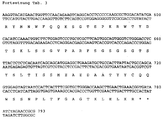
- the single-chain Fv fragment (scFv) of the phenyloxazolone-binding antibody NQ10.12.5 (Berek et al., 1985; Berek and Milstein, 1987; sequence: see Table 1), in which the C-terminus of the V H domain Via a short peptide linker [(Gly4Ser) 3] with the N-terminus of the V L domain, Greg Winter (MRC, Cambridge) developed the plasmid pHEN1 :: NQ10.12.5scFv fragment as SfiI / NotI fragment in the vector pHEN1 (HR Hoogenboom et al .: Multisubunit proteins on the surface of filamentous phage: methodologies for displaying antibody (Fab) heavy and light chains; Nucl.
- Acids Res. 19 , 4133-4137 (1991 )) provided cloned. It was first cloned, including the pelB leader sequence in front of it, as a HindIII / NotI fragment into the bluescript vector pBSK (-) and subjected to a nucleotide sequence analysis.
- the cloned scFv gene deviated greatly from the published NQ10.12.5 sequence (Berek et al, 1985). This particularly affected the beginning and end of the coding areas for V H and V L. The deviations in these areas may be due to the use of degenerate primers in the amplification of these genes from the NQ10.12.5 cell line.
- the NQ10.12.5 scFv gene was cloned as a SnaBi / XbaI fragment (for sequence, see Table 1) in the factor pHKToxREI cut with EcoRV and XbaI.
- the sequence coding for REI and PhoA is cleaved from this plasmid using EcoRV and XbaI.
- the cloning of the scFv gene in the vector pHKToxRei cut with EcoRV and XbaI results in a toxR-scFv fusion gene.
- V H domain was left at the carboxy terminus of the ToxR protein, while V L is co-expressed in soluble form.
- V L gene with the pelB leader sequence S.-P. Lei et al., (1987): Characterization of the Erwinia carotovora pelB Gene and its product pectat lyase; J. Bacteriol. 169 , 4379-4383).
- the faulty pelB leader sequence in front of the V L gene was then determined by the leader sequence of the alkaline phosphatase (H. Inouye et al .: Signal sequence of alkaline phosphatase of Escherichia coli; J. Bacteriol. 149 , 434-439, (1982)) replaced.
- the PCR primers PhoASigUP and PhoASigLO were used to amplify the phoA signal sequence from the E. coli chromosome.
- the 5 'end of the PhoASigLO primer was homologous to the promoter-proximal region of the V L gene, so that the phoA fragment could be linked to the V L gene using SOE-OPCR.
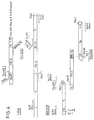
- pHKToxV L phoAV H in which the V L gene was fused with the toxR sequence and V H was provided with the phoA leader sequence, was carried out by means of PCR using the oligonucleotides IMG409 - IMG 412 (see FIG. 4).
- the coding region for the phoA signal sequence (H. Inouye et al .: Signal sequence of alkaline phosphatase of Escherichia coli; J. Bacteriol. 149 , 434-439 (1982)) was first amplified using the primers PhoAUP2 and PhoALO2.
- the PCR product amplified with the aid of the primers PhoASigUP and PhoASigLO from the chromosome of E. coli was used as a template (see Example II.3 "Construction of pHKToxV H phoAV L ").
- the 5 'terminus of the primer PhoAUP2 was complementary to the end of the V L sequence, the 5' terminus of the primer PhoALO2 to the first 20 nucleotides of the V H sequence. The complementary ends were required in the next step for the SOE-PCR with the V H or V L fragment.
- the V H gene was amplified from the V H PhoAV L construct using the primers V H UP and V H LO2, the V L gene with the primers V L UP2 and V L LO.
- the primers V L UP2 and V H LO2 introduced the interfaces necessary for the cloning (SalI and XbaI for the cloning in the Bluescript vector pBSK (-), EcoRV and XbaI for the cloning in pHKToxREI). Since a blunt interface was required at the beginning of the V L sequence, the first codon (Gln) could not be amplified. By exchanging ATT codon # 2 for ATC (both code for Ile), it was possible to create an EcoRV interface.
- the three PCR products were then linked together by SOE-PCR.
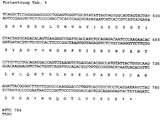
- the sequence of the V L phoAV H construct is shown in Table 4.
- the SOE-PCR product was then cloned as an EcoRV / XbaI fragment in the vector pHKToxREI.
- the sequence coding for REI and PhoA was removed and V L was fused in frame with the sequence coding for ToxR.
- the vector pHKToxREI was constructed as described in Example II point 1. This contains a fusion gene from the transcription activator domain of ToxR and the gene for the variable immunoglobulin domain of the Bence-Jones protein REI (H. Kolmar et al .: J. Mol. Biol. 228 , 359-365 (1992)). The REI domain is a homodimer (Epp et al., Eur. J. Biochem. 45 , 513-524, (1974)).
- the vector pHKTox-TAG was constructed, in which a stop codon between toxR and rei was generated by targeted mutagenesis with the help of the oligonucleotide IMG167 was inserted, so that starting from this vector only the transcription activator domain, but not the REI domain, is expressed.
- the activation of the chromosomally integrated ctx promoter mediated by dimerization of the extracytoplasmic REI domains was determined by measuring the ⁇ -galactosidase activity in the overnight cultures of the transformants in question grown at 37 ° C.
- the enzyme activity was 130 Miller units for pHKToxTAG (missing extracytoplasmic domain), but 400 Miller units for pHKToxREI, which corresponds to approximately three-fold activation of transcription. This shows that the dimerization of the extracytoplasmic immunoglobulin domains can be detected directly via the ToxR-mediated signal transduction.
- the E. coli strain FHK12 / pHKToxV L phoAV H was deposited on June 7, 1993 with the German Collection of Microorganisms and Cell Cultures GmbH, Maschroder Weg 1b, W3300 Braunschweig under the name DSM 8345.
Landscapes
- Chemical & Material Sciences (AREA)
- Health & Medical Sciences (AREA)
- Organic Chemistry (AREA)
- Life Sciences & Earth Sciences (AREA)
- Genetics & Genomics (AREA)
- Biochemistry (AREA)
- Biophysics (AREA)
- General Health & Medical Sciences (AREA)
- Molecular Biology (AREA)
- Medicinal Chemistry (AREA)
- Proteomics, Peptides & Aminoacids (AREA)
- Engineering & Computer Science (AREA)
- Immunology (AREA)
- Bioinformatics & Cheminformatics (AREA)
- Gastroenterology & Hepatology (AREA)
- Biomedical Technology (AREA)
- Biotechnology (AREA)
- General Engineering & Computer Science (AREA)
- Zoology (AREA)
- Wood Science & Technology (AREA)
- Microbiology (AREA)
- Physics & Mathematics (AREA)
- Plant Pathology (AREA)
- Micro-Organisms Or Cultivation Processes Thereof (AREA)
- Preparation Of Compounds By Using Micro-Organisms (AREA)
- Peptides Or Proteins (AREA)
- Measuring Or Testing Involving Enzymes Or Micro-Organisms (AREA)
Abstract
Description
- Die Erfindung betrifft ein Verfahren zur genetischen Selektion von Proteinen in Mikroorganismen, für dieses Verfahren geeignete Mikroorganismen und Replika sowie Verfahren zu deren Herstellung.
- Bisherige Versuche, Antikörper ohne Immunisierung zu gewinnen, gründen sich auf der Präsentation von Fab-Fragmenten auf Hüllproteinen des filamentösen Phagen M13 oder f1 und der Anreicherung gut bindender Varianten aus komplexen Populationen heraus durch Adsorption an immobilisiertes Hapten, gefolgt von Desorption und biologischer Vermehrung der selektiv an der Hapten-Matrix zurückgehaltenen Phagen. Diese biochemisch/genetische Anreicherungsmethode wurde hauptsächlich von R. Lerner und G. Winter populär gemacht.
- Darüber hinaus ist aus Parsott und Mekalanos, J. Bakt., 173, 2842 (1991) bekannt, daß das Produkt des toxR-Gens von Vibrio cholerae (Mr = 32527) verantwortlich für die koordinierte Expression mehrerer Virulenzdeterminanten, vor allem des Cholera-Toxins selbst (codiert im ctxAB-Operon), und einer Reihe andere Proteine ist. Nach einem von Miller et al beschriebenen Modell (Cell, 48, 271 (1987)) ist ToxR ein Transmembranprotein mit periplasmatisch lokalisierter carboxyterminaler Domäne (AS202/294), einer Transmembranhelix und einer cytoplasmatisch lokalisierten aminoterminalen Domäne (AS1-182), wobei die genannte aminonterminale Domäne Homologie zu anderen bakteriellen Transkriptionsaktivatoren wie OmpR, PhoM oder PhoG zeigt. ToxR bindet dabei als Membranverankertes Protein direkt an der Promotor-Operator-Region des ctx Operons und wirkt als Transkriptionsaktivator. Essentiell für die Bindung ist die achtfach wiederholte Sequenz TTTGAT im Operator, die im Bereich zwischen -50 und -112 liegt. Von Miller et al konnte gezeigt werden, daß eine ToxR-vermittelte Signaltransduktion in E. coli unter Verwendung eines E. coli Stammens mit chromosomal integrierter ctxlacZ Genfusion, bei dem das Gen für β-Galactosidase (lacZ) unter Kontrolle des ctx-Promotors steht, nachgestellt werden kann. In dieser Konstruktion wurde das lacZ-Gen im durchgehenden Leseraster hinter die ersten 28 Codons des ctxA-Gens gesetzt. Wenn das Fusionsgen aus ToxR und phoA aus einem Plasmid in die Zellen gebracht wurde, konnte eine Transkriptionsaktivierung des ctx-Promotors über die β-Galactosidaseexpression nachgewiesen werden.
- Nach dem von Miller beschriebenen Modell stellt die Dimerisierung der periplasmatischen ToxR-Domänen das notwendige und hinreichende Aktivierungssignal dar. Dieses Modell wurde auf dem Befund, daß ein ToxR-Derivat, bei dem die periplasmatische Domäne entfernt und durch alkalische Phosphatase, ein periplasmatisch lokalisiertes dimeres Protein, ersetzt wurde, eine Signaltransduktion vermittelte (Dauer-"on"-Zustand), begründet.
- Die Aufgabe der vorliegenden Erfindung bestand nun darin, ein Selektionsverfahren zu entwickeln, das Signaltransduktion zur direkten genetischen Selektion von Proteinen in Bakterienpopulationen ermöglicht und dabei das Selektionsprinzip auf andere Proteinklassen, die darüber hinaus in dem verwendeten Mikroorganismus nicht direkt funktionsrelevante Proteineigenschaften besitzen, auszudehnen.
- Überraschenderweise wurde dabei gefunden, daß genetische Selektion von zur Ligandenbindung befähigten Proteinen in Mikroorganismen möglich ist.
- Die vorliegende Erfindung betrifft daher Verfahren zur genetischen Selektion von zur Ligandenbindung befähigten Proteinen in Mikroorganismen, dadurch gekennzeichnet, daß ein zur Ligandenbindung befähigtes Protein extra-cytoplasmatisch präsentiert wird und das Signal der Ligandenbindung durch Singaltransduktion an die biosynthetische Maschinerie des Mikroorganismus zur Ausprägung einer detektierbaren und/oder selektierbaren Funktion weitergeleitet wird.
- Im Sinne der Erfindung bedeutet extra-cytoplasmatisch "auf der äußeren Oberfläche der inneren Membran oder der äußeren Membran des Mikroorganismus", wobei die Anordnung des Proteins auf der äußeren Oberfläche der inneren Membran, d.h. im Periplasma, bevorzugt ist. Das Aktivierungssignal kann gemäß der Erfindung durch Wechselwirkung eines extrazellulären Liganden mit dem Protein oder durch Homo- oder Heterodimerisierung des periplasmatischen Proteins ausgelöst werden (Fig. 1). Diese Dimerisierung kann dabei entweder direkt zwischen zwei Proteinen stattfinden oder mittels eines geeigneten divalenten Haptens hervorgerufen werden.
- Das so erzeugte Aktivierungssignal wird in dem erfindungsgemäßen Verfahren mittels einer Transmembran-Helix und einer cytoplasmatisch lokalisierten Regulationsdomäne, insbesondere eines Transkriptions-aktivators oder -repressors, an die biosynthetische Maschinerie des Mikroorganismus weitergeleitet.
- In dem erfindungsgemäßen Verfahren wird dabei ein zur genetischen Selektion durch Transduktion geeigneter Mikroorganismus, der eine genetisch stabile detektierbare und/oder selektierbare Funktion enthält, mit einem Replikon, insbesondere einem Plasmid, Phagengenom oder Phasmid, codierend für ein Fusionsprotein aus zur Ligandenbindung befähigtem Protein, Transmembranhelix und Regulationsdomäne transformiert und die durch Signaltransduktion erzeugte Funktion bestimmt und/oder auf sie selektiert.
- In einer bevorzugten Ausführungsform der Erfindung ist die detektierbare und selektierbare Funktion die Expression eines unter Kontrolle eines regulierbaren Promotors stehenden, die detektierbare und selektierbare Funktion codierenden Gens, insbesondere die Expression eines unter ctx-Kontrolle stehenden chromosomal integrierten β-Galactosidase-Gens. Gemäß der Erfindung ist der Mikroorganismus bevorzugt vom Stamm Escherichia coli, insbesondere FHK11 oder FHK12.
- Im Sinne der Erfindung ist das zur Ligandenbindung befähigte Protein ausgewählt aus Immunglobulinen, Antigenen, Rezeptordomänen, Rezeptorliganden, insbesondere Hormonen, Enzymen und Inhibitoren.
- Gemäß einer bevorzugten Ausführungsform des erfindungsgemäßen Verfahrens sind die Proteine dabei Immunglobuline, insbesondere Fab-Fragmente, Fv-Fragmente, Einzelketten Fv-Fragmente, Monomere oder Homodimere leichter Ketten. Bevorzugt ist weiterhin, daß die Transmembranhelix ausgewählt ist aus den Transmembranhelices des ToxR Gens von Vibrio cholerae, des Protoonkogens C-neu, des P-neu Onkogens und des membranständigen IgM. Der bevorzugte Transkriptionsaktivator des Verfahrens ist das N-terminale Ende, d.h. Aminosäuren 1-182, des ToxR Proteins.
- Die Erfindung betrifft weiterhin einen zur genetischen Selektion durch Transduktion geeigneten Mikroorganismus, der eine genetisch stabile detektierbare Funktion enthält. Diese detektierbare Funktion ist dabei vorzugsweise ein unter ctx-Kontrolle stehendes chromosomal integriertes β-Galactosidase-Gen. Besonders bevorzugt sind die Escherichia coli Stämme FHK11 und FHK12.
- Darüber hinaus wird ein Verfahren zur Herstellung der vorstehend genannten Mikroorganismen offenbart, wobei die detektierbare Funktion mit Hilfe eines Integrationsvektors in den Mikroorganismus eingeführt wird.
- Weiterhin betrifft die Erfindung die vorstehend definierten Replika sowie deren Herstellung, umfassend die Fusion von Transmembranhelix, Regulationsdomäne und zur Ligandenbindung befähigtes Protein codierenden DNA-Fragmenten.
- Die Erfindung wird durch die folgende Figuren und Tabellen näher erläutert.
- Fig. 1 Schema der Signaltransduktion durch Dimerenbildung;
- a) nicht ligandeninduzierte Homodimerbildung,
- b) nicht ligandeninduzierte Heterodimerbildung,
- c) ligandeninduzierte Homodimerbildung und
- d) ligandeninduzierte Heterodimerbildung
- Fig. 2 Schematische Darstellung der Klonierungsschritte zum Aufbau des Vektors pHKToxREI.
- Fig. 3 Physikalische und genetische Karte von pHKToxREI. cat: Gen für Chloramphenicolacetyltransferase; colE1-ori: ColE1-Replikationsursprung; f1-ori: Replikationsursprung des Bakteriophagen f1; fdT: Transkriptionsterminatoren des Bakteriophagen fd; toxR: promotorproximaler Abschnitt des ToxR-Gens (Promotor einschließlich Codons 1-210); rei: Gen für die Immunglobulindomäne REI, phoA: codierende Sequenz für alkalische Phosphatase.
- Fig. 4 PCR-Schema zur Herstellung des Konstrukts VLphoAVH.
- Die vorliegende Erfindung offenbart ein experimentelles System, das wesentliche Merkmale des Immunsystems höherer Vertebraten in Mikrooganismen nachstellt. Dieses System kann dabei zur durch Antigenbindung induzierten, klonalen Expansion und die Feinanpassung der Antigenerkennung durch Mutation und Selektion verwendet werden.
- Die Erfindung wird durch die folgenden Beispiele näher erläutert.
- Der ctx-Promotor wurde aus dem Chromosom eines pathogenen V. cholerae Stammes über PCR mittels der Oligonucleotide CtxUp und ctxLo amplifiziert. Das PCR-Produkt enthält die ctx-Promotorregion mit siebenfach wiederholter ToxR Erkennungssequenz (Miller et al., Cell 48, 271 (1987)). Da die hierin beschriebenen Escherichia coli Stämme mit chromosomal integrierter ctxlacZ-Genfusion eine genetische Instabilität zeigten, wurde abweichend von Miller et al. die putative CtxA-Signalsequenz von Codon 5 bis 28 entfernt. Dies geschah durch Reamplifikation des ctx-Promotors mit Hilfe der Oligonucleotide CTxUp und CtxΔsig.

Die zum ctx-Promotor komplementären Sequenzen sind durch Fettdruck hervorgehoben. - Das lacZ-Gen wurde anschließend an den ctx-Promotor via SOE-PCR fusioniert. Das resultierende Produkt wurde als BamHI Fragment in den BamHI linearisierten Vektor pLDR10 (Diederich et al., Plasmid, 28, 14-24 (1992)) in einer Orientierung, in der der ctx-Promotor gegenläufig zum Promotor des bla-Gens angeordnet ist, kloniert und nach der von Diederich beschriebenen Methode in das Chromosom des E. coli Stammes JM83 integriert.
- In den Stamm FHK11 wurde durch Konjugation mit dem Stamm CSH22 (trpR, Δlac-pro, thi, F'lacZΔM15, lacY⁺, ProA⁺B⁺) das F-Episom dieses Stammes herübergebracht. Das F-Episom enthält das Gen für Lac-Permease (lacY) und komplementiert die chromosomale pro-Deletion. Konjuganten konnten daher leicht durch Selektion auf M9-Platten, die Ampicillin enthielten, erhalten werden. FHK12 wuchs dabei bereits ohne Aktivierung des ctx-Promotors in M9-Lactosemedium, sowie auf M9-Lactose Minimalplatten.
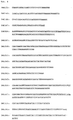
- Mit Hilfe der PCR-Primer IMG212 und IMG142 wurde aus dem Zellysat eines pathogenen V. cholerae Stammes der promotorproximale Anteil des toxR-Gens (siehe Tab. 5), welches den toxR-Promotor und den Sequenzabschnitt für die ersten 210 Aminosäuren (V.L. Miller et al.: Cholera toxin transcriptional activator ToxR is a transmembrane DNA binding protein; Cell 48, 271-279 (1987)) enthält, amplifiziert. Das Reaktionsprodukt wurde mit MluI und PstI geschnitten und in ein mit MluI/PstI geschnittenes pBluescript-Derivat (pBluescriptII-pms1'; Quelle B. Fartmann, Inst. für Molekulare Genetik der Universität Göttingen) gesetzt, welches unique Restriktionsschnittstellen für BamHI, MluI und PstI (in der angegebenen Reihenfolge) aufweist. Aus diesem Konstrukt wurde das 2 kbp BamHI/PstI Fragment isoliert, welches den toxR-Gensequenzabschnitt enthält. Parallel wurde aus dem Vektor pHKREI (H. Kolmar et al., J. Mol. Biol. 228, 359-365, (1992)) ein SalI/XbaI Fragment entnommen, welches ein rei-phoA Fusionsgen (d.h. das Gen für die Immunglobulindomäne REI, sowie das Gen für Alkalische Phosphatase) enthält und in den SalI/XbaI geschnittenen Vektor pMCΔbla (H. Kolmar: Über die Faltungsstabilität einer varianten Immunglobulindomäne. Dissertation an der Eberhard-Karls-Universität Tübingen (1992)) gesetzt. Das resultierende Konstrukt (pMcΔbla-reiphoA) wurde mit BamHI und XbaI geschnitten und das resultierende Vektorfragment mit dem oben bezeichneten BamHI/XbaI Fragment, welches den ToxR-Gensequenzabschnitt enthält, ligiert. Der mitgenommene pms1'-Sequenzabschnitt wurde durch Schneiden des resultierenden Vektors, Auffüllen der Enden und Religation entfernt. In die unique HindIII-Schnittstelle des resultierenden Vektors, welche hinter dem phoA-Gen liegt, wurde ein HindIII-Fragment aus pMcΔbla-lacbla-REI (H. Kolmar: loc. cit.) eingesetzt, welches das Gen für die Immunglobulindomäne REI enthält. Durch gezielte Mutagenese mit Hilfe des Oligonucleotids IMG166 wurde anschließend die codierende Sequenz des rei-Gens (Kolmar et al., 1992) an die codierende Sequenz des toxR-Gens (Codon 1 bis 210) fusioniert und die intergenische EcoRV-Schnittstelle eingeführt (pHKToxREI).

Relevante Restriktionsschnittstellen sind unterstrichen, die zur toxR-Region aus V. cholerae komplentären Sequenzabschnitte sind durch Fettdruck hervorgehoben. - Eine schematische Darstellung der vorstehenden Klonierungsschritte zum Aufbau des Vektors pHKToxREI ist in Figur 2, eine physikalische und genetische Karte von pHK-ToxREI in Figur 3 dargestellt.
- Das Einketten-Fv-Fragment (scFv) des Phenyloxazolon-bindenden Antikörpers NQ10.12.5 (Berek et al., 1985; Berek und Milstein, 1987; Sequenz: siehe Tab. 1), bei dem der C-Terminus der VH-Domäne über einen kurzen Peptid-Linker [(Gly₄Ser)₃] mit dem N-Terminus der VL-Domäne kovalent verbunden ist, wurde von der Arbeitsgruppe Greg Winter (MRC, Cambridge) in Form des Plasmids pHEN1::NQ10.12.5scFv-Fragment als SfiI/NotI-Fragment in den Vektor pHEN1 (H.R. Hoogenboom et al.: Multisubunit proteins on the surface of filamentous phage: methodologies for displaying antibody (Fab) heavy and light chains; Nucl. Acids Res. 19, 4133-4137 (1991)) kloniert zur Verfügung gestellt. Es wurde zunächst einschließlich der davor befindlichen pelB-Leadersequenz als HindIII/NotI-Fragment in den Bluescript-Vektor pBSK(-) umkloniert und einer Nucleotid-Sequenzanalyse unterzogen. Das klonierte scFv-Gen wich in einigen Bereichen stark von der publizierten NQ10.12.5-Sequenz (Berek et al, 1985) ab. Dies betraf vor allem den Anfang und das Ende der codierenden Bereiche für VH und VL. Die Abweichungen in diesen Bereichen sind möglicherweise auf die Verwendung degenerierter Primer bei der Amplifikation dieser Gene aus der NQ10.12.5 Zellinie zurückzuführen. Darüber hinaus wurden in der codierenden Sequenz für VH und VL (neben einigen stillen Basenaustauschen) noch jeweils zwei Punktmutationen sequenziert, die zu Aminosäureaustauschen führten (VH: I57->L, T77->N; VL:K18->R, T48->I).
- Die Reparatur des scFv-Gens erfolgte nach folgender Strategie:
- * Die codierenden Bereiche für VH und VL wurden zunächst getrennt mittels PCR reamplifiziert. Durch die PCR-Primerwurden die Sequenzen am Beginn und Ende dieser Bereiche zugunsten der NQ10.12.5-Sequenz repariert. Durch den VHUP-Primer wurde vor dem VH-Gen eine SalI-Schnittstelle unddurch den VHLO-Primer im Bereich der codierenden Sequenz für den single chain-Linker eine BamHI-Schnittstelle eingeführt. Diese BamHI-Schnittstelle wurde ebenfalls durch den VLUP-Primer eingeführt. Schließlich wurde am Ende des VL-Gens durch den VLLO-Primer eine XbaI-Schnittstelle eingeführt.

- * Mit Hilfe dieser Schnittstellen wurden die amplifizierten Fragmente zunächst getrennt in den pBSK(-)-Vektor kloniert (die am Beginn des VH-Gens eingeführte SnaBI (blunt)-Schnittstelle wurde für die spätere Klonierung des scFV-Gens hinter das toxR-Gen benötigt, das am Ende eine EcoRV-Schnittstelle (ebenfalls blunt) besitzt).
- * An den getrennt klonierten Fragmenten erfolgte zunächst die Reparatur der 4 verbliebenen Punktmutationen durch Oligonucleotid-dirigierte Mutagenese. Aufgrund der Entfernung der einzelnen Mutationen zueinander mußte für jede Mutagenese ein sparates Reparatur-Oligonucleotid definiert werden. Um das screening zu erleichtern wurden die Oligonucleotide so definiert, daß sie zusätzlich zur Reparaturmutagenese eine Restriktions-Schnittstelle einführten bzw. zerstörten.
Oligonukleotide für Reparatur-MutagenesenDie einzuführende Punktmutation ist durch Fettdruck hervorgehaoben.
- * Schließlich wurden die Fragmente mit Hilfe der in der codierenden Sequenz für den single chain-Linker liegenden BamHI-Schnittstelle wieder zusammen kloniert.
- Das NQ10.12.5 scFv-Gen wurde als SnaBi/XbaI-Fragment (Sequenz siehe Tab. 1) in den mit EcoRV und XbaI geschnittenen Vaktor pHKToxREI kloniert. Mit EcoRV und XbaI wird die für REI und PhoA codierende Sequenz aus diesem Plasmid herausgespalten. Die Klonierung des scFv-Gens in den mit EcoRV und XbaI geschnittenen Vektor pHKToxRei resultiert in einem toxR-scFv-Fusionsgen.
- Des weiteren wurde eine Fusion aus ToxR und dem Zweiketten-Fv-Fragment des Antikörpers NQ10.12.5 konstruiert, bei dem die VH-Domäne am Carboxyterminus des ToxR-Proteins belassen wurde, während VL in löslicher Form coexprimiert wird. Um die Sekretion des VL-Proteins ins Periplasma zu ermöglichen, solte das VLGen mit der pelB-Leader-Sequenz (S.-P. Lei et al., (1987): Characterization of the Erwinia carotovora pelB Gene and its product pectat lyase; J. Bacteriol. 169, 4379-4383) versehen werden. Die Entfernung des single chain-Linkers und die Einführung des Leaders sollte durch zwei aufeinanderfolgende Oligonucleotid-dirigierte Mutagenesen mit Hilfe der Oligonucleotide PelB1 und PelB2 erfolgen.

Nach der zweiten Mutagenese wurde ein Klon erhalten, der das korrekte Restriktionsmuster aufwies. Die Nucleotid-Sequenzanalyse dieses Klons ergab jedoch drei Deletionen, zwei (1 bzw. 8 Nucleotide) in der codierenden Sequenz für das Signalpeptid und eine (1 Nucleotid) in der intergenischen Region zwischsen VH und pelBVL (siehe Tab. 2). - Die fehlerhafte pelB-Leadersequenz vor dem VL-Gen wurde daraufhin durch die Leadersequenz der Alkalischen Phosphatase (H. Inouye et al.: Signal sequence of alkaline phosphatase of Escherichia coli; J. Bacteriol. 149, 434-439, (1982)) ersetzt. Zur Amplifikation der phoA-Signalsequenz aus dem E. coli-Chromosom wurden die PCR-Primer PhoASigUP und PhoASigLO verwendet.

Das 5'-Ende des PhoASigLO-Primers war homolog zum promotorproximalen Bereich des VL-Gens, so daß das phoA-Fragment mittels SOE-OPCR mit dem VL-Gen verknüpft werden konnte. Am 5'-Ende des PhoASigUP-Primers wurde eine EcoRI-Schnittstelle definiert, mit Hilfe derer das phoA-VL SOE-PCR Produkt hinter das VH-Gen kloniert wurde. Die Sequenz des VHphoAVL-Konstrukts ist in Tab. 3 wiedergegeben. - Die Konstruktion von pHKToxVLphoAVH, bei dem das VL-Gen mit der toxR-Sequenz fusioniert und VH mit der phoA-Leadersequenz versehen wurde, erfolgte mittels PCR mit Hilfe der Oligonucleotide IMG409 - IMG 412 (siehe Fig. 4).

Der codierende Bereich für die phoA-Signalsequenz (H. Inouye et al.: Signal sequence of alkaline phosphatase of Escherichia coli; J. Bacteriol. 149, 434-439 (1982)) wurde zunächst mit Hilfe der Primer PhoAUP2 und PhoALO2 amplifiziert. Als Template diente hierbei das mit Hilfe der Primer PhoASigUP und PhoASigLO aus dem Chromosom von E. coli ammplifizierte PCR-Produkt (siehe Beispiel II.3 "Konstruktion von pHKToxVHphoAVL"). Der 5'-Terminus des Primer PhoAUP2 war komplementär zum Ende der VL-Sequenz, der 5'-Terminus des Primer PhoALO2 zu den ersten 20 Nucleotiden der VH-Sequenz. Die komplementären Enden wurden im nächsten Schritt für die SOE-PCR mit dem VH- bzw. VL-Fragment benötigt. Weiterhin wurde durch den PhoALO2-Primer der N-terminale Aspartatrest der NQ10.12.5-VH-Sequenz (P.M. Alzari et al.: Three-dimensional structure determination of an anti-2-phenyloxazolone antibody: the role of somatic mutation and heavy/light chain pairing in the maturation of an immune response; EMBO J., 9, 3807-3814 (1990)), der in den bisherigen Konstrukten aus praktischen Überlegungen (Notwendigkeit einer Restriktionsschnittstelle) fehlte, wieder eingeführt. - Das VH-Gen wurde mit Hilfe der Primer VHUP und VHLO2, das VL-Gen mit den Primern VLUP2 und VLLO aus dem VHPhoAVL-Konstrukt amplifiziert. Die Primer VLUP2 und VHLO2 führten die für die Klonierungen notwendigen Schnittstellen ein (SalI und XbaI für die Klonierung in den Bluescript-Vektor pBSK(-), EcoRV und XbaI für die Klonierung in pHKToxREI). Da am Beginn der VL-Sequenz eine blunt-Schnittstelle benötigt wurde, konnte das erste Codon (Gln) nicht mit amplifiziert werden. Durch Austausch des ATT-Codons # 2 gegen ATC (codieren beide für Ile) war es möglich, eine EcoRV-Schnittstelle zu erzeugen. Die drei PCR-PRodukte wurden anschließend durch SOE-PCR miteinander verknüpft. Die Sequenz des VLphoAVH-Konstrukts ist in Tab. 4 wiedergegeben. Das SOE-PCR Produkt wurde anschließend als EcoRV/XbaI-Fragment in den Vektor pHKToxREI kloniert. Hierbei wurde die für REI und PhoA codierende Sequenz entfernt und VL in frame mit der für ToxR codierenden Sequenz fusioniert.
- Signaltransduktion eines homodimeren Fusionsproteins bestehend aus der Transkriptionsaktivatordomäne von ToxR und einer Immunglobulin variablen leichten Kette.
- Es wurde der Vektor pHKToxREI wie in Beispiel II Punkt 1 beschrieben aufgebaut. Dieser enthält ein Fusionsgen aus der Transkriptionsaktivatordomäne von ToxR und dem Gen für die variable Immunglobulindomäne des Bence-Jones Proteins REI (H. Kolmar et al.: J. Mol. Biol. 228, 359-365 (1992)). Die REI-Domäne ist ein Homodimer (Epp et al., Eur. J. Biochem. 45, 513-524, (1974)). Als Kontrolle wurde der Vektor pHKTox-TAG konstruiert, bei dem durch gezielte Mutagenese mit Hilfe des Oligonucleotids IMG167 zwischen toxR und rei ein Stopcodon inseriert wurde, so daß ausgehend von diesem Vektor lediglich die Transkriptionsaktivatordomäne, nicht jedoch die REI Domäne exprimiert wird.

Nach Transformation des Stammes FHK11 mit diesem Vektor wurde die Aktivierung des durch Dimerisierung der extracytoplasmatischsen REI-Domänen vermittelten chromosomal integrierten ctx-Promotors durch Messung der β-Galactosidaseaktivität in den bei 37 °C angezogenen Übernachtkulturen der betreffenden Transformanten bestimmt. Die Enzymaktivität betrug für pHKToxTAG (fehlende extracytoplasmatische Domäne) 130 Miller Einheiten, für pHKToxREI hingegen 400 Miller Einheiten, was einer ca. dreifachen Transkripitonsaktivierung entspricht. Hiermit ist gezeigt, daß die Dimerisierung der extracytoplasmatischen Immunglobulindomänen über die ToxR-vermittelte Signaltransduktion direkt detektiert werden kann. - Der E. coli Stamm FHK12/pHKToxVLphoAVH wurde am 07. Juni 1993 bei der Deutschen Sammlung von Mikroorganismen und Zellkulturen GmbH, Maschroder Weg 1b, W3300 Braunschweig unter der Bezeichnung DSM 8345 hinterlegt.


Claims (14)
- Verfahren zur genetischen Selektion von zur Ligandenbindung befähigten Proteinen in Mikroorganismen, dadurch gekennzeichnet, daß ein zur Ligandenbindung befähigtes Protein extra-cytoplasmatisch präsentiert wird und das Signal der Ligandenbindung durch Singaltransduktion an die biosynthetische Maschinerie des Mikroorganismus zur Ausprägung einer detektierbaren und/oder selektierbaren Funktion weitergeleitet wird.
- Verfahren nach Anspruch 1, dadurch gekennzeichnet, daß sich das Protein im Periplasma befindet und daß das Aktivierungssignal durch Wechselwirkung des Proteins mit einem extrazellulären Liganden, Homo- oder Heterodimerisierung eines periplasmatischen Proteins ausgelöst wird, wobei die Homo- oder Heterodimerisierung eine direkte oder mittels eines bivalenten Haptens erzeugte Wechselwirkung zwischen zwei Proteinen ist.
- Verfahren nach Anspruch 1 oder 2, dadurch gekennzeichnet, daß die Signaltransduktion mittels einer Transmembranhelix und einer cytoplasmatisch lokalisierten Regulationsdomäne, insbesondere eines Transkriptionsaktivators oder -repressors, an die biosynthetische Maschinerie des Mikroorganismus weitergeleitet wird.
- Verfahren nach einem oder mehreren der Ansprüche 1 bis 3, dadurch gekennzeichnet, daß ein zur genetischen Selektion durch Transduktion geeigneter Mikroorganismus, der eine genetisch stabile detektierbare und/oder selektierbare Funktion enthält, mit einem Replikon, insbesondere einem Plasmid, Phagengenom oder Phasmid, codierend für ein Fusionsprotein aus zur Ligandenbindung befähigtem Protein, Transmembranhelix und Regulationsdomäne transformiert wird und die durch Signaltransduktion erzeugte Funktion bestimmt und/oder auf sie selektiert wird.
- Verfahren nach Anspruch 4, dadurch gekennzeichnet, daß der Mikroorganismus E. coli und die detektierbare und selektierbare Funktion die Expression eines unter Kontrolle eines regulierbaren Promotors stehenden, die detektierbare und selektierbare Funktion codierenden Gens, insbesondere die Expression eines unter ctx-Kontrolle stehenden chromosomal integrierten β-Galactosidasegens, ist.
- Verfahren nach Anspruch 5, dadurch gekennzeichnet, daß der Mikroorganismus ausgewählt ist aus FHK11 und FHK12.
- Verfahren nach Anspruch 4, dadurch gekennzeichnet, daß das zur Ligandenbindung befähigte Protein ausgewählt ist aus Immunglobulinen, Antigenen, Rezeptordomänen, Rezeptorliganden, insbesondere Hormonen, Enzymen und Inhibitoren.
- Verfahren nach Anspruch 7, dadurch gekennzeichnet, daß das Protein ein Immunglobulin, insbesondere ausgewählt aus Fab-Fragmenten, Fv-Fragmenten, Einzelketten Fv-Fragmenten, Monomeren und Homodimeren leichter Ketten, ist.
- Verfahren nach Anspruch 4, dadurch gekennzeichnet, daß die Transmembranhelix ausgewählte ist aus den Transmembranhelices des ToxR Gens von Vibrio cholerae, des Protoonkogens C-neu, des P-neu Onkogens und des membranständigen IgM.
- Verfahren nach Anspruch 4, dadurch gekennzeichnet, daß der Transkriptionsaktivator die Aminosäuren 1-182 des ToxR Proteins ist.
- Mikroorganismus nach Ansprüchen 4-6.
- Verfahren zur Herstellung des Mikroorganismus nach Anspruch 11, dadurch gekennzeichnet, daß die detektierbare und/oder selektierbare Funktion mit Hilfe eines Integrationsvektors in den Mikroorganismus eingeführt wird.
- Replikon nach einem oder mehreren der Ansprüche 4 und 7-10.
- Verfahren zur Herstellung des Replikons nach Anspruch 13, umfassend die Fusion von Transmembranhelix, Regulationsdomäne und zur Ligandenbindung befähigtes Protein codierenden DNA-Fragmenten.
Applications Claiming Priority (2)
| Application Number | Priority Date | Filing Date | Title |
|---|---|---|---|
| DE4319296 | 1993-06-10 | ||
| DE4319296A DE4319296A1 (de) | 1993-06-10 | 1993-06-10 | Genetische Selektion von zur Ligandenbindung befähigten Proteinen mittels Signaltransduktion in Mikroorganismen |
Publications (3)
| Publication Number | Publication Date |
|---|---|
| EP0630968A2 true EP0630968A2 (de) | 1994-12-28 |
| EP0630968A3 EP0630968A3 (de) | 1995-04-19 |
| EP0630968B1 EP0630968B1 (de) | 2002-06-05 |
Family
ID=6490074
Family Applications (1)
| Application Number | Title | Priority Date | Filing Date |
|---|---|---|---|
| EP94108620A Expired - Lifetime EP0630968B1 (de) | 1993-06-10 | 1994-06-06 | Genetische Selektion von zur Ligandenbindung befähigten Proteinen mittels Signaltransduktion in Mikroorganismen |
Country Status (11)
| Country | Link |
|---|---|
| US (1) | US5882924A (de) |
| EP (1) | EP0630968B1 (de) |
| JP (1) | JPH06343472A (de) |
| KR (1) | KR100354577B1 (de) |
| AT (1) | ATE218619T1 (de) |
| AU (1) | AU682859B2 (de) |
| CA (1) | CA2125536A1 (de) |
| DE (2) | DE4319296A1 (de) |
| DK (1) | DK0630968T3 (de) |
| ES (1) | ES2177556T3 (de) |
| PT (1) | PT630968E (de) |
Cited By (1)
| Publication number | Priority date | Publication date | Assignee | Title |
|---|---|---|---|---|
| EP0646644A3 (de) * | 1993-09-13 | 1996-07-10 | Bristol Myers Squibb Co | An die periplasmatische Membran gebundenes System zur Ermittlung von Protein-Protein Interaktionen. |
Families Citing this family (4)
| Publication number | Priority date | Publication date | Assignee | Title |
|---|---|---|---|---|
| DE19951694A1 (de) * | 1999-10-27 | 2001-05-03 | Alexander Cherkasky | Verfahren zur Regulierung der Expression von Transgenen in spezifischen Expressionssystemen, wie z.B. in Immunzellen B, T und Makrophagen in vitro und vivo |
| AU2002243280A1 (en) * | 2000-10-23 | 2002-06-24 | Engeneos, Inc. | Engineered stimulus-responsive switches |
| US7112434B2 (en) | 2001-05-02 | 2006-09-26 | University Of South Florida | Vector system for selection of genes encoding secreted proteins and membrane-bound proteins |
| USD971639S1 (en) | 2019-04-30 | 2022-12-06 | Tactical Target Stands, Llc | Target stand |
Family Cites Families (1)
| Publication number | Priority date | Publication date | Assignee | Title |
|---|---|---|---|---|
| US5521066A (en) * | 1993-09-13 | 1996-05-28 | Bristol-Myers Squibb Company | Periplasmic membrane-bound system for detecting protein-protein interactions |
-
1993
- 1993-06-10 DE DE4319296A patent/DE4319296A1/de not_active Withdrawn
-
1994
- 1994-06-06 DK DK94108620T patent/DK0630968T3/da active
- 1994-06-06 DE DE59410127T patent/DE59410127D1/de not_active Expired - Fee Related
- 1994-06-06 AT AT94108620T patent/ATE218619T1/de not_active IP Right Cessation
- 1994-06-06 EP EP94108620A patent/EP0630968B1/de not_active Expired - Lifetime
- 1994-06-06 PT PT94108620T patent/PT630968E/pt unknown
- 1994-06-06 ES ES94108620T patent/ES2177556T3/es not_active Expired - Lifetime
- 1994-06-09 AU AU64614/94A patent/AU682859B2/en not_active Ceased
- 1994-06-09 CA CA002125536A patent/CA2125536A1/en not_active Abandoned
- 1994-06-10 JP JP6152980A patent/JPH06343472A/ja active Pending
- 1994-06-10 KR KR1019940013078A patent/KR100354577B1/ko not_active Expired - Fee Related
-
1997
- 1997-10-22 US US08/956,047 patent/US5882924A/en not_active Expired - Fee Related
Non-Patent Citations (4)
| Title |
|---|
| BIOL. CHEM. HOPPE-SEYLER, Bd.374, Nr.9, 1993 Seite F109 HENNECKE F. ET AL. 'A transcriptional signal derived from the dimerisation of immunoglobin fragments located in the periplasmic space of E. coli' * |
| CELL, Bd.48, 1987 Seiten 271 - 279 V.L. MILLER ET AL. 'Cholera toxin transcriptional activator ToxR is a transmembrane DNA binding protein' * |
| CELL, Bd.64, 1991 Seiten 891 - 901 B.A. IRVING ET AL. 'The cytoplasmic domain of the cell receptor...' * |
| CELL, Bd.68, 1992 Seiten 83 - 95 A-M. K. WEGENER ET AL. 'The T cell receptor/CD3 complex is composed of at least two autonomous transduction modules' * |
Cited By (1)
| Publication number | Priority date | Publication date | Assignee | Title |
|---|---|---|---|---|
| EP0646644A3 (de) * | 1993-09-13 | 1996-07-10 | Bristol Myers Squibb Co | An die periplasmatische Membran gebundenes System zur Ermittlung von Protein-Protein Interaktionen. |
Also Published As
| Publication number | Publication date |
|---|---|
| DK0630968T3 (da) | 2002-09-16 |
| DE59410127D1 (de) | 2002-07-11 |
| AU682859B2 (en) | 1997-10-23 |
| ATE218619T1 (de) | 2002-06-15 |
| ES2177556T3 (es) | 2002-12-16 |
| KR950000874A (ko) | 1995-01-03 |
| EP0630968A3 (de) | 1995-04-19 |
| US5882924A (en) | 1999-03-16 |
| CA2125536A1 (en) | 1994-12-11 |
| DE4319296A1 (de) | 1994-12-15 |
| PT630968E (pt) | 2002-10-31 |
| KR100354577B1 (ko) | 2004-12-31 |
| JPH06343472A (ja) | 1994-12-20 |
| EP0630968B1 (de) | 2002-06-05 |
| AU6461494A (en) | 1994-12-15 |
Similar Documents
| Publication | Publication Date | Title |
|---|---|---|
| DE69230142T2 (de) | Verfahren zur herstellung von spezifischen bindungspaargliedern | |
| DE69633065T2 (de) | Herstellung einer multikombinatonischen bank von antikörpergenen exprimierendenvektoren | |
| DE69632827T2 (de) | Materialen und methoden im zusammenhang mit bindung und präsentation von substanzen auf zelloberflächen | |
| DE69131017T2 (de) | Optimierung von bindenden proteinen | |
| DE69033648T2 (de) | Neues verfahren zur erschliessung des immunologischen repertoirs | |
| DE69133568T2 (de) | Bakteriophagenpartikeln,die dAbs präsentieren | |
| DE69132700T2 (de) | Oberflächen lokalisierte expressionsbanken von heteromeren rezeptoren | |
| EP1550729B1 (de) | Zielmoleküle-bindende Polypeptide bestehend aus einer IG-artigen VL Domäne die an eine IG-artige VH Domäne gebunden ist | |
| DE69233068T2 (de) | Serin-reiche peptidlinker | |
| EP0759997B1 (de) | Verwendung des tetracyclinpromotors zur stringent regulierten produktion von rekombinanten proteinen in prokaryontischen zellen | |
| DE69533644T2 (de) | Rezeptorstrukturen aus bakterien | |
| DE602004002275T2 (de) | Verfahren zur herstellung rekombinanterpolyklonaler proteine | |
| DE69331278T2 (de) | Phagemiden die einen oberflächenrezeptor und ein heterologes oberflächenprotein co-exprimieren | |
| DE69233367T2 (de) | Bibliotheken heterodimerer rezeptoren mittels phagemiden | |
| DE60209010T2 (de) | Chimäre phagen | |
| DE4237113A1 (de) | Fusionspeptide mit Bindungsaktivität für Streptavidin | |
| DE10053224A1 (de) | Verfahren zur Exposition von Peptiden und Polypeptiden auf der Zelloberfläche von Bakterien | |
| CA2177367A1 (en) | Recombinant binding proteins and peptides | |
| DE69534941T2 (de) | Herstellung einer multikombinatorischen bank von antikörpergene-exprimierende vektoren | |
| US5955341A (en) | Heterodimeric receptor libraries using phagemids | |
| DE69434661T2 (de) | An die periplasmatische Membran gebundenes System zur Ermittlung von Protein-Protein Interaktionen | |
| EP0630968B1 (de) | Genetische Selektion von zur Ligandenbindung befähigten Proteinen mittels Signaltransduktion in Mikroorganismen | |
| DE69634409T2 (de) | Kombinierte ligand und rezeptor entfaltung | |
| EP0291021B1 (de) | Für ein lytisch wirksames, chimäres Protein kodierende rekombinante DNA und ihre Verwendung | |
| WO1991013155A1 (de) | Trägergebundene rekombinante proteine, verfahren zur herstellung und verwendung als immunogene und vakzine |
Legal Events
| Date | Code | Title | Description |
|---|---|---|---|
| PUAI | Public reference made under article 153(3) epc to a published international application that has entered the european phase |
Free format text: ORIGINAL CODE: 0009012 |
|
| AK | Designated contracting states |
Kind code of ref document: A2 Designated state(s): AT BE CH DE DK ES FR GB GR IE IT LI LU NL PT SE |
|
| PUAL | Search report despatched |
Free format text: ORIGINAL CODE: 0009013 |
|
| AK | Designated contracting states |
Kind code of ref document: A3 Designated state(s): AT BE CH DE DK ES FR GB GR IE IT LI LU NL PT SE |
|
| 17P | Request for examination filed |
Effective date: 19951019 |
|
| 17Q | First examination report despatched |
Effective date: 19960118 |
|
| RAP1 | Party data changed (applicant data changed or rights of an application transferred) |
Owner name: HOECHST AKTIENGESELLSCHAFT |
|
| GRAG | Despatch of communication of intention to grant |
Free format text: ORIGINAL CODE: EPIDOS AGRA |
|
| GRAG | Despatch of communication of intention to grant |
Free format text: ORIGINAL CODE: EPIDOS AGRA |
|
| GRAH | Despatch of communication of intention to grant a patent |
Free format text: ORIGINAL CODE: EPIDOS IGRA |
|
| GRAH | Despatch of communication of intention to grant a patent |
Free format text: ORIGINAL CODE: EPIDOS IGRA |
|
| GRAA | (expected) grant |
Free format text: ORIGINAL CODE: 0009210 |
|
| AK | Designated contracting states |
Kind code of ref document: B1 Designated state(s): AT BE CH DE DK ES FR GB GR IE IT LI LU NL PT SE |
|
| REF | Corresponds to: |
Ref document number: 218619 Country of ref document: AT Date of ref document: 20020615 Kind code of ref document: T |
|
| REG | Reference to a national code |
Ref country code: GB Ref legal event code: FG4D Free format text: NOT ENGLISH |
|
| REG | Reference to a national code |
Ref country code: CH Ref legal event code: EP |
|
| REG | Reference to a national code |
Ref country code: IE Ref legal event code: FG4D Free format text: GERMAN |
|
| REF | Corresponds to: |
Ref document number: 59410127 Country of ref document: DE Date of ref document: 20020711 |
|
| GBT | Gb: translation of ep patent filed (gb section 77(6)(a)/1977) |
Effective date: 20020815 |
|
| REG | Reference to a national code |
Ref country code: DK Ref legal event code: T3 |
|
| ET | Fr: translation filed | ||
| REG | Reference to a national code |
Ref country code: PT Ref legal event code: SC4A Free format text: AVAILABILITY OF NATIONAL TRANSLATION Effective date: 20020729 |
|
| REG | Reference to a national code |
Ref country code: GR Ref legal event code: EP Ref document number: 20020402914 Country of ref document: GR |
|
| REG | Reference to a national code |
Ref country code: ES Ref legal event code: FG2A Ref document number: 2177556 Country of ref document: ES Kind code of ref document: T3 |
|
| PLBE | No opposition filed within time limit |
Free format text: ORIGINAL CODE: 0009261 |
|
| STAA | Information on the status of an ep patent application or granted ep patent |
Free format text: STATUS: NO OPPOSITION FILED WITHIN TIME LIMIT |
|
| 26N | No opposition filed |
Effective date: 20030306 |
|
| PGFP | Annual fee paid to national office [announced via postgrant information from national office to epo] |
Ref country code: NL Payment date: 20040421 Year of fee payment: 11 Ref country code: AT Payment date: 20040421 Year of fee payment: 11 |
|
| PGFP | Annual fee paid to national office [announced via postgrant information from national office to epo] |
Ref country code: SE Payment date: 20040422 Year of fee payment: 11 Ref country code: GB Payment date: 20040422 Year of fee payment: 11 Ref country code: FR Payment date: 20040422 Year of fee payment: 11 |
|
| PGFP | Annual fee paid to national office [announced via postgrant information from national office to epo] |
Ref country code: CH Payment date: 20040423 Year of fee payment: 11 Ref country code: DK Payment date: 20040423 Year of fee payment: 11 |
|
| PGFP | Annual fee paid to national office [announced via postgrant information from national office to epo] |
Ref country code: PT Payment date: 20040429 Year of fee payment: 11 |
|
| PGFP | Annual fee paid to national office [announced via postgrant information from national office to epo] |
Ref country code: IE Payment date: 20040504 Year of fee payment: 11 |
|
| PGFP | Annual fee paid to national office [announced via postgrant information from national office to epo] |
Ref country code: GR Payment date: 20040511 Year of fee payment: 11 |
|
| PGFP | Annual fee paid to national office [announced via postgrant information from national office to epo] |
Ref country code: LU Payment date: 20040519 Year of fee payment: 11 |
|
| PGFP | Annual fee paid to national office [announced via postgrant information from national office to epo] |
Ref country code: BE Payment date: 20040528 Year of fee payment: 11 |
|
| PGFP | Annual fee paid to national office [announced via postgrant information from national office to epo] |
Ref country code: ES Payment date: 20040622 Year of fee payment: 11 |
|
| PGFP | Annual fee paid to national office [announced via postgrant information from national office to epo] |
Ref country code: DE Payment date: 20040630 Year of fee payment: 11 |
|
| PG25 | Lapsed in a contracting state [announced via postgrant information from national office to epo] |
Ref country code: LU Free format text: LAPSE BECAUSE OF NON-PAYMENT OF DUE FEES Effective date: 20050606 Ref country code: IT Free format text: LAPSE BECAUSE OF NON-PAYMENT OF DUE FEES;WARNING: LAPSES OF ITALIAN PATENTS WITH EFFECTIVE DATE BEFORE 2007 MAY HAVE OCCURRED AT ANY TIME BEFORE 2007. THE CORRECT EFFECTIVE DATE MAY BE DIFFERENT FROM THE ONE RECORDED. Effective date: 20050606 Ref country code: IE Free format text: LAPSE BECAUSE OF NON-PAYMENT OF DUE FEES Effective date: 20050606 Ref country code: GB Free format text: LAPSE BECAUSE OF NON-PAYMENT OF DUE FEES Effective date: 20050606 Ref country code: AT Free format text: LAPSE BECAUSE OF NON-PAYMENT OF DUE FEES Effective date: 20050606 |
|
| PG25 | Lapsed in a contracting state [announced via postgrant information from national office to epo] |
Ref country code: SE Free format text: LAPSE BECAUSE OF NON-PAYMENT OF DUE FEES Effective date: 20050607 Ref country code: ES Free format text: LAPSE BECAUSE OF NON-PAYMENT OF DUE FEES Effective date: 20050607 |
|
| PG25 | Lapsed in a contracting state [announced via postgrant information from national office to epo] |
Ref country code: LI Free format text: LAPSE BECAUSE OF NON-PAYMENT OF DUE FEES Effective date: 20050630 Ref country code: DK Free format text: LAPSE BECAUSE OF NON-PAYMENT OF DUE FEES Effective date: 20050630 Ref country code: CH Free format text: LAPSE BECAUSE OF NON-PAYMENT OF DUE FEES Effective date: 20050630 Ref country code: BE Free format text: LAPSE BECAUSE OF NON-PAYMENT OF DUE FEES Effective date: 20050630 |
|
| PG25 | Lapsed in a contracting state [announced via postgrant information from national office to epo] |
Ref country code: PT Free format text: LAPSE BECAUSE OF NON-PAYMENT OF DUE FEES Effective date: 20051206 |
|
| PG25 | Lapsed in a contracting state [announced via postgrant information from national office to epo] |
Ref country code: NL Free format text: LAPSE BECAUSE OF NON-PAYMENT OF DUE FEES Effective date: 20060101 |
|
| PG25 | Lapsed in a contracting state [announced via postgrant information from national office to epo] |
Ref country code: GR Free format text: LAPSE BECAUSE OF NON-PAYMENT OF DUE FEES Effective date: 20060103 Ref country code: DE Free format text: LAPSE BECAUSE OF NON-PAYMENT OF DUE FEES Effective date: 20060103 |
|
| REG | Reference to a national code |
Ref country code: CH Ref legal event code: PL |
|
| EUG | Se: european patent has lapsed | ||
| PG25 | Lapsed in a contracting state [announced via postgrant information from national office to epo] |
Ref country code: FR Free format text: LAPSE BECAUSE OF NON-PAYMENT OF DUE FEES Effective date: 20060228 |
|
| GBPC | Gb: european patent ceased through non-payment of renewal fee |
Effective date: 20050606 |
|
| NLV4 | Nl: lapsed or anulled due to non-payment of the annual fee |
Effective date: 20060101 |
|
| REG | Reference to a national code |
Ref country code: DK Ref legal event code: EBP |
|
| REG | Reference to a national code |
Ref country code: IE Ref legal event code: MM4A |
|
| REG | Reference to a national code |
Ref country code: FR Ref legal event code: ST Effective date: 20060228 |
|
| REG | Reference to a national code |
Ref country code: ES Ref legal event code: FD2A Effective date: 20050607 |
|
| BERE | Be: lapsed |
Owner name: *HOECHST A.G. Effective date: 20050630 |