EP0630968A2 - Selection génétique de proteines capables de fixer un ligand par transduction d'un signal dans des microorganismes - Google Patents
Selection génétique de proteines capables de fixer un ligand par transduction d'un signal dans des microorganismes Download PDFInfo
- Publication number
- EP0630968A2 EP0630968A2 EP94108620A EP94108620A EP0630968A2 EP 0630968 A2 EP0630968 A2 EP 0630968A2 EP 94108620 A EP94108620 A EP 94108620A EP 94108620 A EP94108620 A EP 94108620A EP 0630968 A2 EP0630968 A2 EP 0630968A2
- Authority
- EP
- European Patent Office
- Prior art keywords
- protein
- microorganism
- gene
- ligand binding
- detectable
- Prior art date
- Legal status (The legal status is an assumption and is not a legal conclusion. Google has not performed a legal analysis and makes no representation as to the accuracy of the status listed.)
- Granted
Links
Images








Classifications
-
- C—CHEMISTRY; METALLURGY
- C12—BIOCHEMISTRY; BEER; SPIRITS; WINE; VINEGAR; MICROBIOLOGY; ENZYMOLOGY; MUTATION OR GENETIC ENGINEERING
- C12N—MICROORGANISMS OR ENZYMES; COMPOSITIONS THEREOF; PROPAGATING, PRESERVING, OR MAINTAINING MICROORGANISMS; MUTATION OR GENETIC ENGINEERING; CULTURE MEDIA
- C12N15/00—Mutation or genetic engineering; DNA or RNA concerning genetic engineering, vectors, e.g. plasmids, or their isolation, preparation or purification; Use of hosts therefor
-
- C—CHEMISTRY; METALLURGY
- C07—ORGANIC CHEMISTRY
- C07K—PEPTIDES
- C07K16/00—Immunoglobulins [IG], e.g. monoclonal or polyclonal antibodies
- C07K16/44—Immunoglobulins [IG], e.g. monoclonal or polyclonal antibodies against material not provided for elsewhere, e.g. haptens, metals, DNA, RNA, amino acids
-
- C—CHEMISTRY; METALLURGY
- C07—ORGANIC CHEMISTRY
- C07K—PEPTIDES
- C07K14/00—Peptides having more than 20 amino acids; Gastrins; Somatostatins; Melanotropins; Derivatives thereof
- C07K14/195—Peptides having more than 20 amino acids; Gastrins; Somatostatins; Melanotropins; Derivatives thereof from bacteria
- C07K14/28—Peptides having more than 20 amino acids; Gastrins; Somatostatins; Melanotropins; Derivatives thereof from bacteria from Vibrionaceae (F)
-
- C—CHEMISTRY; METALLURGY
- C07—ORGANIC CHEMISTRY
- C07K—PEPTIDES
- C07K2317/00—Immunoglobulins specific features
- C07K2317/60—Immunoglobulins specific features characterized by non-natural combinations of immunoglobulin fragments
- C07K2317/62—Immunoglobulins specific features characterized by non-natural combinations of immunoglobulin fragments comprising only variable region components
- C07K2317/622—Single chain antibody (scFv)
-
- C—CHEMISTRY; METALLURGY
- C07—ORGANIC CHEMISTRY
- C07K—PEPTIDES
- C07K2319/00—Fusion polypeptide
Definitions
- the invention relates to a method for the genetic selection of proteins in microorganisms, microorganisms and replicas suitable for this method and methods for their production.
- ToxR is a transmembrane protein with a periplasmic localized carboxy-terminal domain (AS202 / 294), a transmembrane helix and a cytoplasmic localized amino-terminal domain (AS1-182), the aforementioned amino terminal domain shows homology to other bacterial transcription activators such as OmpR, PhoM or PhoG.
- ToxR binds directly to the promoter-operator region of the ctx operons and acts as a transcription activator.
- the object of the present invention was to develop a selection method which enables signal transduction for the direct genetic selection of proteins in bacterial populations and thereby extends the selection principle to other protein classes which, moreover, do not directly have functionally relevant protein properties in the microorganism used.
- the present invention therefore relates to methods for the genetic selection of proteins capable of ligand binding in microorganisms, characterized in that a protein capable of ligand binding is presented in an extra-cytoplasmic manner and the signal of ligand binding by signal transduction to the biosynthetic machinery of the microorganism in order to express a detectable and / or or selectable function is forwarded.
- extra-cytoplasmic means "on the outer surface of the inner membrane or the outer membrane of the microorganism", the arrangement of the protein on the outer surface of the inner membrane, i.e. in the periplasm is preferred.
- the activation signal can be triggered by interaction of an extracellular ligand with the protein or by homo- or heterodimerization of the periplasmic protein (FIG. 1). This dimerization can either take place directly between two proteins or be brought about by means of a suitable divalent hapten.
- the activation signal generated in this way is passed on to the biosynthetic machinery of the microorganism by means of a transmembrane helix and a cytoplasmic localized regulatory domain, in particular a transcription activator or repressor.
- a microorganism suitable for genetic selection by transduction which contains a genetically stable detectable and / or selectable function, with a replicon, in particular a plasmid, phage genome or phasmid, coding for a fusion protein from a protein capable of ligand binding, transmembrane helix and regulatory domain transformed and the function generated by signal transduction determined and / or selected on it.
- the detectable and selectable function is the expression of a gene which is under the control of a regulatable promoter and which codes for the detectable and selectable function, in particular the expression of a chromosomally integrated ⁇ -galactosidase gene which is under ctx control.
- the microorganism is preferably from the Escherichia coli strain, in particular FHK11 or FHK12.
- the protein capable of ligand binding is selected from immunoglobulins, antigens, receptor domains, receptor ligands, in particular hormones, enzymes and inhibitors.
- the proteins are immunoglobulins, in particular F ab fragments, F v fragments, single chains F v fragments, monomers or homodimers of light chains.
- the transmembrane helix is selected from the transmembrane helices of the ToxR gene from Vibrio cholerae, the proto-oncogene C-new, the P-new oncogene and the membrane-bound IgM.
- the preferred transcriptional activator of the method is the N-terminal end, ie amino acids 1-182, of the ToxR protein.
- the invention further relates to a microorganism which is suitable for genetic selection by transduction and which contains a genetically stable detectable function.
- This detectable function is preferably a chromosomally integrated ⁇ -galactosidase gene under ctx control.
- the Escherichia coli strains FHK11 and FHK12 are particularly preferred.
- the invention relates to the replicas defined above and their production, comprising the fusion of transmembrane helix, regulatory domain and DNA fragments coding for ligand binding.
- the present invention discloses an experimental system that mimics essential features of the immune system of higher vertebrates in microorganisms.
- This system can be used for clonal expansion induced by antigen binding and for fine adjustment of the antigen recognition by mutation and selection.
- FHK11 F ⁇ , ara, ⁇ (lac-proAB), rpsL, ⁇ 80 d ⁇ (lacZM15), attHB :: ctxDsiglacZ
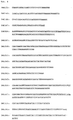
- the ctx promoter was amplified from the chromosome of a pathogenic V. cholerae strain via PCR using the oligonucleotides CtxUp and ctxLo.
- the PCR product contains the ctx promoter region with a ToxR recognition sequence repeated seven times (Miller et al., Cell 48 , 271 (1987)). Since the Escherichia coli strains described herein with chromosomally integrated ctxlacZ gene fusion showed a genetic instability, Miller et al. the putative CtxA signal sequence from codons 5 to 28 removed. This was done by reamplifying the ctx promoter using the oligonucleotides CTxUp and Ctx ⁇ sig. The sequences complementary to the ctx promoter are highlighted in bold.
- the lacZ gene was then fused to the ctx promoter via SOE-PCR.
- the resulting product was converted into the BamHI fragment in the BamHI linearized vector pLDR10 (Diederich et al., Plasmid, 28 , 14-24 (1992)) in an orientation in which the ctx promoter is arranged opposite to the promoter of the bla gene, cloned and integrated into the chromosome of the E. coli strain JM83 by the method described by Diederich.
- FHK12 F'lacZ ⁇ M15, lacY+, ProA+B+ ara, ⁇ (lac-proAB), rpsl, ⁇ 80 d ⁇ (lacZM15), attB :: ctxDsiglacZ
- the F episome of this strain was brought into the FHK11 strain by conjugation with the CSH22 strain (trpR, ⁇ lac-pro, thi, F'lacZ ⁇ M15, lacY+, ProA+B+).
- the F episome contains the gene for lac permease (lacY) and complements the chromosomal pro-deletion. Conjugants could therefore be easily obtained by selection on M9 plates containing ampicillin. FHK12 already grew in M9 lactose medium and on M9 lactose minimal plates without activating the ctx promoter.
- the reaction product was cut with MluI and PstI and placed in a pBluescript derivative cut with MluI / PstI (pBluescriptII-pms1 '; source B.
- the entrained pms1 'sequence section was removed by cutting the resulting vector, filling in the ends and religation.
- a HindIII fragment from pMc ⁇ bla-lacbla-REI (H. Kolmar: loc. Cit.) Which contains the gene for the immunoglobulin domain REI was inserted into the unique HindIII cleavage of the resulting vector, which lies behind the phoA gene.
- the coding sequence of the rei gene (Kolmar et al., 1992) was then fused to the coding sequence of the toxR gene (codons 1 to 210) and the intergenic EcoRV interface was introduced (pHKToxREI) by targeted mutagenesis with the aid of the oligonucleotide IMG166. .
- Relevant restriction sites are underlined, the sequence sections complementary to the toxR region from V. cholerae are highlighted in bold.
- FIG. 2 A schematic representation of the above cloning steps for the construction of the vector pHKToxREI is shown in FIG. 2, a physical and genetic map of pHK-ToxREI in FIG. 3.
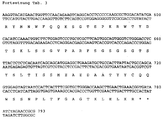
- the single-chain Fv fragment (scFv) of the phenyloxazolone-binding antibody NQ10.12.5 (Berek et al., 1985; Berek and Milstein, 1987; sequence: see Table 1), in which the C-terminus of the V H domain Via a short peptide linker [(Gly4Ser) 3] with the N-terminus of the V L domain, Greg Winter (MRC, Cambridge) developed the plasmid pHEN1 :: NQ10.12.5scFv fragment as SfiI / NotI fragment in the vector pHEN1 (HR Hoogenboom et al .: Multisubunit proteins on the surface of filamentous phage: methodologies for displaying antibody (Fab) heavy and light chains; Nucl.
- Acids Res. 19 , 4133-4137 (1991 )) provided cloned. It was first cloned, including the pelB leader sequence in front of it, as a HindIII / NotI fragment into the bluescript vector pBSK (-) and subjected to a nucleotide sequence analysis.
- the cloned scFv gene deviated greatly from the published NQ10.12.5 sequence (Berek et al, 1985). This particularly affected the beginning and end of the coding areas for V H and V L. The deviations in these areas may be due to the use of degenerate primers in the amplification of these genes from the NQ10.12.5 cell line.
- the NQ10.12.5 scFv gene was cloned as a SnaBi / XbaI fragment (for sequence, see Table 1) in the factor pHKToxREI cut with EcoRV and XbaI.
- the sequence coding for REI and PhoA is cleaved from this plasmid using EcoRV and XbaI.
- the cloning of the scFv gene in the vector pHKToxRei cut with EcoRV and XbaI results in a toxR-scFv fusion gene.
- V H domain was left at the carboxy terminus of the ToxR protein, while V L is co-expressed in soluble form.
- V L gene with the pelB leader sequence S.-P. Lei et al., (1987): Characterization of the Erwinia carotovora pelB Gene and its product pectat lyase; J. Bacteriol. 169 , 4379-4383).
- the faulty pelB leader sequence in front of the V L gene was then determined by the leader sequence of the alkaline phosphatase (H. Inouye et al .: Signal sequence of alkaline phosphatase of Escherichia coli; J. Bacteriol. 149 , 434-439, (1982)) replaced.
- the PCR primers PhoASigUP and PhoASigLO were used to amplify the phoA signal sequence from the E. coli chromosome.
- the 5 'end of the PhoASigLO primer was homologous to the promoter-proximal region of the V L gene, so that the phoA fragment could be linked to the V L gene using SOE-OPCR.
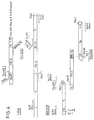
- pHKToxV L phoAV H in which the V L gene was fused with the toxR sequence and V H was provided with the phoA leader sequence, was carried out by means of PCR using the oligonucleotides IMG409 - IMG 412 (see FIG. 4).
- the coding region for the phoA signal sequence (H. Inouye et al .: Signal sequence of alkaline phosphatase of Escherichia coli; J. Bacteriol. 149 , 434-439 (1982)) was first amplified using the primers PhoAUP2 and PhoALO2.
- the PCR product amplified with the aid of the primers PhoASigUP and PhoASigLO from the chromosome of E. coli was used as a template (see Example II.3 "Construction of pHKToxV H phoAV L ").
- the 5 'terminus of the primer PhoAUP2 was complementary to the end of the V L sequence, the 5' terminus of the primer PhoALO2 to the first 20 nucleotides of the V H sequence. The complementary ends were required in the next step for the SOE-PCR with the V H or V L fragment.
- the V H gene was amplified from the V H PhoAV L construct using the primers V H UP and V H LO2, the V L gene with the primers V L UP2 and V L LO.
- the primers V L UP2 and V H LO2 introduced the interfaces necessary for the cloning (SalI and XbaI for the cloning in the Bluescript vector pBSK (-), EcoRV and XbaI for the cloning in pHKToxREI). Since a blunt interface was required at the beginning of the V L sequence, the first codon (Gln) could not be amplified. By exchanging ATT codon # 2 for ATC (both code for Ile), it was possible to create an EcoRV interface.
- the three PCR products were then linked together by SOE-PCR.
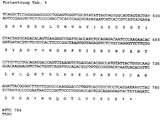
- the sequence of the V L phoAV H construct is shown in Table 4.
- the SOE-PCR product was then cloned as an EcoRV / XbaI fragment in the vector pHKToxREI.
- the sequence coding for REI and PhoA was removed and V L was fused in frame with the sequence coding for ToxR.
- the vector pHKToxREI was constructed as described in Example II point 1. This contains a fusion gene from the transcription activator domain of ToxR and the gene for the variable immunoglobulin domain of the Bence-Jones protein REI (H. Kolmar et al .: J. Mol. Biol. 228 , 359-365 (1992)). The REI domain is a homodimer (Epp et al., Eur. J. Biochem. 45 , 513-524, (1974)).
- the vector pHKTox-TAG was constructed, in which a stop codon between toxR and rei was generated by targeted mutagenesis with the help of the oligonucleotide IMG167 was inserted, so that starting from this vector only the transcription activator domain, but not the REI domain, is expressed.
- the activation of the chromosomally integrated ctx promoter mediated by dimerization of the extracytoplasmic REI domains was determined by measuring the ⁇ -galactosidase activity in the overnight cultures of the transformants in question grown at 37 ° C.
- the enzyme activity was 130 Miller units for pHKToxTAG (missing extracytoplasmic domain), but 400 Miller units for pHKToxREI, which corresponds to approximately three-fold activation of transcription. This shows that the dimerization of the extracytoplasmic immunoglobulin domains can be detected directly via the ToxR-mediated signal transduction.
- the E. coli strain FHK12 / pHKToxV L phoAV H was deposited on June 7, 1993 with the German Collection of Microorganisms and Cell Cultures GmbH, Maschroder Weg 1b, W3300 Braunschweig under the name DSM 8345.
Landscapes
- Chemical & Material Sciences (AREA)
- Health & Medical Sciences (AREA)
- Organic Chemistry (AREA)
- Life Sciences & Earth Sciences (AREA)
- Genetics & Genomics (AREA)
- Biochemistry (AREA)
- Biophysics (AREA)
- General Health & Medical Sciences (AREA)
- Molecular Biology (AREA)
- Medicinal Chemistry (AREA)
- Proteomics, Peptides & Aminoacids (AREA)
- Engineering & Computer Science (AREA)
- Immunology (AREA)
- Bioinformatics & Cheminformatics (AREA)
- Gastroenterology & Hepatology (AREA)
- Biomedical Technology (AREA)
- Biotechnology (AREA)
- General Engineering & Computer Science (AREA)
- Zoology (AREA)
- Wood Science & Technology (AREA)
- Microbiology (AREA)
- Physics & Mathematics (AREA)
- Plant Pathology (AREA)
- Micro-Organisms Or Cultivation Processes Thereof (AREA)
- Preparation Of Compounds By Using Micro-Organisms (AREA)
- Peptides Or Proteins (AREA)
- Measuring Or Testing Involving Enzymes Or Micro-Organisms (AREA)
Applications Claiming Priority (2)
| Application Number | Priority Date | Filing Date | Title |
|---|---|---|---|
| DE4319296 | 1993-06-10 | ||
| DE4319296A DE4319296A1 (de) | 1993-06-10 | 1993-06-10 | Genetische Selektion von zur Ligandenbindung befähigten Proteinen mittels Signaltransduktion in Mikroorganismen |
Publications (3)
| Publication Number | Publication Date |
|---|---|
| EP0630968A2 true EP0630968A2 (fr) | 1994-12-28 |
| EP0630968A3 EP0630968A3 (fr) | 1995-04-19 |
| EP0630968B1 EP0630968B1 (fr) | 2002-06-05 |
Family
ID=6490074
Family Applications (1)
| Application Number | Title | Priority Date | Filing Date |
|---|---|---|---|
| EP94108620A Expired - Lifetime EP0630968B1 (fr) | 1993-06-10 | 1994-06-06 | Selection génétique de proteines capables de fixer un ligand par transduction d'un signal dans des microorganismes |
Country Status (11)
| Country | Link |
|---|---|
| US (1) | US5882924A (fr) |
| EP (1) | EP0630968B1 (fr) |
| JP (1) | JPH06343472A (fr) |
| KR (1) | KR100354577B1 (fr) |
| AT (1) | ATE218619T1 (fr) |
| AU (1) | AU682859B2 (fr) |
| CA (1) | CA2125536A1 (fr) |
| DE (2) | DE4319296A1 (fr) |
| DK (1) | DK0630968T3 (fr) |
| ES (1) | ES2177556T3 (fr) |
| PT (1) | PT630968E (fr) |
Cited By (1)
| Publication number | Priority date | Publication date | Assignee | Title |
|---|---|---|---|---|
| EP0646644A3 (fr) * | 1993-09-13 | 1996-07-10 | Bristol Myers Squibb Co | Système lié à la membrane périplasmic pour la détection des interactions protéine-protéine. |
Families Citing this family (4)
| Publication number | Priority date | Publication date | Assignee | Title |
|---|---|---|---|---|
| DE19951694A1 (de) * | 1999-10-27 | 2001-05-03 | Alexander Cherkasky | Verfahren zur Regulierung der Expression von Transgenen in spezifischen Expressionssystemen, wie z.B. in Immunzellen B, T und Makrophagen in vitro und vivo |
| AU2002243280A1 (en) * | 2000-10-23 | 2002-06-24 | Engeneos, Inc. | Engineered stimulus-responsive switches |
| US7112434B2 (en) | 2001-05-02 | 2006-09-26 | University Of South Florida | Vector system for selection of genes encoding secreted proteins and membrane-bound proteins |
| USD971639S1 (en) | 2019-04-30 | 2022-12-06 | Tactical Target Stands, Llc | Target stand |
Family Cites Families (1)
| Publication number | Priority date | Publication date | Assignee | Title |
|---|---|---|---|---|
| US5521066A (en) * | 1993-09-13 | 1996-05-28 | Bristol-Myers Squibb Company | Periplasmic membrane-bound system for detecting protein-protein interactions |
-
1993
- 1993-06-10 DE DE4319296A patent/DE4319296A1/de not_active Withdrawn
-
1994
- 1994-06-06 DK DK94108620T patent/DK0630968T3/da active
- 1994-06-06 DE DE59410127T patent/DE59410127D1/de not_active Expired - Fee Related
- 1994-06-06 AT AT94108620T patent/ATE218619T1/de not_active IP Right Cessation
- 1994-06-06 EP EP94108620A patent/EP0630968B1/fr not_active Expired - Lifetime
- 1994-06-06 PT PT94108620T patent/PT630968E/pt unknown
- 1994-06-06 ES ES94108620T patent/ES2177556T3/es not_active Expired - Lifetime
- 1994-06-09 AU AU64614/94A patent/AU682859B2/en not_active Ceased
- 1994-06-09 CA CA002125536A patent/CA2125536A1/fr not_active Abandoned
- 1994-06-10 JP JP6152980A patent/JPH06343472A/ja active Pending
- 1994-06-10 KR KR1019940013078A patent/KR100354577B1/ko not_active Expired - Fee Related
-
1997
- 1997-10-22 US US08/956,047 patent/US5882924A/en not_active Expired - Fee Related
Non-Patent Citations (4)
| Title |
|---|
| BIOL. CHEM. HOPPE-SEYLER, Bd.374, Nr.9, 1993 Seite F109 HENNECKE F. ET AL. 'A transcriptional signal derived from the dimerisation of immunoglobin fragments located in the periplasmic space of E. coli' * |
| CELL, Bd.48, 1987 Seiten 271 - 279 V.L. MILLER ET AL. 'Cholera toxin transcriptional activator ToxR is a transmembrane DNA binding protein' * |
| CELL, Bd.64, 1991 Seiten 891 - 901 B.A. IRVING ET AL. 'The cytoplasmic domain of the cell receptor...' * |
| CELL, Bd.68, 1992 Seiten 83 - 95 A-M. K. WEGENER ET AL. 'The T cell receptor/CD3 complex is composed of at least two autonomous transduction modules' * |
Cited By (1)
| Publication number | Priority date | Publication date | Assignee | Title |
|---|---|---|---|---|
| EP0646644A3 (fr) * | 1993-09-13 | 1996-07-10 | Bristol Myers Squibb Co | Système lié à la membrane périplasmic pour la détection des interactions protéine-protéine. |
Also Published As
| Publication number | Publication date |
|---|---|
| DK0630968T3 (da) | 2002-09-16 |
| DE59410127D1 (de) | 2002-07-11 |
| AU682859B2 (en) | 1997-10-23 |
| ATE218619T1 (de) | 2002-06-15 |
| ES2177556T3 (es) | 2002-12-16 |
| KR950000874A (ko) | 1995-01-03 |
| EP0630968A3 (fr) | 1995-04-19 |
| US5882924A (en) | 1999-03-16 |
| CA2125536A1 (fr) | 1994-12-11 |
| DE4319296A1 (de) | 1994-12-15 |
| PT630968E (pt) | 2002-10-31 |
| KR100354577B1 (ko) | 2004-12-31 |
| JPH06343472A (ja) | 1994-12-20 |
| EP0630968B1 (fr) | 2002-06-05 |
| AU6461494A (en) | 1994-12-15 |
Similar Documents
| Publication | Publication Date | Title |
|---|---|---|
| DE69230142T2 (de) | Verfahren zur herstellung von spezifischen bindungspaargliedern | |
| DE69633065T2 (de) | Herstellung einer multikombinatonischen bank von antikörpergenen exprimierendenvektoren | |
| DE69632827T2 (de) | Materialen und methoden im zusammenhang mit bindung und präsentation von substanzen auf zelloberflächen | |
| DE69131017T2 (de) | Optimierung von bindenden proteinen | |
| DE69033648T2 (de) | Neues verfahren zur erschliessung des immunologischen repertoirs | |
| DE69133568T2 (de) | Bakteriophagenpartikeln,die dAbs präsentieren | |
| DE69132700T2 (de) | Oberflächen lokalisierte expressionsbanken von heteromeren rezeptoren | |
| EP1550729B1 (fr) | Polypeptides se fixant à une cible comprenant un domaine de type immunoglobuline (IG-like) VL fusioné à une domaine de type immunoglobuline (IG-like) VH | |
| DE69233068T2 (de) | Serin-reiche peptidlinker | |
| EP0759997B1 (fr) | Utilisation du promoteur de la tetracycline pour la production strictement regulee de proteines recombinees dans des cellules procaryotes | |
| DE69533644T2 (de) | Rezeptorstrukturen aus bakterien | |
| DE602004002275T2 (de) | Verfahren zur herstellung rekombinanterpolyklonaler proteine | |
| DE69331278T2 (de) | Phagemiden die einen oberflächenrezeptor und ein heterologes oberflächenprotein co-exprimieren | |
| DE69233367T2 (de) | Bibliotheken heterodimerer rezeptoren mittels phagemiden | |
| DE60209010T2 (de) | Chimäre phagen | |
| DE4237113A1 (de) | Fusionspeptide mit Bindungsaktivität für Streptavidin | |
| DE10053224A1 (de) | Verfahren zur Exposition von Peptiden und Polypeptiden auf der Zelloberfläche von Bakterien | |
| CA2177367A1 (fr) | Proteines et peptides de liaison recombines | |
| DE69534941T2 (de) | Herstellung einer multikombinatorischen bank von antikörpergene-exprimierende vektoren | |
| US5955341A (en) | Heterodimeric receptor libraries using phagemids | |
| DE69434661T2 (de) | An die periplasmatische Membran gebundenes System zur Ermittlung von Protein-Protein Interaktionen | |
| EP0630968B1 (fr) | Selection génétique de proteines capables de fixer un ligand par transduction d'un signal dans des microorganismes | |
| DE69634409T2 (de) | Kombinierte ligand und rezeptor entfaltung | |
| EP0291021B1 (fr) | ADN recombinant, codant pour une protéine chimérique ayant une activité lytique et son application | |
| WO1991013155A1 (fr) | Proteine recombinante immobilisee sur un substrat, son procede de production et son utilisation comme agent immunogene et comme vaccin |
Legal Events
| Date | Code | Title | Description |
|---|---|---|---|
| PUAI | Public reference made under article 153(3) epc to a published international application that has entered the european phase |
Free format text: ORIGINAL CODE: 0009012 |
|
| AK | Designated contracting states |
Kind code of ref document: A2 Designated state(s): AT BE CH DE DK ES FR GB GR IE IT LI LU NL PT SE |
|
| PUAL | Search report despatched |
Free format text: ORIGINAL CODE: 0009013 |
|
| AK | Designated contracting states |
Kind code of ref document: A3 Designated state(s): AT BE CH DE DK ES FR GB GR IE IT LI LU NL PT SE |
|
| 17P | Request for examination filed |
Effective date: 19951019 |
|
| 17Q | First examination report despatched |
Effective date: 19960118 |
|
| RAP1 | Party data changed (applicant data changed or rights of an application transferred) |
Owner name: HOECHST AKTIENGESELLSCHAFT |
|
| GRAG | Despatch of communication of intention to grant |
Free format text: ORIGINAL CODE: EPIDOS AGRA |
|
| GRAG | Despatch of communication of intention to grant |
Free format text: ORIGINAL CODE: EPIDOS AGRA |
|
| GRAH | Despatch of communication of intention to grant a patent |
Free format text: ORIGINAL CODE: EPIDOS IGRA |
|
| GRAH | Despatch of communication of intention to grant a patent |
Free format text: ORIGINAL CODE: EPIDOS IGRA |
|
| GRAA | (expected) grant |
Free format text: ORIGINAL CODE: 0009210 |
|
| AK | Designated contracting states |
Kind code of ref document: B1 Designated state(s): AT BE CH DE DK ES FR GB GR IE IT LI LU NL PT SE |
|
| REF | Corresponds to: |
Ref document number: 218619 Country of ref document: AT Date of ref document: 20020615 Kind code of ref document: T |
|
| REG | Reference to a national code |
Ref country code: GB Ref legal event code: FG4D Free format text: NOT ENGLISH |
|
| REG | Reference to a national code |
Ref country code: CH Ref legal event code: EP |
|
| REG | Reference to a national code |
Ref country code: IE Ref legal event code: FG4D Free format text: GERMAN |
|
| REF | Corresponds to: |
Ref document number: 59410127 Country of ref document: DE Date of ref document: 20020711 |
|
| GBT | Gb: translation of ep patent filed (gb section 77(6)(a)/1977) |
Effective date: 20020815 |
|
| REG | Reference to a national code |
Ref country code: DK Ref legal event code: T3 |
|
| ET | Fr: translation filed | ||
| REG | Reference to a national code |
Ref country code: PT Ref legal event code: SC4A Free format text: AVAILABILITY OF NATIONAL TRANSLATION Effective date: 20020729 |
|
| REG | Reference to a national code |
Ref country code: GR Ref legal event code: EP Ref document number: 20020402914 Country of ref document: GR |
|
| REG | Reference to a national code |
Ref country code: ES Ref legal event code: FG2A Ref document number: 2177556 Country of ref document: ES Kind code of ref document: T3 |
|
| PLBE | No opposition filed within time limit |
Free format text: ORIGINAL CODE: 0009261 |
|
| STAA | Information on the status of an ep patent application or granted ep patent |
Free format text: STATUS: NO OPPOSITION FILED WITHIN TIME LIMIT |
|
| 26N | No opposition filed |
Effective date: 20030306 |
|
| PGFP | Annual fee paid to national office [announced via postgrant information from national office to epo] |
Ref country code: NL Payment date: 20040421 Year of fee payment: 11 Ref country code: AT Payment date: 20040421 Year of fee payment: 11 |
|
| PGFP | Annual fee paid to national office [announced via postgrant information from national office to epo] |
Ref country code: SE Payment date: 20040422 Year of fee payment: 11 Ref country code: GB Payment date: 20040422 Year of fee payment: 11 Ref country code: FR Payment date: 20040422 Year of fee payment: 11 |
|
| PGFP | Annual fee paid to national office [announced via postgrant information from national office to epo] |
Ref country code: CH Payment date: 20040423 Year of fee payment: 11 Ref country code: DK Payment date: 20040423 Year of fee payment: 11 |
|
| PGFP | Annual fee paid to national office [announced via postgrant information from national office to epo] |
Ref country code: PT Payment date: 20040429 Year of fee payment: 11 |
|
| PGFP | Annual fee paid to national office [announced via postgrant information from national office to epo] |
Ref country code: IE Payment date: 20040504 Year of fee payment: 11 |
|
| PGFP | Annual fee paid to national office [announced via postgrant information from national office to epo] |
Ref country code: GR Payment date: 20040511 Year of fee payment: 11 |
|
| PGFP | Annual fee paid to national office [announced via postgrant information from national office to epo] |
Ref country code: LU Payment date: 20040519 Year of fee payment: 11 |
|
| PGFP | Annual fee paid to national office [announced via postgrant information from national office to epo] |
Ref country code: BE Payment date: 20040528 Year of fee payment: 11 |
|
| PGFP | Annual fee paid to national office [announced via postgrant information from national office to epo] |
Ref country code: ES Payment date: 20040622 Year of fee payment: 11 |
|
| PGFP | Annual fee paid to national office [announced via postgrant information from national office to epo] |
Ref country code: DE Payment date: 20040630 Year of fee payment: 11 |
|
| PG25 | Lapsed in a contracting state [announced via postgrant information from national office to epo] |
Ref country code: LU Free format text: LAPSE BECAUSE OF NON-PAYMENT OF DUE FEES Effective date: 20050606 Ref country code: IT Free format text: LAPSE BECAUSE OF NON-PAYMENT OF DUE FEES;WARNING: LAPSES OF ITALIAN PATENTS WITH EFFECTIVE DATE BEFORE 2007 MAY HAVE OCCURRED AT ANY TIME BEFORE 2007. THE CORRECT EFFECTIVE DATE MAY BE DIFFERENT FROM THE ONE RECORDED. Effective date: 20050606 Ref country code: IE Free format text: LAPSE BECAUSE OF NON-PAYMENT OF DUE FEES Effective date: 20050606 Ref country code: GB Free format text: LAPSE BECAUSE OF NON-PAYMENT OF DUE FEES Effective date: 20050606 Ref country code: AT Free format text: LAPSE BECAUSE OF NON-PAYMENT OF DUE FEES Effective date: 20050606 |
|
| PG25 | Lapsed in a contracting state [announced via postgrant information from national office to epo] |
Ref country code: SE Free format text: LAPSE BECAUSE OF NON-PAYMENT OF DUE FEES Effective date: 20050607 Ref country code: ES Free format text: LAPSE BECAUSE OF NON-PAYMENT OF DUE FEES Effective date: 20050607 |
|
| PG25 | Lapsed in a contracting state [announced via postgrant information from national office to epo] |
Ref country code: LI Free format text: LAPSE BECAUSE OF NON-PAYMENT OF DUE FEES Effective date: 20050630 Ref country code: DK Free format text: LAPSE BECAUSE OF NON-PAYMENT OF DUE FEES Effective date: 20050630 Ref country code: CH Free format text: LAPSE BECAUSE OF NON-PAYMENT OF DUE FEES Effective date: 20050630 Ref country code: BE Free format text: LAPSE BECAUSE OF NON-PAYMENT OF DUE FEES Effective date: 20050630 |
|
| PG25 | Lapsed in a contracting state [announced via postgrant information from national office to epo] |
Ref country code: PT Free format text: LAPSE BECAUSE OF NON-PAYMENT OF DUE FEES Effective date: 20051206 |
|
| PG25 | Lapsed in a contracting state [announced via postgrant information from national office to epo] |
Ref country code: NL Free format text: LAPSE BECAUSE OF NON-PAYMENT OF DUE FEES Effective date: 20060101 |
|
| PG25 | Lapsed in a contracting state [announced via postgrant information from national office to epo] |
Ref country code: GR Free format text: LAPSE BECAUSE OF NON-PAYMENT OF DUE FEES Effective date: 20060103 Ref country code: DE Free format text: LAPSE BECAUSE OF NON-PAYMENT OF DUE FEES Effective date: 20060103 |
|
| REG | Reference to a national code |
Ref country code: CH Ref legal event code: PL |
|
| EUG | Se: european patent has lapsed | ||
| PG25 | Lapsed in a contracting state [announced via postgrant information from national office to epo] |
Ref country code: FR Free format text: LAPSE BECAUSE OF NON-PAYMENT OF DUE FEES Effective date: 20060228 |
|
| GBPC | Gb: european patent ceased through non-payment of renewal fee |
Effective date: 20050606 |
|
| NLV4 | Nl: lapsed or anulled due to non-payment of the annual fee |
Effective date: 20060101 |
|
| REG | Reference to a national code |
Ref country code: DK Ref legal event code: EBP |
|
| REG | Reference to a national code |
Ref country code: IE Ref legal event code: MM4A |
|
| REG | Reference to a national code |
Ref country code: FR Ref legal event code: ST Effective date: 20060228 |
|
| REG | Reference to a national code |
Ref country code: ES Ref legal event code: FD2A Effective date: 20050607 |
|
| BERE | Be: lapsed |
Owner name: *HOECHST A.G. Effective date: 20050630 |