EP0631236B1 - Système d'ordinateur de maítre de bus - Google Patents
Système d'ordinateur de maítre de bus Download PDFInfo
- Publication number
- EP0631236B1 EP0631236B1 EP94303243A EP94303243A EP0631236B1 EP 0631236 B1 EP0631236 B1 EP 0631236B1 EP 94303243 A EP94303243 A EP 94303243A EP 94303243 A EP94303243 A EP 94303243A EP 0631236 B1 EP0631236 B1 EP 0631236B1
- Authority
- EP
- European Patent Office
- Prior art keywords
- bus
- master
- data
- cache
- status
- Prior art date
- Legal status (The legal status is an assumption and is not a legal conclusion. Google has not performed a legal analysis and makes no representation as to the accuracy of the status listed.)
- Expired - Lifetime
Links
Images

Classifications
-
- G—PHYSICS
- G06—COMPUTING OR CALCULATING; COUNTING
- G06F—ELECTRIC DIGITAL DATA PROCESSING
- G06F12/00—Accessing, addressing or allocating within memory systems or architectures
- G06F12/02—Addressing or allocation; Relocation
- G06F12/08—Addressing or allocation; Relocation in hierarchically structured memory systems, e.g. virtual memory systems
- G06F12/0802—Addressing of a memory level in which the access to the desired data or data block requires associative addressing means, e.g. caches
- G06F12/0806—Multiuser, multiprocessor or multiprocessing cache systems
- G06F12/0815—Cache consistency protocols
- G06F12/0831—Cache consistency protocols using a bus scheme, e.g. with bus monitoring or watching means
- G06F12/0833—Cache consistency protocols using a bus scheme, e.g. with bus monitoring or watching means in combination with broadcast means (e.g. for invalidation or updating)
Definitions
- the present invention relates to a bus-master computer system which may be used for example to control cache operations, and preferably to a device and method for reducing bus activity in a computer system having a cache-equipped bus-master.
- Bus-masters are devices that can initiate a read or write transaction with the system memory of a bus-based computer system.
- An example of one such device is a processor.
- Processors retrieve instructions from the system memory and read, process, and write data to the system memory as dictated by the retrieved instructions.
- One way to increase the performance of a computer system is to increase the rate with which data is transferred between the system memory and the bus-masters in the system. This can be accomplished by using high-speed memory chips for the system memory.
- the cost of memory increases dramatically with the speed of the memory.
- the data transfers between the system memory and the cache memory of a bus-master are controlled by a cache controller.
- a cache controller manages the cache memory based upon the needs of the bus-master which it serves. For example, if a processor requires data that is not currently stored in the processor's cache memory, the data must be transferred from the slower system memory to the cache memory of the processor. Once the data resides in the processor's cache memory, the processsor may access the data for subsequent operations at the faster rate of the cache memory. Further, if the processor requires information that does not reside in cache memory and all of the cache memory blocks are already allocated, then the cache controller causes the cache memory to free up storage space for the newly requested data, either by writing over unmodified data in the cache memory or by storing modified data back to the system memory.
- a system having more than one cache-equipped bus-master such as a system with a cache-equipped processor and a cache-equipped I/O device
- multiple versions of the same data may exist.
- both the cache memory of the processor and the cache memory of the I/O device may hold copies of data originating from the same block in the system memory.
- Data that is accessible by more than one cache-equipped bus-master is referred to as "shared data". If either the I/O device or the processor modifies a block of shared data in its local cache memory, all other copies of the data, including any copy of the data in the cache of the other bus-master, become "stale" (no longer current).
- the bus-master that modifies a block of shared data must broadcast the modified version of the data to all other cache-equipped bus-masters in the system.
- this broadcasting process inherently requires a large amount of inter-device communication. Such communication is typically performed over the same bus which connects the bus-masters with the system memory. As a result, these buses can become crowded, resulting in slower data transmission rates and diminished system performance.
- EP-A-0 301 354 describes a cache consistency protocol for a multiprocessor system. As with other cache write-back schemes the cache controllers associated with each processor monitor (snoop) every access on the bus. If a snoop hits, the hit cache controller asserts a SHARED bus line and the requesting processor then marks that data block as "shared".
- a device and method for making a cache-equipped bus-master aware of whether any other cache-equipped bus-master is present in the system is clearly desirable. Further, a device and method which allows a cache-equipped bus-master to determine whether other cache-equipped bus-masters are on the system without increasing the data traffic on the bus connecting the bus-masters to the system memory is clearly desirable. Finally, a device for determining the shared status of a data block without increasing the data traffic on the bus connecting the bus-masters to the system memory is clearly desirable.
- a master bus-master for use in a master bus-master for use in a bus-based computer system having a system memory and, optionally, at least one other bus-master capable of caching data, said master bus-master being configured for caching data and configured for operation alone and in association with said at least one other bus-master, said master bus-master comprising: a local cache arrangement coupled to said system memory by a bus and coupled to a processing unit, said local cache arrangement including a cache memory for caching data transferred between said processing unit and said system memory, whereby data in said cache memory is modifiable by said processing unit, said at least one other bus-master, if present, also being coupled to said bus.
- the master bus-master is characterised in that said master bus-master further comprises input means to receive an input signal from a control line, the input signal having a first logic state to indicate that said at least one other bus-master is not present or, if present, is not caching data; and a second logic state to indicate that said at least one other bus-master is present in said computer system and is caching data, and in that said local cache arrangement further includes control means to control transmission of data between said cache memory and said bus in response to said input signal; whereby when said processing unit sends modified data to said cache memory said master bus-master automatically then broadcasts the modified data over said bus to said at least one other bus-master only if said input signal has its second and not its first, logic state.
- a method for preventing unnecessary data broadcast by a master bus-master in a bus-based computer system said master bus-master including a processing unit and a local cache arrangement, data in the cache being modifiable by the processing unit, said computer system optionally including at least one other bus-master capable of caching data, the method comprising the steps of: coupling said master bus-master and, if present, said at least one other bus-master, to a control line and to a bus; providing said control line with a first initial logic state to indicate that the other bus-master is not present or, if present, is not caching data, and a second logic state to indicate that said at least one other bus-master is present in said computer system and is caching data; causing said at least one other bus-master to drive said control line to the second logic state if said at least one other bus-master is present and caching data; causing said master bits-master to detect whether said control line is at said first state or at said second state: and when
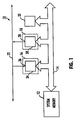
- the computer system 10 generally includes a system memory 12, a master bus-master 16 and a plurality of slave bus-masters 18 and 20.
- the bus-masters 16, 18, and 20 are coupled to the memory 12 and to each other by a multiple-bit bus 14.
- the bus-masters 16 and 18 are further coupled to each other by a control line 22.
- Slave bus-master 18 is coupled to the control line 22 by an output 28 and the master bus-master 16 is coupled to the control line by an input 26.
- the slave bus-master 18 is equipped with a local cache arrangement 38 and is configured to drive control line 22 to a particular state, for example, to a logical HIGH, by a control signal at output 28 to indicate if the bus-master 18 is caching data transfers between itself and the system memory 12.
- control line 22 may initially be LOW, and bus-master 18 may be configured to generate a control signal to drive the control line 22 HIGH if bus-master 18 is caching data in its local cache arrangement 38.
- the slave bus-master 20 is not equipped with a local cache arrangement and is not coupled to the control line 22. Thus, slave bus-master 20 does not affect the state of control line 22.
- the master bus-master 16 is equipped with a local cache arrangement 34 and is configured detect the state of control line 22 at input 26. If the state of the control line 22 indicates that a slave bus-master is caching data, then, when master bus-master 16 modifies any of the data within its local cache arrangement 34, the master bus-master 16 broadcasts the modified data to the other bus-masters on the system over bus 14. Otherwise, if the state of the control line 22 indicates that no slave bus-master is caching data, then the master bus-master 16 does not broadcast data automatically when it modifies the data in its local cache arrangement 34.
- system 10 is shown with only two slave bus-masters 18 and 20, the system 10 may alternatively include any number of slave bus-masters.
- the state of control line 22 indicates to the master bus-master 16 whether any of any number of slave bus-masters in the system 10 is caching data.
- the master bus-master 16 detects the state of the control line 22, when it is the only bus-master in the system 10 that is caching data, the data traffic on bus 14 is significantly reduced. Specifically, unnecessary data broadcasting over bus 14 is avoided because master bus-master 16 automatically broadcasts modified data only when it detects that other caching bus-masters are present on the system.
- the master bus-master 16 is a cache-equipped central processing unit ("CPU").
- master bus-master 16 may alternatively be any type of cache-equipped bus-master.
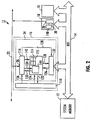
- the master bus-master 16 generally comprises a processing unit 118 and the local cache arrangement 34.
- the processing unit 118 generally represents those components of the master bus-master 16 which manipulate data. For example, if master bus-master 16 is a CPU, then the processing unit 118 would be the execution unit of the CPU.
- the local cache arrangement 34 includes a cache memory 114, a cache controller 116 and a bus interface unit 130.
- the cache memory 114 is coupled to the processing unit 118 by a plurality of multiple-bit buses 122 and 124 and to the bus interface unit 130 by a plurality of multiple-bit buses 126 and 128.
- the cache memory 114 is coupled to the cache controller 116 by a plurality of multiple-bit buses 132, 134 and 142.
- the cache controller 116 is coupled to the processing unit 118 by a multiple-bit bus 136, and to the bus interface unit 130 by a multiple-bit bus 138.
- the cache controller is also coupled to control line 22 at the input 26.
- the bus interface unit 130 is coupled to the system memory 12 and to the slave bus-masters 18 and 20 by the bus 14.
- the cache memory 114 is disposed between the system memory 12 and the processing unit 118 to provide the processing unit 118 faster access to the data that initially resides in the system memory 12.
- the cache memory includes a plurality of data blocks 115 for storing data, and a status storage 144 for storing data representative of the status of the data that is currently being buffered in the cache memory 114.
- the bus interface unit 130 executes the data transfers between the cache memory 114 and external components, such as the system memory 12 and the slave bus-masters 18 and 20.
- the bus interface unit 130 executes the data transfers in response to data transfer signals received from the cache controller 116 over bus 138.
- the cache controller 116 generates the data transfer signals to control the bus interface unit 130.
- the cache controller generates the data transfer signals in response to data request signals received from the processing unit 118 over bus 136; the state of the control line 22 as detected at input 26, and the status of the cache memory 114 as detected over bus 132.
- the cache controller 116 also updates the status information within the status storage 144 as the status of the data within the blocks 115 of the cache memory 114 changes. For example, the cache controller 116 may maintain in the status storage 144 of the cache memory 114 status information representative of the status of the data residing in each of blocks 115 of the cache memory 114.
- the status information for each cache data block typically includes whether the block is available to receive new data ("availability status"), whether the data within the block has been modified (“modification status”), whether the data within the block is shared or exclusive (“shared status") how recently the data within the block was accessed by the processing unit 118 ("access status”), and the block of the system memory 12 from which the data contained in the cache block originated (“source information").
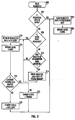
- the processing unit 118 sends, in step 200, a data request signal to the cache controller 116.
- the cache controller 116 reads the status of the cache memory 114 over bus 132 to determine if the requested data currently resides in the cache memory 114. If it does, the cache controller 116 transmits a control signal to the cache memory 114 over bus 142 to cause the cache memory 114 to send the requested data over bus 122 to the processing unit 118 in accordance with step 204.
- the cache controller 116 then, in step 206, sends a status update signal over bus 134 to the status storage 144 of the cache memory 114 to indicate that the requested data was accessed.
- the cache controller 116 reads the status of the cache memory 114 over bus 132 to determine whether there is space available in the cache memory 114 for the requested data. If there is space available, the cache controller 116 sends a data transfer signal to the bus interface unit 130 to cause the bus interface to read the requested data from the system memory 12 and to write the requested data into the available space in the cache memory 114 via bus 126 in accordance with step 210.
- step 208 If it is determined in step 208 that there is no space available in the cache memory 114 for the requested data, the cache controller 116 will have to cause the bus interface unit 130 to write the requested data over data currently residing in the cache memory 114. However, before the data is overwritten, the cache controller, in step 212, reads from bus 132 the modified status of the block containing the data to be overwritten.
- the cache controller 116 sends a data transfer signal over bus 138 to cause the bus interface unit 130 in step 214 to retrieve the modified data from cache memory 114 from bus 128 and to write the modified data back to the system memory 12 over bus 14 before it is overwritten in the cache memory 114 in step 210. If it is determined in step 212 that the data to be overwritten has not been modified, the process then proceeds directly to step 210.
- the cache controller 116 When the requested data has been loaded into the cache memory 114, the cache controller 116 then, in step 216, updates the status of the cache block receiving the data over bus 134. Specifically, the availability status is updated to indicate that the block is not available to receive new data, the modified status is updated to indicate that the data has not been modified, the access status is updated to indicate that the data has not been accessed, and the source information is updated to reflect the location of system memory 12 from which the data originated.
- the shared status is then updated in accordance with steps 218, 220, and 222.
- step 218 the state of control line 22 is detected by the cache controller 116 at input 26 to determine if there is another caching bus-master present. If the state of the control line 22 indicates that no other caching bus-master is present in the system, then the shared status is updated to indicate that the requested data is exclusive in step 220. Otherwise, in step 222, the shared status is updated to indicate that the requested data is shared.
- step 204 the cache controller 116 sends a control signal to the cache memory 114 over bus 142 to cause the requested data to be sent over bus 122 to the processing unit 118 from the cache memory 114.
- the cache controller 116 also updates the access status of the cache block holding the requested data in step 206 to indicate the time that the requested data was sent to the processing unit 118.
- the processing unit 118 modifies data in step 302
- the processing unit 118 in step 204, sends the modified data over bus 124 to the block in the cache memory 114 from which the modified data originated.
- the cache controller 116 then, in step 306, reads from bus 134 the shared status of the cache block receiving the modified data. If the cache controller determines in step 306 that the modified data is shared, the cache controller 116 sends a data transfer signal to the bus interface unit 130 to cause the bus interface unit 130 to read the modified data from the cache memory 114 from bus 128 and to broadcast the modified data over bus 14 to the system memory 12, to the slave bus masters 18 and 20, and to any other bus-master on the system in step 308.
- the cache controller 116 in step 310 updates, over bus 134, the modified status of the cache block containing the modified data to indicate that the data was not modified.
- the data is considered "not modified” because, after the broadcast, all existing versions of the data reflect the modifications that were made.
- step 306 it is determined that the modified data is exclusive (not shared), then the modified data is not broadcast over bus 14. Rather, it remains "modified” in the cache memory 114 until it is written back to the system memory 12 to free up space in the cache memory 114 for later-requested data, according to the process described above.
- the slave bus master 18 includes a processing unit 148 and the local cache arrangement 38.
- the configuration of the local cache arrangement 38 corresponds to the local cache arrangement 34 of the master bus-master 16 with the exception that the local cache arrangement 38 of the slave bus-master 18 is coupled to the control line 22 at the output 28 and generates a signal at the output 28 to drive the control line 22 to a predetermined state to indicative whether the slave bus-master 18 is caching data.
- the slave bus-master 18 assumes that another bus-master present on the system is caching data (e.g. the master bus-master). Therefore, the local cache arrangement 38 of the slave bus-master 18 marks all of the data in its cache as shared data. Consequently, the slave bus-master 18 automatically broadcasts over bus 14 any data that it modifies in its local cache arrangement 38.
Landscapes
- Engineering & Computer Science (AREA)
- Theoretical Computer Science (AREA)
- Physics & Mathematics (AREA)
- General Engineering & Computer Science (AREA)
- General Physics & Mathematics (AREA)
- Memory System Of A Hierarchy Structure (AREA)
Claims (12)
- Maítre de bus principal (16) à utiliser dans un système d'ordinateur à base de bus (10) comportant une mémoire système (12) et, facultativement, au moins un autre maítre de bus (18) capable de servir d'antémémoire de données, ledit maítre de bus principal (16) étant configuré pour servir d' antémémoire de données et pour fonctionner seul et en association avec ledit (lesdits) autre(s) maítre(s) de bus (18), ledit maítre de bus principal (16) comprenant :un agencement d'antémémoire local (34) couplé à ladite mémoire système (12) par un bus (14) et couplé à une unité de traitement (118), ledit agancement d'antémémoire local (34) incluant une autre mémoire (114) pour servir d'antémémoire aux données transférées entre ladite unité de traitement (118) et ladite mémoire système (12), de sorte que les données de ladite antémémoire (114) peuvent être modifiées par ladite unité de traitement (118), l'autre dit (les autres dits) maítre(s) de bus (18), s'il(s) est (sont) présent(s), étant également couplé(s) audit bus (14) ;
caractérisé en ce que :ledit maítre de bus principal (16) comprend, de plus, des moyens d'entrée (26) pour recevoir un signal d'entrée venant d'une ligne de commande (22), ledit signal d'entrée présentant un premier état logique pour indiquer que ledit (lesdits) autre(s) maítre(s) de bus (18) n'est (ne sont) pas présent(s), ou, s'il(s) est (sont) présent(s), il(s) ne sert (servent) pas d'antémémoire de données et un second état logique pour indiquer que ledit (lesdits) autre(s) maítre(s) de bus (18) est (sont) présent(s) dans ledit système d'ordinateur (10) et sert d'antémémoire de données ; et en ce queledit agencement d'antémémoire local (34) comprend, de plus, des moyens de commande (116, 130) pour commander une transmission de données entre ladite antémémoire (114) et ledit bus (14) en réponse audit signal d'entrée ;de sorte que lorsque ladite unité de traitement (118) transmet des données modifiées à ladite antémémoire (114), ledit maítre de bus principal (16) diffuse alors automatiquement les données modifiées sur ledit bus (14) vers ledit (lesdits) autre(s) maítre(s) de bus (18) seulement si ledit signal d'entrée présente son second état logique et non son premier état logique. - Maítre de bus selon la revendication 1 dans lequel lesdits moyens de commande d'agencement d'antémémoire local (116, 130) comprennent un contrôleur d'antémémoire (116).
- Maítre de bus selon la revendication 2 dans lequel ladite antémémoire (114) comprend une pluralité de blocs de données (115) et une mémoire d'état (144) pour stocker une information d'état indiquant l'état de chaque bloc de données de ladite pluralité de blocs de données (115).
- Maítre de bus selon la revendication 3 dans lequel ladite information d'état comprend une information d'état de partage indiquant si des données résidant dans chaque bloc de ladite pluralité de blocs de données (115) sont partagées ou exclusives.
- Maítre de bus selon la revendication 4 dans lequel ledit contrôleur d'antémémoire (116) conserve ladite information d'état de partage dans ladite mémoire d'état (144) en réponse audit état logique de signal d'entrée.
- Maítre de bus selon la revendication 5 dans lequelle contrôleur d'antémémoire (118) est configuré pour actualiser l'information d'état de partage lorsque des données sont chargées dans ladite antémémoire (114) par l'unité de traitement (118), pour indiquer un état de données exclusif lorsque ledit signal d'entrée présente son premier. état logique et pour indiquer un état de données partagé lorsque le signal d'entrée présente son second état logique, et dans lequelledit contrôleur d'antémémoire (116) est, de plus, configuré pour déterminer l'état d'un bloc de données recevant des données modifiées lorsque ladite unité de traitement (118) transmet des données modifiées au bloc de données et pour diffuser automatiquement ensuite les données modifiées sur le bus (14) seulement si l'information d'état de bloc de données indique un état de données partagé.
- Maítre de bus selon la revendication 6 dans lequel ladite antémémoire (114) stocke une information d'état de modification pour chaque bloc de données et dans lequel ledit contrôleur d'antémémoire (116) est configuré pour actualiser l'état de modification du bloc de données recevant les données modifiées après la transmission automatique des données modifiées, afin d'indiquer que les données doivent être considérées comme non modifiées.
- Maítre de bus principal selon la revendication 6 ou 7 dans lequel ledit maítre de bus principal (16) est un microprocesseur.
- Procédé pour empêcher des transmissions de données inutiles par un maítre de bus principal (16) dans un système d'ordinateur à base de bus (10), ledit maítre de bus principal (16) comprenant une unité de traitement (118) et un agencement d 'antémémoire local (34), les données de l'antémémoire pouvant être modifées par l'unité de traitement (118), ledit système d'ordinateur (10) comprenant facultativement au moins un autre maítre de bus (18) capable de servir d'antémémoire de données, le procédé comprenant les étapes consistant à :coupler ledit maítre de bus principal (16) et, s'il est présent, ledit (lesdits) autre(s) maítre(s) de bus, à une ligne de commande (22) et à un bus (14) ;
caractérisé par les étapes consistant à :fournir à ladite ligne de commande (22) un premier état logique initial pour indiquer que ledit (lesdits) autre(s) maítre(s) de bus n'est pas (ne sont pas) présent(s) ou, en cas de présence, ne ser(ven)t pas d'antémémoire de données et un second état logique pour indiquer que ledit (lesdits) autre(s) maítre(s) de bus (18) est (sont) présent(s) dans ledit système d'ordinateur (10) et ser(ven)t d'antémémoire de données;entrainer ledit second maítre de bus (18) au moins à porter ladite ligne de commande (22) au second état logique si ledit au moins autre maítre de bus (18) est présent et à servir d'antémémoire de données ;entrainer ledit maítre de bus principal (16) à détecter si ladite ligne de commande (22) est audit premier état ou audit second état ; etlorsque ladite unité de traitement (118) transmet des données modifiées à l'antémémoire entrainant ledit maítre de bus principal (16) à diffuser ensuite automatiquement les données modifiées sur ledit bus (14) vers le(s)dit(s) autre(s) maítre(s) de bus (18) seulement si ladite ligne de commande (22) se trouve dans ledit second état logique. - Procédé selon la revendication 9 dans lequel ledit maítre de bus principal (16) comprend une antémémoire (114) pour stocker des données, ladite antémémoire (114) comportant une mémoire d'état (115) pour stocker des données d'état indiquant l'état des données stockées dans ladite antémémoire (114), le procédé comprenant, de plus, les étapes consistant à lire lesdites données d'état lorsque ladite unité de traitement (118) opère une requête de données, et déterminer, sur la base desdites données d'état, si lesdites données requises résident dans ladite antémémoire (114).
- Procédé selon la revendication 10 dans lequel ledit système d'ordinateur (10) comprend, de plus, une mémoire système (12) couplée audit bus (14), le procédé comprenant, de plus, les étapes consistant à extraire lesdites données requises de ladite mémoire système (12) sur ledit bus (14) lorsque lesdites données requises ne se trouvent pas dans ladite antémémoire (114) et à stocker lesdites données requises extraites dans ladite antémémoire (114).
- Procédé selon la revendication 11 comprenant, de plus, les étapes consistant à actualiser lesdites données d'état pour indiquer que lesdites données requises extraites sont exclusives lorsque ladite ligne de commande (22) est audit premier état logique, et à actualiser lesdites données d'état pour indiquer que lesdites données requises extraites sont partagées lorsque ladite ligne de commande (22) se trouve audit second état logique.
Applications Claiming Priority (2)
| Application Number | Priority Date | Filing Date | Title |
|---|---|---|---|
| US08/081,080 US5546560A (en) | 1993-06-22 | 1993-06-22 | Device and method for reducing bus activity in a computer system having multiple bus-masters |
| US81080 | 1993-06-22 |
Publications (2)
| Publication Number | Publication Date |
|---|---|
| EP0631236A1 EP0631236A1 (fr) | 1994-12-28 |
| EP0631236B1 true EP0631236B1 (fr) | 2000-03-08 |
Family
ID=22161980
Family Applications (1)
| Application Number | Title | Priority Date | Filing Date |
|---|---|---|---|
| EP94303243A Expired - Lifetime EP0631236B1 (fr) | 1993-06-22 | 1994-05-05 | Système d'ordinateur de maítre de bus |
Country Status (4)
| Country | Link |
|---|---|
| US (1) | US5546560A (fr) |
| EP (1) | EP0631236B1 (fr) |
| JP (1) | JPH0756844A (fr) |
| DE (1) | DE69423266T2 (fr) |
Families Citing this family (3)
| Publication number | Priority date | Publication date | Assignee | Title |
|---|---|---|---|---|
| JP2002123479A (ja) | 2000-10-17 | 2002-04-26 | Hitachi Ltd | ディスク制御装置およびそのキャッシュ制御方法 |
| DE102004006485A1 (de) * | 2004-02-10 | 2005-08-25 | Adidas International Marketing B.V. | Bekleidungsstück |
| US7818507B2 (en) * | 2005-04-04 | 2010-10-19 | Sony Computer Entertainment Inc. | Methods and apparatus for facilitating coherency management in distributed multi-processor system |
Family Cites Families (6)
| Publication number | Priority date | Publication date | Assignee | Title |
|---|---|---|---|---|
| US4959777A (en) * | 1987-07-27 | 1990-09-25 | Motorola Computer X | Write-shared cache circuit for multiprocessor system |
| US5185878A (en) * | 1988-01-20 | 1993-02-09 | Advanced Micro Device, Inc. | Programmable cache memory as well as system incorporating same and method of operating programmable cache memory |
| US5265235A (en) * | 1990-11-30 | 1993-11-23 | Xerox Corporation | Consistency protocols for shared memory multiprocessors |
| US5293384A (en) * | 1991-10-04 | 1994-03-08 | Bull Hn Information Systems Inc. | Microprocessor bus interface protocol analyzer |
| US5261106A (en) * | 1991-12-13 | 1993-11-09 | S-Mos Systems, Inc. | Semaphore bypass |
| US5388224A (en) * | 1992-04-24 | 1995-02-07 | Digital Equipment Corporation | Processor identification mechanism for a multiprocessor system |
-
1993
- 1993-06-22 US US08/081,080 patent/US5546560A/en not_active Expired - Lifetime
-
1994
- 1994-05-05 EP EP94303243A patent/EP0631236B1/fr not_active Expired - Lifetime
- 1994-05-05 DE DE69423266T patent/DE69423266T2/de not_active Expired - Lifetime
- 1994-06-20 JP JP6137451A patent/JPH0756844A/ja active Pending
Also Published As
| Publication number | Publication date |
|---|---|
| DE69423266T2 (de) | 2000-10-12 |
| JPH0756844A (ja) | 1995-03-03 |
| EP0631236A1 (fr) | 1994-12-28 |
| US5546560A (en) | 1996-08-13 |
| DE69423266D1 (de) | 2000-04-13 |
Similar Documents
| Publication | Publication Date | Title |
|---|---|---|
| EP0936555B1 (fr) | Protocole de cohérence d'antémémoire avec réalisation indépendante d'operations d'antémémoire optimisées | |
| US5659710A (en) | Cache coherency method and system employing serially encoded snoop responses | |
| EP0283628B1 (fr) | Circuit interface de bus pour processeur de données numériques | |
| US5740400A (en) | Reducing cache snooping overhead in a multilevel cache system with multiple bus masters and a shared level two cache by using an inclusion field | |
| US5537575A (en) | System for handling cache memory victim data which transfers data from cache to the interface while CPU performs a cache lookup using cache status information | |
| US6199144B1 (en) | Method and apparatus for transferring data in a computer system | |
| US5761725A (en) | Cache-based computer system employing a peripheral bus interface unit with cache write-back suppression and processor-peripheral communication suppression for data coherency | |
| US5829052A (en) | Method and apparatus for managing memory accesses in a multiple multiprocessor cluster system | |
| US6260117B1 (en) | Method for increasing efficiency in a multi-processor system and multi-processor system with increased efficiency | |
| US5765196A (en) | System and method for servicing copyback requests in a multiprocessor system with a shared memory | |
| US6334172B1 (en) | Cache coherency protocol with tagged state for modified values | |
| US5850534A (en) | Method and apparatus for reducing cache snooping overhead in a multilevel cache system | |
| US5918069A (en) | System for simultaneously writing back cached data via first bus and transferring cached data to second bus when read request is cached and dirty | |
| US5524225A (en) | Cache system and method for providing software controlled writeback | |
| US6345320B1 (en) | DMA address buffer and cache-memory control system | |
| JPH08249231A (ja) | マルチプロセッサ・システムにおける古いデータの処理システム及び方法 | |
| US5617556A (en) | System and method to prevent the occurrence of a snoop push during read and write operations | |
| US6807608B2 (en) | Multiprocessor environment supporting variable-sized coherency transactions | |
| US6336169B1 (en) | Background kill system bus transaction to optimize coherency transactions on a multiprocessor system bus | |
| US6247098B1 (en) | Cache coherency protocol with selectively implemented tagged state | |
| US5615334A (en) | Memory reflection system and method for reducing bus utilization and device idle time in the event of faults | |
| US6341336B1 (en) | Cache coherency protocol having tagged state used with cross-bars | |
| EP0631236B1 (fr) | Système d'ordinateur de maítre de bus | |
| JPH04336641A (ja) | 処理システムにおける使用のためのデータキャッシュおよび方法 | |
| US5875469A (en) | Apparatus and method of snooping processors and look-aside caches |
Legal Events
| Date | Code | Title | Description |
|---|---|---|---|
| PUAI | Public reference made under article 153(3) epc to a published international application that has entered the european phase |
Free format text: ORIGINAL CODE: 0009012 |
|
| AK | Designated contracting states |
Kind code of ref document: A1 Designated state(s): BE DE DK ES FR GB GR IE IT LU NL PT SE |
|
| 17P | Request for examination filed |
Effective date: 19950330 |
|
| 17Q | First examination report despatched |
Effective date: 19981211 |
|
| GRAG | Despatch of communication of intention to grant |
Free format text: ORIGINAL CODE: EPIDOS AGRA |
|
| GRAG | Despatch of communication of intention to grant |
Free format text: ORIGINAL CODE: EPIDOS AGRA |
|
| GRAG | Despatch of communication of intention to grant |
Free format text: ORIGINAL CODE: EPIDOS AGRA |
|
| GRAH | Despatch of communication of intention to grant a patent |
Free format text: ORIGINAL CODE: EPIDOS IGRA |
|
| GRAH | Despatch of communication of intention to grant a patent |
Free format text: ORIGINAL CODE: EPIDOS IGRA |
|
| GRAA | (expected) grant |
Free format text: ORIGINAL CODE: 0009210 |
|
| AK | Designated contracting states |
Kind code of ref document: B1 Designated state(s): BE DE DK ES FR GB GR IE IT LU NL PT SE |
|
| PG25 | Lapsed in a contracting state [announced via postgrant information from national office to epo] |
Ref country code: SE Free format text: THE PATENT HAS BEEN ANNULLED BY A DECISION OF A NATIONAL AUTHORITY Effective date: 20000308 Ref country code: NL Free format text: LAPSE BECAUSE OF FAILURE TO SUBMIT A TRANSLATION OF THE DESCRIPTION OR TO PAY THE FEE WITHIN THE PRESCRIBED TIME-LIMIT Effective date: 20000308 Ref country code: IT Free format text: LAPSE BECAUSE OF FAILURE TO SUBMIT A TRANSLATION OF THE DESCRIPTION OR TO PAY THE FEE WITHIN THE PRESCRIBED TIME-LIMIT;WARNING: LAPSES OF ITALIAN PATENTS WITH EFFECTIVE DATE BEFORE 2007 MAY HAVE OCCURRED AT ANY TIME BEFORE 2007. THE CORRECT EFFECTIVE DATE MAY BE DIFFERENT FROM THE ONE RECORDED. Effective date: 20000308 Ref country code: GR Free format text: LAPSE BECAUSE OF NON-PAYMENT OF DUE FEES Effective date: 20000308 Ref country code: ES Free format text: THE PATENT HAS BEEN ANNULLED BY A DECISION OF A NATIONAL AUTHORITY Effective date: 20000308 Ref country code: BE Free format text: LAPSE BECAUSE OF FAILURE TO SUBMIT A TRANSLATION OF THE DESCRIPTION OR TO PAY THE FEE WITHIN THE PRESCRIBED TIME-LIMIT Effective date: 20000308 |
|
| RIN2 | Information on inventor provided after grant (corrected) |
Free format text: KRANICH, UWE ADVANCED MICRO DEVICES GMBH |
|
| REF | Corresponds to: |
Ref document number: 69423266 Country of ref document: DE Date of ref document: 20000413 |
|
| ET | Fr: translation filed | ||
| REG | Reference to a national code |
Ref country code: IE Ref legal event code: FG4D |
|
| PG25 | Lapsed in a contracting state [announced via postgrant information from national office to epo] |
Ref country code: LU Free format text: LAPSE BECAUSE OF NON-PAYMENT OF DUE FEES Effective date: 20000505 Ref country code: IE Free format text: LAPSE BECAUSE OF NON-PAYMENT OF DUE FEES Effective date: 20000505 |
|
| PG25 | Lapsed in a contracting state [announced via postgrant information from national office to epo] |
Ref country code: PT Free format text: LAPSE BECAUSE OF FAILURE TO SUBMIT A TRANSLATION OF THE DESCRIPTION OR TO PAY THE FEE WITHIN THE PRESCRIBED TIME-LIMIT Effective date: 20000608 Ref country code: DK Free format text: LAPSE BECAUSE OF FAILURE TO SUBMIT A TRANSLATION OF THE DESCRIPTION OR TO PAY THE FEE WITHIN THE PRESCRIBED TIME-LIMIT Effective date: 20000608 |
|
| NLV1 | Nl: lapsed or annulled due to failure to fulfill the requirements of art. 29p and 29m of the patents act | ||
| PLBE | No opposition filed within time limit |
Free format text: ORIGINAL CODE: 0009261 |
|
| STAA | Information on the status of an ep patent application or granted ep patent |
Free format text: STATUS: NO OPPOSITION FILED WITHIN TIME LIMIT |
|
| 26N | No opposition filed | ||
| REG | Reference to a national code |
Ref country code: IE Ref legal event code: MM4A |
|
| REG | Reference to a national code |
Ref country code: GB Ref legal event code: IF02 |
|
| PGFP | Annual fee paid to national office [announced via postgrant information from national office to epo] |
Ref country code: DE Payment date: 20130531 Year of fee payment: 20 Ref country code: GB Payment date: 20130425 Year of fee payment: 20 |
|
| PGFP | Annual fee paid to national office [announced via postgrant information from national office to epo] |
Ref country code: FR Payment date: 20130531 Year of fee payment: 20 |
|
| REG | Reference to a national code |
Ref country code: DE Ref legal event code: R071 Ref document number: 69423266 Country of ref document: DE |
|
| REG | Reference to a national code |
Ref country code: GB Ref legal event code: PE20 Expiry date: 20140504 |
|
| PG25 | Lapsed in a contracting state [announced via postgrant information from national office to epo] |
Ref country code: GB Free format text: LAPSE BECAUSE OF EXPIRATION OF PROTECTION Effective date: 20140504 |
|
| PG25 | Lapsed in a contracting state [announced via postgrant information from national office to epo] |
Ref country code: DE Free format text: LAPSE BECAUSE OF EXPIRATION OF PROTECTION Effective date: 20140506 |