EP0633472A2 - Immunoessay auf einer vorbeschichteten festen Oberfläche - Google Patents
Immunoessay auf einer vorbeschichteten festen Oberfläche Download PDFInfo
- Publication number
- EP0633472A2 EP0633472A2 EP94115914A EP94115914A EP0633472A2 EP 0633472 A2 EP0633472 A2 EP 0633472A2 EP 94115914 A EP94115914 A EP 94115914A EP 94115914 A EP94115914 A EP 94115914A EP 0633472 A2 EP0633472 A2 EP 0633472A2
- Authority
- EP
- European Patent Office
- Prior art keywords
- membrane
- enzyme
- antigen
- hydrolase
- inhibitor
- Prior art date
- Legal status (The legal status is an assumption and is not a legal conclusion. Google has not performed a legal analysis and makes no representation as to the accuracy of the status listed.)
- Granted
Links
Images


Classifications
-
- G—PHYSICS
- G01—MEASURING; TESTING
- G01N—INVESTIGATING OR ANALYSING MATERIALS BY DETERMINING THEIR CHEMICAL OR PHYSICAL PROPERTIES
- G01N33/00—Investigating or analysing materials by specific methods not covered by groups G01N1/00 - G01N31/00
- G01N33/48—Biological material, e.g. blood, urine; Haemocytometers
- G01N33/50—Chemical analysis of biological material, e.g. blood, urine; Testing involving biospecific ligand binding methods; Immunological testing
- G01N33/58—Chemical analysis of biological material, e.g. blood, urine; Testing involving biospecific ligand binding methods; Immunological testing involving labelled substances
- G01N33/581—Chemical analysis of biological material, e.g. blood, urine; Testing involving biospecific ligand binding methods; Immunological testing involving labelled substances with enzyme label (including co-enzymes, co-factors, enzyme inhibitors or substrates)
-
- G—PHYSICS
- G01—MEASURING; TESTING
- G01N—INVESTIGATING OR ANALYSING MATERIALS BY DETERMINING THEIR CHEMICAL OR PHYSICAL PROPERTIES
- G01N33/00—Investigating or analysing materials by specific methods not covered by groups G01N1/00 - G01N31/00
- G01N33/48—Biological material, e.g. blood, urine; Haemocytometers
- G01N33/50—Chemical analysis of biological material, e.g. blood, urine; Testing involving biospecific ligand binding methods; Immunological testing
- G01N33/53—Immunoassay; Biospecific binding assay; Materials therefor
- G01N33/543—Immunoassay; Biospecific binding assay; Materials therefor with an insoluble carrier for immobilising immunochemicals
- G01N33/54393—Improving reaction conditions or stability, e.g. by coating or irradiation of surface, by reduction of non-specific binding, by promotion of specific binding
-
- G—PHYSICS
- G01—MEASURING; TESTING
- G01N—INVESTIGATING OR ANALYSING MATERIALS BY DETERMINING THEIR CHEMICAL OR PHYSICAL PROPERTIES
- G01N33/00—Investigating or analysing materials by specific methods not covered by groups G01N1/00 - G01N31/00
- G01N33/48—Biological material, e.g. blood, urine; Haemocytometers
- G01N33/50—Chemical analysis of biological material, e.g. blood, urine; Testing involving biospecific ligand binding methods; Immunological testing
- G01N33/53—Immunoassay; Biospecific binding assay; Materials therefor
- G01N33/569—Immunoassay; Biospecific binding assay; Materials therefor for microorganisms, e.g. protozoa, bacteria, viruses
- G01N33/56983—Viruses
-
- Y—GENERAL TAGGING OF NEW TECHNOLOGICAL DEVELOPMENTS; GENERAL TAGGING OF CROSS-SECTIONAL TECHNOLOGIES SPANNING OVER SEVERAL SECTIONS OF THE IPC; TECHNICAL SUBJECTS COVERED BY FORMER USPC CROSS-REFERENCE ART COLLECTIONS [XRACs] AND DIGESTS
- Y10—TECHNICAL SUBJECTS COVERED BY FORMER USPC
- Y10S—TECHNICAL SUBJECTS COVERED BY FORMER USPC CROSS-REFERENCE ART COLLECTIONS [XRACs] AND DIGESTS
- Y10S435/00—Chemistry: molecular biology and microbiology
- Y10S435/975—Kit
Definitions
- Radioimmunoassay (RIA) procedures use radioisotopes as labels, provide high levels of sensitivity and reproducibility, and are amenable to automation for rapid processing of large numbers of samples.
- Fluoroimmunoassay (FIA) uses fluorochromes as labels, and provides direct detection of the label by exciting the dye with excitation radiation of appropriate wavelength and detecting fluorescence therefrom.
- Enzymes have also been used as labels in immunoassay.
- enzyme immunoassay EIA
- the enzyme labeled reagents are cheap to prepare and are highly stable thus giving a long shelf life, yet yield assays which approach the sensitivity of radioimmunoassay and which give objective results that can be determined either visually or with rather simple equipment, such as a spectrophotometer.
- an enzyme is covalently conjugated with one component of a specifically binding antigen-antibody pair, and the resulting enzyme conjugate is reacted with a substrate to produce a color which is measured.
- an unconjugated component such as an antibody is immobilized on a solid support and serves to capture antigen in a specific binding reaction.
- Bucher et al. in U.S. Patent No. 4,588,680 discloses assay for the M protein of various viruses, including Influenza A,B and C viruses.
- the assay includes disruption of the virus to release the M protein which is absorbed directly onto a polymeric support.
- HSV Herpes simplex virus
- 4,407,943 discloses coating a porous membrane with a water insoluble protein, such a zein, affixing an antigen or antibody to the zein layer, and immobilizing an immunochemically neutral protein on the antigen to prevent nonspecific binding of extraneous protein.
- a method for determining a ligand suspected to be present in a liquid includes contacting the liquid with a solid support having affixed thereto an inert protein and with a tracer for the ligand which includes a label whereby the ligand is captured on the support and binds to the tracer.
- the term inert protein means a protein which is immunologically unreactive toward any other component of the assay, with the understanding that the inert protein may well be immunologically reactive toward other materials which are not part of the assay of the invention.
- the support is separated from the liquid and the label on the support is detected to indicate the presence of ligand in the liquid.
- the label may be a radioactive atom, fluorescent dye or enzyme conjugated to an antiligand or encapsulated in a liposome conjugated to the antiligand.
- a preferred assay of the invention is a membrane flow-through EIA for a viral antigen in which the label is an enzyme conjugated to an antibody specific for the antigen, and the enzyme label is detected by reaction with a colorless substrate which is converted to a colored product.
- An alternate assay format of the invention is a dual enzyme assay for a viral antigen.
- a hydrolase conjugated to a specific antibody bound to antigen on the support removes a blocking group from a blocked inhibitor to release an inhibitor.
- the inhibitor inhibits the hydrolysis of an ester substrate to a colored product by an esterase whereby the failure of color to develop is indicative of the presence of the antigen in the liquid.
- Another aspect of the invention is a kit of materials useful in performing an assay in accordance with the method of the invention.
- the invention provides an assay for a viral antigen in which substantially all binding sites of a solid support are filled with an inert protein. Antigen capture onto the support containing inert protein is accomplished without a specific capture antibody and thereby avoids the time consuming and labor intensive step of producing specific capture antibody.
- the inert protein inhibits substantially all nonspecific binding of other protein, including tracer, which would otherwise reduce assay sensitivity. Since the inert protein is readily available and inexpensive, the invention provides a simplified assay of significant cost savings.
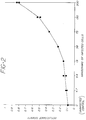
- Figs. 1-3 illustrate the results of assays performed by the method of the invention for RSV, Influenza A and HSV respectively.
- One aspect of the present invention is a method for solid phase immunoassay of a ligand in a liquid sample in which substantially all binding sites on the support are preblocked with a coating of an inert protein.
- the ligand in the sample to be assayed may be nonimmunologically captured on the coated support in a quantity proportional to its concentration in the sample without reducing the capacity of the inert protein to block all nonspecific absorption of other proteins.
- the immunoassay of the invention may be configured to detect the presence of ligand in the sample or to determine its concentration, and the term "determined" is intended to mean either qualitative or quantitative ligand assay.
- the ligand may be from any source, and may be an antigen, an antibody or a hapten.
- the ligand may be an antigen present in a body fluid, or it may be isolated from a body fluid and subsequently introduced into a different liquid, such as buffer.
- the ligand may be from a source other than a body fluid, as, for example, a culture of microorganisms or a cellular extract thereof.
- Preferred ligands are antigens, most preferably viral antigens present in a body fluid, such as Adenovirus, Parainfluenza 3 virus and, most preferably, Herpes simplex virus, HSV, Respiratory syncytial virus, RSV, and Influenza A, Flu A.
- the invention will hereinafter be described generically in terms of a viral antigen.
- the solid support may be any support which does not substantially interfere with any other component or step of the assay.
- Exemplary of solid supports which may be used are glass and polymeric materials, such as polyethylene, polyvinylidene fluoride, polystyrene and the like.
- Such supports may be fabricated into any suitable shape, such as sheets, tubes, wells microtiter plates, or, most preferably, membranes.
- Preferred membranes may be of nylon or nitrocellulose.
- a particularly preferred membrane is a modified nylon membrane commercially available from Pall Corp., Glen Cove, New York, under the trade names Immunodyne® and Biodyne® A,B and C.
- any inert protein may be coated onto the membrane which does not interfere with the subsequent binding reaction between antigen and tracer and which does not substantially bind nonspecifically to other proteins in the assay medium.
- suitable inert proteins are casein and albumin, although others will be evident to those skilled in the art.
- Coating of the inert protein to the membrane may be carried out by any suitable method, preferably by incubating the membrane with a solution of the protein whereby the protein is physically absorbed into the polymeric matrix of the surface of the membrane.
- the membrane having a coating of inert protein is exposed to the sample suspected of containing the viral antigen.
- the coated membrane is incubated with the sample in a transient, flow-through format for about 1 to 15, preferably about 5 minutes at a temperature of about 0 to 50°C, preferably about ambient temperature.
- antigen in the sample is absorbed onto the coated membrane in proportion to its concentration in the sample.
- viral antigen is absorbed preferentially even when the sample contains a large excess of extraneous protein, such as is the case when the sample is a body fluid.
- the tracer comprises an antibody specific for the antigen having a label conjugated thereto.
- the label may be any conventional marker which, after binding of the tracer to the antigen captured on the coated support, gives rise to a signal which can be detected.
- the label may be a radioactive atom or fluorescent dye conjugated to the antibody.
- the label is a radioactive element
- the signal is radioactive counts.
- the label is a fluorescent dye
- the signal is fluorescence emission detected after application to the dye of excitation light of suitable wavelength.
- a typical radiolabel is, for example, 127I
- a typical fluorescer is, for example, fluorescein isothiocyanate (FITC). Conjugation of radioactive and fluorescent labels to antibodies is conventional and no further details on preparation and use of radio- and fluorescent labels in immunoassay is not needed for a complete understanding of the invention by one skilled in the art.
- the preferred tracer of the invention is an antibody having an enzyme conjugated thereto. Any enzyme may be used which may be conjugated to the antibody and for which a substrate convertible to a colored product exists. Suitable enzymes are, for example, cyclases, isomerases and peroxidases. A preferred peroxidase is horseradish peroxidase. Preferred enzymes are hydrolases such as peptidases, esterases, phosphatases and glycosidases. The most preferred tracers include alkaline phosphatase or carboxyesterase conjugated to the antibody. Conjugation of enzymes to antibodies is well-known and fully understood by those skilled in the art.
- the radioactive atom, fluorescent dye or enzyme may be encapsulated in a liposome. Encapsulation of labels into liposomes and conjugation of liposomes to antibodies for use as tracers in immunoassay is likewise wholly conventional.
- substrate of course depends on the enzyme component of the tracer and a wide variety of substrates are well-known for each class of enzymes. Preferred substrates are those which form insoluble precipitates on membranes. When the enzyme is a peroxidase, a preferred substrate is diaminobenzidine. Preferred substrates for hydrolases are indolyl derivatives. For example, When the enzyme is alkaline phosphatase, a preferred substrate is 3-indolyl phosphate. When the enzyme is an esterase, preferred substrates are 3-indolyl acetate and butyrate. These substrates are all well-known in the art.
- the membrane coated with inert protein and having viral antigen captured thereon is incubated with a solution of the tracer in a liquid to induce immunological binding of the antigen and antibody component of the tracer.
- the membrane having a bound antigen-antibody fraction thereon may then be separated from the liquid phase of the assay medium by any suitable method, preferably by causing the liquid to pass through the membrane.
- Liquid flow through the membrane may be by gravity or preferably may be enhanced by capillary action induced by absorbent material positioned under the membrane.
- the membrane may then be suspended in a second liquid such as water, saline or buffer having the enzyme substrate dissolved therein.
- Enzyme in the bound fraction converts the substrate to a product detectable by a signal associated with color.
- the signal detected may be the development or disappearance of a color, or a change from one color to another, or a change in the rate at which the substrate is converted to the product, for example, the color of a substrate may be observed to remain unchanged for a specified length of time.
- the substrate be colorless until cleaved by the enzyme label to give a colored product.
- the extent of color formation is proportional to antigen concentration, which may be determined by assaying liquid samples having predetermined quantities of antigen therein and comparing color intensities. Measurements may be made either instrumentally or, preferably with the naked eye.
- An alternate assay method of the invention is a dual enzyme assay carried out on the coated support having antigen absorbed thereon.
- the label may be considered to be a first enzyme which removes a blocking group from a blocked inhibitor.
- Suitable first enzymes are generally hydrolases, such as phosphatases, peptidases, esterases, glycosidases and the like.
- suitable first enzymes are trypsin, thrombin, mammalian liver esterase, acetylcholinesterase, ⁇ -galactosidase, or most preferably, alkaline phosphatase.
- the blocked inhibitor may be any material which may be converted by the first enzyme to an inhibitor a the second enzyme.
- the preferred blocked inhibitor has two components, the inhibitor and the blocking group and is unreactive toward the second enzyme until its blocking group is removed by the first enzyme and the inhibitor is liberated into the assay medium.
- the blocking group should be one which can be covalently conjugated to the inhibitor by a bond which can be cleaved substantially selectively by the first enzyme, and the inhibitor component should inhibit the activity of the second enzyme while having substantially no effect on the first enzyme.
- the second enzyme of the dual enzyme assay is generally a hydrolase which converts the substrate to a product detectable by a signal associated with color. It is preferred that the second enzyme is substantially unreactive toward the blocked inhibitor.
- Suitable hydrolases are, for example, phosphatases, peptidases such as trypsin, chymotrypsin and pepsin, or preferably esterases such as acetyl cholinesterase (AChE) and butyl cholinesterase.
- the most preferred second enzyme is a carboxyesterase, such as pig or rabbit liver esterase (RLE) wherein the preferred substrate is an indolyl ester.
- R1 may be H, lower alkyl of 1-6 carbon atoms, branched or unbranched, nitro, alkoxy, halogen and the like;
- X may be O, S or NR2 wherein R2 may be H or lower aklyl of 1-6 carbon atoms;
- n may be 1-6;
- A may be F or CF3; and
- B may be H, a phosphoric acid or salt, a glycosyl group, an amino acid residue, such as a lysine or arginine residue covalently conjugated to X through the amino acid carboxyl group, an acyl group of 2-4 carbon atoms such as an acetyl or butyryl group, or
- formula I represents enzyme inhibitors.
- B is any group other than H, formula I represents blocked enzyme inhibitors.
- B is a phosphoric acid or salt thereof, it is intended that B have the formula III wherein P is bonded to X and n may be as described above.
- inhibitor and blocked inhibitor in accordance with formula I may be synthesized by any sequence of conventional chemical reactions as may be envisioned by one skilled in the art. Suitable and convenient methods are given in the Examples, below. The following list of effective enzyme inhibitors is intended to be exemplary only.
- kits or package of materials for performing an assay for a ligand in accordance with the method of the invention.
- the kit may include a solid support, preferably a membrane, coated with an inert protein, an antiligand, an enzyme conjugated to the antiligand, and a substrate for an enzyme.
- the kit may also include a second enzyme, and a blocked inhibitor of the second enzyme, standards for the ligand, as, for example, one or more ligand samples of known concentration, or it may include other reagents, enzyme substrates, or other labeled or unlabeled specific ligands, antiligands or complexes thereof useful in carrying out the assay. It may include solutions, such as saline or buffers.
- the components of the kit may be assembled in a housing, preferably plastic, containing a material positioned under the membrane, such as absorbent paper, to facilitate flow of assay liquids through the membranes by capillary action.
- HPLC was performed on a Waters 510 two pump system with UV detection using one of two solvent systems on a Brownlee AX- 300 7 x 250 mm column.
- System A initial hold for 5 minutes at 30mM NH4OAc pH 6.5 followed by a linear gradient to 2.0 M NH4OAc over a 30 minute period followed by a hold at 1.0 M NH4OAc for 5 minutes.
- System B used an isocratic buffer system of 30mM NH4OAc pH 6.5 for 40 minutes. Flow rates were 1.0 mL/minute.
- Gas chromatography was performed on a H.P. 5840A Gas Chromatograph equipped with a FID and an automatic injector using a 30 M DB-1 Megabore column purchased from J&W Scientific, Inc.
- GC conditions were as follows: A three minute hold at 100°C followed by a 10°C/minute gradient to 250°C followed by a 3.0 minute hold at 250°C at 16.0 mL/minute flow rate.
- a membrane filter stack was assembled with the following configuration:
- An antigen stock was prepared with respiratory syncytial virus (RSV) (Long strain) infected HEp-2 cells diluted in a buffer containing: 250 mM tris(hydroxymethyl)aminomethane hydrochloride (Tris HCl), 150 mM sodium chloride (NaCl), 10 mM ethylene-diaminetetraacetate (EDTA), 4% (v/v) polyoxyethylene sorbitan monolaurate (Tween 20), 1% n-acetyl cysteine, 0.2% sodium azide (NaN3), pH 8.5.
- Control antigen was prepared in a similar manner from uninfected HEp-2 cells.
- a 150 ⁇ L aliquot of this antigen (or control) was applied to the device and allowed to drain through the flow restriction insert and onto the top membrane layer. (Liquid is drawn through the top membrane by the capillary action of the supporting absorbent layers.)
- the flow restriction insert was then removed, and to the device was added 150 ⁇ L of a wash solution consisting of 50 mM Tris HCl, 150 mM NaCl, 0.2% NaN3, pH 7.2 (Tris buffered saline (TBS)), additionally containing 1 mg/mL of rabbit IgG.
- TBS Tris buffered saline
- a solution containing 27 ⁇ g/mL of anti-RSV antibody conjugated to alkaline phosphatase was prepared in a buffer containing 50 mM Tris HCl, 100 mM NaCl, 200 mM sodium phosphate, 1% casein, 1 mM magnesium chloride, 0.1 mM zinc chloride, and 1 mM 2-mercaptoethanol, pH 7.5.
- a 150 ⁇ L aliquot of this mixture was added to the device and allowed to absorb into the membrane stack. Following a brief (two minute) incubation, the device was washed with 300 ⁇ L of TBS (without IgG).
- a 150 ⁇ L solution containing 0.33 mg/mL nitroblue tetrazolium, 1% methanol, and 0.2% NaN3 was added to the device. This was followed by the addition of 150 ⁇ L of a solution containing 12 mM levamisole in 50 mM 2-amino-2-methyl-1-propanol acetate (AMP HOAc), 0.2% NaN3, 19 mM magnesium chloride, at pH 9.8. Following a five minute incubation at ambient temperature, the color forming reaction was stopped by the addition of 150 ⁇ L of a solution containing 200 mM potassium phosphate, 10 mM EDTA, 0.2% NaN3, pH 7.2.
- AMP HOAc 2-amino-2-methyl-1-propanol acetate
- HSV Herpes Simplex Virus
- a dual enzyme cascade assay for RSV is performed in a manner similar to Example II with the following exceptions:
- the color density of the unknown sample is compared with an uninfected control. If the unknown appears significantly lighter than the control (less than half the reflectance density of the control) then it is judged to be a positive result, indicating the presence of viral material.
- the invention provides an assay for a viral antigen which does not include a specific capture antibody for the antigen. Instead, a solid support is precoated with an inert protein and antigen is captured directly on the coated support. Further, the inert protein, even though applied as a precoat prior to antigen capture, prevents substantially all nonspecific binding of other proteins, such as tracer, which would otherwise reduce assay sensitivity.
Landscapes
- Health & Medical Sciences (AREA)
- Life Sciences & Earth Sciences (AREA)
- Engineering & Computer Science (AREA)
- Immunology (AREA)
- Chemical & Material Sciences (AREA)
- Molecular Biology (AREA)
- Biomedical Technology (AREA)
- Hematology (AREA)
- Urology & Nephrology (AREA)
- Physics & Mathematics (AREA)
- Cell Biology (AREA)
- Food Science & Technology (AREA)
- Medicinal Chemistry (AREA)
- Biotechnology (AREA)
- Analytical Chemistry (AREA)
- Biochemistry (AREA)
- General Health & Medical Sciences (AREA)
- General Physics & Mathematics (AREA)
- Pathology (AREA)
- Microbiology (AREA)
- Virology (AREA)
- Chemical Kinetics & Catalysis (AREA)
- Tropical Medicine & Parasitology (AREA)
- Measuring Or Testing Involving Enzymes Or Micro-Organisms (AREA)
- Investigating Or Analysing Biological Materials (AREA)
- Medicines Containing Antibodies Or Antigens For Use As Internal Diagnostic Agents (AREA)
- Pharmaceuticals Containing Other Organic And Inorganic Compounds (AREA)
- Peptides Or Proteins (AREA)
- Analysing Materials By The Use Of Radiation (AREA)
- Sampling And Sample Adjustment (AREA)
Applications Claiming Priority (3)
| Application Number | Priority Date | Filing Date | Title |
|---|---|---|---|
| US27238088A | 1988-11-17 | 1988-11-17 | |
| US272380 | 1988-11-17 | ||
| EP89120945A EP0369361B1 (de) | 1988-11-17 | 1989-11-11 | Immunoassay auf einer vorbeschichteten, festen Oberfläche |
Related Parent Applications (3)
| Application Number | Title | Priority Date | Filing Date |
|---|---|---|---|
| EP89120945A Division-Into EP0369361B1 (de) | 1988-11-17 | 1989-11-11 | Immunoassay auf einer vorbeschichteten, festen Oberfläche |
| EP89120945A Division EP0369361B1 (de) | 1988-11-17 | 1989-11-11 | Immunoassay auf einer vorbeschichteten, festen Oberfläche |
| EP89120945.4 Division | 1989-11-11 |
Publications (3)
| Publication Number | Publication Date |
|---|---|
| EP0633472A2 true EP0633472A2 (de) | 1995-01-11 |
| EP0633472A3 EP0633472A3 (en) | 1995-02-15 |
| EP0633472B1 EP0633472B1 (de) | 2000-05-17 |
Family
ID=23039567
Family Applications (2)
| Application Number | Title | Priority Date | Filing Date |
|---|---|---|---|
| EP89120945A Expired - Lifetime EP0369361B1 (de) | 1988-11-17 | 1989-11-11 | Immunoassay auf einer vorbeschichteten, festen Oberfläche |
| EP94115914A Expired - Lifetime EP0633472B1 (de) | 1988-11-17 | 1989-11-11 | Immunoessay auf einer vorbeschichteten festen Oberfläche |
Family Applications Before (1)
| Application Number | Title | Priority Date | Filing Date |
|---|---|---|---|
| EP89120945A Expired - Lifetime EP0369361B1 (de) | 1988-11-17 | 1989-11-11 | Immunoassay auf einer vorbeschichteten, festen Oberfläche |
Country Status (13)
| Country | Link |
|---|---|
| US (1) | US6235464B1 (de) |
| EP (2) | EP0369361B1 (de) |
| JP (1) | JP2589830B2 (de) |
| AT (2) | ATE193121T1 (de) |
| AU (1) | AU625297B2 (de) |
| CA (1) | CA2000685C (de) |
| DE (2) | DE68929213T2 (de) |
| DK (1) | DK175008B1 (de) |
| ES (2) | ES2076948T3 (de) |
| FI (1) | FI96802C (de) |
| GR (1) | GR3018020T3 (de) |
| IE (1) | IE69041B1 (de) |
| MY (1) | MY104234A (de) |
Families Citing this family (19)
| Publication number | Priority date | Publication date | Assignee | Title |
|---|---|---|---|---|
| WO1995023969A1 (en) * | 1994-03-04 | 1995-09-08 | Aquaculture Diagnostics Limited | Rapid immunological test |
| JP2002535678A (ja) | 1999-01-27 | 2002-10-22 | バイエル コーポレイション | 粒子のカゼインコーティングを用いる免疫アッセイ |
| WO2002008761A1 (en) * | 2000-07-21 | 2002-01-31 | Cuno Incorporated | Improved blocking chemistries for nylon membrane |
| US7052831B2 (en) * | 2000-09-29 | 2006-05-30 | Becton Dickinson And Company | Detection of multiple analytes from a single sample using a multi-well, multi-analyte flow-through diagnostic test device |
| US7521226B2 (en) * | 2004-06-30 | 2009-04-21 | Kimberly-Clark Worldwide, Inc. | One-step enzymatic and amine detection technique |
| US7906276B2 (en) | 2004-06-30 | 2011-03-15 | Kimberly-Clark Worldwide, Inc. | Enzymatic detection techniques |
| US7094528B2 (en) * | 2004-06-30 | 2006-08-22 | Kimberly-Clark Worldwide, Inc. | Magnetic enzyme detection techniques |
| WO2006098804A2 (en) | 2005-03-11 | 2006-09-21 | Chembio Diagnostic Systems, Inc. | Dual path immunoassay device |
| US7189522B2 (en) | 2005-03-11 | 2007-03-13 | Chembio Diagnostic Systems, Inc. | Dual path immunoassay device |
| US8003399B2 (en) * | 2005-08-31 | 2011-08-23 | Kimberly-Clark Worldwide, Inc. | Nitrite detection technique |
| US7504235B2 (en) * | 2005-08-31 | 2009-03-17 | Kimberly-Clark Worldwide, Inc. | Enzyme detection technique |
| US8758989B2 (en) * | 2006-04-06 | 2014-06-24 | Kimberly-Clark Worldwide, Inc. | Enzymatic detection techniques |
| US7935538B2 (en) * | 2006-12-15 | 2011-05-03 | Kimberly-Clark Worldwide, Inc. | Indicator immobilization on assay devices |
| US7897360B2 (en) | 2006-12-15 | 2011-03-01 | Kimberly-Clark Worldwide, Inc. | Enzyme detection techniques |
| US20100022916A1 (en) | 2008-07-24 | 2010-01-28 | Javanbakhsh Esfandiari | Method and Apparatus for Collecting and Preparing Biological Samples for Testing |
| US20100290948A1 (en) * | 2009-05-15 | 2010-11-18 | Xuedong Song | Absorbent articles capable of indicating the presence of urinary tract infections |
| US8603835B2 (en) | 2011-02-10 | 2013-12-10 | Chembio Diagnostic Systems, Inc. | Reduced step dual path immunoassay device and method |
| ES2906853T3 (es) | 2014-04-02 | 2022-04-20 | Chembio Diagnostic Systems Inc | Inmunoensayo que utiliza conjugado de atrapamiento |
| US20160116466A1 (en) | 2014-10-27 | 2016-04-28 | Chembio Diagnostic Systems, Inc. | Rapid Screening Assay for Qualitative Detection of Multiple Febrile Illnesses |
Family Cites Families (19)
| Publication number | Priority date | Publication date | Assignee | Title |
|---|---|---|---|---|
| GB1420916A (en) * | 1971-09-08 | 1976-01-14 | Bagshawe K D | Performance of chemical or biological reactions |
| CA983358A (en) * | 1971-09-08 | 1976-02-10 | Kenneth D. Bagshawe | Performance of chemical or biological reactions |
| US4407943A (en) * | 1976-12-16 | 1983-10-04 | Millipore Corporation | Immobilized antibody or antigen for immunoassay |
| US4241175A (en) * | 1978-12-18 | 1980-12-23 | Merck & Co., Inc. | Assay for hepatitis B core antibody |
| US4372745A (en) * | 1979-12-19 | 1983-02-08 | Electro-Nucleonics, Inc. | Chemical luminescence amplification substrate system for immunochemistry involving microencapsulated fluorescer |
| US4342826A (en) * | 1980-02-04 | 1982-08-03 | Collaborative Research, Inc. | Immunoassay products and methods |
| DE3274017D1 (en) * | 1981-03-07 | 1986-12-04 | Colin Henry Self | Assay and use |
| US4459359A (en) * | 1981-11-19 | 1984-07-10 | New York Blood Center, Inc. | Sensitive immunoassays of antigens or antibodies sequestered within immune complexes |
| US4606855A (en) * | 1982-07-26 | 1986-08-19 | Mex Research Associates C/O Leon Reimer | Monoclonal antibody to digoxin |
| US4477576A (en) * | 1982-07-26 | 1984-10-16 | Mex Research Associates | Antigen assay method and kit |
| US4659678A (en) * | 1982-09-29 | 1987-04-21 | Serono Diagnostics Limited | Immunoassay of antigens |
| WO1984002193A1 (en) * | 1982-12-03 | 1984-06-07 | Du Pont | Chromogenic support immunoassay |
| EP0200767B1 (de) * | 1984-10-31 | 1994-06-01 | Alcon Laboratories, Inc. | Sandwich-immunotestverfahren für antigene bei ophthalmischen störungen |
| ATE75052T1 (de) * | 1986-09-24 | 1992-05-15 | Wako Pure Chem Ind Ltd | Verfahren zur bestimmung von antistreptolysin-o und anwendungssatz dafuer. |
| US4835099A (en) * | 1986-11-20 | 1989-05-30 | Becton, Dickinson And Company | Signal enhancement in immunoassay by modulation of enzymatic catalysis |
| US4847199A (en) * | 1987-02-27 | 1989-07-11 | Eastman Kodak Company | Agglutination immunoassay and kit for determination of a multivalent immune species using a buffered salt wash solution |
| EP0280560B1 (de) * | 1987-02-27 | 1994-05-11 | EASTMAN KODAK COMPANY (a New Jersey corporation) | Mit Nieder-pI-Protein beschichtete Membranstruktur und Verfahren zu ihrer Herstellung und Verwendung |
| US5208143A (en) * | 1988-11-17 | 1993-05-04 | Becton, Dickinson And Company | Immunoassay on a preblocked solid surface |
| CA2023850A1 (en) * | 1989-09-28 | 1991-03-29 | Randal A. Hoke | Stabilizing reagent for membrane immunoassay |
-
1989
- 1989-10-11 MY MYPI89001399A patent/MY104234A/en unknown
- 1989-10-13 CA CA002000685A patent/CA2000685C/en not_active Expired - Lifetime
- 1989-10-17 AU AU42987/89A patent/AU625297B2/en not_active Expired
- 1989-11-01 IE IE351689A patent/IE69041B1/en not_active IP Right Cessation
- 1989-11-11 EP EP89120945A patent/EP0369361B1/de not_active Expired - Lifetime
- 1989-11-11 AT AT94115914T patent/ATE193121T1/de not_active IP Right Cessation
- 1989-11-11 DE DE68929213T patent/DE68929213T2/de not_active Expired - Lifetime
- 1989-11-11 ES ES89120945T patent/ES2076948T3/es not_active Expired - Lifetime
- 1989-11-11 DE DE68924129T patent/DE68924129T2/de not_active Expired - Lifetime
- 1989-11-11 AT AT89120945T patent/ATE127589T1/de not_active IP Right Cessation
- 1989-11-11 EP EP94115914A patent/EP0633472B1/de not_active Expired - Lifetime
- 1989-11-11 ES ES94115914T patent/ES2145084T3/es not_active Expired - Lifetime
- 1989-11-13 JP JP1294750A patent/JP2589830B2/ja not_active Expired - Lifetime
- 1989-11-16 FI FI895472A patent/FI96802C/fi not_active IP Right Cessation
- 1989-11-16 DK DK198905759A patent/DK175008B1/da not_active IP Right Cessation
-
1994
- 1994-10-20 US US08/326,304 patent/US6235464B1/en not_active Expired - Lifetime
-
1995
- 1995-11-08 GR GR950403133T patent/GR3018020T3/el unknown
Also Published As
| Publication number | Publication date |
|---|---|
| FI96802C (fi) | 1996-08-26 |
| DE68924129T2 (de) | 1996-02-01 |
| EP0369361A2 (de) | 1990-05-23 |
| JP2589830B2 (ja) | 1997-03-12 |
| ES2145084T3 (es) | 2000-07-01 |
| EP0633472B1 (de) | 2000-05-17 |
| ES2076948T3 (es) | 1995-11-16 |
| DK575989A (da) | 1990-05-18 |
| EP0633472A3 (en) | 1995-02-15 |
| US6235464B1 (en) | 2001-05-22 |
| GR3018020T3 (en) | 1996-02-29 |
| EP0369361B1 (de) | 1995-09-06 |
| FI96802B (fi) | 1996-05-15 |
| DE68929213T2 (de) | 2000-12-28 |
| MY104234A (en) | 1994-02-28 |
| AU4298789A (en) | 1990-05-24 |
| IE893516L (en) | 1990-05-17 |
| ATE193121T1 (de) | 2000-06-15 |
| CA2000685C (en) | 2001-02-20 |
| AU625297B2 (en) | 1992-07-09 |
| DK575989D0 (da) | 1989-11-16 |
| EP0369361A3 (de) | 1991-06-05 |
| ATE127589T1 (de) | 1995-09-15 |
| DK175008B1 (da) | 2004-04-19 |
| IE69041B1 (en) | 1996-08-07 |
| CA2000685A1 (en) | 1990-05-17 |
| JPH02187662A (ja) | 1990-07-23 |
| DE68929213D1 (de) | 2000-06-21 |
| FI895472A0 (fi) | 1989-11-16 |
| DE68924129D1 (de) | 1995-10-12 |
Similar Documents
| Publication | Publication Date | Title |
|---|---|---|
| US5208143A (en) | Immunoassay on a preblocked solid surface | |
| US6235464B1 (en) | Immunoassay on a preblocked solid surface | |
| CA1287575C (en) | Signal enhancement in immunoassay by modulation of enzymatic catalysis | |
| US5279935A (en) | Method of immunossay including deactivation of endogenous alkaline phosphatase | |
| US5370994A (en) | Solid phase assay for urea | |
| US4904583A (en) | Cascade immunoassay by multiple binding reactions | |
| JPH0756487B2 (ja) | リガンドを検出するための免疫定量法 | |
| US5188937A (en) | Layered sandwich assay method for chlamydia and materials therefor | |
| US6013457A (en) | Method for carrying out an immunoassay in a multiphase system | |
| IE893517L (en) | Substrate composition for alkaline phosphatase and method¹for assay using same | |
| US4847194A (en) | Colorimetric detection of delta-5-3-ketosteroid isomerase and immunoassay based thereon | |
| DK175273B1 (da) | Fremgangsmåde til bestemmelse af et antigen i en væske | |
| EP0420170A2 (de) | Stabilisierendes Reagens für Membranimmunoteste | |
| EP0369657A2 (de) | Chromogenes Esterasesubstrat und dessen Verwendung in einem Immunoassay | |
| EP0386690A1 (de) | Signalerhöhung in einem magnetischen Immunoassay durch Inhibition von enzymatischer Katalyse |
Legal Events
| Date | Code | Title | Description |
|---|---|---|---|
| PUAI | Public reference made under article 153(3) epc to a published international application that has entered the european phase |
Free format text: ORIGINAL CODE: 0009012 |
|
| PUAL | Search report despatched |
Free format text: ORIGINAL CODE: 0009013 |
|
| 17P | Request for examination filed |
Effective date: 19941008 |
|
| AC | Divisional application: reference to earlier application |
Ref document number: 369361 Country of ref document: EP |
|
| AK | Designated contracting states |
Kind code of ref document: A2 Designated state(s): AT BE CH DE ES FR GB GR IT LI LU NL SE |
|
| AK | Designated contracting states |
Kind code of ref document: A3 Designated state(s): AT BE CH DE ES FR GB GR IT LI LU NL SE |
|
| RIN1 | Information on inventor provided before grant (corrected) |
Inventor name: MCLAURIN, DANIEL A. Inventor name: HOPKINS, ANNE C. Inventor name: HOKE, RANDAL A. Inventor name: HENDERSON, GLENN L. |
|
| 17Q | First examination report despatched |
Effective date: 19990401 |
|
| GRAG | Despatch of communication of intention to grant |
Free format text: ORIGINAL CODE: EPIDOS AGRA |
|
| GRAG | Despatch of communication of intention to grant |
Free format text: ORIGINAL CODE: EPIDOS AGRA |
|
| GRAG | Despatch of communication of intention to grant |
Free format text: ORIGINAL CODE: EPIDOS AGRA |
|
| GRAH | Despatch of communication of intention to grant a patent |
Free format text: ORIGINAL CODE: EPIDOS IGRA |
|
| GRAH | Despatch of communication of intention to grant a patent |
Free format text: ORIGINAL CODE: EPIDOS IGRA |
|
| GRAA | (expected) grant |
Free format text: ORIGINAL CODE: 0009210 |
|
| AC | Divisional application: reference to earlier application |
Ref document number: 369361 Country of ref document: EP |
|
| AK | Designated contracting states |
Kind code of ref document: B1 Designated state(s): AT BE CH DE ES FR GB GR IT LI LU NL SE |
|
| PG25 | Lapsed in a contracting state [announced via postgrant information from national office to epo] |
Ref country code: LI Free format text: LAPSE BECAUSE OF FAILURE TO SUBMIT A TRANSLATION OF THE DESCRIPTION OR TO PAY THE FEE WITHIN THE PRESCRIBED TIME-LIMIT Effective date: 20000517 Ref country code: GR Free format text: LAPSE BECAUSE OF NON-PAYMENT OF DUE FEES Effective date: 20000517 Ref country code: CH Free format text: LAPSE BECAUSE OF FAILURE TO SUBMIT A TRANSLATION OF THE DESCRIPTION OR TO PAY THE FEE WITHIN THE PRESCRIBED TIME-LIMIT Effective date: 20000517 |
|
| REF | Corresponds to: |
Ref document number: 193121 Country of ref document: AT Date of ref document: 20000615 Kind code of ref document: T |
|
| REG | Reference to a national code |
Ref country code: CH Ref legal event code: EP |
|
| REF | Corresponds to: |
Ref document number: 68929213 Country of ref document: DE Date of ref document: 20000621 |
|
| REG | Reference to a national code |
Ref country code: ES Ref legal event code: FG2A Ref document number: 2145084 Country of ref document: ES Kind code of ref document: T3 |
|
| ET | Fr: translation filed | ||
| ITF | It: translation for a ep patent filed | ||
| PG25 | Lapsed in a contracting state [announced via postgrant information from national office to epo] |
Ref country code: LU Free format text: LAPSE BECAUSE OF NON-PAYMENT OF DUE FEES Effective date: 20001111 |
|
| REG | Reference to a national code |
Ref country code: CH Ref legal event code: PL |
|
| PLBE | No opposition filed within time limit |
Free format text: ORIGINAL CODE: 0009261 |
|
| STAA | Information on the status of an ep patent application or granted ep patent |
Free format text: STATUS: NO OPPOSITION FILED WITHIN TIME LIMIT |
|
| 26N | No opposition filed | ||
| REG | Reference to a national code |
Ref country code: GB Ref legal event code: IF02 |
|
| PGFP | Annual fee paid to national office [announced via postgrant information from national office to epo] |
Ref country code: AT Payment date: 20061019 Year of fee payment: 18 |
|
| PGFP | Annual fee paid to national office [announced via postgrant information from national office to epo] |
Ref country code: NL Payment date: 20061121 Year of fee payment: 18 |
|
| PGFP | Annual fee paid to national office [announced via postgrant information from national office to epo] |
Ref country code: SE Payment date: 20061124 Year of fee payment: 18 Ref country code: ES Payment date: 20061124 Year of fee payment: 18 |
|
| PGFP | Annual fee paid to national office [announced via postgrant information from national office to epo] |
Ref country code: IT Payment date: 20061130 Year of fee payment: 18 |
|
| PGFP | Annual fee paid to national office [announced via postgrant information from national office to epo] |
Ref country code: BE Payment date: 20061220 Year of fee payment: 18 |
|
| BERE | Be: lapsed |
Owner name: *BECTON DICKINSON AND CY Effective date: 20071130 |
|
| EUG | Se: european patent has lapsed | ||
| NLV4 | Nl: lapsed or anulled due to non-payment of the annual fee |
Effective date: 20080601 |
|
| PG25 | Lapsed in a contracting state [announced via postgrant information from national office to epo] |
Ref country code: AT Free format text: LAPSE BECAUSE OF NON-PAYMENT OF DUE FEES Effective date: 20071111 |
|
| PG25 | Lapsed in a contracting state [announced via postgrant information from national office to epo] |
Ref country code: BE Free format text: LAPSE BECAUSE OF NON-PAYMENT OF DUE FEES Effective date: 20071130 |
|
| PG25 | Lapsed in a contracting state [announced via postgrant information from national office to epo] |
Ref country code: SE Free format text: LAPSE BECAUSE OF NON-PAYMENT OF DUE FEES Effective date: 20071112 Ref country code: NL Free format text: LAPSE BECAUSE OF NON-PAYMENT OF DUE FEES Effective date: 20080601 |
|
| REG | Reference to a national code |
Ref country code: ES Ref legal event code: FD2A Effective date: 20071112 |
|
| PG25 | Lapsed in a contracting state [announced via postgrant information from national office to epo] |
Ref country code: ES Free format text: LAPSE BECAUSE OF NON-PAYMENT OF DUE FEES Effective date: 20071112 |
|
| PGFP | Annual fee paid to national office [announced via postgrant information from national office to epo] |
Ref country code: FR Payment date: 20081117 Year of fee payment: 20 |
|
| PGFP | Annual fee paid to national office [announced via postgrant information from national office to epo] |
Ref country code: DE Payment date: 20081223 Year of fee payment: 20 |
|
| PGFP | Annual fee paid to national office [announced via postgrant information from national office to epo] |
Ref country code: GB Payment date: 20081128 Year of fee payment: 20 |
|
| PG25 | Lapsed in a contracting state [announced via postgrant information from national office to epo] |
Ref country code: IT Free format text: LAPSE BECAUSE OF NON-PAYMENT OF DUE FEES Effective date: 20071111 |
|
| REG | Reference to a national code |
Ref country code: GB Ref legal event code: PE20 Expiry date: 20091110 |
|
| PG25 | Lapsed in a contracting state [announced via postgrant information from national office to epo] |
Ref country code: GB Free format text: LAPSE BECAUSE OF EXPIRATION OF PROTECTION Effective date: 20091110 |