EP0636708A1 - Procédé pour prévenir l'équisement de bains de cuivrage acides et pour récupérer du cuivre métallique à partir de solutions et de boues contenant du cuivre sous forme ionique - Google Patents
Procédé pour prévenir l'équisement de bains de cuivrage acides et pour récupérer du cuivre métallique à partir de solutions et de boues contenant du cuivre sous forme ionique Download PDFInfo
- Publication number
- EP0636708A1 EP0636708A1 EP94111036A EP94111036A EP0636708A1 EP 0636708 A1 EP0636708 A1 EP 0636708A1 EP 94111036 A EP94111036 A EP 94111036A EP 94111036 A EP94111036 A EP 94111036A EP 0636708 A1 EP0636708 A1 EP 0636708A1
- Authority
- EP
- European Patent Office
- Prior art keywords
- copper
- sulphate
- compound
- acid
- inclusive
- Prior art date
- Legal status (The legal status is an assumption and is not a legal conclusion. Google has not performed a legal analysis and makes no representation as to the accuracy of the status listed.)
- Granted
Links
- RYGMFSIKBFXOCR-UHFFFAOYSA-N Copper Chemical compound [Cu] RYGMFSIKBFXOCR-UHFFFAOYSA-N 0.000 title claims abstract description 128
- 239000010949 copper Substances 0.000 title claims abstract description 128
- 229910052802 copper Inorganic materials 0.000 title claims abstract description 128
- 238000007747 plating Methods 0.000 title claims abstract description 69
- 238000000034 method Methods 0.000 title claims abstract description 68
- 239000002253 acid Substances 0.000 title claims abstract description 52
- 235000003891 ferrous sulphate Nutrition 0.000 claims abstract description 35
- 239000011790 ferrous sulphate Substances 0.000 claims abstract description 34
- ARUVKPQLZAKDPS-UHFFFAOYSA-L copper(II) sulfate Chemical compound [Cu+2].[O-][S+2]([O-])([O-])[O-] ARUVKPQLZAKDPS-UHFFFAOYSA-L 0.000 claims abstract description 33
- XEEYBQQBJWHFJM-UHFFFAOYSA-N Iron Chemical compound [Fe] XEEYBQQBJWHFJM-UHFFFAOYSA-N 0.000 claims abstract description 31
- 150000001875 compounds Chemical class 0.000 claims abstract description 25
- 239000013078 crystal Substances 0.000 claims abstract description 23
- 229910052742 iron Inorganic materials 0.000 claims abstract description 16
- 238000001556 precipitation Methods 0.000 claims abstract description 15
- 239000012535 impurity Substances 0.000 claims abstract description 4
- 239000010865 sewage Substances 0.000 claims abstract description 4
- 238000010348 incorporation Methods 0.000 claims abstract 2
- PMZURENOXWZQFD-UHFFFAOYSA-L Sodium Sulfate Chemical compound [Na+].[Na+].[O-]S([O-])(=O)=O PMZURENOXWZQFD-UHFFFAOYSA-L 0.000 claims description 53
- UIIMBOGNXHQVGW-UHFFFAOYSA-M Sodium bicarbonate Chemical compound [Na+].OC([O-])=O UIIMBOGNXHQVGW-UHFFFAOYSA-M 0.000 claims description 52
- 229910052938 sodium sulfate Inorganic materials 0.000 claims description 30
- 235000011152 sodium sulphate Nutrition 0.000 claims description 30
- QAOWNCQODCNURD-UHFFFAOYSA-N Sulfuric acid Chemical compound OS(O)(=O)=O QAOWNCQODCNURD-UHFFFAOYSA-N 0.000 claims description 28
- 235000011149 sulphuric acid Nutrition 0.000 claims description 28
- 235000017557 sodium bicarbonate Nutrition 0.000 claims description 26
- 229910000030 sodium bicarbonate Inorganic materials 0.000 claims description 26
- HEMHJVSKTPXQMS-UHFFFAOYSA-M Sodium hydroxide Chemical compound [OH-].[Na+] HEMHJVSKTPXQMS-UHFFFAOYSA-M 0.000 claims description 24
- 238000011282 treatment Methods 0.000 claims description 24
- VTYYLEPIZMXCLO-UHFFFAOYSA-L Calcium carbonate Chemical compound [Ca+2].[O-]C([O-])=O VTYYLEPIZMXCLO-UHFFFAOYSA-L 0.000 claims description 22
- CDBYLPFSWZWCQE-UHFFFAOYSA-L Sodium Carbonate Chemical compound [Na+].[Na+].[O-]C([O-])=O CDBYLPFSWZWCQE-UHFFFAOYSA-L 0.000 claims description 22
- 239000001117 sulphuric acid Substances 0.000 claims description 22
- 239000011736 potassium bicarbonate Substances 0.000 claims description 21
- 235000015497 potassium bicarbonate Nutrition 0.000 claims description 21
- 229910000028 potassium bicarbonate Inorganic materials 0.000 claims description 21
- TYJJADVDDVDEDZ-UHFFFAOYSA-M potassium hydrogencarbonate Chemical compound [K+].OC([O-])=O TYJJADVDDVDEDZ-UHFFFAOYSA-M 0.000 claims description 20
- KWYUFKZDYYNOTN-UHFFFAOYSA-M Potassium hydroxide Chemical compound [OH-].[K+] KWYUFKZDYYNOTN-UHFFFAOYSA-M 0.000 claims description 19
- BWHMMNNQKKPAPP-UHFFFAOYSA-L potassium carbonate Chemical compound [K+].[K+].[O-]C([O-])=O BWHMMNNQKKPAPP-UHFFFAOYSA-L 0.000 claims description 19
- 239000003153 chemical reaction reagent Substances 0.000 claims description 15
- 239000000463 material Substances 0.000 claims description 15
- 229910000020 calcium bicarbonate Inorganic materials 0.000 claims description 11
- 229910000019 calcium carbonate Inorganic materials 0.000 claims description 11
- 229910000029 sodium carbonate Inorganic materials 0.000 claims description 11
- 235000017550 sodium carbonate Nutrition 0.000 claims description 11
- 239000007787 solid Substances 0.000 claims description 11
- 235000010216 calcium carbonate Nutrition 0.000 claims description 10
- OTYBMLCTZGSZBG-UHFFFAOYSA-L potassium sulfate Chemical compound [K+].[K+].[O-]S([O-])(=O)=O OTYBMLCTZGSZBG-UHFFFAOYSA-L 0.000 claims description 10
- 229910052939 potassium sulfate Inorganic materials 0.000 claims description 10
- 239000000706 filtrate Substances 0.000 claims description 9
- 239000007832 Na2SO4 Substances 0.000 claims description 8
- 238000000151 deposition Methods 0.000 claims description 8
- 150000002894 organic compounds Chemical class 0.000 claims description 8
- 230000000717 retained effect Effects 0.000 claims description 7
- 239000010802 sludge Substances 0.000 claims description 7
- NKWPZUCBCARRDP-UHFFFAOYSA-L calcium bicarbonate Chemical compound [Ca+2].OC([O-])=O.OC([O-])=O NKWPZUCBCARRDP-UHFFFAOYSA-L 0.000 claims description 5
- 238000005188 flotation Methods 0.000 claims description 5
- -1 or its analogues Chemical compound 0.000 claims description 5
- 238000005406 washing Methods 0.000 claims description 5
- 238000010908 decantation Methods 0.000 claims description 4
- 238000001914 filtration Methods 0.000 claims description 4
- 239000001120 potassium sulphate Substances 0.000 claims description 4
- 235000011151 potassium sulphates Nutrition 0.000 claims description 4
- 239000000203 mixture Substances 0.000 claims description 3
- JPNZKPRONVOMLL-UHFFFAOYSA-N azane;octadecanoic acid Chemical class [NH4+].CCCCCCCCCCCCCCCCCC([O-])=O JPNZKPRONVOMLL-UHFFFAOYSA-N 0.000 claims 4
- CJZGTCYPCWQAJB-UHFFFAOYSA-L calcium stearate Chemical class [Ca+2].CCCCCCCCCCCCCCCCCC([O-])=O.CCCCCCCCCCCCCCCCCC([O-])=O CJZGTCYPCWQAJB-UHFFFAOYSA-L 0.000 abstract 2
- 239000000243 solution Substances 0.000 description 22
- 241000196324 Embryophyta Species 0.000 description 10
- 239000007864 aqueous solution Substances 0.000 description 9
- OSGAYBCDTDRGGQ-UHFFFAOYSA-L calcium sulfate Chemical compound [Ca+2].[O-]S([O-])(=O)=O OSGAYBCDTDRGGQ-UHFFFAOYSA-L 0.000 description 9
- 229910000027 potassium carbonate Inorganic materials 0.000 description 9
- BVKZGUZCCUSVTD-UHFFFAOYSA-M Bicarbonate Chemical class OC([O-])=O BVKZGUZCCUSVTD-UHFFFAOYSA-M 0.000 description 8
- QAOWNCQODCNURD-UHFFFAOYSA-L Sulfate Chemical compound [O-]S([O-])(=O)=O QAOWNCQODCNURD-UHFFFAOYSA-L 0.000 description 8
- 229910021653 sulphate ion Inorganic materials 0.000 description 8
- BAUYGSIQEAFULO-UHFFFAOYSA-L iron(2+) sulfate (anhydrous) Chemical compound [Fe+2].[O-]S([O-])(=O)=O BAUYGSIQEAFULO-UHFFFAOYSA-L 0.000 description 7
- 229910000359 iron(II) sulfate Inorganic materials 0.000 description 7
- 238000011084 recovery Methods 0.000 description 7
- 235000011181 potassium carbonates Nutrition 0.000 description 5
- RYYKJJJTJZKILX-UHFFFAOYSA-M sodium octadecanoate Chemical class [Na+].CCCCCCCCCCCCCCCCCC([O-])=O RYYKJJJTJZKILX-UHFFFAOYSA-M 0.000 description 5
- 230000015572 biosynthetic process Effects 0.000 description 4
- 239000001175 calcium sulphate Substances 0.000 description 4
- 235000011132 calcium sulphate Nutrition 0.000 description 4
- 230000007547 defect Effects 0.000 description 4
- 235000015320 potassium carbonate Nutrition 0.000 description 4
- 235000008733 Citrus aurantifolia Nutrition 0.000 description 3
- 235000011941 Tilia x europaea Nutrition 0.000 description 3
- 150000004649 carbonic acid derivatives Chemical class 0.000 description 3
- 238000010586 diagram Methods 0.000 description 3
- 239000004571 lime Substances 0.000 description 3
- 239000006193 liquid solution Substances 0.000 description 3
- 231100000331 toxic Toxicity 0.000 description 3
- 230000002588 toxic effect Effects 0.000 description 3
- 239000002699 waste material Substances 0.000 description 3
- XLYOFNOQVPJJNP-UHFFFAOYSA-N water Substances O XLYOFNOQVPJJNP-UHFFFAOYSA-N 0.000 description 3
- 241001070941 Castanea Species 0.000 description 2
- 235000014036 Castanea Nutrition 0.000 description 2
- DGAQECJNVWCQMB-PUAWFVPOSA-M Ilexoside XXIX Chemical class C[C@@H]1CC[C@@]2(CC[C@@]3(C(=CC[C@H]4[C@]3(CC[C@@H]5[C@@]4(CC[C@@H](C5(C)C)OS(=O)(=O)[O-])C)C)[C@@H]2[C@]1(C)O)C)C(=O)O[C@H]6[C@@H]([C@H]([C@@H]([C@H](O6)CO)O)O)O.[Na+] DGAQECJNVWCQMB-PUAWFVPOSA-M 0.000 description 2
- 229910000831 Steel Inorganic materials 0.000 description 2
- 239000012670 alkaline solution Substances 0.000 description 2
- QUQFTIVBFKLPCL-UHFFFAOYSA-L copper;2-amino-3-[(2-amino-2-carboxylatoethyl)disulfanyl]propanoate Chemical compound [Cu+2].[O-]C(=O)C(N)CSSCC(N)C([O-])=O QUQFTIVBFKLPCL-UHFFFAOYSA-L 0.000 description 2
- 239000012530 fluid Substances 0.000 description 2
- 238000007654 immersion Methods 0.000 description 2
- 150000002500 ions Chemical class 0.000 description 2
- 238000004519 manufacturing process Methods 0.000 description 2
- 238000006386 neutralization reaction Methods 0.000 description 2
- 238000009877 rendering Methods 0.000 description 2
- 238000000926 separation method Methods 0.000 description 2
- 239000010959 steel Substances 0.000 description 2
- 238000003860 storage Methods 0.000 description 2
- 239000000126 substance Substances 0.000 description 2
- OYPRJOBELJOOCE-UHFFFAOYSA-N Calcium Chemical class [Ca] OYPRJOBELJOOCE-UHFFFAOYSA-N 0.000 description 1
- BVKZGUZCCUSVTD-UHFFFAOYSA-L Carbonate Chemical compound [O-]C([O-])=O BVKZGUZCCUSVTD-UHFFFAOYSA-L 0.000 description 1
- JPVYNHNXODAKFH-UHFFFAOYSA-N Cu2+ Chemical compound [Cu+2] JPVYNHNXODAKFH-UHFFFAOYSA-N 0.000 description 1
- CWYNVVGOOAEACU-UHFFFAOYSA-N Fe2+ Chemical compound [Fe+2] CWYNVVGOOAEACU-UHFFFAOYSA-N 0.000 description 1
- ZLMJMSJWJFRBEC-UHFFFAOYSA-N Potassium Chemical class [K] ZLMJMSJWJFRBEC-UHFFFAOYSA-N 0.000 description 1
- UIIMBOGNXHQVGW-DEQYMQKBSA-M Sodium bicarbonate-14C Chemical compound [Na+].O[14C]([O-])=O UIIMBOGNXHQVGW-DEQYMQKBSA-M 0.000 description 1
- 238000000429 assembly Methods 0.000 description 1
- 230000000712 assembly Effects 0.000 description 1
- 239000011575 calcium Chemical class 0.000 description 1
- 229910052791 calcium Chemical class 0.000 description 1
- AXCZMVOFGPJBDE-UHFFFAOYSA-L calcium dihydroxide Chemical compound [OH-].[OH-].[Ca+2] AXCZMVOFGPJBDE-UHFFFAOYSA-L 0.000 description 1
- 239000000920 calcium hydroxide Substances 0.000 description 1
- 235000011116 calcium hydroxide Nutrition 0.000 description 1
- 229910001861 calcium hydroxide Inorganic materials 0.000 description 1
- 239000004568 cement Substances 0.000 description 1
- 239000007795 chemical reaction product Substances 0.000 description 1
- 229910001431 copper ion Inorganic materials 0.000 description 1
- 230000001419 dependent effect Effects 0.000 description 1
- 239000003337 fertilizer Substances 0.000 description 1
- 239000012634 fragment Substances 0.000 description 1
- 150000004679 hydroxides Chemical class 0.000 description 1
- 230000003472 neutralizing effect Effects 0.000 description 1
- 231100000252 nontoxic Toxicity 0.000 description 1
- 230000003000 nontoxic effect Effects 0.000 description 1
- 239000011591 potassium Chemical class 0.000 description 1
- 229910052700 potassium Chemical class 0.000 description 1
- 159000000001 potassium salts Chemical class 0.000 description 1
- 239000002244 precipitate Substances 0.000 description 1
- 239000000047 product Substances 0.000 description 1
- 239000002994 raw material Substances 0.000 description 1
- 150000003839 salts Chemical class 0.000 description 1
- 238000007790 scraping Methods 0.000 description 1
- 239000013049 sediment Substances 0.000 description 1
- 239000011734 sodium Chemical class 0.000 description 1
- 229910052708 sodium Chemical class 0.000 description 1
- 235000015424 sodium Nutrition 0.000 description 1
- 159000000000 sodium salts Chemical class 0.000 description 1
- 238000003756 stirring Methods 0.000 description 1
- 239000013589 supplement Substances 0.000 description 1
- 239000003643 water by type Substances 0.000 description 1
- 238000003466 welding Methods 0.000 description 1
Images
Classifications
-
- C—CHEMISTRY; METALLURGY
- C25—ELECTROLYTIC OR ELECTROPHORETIC PROCESSES; APPARATUS THEREFOR
- C25D—PROCESSES FOR THE ELECTROLYTIC OR ELECTROPHORETIC PRODUCTION OF COATINGS; ELECTROFORMING; APPARATUS THEREFOR
- C25D21/00—Processes for servicing or operating cells for electrolytic coating
- C25D21/16—Regeneration of process solutions
- C25D21/18—Regeneration of process solutions of electrolytes
-
- C—CHEMISTRY; METALLURGY
- C25—ELECTROLYTIC OR ELECTROPHORETIC PROCESSES; APPARATUS THEREFOR
- C25D—PROCESSES FOR THE ELECTROLYTIC OR ELECTROPHORETIC PRODUCTION OF COATINGS; ELECTROFORMING; APPARATUS THEREFOR
- C25D3/00—Electroplating: Baths therefor
- C25D3/02—Electroplating: Baths therefor from solutions
- C25D3/38—Electroplating: Baths therefor from solutions of copper
-
- Y—GENERAL TAGGING OF NEW TECHNOLOGICAL DEVELOPMENTS; GENERAL TAGGING OF CROSS-SECTIONAL TECHNOLOGIES SPANNING OVER SEVERAL SECTIONS OF THE IPC; TECHNICAL SUBJECTS COVERED BY FORMER USPC CROSS-REFERENCE ART COLLECTIONS [XRACs] AND DIGESTS
- Y10—TECHNICAL SUBJECTS COVERED BY FORMER USPC
- Y10S—TECHNICAL SUBJECTS COVERED BY FORMER USPC CROSS-REFERENCE ART COLLECTIONS [XRACs] AND DIGESTS
- Y10S204/00—Chemistry: electrical and wave energy
- Y10S204/13—Purification and treatment of electroplating baths and plating wastes
-
- Y—GENERAL TAGGING OF NEW TECHNOLOGICAL DEVELOPMENTS; GENERAL TAGGING OF CROSS-SECTIONAL TECHNOLOGIES SPANNING OVER SEVERAL SECTIONS OF THE IPC; TECHNICAL SUBJECTS COVERED BY FORMER USPC CROSS-REFERENCE ART COLLECTIONS [XRACs] AND DIGESTS
- Y10—TECHNICAL SUBJECTS COVERED BY FORMER USPC
- Y10S—TECHNICAL SUBJECTS COVERED BY FORMER USPC CROSS-REFERENCE ART COLLECTIONS [XRACs] AND DIGESTS
- Y10S210/00—Liquid purification or separation
- Y10S210/902—Materials removed
- Y10S210/911—Cumulative poison
- Y10S210/912—Heavy metal
Definitions
- This invention concerns a method to prevent the exhaustion of acid copper plating baths and to recover metallic copper from solutions and sludges containing copper in an ionic form, as set forth in the main claim.
- the method according to the invention is applied to the treatment of acid copper plating baths employed in plants which plate with copper, for instance, wedding rods or other iron or steel materials that have to be plated with copper, and is also applied to the treatment of fluids containing copper in an ionic form, such as the sewage from plants carrying out electrolytic or chemical engraving of copper, plants which wash copper plated objects, etc.
- the method according to the invention is applied to individual copper plating baths and to centralised copper plating baths in which the same acid copper plating solution held in a reservoir is circulated through a plurality of copper plating tanks.
- One of the methods of the state of the art for the copper plating of metallic objects made of steel, for instance, consists in the immersion of those objects, for instance in the form of rods, in a tank containing an acid copper plating bath consisting of an aqueous solution of sulphuric acid (H2SO4) and copper sulphate (CuSO4 ).
- H2SO4 sulphuric acid
- CuSO4 copper sulphate
- the copper plating defects consist in the formation of united crystals of ferrous sulphate and copper sulphate to form very hard crystals on the surface of the object thus plated with copper.
- the crystals incorporate also the stearates present as impurities in the bath.
- One method employed to recover at least a part of the copper still contained in the spent acid baths consists of precipitation and of immersing in the spent acid bath iron supports on which is deposited the copper, which is then recovered by shaking and scraping the supports and by decantation, but this system often leads to the recovery of copper containing many impurities and therefore of low quality and not usable as such.
- This method does not overcome the problem of treatment of spent acid baths since these spent acid baths, even after partial recovery of the copper by the above method, have to be neutralised with lime. This neutralisation produces a great mass of sludge containing soluble copper and therefore requiring treatment as a toxic and damaging waste.
- Another method employed in the treatment of spent acid copper plating baths provides for neutralisation of the spent acid copper plating bath with lime followed by a step of rendering the bath inert, generally performed with cement, thereby producing still more sludge, which has to be disposed of at a dump at a high cost.
- this treatment in no way makes possible the recovery of the raw material, mainly copper, in such sludges, as instead was foreseen in the above regulations and was hoped for by the plant operators themselves with a view to reducing the costs of the copper plating treatment.
- the purpose of this invention is to provide a method which prevents exhaustion of acid copper plating baths and enables the same acid copper plating bath to be always used, whereby it is only necessary to re-establish periodically the contents of copper, sulphuric acid and water and to remove the sediment consisting of salts of iron and/or sodium and/or potassium and/or calcium.
- the method according to the invention prevents the content of ionic iron in the acid bath exceeding a pre-set value lower than the critical value (60 grs/lt., for instance) and ensures at all times a copper plating of excellent quality and substantially free of defects.
- the concentration of iron can even be kept at values of about 10-20 grs/lt. by greater use of reagents.
- the method according to the invention also enables the solid crystals to be treated which are deposited on the bottom of the copper plating tank, thus obtaining a solution of sulphuric acid and copper sulphate which can be re-used by being re-cycled directly into the acid copper plating baths.
- the method according to the invention increases the speed of depositing of the copper on the objects to be copper plated, thus reducing the immersion times and increasing the output of the copper plating plants.
- the method according to the invention provides for the continuous or discontinuous addition of a reagent, in a solid form or in a solution, which prevents formation of the crystals of copper sulphate and ferrous sulphate which are co-deposited on the objects to be copper plated and on the sidewalls of the tanks containing the acid copper plating baths.
- the reagent, in a solid form or in a solution, which is used in the method according to the invention has to be such that it does not apply polluting elements to the copper plating bath.
- the reagents have to be such that they do not require further treatments for their disposal, and such that they do not create problems in the step of treatment of the water used to wash the copper plated objects or in the event of use of the precipitated ferrous sulphate.
- the method according to the invention includes the addition of one of the following compounds or their analogues in a solid form or in a solution:
- the addition of the reagent according to the invention can be carried out advantageously in the storage tank so as to ensure a substantially uniform composition fed to all the copper plating baths.
- the copper plating baths are advantageously stirred continuously by stirring assemblies, which are known in themselves, and are kept at a temperature higher than 25°C.
- the bicarbonates are advantageously used in the copper plating bath rather than the other reagents, even though the results achieved are analogous to those achieved with the other reagents.
- potassium salts At the present time it is cheapest to use sodium salts. If potassium salts are used, the costs are higher even though the potassium sulphate (K2SO4) obtained as a secondary product by the method can be used as a fertiliser in agriculture.
- K2SO4 potassium sulphate
- the concentration of iron in the acid copper plating bath is always kept below the critical value of 60 grs/lt. for example, and crystals of ferrous sulphate FeSO4 and sodium sulphate : Na2SO4 form and precipitate on the bottom of the tank.
- the method according to the invention therefore enables the output of the copper plating plants to be increased, even though it leads to a greater consumption of sulphuric acid.
- the sludges or sewage containing copper and coming, for instance, from acid copper plating baths, electrolytic copper plating baths, electrolytic or chemical copper engraving plants or other plants can be treated so as to recover the copper contained in them.
- the treatment consists in solubilising the sludges in an aqueous solution containing sulphuric acid (H2SO4) and in adding one of the aforesaid bicarbonates or carbonates or analogous compounds.
- H2SO4 sulphuric acid
- the sludges contain organic compounds such as stearates for instance, the addition of the above reagents causes the organic compounds to come to the surface, and the organic compounds can then be readily separated by flotation and be removed.
- This solution can be re-used in its existing condition in acid copper plating baths, thus avoiding the production of discharges containing copper and also reducing the consumption of copper with a resulting saving.
- the solution can undergo a process of recovery of copper by precipitation.
- these incrustations when brought into contact with an aqueous solution containing sodium carbonate or bicarbonate, or potassium carbonate or bicarbonate, or calcium carbonate or bicarbonate, dissolve and provide an alkaline solution of a chestnut colour.
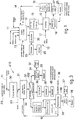
- the reference number 10 in the attached figures denotes generally a method to prevent exhaustion of acid copper plating baths according to the invention.
- the method 10 includes a continuous or discontinuous addition 11 of sodium bicarbonate (NaHCO3) in a solid form or in a solution to acid copper plating baths 12 consisting of an aqueous solution of sulphuric acid (H2SO4) and copper sulphate (CuSO4), in which metallic objects 13 to be copper plated are immersed to produce copper plated metallic objects 14.
- NaHCO3 sodium bicarbonate
- H2SO4 sulphuric acid
- CuSO4 copper sulphate
- NaHCO3 sodium bicarbonate
- NaHCO3 sodium bicarbonate
- the concentration of iron in the acid copper plating bath always stays below the critical value of 60 grs/lt., above which there would take place the co-deposition of crystals of ferrous sulphate and copper sulphate, which would be deposited on the surface of the metallic objects 13 to be copper plated and cause copper plating defects which would make those objects 13 unacceptable.
- This flow 15 of deposited crystals is then subjected to a step 16 of washing with an aqueous solution of sulphuric acid 17.
- the washing step 16 provides, on the one hand, an aqueous solution of copper sulphate 18 containing ferrous sulphate and sodium sulphate in concentrations such that they do not impair the copper plating process. This flow 18 can then be re-cycled into the acid copper plating bath 12 without any problems.
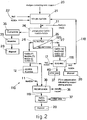
- Fig.2 shows a method 110 for recovery of metallic copper from sludges 20 containing copper in the ionic state.
- sludges 20 can be produced, for instance, by neutralising spent acid copper plating baths or the wash waters of copper plated metallic objects 14 by an addition of Ca(OH)2.
- the method 110 enables metallic copper to be recovered from these sludges 20 and includes a first step 21 of rendering the sludges 20 soluble in an aqueous solution of sulphuric acid 22 and a second step of adding sodium bicarbonate 11 in a solid form or in an aqueous solution. This second step causes formation and depositing 24 of calcium sulphate, ferrous sulphate and sodium sulphate.
- these sludges 20 contain organic compounds such as stearates 35 for instance, these organic compounds are separated by flotation 36 and are sent thereafter for disposal 28.
- a successive filtration step 35, or decantation step 125 makes possible the separation, on the one hand, of a flow of filtrate (or decanted material) 26 consisting of a liquid solution of sulphuric acid containing copper sulphate and, on the other hand, a flow of retained material 27 consisting of solid deposits of sodium sulphate, calcium sulphate and ferrous sulphate, which also incorporate copper sulphate.
- This flow of filtrate (or decanted material) 26 contains also ferrous sulphate and sodium sulphate in concentrations such that they do not hinder the copper plating process.
- the flow of filtrate (or decanted material) 26 can be re-used directly in the acid copper plating bath 12 or can undergo a precipitation treatment 38 to recover metallic copper 39.
- the precipitation treatment 38 provides metallic copper 39 of a high degree of purity and a flow of ferrous sulphate and sodium sulphate 119 which can be sent for disposal 28 or for other uses 37.
- the flow of retained material 27 undergoes washing 116 with an aqueous solution of sulphuric acid 17 and provides an output of an aqueous flow 118 of sulphuric acid, used in the step of making soluble 21 the sludges 20, and an output of a discharge sludge 40, which is sent for disposal; this discharge sludge 40 has a copper content of about a few mgs/kg., and therefore its disposal 28 creates no problem.
- NaHCO3 sodium bicarbonate
- NaHCO3 sodium bicarbonate
- Fig.3 shows a method 210 to treat and eliminate incrustations 29 generated by the co-depositing of ferrous sulphate and copper sulphate and formed on the sidewalls of the tanks containing the acid copper plating baths 12 and on the surface of the copper plated objects 14 when the concentration of iron in the acid copper plating baths 12 exceeds the critical value of 60 grs/lt.
- the method 210 provides for the addition of sodium bicarbonate 11, which dissolves the incrustations 29 with the formation of an alkaline solution of a chestnut colour.
- organic compounds such as stearates 35, for instance, are present, these compounds are separated by flotation 36 and are sent thereafter for disposal 28.
- a successive step of filtration 32, or decantation 132 makes possible the separation, on the one hand, of a flow of filtrate (or decanted material) 33 consisting of a liquid solution of copper sulphate in sulphuric acid, the solution containing also ferrous sulphate and sodium sulphate in concentrations such as will not hinder the copper plating process, and, on the other hand, of retained material 34 consisting of solid crystals of ferrous sulphate and sodium sulphate.
- the flow of filtrate (or decanted material) 33 can be re-used directly in the acid copper plating baths 12, the retained material 34 is sent for disposal 28, which is much less problematical since the copper concentration is only about a few mgs/kg., or can be delivered for other uses 37.
- the flow of filtrate (or decanted material) 33 can undergo a precipitation treatment 38 for the recovery of metallic copper 39.
- the precipitation treatment 38 yields metallic copper 39 of a high degree of purity and an output of ferrous sulphate and sodium sulphate 119 which can be sent for disposal 28 or be delivered for other uses 37.
- NaHCO3 sodium bicarbonate
- NaHCO3 sodium bicarbonate
Landscapes
- Chemical & Material Sciences (AREA)
- Engineering & Computer Science (AREA)
- Chemical Kinetics & Catalysis (AREA)
- Electrochemistry (AREA)
- Materials Engineering (AREA)
- Metallurgy (AREA)
- Organic Chemistry (AREA)
- Manufacture And Refinement Of Metals (AREA)
- Electrolytic Production Of Metals (AREA)
- Removal Of Specific Substances (AREA)
- ing And Chemical Polishing (AREA)
- Chemically Coating (AREA)
Applications Claiming Priority (2)
| Application Number | Priority Date | Filing Date | Title |
|---|---|---|---|
| ITUD930148 | 1993-07-29 | ||
| ITUD930148A IT1262169B (it) | 1993-07-29 | 1993-07-29 | Procedimento per la prevenzione dell'esaurimento dei bagni acidi di ramatura e per il recupero di rame metallico da soluzioni e fanghi contenenti rame in forma ionica |
Publications (2)
| Publication Number | Publication Date |
|---|---|
| EP0636708A1 true EP0636708A1 (fr) | 1995-02-01 |
| EP0636708B1 EP0636708B1 (fr) | 1997-10-15 |
Family
ID=11421348
Family Applications (1)
| Application Number | Title | Priority Date | Filing Date |
|---|---|---|---|
| EP94111036A Expired - Lifetime EP0636708B1 (fr) | 1993-07-29 | 1994-07-15 | Procédé pour prévenir l'équisement de bains de cuivrage acides et pour récupérer du cuivre métallique à partir de solutions et de boues contenant du cuivre sous forme ionique |
Country Status (7)
| Country | Link |
|---|---|
| US (1) | US5599458A (fr) |
| EP (1) | EP0636708B1 (fr) |
| AT (1) | ATE159301T1 (fr) |
| DE (1) | DE69406215T2 (fr) |
| ES (1) | ES2109558T3 (fr) |
| GR (1) | GR3025210T3 (fr) |
| IT (1) | IT1262169B (fr) |
Cited By (1)
| Publication number | Priority date | Publication date | Assignee | Title |
|---|---|---|---|---|
| CN102259994B (zh) * | 2008-04-28 | 2012-11-14 | 重庆华浩冶炼有限公司 | 电解铜粉废液的处理方法 |
Families Citing this family (1)
| Publication number | Priority date | Publication date | Assignee | Title |
|---|---|---|---|---|
| TWI228104B (en) * | 2003-07-29 | 2005-02-21 | Min-Shing Tsai | Sludge-free wastewater treatment process and apparatus |
Citations (3)
| Publication number | Priority date | Publication date | Assignee | Title |
|---|---|---|---|---|
| DE2623658A1 (de) * | 1976-05-24 | 1977-12-15 | Schering Ag | Verfahren zur gewinnung von kupfer (ii)-sulfat aus kupfersalzhaltigen aetzloesungen |
| DD157184A1 (de) * | 1981-01-07 | 1982-10-20 | Guenter Reiche | Verfahren zur aufbereitung und nutzbarmachung von kupferaetzrueckstaenden |
| GB2250507A (en) * | 1990-12-03 | 1992-06-10 | Compeq Manufacturing Co Limite | Method for producing copper sulfate from waste copper-containing-liquid |
Family Cites Families (10)
| Publication number | Priority date | Publication date | Assignee | Title |
|---|---|---|---|---|
| DE623658C (fr) * | ||||
| US2754174A (en) * | 1956-07-10 | Treatment of salt solutions to | ||
| DE157184C (fr) * | ||||
| US4176160A (en) * | 1971-06-23 | 1979-11-27 | Societe De Prayon | Process for purifying a zinc sulfate solution |
| SU753927A1 (ru) * | 1978-07-19 | 1980-08-07 | Химико-Металлургический Институт Ан Казахской Сср | Способ переработки медного электролита электролизом |
| US4324629A (en) * | 1979-06-19 | 1982-04-13 | Hitachi, Ltd. | Process for regenerating chemical copper plating solution |
| JPS59162108A (ja) * | 1983-03-03 | 1984-09-13 | Tadao Nagai | 硫酸溶液の浄液法 |
| US4549946A (en) * | 1984-05-09 | 1985-10-29 | Electrochem International, Inc. | Process and an electrodialytic cell for electrodialytically regenerating a spent electroless copper plating bath |
| US4600493A (en) * | 1985-01-14 | 1986-07-15 | Morton Thiokol, Inc. | Electrodialysis apparatus for the chemical maintenance of electroless copper plating baths |
| US5266212A (en) * | 1992-10-13 | 1993-11-30 | Enthone-Omi, Inc. | Purification of cyanide-free copper plating baths |
-
1993
- 1993-07-29 IT ITUD930148A patent/IT1262169B/it active IP Right Grant
-
1994
- 1994-07-15 AT AT94111036T patent/ATE159301T1/de not_active IP Right Cessation
- 1994-07-15 DE DE69406215T patent/DE69406215T2/de not_active Expired - Fee Related
- 1994-07-15 ES ES94111036T patent/ES2109558T3/es not_active Expired - Lifetime
- 1994-07-15 EP EP94111036A patent/EP0636708B1/fr not_active Expired - Lifetime
- 1994-07-22 US US08/279,098 patent/US5599458A/en not_active Expired - Fee Related
-
1997
- 1997-10-29 GR GR970402847T patent/GR3025210T3/el unknown
Patent Citations (3)
| Publication number | Priority date | Publication date | Assignee | Title |
|---|---|---|---|---|
| DE2623658A1 (de) * | 1976-05-24 | 1977-12-15 | Schering Ag | Verfahren zur gewinnung von kupfer (ii)-sulfat aus kupfersalzhaltigen aetzloesungen |
| DD157184A1 (de) * | 1981-01-07 | 1982-10-20 | Guenter Reiche | Verfahren zur aufbereitung und nutzbarmachung von kupferaetzrueckstaenden |
| GB2250507A (en) * | 1990-12-03 | 1992-06-10 | Compeq Manufacturing Co Limite | Method for producing copper sulfate from waste copper-containing-liquid |
Cited By (1)
| Publication number | Priority date | Publication date | Assignee | Title |
|---|---|---|---|---|
| CN102259994B (zh) * | 2008-04-28 | 2012-11-14 | 重庆华浩冶炼有限公司 | 电解铜粉废液的处理方法 |
Also Published As
| Publication number | Publication date |
|---|---|
| ITUD930148A1 (it) | 1995-01-29 |
| EP0636708B1 (fr) | 1997-10-15 |
| IT1262169B (it) | 1996-06-19 |
| US5599458A (en) | 1997-02-04 |
| ITUD930148A0 (it) | 1993-07-29 |
| GR3025210T3 (en) | 1998-02-27 |
| DE69406215T2 (de) | 1998-05-28 |
| ATE159301T1 (de) | 1997-11-15 |
| ES2109558T3 (es) | 1998-01-16 |
| DE69406215D1 (de) | 1997-11-20 |
Similar Documents
| Publication | Publication Date | Title |
|---|---|---|
| US4680126A (en) | Separation and recovery of reusable heavy metal hydroxides from metal finishing wastewaters | |
| EP0140444B1 (fr) | Procédé pour l'élimination de métaux lourds de l'eau, en particulier de l'eau usée | |
| US9108233B2 (en) | Washing of contaminated soils | |
| KR20100008783A (ko) | 스트리퍼 용액의 처리 및 재사용 방법 | |
| US4144149A (en) | Method for working up aqueous residues from metallizing baths | |
| US5575922A (en) | Method for treating mine water using caustic soda | |
| EP0636708B1 (fr) | Procédé pour prévenir l'équisement de bains de cuivrage acides et pour récupérer du cuivre métallique à partir de solutions et de boues contenant du cuivre sous forme ionique | |
| US4008162A (en) | Waste treatment of fluoroborate solutions | |
| EP0853986A1 (fr) | Séparation des métaux lourds et compositions utilisées pour cette séparation | |
| DE102004061255A1 (de) | Verfahren für den kontinuierlichen Betrieb von sauren oder alkalischen Zink- oder Zinklegierungsbädern | |
| PL139584B1 (en) | Method of treating industrial waste waters containing complex salts of heavy metals | |
| AU749246B2 (en) | Process for separation of heavy metals from residues by use of ethylene-diamine-disuccinic acid (EDDS) complexant | |
| KR19980702743A (ko) | 암모니아성 금속용액 재순환 방법 | |
| US3682701A (en) | Integrated waste water treatment for reusage after cyanide type plating | |
| CZ297704B6 (cs) | Zpusob zpracování prumyslových odpadních vod | |
| US1533741A (en) | Metallurgical process | |
| US4045339A (en) | Waste treatment of fluoroborate solutions | |
| FI67356C (fi) | Foerfarande foer aotervinning av cyanider fraon spolloesningarerhaollna fraon elutfaellningsprocesser | |
| JP4142874B2 (ja) | 中和スラッジ又は中和スラリーから金属を回収する方法 | |
| US6485629B1 (en) | Process for separation of heavy metals from residues by use of ethylene-diamine-disuccinic acid (edds) complexant | |
| FR2721237A1 (fr) | Procédé de traitement et de conditionnement d'effluents solides ou liquides chargés en métaux lourds. | |
| PL200196B1 (pl) | Odżelaziający skład soli topnikowej dla kąpieli topnikowych, roztwór topnika i sposób eksploatacji kąpieli topnikowej | |
| SU1742216A1 (ru) | Способ очистки сточных вод от ионов т желых металлов | |
| CH660201A5 (fr) | Procede de decapage de l'aluminium dans un bain de lessive alcaline. | |
| Viswanathan | Integrated pollution control and waste management in copper base processing industries |
Legal Events
| Date | Code | Title | Description |
|---|---|---|---|
| PUAI | Public reference made under article 153(3) epc to a published international application that has entered the european phase |
Free format text: ORIGINAL CODE: 0009012 |
|
| AK | Designated contracting states |
Kind code of ref document: A1 Designated state(s): AT BE CH DE DK ES FR GB GR IE IT LI LU MC NL PT SE |
|
| RAX | Requested extension states of the european patent have changed |
Free format text: LT PAYMENT 940906;SI PAYMENT 940906 |
|
| 17P | Request for examination filed |
Effective date: 19950712 |
|
| GRAG | Despatch of communication of intention to grant |
Free format text: ORIGINAL CODE: EPIDOS AGRA |
|
| 17Q | First examination report despatched |
Effective date: 19961202 |
|
| GRAH | Despatch of communication of intention to grant a patent |
Free format text: ORIGINAL CODE: EPIDOS IGRA |
|
| GRAH | Despatch of communication of intention to grant a patent |
Free format text: ORIGINAL CODE: EPIDOS IGRA |
|
| GRAA | (expected) grant |
Free format text: ORIGINAL CODE: 0009210 |
|
| ITF | It: translation for a ep patent filed | ||
| AK | Designated contracting states |
Kind code of ref document: B1 Designated state(s): AT BE CH DE DK ES FR GB GR IE IT LI LU MC NL PT SE |
|
| AX | Request for extension of the european patent |
Free format text: LT PAYMENT 940906;SI PAYMENT 940906 |
|
| PG25 | Lapsed in a contracting state [announced via postgrant information from national office to epo] |
Ref country code: NL Free format text: LAPSE BECAUSE OF FAILURE TO SUBMIT A TRANSLATION OF THE DESCRIPTION OR TO PAY THE FEE WITHIN THE PRESCRIBED TIME-LIMIT Effective date: 19971015 Ref country code: LI Free format text: LAPSE BECAUSE OF FAILURE TO SUBMIT A TRANSLATION OF THE DESCRIPTION OR TO PAY THE FEE WITHIN THE PRESCRIBED TIME-LIMIT Effective date: 19971015 Ref country code: DK Free format text: LAPSE BECAUSE OF NON-PAYMENT OF DUE FEES Effective date: 19971015 Ref country code: CH Free format text: LAPSE BECAUSE OF FAILURE TO SUBMIT A TRANSLATION OF THE DESCRIPTION OR TO PAY THE FEE WITHIN THE PRESCRIBED TIME-LIMIT Effective date: 19971015 Ref country code: AT Free format text: LAPSE BECAUSE OF FAILURE TO SUBMIT A TRANSLATION OF THE DESCRIPTION OR TO PAY THE FEE WITHIN THE PRESCRIBED TIME-LIMIT Effective date: 19971015 |
|
| REF | Corresponds to: |
Ref document number: 159301 Country of ref document: AT Date of ref document: 19971115 Kind code of ref document: T |
|
| REG | Reference to a national code |
Ref country code: CH Ref legal event code: EP |
|
| ET | Fr: translation filed | ||
| REF | Corresponds to: |
Ref document number: 69406215 Country of ref document: DE Date of ref document: 19971120 |
|
| PG25 | Lapsed in a contracting state [announced via postgrant information from national office to epo] |
Ref country code: SE Effective date: 19980115 Ref country code: PT Free format text: LAPSE BECAUSE OF FAILURE TO SUBMIT A TRANSLATION OF THE DESCRIPTION OR TO PAY THE FEE WITHIN THE PRESCRIBED TIME-LIMIT Effective date: 19980115 |
|
| REG | Reference to a national code |
Ref country code: ES Ref legal event code: FG2A Ref document number: 2109558 Country of ref document: ES Kind code of ref document: T3 |
|
| REG | Reference to a national code |
Ref country code: GR Ref legal event code: FG4A Free format text: 3025210 |
|
| NLV1 | Nl: lapsed or annulled due to failure to fulfill the requirements of art. 29p and 29m of the patents act | ||
| REG | Reference to a national code |
Ref country code: CH Ref legal event code: PL |
|
| PG25 | Lapsed in a contracting state [announced via postgrant information from national office to epo] |
Ref country code: LU Free format text: LAPSE BECAUSE OF NON-PAYMENT OF DUE FEES Effective date: 19980715 Ref country code: IE Free format text: LAPSE BECAUSE OF NON-PAYMENT OF DUE FEES Effective date: 19980715 |
|
| PLBE | No opposition filed within time limit |
Free format text: ORIGINAL CODE: 0009261 |
|
| STAA | Information on the status of an ep patent application or granted ep patent |
Free format text: STATUS: NO OPPOSITION FILED WITHIN TIME LIMIT |
|
| 26N | No opposition filed | ||
| PG25 | Lapsed in a contracting state [announced via postgrant information from national office to epo] |
Ref country code: MC Free format text: LAPSE BECAUSE OF NON-PAYMENT OF DUE FEES Effective date: 19990131 |
|
| REG | Reference to a national code |
Ref country code: GB Ref legal event code: IF02 |
|
| PGFP | Annual fee paid to national office [announced via postgrant information from national office to epo] |
Ref country code: GB Payment date: 20020710 Year of fee payment: 9 |
|
| PGFP | Annual fee paid to national office [announced via postgrant information from national office to epo] |
Ref country code: DE Payment date: 20020724 Year of fee payment: 9 |
|
| PGFP | Annual fee paid to national office [announced via postgrant information from national office to epo] |
Ref country code: FR Payment date: 20020726 Year of fee payment: 9 |
|
| PGFP | Annual fee paid to national office [announced via postgrant information from national office to epo] |
Ref country code: GR Payment date: 20020730 Year of fee payment: 9 |
|
| PGFP | Annual fee paid to national office [announced via postgrant information from national office to epo] |
Ref country code: ES Payment date: 20020826 Year of fee payment: 9 |
|
| PGFP | Annual fee paid to national office [announced via postgrant information from national office to epo] |
Ref country code: BE Payment date: 20020919 Year of fee payment: 9 |
|
| PG25 | Lapsed in a contracting state [announced via postgrant information from national office to epo] |
Ref country code: GB Free format text: LAPSE BECAUSE OF NON-PAYMENT OF DUE FEES Effective date: 20030715 |
|
| PG25 | Lapsed in a contracting state [announced via postgrant information from national office to epo] |
Ref country code: ES Free format text: LAPSE BECAUSE OF NON-PAYMENT OF DUE FEES Effective date: 20030716 |
|
| PG25 | Lapsed in a contracting state [announced via postgrant information from national office to epo] |
Ref country code: BE Free format text: LAPSE BECAUSE OF NON-PAYMENT OF DUE FEES Effective date: 20030731 |
|
| BERE | Be: lapsed |
Owner name: LABORATORI *TABOGA DI TABOGA LEANDRO Effective date: 20030731 |
|
| PG25 | Lapsed in a contracting state [announced via postgrant information from national office to epo] |
Ref country code: DE Free format text: LAPSE BECAUSE OF NON-PAYMENT OF DUE FEES Effective date: 20040203 |
|
| PG25 | Lapsed in a contracting state [announced via postgrant information from national office to epo] |
Ref country code: GR Free format text: LAPSE BECAUSE OF NON-PAYMENT OF DUE FEES Effective date: 20040205 |
|
| GBPC | Gb: european patent ceased through non-payment of renewal fee |
Effective date: 20030715 |
|
| PG25 | Lapsed in a contracting state [announced via postgrant information from national office to epo] |
Ref country code: FR Free format text: LAPSE BECAUSE OF NON-PAYMENT OF DUE FEES Effective date: 20040331 |
|
| REG | Reference to a national code |
Ref country code: FR Ref legal event code: ST |
|
| REG | Reference to a national code |
Ref country code: ES Ref legal event code: FD2A Effective date: 20030716 |
|
| PG25 | Lapsed in a contracting state [announced via postgrant information from national office to epo] |
Ref country code: IT Free format text: LAPSE BECAUSE OF NON-PAYMENT OF DUE FEES;WARNING: LAPSES OF ITALIAN PATENTS WITH EFFECTIVE DATE BEFORE 2007 MAY HAVE OCCURRED AT ANY TIME BEFORE 2007. THE CORRECT EFFECTIVE DATE MAY BE DIFFERENT FROM THE ONE RECORDED. Effective date: 20050715 |