EP0637017A1 - Optischer Aufzeichnungsträger mit Aufzeichnungsschichte und dielektrischen Schichten - Google Patents
Optischer Aufzeichnungsträger mit Aufzeichnungsschichte und dielektrischen Schichten Download PDFInfo
- Publication number
- EP0637017A1 EP0637017A1 EP94305600A EP94305600A EP0637017A1 EP 0637017 A1 EP0637017 A1 EP 0637017A1 EP 94305600 A EP94305600 A EP 94305600A EP 94305600 A EP94305600 A EP 94305600A EP 0637017 A1 EP0637017 A1 EP 0637017A1
- Authority
- EP
- European Patent Office
- Prior art keywords
- dielectric layer
- recording medium
- layer
- optical recording
- substrate
- Prior art date
- Legal status (The legal status is an assumption and is not a legal conclusion. Google has not performed a legal analysis and makes no representation as to the accuracy of the status listed.)
- Withdrawn
Links
- 230000003287 optical effect Effects 0.000 title claims abstract description 34
- 239000000758 substrate Substances 0.000 claims abstract description 53
- 239000000463 material Substances 0.000 claims abstract description 19
- 239000000203 mixture Substances 0.000 claims abstract description 15
- 150000004767 nitrides Chemical class 0.000 claims abstract description 8
- OKTJSMMVPCPJKN-UHFFFAOYSA-N Carbon Chemical compound [C] OKTJSMMVPCPJKN-UHFFFAOYSA-N 0.000 claims abstract description 6
- NINIDFKCEFEMDL-UHFFFAOYSA-N Sulfur Chemical compound [S] NINIDFKCEFEMDL-UHFFFAOYSA-N 0.000 claims abstract description 6
- QVGXLLKOCUKJST-UHFFFAOYSA-N atomic oxygen Chemical compound [O] QVGXLLKOCUKJST-UHFFFAOYSA-N 0.000 claims abstract description 6
- 229910052799 carbon Inorganic materials 0.000 claims abstract description 6
- 229910052760 oxygen Inorganic materials 0.000 claims abstract description 6
- 239000001301 oxygen Substances 0.000 claims abstract description 6
- 239000000126 substance Substances 0.000 claims abstract description 6
- 229910052717 sulfur Inorganic materials 0.000 claims abstract description 6
- 239000011593 sulfur Substances 0.000 claims abstract description 6
- 229910052581 Si3N4 Inorganic materials 0.000 claims description 3
- 229910052782 aluminium Inorganic materials 0.000 claims description 2
- 239000002131 composite material Substances 0.000 claims description 2
- 150000001247 metal acetylides Chemical class 0.000 claims description 2
- 229910052710 silicon Inorganic materials 0.000 claims description 2
- HQVNEWCFYHHQES-UHFFFAOYSA-N silicon nitride Chemical compound N12[Si]34N5[Si]62N3[Si]51N64 HQVNEWCFYHHQES-UHFFFAOYSA-N 0.000 claims description 2
- 229910052719 titanium Inorganic materials 0.000 claims description 2
- 229910052725 zinc Inorganic materials 0.000 claims description 2
- 229910052726 zirconium Inorganic materials 0.000 claims description 2
- 150000003568 thioethers Chemical class 0.000 claims 1
- 239000010410 layer Substances 0.000 description 72
- 239000010408 film Substances 0.000 description 28
- 238000002310 reflectometry Methods 0.000 description 13
- 238000000034 method Methods 0.000 description 12
- 239000010409 thin film Substances 0.000 description 12
- 230000000052 comparative effect Effects 0.000 description 10
- 238000012360 testing method Methods 0.000 description 10
- 230000008859 change Effects 0.000 description 9
- 230000001133 acceleration Effects 0.000 description 7
- 238000011156 evaluation Methods 0.000 description 7
- 239000007789 gas Substances 0.000 description 6
- 150000001875 compounds Chemical class 0.000 description 5
- 230000000694 effects Effects 0.000 description 5
- 230000008569 process Effects 0.000 description 5
- 239000011521 glass Substances 0.000 description 4
- 239000011368 organic material Substances 0.000 description 4
- 239000004417 polycarbonate Substances 0.000 description 4
- 229920000515 polycarbonate Polymers 0.000 description 4
- 238000004544 sputter deposition Methods 0.000 description 4
- 229910004205 SiNX Inorganic materials 0.000 description 3
- 238000010586 diagram Methods 0.000 description 3
- 230000006870 function Effects 0.000 description 3
- 229910052723 transition metal Inorganic materials 0.000 description 3
- 238000001771 vacuum deposition Methods 0.000 description 3
- CPLXHLVBOLITMK-UHFFFAOYSA-N Magnesium oxide Chemical compound [Mg]=O CPLXHLVBOLITMK-UHFFFAOYSA-N 0.000 description 2
- -1 Si3N4 Chemical compound 0.000 description 2
- VYPSYNLAJGMNEJ-UHFFFAOYSA-N Silicium dioxide Chemical compound O=[Si]=O VYPSYNLAJGMNEJ-UHFFFAOYSA-N 0.000 description 2
- GWEVSGVZZGPLCZ-UHFFFAOYSA-N Titan oxide Chemical compound O=[Ti]=O GWEVSGVZZGPLCZ-UHFFFAOYSA-N 0.000 description 2
- MCMNRKCIXSYSNV-UHFFFAOYSA-N Zirconium dioxide Chemical compound O=[Zr]=O MCMNRKCIXSYSNV-UHFFFAOYSA-N 0.000 description 2
- 150000001786 chalcogen compounds Chemical class 0.000 description 2
- 230000007797 corrosion Effects 0.000 description 2
- 238000005260 corrosion Methods 0.000 description 2
- 238000012986 modification Methods 0.000 description 2
- 230000004048 modification Effects 0.000 description 2
- 230000003647 oxidation Effects 0.000 description 2
- 238000007254 oxidation reaction Methods 0.000 description 2
- 229920003229 poly(methyl methacrylate) Polymers 0.000 description 2
- 239000004926 polymethyl methacrylate Substances 0.000 description 2
- 230000001681 protective effect Effects 0.000 description 2
- 238000005546 reactive sputtering Methods 0.000 description 2
- 239000011347 resin Substances 0.000 description 2
- 229920005989 resin Polymers 0.000 description 2
- 229910052718 tin Inorganic materials 0.000 description 2
- 229910017083 AlN Inorganic materials 0.000 description 1
- 229910052692 Dysprosium Inorganic materials 0.000 description 1
- 229910052688 Gadolinium Inorganic materials 0.000 description 1
- 229910005936 Ge—Sb Inorganic materials 0.000 description 1
- 229910018110 Se—Te Inorganic materials 0.000 description 1
- 229910052771 Terbium Inorganic materials 0.000 description 1
- ATJFFYVFTNAWJD-UHFFFAOYSA-N Tin Chemical compound [Sn] ATJFFYVFTNAWJD-UHFFFAOYSA-N 0.000 description 1
- 229910008322 ZrN Inorganic materials 0.000 description 1
- 230000005856 abnormality Effects 0.000 description 1
- PNEYBMLMFCGWSK-UHFFFAOYSA-N aluminium oxide Inorganic materials [O-2].[O-2].[O-2].[Al+3].[Al+3] PNEYBMLMFCGWSK-UHFFFAOYSA-N 0.000 description 1
- 230000015572 biosynthetic process Effects 0.000 description 1
- 229910052681 coesite Inorganic materials 0.000 description 1
- 238000011109 contamination Methods 0.000 description 1
- 230000008602 contraction Effects 0.000 description 1
- 229910052593 corundum Inorganic materials 0.000 description 1
- 229910052906 cristobalite Inorganic materials 0.000 description 1
- 239000013078 crystal Substances 0.000 description 1
- 230000001351 cycling effect Effects 0.000 description 1
- 230000007547 defect Effects 0.000 description 1
- 239000003989 dielectric material Substances 0.000 description 1
- 239000003822 epoxy resin Substances 0.000 description 1
- NYPJDWWKZLNGGM-UHFFFAOYSA-N fenvalerate Chemical compound C=1C=C(Cl)C=CC=1C(C(C)C)C(=O)OC(C#N)C(C=1)=CC=CC=1OC1=CC=CC=C1 NYPJDWWKZLNGGM-UHFFFAOYSA-N 0.000 description 1
- 230000007062 hydrolysis Effects 0.000 description 1
- 238000006460 hydrolysis reaction Methods 0.000 description 1
- 229910010272 inorganic material Inorganic materials 0.000 description 1
- 239000011147 inorganic material Substances 0.000 description 1
- 238000007733 ion plating Methods 0.000 description 1
- 229910052742 iron Inorganic materials 0.000 description 1
- 238000010030 laminating Methods 0.000 description 1
- 230000031700 light absorption Effects 0.000 description 1
- 230000007774 longterm Effects 0.000 description 1
- 229910052749 magnesium Inorganic materials 0.000 description 1
- 239000000696 magnetic material Substances 0.000 description 1
- 238000005259 measurement Methods 0.000 description 1
- 229910052751 metal Inorganic materials 0.000 description 1
- 239000002184 metal Substances 0.000 description 1
- 230000000704 physical effect Effects 0.000 description 1
- 229920000647 polyepoxide Polymers 0.000 description 1
- 229920000642 polymer Polymers 0.000 description 1
- 230000002265 prevention Effects 0.000 description 1
- 239000011253 protective coating Substances 0.000 description 1
- 230000009993 protective function Effects 0.000 description 1
- 229910052761 rare earth metal Inorganic materials 0.000 description 1
- 150000002910 rare earth metals Chemical class 0.000 description 1
- 230000009467 reduction Effects 0.000 description 1
- 229910052711 selenium Inorganic materials 0.000 description 1
- 230000035945 sensitivity Effects 0.000 description 1
- 238000000926 separation method Methods 0.000 description 1
- 239000000377 silicon dioxide Substances 0.000 description 1
- 235000012239 silicon dioxide Nutrition 0.000 description 1
- LIVNPJMFVYWSIS-UHFFFAOYSA-N silicon monoxide Inorganic materials [Si-]#[O+] LIVNPJMFVYWSIS-UHFFFAOYSA-N 0.000 description 1
- 239000002356 single layer Substances 0.000 description 1
- 125000006850 spacer group Chemical group 0.000 description 1
- 229910052682 stishovite Inorganic materials 0.000 description 1
- 150000004763 sulfides Chemical class 0.000 description 1
- 239000002344 surface layer Substances 0.000 description 1
- 150000003624 transition metals Chemical class 0.000 description 1
- 229910052905 tridymite Inorganic materials 0.000 description 1
- 229910052721 tungsten Inorganic materials 0.000 description 1
- 229910001845 yogo sapphire Inorganic materials 0.000 description 1
Images



Classifications
-
- G—PHYSICS
- G11—INFORMATION STORAGE
- G11B—INFORMATION STORAGE BASED ON RELATIVE MOVEMENT BETWEEN RECORD CARRIER AND TRANSDUCER
- G11B7/00—Recording or reproducing by optical means, e.g. recording using a thermal beam of optical radiation by modifying optical properties or the physical structure, reproducing using an optical beam at lower power by sensing optical properties; Record carriers therefor
- G11B7/24—Record carriers characterised by shape, structure or physical properties, or by the selection of the material
-
- G—PHYSICS
- G11—INFORMATION STORAGE
- G11B—INFORMATION STORAGE BASED ON RELATIVE MOVEMENT BETWEEN RECORD CARRIER AND TRANSDUCER
- G11B11/00—Recording on or reproducing from the same record carrier wherein for these two operations the methods are covered by different main groups of groups G11B3/00 - G11B7/00 or by different subgroups of group G11B9/00; Record carriers therefor
- G11B11/10—Recording on or reproducing from the same record carrier wherein for these two operations the methods are covered by different main groups of groups G11B3/00 - G11B7/00 or by different subgroups of group G11B9/00; Record carriers therefor using recording by magnetic means or other means for magnetisation or demagnetisation of a record carrier, e.g. light induced spin magnetisation; Demagnetisation by thermal or stress means in the presence or not of an orienting magnetic field
- G11B11/105—Recording on or reproducing from the same record carrier wherein for these two operations the methods are covered by different main groups of groups G11B3/00 - G11B7/00 or by different subgroups of group G11B9/00; Record carriers therefor using recording by magnetic means or other means for magnetisation or demagnetisation of a record carrier, e.g. light induced spin magnetisation; Demagnetisation by thermal or stress means in the presence or not of an orienting magnetic field using a beam of light or a magnetic field for recording by change of magnetisation and a beam of light for reproducing, i.e. magneto-optical, e.g. light-induced thermomagnetic recording, spin magnetisation recording, Kerr or Faraday effect reproducing
- G11B11/10582—Record carriers characterised by the selection of the material or by the structure or form
- G11B11/10586—Record carriers characterised by the selection of the material or by the structure or form characterised by the selection of the material
- G11B11/10589—Details
-
- G—PHYSICS
- G11—INFORMATION STORAGE
- G11B—INFORMATION STORAGE BASED ON RELATIVE MOVEMENT BETWEEN RECORD CARRIER AND TRANSDUCER
- G11B7/00—Recording or reproducing by optical means, e.g. recording using a thermal beam of optical radiation by modifying optical properties or the physical structure, reproducing using an optical beam at lower power by sensing optical properties; Record carriers therefor
- G11B7/24—Record carriers characterised by shape, structure or physical properties, or by the selection of the material
- G11B7/241—Record carriers characterised by shape, structure or physical properties, or by the selection of the material characterised by the selection of the material
- G11B7/252—Record carriers characterised by shape, structure or physical properties, or by the selection of the material characterised by the selection of the material of layers other than recording layers
- G11B7/257—Record carriers characterised by shape, structure or physical properties, or by the selection of the material characterised by the selection of the material of layers other than recording layers of layers having properties involved in recording or reproduction, e.g. optical interference layers or sensitising layers or dielectric layers, which are protecting the recording layers
- G11B7/2578—Record carriers characterised by shape, structure or physical properties, or by the selection of the material characterised by the selection of the material of layers other than recording layers of layers having properties involved in recording or reproduction, e.g. optical interference layers or sensitising layers or dielectric layers, which are protecting the recording layers consisting essentially of inorganic materials
-
- G—PHYSICS
- G11—INFORMATION STORAGE
- G11B—INFORMATION STORAGE BASED ON RELATIVE MOVEMENT BETWEEN RECORD CARRIER AND TRANSDUCER
- G11B7/00—Recording or reproducing by optical means, e.g. recording using a thermal beam of optical radiation by modifying optical properties or the physical structure, reproducing using an optical beam at lower power by sensing optical properties; Record carriers therefor
- G11B7/24—Record carriers characterised by shape, structure or physical properties, or by the selection of the material
- G11B7/241—Record carriers characterised by shape, structure or physical properties, or by the selection of the material characterised by the selection of the material
- G11B7/242—Record carriers characterised by shape, structure or physical properties, or by the selection of the material characterised by the selection of the material of recording layers
- G11B7/243—Record carriers characterised by shape, structure or physical properties, or by the selection of the material characterised by the selection of the material of recording layers comprising inorganic materials only, e.g. ablative layers
- G11B2007/24302—Metals or metalloids
- G11B2007/24304—Metals or metalloids group 2 or 12 elements (e.g. Be, Ca, Mg, Zn, Cd)
-
- G—PHYSICS
- G11—INFORMATION STORAGE
- G11B—INFORMATION STORAGE BASED ON RELATIVE MOVEMENT BETWEEN RECORD CARRIER AND TRANSDUCER
- G11B7/00—Recording or reproducing by optical means, e.g. recording using a thermal beam of optical radiation by modifying optical properties or the physical structure, reproducing using an optical beam at lower power by sensing optical properties; Record carriers therefor
- G11B7/24—Record carriers characterised by shape, structure or physical properties, or by the selection of the material
- G11B7/241—Record carriers characterised by shape, structure or physical properties, or by the selection of the material characterised by the selection of the material
- G11B7/242—Record carriers characterised by shape, structure or physical properties, or by the selection of the material characterised by the selection of the material of recording layers
- G11B7/243—Record carriers characterised by shape, structure or physical properties, or by the selection of the material characterised by the selection of the material of recording layers comprising inorganic materials only, e.g. ablative layers
- G11B2007/24302—Metals or metalloids
- G11B2007/2431—Metals or metalloids group 13 elements (B, Al, Ga, In)
-
- G—PHYSICS
- G11—INFORMATION STORAGE
- G11B—INFORMATION STORAGE BASED ON RELATIVE MOVEMENT BETWEEN RECORD CARRIER AND TRANSDUCER
- G11B7/00—Recording or reproducing by optical means, e.g. recording using a thermal beam of optical radiation by modifying optical properties or the physical structure, reproducing using an optical beam at lower power by sensing optical properties; Record carriers therefor
- G11B7/24—Record carriers characterised by shape, structure or physical properties, or by the selection of the material
- G11B7/241—Record carriers characterised by shape, structure or physical properties, or by the selection of the material characterised by the selection of the material
- G11B7/242—Record carriers characterised by shape, structure or physical properties, or by the selection of the material characterised by the selection of the material of recording layers
- G11B7/243—Record carriers characterised by shape, structure or physical properties, or by the selection of the material characterised by the selection of the material of recording layers comprising inorganic materials only, e.g. ablative layers
- G11B2007/24302—Metals or metalloids
- G11B2007/24312—Metals or metalloids group 14 elements (e.g. Si, Ge, Sn)
-
- G—PHYSICS
- G11—INFORMATION STORAGE
- G11B—INFORMATION STORAGE BASED ON RELATIVE MOVEMENT BETWEEN RECORD CARRIER AND TRANSDUCER
- G11B7/00—Recording or reproducing by optical means, e.g. recording using a thermal beam of optical radiation by modifying optical properties or the physical structure, reproducing using an optical beam at lower power by sensing optical properties; Record carriers therefor
- G11B7/24—Record carriers characterised by shape, structure or physical properties, or by the selection of the material
- G11B7/241—Record carriers characterised by shape, structure or physical properties, or by the selection of the material characterised by the selection of the material
- G11B7/242—Record carriers characterised by shape, structure or physical properties, or by the selection of the material characterised by the selection of the material of recording layers
- G11B7/243—Record carriers characterised by shape, structure or physical properties, or by the selection of the material characterised by the selection of the material of recording layers comprising inorganic materials only, e.g. ablative layers
- G11B2007/24302—Metals or metalloids
- G11B2007/24314—Metals or metalloids group 15 elements (e.g. Sb, Bi)
-
- G—PHYSICS
- G11—INFORMATION STORAGE
- G11B—INFORMATION STORAGE BASED ON RELATIVE MOVEMENT BETWEEN RECORD CARRIER AND TRANSDUCER
- G11B7/00—Recording or reproducing by optical means, e.g. recording using a thermal beam of optical radiation by modifying optical properties or the physical structure, reproducing using an optical beam at lower power by sensing optical properties; Record carriers therefor
- G11B7/24—Record carriers characterised by shape, structure or physical properties, or by the selection of the material
- G11B7/241—Record carriers characterised by shape, structure or physical properties, or by the selection of the material characterised by the selection of the material
- G11B7/242—Record carriers characterised by shape, structure or physical properties, or by the selection of the material characterised by the selection of the material of recording layers
- G11B7/243—Record carriers characterised by shape, structure or physical properties, or by the selection of the material characterised by the selection of the material of recording layers comprising inorganic materials only, e.g. ablative layers
- G11B2007/24302—Metals or metalloids
- G11B2007/24316—Metals or metalloids group 16 elements (i.e. chalcogenides, Se, Te)
-
- G—PHYSICS
- G11—INFORMATION STORAGE
- G11B—INFORMATION STORAGE BASED ON RELATIVE MOVEMENT BETWEEN RECORD CARRIER AND TRANSDUCER
- G11B7/00—Recording or reproducing by optical means, e.g. recording using a thermal beam of optical radiation by modifying optical properties or the physical structure, reproducing using an optical beam at lower power by sensing optical properties; Record carriers therefor
- G11B7/24—Record carriers characterised by shape, structure or physical properties, or by the selection of the material
- G11B7/241—Record carriers characterised by shape, structure or physical properties, or by the selection of the material characterised by the selection of the material
- G11B7/252—Record carriers characterised by shape, structure or physical properties, or by the selection of the material characterised by the selection of the material of layers other than recording layers
- G11B7/257—Record carriers characterised by shape, structure or physical properties, or by the selection of the material characterised by the selection of the material of layers other than recording layers of layers having properties involved in recording or reproduction, e.g. optical interference layers or sensitising layers or dielectric layers, which are protecting the recording layers
- G11B2007/25705—Record carriers characterised by shape, structure or physical properties, or by the selection of the material characterised by the selection of the material of layers other than recording layers of layers having properties involved in recording or reproduction, e.g. optical interference layers or sensitising layers or dielectric layers, which are protecting the recording layers consisting essentially of inorganic materials
- G11B2007/25706—Record carriers characterised by shape, structure or physical properties, or by the selection of the material characterised by the selection of the material of layers other than recording layers of layers having properties involved in recording or reproduction, e.g. optical interference layers or sensitising layers or dielectric layers, which are protecting the recording layers consisting essentially of inorganic materials containing transition metal elements (Zn, Fe, Co, Ni, Pt)
-
- G—PHYSICS
- G11—INFORMATION STORAGE
- G11B—INFORMATION STORAGE BASED ON RELATIVE MOVEMENT BETWEEN RECORD CARRIER AND TRANSDUCER
- G11B7/00—Recording or reproducing by optical means, e.g. recording using a thermal beam of optical radiation by modifying optical properties or the physical structure, reproducing using an optical beam at lower power by sensing optical properties; Record carriers therefor
- G11B7/24—Record carriers characterised by shape, structure or physical properties, or by the selection of the material
- G11B7/241—Record carriers characterised by shape, structure or physical properties, or by the selection of the material characterised by the selection of the material
- G11B7/252—Record carriers characterised by shape, structure or physical properties, or by the selection of the material characterised by the selection of the material of layers other than recording layers
- G11B7/257—Record carriers characterised by shape, structure or physical properties, or by the selection of the material characterised by the selection of the material of layers other than recording layers of layers having properties involved in recording or reproduction, e.g. optical interference layers or sensitising layers or dielectric layers, which are protecting the recording layers
- G11B2007/25705—Record carriers characterised by shape, structure or physical properties, or by the selection of the material characterised by the selection of the material of layers other than recording layers of layers having properties involved in recording or reproduction, e.g. optical interference layers or sensitising layers or dielectric layers, which are protecting the recording layers consisting essentially of inorganic materials
- G11B2007/25708—Record carriers characterised by shape, structure or physical properties, or by the selection of the material characterised by the selection of the material of layers other than recording layers of layers having properties involved in recording or reproduction, e.g. optical interference layers or sensitising layers or dielectric layers, which are protecting the recording layers consisting essentially of inorganic materials containing group 13 elements (B, Al, Ga)
-
- G—PHYSICS
- G11—INFORMATION STORAGE
- G11B—INFORMATION STORAGE BASED ON RELATIVE MOVEMENT BETWEEN RECORD CARRIER AND TRANSDUCER
- G11B7/00—Recording or reproducing by optical means, e.g. recording using a thermal beam of optical radiation by modifying optical properties or the physical structure, reproducing using an optical beam at lower power by sensing optical properties; Record carriers therefor
- G11B7/24—Record carriers characterised by shape, structure or physical properties, or by the selection of the material
- G11B7/241—Record carriers characterised by shape, structure or physical properties, or by the selection of the material characterised by the selection of the material
- G11B7/252—Record carriers characterised by shape, structure or physical properties, or by the selection of the material characterised by the selection of the material of layers other than recording layers
- G11B7/257—Record carriers characterised by shape, structure or physical properties, or by the selection of the material characterised by the selection of the material of layers other than recording layers of layers having properties involved in recording or reproduction, e.g. optical interference layers or sensitising layers or dielectric layers, which are protecting the recording layers
- G11B2007/25705—Record carriers characterised by shape, structure or physical properties, or by the selection of the material characterised by the selection of the material of layers other than recording layers of layers having properties involved in recording or reproduction, e.g. optical interference layers or sensitising layers or dielectric layers, which are protecting the recording layers consisting essentially of inorganic materials
- G11B2007/2571—Record carriers characterised by shape, structure or physical properties, or by the selection of the material characterised by the selection of the material of layers other than recording layers of layers having properties involved in recording or reproduction, e.g. optical interference layers or sensitising layers or dielectric layers, which are protecting the recording layers consisting essentially of inorganic materials containing group 14 elements except carbon (Si, Ge, Sn, Pb)
-
- G—PHYSICS
- G11—INFORMATION STORAGE
- G11B—INFORMATION STORAGE BASED ON RELATIVE MOVEMENT BETWEEN RECORD CARRIER AND TRANSDUCER
- G11B7/00—Recording or reproducing by optical means, e.g. recording using a thermal beam of optical radiation by modifying optical properties or the physical structure, reproducing using an optical beam at lower power by sensing optical properties; Record carriers therefor
- G11B7/24—Record carriers characterised by shape, structure or physical properties, or by the selection of the material
- G11B7/241—Record carriers characterised by shape, structure or physical properties, or by the selection of the material characterised by the selection of the material
- G11B7/252—Record carriers characterised by shape, structure or physical properties, or by the selection of the material characterised by the selection of the material of layers other than recording layers
- G11B7/257—Record carriers characterised by shape, structure or physical properties, or by the selection of the material characterised by the selection of the material of layers other than recording layers of layers having properties involved in recording or reproduction, e.g. optical interference layers or sensitising layers or dielectric layers, which are protecting the recording layers
- G11B2007/25705—Record carriers characterised by shape, structure or physical properties, or by the selection of the material characterised by the selection of the material of layers other than recording layers of layers having properties involved in recording or reproduction, e.g. optical interference layers or sensitising layers or dielectric layers, which are protecting the recording layers consisting essentially of inorganic materials
- G11B2007/25711—Record carriers characterised by shape, structure or physical properties, or by the selection of the material characterised by the selection of the material of layers other than recording layers of layers having properties involved in recording or reproduction, e.g. optical interference layers or sensitising layers or dielectric layers, which are protecting the recording layers consisting essentially of inorganic materials containing carbon
-
- G—PHYSICS
- G11—INFORMATION STORAGE
- G11B—INFORMATION STORAGE BASED ON RELATIVE MOVEMENT BETWEEN RECORD CARRIER AND TRANSDUCER
- G11B7/00—Recording or reproducing by optical means, e.g. recording using a thermal beam of optical radiation by modifying optical properties or the physical structure, reproducing using an optical beam at lower power by sensing optical properties; Record carriers therefor
- G11B7/24—Record carriers characterised by shape, structure or physical properties, or by the selection of the material
- G11B7/241—Record carriers characterised by shape, structure or physical properties, or by the selection of the material characterised by the selection of the material
- G11B7/252—Record carriers characterised by shape, structure or physical properties, or by the selection of the material characterised by the selection of the material of layers other than recording layers
- G11B7/257—Record carriers characterised by shape, structure or physical properties, or by the selection of the material characterised by the selection of the material of layers other than recording layers of layers having properties involved in recording or reproduction, e.g. optical interference layers or sensitising layers or dielectric layers, which are protecting the recording layers
- G11B2007/25705—Record carriers characterised by shape, structure or physical properties, or by the selection of the material characterised by the selection of the material of layers other than recording layers of layers having properties involved in recording or reproduction, e.g. optical interference layers or sensitising layers or dielectric layers, which are protecting the recording layers consisting essentially of inorganic materials
- G11B2007/25713—Record carriers characterised by shape, structure or physical properties, or by the selection of the material characterised by the selection of the material of layers other than recording layers of layers having properties involved in recording or reproduction, e.g. optical interference layers or sensitising layers or dielectric layers, which are protecting the recording layers consisting essentially of inorganic materials containing nitrogen
-
- G—PHYSICS
- G11—INFORMATION STORAGE
- G11B—INFORMATION STORAGE BASED ON RELATIVE MOVEMENT BETWEEN RECORD CARRIER AND TRANSDUCER
- G11B7/00—Recording or reproducing by optical means, e.g. recording using a thermal beam of optical radiation by modifying optical properties or the physical structure, reproducing using an optical beam at lower power by sensing optical properties; Record carriers therefor
- G11B7/24—Record carriers characterised by shape, structure or physical properties, or by the selection of the material
- G11B7/241—Record carriers characterised by shape, structure or physical properties, or by the selection of the material characterised by the selection of the material
- G11B7/252—Record carriers characterised by shape, structure or physical properties, or by the selection of the material characterised by the selection of the material of layers other than recording layers
- G11B7/257—Record carriers characterised by shape, structure or physical properties, or by the selection of the material characterised by the selection of the material of layers other than recording layers of layers having properties involved in recording or reproduction, e.g. optical interference layers or sensitising layers or dielectric layers, which are protecting the recording layers
- G11B2007/25705—Record carriers characterised by shape, structure or physical properties, or by the selection of the material characterised by the selection of the material of layers other than recording layers of layers having properties involved in recording or reproduction, e.g. optical interference layers or sensitising layers or dielectric layers, which are protecting the recording layers consisting essentially of inorganic materials
- G11B2007/25715—Record carriers characterised by shape, structure or physical properties, or by the selection of the material characterised by the selection of the material of layers other than recording layers of layers having properties involved in recording or reproduction, e.g. optical interference layers or sensitising layers or dielectric layers, which are protecting the recording layers consisting essentially of inorganic materials containing oxygen
-
- G—PHYSICS
- G11—INFORMATION STORAGE
- G11B—INFORMATION STORAGE BASED ON RELATIVE MOVEMENT BETWEEN RECORD CARRIER AND TRANSDUCER
- G11B7/00—Recording or reproducing by optical means, e.g. recording using a thermal beam of optical radiation by modifying optical properties or the physical structure, reproducing using an optical beam at lower power by sensing optical properties; Record carriers therefor
- G11B7/24—Record carriers characterised by shape, structure or physical properties, or by the selection of the material
- G11B7/241—Record carriers characterised by shape, structure or physical properties, or by the selection of the material characterised by the selection of the material
- G11B7/252—Record carriers characterised by shape, structure or physical properties, or by the selection of the material characterised by the selection of the material of layers other than recording layers
- G11B7/257—Record carriers characterised by shape, structure or physical properties, or by the selection of the material characterised by the selection of the material of layers other than recording layers of layers having properties involved in recording or reproduction, e.g. optical interference layers or sensitising layers or dielectric layers, which are protecting the recording layers
- G11B2007/25705—Record carriers characterised by shape, structure or physical properties, or by the selection of the material characterised by the selection of the material of layers other than recording layers of layers having properties involved in recording or reproduction, e.g. optical interference layers or sensitising layers or dielectric layers, which are protecting the recording layers consisting essentially of inorganic materials
- G11B2007/25716—Record carriers characterised by shape, structure or physical properties, or by the selection of the material characterised by the selection of the material of layers other than recording layers of layers having properties involved in recording or reproduction, e.g. optical interference layers or sensitising layers or dielectric layers, which are protecting the recording layers consisting essentially of inorganic materials containing sulfur
-
- G—PHYSICS
- G11—INFORMATION STORAGE
- G11B—INFORMATION STORAGE BASED ON RELATIVE MOVEMENT BETWEEN RECORD CARRIER AND TRANSDUCER
- G11B7/00—Recording or reproducing by optical means, e.g. recording using a thermal beam of optical radiation by modifying optical properties or the physical structure, reproducing using an optical beam at lower power by sensing optical properties; Record carriers therefor
- G11B7/24—Record carriers characterised by shape, structure or physical properties, or by the selection of the material
- G11B7/241—Record carriers characterised by shape, structure or physical properties, or by the selection of the material characterised by the selection of the material
- G11B7/252—Record carriers characterised by shape, structure or physical properties, or by the selection of the material characterised by the selection of the material of layers other than recording layers
- G11B7/253—Record carriers characterised by shape, structure or physical properties, or by the selection of the material characterised by the selection of the material of layers other than recording layers of substrates
- G11B7/2533—Record carriers characterised by shape, structure or physical properties, or by the selection of the material characterised by the selection of the material of layers other than recording layers of substrates comprising resins
- G11B7/2534—Record carriers characterised by shape, structure or physical properties, or by the selection of the material characterised by the selection of the material of layers other than recording layers of substrates comprising resins polycarbonates [PC]
Definitions
- the present invention relates to an optical recording medium for recording and reproducing information at a high density using a light beam.
- Optical recording mediums are capable of high-density recording in a non-contact and random-access manner and may find promising use as a large-capacity digital memory.
- An optical recording medium of this kind has a structure in which a recording layer is formed directly on a substrate or on a dielectric layer previously formed on the substrate.
- the substrate is formed of polycarbonate (PC), polymethyl methacrylate (PMMA), epoxy resin, amorphous polyorefine, or glass or glass/2P.
- PC polycarbonate
- PMMA polymethyl methacrylate
- epoxy resin epoxy resin
- amorphous polyorefine glass or glass/2P.
- grooves of glass/2P substrate may be formed in a glass substrate surface by a 2-P (photo-polymer) method.
- an amorphous magnetic thin film formed of a rare earth-transition metal, a chalcogen compound thin film formed by utilizing phase change of an amorphous phase and a crystal phase, or a heat-mode recording film is used.
- the optical recording medium is constituted of a substrate made of an organic material, an intermediate layer formed of an inorganic dielectric material, or the like, and a recording layer
- a reduction in the adherence between the bonding surfaces of these materials or separation of these surfaces can easily be caused in a temperature and/or humidity cycling condition, since organic materials and inorganic materials in general differ greatly from each other in physical properties (e.g., heat conductivity and thermal expansion coefficient). This may be because a stress is caused in the bonding surfaces during cycles of expansion and contraction of the substrate and the dielectric layer.
- the following method may be used. As shown in Fig. 6, in an optical recording medium in which a first dielectric layer 62, a recording layer 63 and a second dielectric layer 64 are successively laminated on a substrate 61 made of a transparent resin, if the first dielectric layer 62 is formed of Mx'Ry' (where M is a metallic or semimetallic element, R is a light element, such as nitride, carbon, oxygen or sulfur, and x' and y' are each a chemical composition value of the corresponding element), then y'/x of the first dielectric layer 62 is increased, that is, the ratio of light elements to the metallic or semimetallic element is increased relative to the value in accordance with the stoichiometric composition to improve the adherence between the substrate and the first dielectric layer 62.
- Mx'Ry' where M is a metallic or semimetallic element, R is a light element, such as nitride, carbon, oxygen or sulfur, and x' and y' are
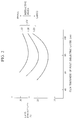
- the reflectivity for reading from the substrate side changes with respect to the film thickness of the first dielectric layer 62 and the composition ratio y'/x' (or the refractive index), as shown in Fig. 2. That is, if y'/x' is large (if the refractive index is small), then the reflectivity does not change largely with respect to the change in the film thickness. This effect is advantageous but also creates a difficulty in adjusting the reflectivity to a desired value by changing the film thickness.
- the reflectivity is so high that the recording density and the C/N ratio are seriously reduced, while the desired reflectivity, which depends upon the combination of a substrate and a drive, is, ordinarily, about 20 %.
- an object of the present invention is to provide an optical recording medium having improved adherence between a substrate and a dielectric layer even under a high-humidity and high-temperature condition, and having improved long-term reliability with respect to signal recording and reproduction.
- an optical recording medium formed by successively laminating a first dielectric layer, a recording layer and a second dielectric layer on a transparent substrate.
- the first dielectric layer is constituted of a material expressed by the following general formula: Mx'Ry' where M is a metallic or semimetallic element, R is a light element which is one of nitride, carbon, oxygen and sulfur, and x' and y' are each a chemical composition value of the corresponding element.
- Mx'Ry' a material expressed by the following general formula: Mx'Ry' where M is a metallic or semimetallic element, R is a light element which is one of nitride, carbon, oxygen and sulfur, and x' and y' are each a chemical composition value of the corresponding element.
- the value of y'/x' is varied so as to be maximized in the vicinity of the substrate in the direction of film thickness.
- Fig. 1 shows a first embodiment of an optical recording medium in accordance with the present invention.
- the optical recording medium of the present invention is formed by successively forming a first dielectric layer 12, a recording layer 13 and a second dielectric layer 14 on a substrate 11 having a resinous surface layer of an organic material.
- the substrate 11 may be any well-known transparent substrate made of materials such as those described above with respect to the conventional art.
- the first dielectric layer 12 is formed mainly for protection of the recording layer 13 formed thereon, i.e., for prevention of oxidation, corrosion and the like of the recording layer and also for the purpose of adjusting or improving the reflectivity, the recording sensitivity and the C/N ratio of the recording medium.
- the dielectric layer 12 is formed in a single-layer or multiple layer structure.
- the material forming the first dielectric layer 12 is a compound represented by a general formula (I): Mx'Ry' as in the case of the above-described method.
- M is a metal, such as Al, Zr, Ti, Mg, W or Zn, or a semimetal, such as Si or B
- R is a light element, such as nitride, carbon, oxygen or sulfur
- x' and y' are each a chemical composition value of the corresponding element.
- the first dielectric layer 12 is formed so that the value of y'/x' of the material is maximized in the vicinity of the substrate in the direction of film thickness.
- y'/x' may be varied continuously, for example, in accordance with a pattern shown in Fig. 3, i.e., so as to be reduced continuously in the direction from the substrate 11 to the recording layer 13, or may be varied discontinuously, for example, in accordance with a pattern shown in Fig. 4.
- y'/x' is larger than 1.8y/x, then a contamination of the recording surface with Mx'Ry' is considerably increased.
- y'/x' in the vicinity of the substrate 0.9y/x ⁇ y'/x' ⁇ 1.8y/x is selected. If the value of y'/x' in the vicinity of the substrate is smaller than the stoichiometric composition ratio y/x, then the adherence to the substrate is very weak.
- the refractive index of this layer is not particularly limited since it varies depending upon the material used. However, the refractive index is ordinarily set to about 1.7 to 2.5. Specifically, it is set to about 1.7 to 2.2 in the vicinity of the substrate 11.
- Examples of the chemical compound in accordance with MxRy of the general formula (II) are oxides, such as SiO, SiO2, Al2O3, ZrO2, TiO2 and MgO, nitrides, such as Si3N4, AlN, ZrN, TiN and BN, carbides, such as SiC, ZrC, WC and B4C, and sulfides, such as ZnS and the like.
- the first dielectric layer 12 may be a composite material composed of a plurality of chemical compounds.
- y'/x' the sum of values obtained by multiplying the values y'/x' of the plurality of compounds by respective molar fractions of the compounds may be used.
- the film thickness of the first dielectric layer 12 is preferably about 20 to 300 nm. If the film thickness is smaller than 20 nm, then the effect of the protective function is not sufficiently high. If the film thickness is larger than 300 nm, then a considerably large variation occurs in the optical characteristics, i.e., the reflectivity and other factors with respect to the change in the film thickness. Most preferably, the film thickness is about 60 to 150 nm.
- the first dielectric layer 12 is formed, typically, by a method of using a sputtering or vacuum deposition process and changing the flow rate and the molar partial pressure ratio of a gas used in this process, or changing a substrate bias applied.
- the optical characteristics i.e., the reflectivity and other factors
- the optical characteristics can be set to desired values by increasing the value of y'/x' of the first dielectric layer 12 (by reducing the refractive index) in the vicinity of the substrate 11 so that the adherence between the first dielectric layer 12 and the substrate is improved, or by reducing the value of y'/x' (by increasing the refractive index) at a position more remote from the substrate 11. That is, the first dielectric layer 12 can have a function of improving the adherence and a function of adjusting optical characteristics if the value of y'/x' is changed in the direction of thickness of the first dielectric layer.
- the recording layer 13 is, for example, a thin film of a rare earth-transition metal amorphous magnetic material formed from a rare earth metal, such as Gd, Tb or Dy, and a transition metal, such as Fe or Co, by sputtering or vacuum deposition.
- a rare earth metal such as Gd, Tb or Dy
- a transition metal such as Fe or Co
- a single or multilayer film of TbFeCo, DyFeCo, GdTbFeCo, TbDyFeCo, GdFeCo or the like is used as this kind of magnetic thin film.
- the thickness of such a magnetic thin film is ordinarily set to about 10 to 1,000 nm.
- the recording layer 13 may be a chalcogen compound thin film which phase changes between amorphous and crystalline phases.
- Te-Se, Te-Se-Sn, Te-Ge-Sb, In-Se-Te, Te-Pb-Se, TeO x or the like is used.
- Such a recording layer film is formed by sputtering, vacuum deposition, ion plating or the like. The film thickness is set to about 200 to 1,000 nm. These recording layer materials are well known.
- the second dielectric layer 14 is formed by using the same material and the same film forming method as those for the first dielectric layer 12.
- the film thickness of this layer is ordinarily set to 20 to 500 nm.
- the optical recording medium structure of the present invention is not limited to that illustrated in Fig. 1.
- a structure such as that shown in Fig. 5, may be used in which a recording layer 53 in formed as a thin film and a reflecting layer 55 is formed on a second dielectric layer 54. These layers are formed on a substrate 51 and a first dielectric layer 52.
- a protective coating layer formed of an organic material may be formed on the second dielectric layer 54 or the reflecting layer 55.
- the structure of the optical recording medium may be of an adherence type, such that the protective substrate is attached through a bonding layer, or of an air sandwich type such that the protective substrate is attached through a spacer and a bonding layer.
- An optical recording medium having the structure shown in Fig. 1 was manufactured by a process described below.
- a first dielectric layer 12 formed of silicon nitride SiN x was formed on a disk-like polycarbonate substrate 11.
- the first dielectric layer 12 was formed by reactive sputtering process in which a Si target was used and (Ar + N2) gas introduced.
- Ar gas and N2 gas were caused to flow at 145 sccm and 95 sccm, respectively.
- a thin film having y'/x' 1.35 and a thickness of 40 nm was formed under this condition.
- the first dielectric layer 12 was thereby formed, in which y'/x' discontinuously varied in the direction of film thickness.
- a recording layer 13 a TbFeCo film having a thickness of 80 nm was formed by sputtering.
- the medium of experimental example 1 of the invention has improved reliability for long-time use without impairing its characteristics.
- a magneto-optical recording material was used in the recording layer 13.
- the present invention can be applied to recording mediums using other recording materials.
- the optical recording medium of the present invention having the above-described structure, has improved adherence between the substrate and the film and improved long-time reliability, while suitable optical characteristics, such as reflectivity and other factors, and dynamic characteristics (C/N ratio and other factors) are maintained.
Landscapes
- Chemical & Material Sciences (AREA)
- Inorganic Chemistry (AREA)
- Optical Record Carriers And Manufacture Thereof (AREA)
Applications Claiming Priority (2)
| Application Number | Priority Date | Filing Date | Title |
|---|---|---|---|
| JP5190410A JPH0744887A (ja) | 1993-07-30 | 1993-07-30 | 光学的記録媒体 |
| JP190410/93 | 1993-07-30 |
Publications (1)
| Publication Number | Publication Date |
|---|---|
| EP0637017A1 true EP0637017A1 (de) | 1995-02-01 |
Family
ID=16257683
Family Applications (1)
| Application Number | Title | Priority Date | Filing Date |
|---|---|---|---|
| EP94305600A Withdrawn EP0637017A1 (de) | 1993-07-30 | 1994-07-28 | Optischer Aufzeichnungsträger mit Aufzeichnungsschichte und dielektrischen Schichten |
Country Status (2)
| Country | Link |
|---|---|
| EP (1) | EP0637017A1 (de) |
| JP (1) | JPH0744887A (de) |
Cited By (1)
| Publication number | Priority date | Publication date | Assignee | Title |
|---|---|---|---|---|
| US5912103A (en) * | 1995-12-11 | 1999-06-15 | Teijin Limited | Phase change optical recording medium |
Citations (3)
| Publication number | Priority date | Publication date | Assignee | Title |
|---|---|---|---|---|
| EP0427982A2 (de) * | 1989-10-26 | 1991-05-22 | Shin-Etsu Chemical Co., Ltd. | Magnetooptisches Aufzeichnungsmedium |
| EP0442494A2 (de) * | 1990-02-16 | 1991-08-21 | Mitsubishi Plastics Industries Limited | Magneto-Optisches Aufzeichnungsmedium |
| EP0509467A1 (de) * | 1991-04-17 | 1992-10-21 | Shin-Etsu Chemical Co., Ltd. | Magnetooptischer Aufzeichnungsträger |
-
1993
- 1993-07-30 JP JP5190410A patent/JPH0744887A/ja active Pending
-
1994
- 1994-07-28 EP EP94305600A patent/EP0637017A1/de not_active Withdrawn
Patent Citations (3)
| Publication number | Priority date | Publication date | Assignee | Title |
|---|---|---|---|---|
| EP0427982A2 (de) * | 1989-10-26 | 1991-05-22 | Shin-Etsu Chemical Co., Ltd. | Magnetooptisches Aufzeichnungsmedium |
| EP0442494A2 (de) * | 1990-02-16 | 1991-08-21 | Mitsubishi Plastics Industries Limited | Magneto-Optisches Aufzeichnungsmedium |
| EP0509467A1 (de) * | 1991-04-17 | 1992-10-21 | Shin-Etsu Chemical Co., Ltd. | Magnetooptischer Aufzeichnungsträger |
Cited By (1)
| Publication number | Priority date | Publication date | Assignee | Title |
|---|---|---|---|---|
| US5912103A (en) * | 1995-12-11 | 1999-06-15 | Teijin Limited | Phase change optical recording medium |
Also Published As
| Publication number | Publication date |
|---|---|
| JPH0744887A (ja) | 1995-02-14 |
Similar Documents
| Publication | Publication Date | Title |
|---|---|---|
| CA1209698A (en) | Magneto-optic memory device | |
| US4658388A (en) | Optical recording medium which includes a corrosion resistant film of a mixture of a carbide and a nitride | |
| US4579777A (en) | Opto-magnetic recording medium | |
| US4695510A (en) | Opto-magnetic recording medium | |
| US4711821A (en) | Opto-magnetic recording medium | |
| EP0426864B1 (de) | Magnetooptisches medium | |
| EP0419169B1 (de) | Magneto-optisches Aufzeichnungsmedium | |
| US4578322A (en) | Recording medium | |
| EP0637017A1 (de) | Optischer Aufzeichnungsträger mit Aufzeichnungsschichte und dielektrischen Schichten | |
| JPH03288346A (ja) | 光記録媒体 | |
| EP0388852B1 (de) | Magnetooptischer Aufzeichnungsträger und Verfahren zu seiner Herstellung | |
| EP0509467B1 (de) | Magnetooptischer Aufzeichnungsträger | |
| US5514468A (en) | Magneto-optical recording medium | |
| JPS60197966A (ja) | 光学的記録媒体 | |
| JPH04219650A (ja) | 光学的記録媒体 | |
| JPH0352143B2 (de) | ||
| JPS6192456A (ja) | 光学的記録媒体 | |
| EP0484945A2 (de) | Magnetisches Aufzeichnungsmedium | |
| JPS61278061A (ja) | 光磁気記録媒体 | |
| JP2912725B2 (ja) | 光磁気記録体 | |
| JPS6192457A (ja) | 光学的記録媒体 | |
| EP0442494A2 (de) | Magneto-Optisches Aufzeichnungsmedium | |
| KR970001976B1 (ko) | 광자기 기록매체 | |
| KR930007027B1 (ko) | 광자기 기록 매체의 구조 | |
| JPS6192455A (ja) | 光学的記録媒体 |
Legal Events
| Date | Code | Title | Description |
|---|---|---|---|
| PUAI | Public reference made under article 153(3) epc to a published international application that has entered the european phase |
Free format text: ORIGINAL CODE: 0009012 |
|
| AK | Designated contracting states |
Kind code of ref document: A1 Designated state(s): DE FR GB IT NL |
|
| 17P | Request for examination filed |
Effective date: 19950619 |
|
| 17Q | First examination report despatched |
Effective date: 19980122 |
|
| STAA | Information on the status of an ep patent application or granted ep patent |
Free format text: STATUS: THE APPLICATION IS DEEMED TO BE WITHDRAWN |
|
| 18D | Application deemed to be withdrawn |
Effective date: 19980804 |