EP0638404A1 - Procédé et dispositif pour la fabrication d'un produit en matière plastique - Google Patents
Procédé et dispositif pour la fabrication d'un produit en matière plastique Download PDFInfo
- Publication number
- EP0638404A1 EP0638404A1 EP19940111403 EP94111403A EP0638404A1 EP 0638404 A1 EP0638404 A1 EP 0638404A1 EP 19940111403 EP19940111403 EP 19940111403 EP 94111403 A EP94111403 A EP 94111403A EP 0638404 A1 EP0638404 A1 EP 0638404A1
- Authority
- EP
- European Patent Office
- Prior art keywords
- mixture
- radio
- pieces
- conveyor belt
- frequency radiation
- Prior art date
- Legal status (The legal status is an assumption and is not a legal conclusion. Google has not performed a legal analysis and makes no representation as to the accuracy of the status listed.)
- Withdrawn
Links
- 229920003023 plastic Polymers 0.000 title claims abstract description 47
- 239000004033 plastic Substances 0.000 title claims abstract description 47
- 238000000034 method Methods 0.000 title claims abstract description 18
- 239000000203 mixture Substances 0.000 claims abstract description 43
- 230000005855 radiation Effects 0.000 claims abstract description 26
- 239000012815 thermoplastic material Substances 0.000 claims abstract description 11
- 238000010438 heat treatment Methods 0.000 claims abstract description 7
- 238000005245 sintering Methods 0.000 claims abstract description 5
- 238000000151 deposition Methods 0.000 claims abstract description 3
- 238000002156 mixing Methods 0.000 claims abstract description 3
- 239000011236 particulate material Substances 0.000 claims abstract description 3
- 238000003825 pressing Methods 0.000 claims abstract description 3
- 239000000463 material Substances 0.000 claims description 46
- YKTSYUJCYHOUJP-UHFFFAOYSA-N [O--].[Al+3].[Al+3].[O-][Si]([O-])([O-])[O-] Chemical compound [O--].[Al+3].[Al+3].[O-][Si]([O-])([O-])[O-] YKTSYUJCYHOUJP-UHFFFAOYSA-N 0.000 claims description 5
- 239000002245 particle Substances 0.000 claims description 4
- 229910010272 inorganic material Inorganic materials 0.000 claims description 3
- 239000011147 inorganic material Substances 0.000 claims description 3
- 239000002699 waste material Substances 0.000 abstract description 9
- 239000002985 plastic film Substances 0.000 description 8
- 238000004064 recycling Methods 0.000 description 7
- -1 polyethylene Polymers 0.000 description 6
- 239000004800 polyvinyl chloride Substances 0.000 description 5
- 229920000915 polyvinyl chloride Polymers 0.000 description 5
- 239000000047 product Substances 0.000 description 5
- 239000004698 Polyethylene Substances 0.000 description 4
- 239000004793 Polystyrene Substances 0.000 description 4
- 239000004417 polycarbonate Substances 0.000 description 4
- 229920000515 polycarbonate Polymers 0.000 description 4
- 229920000573 polyethylene Polymers 0.000 description 4
- 229920002223 polystyrene Polymers 0.000 description 4
- 239000002023 wood Substances 0.000 description 4
- 230000002745 absorbent Effects 0.000 description 3
- 239000002250 absorbent Substances 0.000 description 3
- 229910052751 metal Inorganic materials 0.000 description 3
- 239000002184 metal Substances 0.000 description 3
- 239000011888 foil Substances 0.000 description 2
- 239000011521 glass Substances 0.000 description 2
- 239000012265 solid product Substances 0.000 description 2
- 229920001169 thermoplastic Polymers 0.000 description 2
- 229920001187 thermosetting polymer Polymers 0.000 description 2
- 239000004416 thermosoftening plastic Substances 0.000 description 2
- 239000004925 Acrylic resin Substances 0.000 description 1
- 229920000178 Acrylic resin Polymers 0.000 description 1
- 239000004743 Polypropylene Substances 0.000 description 1
- 239000000654 additive Substances 0.000 description 1
- 239000011230 binding agent Substances 0.000 description 1
- 239000004568 cement Substances 0.000 description 1
- 238000010276 construction Methods 0.000 description 1
- 239000003822 epoxy resin Substances 0.000 description 1
- 230000003203 everyday effect Effects 0.000 description 1
- 239000004744 fabric Substances 0.000 description 1
- 238000011065 in-situ storage Methods 0.000 description 1
- 230000000670 limiting effect Effects 0.000 description 1
- 239000007788 liquid Substances 0.000 description 1
- 239000011344 liquid material Substances 0.000 description 1
- 239000000155 melt Substances 0.000 description 1
- 238000002844 melting Methods 0.000 description 1
- 230000008018 melting Effects 0.000 description 1
- 239000000178 monomer Substances 0.000 description 1
- 239000000123 paper Substances 0.000 description 1
- 239000013502 plastic waste Substances 0.000 description 1
- 229920000647 polyepoxide Polymers 0.000 description 1
- 229920001155 polypropylene Polymers 0.000 description 1
- 229920001343 polytetrafluoroethylene Polymers 0.000 description 1
- 239000002994 raw material Substances 0.000 description 1
- 239000004575 stone Substances 0.000 description 1
- 230000001360 synchronised effect Effects 0.000 description 1
- 229920005992 thermoplastic resin Polymers 0.000 description 1
Images


Classifications
-
- B—PERFORMING OPERATIONS; TRANSPORTING
- B29—WORKING OF PLASTICS; WORKING OF SUBSTANCES IN A PLASTIC STATE IN GENERAL
- B29C—SHAPING OR JOINING OF PLASTICS; SHAPING OF MATERIAL IN A PLASTIC STATE, NOT OTHERWISE PROVIDED FOR; AFTER-TREATMENT OF THE SHAPED PRODUCTS, e.g. REPAIRING
- B29C35/00—Heating, cooling or curing, e.g. crosslinking or vulcanising; Apparatus therefor
- B29C35/02—Heating or curing, e.g. crosslinking or vulcanizing during moulding, e.g. in a mould
- B29C35/08—Heating or curing, e.g. crosslinking or vulcanizing during moulding, e.g. in a mould by wave energy or particle radiation
- B29C35/10—Heating or curing, e.g. crosslinking or vulcanizing during moulding, e.g. in a mould by wave energy or particle radiation for articles of indefinite length
-
- B—PERFORMING OPERATIONS; TRANSPORTING
- B29—WORKING OF PLASTICS; WORKING OF SUBSTANCES IN A PLASTIC STATE IN GENERAL
- B29B—PREPARATION OR PRETREATMENT OF THE MATERIAL TO BE SHAPED; MAKING GRANULES OR PREFORMS; RECOVERY OF PLASTICS OR OTHER CONSTITUENTS OF WASTE MATERIAL CONTAINING PLASTICS
- B29B17/00—Recovery of plastics or other constituents of waste material containing plastics
- B29B17/0026—Recovery of plastics or other constituents of waste material containing plastics by agglomeration or compacting
- B29B17/0042—Recovery of plastics or other constituents of waste material containing plastics by agglomeration or compacting for shaping parts, e.g. multilayered parts with at least one layer containing regenerated plastic
-
- B—PERFORMING OPERATIONS; TRANSPORTING
- B29—WORKING OF PLASTICS; WORKING OF SUBSTANCES IN A PLASTIC STATE IN GENERAL
- B29C—SHAPING OR JOINING OF PLASTICS; SHAPING OF MATERIAL IN A PLASTIC STATE, NOT OTHERWISE PROVIDED FOR; AFTER-TREATMENT OF THE SHAPED PRODUCTS, e.g. REPAIRING
- B29C43/00—Compression moulding, i.e. applying external pressure to flow the moulding material; Apparatus therefor
- B29C43/22—Compression moulding, i.e. applying external pressure to flow the moulding material; Apparatus therefor of articles of indefinite length
-
- B—PERFORMING OPERATIONS; TRANSPORTING
- B29—WORKING OF PLASTICS; WORKING OF SUBSTANCES IN A PLASTIC STATE IN GENERAL
- B29C—SHAPING OR JOINING OF PLASTICS; SHAPING OF MATERIAL IN A PLASTIC STATE, NOT OTHERWISE PROVIDED FOR; AFTER-TREATMENT OF THE SHAPED PRODUCTS, e.g. REPAIRING
- B29C35/00—Heating, cooling or curing, e.g. crosslinking or vulcanising; Apparatus therefor
- B29C35/02—Heating or curing, e.g. crosslinking or vulcanizing during moulding, e.g. in a mould
- B29C35/08—Heating or curing, e.g. crosslinking or vulcanizing during moulding, e.g. in a mould by wave energy or particle radiation
- B29C35/0805—Heating or curing, e.g. crosslinking or vulcanizing during moulding, e.g. in a mould by wave energy or particle radiation using electromagnetic radiation
- B29C2035/0861—Heating or curing, e.g. crosslinking or vulcanizing during moulding, e.g. in a mould by wave energy or particle radiation using electromagnetic radiation using radio frequency
-
- B—PERFORMING OPERATIONS; TRANSPORTING
- B29—WORKING OF PLASTICS; WORKING OF SUBSTANCES IN A PLASTIC STATE IN GENERAL
- B29K—INDEXING SCHEME ASSOCIATED WITH SUBCLASSES B29B, B29C OR B29D, RELATING TO MOULDING MATERIALS OR TO MATERIALS FOR MOULDS, REINFORCEMENTS, FILLERS OR PREFORMED PARTS, e.g. INSERTS
- B29K2105/00—Condition, form or state of moulded material or of the material to be shaped
- B29K2105/25—Solid
- B29K2105/251—Particles, powder or granules
-
- B—PERFORMING OPERATIONS; TRANSPORTING
- B29—WORKING OF PLASTICS; WORKING OF SUBSTANCES IN A PLASTIC STATE IN GENERAL
- B29K—INDEXING SCHEME ASSOCIATED WITH SUBCLASSES B29B, B29C OR B29D, RELATING TO MOULDING MATERIALS OR TO MATERIALS FOR MOULDS, REINFORCEMENTS, FILLERS OR PREFORMED PARTS, e.g. INSERTS
- B29K2105/00—Condition, form or state of moulded material or of the material to be shaped
- B29K2105/26—Scrap or recycled material
-
- Y—GENERAL TAGGING OF NEW TECHNOLOGICAL DEVELOPMENTS; GENERAL TAGGING OF CROSS-SECTIONAL TECHNOLOGIES SPANNING OVER SEVERAL SECTIONS OF THE IPC; TECHNICAL SUBJECTS COVERED BY FORMER USPC CROSS-REFERENCE ART COLLECTIONS [XRACs] AND DIGESTS
- Y02—TECHNOLOGIES OR APPLICATIONS FOR MITIGATION OR ADAPTATION AGAINST CLIMATE CHANGE
- Y02W—CLIMATE CHANGE MITIGATION TECHNOLOGIES RELATED TO WASTEWATER TREATMENT OR WASTE MANAGEMENT
- Y02W30/00—Technologies for solid waste management
- Y02W30/50—Reuse, recycling or recovery technologies
- Y02W30/62—Plastics recycling; Rubber recycling
-
- Y—GENERAL TAGGING OF NEW TECHNOLOGICAL DEVELOPMENTS; GENERAL TAGGING OF CROSS-SECTIONAL TECHNOLOGIES SPANNING OVER SEVERAL SECTIONS OF THE IPC; TECHNICAL SUBJECTS COVERED BY FORMER USPC CROSS-REFERENCE ART COLLECTIONS [XRACs] AND DIGESTS
- Y10—TECHNICAL SUBJECTS COVERED BY FORMER USPC
- Y10S—TECHNICAL SUBJECTS COVERED BY FORMER USPC CROSS-REFERENCE ART COLLECTIONS [XRACs] AND DIGESTS
- Y10S264/00—Plastic and nonmetallic article shaping or treating: processes
- Y10S264/46—Molding using an electrical heat
-
- Y—GENERAL TAGGING OF NEW TECHNOLOGICAL DEVELOPMENTS; GENERAL TAGGING OF CROSS-SECTIONAL TECHNOLOGIES SPANNING OVER SEVERAL SECTIONS OF THE IPC; TECHNICAL SUBJECTS COVERED BY FORMER USPC CROSS-REFERENCE ART COLLECTIONS [XRACs] AND DIGESTS
- Y10—TECHNICAL SUBJECTS COVERED BY FORMER USPC
- Y10S—TECHNICAL SUBJECTS COVERED BY FORMER USPC CROSS-REFERENCE ART COLLECTIONS [XRACs] AND DIGESTS
- Y10S264/00—Plastic and nonmetallic article shaping or treating: processes
- Y10S264/911—Recycling consumer used articles or products
-
- Y—GENERAL TAGGING OF NEW TECHNOLOGICAL DEVELOPMENTS; GENERAL TAGGING OF CROSS-SECTIONAL TECHNOLOGIES SPANNING OVER SEVERAL SECTIONS OF THE IPC; TECHNICAL SUBJECTS COVERED BY FORMER USPC CROSS-REFERENCE ART COLLECTIONS [XRACs] AND DIGESTS
- Y10—TECHNICAL SUBJECTS COVERED BY FORMER USPC
- Y10T—TECHNICAL SUBJECTS COVERED BY FORMER US CLASSIFICATION
- Y10T428/00—Stock material or miscellaneous articles
- Y10T428/25—Web or sheet containing structurally defined element or component and including a second component containing structurally defined particles
- Y10T428/254—Polymeric or resinous material
-
- Y—GENERAL TAGGING OF NEW TECHNOLOGICAL DEVELOPMENTS; GENERAL TAGGING OF CROSS-SECTIONAL TECHNOLOGIES SPANNING OVER SEVERAL SECTIONS OF THE IPC; TECHNICAL SUBJECTS COVERED BY FORMER USPC CROSS-REFERENCE ART COLLECTIONS [XRACs] AND DIGESTS
- Y10—TECHNICAL SUBJECTS COVERED BY FORMER USPC
- Y10T—TECHNICAL SUBJECTS COVERED BY FORMER US CLASSIFICATION
- Y10T428/00—Stock material or miscellaneous articles
- Y10T428/26—Web or sheet containing structurally defined element or component, the element or component having a specified physical dimension
- Y10T428/269—Web or sheet containing structurally defined element or component, the element or component having a specified physical dimension including synthetic resin or polymer layer or component
-
- Y—GENERAL TAGGING OF NEW TECHNOLOGICAL DEVELOPMENTS; GENERAL TAGGING OF CROSS-SECTIONAL TECHNOLOGIES SPANNING OVER SEVERAL SECTIONS OF THE IPC; TECHNICAL SUBJECTS COVERED BY FORMER USPC CROSS-REFERENCE ART COLLECTIONS [XRACs] AND DIGESTS
- Y10—TECHNICAL SUBJECTS COVERED BY FORMER USPC
- Y10T—TECHNICAL SUBJECTS COVERED BY FORMER US CLASSIFICATION
- Y10T428/00—Stock material or miscellaneous articles
- Y10T428/29—Coated or structually defined flake, particle, cell, strand, strand portion, rod, filament, macroscopic fiber or mass thereof
- Y10T428/2982—Particulate matter [e.g., sphere, flake, etc.]
Definitions
- the present invention relates to a method and apparatus for producing plastic products.
- the invention is particularly useful for recycling waste plastic materials and is therefore described below with respect to this application.
- a method of producing plastic products comprising: cutting into piece a thermoplastic material having a loss factor higher than 0.005 such as to have a high absorbence of radio-frequency radiation, the pieces being cut so that the bulk of the pieces have a size of 2-10 mm in their largest dimension; mixing the pieces of thermoplastic material with at least one other particulate material; depositing the mixture on a supporting surface; and applying radio-frequency (RF) radiation to the mixture sufficient to soften only the outer surfaces of the pieces of thermoplastic material by dielectric heating, while applying pressure to the mixture to bond the mixture together by sintering.
- RF radio-frequency
- the "loss factor" of a material is defined as the power factor of the material multiplied by its dielectric constant, and determines the amount of heat generated in the material in the presence of RF radiation.
- a particularly suitable material is polyvinyl chloride, which has a loss factor ranging from 0.0054 to 0.32.
- Other high-loss factor materials that may be used are the acrylic resins which have a loss factor ranging from 0.056 to 0.1, and polycarbonates which have a loss factor of up to about 0.009.
- the mixture may also include an organic plastic material having a loss factor lower than 0.005, i.e., having a low absorbence of radio-frequency radiation.
- This latter material is also cut into pieces such that the bulk thereof are from 2 to 10 mm in their largest dimension.
- examples of such other materials are polyethylene having a loss factor of 0.00046 to 0.00072, polystyrene having a loss factor of about 0.00025, and polypropylene having a loss factor of about 0.00085.
- the low RF radiation absorbent material is also a thermoplastic, its outer surface is also softened by the heat generated in the plastic material of high RF radiation absorbence.
- the added materials of low RF radiation absorbence may also be thermosetting materials, in which case the softened thermoplastic material acts as a cement bonding together the thermosetting plastic pieces.
- the method of the present invention thus permits strong solid products to be produced by sintering mixtures of different waste plastics which otherwise might be mutually incompatible if melted and mixed together.
- the mixture may include various other materials (e.g., stone, metal, wood, paper, glass, etc.) which might be present in the waste materials and otherwise costly to remove.
- Such a method is therefore particularly useful for recycling waste plastic materials of various types.
- apparatus for producing plastic products also particularly useful for recycling plastics, comprising: a table extending longitudinally of the apparatus; a first conveyor belt moving longitudinally over the table; a second conveyor belt moving with and aligned over the first conveyor belt at an angle which converges therewith from one end to the opposite end of the first conveyor belt; and a plurality of pairs of radio-frequency electrodes spaced longitudinally along the length of, and straddling, the two conveyor belts.
- the apparatus illustrated in Fig. 1 includes a closed-loop conveyor belt 2 driven by a pair of drums 4, 6 over a table 8.
- the plastic materials to be recycled may be unselected waste materials obtained from various source but includes at least one thermoplastic material having a loss factor higher than 0.005 such as to have a high absorbence of RF radiation.
- the waste plastic materials are cut into pieces of various sizes such that the bulk of the pieces are between 2 mm and 10 mm in their largest dimension.
- the cut pieces are mixed together and supplied via three hoppers 10, 12 and 14, onto the conveyor belt 2 as it moves over table 8.
- the mixture supplied via hopper 10 is compacted into a first layer on belt 2 by means of a compacting roller 16 before the second layer is applied from the second hopper 12.
- the latter mixture is compacted onto the first layer by a second compacting roller 18, before the mixture from the third hopper 14 is applied thereover to define a third layer.
- the three layers of the mixture on the conveyor belt 2 then move between a pressure roller 20 overlying the conveyor belt 2 and a radio-frequency (RF) heater 22 underlying the conveyor belt 2 and the table 8 on which the belt is supported.
- RF heating could be effected by a pair of RF electrodes, straddling the conveyor and mixture just before the pressure roller 20.
- the RF heater 22 heats the mixture by dielectric heating sufficiently to soften mainly the outer surfaces of the thermoplastic pieces.
- the pressure roller 20 presses the plastic pieces together and against the conveyor belt as it moves over the table 8, to bond the plastic pieces into a continuous plastic sheet or board.
- the apparatus illustrated in Fig. 1 further includes a cutter blade 24 overlying the so-produced plastic sheet.
- Cutter blade 24 is moved by a drive 26 with the plastic sheet outputted by the apparatus, as synchronized by a speed sensor 28, and is driven against the sheet in order to cut it into segments of any desired length.
- the mixture of materials deposited on the conveyor belt includes pieces of at least one thermoplastic material having a loss factor higher than 0.005, such as to have a high absorbence of radio-frequency radiation.
- the mixture preferably also includes at least one other organic plastic material having a loss factor lower than 0.005, such as to have a low absorbence of RF radiation.
- the plastic materials may be a mixture including rigid polyvinyl chloride, polyethylene, polystyrene, and/or polycarbonate wastes cut into pieces such that the bulk of the pieces are within the range of 2-10 mm;
- the RF heater 22 may be in the radio-frequency range, e.g., 13.56 MHz or 27.12 MHz, or in the microwave range, e.g., 915 or 2450 MHz. It should be capable of heating the plastic pieces by dielectric heating to a temperature of 110°-200°C to soften mainly their outer surfaces.
- the pressure roller 20 may apply a pressure within the range of 0.5 to 3 KGm/cm2.
- the mixture could also include particles of an inorganic material having a high absorbence of RF radiation.
- a particularly useful material for this purpose is aluminum silicate. Such materials, being highly absorbent of RF radiation, enhance the concentration of the heat energy at the interfaces between the plastic pieces.
- aluminum silicate is used, it is preferably included from 0.5 to 5.0%, by weight of the mixture.
- Aluminum silicate Polyvinyl chloride (rigid) 32% Polyethylene 32% Polystyrene 27% Polycarbonate 6% Aluminum silicate 3%
- the mixture could include other additives, for example a liquid material which polymerizes when heated to bond the plastic pieces together.
- a liquid material which polymerizes when heated to bond the plastic pieces together.
- An example of such a bonding material is an epoxy resin monomer which readily coats or wets the outer surfaces of the plastic pieces and which polymerizes at room temperature, or when heated to a temperature of about 50-100°C, to bind the cut pieces together.
- the liquid binding agent used could also be a thermoplastic resin having a relatively low melting point (e.g., 120°C) such that when it is heated, it melts and readily wets the cut pieces of plastic and binds them together when the mixture cools.
- one or both of the outer face layers could be relatively thin layers made of a virgin plastic material sintered in situ, or prefabricated thin sheets, whereas the recycled plastic (e.g., of one of the above compositions) could be applied as one or more relatively thick intermediate layers.
- the resulting laminated board would have the outer appearance of virgin plastic material even though a good portion, or even the bulk, of the laminated board is actually made of the recycled plastic waste materials.
- thin metal or wood (veneer) foils could be used as the outer face layers instead of plastic sheets or films.
- Fig. 2 illustrates a method in which a mixture of one or more types of the above plastic materials to be recycled are cut into pieces and are deposited in the form of a layer 200 on a preformed plastic sheet 202 inside a mould 204 made of a material which is transparent to RF radiation. Another preformed plastic sheet 206 may then be laid on top of the layer of plastic pieces 200, and then the top panel 208 of the open mould is closed. The complete assembly is heated by RF radiation to soften mainly the outer surfaces of the plastic pieces 200, as well as the inner surfaces of the two plastic sheets 202 and 206. Pressure is applied between the two mould panels 204 and 208 to bond all the foregoing plastic materials into a single panel or board, or relatively flat shaped solid products.
- the so-produced panel or board thus has the appearance of virgin plastic material since one or both of its two outer faces are made of such a material.
- the bulk of its volume is constituted of the reclaimed plastic materials.
- a metal foil or thin wood layer can be used as one or both face layers instead of plastic.
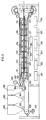
- Figs. 3-5 illustrate a further form of apparatus that may be used.
- the apparatus includes a table 300 extending longitudinally of the apparatus; a first closed-loop conveyor belt 301 moving longitudinally over the table; and a second close-loop conveyor belt 302 moving with and aligned over conveyor belt 301.
- Conveyor belt 302 is located at an angle with respect to conveyor belt 301 such that it is spaced therefrom at the entrance end 303 of the apparatus and converges towards it at the exit end 304 of the apparatus when the belt 302 is spaced from belt 301 a distance equal to the thickness of the board to be produced by the apparatus.
- the mixture of plastic materials is deposited onto conveyor belt 301 from one or more hoppers 305 by means of accurate weight feeders or other feeders, each including a compactor roller 306. If desired, preformed sheets 307, 308, may be applied to the opposite sides of the material deposited onto conveyor belt 301 by supply rollers 309, 310, respectively.
- the two conveyor belts 301, 302 are straddled by a plurality of pairs of RF electrodes 311-316 spaced longitudinally along the length of the two conveyor belts.
- electrode pair 311 includes a lower electrode 311a underlying and engaging the lower belt 301, and an upper electrode 311b overlying and engaging the upper belt 302. These electrodes fix the converging angle defined by the upper belt 302 with respect to the lower belt 301.
- the material used for the belts must be strong, flexible, electrically insulating, and transparent to RF radiation.
- the conveyor belts 301, 302 are made of a glass fabric coated with a material having a low dielectric constant, such as polytetrafluorethylene.
- all the electrode plates are preferably formed with a plurality of openings, as shown at 320 in Fig. 5, coupled to a source of compressed air to produce a thin (preferably less than 0.1 mm) air cushion between the electrodes and the conveyor belts.
- Fig. 3 schematically illustrates at 317 the source of compressed air, and at 318-320 the conduits leading the compressed air to the RF electrodes 311-316.
- Fig. 3 also schematically illustrates the six RF generators 321-326 for the six pairs of electrodes 311-316, respectively.
- Each of the RF generators preferably has a maximum power output of 50 Kw. They are energized to produce a desired temperature profile, e.g., to gradually increase the temperature of the mixture heated in the apparatus as it moves from the entrance end 303 to the exit end 304.
- the RF generators may be controlled to heat the mixture to a temperature of 20°C at the entrance end 303 and to a maximum temperature of 120-180°C at the exit end 304, sufficient to soften the outer surface of the RF radiation absorbent pieces of plastic (e.g., polyvinyl chloride).
- the pressure applied by the upper conveyor belt 301 at its exit end is preferably about 0.3 to 1.2 Kg/cm2, sufficient to bond the softened particles together with the other elements of the mixture by sintering.
Landscapes
- Engineering & Computer Science (AREA)
- Health & Medical Sciences (AREA)
- Mechanical Engineering (AREA)
- Toxicology (AREA)
- Physics & Mathematics (AREA)
- Oral & Maxillofacial Surgery (AREA)
- Thermal Sciences (AREA)
- Environmental & Geological Engineering (AREA)
- Separation, Recovery Or Treatment Of Waste Materials Containing Plastics (AREA)
- Processing And Handling Of Plastics And Other Materials For Molding In General (AREA)
Applications Claiming Priority (2)
| Application Number | Priority Date | Filing Date | Title |
|---|---|---|---|
| IL10646093 | 1993-07-23 | ||
| IL10646093A IL106460A (en) | 1993-07-23 | 1993-07-23 | Method of recycling plastic materials |
Publications (1)
| Publication Number | Publication Date |
|---|---|
| EP0638404A1 true EP0638404A1 (fr) | 1995-02-15 |
Family
ID=11065075
Family Applications (1)
| Application Number | Title | Priority Date | Filing Date |
|---|---|---|---|
| EP19940111403 Withdrawn EP0638404A1 (fr) | 1993-07-23 | 1994-07-21 | Procédé et dispositif pour la fabrication d'un produit en matière plastique |
Country Status (5)
| Country | Link |
|---|---|
| US (1) | US5589260A (fr) |
| EP (1) | EP0638404A1 (fr) |
| JP (1) | JPH07148735A (fr) |
| CN (1) | CN1103351A (fr) |
| IL (1) | IL106460A (fr) |
Cited By (3)
| Publication number | Priority date | Publication date | Assignee | Title |
|---|---|---|---|---|
| EP1031403A1 (fr) * | 1999-02-26 | 2000-08-30 | Lear Corporation | Procédé de fabrication d'une préforme |
| EP1673204A4 (fr) * | 2003-10-13 | 2007-10-03 | Cycloplas Holdings Pty Ltd | Procede permettant de recycler des plastiques uses |
| WO2019054856A1 (fr) * | 2017-09-13 | 2019-03-21 | Better Future Factory B.V. | Procédé de transformation d'un thermoplastique en un élément monolithique tel qu'un carreau, un récipient et une combinaison d'un four, de moyens de transport et du récipient |
Families Citing this family (20)
| Publication number | Priority date | Publication date | Assignee | Title |
|---|---|---|---|---|
| ES2172760T3 (es) * | 1997-11-04 | 2002-10-01 | Tenax Spa | Procedimiento para el estiramiento de redes y rejillas. |
| EP0972108A2 (fr) | 1998-02-04 | 2000-01-19 | Mannington Mills, Inc. | Revetements de surface contenant une matiere recyclee fondue et leurs procedes de fabrication |
| US6588772B2 (en) | 2000-12-28 | 2003-07-08 | The Burton Corporation | Sintered sheet plastic material and gliding board base material |
| US20030143366A1 (en) * | 2002-01-17 | 2003-07-31 | Jerry Foley | Polymeric and fibrous laminate and methods of forming and using same |
| US6863970B2 (en) * | 2002-01-17 | 2005-03-08 | Penske Composites | Fastener retention foam sheet and associated method |
| US6902694B2 (en) * | 2002-01-17 | 2005-06-07 | Penske Composites Inc. | Fastener retention foam sheet and associated methods |
| US6821595B2 (en) * | 2002-02-21 | 2004-11-23 | Ecoem, L.L.C. | Composite material paneling and method of making the same |
| JP4387237B2 (ja) * | 2004-04-23 | 2009-12-16 | 株式会社トピア | プラスチック繊維成形体、プラスチック繊維成形体の製造方法、プラスチック繊維板の製造装置 |
| KR100569417B1 (ko) * | 2004-08-13 | 2006-04-07 | 현대자동차주식회사 | 마이크로웨이브를 이용한 폐고무분말의 연속식표면개질장치와 이를 이용한 표면개질방법 |
| EP1863620B1 (fr) * | 2004-09-28 | 2016-12-07 | U.B.Q. Materials Ltd. | Procede et systeme destines au traitement des dechets |
| US8470897B2 (en) | 2010-01-20 | 2013-06-25 | Vertex L.L.C. | Devulcanization of rubber and other elastomers |
| US8357726B2 (en) * | 2010-01-20 | 2013-01-22 | Vertex L.L.C. | Devulcanization of rubber and other elastomers |
| JP5815228B2 (ja) * | 2010-12-06 | 2015-11-17 | トップテック・カンパニー・リミテッドTOPTEC Co., Ltd. | 電界紡糸装置及びナノ繊維製造装置 |
| US12365148B2 (en) | 2015-11-13 | 2025-07-22 | Greentex Solutions, Llc | Composite products and related methods for manufacturing composite products from recycled composite materials |
| US20170136713A1 (en) | 2015-11-13 | 2017-05-18 | James C. Holmes, IV | Composite materials and related methods for manufacturing composite materials |
| CN105710994B (zh) * | 2016-03-08 | 2018-06-01 | 马东欣 | 废弃塑料的再利用方法 |
| US10604442B2 (en) | 2016-11-17 | 2020-03-31 | Cardinal Cg Company | Static-dissipative coating technology |
| US12042954B2 (en) * | 2019-05-11 | 2024-07-23 | The Texas A&M University System | B-staging of pre-preg using capacitively-coupled electromagnetic heating method |
| US20220305761A1 (en) * | 2021-03-23 | 2022-09-29 | CSR Industries Inc. | Acoustic insulating panel using recycled material |
| US12247396B2 (en) | 2021-12-17 | 2025-03-11 | CSR Industries Inc. | Ceiling tile and assembly constructed of recycled materials |
Citations (10)
| Publication number | Priority date | Publication date | Assignee | Title |
|---|---|---|---|---|
| GB1238881A (fr) * | 1968-01-25 | 1971-07-14 | ||
| JPS5780032A (en) * | 1980-11-05 | 1982-05-19 | Okazaki Urethane Kogyo Kk | Manufacture of polyurethane foam chip material |
| JPS5943397A (ja) * | 1982-09-06 | 1984-03-10 | 東洋エンジニアリング株式会社 | 放射性廃棄物の処理方法 |
| JPS5944698A (ja) * | 1982-09-07 | 1984-03-13 | 株式会社荏原製作所 | 放射性廃棄物の加熱減容方法 |
| EP0118079A1 (fr) * | 1983-02-25 | 1984-09-12 | Robert Di Meo | Procédé de fabrication d'un profilé moulé en particules ou fibres minérales, végétales ou synthétiques et dispositif pour la mise en oeuvre de ce procédé |
| DD225942A1 (de) * | 1984-06-29 | 1985-08-14 | Kunststoffverarbeitungsindustr | Verfahren und vorrichtung zur aufbereitung hochpolymerer sekundaerrohstoffe |
| US4597922A (en) * | 1984-05-29 | 1986-07-01 | Shell Oil Company | Molding RF moldable thermoplastic compositions |
| JPH02230686A (ja) * | 1989-03-02 | 1990-09-13 | Fuji Kobunshi Kk | 高周波誘電加熱方法 |
| JPH03182310A (ja) * | 1989-12-12 | 1991-08-08 | Kobe Steel Ltd | 繊維強化複合材料の加熱方法 |
| EP0444330A2 (fr) * | 1990-01-29 | 1991-09-04 | Van Besouw B.V. | Procédé pour le laminage de feuilles en matériaux thermoplastique et poutre ainsi obtenue |
Family Cites Families (28)
| Publication number | Priority date | Publication date | Assignee | Title |
|---|---|---|---|---|
| US2434573A (en) * | 1942-06-26 | 1948-01-13 | Julius W Mann | Radio frequency parallel bonding |
| US2422979A (en) * | 1943-06-03 | 1947-06-24 | Mach & Tool Designing Company | Apparatus for fabricating parts by bonding strips of material |
| US2697254A (en) * | 1950-03-14 | 1954-12-21 | Bruce A Gordon | Dry process of manufacturing pressboard |
| US2786233A (en) * | 1953-01-12 | 1957-03-26 | Grace W R & Co | Apparatus for making battery separators |
| US3133848A (en) * | 1960-09-19 | 1964-05-19 | Johns Manville | Process for making floor or wall covering |
| US3194856A (en) * | 1961-04-17 | 1965-07-13 | Congoleum Nairn Inc | Method of producing decorative surface covering |
| AT295835B (de) * | 1965-08-09 | 1972-01-25 | Osheko Ets | Verfahren zum Herstellen eines einseitig glatten Bandes aus Kunststoff |
| US3399425A (en) * | 1966-08-23 | 1968-09-03 | Jerome H. Lemelson | Apparatus for surface forming materials |
| US3682578A (en) * | 1967-12-28 | 1972-08-08 | Novacel Sa | Device for the continuous manufacture of artificial sponges |
| US3607999A (en) * | 1969-06-19 | 1971-09-21 | Dow Chemical Co | Foam scrap recovery and apparatus |
| US3835212A (en) * | 1970-05-25 | 1974-09-10 | Congoleum Ind Inc | Method for producing resinous sheet-like products |
| US4154893A (en) * | 1972-09-15 | 1979-05-15 | Conrad Goldman | Production of thermoplastic billets and preforms |
| JPS5311975A (en) * | 1976-07-20 | 1978-02-02 | Hokushin Gohan Kk | Process and apparatus for making synthetic board with uniform strength |
| US4162880A (en) * | 1976-12-27 | 1979-07-31 | Nordson Corporation | Plastic scrap recovery apparatus |
| DE2722356C2 (de) * | 1977-05-17 | 1982-07-29 | Bison-Werke Bähre & Greten GmbH & Co KG, 3257 Springe | Verfahren und Vorrichtung zum kontinuierlichen Herstellen von Span-, Faser- o.dgl. Platten |
| US4340347A (en) * | 1980-12-01 | 1982-07-20 | Robertson Joseph D | Scrap recovery system |
| US4382108A (en) * | 1981-12-21 | 1983-05-03 | The Upjohn Company | Novel compositions and process |
| US4402889A (en) * | 1982-02-04 | 1983-09-06 | Composite Container Corporation | Making sheet with moisture barrier properties coextruded from scrap materials |
| US4968726A (en) * | 1985-03-04 | 1990-11-06 | Phillips Petroleum Company | Radio frequency energy sensitized compositions and method for sensitizing compositions to ratio frequency energy |
| DE3604004A1 (de) * | 1986-02-08 | 1987-08-13 | Reifenhaeuser Masch | Breitschlitzduesenwerkzeug zum strangpressen von mehrschichtigen laminaten aus thermoplastischem kunststoff |
| US4810445A (en) * | 1986-09-26 | 1989-03-07 | Fortifiber Corporation | Process for making pressboard from poly-coated paper |
| DE3704940A1 (de) * | 1987-02-17 | 1988-08-25 | Kuesters Eduard Maschf | Verfahren und anlage zur herstellung von holzspanplatten und aehnlichen plattenwerkstoffen |
| DE3744727A1 (de) * | 1987-05-22 | 1989-02-16 | Messerschmitt Boelkow Blohm | Verfahren zur verwertung von ausgehaerteten prepreg- und harzabfaellen |
| DE3744728A1 (de) * | 1987-05-22 | 1988-12-01 | Messerschmitt Boelkow Blohm | Verfahren zur verwertung von unausgehaerteten prepreg- und harzabfaellen |
| FR2622833B1 (fr) * | 1987-11-06 | 1990-04-27 | Omnium Traitement Valorisa | Procede et installation pour la fabrication d'objets moules ou extrudes a partir de dechets contenant des matieres plastiques |
| JPH0628244Y2 (ja) * | 1990-02-09 | 1994-08-03 | 駿河精機株式会社 | 発泡プラスチックの減容機 |
| DE4105285A1 (de) * | 1991-02-20 | 1992-08-27 | Peter Pelz | Verfahren und vorrichtung zum aufbereiten und wiederverwenden von bereits benutzten rohstoffen aus gebrauchtteilen, die thermo- und duroplaste enthalten |
| DE4113056A1 (de) * | 1991-04-22 | 1992-10-29 | Flexokem Ag | Verfahren zur verarbeitung von recyclingprodukten |
-
1993
- 1993-07-23 IL IL10646093A patent/IL106460A/xx not_active IP Right Cessation
-
1994
- 1994-07-19 US US08/277,184 patent/US5589260A/en not_active Expired - Fee Related
- 1994-07-21 EP EP19940111403 patent/EP0638404A1/fr not_active Withdrawn
- 1994-07-22 CN CN94107458A patent/CN1103351A/zh active Pending
- 1994-07-22 JP JP17126294A patent/JPH07148735A/ja active Pending
Patent Citations (10)
| Publication number | Priority date | Publication date | Assignee | Title |
|---|---|---|---|---|
| GB1238881A (fr) * | 1968-01-25 | 1971-07-14 | ||
| JPS5780032A (en) * | 1980-11-05 | 1982-05-19 | Okazaki Urethane Kogyo Kk | Manufacture of polyurethane foam chip material |
| JPS5943397A (ja) * | 1982-09-06 | 1984-03-10 | 東洋エンジニアリング株式会社 | 放射性廃棄物の処理方法 |
| JPS5944698A (ja) * | 1982-09-07 | 1984-03-13 | 株式会社荏原製作所 | 放射性廃棄物の加熱減容方法 |
| EP0118079A1 (fr) * | 1983-02-25 | 1984-09-12 | Robert Di Meo | Procédé de fabrication d'un profilé moulé en particules ou fibres minérales, végétales ou synthétiques et dispositif pour la mise en oeuvre de ce procédé |
| US4597922A (en) * | 1984-05-29 | 1986-07-01 | Shell Oil Company | Molding RF moldable thermoplastic compositions |
| DD225942A1 (de) * | 1984-06-29 | 1985-08-14 | Kunststoffverarbeitungsindustr | Verfahren und vorrichtung zur aufbereitung hochpolymerer sekundaerrohstoffe |
| JPH02230686A (ja) * | 1989-03-02 | 1990-09-13 | Fuji Kobunshi Kk | 高周波誘電加熱方法 |
| JPH03182310A (ja) * | 1989-12-12 | 1991-08-08 | Kobe Steel Ltd | 繊維強化複合材料の加熱方法 |
| EP0444330A2 (fr) * | 1990-01-29 | 1991-09-04 | Van Besouw B.V. | Procédé pour le laminage de feuilles en matériaux thermoplastique et poutre ainsi obtenue |
Non-Patent Citations (6)
| Title |
|---|
| DATABASE WPI Section Ch Week 8416, Derwent World Patents Index; Class AKE, AN 84-097878 C16! * |
| DATABASE WPI Section Ch Week 8416, Derwent World Patents Index; Class KB, AN 84-098385 C16! * |
| DATABASE WPI Section Ch Week 8549, Derwent World Patents Index; Class AC, AN 85-303733 C49! * |
| PATENT ABSTRACTS OF JAPAN vol. 14, no. 541 (E - 1007) 29 November 1990 (1990-11-29) * |
| PATENT ABSTRACTS OF JAPAN vol. 15, no. 432 (M - 1175) 5 November 1991 (1991-11-05) * |
| PATENT ABSTRACTS OF JAPAN vol. 6, no. 163 (M - 152)<1041> 26 August 1982 (1982-08-26) * |
Cited By (4)
| Publication number | Priority date | Publication date | Assignee | Title |
|---|---|---|---|---|
| EP1031403A1 (fr) * | 1999-02-26 | 2000-08-30 | Lear Corporation | Procédé de fabrication d'une préforme |
| US6221291B1 (en) | 1999-02-26 | 2001-04-24 | Lear Corporation | Method for making a preform |
| EP1673204A4 (fr) * | 2003-10-13 | 2007-10-03 | Cycloplas Holdings Pty Ltd | Procede permettant de recycler des plastiques uses |
| WO2019054856A1 (fr) * | 2017-09-13 | 2019-03-21 | Better Future Factory B.V. | Procédé de transformation d'un thermoplastique en un élément monolithique tel qu'un carreau, un récipient et une combinaison d'un four, de moyens de transport et du récipient |
Also Published As
| Publication number | Publication date |
|---|---|
| IL106460A0 (en) | 1993-11-15 |
| JPH07148735A (ja) | 1995-06-13 |
| CN1103351A (zh) | 1995-06-07 |
| US5589260A (en) | 1996-12-31 |
| IL106460A (en) | 1997-09-30 |
Similar Documents
| Publication | Publication Date | Title |
|---|---|---|
| US5589260A (en) | Method and apparatus for producing plastic products | |
| US3650871A (en) | Method of producing insulating panels | |
| FI83742B (fi) | Fiberarmerade plastplattor. | |
| FI85451C (fi) | Foerfarande och anlaeggning foer framstaellning av skivproduktaemne. | |
| CA1288207C (fr) | Dispositif et methode de fabrication de panneaux d'agglomeres a partir de papier poly-enrobe | |
| US4752520A (en) | Reinforced concrete tile and its method of manufacture | |
| US20110135870A1 (en) | Hardboard and laminates and method of making | |
| US5403631A (en) | Artificial marble sheet, method of manufacturing the same and artificial marble molding product | |
| AU2932300A (en) | Laminar materials suitable for use in the manufacture of shoes, method of makingsame and shoe stiffener materials including said laminar materials | |
| AU653488B2 (en) | Microwave heating system | |
| AU636652B2 (en) | Flame resistant to nonflammable composite panel | |
| US4648922A (en) | Process for the preparation of phenolic foam | |
| IL110262A (en) | Method and apparatus for producing plastic products | |
| DE1909158B2 (de) | Verfahren zur Herstellung von Pappe oder dergleichen | |
| GB1399463A (en) | Manufacture of plastics moulding materials and products thereof | |
| Hansom et al. | A Method of, and Apparatus for, Continuously Forming Sheeting and the Manufacture of Building Panels From Such Sheeting | |
| JPS57100029A (en) | Manufacture of glass fiber reinforced thermoplastic resin sheet | |
| JP3673588B2 (ja) | 硬質繊維ボードの製造方法 | |
| KR200408350Y1 (ko) | 폐 비닐을 이용한 합성수지 판재 | |
| KR960004524B1 (ko) | 폐합성섬유 및 폐비닐을 다중으로 압착한 방수합판 및 그 제조방법 | |
| EP4101614A1 (fr) | Procede de fabrication de panneau a partir de materiau recycle, et panneau resultant | |
| EP0590729A1 (fr) | Fabrication de feuille contenant des déchets de polymères | |
| DE59702623D1 (de) | Formkörper aus Reststoffen sowie deren Verwendung | |
| KR19980082103A (ko) | 건축물 내외장재 및 인조 대리석 또는 시멘트제품 보강용 다층유리섬유 매립장치 및 매립방법. | |
| KR100252674B1 (ko) | 백토를이용한불연성건축용보-드와인조대리석용시-트의제조장치 |
Legal Events
| Date | Code | Title | Description |
|---|---|---|---|
| PUAI | Public reference made under article 153(3) epc to a published international application that has entered the european phase |
Free format text: ORIGINAL CODE: 0009012 |
|
| AK | Designated contracting states |
Kind code of ref document: A1 Designated state(s): AT BE CH DE DK ES FR GB GR IE IT LI NL SE |
|
| RAX | Requested extension states of the european patent have changed |
Free format text: SI PAYMENT 940812 |
|
| 17P | Request for examination filed |
Effective date: 19950811 |
|
| 17Q | First examination report despatched |
Effective date: 19960911 |
|
| GRAG | Despatch of communication of intention to grant |
Free format text: ORIGINAL CODE: EPIDOS AGRA |
|
| GRAG | Despatch of communication of intention to grant |
Free format text: ORIGINAL CODE: EPIDOS AGRA |
|
| GRAG | Despatch of communication of intention to grant |
Free format text: ORIGINAL CODE: EPIDOS AGRA |
|
| GRAH | Despatch of communication of intention to grant a patent |
Free format text: ORIGINAL CODE: EPIDOS IGRA |
|
| STAA | Information on the status of an ep patent application or granted ep patent |
Free format text: STATUS: THE APPLICATION IS DEEMED TO BE WITHDRAWN |
|
| 18D | Application deemed to be withdrawn |
Effective date: 19980905 |