EP0639794B1 - Coupleurs photographiques pour la couleur et matériaux photographiques les contenant - Google Patents
Coupleurs photographiques pour la couleur et matériaux photographiques les contenant Download PDFInfo
- Publication number
- EP0639794B1 EP0639794B1 EP94202301A EP94202301A EP0639794B1 EP 0639794 B1 EP0639794 B1 EP 0639794B1 EP 94202301 A EP94202301 A EP 94202301A EP 94202301 A EP94202301 A EP 94202301A EP 0639794 B1 EP0639794 B1 EP 0639794B1
- Authority
- EP
- European Patent Office
- Prior art keywords
- coupler
- photographic
- group
- dye
- silver halide
- Prior art date
- Legal status (The legal status is an assumption and is not a legal conclusion. Google has not performed a legal analysis and makes no representation as to the accuracy of the status listed.)
- Expired - Lifetime
Links
- 239000000463 material Substances 0.000 title description 19
- 229910052709 silver Inorganic materials 0.000 claims description 30
- 239000004332 silver Substances 0.000 claims description 30
- 239000000975 dye Substances 0.000 claims description 26
- 239000000839 emulsion Substances 0.000 claims description 22
- -1 silver halide Chemical class 0.000 claims description 22
- 125000000217 alkyl group Chemical group 0.000 claims description 14
- 125000004432 carbon atom Chemical group C* 0.000 claims description 10
- 238000011161 development Methods 0.000 claims description 8
- 125000002496 methyl group Chemical group [H]C([H])([H])* 0.000 claims description 8
- OKTJSMMVPCPJKN-UHFFFAOYSA-N Carbon Chemical group [C] OKTJSMMVPCPJKN-UHFFFAOYSA-N 0.000 claims description 4
- 230000008878 coupling Effects 0.000 claims description 3
- 238000010168 coupling process Methods 0.000 claims description 3
- 238000005859 coupling reaction Methods 0.000 claims description 3
- 125000001495 ethyl group Chemical group [H]C([H])([H])C([H])([H])* 0.000 claims description 3
- 125000005842 heteroatom Chemical group 0.000 claims description 3
- 125000004108 n-butyl group Chemical group [H]C([H])([H])C([H])([H])C([H])([H])C([H])([H])* 0.000 claims description 3
- 125000001997 phenyl group Chemical group [H]C1=C([H])C([H])=C(*)C([H])=C1[H] 0.000 claims description 3
- 125000002877 alkyl aryl group Chemical group 0.000 claims description 2
- 125000003710 aryl alkyl group Chemical group 0.000 claims description 2
- 125000003118 aryl group Chemical group 0.000 claims description 2
- 230000002301 combined effect Effects 0.000 claims description 2
- 229910052739 hydrogen Inorganic materials 0.000 claims description 2
- 239000001257 hydrogen Substances 0.000 claims description 2
- 125000004435 hydrogen atom Chemical group [H]* 0.000 claims description 2
- AJDUTMFFZHIJEM-UHFFFAOYSA-N n-(9,10-dioxoanthracen-1-yl)-4-[4-[[4-[4-[(9,10-dioxoanthracen-1-yl)carbamoyl]phenyl]phenyl]diazenyl]phenyl]benzamide Chemical compound O=C1C2=CC=CC=C2C(=O)C2=C1C=CC=C2NC(=O)C(C=C1)=CC=C1C(C=C1)=CC=C1N=NC(C=C1)=CC=C1C(C=C1)=CC=C1C(=O)NC1=CC=CC2=C1C(=O)C1=CC=CC=C1C2=O AJDUTMFFZHIJEM-UHFFFAOYSA-N 0.000 claims description 2
- 125000001436 propyl group Chemical group [H]C([*])([H])C([H])([H])C([H])([H])[H] 0.000 claims description 2
- 125000001424 substituent group Chemical group 0.000 claims description 2
- 239000001043 yellow dye Substances 0.000 claims description 2
- 238000011160 research Methods 0.000 description 19
- BQCADISMDOOEFD-UHFFFAOYSA-N Silver Chemical compound [Ag] BQCADISMDOOEFD-UHFFFAOYSA-N 0.000 description 10
- 239000003795 chemical substances by application Substances 0.000 description 9
- 238000000034 method Methods 0.000 description 9
- MHAJPDPJQMAIIY-UHFFFAOYSA-N Hydrogen peroxide Chemical compound OO MHAJPDPJQMAIIY-UHFFFAOYSA-N 0.000 description 7
- 230000003321 amplification Effects 0.000 description 6
- 238000003199 nucleic acid amplification method Methods 0.000 description 6
- 238000001228 spectrum Methods 0.000 description 6
- 238000012545 processing Methods 0.000 description 5
- 229910021607 Silver chloride Inorganic materials 0.000 description 4
- 238000000576 coating method Methods 0.000 description 4
- 230000000052 comparative effect Effects 0.000 description 4
- 150000001875 compounds Chemical class 0.000 description 4
- HKZLPVFGJNLROG-UHFFFAOYSA-M silver monochloride Chemical compound [Cl-].[Ag+] HKZLPVFGJNLROG-UHFFFAOYSA-M 0.000 description 4
- 239000002904 solvent Substances 0.000 description 4
- 108010010803 Gelatin Proteins 0.000 description 3
- HEMHJVSKTPXQMS-UHFFFAOYSA-M Sodium hydroxide Chemical compound [OH-].[Na+] HEMHJVSKTPXQMS-UHFFFAOYSA-M 0.000 description 3
- 229920000159 gelatin Polymers 0.000 description 3
- 239000008273 gelatin Substances 0.000 description 3
- 235000019322 gelatine Nutrition 0.000 description 3
- 235000011852 gelatine desserts Nutrition 0.000 description 3
- 239000000203 mixture Substances 0.000 description 3
- WCUXLLCKKVVCTQ-UHFFFAOYSA-M Potassium chloride Chemical compound [Cl-].[K+] WCUXLLCKKVVCTQ-UHFFFAOYSA-M 0.000 description 2
- DOIRQSBPFJWKBE-UHFFFAOYSA-N dibutyl phthalate Chemical compound CCCCOC(=O)C1=CC=CC=C1C(=O)OCCCC DOIRQSBPFJWKBE-UHFFFAOYSA-N 0.000 description 2
- 239000006185 dispersion Substances 0.000 description 2
- 238000009472 formulation Methods 0.000 description 2
- 125000000623 heterocyclic group Chemical group 0.000 description 2
- 239000007800 oxidant agent Substances 0.000 description 2
- IOLCXVTUBQKXJR-UHFFFAOYSA-M potassium bromide Chemical compound [K+].[Br-] IOLCXVTUBQKXJR-UHFFFAOYSA-M 0.000 description 2
- BWHMMNNQKKPAPP-UHFFFAOYSA-L potassium carbonate Chemical compound [K+].[K+].[O-]C([O-])=O BWHMMNNQKKPAPP-UHFFFAOYSA-L 0.000 description 2
- 239000011347 resin Substances 0.000 description 2
- 229920005989 resin Polymers 0.000 description 2
- GEHJYWRUCIMESM-UHFFFAOYSA-L sodium sulfite Chemical compound [Na+].[Na+].[O-]S([O-])=O GEHJYWRUCIMESM-UHFFFAOYSA-L 0.000 description 2
- 239000003381 stabilizer Substances 0.000 description 2
- 238000005406 washing Methods 0.000 description 2
- XLYOFNOQVPJJNP-UHFFFAOYSA-N water Substances O XLYOFNOQVPJJNP-UHFFFAOYSA-N 0.000 description 2
- GVEYRUKUJCHJSR-UHFFFAOYSA-N (4-azaniumyl-3-methylphenyl)-ethyl-(2-hydroxyethyl)azanium;sulfate Chemical compound OS(O)(=O)=O.OCCN(CC)C1=CC=C(N)C(C)=C1 GVEYRUKUJCHJSR-UHFFFAOYSA-N 0.000 description 1
- ILKZXYARHQNMEF-UHFFFAOYSA-N (4-azaniumyl-3-methylphenyl)-ethyl-(2-methoxyethyl)azanium;4-methylbenzenesulfonate Chemical compound CC1=CC=C(S(O)(=O)=O)C=C1.CC1=CC=C(S(O)(=O)=O)C=C1.COCCN(CC)C1=CC=C(N)C(C)=C1 ILKZXYARHQNMEF-UHFFFAOYSA-N 0.000 description 1
- 0 *c(cc1*)ccc1O* Chemical compound *c(cc1*)ccc1O* 0.000 description 1
- VXQBJTKSVGFQOL-UHFFFAOYSA-N 2-(2-butoxyethoxy)ethyl acetate Chemical compound CCCCOCCOCCOC(C)=O VXQBJTKSVGFQOL-UHFFFAOYSA-N 0.000 description 1
- 229920001174 Diethylhydroxylamine Polymers 0.000 description 1
- MPLZNPZPPXERDA-UHFFFAOYSA-N [4-(diethylamino)-2-methylphenyl]azanium;chloride Chemical compound [Cl-].CC[NH+](CC)C1=CC=C(N)C(C)=C1 MPLZNPZPPXERDA-UHFFFAOYSA-N 0.000 description 1
- 239000002253 acid Substances 0.000 description 1
- XYXNTHIYBIDHGM-UHFFFAOYSA-N ammonium thiosulfate Chemical compound [NH4+].[NH4+].[O-]S([O-])(=O)=S XYXNTHIYBIDHGM-UHFFFAOYSA-N 0.000 description 1
- 238000004458 analytical method Methods 0.000 description 1
- 239000002216 antistatic agent Substances 0.000 description 1
- 230000004888 barrier function Effects 0.000 description 1
- 238000004061 bleaching Methods 0.000 description 1
- 239000007844 bleaching agent Substances 0.000 description 1
- 229910052799 carbon Inorganic materials 0.000 description 1
- 239000003054 catalyst Substances 0.000 description 1
- 238000006243 chemical reaction Methods 0.000 description 1
- 239000003638 chemical reducing agent Substances 0.000 description 1
- 229910017052 cobalt Inorganic materials 0.000 description 1
- 239000010941 cobalt Substances 0.000 description 1
- GUTLYIVDDKVIGB-UHFFFAOYSA-N cobalt atom Chemical compound [Co] GUTLYIVDDKVIGB-UHFFFAOYSA-N 0.000 description 1
- JAWGVVJVYSANRY-UHFFFAOYSA-N cobalt(3+) Chemical class [Co+3] JAWGVVJVYSANRY-UHFFFAOYSA-N 0.000 description 1
- 238000009500 colour coating Methods 0.000 description 1
- FVCOIAYSJZGECG-UHFFFAOYSA-N diethylhydroxylamine Chemical compound CCN(O)CC FVCOIAYSJZGECG-UHFFFAOYSA-N 0.000 description 1
- 238000001035 drying Methods 0.000 description 1
- 238000005516 engineering process Methods 0.000 description 1
- 238000003384 imaging method Methods 0.000 description 1
- 239000003112 inhibitor Substances 0.000 description 1
- 239000000314 lubricant Substances 0.000 description 1
- 239000006224 matting agent Substances 0.000 description 1
- 239000003607 modifier Substances 0.000 description 1
- QRBFSNYYMHZRGU-UHFFFAOYSA-N n-[2-(4-amino-n-ethyl-3-methylanilino)ethyl]methanesulfonamide;sulfuric acid;hydrate Chemical compound O.OS(O)(=O)=O.CS(=O)(=O)NCCN(CC)C1=CC=C(N)C(C)=C1 QRBFSNYYMHZRGU-UHFFFAOYSA-N 0.000 description 1
- FECCTLUIZPFIRN-UHFFFAOYSA-N n-[2-[2-amino-5-(diethylamino)phenyl]ethyl]methanesulfonamide;hydrochloride Chemical compound Cl.CCN(CC)C1=CC=C(N)C(CCNS(C)(=O)=O)=C1 FECCTLUIZPFIRN-UHFFFAOYSA-N 0.000 description 1
- 125000001280 n-hexyl group Chemical group C(CCCCC)* 0.000 description 1
- 125000000740 n-pentyl group Chemical group [H]C([H])([H])C([H])([H])C([H])([H])C([H])([H])C([H])([H])* 0.000 description 1
- 150000004989 p-phenylenediamines Chemical class 0.000 description 1
- KHIWWQKSHDUIBK-UHFFFAOYSA-N periodic acid Chemical class OI(=O)(=O)=O KHIWWQKSHDUIBK-UHFFFAOYSA-N 0.000 description 1
- 125000000864 peroxy group Chemical group O(O*)* 0.000 description 1
- 239000004014 plasticizer Substances 0.000 description 1
- 239000004848 polyfunctional curative Substances 0.000 description 1
- 229910000027 potassium carbonate Inorganic materials 0.000 description 1
- 239000001103 potassium chloride Substances 0.000 description 1
- 235000011164 potassium chloride Nutrition 0.000 description 1
- RWPGFSMJFRPDDP-UHFFFAOYSA-L potassium metabisulfite Chemical compound [K+].[K+].[O-]S(=O)S([O-])(=O)=O RWPGFSMJFRPDDP-UHFFFAOYSA-L 0.000 description 1
- 239000004297 potassium metabisulphite Substances 0.000 description 1
- 235000010263 potassium metabisulphite Nutrition 0.000 description 1
- 238000002360 preparation method Methods 0.000 description 1
- 230000005855 radiation Effects 0.000 description 1
- HRZFUMHJMZEROT-UHFFFAOYSA-L sodium disulfite Chemical compound [Na+].[Na+].[O-]S(=O)S([O-])(=O)=O HRZFUMHJMZEROT-UHFFFAOYSA-L 0.000 description 1
- 239000004296 sodium metabisulphite Substances 0.000 description 1
- 235000010262 sodium metabisulphite Nutrition 0.000 description 1
- 235000010265 sodium sulphite Nutrition 0.000 description 1
- 238000012546 transfer Methods 0.000 description 1
Images
Classifications
-
- C—CHEMISTRY; METALLURGY
- C07—ORGANIC CHEMISTRY
- C07C—ACYCLIC OR CARBOCYCLIC COMPOUNDS
- C07C311/00—Amides of sulfonic acids, i.e. compounds having singly-bound oxygen atoms of sulfo groups replaced by nitrogen atoms, not being part of nitro or nitroso groups
- C07C311/15—Sulfonamides having sulfur atoms of sulfonamide groups bound to carbon atoms of six-membered aromatic rings
- C07C311/21—Sulfonamides having sulfur atoms of sulfonamide groups bound to carbon atoms of six-membered aromatic rings having the nitrogen atom of at least one of the sulfonamide groups bound to a carbon atom of a six-membered aromatic ring
-
- C—CHEMISTRY; METALLURGY
- C07—ORGANIC CHEMISTRY
- C07C—ACYCLIC OR CARBOCYCLIC COMPOUNDS
- C07C311/00—Amides of sulfonic acids, i.e. compounds having singly-bound oxygen atoms of sulfo groups replaced by nitrogen atoms, not being part of nitro or nitroso groups
- C07C311/01—Sulfonamides having sulfur atoms of sulfonamide groups bound to acyclic carbon atoms
- C07C311/02—Sulfonamides having sulfur atoms of sulfonamide groups bound to acyclic carbon atoms of an acyclic saturated carbon skeleton
- C07C311/08—Sulfonamides having sulfur atoms of sulfonamide groups bound to acyclic carbon atoms of an acyclic saturated carbon skeleton having the nitrogen atom of at least one of the sulfonamide groups bound to a carbon atom of a six-membered aromatic ring
-
- G—PHYSICS
- G03—PHOTOGRAPHY; CINEMATOGRAPHY; ANALOGOUS TECHNIQUES USING WAVES OTHER THAN OPTICAL WAVES; ELECTROGRAPHY; HOLOGRAPHY
- G03C—PHOTOSENSITIVE MATERIALS FOR PHOTOGRAPHIC PURPOSES; PHOTOGRAPHIC PROCESSES, e.g. CINE, X-RAY, COLOUR, STEREO-PHOTOGRAPHIC PROCESSES; AUXILIARY PROCESSES IN PHOTOGRAPHY
- G03C7/00—Multicolour photographic processes or agents therefor; Regeneration of such processing agents; Photosensitive materials for multicolour processes
- G03C7/30—Colour processes using colour-coupling substances; Materials therefor; Preparing or processing such materials
- G03C7/305—Substances liberating photographically active agents, e.g. development-inhibiting releasing couplers
- G03C7/30511—Substances liberating photographically active agents, e.g. development-inhibiting releasing couplers characterised by the releasing group
- G03C7/30517—2-equivalent couplers, i.e. with a substitution on the coupling site being compulsory with the exception of halogen-substitution
- G03C7/30535—2-equivalent couplers, i.e. with a substitution on the coupling site being compulsory with the exception of halogen-substitution having the coupling site not in rings of cyclic compounds
-
- G—PHYSICS
- G03—PHOTOGRAPHY; CINEMATOGRAPHY; ANALOGOUS TECHNIQUES USING WAVES OTHER THAN OPTICAL WAVES; ELECTROGRAPHY; HOLOGRAPHY
- G03C—PHOTOSENSITIVE MATERIALS FOR PHOTOGRAPHIC PURPOSES; PHOTOGRAPHIC PROCESSES, e.g. CINE, X-RAY, COLOUR, STEREO-PHOTOGRAPHIC PROCESSES; AUXILIARY PROCESSES IN PHOTOGRAPHY
- G03C7/00—Multicolour photographic processes or agents therefor; Regeneration of such processing agents; Photosensitive materials for multicolour processes
- G03C7/30—Colour processes using colour-coupling substances; Materials therefor; Preparing or processing such materials
- G03C7/32—Colour coupling substances
- G03C7/36—Couplers containing compounds with active methylene groups
- G03C7/367—Pyvaloyl-acetanilide couplers
Definitions
- This invention relates to photographic colour couplers and photographic materials containing them and particularly to yellow dye-forming couplers.
- Redox amplification processes have been described, for example in British Specification Nos. 1,268,126, 1,399,481, 1,403,418 and 1,560,572.
- colour materials are developed to produce a silver image (which may contain only small amounts of silver) and then treated with a redox amplifying solution (or a combined developer-amplifier) to form a dye image.
- the developer-amplifier solution contains a reducing agent, for example a colour developing agent, and an oxidising agent which will oxidise the colour developing agent in the presence of the silver image which acts as a catalyst.
- the photographic material used in such a process may be a conventional coupler-containing silver halide material or an image transfer material containing redox dye releasers.
- Oxidised colour developer reacts with a colour coupler (usually contained in the photographic material) to form image dye.
- the amount of dye formed depends on the time of treatment or the availability of colour coupler rather than the amount of silver in the image as is the case in conventional colour development processes.
- suitable oxidising agents include peroxy compounds including hydrogen peroxide and compounds which provide hydrogen peroxide, eg addition compounds of hydrogen peroxide; cobalt (III) complexes including cobalt hexammine complexes; and periodates. Mixtures of such compounds can also be used.
- a particular application of this technology is in the processing of silver chloride colour paper, especially such paper with low silver levels.
- a problem encountered with such low silver materials designed to be processed by an redox amplification process is that the image dyes produced, especially in the yellow dye-forming layers, have a lower than expected covering power.
- GB-A-2083640 describes couplers which on reaction with oxidised colour developing agent form dyes of such limited mobility that image smearing occurs allowing the dye clouds to diffuse to a limited extent.
- the advantage is that granularity is very significantly reduced.
- photographic yellow dye-forming couplers having the general formula: wherein Z is a ballasted group which splits off on silver halide development which is of such size and configuration to render the coupler non-diffusible in photographic layers, R 1 and R 2 are each individually an alkyl or aryl group whose combined effect is to render the yellow dye formed on coupling sufficiently mobile to produce image smearing.
- the couplers of the present invention can produce dyes of desirable ⁇ max in low silver photographic materials which have improved covering power.
- the present invention also provides a photosensitive photographic silver halide material comprising a support bearing at least one silver halide emulsion layer having associated therewith a yellow dye-forming coupler of the general formula (1) defined above.
- groups which split off on coupling include heterocyclyl joined via a ring carbon or hetero atom in the heterocyclic nucleus, -OR 4 , -SR 4 , (where R 4 is a phenyl group), arylazo or heterocyclylazo.
- a group as indicated above, is of such size and configuration to render the coupler non-diffusible in photographic layers. This may be achieved by the group containing a ballast group.
- Preferred ballast groups are alkyl groups having 6 to 22 carbon atoms, alkylaryl or arylalkyl groups groups having a total of 18 to 26 carbon atoms both of which may be substituted and the carbon chains of the alkyl groups may be interrupted by heteroatoms.
- the group which splits off may provide a photographically useful compound.
- Many such groups are often known as photographically useful groups and they provide developer inhibitors, bleach accelerators, developer accelerators, antifoggants, competing couplers, etc. Many examples are listed in Research Disclosure Item 308119, December 1989 published by Kenneth Mason Publications, Emsworth, Hants, United Kingdom.
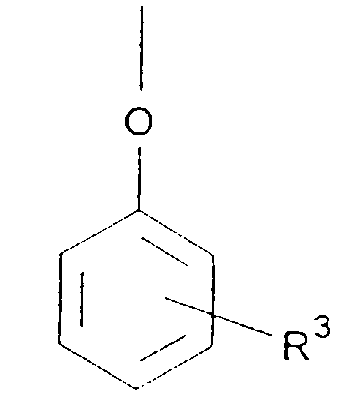
- the coupling-off group Z may have the formula: in which R 3 is a ballasting group of such size and configuration to render the coupler non-diffusible in photographic layers and the ring to which R 3 is attached may bear further substituents.
- ballast group R 3 has one of the general formulae: -SO 2 N(R 5 )R 6 -CH 3 or -COOR 6 -CH 3 wherein R 5 is hydrogen or an alkyl group of 1 or 2 carbon atoms, and R 6 is an alkyl group of 6 to 22 carbon atoms.
- R 1 examples of groups which R 1 may represent are alkyl groups of 1 to 6 carbon atoms or phenyl.
- the preferred alkyl groups are methyl, ethyl, n-butyl, n-pentyl and n-hexyl.
- R 2 examples of groups which R 2 may represent are methyl, ethyl, propyl or n-butyl.
- R 5 examples are straight or branched chain alkyl groups of 6 to 22 carbon groups, for example n-hexadecyl, iso-octyl, or -CH 2 CH (C 2 H 5 )-(CH 2 ) 3 -CH 3 .
- the couplers of formula (1) may be made by methods in themselves known. For example the following route may be followed:
- the dye-forming couplers of this invention can be used in the ways and for the purposes that dye-forming couplers have been previously used in the photographic art.
- the couplers are associated with a silver halide emulsion layer coated on a support to form a photographic element.
- the term "associated with” signifies that the coupler is incorporated in the silver halide emulsion layer or in a layer adjacent thereto where, during processing, it is capable of reacting with silver halide development products.
- the photographic material comprises a resin-coated paper support and the emulsion layers comprise more than 80%, preferably more than 90% silver chloride and are more preferably composed of substantially pure silver chloride.
- the photographic elements can be single colour elements or multicolour elements.
- magenta dye-forming couplers of this invention would usually be associated with a green-sensitive emulsion, although they could be associated with an emulsion sensitised to a different region of the spectrum, or with a panchromatically sensitised, orthochromatically sensitised or unsensitised emulsion.
- Multicolour elements contain dye image-forming units sensitive to each of the three primary regions of the spectrum. Each unit can be comprised of a single emulsion layer or of multiple emulsion layers sensitive to a given region of the spectrum.
- the layers of the element, including the layers of the image-forming units, can be arranged in various orders as known in the art.
- the photographic materials can be single colour materials or multicolour materials.
- Multicolour materials contain dye image-forming units sensitive to each of the three primary regions of the spectrum. Each unit can be comprised of a single emulsion layer or of multiple emulsion layers sensitive to a given region of the spectrum.
- the layers of the materials, including the layers of the image-forming units, can be arranged in various orders as known in the art.
- a typical multicolour photographic element comprises a support bearing yellow, magenta and cyan dye image-forming units comprising at least one blue-, green- or red-sensitive silver halide emulsion layer having associated therewith at least one yellow, magenta or cyan dye-forming coupler respectively, at least one of the yellow dye-forming couplers being a coupler of this invention.
- the element can contain additional layers, such as filter and barrier layers.
- the silver halide emulsion employed in the elements of this invention can be either negative-working or positive-working. Suitable emulsions and their preparation are described in Research Disclosure Sections I and II and the publications cited therein. Suitable vehicles for the emulsion layers and other layers of elements of this invention are described in Research Disclosure Section IX and the publications cited therein.
- the elements of the invention can include additional couplers as described in Research Disclosure Section VII, paragraphs F G and H and the publications cited therein.
- the couplers of this invention and any additional couplers can be incorporated in the elements and emulsions as described in Research Disclosures of Section VII, paragraph C and the publications cited therein.
- the photographic elements of this invention or individual layers thereof can contain brighteners (see Research Disclosure Section V), antifoggants and stabilisers (see Research Disclosure Section VI), antistain agents and image dye stabiliser (see Research Disclosure Section VII, paragraphs I and J), light absorbing and scattering materials (see Research Disclosure Section VIII), hardeners (see Research Disclosure Section X), plasticisers and lubricants (see Research Disclosure Section XII), antistatic agents (see Research Disclosure Section XIII), matting agents (see Research Disclosure Section XVI) and development modifiers (see Research Disclosure Section XXI).
- brighteners see Research Disclosure Section V
- antifoggants and stabilisers see Research Disclosure Section VI
- antistain agents and image dye stabiliser see Research Disclosure Section VII, paragraphs I and J
- light absorbing and scattering materials see Research Disclosure Section VIII
- hardeners see Research Disclosure Section X
- plasticisers and lubricants see Research Disclosure Section XII
- antistatic agents see Research Disclosure Section XIII
- matting agents see Research Disclosure Section
- the photographic elements can be coated on a variety of supports as described in Research Disclosure Section XVII and the references described therein.
- Preferred colour developing agents are p-phenylene diamines.
- 4-amino-3-methyl-N,N-diethylaniline hydrochloride 4-amino-3-methyl-N-ethyl-N- ⁇ -(methanesulphonamido)ethylaniline sulphate hydrate, 4-amino-3-methyl-N-ethyl-N- ⁇ -hydroxyethylaniline sulphate, 4-amino-3- ⁇ -(methanesulphonamido)ethyl-N,N-diethylaniline hydrochloride and 4-amino-N-ethyl-N-(2-methoxyethyl)- m -toluidine di- p -toluene sulphonate.
- this processing step leads to a negative image.
- this step can be preceded by development with a non-chromogenic developing agent to develop exposed silver halide, but not form dye, and then uniform fogging of the element to render unexposed silver halide developable.
- a direct positive emulsion can be employed to obtain a positive image.
- the colour photographic material may be of any type but will preferably contain low amounts of silver halide.
- Preferred silver halide coverages are in the range 0.1 to 20, preferably 0.1 to 3 mg/m 2 (as silver).
- the processing preferably comprises a redox image amplification step referred to above.
- a process can comprise a colour development step followed by an amplification step or developer/amplification step, or a single developer/amplification step.
- the dye-forming couplers of this invention can be used in the ways and for the purposes that dye-forming couplers have been previously used in the photographic art.
- Photographic elements can be exposed to actinic radiation, typically in the visible region of the spectrum, to form a latent image as described in Research Disclosure Section XVIII and then processed to form a visible dye image as described in Research Disclosure Section XIX.
- Processing to form a visible dye image includes the step of contacting the element with a colour developing agent to reduce developable silver halide and oxidise the colour developing agent. Oxidised colour developing agent in turn reacts with the coupler to yield a dye.
- Couplers indicated below were incorporated into dispersions using dibutyl phthalate as main solvent and 2-(2-butoxyethoxy)ethyl acetate as auxiliary solvent at a ratio of 1:0.5:0.25 coupler:main solvent:auxiliary solvent.
- the dispersions were coated in the yellow imaging layer at a coupler laydown of 0.70 mmoles/m 2 .
- Coatings of the following structure were prepared: Gelatin 1.61 g/m 2 Silver chloride emulsion (as Ag) 48.4 mg/m 2 Coupler 0.70 mmole/m 2 Gelatin 1.61 g/m 2 Gelatin 1.08 g/m 2 /// Resin coated paper support ///
- Dye (A) has a similar structure to those of the invention but has an undesirable hue while Dye (B) has a more desirable hue but does not smear.
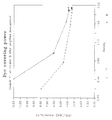
- coupler 11 provided greater dye covering power (See Fig 1 of the accompanying drawings).
Landscapes
- Chemical & Material Sciences (AREA)
- Organic Chemistry (AREA)
- Physics & Mathematics (AREA)
- General Physics & Mathematics (AREA)
- Silver Salt Photography Or Processing Solution Therefor (AREA)
Claims (8)
- Coupleurs photographiques formateurs de colorant jaune représentés par la formule générale :où Z est un groupe ballast qui se sépare au cours du développement des halogénures d'argent, d'une taille et d'une configuration telles qu'il rend le coupleur non diffusible dans les couches photographiques,

R1 et R2 sont chacun individuellement un groupe alkyle ou aryle dont l'effet combiné est de rendre le colorant jaune formé au cours du couplage suffisamment mobile pour qu'il macule l'image. - Coupleur selon la revendication 1, dans lequel le groupe Z se séparant au couplage peut être représenté par la formule :où R3 est un groupe ballast d'une taille et d'une configuration telles qu'il rend le coupleur non diffusible dans les couches photographiques et où le cycle auquel R3 est rattaché peut porter d'autres substituants.
- Coupleur selon la revendication 2, dans lequel le groupe ballast R3 est un groupe alkyle de 6 à 22 atomes de carbone ou un groupe alkylaryle ou arylalkyle d'un total de 18 à 26 atomes de carbone, ces deux groupes pouvant être substitués et les chaínes carbone des groupes alkyle peuvent être interrompues par des hétéroatomes.
- Coupleur selon l'une quelconque des revendications 1 - 3, dans lequel R1 est un groupe alkyle de 1 à 6 atomes de carbone ou un groupe phényle.
- Coupleur selon l'une quelconque des revendications 1 - 4, dans lequel R2 est un groupe méthyle, éthyle, propyle ou n-butyle.
- Coupleur selon la revendication 2, dans lequel R3 est représenté par l'une des formules générales :
R6 est un groupe alkyle de 6 à 22 atomes de carbone. - Elément photographique photosensible aux halogénures d'argent comprenant un support portant au moins une couche d'émulsion aux halogénures d'argent à laquelle est associé au moins un coupleur formateur de colorant jaune tel que défini dans l'une quelconque des revendications 1 - 6.
- Elément selon la revendication 7 qui est un élément photographique multicolore comprenant un support portant des unités formatrices d'image de colorant jaune, magenta et cyan comprenant au moins une couche d'émulsion aux halogénures d'argent sensible au bleu, au vert ou au rouge à laquelle est associé au moins un coupleur formateur de colorant jaune, magenta et cyan respectivement, l'un des coupleurs formateurs de colorant jaune au moins étant un coupleur tel que défini dans l'une quelconque des revendications 1 - 6.
Applications Claiming Priority (2)
| Application Number | Priority Date | Filing Date | Title |
|---|---|---|---|
| GB939317035A GB9317035D0 (en) | 1993-08-16 | 1993-08-16 | Photographic colour couplers and photographic materials containing them |
| GB9317035 | 1993-08-16 |
Publications (2)
| Publication Number | Publication Date |
|---|---|
| EP0639794A1 EP0639794A1 (fr) | 1995-02-22 |
| EP0639794B1 true EP0639794B1 (fr) | 1999-01-13 |
Family
ID=10740582
Family Applications (1)
| Application Number | Title | Priority Date | Filing Date |
|---|---|---|---|
| EP94202301A Expired - Lifetime EP0639794B1 (fr) | 1993-08-16 | 1994-08-11 | Coupleurs photographiques pour la couleur et matériaux photographiques les contenant |
Country Status (5)
| Country | Link |
|---|---|
| US (1) | US5411848A (fr) |
| EP (1) | EP0639794B1 (fr) |
| JP (1) | JPH07168332A (fr) |
| DE (1) | DE69415892T2 (fr) |
| GB (1) | GB9317035D0 (fr) |
Families Citing this family (1)
| Publication number | Priority date | Publication date | Assignee | Title |
|---|---|---|---|---|
| US8512220B2 (en) * | 2000-05-26 | 2013-08-20 | Cardiac Pacemakers, Inc. | Rate smoothing control |
Citations (2)
| Publication number | Priority date | Publication date | Assignee | Title |
|---|---|---|---|---|
| GB2083640A (en) * | 1980-09-11 | 1982-03-24 | Kodak Ltd | Photographic silver halide materials |
| EP0560424A1 (fr) * | 1992-03-03 | 1993-09-15 | Eastman Kodak Company | Coupleurs semi-diffusibles contenant un groupe acide carbamique solubilisant |
Family Cites Families (10)
| Publication number | Priority date | Publication date | Assignee | Title |
|---|---|---|---|---|
| US3674490A (en) * | 1968-12-11 | 1972-07-04 | Agfa Gevaert Ag | Process for the production of photographic images |
| US3675891A (en) * | 1970-09-18 | 1972-07-11 | Voys Inc Le | Continuous catheter flushing apparatus |
| BE790101A (fr) * | 1971-10-14 | 1973-04-13 | Eastman Kodak Co | Produit photographique aux halogenures d'argent et procede pourformer une image avec ce produit |
| CA1064311A (fr) * | 1975-09-02 | 1979-10-16 | Vernon L. Bissonette | Procede redox d'amplification un complexe du cobalt iii et le peroxyde comme agents d'oxydation |
| JPS59131938A (ja) * | 1983-01-19 | 1984-07-28 | Fuji Photo Film Co Ltd | ハロゲン化銀カラ−写真感光材料 |
| JPS60125842A (ja) * | 1983-12-12 | 1985-07-05 | Fuji Photo Film Co Ltd | ハロゲン化銀カラ−写真感光材料 |
| JPH01316744A (ja) * | 1988-06-16 | 1989-12-21 | Konica Corp | 黄色カプラーを含有するハロゲン化銀カラー写真感光材料 |
| EP0416684B1 (fr) * | 1989-09-05 | 1997-01-29 | Eastman Kodak Company | Coupleurs photographiques jaunes, procédé de préparation et produits intermédiaires à cet effet |
| US5066574A (en) * | 1989-10-08 | 1991-11-19 | Konica Corporation | Silver halide photographic light-sensitive material containing a novel yellow coupler |
| JPH0572686A (ja) * | 1991-09-11 | 1993-03-26 | Konica Corp | ハロゲン化銀写真感光材料 |
-
1993
- 1993-08-16 GB GB939317035A patent/GB9317035D0/en active Pending
-
1994
- 1994-07-14 US US08/275,218 patent/US5411848A/en not_active Expired - Fee Related
- 1994-08-11 DE DE69415892T patent/DE69415892T2/de not_active Expired - Fee Related
- 1994-08-11 EP EP94202301A patent/EP0639794B1/fr not_active Expired - Lifetime
- 1994-08-16 JP JP6192508A patent/JPH07168332A/ja active Pending
Patent Citations (2)
| Publication number | Priority date | Publication date | Assignee | Title |
|---|---|---|---|---|
| GB2083640A (en) * | 1980-09-11 | 1982-03-24 | Kodak Ltd | Photographic silver halide materials |
| EP0560424A1 (fr) * | 1992-03-03 | 1993-09-15 | Eastman Kodak Company | Coupleurs semi-diffusibles contenant un groupe acide carbamique solubilisant |
Also Published As
| Publication number | Publication date |
|---|---|
| DE69415892T2 (de) | 1999-07-22 |
| US5411848A (en) | 1995-05-02 |
| JPH07168332A (ja) | 1995-07-04 |
| EP0639794A1 (fr) | 1995-02-22 |
| GB9317035D0 (en) | 1993-09-29 |
| DE69415892D1 (de) | 1999-02-25 |
Similar Documents
| Publication | Publication Date | Title |
|---|---|---|
| JPH0417411B2 (fr) | ||
| US4094682A (en) | Method for processing light-sensitive silver halide photographic material | |
| US4045226A (en) | Image forming process by color intensification | |
| EP0273986B1 (fr) | Revelateur de couleurs et procede de traitement de materiaux photographiques en couleurs a halogenure d'argent | |
| US5389504A (en) | Color photographic elements containing a combination of pyrazolone and pyrazoloazole couplers | |
| US5387500A (en) | Color photographic elements containing a combination of pyrazoloazole couplers | |
| US5629139A (en) | Photographic processing solution composition | |
| EP0572054B1 (fr) | Matériaux photographiques couleur à l'halogénure d'argent | |
| US5411848A (en) | Photographic color couplers and photographic materials containing them | |
| JPH0528820B2 (fr) | ||
| EP0608959B1 (fr) | Elément photographique et procédé au rendu des couleurs amélioré | |
| JPH04261530A (ja) | ハロゲン化銀カラー写真感光材料 | |
| JPS604979B2 (ja) | 色素画像の補強方法 | |
| US5871891A (en) | Processing both low and high silver photographic materials in a sequential manner in a single procssor | |
| EP0598436B1 (fr) | Copulants formant colorant jaune et éléments photographiques couleur comprenant ces copulants | |
| JP3195425B2 (ja) | 水可溶化ナフトール系カプラーを用いるハロゲン化銀写真材料及び写真処理 | |
| US5965334A (en) | Process for the development of photographic materials | |
| JP2002182346A (ja) | 中性銀をベースとする画像を形成するのに有用なカプラーを含むカラー写真要素 | |
| US5246820A (en) | Carbamic acid solubilized smearing couplers | |
| EP0600561B1 (fr) | Copulants jaune ayant groupes libérés aryloxy ionisables et/ou solubilisants | |
| EP0620487B1 (fr) | Procédés de traitement photographiques | |
| JPH0262537A (ja) | ハロゲン化銀カラー写真感光材料 | |
| JP2855484B2 (ja) | ハロゲン化銀写真感光材料 | |
| JPH077195B2 (ja) | ハロゲン化銀カラ−写真感光材料の処理方法 | |
| GB2280276A (en) | Photographic colour element |
Legal Events
| Date | Code | Title | Description |
|---|---|---|---|
| PUAI | Public reference made under article 153(3) epc to a published international application that has entered the european phase |
Free format text: ORIGINAL CODE: 0009012 |
|
| AK | Designated contracting states |
Kind code of ref document: A1 Designated state(s): DE GB |
|
| 17P | Request for examination filed |
Effective date: 19950811 |
|
| 17Q | First examination report despatched |
Effective date: 19951002 |
|
| GRAG | Despatch of communication of intention to grant |
Free format text: ORIGINAL CODE: EPIDOS AGRA |
|
| GRAG | Despatch of communication of intention to grant |
Free format text: ORIGINAL CODE: EPIDOS AGRA |
|
| GRAH | Despatch of communication of intention to grant a patent |
Free format text: ORIGINAL CODE: EPIDOS IGRA |
|
| RBV | Designated contracting states (corrected) |
Designated state(s): DE GB |
|
| GRAH | Despatch of communication of intention to grant a patent |
Free format text: ORIGINAL CODE: EPIDOS IGRA |
|
| RAP1 | Party data changed (applicant data changed or rights of an application transferred) |
Owner name: EASTMAN KODAK COMPANY Owner name: KODAK LIMITED |
|
| GRAA | (expected) grant |
Free format text: ORIGINAL CODE: 0009210 |
|
| AK | Designated contracting states |
Kind code of ref document: B1 Designated state(s): DE GB |
|
| REF | Corresponds to: |
Ref document number: 69415892 Country of ref document: DE Date of ref document: 19990225 |
|
| PLBE | No opposition filed within time limit |
Free format text: ORIGINAL CODE: 0009261 |
|
| STAA | Information on the status of an ep patent application or granted ep patent |
Free format text: STATUS: NO OPPOSITION FILED WITHIN TIME LIMIT |
|
| 26N | No opposition filed | ||
| REG | Reference to a national code |
Ref country code: GB Ref legal event code: 732E |
|
| REG | Reference to a national code |
Ref country code: GB Ref legal event code: IF02 |
|
| PGFP | Annual fee paid to national office [announced via postgrant information from national office to epo] |
Ref country code: GB Payment date: 20030702 Year of fee payment: 10 |
|
| PGFP | Annual fee paid to national office [announced via postgrant information from national office to epo] |
Ref country code: DE Payment date: 20030829 Year of fee payment: 10 |
|
| PG25 | Lapsed in a contracting state [announced via postgrant information from national office to epo] |
Ref country code: GB Free format text: LAPSE BECAUSE OF NON-PAYMENT OF DUE FEES Effective date: 20040811 |
|
| PG25 | Lapsed in a contracting state [announced via postgrant information from national office to epo] |
Ref country code: DE Free format text: LAPSE BECAUSE OF NON-PAYMENT OF DUE FEES Effective date: 20050301 |
|
| GBPC | Gb: european patent ceased through non-payment of renewal fee |
Effective date: 20040811 |