EP0646864A1 - Optimierende Kompiler - Google Patents
Optimierende Kompiler Download PDFInfo
- Publication number
- EP0646864A1 EP0646864A1 EP94115464A EP94115464A EP0646864A1 EP 0646864 A1 EP0646864 A1 EP 0646864A1 EP 94115464 A EP94115464 A EP 94115464A EP 94115464 A EP94115464 A EP 94115464A EP 0646864 A1 EP0646864 A1 EP 0646864A1
- Authority
- EP
- European Patent Office
- Prior art keywords
- optimization
- information
- combination
- optimizing
- code
- Prior art date
- Legal status (The legal status is an assumption and is not a legal conclusion. Google has not performed a legal analysis and makes no representation as to the accuracy of the status listed.)
- Granted
Links
Images



Classifications
-
- G—PHYSICS
- G06—COMPUTING OR CALCULATING; COUNTING
- G06F—ELECTRIC DIGITAL DATA PROCESSING
- G06F8/00—Arrangements for software engineering
- G06F8/40—Transformation of program code
- G06F8/41—Compilation
- G06F8/44—Encoding
- G06F8/443—Optimisation
Definitions
- the present invention relates to a compiler system for a language processing program.
- a computer program is developed in such a manner that a source program is created by a program developer, and the created source program is processed by a language processing program (for example, compiler) so that it it translated into a sequence of machine language instructions for a microcomputer, and the sequence of machine language instructions is installed in a memory within the microcomputer and then, executed by the microcomputer.
- a language processing program for example, compiler
- a source program written in a high level language is translated by a compiler to be converted into an object machine language sequence.
- FIG. 1 there is shown a block diagram illustrating a conventional compiler system.
- a source program 101 is analyzed by a syntax analysis part 103 so that a pre-optimization intermediate code information 104 is prepared. Thereafter, in an optimization part 105A, the intermediate code information is analyzed for optimization, so that optimization analyzed information 107 is created. With reference to the optimization analyzed information 107, the intermediate code is optimized so as to create a post-optimization intermediate code information 108. In a code generator 109A, the optimized intermediate code information 108 is converted into a sequence of machine language instructions, thereby to prepare an output file 111A.
- the "optimization" is to modify, eliminate and improve the intermediate code information, for the purpose of reducing the machine language instructions outputted in the code generator 109A and to elevate a performance of executing the obtained instructions.
- an improved intermediate code information is required to have the same function as that of an input intermediate code information.
- the optimization is realized in various methods, and one example of the optimization is described in detail in Chapter 10 of Alfred V. AHO et al., “Compilers : Principles, Techniques, and Tools", Addison-Wesley Publishing Company (U.S.A.), 1986, the disclosure of which is incorporated by reference in its entirety into the present application.
- the result of an equivalent operation expression is held so as to avoid re-calculation, so that the size and the execution performance of the obtained sequence of machine language instructions are improved.
- the other optimization includes a loop optimization, a register assignment, a branch optimization, and others.
- the optimizing function can be divided into an optimization for shortening the sequence of instructions and an optimization of execution performance.
- the optimization for elevating the execution performance may accompany increase in the size of the obtained sequence of machine language instructions.
- an optimizing function can be designated by designating an option at the time of starting the compiler. For example, it is possible to start only elimination of common subexpressions selected from a plurality of optimizing functions.
- a plurality of optimizing functions are executed in combination, it is in some cases that the size of the obtained sequence of machine language instructions is increased.
- the optimization part 105A of the compiler 102A produces information which is obtained by analyzing the intermediate code information 104 generated in the syntax analysis part 103 and which is necessary for performing a necessary optimization from the intermediate code information 104.
- the analyzed information is the extent in which variables called "data flow information" are referenced and set.
- the analyzed information is a position of a branch information in the intermediate code information and a position of a label in the intermediate code information. Ordinarily, this information analysis entails a long processing time.
- a compiler for a microcomputer it is necessary to install a sequence of machine language instructions complied from the source program, into a limited ROM region provided in the microcomputer.
- the installed sequence of machine language instructions are executed, it is necessary to have a sufficient execution performance.
- a user of a compiler is required to compile and develop the program, while designating various kinds of optimization functions in the compiler and investigating the size of the obtained machine language instruction sequence and the execution performance.
- the loop optimization and the inline optimization of a function, which are performed for elevating the execution performance often increase the program size.
- the compiler outputs a machine language instruction for substituting an existing instruction for an operation instruction that is not provided in the microcomputer and/or an operation of a data length that is larger than that of the microcomputer. In other cases, the compiler performs a library call for a run time library.
- One kind of optimization by compiler includes an optimization minimizing the output size of the program by calling the run time library.
- the code output optimization utilizing the run time library can minimize the output program size, but since the library calling is performed, the execution performance drops.
- a program developer is required to carry out the compile and to confirm the result, any number of times, so as to optimize the designation of the compiler, for the purpose of finally obtaining a program that has the size smaller than that of the ROM region into which the program is stored, and that has an execution performance higher than that expected by the program developer. Therefore, a greatly long time is needed.
- the larger the input file is the longer the processing time accompanied by the optimization becomes. Therefore, the development time becomes further long, if the confirmation is performed many times.
- Japanese Patent Application Laid-open Publication JP-A-59-20051 discloses a program execution system, in which information for optimizing the intermediate codes obtained after the syntax analysis is retained, and when the program is executed, an optimum execution code is generated on the base of the intermediate codes and the optimization information. However, this is not yet satisfactory.
- Another object of the present invention is to provide a compiler method for a language processing program, capable of greatly shortening the optimization processing time.
- a compiler system for a language processing program comprising means for analyzing an input source program and converting the input source program into a first intermediate information, means having a plurality of optimizing functions, for optimizing the first intermediate information into a second intermediate information, information holding means for holding a plurality of combinations of optimizing functions to the optimizing means, a code generator means for converting the second intermediate information obtained by the optimizing function combination, into a machine language instruction, file information output means for outputting an output file information when the second intermediate information obtained by the optimizing function combination was converted into a machine language instruction, and means for outputting a plurality of output files based on the optimizing function combinations.
- FIG. 2 there is shown a block diagram of one embodiment of the compiler system in accordance with the present invention.
- a source program 101 is supplied to a compiler 102A, in which the source program 101 is analyzed by a syntax analysis part 103 so that a pre-optimization intermediate code 104 is generated by the syntax analysis part 103.
- the pre-optimization intermediate code 104 is supplied to an optimization part 105, where the pre-optimization intermediate code 104 is analyzed so as to generate an optimization analyzed information 107.
- an optimized (namely, post-optimization) intermediate code 108 is generated in accordance with an optimization combination table 106. Since the optimization combination table 106 holds a plurality of different combinations of optimization functions, it is in some cases that a plurality of optimized intermediate codes 108 are generated.
- a code generator 109 receives the optimized intermediate code or codes 108 and converts each of the received optimized intermediate code or codes 108 into a sequence of machine language instructions, which is outputted as an output file 111. In addition, the code generator 109 also generates a code size information of the output file and the information of the optimization combination used for obtaining the output file.
- the optimization includes various optimization functions.
- a plurality of different combinations of various optimization functions are previously set in the optimization combination table 106. More specifically, the optimization combination table 106 holds different combinations of a first optimization function group for reducing the size (for example, the elimination of the common subexpression, the branch optimization, the register assignment, etc.) and a second optimization function group for elevating the execution performance (for example, the loop optimization, the function inlining, etc.)
- a first combination designates the optimization for reducing the size
- a second combination designates the optimization for elevating the execution performance
- a third combination designates all of the optimization for reducing the size and the optimization for elevating the execution performance.
- the input source file is read in the compiler, and the syntax analysis is performed in the syntax analysis part 103 to generate the pre-optimization intermediate code 104.
- the pre-optimization intermediate code 104 is applied to the optimization part 105, so that the analyzed information 107 for optimization is generated. With reference to this optimization analyzed information 107, each optimization is performed.
- a next step 303 whether or not there is a combination(s) of optimization functions in the optimization combination table 106, is discriminated. If there is an optimization combination, the optimization is performed in accordance with the optimization combination in a step 304. If there is no optimization combination, the code generation is performed.
- the optimization is performed in the step 304 in accordance with the optimization combination designated in the table 106.
- the optimization is performed in accordance with for example the first optimization combination only for reducing the size, so that an optimized (or second) intermediate code 108 such as "INTERMEDIATE CODE 1" in Figure 2 is generated.
- the operation returns to the step 303, and the table 106 is investigated to discriminate whether or not there is another combination of optimization functions in the optimization combination table 106. Therefore, the optimization is performed in accordance with the second optimization combination only for elevating the execution performance, so that another optimized intermediate code 108 such as "INTERMEDIATE CODE 2" in Figure 2 is generated.
- the operation returns to the step 303, again, and the table 106 is investigated to discriminate whether or not there is a third combination of optimization functions in the optimization combination table 106. Therefore, the optimization is performed in accordance with the third optimization combination including all of the optimization for reducing the size and the optimization for elevating the execution performance, so that a third optimized intermediate code 108 such as "INTERMEDIATE CODE 3" in Figure 2 is generated. Thereafter, the operation returns to the step 303, again, and the table 106 is investigated to discriminate whether or not there is a further combination of optimization functions in the optimization combination table 106. Since no further combination of optimization functions exists in the table 106, the operation goes to a step 305. As a result, a plurality of optimized intermediate codes are generated in accordance with a plurality of different optimization combinations.
- a code generation is carried out in the code generator 109.
- the step 305 whether or not there is the optimized intermediate code, is investigated. If there is no optimized intermediate code, the processing ends.
- the optimized intermediate code is converted into a sequence of machine language instructions in a step 306. Then, in a step 307, information of the code size of the converted sequence of machine language instructions and information of the optimization combination used, are outputted in the form of a message to the program developer. Thereafter, in a step 308, the converted sequence of machine language instructions is outputted as an output file 111.
- the first optimization combination only for reducing the size and the code size of the converted sequence of machine language instructions obtained in accordance with the first optimization combination, are outputted.
- the converted sequence of machine language instructions is outputted as an "OUTPUT FILE 1".
- the processing returns to the step 305, and then, the second optimization combination only for elevating the execution performance and the code size of the converted sequence of machine language instructions obtained in accordance with the second optimization combination, are outputted.
- the converted sequence of machine language instructions is outputted as an "OUTPUT FILE 2".
- the processing returns to the step 305, again, and then, the third optimization combination both for reducing the size and for elevating the execution performance and the code size of the converted sequence of machine language instructions obtained in accordance with the third optimization combination, are outputted.
- the converted sequence of machine language instructions is outputted as an "OUTPUT FILE 3".
- the program developer can select the output file suitable to the development, from the code size information of the compile result and the used optimization combination information.
- the optimization combination table 106 stores a plurality of different optimization combinations for the compiler, similarly to the first embodiment.
- the input source file is read in the compiler, and the syntax analysis is performed in the syntax analysis part 103 to generate the pre-optimization intermediate code 104.
- the pre-optimization intermediate code 104 is applied to the optimization part 105, so that the analyzed information 107 for optimization is generated. Each optimization is performed with reference to this optimization analyzed information 107.
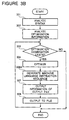
- a next step 303 whether or not there is an optimization combination(s) in the optimization combination table 106, is discriminated. If there is an optimization combination, the optimized intermediate code 108 is generated in accordance with the optimization combination stored in the table 106, in a step 304. If there is no optimization combination, the operation ends.
- a step 306A the optimized intermediate code is converted into a sequence of machine language instructions.
- a step 307 information of the code size of the converted sequence of machine language instructions and information of the optimization combination used, are outputted in the form of a message to the program developer.
- the converted sequence of machine language instructions is outputted as an output file 111. Thereafter, the processing returns to the step 303, and the steps 303 to 308 are repeated.
- the first optimization combination only for reducing the size and the code size of the converted sequence of machine language instructions obtained in accordance with the first optimization combination are outputted as the output file information, and the converted sequence of machine language instructions is outputted as an "OUTPUT FILE 1".
- the second optimization combination only for elevating the execution performance and the code size of the converted sequence of machine language instructions obtained in accordance with the second optimization combination are outputted as the output file information, and the converted sequence of machine language instructions is outputted as an "OUTPUT FILE 2".
- the third optimization combination for reducing the size and for elevating the execution performance and the code size of the converted sequence of machine language instructions obtained in accordance with the third optimization combination are outputted as the output file information, and the converted sequence of machine language instructions is outputted as an "OUTPUT FILE 3".
- the program developer can select the output file suitable to the development, from the code size information of the compile result and the used optimization combination information.
- the optimization needs a long processing time because a large processing time is needed for analyzing the intermediate code information for the optimization.
- a plurality of optimizations are performed, but since the plurality of optimizations are performed by repeatedly utilizing the once-analyzed optimization information, the time for the optimizations can be greatly shortened.
- the code generation is performed directly from the intermediate code generated in accordance with the designated optimization combination. Therefore, the processing speed becomes higher than that of the first embodiment.
- FIG 4 there is shown a time chart illustrating an advantage of the compiler system in accordance with the present invention.
- the "PRIOR ART” shown in Figure 4 illustrates the processing time required in the case in which three compiles are sequentially performed, one after another, in accordance with three different optimization combinations.
- the "INVENTION” shown in Figure 4 illustrates the processing time required in the first embodiment. It would be readily understood from Figure 4 that, in the present invention, since a plurality of optimizations are performed by repeatedly utilizing the once analyzed optimization information, if is sufficient if only one syntax analysis and only one optimization information analysis are performed, and therefore, the time for the optimizations can be greatly shortened.
Landscapes
- Engineering & Computer Science (AREA)
- General Engineering & Computer Science (AREA)
- Theoretical Computer Science (AREA)
- Software Systems (AREA)
- Physics & Mathematics (AREA)
- General Physics & Mathematics (AREA)
- Devices For Executing Special Programs (AREA)
Applications Claiming Priority (3)
| Application Number | Priority Date | Filing Date | Title |
|---|---|---|---|
| JP24342893A JP3190773B2 (ja) | 1993-09-30 | 1993-09-30 | 言語処理プログラムのコンパイル処理方法 |
| JP24342893 | 1993-09-30 | ||
| JP243428/93 | 1993-09-30 |
Publications (2)
| Publication Number | Publication Date |
|---|---|
| EP0646864A1 true EP0646864A1 (de) | 1995-04-05 |
| EP0646864B1 EP0646864B1 (de) | 2001-06-27 |
Family
ID=17103730
Family Applications (1)
| Application Number | Title | Priority Date | Filing Date |
|---|---|---|---|
| EP94115464A Expired - Lifetime EP0646864B1 (de) | 1993-09-30 | 1994-09-30 | Optimierender Kompilierer |
Country Status (4)
| Country | Link |
|---|---|
| US (1) | US5606697A (de) |
| EP (1) | EP0646864B1 (de) |
| JP (1) | JP3190773B2 (de) |
| DE (1) | DE69427564T2 (de) |
Cited By (2)
| Publication number | Priority date | Publication date | Assignee | Title |
|---|---|---|---|---|
| EP0825531A1 (de) * | 1996-08-19 | 1998-02-25 | Nec Corporation | Sprachbearbeitende Einheit und Verfahren zur Übersetzung eines Quellprogrammes in einer Objektmoduldatei |
| EP0943990A3 (de) * | 1998-02-27 | 2004-12-22 | Texas Instruments Incorporated | Verfahren und System zum Darbieten dynamischer Optimierungsinformation in einer Kodeinterpretierlaufzeitumgebung |
Families Citing this family (29)
| Publication number | Priority date | Publication date | Assignee | Title |
|---|---|---|---|---|
| US6074433A (en) * | 1995-08-25 | 2000-06-13 | Fujitsu Limited | Optimization control apparatus and optimization control method for array descriptions |
| FR2742892B1 (fr) * | 1995-12-21 | 1998-02-13 | Bull Sa | Systeme de protection de logiciel pour ordinateur ecrit en langage interprete |
| CA2166254C (en) * | 1995-12-28 | 2000-02-01 | Robert James Blainey | Improving memory layout based on connectivity considerations |
| GB9600823D0 (en) * | 1996-01-16 | 1996-03-20 | British Telecomm | Distributed processing |
| US5812854A (en) * | 1996-03-18 | 1998-09-22 | International Business Machines Corporation | Mechanism for integrating user-defined instructions with compiler-generated instructions and for optimizing the integrated instruction stream |
| US5960200A (en) * | 1996-05-03 | 1999-09-28 | I-Cube | System to transition an enterprise to a distributed infrastructure |
| JP3196675B2 (ja) * | 1996-12-27 | 2001-08-06 | 日本電気株式会社 | 言語処理方式 |
| US5940620A (en) * | 1997-03-07 | 1999-08-17 | Ncr Corporation | Compiler with intermediate compiling mechanism |
| US6260191B1 (en) * | 1997-04-07 | 2001-07-10 | Hewlett-Packard Company | User controlled relaxation of optimization constraints related to volatile memory references |
| US5911073A (en) * | 1997-12-23 | 1999-06-08 | Hewlett-Packard Company | Method and apparatus for dynamic process monitoring through an ancillary control code system |
| JP3246438B2 (ja) * | 1998-04-01 | 2002-01-15 | 日本電気株式会社 | 可変ターゲットコンパイル処理方法、その処理装置、そのプログラムの記憶媒体および変換テーブルの記憶媒体 |
| US6148437A (en) * | 1998-05-04 | 2000-11-14 | Hewlett-Packard Company | System and method for jump-evaluated trace designation |
| US6189141B1 (en) | 1998-05-04 | 2001-02-13 | Hewlett-Packard Company | Control path evaluating trace designator with dynamically adjustable thresholds for activation of tracing for high (hot) activity and low (cold) activity of flow control |
| US6164841A (en) * | 1998-05-04 | 2000-12-26 | Hewlett-Packard Company | Method, apparatus, and product for dynamic software code translation system |
| JP2001075816A (ja) * | 1999-09-08 | 2001-03-23 | Sony Corp | プログラム変換装置及び方法、プログラム製造装置、並びにプログラム記録媒体 |
| JP2002024029A (ja) * | 2000-07-11 | 2002-01-25 | Toshiba Corp | コンパイラ、コンパイル方法及びコンパイルプログラムを記録したコンピュータ読み取り可能な記録媒体 |
| US7000227B1 (en) * | 2000-09-29 | 2006-02-14 | Intel Corporation | Iterative optimizing compiler |
| US7007271B2 (en) * | 2002-04-18 | 2006-02-28 | Sun Microsystems, Inc. | Method and apparatus for integrated instruction scheduling and register allocation in a postoptimizer |
| JP3847672B2 (ja) * | 2002-07-03 | 2006-11-22 | 松下電器産業株式会社 | コンパイラ装置及びコンパイル方法 |
| WO2004092953A2 (en) * | 2003-04-16 | 2004-10-28 | Koninklijke Philips Electronics N.V. | Regenerating header files out of preprocessed and afterwards modified source files |
| US7340732B2 (en) * | 2003-11-26 | 2008-03-04 | Sun Microsystems, Inc. | Updating profile frequency for procedure inlining |
| TW200725413A (en) * | 2005-12-30 | 2007-07-01 | Tatung Co Ltd | Method for automatically translating extended activity diagram into hardware component graph |
| US7873953B1 (en) * | 2006-01-20 | 2011-01-18 | Altera Corporation | High-level language code sequence optimization for implementing programmable chip designs |
| US8079023B2 (en) * | 2007-03-22 | 2011-12-13 | Microsoft Corporation | Typed intermediate language support for existing compilers |
| US9582396B2 (en) * | 2009-10-23 | 2017-02-28 | Novell, Inc. | Techniques for generating an executable debugger script |
| US9027007B2 (en) * | 2013-03-06 | 2015-05-05 | Qualcomm Incorporated | Reducing excessive compilation times |
| US9996325B2 (en) | 2013-03-06 | 2018-06-12 | Qualcomm Incorporated | Dynamic reconfigurable compiler |
| AU2016228166A1 (en) * | 2016-09-13 | 2018-03-29 | Canon Kabushiki Kaisha | Visualisation for guided algorithm design to create hardware friendly algorithms |
| US10726175B1 (en) * | 2019-03-04 | 2020-07-28 | Xilinx, Inc. | Systems for optimization of read-only memory (ROM) |
Citations (2)
| Publication number | Priority date | Publication date | Assignee | Title |
|---|---|---|---|---|
| JPS5920051A (ja) * | 1982-07-26 | 1984-02-01 | Mitsubishi Electric Corp | プログラム実行方法 |
| WO1992022029A1 (en) * | 1991-05-24 | 1992-12-10 | British Technology Group Usa, Inc. | Optimizing compiler for computers |
Family Cites Families (14)
| Publication number | Priority date | Publication date | Assignee | Title |
|---|---|---|---|---|
| JPH0685148B2 (ja) * | 1986-03-07 | 1994-10-26 | 株式会社日立製作所 | 配列デ−タフロ−解析装置 |
| JP2834171B2 (ja) * | 1989-02-06 | 1998-12-09 | 株式会社日立製作所 | コンパイル方法 |
| JP3039953B2 (ja) * | 1989-04-28 | 2000-05-08 | 株式会社日立製作所 | 並列化装置 |
| US5339419A (en) * | 1990-06-25 | 1994-08-16 | Hewlett-Packard Company | ANDF compiler using the HPcode-plus compiler intermediate language |
| IL100986A (en) * | 1991-02-27 | 1997-01-10 | Digital Equipment Corp | Method for compiling code |
| US5450585A (en) * | 1991-05-15 | 1995-09-12 | International Business Machines Corporation | Compiler with delayed conditional branching |
| US5515535A (en) * | 1991-11-05 | 1996-05-07 | Thinking Machines Corporation | System and method for parallel variable optimization |
| US5448737A (en) * | 1992-03-17 | 1995-09-05 | International Business Machines Corporation | System and method for optimizing computer code using a compact data flow representation |
| US5481708A (en) * | 1992-06-05 | 1996-01-02 | Borland International, Inc. | System and methods for optimizing object-oriented compilations |
| JP3280449B2 (ja) * | 1993-03-01 | 2002-05-13 | 富士通株式会社 | コンパイル装置 |
| US5548761A (en) * | 1993-03-09 | 1996-08-20 | International Business Machines Corporation | Compiler for target machine independent optimization of data movement, ownership transfer and device control |
| US5475842A (en) * | 1993-08-11 | 1995-12-12 | Xerox Corporation | Method of compilation optimization using an N-dimensional template for relocated and replicated alignment of arrays in data-parallel programs for reduced data communication during execution |
| US5375242A (en) * | 1993-09-29 | 1994-12-20 | Hewlett-Packard Company | Compiler architecture for cross-module optimization |
| US5548754A (en) * | 1995-02-07 | 1996-08-20 | International Business Machines Corporation | Optimization of SQL queries using early-out join transformations |
-
1993
- 1993-09-30 JP JP24342893A patent/JP3190773B2/ja not_active Expired - Fee Related
-
1994
- 1994-09-30 EP EP94115464A patent/EP0646864B1/de not_active Expired - Lifetime
- 1994-09-30 DE DE69427564T patent/DE69427564T2/de not_active Expired - Fee Related
- 1994-09-30 US US08/312,904 patent/US5606697A/en not_active Expired - Fee Related
Patent Citations (2)
| Publication number | Priority date | Publication date | Assignee | Title |
|---|---|---|---|---|
| JPS5920051A (ja) * | 1982-07-26 | 1984-02-01 | Mitsubishi Electric Corp | プログラム実行方法 |
| WO1992022029A1 (en) * | 1991-05-24 | 1992-12-10 | British Technology Group Usa, Inc. | Optimizing compiler for computers |
Non-Patent Citations (2)
| Title |
|---|
| H. FALK: "Optimizing compilers address debugging and user control constraints", COMPUTER DESIGN, vol. 27, no. 13, July 1988 (1988-07-01), LITTLETON, MA, US, pages 48 - 55, XP000048116 * |
| PATENT ABSTRACTS OF JAPAN vol. 8, no. 113 (P - 276) 26 May 1984 (1984-05-26) * |
Cited By (2)
| Publication number | Priority date | Publication date | Assignee | Title |
|---|---|---|---|---|
| EP0825531A1 (de) * | 1996-08-19 | 1998-02-25 | Nec Corporation | Sprachbearbeitende Einheit und Verfahren zur Übersetzung eines Quellprogrammes in einer Objektmoduldatei |
| EP0943990A3 (de) * | 1998-02-27 | 2004-12-22 | Texas Instruments Incorporated | Verfahren und System zum Darbieten dynamischer Optimierungsinformation in einer Kodeinterpretierlaufzeitumgebung |
Also Published As
| Publication number | Publication date |
|---|---|
| JP3190773B2 (ja) | 2001-07-23 |
| JPH07105012A (ja) | 1995-04-21 |
| DE69427564D1 (de) | 2001-08-02 |
| EP0646864B1 (de) | 2001-06-27 |
| DE69427564T2 (de) | 2002-05-16 |
| US5606697A (en) | 1997-02-25 |
Similar Documents
| Publication | Publication Date | Title |
|---|---|---|
| EP0646864B1 (de) | Optimierender Kompilierer | |
| US6378126B2 (en) | Compilation of embedded language statements in a source code program | |
| US5586328A (en) | Module dependency based incremental compiler and method | |
| USRE38104E1 (en) | Method and apparatus for resolving data references in generated code | |
| EP0718760B1 (de) | Verfahren und Gerät zum Erzeugen von Plattform-standardisierten, maschinenunabhängigen Code, enthaltenden Objektdateien | |
| US5854932A (en) | Compiler and method for avoiding unnecessary recompilation | |
| US6286133B1 (en) | Method and apparatus for strategic compilation of source programs into two or more target languages | |
| JPH05257709A (ja) | 並列化判別方法およびそれを用いた並列化支援方法 | |
| US7823139B2 (en) | Method and system for translating programming languages | |
| JP4822817B2 (ja) | コンパイルシステム | |
| US7373641B2 (en) | Method, computer unit and program for converting a program | |
| JPH1097430A (ja) | 最適化のためにアセンブリコードルーチンをソースコードルーチンに挿入する方法およびそのシステム | |
| JPWO2000045260A1 (ja) | コンパイラ装置、コンパイル方法、およびそのためのプログラムを格納した記憶媒体 | |
| US6072950A (en) | Pointer analysis by type inference combined with a non-pointer analysis | |
| US5815716A (en) | Method for supporting multiple call interface conventions for computer programs using directives | |
| JP3790707B2 (ja) | プログラム変換方法、これを用いたコンピュータ装置及びプログラム | |
| US6163882A (en) | Language processing apparatus for converting source program into object program | |
| US20040194073A1 (en) | Optimization based on simulated linking | |
| US20060107258A1 (en) | Program, program code optimization method, program code compile method, program code, and information processing system | |
| JP3018783B2 (ja) | コンパイル方式 | |
| JP3323147B2 (ja) | コンパイル装置、コンパイル方法およびコンパイラプログラムを記録した記録媒体 | |
| JPH08194624A (ja) | 実行形式プログラム作成方法 | |
| JP2000242504A (ja) | コンパイラ装置 | |
| JP3424596B2 (ja) | シンボル参照情報のキャッシュ方法ならびに装置 | |
| JPH10240545A (ja) | 未定義変数検出の最適化コンパイラ装置 |
Legal Events
| Date | Code | Title | Description |
|---|---|---|---|
| PUAI | Public reference made under article 153(3) epc to a published international application that has entered the european phase |
Free format text: ORIGINAL CODE: 0009012 |
|
| AK | Designated contracting states |
Kind code of ref document: A1 Designated state(s): DE FR GB |
|
| 17P | Request for examination filed |
Effective date: 19950505 |
|
| 17Q | First examination report despatched |
Effective date: 20000124 |
|
| GRAG | Despatch of communication of intention to grant |
Free format text: ORIGINAL CODE: EPIDOS AGRA |
|
| GRAG | Despatch of communication of intention to grant |
Free format text: ORIGINAL CODE: EPIDOS AGRA |
|
| GRAH | Despatch of communication of intention to grant a patent |
Free format text: ORIGINAL CODE: EPIDOS IGRA |
|
| GRAH | Despatch of communication of intention to grant a patent |
Free format text: ORIGINAL CODE: EPIDOS IGRA |
|
| GRAA | (expected) grant |
Free format text: ORIGINAL CODE: 0009210 |
|
| AK | Designated contracting states |
Kind code of ref document: B1 Designated state(s): DE FR GB |
|
| REF | Corresponds to: |
Ref document number: 69427564 Country of ref document: DE Date of ref document: 20010802 |
|
| PGFP | Annual fee paid to national office [announced via postgrant information from national office to epo] |
Ref country code: DE Payment date: 20010928 Year of fee payment: 8 |
|
| PGFP | Annual fee paid to national office [announced via postgrant information from national office to epo] |
Ref country code: GB Payment date: 20011003 Year of fee payment: 8 |
|
| ET | Fr: translation filed | ||
| REG | Reference to a national code |
Ref country code: GB Ref legal event code: IF02 |
|
| PLBE | No opposition filed within time limit |
Free format text: ORIGINAL CODE: 0009261 |
|
| STAA | Information on the status of an ep patent application or granted ep patent |
Free format text: STATUS: NO OPPOSITION FILED WITHIN TIME LIMIT |
|
| 26N | No opposition filed | ||
| PGFP | Annual fee paid to national office [announced via postgrant information from national office to epo] |
Ref country code: FR Payment date: 20020910 Year of fee payment: 9 |
|
| PG25 | Lapsed in a contracting state [announced via postgrant information from national office to epo] |
Ref country code: GB Free format text: LAPSE BECAUSE OF NON-PAYMENT OF DUE FEES Effective date: 20020930 |
|
| PG25 | Lapsed in a contracting state [announced via postgrant information from national office to epo] |
Ref country code: DE Free format text: LAPSE BECAUSE OF NON-PAYMENT OF DUE FEES Effective date: 20030401 |
|
| GBPC | Gb: european patent ceased through non-payment of renewal fee |
Effective date: 20020930 |
|
| PG25 | Lapsed in a contracting state [announced via postgrant information from national office to epo] |
Ref country code: FR Free format text: LAPSE BECAUSE OF NON-PAYMENT OF DUE FEES Effective date: 20040528 |
|
| REG | Reference to a national code |
Ref country code: FR Ref legal event code: ST |