EP0649257A2 - Übertragungssystem zur Minimierung von Interferenz in einer digitalen Übertragung - Google Patents
Übertragungssystem zur Minimierung von Interferenz in einer digitalen Übertragung Download PDFInfo
- Publication number
- EP0649257A2 EP0649257A2 EP94202879A EP94202879A EP0649257A2 EP 0649257 A2 EP0649257 A2 EP 0649257A2 EP 94202879 A EP94202879 A EP 94202879A EP 94202879 A EP94202879 A EP 94202879A EP 0649257 A2 EP0649257 A2 EP 0649257A2
- Authority
- EP
- European Patent Office
- Prior art keywords
- training
- portions
- data
- signal
- training signal
- Prior art date
- Legal status (The legal status is an assumption and is not a legal conclusion. Google has not performed a legal analysis and makes no representation as to the accuracy of the status listed.)
- Withdrawn
Links
Images



Classifications
-
- H—ELECTRICITY
- H04—ELECTRIC COMMUNICATION TECHNIQUE
- H04N—PICTORIAL COMMUNICATION, e.g. TELEVISION
- H04N7/00—Television systems
- H04N7/24—Systems for the transmission of television signals using pulse code modulation
- H04N7/52—Systems for transmission of a pulse code modulated video signal with one or more other pulse code modulated signals, e.g. an audio signal or a synchronizing signal
- H04N7/54—Systems for transmission of a pulse code modulated video signal with one or more other pulse code modulated signals, e.g. an audio signal or a synchronizing signal the signals being synchronous
-
- H—ELECTRICITY
- H04—ELECTRIC COMMUNICATION TECHNIQUE
- H04L—TRANSMISSION OF DIGITAL INFORMATION, e.g. TELEGRAPHIC COMMUNICATION
- H04L25/00—Baseband systems
- H04L25/38—Synchronous or start-stop systems, e.g. for Baudot code
- H04L25/40—Transmitting circuits; Receiving circuits
- H04L25/49—Transmitting circuits; Receiving circuits using code conversion at the transmitter; using predistortion; using insertion of idle bits for obtaining a desired frequency spectrum; using three or more amplitude levels ; Baseband coding techniques specific to data transmission systems
- H04L25/497—Transmitting circuits; Receiving circuits using code conversion at the transmitter; using predistortion; using insertion of idle bits for obtaining a desired frequency spectrum; using three or more amplitude levels ; Baseband coding techniques specific to data transmission systems by correlative coding, e.g. partial response coding or echo modulation coding transmitters and receivers for partial response systems
-
- H—ELECTRICITY
- H04—ELECTRIC COMMUNICATION TECHNIQUE
- H04L—TRANSMISSION OF DIGITAL INFORMATION, e.g. TELEGRAPHIC COMMUNICATION
- H04L27/00—Modulated-carrier systems
- H04L27/0012—Modulated-carrier systems arrangements for identifying the type of modulation
-
- H—ELECTRICITY
- H04—ELECTRIC COMMUNICATION TECHNIQUE
- H04L—TRANSMISSION OF DIGITAL INFORMATION, e.g. TELEGRAPHIC COMMUNICATION
- H04L27/00—Modulated-carrier systems
- H04L27/32—Carrier systems characterised by combinations of two or more of the types covered by groups H04L27/02, H04L27/10, H04L27/18 or H04L27/26
- H04L27/34—Amplitude- and phase-modulated carrier systems, e.g. quadrature-amplitude modulated carrier systems
-
- H—ELECTRICITY
- H04—ELECTRIC COMMUNICATION TECHNIQUE
- H04L—TRANSMISSION OF DIGITAL INFORMATION, e.g. TELEGRAPHIC COMMUNICATION
- H04L7/00—Arrangements for synchronising receiver with transmitter
- H04L7/04—Speed or phase control by synchronisation signals
- H04L7/041—Speed or phase control by synchronisation signals using special codes as synchronising signal
-
- H—ELECTRICITY
- H04—ELECTRIC COMMUNICATION TECHNIQUE
- H04N—PICTORIAL COMMUNICATION, e.g. TELEVISION
- H04N19/00—Methods or arrangements for coding, decoding, compressing or decompressing digital video signals
- H04N19/85—Methods or arrangements for coding, decoding, compressing or decompressing digital video signals using pre-processing or post-processing specially adapted for video compression
- H04N19/89—Methods or arrangements for coding, decoding, compressing or decompressing digital video signals using pre-processing or post-processing specially adapted for video compression involving methods or arrangements for detection of transmission errors at the decoder
-
- H—ELECTRICITY
- H04—ELECTRIC COMMUNICATION TECHNIQUE
- H04N—PICTORIAL COMMUNICATION, e.g. TELEVISION
- H04N21/00—Selective content distribution, e.g. interactive television or video on demand [VOD]
- H04N21/40—Client devices specifically adapted for the reception of or interaction with content, e.g. set-top-box [STB]; Operations thereof
- H04N21/41—Structure of client; Structure of client peripherals
- H04N21/426—Internal components of the client ; Characteristics thereof
-
- H—ELECTRICITY
- H04—ELECTRIC COMMUNICATION TECHNIQUE
- H04N—PICTORIAL COMMUNICATION, e.g. TELEVISION
- H04N7/00—Television systems
- H04N7/08—Systems for the simultaneous or sequential transmission of more than one television signal, e.g. additional information signals, the signals occupying wholly or partially the same frequency band, e.g. by time division
- H04N7/0803—Systems for the simultaneous or sequential transmission of more than one television signal, e.g. additional information signals, the signals occupying wholly or partially the same frequency band, e.g. by time division using frequency interleaving, e.g. with precision offset
-
- H—ELECTRICITY
- H04—ELECTRIC COMMUNICATION TECHNIQUE
- H04L—TRANSMISSION OF DIGITAL INFORMATION, e.g. TELEGRAPHIC COMMUNICATION
- H04L7/00—Arrangements for synchronising receiver with transmitter
- H04L7/04—Speed or phase control by synchronisation signals
- H04L7/041—Speed or phase control by synchronisation signals using special codes as synchronising signal
- H04L7/043—Pseudo-noise [PN] codes variable during transmission
-
- H—ELECTRICITY
- H04—ELECTRIC COMMUNICATION TECHNIQUE
- H04L—TRANSMISSION OF DIGITAL INFORMATION, e.g. TELEGRAPHIC COMMUNICATION
- H04L7/00—Arrangements for synchronising receiver with transmitter
- H04L7/04—Speed or phase control by synchronisation signals
- H04L7/041—Speed or phase control by synchronisation signals using special codes as synchronising signal
- H04L7/046—Speed or phase control by synchronisation signals using special codes as synchronising signal using a dotting sequence
-
- H—ELECTRICITY
- H04—ELECTRIC COMMUNICATION TECHNIQUE
- H04N—PICTORIAL COMMUNICATION, e.g. TELEVISION
- H04N5/00—Details of television systems
- H04N5/14—Picture signal circuitry for video frequency region
- H04N5/21—Circuitry for suppressing or minimising disturbance, e.g. moiré or halo
- H04N5/211—Ghost signal cancellation
-
- H—ELECTRICITY
- H04—ELECTRIC COMMUNICATION TECHNIQUE
- H04N—PICTORIAL COMMUNICATION, e.g. TELEVISION
- H04N7/00—Television systems
- H04N7/015—High-definition television systems
Definitions
- the invention is related to a transmission system using training sequence portions periodically interleaved with data portions.
- the invention is also related to a transmitter and a transmission method for training sequence portions periodically interleaved with data portions.
- FCC Federal Communications Commission
- Cable Labs have been evaluating digital television delivery systems in order to choose a new television "standard" which someday will replace NTSC in the United States.
- FCC Federal Communications Commission
- Cable Labs have been evaluating digital television delivery systems in order to choose a new television "standard” which someday will replace NTSC in the United States.
- These systems all involve digital coding and data compression techniques, for example those utilizing the MPEG algorithm or variations thereof.
- Such systems utilize other digital compression schemes, for example MUSICAM, to digitally code audio.
- the aforementioned patent application describes a method and apparatus for providing a single carrier QAM television signal which emulates the reception characteristics exhibited by audio and video in conventional analog television systems by using multiresolution signal constellations or by time-division multiplexing different constellations to prioritize the transmission of portions of a television signal.
- ISI intersymbol interference
- the aforementioned patent application describes a data stream which comprises, in addition to a main header packet comprising a "long" training sequence, additional headers each comprising "short” training sequences.
- a "short" training sequence is useful for example, to compensate for mismatch caused when multiple receivers are connected to a cable system tap through a splitter.
- a digital set top converter which might be initially used to receive digital television broadcasts by converting them to NTSC would be coupled to an analog NTSC TV set by a splitter.
- the "return loss”, or equivalently the amount of signal reflected by the tuner in the analog set varies tremendously and therefore the digital converter may see a significant variation in the channel characteristics due to coupling through the splitter. This variation may occur so quickly that it cannot be tracked by the steady state adaptation mechanism of the demodulator in the set top converter.
- the demodulator's equalizer will therefore have to be reinitialized for the new channel characteristics and this can only happen after the demodulator receives the next training sequence.
- training sequences for example the "long” and “short” sequences of the aforementioned patent application
- repetitive patterns occur in the time domain and tone effects can result in the frequency domain. This can lead to RF and harmonic interference with other systems, for example NTSC television signal on "simulcast" co-channel.
- the object of the instant invention is to avoid or minimize such interference.
- the invention provides a transmission system for transmitting a time multiplexed digital signal comprising data portions and training signal portions comprising a transmitter coupled via a transmission channel to a receiver, said transmitter comprising means for forming a plurality of data portions from a source of information, means for forming a plurality of training signal portions by inversion of selected training signals from a source of training signals, and means for time multiplexing said data portions and said training signal portions so as to form said time multiplexed digital signal.
- the instant invention comprises a method and apparatus for inverting the logical state of the bits of selected training sequences in order to avoid periodicity and thereby minimize interference to other systems.
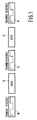
- Figure 1 describes a data stream in the form of data packets 15 (e.g. audio and video information packets) periodically interspersed with training sequences 10. Since the aforementioned patent application fully discusses the uses and implementation of training sequences in data streams, this information will not be discussed in great detail herein.
- data packets 15 e.g. audio and video information packets
- each data packet 15 can comprise either audio or video information, or a combination of both, but is not limited to this type of data.
- digital data carrying information with different degrees of priority i.e. need for robustness
- a sequence as defined herein denotes a sequence of bits which can represent one or more pieces of data and/or a digital code word.
- periodic CAZAC training sequences in a one-way data transmission system can be used with alternation sequences for synchronization and packet detection.
- a "training sequence" 10 can be either a training sequence alone, or a training sequence preceded by an alternation sequence.
- the training sequence 10 is disposed within the data stream periodically to ensure that receivers can always receive a training sequence within a short time after being powered up, or upon switching channels. As shown, each training sequence 10 is identical in phase to the adjacent training signals. This periodicity in the placement of training signals can create RF interference which can disturb other systems, for example television programming on adjacent co-channel "taboo" channels. These channels will be used for providing conventional television when digital HDTV broadcasting, using such training signals, is implemented. Such periodicity can be minimized, or avoided altogether, however by changing the phase of alternating ones of said training signals 10 in accordance with the instant invention.
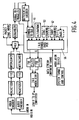
- Figure 2 shows a block diagram of a preferred embodiment of the invention which can be used in conjunction with the transmitter which is part of the aforementioned patent invention and which is shown in Fig.4.
- I & Q symbol rate multiplexer 56 formats the data stream described in Figure 1 by time multiplexing training sequences (for example training sequences provided by "short" training sequence generator 52), and data packets 15 (for example from symbol to I and Q converter 46), under the control of system timing and control means 64.
- the training sequence provided by training sequence buffer 25 is fed to training sequence inverter 20.
- training sequence inverter 20 acts to aperiodically (e.g. randomly) invert selected ones of said training sequences in order to avoid the periodicity which results in the undesired interference.
- the inversion of a sequence in terms of complex representation, represents a 180 degree rotation which will not effect the operation of the training sequence in their use with known algorithms for equalizer training.
- the training sequence processed in accordance with the invention is then fed to I & Q symbol rate multiplexer 56.
- Fig. 3 describes the data stream of Fig. 1 after it emerges from training sequence inverter 20. Three training sequences are shown and one of them, 10*, is shown inverted with respect to the training sequences 10, thus interrupting the periodicity which otherwise would exist.
- Fig. 5 is a block diagram of training sequence inverter 20.
- the training sequence from training sequence buffer 25 is provided at training sequence input 29 and provided to one input of switch 35.
- the training sequence is also provided to inverter 30 which in turn provides an inverted training sequence to a second input of switch 35.
- the switch 35 can select as the output to I & Q symbol rate multiplexer 56, either the training signal from input 29 or its inverted version provided by inverter 30.
- the selection of the switch output is under the control of a pseudorandom generator 40, which will output, for example, either a "1” or a "0" on a pseudo random basis, which will control the selection of switch output where a "1” will cause the switch to couple the first input (training sequence) to the switch output, and a "0" will cause the switch to couple the second input (inverted training sequence) to the switch output.
- a pseudorandom generator 40 which will output, for example, either a "1” or a "0” on a pseudo random basis, which will control the selection of switch output where a "1” will cause the switch to couple the first input (training sequence) to the switch output, and a "0" will cause the switch to couple the second input (inverted training sequence) to the switch output.
- pseudo random generator 20 is under the control of system timing and control circuit 64 which provides the necessary timing to provide for the necessary switching to occur between training sequences (e.g. during data packets).
- system timing and control circuit 64 discussed in more detail in the aforementioned patent application, can be easily designed by one skilled in the art of digital logic design.
Landscapes
- Engineering & Computer Science (AREA)
- Signal Processing (AREA)
- Multimedia (AREA)
- Computer Networks & Wireless Communication (AREA)
- Physics & Mathematics (AREA)
- Spectroscopy & Molecular Physics (AREA)
- Television Systems (AREA)
- Cable Transmission Systems, Equalization Of Radio And Reduction Of Echo (AREA)
- Digital Transmission Methods That Use Modulated Carrier Waves (AREA)
Applications Claiming Priority (2)
| Application Number | Priority Date | Filing Date | Title |
|---|---|---|---|
| US136425 | 1993-10-13 | ||
| US08/136,425 US5440347A (en) | 1993-05-07 | 1993-10-13 | Method and apparatus for randomizing training sequences to minimize interference in digital transmissions |
Publications (2)
| Publication Number | Publication Date |
|---|---|
| EP0649257A2 true EP0649257A2 (de) | 1995-04-19 |
| EP0649257A3 EP0649257A3 (de) | 1995-08-23 |
Family
ID=22472804
Family Applications (1)
| Application Number | Title | Priority Date | Filing Date |
|---|---|---|---|
| EP94202879A Withdrawn EP0649257A3 (de) | 1993-10-13 | 1994-10-05 | Übertragungssystem zur Minimierung von Interferenz in einer digitalen Übertragung. |
Country Status (3)
| Country | Link |
|---|---|
| US (1) | US5440347A (de) |
| EP (1) | EP0649257A3 (de) |
| JP (1) | JPH07177475A (de) |
Cited By (3)
| Publication number | Priority date | Publication date | Assignee | Title |
|---|---|---|---|---|
| SG110998A1 (en) * | 1998-12-22 | 2005-05-30 | Thomson Consumer Electronics | Adaptive channel equalizer having a trining mode |
| US7068631B2 (en) | 2001-08-06 | 2006-06-27 | Telefonaktiebolaget Lm Ericsson (Publ) | Training sequence hopping in a radio communication system |
| US20150278138A1 (en) * | 2014-03-28 | 2015-10-01 | Mark N. Seidel | Pseudorandom sequence synchronization |
Families Citing this family (19)
| Publication number | Priority date | Publication date | Assignee | Title |
|---|---|---|---|---|
| WO1997027670A1 (en) * | 1996-01-23 | 1997-07-31 | Stanford Telecommunications, Inc. | Fast reacquisition catv downstream adaptive equalizer |
| US5878086A (en) * | 1996-09-19 | 1999-03-02 | Philips Electronics North America Corporation | Method and apparatus for producing a deterministic sequence from an IIR filter |
| US6300984B1 (en) * | 1998-01-13 | 2001-10-09 | Samsung Electronics Co., Ltd. | Ghost-cancellation reference signals using spaced PN sequences |
| JP3480313B2 (ja) * | 1998-05-26 | 2003-12-15 | 富士通株式会社 | ディジタル加入者線伝送方法及びxDSL装置 |
| FI105963B (fi) * | 1998-08-24 | 2000-10-31 | Nokia Oyj | Menetelmä opetusjakson muodostamiseksi |
| FR2805690B1 (fr) * | 2000-02-25 | 2003-07-04 | Nortel Matra Cellular | Procede d'estimation d'un ecart de frequence radio, et recepteur de radiocommunication mettant en oeuvre le procede |
| FI113818B (fi) * | 2000-11-23 | 2004-06-15 | Nokia Corp | Menetelmä informaation välittämiseksi tiedonsiirtojärjestelmässä, tiedonsiirtojärjestelmä, verkkoelementti sekä langaton viestin |
| CN100356786C (zh) * | 2003-11-13 | 2007-12-19 | 上海交通大学 | 数字电视地面广播传输系统中的信号传输方法 |
| CN100356792C (zh) * | 2004-03-29 | 2007-12-19 | 上海交通大学 | 数字电视地面广播传输系统中的混合传输方法 |
| CN1333600C (zh) * | 2004-03-29 | 2007-08-22 | 上海交通大学 | 数字电视地面广播混合传输系统的信道编码方法 |
| US7817730B2 (en) * | 2004-06-09 | 2010-10-19 | Marvell World Trade Ltd. | Training sequence for symbol boundary detection in a multicarrier data transmission system |
| US7561626B2 (en) * | 2004-06-09 | 2009-07-14 | Marvell World Trade Ltd. | Method and system for channel estimation in a data transmission system |
| US7643582B2 (en) * | 2004-06-09 | 2010-01-05 | Marvell World Trade Ltd. | Method and system for determining symbol boundary timing in a multicarrier data transmission system |
| US7697619B2 (en) * | 2004-06-09 | 2010-04-13 | Marvell World Trade Ltd. | Training sequence for channel estimation in a data transmission system |
| US7892472B2 (en) * | 2004-08-12 | 2011-02-22 | United States Gypsum Company | Method of making water-resistant gypsum-based article |
| US7561627B2 (en) * | 2005-01-06 | 2009-07-14 | Marvell World Trade Ltd. | Method and system for channel equalization and crosstalk estimation in a multicarrier data transmission system |
| CN104202114B (zh) * | 2006-07-17 | 2018-11-02 | 上海高清数字科技产业有限公司 | 数字信号收发系统及收发方法 |
| US8358705B2 (en) * | 2007-07-05 | 2013-01-22 | Coherent Logix, Incorporated | Transmission of multimedia streams to mobile devices with uncoded transport tunneling |
| EP4236132A3 (de) * | 2023-06-21 | 2024-01-03 | Inova Semiconductors | Effizient übertragbare bitfolge mit eingeschränkter disparität und leitungskodierter vorwärtsfehlerkorrektur |
Family Cites Families (7)
| Publication number | Priority date | Publication date | Assignee | Title |
|---|---|---|---|---|
| FR2478914B1 (fr) * | 1980-03-19 | 1986-01-31 | Ibm France | Procede et dispositif pour l'ajustement initial de l'horloge d'un recepteur de donnees synchrone |
| US4608703A (en) * | 1983-05-12 | 1986-08-26 | Ricoh Company, Ltd. | Synchronization detection system for data transmission |
| GB2153186B (en) * | 1984-01-13 | 1987-04-23 | Ncr Co | Digital data receiver including timing adjustment circuit |
| JPH01166016A (ja) * | 1987-12-22 | 1989-06-29 | Hamamatsu Photonics Kk | 天体スペックル干渉計リアルタイムモニタ |
| US5134464A (en) * | 1990-11-16 | 1992-07-28 | North American Philips Corporation | Method and apparatus for the transmission and reception of a multicarrier digital television signal |
| US5122875A (en) * | 1991-02-27 | 1992-06-16 | General Electric Company | An HDTV compression system |
| JPH054735A (ja) * | 1991-06-20 | 1993-01-14 | Matsushita Electric Ind Co Ltd | 軟質部材の吸着取出し装置 |
-
1993
- 1993-10-13 US US08/136,425 patent/US5440347A/en not_active Expired - Fee Related
-
1994
- 1994-10-05 EP EP94202879A patent/EP0649257A3/de not_active Withdrawn
- 1994-10-07 JP JP6244406A patent/JPH07177475A/ja active Pending
Cited By (3)
| Publication number | Priority date | Publication date | Assignee | Title |
|---|---|---|---|---|
| SG110998A1 (en) * | 1998-12-22 | 2005-05-30 | Thomson Consumer Electronics | Adaptive channel equalizer having a trining mode |
| US7068631B2 (en) | 2001-08-06 | 2006-06-27 | Telefonaktiebolaget Lm Ericsson (Publ) | Training sequence hopping in a radio communication system |
| US20150278138A1 (en) * | 2014-03-28 | 2015-10-01 | Mark N. Seidel | Pseudorandom sequence synchronization |
Also Published As
| Publication number | Publication date |
|---|---|
| EP0649257A3 (de) | 1995-08-23 |
| US5440347A (en) | 1995-08-08 |
| JPH07177475A (ja) | 1995-07-14 |
Similar Documents
| Publication | Publication Date | Title |
|---|---|---|
| US5440347A (en) | Method and apparatus for randomizing training sequences to minimize interference in digital transmissions | |
| US5561468A (en) | Multiplexed modulation system for robust audio digital television | |
| US5291289A (en) | Method and apparatus for transmission and reception of a digital television signal using multicarrier modulation | |
| KR100318142B1 (ko) | 전송신호를수신하기위한수신기 | |
| EP0674441B1 (de) | Verschlüsselungsverfahren für ein digital übertragenes Fernsehsignal | |
| CA2209744C (en) | Method and apparatus for switching operation mode of hdtv | |
| US6522672B1 (en) | Content-based multiplexer device and multiplexing method | |
| US8335153B2 (en) | Orthogonal frequency division multiplex modem circuit | |
| US5793759A (en) | Apparatus and method for digital data transmission over video cable using orthogonal cyclic codes | |
| JP3808093B2 (ja) | 多重搬送波ディジタル・テレビジョン信号デコーダ | |
| CA2184646A1 (en) | Multiple user access method using ofdm | |
| JPH08125881A (ja) | デジタル画像受信器 | |
| AU707189B2 (en) | Method of bi-directional data transmission via a two-wire line | |
| WO1996002105A2 (en) | Method and apparatus for optimal ntsc rejection filtering and transmitter and receiver comprising same | |
| KR100240157B1 (ko) | 디지틀 전송 테스트 신호 발생 회로 | |
| US4821261A (en) | Packet transmission of digital signals over a high capacity channel, particularly over a satellite broadcasting channel | |
| EP0577351A2 (de) | Fernsehsignalbehandlungsanlage | |
| Wang et al. | Training signal and receiver design for multipath channel characterization for TV broadcasting | |
| EP0133190A1 (de) | Kodierung und Dekodierung eines Fernsehsignals | |
| Gledhill | OFDM for digital terrestrial television | |
| KR100375144B1 (ko) | 엔.티.에스.씨동일-채널음성반송파주파수근방의반송파주파수를가지는잔류측파대디지털텔레비젼신호를전송하는방법 | |
| IT1281947B1 (it) | Procedimento e apparato di trasmissione e ricezione di segnali numerici trasmessi in modulazione in multiplex codificato a divisione | |
| JPS60154793A (ja) | Catvシステムにおけるスクランブル方式 | |
| Smith et al. | Digital data over video channels: Techniques for Spacelab | |
| US20030169770A1 (en) | Medium data transmission system and medium data transmission method |
Legal Events
| Date | Code | Title | Description |
|---|---|---|---|
| PUAI | Public reference made under article 153(3) epc to a published international application that has entered the european phase |
Free format text: ORIGINAL CODE: 0009012 |
|
| AK | Designated contracting states |
Kind code of ref document: A2 Designated state(s): DE FR GB IT |
|
| PUAL | Search report despatched |
Free format text: ORIGINAL CODE: 0009013 |
|
| AK | Designated contracting states |
Kind code of ref document: A3 Designated state(s): DE FR GB IT |
|
| 17P | Request for examination filed |
Effective date: 19960223 |
|
| STAA | Information on the status of an ep patent application or granted ep patent |
Free format text: STATUS: THE APPLICATION HAS BEEN WITHDRAWN |
|
| 18W | Application withdrawn |
Withdrawal date: 19970707 |