EP0652190B1 - Verfahren zur Herstellung von Sinterformteilen - Google Patents
Verfahren zur Herstellung von Sinterformteilen Download PDFInfo
- Publication number
- EP0652190B1 EP0652190B1 EP94117591A EP94117591A EP0652190B1 EP 0652190 B1 EP0652190 B1 EP 0652190B1 EP 94117591 A EP94117591 A EP 94117591A EP 94117591 A EP94117591 A EP 94117591A EP 0652190 B1 EP0652190 B1 EP 0652190B1
- Authority
- EP
- European Patent Office
- Prior art keywords
- sintered parts
- shaped sintered
- producing shaped
- sic
- carbon
- Prior art date
- Legal status (The legal status is an assumption and is not a legal conclusion. Google has not performed a legal analysis and makes no representation as to the accuracy of the status listed.)
- Expired - Lifetime
Links
Classifications
-
- B—PERFORMING OPERATIONS; TRANSPORTING
- B22—CASTING; POWDER METALLURGY
- B22F—WORKING METALLIC POWDER; MANUFACTURE OF ARTICLES FROM METALLIC POWDER; MAKING METALLIC POWDER; APPARATUS OR DEVICES SPECIALLY ADAPTED FOR METALLIC POWDER
- B22F3/00—Manufacture of workpieces or articles from metallic powder characterised by the manner of compacting or sintering; Apparatus specially adapted therefor ; Presses and furnaces
- B22F3/22—Manufacture of workpieces or articles from metallic powder characterised by the manner of compacting or sintering; Apparatus specially adapted therefor ; Presses and furnaces for producing castings from a slip
- B22F3/225—Manufacture of workpieces or articles from metallic powder characterised by the manner of compacting or sintering; Apparatus specially adapted therefor ; Presses and furnaces for producing castings from a slip by injection molding
-
- B—PERFORMING OPERATIONS; TRANSPORTING
- B22—CASTING; POWDER METALLURGY
- B22F—WORKING METALLIC POWDER; MANUFACTURE OF ARTICLES FROM METALLIC POWDER; MAKING METALLIC POWDER; APPARATUS OR DEVICES SPECIALLY ADAPTED FOR METALLIC POWDER
- B22F1/00—Metallic powder; Treatment of metallic powder, e.g. to facilitate working or to improve properties
- B22F1/10—Metallic powder containing lubricating or binding agents; Metallic powder containing organic material
- B22F1/103—Metallic powder containing lubricating or binding agents; Metallic powder containing organic material containing an organic binding agent comprising a mixture of, or obtained by reaction of, two or more components other than a solvent or a lubricating agent
-
- B—PERFORMING OPERATIONS; TRANSPORTING
- B22—CASTING; POWDER METALLURGY
- B22F—WORKING METALLIC POWDER; MANUFACTURE OF ARTICLES FROM METALLIC POWDER; MAKING METALLIC POWDER; APPARATUS OR DEVICES SPECIALLY ADAPTED FOR METALLIC POWDER
- B22F3/00—Manufacture of workpieces or articles from metallic powder characterised by the manner of compacting or sintering; Apparatus specially adapted therefor ; Presses and furnaces
- B22F3/10—Sintering only
- B22F3/1017—Multiple heating or additional steps
- B22F3/1021—Removal of binder or filler
- B22F3/1025—Removal of binder or filler not by heating only
-
- C—CHEMISTRY; METALLURGY
- C04—CEMENTS; CONCRETE; ARTIFICIAL STONE; CERAMICS; REFRACTORIES
- C04B—LIME, MAGNESIA; SLAG; CEMENTS; COMPOSITIONS THEREOF, e.g. MORTARS, CONCRETE OR LIKE BUILDING MATERIALS; ARTIFICIAL STONE; CERAMICS; REFRACTORIES; TREATMENT OF NATURAL STONE
- C04B35/00—Shaped ceramic products characterised by their composition; Ceramics compositions; Processing powders of inorganic compounds preparatory to the manufacturing of ceramic products
- C04B35/515—Shaped ceramic products characterised by their composition; Ceramics compositions; Processing powders of inorganic compounds preparatory to the manufacturing of ceramic products based on non-oxide ceramics
- C04B35/56—Shaped ceramic products characterised by their composition; Ceramics compositions; Processing powders of inorganic compounds preparatory to the manufacturing of ceramic products based on non-oxide ceramics based on carbides or oxycarbides
- C04B35/565—Shaped ceramic products characterised by their composition; Ceramics compositions; Processing powders of inorganic compounds preparatory to the manufacturing of ceramic products based on non-oxide ceramics based on carbides or oxycarbides based on silicon carbide
-
- C—CHEMISTRY; METALLURGY
- C04—CEMENTS; CONCRETE; ARTIFICIAL STONE; CERAMICS; REFRACTORIES
- C04B—LIME, MAGNESIA; SLAG; CEMENTS; COMPOSITIONS THEREOF, e.g. MORTARS, CONCRETE OR LIKE BUILDING MATERIALS; ARTIFICIAL STONE; CERAMICS; REFRACTORIES; TREATMENT OF NATURAL STONE
- C04B35/00—Shaped ceramic products characterised by their composition; Ceramics compositions; Processing powders of inorganic compounds preparatory to the manufacturing of ceramic products
- C04B35/622—Forming processes; Processing powders of inorganic compounds preparatory to the manufacturing of ceramic products
- C04B35/626—Preparing or treating the powders individually or as batches ; preparing or treating macroscopic reinforcing agents for ceramic products, e.g. fibres; mechanical aspects section B
- C04B35/63—Preparing or treating the powders individually or as batches ; preparing or treating macroscopic reinforcing agents for ceramic products, e.g. fibres; mechanical aspects section B using additives specially adapted for forming the products, e.g.. binder binders
- C04B35/632—Organic additives
- C04B35/634—Polymers
- C04B35/63448—Polymers obtained otherwise than by reactions only involving carbon-to-carbon unsaturated bonds
- C04B35/63464—Polycarbonates
-
- C—CHEMISTRY; METALLURGY
- C04—CEMENTS; CONCRETE; ARTIFICIAL STONE; CERAMICS; REFRACTORIES
- C04B—LIME, MAGNESIA; SLAG; CEMENTS; COMPOSITIONS THEREOF, e.g. MORTARS, CONCRETE OR LIKE BUILDING MATERIALS; ARTIFICIAL STONE; CERAMICS; REFRACTORIES; TREATMENT OF NATURAL STONE
- C04B35/00—Shaped ceramic products characterised by their composition; Ceramics compositions; Processing powders of inorganic compounds preparatory to the manufacturing of ceramic products
- C04B35/622—Forming processes; Processing powders of inorganic compounds preparatory to the manufacturing of ceramic products
- C04B35/626—Preparing or treating the powders individually or as batches ; preparing or treating macroscopic reinforcing agents for ceramic products, e.g. fibres; mechanical aspects section B
- C04B35/63—Preparing or treating the powders individually or as batches ; preparing or treating macroscopic reinforcing agents for ceramic products, e.g. fibres; mechanical aspects section B using additives specially adapted for forming the products, e.g.. binder binders
- C04B35/632—Organic additives
- C04B35/634—Polymers
- C04B35/63448—Polymers obtained otherwise than by reactions only involving carbon-to-carbon unsaturated bonds
- C04B35/63488—Polyethers, e.g. alkylphenol polyglycolether, polyethylene glycol [PEG], polyethylene oxide [PEO]
-
- C—CHEMISTRY; METALLURGY
- C04—CEMENTS; CONCRETE; ARTIFICIAL STONE; CERAMICS; REFRACTORIES
- C04B—LIME, MAGNESIA; SLAG; CEMENTS; COMPOSITIONS THEREOF, e.g. MORTARS, CONCRETE OR LIKE BUILDING MATERIALS; ARTIFICIAL STONE; CERAMICS; REFRACTORIES; TREATMENT OF NATURAL STONE
- C04B35/00—Shaped ceramic products characterised by their composition; Ceramics compositions; Processing powders of inorganic compounds preparatory to the manufacturing of ceramic products
- C04B35/622—Forming processes; Processing powders of inorganic compounds preparatory to the manufacturing of ceramic products
- C04B35/626—Preparing or treating the powders individually or as batches ; preparing or treating macroscopic reinforcing agents for ceramic products, e.g. fibres; mechanical aspects section B
- C04B35/63—Preparing or treating the powders individually or as batches ; preparing or treating macroscopic reinforcing agents for ceramic products, e.g. fibres; mechanical aspects section B using additives specially adapted for forming the products, e.g.. binder binders
- C04B35/638—Removal thereof
-
- B—PERFORMING OPERATIONS; TRANSPORTING
- B22—CASTING; POWDER METALLURGY
- B22F—WORKING METALLIC POWDER; MANUFACTURE OF ARTICLES FROM METALLIC POWDER; MAKING METALLIC POWDER; APPARATUS OR DEVICES SPECIALLY ADAPTED FOR METALLIC POWDER
- B22F2998/00—Supplementary information concerning processes or compositions relating to powder metallurgy
Definitions
- the present invention relates to an improved method for Manufacture of ceramic sintered parts containing finely divided carbon by shaping a mixture a ceramic powder and polyoxymethylene with an additional Polymeric carbon precursor content, debinding and sintering.
- silicon carbide ceramic with elemental carbon and boron- or aluminum-containing compounds is sintered without pressure or using pressure at 1900 ° C. to 2300 ° C.
- the addition of about 2% by weight of carbon removes the surface layer of SiO 2 from the silicon carbide powder particles during the sintering process and, by reaction with SiO 2 to give fine SiC, favors the solid-phase sintering process of SiC.
- Coke When using elemental carbon, such as graphite, carbon black, Coke also has problems with even agglomerate-free Distribution of the carbon. Especially when using soot becomes fluid due to its high specific surface affected by injection molding compounds in a disadvantageous manner.
- EP-A 413 231 teaches a process for the production of inorganic Sintered molded parts, with green bodies made of sinterable Powders and polyoxymethylene or a copolymer with predominant Proportions of oxymethylene units as binders Extrusion, injection molding or extrusion molding.
- the Binder is made from these green parts by treatment with a gaseous acid or gaseous boron trifluoride quickly, crack-free and removed without delay.
- DE-A-4 235 429 (equivalent to EP-A-595 099) and DE-A-4 314 694 teach compositions of sinterable powders and thermoplastic, polyoxymethylene-containing binders and Process for converting these compositions into sintered moldings by injection molding, acid catalyzed debinding and sintering; the debinding at reduced pressure or / and through Use of a solid, sublimable acid as a catalyst is carried out.
- EP-A-444 475 teaches thermoplastic compositions for the production of ceramic Shaped body and a method for converting these masses in ceramic sintered parts by injection molding, acid catalyzed Debinding and sintering.
- the masses disclosed there include a sinterable inorganic, non-metallic powder, one acid-catalyzed degradable based on polyoxymethylene Binder and dispersing agent, the binder for improvement the injection molding properties of the compositions, in particular to avoid them cracking, as one of several alternatives Phenoxy resins can be added.
- polyesters are usually with those on polyoxymethylene based ceramic feedstocks cannot be mixed homogeneously.
- the present invention was based on the object of a method to find a composition with a sinterable, inorganic, non-metallic powder, one on polyoxymethylene based, acid catalyzed degradable binders as well optionally comprises auxiliaries, to form a ceramic sintered body can be converted, the composition according to Shaping and acid-catalyzed debinding, but before sintering to the sintered molded part, an adjustable content of finely divided Has carbon.
- thermoplastic c) which at temperatures molten from 90 to 220 ° C, miscible and stable with b) and there is no crosslinking reaction with formaldehyde, which is characterized in that before sintering a pyrolysis cut to convert the thermoplastic c) in finely divided carbon.
- the proportion of component c) is preferably 4 to 12 and particularly preferably 6 to 10% by weight, based on the component a).
- the carbon to be used according to the invention in the pyrolysis delivering thermoplastic polymers c) by the binder b) are different, especially high carbon polymers, selected from the group consisting of polycarbonates and preferably Polyethers, preferably with a high aromatic content Rings, especially polyethers, that differ from bisphenol A and an aliphatic diol component.
- thermoplastic polymers that they melted at temperatures from 160 to 220 ° C, preferably 165 ° C to 200 ° C completely with the binder system are miscible, i.e. form a uniform melting phase, so that the C precursors are homogeneous on the inorganic powder surface can be distributed without the known from the prior art Perform coating step with solvent too
- polystyrene resin polystyrene resin
- These polymers must melt above 90 ° C and be stable up to 220 ° C be.
- Their molar mass should generally be 5,000 to 140,000, preferably 10,000 to 20,000.
- Polycarbonates are carbonic acid polyesters with diols, preferably aromatic diols such as bisphenol A.
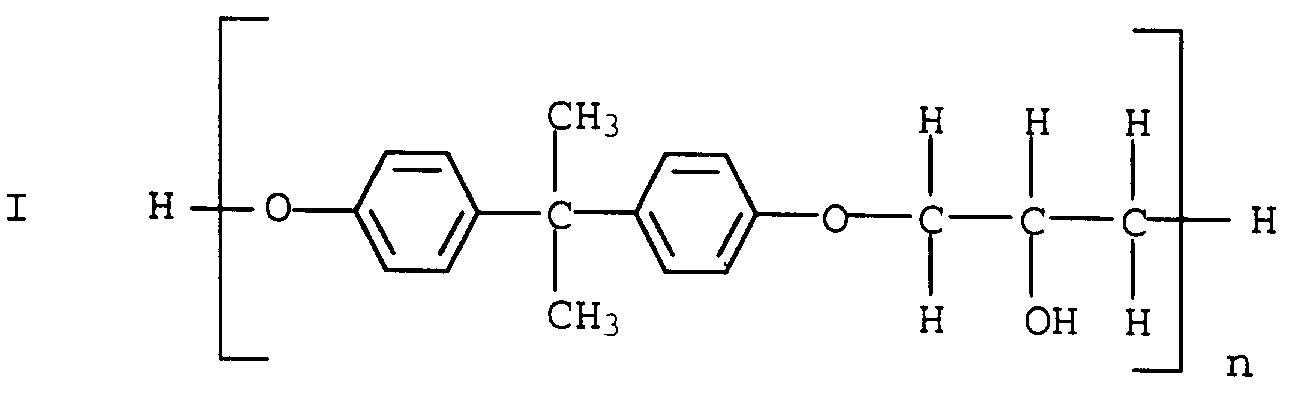
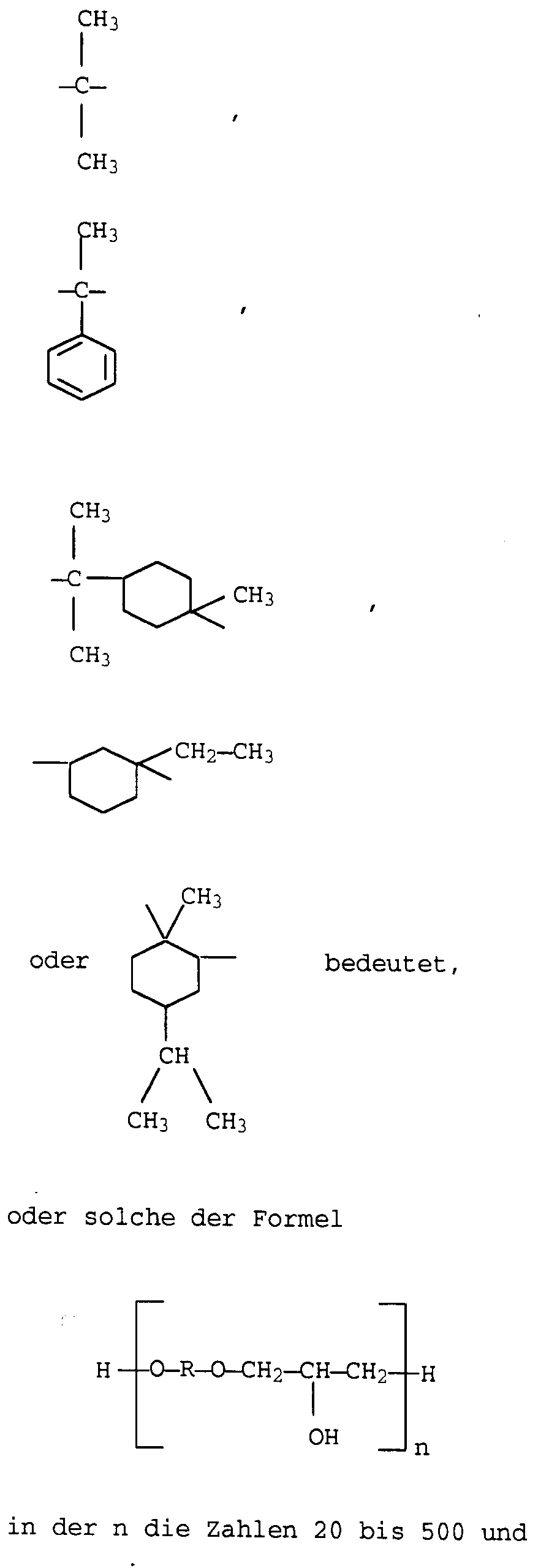
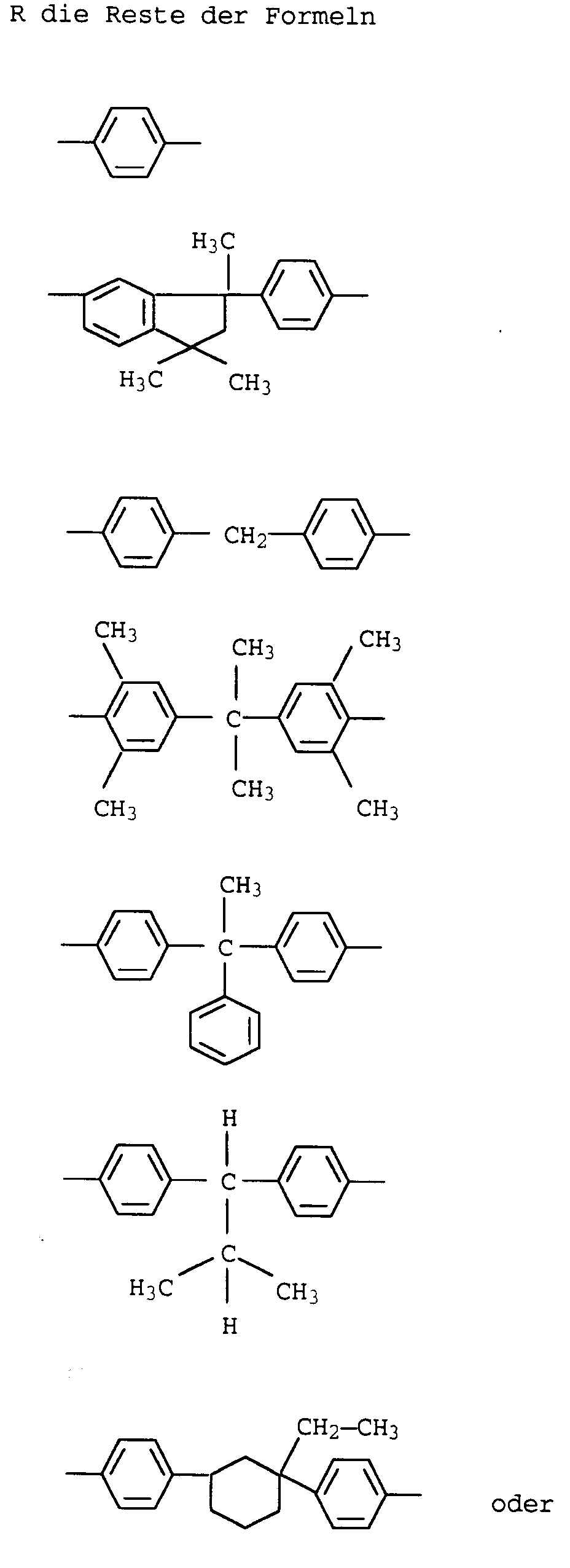
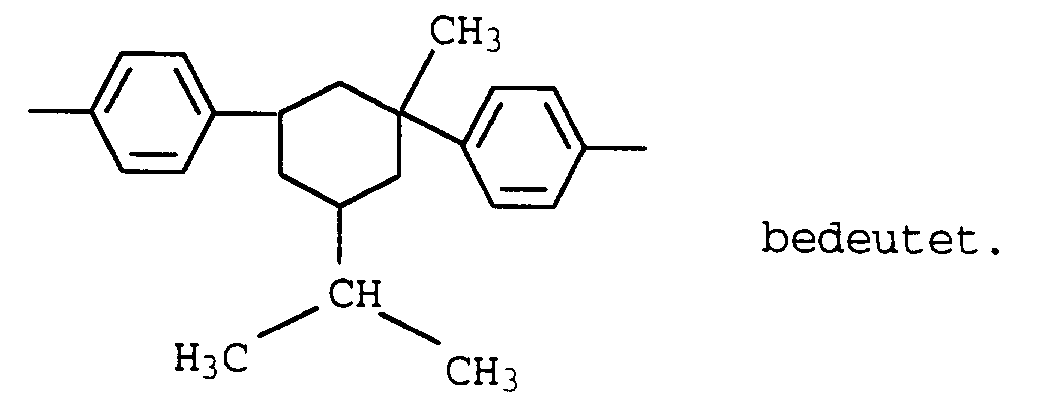
- Polyethers of the formula are particularly preferred where n means 20 to 500 and which according to HF Mark, NG Gaylord a. NB Bikales, Encyclopedia of polymer science and technology, vol. 10, Phenoxy Resins: p. 111-122, Interscience Publishers, New York, are available, reference being made to this reference for individual properties.
- the carbon yield of the phenoxy resins mentioned is 10-35% by weight.
- the carbon-forming thermoplastics are in a certain ratio to the ceramic powder, the amount used being between 0.1 and 15% by weight on the amount of ceramic powder used.
- Ceramic powders such as SiC, WC, TiC, TaC, ZrC, SiO 2 or TiO 2 are suitable as sinter powder for the process according to the invention. Mixtures of these materials can of course also be used.
- the grain size of the ceramic powder that can be used extends of nanocrystalline powders from 0.005 ⁇ m to 10 ⁇ m, preferably from 0.1 ⁇ m to 5 ⁇ m, particularly preferably from 0.2 to 2 ⁇ m.
- the binders to be used according to the invention consisting e.g. out Polyoxymethylene, which advantageously has a molecular weight of 10,000 to 500,000.
- Polyoxymethylene which advantageously has a molecular weight of 10,000 to 500,000.
- homopolymers of formaldehyde or Trioxane also come from copolymers of trioxane with e.g. cyclic Ethers such as ethylene oxide and 1,3-dioxolane or formals such as Butanediol formal into consideration, the amounts of the copolymers in generally 1 to 4% by weight of the polymers.
- the masses can be made of inorganic fibers or whiskers e.g. SiC can be added.
- You can also use tools such as Dispersants or lubricants, such as polyethylene glycol or other thermoplastic binders, such as polyethylene, polymethyl methacrylate or polyethylene oxide or homopolymers of 1,3-dioxolane or formals such as butanediol formal.
- the amount of tools is usually between 0.1 and 12 wt .-% of the total mass.
- a mixture of inorganic powder, binder and the C precursor is melted in conventional apparatus such as kneaders or extruders at temperatures of 160 to 220 ° C., preferably 165 to 200 ° C., the binder and C precursor forming a uniform melting phase.
- the masses are deformed, e.g. by injection molding Temperatures from 160 ° C to 200 ° C and pressures from 500 to 2000 bar. Small amounts of formaldehyde can arise.
- the green bodies obtained in this way become a gaseous, acidic one Exposed to atmosphere.
- the binder becomes gaseous Products, preferably formaldehyde mined.
- the Binder removal temperature is generally 100 ° C up to 160 ° C, preferably below the softening temperature of Binders stays.
- the above phenoxy resin remaining in the debindered parts is under inert gas, such as Nitrogen or argon pyrolyzed at least 600 ° C to finely divided carbon.
- phenoxy resin UCAR® PHENOXY RESIN PKHH from Union Carbide Deutschland GmbH given in the table were obtained with 1000 g SiC with an average grain size of 0.4 ⁇ m and 4 g boron with a grain size of 0.8 ⁇ m and with a polyoxymethylene copolymer ( POM / PBDF) made of trioxane and 2% by weight butanediol formal with an average molecular weight of 150,000 and with 2% by weight polyethylene glycol (PEG) with a molecular weight of 800 as a lubricant and kneaded by injection molding into rods measuring 5 x 6 x 65 mm 3 processed.
- POM / PBDF polyoxymethylene copolymer
- PEG polyethylene glycol
- the rods were at normal pressure and 135 ° C with 80 g of oxalic acid and Debinded 500 l / h of nitrogen as an inert gas for 4 hours.
- the SiC powder used had a free carbon content of 0.9% and an oxygen content of 2.0%. After pyrolysis, about 3% free carbon is required for successful sintering.
- the theoretical density of SiC is 3.22 g / cm 3 .
Landscapes
- Chemical & Material Sciences (AREA)
- Engineering & Computer Science (AREA)
- Manufacturing & Machinery (AREA)
- Ceramic Engineering (AREA)
- Structural Engineering (AREA)
- Materials Engineering (AREA)
- Organic Chemistry (AREA)
- Inorganic Chemistry (AREA)
- Chemical Kinetics & Catalysis (AREA)
- Mechanical Engineering (AREA)
- Compositions Of Oxide Ceramics (AREA)
- Powder Metallurgy (AREA)
- Ceramic Products (AREA)
- Compositions Of Macromolecular Compounds (AREA)
- Processing And Handling Of Plastics And Other Materials For Molding In General (AREA)
Description

| Nr. | Phenoxy [%] | Harz [g] | POM/PBDF [g] | PEG [g] | Cp [%] | Cs [%] | Ds [g/cm3] |
| 1 | 10 | 100 | 284 | 28 | 3,3 | 1,0 | 3,19 |
| 2 | 15 | 150 | 226 | 28 | 4,3 | 1,3 | 3,20 |
| 3 | 20 | 200 | 168 | 27 | 6,6 | 3,6 | 2,75 |
| [%]: Gewichtsprozent, bezogen auf eingesetztes SiC Cp : Gehalt an freiem Kohlenstoff nach Pyrolyse Cs : Gehalt an freiem Kohlenstoff nach Sintern Ds : Sinterdichte |
Claims (6)
- Verfahren zur Herstellung von Sinterformteilen durch Verformen eines Gemisches auszu einem Grünkörper, Entfernen des Bindemittels durch Behandlung mit einer gasförmigen Säure und Sintern, wobei man dem Gemisch aus a) und b) einen Thermoplasten c) zusetzt, der bei Temperaturen von 90°C bis 220°C geschmolzen vorliegt, mit b) mischbar und beständig ist und mit Formaldehyd keine Vernetzungsreaktion eingeht, dadurch gekennzeichnet, daß man vor der Sinterung einen Pyrolyseschnitt zur Umwandlung des Thermoplasten c) in feinverteilten Kohlenstoff durchführt.a) einem keramischen Pulver undb) Polyoxymethylen und/oder einem Copolymerisat mit überwiegenden Anteilen an Oxymethyleneinheiten
- Verfahren zur Herstellung von Sinterformteilen nach Anspruch 1, dadurch gekennzeichnet, daß man als Thermoplast ein Phenoxy-Harz der allgemeinen Formel I verwendet,in der n 20 bis 500 bedeutet.

- Verfahren zur Herstellung von Sinterformteilen nach Anspruch 1, dadurch gekennzeichnet, daß man als keramisches Pulver SiC, WC, TiC, TaC, ZrC, SiO2 und/oder TiO2 verwendet.
- Verfahren zur Herstellung von Sinterformteilen nach Anspruch 1, dadurch gekennzeichnet, daß man als keramisches Pulver α-SiC und/oder β-SiC verwendet.
- Verfahren zur Herstellung von Sinterformteilen nach Anspruch 1, dadurch gekennzeichnet, daß man die Pyrolyse bei Temperaturen von 600 bis 1500°C unter Inertgas durchführt.
- Verfahren zur Herstellung von Sinterformteilen nach Anspruch 1, dadurch gekennzeichnet, daß man die Pyrolyse bei Temperaturen von 600 bis 1200°C unter Inertgas durchführt.
Applications Claiming Priority (2)
| Application Number | Priority Date | Filing Date | Title |
|---|---|---|---|
| DE4338122 | 1993-11-08 | ||
| DE4338122A DE4338122A1 (de) | 1993-11-08 | 1993-11-08 | Verfahren zur Herstellung von Sinterformteilen und dafür geeignete Zusammensetzungen |
Publications (2)
| Publication Number | Publication Date |
|---|---|
| EP0652190A1 EP0652190A1 (de) | 1995-05-10 |
| EP0652190B1 true EP0652190B1 (de) | 1999-03-03 |
Family
ID=6502093
Family Applications (1)
| Application Number | Title | Priority Date | Filing Date |
|---|---|---|---|
| EP94117591A Expired - Lifetime EP0652190B1 (de) | 1993-11-08 | 1994-11-08 | Verfahren zur Herstellung von Sinterformteilen |
Country Status (7)
| Country | Link |
|---|---|
| US (1) | US5695697A (de) |
| EP (1) | EP0652190B1 (de) |
| JP (1) | JP3738043B2 (de) |
| BR (1) | BR9404365A (de) |
| DE (2) | DE4338122A1 (de) |
| ES (1) | ES2127871T3 (de) |
| IL (1) | IL111374A (de) |
Families Citing this family (14)
| Publication number | Priority date | Publication date | Assignee | Title |
|---|---|---|---|---|
| DE19747843C1 (de) * | 1997-10-30 | 1999-02-04 | Wolfgang Eberlein | Halbzeug und Verfahren zur Herstellung dieses Halbzeuges |
| JP2955754B1 (ja) * | 1998-06-01 | 1999-10-04 | 有限会社モールドリサーチ | 金属粉末の射出成形用組成物と、その組成物を用いた射出成形及び焼結法 |
| DE10019447A1 (de) * | 2000-04-19 | 2001-10-25 | Basf Ag | Bindemittel für anorganische Materialpulver zur Herstellung metallischer und keramischer Formkörper |
| US7109642B2 (en) * | 2003-11-29 | 2006-09-19 | Walter Guy Scott | Composite piezoelectric apparatus and method |
| US20060121200A1 (en) * | 2003-11-29 | 2006-06-08 | Cross Match Technologies, Inc. | Electroless plating of piezoelectric ceramic |
| DE102004053222B3 (de) * | 2004-11-04 | 2006-01-26 | Zschimmer & Schwarz Gmbh & Co. Kg Chemische Fabriken | Flüssigkeit, deren Verwendung zur Aufbereitung von Pulvermischungen auf Eisen- oder Edelstahlbasis sowie ein Verfahren zur Aufbereitung von Pulvermischungen auf Eisen- oder Edelstahlbasis |
| DE102004053221B3 (de) * | 2004-11-04 | 2006-02-02 | Zschimmer & Schwarz Gmbh & Co. Kg Chemische Fabriken | Flüssigkeit und deren Verwendung zur Aufbereitung von Hartmetallen |
| DE102005031669A1 (de) * | 2005-07-05 | 2007-01-18 | Basf Ag | Polyoxymethylene mit Eisenpulver |
| JP4483880B2 (ja) * | 2007-03-15 | 2010-06-16 | セイコーエプソン株式会社 | 成形体形成用組成物、脱脂体および焼結体 |
| US9556072B2 (en) | 2009-06-25 | 2017-01-31 | Basf Se | Process for the continuous thermal removal of binder from a metallic and/or ceramic shaped body produced by injection molding, extrusion or pressing using a thermoplastic molding composition |
| JP5857688B2 (ja) * | 2011-11-30 | 2016-02-10 | セイコーエプソン株式会社 | 射出成形用組成物および焼結体の製造方法 |
| JP5970794B2 (ja) | 2011-11-30 | 2016-08-17 | セイコーエプソン株式会社 | 射出成形用組成物および焼結体の製造方法 |
| RU2652302C1 (ru) * | 2017-06-05 | 2018-04-25 | федеральное государственное автономное образовательное учреждение высшего образования "Южно-Уральский государственный университет (национальный исследовательский университет)" | Способ получения электротехнических изделий из порошковых композиций на основе углерода |
| WO2023156610A1 (en) | 2022-02-18 | 2023-08-24 | Basf Se | A process for the treatment of at least one three-dimensional green body |
Family Cites Families (7)
| Publication number | Priority date | Publication date | Assignee | Title |
|---|---|---|---|---|
| US4004934A (en) * | 1973-10-24 | 1977-01-25 | General Electric Company | Sintered dense silicon carbide |
| US4295890A (en) * | 1975-12-03 | 1981-10-20 | Ppg Industries, Inc. | Submicron beta silicon carbide powder and sintered articles of high density prepared therefrom |
| JP3128130B2 (ja) * | 1989-08-16 | 2001-01-29 | ビーエーエスエフ アクチェンゲゼルシャフト | 無機焼結成形体の製造方法 |
| DE59101468D1 (de) * | 1990-02-21 | 1994-06-01 | Basf Ag | Thermoplastische Massen für die Herstellung keramischer Formkörper. |
| DE4007345A1 (de) * | 1990-03-08 | 1991-09-12 | Basf Ag | Thermoplastische massen fuer die herstellung metallischer formkoerper |
| DE4235429A1 (de) * | 1992-10-21 | 1994-04-28 | Basf Ag | Verfahren zur Herstellung von Sinterformteilen |
| DE4314694C1 (de) * | 1993-05-04 | 1994-05-11 | Basf Ag | Verfahren zur Herstellung von Sinterformteilen |
-
1993
- 1993-11-08 DE DE4338122A patent/DE4338122A1/de not_active Withdrawn
-
1994
- 1994-10-24 IL IL111374A patent/IL111374A/en not_active IP Right Cessation
- 1994-11-07 BR BR9404365A patent/BR9404365A/pt not_active Application Discontinuation
- 1994-11-07 US US08/335,044 patent/US5695697A/en not_active Expired - Lifetime
- 1994-11-07 JP JP27257394A patent/JP3738043B2/ja not_active Expired - Fee Related
- 1994-11-08 DE DE59407872T patent/DE59407872D1/de not_active Expired - Lifetime
- 1994-11-08 ES ES94117591T patent/ES2127871T3/es not_active Expired - Lifetime
- 1994-11-08 EP EP94117591A patent/EP0652190B1/de not_active Expired - Lifetime
Also Published As
| Publication number | Publication date |
|---|---|
| JP3738043B2 (ja) | 2006-01-25 |
| EP0652190A1 (de) | 1995-05-10 |
| IL111374A0 (en) | 1994-12-29 |
| IL111374A (en) | 1998-06-15 |
| BR9404365A (pt) | 1995-07-04 |
| US5695697A (en) | 1997-12-09 |
| DE4338122A1 (de) | 1995-05-11 |
| JPH07187802A (ja) | 1995-07-25 |
| DE59407872D1 (de) | 1999-04-08 |
| ES2127871T3 (es) | 1999-05-01 |
Similar Documents
| Publication | Publication Date | Title |
|---|---|---|
| EP0465940B1 (de) | Thermoplastische Massen für die Herstellung metallischer Formkörper | |
| EP0446708B1 (de) | Thermoplastische Massen für die Herstellung metallischer Formkörper | |
| EP0004031B1 (de) | Dichte polykristalline Formkörper aus alpha-Siliciumcarbid und Verfahren zu ihrer Herstellung durch drucklose Sinterung | |
| DE3123974C2 (de) | ||
| EP0444475B1 (de) | Thermoplastische Massen für die Herstellung keramischer Formkörper | |
| EP1400499B1 (de) | Faserverstärkte Verbundkeramik und Verfahren zu deren Herstellung | |
| EP1276811B1 (de) | Bindemittel für anorganische materialpulver zur herstellung metallischer und keramischer formkörper | |
| DE2736469C2 (de) | Furfurylalkoholmischpolymerisat und Verfahren zu seiner Herstellung | |
| EP0094591A1 (de) | Polykristalline, praktisch porenfreie Sinterkörper aus Alpha-Siliciumcarbid, Borcarbid und freiem Kohlenstoff und Verfahren zu ihrer Herstellung | |
| DE4207865C2 (de) | Lösungsmittelfreie formpreßbare Keramik-Zusammensetzungen sowie Verfahren zur Bildung von Keramikgegenständen | |
| EP0697931B1 (de) | Verfahren zur herstellung von sinterformteilen | |
| WO2008006776A1 (de) | Bindemittel enthaltende thermoplastische massen für die herstellung metallischer formkörper | |
| DE4319460A1 (de) | Verbundwerkstoffe auf der Basis von Borcarbid, Titandiborid und elementarem Kohlenstoff sowie Verfahren zu ihrer Herstellung | |
| DE2627856A1 (de) | Gesinterter siliziumkarbid-koerper und verfahren zu dessen herstellung | |
| EP0652190A1 (de) | Verfahren zur Herstellung von Sinterformteilen und dafür geeignete Zusammensetzungen | |
| EP0800882A2 (de) | Verfahren zur Herstellung von Granulat und Formteilen aus Hartmetall- oder Cermet-Materialien | |
| EP0119473A1 (de) | Verfahren zur Herstellung poröser, durchströmbarer Formkörper aus Siliziumkarbid | |
| DE3500962C2 (de) | Verfahren zur Herstellung eines Sinterkörpers aus Siliciumcarbid | |
| DE3840773A1 (de) | Sinterfaehiges keramikpulver, verfahren zu seiner herstellung, daraus hergestellte siliziumnitridkeramik, verfahren zu deren herstellung sowie deren verwendung | |
| DE2923729A1 (de) | Sinterkeramisches produkt und verfahren zu seiner herstellung | |
| EP0064606B1 (de) | Verfahren zur Herstellung eines homogenen Siliciumcarbid-Formkörpers | |
| DE102008062155B4 (de) | Verfahren zur Herstellung eines verfestigten, einsatzbereiten keramischen Sinterkörpers, Sinterkörper und Verwendung einer keramischen Masse | |
| EP0595099B1 (de) | Verfahren zur Herstellung von Sinterformteilen | |
| EP0517025A1 (de) | Verfahren zum thermoplastischen Verarbeiten nichtplastifizierbarer Polymerer | |
| DE3540254C2 (de) |
Legal Events
| Date | Code | Title | Description |
|---|---|---|---|
| PUAI | Public reference made under article 153(3) epc to a published international application that has entered the european phase |
Free format text: ORIGINAL CODE: 0009012 |
|
| 17P | Request for examination filed |
Effective date: 19950310 |
|
| AK | Designated contracting states |
Kind code of ref document: A1 Designated state(s): BE DE ES FR GB NL |
|
| 17Q | First examination report despatched |
Effective date: 19950620 |
|
| GRAG | Despatch of communication of intention to grant |
Free format text: ORIGINAL CODE: EPIDOS AGRA |
|
| GRAG | Despatch of communication of intention to grant |
Free format text: ORIGINAL CODE: EPIDOS AGRA |
|
| GRAH | Despatch of communication of intention to grant a patent |
Free format text: ORIGINAL CODE: EPIDOS IGRA |
|
| GRAH | Despatch of communication of intention to grant a patent |
Free format text: ORIGINAL CODE: EPIDOS IGRA |
|
| GRAA | (expected) grant |
Free format text: ORIGINAL CODE: 0009210 |
|
| AK | Designated contracting states |
Kind code of ref document: B1 Designated state(s): BE DE ES FR GB NL |
|
| GBT | Gb: translation of ep patent filed (gb section 77(6)(a)/1977) |
Effective date: 19990312 |
|
| REF | Corresponds to: |
Ref document number: 59407872 Country of ref document: DE Date of ref document: 19990408 |
|
| REG | Reference to a national code |
Ref country code: ES Ref legal event code: FG2A Ref document number: 2127871 Country of ref document: ES Kind code of ref document: T3 |
|
| ET | Fr: translation filed | ||
| PLBE | No opposition filed within time limit |
Free format text: ORIGINAL CODE: 0009261 |
|
| STAA | Information on the status of an ep patent application or granted ep patent |
Free format text: STATUS: NO OPPOSITION FILED WITHIN TIME LIMIT |
|
| 26N | No opposition filed | ||
| REG | Reference to a national code |
Ref country code: GB Ref legal event code: IF02 |
|
| PGFP | Annual fee paid to national office [announced via postgrant information from national office to epo] |
Ref country code: DE Payment date: 20091105 Year of fee payment: 16 |
|
| PGFP | Annual fee paid to national office [announced via postgrant information from national office to epo] |
Ref country code: NL Payment date: 20101124 Year of fee payment: 17 Ref country code: FR Payment date: 20101214 Year of fee payment: 17 |
|
| PGFP | Annual fee paid to national office [announced via postgrant information from national office to epo] |
Ref country code: GB Payment date: 20101130 Year of fee payment: 17 |
|
| PGFP | Annual fee paid to national office [announced via postgrant information from national office to epo] |
Ref country code: BE Payment date: 20110117 Year of fee payment: 17 Ref country code: ES Payment date: 20101228 Year of fee payment: 17 |
|
| PG25 | Lapsed in a contracting state [announced via postgrant information from national office to epo] |
Ref country code: DE Free format text: LAPSE BECAUSE OF NON-PAYMENT OF DUE FEES Effective date: 20110531 |
|
| REG | Reference to a national code |
Ref country code: DE Ref legal event code: R119 Ref document number: 59407872 Country of ref document: DE Effective date: 20110601 Ref country code: DE Ref legal event code: R119 Ref document number: 59407872 Country of ref document: DE Effective date: 20110531 |
|
| BERE | Be: lapsed |
Owner name: *BASF A.G. Effective date: 20111130 |
|
| REG | Reference to a national code |
Ref country code: NL Ref legal event code: V1 Effective date: 20120601 |
|
| GBPC | Gb: european patent ceased through non-payment of renewal fee |
Effective date: 20111108 |
|
| PG25 | Lapsed in a contracting state [announced via postgrant information from national office to epo] |
Ref country code: NL Free format text: LAPSE BECAUSE OF NON-PAYMENT OF DUE FEES Effective date: 20120601 |
|
| REG | Reference to a national code |
Ref country code: FR Ref legal event code: ST Effective date: 20120731 |
|
| PG25 | Lapsed in a contracting state [announced via postgrant information from national office to epo] |
Ref country code: BE Free format text: LAPSE BECAUSE OF NON-PAYMENT OF DUE FEES Effective date: 20111130 |
|
| PG25 | Lapsed in a contracting state [announced via postgrant information from national office to epo] |
Ref country code: GB Free format text: LAPSE BECAUSE OF NON-PAYMENT OF DUE FEES Effective date: 20111108 |
|
| PG25 | Lapsed in a contracting state [announced via postgrant information from national office to epo] |
Ref country code: FR Free format text: LAPSE BECAUSE OF NON-PAYMENT OF DUE FEES Effective date: 20111130 |
|
| REG | Reference to a national code |
Ref country code: ES Ref legal event code: FD2A Effective date: 20130603 |
|
| PG25 | Lapsed in a contracting state [announced via postgrant information from national office to epo] |
Ref country code: ES Free format text: LAPSE BECAUSE OF NON-PAYMENT OF DUE FEES Effective date: 20111109 |