EP0655101B1 - Methode und einrichtung zur verbesserung des wirkungsgrades und der produktivität in einem arbeitszyklus - Google Patents
Methode und einrichtung zur verbesserung des wirkungsgrades und der produktivität in einem arbeitszyklus Download PDFInfo
- Publication number
- EP0655101B1 EP0655101B1 EP93919948A EP93919948A EP0655101B1 EP 0655101 B1 EP0655101 B1 EP 0655101B1 EP 93919948 A EP93919948 A EP 93919948A EP 93919948 A EP93919948 A EP 93919948A EP 0655101 B1 EP0655101 B1 EP 0655101B1
- Authority
- EP
- European Patent Office
- Prior art keywords
- working fluid
- reservoir
- gas
- temperature
- energy
- Prior art date
- Legal status (The legal status is an assumption and is not a legal conclusion. Google has not performed a legal analysis and makes no representation as to the accuracy of the status listed.)
- Expired - Lifetime
Links
Images





Classifications
-
- F—MECHANICAL ENGINEERING; LIGHTING; HEATING; WEAPONS; BLASTING
- F01—MACHINES OR ENGINES IN GENERAL; ENGINE PLANTS IN GENERAL; STEAM ENGINES
- F01K—STEAM ENGINE PLANTS; STEAM ACCUMULATORS; ENGINE PLANTS NOT OTHERWISE PROVIDED FOR; ENGINES USING SPECIAL WORKING FLUIDS OR CYCLES
- F01K25/00—Plants or engines characterised by use of special working fluids, not otherwise provided for; Plants operating in closed cycles and not otherwise provided for
- F01K25/06—Plants or engines characterised by use of special working fluids, not otherwise provided for; Plants operating in closed cycles and not otherwise provided for using mixtures of different fluids
-
- F—MECHANICAL ENGINEERING; LIGHTING; HEATING; WEAPONS; BLASTING
- F01—MACHINES OR ENGINES IN GENERAL; ENGINE PLANTS IN GENERAL; STEAM ENGINES
- F01K—STEAM ENGINE PLANTS; STEAM ACCUMULATORS; ENGINE PLANTS NOT OTHERWISE PROVIDED FOR; ENGINES USING SPECIAL WORKING FLUIDS OR CYCLES
- F01K21/00—Steam engine plants not otherwise provided for
- F01K21/04—Steam engine plants not otherwise provided for using mixtures of steam and gas; Plants generating or heating steam by bringing water or steam into direct contact with hot gas
Definitions
- the invention relates to the field of converting heat energy to mechanical energy utilizing a working fluid, particularly for, but not necessarily limited to generating electricity.
- thermodynamics which states that processes proceed in a certain defined direction and not in the reverse direction, can be restated that it is impossible to transform anergy into exergy.
- Thermodynamic processes may be divided into the irreversible and the reversible.
- irreversible processes the work done is zero, exergy being transformed into anergy.
- reversible processes the greatest possible work is done.
- the present invention is concerned with the conversion of heat energy to mechanical energy, particularly for the generation of electrical power, the process which presents the greatest problems with regard to efficiency.
- heat is transferred to a working fluid which undergoes a series of temperature, pressure and volume variations in a reversible cycle.
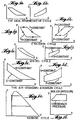
- the ideal regenerative cycle is known as the Carnot cycle, but a number of other conventional cycles may be used, especially the Rankine cycle, but also including the Atkinson cycle, the Ericsson cycle, the Brayton cycle, the Diesel cycle and the Lenoir cycle.
- a working fluid in gaseous form is passed to a device for converting the energy of the working fluid to mechanical energy, which devices include turbines as well as a wide variety of other types of heat engines.
- FIGS 1A-1J give P-V and T-S diagrams for a number of typical cycles.
- U.S. Patent No. 4,439,988 discloses a Rankine cycle utilizing an ejector for injecting gaseous working fluid into a turbine.
- the ejector By utilizing the ejector to inject a light gas into the working fluid, after the working fluid has been heated and vaporized the turbine was found to extract the available energy with a smaller pressure drop than would be required with only a primary working fluid and there is a substantial drop in temperature of the working fluid, enabling operation of the turbine in a low temperature environment.
- the light gas which is used can be hydrogen, helium, nitrogen, air, water vapor or an organic compound having a molecular weight less than the working fluid.
- U.S. Patent No. 4,196,594 discloses the injection of a rare gas, such as argon or helium, into a gaseous working fluid such as aqueous steam used to carry out mechanical work in a heat engine.
- the vapor added has a lower H value than the working fluid, the H value being C p /C v , C p being specific heat at constant pressure and C v being specific heat at constant volume.
- U.S. Patent No. 4,876,855 discloses a working fluid for a Rankine cycle power plant comprising a polar compound and a non-polar compound, the polar compound having a molecular weight smaller than the molecular weight of the non-polar compound.
- the difference between the ideal enthalpy and the actual enthalpy divided by the critical temperature of the working fluid is known as residual enthalpy.
- Applicant has theorized that greater efficiency from a reversible process is feasible if one can increase the change in actual enthalpy of a system, within the range of temperature and pressure conditions as required by its previous design. This could conceivably be accomplished by methods which would result in the release of "residual" enthalpy, in effect, slowing down the loss of exergy in the system.
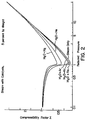
- Applicant has also theorized that a greater volumetric expansion could be obtained by modifying the compressibility factor of a working fluid.
- Applicant has further theorized that a substance could be found which would increase both the enthalpy and compressibility of a working fluid.
- the invention relates to a process for converting heat energy to mechanical energy in which heat energy is applied to a working fluid in a reservoir in order to convert the fluid from liquid to vapor form, and passing the working fluid in vapor form to a means for converting the energy therein to mechanical work, with increased expansion and reduction in temperature of the working fluid, and recycling the expanded, temperature reduced working fluid to the reservoir.
- the efficiency of this process may be increased by adding a gas to the working fluid in the reservoir, the gas having a molecular weight no greater than the approximate molecular weight of the working fluid, such that the molecular weight of the working fluid and gas is not significantly greater than the approximate molecular weight of the working fluid alone.
- the gas is subsequently separated from the working fluid external to the reservoir and recycled to the working fluid in the reservoir.
- the preferred gases for use in this process are hydrogen and helium. While hydrogen holds a slight advantage in terms of efficiency it is relatively disadvantageous in terms of safety in some situations, and helium is therefore preferred in practical applications.
- the practical effect of adding the gas to the working fluid in the reservoir is to substantially increase the change in enthalpy, and thus the expansion which the fluid undergoes at a given temperature and pressure.
- a greater amount of mechanical work can be done for a fixed amount of heat energy input, or the amount of heat energy can be reduced in order to obtain a fixed amount of work. In either case, there is a considerable increase in the efficiency of the process.
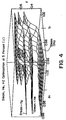
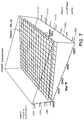
- the residual enthalpy can be calculated from the following equation: where the left side of the equation represents the residual enthalpy as the pressure is increased from zero to a given pressure at a constant temperature.
- An apparatus constructed as shown in Figure 8 utilizes a boiler 12 to heat a working fluid, in this case water.
- a tank 14 is connected to the boiler for adding a gas to the working fluid.
- the output of the boiler is connected to a turbine 16 which generates electricity consumed by load 18.
- the working fluid which expands in turbine 16 is collected by collector 20 and condensed back to a liquid in condenser 22.
- Condenser 22 separates the added gas from the liquid working fluid which is then returned to the boiler. Where appropriate methodology is available, the gas may also be separated from the steam prior to the turbine.
- the boiler used was a commercially available apparatus, sold under the trademark BABY GIANT, Model BG-3.3 by The Electro Steam Generator Corporation of Alexandria, Virginia.
- the boiler is heated by a stainless steel immersion heater consuming 3.3 kilowatts and developing an output of 1.057 x 10 4 kJ (10 015 BTU) per hour.
- the boiler as manufactured included temperature and pressure gauges located such that they would read the temperature and pressure in the boiler. Additional gauges were added to the system to read steam temperature and pressure, downstream in the collector. Valves were also added to the boiler allow gases to be added to the working fluid in the boiler. The temperature and pressure of the steam were measured in a 4.137 x 10 5 Pa (60 psi) condenser coil which was added specifically to trap the steam.
- the turbine was a 12 volt car alternator, having fins welded to it.
- the results of the various runs are shown in Tables 1 and 2, below.
- the basic working fluid used was water, and water with additions of 5% helium, 5% neon, 5% oxygen and 5% xenon. Temperature and pressure readings were made at the collection coil initially, when the device was turned on, and at times of 30, 60 and 90 minutes for both the water and the steam.
- Tables 1 and 2 represents averages obtained from a number of runs.
- the temperature data of Table 1 is plotted in Figure 9 and the pressure data of Table 2 is plotted in Figure 10.
- the results shown in these graphs are quite dramatic.
- the temperature of the steam plus helium combination is the lowest of all the working fluids, averaging about 154.4 °C (310°F).
- the temperature of the steam plus neon combination is somewhat higher, about 183.3 °C (362 °F), steam plus oxygen is about 187.7°C (370°F), and the temperatures of steam alone, and steam with xenon are both about 191.1°C(376°F).
- a voltmeter was connected to the alternator output.
- the reading for steam alone was 12 volts.
- the output was up to 18 volts.
- the "catalytic" substance can be added to the working fluid over a wide range, for example, about 0.1 to 50% by weight. The closer the molecular weight of the working fluid, the greater the amount of "catalytic" substance that will be necessary. Where water is the working fluid, 3-9% by weight H 2 or He is preferred for addition.
- Both hydrogen and helium increase the actual enthalpy of the working fluid, and increase the compressibility factor, increasing the expansion and enabling more mechanical work to be done.
- helium has been found to actually cool down the boiler, reducing fuel consumption and pollution.
Landscapes
- Engineering & Computer Science (AREA)
- Chemical & Material Sciences (AREA)
- Combustion & Propulsion (AREA)
- Mechanical Engineering (AREA)
- General Engineering & Computer Science (AREA)
- Engine Equipment That Uses Special Cycles (AREA)
- Control Of Eletrric Generators (AREA)
- Diaphragms For Electromechanical Transducers (AREA)
- Mechanical Treatment Of Semiconductor (AREA)
- Crystals, And After-Treatments Of Crystals (AREA)
- Paper (AREA)
- Physical Or Chemical Processes And Apparatus (AREA)
Claims (12)
- Prozess zur Umwandlung von Wärmeenergie in mechanische Energie, bei demeinem Arbeitsfluid in einem Reservoir (12) Wärmeenergie zugeführt wird, die ausreicht, um das Arbeitsfluid von einer Flüssigkeit in Dampfform umzuwandeln;dem Arbeitsfluid ein Gas mit einem Molekulargewicht zugefügt wird, das nicht größer ist als das annähernde Molekulargewicht des Arbeitsfluids;das Arbeitsfluid in Dampfform einem Mittel (16, 18) zur Umwandlung der darin enthaltenen Energie in mechanische Arbeit zugeführt wird, unter Expansion und Verringerung der Temperatur des Arbeitsfluids;das Gas außerhalb des Reservoirs aus dem Arbeitsfluid abgesondert wird, nachdem das Arbeitsfluid und das Gas durch das Mittel zur Umwandlung (16, 18) geleitet worden ist; unddas expandierte Arbeitsfluid mit reduzierter Temperatur in flüssiger Form wieder dem Reservoir (12) zugeführt wird;dadurch gekennzeichnet, dass das Gas dem Arbeitsfluid im Reservoir (12) zugefügt wird.
- Prozess nach Anspruch 1, bei dem das abgesonderte Gas wieder dem Reservoir (12) zugeführt wird.
- Prozess nach Anspruch 1, bei dem das Arbeitsfluid Wasser ist.
- Prozess nach Anspruch 3, bei dem das Gas Wasserstoff oder Helium ist.
- Prozess nach Anspruch 1, bei dem das Gas in einer Menge von etwa 0,1-9 Gew.% dem Arbeitsfluid zugefügt wird.
- Prozess nach Anspruch 5, bei dem das Gas in einer Menge von etwa 3-9 Gew.% zugefügt wird.
- Prozess nach Anspruch 1, bei dem das Reservoir ein Kessel (12) ist.
- Prozess nach Anspruch 1, bei dem das Arbeitsfluid dem Mittel zur Umwandlung (16, 18) mit einer Temperatur und einem Druck zugeführt wird, die etwa der kritischen Temperatur und dem kritischen Druck des Arbeitsfluids entsprechen.
- Prozess nach Anspruch 8, bei dem das Arbeitsfluid Wasser ist, das im Reservoir (12) auf etwa 374°C erwärmt wird.
- Einrichtung zur Umwandlung von Wärmeenergie in mechanische Energie, mit:a) einem Reservoir (12) zur Aufnahme eines Arbeitsfluids;b) einer Gasquelle (14);c) Mitteln zur Erwärmung des Arbeitsfluids in dem Reservoir (12), bis es Dampfform erreicht;d) Mitteln (16, 18) zum Expandieren des Arbeitsfluids in Dampfform und zur Umwandlung eines Teils der darin enthaltenen Energie in mechanische Arbeit, in Fluidverbindung mit dem Reservoir;e) Mitteln (22) zum Abkühlen und Kondensieren des expandierten Arbeitsfluids in Dampfform in Fluidverbindung mit dem Mittel zur Expansion (16, 18);f) Mitteln, um das abgekühlte, kondensierte Arbeitsfluid wieder zum Reservoir zurückzuführen; undg) Mitteln zum Absondern von Gas aus dem abgekühlten, kondensierten Arbeitsfluid;dadurch gekennzeichnet, dass die Gasquelle (14) in Fluidverbindung mit dem Reservoir ist.
- Einrichtung nach Anspruch 10, die außerdem Mittel aufweist, um das abgesonderte Gas wieder an das Reservoir (12) zurückzuführen.
- Einrichtung nach Anspruch 10, bei der die Gasquelle Wasserstoff oder Helium enthält.
Applications Claiming Priority (3)
| Application Number | Priority Date | Filing Date | Title |
|---|---|---|---|
| US07/929,433 US5255519A (en) | 1992-08-14 | 1992-08-14 | Method and apparatus for increasing efficiency and productivity in a power generation cycle |
| US929433 | 1992-08-14 | ||
| PCT/US1993/007462 WO1994004796A1 (en) | 1992-08-14 | 1993-08-12 | Method and apparatus for increasing efficiency and productivity in a power generation cycle |
Publications (2)
| Publication Number | Publication Date |
|---|---|
| EP0655101A1 EP0655101A1 (de) | 1995-05-31 |
| EP0655101B1 true EP0655101B1 (de) | 1997-10-22 |
Family
ID=25457858
Family Applications (1)
| Application Number | Title | Priority Date | Filing Date |
|---|---|---|---|
| EP93919948A Expired - Lifetime EP0655101B1 (de) | 1992-08-14 | 1993-08-12 | Methode und einrichtung zur verbesserung des wirkungsgrades und der produktivität in einem arbeitszyklus |
Country Status (24)
| Country | Link |
|---|---|
| US (2) | US5255519A (de) |
| EP (1) | EP0655101B1 (de) |
| JP (1) | JPH08500171A (de) |
| KR (1) | KR950703116A (de) |
| CN (1) | CN1057585C (de) |
| AT (1) | ATE159564T1 (de) |
| AU (1) | AU674698B2 (de) |
| BG (1) | BG61703B1 (de) |
| BR (1) | BR9306898A (de) |
| CA (1) | CA2142289C (de) |
| CZ (1) | CZ36595A3 (de) |
| DE (1) | DE69314798T2 (de) |
| DK (1) | DK0655101T3 (de) |
| ES (1) | ES2111178T3 (de) |
| FI (1) | FI950633A7 (de) |
| GB (1) | GB2269634B (de) |
| HU (1) | HUT71360A (de) |
| IL (1) | IL106648A (de) |
| MD (1) | MD784G2 (de) |
| NZ (1) | NZ255699A (de) |
| PL (1) | PL172839B1 (de) |
| RU (1) | RU2114999C1 (de) |
| SK (1) | SK18995A3 (de) |
| WO (1) | WO1994004796A1 (de) |
Families Citing this family (36)
| Publication number | Priority date | Publication date | Assignee | Title |
|---|---|---|---|---|
| US5255519A (en) * | 1992-08-14 | 1993-10-26 | Millennium Technologies, Inc. | Method and apparatus for increasing efficiency and productivity in a power generation cycle |
| JPH08100606A (ja) * | 1994-09-30 | 1996-04-16 | Hitachi Ltd | ランキンサイクル発電システム及びその運転方法 |
| DE19711177C2 (de) * | 1997-03-18 | 1999-01-14 | Martin Dr Ing Ziegler | Verfahren zur Nutzung von Wärmeenergie |
| US5873249A (en) * | 1997-07-03 | 1999-02-23 | Alkhamis; Mohammed | Energy generating system using differential elevation |
| US6422016B2 (en) | 1997-07-03 | 2002-07-23 | Mohammed Alkhamis | Energy generating system using differential elevation |
| US5983640A (en) * | 1998-04-06 | 1999-11-16 | Czaja; Julius | Heat engine |
| BR9915548A (pt) | 1998-10-16 | 2001-08-14 | Biogen Inc | Proteìnas de fusão de interferon-beta e usos |
| US6293104B1 (en) * | 1999-05-17 | 2001-09-25 | Hitachi, Ltd. | Condenser, power plant equipment and power plant operation method |
| RU2164607C1 (ru) * | 2000-06-19 | 2001-03-27 | Иноземцев Николай Николаевич | Способ преобразования тепловой энергии в механическую (электрическую) |
| WO2002095192A1 (fr) * | 2001-05-24 | 2002-11-28 | Samuil Naumovich Dunaevsky | Procede de transformation quasi complete de chaleur en travail et dispositif de mise en oeuvre correspondant |
| RU2183748C1 (ru) * | 2001-05-28 | 2002-06-20 | Иноземцев Николай Николаевич | Тепловая машина для преобразования тепловой энергии в механическую (электрическую) |
| GB2410770B (en) * | 2004-01-06 | 2007-09-05 | Dunstan Dunstan | An improvement to two-phase flow-turbines |
| RU2270956C1 (ru) * | 2004-06-30 | 2006-02-27 | Открытое акционерное общество "Всероссийский дважды ордена Трудового Красного Знамени теплотехнический научно-исследовательский институт" (ВТИ) | Устройство для оперативного измерения энтальпии в промежуточном сечении парового участка пароводяного тракта прямоточного котла перед первым регулируемым впрыском и система регулирования энтальпии в этом сечении |
| US8459391B2 (en) | 2007-06-28 | 2013-06-11 | Averill Partners, Llc | Air start steam engine |
| US9309785B2 (en) | 2007-06-28 | 2016-04-12 | Averill Partners Llc | Air start steam engine |
| US9499056B2 (en) | 2007-06-28 | 2016-11-22 | Averill Partners, Llc | Air start steam engine |
| US7743872B2 (en) * | 2007-06-28 | 2010-06-29 | Michael Jeffrey Brookman | Air start steam engine |
| US8046999B2 (en) * | 2007-10-12 | 2011-11-01 | Doty Scientific, Inc. | High-temperature dual-source organic Rankine cycle with gas separations |
| US8333074B2 (en) * | 2008-07-25 | 2012-12-18 | Thomas Kakovitch | Method and apparatus for incorporating a low pressure fluid into a high pressure fluid, and increasing the efficiency of the rankine cycle in a power plant |
| RU2397334C2 (ru) * | 2008-11-17 | 2010-08-20 | Игорь Анатольевич Ревенко | Способ преобразования тепловой энергии в механическую, способ увеличения энтальпии и коэффициента сжимаемости водяного пара |
| KR101138223B1 (ko) * | 2010-04-30 | 2012-04-24 | 한국과학기술원 | 혼합 가스를 이용한 임계점 이동을 통한 초임계 브레이튼 사이클의 효율 향상 시스템 |
| RU2457338C2 (ru) * | 2010-08-26 | 2012-07-27 | Игорь Анатольевич Ревенко | Способ преобразования тепловой энергии в механическую, способ увеличения энтальпии и коэффициента сжимаемости водяного пара |
| US8991181B2 (en) * | 2011-05-02 | 2015-03-31 | Harris Corporation | Hybrid imbedded combined cycle |
| US20130074499A1 (en) * | 2011-09-22 | 2013-03-28 | Harris Corporation | Hybrid thermal cycle with imbedded refrigeration |
| US8857185B2 (en) * | 2012-01-06 | 2014-10-14 | United Technologies Corporation | High gliding fluid power generation system with fluid component separation and multiple condensers |
| US9038389B2 (en) | 2012-06-26 | 2015-05-26 | Harris Corporation | Hybrid thermal cycle with independent refrigeration loop |
| US9297387B2 (en) | 2013-04-09 | 2016-03-29 | Harris Corporation | System and method of controlling wrapping flow in a fluid working apparatus |
| US9303514B2 (en) | 2013-04-09 | 2016-04-05 | Harris Corporation | System and method of utilizing a housing to control wrapping flow in a fluid working apparatus |
| US9574563B2 (en) | 2013-04-09 | 2017-02-21 | Harris Corporation | System and method of wrapping flow in a fluid working apparatus |
| EA029633B1 (ru) * | 2013-07-24 | 2018-04-30 | Фамиль Иззят Оглы Бафадаров | Устройство для преобразования тепловой энергии в электрическую энергию |
| US9303533B2 (en) | 2013-12-23 | 2016-04-05 | Harris Corporation | Mixing assembly and method for combining at least two working fluids |
| DE102017002286A1 (de) * | 2017-03-09 | 2018-09-13 | Klaus Jürgen Herrmann | Hydridwärmekraftanlage mit zwei Vorrichtungen zur Umwandlung von Wärme in mechanische Energie Ermöglicht mit einer isochor arbeitenden Arbeitsmaschine, einem Hybridwärmekreislaufprozess und einer isotherm arbeitenden Wärmekraftmaschine. |
| US20210293181A1 (en) * | 2017-06-27 | 2021-09-23 | Rajeev Hiremath | A system and a method for power generation |
| GB201717438D0 (en) | 2017-10-24 | 2017-12-06 | Rolls Royce Plc | Apparatus amd methods for controlling reciprocating internal combustion engines |
| GB201717437D0 (en) | 2017-10-24 | 2017-12-06 | Rolls Royce Plc | Apparatus and methods for controlling reciprocating internal combustion engines |
| US11988114B2 (en) | 2022-04-21 | 2024-05-21 | Mitsubishi Power Americas, Inc. | H2 boiler for steam system |
Citations (1)
| Publication number | Priority date | Publication date | Assignee | Title |
|---|---|---|---|---|
| US4439988A (en) * | 1980-11-06 | 1984-04-03 | University Of Dayton | Rankine cycle ejector augmented turbine engine |
Family Cites Families (17)
| Publication number | Priority date | Publication date | Assignee | Title |
|---|---|---|---|---|
| US709115A (en) * | 1901-12-21 | 1902-09-16 | Sigmund Adolf Rosenthal | Generation of motive power. |
| US848027A (en) * | 1903-04-27 | 1907-03-26 | Ind Dev Company | Apparatus for increasing the efficiency of steam-generating power plants. |
| US3006146A (en) * | 1958-09-19 | 1961-10-31 | Franklin Institute | Closed-cycle power plant |
| DE2345420A1 (de) * | 1973-09-08 | 1975-04-03 | Kernforschungsanlage Juelich | Verfahren zum betreiben von kraftmaschinen, kaeltemaschinen oder dergleichen sowie arbeitsmittel zur durchfuehrung dieses verfahrens |
| US3861151A (en) * | 1974-04-12 | 1975-01-21 | Toshio Hosokawa | Engine operating system |
| US4106294A (en) * | 1977-02-02 | 1978-08-15 | Julius Czaja | Thermodynamic process and latent heat engine |
| SU754096A1 (ru) * | 1977-10-12 | 1980-08-07 | Одесский Политехнический Институт | Рабочее тело энергетической установки |
| US4196594A (en) * | 1977-11-14 | 1980-04-08 | Abom Jan V | Process for the recovery of mechanical work in a heat engine and engine for carrying out the process |
| US4387576A (en) * | 1978-04-25 | 1983-06-14 | Bissell Lawrence E | Two-phase thermal energy conversion system |
| FR2483009A1 (fr) * | 1980-05-23 | 1981-11-27 | Inst Francais Du Petrole | Procede de production d'energie mecanique a partir de chaleur utilisant un melange de fluides comme agent de travail |
| EP0052674A1 (de) * | 1980-11-14 | 1982-06-02 | Lawrence E. Bissell | Zwei-Phasen-System für thermische Energie-Konversion |
| ES8607515A1 (es) * | 1985-01-10 | 1986-06-16 | Mendoza Rosado Serafin | Modificaciones de un proceso termodinamico de aproximacion practica al ciclo de carnot para aplicaciones especiales |
| US4876855A (en) * | 1986-01-08 | 1989-10-31 | Ormat Turbines (1965) Ltd. | Working fluid for rankine cycle power plant |
| US4779424A (en) * | 1987-01-13 | 1988-10-25 | Hisaka Works, Limited | Heat recovery system utilizing non-azeotropic medium |
| ES2005135A6 (es) * | 1987-04-08 | 1989-03-01 | Carnot Sa | Ciclo termico con fluido de trabajo mezcla |
| DE3716898A1 (de) * | 1987-05-20 | 1988-12-15 | Bergwerksverband Gmbh | Verfahren und vorrichtung zur heliumanreicherung |
| US5255519A (en) * | 1992-08-14 | 1993-10-26 | Millennium Technologies, Inc. | Method and apparatus for increasing efficiency and productivity in a power generation cycle |
-
1992
- 1992-08-14 US US07/929,433 patent/US5255519A/en not_active Expired - Lifetime
- 1992-11-27 GB GB9224913A patent/GB2269634B/en not_active Expired - Fee Related
-
1993
- 1993-08-10 IL IL10664893A patent/IL106648A/en not_active IP Right Cessation
- 1993-08-12 DK DK93919948.5T patent/DK0655101T3/da active
- 1993-08-12 PL PL93307477A patent/PL172839B1/pl unknown
- 1993-08-12 AU AU50014/93A patent/AU674698B2/en not_active Ceased
- 1993-08-12 AT AT93919948T patent/ATE159564T1/de not_active IP Right Cessation
- 1993-08-12 MD MD95-0258A patent/MD784G2/ro active IP Right Grant
- 1993-08-12 EP EP93919948A patent/EP0655101B1/de not_active Expired - Lifetime
- 1993-08-12 WO PCT/US1993/007462 patent/WO1994004796A1/en not_active Ceased
- 1993-08-12 KR KR1019950700500A patent/KR950703116A/ko not_active Abandoned
- 1993-08-12 CZ CZ95365A patent/CZ36595A3/cs unknown
- 1993-08-12 NZ NZ255699A patent/NZ255699A/en unknown
- 1993-08-12 HU HU9500415A patent/HUT71360A/hu unknown
- 1993-08-12 FI FI950633A patent/FI950633A7/fi unknown
- 1993-08-12 DE DE69314798T patent/DE69314798T2/de not_active Expired - Fee Related
- 1993-08-12 CA CA002142289A patent/CA2142289C/en not_active Expired - Fee Related
- 1993-08-12 ES ES93919948T patent/ES2111178T3/es not_active Expired - Lifetime
- 1993-08-12 RU RU95106594A patent/RU2114999C1/ru active
- 1993-08-12 JP JP6506343A patent/JPH08500171A/ja active Pending
- 1993-08-12 BR BR9306898A patent/BR9306898A/pt unknown
- 1993-08-12 SK SK189-95A patent/SK18995A3/sk unknown
- 1993-08-14 CN CN93116219A patent/CN1057585C/zh not_active Expired - Fee Related
- 1993-10-22 US US08/140,315 patent/US5444981A/en not_active Expired - Lifetime
-
1995
- 1995-02-13 BG BG99419A patent/BG61703B1/bg unknown
Patent Citations (1)
| Publication number | Priority date | Publication date | Assignee | Title |
|---|---|---|---|---|
| US4439988A (en) * | 1980-11-06 | 1984-04-03 | University Of Dayton | Rankine cycle ejector augmented turbine engine |
Also Published As
Similar Documents
| Publication | Publication Date | Title |
|---|---|---|
| EP0655101B1 (de) | Methode und einrichtung zur verbesserung des wirkungsgrades und der produktivität in einem arbeitszyklus | |
| WO1994004796A9 (en) | Method and apparatus for increasing efficiency and productivity in a power generation cycle | |
| Yari et al. | Utilization of waste heat from GT-MHR for power generation in organic Rankine cycles | |
| US7047744B1 (en) | Dynamic heat sink engine | |
| Alali et al. | Performance analysis of stirling engine double-effect absorption chiller hybrid system for waste heat utilization from gas turbine modular helium reactor | |
| Naseri et al. | Thermodynamic and exergy analyses of a novel solar-powered CO2 transcritical power cycle with recovery of cryogenic LNG using stirling engines | |
| Robinson | Ultra-high temperature thermal energy storage. part 1: concepts | |
| Garcia et al. | Energy and entropy analysis of closed adiabatic expansion based trilateral cycles | |
| Guzmán-Vargas et al. | The effect of heat transfer laws and thermal conductances on the local stability of an endoreversible heat engine | |
| Pan et al. | Investigation on the relations of operating parameters of a thermodynamic cycle energy storage system | |
| Russell | Elements of energy conversion | |
| Patil et al. | Comparative assessment of different types of ocean compressed air energy storage systems based on exergy analysis | |
| Sarkinbaka et al. | Modular Cryogenic Energy Storage System: Simulation and Techno-Economic Analysis. | |
| Wu | Specific output power of a dry geothermal plant | |
| Dehli et al. | Cyclic Processes | |
| Friedman | Thermodynamics and power cycles | |
| Abdillah et al. | Quantum-Mechanical Brayton Engine for the Nonrelativistic Particle Trapped in a Symmetric Potential Box | |
| Najjar et al. | Recovering waste energy of the combined gas turbine system using paraffin melting | |
| Bliem et al. | Second law analysis of advanced power generation systems using variable temperature heat sources | |
| Conklin et al. | Evaluation of active working fluids for brayton cycles in space applications | |
| Easwaran Nampoothiry et al. | Thermodynamic Analysis of an Integrated System for LNG Regasification and Power Production | |
| Kima et al. | Comparison of Isothermal and Isentropic Thermo-electric energy storage systems with trans-critical CO2 cycle coupled to nuclear energy | |
| Driscoll | Analysis of a High-Temperature Supercritical Brayton Cycle for Space Exploration | |
| Talu et al. | Thermodynamic Analyses and Optimization Study Of Organic Rankine Cycle Usage with Internal Combustion Engine Waste Heat | |
| Gherghinescu et al. | Efficient methods for flue gas heat recovery and conversion into electricity |
Legal Events
| Date | Code | Title | Description |
|---|---|---|---|
| PUAI | Public reference made under article 153(3) epc to a published international application that has entered the european phase |
Free format text: ORIGINAL CODE: 0009012 |
|
| 17P | Request for examination filed |
Effective date: 19950213 |
|
| AK | Designated contracting states |
Kind code of ref document: A1 Designated state(s): AT BE CH DE DK ES FR GR IE IT LI LU MC NL PT SE |
|
| 17Q | First examination report despatched |
Effective date: 19960226 |
|
| RAP1 | Party data changed (applicant data changed or rights of an application transferred) |
Owner name: MILLENNIUM RANKINE TECHNOLOGIES, INC. |
|
| GRAG | Despatch of communication of intention to grant |
Free format text: ORIGINAL CODE: EPIDOS AGRA |
|
| GRAH | Despatch of communication of intention to grant a patent |
Free format text: ORIGINAL CODE: EPIDOS IGRA |
|
| GRAH | Despatch of communication of intention to grant a patent |
Free format text: ORIGINAL CODE: EPIDOS IGRA |
|
| GRAA | (expected) grant |
Free format text: ORIGINAL CODE: 0009210 |
|
| AK | Designated contracting states |
Kind code of ref document: B1 Designated state(s): AT BE CH DE DK ES FR GR IE IT LI LU MC NL PT SE |
|
| PG25 | Lapsed in a contracting state [announced via postgrant information from national office to epo] |
Ref country code: LI Free format text: LAPSE BECAUSE OF FAILURE TO SUBMIT A TRANSLATION OF THE DESCRIPTION OR TO PAY THE FEE WITHIN THE PRESCRIBED TIME-LIMIT Effective date: 19971022 Ref country code: GR Free format text: LAPSE BECAUSE OF FAILURE TO SUBMIT A TRANSLATION OF THE DESCRIPTION OR TO PAY THE FEE WITHIN THE PRESCRIBED TIME-LIMIT Effective date: 19971022 Ref country code: CH Free format text: LAPSE BECAUSE OF FAILURE TO SUBMIT A TRANSLATION OF THE DESCRIPTION OR TO PAY THE FEE WITHIN THE PRESCRIBED TIME-LIMIT Effective date: 19971022 Ref country code: BE Free format text: LAPSE BECAUSE OF FAILURE TO SUBMIT A TRANSLATION OF THE DESCRIPTION OR TO PAY THE FEE WITHIN THE PRESCRIBED TIME-LIMIT Effective date: 19971022 Ref country code: AT Free format text: LAPSE BECAUSE OF FAILURE TO SUBMIT A TRANSLATION OF THE DESCRIPTION OR TO PAY THE FEE WITHIN THE PRESCRIBED TIME-LIMIT Effective date: 19971022 |
|
| REF | Corresponds to: |
Ref document number: 159564 Country of ref document: AT Date of ref document: 19971115 Kind code of ref document: T |
|
| REG | Reference to a national code |
Ref country code: CH Ref legal event code: EP |
|
| REF | Corresponds to: |
Ref document number: 69314798 Country of ref document: DE Date of ref document: 19971127 |
|
| REG | Reference to a national code |
Ref country code: DK Ref legal event code: T3 |
|
| ITF | It: translation for a ep patent filed | ||
| PG25 | Lapsed in a contracting state [announced via postgrant information from national office to epo] |
Ref country code: PT Free format text: LAPSE BECAUSE OF FAILURE TO SUBMIT A TRANSLATION OF THE DESCRIPTION OR TO PAY THE FEE WITHIN THE PRESCRIBED TIME-LIMIT Effective date: 19980122 |
|
| ET | Fr: translation filed | ||
| REG | Reference to a national code |
Ref country code: ES Ref legal event code: FG2A Ref document number: 2111178 Country of ref document: ES Kind code of ref document: T3 |
|
| REG | Reference to a national code |
Ref country code: CH Ref legal event code: PL |
|
| PGFP | Annual fee paid to national office [announced via postgrant information from national office to epo] |
Ref country code: IE Payment date: 19980730 Year of fee payment: 6 |
|
| PGFP | Annual fee paid to national office [announced via postgrant information from national office to epo] |
Ref country code: SE Payment date: 19980803 Year of fee payment: 6 |
|
| PG25 | Lapsed in a contracting state [announced via postgrant information from national office to epo] |
Ref country code: LU Free format text: LAPSE BECAUSE OF NON-PAYMENT OF DUE FEES Effective date: 19980812 |
|
| PLBE | No opposition filed within time limit |
Free format text: ORIGINAL CODE: 0009261 |
|
| STAA | Information on the status of an ep patent application or granted ep patent |
Free format text: STATUS: NO OPPOSITION FILED WITHIN TIME LIMIT |
|
| PGFP | Annual fee paid to national office [announced via postgrant information from national office to epo] |
Ref country code: NL Payment date: 19980831 Year of fee payment: 6 Ref country code: DK Payment date: 19980831 Year of fee payment: 6 |
|
| 26N | No opposition filed | ||
| PG25 | Lapsed in a contracting state [announced via postgrant information from national office to epo] |
Ref country code: MC Free format text: LAPSE BECAUSE OF NON-PAYMENT OF DUE FEES Effective date: 19990228 |
|
| PG25 | Lapsed in a contracting state [announced via postgrant information from national office to epo] |
Ref country code: IE Free format text: LAPSE BECAUSE OF NON-PAYMENT OF DUE FEES Effective date: 19990812 |
|
| PGFP | Annual fee paid to national office [announced via postgrant information from national office to epo] |
Ref country code: FR Payment date: 19990813 Year of fee payment: 7 |
|
| PG25 | Lapsed in a contracting state [announced via postgrant information from national office to epo] |
Ref country code: SE Free format text: THE PATENT HAS BEEN ANNULLED BY A DECISION OF A NATIONAL AUTHORITY Effective date: 19990830 |
|
| PG25 | Lapsed in a contracting state [announced via postgrant information from national office to epo] |
Ref country code: DK Free format text: LAPSE BECAUSE OF NON-PAYMENT OF DUE FEES Effective date: 19990831 |
|
| PGFP | Annual fee paid to national office [announced via postgrant information from national office to epo] |
Ref country code: DE Payment date: 19991021 Year of fee payment: 7 |
|
| PG25 | Lapsed in a contracting state [announced via postgrant information from national office to epo] |
Ref country code: NL Free format text: LAPSE BECAUSE OF NON-PAYMENT OF DUE FEES Effective date: 20000301 |
|
| EUG | Se: european patent has lapsed |
Ref document number: 93919948.5 |
|
| NLV4 | Nl: lapsed or anulled due to non-payment of the annual fee |
Effective date: 20000301 |
|
| REG | Reference to a national code |
Ref country code: DK Ref legal event code: EBP |
|
| REG | Reference to a national code |
Ref country code: IE Ref legal event code: MM4A |
|
| PGFP | Annual fee paid to national office [announced via postgrant information from national office to epo] |
Ref country code: ES Payment date: 20001030 Year of fee payment: 8 |
|
| PG25 | Lapsed in a contracting state [announced via postgrant information from national office to epo] |
Ref country code: FR Free format text: LAPSE BECAUSE OF NON-PAYMENT OF DUE FEES Effective date: 20010430 |
|
| PG25 | Lapsed in a contracting state [announced via postgrant information from national office to epo] |
Ref country code: DE Free format text: LAPSE BECAUSE OF NON-PAYMENT OF DUE FEES Effective date: 20010501 |
|
| REG | Reference to a national code |
Ref country code: FR Ref legal event code: ST |
|
| PG25 | Lapsed in a contracting state [announced via postgrant information from national office to epo] |
Ref country code: ES Free format text: LAPSE BECAUSE OF NON-PAYMENT OF DUE FEES Effective date: 20010813 |
|
| REG | Reference to a national code |
Ref country code: ES Ref legal event code: FD2A Effective date: 20020911 |
|
| PG25 | Lapsed in a contracting state [announced via postgrant information from national office to epo] |
Ref country code: IT Free format text: LAPSE BECAUSE OF NON-PAYMENT OF DUE FEES Effective date: 20050812 |