EP0655865B1 - Verfahren und Vorrichtung zur Transferplanung von Datenfolgen - Google Patents
Verfahren und Vorrichtung zur Transferplanung von Datenfolgen Download PDFInfo
- Publication number
- EP0655865B1 EP0655865B1 EP94118607A EP94118607A EP0655865B1 EP 0655865 B1 EP0655865 B1 EP 0655865B1 EP 94118607 A EP94118607 A EP 94118607A EP 94118607 A EP94118607 A EP 94118607A EP 0655865 B1 EP0655865 B1 EP 0655865B1
- Authority
- EP
- European Patent Office
- Prior art keywords
- sequence
- data
- storage devices
- video image
- bandwidth unit
- Prior art date
- Legal status (The legal status is an assumption and is not a legal conclusion. Google has not performed a legal analysis and makes no representation as to the accuracy of the status listed.)
- Expired - Lifetime
Links
- 238000000034 method Methods 0.000 title claims description 24
- 238000012546 transfer Methods 0.000 title claims description 17
- 230000004044 response Effects 0.000 claims description 4
- 230000003287 optical effect Effects 0.000 claims description 3
- 238000013459 approach Methods 0.000 description 6
- 238000010586 diagram Methods 0.000 description 5
- 230000005540 biological transmission Effects 0.000 description 3
- 238000004364 calculation method Methods 0.000 description 2
- 238000004891 communication Methods 0.000 description 2
- 238000012544 monitoring process Methods 0.000 description 2
- 230000008450 motivation Effects 0.000 description 1
- 238000012545 processing Methods 0.000 description 1
Images


Classifications
-
- H—ELECTRICITY
- H04—ELECTRIC COMMUNICATION TECHNIQUE
- H04N—PICTORIAL COMMUNICATION, e.g. TELEVISION
- H04N21/00—Selective content distribution, e.g. interactive television or video on demand [VOD]
- H04N21/40—Client devices specifically adapted for the reception of or interaction with content, e.g. set-top-box [STB]; Operations thereof
- H04N21/47—End-user applications
- H04N21/472—End-user interface for requesting content, additional data or services; End-user interface for interacting with content, e.g. for content reservation or setting reminders, for requesting event notification, for manipulating displayed content
- H04N21/47202—End-user interface for requesting content, additional data or services; End-user interface for interacting with content, e.g. for content reservation or setting reminders, for requesting event notification, for manipulating displayed content for requesting content on demand, e.g. video on demand
-
- H—ELECTRICITY
- H04—ELECTRIC COMMUNICATION TECHNIQUE
- H04N—PICTORIAL COMMUNICATION, e.g. TELEVISION
- H04N7/00—Television systems
- H04N7/16—Analogue secrecy systems; Analogue subscription systems
- H04N7/173—Analogue secrecy systems; Analogue subscription systems with two-way working, e.g. subscriber sending a programme selection signal
- H04N7/17309—Transmission or handling of upstream communications
- H04N7/17318—Direct or substantially direct transmission and handling of requests
-
- H—ELECTRICITY
- H04—ELECTRIC COMMUNICATION TECHNIQUE
- H04N—PICTORIAL COMMUNICATION, e.g. TELEVISION
- H04N7/00—Television systems
- H04N7/16—Analogue secrecy systems; Analogue subscription systems
- H04N7/173—Analogue secrecy systems; Analogue subscription systems with two-way working, e.g. subscriber sending a programme selection signal
- H04N7/17309—Transmission or handling of upstream communications
- H04N7/17336—Handling of requests in head-ends
Definitions
- the present invention relates generally to data processing systems and, more particularly, to video-on-demand systems.
- Most conventional cable video systems provide subscribers with a number of different viewing choices.
- the different viewing choices are broadcast on separate channels, and a subscriber selects a viewing choice by tuning their television to the channel associated with the viewing choice.
- the number of viewing choices is limited by the number of available channels.
- An additional limitation in conventional cable video system is that the times at which the viewing choices begin are fixed.
- Pay-per-view channels make available to subscribers selected viewing choices that start playing at fixed times.
- a subscriber contacts a cable station to request that he view a viewing choice that is being provided on a pay-per-view channel at a fixed time.
- the cable station responsible for programming the pay-per-view channel then switches the connection to the subscriber so that the viewer receives the broadcast of the requested viewing choice beginning at the designated start time. Different viewing choices are output on respective channels.
- WO-A-91 03112 discloses a program transmission cable TV network in which a maximum response time corresponding to a maximum time a user needs to wait until a requested program is started to be played is selected.
- the program is divided into a plurality of segments of a length which ensures that at least one segment can be transmitted in the maximum response time.
- the segments are transmitted in accordance with a scheduling algorithm. The length of the segments ensures that at a user's receiver the program is continuously played back in real time.
- WO-A-92 12599 discloses a transmission and receiving system with user controlled access.
- the program material is compressed and formatted into a sequence of data blocks which are stored on multiple mass storage devices.
- a transmitter transmits at least a portion of the compressed data to a user station.
- a method is practiced in a system having a sequence of storage devices for storing data sequences.
- the data sequence includes blocks of data that are stored as stripes across the sequence of storage devices.
- the data sequence may hold audio data, video data, or other appropriate types of data.
- the scheduling of data transfers for each storage device is time-multiplexed to a sequence of time slots. Each time slot is a sufficient amount of time to transfer a block of data for the selected data sequence.
- the sequence of time slots for each storage device is the same except that the sequence of time slots for each storage device is time-shifted relative to its predecessor in the sequence of storage devices.
- a bandwidth unit that is not being used is then located.
- a bandwidth unit includes a like-positioned time slot in each sequence of time slots for storage devices in the sequence of storage devices.
- the located bandwidth unit is scheduled to transfer blocks of data for the selected data sequence relative to the storage devices.
- a consecutive block of data for the selected day sequence is transferred relative to the appropriate storage device.
- the transfer of data may involve the input of data for storage on the storage devices or alternatively may involve the output of data read from the storage devices.
- a system in accordance with another aspect of the present invention, includes a plurality of storage devices that are logically organized into a sequence.
- the storage devices store data sequences comprised of blocks of data.
- the blocks of data sequences are striped across the sequence of storage devices.
- the system also includes a time-multiplexer scheduler for dividing the time slots for each storage device. Transfers of data are scheduled by the scheduler relative to each storage device as a sequence of time slots. Each time slot is a sufficient amount of time to output a block of data in a data sequence.
- the sequence of time slots for each storage device is the same, but each sequence of time slots for a storage device is time-shifted relative to the time slot sequence for a predecessor storage device in the sequence of storage devices.
- the system further includes a free bandwidth unit locator for locating a free bandwidth unit that is not being used.
- An assignment mechanism is provided in the system for cooperating with the time-multiplexer scheduler to schedule the free bandwidth unit that has been located by the free bandwidth locator.
- the assignment mechanism schedules the free bandwidth unit to transfer blocks of data of a data sequence such that a block of data is transferred relative to one of the storage devices during each time slot of the bandwidth unit.
- the storage devices may be any of a number of different type of storage devices, including optical disk drives, magnetic disk drives, RAM devices, EPROM devices, flash EPROM devices, or ROM devices.
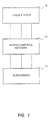
- Figure 1 is a block diagram of a video-on-demand system of a preferred embodiment of the present invention.
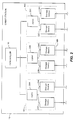
- FIG. 2 is a more detailed block diagram of the cable station of Figure 1.
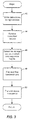
- Figure 3 is a flowchart providing a high level view of the steps performed by the preferred embodiment of the present invention.
- Figure 4 is a flowchart illustrating in more detail how video image sequences are stored in the preferred embodiment of the present invention.
- Figure 5 is a diagram illustrating the scheduling of bandwidth in a three disk drive system in accordance with the preferred embodiment of the present invention.
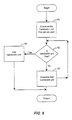
- Figure 6 is a flowchart illustrating the steps performed to locate a bandwidth unit to be allocated to service a subscriber request in the preferred embodiment of the present invention.
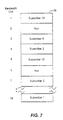
- Figure 7 is a diagram illustrating an example data structure that is maintained in the preferred embodiment of the present invention.
- the preferred embodiment of the present invention provides a scalable approach to scheduling of bandwidth on a video on demand server.
- the scheduling is scalable in that the scheduling approach may be scaled easily to facilitate a changing number of video image sequences stored by the server and a changing number of subscribers requesting video image sequences.
- the scheduling approach of the preferred embodiment of the present invention is easily implemented.
- Bandwidth is intended to refer to the input/output capacity (for a fixed time frame) of storage devices that hold data for video image sequences.
- the preferred embodiment of the present invention will be described below relative to an implementation that concerns output bandwidth (i.e., reading data from storage devices holding video image sequences), but those skilled in the art will appreciate that the present invention may also be applied to input bandwidth as well (i.e., writing video image sequence data to storage devices).
- the preferred embodiment of the present invention is adapted for use in a video-on-demand server system like that shown in Figure 1.
- the system depicted in Figure 1 is a video-on-demand server system in which subscribers may request at any point in time to view particular video image sequences transmitted from the cable station 10.
- the cable station 10 transmits the data for the video image sequences over the interconnection network 12 to the subscribers 14.
- the interconnection network 12 may be any suitable interconnection mechanism, including an asynchronous transfer mode (ATM) network. Functionally, the interconnection network 12 acts like a crosspoint switch.
- the cable station 10 preferably makes available a large number of different video image sequences that may be transmitted to the subscribers 14 and viewed in real time.
- the data for the video image sequences may contain video data, audio data and other types of data, such as closed captioning data.
- the present invention may be applied solely to audio data or other types of data sequences.
- the choice of video image sequence viewed by a subscriber is not pre-scheduled. Viewing choices are scheduled upon subscriber demand. A subscriber need not choose a video image sequence that other subscribers are watching; rather, the subscriber may choose from any of the available video image sequences. Furthermore, each subscriber chooses when he wishes to start viewing a video image sequence. A number of different subscribers 14 may be concurrently viewing different portions of the same video image sequence. A subscriber may select where in a sequence he desires to start viewing and can stop watching a sequence before the entire sequence has been viewed.
- FIG 2 is a block diagram showing the cable station 10 in more detail.
- the cable station 10 acts as a video on-demand server.
- the cable station 10 includes a controller 16 that is responsible for scheduling transmission of video image sequences to subscribers 14 ( Figure 1).
- the controller 16 controls several subsystems 18A, 18B, and 18C and is responsible for scheduling and directing output from the subsystems to subscribers 14.
- the controller may be duplicated to provide a backup controller that enhances the fault tolerance of the system.
- FIG 2 Only three subsystems are shown in Figure 2 for purposes of simplicity and clarity.
- Each subsystems 18A, 18B, and 18C includes a microprocessor 20A, 20B, and 20C that is responsible for controlling respective pairs of storage devices (22A, 24A), (22B, 24B) and (22C, 24C).
- the data for the video image sequences that are available to the subscribers 14 are stored on the storage devices 22A, 24A, 22B, 24B, 22C and 24C.
- Each subsystems 18A, 18B, and 18C need not include two storage devices, rather each subsystem may include only one storage device or may, alternatively, include more than two storage devices.
- the microprocessors 20A, 20B, and 20C are responsible for cooperating with the controller 16 to transmit the data for the video image sequences stored on the storage devices to the subscribers 14.
- Storage devices 22A, 22B, 22C, 24A, 24B and 24C may be, for instance, magnetic disk drives or optical disk drives.
- any suitable storage device may be used for storing the data for the video image sequences.
- RAM, masked ROM, EPROM and flash EPROMs may be used to store the video image sequences in the present invention.
- FIG 3 is a flowchart of steps performed by the preferred embodiment of the present invention.
- video image sequences are stored across (i.e., striped) the storage devices 22A, 22B, 22C, 24A, 24B, and 24C ( Figure 2) of the video-on-demand server system (step 42 in Figure 3).
- Multiple copies of a video image sequence may be stored in the cable station 10. This step is likely only performed once for each copy of a video image sequence stored in the cable station 10 and is not repeated for each subscriber.
- the motivation for striping the video data of the video image sequences is to increase the efficiency with which data is output by the storage devices in a bounded amount of time and to balance load requirements on each storage device.
- Figure 4 is a flowchart showing the steps performed by the preferred embodiment of the present invention to stripe the video image sequences across the storage devices 22A, 22B, 22C, 24A, 24B and 24C (i.e., to perform step 42 of Figure 3).
- the first block of a video image sequence is stored on a designated storage device (step 54).
- a designated storage device As mentioned above, it should be appreciated that more than one copy of a video image sequence may be striped across the storage devices. As such, there may be more than one storage device upon which each block of the video image sequence is stored.
- Block size is variable, but typically, a block includes 64 kilobytes to 4 megabytes of data. Block size is bounded by an upper limit that may not be exceeded.
- the cable station 10 receives a subscriber request to view a video image sequence (step 44).
- the preferred embodiment of the present invention determines how to exploit the available output bandwidth to service the subscriber's request.
- the first step in exploiting the available bandwidth is determining the drive on which the initial block to be viewed in the video image sequence is stored (step 46). If the subscriber is viewing the video image sequence from the beginning of the sequence, the initial block is the first block in the sequence. However, where the subscriber desires to view the video image sequence beginning at some intermediate point, the initial block is the first block that the subscriber desires to view.
- the preferred embodiment of the present invention maintains a record (described in more detail below) of the storage devices on which each of the available video image sequences begins and more generally, has sufficient knowledge to locate the initial block to be viewed by the subscriber. This information is utilized to perform step 46 of Figure 3.
- the preferred embodiment of the present invention finds the next free bandwidth unit that may be used to transmit the video data of the requested video image sequence to the requesting subscriber (step 48).
- the bandwidth unit is the unit of allocation of bandwidth of the video-on-demand system of the preferred embodiment of the present invention. Scheduling for each storage device is done on a column of time slots. Each column including a number of time slots in a sequence that repeats. Each time slot is a bounded period of time that is sufficient for the storage device to output a block of data.
- a bandwidth unit comprises a time slot from each column of time slots.
- Each time slot in the bandwidth unit is associated with a different storage device that outputs a block of data of a video image sequence. Since the blocks of data are striped across the storage device, consecutive blocks of data are read from the predetermined sequence of storage devices during the sequence of time slots of the bandwidth unit.
- the time slots are generated by the controller 16 or other suitable mechanism ( Figure 2).
- FIG. 5 shows the scheduling of seven subscribers for three storage devices (e.g., disk 0, disk 1 and disk 2).
- the rectangles shown in Figure 5 are time slots.
- the numbers 1-7 in Figure 5 correspond to the time slot in the respective columns 0, 1 and 2.
- Time slots of a common bandwidth unit all have the same number.
- Columns 0, 1 and 2 are all offset temporally relative (i.e., time unit in Figure 5) to each other, but each column has the same sequence of time slots.
- disk drive 0 services each of the subscribers in sequence beginning with the subscriber who has been allocated logical unit of bandwidth 1.
- bandwidth unit 1 includes the time slots labelled 1 in columns 0, 1 and 2.
- disk drive 0 begins outputting a block of data for a video image sequence to a first subscriber that has been assigned bandwidth unit 1.
- disk drive 1 outputs the next block of data to the first subscriber during time slot 1 of column 1.
- disk drive 2 outputs the next block of data for the video image sequence to the subscriber during time slot 1 of column 2.
- the predefined sequence of storage devices in this example is disk drive 0, disk drive 1 and disk drive 2, with the sequence wrapping back around to disk drive 0 from disk drive 2.
- the preferred embodiment finds the next free bandwidth unit that may be allocated to a subscriber to transmit the desired video image sequence to the subscriber.
- the preferred embodiment finds the next free time slot on the storage device that holds the initial block to be viewed of the video image sequence.
- the scheduling in the other columns follows in lock step with the scheduling of the column for this storage device.
- Figure 6 is a flowchart of the steps performed by the preferred embodiment of the present invention to find the next free bandwidth unit in step 48. Before delving into the steps of Figure 6, it is helpful to first introduce a data structure maintained by the system to assist in monitoring bandwidth units.
- the preferred embodiment maintains a data structure 68 such as an array, linear list or tree ( Figure 7) for each of the logical units of bandwidth in the system.
- An entry is provided in the data structure 68 for each of the bandwidth units.
- the data structure may be stored in memory or some other devices. In the example shown in Figure 7, there are 16 bandwidth units. Each entry holds either a pointer to the subscriber that is currently allocated the bandwidth unit or a null pointer, which indicates that the bandwidth unit has not yet been allocated.
- This structure may alternatively be viewed as holding an assignment of time slots to subscribers since each column of time slots follows the same sequence.
- the first step in finding a free bandwidth unit is to perform a calculation to determine the first bandwidth unit that can be next used, given the current time frame. There is an inherent delay between when a free bandwidth unit is found and when the free logical bandwidth unit can actually be used to output video data which must be accounted for in the determination.
- the present invention accounts for clock granularity, communication delay to the interconnection network 12, and communication delay for blocks of video data to be read in locating the next bandwidth unit that should also be considered. Given this calculation, the preferred embodiment of the present invention determines the first bandwidth unit that can be used to output the requested video image sequence to the subscriber (if the bandwidth unit is not already allocated). The found bandwidth unit is examined, and it is determined whether the bandwidth unit is free (step 62).
- step 62 of Figure 6 the data structure 68 is examined for the found bandwidth unit to determine if it holds a null entry. If the entry for the found bandwidth unit holds a null entry, the found bandwidth unit is free and is used (step 66). On the other hand, if the found bandwidth unit is not free (i.e., it holds a pointer to a subscriber), the entry for the next bandwidth unit is examined to determine if it is free (step 64). In other words, the entry for the next bandwidth unit in sequence held in the data structure 68 ( Figure 7) is examined. Step 62 is then repeated as described above. This process is repeated until a free bandwidth unit is found. By adopting this approach, the preferred embodiment of the present invention assures that any free portion of the available bandwidth may be assigned to a subscriber without undue delay.
- the subscriber is assigned the free bandwidth unit and the blocks of data of the video image sequence are transmitted in sequence (step 50 in Figure 3). The cycle is repeated until all the data is output or until the user requests to stop viewing the video image sequence. It should be appreciated that scheduling may be dynamic such that over time users may enter and leave the system and users may start and stop viewing video image sequences. Moreover, it should be appreciated that steps 44, 46, 48 and 50 are performed on a per-subscriber basis. Thus, the subscriber receives the desired data.
- the present invention may also be applied to the writing of data onto storage devices from subscribers or other data sources.
- the same steps of dividing scheduling into bandwidth units are performed and during the allocated time slots data is written onto the storage devices rather than read from the storage devices.
Landscapes
- Engineering & Computer Science (AREA)
- Multimedia (AREA)
- Signal Processing (AREA)
- Databases & Information Systems (AREA)
- Human Computer Interaction (AREA)
- Two-Way Televisions, Distribution Of Moving Picture Or The Like (AREA)
- Techniques For Improving Reliability Of Storages (AREA)
- Television Signal Processing For Recording (AREA)
Claims (23)
- Verfahren zur Verwendung in einem System mit einer Folge von Speichergeräten zum Speichern von Datensequenzen, die Datenblöcke enthalten, als Streifen über die Speichergeräte, wobei das Verfahren den Transfer einer ausgewählten Datensequenz bezüglich der Speichergeräte plant und die folgenden Schritte umfaßt:Zeitmultiplexieren der Planung von Datentransfers für jedes Speichergerät in eine Folge von Zeitschlitzen, wobei jeder Zeitschlitz eine für den Transfer eines Datenblocks für die ausgewählte Datensequenz ausreichende Zeitdauer ist, und wobei die Folge von Zeitschlitzen für jedes Speichergerät dieselbe ist mit der Ausnahme, daß die Folge von Zeitschlitzen für jedes Speichergerät bezogen auf die Folge von Zeitschlitzen für sein Vorgängerspeichergerät in der Folge von Speichergeräten zeitversetzt ist;Ermitteln einer Bandbreiteneinheit, die einen gleich positionierten Zeitschlitz in jeder Folge von Zeitschlitzen für jedes Speichergerät in der Folge von Speichergeräten umfaßt und nicht verwendet wird; undEinplanen der ermittelten Bandbreiteneinheit, um Datenblöcke für die ausgewählte Datensequenz bezüglich der Speichergeräte zu transferieren, so daß während jedes aufeinanderfolgenden Zeitschlitzes der ermittelten Bandbreiteneinheit ein aufeinanderfolgender Datenblock für die ausgewählte Datensequenz bezüglich der Speichergeräte die die Zeitschlitze der ermittelten Bandbreiteneinheit aufweisen, transferiert wird.
- Das Verfahren nach Anspruch 1, wobei das Einplanen der ermittelten Bandbreiteneinheit so durchgeführt wird, daß während jedes aufeinanderfolgenden Zeitschlitzes der ermittelten Bandbreiteneinheit ein aufeinanderfolgender Datenblock für die ausgewählte Datensequenz bezüglich eines nächsten Speichergerätes in der Folge von Speichergeräten transferiert wird.
- Das Verfahren nach Anspruch 1, wobei die Datensequenz Audiodaten enthält.
- Das Verfahren nach Anspruch 1, wobei die Datensequenz Videodaten enthält.
- Das Verfahren nach Anspruch 1, wobei die Datensequenz sowohl Audiodaten als auch Videodaten enthält.
- Das Verfahren nach Anspruch 1, wobei eine Größe eines jeden Datenblocks in der ausgewählten Datensequenz variabel aber begrenzt ist.
- Verfahren zur Verwendung in einem System mit einer Folge von Speichergeräten zum Speichern von Daten von Videobildsequenzen, wobei Daten für jede Videobildsequenz eine Sequenz von Datenblöcken enthält und die Datenblöcke in jeder Sequenz streifenförmig über die Speichergeräte verteilt sind, wobei das Verfahren die Ausgabe einer der Videobildsequenzen plant und die folgenden Schritte umfaßt:Zeitmultiplexieren der Datentransferplanung für jedes Speichergerät in eine Folge von Zeitschlitzen, wobei jeder Zeitschlitz eine für eines der Speichergeräte ausreichende Zeitdauer ist, um einen Datenblock für eine der Videobildsequenzen auszugeben, und wobei die Folge von Zeitschlitzen für jedes Speichergerät dieselbe ist mit der Ausnahme, daß die Folge von Zeitschlitzen für jedes Speichergerät bezogen auf die Folge von Zeitschlitzen für sein Vorgängerspeichergerät in der Folge von Speichergeräten zeitversetzt ist;Ermitteln einer Bandbreiteneinheit, die einen gleich positionierten Zeitschlitz in jeder Folge von Zeitschlitzen für jedes Speichergerät in der Folge von Speichergeräten umfaßt und nicht verwendet wird; undEinplanen der ermittelten Bandbreiteneinheit, um Datenblöcke für eine ausgewählte Videobildsequenz der Videobildsequenzen auszugeben, so daß während jedes aufeinanderfolgenden Zeitschlitzes der ermittelten Bandbreiteneinheit ein aufeinanderfolgender Datenblock in der Folge von Datenblöcken für die ausgewählte Videobildsequenz ausgegeben wird.
- Das Verfahren nach Anspruch 7, wobei ein erster Zeitschlitz der ermittelten Bandbreiteneinheit eingeplant wird, um einen Datenblock für die ausgewählte Videobildsequenz von einem Speichergerät, das einen Anfangsblock in der Videobildsequenz speichert, auszugeben.
- Das Verfahren nach Anspruch 7, weiterhin umfassend den Schritt des Ausgebens von Blöcken der ausgewählten Videobildsequenz von den Speichergeräten während der Zeitschlitze der ermittelten Bandbreiteneinheit gemäß der Planung.
- Das Verfahren nach Anspruch 9, weiterhin umfassend den Schritt des Ausgebens von Blöcken der ausgewählten Videobildsequenz von den Speichergeräten während der Zeitabschnitte der ermittelten Bandbreiteneinheit gemäß der Planung während jeder Wiederholung des Zyklus, bis alle Datenblöcke der ausgewählten Videobildsequenz ausgegeben worden sind.
- Das Verfahren nach Anspruch 7, wobei das Einplanen der ermittelten Bandbreiteneinheit so durchgeführt wird, daß während jedes aufeinanderfolgenden Zeitschlitzes der ermittelten Bandbreiteneinheit ein aufeinanderfolgender Datenblock für die ausgewählte Videobildsequenz von einem nächsten Speichergerät in der Folge von Speichergeräten ausgegeben wird.
- Das Verfahren nach Anspruch 7, wobei die Videobildsequenz Audiodaten enthält.
- Das Verfahren nach Anspruch 7, wobei die Größe eines jeden Datenblocks in der ausgewählten Videobildsequenz variabel aber begrenzt ist.
- Das Verfahren nach Anspruch 7, wobei der Schritt des Ermittelns einer Bandbreiteneinheit, die nicht verwendet wird, weiterhin die folgenden Schritte umfaßt:Ermitteln eines freien Zeitschlitzes in der Folge von Zeitschlitzen, die für eines der Speichergeräte eingeplant ist, das einen Anfangsdatenblock für die ausgewählte, auszugebende Videobildsequenz enthält; undErmittelt einer Bandbreiteneinheit, die den ermittelten freien Zeitschlitz enthält, als die Bandbreiteneinheit, die nicht verwendet wird.
- Verfahren zur Verwendung in einem Video-on-Demand-System mit einer Folge von Speichergeräten zum Speichern von Videobildsequenzen, wobei das Verfahren die folgenden Schritte umfaßt:Verteilen jedes Films streifenförmig über die Folge von Speichergeräten, so daß aufeinanderfolgende Blöcke jeder Videobildsequenz auf einem nächsten Speichergerät in der Folge von Speichergeräten liegen;Empfangen eines Wunsches von einem Teilnehmer, eine Videobildsequenz zu betrachten;Zeitmultiplexieren der Planung von Datentransfers für jedes Speichergerät in eine Folge von Zeitschlitzen, wobei jeder Zeitschlitz eine für die Ausgabe eines Blocks einer Videobildsequenz von einem der Speichergeräte ausreichende Zeitdauer ist, und wobei die Folge von Zeitschlitzen für jedes Speichergerät dieselbe ist mit der Ausnahme, daß die Folge von Zeitschlitzen für jedes Speichergerät bezogen auf seinen Vorgänger in der Folge von Speichergeräten zeitlich versetzt ist;in Antwort auf den Teilnehmerwunsch:Ermitteln einer Bandbreiteneinheit, die einen gleich positionierten Zeitschlitz in jeder Folge von Zeitschlitzen für jedes Speichergerät in der Folge von Speichergeräten umfaßt und nicht verwendet wird; undEinplanen der ermittelten Bandbreiteneinheit, um Datenblöcke der Videobildsequenz an den Teilnehmer während jedes Zeitschlitzes der Bandbreiteneinheit auszugeben.
- Verfahren nach Anspruch 15, wobei der Schritt des Ermittelns einer Bandbreiteneinheit, die nicht verwendet wird, weiterhin die folgenden Schritte umfaßt:Ermitteln eines freien Zeitschlitzes in der Folge von Zeitschlitzen, die für eines der Speichergeräte eingeplant ist, das einen Anfangsdatenblock für die ausgewählte, auszugebende Videobildsequenz enthält; undErmitteln einer Bandbreiteneinheit, die den ermittelten freien Zeitschlitz enthält, als die Bandbreiteneinheit, die nicht verwendet wird.
- Ein System, umfassend:eine Vielzahl von logisch in eine Folge organisierten Speichergeräten zum Speichern von Datensequenzen, die Datenblöcke aufweisen, wobei jede der Datensequenzen streifenförmig über die Folge von Speichergeräten verteilt ist;einen Zeitmultiplexer, der die Einteilung der Zeit in Zeitschlitze für jedes Speichergerät plant und der den Datentransfer bezüglich jedes Speichergerätes als eine Folge von Zeitschlitzen plant, wobei jeder Zeitschlitz eine für die Ausgabe eines Datenblocks in einer Datensequenz ausreichende Zeitdauer ist, und wobei die Folge von Zeitschlitzen für jedes Speichergerät dieselbe ist, wobei jedoch jede Folge von Zeitschlitzen für ein Speichergerät bezogen auf die Zeitschlitzfolge für ein Vorgängerspeichergerät in die Folge von Speichergeräten zeitlich versetzt ist;ein Ermittler einer freien Bandbreiteneinheit zum Ermitteln einer freien Bandbreiteneinheit, die einen gleich positionierten Zeitschlitz in jeder Folge von Zeitschlitzen für jedes Speichergerät in der Folge von Speichergeräten umfaßt und nicht verwendet wird;ein Zuweisungsmechanismus zum Zusammenarbeiten mit dem Zeitmultiplexplaner zum Einplanen einer freien Bandbreiteneinheit, die vom Ermittler einer freien Bandbreiteneinheit ermittelt worden ist, um Datenblöcke einer Datensequenz so zu transferieren, daß ein Datenblock bezüglich eines der Speichergeräte während jedes Zeitschlitzes der ermittelten Bandbreiteneinheit transferiert wird.
- Das System nach Anspruch 17, wobei die Speichergeräte optische Plattenlaufwerke sind.
- Das System nach Anspruch 17, wobei die Speichergeräte magnetische Plattenlaufwerke sind.
- Das System nach Anspruch 17, wobei die Speichergeräte RAM-Geräte sind.
- Das System nach Anspruch 17, wobei die Speichergeräte EPROM-Geräte sind.
- Das System nach Anspruch 21, wobei die Speichergeräte Flash-EPROM-Geräte sind.
- Das System nach Anspruch 21, wobei die Speichergeräte ROM-Geräte sind.
Applications Claiming Priority (2)
| Application Number | Priority Date | Filing Date | Title |
|---|---|---|---|
| US08/159,188 US5473362A (en) | 1993-11-30 | 1993-11-30 | Video on demand system comprising stripped data across plural storable devices with time multiplex scheduling |
| US159188 | 1993-11-30 |
Publications (2)
| Publication Number | Publication Date |
|---|---|
| EP0655865A1 EP0655865A1 (de) | 1995-05-31 |
| EP0655865B1 true EP0655865B1 (de) | 1999-01-27 |
Family
ID=22571464
Family Applications (1)
| Application Number | Title | Priority Date | Filing Date |
|---|---|---|---|
| EP94118607A Expired - Lifetime EP0655865B1 (de) | 1993-11-30 | 1994-11-25 | Verfahren und Vorrichtung zur Transferplanung von Datenfolgen |
Country Status (5)
| Country | Link |
|---|---|
| US (1) | US5473362A (de) |
| EP (1) | EP0655865B1 (de) |
| JP (2) | JP3816117B2 (de) |
| CA (1) | CA2136141C (de) |
| DE (1) | DE69416270T2 (de) |
Families Citing this family (170)
| Publication number | Priority date | Publication date | Assignee | Title |
|---|---|---|---|---|
| US5253275A (en) | 1991-01-07 | 1993-10-12 | H. Lee Browne | Audio and video transmission and receiving system |
| US6002720A (en) * | 1991-01-07 | 1999-12-14 | H. Lee Browne, D/B/A Greenwich Information Technologies Llc | Audio and video transmission and receiving system |
| JP3149098B2 (ja) * | 1992-11-26 | 2001-03-26 | 日本電信電話株式会社 | ディジタル動画情報ファイルの多重読み取り方法 |
| US7509270B1 (en) | 1992-12-09 | 2009-03-24 | Discovery Communications, Inc. | Electronic Book having electronic commerce features |
| US9286294B2 (en) | 1992-12-09 | 2016-03-15 | Comcast Ip Holdings I, Llc | Video and digital multimedia aggregator content suggestion engine |
| US7401286B1 (en) | 1993-12-02 | 2008-07-15 | Discovery Communications, Inc. | Electronic book electronic links |
| US7835989B1 (en) | 1992-12-09 | 2010-11-16 | Discovery Communications, Inc. | Electronic book alternative delivery systems |
| US5798785A (en) | 1992-12-09 | 1998-08-25 | Discovery Communications, Inc. | Terminal for suggesting programs offered on a television program delivery system |
| US5659350A (en) | 1992-12-09 | 1997-08-19 | Discovery Communications, Inc. | Operations center for a television program packaging and delivery system |
| US6181335B1 (en) | 1992-12-09 | 2001-01-30 | Discovery Communications, Inc. | Card for a set top terminal |
| US7269841B1 (en) | 1992-12-09 | 2007-09-11 | Sedna Patent Services, Llc | Digital cable headend for cable television delivery system |
| US7849393B1 (en) | 1992-12-09 | 2010-12-07 | Discovery Communications, Inc. | Electronic book connection to world watch live |
| US7168084B1 (en) | 1992-12-09 | 2007-01-23 | Sedna Patent Services, Llc | Method and apparatus for targeting virtual objects |
| US5600573A (en) * | 1992-12-09 | 1997-02-04 | Discovery Communications, Inc. | Operations center with video storage for a television program packaging and delivery system |
| US8073695B1 (en) | 1992-12-09 | 2011-12-06 | Adrea, LLC | Electronic book with voice emulation features |
| US6201536B1 (en) | 1992-12-09 | 2001-03-13 | Discovery Communications, Inc. | Network manager for cable television system headends |
| US5559549A (en) | 1992-12-09 | 1996-09-24 | Discovery Communications, Inc. | Television program delivery system |
| US5600364A (en) | 1992-12-09 | 1997-02-04 | Discovery Communications, Inc. | Network controller for cable television delivery systems |
| US6463585B1 (en) | 1992-12-09 | 2002-10-08 | Discovery Communications, Inc. | Targeted advertisement using television delivery systems |
| US7336788B1 (en) | 1992-12-09 | 2008-02-26 | Discovery Communicatoins Inc. | Electronic book secure communication with home subsystem |
| US5986690A (en) | 1992-12-09 | 1999-11-16 | Discovery Communications, Inc. | Electronic book selection and delivery system |
| US7073187B1 (en) | 1992-12-09 | 2006-07-04 | Sedna Patent Services, Llc | Menu-driven television program access system and method |
| JP2831933B2 (ja) * | 1993-09-02 | 1998-12-02 | 日本電信電話株式会社 | ビデオライブラリシステム |
| US5671386A (en) * | 1993-09-23 | 1997-09-23 | Philips Electronics North America Corporation | System for storing data and for providing simultaneous plural access to data by connecting each access channel to each and every one of storage arrays |
| US9053640B1 (en) | 1993-12-02 | 2015-06-09 | Adrea, LLC | Interactive electronic book |
| US7861166B1 (en) | 1993-12-02 | 2010-12-28 | Discovery Patent Holding, Llc | Resizing document pages to fit available hardware screens |
| US8095949B1 (en) | 1993-12-02 | 2012-01-10 | Adrea, LLC | Electronic book with restricted access features |
| US7865567B1 (en) | 1993-12-02 | 2011-01-04 | Discovery Patent Holdings, Llc | Virtual on-demand electronic book |
| EP0661877B1 (de) * | 1993-12-28 | 2000-02-23 | Sony Corporation | Geräte zur Übertragung von Information |
| US6003071A (en) * | 1994-01-21 | 1999-12-14 | Sony Corporation | Image data transmission apparatus using time slots |
| US5546118A (en) * | 1994-06-20 | 1996-08-13 | Sony Corporation | Data recording/reproducing method and data send-out method |
| US5671377A (en) * | 1994-07-19 | 1997-09-23 | David Sarnoff Research Center, Inc. | System for supplying streams of data to multiple users by distributing a data stream to multiple processors and enabling each user to manipulate supplied data stream |
| US5583868A (en) * | 1994-07-25 | 1996-12-10 | Microsoft Corporation | Method and system for combining data from multiple servers into a single continuous data stream using a switch |
| US5555441A (en) * | 1994-08-02 | 1996-09-10 | Interim Design Inc. | Interactive audiovisual distribution system |
| US5668948A (en) * | 1994-09-08 | 1997-09-16 | International Business Machines Corporation | Media streamer with control node enabling same isochronous streams to appear simultaneously at output ports or different streams to appear simultaneously at output ports |
| US5761417A (en) * | 1994-09-08 | 1998-06-02 | International Business Machines Corporation | Video data streamer having scheduler for scheduling read request for individual data buffers associated with output ports of communication node to one storage node |
| CA2153445C (en) * | 1994-09-08 | 2002-05-21 | Ashok Raj Saxena | Video optimized media streamer user interface |
| US5712976A (en) * | 1994-09-08 | 1998-01-27 | International Business Machines Corporation | Video data streamer for simultaneously conveying same one or different ones of data blocks stored in storage node to each of plurality of communication nodes |
| US5768518A (en) * | 1994-09-30 | 1998-06-16 | Matsushita Electric Industrial Co., Ltd. | Signal distribution apparatus for a directional signal transmission system |
| TW250616B (en) | 1994-11-07 | 1995-07-01 | Discovery Communicat Inc | Electronic book selection and delivery system |
| JPH08152976A (ja) * | 1994-11-28 | 1996-06-11 | Fujitsu Ltd | 記憶装置のアクセス方法 |
| US5630757A (en) * | 1994-11-29 | 1997-05-20 | Net Game Limited | Real-time multi-user game communication system using existing cable television infrastructure |
| US5583995A (en) * | 1995-01-30 | 1996-12-10 | Mrj, Inc. | Apparatus and method for data storage and retrieval using bandwidth allocation |
| JP3575862B2 (ja) * | 1995-03-16 | 2004-10-13 | 株式会社東芝 | ストリームスケジューリング方法及び装置 |
| US5699503A (en) * | 1995-05-09 | 1997-12-16 | Microsoft Corporation | Method and system for providing fault tolerance to a continuous media server system |
| US5649093A (en) * | 1995-05-22 | 1997-07-15 | Sun Microsystems, Inc. | Server disk error recovery system |
| US5826110A (en) * | 1995-06-19 | 1998-10-20 | Lucent Technologies Inc. | System for video server using coarse-grained disk striping method in which incoming requests are scheduled and rescheduled based on availability of bandwidth |
| SE505086C2 (sv) * | 1995-07-06 | 1997-06-23 | Telia Ab | Metod och anordning vid programdistribution |
| DE69517427T2 (de) * | 1995-08-04 | 2000-11-16 | Burst. Com, Inc. | Vorrichtung und Verfahren zur zyklischen Verteilung von Rundfunk-Videosignalbündel-Übertragungen |
| JP3445435B2 (ja) * | 1995-09-11 | 2003-09-08 | 株式会社東芝 | 連続データサーバ装置の制御装置及び制御方法 |
| US6047309A (en) * | 1995-10-02 | 2000-04-04 | International Business Machines Corporation | Recording observed and reported response characteristics at server and/or client nodes in a replicated data environment, and selecting a server to provide data based on the observed and/or reported response characteristics |
| US5862312A (en) * | 1995-10-24 | 1999-01-19 | Seachange Technology, Inc. | Loosely coupled mass storage computer cluster |
| US6449730B2 (en) * | 1995-10-24 | 2002-09-10 | Seachange Technology, Inc. | Loosely coupled mass storage computer cluster |
| JPH09179820A (ja) * | 1995-12-26 | 1997-07-11 | Mitsubishi Electric Corp | 負荷分散方式及び方法 |
| NL1002670C2 (nl) * | 1996-03-21 | 1997-09-23 | Heinrich Tonnis Zuidema | Werkwijze en distributiesysteem voor het toewijzen van televisie- signalen aan abonnees. |
| US5867657A (en) * | 1996-06-06 | 1999-02-02 | Microsoft Corporation | Distributed scheduling in a multiple data server system |
| US6118790A (en) * | 1996-06-19 | 2000-09-12 | Microsoft Corporation | Audio server system for an unreliable network |
| US6272555B1 (en) | 1996-07-01 | 2001-08-07 | Sun Microsystems, Inc. | Object-oriented system, method and article of manufacture for a client-server-centric interprise computing framework system |
| US5848246A (en) | 1996-07-01 | 1998-12-08 | Sun Microsystems, Inc. | Object-oriented system, method and article of manufacture for a client-server session manager in an interprise computing framework system |
| US6038590A (en) | 1996-07-01 | 2000-03-14 | Sun Microsystems, Inc. | Object-oriented system, method and article of manufacture for a client-server state machine in an interprise computing framework system |
| US5987245A (en) | 1996-07-01 | 1999-11-16 | Sun Microsystems, Inc. | Object-oriented system, method and article of manufacture (#12) for a client-server state machine framework |
| US6266709B1 (en) | 1996-07-01 | 2001-07-24 | Sun Microsystems, Inc. | Object-oriented system, method and article of manufacture for a client-server failure reporting process |
| US6424991B1 (en) | 1996-07-01 | 2002-07-23 | Sun Microsystems, Inc. | Object-oriented system, method and article of manufacture for a client-server communication framework |
| US6304893B1 (en) | 1996-07-01 | 2001-10-16 | Sun Microsystems, Inc. | Object-oriented system, method and article of manufacture for a client-server event driven message framework in an interprise computing framework system |
| US6434598B1 (en) | 1996-07-01 | 2002-08-13 | Sun Microsystems, Inc. | Object-oriented system, method and article of manufacture for a client-server graphical user interface (#9) framework in an interprise computing framework system |
| US5999972A (en) | 1996-07-01 | 1999-12-07 | Sun Microsystems, Inc. | System, method and article of manufacture for a distributed computer system framework |
| US5928327A (en) | 1996-08-08 | 1999-07-27 | Wang; Pong-Sheng | System and process for delivering digital data on demand |
| US5926649A (en) * | 1996-10-23 | 1999-07-20 | Industrial Technology Research Institute | Media server for storage and retrieval of voluminous multimedia data |
| US5935206A (en) * | 1996-12-13 | 1999-08-10 | International Business Machines Corporation | Automatic replication of digital video as needed for video-on-demand |
| JP3457493B2 (ja) * | 1997-03-18 | 2003-10-20 | 富士通株式会社 | Arpサーバ |
| US6134596A (en) * | 1997-09-18 | 2000-10-17 | Microsoft Corporation | Continuous media file server system and method for scheduling network resources to play multiple files having different data transmission rates |
| WO1999014954A1 (en) * | 1997-09-18 | 1999-03-25 | Microsoft Corporation | Continuous media file server system and method for scheduling disk reads while playing multiple files having different transmission rates |
| JPH11119923A (ja) * | 1997-10-20 | 1999-04-30 | Fujitsu Ltd | データアクセス制御装置及びデータアクセス制御プログラムを記録した媒体 |
| US6330609B1 (en) * | 1997-11-07 | 2001-12-11 | Lucent Technologies, Inc. | Admission control system and method for media-on-demand servers |
| US6415373B1 (en) * | 1997-12-24 | 2002-07-02 | Avid Technology, Inc. | Computer system and process for transferring multiple high bandwidth streams of data between multiple storage units and multiple applications in a scalable and reliable manner |
| US6374336B1 (en) | 1997-12-24 | 2002-04-16 | Avid Technology, Inc. | Computer system and process for transferring multiple high bandwidth streams of data between multiple storage units and multiple applications in a scalable and reliable manner |
| US6292844B1 (en) | 1998-02-12 | 2001-09-18 | Sony Corporation | Media storage device with embedded data filter for dynamically processing data during read and write operations |
| JPH11232205A (ja) * | 1998-02-17 | 1999-08-27 | Sony Corp | データ入出力装置及びデータ入出力方法 |
| US9009773B1 (en) | 1998-06-30 | 2015-04-14 | Cox Communications, Inc. | Method and apparatus for providing broadcast data services |
| US6604224B1 (en) * | 1999-03-31 | 2003-08-05 | Diva Systems Corporation | Method of performing content integrity analysis of a data stream |
| US8763053B1 (en) | 1999-04-01 | 2014-06-24 | Cox Communications, Inc. | File system for a file server of a video-on-demand system |
| US6721794B2 (en) | 1999-04-01 | 2004-04-13 | Diva Systems Corp. | Method of data management for efficiently storing and retrieving data to respond to user access requests |
| US6233607B1 (en) * | 1999-04-01 | 2001-05-15 | Diva Systems Corp. | Modular storage server architecture with dynamic data management |
| US6859846B2 (en) | 1999-05-12 | 2005-02-22 | Sony Corporation | Method of distributed recording whereby the need to transition to a second recording device from a first recording device is broadcast by the first recording device |
| US6247069B1 (en) * | 1999-05-12 | 2001-06-12 | Sony Corporation | Automatically configuring storage array including a plurality of media storage devices for storing and providing data within a network of devices |
| US6742019B1 (en) * | 1999-07-23 | 2004-05-25 | International Business Machines Corporation | Sieved caching for increasing data rate capacity of a heterogeneous striping group |
| US6721859B1 (en) | 1999-10-21 | 2004-04-13 | Sony Corporation | Multi-protocol media storage device implementing protocols optimized for storing and retrieving both asynchronous and isochronous data |
| US7278153B1 (en) * | 2000-04-12 | 2007-10-02 | Seachange International | Content propagation in interactive television |
| US7720821B1 (en) | 2000-06-30 | 2010-05-18 | Sony Corporation | Method of and apparatus for writing and reading time sensitive data within a storage device |
| EP1368736A2 (de) * | 2001-01-11 | 2003-12-10 | Z-Force Communications, Inc. | Dateivermittler und vermitteltes dateisystem |
| US7512673B2 (en) | 2001-01-11 | 2009-03-31 | Attune Systems, Inc. | Rule based aggregation of files and transactions in a switched file system |
| US7383288B2 (en) | 2001-01-11 | 2008-06-03 | Attune Systems, Inc. | Metadata based file switch and switched file system |
| US8239354B2 (en) | 2005-03-03 | 2012-08-07 | F5 Networks, Inc. | System and method for managing small-size files in an aggregated file system |
| US8195760B2 (en) | 2001-01-11 | 2012-06-05 | F5 Networks, Inc. | File aggregation in a switched file system |
| US7509322B2 (en) | 2001-01-11 | 2009-03-24 | F5 Networks, Inc. | Aggregated lock management for locking aggregated files in a switched file system |
| US20040133606A1 (en) | 2003-01-02 | 2004-07-08 | Z-Force Communications, Inc. | Directory aggregation for files distributed over a plurality of servers in a switched file system |
| US7788335B2 (en) * | 2001-01-11 | 2010-08-31 | F5 Networks, Inc. | Aggregated opportunistic lock and aggregated implicit lock management for locking aggregated files in a switched file system |
| US7305697B2 (en) * | 2001-02-02 | 2007-12-04 | Opentv, Inc. | Service gateway for interactive television |
| US20020157113A1 (en) * | 2001-04-20 | 2002-10-24 | Fred Allegrezza | System and method for retrieving and storing multimedia data |
| US7124292B2 (en) | 2001-05-21 | 2006-10-17 | Sony Corporation | Automatically configuring storage array including a plurality of media storage devices for storing and providing data within a network of devices |
| US7908628B2 (en) | 2001-08-03 | 2011-03-15 | Comcast Ip Holdings I, Llc | Video and digital multimedia aggregator content coding and formatting |
| US7793326B2 (en) | 2001-08-03 | 2010-09-07 | Comcast Ip Holdings I, Llc | Video and digital multimedia aggregator |
| US20040251887A1 (en) * | 2001-09-20 | 2004-12-16 | Sparrell Carlton J | Centralized resource manager with power switching system |
| US7788396B2 (en) * | 2001-11-28 | 2010-08-31 | Interactive Content Engines, Llc | Synchronized data transfer system |
| US7437472B2 (en) * | 2001-11-28 | 2008-10-14 | Interactive Content Engines, Llc. | Interactive broadband server system |
| US7644136B2 (en) | 2001-11-28 | 2010-01-05 | Interactive Content Engines, Llc. | Virtual file system |
| FI116167B (fi) * | 2001-12-18 | 2005-09-30 | Valtion Teknillinen | Arkistoiva tiedostopalvelin |
| US20030233470A1 (en) * | 2002-06-12 | 2003-12-18 | International Business Machines Corporation | Network storage data redirection |
| US7523482B2 (en) * | 2002-08-13 | 2009-04-21 | Microsoft Corporation | Seamless digital channel changing |
| US8397269B2 (en) * | 2002-08-13 | 2013-03-12 | Microsoft Corporation | Fast digital channel changing |
| US7877511B1 (en) | 2003-01-13 | 2011-01-25 | F5 Networks, Inc. | Method and apparatus for adaptive services networking |
| US7603689B2 (en) * | 2003-06-13 | 2009-10-13 | Microsoft Corporation | Fast start-up for digital video streams |
| US7516232B2 (en) * | 2003-10-10 | 2009-04-07 | Microsoft Corporation | Media organization for distributed sending of media data |
| US7443791B2 (en) * | 2003-10-10 | 2008-10-28 | Microsoft Corporation | Priority mechanism for distributed sending of media data |
| US7545812B2 (en) * | 2003-10-10 | 2009-06-09 | Microsoft Corporation | Scheduling scheme for distributed sending of media data |
| US7444419B2 (en) * | 2003-10-10 | 2008-10-28 | Microsoft Corporation | Media stream scheduling for hiccup-free fast-channel-change in the presence of network chokepoints |
| US7562375B2 (en) * | 2003-10-10 | 2009-07-14 | Microsoft Corporation | Fast channel change |
| US7614071B2 (en) * | 2003-10-10 | 2009-11-03 | Microsoft Corporation | Architecture for distributed sending of media data |
| US7430222B2 (en) | 2004-02-27 | 2008-09-30 | Microsoft Corporation | Media stream splicer |
| US20070226344A1 (en) * | 2004-07-23 | 2007-09-27 | General Instrument Corporation | Centralized Resource Manager With Power Switching System |
| US7640352B2 (en) * | 2004-09-24 | 2009-12-29 | Microsoft Corporation | Methods and systems for presentation of media obtained from a media stream |
| US20060085827A1 (en) * | 2004-10-18 | 2006-04-20 | Toshiro Ozawa | Entertainment content preprocessing |
| US7477653B2 (en) * | 2004-12-10 | 2009-01-13 | Microsoft Corporation | Accelerated channel change in rate-limited environments |
| US7885970B2 (en) | 2005-01-20 | 2011-02-08 | F5 Networks, Inc. | Scalable system for partitioning and accessing metadata over multiple servers |
| US7958347B1 (en) | 2005-02-04 | 2011-06-07 | F5 Networks, Inc. | Methods and apparatus for implementing authentication |
| US8135040B2 (en) * | 2005-11-30 | 2012-03-13 | Microsoft Corporation | Accelerated channel change |
| US8069461B2 (en) * | 2006-03-30 | 2011-11-29 | Verizon Services Corp. | On-screen program guide with interactive programming recommendations |
| US8417746B1 (en) | 2006-04-03 | 2013-04-09 | F5 Networks, Inc. | File system management with enhanced searchability |
| US8418217B2 (en) * | 2006-09-06 | 2013-04-09 | Verizon Patent And Licensing Inc. | Systems and methods for accessing media content |
| US8464295B2 (en) * | 2006-10-03 | 2013-06-11 | Verizon Patent And Licensing Inc. | Interactive search graphical user interface systems and methods |
| US8566874B2 (en) * | 2006-10-03 | 2013-10-22 | Verizon Patent And Licensing Inc. | Control tools for media content access systems and methods |
| US8510780B2 (en) | 2006-12-21 | 2013-08-13 | Verizon Patent And Licensing Inc. | Program guide navigation tools for media content access systems and methods |
| US8028313B2 (en) * | 2006-12-21 | 2011-09-27 | Verizon Patent And Licensing Inc. | Linear program guide for media content access systems and methods |
| US8015581B2 (en) * | 2007-01-05 | 2011-09-06 | Verizon Patent And Licensing Inc. | Resource data configuration for media content access systems and methods |
| US20080175143A1 (en) * | 2007-01-22 | 2008-07-24 | Carol Ansley | Method and system for providing protocol-based equipment redundancy |
| WO2008147973A2 (en) | 2007-05-25 | 2008-12-04 | Attune Systems, Inc. | Remote file virtualization in a switched file system |
| US8103965B2 (en) * | 2007-06-28 | 2012-01-24 | Verizon Patent And Licensing Inc. | Media content recording and healing statuses |
| US8548953B2 (en) | 2007-11-12 | 2013-10-01 | F5 Networks, Inc. | File deduplication using storage tiers |
| US8117244B2 (en) | 2007-11-12 | 2012-02-14 | F5 Networks, Inc. | Non-disruptive file migration |
| US8180747B2 (en) | 2007-11-12 | 2012-05-15 | F5 Networks, Inc. | Load sharing cluster file systems |
| US8352785B1 (en) | 2007-12-13 | 2013-01-08 | F5 Networks, Inc. | Methods for generating a unified virtual snapshot and systems thereof |
| US8051447B2 (en) | 2007-12-19 | 2011-11-01 | Verizon Patent And Licensing Inc. | Condensed program guide for media content access systems and methods |
| US8364892B2 (en) * | 2008-01-11 | 2013-01-29 | Verivue, Inc. | Asynchronous and distributed storage of data |
| US8799535B2 (en) * | 2008-01-11 | 2014-08-05 | Akamai Technologies, Inc. | Storage of data utilizing scheduling queue locations associated with different data rates |
| US8510370B2 (en) * | 2008-02-26 | 2013-08-13 | Avid Technology, Inc. | Array-based distributed storage system with parity |
| US8549582B1 (en) | 2008-07-11 | 2013-10-01 | F5 Networks, Inc. | Methods for handling a multi-protocol content name and systems thereof |
| US8750315B2 (en) * | 2009-01-23 | 2014-06-10 | Akamai Technologies, Inc. | Efficiently storing transport streams |
| US10721269B1 (en) | 2009-11-06 | 2020-07-21 | F5 Networks, Inc. | Methods and system for returning requests with javascript for clients before passing a request to a server |
| US8204860B1 (en) | 2010-02-09 | 2012-06-19 | F5 Networks, Inc. | Methods and systems for snapshot reconstitution |
| US9195500B1 (en) | 2010-02-09 | 2015-11-24 | F5 Networks, Inc. | Methods for seamless storage importing and devices thereof |
| US8347100B1 (en) | 2010-07-14 | 2013-01-01 | F5 Networks, Inc. | Methods for DNSSEC proxying and deployment amelioration and systems thereof |
| US9286298B1 (en) | 2010-10-14 | 2016-03-15 | F5 Networks, Inc. | Methods for enhancing management of backup data sets and devices thereof |
| CN101977300B (zh) * | 2010-11-11 | 2014-11-05 | 浙江宇视科技有限公司 | 一种视频点播实现方法及其装置 |
| US8396836B1 (en) | 2011-06-30 | 2013-03-12 | F5 Networks, Inc. | System for mitigating file virtualization storage import latency |
| US8463850B1 (en) | 2011-10-26 | 2013-06-11 | F5 Networks, Inc. | System and method of algorithmically generating a server side transaction identifier |
| US9020912B1 (en) | 2012-02-20 | 2015-04-28 | F5 Networks, Inc. | Methods for accessing data in a compressed file system and devices thereof |
| US9519501B1 (en) | 2012-09-30 | 2016-12-13 | F5 Networks, Inc. | Hardware assisted flow acceleration and L2 SMAC management in a heterogeneous distributed multi-tenant virtualized clustered system |
| US10375155B1 (en) | 2013-02-19 | 2019-08-06 | F5 Networks, Inc. | System and method for achieving hardware acceleration for asymmetric flow connections |
| US9554418B1 (en) | 2013-02-28 | 2017-01-24 | F5 Networks, Inc. | Device for topology hiding of a visited network |
| US11838851B1 (en) | 2014-07-15 | 2023-12-05 | F5, Inc. | Methods for managing L7 traffic classification and devices thereof |
| US10182013B1 (en) | 2014-12-01 | 2019-01-15 | F5 Networks, Inc. | Methods for managing progressive image delivery and devices thereof |
| US11895138B1 (en) | 2015-02-02 | 2024-02-06 | F5, Inc. | Methods for improving web scanner accuracy and devices thereof |
| US10834065B1 (en) | 2015-03-31 | 2020-11-10 | F5 Networks, Inc. | Methods for SSL protected NTLM re-authentication and devices thereof |
| US10404698B1 (en) | 2016-01-15 | 2019-09-03 | F5 Networks, Inc. | Methods for adaptive organization of web application access points in webtops and devices thereof |
| US10797888B1 (en) | 2016-01-20 | 2020-10-06 | F5 Networks, Inc. | Methods for secured SCEP enrollment for client devices and devices thereof |
| US10412198B1 (en) | 2016-10-27 | 2019-09-10 | F5 Networks, Inc. | Methods for improved transmission control protocol (TCP) performance visibility and devices thereof |
| US10567492B1 (en) | 2017-05-11 | 2020-02-18 | F5 Networks, Inc. | Methods for load balancing in a federated identity environment and devices thereof |
| US11223689B1 (en) | 2018-01-05 | 2022-01-11 | F5 Networks, Inc. | Methods for multipath transmission control protocol (MPTCP) based session migration and devices thereof |
| US10833943B1 (en) | 2018-03-01 | 2020-11-10 | F5 Networks, Inc. | Methods for service chaining and devices thereof |
| US12003422B1 (en) | 2018-09-28 | 2024-06-04 | F5, Inc. | Methods for switching network packets based on packet data and devices |
Family Cites Families (8)
| Publication number | Priority date | Publication date | Assignee | Title |
|---|---|---|---|---|
| US5119188A (en) * | 1988-10-25 | 1992-06-02 | Telaction Corporation | Digital audio-video presentation display system |
| DE69030886T2 (de) * | 1989-08-23 | 1998-03-05 | Delta Beta Pty. Ltd., Fremantle, W.A. | Optimisierung einer programmübertragung |
| CA2022302C (en) * | 1990-07-30 | 1995-02-28 | Douglas J. Ballantyne | Method and apparatus for distribution of movies |
| US5132992A (en) * | 1991-01-07 | 1992-07-21 | Paul Yurt | Audio and video transmission and receiving system |
| JP2750396B2 (ja) * | 1991-02-25 | 1998-05-13 | 日本電信電話株式会社 | ビデオライブラリシステム |
| JP2622049B2 (ja) * | 1991-05-24 | 1997-06-18 | 松下電器産業株式会社 | 有線放送システム |
| JPH0535407A (ja) * | 1991-07-26 | 1993-02-12 | Nippon Telegr & Teleph Corp <Ntt> | 情報ライブラリシステム |
| US5371532A (en) * | 1992-05-15 | 1994-12-06 | Bell Communications Research, Inc. | Communications architecture and method for distributing information services |
-
1993
- 1993-11-30 US US08/159,188 patent/US5473362A/en not_active Expired - Lifetime
-
1994
- 1994-11-18 CA CA002136141A patent/CA2136141C/en not_active Expired - Lifetime
- 1994-11-25 DE DE69416270T patent/DE69416270T2/de not_active Expired - Lifetime
- 1994-11-25 EP EP94118607A patent/EP0655865B1/de not_active Expired - Lifetime
- 1994-11-29 JP JP29431294A patent/JP3816117B2/ja not_active Expired - Lifetime
-
2006
- 2006-01-18 JP JP2006010334A patent/JP2006180537A/ja active Pending
Also Published As
| Publication number | Publication date |
|---|---|
| CA2136141C (en) | 2001-04-10 |
| DE69416270T2 (de) | 1999-06-02 |
| EP0655865A1 (de) | 1995-05-31 |
| JPH07202828A (ja) | 1995-08-04 |
| JP3816117B2 (ja) | 2006-08-30 |
| US5473362A (en) | 1995-12-05 |
| CA2136141A1 (en) | 1995-05-31 |
| JP2006180537A (ja) | 2006-07-06 |
| DE69416270D1 (de) | 1999-03-11 |
Similar Documents
| Publication | Publication Date | Title |
|---|---|---|
| US5473362A (en) | Video on demand system comprising stripped data across plural storable devices with time multiplex scheduling | |
| EP0749241B1 (de) | Festgelegtes Video-auf-Anfrage-System | |
| EP0799549B1 (de) | Bereitstellung von Videorekorder-Trickfunktionen in einem Videoverteilsystem | |
| US5351075A (en) | Home video club television broadcasting system | |
| US5629732A (en) | Viewer controllable on-demand multimedia service | |
| US5920702A (en) | Method of striping a data stream onto subsets of storage devices in a multiple user data distribution system | |
| CA2350593C (en) | Process and system for video on demand | |
| US5521630A (en) | Frame sampling scheme for video scanning in a video-on-demand system | |
| US5790176A (en) | Media server for supplying video and multi-media data over the public switched telephone network | |
| US6012080A (en) | Method and apparatus for providing enhanced pay per view in a video server | |
| US6999476B2 (en) | Method and apparatus for storing and accessing multiple constant bit rate data | |
| CA2233576C (en) | A system and method for optimizing subscriber programming preferences | |
| JP3371184B2 (ja) | データ送出装置 | |
| ZA200209223B (en) | Methods for providing video-on-demand services for broadcasting systems. | |
| WO2001028247A1 (en) | System and method for the broadcast dissemination of time-ordered data with minimal commencements delays | |
| WO2000060485A1 (en) | System for optimally accessing array of storage devices and optimally transmitting data to users | |
| Paris | An interactive broadcasting protocol for video-on-demand | |
| US5642152A (en) | Method and system for scheduling the transfer of data sequences utilizing an anti-clustering scheduling algorithm | |
| EP0798926A2 (de) | Vorrichtung und Verfahren zur Verbesserung eines Bezahlfernsehsystemes in einem Videoserver mit grosskörniger Plattenstreifung | |
| JP3149098B2 (ja) | ディジタル動画情報ファイルの多重読み取り方法 | |
| US7530090B2 (en) | System for transmitting programs to client terminals | |
| EP1175776B1 (de) | Video-auf-anfrage-systeme | |
| Paris et al. | A proactive implementation of interactive video-on-demand | |
| Leung et al. | COMP-03-007 Release Date: March 3, 2003 | |
| EP0855055A2 (de) | Bandbreitenregelungssystem für mehrkanalspeicheranordnungen |
Legal Events
| Date | Code | Title | Description |
|---|---|---|---|
| PUAI | Public reference made under article 153(3) epc to a published international application that has entered the european phase |
Free format text: ORIGINAL CODE: 0009012 |
|
| AK | Designated contracting states |
Kind code of ref document: A1 Designated state(s): DE FR GB |
|
| 17P | Request for examination filed |
Effective date: 19951128 |
|
| GRAG | Despatch of communication of intention to grant |
Free format text: ORIGINAL CODE: EPIDOS AGRA |
|
| 17Q | First examination report despatched |
Effective date: 19980202 |
|
| GRAG | Despatch of communication of intention to grant |
Free format text: ORIGINAL CODE: EPIDOS AGRA |
|
| GRAH | Despatch of communication of intention to grant a patent |
Free format text: ORIGINAL CODE: EPIDOS IGRA |
|
| GRAH | Despatch of communication of intention to grant a patent |
Free format text: ORIGINAL CODE: EPIDOS IGRA |
|
| GRAA | (expected) grant |
Free format text: ORIGINAL CODE: 0009210 |
|
| AK | Designated contracting states |
Kind code of ref document: B1 Designated state(s): DE FR GB |
|
| REF | Corresponds to: |
Ref document number: 69416270 Country of ref document: DE Date of ref document: 19990311 |
|
| ET | Fr: translation filed | ||
| PLBE | No opposition filed within time limit |
Free format text: ORIGINAL CODE: 0009261 |
|
| STAA | Information on the status of an ep patent application or granted ep patent |
Free format text: STATUS: NO OPPOSITION FILED WITHIN TIME LIMIT |
|
| 26N | No opposition filed | ||
| REG | Reference to a national code |
Ref country code: GB Ref legal event code: IF02 |
|
| PGFP | Annual fee paid to national office [announced via postgrant information from national office to epo] |
Ref country code: DE Payment date: 20131129 Year of fee payment: 20 Ref country code: FR Payment date: 20131025 Year of fee payment: 20 Ref country code: GB Payment date: 20131028 Year of fee payment: 20 |
|
| REG | Reference to a national code |
Ref country code: DE Ref legal event code: R071 Ref document number: 69416270 Country of ref document: DE |
|
| REG | Reference to a national code |
Ref country code: DE Ref legal event code: R071 Ref document number: 69416270 Country of ref document: DE |
|
| REG | Reference to a national code |
Ref country code: GB Ref legal event code: PE20 Expiry date: 20141124 |
|
| REG | Reference to a national code |
Ref country code: DE Ref legal event code: R082 Ref document number: 69416270 Country of ref document: DE Representative=s name: GRUENECKER, KINKELDEY, STOCKMAIR & SCHWANHAEUS, DE |
|
| PG25 | Lapsed in a contracting state [announced via postgrant information from national office to epo] |
Ref country code: GB Free format text: LAPSE BECAUSE OF EXPIRATION OF PROTECTION Effective date: 20141124 |
|
| REG | Reference to a national code |
Ref country code: GB Ref legal event code: 732E Free format text: REGISTERED BETWEEN 20150108 AND 20150114 |
|
| REG | Reference to a national code |
Ref country code: DE Ref legal event code: R082 Ref document number: 69416270 Country of ref document: DE Representative=s name: GRUENECKER PATENT- UND RECHTSANWAELTE PARTG MB, DE Effective date: 20150126 Ref country code: DE Ref legal event code: R081 Ref document number: 69416270 Country of ref document: DE Owner name: MICROSOFT TECHNOLOGY LICENSING, LLC, REDMOND, US Free format text: FORMER OWNER: MICROSOFT CORP., REDMOND, WASH., US Effective date: 20150126 |