EP0657476B2 - Polymères d'alpha oléfine, catalyseur pour le polymérisation d'alpha oléfines et procédé de préparation d'un polymère d'alpha oléfine - Google Patents
Polymères d'alpha oléfine, catalyseur pour le polymérisation d'alpha oléfines et procédé de préparation d'un polymère d'alpha oléfine Download PDFInfo
- Publication number
- EP0657476B2 EP0657476B2 EP94118696A EP94118696A EP0657476B2 EP 0657476 B2 EP0657476 B2 EP 0657476B2 EP 94118696 A EP94118696 A EP 94118696A EP 94118696 A EP94118696 A EP 94118696A EP 0657476 B2 EP0657476 B2 EP 0657476B2
- Authority
- EP
- European Patent Office
- Prior art keywords
- polypropylene
- compound
- polymerization
- cxs
- weight
- Prior art date
- Legal status (The legal status is an assumption and is not a legal conclusion. Google has not performed a legal analysis and makes no representation as to the accuracy of the status listed.)
- Expired - Lifetime
Links
Images
Classifications
-
- C—CHEMISTRY; METALLURGY
- C08—ORGANIC MACROMOLECULAR COMPOUNDS; THEIR PREPARATION OR CHEMICAL WORKING-UP; COMPOSITIONS BASED THEREON
- C08F—MACROMOLECULAR COMPOUNDS OBTAINED BY REACTIONS ONLY INVOLVING CARBON-TO-CARBON UNSATURATED BONDS
- C08F110/00—Homopolymers of unsaturated aliphatic hydrocarbons having only one carbon-to-carbon double bond
- C08F110/04—Monomers containing three or four carbon atoms
- C08F110/06—Propene
-
- C—CHEMISTRY; METALLURGY
- C08—ORGANIC MACROMOLECULAR COMPOUNDS; THEIR PREPARATION OR CHEMICAL WORKING-UP; COMPOSITIONS BASED THEREON
- C08F—MACROMOLECULAR COMPOUNDS OBTAINED BY REACTIONS ONLY INVOLVING CARBON-TO-CARBON UNSATURATED BONDS
- C08F10/00—Homopolymers and copolymers of unsaturated aliphatic hydrocarbons having only one carbon-to-carbon double bond
-
- C—CHEMISTRY; METALLURGY
- C08—ORGANIC MACROMOLECULAR COMPOUNDS; THEIR PREPARATION OR CHEMICAL WORKING-UP; COMPOSITIONS BASED THEREON
- C08F—MACROMOLECULAR COMPOUNDS OBTAINED BY REACTIONS ONLY INVOLVING CARBON-TO-CARBON UNSATURATED BONDS
- C08F4/00—Polymerisation catalysts
- C08F4/42—Metals; Metal hydrides; Metallo-organic compounds; Use thereof as catalyst precursors
- C08F4/44—Metals; Metal hydrides; Metallo-organic compounds; Use thereof as catalyst precursors selected from light metals, zinc, cadmium, mercury, copper, silver, gold, boron, gallium, indium, thallium, rare earths or actinides
- C08F4/60—Metals; Metal hydrides; Metallo-organic compounds; Use thereof as catalyst precursors selected from light metals, zinc, cadmium, mercury, copper, silver, gold, boron, gallium, indium, thallium, rare earths or actinides together with refractory metals, iron group metals, platinum group metals, manganese, rhenium technetium or compounds thereof
- C08F4/62—Refractory metals or compounds thereof
- C08F4/64—Titanium, zirconium, hafnium or compounds thereof
- C08F4/642—Component covered by group C08F4/64 with an organo-aluminium compound
-
- C—CHEMISTRY; METALLURGY
- C08—ORGANIC MACROMOLECULAR COMPOUNDS; THEIR PREPARATION OR CHEMICAL WORKING-UP; COMPOSITIONS BASED THEREON
- C08F—MACROMOLECULAR COMPOUNDS OBTAINED BY REACTIONS ONLY INVOLVING CARBON-TO-CARBON UNSATURATED BONDS
- C08F4/00—Polymerisation catalysts
- C08F4/42—Metals; Metal hydrides; Metallo-organic compounds; Use thereof as catalyst precursors
- C08F4/44—Metals; Metal hydrides; Metallo-organic compounds; Use thereof as catalyst precursors selected from light metals, zinc, cadmium, mercury, copper, silver, gold, boron, gallium, indium, thallium, rare earths or actinides
- C08F4/60—Metals; Metal hydrides; Metallo-organic compounds; Use thereof as catalyst precursors selected from light metals, zinc, cadmium, mercury, copper, silver, gold, boron, gallium, indium, thallium, rare earths or actinides together with refractory metals, iron group metals, platinum group metals, manganese, rhenium technetium or compounds thereof
- C08F4/62—Refractory metals or compounds thereof
- C08F4/64—Titanium, zirconium, hafnium or compounds thereof
- C08F4/646—Catalysts comprising at least two different metals, in metallic form or as compounds thereof, in addition to the component covered by group C08F4/64
- C08F4/6465—Catalysts comprising at least two different metals, in metallic form or as compounds thereof, in addition to the component covered by group C08F4/64 containing silicium
-
- C—CHEMISTRY; METALLURGY
- C08—ORGANIC MACROMOLECULAR COMPOUNDS; THEIR PREPARATION OR CHEMICAL WORKING-UP; COMPOSITIONS BASED THEREON
- C08F—MACROMOLECULAR COMPOUNDS OBTAINED BY REACTIONS ONLY INVOLVING CARBON-TO-CARBON UNSATURATED BONDS
- C08F4/00—Polymerisation catalysts
- C08F4/42—Metals; Metal hydrides; Metallo-organic compounds; Use thereof as catalyst precursors
- C08F4/44—Metals; Metal hydrides; Metallo-organic compounds; Use thereof as catalyst precursors selected from light metals, zinc, cadmium, mercury, copper, silver, gold, boron, gallium, indium, thallium, rare earths or actinides
- C08F4/60—Metals; Metal hydrides; Metallo-organic compounds; Use thereof as catalyst precursors selected from light metals, zinc, cadmium, mercury, copper, silver, gold, boron, gallium, indium, thallium, rare earths or actinides together with refractory metals, iron group metals, platinum group metals, manganese, rhenium technetium or compounds thereof
- C08F4/62—Refractory metals or compounds thereof
- C08F4/64—Titanium, zirconium, hafnium or compounds thereof
- C08F4/65—Pretreating the metal or compound covered by group C08F4/64 before the final contacting with the metal or compound covered by group C08F4/44
- C08F4/652—Pretreating with metals or metal-containing compounds
- C08F4/654—Pretreating with metals or metal-containing compounds with magnesium or compounds thereof
- C08F4/6543—Pretreating with metals or metal-containing compounds with magnesium or compounds thereof halides of magnesium
-
- C—CHEMISTRY; METALLURGY
- C08—ORGANIC MACROMOLECULAR COMPOUNDS; THEIR PREPARATION OR CHEMICAL WORKING-UP; COMPOSITIONS BASED THEREON
- C08J—WORKING-UP; GENERAL PROCESSES OF COMPOUNDING; AFTER-TREATMENT NOT COVERED BY SUBCLASSES C08B, C08C, C08F, C08G or C08H
- C08J5/00—Manufacture of articles or shaped materials containing macromolecular substances
- C08J5/18—Manufacture of films or sheets
-
- C—CHEMISTRY; METALLURGY
- C08—ORGANIC MACROMOLECULAR COMPOUNDS; THEIR PREPARATION OR CHEMICAL WORKING-UP; COMPOSITIONS BASED THEREON
- C08L—COMPOSITIONS OF MACROMOLECULAR COMPOUNDS
- C08L23/00—Compositions of homopolymers or copolymers of unsaturated aliphatic hydrocarbons having only one carbon-to-carbon double bond; Compositions of derivatives of such polymers
- C08L23/02—Compositions of homopolymers or copolymers of unsaturated aliphatic hydrocarbons having only one carbon-to-carbon double bond; Compositions of derivatives of such polymers not modified by chemical after-treatment
- C08L23/10—Homopolymers or copolymers of propene
- C08L23/12—Polypropene
Definitions
- the present invention relates to a process for producing ⁇ -olefin polymers in which the content of high-stereospecificity polymer expressed by 105°C xylene-insoluble traction (XIS) is very low in spite of a low content of low-stereospecificity polymer expressed by 20°C xylene-soluble fraction (CXS).
- XIS 105°C xylene-insoluble traction
- CXS 20°C xylene-soluble fraction
- the present invention relates to a process for producing ⁇ -olefin polymers low in stickiness due to low CXS. excellent in stretching properties due to low XIS, and successfully usable for formation of films, fibers, blow molded articles, extrusion molded articles, etc.
- biaxially oriented polypropylene films are extensively used as packaging materials.
- homopolymer of propylene is most conventional, and highly crystalline homopolymer of propylene obtained by the use of a high-stereospecificity catalyst has been used with the aim of improving the film properties, such as stiffness, of biaxially oriented film.
- highly stereo-specific homopolymer of polypropylene is not good in the stretchability and has a fault that it is apt to make troubles such as film breaking in the process of stretching.
- a variety of methods for improving the stretchability of highly crystalline polypropylene have so far been proposed. As one example of such proposals, copolymerization of propylene with a small amount of ethylene is known.
- JP-B-46-11027 has proposed a process for producing a polypropylene for use in production of films which comprises polymerizing propylene together with a very small amount of ethylene in the presence of a coordination catalyst and a hydrocarbon or chlorinated hydrocarbon solvent so that one mole of the monomer unit in the resulting polymer becomes containing 0.01 mole or less of ethylene unit.
- JP-B-64-6211 there is proposed a process for producing a polypropylene improved in stretching properties which comprises feeding propylene together with a small amount of ethylene into polymerization system using a catalyst consisting of an organoaluminum compound and titanium trichloride prepared by reducing titanium tetrachloride with an organoaluminum compound and further activating the reduced product by a treatment using a complex-forming agent, a treatment using an organoaluminum compound a treatment using titanium tetrachloride or a combination thereof so that the resulting polymer comes to have an ethylene content of 0.1-1.0% by weight Further, in JP-B-3-4371 .
- JP-A-61-23607 has proposed a method of using a composition prepared by mixing together two propylene homopolymers different in stereospecificity. Although processability may be somewhat improved by this method, the method requires to use a polypropylene mixture containing 90-10% by weight of a very low stereospecificity homopolymer in which the isotactic pentad fraction of boiling heptane-insoluble part is in the range of from 0.50 to 0.92. due to which the stiffness of polypropylene is sacrificed, the characteristic feature of the homopolymer itself cannot be exhibited and further the problem of stickiness arises.
- any of these prior methods are unsatisfactory from the viewpoint of obtaining a biaxially oriented polypropylene exhibiting excellent stiffness and dimensional stability simultaneously while maintaining a good stretchability.
- the object of the present invention is to provide a novel a process for producing ⁇ -olefin polymer capable of solving the above-mentioned problems of prior art.
- a polypropylene for use in the production of biaxially oriented film capable of giving, when subjected to a stretching processing, a biaxially oriented film exhibiting excellent stiffness and dimensional stability while retaining a good stretchability can be obtained by using a polypropylene produced with a specified catalyst system, said polypropylene being characterized in that the 20°C xylene-soluble fraction content (referred to as "CXS”: unit: % by weight) of the polypropylene is in a specified range, the 20°C xylene-soluble fraction content and 105°C xylene-insoluble fraction content (referred to as "XIS”: unit: % by weight) of the polypropylene are in a specified relation, the polypropylene has a specified complex elastic modulus in a specified temperature range, and melt flow rate (referred to as "MFR": unit: g/10 minutes) of the polypropylene is in a specified range.
- CXS 20°C xylene-soluble fraction content
- the present invention relates to a process for producing an ⁇ -olefin polymer which comprises producing an ⁇ -olefin polymer by polymerizing an ⁇ -olefin having 3 or more carbon atoms, said ⁇ -olefin polymer satisfying the following conditions:
- the ⁇ -olefin polymer prepared according to the present invention is a polymer prepared by polymerizing an ⁇ -olefin having 3 or more carbon atoms.
- the usable ⁇ -olefins include straight chain monoolefins such as propylene, butene-1. pentene-1, hexene-1, heptene-1, octene-1 and decene-1: branched chain monoolefins such as 3-methylbutene-1. 3-methylpentene-1 and 4-methylpentene-1: vinylcyclohexane.
- These ⁇ -olefins may be used either in the form of a single compound or in the form of a combination or two or more compounds.
- propylene and butene-1 are preferable as monomers of homopolymerization, and olefin mixtures constituted mainly of propylene or butene-1 are preferable as monomers of copolymerization, and particularly preferred are the use of propylene for homopolymerization and the use of an olefin mixture constituted mainly of propylene for copolymerization.
- two or more kinds of olefins selected from ethylene and the above-mentioned ⁇ -olefins can be mixed into the monomer.
- the ⁇ -olefin polymer prepared according to the present invention has an intrinsic viscosity [ ⁇ ] of not lower than 0.5 and not higher than 10. preferably not lower than 0.7 and not higher than 8.0, as measured in tetralin solvent at 135°C.
- the first characteristic feature of the polypropylene obtained according to the present invention consists in that it shows a good stretchability at the time of forming a film. Its second characteristic feature is that the biaxially oriented film obtained by forming the polypropylene into a film is excellent in stiffness and dimensional stability. A more concrete explanation of the present invention will be presented below.
- the polypropylene for production of biaxially oriented film according to the present invention contains a specified content of 20°C xylene-soluble fraction (CXS).
- the 20°C xylene-soluble fraction (CXS) content of said polypropylene is 3.5% by weight or less, preferably 3.0% by weight or less, and further preferably 2.5% by weight or less. If CXS content of the polypropylene exceeds 3.5% by weight, the biaxially oriented film obtained therefrom is inferior in stiffness and dimensional stability.
- the 20°C xylene-soluble fraction (CXS) content and the 105°C xylene-insoluble fraction (XIS) content are related to each other according to the following formula: XIS ⁇ 70.00 - 3.64 CXS . preferably according to the following formula: XIS ⁇ 63.64 - 3.64 CXS . further preferably according to the following formula: XIS ⁇ 57.28 - 3.64 CXS . and particularly preferably according to the following formula: 20.00 - 3.64 CXC ⁇ XIS ⁇ 57.28 - 3.64 CXS .
- a polypropylene for use in production of biaxially oriented film which can give, when subjected to a stretching processing, a biaxially oriented film simultaneously exhibiting excellent stiffness and dimensional stability while retaining a good stretchability cannot be obtained.
- the content of 20°C xylene-soluble fraction (CXS, % by weight) is determined by dissolving 1 g of polymer powder in 200 ml of boiling xylene, slowly cooling the resulting solution to 50°C, subsequently cooling the solution further to 20°C with stirring while dipping it in ice water, allowing the solution to stand at 20°C for 3 hours, filtering off the deposited polymer, evaporating off the xylene from the filtrate, drying the residue at 70°C under a reduced pressure, and recovering the fraction soluble in 20°C xylene.
- the content of 105°C xylene-insoluble fraction is determined according to the method mentioned in the paper of Kakugo et al. [Macromolecules. 21 . 314-319 (1988)], namely by dissolving a polymer powder in 135°C xylene, throwing sea sand thereinto, cooling the mixture to 20°C, again heating the mixture, and measuring the weight (%) of the fraction which is not extracted at 105°C but extracted at 105-135°C.
- CXS of the ⁇ -olefin polymer of the invention is not less than 0.1% by weight and not more than 12% by weight.
- Melt flow rate (MFR) at 230°C of the polypropylene of the present invention is from 0.5 to 10.0 g/10 minutes and preferably from 1.0 to 8.0 g/10 minutes.
- MFR is a parameter representing the average molecular weight of a polymer, and its greater value means a lower average molecular weight.
- a polypropylene of which MFR is 0.5 has [ ⁇ ] of 2.7-3.4.
- a polypropylene of which MFR is 10.0 has [ ⁇ ] of 1.4-2.0. If MFR of said polypropylene is higher than the upper limit, stretchability is not good. If MFR is lower than the lower limit, flow property at the time of extrusion is not good.
- the temperature at which the polypropylene shows a complex elastic modulus of 1 ⁇ 10 9 dynes/cm 2 when a vibration of 110 Hz is applied thereto is in the range of 134-152°C and preferably in the range of 137-145°C. from the viewpoint of obtaining a biaxially oriented film of the present invention well balanced between stretchability, stiffness and dimensional stability.
- a biaxially oriented polypropylene film can be produced for example according to the following method.
- a catalyst system consisting of (A) a solid catalyst component containing magnesium, titanium halogen and an electron donative compound as essential components, (B) an organoaluminum compound and (C) an electron donative component is preferably used.
- solid catalyst component (A) used according to the present invention containing magnesium, titanium, halogen and an electron donative compound as essential components those generally called titanium-magnesium complex catalysts can be used.
- Such solid catalyst component (A) can be obtained by contacting the following magnesium compound, titanium compound and electron donative compound mutually.
- titanium compound used for the synthesis of solid catalyst component (A) for example, the titanium compounds represented by the following general formula: Ti(OR 1 ) a X 4-a wherein R 1 represents a hydrocarbon group having 1-20 carbon atoms, X represents a halogen atom, and a represents a number satisfying 0 ⁇ a ⁇ 4, can be referred to.
- titanium tetrahalide compounds such as titanium tetrachloride, titanium tetrabromide and titanium tetraiodide
- alkoxytitanium trihalide compounds such as methoxytitanium trichloride, ethoxytitanium trichloride, butoxytitanium trichloride, phenoxytitanium trichloride and ethoxytitanium tribromide dialkoxytitanium dihalide compounds such as dimethoxytitanium dichloride, diethoxytitanium dichloride, dibutoxytitanium dichloride, diphenoxytitanium dichloride and diethoxytitanium dibromide, trialkoxytitanium halide compounds such as trimethoxytitanium chloride, triethoxytitanium chloride, tributoxytitanium chloride, triphenoxytitanium chloride and triethoxytitanium bromide
- the reductive magnesium compounds and non-reductive magnesium compounds having a magnesium-carbon bond or a magnesium-hydrogen bond can be used.
- Specific examples of the reductive magnesium compound include dimethylmagnesium, diethylmagnesium, dipropylmagnesium, dibutylmagnesium, dihexylmagnesium, butylethylmagnesium, ethylmagnesium chloride: butylmagnesium chloride, hexylmagnesium chloride butylethoxymagnesium and butylmagnesium hydride.
- these reductive magnesium compounds may be used in the form of a complex compound with an organoaluminum compound.
- non-reductive magnesium compounds include magnesium dihalide compounds such as magnesium dichloride, magnesium dibromide and magnesium diiodide: alkoxymagnesium halide compounds such as methoxymagnesium chloride, ethoxymagnesium chloride, butoxymagnesium chloride, isopropoxymagnesium chloride and phenoxymagnesium chloride: dialkoxymagnesium compounds such as diethoxymagnesium, dibutoxymagnesium, diisopropoxymagnesium and diphenoxymagnesium: and magnesium carboxylates such as magnesium laurate and magnesium stearate.
- said non-reductive magnesium compound may be a compound synthesized from a reductive magnesium compound according to a known method either previously or at the time of preparation of the solid catalyst component.
- oxygen-containing electron donative compounds such as alcohols, phenols, ketones, aldehydes, carboxylic acids, esters of organic and inorganic acids, ethers, acid amides and acid anhydrides: nitrogen-containing electron donative compounds such as ammonia, amines, nitriles and isocyanates: can be referred to.
- nitrogen-containing electron donative compounds such as ammonia, amines, nitriles and isocyanates: can be referred to.
- esters of organic and inorganic acids and ethers are preferred.
- esters of mono- and poly-carboxylic acids can be used preferably, of which examples include esters of aliphatic carboxylic acids, esters of olefinic carboxylic acids, esters of alicyclic carboxylic acids and esters of aromatic carboxylic acids.
- silicon compound examples include tetramethoxysilane, tetraethoxysilane, tetrabutoxysilane, tetraphenoxysilane, methyltrimethoxysilane, ethyltrimethoxysilane, butyltrimethoxysilane, isobutyltrimethoxysilane, t-butyltrimethoxysilane, isopropyltrimethoxysilane, cyclohexyltrimethoxysilane, phenyltrimethoxysilane, vinyltrimethoxysilane, dimethyldimethoxysilane, diethyldimethoxysilane, dipropyldimethoxysilane, propylmethyldimethoxysilane, diisopropyldimethoxysilane, dibutyldimethoxysilane, diisobutyldimethoxysilane, di-t-butyldimeth
- dialkyl ether compounds such as those represented by the following general formula: wherein R 4 to R 7 each represents linear or branched alkyl group having 1-20 carbon atoms, alicyclic group, aryl group, alkylaryl group or arylalkyl group, provided that R 4 to R 7 may be identical with or different from one another and each of R 4 and R 5 may also be a hydrogen atom, can be referred to.
- the ether compound examples include diethyl ether, dipropyl ether, diisopropyl ether, dibutyl ether, diamyl ether, diisoamyl ether, dineopentyl ether, dihexyl ether, dioctyl ether, methyl butyl ether, methyl isoamyl ether, ethyl isobutyl ether, 2,2-diisobutyl-1,3-dimethoxypropane, 2-isopropyl-2-isopentyl-1, 3-dimethoxypropane, 2,2-bis(cyclohexylmethyl)-1,3-dimethoxypropane, 2-isopropyl-2-3,7-dimethyloctyl-1,3-dimethoxypropane, 2,2-diisopropyl-1,3-dimethoxypropane, 2-isopropyl-2-cyclohexylmethyl-1,3-dimethoxyprop
- ester compounds are particularly preferred.
- JP-B-52-39431 JP-B-52-36786 , JP-A-54-94590 , JP-A-55-36203 , JP-A-56-41206 , JP-A-57-63310 .
- JP-A-57-59916 , JP-A-58-83006 , JP-A-61-218606 , JP-A-1-319508 or JP-A-3-706 can be referred to.
- the methods (1) to (5) are preferred, and the method (5) is particularly preferred.
- Such solid catalyst component (A) can be used in itself alone, it may also be used after impregnation into a porous material such as inorganic oxides and organic polymers, if desired.
- a porous material such as inorganic oxides and organic polymers, if desired.
- SiO 2 , Al 2 O 3 , MgO, TiO 2 , ZrO 2 , SiO 2 -Al 2 O 3 composite oxide, MgO-Al 2 O 3 composite oxide and MgO-SiO 2 -Al 2 O 3 composite oxide can be referred to.
- polystyrene type, polyacrylic ester type, polyacrylonitrile type, polyvinyl chloride type, and polyolefin type of polymers can be referred to, of which specific examples include polystyrene, styrene-divinylbenzene copolymer, styrene-n,n'-alkylenedimethacrylamide copolymer, styrene-ethylene glycol dimethyl methacrylate copolymer, polyethyl acrylate, methyl acrylate-divinylbenzene copolymer, ethyl acrylate-divinylbenzene copolymer, polymethyl methacrylate, methyl methacrylate-divinylbenzene copolymer, polyethyleneglycol dimethyl methacrylate, polyacrylonitrile, acrylonitrile-divinylbenzene copolymer, polyvinyl chloride, polyvinylpyrrolidine
- porous materials SiO 2 , Al 2 O 3 and styrene-divinylbenzene copolymer are preferred.
- organoaluminum compounds which can be used as component (B) used according to the present invention are those having at least one Al-carbon bond in one molecule.
- Typical organoaluminum compounds used according to the present invention are represented by the following general formulas: R 8 m AIY 3-m R 9 R 10 Al-O-AlR 11 R 12 wherein R 8 to R 12 each represents a hydrocarbon group having 1-8 carbon atoms, provided that R 8 to R 12 may be identical with or different from one another, Y represents halogen, hydrogen or alkoxy group, and m represents a number satisfying 2 ⁇ m ⁇ 3.
- organoaluminum compound examples include trialkylaluminums such as triethylaluminum, triisobutylaluminum and trihexylaluminum, dialkylaluminum hydrides such as diethylaluminum hydride and diisobutylaluminum hydride, mixtures of a trialkylaluminum and a dialkylaluminum halide such as mixture of triethylaluminum and diethylaluminum chloride, and alkylalumoxanes such as tetraethyldialumoxane and tetrabutyldialumoxane.
- trialkylaluminums such as triethylaluminum, triisobutylaluminum and trihexylaluminum
- dialkylaluminum hydrides such as diethylaluminum hydride and diisobutylaluminum hydride
- organoaluminum compounds preferred are trialkylaluminums, mixtures of a trialkylaluminum and a dialkylaluminum halide and alkylalumoxanes, and particularly preferred are triethylaluminum, triisobutylaluminum, mixture of triethylaluminum and diethylaluminum chloride, and tetraethyldialumoxane.
- an ⁇ -olefin polymer obtained by using such an electron donative catalyst component (C) together with the above-mentioned solid catalyst component (A) and organoaluminum compound (B) in a polymerization must have an intrinsic viscosity [ ⁇ ] of not lower than 0.1 and not higher than 15 and the 20°C xylene soluble fraction (CXS) content (% by weight) and the 105°C xylene insoluble (XIS) fraction content (% by weight) of said polymer must satisfy the following condition: XIS ⁇ 70.00 - 3.64 CXS wherein CXS is not smaller than 0 and not greater than 15.
- the electron donative compounds used for preparation of solid catalyst component (A) can be used.
- the organic silicon compounds mentioned below are particularly preferred.
- organic silicon compounds those represented by the following general formula: R 2 n Si(OR 3 ) 4-n wherein R 2 represents a hydrocarbon group having 1-20 carbon atoms or a hydrogen atom, R 3 represents a hydrocarbon group having 1-20 carbon atoms and n represents a number satisfying 0 ⁇ n ⁇ 4, can be referred to.
- organic silicon compounds include tetramethoxysilane, tetraethoxysilane, tetrabutoxysilane, tetraphenoxysilane, methyltrimethoxysilane, ethyltrimethoxysilane, butyltrimethoxysilane, isobutyl-trimethoxysilane, isopropyltrimethoxysilane, vinyltrimethoxy-silane, dimethyldimethoxysilane, diethyldimethoxysilane, dipropyldimethoxysilane, propylmethyldimethoxysilane, dibutyldimethoxysilane, butylmethyldimethoxysilane, butylethyldimethoxysilane, hexylmethyldimethoxysilane, hexylethyldimethoxysilane, dodecylmethyldimethoxysilane, vinylmethyldimethoxysilane
- R 13 R 14 Si(OR 15 ) 2 are preferably used as the electron donative catalyst component (C).
- R 13 represents C 1 -C 20 hydrocarbon group, preferably straight chain hydrocarbon group and particularly preferably straight chain alkyl group such as methyl, ethyl, propyl, butyl and pentyl
- R 14 represents C 1 -C 5 hydrocarbon group, preferably straight chain hydrocarbon group and particularly preferably C 1 hydrocarbon group
- R 15 represents C 1 -C 20 hydrocarbon group and preferably C 1 -C 5 hydrocarbon group.
- organic silicon compound which can be used as such electron donative catalyst component (C) include dimethyldimethoxysilane, ethylmethyldimethoxy-silane, propylmethyldimethoxysilane, butylmethyldimethoxy-silane, pentylmethoxydimethoxysilane, hexylmethyldimethoxy-silane, heptylmethyldimethoxysilane, octylmethyldimethoxysilane and dodecylmethyldimethoxy-silane.
- the polymerization process for obtaining an ⁇ -olefin polymer of the present invention is not particularly limited, so far as the polymerization reaction is carried out under a condition that the formed ⁇ -olefin polymer has an intrinsic viscosity [ ⁇ ] of not lower than 0.5 and not higher than 10, and the 20°C xylene-soluble fraction (CXS) content and the 105°C xylene insoluble fraction (XIS) content of the polymer, both expressed in terms of % by weight, satisfy the following condition: XIS ⁇ 70.00 - 3.64 CXS provided that CXS is not smaller than 0 and not greater than 15.
- the method for feeding each of the catalyst components to the polymerization reactor is not particularly limited, except that the catalyst components must be fed in a moisture-free state either in an inert gas such as nitrogen, argon or butane or in an olefin gas such as propylene.
- the solid catalyst component (A), the organoaluminum compound (B) and the electron donative catalyst component (C) may be fed either separately or after mutually contacting any two members of them previously.
- a preliminary polymerization may be carried out before carrying out the main polymerization process, if desired.
- the preliminary polymerization is effected, for example, by feeding a small amount of propylene in the presence of solid catalyst component (A) and organoaluminum compound (B), and it is preferably carried out in the state of a slurry.
- solvent used for preparing the slurry inert hydrocarbons such as propane, butane, isobutane, pentane, isopentane, hexane, heptane, octane, cyclohexane, benzene or toluene can be referred to.
- liquid propylene may be used, if desired, in place of a part or the whole of the inert hydrocarbon solvent.
- the amount of organoaluminum compound may be selected from such a wide range as from 0.5 to 700 moles per mole of titanium atom in the solid catalyst component.
- the amount of organoaluminum compound is preferably from 0.8 mole to 500 moles, and particularly preferably from 1 mole to 200 moles, both on the same basis as above.
- the amount of propylene consumed in the preliminary polymerization is from 0.01 to 1,000 g, preferably from 0.05 to 500 g, and particularly preferably from 0.1 to 200 g, per gram of the solid catalyst component.
- the concentration of slurry is preferably from 1 to 500 g of solid catalyst component per liter of solvent, and particularly preferably from 3 to 300 g solid catalyst component per liter of solvent.
- the temperature of preliminary polymerization is preferably from -20°C to 100°C, and particularly preferably from 0°C to 80°C.
- the partial pressure of propylene in the gas phase is preferably from 0.98 to 1962 kPa (0.01 to 20 kg/cm 2 ) and particularly preferably from 9.81 to 981 kPa (0.1 to 10 kg/cm 2 ), provided that this condition is not applicable to propylene which is in a liquid state at the pressure and temperature of preliminary polymerization.
- the period of time of the preliminary polymerization is not critical, it is usually from 2 minutes to 15 hours.
- the method for feeding solid catalyst component, organoaluminum compound and propylene may be any of a method of contacting a solid catalyst component with an organoaluminum compound and thereafter feeding propylene and a method of contacting a solid catalyst component with propylene and thereafter feeding an organoaluminum compound.
- the method for feeding propylene may be any of a method of portionwise feeding propylene while keeping the inner atmosphere of polymerization reactor at a prescribed pressure and a method of wholly feeding a prescribed quantity of propylene at the beginning. It is also possible to add a chain transfer agent such as hydrogen or the like in order to regulate molecular weight of the polymer formed.
- the preliminary polymerization may be carried out in the presence of an electron donative compound, if desired.
- the electron donative compound used for this purpose is a part or the whole of the above-mentioned electron donative catalyst component (C). Its amount is 0.01-400 moles, preferably 0.02-200 moles and particularly preferably 0.03-100 moles per mole of titanium atom present in the solid catalyst component, and is 0.003-5 moles, preferably 0.005-3 moles and particularly preferably 0.01-2 moles per mole of the organoaluminum compound.
- the method for feeding the electron donative compound is not particularly limited.
- an electron donative compound may be fed independently of an organoaluminum compound, or after a previous contact with.an organoaluminum compound.
- the propylene used in the preliminary polymerization may be identical with or different from the propylene used in the main polymerization step which will be mentioned later.
- a main polymerization of propylene can be effected in the presence of a polymerization catalyst consisting of, for example, the above-mentioned solid catalyst component (A), organoaluminum compound (B) and electron donative catalyst component (C).
- the solid catalyst component, organoaluminum compound and electron donative catalyst component may be fed either separately or after previously contacting any two of them.
- the amount of the organoaluminum compound may be selected from such a wide range as from 1 mole to 1,000 moles per mole of titanium atom in the solid catalyst component. Particularly preferably, however, the amount of the organoaluminum compound is in the range of from 5 to 600 moles on the same basis as above.
- the amount of the electron donative catalyst component (C) is used in an amount of from 0.1 to 2,000 moles, preferably from 0.3 to 1,000 moles and particularly preferably from 0.5 to 800 moles per mole of the titanium atom present in the solid catalyst component; and its amount is from 0.001 to 5 moles, preferably from 0.005 to 3 moles and particularly preferably from 0.01 to 1 mole, per mole of the organoaluminum compound.
- the main polymerization can be effected at a temperature ranging from -30°C to 300°C and preferably from 20°C to 180°C.
- a pressure of from ordinary pressure to 9810 kPa (100 kg/cm 2 ) and preferably from 196.2 to 4905 kPa (2 to 50 kg/cm 2 ) is usually adopted from the viewpoint of industrial and economical practicabilities.
- As the mode of polymerization batch process and continuous process can both be adopted.
- a slurry polymerization process or a solution polymerization process using an inert hydrocarbon solvent such as propane butane, isobutane, pentane, hexane, heptane and octane, a bulk polymerization process using an olefin keeping liquid at the polymerization temperature as a medium, and a gas phase polymerization process can also be practiced.
- a chain transfer agent such as hydrogen may be added for the purpose of regulating molecular weight of the polymer, if desired.
- ethylene and/or ⁇ -olefin having 4 or more carbon atoms may be copolymerized, unless the object of the present invention is damaged by their copolymerization.
- a stabilizer a slipper, an antistatic agent or an anti-blocking agent may be incorporated, unless the object of the present invention is damaged by adding these additives.
- a variety of inorganic and organic fillers may also be added, unless the object of the present invention is damaged by their addition.
- the polypropylene prepared according to the present invention is made into a film and subjected to a stretching processing usually in the following manner to give a biaxially oriented film.
- the propylene is melted in an extruder, and thereafter extruded from a T die and cooled and solidified by means of cooling rolls to give a sheetform material.
- the sheet thus obtained is pre-heated and stretched in the longitudinal direction by means of a number of heating rolls, and then laterally stretched by means of a heating oven consisting o! a preheating part, a stretching part and a heat-treating part, after which it is subjected to a corona treatment if desired, and finally wound up.
- the melting temperature of the polypropylene varies depending on molecular weight
- the above treatment is usually carried out at a temperature of from 230°C to 290°C.
- the temperature of longitudinal stretching is from 130°C to 150°C, and the draw ratio in the longitudinal direction is usually from 4 to 6.
- the temperature of lateral stretching is from 150°C to 165°C, and the draw ratio in the lateral direction is usually from 8 to 10.
- the biaxially oriented polypropylene film produced in the above-mentioned manner is more excellent in stiffness and dimensional stability than prior biaxially oriented polypropylene films, while retaining a good stretching property.
- the content of the flask was stirred at room temperature for an additional one hour and then separated into solid and liquid phases.
- the solid product was three times washed with each 300 ml portion of hexane and then three times with each 300 ml portion of toluene, after which 300 ml of toluene was added thereto.
- a part of the solid product slurry was sampled out and its composition was analyzed to reveal that the solid product contained 2.1% by weight of titanium atom, 36.2% by weight of ethoxy group and 3.8% by weight of butoxy group. Concentration of the slurry was 0.125 g/ml.
- the solid catalyst component thus obtained contained 2.2% by weight of titanium atom, 10.7% by weight of phthalic ester, 0.7% by weight of ethoxy group and 0.3% by weight of butoxy group.
- Propylene was polymerized in the same manner as in Example 1 (e), except that the amount of n-propylmethyldimethoxysilane was altered to the amounts shown in Table 1. Conditions and results of the polymerization are summarized in Table 1.
- a suspension was prepared by adding 47.6 g (500 mmoles) of anhydrous aluminum chloride to 250 ml of decane and 234 ml (1,500 mmoles) of 2-ethylhexyl alcohol and heating and reacting the mixture at 130°C for 2 hours. Then, 11.1 g (75 mmoles) of phthalic anhydride was added to the suspension and stirred for one hour at 130°C to dissolve the phthalic anhydride in the suspension. After cooling the resulting homogeneous solution to room temperature, the whole quantity of the solution was dropwise added to 2,000 ml (18 moles) of titanium tetrachloride kept at -20°C, over a period of one hour.
- temperature of the resulting mixture was elevated to 110°C in 4 hours.
- 28.0 ml (140 mmoles) of diisobutyl phthalate was added, and the resulting mixture was kept at that temperature for 2 hours with stirring.
- the solid matter was collected by filtration at an elevated temperature, and the solid matter was again suspended in 2,000 ml of titanium tetrachloride and reacted at 110°C for 2 hours.
- the solid matter was again collected by filtration at an elevated temperature, five times washed with each 300 ml portion of decane at 110°C, three times washed with each 500 ml portion of hexane at room temperature, and dried under a reduced pressure to obtain a solid catalyst component.
- the solid catalyst component contained 2.0% by weight of titanium atom, 20.0% by weight of magnesium atom, and 4.2% by weight of diisobutyl phthalate.
- a SUS-made autoclave equipped with a stirrer and having a capacity of 3 liters was charged with 1.5 liters of thoroughly dehydrated and deaerated n-hexane, 37.5 mmoles of triethylaluminum, 3.75 mmoles of n-propylmethyldimethoxysilane and 30 g of the solid catalyst component prepared in Example 1 (d). While maintaining the inner temperature of the autoclave at 15°C, 30 g of propylene was continuously fed over a period of 45 minutes to carry out a preliminary polymerization.
- the preliminary polymer slurry thus obtained was transferred to a SUS-made autoclave equipped with a stirrer and having a capacity of 150 liters, 100 liters of sufficiently purified liquefied butane was added, and the mixture was preserved while keeping it at a temperature not exceeding 10°C.
- a continuous gas phase polymerization of propylene was carried out at a polymerization temperature of 75°C and a polymerization pressure of 1766 kPa-G (18 kg/cm 2 G) under a condition of feeding propylene and hydrogen so as to maintain the hydrogen concentration in the gas phase at 0.1%, while feeding 50 mmoles/Hr of triethylaluminum (hereinafter referred to as TEA), 15 mmoles/Hr of n-propylmethyldimethoxysilane (hereinafter referred to as nPMDMS) and 2.0 g/Hr of the preliminary polymer slurry prepared in (e) as a solid catalyst component.
- TEA triethylaluminum
- nPMDMS 15 mmoles/Hr of n-propylmethyldimethoxysilane
- nPMDMS n-propylmethyldimethoxysilane
- the polymer pellet was melted and extruded at 270°C by means of a T-die extruder equipped with a screw of 65 mm diameter, and then rapidly cooled by means of cooling rolls of 30°C to obtain a sheet.
- the sheet was longitudinally stretched while heating it at 145°C, then laterally stretched while heating it with hot air of 157°C, and then subjected to a stretch heat treatment at 165°C to obtain a biaxially oriented film having a thickness of 20 ⁇ m.
- Table 3 illustrates properties of the film.
- a pellet was prepared in the same manner as in Example 7, except that, in the polymerization of propylene according to Example 7 (f), the feed of nPMDMS was altered. Table 2 illustrates fundamental properties of the pellet thus obtained.
- Table 3 illustrates the properties of a biaxially oriented film which has been subjected to a stretching processing under the same conditions as in Example 7.
- a slurry polymerization was carried out, using liquefied propylene as a medium.
- a continuous polymerization was carried out while feeding 57 kg/Hr of liquefied polypropylene, 50 mmoles/Hr of TEA, 15 mmoles/Hr of nPMDMS and 1.0 g/Hr of the preliminary polymer slurry prepared in Example 7 (e) as a solid catalyst component, feeding hydrogen gas so as to maintain the hydrogen concentration in the gas phase part of the polymerization reactor at 0.3%, keeping the polymerization temperature at 70°C and withdrawing the polymer slurry so as to maintain a constant level of liquid surface in the polymerization reactor.
- a powdery polymer was obtained.
- Table 3 illustrates the properties of a biaxially oriented film which has been subjected to a stretching processing under the same conditions as in Example 7.
- a pellet was prepared in the same manner as in Example 1, except that, in the polymerization of propylene according to Example 7 (f), the feed of nPMDMS was altered to 1.0 mmole/Hr. Table 2 illustrates fundamental properties of the pellet.
- Table 3 illustrates the properties of a biaxially oriented film which has been subjected to a stretching processing under the same conditions as in Example 7.
- a pellet was prepared in the same manner as in Example 7, except that cyclohexylethyldimethoxysilane (hereinafter referred to as CHEDMS) was used in place of the nPMDMS in the preliminary polymerization of Example 7 (e), and CHEDMS was used in place of the nPMDMS and feed of propylene was altered to 5.0 mmoles/Hr in the polymerization of propylene of Example 7 (f).
- CHEDMS cyclohexylethyldimethoxysilane
- Table 3 illustrates properties of a biaxially oriented film which has been subjected to a stretching processing under the same conditions as in Example 7.
- a pellet was prepared in the same manner as in Example 9, except that CHEDMS was used in place of the nPMDMS in the preliminary polymerization of Example 9 (e), and CHEDMS was used in place of the nPMDMS and the feed of propylene was altered to 1.25 mmoles/Hr in the polymerization of propylene of example 9 (f).
- Table 2 illustrates fundamental properties of the pellet thus obtained.
- Table 3 illustrates properties of a biaxially oriented film which has been subjected to stretching processing under the same conditions as in Example 7.
- the reduced product obtained in (a) was made into a slurry in n-decalin having a concentration of 0.2 g/cc, and heat-treated at 140°C for 2 hours. After the reaction, the supernatant was withdrawn and twice washed with each 40 liters portion of hexane to obtain titanium trichloride composition (A).
- titanium trichloride composition (A) obtained in (b) was made into a slurry, to which were added iodine and diisoamyl ether so that the molar ratio of titanium trichloride composition (A) / iodine /diisoamyl ether came to 1 / 0.1 /1.0.
- titanium trichloride solid catalyst (B) was obtained.
- the present invention provides a process for producing an ⁇ -olefin polymer free from stickiness and excellent in process-abilities such as stretchability. Further, the polypropylene provided by the present invention for production of a biaxially oriented film is excellent in stretchability and the biaxially oriented film obtained by subjecting the polypropylene to a stretching processing is excellent in stiffness and dimensional stability and successfully usable as a packaging material.
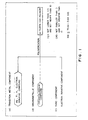
- FIG. 1 is a flow chart for facilitating understanding of the present invention. This flow chart is a typical example of the embodiments of the present invention, and the present is by no means limited thereby.
Landscapes
- Chemical & Material Sciences (AREA)
- Polymers & Plastics (AREA)
- Health & Medical Sciences (AREA)
- Chemical Kinetics & Catalysis (AREA)
- Medicinal Chemistry (AREA)
- Organic Chemistry (AREA)
- Engineering & Computer Science (AREA)
- Materials Engineering (AREA)
- Manufacturing & Machinery (AREA)
- Transition And Organic Metals Composition Catalysts For Addition Polymerization (AREA)
- Addition Polymer Or Copolymer, Post-Treatments, Or Chemical Modifications (AREA)
- Manufacture Of Macromolecular Shaped Articles (AREA)
- Shaping By String And By Release Of Stress In Plastics And The Like (AREA)
Claims (5)
- Procédé de production d'un polymère d'α-oléfine, qui comprend la production d'un polymère d'α-oléfine en polymérisant une α-oléfine ayant 3 atomes de carbone ou plus, le polymère d'α-oléfine satisfaisant aux conditions suivantes :la viscosité intrinsèque [η] dudit polymère (mesurée dans le solvent tétraline à 135°C) n'est pas inférieure à 0,5 et pas supérieure à 10, etla teneur (% en poids) en fraction soluble dans le xylène à 20°C (CXS) et la teneur (% en poids) en fraction insoluble dans le xylène à 105°C (XIS) dudit polymère satisfont à la condition suivante :

pourvu que CXS ne soit pas inférieur à 0,1 et pas supérieur à 12, par utilisation d'un système catalytique consistant en(A) un composant catalytique solide contenant du magnésium, du titane, un halogène et un composé donneur d'électrons comme composants essentiels,(B) un composé organo-aluminique, et(C) un composé donneur d'électrons. - Procédé de production d'un polymère d'α-oléfine selon la revendication 1, dans lequel ladite α-oléfine ayant 3 atomes de carbone ou plus est le propylène.
- Procédé selon la revendication 1, dans lequel le polymère d'α-oléfine est un polypropylène à utiliser dans la préparation d'un film orienté biaxialement, dans lequel le procédé comprend la production d'un polypropylène en polymérisant propylène par utilisation d'un système catalytique consistant en(A) un composant catalytique solide contenant du magnésium, du titane, un halogène et un composé donneur d'électrons comme composants essentiels,(B) un composé organo-aluminique, et(C) un composé donneur d'électrons,dans lequel le polypropylène obtenu satisfait aux conditions suivantes (1) à (3):(1) la teneur en fraction soluble dans le xylène à 20°C (CXS) est de 3,5 % en poids ou moins,(2) la teneur en fraction soluble dans le xylène à 20°C (CXS, % en poids) et la teneur en fraction insoluble dans le xylène à 105°C (XIS, % en poids) satisfont à la condition suivante :

et(3) l'indice d'écoulement à l'état fondu («melt flow rate», MFR) à 230°C est de 0,5 à 10,0 g/10 min. - Procédé selon la revendication 3, dans lequel la température à laquelle ledit polypropylène présente un module d'élasticité complexe de 1 x 10⁹ dynes/cm2 quand une vibration de 110 Hz est appliquée au polypropylène, est comprise entre 134°C et 152°C.
- Procédé selon la revendication 3, dans lequel la température à laquelle ledit polypropylène présente un module d'élasticité complexe de 1 x 10⁹ dynes/cm2 quand une vibration de 110 Hz est appliquée au polypropylène, est comprise entre 137°C et 145°C et l'indice d'écoulement à l'état fondu (MFR) dudit polypropylène à 230°C est compris entre 1,0 et 8,0 g/10 min.
Priority Applications (1)
| Application Number | Priority Date | Filing Date | Title |
|---|---|---|---|
| EP97118079A EP0844259B1 (fr) | 1993-12-06 | 1994-11-28 | Polymères d'alpha oléfine, catalyseur pour la polymérisation d'alpha oléfines et procédé de préparation d'un polymère d'alpha oléfine |
Applications Claiming Priority (4)
| Application Number | Priority Date | Filing Date | Title |
|---|---|---|---|
| JP5305318A JP3070368B2 (ja) | 1993-12-06 | 1993-12-06 | α−オレフィン重合体およびα−オレフィン重合用触媒ならびにα−オレフィン重合体の製造方法 |
| JP305318/93 | 1993-12-06 | ||
| JP81438/94 | 1994-04-20 | ||
| JP8143894A JP3825482B2 (ja) | 1994-04-20 | 1994-04-20 | 二軸延伸フィルム用ポリプロピレンおよび二軸延伸フィルム |
Related Child Applications (2)
| Application Number | Title | Priority Date | Filing Date |
|---|---|---|---|
| EP97118079A Division EP0844259B1 (fr) | 1993-12-06 | 1994-11-28 | Polymères d'alpha oléfine, catalyseur pour la polymérisation d'alpha oléfines et procédé de préparation d'un polymère d'alpha oléfine |
| EP97118079.9 Division-Into | 1997-10-17 |
Publications (4)
| Publication Number | Publication Date |
|---|---|
| EP0657476A2 EP0657476A2 (fr) | 1995-06-14 |
| EP0657476A3 EP0657476A3 (fr) | 1995-12-27 |
| EP0657476B1 EP0657476B1 (fr) | 1998-06-03 |
| EP0657476B2 true EP0657476B2 (fr) | 2007-12-19 |
Family
ID=26422462
Family Applications (2)
| Application Number | Title | Priority Date | Filing Date |
|---|---|---|---|
| EP94118696A Expired - Lifetime EP0657476B2 (fr) | 1993-12-06 | 1994-11-28 | Polymères d'alpha oléfine, catalyseur pour le polymérisation d'alpha oléfines et procédé de préparation d'un polymère d'alpha oléfine |
| EP97118079A Expired - Lifetime EP0844259B1 (fr) | 1993-12-06 | 1994-11-28 | Polymères d'alpha oléfine, catalyseur pour la polymérisation d'alpha oléfines et procédé de préparation d'un polymère d'alpha oléfine |
Family Applications After (1)
| Application Number | Title | Priority Date | Filing Date |
|---|---|---|---|
| EP97118079A Expired - Lifetime EP0844259B1 (fr) | 1993-12-06 | 1994-11-28 | Polymères d'alpha oléfine, catalyseur pour la polymérisation d'alpha oléfines et procédé de préparation d'un polymère d'alpha oléfine |
Country Status (6)
| Country | Link |
|---|---|
| US (1) | US6103841A (fr) |
| EP (2) | EP0657476B2 (fr) |
| KR (1) | KR100346290B1 (fr) |
| CN (2) | CN1045968C (fr) |
| DE (2) | DE69431444T2 (fr) |
| SG (1) | SG78354A1 (fr) |
Families Citing this family (8)
| Publication number | Priority date | Publication date | Assignee | Title |
|---|---|---|---|---|
| US6201079B1 (en) | 1995-09-29 | 2001-03-13 | Bp Amoco Corporation | Propylene polymer resin made from a high activity catalyst having a broad thermal processing window and articles made therefrom |
| KR19980017267A (ko) * | 1996-08-30 | 1998-06-05 | 백영배 | 폴리프로필렌 탄성체의 제조방법 |
| SG97919A1 (en) * | 1999-08-31 | 2003-08-20 | Sumitomo Chemical Co | Ethylene-alpha-olefin copolymer and polyethylene composition |
| US6489426B1 (en) * | 1999-09-10 | 2002-12-03 | Chisso Corporation | Propylene base polymer and a polypropylene film using the same |
| DE19962130A1 (de) | 1999-12-21 | 2001-07-05 | Basell Polypropylen Gmbh | Teilkristalline Propylenpolymerisat-Zusammensetzungen mit guter Eignung zur Herstellung von biaxial orientierten Folien |
| TWI238169B (en) * | 2000-12-22 | 2005-08-21 | Basell Technology Co Bv | Bioriented polypropylene films |
| US20120108771A1 (en) * | 2010-11-03 | 2012-05-03 | Fina Technology, Inc. | Succinate-containing polymerization catalyst system using bmds for preparation of polypropylene film grade resins |
| CN102746425B (zh) | 2011-04-22 | 2014-04-02 | 中国石油天然气股份有限公司 | 一种含噻吩基取代硅烷的烯烃聚合反应催化剂 |
Citations (2)
| Publication number | Priority date | Publication date | Assignee | Title |
|---|---|---|---|---|
| EP0318049A1 (fr) † | 1987-11-27 | 1989-05-31 | Montell Technology Company bv | Copolymères cristallins de propylène |
| EP0515855A1 (fr) † | 1991-05-25 | 1992-12-02 | BASF Aktiengesellschaft | Copolymères de propylène-éthylène à haute fluidité |
Family Cites Families (31)
| Publication number | Priority date | Publication date | Assignee | Title |
|---|---|---|---|---|
| NL160286C (fr) * | 1971-06-25 | |||
| US4107413A (en) * | 1971-06-25 | 1978-08-15 | Montedison S.P.A. | Process for the stereoregular polymerization of alpha olefins |
| US4187196A (en) * | 1971-06-25 | 1980-02-05 | Montedison S.P.A. | Process for the stereoregular polymerization of alpha-olefins |
| US4107414A (en) * | 1971-06-25 | 1978-08-15 | Montecatini Edison S.P.A. | Process for the stereoregular polymerization of alpha olefins |
| US4156063A (en) * | 1971-06-25 | 1979-05-22 | Montecanti Edison, S.p.A. | Process for the stereoregular polymerization of alpha olefins |
| US4226963A (en) * | 1971-06-25 | 1980-10-07 | Montedison S.P.A. | Process for the stereoregular polymerization of alpha-olephins |
| US4157435A (en) * | 1974-08-10 | 1979-06-05 | Mitsui Petrochemical Industries, Ltd. | Process for preparing highly stereoregular polyolefins and catalyst used therefor |
| JPS5494590A (en) * | 1978-01-05 | 1979-07-26 | Showa Denko Kk | Improved polymerization of olefin |
| JPS5632512A (en) * | 1979-08-24 | 1981-04-02 | Sumitomo Chem Co Ltd | Production of polypropylene having improved stretchability |
| JPS5641206A (en) * | 1979-09-13 | 1981-04-17 | Mitsui Toatsu Chem Inc | Polymerization of alpha-olefin |
| IT1209255B (it) * | 1980-08-13 | 1989-07-16 | Montedison Spa | Catalizzatori per la polimerizzazione di olefine. |
| CA1159198A (fr) * | 1980-09-29 | 1983-12-20 | Akinobu Shiga | METHODE D'OBTENTION DE POLYMERES DE .alpha.-OLEFINES A GRANDE REGULARITE STERIQUE |
| JPS5883006A (ja) * | 1981-11-13 | 1983-05-18 | Mitsui Petrochem Ind Ltd | オレフインの重合方法 |
| EP0115940B2 (fr) * | 1983-01-25 | 1997-03-19 | Mitsui Petrochemical Industries, Ltd. | Copolymère de propylène convenant à la fabrication de film, film à partir de celui-ci et procédé de préparation de ce film |
| JPS60127133A (ja) * | 1983-12-14 | 1985-07-06 | Sumitomo Chem Co Ltd | シユリンク包装用フイルム |
| JPS6123607A (ja) * | 1984-07-12 | 1986-02-01 | Tokuyama Soda Co Ltd | ポリプロピレン |
| CA1263370A (fr) * | 1985-03-25 | 1989-11-28 | Masaaki Katao | CATALYSEUR ET METHODE POUR L'OBTENTION DE POLYMERES .alpha.-OLEFINIQUES |
| US4804648A (en) * | 1986-06-18 | 1989-02-14 | Shell Oil Company | Crystalline olefin polymerization catalyst component |
| CA1310955C (fr) * | 1987-03-13 | 1992-12-01 | Mamoru Kioka | Procede de polymerisation d'olefines et catalyseur correspondant |
| US5093415A (en) * | 1987-05-19 | 1992-03-03 | Union Carbide Chemicals & Plastics Technology Corporation | Process for producing stereoregular polymers having a narrow molecular weight distribution |
| JPH0660216B2 (ja) * | 1988-06-20 | 1994-08-10 | 住友化学工業株式会社 | オレフィン重合用固体触媒の製造法 |
| IT1227258B (it) * | 1988-09-30 | 1991-03-28 | Himont Inc | Componenti e catalizzatori per la polimerizzazione di olefine |
| US5189124A (en) * | 1988-11-11 | 1993-02-23 | Sumitomo Chemical Company, Limited | Process for producing α-olefin polymers |
| JPH0662702B2 (ja) * | 1988-11-11 | 1994-08-17 | 住友化学工業株式会社 | α−オレフィン重合体の製造法 |
| JPH072799B2 (ja) * | 1988-12-16 | 1995-01-18 | 住友化学工業株式会社 | 高立体規則性a―オレフィン重合体の製造方法 |
| EP0385765B1 (fr) * | 1989-03-02 | 1995-05-03 | Mitsui Petrochemical Industries, Ltd. | Procédé de polymérisation d'oléfines et catalyseur pour polymérisation d'oléfines |
| JP2825909B2 (ja) * | 1989-03-02 | 1998-11-18 | 三井化学株式会社 | オレフィンの重合方法およびオレフィン重合用触媒 |
| EP0445302A4 (en) * | 1989-09-25 | 1992-09-30 | Tonen Corporation | Process for producing poly--g(a)-olefin |
| ATE156843T1 (de) * | 1990-04-13 | 1997-08-15 | Mitsui Petrochemical Ind | Festes titan enthaltendes katalysatorbestandteil und katalysator für olefinpolymerisation, vorpolymerisierte olefinpolymerisationskatalysator und verfahren für olefinpolymerisation |
| US5432244A (en) * | 1990-12-12 | 1995-07-11 | Union Carbide Chemicals & Plastics Technology Corporation | Process for the production of polypropylene |
| DE69323000T2 (de) * | 1992-06-08 | 1999-08-05 | Fina Technology, Inc., Plano, Tex. | Elektrondonor zur verbesserten Olefinpolymerisation |
-
1994
- 1994-11-28 EP EP94118696A patent/EP0657476B2/fr not_active Expired - Lifetime
- 1994-11-28 EP EP97118079A patent/EP0844259B1/fr not_active Expired - Lifetime
- 1994-11-28 DE DE69431444T patent/DE69431444T2/de not_active Expired - Lifetime
- 1994-11-28 DE DE69410757T patent/DE69410757T3/de not_active Expired - Lifetime
- 1994-11-28 SG SG1999002745A patent/SG78354A1/en unknown
- 1994-12-05 KR KR1019940032837A patent/KR100346290B1/ko not_active Expired - Fee Related
- 1994-12-06 CN CN94119476A patent/CN1045968C/zh not_active Expired - Lifetime
-
1997
- 1997-04-30 US US08/841,646 patent/US6103841A/en not_active Expired - Lifetime
-
1998
- 1998-10-09 CN CNB981209017A patent/CN1175003C/zh not_active Expired - Fee Related
Patent Citations (2)
| Publication number | Priority date | Publication date | Assignee | Title |
|---|---|---|---|---|
| EP0318049A1 (fr) † | 1987-11-27 | 1989-05-31 | Montell Technology Company bv | Copolymères cristallins de propylène |
| EP0515855A1 (fr) † | 1991-05-25 | 1992-12-02 | BASF Aktiengesellschaft | Copolymères de propylène-éthylène à haute fluidité |
Non-Patent Citations (5)
| Title |
|---|
| Journal of Molecular Catalysis, vol. 56, 1989, pp. 237-247 † |
| Kunststoff Taschenbuch, 24. Ausgabe, Hanser Verlag, München, 1989, p. 371 † |
| Kunststoffe, vol. 74, 1984, pp. 225-228 † |
| Macromolecules, vol. 21, 1988, pp. 2309-2313 † |
| Polymer Engineering and Science, 1989, vol. 29, no. 6, pp. 390-396 † |
Also Published As
| Publication number | Publication date |
|---|---|
| CN1045968C (zh) | 1999-10-27 |
| KR100346290B1 (ko) | 2002-11-16 |
| EP0657476A3 (fr) | 1995-12-27 |
| EP0844259B1 (fr) | 2002-09-25 |
| EP0657476A2 (fr) | 1995-06-14 |
| CN1175003C (zh) | 2004-11-10 |
| DE69410757T3 (de) | 2008-07-24 |
| EP0657476B1 (fr) | 1998-06-03 |
| CN1108262A (zh) | 1995-09-13 |
| SG78354A1 (en) | 2001-02-20 |
| KR950018069A (ko) | 1995-07-22 |
| DE69410757T2 (de) | 1999-01-14 |
| DE69410757D1 (de) | 1998-07-09 |
| US6103841A (en) | 2000-08-15 |
| EP0844259A1 (fr) | 1998-05-27 |
| DE69431444T2 (de) | 2003-06-05 |
| CN1221757A (zh) | 1999-07-07 |
| DE69431444D1 (de) | 2002-10-31 |
Similar Documents
| Publication | Publication Date | Title |
|---|---|---|
| EP0657477B1 (fr) | Procédé de préparation de polyoléfines pour film biaxialement orienté et catalyseur pour la polymérisation d'oléfines | |
| JP2950168B2 (ja) | α−オレフィン重合用触媒ならびにα−オレフィン重合体の製造方法 | |
| EP0657473B1 (fr) | Système de catalyseur utilisable pour la polymérisation des alpha-oléfines et procédé de préparation des catalyseurs utilisables pour la polymérisation des alpha-oléfines | |
| JPH10212319A (ja) | α−オレフィン重合用触媒ならびにα−オレフィン重合体の製造方法 | |
| JP2004067850A (ja) | α−オレフィン重合触媒およびα−オレフィン共重合体の製造方法 | |
| EP0657476B1 (fr) | Polymères d'alpha oléfine, catalyseur pour le polymérisation d'alpha oléfines et procédé de préparation d'un polymère d'alpha oléfine | |
| JP3419237B2 (ja) | α−オレフィン重合用触媒ならびにα−オレフィン重合体の製造方法 | |
| US6838412B2 (en) | α-Olefin polymerization catalyst and process for producing α-olefin polymer | |
| JPH10212312A (ja) | α−オレフィン重合触媒用固体触媒成分 | |
| JP3552342B2 (ja) | α−オレフィン重合用触媒ならびにα−オレフィン重合体の製造方法 | |
| JPH08333416A (ja) | α−オレフィン重合用触媒ならびにα−オレフィン重合体の製造方法 | |
| JPH11228617A (ja) | α−オレフィン重合用触媒ならびにα−オレフィン重合体の製造方法 | |
| JP2988227B2 (ja) | オレフィン重合体の製造方法およびオレフィンの重合用触媒 | |
| JP3825482B2 (ja) | 二軸延伸フィルム用ポリプロピレンおよび二軸延伸フィルム | |
| JP3427472B2 (ja) | 二軸延伸フィルム用ポリプロピレン及び二軸延伸フィルム | |
| JP4710144B2 (ja) | α−オレフィン重合用固体触媒成分、α−オレフィン重合用触媒、およびα−オレフィン重合体の製造方法 | |
| JP3070368B2 (ja) | α−オレフィン重合体およびα−オレフィン重合用触媒ならびにα−オレフィン重合体の製造方法 | |
| JP3050074B2 (ja) | α−オレフィン重合用触媒系及びα−オレフィン重合体の製造方法 | |
| JPH11228616A (ja) | α−オレフィン重合用触媒ならびにα−オレフィン重合体の製造方法 | |
| JPH08198917A (ja) | 未延伸フイルム用ポリプロピレン及び未延伸フイルム | |
| JP2004075915A (ja) | α−オレフィン重合触媒およびα−オレフィン共重合体の製造法 |
Legal Events
| Date | Code | Title | Description |
|---|---|---|---|
| PUAI | Public reference made under article 153(3) epc to a published international application that has entered the european phase |
Free format text: ORIGINAL CODE: 0009012 |
|
| AK | Designated contracting states |
Kind code of ref document: A2 Designated state(s): DE FR GB IT |
|
| PUAL | Search report despatched |
Free format text: ORIGINAL CODE: 0009013 |
|
| AK | Designated contracting states |
Kind code of ref document: A3 Designated state(s): DE FR GB IT |
|
| 17P | Request for examination filed |
Effective date: 19960605 |
|
| 17Q | First examination report despatched |
Effective date: 19960910 |
|
| GRAG | Despatch of communication of intention to grant |
Free format text: ORIGINAL CODE: EPIDOS AGRA |
|
| GRAG | Despatch of communication of intention to grant |
Free format text: ORIGINAL CODE: EPIDOS AGRA |
|
| GRAG | Despatch of communication of intention to grant |
Free format text: ORIGINAL CODE: EPIDOS AGRA |
|
| GRAH | Despatch of communication of intention to grant a patent |
Free format text: ORIGINAL CODE: EPIDOS IGRA |
|
| GRAH | Despatch of communication of intention to grant a patent |
Free format text: ORIGINAL CODE: EPIDOS IGRA |
|
| ITF | It: translation for a ep patent filed | ||
| GRAA | (expected) grant |
Free format text: ORIGINAL CODE: 0009210 |
|
| AK | Designated contracting states |
Kind code of ref document: B1 Designated state(s): DE FR GB IT |
|
| REF | Corresponds to: |
Ref document number: 69410757 Country of ref document: DE Date of ref document: 19980709 |
|
| ET | Fr: translation filed | ||
| PLBI | Opposition filed |
Free format text: ORIGINAL CODE: 0009260 |
|
| PLBF | Reply of patent proprietor to notice(s) of opposition |
Free format text: ORIGINAL CODE: EPIDOS OBSO |
|
| 26 | Opposition filed |
Opponent name: TARGOR GMBH C/O BASF AG Effective date: 19990301 |
|
| PLBF | Reply of patent proprietor to notice(s) of opposition |
Free format text: ORIGINAL CODE: EPIDOS OBSO |
|
| PLBF | Reply of patent proprietor to notice(s) of opposition |
Free format text: ORIGINAL CODE: EPIDOS OBSO |
|
| PLAW | Interlocutory decision in opposition |
Free format text: ORIGINAL CODE: EPIDOS IDOP |
|
| PLAB | Opposition data, opponent's data or that of the opponent's representative modified |
Free format text: ORIGINAL CODE: 0009299OPPO |
|
| R26 | Opposition filed (corrected) |
Opponent name: BASELL POLYPROPYLEN GMBH C/O BASF AG Effective date: 19990301 |
|
| APAC | Appeal dossier modified |
Free format text: ORIGINAL CODE: EPIDOS NOAPO |
|
| APAE | Appeal reference modified |
Free format text: ORIGINAL CODE: EPIDOS REFNO |
|
| APAC | Appeal dossier modified |
Free format text: ORIGINAL CODE: EPIDOS NOAPO |
|
| REG | Reference to a national code |
Ref country code: GB Ref legal event code: IF02 |
|
| PLAB | Opposition data, opponent's data or that of the opponent's representative modified |
Free format text: ORIGINAL CODE: 0009299OPPO |
|
| R26 | Opposition filed (corrected) |
Opponent name: BASELL POLYOLEFINE GMBH Effective date: 19990301 |
|
| APBU | Appeal procedure closed |
Free format text: ORIGINAL CODE: EPIDOSNNOA9O |
|
| PGFP | Annual fee paid to national office [announced via postgrant information from national office to epo] |
Ref country code: FR Payment date: 20031110 Year of fee payment: 10 |
|
| PGFP | Annual fee paid to national office [announced via postgrant information from national office to epo] |
Ref country code: GB Payment date: 20031126 Year of fee payment: 10 |
|
| PLAY | Examination report in opposition despatched + time limit |
Free format text: ORIGINAL CODE: EPIDOSNORE2 |
|
| PLBC | Reply to examination report in opposition received |
Free format text: ORIGINAL CODE: EPIDOSNORE3 |
|
| PG25 | Lapsed in a contracting state [announced via postgrant information from national office to epo] |
Ref country code: GB Free format text: LAPSE BECAUSE OF NON-PAYMENT OF DUE FEES Effective date: 20041128 |
|
| RAP2 | Party data changed (patent owner data changed or rights of a patent transferred) |
Owner name: SUMITOMO CHEMICAL COMPANY, LIMITED |
|
| GBPC | Gb: european patent ceased through non-payment of renewal fee |
Effective date: 20041128 |
|
| PG25 | Lapsed in a contracting state [announced via postgrant information from national office to epo] |
Ref country code: FR Free format text: LAPSE BECAUSE OF NON-PAYMENT OF DUE FEES Effective date: 20050729 |
|
| REG | Reference to a national code |
Ref country code: FR Ref legal event code: ST |
|
| APAH | Appeal reference modified |
Free format text: ORIGINAL CODE: EPIDOSCREFNO |
|
| PG25 | Lapsed in a contracting state [announced via postgrant information from national office to epo] |
Ref country code: IT Free format text: LAPSE BECAUSE OF NON-PAYMENT OF DUE FEES;WARNING: LAPSES OF ITALIAN PATENTS WITH EFFECTIVE DATE BEFORE 2007 MAY HAVE OCCURRED AT ANY TIME BEFORE 2007. THE CORRECT EFFECTIVE DATE MAY BE DIFFERENT FROM THE ONE RECORDED. Effective date: 20051128 |
|
| PUAH | Patent maintained in amended form |
Free format text: ORIGINAL CODE: 0009272 |
|
| STAA | Information on the status of an ep patent application or granted ep patent |
Free format text: STATUS: PATENT MAINTAINED AS AMENDED |
|
| 27A | Patent maintained in amended form |
Effective date: 20071219 |
|
| AK | Designated contracting states |
Kind code of ref document: B2 Designated state(s): DE FR GB IT |
|
| EN | Fr: translation not filed | ||
| PGFP | Annual fee paid to national office [announced via postgrant information from national office to epo] |
Ref country code: DE Payment date: 20131120 Year of fee payment: 20 |
|
| REG | Reference to a national code |
Ref country code: DE Ref legal event code: R071 Ref document number: 69410757 Country of ref document: DE |
|
| REG | Reference to a national code |
Ref country code: DE Ref legal event code: R071 Ref document number: 69410757 Country of ref document: DE |