EP0658630A2 - Oligonucléotides pour la détection d'entérobactériacéae - Google Patents
Oligonucléotides pour la détection d'entérobactériacéae Download PDFInfo
- Publication number
- EP0658630A2 EP0658630A2 EP94116541A EP94116541A EP0658630A2 EP 0658630 A2 EP0658630 A2 EP 0658630A2 EP 94116541 A EP94116541 A EP 94116541A EP 94116541 A EP94116541 A EP 94116541A EP 0658630 A2 EP0658630 A2 EP 0658630A2
- Authority
- EP
- European Patent Office
- Prior art keywords
- detection
- nucleic acid
- enterobacteriaceae
- primer
- oligonucleotide
- Prior art date
- Legal status (The legal status is an assumption and is not a legal conclusion. Google has not performed a legal analysis and makes no representation as to the accuracy of the status listed.)
- Granted
Links
Images

Classifications
-
- C—CHEMISTRY; METALLURGY
- C12—BIOCHEMISTRY; BEER; SPIRITS; WINE; VINEGAR; MICROBIOLOGY; ENZYMOLOGY; MUTATION OR GENETIC ENGINEERING
- C12Q—MEASURING OR TESTING PROCESSES INVOLVING ENZYMES, NUCLEIC ACIDS OR MICROORGANISMS; COMPOSITIONS OR TEST PAPERS THEREFOR; PROCESSES OF PREPARING SUCH COMPOSITIONS; CONDITION-RESPONSIVE CONTROL IN MICROBIOLOGICAL OR ENZYMOLOGICAL PROCESSES
- C12Q1/00—Measuring or testing processes involving enzymes, nucleic acids or microorganisms; Compositions therefor; Processes of preparing such compositions
- C12Q1/68—Measuring or testing processes involving enzymes, nucleic acids or microorganisms; Compositions therefor; Processes of preparing such compositions involving nucleic acids
- C12Q1/6876—Nucleic acid products used in the analysis of nucleic acids, e.g. primers or probes
- C12Q1/6888—Nucleic acid products used in the analysis of nucleic acids, e.g. primers or probes for detection or identification of organisms
- C12Q1/689—Nucleic acid products used in the analysis of nucleic acids, e.g. primers or probes for detection or identification of organisms for bacteria
Definitions
- the invention relates to oligonucleotides which are suitable as nucleic acid probes or as primers for the detection of Enterobacteriaceae, in particular of pathogenic Enterobacteriaceae, such as e.g. Salmonella sp ..
- Enterobacteriaceae From the family Enterobacteriaceae are the representatives Escherichia coli, Salmonella sp. and Shigella sp. the most common cause of food poisoning. In particular, food poisoning caused by Salmonella has increased significantly recently; both the frequency and the severity of the illnesses increased.
- Detection methods based on nucleic acid amplification reactions, e.g. the polymerase chain reaction (PCR), improve the detection limit, so that the preculture can generally be dispensed with.
- PCR polymerase chain reaction
- slyA and slyC In Salmonella, which form hemolytic toxins, two of these genes were first discovered and named slyA and slyC. It was found that partial sequences selected from the slyA and slyC gene range are suitable for specific detection methods. These detection methods according to the invention can be based on nucleic acid probe technology and / or on nucleic acid amplification reactions; they allow the detection of bacteria of the genus Salmonella and / or other Enterobacteriaceae with high specificity.
- the definition “salmolysin DNA region” is understood to mean the DNA regions which contain the coding segments (SlyA and SlyC) necessary for the function of salmolysin, including their flanking non-coding regions in the genus Salmonella.
- the “salmolysin-like DNA region” is understood to mean the DNA regions which these sections contain in bacteria of the genus Salmonella and in other Enterobacteriaceae.
- the invention relates to oligonucleotides selected from the salmolysin-like DNA region for the detection of Enterobacteriaceae, characterized in that they contain a partial sequence according to one of the formulas Ia to Ih or an associated complementary sequence, with before and / or after the respective Partial sequence up to 20 further nucleotide building blocks can be bound: TAT ATT GCG TTA GAT T Ia CTG AAG CTA CAG GT Ib AGC AAG CTA ATT ATA Ic ACG GTT GGT GCG CAT T Id ATA CGT GTG GCC ATG Ie GTG TGG TCA GTA ACC If CTG GCC AGC ACG AC Ig TCA TCA CCG CCC TG Ih Oligonucleotides with a sequence according to one of the formulas IIIa to IIIh or with an associated complementary sequence are particularly preferred: GAA TAT ATT GCG TTA GAT TAA T IIIa AAA CTG AAG CTA CAG GTG CC IIIb CTT
- the invention relates to methods for the detection of Enterobacteriaceae, in particular bacteria of the genus Salmonella, characterized in that an oligonucleotide according to one of the formulas IIa-h and / or IIIa-h is used as a nucleic acid probe or as a primer.
- the invention relates to test compositions for the detection of Enterobacteriaceae, in particular bacteria of the genus Salmonella, characterized in that an oligonucleotide according to one of the formulas IIa-h and / or IIIa-h is contained as a nucleic acid probe or as a primer.
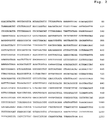
- Figure 1 shows the sequence of the DNA region which codes for Salmolysin gene products in bacteria of the genus Salmonella
- Figure 2 shows the sequence of the corresponding DNA region from E. coli.
- the sequence region from position 1 to 972 of Shigella flexneri is homologous to that of E. coli.
- nucleotide sequences according to the invention also include those which are derived from the sequences IIa-IIh and IIIa-IIIh by base exchange and which hybridize in the same way as the respective original sequence.
- the oligonucleotides according to the invention can be synthesized by methods known to the person skilled in the art, for example the phosphotriester or the phosphoamidite method.
- the phosphoamidite method is preferably used, in particular using mechanized synthesizers. The method is in Tetrahedron Lett. (1981) 22 : 1859-1862. Further details of such synthetic processes are described, for example, in Winnacker, EL (1985) Gene and Clones, pages 44-61 (VCH-Verlagsgesellschaft mbH, Weinheim).
- oligonucleotides according to formulas IIa - IIh and IIIa - IIIh according to the invention are suitable as nucleic acid probes and thus for the specific detection of Enterobacteriaceae, in particular bacteria of the genus Salmonella. Their sequences are shown in the usual way written from the 5 'end to the 3' end. Since nucleic acid probes hybridize with a target sequence, and since there is always a complementary sequence on the opposite strand for each target sequence, oligonucleotides which have a sequence complementary to one of the formulas II ah or III ah are equally suitable according to the invention.
- Nucleic acid probes are usually linked to tracers to allow analytical detection.
- the probes themselves can be radioactively labeled with P-32 or H-3.
- the methods for isotope labeling and other radioisotopes suitable for labeling are known to the person skilled in the art.
- other non-isotopic labeling agents are known to the person skilled in the art. These are often preferred for analytical tasks.
- These labels are attached to the probe, for example with bridge molecules.
- Suitable non-isotopic labeling agents are, for example, fluorescent substances, e.g. Fluorescein, or also enzymes, such as e.g. Peroxidase or alkaline phosphatase.
- the choice of suitable fluorescent substances or of enzymes and the necessary detection methods are known to the person skilled in the art. In many cases it makes sense not to connect the labeling agent directly to the probe, but indirectly using additional strong binding ligands.
- the combinations biotin / avidin or biotin / streptavidin have proven particularly useful for this purpose.
- the selection of such ligands and the necessary binding methods are known to the person skilled in the art.
- the term “labeling agent” is understood to mean both the labeling agents used in direct labeling methods and the combinations used in indirect labeling methods, including the binding ligands.
- the term “nucleic acid probe” means both the nucleic acid used as the probe and the combination of nucleic acid and labeling agent.
- oligonucleotides according to the formulas IIa-IIh and IIIa-IIIh according to the invention are also suitable as primers for nucleic acid amplification methods and thus for the specific detection of Enterobacteriaceae, in particular bacteria of the genus Salmonella, a preculture is generally not necessary in these methods.
- either deoxyribonucleotides or ribonucleotides with the sequences according to the invention are used. In the latter case, the thymidine building blocks are each replaced by uridine building blocks.
- one primer each should react with one of the DNA strands, one of the primers is used in the complementary sequence.
- the complementary sequence results in a known manner according to the rules of base pairing.
- the primers according to the invention are suitable for DNA amplification, for example with the aid of the polymerase chain reaction (PCR).
- PCR polymerase chain reaction
- the DNA is first broken down into individual strands by heating. Two primers are used, each hybridizing with the homologous DNA section on one DNA strand each. The genome section that lies between these two primers is increased.
- the primers attached to the DNA represent the starting points for the amplification.
- a polymerase preferably taq DNA polymerase, then supplements the second strand in the presence of the four nucleotide triphosphates in accordance with the sequence of the original DNA.
- the resulting double strands are then broken down again into the single strands by heating. This amplification cycle can be repeated several times.
- the amplified nucleic acid can be detected using known methods.
- the DNA can be separated by electrophoresis, then stained with ethidium bromide and finally detected by fluorescence using UV excitation. Detection using DNA hybridization is also possible.
- suitable amplification and detection methods can be found in review articles, e.g. Innis et al. (eds.) PCR Protocols (Academic Press, Inc., Harcourt Brace Jovanovich, Publishers).
- Other nucleic acid amplification methods in which the primers according to the invention can be used are also known from the literature. These include the ligase chain reaction, described by Bond, S. et al. (1990), pages 425-434 at Raven Press (New York, NY / USA).
- one of the two primers is always particularly critical, while the second primer can rather be varied without significantly changing the specificity of the detection reaction. Consequently, according to the teaching of the present invention, one can also be used for this second primer Sequence can be selected that does not correspond to one of the formulas IIa - IIh or IIIa - IIIh.
- At least one of the primers is selected from the formulas IIa-IIh or preferably from the formulas IIIa-IIIh.
- the second primer influences the specificity of the amplification reaction considerably less than the first primer.
- combinations in which both primers are selected from the formulas IIa-IIh or IIIa-IIIh are preferred.
- nucleic acid probes which hybridize with the amplified section are added to the reaction mixture after the amplification.
- the oligonucleotide according to formula IIIb is produced with the DNA synthesizer 380A from Applied Biosystems using the phosphoamidite method.
- the main features of the method are in Tetrahedron Lett. (1981) 22 : 1859-1862. Further details can be found in the documentation of the device manufacturer.
- the oligonucleotides according to formula IIIa, IIIc and IIId are prepared accordingly.
- the oligonucleotides according to formula IIIf, IIIg and IIIh are produced in the respective complementary sequence.
- the oligonucleotide according to formula IIIe is produced both in the specified sequence and in the associated complementary sequence.
- the oligonucleotides obtained in this way can be used either as a DNA probe or as a primer for the PCR reaction.
- oligonucleotide obtained according to Example 1 is radiolabelled as described in section 4.8 of "Current Protocols in Molecular Biology”(1988); Publisher Wiley and Sons, New York, describes: 1 ⁇ l oligonucleotide solution containing 100 ng oligonucleotide are mixed with 20 ⁇ l of a solution of gamma-32 P-ATP (200 ⁇ Ci), with 2.5 ⁇ l of a ten-fold concentrated kinase buffer (0.7 M Tris-HCl; pH 7.5; 0 , 1 M MgCl2; 50 mM dithiothreitol, 1 mM spermidine-HCl; 1 mM EDTA) and mixed with 4 units of T4 polynucleotide kinase (Pharmacia) and incubated at 37 ° C.
- the enzyme is then inactivated by heating (65 o C; 5 minutes).
- the labeled oligonucleotide is precipitated by adding 25 ⁇ l of 4 M ammonium acetate solution and 250 ⁇ l of absolute ethanol and centrifuged (15 minutes; 12000 rpm). The precipitate is suspended three times in 25 ⁇ l water and centrifuged again.
- Example 4 Execution of the PCR reaction for the enjoyment-specific detection of Salmonella
- a bacteria-containing sample with approx. 1 ⁇ g DNA is suspended in 50 ⁇ l buffer (10 mM Tris-HCl pH 8.5; 1.5 mM MgCl2 and 50 mM KCl) and heated to 110 ° C for 5 minutes. Subsequently, primers according to formulas IIIb and IIIh (see Example 1; 0.4 ⁇ g each) and 2.5 U Taq polymerase (Pharmacia), dissolved in reaction buffer (10 mM Tris-HCl pH 8.5; 1, 5 mM MgCl2 and 50 mM KCl), as well as 200 ⁇ M dGTP, dATP, dTTP and dCTP added (total reaction volume 100 ⁇ l).
- the first denaturation step takes 3 minutes at 94 ° C.
- the temperature is then raised to 55 ° C. (binding phase) for 30 seconds and to 72 ° C. (elongation phase) for one minute.
- the following denaturation steps take 45 seconds.
- a final elongation step is carried out for 5 minutes.
- the PCR products are separated in a polyacrylamide gel (6%) in a running buffer Tris-Borate (50 mM each) with EDTA (2.5 mM). Then the separated PCR products are stained by staining with ethidium bromide (0.1 mg / ml in water) and irradiation with UV light (260 nm) is made visible.
- PCR products are only observed if DNA or cells from Salmonella are present in the sample (see column a) in Table 1).
- Example 5 Execution of the PCR reaction for the enjoyment-specific detection of Salmonella
- Example 4 The procedure described in Example 4 is repeated using the primers according to formulas IIIe and IIIh (see example 1) instead of the primers according to formulas IIIb and IIIh. In this case too, only PCR products are observed if DNA or Salmonella cells are present in the sample (see column b) in Table 1).
- Example 6 Carrying out the PCR reaction for the detection of Salmonella in a manner specific to use
- Example 4 The procedure described in Example 4 is repeated using the primers according to formulas IIIb and IIIe (complementary sequence) (see example 1) instead of the primers according to formulas IIIb and IIIh. In this case too, only PCR products are observed if DNA or Salmonella cells are present in the sample.
- Example 7 Implementation of the PCR reaction for group-specific detection of Enterobacteriaceae Salmonella, Citrobacter, E. coli and Shigella
- a bacteria-containing sample with approx. 1 ⁇ g DNA is suspended in 50 ⁇ l buffer (10 mM Tris-HCl pH 8.5; 1.5 mM MgCl2 and 50 mM KCl) and heated to 110 ° C for 5 minutes.
- primers according to formulas IIIc and IIIh (see Example 1; 0.4 ⁇ g each) and 2.5 U Taq polymerase (Pharmacia) are dissolved in reaction buffer (10 mM Tris-HCl pH 8.5; 1.5 mM) MgCl2 and 50 mM KCl), as well as 200 ⁇ M dGTP, dATP, dTTP and dCTP added (total reaction volume 100 ⁇ l).
- the first denaturation step is ongoing 3 minutes at 94 ° C.
- the temperature is then raised to 55 ° C. (binding phase) for 30 seconds and to 72 ° C. (elongation phase) for one minute.
- the following denaturation steps (at 94 ° C) take 45 seconds.
- a final elongation step (at 72 ° C.) is carried out for 5 minutes.
- the PCR products are separated in a polyacrylamide gel (6%) in a running buffer Tris-Borate (50 mM each) with EDTA (2.5 mM). Then the separated PCR products are stained by staining with ethidium bromide (0.1 mg / ml in water) and irradiation with UV light (260 nm) is made visible.
- PCR products are only observed if DNA or cells from Enterobacteriaceae Salmonella, Citrobacter, E. coli and Shigella are present in the sample (see column c) in Table 1).
- Example 8 Implementation of the PCR reaction for group-specific detection of Enterobacteriaceae Salmonella, Citrobacter, E. coli and Shigella
- Example 7 The procedure described in Example 7 is repeated using the primers according to formulas IIId and IIIh (see example 1) instead of the primers according to formulas IIIc and IIIh. In this case too, only PCR products are observed if DNA or cells from Enterobacteriaceae Salmonella, Citrobacter, E. coli and Shigella are present in the sample (see column d) in Table 1).
Landscapes
- Chemical & Material Sciences (AREA)
- Life Sciences & Earth Sciences (AREA)
- Analytical Chemistry (AREA)
- Proteomics, Peptides & Aminoacids (AREA)
- Organic Chemistry (AREA)
- Zoology (AREA)
- Wood Science & Technology (AREA)
- Health & Medical Sciences (AREA)
- Engineering & Computer Science (AREA)
- Microbiology (AREA)
- Immunology (AREA)
- Molecular Biology (AREA)
- Biotechnology (AREA)
- Biophysics (AREA)
- Physics & Mathematics (AREA)
- Biochemistry (AREA)
- Bioinformatics & Cheminformatics (AREA)
- General Engineering & Computer Science (AREA)
- General Health & Medical Sciences (AREA)
- Genetics & Genomics (AREA)
- Measuring Or Testing Involving Enzymes Or Micro-Organisms (AREA)
- Saccharide Compounds (AREA)
Applications Claiming Priority (2)
| Application Number | Priority Date | Filing Date | Title |
|---|---|---|---|
| DE4337295 | 1993-11-02 | ||
| DE4337295A DE4337295A1 (de) | 1993-11-02 | 1993-11-02 | Oligonukleotide für den Nachweis von Enterobacteriaceae |
Publications (3)
| Publication Number | Publication Date |
|---|---|
| EP0658630A2 true EP0658630A2 (fr) | 1995-06-21 |
| EP0658630A3 EP0658630A3 (fr) | 1998-01-07 |
| EP0658630B1 EP0658630B1 (fr) | 2001-08-16 |
Family
ID=6501565
Family Applications (1)
| Application Number | Title | Priority Date | Filing Date |
|---|---|---|---|
| EP94116541A Expired - Lifetime EP0658630B1 (fr) | 1993-11-02 | 1994-10-20 | Oligonucléotides pour la détection d'entérobactériacéae |
Country Status (6)
| Country | Link |
|---|---|
| US (1) | US5733724A (fr) |
| EP (1) | EP0658630B1 (fr) |
| JP (1) | JPH07184697A (fr) |
| DE (2) | DE4337295A1 (fr) |
| DK (1) | DK0658630T3 (fr) |
| ES (1) | ES2161736T3 (fr) |
Families Citing this family (6)
| Publication number | Priority date | Publication date | Assignee | Title |
|---|---|---|---|---|
| DE19734940A1 (de) * | 1997-08-12 | 1999-02-18 | Biotecon Ges Fuer Biotechnologische Entwicklung & Consulting Mbh | Nucleinsäuremolekül-Satz für Salmonella-Nachweis, Nucleinsäuren, Kit und Verwendung |
| MXPA03012075A (es) * | 2001-06-22 | 2005-07-01 | Marshfield Clinic | Metodos y oligonucleotidos para la deteccion de salmonela sp., e. coli o157:h7 y listeria monocitogenes. |
| US6696254B2 (en) * | 2001-11-21 | 2004-02-24 | Kimberly-Clark Worldwide, Inc. | Detection and identification of enteric bacteria |
| ES2270644B1 (es) * | 2002-03-11 | 2008-04-16 | Universidad De Sevilla | Metodo para la deteccion e identificacion rapida de shigella spp. mediante la reaccion en cadena de la polimerasa en tiempo real. |
| US20060246463A1 (en) * | 2005-04-20 | 2006-11-02 | Vevea Dirk N | Methods and oligonucleotides for the detection of Salmonella SP., E coli 0157:H7, and Listeria monocytogenes |
| US20060240442A1 (en) * | 2005-04-20 | 2006-10-26 | Vevea Dirk N | Methods and oligonucleotides for the detection of Salmonella SP., E coli 0157:H7, and Listeria monocytogenes |
Family Cites Families (4)
| Publication number | Priority date | Publication date | Assignee | Title |
|---|---|---|---|---|
| US4683202A (en) * | 1985-03-28 | 1987-07-28 | Cetus Corporation | Process for amplifying nucleic acid sequences |
| JPH0638759B2 (ja) * | 1988-07-29 | 1994-05-25 | 株式会社島津製作所 | サルモネラ菌検査に用いるdnaプローブ及びそれを用いたサルモネラ菌の検出法 |
| CA2009708A1 (fr) * | 1989-02-13 | 1990-08-13 | Jane D. Madonna | Sonde d'acide nucleique pour la detection des salmonella pathogene pour les humains |
| WO1994025595A2 (fr) * | 1993-04-28 | 1994-11-10 | Merck Patent Gmbh | Gene de cytolysine et produit genique |
-
1993
- 1993-11-02 DE DE4337295A patent/DE4337295A1/de not_active Withdrawn
-
1994
- 1994-10-20 ES ES94116541T patent/ES2161736T3/es not_active Expired - Lifetime
- 1994-10-20 EP EP94116541A patent/EP0658630B1/fr not_active Expired - Lifetime
- 1994-10-20 DK DK94116541T patent/DK0658630T3/da active
- 1994-10-20 DE DE59409831T patent/DE59409831D1/de not_active Expired - Fee Related
- 1994-10-28 JP JP6264916A patent/JPH07184697A/ja active Pending
- 1994-11-01 US US08/332,747 patent/US5733724A/en not_active Expired - Fee Related
Also Published As
| Publication number | Publication date |
|---|---|
| EP0658630B1 (fr) | 2001-08-16 |
| EP0658630A3 (fr) | 1998-01-07 |
| DE59409831D1 (de) | 2001-09-20 |
| ES2161736T3 (es) | 2001-12-16 |
| JPH07184697A (ja) | 1995-07-25 |
| US5733724A (en) | 1998-03-31 |
| DE4337295A1 (de) | 1995-05-04 |
| DK0658630T3 (da) | 2001-11-12 |
Similar Documents
| Publication | Publication Date | Title |
|---|---|---|
| DE3486467T3 (de) | Verfahren zum Nachweis, Identifizieren und Quantifizieren von Organismen und Viren | |
| DE2915082C2 (fr) | ||
| DE69308381T2 (de) | Sonden für Mycobakterien | |
| DE69034232T2 (de) | Primer und Kit für den Nachweis von Chlamydia trachomatis | |
| DE69029726T2 (de) | Festphasendiagnose von medizinischen konditionen | |
| DE3650043T2 (de) | Nachweis von Mykoplasma durch Hybridisierung von DNS. | |
| DE69003477T2 (de) | Verfahren zum Nachweis von Nucleinsäuren. | |
| DE4216949C2 (de) | Nichtenzymatisches Verfahren zur In-situ-Hybridisierung bei spezifischen Proben | |
| EP1082465A2 (fr) | Procede de detection de micro-organismes presents dans des produits | |
| DE69004632T2 (de) | Verfahren zum Nachweis von Nucleinsäuren. | |
| DE69231961T2 (de) | Oligonucleotide zum Nachweis von Vibrio parahaemolyticus | |
| DE502588T1 (de) | Verfahren zur Amplifizierung von Nukleinsäuresequenzen. | |
| DE69627625T2 (de) | Die amplifizierung und bestimmung von arten des mycobakterium avium-komplexes | |
| DE69425450T2 (de) | Detektion und Identifikation von Mycobakterien | |
| DE69334050T2 (de) | Nukleinsäure-Sonden für Chlamydia Pneumoniae | |
| DE3688985T2 (de) | Verfahren und Sonde zum Nachweis von Actinobacillus Actinomycetemcomitans. | |
| DE69132830T2 (de) | Verfahren und Reagentien für die Identifikation von Bakterien | |
| DE69211921T2 (de) | Schnelle Methode zum Nachweis von methicillin-resistenten Staphylokokken | |
| DE69019393T2 (de) | Nukleinsäure-Sonde zum Nachweis von humanen Salmonella Pathogenen. | |
| DE69121975T2 (de) | Spezifischer Nachweis von Mycobacterium Tuberculosis | |
| EP0408077B1 (fr) | Sondes oligonucléotidiques spécifiques vis-à-vis de Neisseria gonorrhoeae | |
| DE69425708T2 (de) | Nukleotidsequenzen die spezifisch mit einer nukleotidsequenz aus campylobacter jejuni hybridisieren | |
| DE69328951T2 (de) | Nukleinsäuresonden für Mykobacterium Tuberkulosis | |
| DE69825783T2 (de) | Mittel zur qualitativen und quantitativen analyse mikrobiologischer populationen in einer probe | |
| DE69332202T2 (de) | Methoden zur diagnose von pilzinfektionen |
Legal Events
| Date | Code | Title | Description |
|---|---|---|---|
| PUAI | Public reference made under article 153(3) epc to a published international application that has entered the european phase |
Free format text: ORIGINAL CODE: 0009012 |
|
| AK | Designated contracting states |
Kind code of ref document: A2 Designated state(s): DE DK ES FR GB IT NL |
|
| PUAL | Search report despatched |
Free format text: ORIGINAL CODE: 0009013 |
|
| AK | Designated contracting states |
Kind code of ref document: A3 Designated state(s): DE DK ES FR GB IT NL |
|
| 17P | Request for examination filed |
Effective date: 19980610 |
|
| GRAG | Despatch of communication of intention to grant |
Free format text: ORIGINAL CODE: EPIDOS AGRA |
|
| 17Q | First examination report despatched |
Effective date: 20000905 |
|
| GRAG | Despatch of communication of intention to grant |
Free format text: ORIGINAL CODE: EPIDOS AGRA |
|
| GRAH | Despatch of communication of intention to grant a patent |
Free format text: ORIGINAL CODE: EPIDOS IGRA |
|
| GRAH | Despatch of communication of intention to grant a patent |
Free format text: ORIGINAL CODE: EPIDOS IGRA |
|
| GRAA | (expected) grant |
Free format text: ORIGINAL CODE: 0009210 |
|
| AK | Designated contracting states |
Kind code of ref document: B1 Designated state(s): DE DK ES FR GB IT NL |
|
| REF | Corresponds to: |
Ref document number: 59409831 Country of ref document: DE Date of ref document: 20010920 |
|
| REG | Reference to a national code |
Ref country code: DK Ref legal event code: T3 |
|
| GBT | Gb: translation of ep patent filed (gb section 77(6)(a)/1977) |
Effective date: 20011116 |
|
| REG | Reference to a national code |
Ref country code: ES Ref legal event code: FG2A Ref document number: 2161736 Country of ref document: ES Kind code of ref document: T3 |
|
| REG | Reference to a national code |
Ref country code: GB Ref legal event code: IF02 |
|
| ET | Fr: translation filed | ||
| PLBE | No opposition filed within time limit |
Free format text: ORIGINAL CODE: 0009261 |
|
| STAA | Information on the status of an ep patent application or granted ep patent |
Free format text: STATUS: NO OPPOSITION FILED WITHIN TIME LIMIT |
|
| 26N | No opposition filed | ||
| PGFP | Annual fee paid to national office [announced via postgrant information from national office to epo] |
Ref country code: NL Payment date: 20061003 Year of fee payment: 13 |
|
| PGFP | Annual fee paid to national office [announced via postgrant information from national office to epo] |
Ref country code: DE Payment date: 20061012 Year of fee payment: 13 |
|
| PGFP | Annual fee paid to national office [announced via postgrant information from national office to epo] |
Ref country code: DK Payment date: 20061013 Year of fee payment: 13 |
|
| PGFP | Annual fee paid to national office [announced via postgrant information from national office to epo] |
Ref country code: GB Payment date: 20061018 Year of fee payment: 13 |
|
| PGFP | Annual fee paid to national office [announced via postgrant information from national office to epo] |
Ref country code: IT Payment date: 20061031 Year of fee payment: 13 |
|
| PGFP | Annual fee paid to national office [announced via postgrant information from national office to epo] |
Ref country code: ES Payment date: 20061124 Year of fee payment: 13 |
|
| REG | Reference to a national code |
Ref country code: DK Ref legal event code: EBP |
|
| GBPC | Gb: european patent ceased through non-payment of renewal fee |
Effective date: 20071020 |
|
| NLV4 | Nl: lapsed or anulled due to non-payment of the annual fee |
Effective date: 20080501 |
|
| PG25 | Lapsed in a contracting state [announced via postgrant information from national office to epo] |
Ref country code: DE Free format text: LAPSE BECAUSE OF NON-PAYMENT OF DUE FEES Effective date: 20080501 |
|
| REG | Reference to a national code |
Ref country code: FR Ref legal event code: ST Effective date: 20080630 |
|
| PG25 | Lapsed in a contracting state [announced via postgrant information from national office to epo] |
Ref country code: NL Free format text: LAPSE BECAUSE OF NON-PAYMENT OF DUE FEES Effective date: 20080501 Ref country code: DK Free format text: LAPSE BECAUSE OF NON-PAYMENT OF DUE FEES Effective date: 20071031 |
|
| PGFP | Annual fee paid to national office [announced via postgrant information from national office to epo] |
Ref country code: FR Payment date: 20061010 Year of fee payment: 13 |
|
| PG25 | Lapsed in a contracting state [announced via postgrant information from national office to epo] |
Ref country code: GB Free format text: LAPSE BECAUSE OF NON-PAYMENT OF DUE FEES Effective date: 20071020 |
|
| REG | Reference to a national code |
Ref country code: ES Ref legal event code: FD2A Effective date: 20071022 |
|
| PG25 | Lapsed in a contracting state [announced via postgrant information from national office to epo] |
Ref country code: FR Free format text: LAPSE BECAUSE OF NON-PAYMENT OF DUE FEES Effective date: 20071031 Ref country code: ES Free format text: LAPSE BECAUSE OF NON-PAYMENT OF DUE FEES Effective date: 20071022 |
|
| PG25 | Lapsed in a contracting state [announced via postgrant information from national office to epo] |
Ref country code: IT Free format text: LAPSE BECAUSE OF NON-PAYMENT OF DUE FEES Effective date: 20071020 |