EP0659472A2 - Tensidzusammensetzung mit verbesserter Schaumhöhe - Google Patents
Tensidzusammensetzung mit verbesserter Schaumhöhe Download PDFInfo
- Publication number
- EP0659472A2 EP0659472A2 EP94402968A EP94402968A EP0659472A2 EP 0659472 A2 EP0659472 A2 EP 0659472A2 EP 94402968 A EP94402968 A EP 94402968A EP 94402968 A EP94402968 A EP 94402968A EP 0659472 A2 EP0659472 A2 EP 0659472A2
- Authority
- EP
- European Patent Office
- Prior art keywords
- foam
- surfactant
- polygalactomannan
- surfactants
- composition according
- Prior art date
- Legal status (The legal status is an assumption and is not a legal conclusion. Google has not performed a legal analysis and makes no representation as to the accuracy of the status listed.)
- Withdrawn
Links
Images

Classifications
-
- C—CHEMISTRY; METALLURGY
- C09—DYES; PAINTS; POLISHES; NATURAL RESINS; ADHESIVES; COMPOSITIONS NOT OTHERWISE PROVIDED FOR; APPLICATIONS OF MATERIALS NOT OTHERWISE PROVIDED FOR
- C09K—MATERIALS FOR MISCELLANEOUS APPLICATIONS, NOT PROVIDED FOR ELSEWHERE
- C09K23/00—Use of substances as emulsifying, wetting, dispersing, or foam-producing agents
- C09K23/017—Mixtures of compounds
-
- A—HUMAN NECESSITIES
- A61—MEDICAL OR VETERINARY SCIENCE; HYGIENE
- A61K—PREPARATIONS FOR MEDICAL, DENTAL OR TOILETRY PURPOSES
- A61K8/00—Cosmetics or similar toiletry preparations
- A61K8/18—Cosmetics or similar toiletry preparations characterised by the composition
- A61K8/30—Cosmetics or similar toiletry preparations characterised by the composition containing organic compounds
- A61K8/40—Cosmetics or similar toiletry preparations characterised by the composition containing organic compounds containing nitrogen
- A61K8/44—Aminocarboxylic acids or derivatives thereof, e.g. aminocarboxylic acids containing sulfur; Salts; Esters or N-acylated derivatives thereof
-
- A—HUMAN NECESSITIES
- A61—MEDICAL OR VETERINARY SCIENCE; HYGIENE
- A61K—PREPARATIONS FOR MEDICAL, DENTAL OR TOILETRY PURPOSES
- A61K8/00—Cosmetics or similar toiletry preparations
- A61K8/18—Cosmetics or similar toiletry preparations characterised by the composition
- A61K8/72—Cosmetics or similar toiletry preparations characterised by the composition containing organic macromolecular compounds
- A61K8/73—Polysaccharides
- A61K8/737—Galactomannans, e.g. guar; Derivatives thereof
-
- A—HUMAN NECESSITIES
- A61—MEDICAL OR VETERINARY SCIENCE; HYGIENE
- A61Q—SPECIFIC USE OF COSMETICS OR SIMILAR TOILETRY PREPARATIONS
- A61Q19/00—Preparations for care of the skin
- A61Q19/10—Washing or bathing preparations
-
- A—HUMAN NECESSITIES
- A61—MEDICAL OR VETERINARY SCIENCE; HYGIENE
- A61Q—SPECIFIC USE OF COSMETICS OR SIMILAR TOILETRY PREPARATIONS
- A61Q5/00—Preparations for care of the hair
- A61Q5/02—Preparations for cleaning the hair
-
- C—CHEMISTRY; METALLURGY
- C09—DYES; PAINTS; POLISHES; NATURAL RESINS; ADHESIVES; COMPOSITIONS NOT OTHERWISE PROVIDED FOR; APPLICATIONS OF MATERIALS NOT OTHERWISE PROVIDED FOR
- C09K—MATERIALS FOR MISCELLANEOUS APPLICATIONS, NOT PROVIDED FOR ELSEWHERE
- C09K23/00—Use of substances as emulsifying, wetting, dispersing, or foam-producing agents
-
- C—CHEMISTRY; METALLURGY
- C09—DYES; PAINTS; POLISHES; NATURAL RESINS; ADHESIVES; COMPOSITIONS NOT OTHERWISE PROVIDED FOR; APPLICATIONS OF MATERIALS NOT OTHERWISE PROVIDED FOR
- C09K—MATERIALS FOR MISCELLANEOUS APPLICATIONS, NOT PROVIDED FOR ELSEWHERE
- C09K23/00—Use of substances as emulsifying, wetting, dispersing, or foam-producing agents
- C09K23/18—Quaternary ammonium compounds
-
- C—CHEMISTRY; METALLURGY
- C09—DYES; PAINTS; POLISHES; NATURAL RESINS; ADHESIVES; COMPOSITIONS NOT OTHERWISE PROVIDED FOR; APPLICATIONS OF MATERIALS NOT OTHERWISE PROVIDED FOR
- C09K—MATERIALS FOR MISCELLANEOUS APPLICATIONS, NOT PROVIDED FOR ELSEWHERE
- C09K23/00—Use of substances as emulsifying, wetting, dispersing, or foam-producing agents
- C09K23/42—Ethers, e.g. polyglycol ethers of alcohols or phenols
Definitions
- the present invention relates to surfactant compositions characterized by an improvement in foamability allowing the use of lower amounts of surfactant without sacrificing foamability.
- the foaming power of surfactants or their mixtures is one of their important properties which finds significant utility in fields of application as diverse as body care products, industrial and hospital products, agricultural applications, fire fighting. and soil consolidation. Considerable development efforts have been made to improve or increase the foaming power of surfactants or their mixtures for these applications. It is known that it is difficult to improve the foam height of an aqueous surfactant solution or of a mixture of surfactants of more than a few millimeters by adding another chemical to them. Generally, solutions of different mixtures of surfactants do not exhibit synergy in foaming; it is difficult to get a mixture of surfactants to outperform the individual performance of each of the surfactants.
- the increase in foam is measured in three ways, namely the height of the foam measured in millimeters after dropping the surfactant solution drop by drop into a container from a determined height (Ross-Miles test) , the density of the foam measured by the number of foam cells per volume given and the stability of the foam also measured by the Ross-Miles test and expressed either in duration (in seconds) necessary for the foam to decrease by half of its initial volume or height of foam (in millimeters) after a given time.
- the present invention is more particularly oriented towards increasing the height of foam.
- Patents EP-A 0 231 997 and EP-A 0 247 766 describe shampoo formulations containing, inter alia, Guar gum (s).
- the surfactant compositions characterized by an improvement in foaming power or in foam height can be obtained by combining one or more surfactants with an amount of polygalactomannan sufficient to increase the foaming power, c '' i.e. the height of foam, at least 5 mm, preferably at least 7.5 mm and more particularly at least 10 mm relative to the height of foam obtained with the same amount of surfactants without addition of polygalactomannan (s).
- the use of quantities of polygalactomannans lower than those which are taught to increase the stability of the foam has the unexpected effect of increasing the height of foam, which makes it possible to use less surfactant. to obtain the desired foam height.
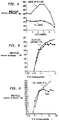
- FIG. 1 is a graph representing the effect of a constant quantity of doubly substituted Guar gum on the height of foam when the quantities of a mixture of anionic surfactant and of zwitterionic surfactant are varied compared to a control containing no Guar gum.
- FIG. 2 is a graph representing the effect which one obtains on the foam height of a mixture of an anionic surfactant and a zwitterionic surfactant when the quantities of doubly substituted Guar gum are varied.
- FIG. 3 is a graph showing the effect of a constant amount of doubly substituted Guar gum on the height of the foam when the ratios between the anionic surfactant and the cationic surfactant are varied relative to a control not containing Guar gum.
- Figure 4 is a graph showing the effect of a constant amount of hydroxypropylated guar gum on the foam height when the ratios between the zwitterionic surfactant and the anionic surfactant are varied compared to a control not containing Guar gum.
- Figure 5 is a graph showing the effect of a constant amount of a 1: 1 mixture of carboxymethylated Guar gum and xanthan gum on the foam height when the quantities of a mixture of surfactants are varied by compared to a control not containing a Guar gum / xanthan gum mixture.
- Figure 6 is a graph showing the effect of a constant amount of carboxymethylated guar gum on the foam height when the amount of a mixture of surfactants is varied compared to a control not containing Guar gum .
- the foamable compositions according to the present invention contain a surfactant composition chosen from the group comprising cationic, anionic nonionic, zwitterionic surfactants as well as their mixtures.
- the foamable composition may contain a zwitterionic surfactant (when used alone) or mixtures of one or more other surfactants chosen from other types and their mixtures. It is obvious that the surfactants are chosen from chemically compatible surfactants used in the practice of this field.
- Cationic surfactants are surfactant compounds that have a positive charge on the hydrophilic part of the molecule. These compounds can be represented by alkyl imidazolines, such as oleyl imidazoline, ethoxylated amines, such as tallow ethoxylated amine, 5 - 15 EO (with 5 - 15 ethylene oxide units), quaternary derivatives d imidazoline, such as the imidazolinium methyl sulfate disuif, quaternary benzyl derivatives, such as benzyl trimonium chloride, and quaternary alkyl tetra derivatives, such as cetyl trimonium chloride. It has been found that certain quaternary derivatives of tetra alkyl, when used alone, do not give foam heights of at least 5 mm.
- alkyl imidazolines such as oleyl imidazoline, ethoxylated amines, such as tallow ethoxylated
- anionic surfactant is an alkyl sulfate, an alkyl ether sulfate or mixtures thereof.
- Commonly used anionic surfactant compounds of this type are C10-C18 alkyl sulfates and C10-C18 alkyl ether sulfates containing 0 to 5, preferably 3 moles or more of ethylene oxide.
- Said surfactants are generally used in the form of their sodium, potassium, ammonium or mono, di or triethanolamine salts.
- surfactants are sodium lauryl sulfate, ammonium lauryl sulfate, mono, di and triethanolammonium lauryl sulfates, sodium lauryl ether sulfate (2 EO), sodium lauryl ether sulfate (3 EO) , potassium lauryl ether sulfate (2 EO) and ammonium lauryl ether sulfate (3 EO).
- Suitable anionic surfactant compounds are dialkyl succinates having the following structure: in which R and R ′ represent the identical or different linear or branched chain alkyl groups having from 5 to 14 carbon atoms and R can be equal to X, X being a solubilizing cation chosen from the group comprising the alkali, ammonium, substituted ammonium and magnesium.
- dialkyl sulfosuccinates which are particularly preferred are those in which R represents C6 and / or C8 alkyl groups.
- anionic surfactant compounds which are also suitable are ⁇ -olefin sulfonates, alkyl sarcosinates, alkyl monoglyceride sulfates, alkyl monoglyceride sulfonates, alkyl benzene sulfonates, monoalkyl ether sulfosuccinates, alkyl ether carboxylates, mono and diphosphate esters (alkyl, alkaryl and ethoxylate phosphate esters), including phosphate esters with higher ratios between mono and di acyl isothionates and acyl methyl taurates.
- Nonionic surfactants are surfactants which do not have an electrical charge and which can be represented by alkanolamides, alkyl phenol ethoxylates, fatty acid ethoxylates, alcohol ethoxylates, polyethylene glycol diesters, glycerol esters , galactoside uronates and alkylpoly glycosides.
- Examples of these nonionic surfactants include the product of the reaction between a sorbitan monolaurate or a sorbitan monococoate having 20 to 80 moles of ethylene oxide and a C8-C16 ethoxylated fatty alcohol having 4 to 25 moles of ethylene oxide.
- zwitterionic surfactant compounds include amine oxides, such as lauramine oxide, betaines, for example, alkyl amido betaines, such as cocamidopropyl betaine, alkyl dimethyl betaine, sulfobetaines, (sultaine, for example, hydroxyether hydroxypropyl sultaine, such as cocamidopropyl hydroxysultaine) and imidazoline derivatives, for example, sodium coco, capryl, tallo, lauro or stearocamphocarboxylates or disodium, such as acetates, diacetates, propionates, dipropionates and their acid counterparts, as well as their hydroxyalkyl sulfonates, iminocarboxylates, such as acetates, diacetates, propionates and dipropionates, and alkyl glycine, for example, tallow dihydroxyethyl
- the amount of surfactant compound present in the foamable compositions according to the invention depends on the form of the final composition.
- the foamable product may be in a propellant-free liquid or gel intended to be poured, pumped or otherwise dispensed from a bottle or similar container or from a carton .
- the foamable product can also be in the form of a liquid or a gel containing a liquefiable gas propellant, intended to be used from an aerosol can, such as a foam, for example.
- the surfactant is present in sufficient quantity to ensure efficient foam production in its field of application.
- Certain areas of application require significant foam production, such as detergents for small washes, carpet cleaning products, body care products, including shampoos, bath preparations, liquid soaps, shaving foam, soaps, hair care and toiletries, foam for agricultural and pesticide applications and fire fighting foam.
- effective foams can be obtained by using approximately 20 to 0.01% and, preferably, approximately 5 to 0.2% by weight of surfactant in the final foaming composition.
- the individual amounts of cationic, anionic, nonionic and zwitterionic surfactant compounds, alone or as a mixture, are within the limits of the total amount of the surfactant compound defined above, namely between 20 and 0.01%, preferably between 5 and 0.2% by weight relative to the final composition.
- the foaming compositions according to the invention also contain a polygalactomannan polymer in natural form or in the form of derivatives or of their mixtures.
- Polygalactomannan gums and their derivatives which can be used according to the invention are found in nature in the form of polysaccharides consisting mainly of galactose and mannose units.
- polygalactomannans are found in the endosperm of legume seeds, such as guar, carob, gleditschia, flamboyant, Kentucky coffee tree and the like.
- the polygalactomannan which is particularly preferred for its implementation in the process according to the present invention is Guar gum which is the main component of the seed of the plant which gives Guar gum, namely Cyamopsis tetragonalobus .
- the basic motif of the polymeric galactomannan in Guar gum contains two mannose units comprising a glycosidic bond and a galactose unit linked to one of the hydroxyls of the mannose unit. On average, each of the sugar units has three available hydroxyl sites, each of which can react.
- the degree of reaction or derivatization of the hydroxyl groups is called molar substitution (SM) which is the number of units (moles of derivatizing agent) which has reacted by sugar unit of polygalactomannan, or degree of substitution (DS) which is the average number of hydroxy groups in the sugar units reacted with the derivatizing agent.
- SM molar substitution
- DS degree of substitution
- the Guar endosperm as used in the present invention is commonly called “separated purified” or “separated purified twice" depending on the degree of purification.
- the “purified separated” is obtained by mechanical separation of the endosperm from the envelope and the germ of the Guar seed in as pure and intact form as possible without any other processing step.
- Said purified separate contains approximately 6 to 12% moisture, 2 to 7% protein and 2 to 7 as impurities % of insoluble acid residue. Its particle size is between approximately 0.84 and 4.76 mm.
- Guar particles can be reacted with various derivatizing agents in an aqueous alkaline medium. Any alkali hydroxide can be used, but preference is given to sodium hydroxide.
- the reaction medium is water, the process requiring no organic solvent.
- Polygalactomannan derivatives such as hydroxyalkyl ether, alkyl ether, carboxyalkyl ethers, aminoalkyl ether and quaternary ammonium alkyl ether derivatives, are well known compounds and there are many descriptions of the preparation of these derivatives.
- Derivatizing agents are alkylating or etherifying agents which contain groups capable of reacting with the hydroxyl groups of the polygalactomannans in order to form ether groups, the said reactive groups being epoxide groups, halogen atoms or neighboring ethylenically unsaturated groups.
- these agents are alkylating agents, hydroxyalkylating agents, carboxyalkylating agents, aminoalkylating agents, quaternary ammonium alkylating agents, amidoalkylating agents and the like.
- Alkylating agents include methyl chloride, methyl bromide, ethyl chloride, ethyl iodide and isopropyl chloride.
- Hydroxyalkylating agents include ethylene oxide, propylene-1,2-oxide, butylene-1,2-oxide, hexylene-1,2-oxide, ethylene chlorohydrin, propylene chlorohydrin and epichlorohydrin.
- carboxyalkylating agents are chloracetic acid, chloropropionic acid and acrylic acid.
- Aminoalkylating agents include aminoethyl chloride, aminopropyl bromide, N, N-dimethyl-aminopropyl chloride and the like.
- the quaternary ammonium alkylating agents are agents such as 2,3-epoxypropyl trimethylammonium chloride, 3-chloro-2-hydroxypropyl trimethylammonium chloride and the like.
- Agents containing ethylenically unsaturated groups reacting through Michael's reaction with hydroxyl groups are acrylamide, methacrylamide, acrylonitrile, methacrylonitrile, acrylic acid, sodium acrylate and any monomer polymerizable containing a polymerizable ethylenically unsaturated group.
- the hydroxyalkyl ethers of polygalactomannans can be obtained by reacting the polygalactomannans with alkylene oxides under basic conditions.
- Guar flour is reacted with alkylene oxides in the presence of water and sodium hydroxide. The reaction product is then neutralized with an acid, washed with a mixture of alcohol and water, then dried and ground.
- the polygalactomannans and the alkylene oxides react in basic medium with small amounts of water and larger amounts of organic solvents miscible or immiscible with water.
- carboxyalkyl ethers and the mixed carboxyhydroxyalkyl ethers of polygalactomannans are described respectively in US Pat. Nos. 3,740,388 and 3,723,409. These substitution agents (halogenated fatty acid and alkylene oxide) are obtained in a mixture of water and alcohol and then washed in mixtures of water and alcohol.
- Polygalactomannans can be classified among non-ionic products, including natural Guar gum and hydroxy alkyl ethers, anionic products, including carboxyalkyl ethers, cationic products, including derivatives based on ammonium alkyl ether quaternary, and double derivatives, including guars based on hydroxyalkyl ether / carboxyalkyl ether.
- non-ionic products including natural Guar gum and hydroxy alkyl ethers
- anionic products including carboxyalkyl ethers
- cationic products including derivatives based on ammonium alkyl ether quaternary
- double derivatives including guars based on hydroxyalkyl ether / carboxyalkyl ether.
- Polygalactomannan gums are marketed by Rhône-Poulenc under the brand JAGUAR.
- Guars are generally in powder form and are hydrated in a high concentration aqueous solution before being incorporated into the surfactant solution.
- compositions based on freshly hydrated polygalactomannan provided that they are used quickly after hydration in order to obtain foam, that is to say less 'one day, give a height of foam greater than that which is obtained with equivalent quantity of aged polygalactomannan gum.
- the effect of guar on the foam height remains constant regardless of the age of the guar solution after hydration. It has been found that an optimal increase in foam height is obtained if the Guar gum is used within less than 3 hours and, preferably, less than 1 hour from hydration. This effect can be particularly useful in industrial and agricultural applications where polygalactomannan gum can be hydrated at the time of use.
- Agricultural marking foams, seed treatment foams or pesticide application foams, soil consolidation foams could be more effective if they were prepared on site and used immediately.
- One of these application methods consists in introducing the polygalactomannan into small separate bags, the polygalactomannan being separated from the surfactant (s) or mixed with the surfactant (s), so that they are dissolved or torn before or during mixing.
- the gum and / or the polygalactomannan derivative are present in an amount sufficient to increase the foam height beyond the height which can be obtained by using the surfactant (s) alone (this quantity being insufficient). to cause a decrease in foam height.
- the polygalactomannan gum is preferably present in an amount of between approximately 0.005% and approximately 50%, preferably between approximately 0.05 and approximately 15% and more particularly between approximately 0.02% and approximately 4% by weight relative to the weight of the surfactant component (s) (active component) of the foam.
- the foaming composition according to the invention is an aqueous system and, at the time of production of the foam, it generally contains between approximately 80% and approximately 99.95% of water. Foam concentrates can be obtained by using less water than necessary.
- the foamable concentrates have the same ratio between the polygalactomannan and the surfactant as that which has been indicated above.
- foamable compositions according to the invention can optionally contain various components particularly suitable for producing other effects and commonly used in the manufacture of products which are analogous to the compositions.
- foamable and include, but are not limited to, colorants, fragrances, salts, opacifiers, thickening agents such as water-soluble polymers, hair and skin conditioners, stabilizers, preservatives and the like.
- the foamable compositions according to the present invention produce a large quantity of foam with less surfactant, said foams being sufficiently stable for their initial use and can be easily broken to facilitate their elimination, whether in the environment of the consumer or in that Of the industry.
- the use of lower amounts of surfactant to obtain an acceptable level of foam with the possibility, in addition, of easily breaking this foam makes it possible to have ecological compositions which are easier to remove during the treatment of wastewater.
- shampoos including baby shampoos, bubble baths, including bubble baths, soaps, bath gels, hair shaping gels, lotions, creams and skin lotions, make-up creams and lotions, liquid detergents, detergents for dishwashing and other washing and cosmetic products, agricultural marking foams, seed treatment foams, pesticide application foams, soil consolidation foam and fire fighting foam.
- the following examples fully illustrate the present invention.
- the percentage of the components of the products prepared in the examples is given relative to the total weight of the solution.
- the percentages given in the claims are percentages by weight.
- the guars used in the following examples are in the form of powder and are hydrated in an aqueous solution of relatively high concentration before being incorporated into the surfactant solution.
- the foaming power of the product is evaluated by carrying out the Ross-Miles foam height test as set out in standard ASTM D1173 and compared with a control system without addition of polymer, i.e. polygalactomannan.
- the test consists in dropping drop by drop from a determined height a determined quantity of surfactant solution in a container of standardized dimensions, in implementing a constant volume of solution, namely 250 milliliters, at a constant temperature and in recording the initial height of foam above 250 milliliters (Height of initial foam - HMi), total height of foam above liquid level at zero minutes (Height of flash foam) and height of foam above 250 milliliters after 5 minutes (Height of Foam after 5 minutes - HM5).
- the foam is evaluated and the following results are obtained, which are collated in Table III below:
- Flash foam heights and initial foam heights of amine oxide surfactant solutions can be increased from 16 to 27 mm and 12 to 17 mm respectively when adding a polymer , such as the JAGUAR 1200, the JAGUAR HP-120, the JAGUAR 8600, the JAGUAR CB-9 and the JAGUAR C-162 although the JAGUAR C-162 only increases the initial foam height by about 5 mm.
- a polymer such as the JAGUAR 1200, the JAGUAR HP-120, the JAGUAR 8600, the JAGUAR CB-9 and the JAGUAR C-162 although the JAGUAR C-162 only increases the initial foam height by about 5 mm.
- Flash foam heights and initial foam heights of nonylphenoxypoly (ethyleneoxy) ethanol (IGEPAL CO-630) surfactant solutions can be increased by 28 mm and 22 mm respectively when added 0.02% of polymer, such as JAGUAR HP-120 and approximately 45 mm and approximately 26 mm respectively with 0.1% of JAGUAR 8600.
- IGEPAL CO-630 nonylphenoxypoly (ethyleneoxy) ethanol
- a less marked improvement in the height of flash foam is obtained when using zwitterionic surfactants, such as amphoglacinates (for example, MIRANOL C2M), anionic surfactants, such as alkyl lauryl sulfates (for example, RHODAPON SB 8208 / s and sulfonates (eg RHODACAL A246 / L).
- zwitterionic surfactants such as amphoglacinates (for example, MIRANOL C2M), anionic surfactants, such as alkyl lauryl sulfates (for example, RHODAPON SB 8208 / s and sulfonates (eg RHODACAL A246 / L).
- JAGUAR 2100 and JAGUAR 8600 increase the height of C2M's flash foam by 12 mm and JAGUAR HP-120, JAGUAR CB-9 and the JAGUAR C-162 by a few millimeters.
- the JAGUAR 2100, JAGUAR HP-120, JAGUAR 8600 and JAGUAR CB-9 increase the height of the RHODAPEX ES flash foam by about 10 mm while the JAGUAR C-162 increases it by only a few millimeters
- the height of flash foam in RHODAPON SB 8208 / s solutions is only increased by approximately 5 mm by the JAGUAR 8600 and JAGUAR CB-9
- the JAGUAR 2100, JAGUAR 8500 and the JAGUAR CB-9 increase the flash foam height of the RHODACAL A246 / L only by some 8 mm while JAGUAR C-162 and JAGUAR HP-120 do not affect the height of flash foam in solutions of this surfactant.
- zwitterionic surfactants such as amphoglacinates (for example, MIRANOL C2M), anionic surfactants, such as alkyl lauryl sulfate (by example, RHODAPON SB8208 / s) and sulfonates (e.g. RHODACAL A246 / L).
- Flash foam heights and initial foam heights of amine oxide surfactant solutions (RHODAMOX LO) and sodium dodecyl sulfate (RHODAPON SB8208 / s) can be increased from 30 to 46 mm and from 25 to 46 mm, respectively. 31 mm when 0.02% of polymer is added, such as JAGUAR 12OO, JAGUAR HP-120, JAGUAR 8600 and JAGUAR C-162.
- Flash foam heights and initial foam heights of amine oxide surfactant solutions (RHODAMOX LO) and sodium laureth (3) sulfate (RHODAPEX ES) can be increased by 15 to 28 mm and 13 to 22 mm when 0.02% of polymer is added, such as JAGUAR 2100, JAGUAR 8600, JAGUAR HP-120, JAGUAR CB-9 and JAGUAR C-162.
- Flash foam heights and initial foam heights of amine oxide surfactant solutions (RHODAMOX LO) and sodium olefin sulfonate (RHODACAL A246L) can be increased by 20 to 30 mm and 15 to 15 mm, respectively. 22 mm when adding 0.02% of polymer, such as JAGUAR 2100, JAGUAR 8600, JAGUAR HP-120, JAGUAR CB-162, the latter increasing the initial foam height by around 6 at 10 mm.
- RHODAMOX LO amine oxide surfactant solutions
- RHODACAL A246L sodium olefin sulfonate
- the flash foam heights and the initial foam heights of nonylphenoxypoly (ethyleneoxy) ethanol (IGEPAL CO-630) surfactant solutions can be increased by 28 and 22 mm respectively when 0.02% of polymer is added, such as than the JAGUAR HP-120, and approximately 45 mm and 26 mm respectively with 0.1% of JAGUAR 8600.
- IGEPAL CO-630 nonylphenoxypoly (ethyleneoxy) ethanol
- the flash foam heights and the initial foam heights are increased (by 18 mm and approximately 10 to 16 mm respectively) when using zwitterionic surfactants, such as amphoglacinates (for example, MIRANOL C2M) in combination with anionic surfactants, such as alkyl sulfates (for example, sodium dodecyl sulfate RHODAPON SB 8208 / s) with 0.02% polymer, for example, JAGUAR 2100, JAGUAR 2513, JAGUAR 8600, JAGUAR CB-9 and JAGUAR HP-8.
- zwitterionic surfactants such as amphoglacinates (for example, MIRANOL C2M) in combination with anionic surfactants, such as alkyl sulfates (for example, sodium dodecyl sulfate RHODAPON SB 8208 / s) with 0.02% polymer, for example, JAGUAR 2100, JAGUAR 2513, JAGUAR 8600
- the initial foam heights are increased by around 7 mm with the JAGUAR 2100 and the JAGUAR CB-9 and by a few millimeters with the JAGUAR HP-120 and the JAGUAR 8600 when using zwitterionic surfactants, such as amphoglacinates (e.g. MIRANOL C2M) in combination with sulfonate-based surfactants, such as the sodium olefin sulfonate RHODACAL A246L.
- zwitterionic surfactants such as amphoglacinates (e.g. MIRANOL C2M) in combination with sulfonate-based surfactants, such as the sodium olefin sulfonate RHODACAL A246L.
- the initial foam heights are increased by around 17 to 21 mm with the JAGUAR 2100, the JAGUAR HP-8, the JAGUAR 8600 and the JAGUAR CB-9 when using zwitterionic surfactants, such as betaines (for example, cocoamidopropyl betaine MIRATAINE CB) in combination with surfactants, such as alkyl sulfates (for example, sodium dodecyl sulfate RHODAPON SB 8208 / s).
- zwitterionic surfactants such as betaines (for example, cocoamidopropyl betaine MIRATAINE CB) in combination with surfactants, such as alkyl sulfates (for example, sodium dodecyl sulfate RHODAPON SB 8208 / s).
- the data appearing in TABLE V represent the results obtained when the quantity of surfactant is varied while keeping the quantity of Guar gum of less than 7 hours constant at 0.01% (data represented on the Figure 1), that the amount of Guar gum is varied by less than 7 hours while keeping the amount of surfactant mixture constant at 0.5% by weight (data shown in Figure 2) and that varies the ratio between the surfactants, an ⁇ of zero meaning 0% of RHODAPON SM8208 / s and 100% of RHODAMOX LO and an ⁇ of a signifier 0% of RHODAMOX LO and 100% of RHODAPON SB8208 / s with decimals of equalization of the relationships between the two, the Guar gum being kept constant at 0.01% and having less than 5 hours (data shown in Figure 3).
- Example 2 The procedure is as in Example 1 by varying the ratios between a zwitterionic surfactant based on cocoamidopropyl betaine (MIRATAINE CB) and an anionic surfactant based on sodium dodecylsulfate (RHODAPON SB8208 / s) and using 0.02 % of a nonionic hydroxypropylated guar (JAGUAR HP68) at pH 6 and at 25 ° C; compared with a witness not containing guar. The total content of active surfactant is 0.5% by weight. The results obtained are reported in FIGURE 4.
- MIRATAINE CB cocoamidopropyl betaine
- RHODAPON SB8208 / s sodium dodecylsulfate
- JGUAR HP68 nonionic hydroxypropylated guar
- Foam heights are obtained by using tertiary mixtures of surfactants, namely 0.5% of lauryl alcohol ethoxylate (RHODASURF L-4), 0.29% of sodium cocoamphodiacetate (MIRANOL C2M) and 0.21% sodium dodecyl sulfate (RHODAPON SB8208 / s) plus 0.02% guar based on sodium carboxymethyl (JAGUAR CB-9) and compared with a control.
- the initial foam heights and after 5 minutes are 179 mm, the flash heights 199 mm.
- Foam heights are obtained by using 10% of a mixture of surfactants which is a ternary mixture of surfactants, namely cocoamphodiacetate, sodium lauryl sulfate and sodium laureth sulfate (47% of active ingredients) more 0.02% sodium carboxyl guar (JAGUAR CB-9).
- the flash foam height is increased by 16 mm and the initial foam height by 9 mm compared to a witness.
- the foam heights are obtained by using 10 to 0.25% of a mixture of surfactants which is a ternary mixture of surfactants, namely cocoamide - diethanolamide 1/1, sodium laureth sulfate and cocamidopropyl betaine (47% active ingredient) plus 0.01% sodium carboxymethyl guar (JAGUAR CB-9) and 0.01% xanthan gum.
- the flash foam height is increased from 30 to 35 mm, the initial foam height from 10 to 25 mm compared to a witness.
- the initial foam height is increased by around 14 to 20 mm and the flash foam height by around 16 to 19 mm with 0.02 % of JAGUAR C-162 or JAGUAR 8600.
- Foam heights are obtained by using 20 to 1.0% of a mixture of surfactants, namely 45 parts of sodium lauryl sulfate, 8 parts of ethylene glycol monobutyl, 8 parts of laureth (3) sulfosuccinate sodium, 3 parts of C12-C16 alcohol, 5 parts of MEA cocamide, 25 parts of ammonium salt of C8-C10 ethoxylate sulfated as active ingredients plus 0.02% sodium carboxymethyl guar (JAGUAR CB- 9).
- the height of flash foam is increased from 48 to 16 mm while the initial foam height is increased from 38 to 8 mm compared to a control.
Landscapes
- Chemical & Material Sciences (AREA)
- Organic Chemistry (AREA)
- Materials Engineering (AREA)
- Health & Medical Sciences (AREA)
- Engineering & Computer Science (AREA)
- Life Sciences & Earth Sciences (AREA)
- General Health & Medical Sciences (AREA)
- Veterinary Medicine (AREA)
- Public Health (AREA)
- Animal Behavior & Ethology (AREA)
- Birds (AREA)
- Epidemiology (AREA)
- Dermatology (AREA)
- Emulsifying, Dispersing, Foam-Producing Or Wetting Agents (AREA)
- Cosmetics (AREA)
- Detergent Compositions (AREA)
- Fire-Extinguishing Compositions (AREA)
- Polysaccharides And Polysaccharide Derivatives (AREA)
Applications Claiming Priority (2)
| Application Number | Priority Date | Filing Date | Title |
|---|---|---|---|
| US17179693A | 1993-12-22 | 1993-12-22 | |
| US171796 | 1993-12-22 |
Publications (2)
| Publication Number | Publication Date |
|---|---|
| EP0659472A2 true EP0659472A2 (de) | 1995-06-28 |
| EP0659472A3 EP0659472A3 (de) | 1996-01-24 |
Family
ID=22625178
Family Applications (1)
| Application Number | Title | Priority Date | Filing Date |
|---|---|---|---|
| EP94402968A Withdrawn EP0659472A3 (de) | 1993-12-22 | 1994-12-21 | Tensidzusammensetzung mit verbesserter Schaumhöhe. |
Country Status (4)
| Country | Link |
|---|---|
| EP (1) | EP0659472A3 (de) |
| JP (1) | JPH07303826A (de) |
| CN (1) | CN1114914A (de) |
| CA (1) | CA2137636A1 (de) |
Cited By (3)
| Publication number | Priority date | Publication date | Assignee | Title |
|---|---|---|---|---|
| WO2003043526A1 (fr) * | 2001-11-22 | 2003-05-30 | Gtl Co.,Ltd. | Extincteur a mousse exempt de tensioactifs fluores |
| FR2939658A1 (fr) * | 2008-12-15 | 2010-06-18 | Oreal | Composition moussante comprenant une gomme de guar modifiee |
| US9427391B2 (en) | 2006-01-09 | 2016-08-30 | The Procter & Gamble Company | Personal care compositions containing cationic synthetic copolymer and a detersive surfactant |
Families Citing this family (11)
| Publication number | Priority date | Publication date | Assignee | Title |
|---|---|---|---|---|
| US9018145B2 (en) | 2003-12-23 | 2015-04-28 | Lubrizol Oilfield Solutions, Inc. | Foamer composition and methods for making and using same |
| CN101046051B (zh) * | 2006-03-31 | 2012-06-27 | 海尔集团公司 | 一种用于泡沫洗涤的具有特殊特性的泡沫 |
| JP5656006B2 (ja) | 2010-09-17 | 2015-01-21 | 株式会社サタケ | 研削式竪型精穀機 |
| CN119258474A (zh) * | 2014-02-18 | 2025-01-07 | 海浚国际贸易有限公司 | 灭火组合物 |
| KR101723833B1 (ko) * | 2016-08-26 | 2017-04-06 | 이준범 | 다목적 친환경 포소화약제 |
| KR101883764B1 (ko) * | 2017-03-15 | 2018-07-31 | 에이치앤에스산업 주식회사 | 우수한 소화성능을 가지는 강화액 소화약제 |
| CN110283668A (zh) * | 2019-06-12 | 2019-09-27 | 苏州绿叶日用品有限公司 | 一种改善洗涤剂泡沫性能的表面活性剂组合物及其制备方法和用途 |
| CN111215000B (zh) * | 2020-01-15 | 2022-02-18 | 曜昂环境技术(江苏)有限公司 | 用于土壤和地下水中的非水相污染物处理的表面活性剂 |
| CN113652218B (zh) * | 2021-07-05 | 2023-04-07 | 中国石油化工股份有限公司 | 一种页岩气井泡排剂及其制备方法 |
| JP7352122B1 (ja) * | 2023-03-02 | 2023-09-28 | 千住金属工業株式会社 | 泡消火剤 |
| CN119432356B (zh) * | 2025-01-13 | 2025-07-11 | 东营汇聚丰石油科技有限公司 | 一种页岩油藏氮气泡沫压裂液体系及其制备方法与应用 |
Family Cites Families (15)
| Publication number | Priority date | Publication date | Assignee | Title |
|---|---|---|---|---|
| US4330438A (en) * | 1980-12-29 | 1982-05-18 | Hoffmann-La Roche Inc. | Powdered shampoo concentrate |
| ZA825065B (en) * | 1981-08-06 | 1984-02-29 | Colgate Palmolive Co | Foam enhancing agent for light duty liquid detergent |
| US4364837A (en) * | 1981-09-08 | 1982-12-21 | Lever Brothers Company | Shampoo compositions comprising saccharides |
| GB8311854D0 (en) * | 1983-04-29 | 1983-06-02 | Unilever Plc | Detergent compositions |
| GB8416884D0 (en) * | 1984-07-03 | 1984-08-08 | Procter & Gamble | Liquid cleansing composition |
| GB2172298B (en) * | 1985-03-01 | 1988-11-23 | Procter & Gamble | Mild detergent mousse |
| US4673525A (en) * | 1985-05-13 | 1987-06-16 | The Procter & Gamble Company | Ultra mild skin cleansing composition |
| GB8600496D0 (en) * | 1986-01-09 | 1986-02-12 | Unilever Plc | Shampoo |
| US4726944A (en) * | 1986-05-28 | 1988-02-23 | Osipow Lloyd I | Instant lathering shampoo |
| LU86586A1 (fr) * | 1986-09-15 | 1988-04-05 | Oreal | Dentifrice contenant un tensio-actif non ionique poly(hydroxypropylether)et un polymere cationique determine |
| GB8912391D0 (en) * | 1989-05-30 | 1989-07-12 | Unilever Plc | Shampoo composition |
| JPH05928A (ja) * | 1990-11-20 | 1993-01-08 | Kao Corp | シヤンプー組成物 |
| WO1992014907A1 (en) * | 1991-02-22 | 1992-09-03 | The Western Company Of North America | Slurried polymer foam system and method for the use thereof |
| JPH06199653A (ja) * | 1993-01-08 | 1994-07-19 | Lion Corp | 洗浄剤組成物 |
| US5391368A (en) * | 1993-08-09 | 1995-02-21 | Revlon Consumer Products Corporation | Hair styling shampoos |
-
1994
- 1994-12-08 CA CA002137636A patent/CA2137636A1/en not_active Abandoned
- 1994-12-20 JP JP6316522A patent/JPH07303826A/ja active Pending
- 1994-12-21 EP EP94402968A patent/EP0659472A3/de not_active Withdrawn
- 1994-12-21 CN CN94120495A patent/CN1114914A/zh active Pending
Cited By (5)
| Publication number | Priority date | Publication date | Assignee | Title |
|---|---|---|---|---|
| WO2003043526A1 (fr) * | 2001-11-22 | 2003-05-30 | Gtl Co.,Ltd. | Extincteur a mousse exempt de tensioactifs fluores |
| US6845823B2 (en) | 2001-11-22 | 2005-01-25 | Gtl Co., Ltd. | Fluorosurfactant-free foam fire-extinguisher |
| CN1314374C (zh) * | 2001-11-22 | 2007-05-09 | 西义之 | 不含氟类表面活性剂的泡沫灭火剂 |
| US9427391B2 (en) | 2006-01-09 | 2016-08-30 | The Procter & Gamble Company | Personal care compositions containing cationic synthetic copolymer and a detersive surfactant |
| FR2939658A1 (fr) * | 2008-12-15 | 2010-06-18 | Oreal | Composition moussante comprenant une gomme de guar modifiee |
Also Published As
| Publication number | Publication date |
|---|---|
| CA2137636A1 (en) | 1995-06-23 |
| EP0659472A3 (de) | 1996-01-24 |
| CN1114914A (zh) | 1996-01-17 |
| JPH07303826A (ja) | 1995-11-21 |
Similar Documents
| Publication | Publication Date | Title |
|---|---|---|
| EP0729382B1 (de) | Alkylglykosiden enthaltendes konzentrat und seine anwendungen | |
| KR101228786B1 (ko) | 보습 조성물 | |
| EP1049456B1 (de) | Verwendung amphoterer tenside als fällungsmittel für kationische polymere während des verdünnens in kosmetischen zusammensetzungen | |
| EP0659472A2 (de) | Tensidzusammensetzung mit verbesserter Schaumhöhe | |
| US6362146B1 (en) | Personal washing compositions | |
| US20100029929A1 (en) | Method of producing cross-linked polysaccharide particles | |
| EP0699472A1 (de) | Verfahren zur Herstellung von Tensiden aus Weizennebenprodukten und ihre Verwendungen | |
| CZ302598B6 (cs) | Vodný kapalný cisticí a zvlhcovací prostredek a zpusob jeho výroby | |
| AU734898B2 (en) | Nonaerosol shave gel compositions | |
| FR2769836A1 (fr) | Utilisation de nanofibrilles de cellulose essentiellement amorphes associees a au moins un compose organique polyhydroxyle dans des formulations cosmetiques | |
| FR2966364A1 (fr) | Composition cosmetique comprenant de l'aloe vera et un derive d'acide isethionique | |
| JP2007518678A (ja) | 高度不けん化物およびそれを用いる方法 | |
| JP5622396B2 (ja) | 製薬、パーソナルケアおよび家庭用ケア用途における凝集したヒドロキシエチルセルロースの使用 | |
| JP2011516685A (ja) | 架橋法及びそれにより形成された架橋多糖 | |
| EP1422288B1 (de) | Flüssige Reinigungsmittel auf Basis von Seifen und synthetischen Tensiden; Ihre Verwendung zur Reinigung von menschlichen Keratinmaterialien | |
| JPH11514003A (ja) | クレンジング組成物 | |
| EP0392665A1 (de) | Hautreinigungsmittel | |
| EP0736521A1 (de) | Verfahren zur Reinigung von amphoteren Tensiden durch Elektrodialyse | |
| CN1227591A (zh) | 清洁组合物 | |
| CN1244785A (zh) | 发泡型个人清洁产品 | |
| EP1250118B1 (de) | Kosmetische zusammensetzungen enthaltend eine mischung von kationischen polymeren/anionischen tensiden und verwendung dieser mischung als strukturiermittel | |
| BE840667A (fr) | Compositions detergentes non irritantes a haut pouvoir moussant | |
| EP0457672A1 (de) | Zusammensetzung von Toilettenartikeln | |
| FR3133748A1 (fr) | Composition pulvérulente pour le nettoyage cosmétique de la peau ou des cheveux | |
| WO1998011868A1 (fr) | Dispositif pressurise a composition moussante comprenant des tensioactifs non-ioniques et anioniques |
Legal Events
| Date | Code | Title | Description |
|---|---|---|---|
| PUAI | Public reference made under article 153(3) epc to a published international application that has entered the european phase |
Free format text: ORIGINAL CODE: 0009012 |
|
| 17P | Request for examination filed |
Effective date: 19950102 |
|
| AK | Designated contracting states |
Kind code of ref document: A2 Designated state(s): AT BE CH DE DK ES FR GB GR IE IT LI LU NL PT SE |
|
| PUAL | Search report despatched |
Free format text: ORIGINAL CODE: 0009013 |
|
| AK | Designated contracting states |
Kind code of ref document: A3 Designated state(s): AT BE CH DE DK ES FR GB GR IE IT LI LU NL PT SE |
|
| 17Q | First examination report despatched |
Effective date: 19960801 |
|
| RAP1 | Party data changed (applicant data changed or rights of an application transferred) |
Owner name: RHONE-POULENC INC. |
|
| STAA | Information on the status of an ep patent application or granted ep patent |
Free format text: STATUS: THE APPLICATION IS DEEMED TO BE WITHDRAWN |
|
| 18D | Application deemed to be withdrawn |
Effective date: 19971212 |