EP0659668A2 - Appareil pour former des images ayant une deuxième voie avec un dispositif pour retourner - Google Patents
Appareil pour former des images ayant une deuxième voie avec un dispositif pour retourner Download PDFInfo
- Publication number
- EP0659668A2 EP0659668A2 EP94116359A EP94116359A EP0659668A2 EP 0659668 A2 EP0659668 A2 EP 0659668A2 EP 94116359 A EP94116359 A EP 94116359A EP 94116359 A EP94116359 A EP 94116359A EP 0659668 A2 EP0659668 A2 EP 0659668A2
- Authority
- EP
- European Patent Office
- Prior art keywords
- receiving sheet
- sheet
- image
- image forming
- inverter
- Prior art date
- Legal status (The legal status is an assumption and is not a legal conclusion. Google has not performed a legal analysis and makes no representation as to the accuracy of the status listed.)
- Withdrawn
Links
Images


Classifications
-
- G—PHYSICS
- G03—PHOTOGRAPHY; CINEMATOGRAPHY; ANALOGOUS TECHNIQUES USING WAVES OTHER THAN OPTICAL WAVES; ELECTROGRAPHY; HOLOGRAPHY
- G03G—ELECTROGRAPHY; ELECTROPHOTOGRAPHY; MAGNETOGRAPHY
- G03G15/00—Apparatus for electrographic processes using a charge pattern
- G03G15/22—Apparatus for electrographic processes using a charge pattern involving the combination of more than one step according to groups G03G13/02 - G03G13/20
- G03G15/23—Apparatus for electrographic processes using a charge pattern involving the combination of more than one step according to groups G03G13/02 - G03G13/20 specially adapted for copying both sides of an original or for copying on both sides of a recording or image-receiving material
- G03G15/231—Arrangements for copying on both sides of a recording or image-receiving material
- G03G15/232—Arrangements for copying on both sides of a recording or image-receiving material using a single reusable electrographic recording member
- G03G15/234—Arrangements for copying on both sides of a recording or image-receiving material using a single reusable electrographic recording member by inverting and refeeding the image receiving material with an image on one face to the recording member to transfer a second image on its second face, e.g. by using a duplex tray; Details of duplex trays or inverters
Definitions
- This invention relates to image forming apparatus having a recirculating duplex path for a receiving sheet, which duplex path includes an inverting mechanism.
- Sophisticated copiers and printers are capable of producing duplex output. Images are first formed on one side of one or more receiving sheets. The receiving sheets are fed into a duplex or intermediate tray from which they are returned to the image forming apparatus for receipt of an image on their opposite side.
- the duplex tray serves as a buffer for stacking receiving sheets. It, thus, provides variability in the length of the return path for the receiving sheets, providing some flexibility to the apparatus in the timing in which the sheets are presented for their second image.
- the duplex tray also is usually positioned to automatically invert the receiving sheet for presentation of the second side of the sheet for receipt of the second, or duplex, image.
- duplex trays are difficult to feed sheets out of without smearing a fresh image and are relatively expensive components.
- Some image forming apparatus usually those using electronic exposure, eliminate the duplex tray and feed the receiving sheet directly back to the imaging component. These devices have a relatively invariable length return path. They eliminate many of the problems associated with duplex trays, but the timing of the presentation of the sheet for its second image is somewhat more limited because of the finite duplex path length. Further, without the duplex tray, some mechanism must be employed to invert the receiving sheet in the return path.
- Modern copiers and printers accommodate a large variety of sizes of receiving sheets. Many can be set to handle ten or more sizes. Often, three or four sizes are available to an operator by pressing a button on a control panel. However, a finite length duplex return path is designed to return a particular size sheet exactly in time to receive its duplex image. A slightly larger or smaller receiving sheet will not fit the same return path an integer number of times. Obviously, flexibility can be built into this system by using a substantial size interframe to absorb the varying sizes, but this approach will reduce the efficiency of the apparatus with all but the most common sizes.
- U.S. Patent No. 5,006,900 granted to Baugh- man et al April 9, 1991, shows a finite return path for an electronic image forming apparatus. Inversion of the receiving sheet in the duplex path is accomplished by feeding a sheet into a turn-around location and reversing a set of rollers to feed the sheet back out of the turn around with the trailing edge changing to the leading edge to invert the sheet.
- This apparatus uses an endless belt image member having a seam with dedicated frames and the seam in one interframe. The sizes of the interframes are varied to accommodate unusual sizes within each frame. Only letter and ledger sized sheets are handled with maximum efficiency.
- the receiving sheet is fed in through the input nip and out through the output nip with some mechanism being provided to assure movement of the trailing edge of the sheet from the input nip to the output nip (where it becomes the leading edge).
- This particular reference shows an inversion chute having a spring mechanism for receiving the leading edge of the sheet as it is driven by the input nip.
- roller inverters of this type are generally capable of handling a variety of sizes. They are relatively fast in that a sheet can be entering while another one is leaving with the two sheets actually contacting each other in the inverter.
- U.S. Patent No. 5,166,738 shows a resilient stop at the end of an inversion chamber which is attached to a belt for movement by a motor to adjust the position of the stop for varying sizes.
- U.S. Patent No. 4,512,255 to Crist granted April 23, 1985, shows a duplicating machine with a bottom wall to a tray into which a sheet is fed by an input nip.
- the tray is cocked against a spring and released to urge the sheet into an output nip in synchronization with a first printing couple which, apparently, includes an impression cylinder.
- An air jet forces the trailing edge of the sheet into the output path from the input nip.
- This structure is apparently designed for use with tandemly arranged printing couples for duplexing images.
- the image forming apparatus has first means for moving a receiving sheet along a feed path from a first position to a second position.
- An image forming means is positioned adjacent the feed path for forming a first image on a first side of a receiving sheet moving through the feed path.
- a second means for moving the receiving sheet is positioned to move the receiving sheet through a recirculating path from the second position back to the first position where the receiving sheet can, again, be moved through the feed path to receive a second image.
- Means for inverting a receiving sheet after it receives the first image and before it receives the second image is associated with the paths.
- the image forming apparatus includes a logic and control which controls image formation and varies the time the sheet is in the inverter to vary the total recirculation time and optimize arrival of the sheet back at the image forming means.
- the inverting means includes entrance means for feeding a receiving sheet into a turn around chute, exit means adjacent the entrance means for feeding a receiving sheet out of the chute and edge engaging means for engaging a leading edge of a receiving sheet in the chute after it leaves the entrance means.
- Actuatable means is associated with the edge engaging means for moving the edge engaging means to push the sheet into the exit means. The logic and control determines actuation of the means for moving the edge engaging means to provide a predetermined delay in recirculation of the receiving sheet.
- the predetermined delay in the inverter is variable according to the intrack dimension (sometimes herein called the "length") of the receiving sheet.
- the delay in the inverter can be varied to assure that any of a variety of sizes of sheets arrives back at the image forming means at the proper time to receive its second image while efficiently using the image forming means.
- image formation is also varied, i.e., the size of the interframe is varied slightly between image sizes.
- this provides an additional degree of design freedom in accommodating many sizes, e.g., on a continuous (unseamed) image member.
- variation of the interframe fits the images on a finite, seamed image member.
- the means for engaging the leading edge of the receiving sheet is variable in position in order to accommodate sheets of varying length.
- the means for varying the position for accommodating different length receiving sheets also moves the receiving sheet into the output nip or device.
- an image forming apparatus 1 is shown as a copier, but can be a printer or both.
- a copier it includes a marking engine 40, accessory module 60, paper supply 58 and a document scanner 10.
- the document scanner 10 includes a document feeder 20 which presents a series of document sheets to an exposure position 16. As the sheets pass the exposure position 16, they are scanned through a set of mirrors 12 and optics 18 onto a linear CCD 19 for conversion of the optical information into an electronic signal. A stationary document that is difficult to feed can also be placed on an exposure platen 14 and the mirrors moved to effect the same scanning approach.
- the electronic signal created from CCD 19 is fed into suitable electronics located in a logic and control 100.
- the suitable electronics stores the electronic signal representing the image information for printing by the marking engine 40.
- the marking engine 40 can use any suitable image forming technology, for example, inkjet or thermal. However, it is shown in FIG. 1 as including an electrophotographic image forming means.
- the image forming means includes an image member, for example, a seamed photoconductive belt 42 which is trained around a series of rollers for movement past a series of stations well known in the electrophotographic art. More specifically, belt 42 passes a charging station 44 where a uniform charge is placed on the surface. The charged surface is imagewise exposed at an electronic exposure station, for example, an LED printhead 46 which is controlled by logic and control 100 using information obtained from document scanner 10. This exposure creates an electrostatic image corresponding to the image detected by CCD 19.
- the electrostatic image is developed at a developing or toning station 48 by the application of fine, dry toner to create a toner image corresponding to the electrostatic image.
- printhead 46 can also receive image information from a computer, an image storage media or the like, not shown.
- This process can be repeated with a second color to form a two color image.
- the surface of the belt is, again, uniformly charged by a second charger 50. It is imagewise exposed, preferably through the rear, using a second LED printhead 52 to create a second electrostatic image in the same general area containing the first toner image.
- the second electrostatic image is developed by one of developing or toning stations 54 and 56, which toning stations preferably contain different color toners, giving the operator a choice of the second color portion of the image.
- This two color process can be employed using three colors with a somewhat larger marking engine. It is a process that is known in the art and generally is used with discharged area development and electronic exposure.
- the one or two color image is moved on to a transfer station 62.
- a receiving sheet is fed out of paper supply 58 and into a paper path that brings it past the image forming means.
- the receiving sheet moves into overlying relation with the toner image at the transfer station 62.
- Transfer of the toner image to the receiving sheet is accomplished by an electrostatic field which can be created by biasing a transfer backing roller 72 or by a transfer corona, both of which are well known in the art.
- the receiving sheet is separated from belt 42 as belt 42 goes around a small roller 74.
- the belt is cleaned at a cleaning station 76 for continuous use.
- the receiving sheet is transported by a suitable sheet transport device 64 to a fuser 66.
- the toner image is fused to the receiving sheet by fuser 66 and exits the fuser.
- the receiving sheet has moved along a feed path from a first position 82 entering the transfer station to a second position 84 exiting the fuser at a relatively constant speed determined by the speed of the image member 42.
- the receiving sheet can be handled according to several options. It can be fed into accessory module 60 where it can be stapled, stacked, bound or otherwise further finished. It can be transported to an upper output hopper 70 where it is stacked in a single stack for the operator. It can also be returned to transfer station 62 through a recirculating path to receive another image on either side.
- the sheets in output hopper 70 can be stacked either faceup or facedown, depending on the order in which the images are formed.
- FIG. 1 The entire path just described from transfer station 62 through fuser 66 and back around to transfer station 62 is shown in FIG. 1 as a continuous oblong duplex path or loop 69.
- This path does not include an intermediate tray and, therefore, does not naturally provide an ultimate inversion of the copy sheet for doing duplex. That is, if the sheet is continuously fed through path 69 without alteration, it will continually present the same side of the sheet to image member 42 at transfer station 62.
- an inverter 68 is required. As is known in the art, inverter 68 is conveniently positioned between the fuser 66 and accessory module 60.
- the receiving sheet can be inverted or not before entering the accessory module, before entering the upper output hopper 70 or before being recirculated back to transfer station 62 to receive an additional image.
- Recirculating duplex paths such as that shown at 69 in FIG. 1 are well known in the art. They do not include an intermediate tray, whose absence eliminates a source of problems known to intermediate trays. However, because they are generally of a relatively invariable finite length, they create their own set of design challenges.
- the receiving sheet that receives an image on the first side and is recirculated back to receive an image on the second side must arrive at the transfer station 62 at a relatively exact time to properly position the second image on the sheet. This requires synchronization, for example, between the movement of the receiving sheet through path 69 and the placement of the image on image member 42 by LED printhead 46.
- path 69 is of finite length, it is highly desirable, if not essential, that the length of the duplex path 69 divided by the pitch of the receiving sheets be an integer.
- One way this is accomplished in the prior art is to have substantial size dedicated frames and allow the interframe to absorb the differences in intrack dimension (herein sometimes called "length") of the receiving sheets.
- a typical frame pitch could be 18 inches (457 mm), which would accommodate efficiently the long dimension of a ledger sized sheet or the short dimension of two letter sized sheets for each frame. All other sizes would be done less efficiently, depending upon how close in size their intrack dimension is to the ledger or letter sized sheets.
- the length of the belt is also chosen to be an integer number of frames. If the image member is continuous, as are most photoconductive drums, this requirement is eliminated.
- Applicants have solved this problem of inefficiency by varying the effective length of the return path 69.
- This varying of the effective length of return path 69 can be accomplished in several manners. For example, the speed of movement of the receiving sheet in the portion of the paths after the sheet has exited the fuser, can be varied. The actual measured length of the path after exit from the fuser can be varied with adjustable guides and drives.
- the effective length of the duplex path 69 is varied by varying the length of time that a receiving sheet is held in the inverter 68.
- this feature is coupled with moving the receiving sheet at a faster speed during a portion of the return path remote from the fuser and transfer stations than the receiving sheet moves between the transfer station and the fuser.
- the entire duplex path 69 has two speeds, each of them relatively constant except for ramping up and down between them.
- the first speed is controlled by the speed of belt 42.
- Transport 64 necessarily moves at the same speed as belt 42. This substantially dictates the speed of fuser 66 and, thus, the speed from the time the receiving sheet enters the transfer station 62 to the time it leaves fuser 66 is substantially the same as that of belt 42.
- the receiving sheet is fed at a speed that is faster than that of belt 42.
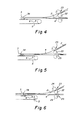
- FIGS. 2-6 The inverter 68 and its operation is shown in FIGS. 2-6.
- the orientation in FIGS. 2-6 is somewhat different than that shown in FIG. 1.
- gravity can be used to control the paper and some of its movement, the operation of the inverter is not particularly dependent upon orientation.
- the orientation with respect to gravity shown in FIGS. 2-6 (or in FIG. 1) is illustrative only.
- inverter 68 includes a set of three rollers, a middle or drive roller 22, an entrance roller 24 and an exit roller 26. Entrance roller 24 engages drive roller 22 to form an entrance nip 23 and exit roller 26 also engages drive roller 22 to form an exit nip 25.
- Drive roller 22 is driven by a roller drive motor 28.
- Such three roller arrangements are well known in the art.
- An entering sheet 2 approaches entrance nip 23 in an appropriate guide, for example, an entrance chute 30. Rollers 23 and 24 move entering sheet 2 through entrance nip 23 into a paper chute 36. Paper chute 36 is terminated by a stop, for example, an adjustable, preferably non-resilient stop gate or gates 3 which is coupled to an arrival sensor 34 and is positioned by a traverse mechanism 5.
- Traverse mechanism 5 is an endless belt controlled by a traverse drive motor 8 which is preferably a stepper motor.
- entering sheet 2 enters chute 36 through entrance nip 23 while an exiting sheet 4 is being driven out of chute 36 by rollers 22 and 26 through exit nip 25.
- traverse mechanism 5 is being moved by motor 8 to position stop gates 3 appropriately for the arrival of incoming entering sheet 2.
- stop gate 3 has reached its desired position which is slightly beyond the buckle point of the sheet with respect to entrance nip 23 and drive roller 22.
- the leading edge of sheet 2 has reached stop gate 3 and actuated arrival sensor 34.
- the trailing end of sheet 2 is free of roller 22. In the orientation shown in these FIGS., gravity properly positions the trailing end of sheet 2 so that it may enter exit nip 25.
- Chute 36 also has a bit of a curve to it which, even without the help of gravity, would tend to move the sheet to its appropriate position for entering exit nip 25, utilizing the beam strength of the sheet.
- the sheet has not yet become an exiting sheet and is resting against stop gate 3 with the traverse mechanism stationary. It is held in this position until a signal from logic and control 100 causes motor 8 to actuate traverse mechanism 5 to move stop gate 3 from the left to the right as shown in the FIGS.
- This movement of stop gate 3 pushes on what had been the leading edge of the entering sheet and is now the trailing edge of the exiting sheet to push the sheet into exit nip 25.
- This action is shown in FIG. 6 with the exiting sheet 4 now being fed by the rollers 22 and 26 through exit nip 25 while a new entering sheet 2 is being fed into chute 36 through entrance nip 23.
- a home sensor 6 informs logic and control 100 of the location of stop gate 3 so that logic and control 100 can better control traverse mechanism 5.
- logic and control 100 has the responsibility for actuating stepper motor 8 to both drive the sheet toward the exit nip at the appropriate time and to move the stop gate to the appropriate position with respect to the paper chute 36 for the particular length of paper entering the entrance nip.
- stop gate 3 is driven by stepper motor 8 both to its position for proper receipt of a sheet of a particular length and to move the sheet into the exit nip. It also must return stop gate 3 to its sheet receiving position.
- These three motions of stop gate 3 are all controlled by logic and control 100 using motor 8.
- Logic and control receives an input of the intrack receiver sheet length from an operator control panel or a length sensor, both of which are conventional.
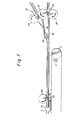
- FIG. 7 shows an embodiment of the inverter essentially the same as that shown in FIGS. 2-6 except that several paper controlling features have been added.
- a first resilient deflector strip 94 engages the leading end of the entering sheet to urge it against the top wall of chute 36 to prevent it from interfering with an exiting sheet. When no sheet is urging the free (left) end of strip 94 downward, it can recess into the top wall to not interfere with an exiting leading edge.
- a second deflector strip 96 is positioned slightly downstream the first strip 94. It pushes the leading portion of the exiting sheet downward to assure entrance of the leading edge into exit nip 25.
- FIG. 7 shows a preferred approach to this problem.
- An urging roller 90 is constantly driven to lightly urge the sheet toward gate 3. It is backed by a lightly biased plate 92, forming an urging roller nip, known per se, in sheet handling. It moves the paper strongly enough to push it into gate 3.
- a spring on plate 92 is soft enough to allow skew correction against gate 3 and the feeding of the sheet into the exit nip by movement of gate 3. It could be movable with gate 3, but for reliability and cost reasons, is preferably fixed close to the upstream most position of gate 3.
- FIGS. 2-7 are believed to be unique, per se, and have application to paper handling even without a variable delay, they have particular use in the apparatus shown in FIG. 1.
- the image member speed is 20.944 inches (524 mm) per second, that is also the speed that the receiving sheet is moved from the first position 82 entering the transfer station to the second position 84 exiting the fusing station.
- both the entrance and exit nip of the inverter will also be driven to move a sheet at that speed. (A four roller inverter could be used to provide a faster exit speed than entrance speed.)
- the receiving sheet once the receiving sheet has left the exit nip of the inverter, it can, at any point in the recirculation path, be sped up.
- it is assumed that it is sped up to a speed of 30 inches (750 mm) per second until it approaches the transfer station again, at which point it would be reduced in speed to the 20.944 inches (524 mm) per second of the image member.
- duplex paths and sheet speeds are infinite.
- a duplex path of about 80 inches (2000 mm) was chosen. Because the stop gate 3 is moved for varying length sheets, the physical intrack length of the total duplex path varies.
- a similar result can be accomplished by varying the speed of movement of the receiving sheet in the unconstrained portion of the recirculating path and using a constant delay in the inverter.
- This approach is inferior to that just described with the variable delay in the inverter because the recirculating path transport becomes much more complicated and more difficult to control.
- the same result could also be obtained by varying the actual physical length of the path. Again, this would require movement of guides or rollers and, again, would increase the expense of the recirculating path while reducing its reliability. Note, again, that, in the example, the positioning of stop gate 3 does vary the physical length of the duplex path. This is accounted for in the inverter delay times.
- the inverter as shown in FIGS. 2-7 is particularly adapted for providing a variable delay useful in the image forming apparatus of FIG. 1.
- other inverters could be used.
- a known inverter in which the sheet is held by a pair of rollers that drive the sheet into an inverting region and then reverse and drive it out of the inverting position could also be used. In this instance, the rollers would be stopped for the appropriate delay time before the sheet is driven out of the inverting position. (In a more expensive alternative, the reversing rollers could be driven at a variable speed.)
- Speeding up the recirculation portion of the duplex path provides a shorter access time for the first sheet.
- the invention can be used without this feature with the entire duplex path run at a constant speed.
- This particular inverter shown in FIGS. 2-7 has other more specific advantages. For example, it is relatively insensitive to sheet thickness or stiffness. Each sheet is corrected as to skew before leaving the inverter because it is preferably totally free of the input nip and the drive roller 22.
- the inverter is relatively gentle with edges compared' to inverters that rely on a buckling of the sheet to move the trailing edge to the exit nip. It is able to accommodate two sheets in the chute simultaneously for at least some portion of the cycle time. No acceleration through the mechanism is required.
Landscapes
- Physics & Mathematics (AREA)
- General Physics & Mathematics (AREA)
- Counters In Electrophotography And Two-Sided Copying (AREA)
- Separation, Sorting, Adjustment, Or Bending Of Sheets To Be Conveyed (AREA)
- Handling Of Cut Paper (AREA)
- Cameras Adapted For Combination With Other Photographic Or Optical Apparatuses (AREA)
- Conveyance By Endless Belt Conveyors (AREA)
- Paper Feeding For Electrophotography (AREA)
Applications Claiming Priority (2)
| Application Number | Priority Date | Filing Date | Title |
|---|---|---|---|
| US148477 | 1993-11-08 | ||
| US08/148,477 US5473419A (en) | 1993-11-08 | 1993-11-08 | Image forming apparatus having a duplex path with an inverter |
Publications (2)
| Publication Number | Publication Date |
|---|---|
| EP0659668A2 true EP0659668A2 (fr) | 1995-06-28 |
| EP0659668A3 EP0659668A3 (fr) | 1998-09-23 |
Family
ID=22525958
Family Applications (1)
| Application Number | Title | Priority Date | Filing Date |
|---|---|---|---|
| EP94116359A Withdrawn EP0659668A3 (fr) | 1993-11-08 | 1994-10-17 | Appareil pour former des images ayant une deuxième voie avec un dispositif pour retourner |
Country Status (3)
| Country | Link |
|---|---|
| US (1) | US5473419A (fr) |
| EP (1) | EP0659668A3 (fr) |
| JP (1) | JP3447123B2 (fr) |
Cited By (4)
| Publication number | Priority date | Publication date | Assignee | Title |
|---|---|---|---|---|
| EP0851310A3 (fr) * | 1996-12-24 | 1998-08-05 | Canon Kabushiki Kaisha | Dispositif pour le transport de feuilles |
| EP1136405A3 (fr) * | 2000-03-17 | 2002-07-17 | Seiko Instruments Inc. | Dispositif de déliverance de papier |
| EP1084974A3 (fr) * | 1999-09-17 | 2003-01-08 | Omron Corporation | Dispositif de retournement de feuilles |
| US12343970B2 (en) * | 2022-02-18 | 2025-07-01 | Ricoh Company, Ltd. | Sheet processing device, sheet output device, laminator, image forming apparatus, and image forming system |
Families Citing this family (133)
| Publication number | Priority date | Publication date | Assignee | Title |
|---|---|---|---|---|
| US5703693A (en) * | 1994-05-02 | 1997-12-30 | Minolta Co., Ltd. | Digital copy machine allowing duplex copying in short time through novel recirculation timing |
| US5629762A (en) * | 1995-06-07 | 1997-05-13 | Eastman Kodak Company | Image forming apparatus having a duplex path and/or an inverter |
| US6446958B1 (en) * | 1999-11-18 | 2002-09-10 | Pitney Bowes Inc. | Method and system for directing an item through the feed path of a folding apparatus |
| CN1307493C (zh) * | 2002-10-10 | 2007-03-28 | 夏普株式会社 | 双面图像形成装置 |
| JP4363887B2 (ja) * | 2003-04-24 | 2009-11-11 | 株式会社沖データ | 画像形成装置 |
| US7226049B2 (en) | 2003-06-06 | 2007-06-05 | Xerox Corporation | Universal flexible plural printer to plural finisher sheet integration system |
| JP4336322B2 (ja) * | 2004-05-17 | 2009-09-30 | 株式会社リコー | 用紙折り装置、用紙処理装置及び画像形成装置 |
| US7396012B2 (en) * | 2004-06-30 | 2008-07-08 | Xerox Corporation | Flexible paper path using multidirectional path modules |
| US7206532B2 (en) * | 2004-08-13 | 2007-04-17 | Xerox Corporation | Multiple object sources controlled and/or selected based on a common sensor |
| US7188929B2 (en) * | 2004-08-13 | 2007-03-13 | Xerox Corporation | Parallel printing architecture with containerized image marking engines |
| US7308218B2 (en) * | 2005-06-14 | 2007-12-11 | Xerox Corporation | Warm-up of multiple integrated marking engines |
| US9250967B2 (en) | 2004-08-23 | 2016-02-02 | Palo Alto Research Center Incorporated | Model-based planning with multi-capacity resources |
| US20070002085A1 (en) * | 2005-06-30 | 2007-01-04 | Xerox Corporation | High availability printing systems |
| US7136616B2 (en) * | 2004-08-23 | 2006-11-14 | Xerox Corporation | Parallel printing architecture using image marking engine modules |
| US7024152B2 (en) * | 2004-08-23 | 2006-04-04 | Xerox Corporation | Printing system with horizontal highway and single pass duplex |
| US7742185B2 (en) * | 2004-08-23 | 2010-06-22 | Xerox Corporation | Print sequence scheduling for reliability |
| US7224913B2 (en) * | 2005-05-05 | 2007-05-29 | Xerox Corporation | Printing system and scheduling method |
| US7245838B2 (en) * | 2005-06-20 | 2007-07-17 | Xerox Corporation | Printing platform |
| US7649645B2 (en) | 2005-06-21 | 2010-01-19 | Xerox Corporation | Method of ordering job queue of marking systems |
| US7302199B2 (en) * | 2005-05-25 | 2007-11-27 | Xerox Corporation | Document processing system and methods for reducing stress therein |
| US7787138B2 (en) * | 2005-05-25 | 2010-08-31 | Xerox Corporation | Scheduling system |
| US7123873B2 (en) * | 2004-08-23 | 2006-10-17 | Xerox Corporation | Printing system with inverter disposed for media velocity buffering and registration |
| US7619769B2 (en) * | 2005-05-25 | 2009-11-17 | Xerox Corporation | Printing system |
| US7493055B2 (en) * | 2006-03-17 | 2009-02-17 | Xerox Corporation | Fault isolation of visible defects with manual module shutdown options |
| US7542059B2 (en) * | 2006-03-17 | 2009-06-02 | Xerox Corporation | Page scheduling for printing architectures |
| US8407077B2 (en) * | 2006-02-28 | 2013-03-26 | Palo Alto Research Center Incorporated | System and method for manufacturing system design and shop scheduling using network flow modeling |
| US7566055B2 (en) * | 2004-09-03 | 2009-07-28 | Xerox Corporation | Substrate inverter systems and methods |
| US7336920B2 (en) | 2004-09-28 | 2008-02-26 | Xerox Corporation | Printing system |
| US7324779B2 (en) | 2004-09-28 | 2008-01-29 | Xerox Corporation | Printing system with primary and secondary fusing devices |
| US7751072B2 (en) * | 2004-09-29 | 2010-07-06 | Xerox Corporation | Automated modification of a marking engine in a printing system |
| US7227394B2 (en) | 2004-10-27 | 2007-06-05 | Xerox Corporation | Signal synchronizer system and method |
| US7310108B2 (en) | 2004-11-30 | 2007-12-18 | Xerox Corporation | Printing system |
| US7791751B2 (en) * | 2004-11-30 | 2010-09-07 | Palo Alto Research Corporation | Printing systems |
| US7412180B2 (en) * | 2004-11-30 | 2008-08-12 | Xerox Corporation | Glossing system for use in a printing system |
| US7245856B2 (en) * | 2004-11-30 | 2007-07-17 | Xerox Corporation | Systems and methods for reducing image registration errors |
| US7283762B2 (en) * | 2004-11-30 | 2007-10-16 | Xerox Corporation | Glossing system for use in a printing architecture |
| US20060114497A1 (en) * | 2004-11-30 | 2006-06-01 | Xerox Corporation | Printing system |
| US7305194B2 (en) * | 2004-11-30 | 2007-12-04 | Xerox Corporation | Xerographic device streak failure recovery |
| US7162172B2 (en) * | 2004-11-30 | 2007-01-09 | Xerox Corporation | Semi-automatic image quality adjustment for multiple marking engine systems |
| JP4450205B2 (ja) * | 2004-12-24 | 2010-04-14 | ブラザー工業株式会社 | インクジェット記録装置 |
| US7226158B2 (en) * | 2005-02-04 | 2007-06-05 | Xerox Corporation | Printing systems |
| US8081329B2 (en) | 2005-06-24 | 2011-12-20 | Xerox Corporation | Mixed output print control method and system |
| US8819103B2 (en) | 2005-04-08 | 2014-08-26 | Palo Alto Research Center, Incorporated | Communication in a distributed system |
| US7873962B2 (en) * | 2005-04-08 | 2011-01-18 | Xerox Corporation | Distributed control systems and methods that selectively activate respective coordinators for respective tasks |
| US7791741B2 (en) * | 2005-04-08 | 2010-09-07 | Palo Alto Research Center Incorporated | On-the-fly state synchronization in a distributed system |
| US8014024B2 (en) | 2005-03-02 | 2011-09-06 | Xerox Corporation | Gray balance for a printing system of multiple marking engines |
| US7697151B2 (en) * | 2005-03-25 | 2010-04-13 | Xerox Corporation | Image quality control method and apparatus for multiple marking engine systems |
| US7258340B2 (en) * | 2005-03-25 | 2007-08-21 | Xerox Corporation | Sheet registration within a media inverter |
| US7416185B2 (en) * | 2005-03-25 | 2008-08-26 | Xerox Corporation | Inverter with return/bypass paper path |
| US7206536B2 (en) * | 2005-03-29 | 2007-04-17 | Xerox Corporation | Printing system with custom marking module and method of printing |
| US7444108B2 (en) * | 2005-03-31 | 2008-10-28 | Xerox Corporation | Parallel printing architecture with parallel horizontal printing modules |
| US7272334B2 (en) * | 2005-03-31 | 2007-09-18 | Xerox Corporation | Image on paper registration alignment |
| US7305198B2 (en) | 2005-03-31 | 2007-12-04 | Xerox Corporation | Printing system |
| US7245844B2 (en) * | 2005-03-31 | 2007-07-17 | Xerox Corporation | Printing system |
| US7706007B2 (en) * | 2005-04-08 | 2010-04-27 | Palo Alto Research Center Incorporated | Synchronization in a distributed system |
| US7566053B2 (en) * | 2005-04-19 | 2009-07-28 | Xerox Corporation | Media transport system |
| US7593130B2 (en) * | 2005-04-20 | 2009-09-22 | Xerox Corporation | Printing systems |
| US20060244980A1 (en) * | 2005-04-27 | 2006-11-02 | Xerox Corporation | Image quality adjustment method and system |
| US20060268287A1 (en) * | 2005-05-25 | 2006-11-30 | Xerox Corporation | Automated promotion of monochrome jobs for HLC production printers |
| JP2006337549A (ja) * | 2005-05-31 | 2006-12-14 | Canon Inc | 画像形成装置及びその制御方法、並びにプログラム |
| US7486416B2 (en) * | 2005-06-02 | 2009-02-03 | Xerox Corporation | Inter-separation decorrelator |
| US8004729B2 (en) * | 2005-06-07 | 2011-08-23 | Xerox Corporation | Low cost adjustment method for printing systems |
| US7451697B2 (en) * | 2005-06-24 | 2008-11-18 | Xerox Corporation | Printing system |
| US7310493B2 (en) * | 2005-06-24 | 2007-12-18 | Xerox Corporation | Multi-unit glossing subsystem for a printing device |
| US7387297B2 (en) * | 2005-06-24 | 2008-06-17 | Xerox Corporation | Printing system sheet feeder using rear and front nudger rolls |
| US7433627B2 (en) * | 2005-06-28 | 2008-10-07 | Xerox Corporation | Addressable irradiation of images |
| US8203768B2 (en) * | 2005-06-30 | 2012-06-19 | Xerox Corporaiton | Method and system for processing scanned patches for use in imaging device calibration |
| US8259369B2 (en) | 2005-06-30 | 2012-09-04 | Xerox Corporation | Color characterization or calibration targets with noise-dependent patch size or number |
| US7647018B2 (en) * | 2005-07-26 | 2010-01-12 | Xerox Corporation | Printing system |
| US7496412B2 (en) | 2005-07-29 | 2009-02-24 | Xerox Corporation | Control method using dynamic latitude allocation and setpoint modification, system using the control method, and computer readable recording media containing the control method |
| US7466940B2 (en) * | 2005-08-22 | 2008-12-16 | Xerox Corporation | Modular marking architecture for wide media printing platform |
| US7474861B2 (en) * | 2005-08-30 | 2009-01-06 | Xerox Corporation | Consumable selection in a printing system |
| US7911652B2 (en) * | 2005-09-08 | 2011-03-22 | Xerox Corporation | Methods and systems for determining banding compensation parameters in printing systems |
| US7495799B2 (en) * | 2005-09-23 | 2009-02-24 | Xerox Corporation | Maximum gamut strategy for the printing systems |
| US7430380B2 (en) * | 2005-09-23 | 2008-09-30 | Xerox Corporation | Printing system |
| US7444088B2 (en) * | 2005-10-11 | 2008-10-28 | Xerox Corporation | Printing system with balanced consumable usage |
| US7811017B2 (en) * | 2005-10-12 | 2010-10-12 | Xerox Corporation | Media path crossover for printing system |
| US8711435B2 (en) * | 2005-11-04 | 2014-04-29 | Xerox Corporation | Method for correcting integrating cavity effect for calibration and/or characterization targets |
| US7719716B2 (en) * | 2005-11-04 | 2010-05-18 | Xerox Corporation | Scanner characterization for printer calibration |
| US7660460B2 (en) * | 2005-11-15 | 2010-02-09 | Xerox Corporation | Gamut selection in multi-engine systems |
| US7280771B2 (en) * | 2005-11-23 | 2007-10-09 | Xerox Corporation | Media pass through mode for multi-engine system |
| US7519314B2 (en) * | 2005-11-28 | 2009-04-14 | Xerox Corporation | Multiple IOT photoreceptor belt seam synchronization |
| US7922288B2 (en) * | 2005-11-30 | 2011-04-12 | Xerox Corporation | Printing system |
| US7636543B2 (en) * | 2005-11-30 | 2009-12-22 | Xerox Corporation | Radial merge module for printing system |
| US7575232B2 (en) * | 2005-11-30 | 2009-08-18 | Xerox Corporation | Media path crossover clearance for printing system |
| US7706737B2 (en) | 2005-11-30 | 2010-04-27 | Xerox Corporation | Mixed output printing system |
| US7912416B2 (en) * | 2005-12-20 | 2011-03-22 | Xerox Corporation | Printing system architecture with center cross-over and interposer by-pass path |
| US7756428B2 (en) * | 2005-12-21 | 2010-07-13 | Xerox Corp. | Media path diagnostics with hyper module elements |
| US7826090B2 (en) * | 2005-12-21 | 2010-11-02 | Xerox Corporation | Method and apparatus for multiple printer calibration using compromise aim |
| US8102564B2 (en) | 2005-12-22 | 2012-01-24 | Xerox Corporation | Method and system for color correction using both spatial correction and printer calibration techniques |
| US7746524B2 (en) * | 2005-12-23 | 2010-06-29 | Xerox Corporation | Bi-directional inverter printing apparatus and method |
| US7624981B2 (en) * | 2005-12-23 | 2009-12-01 | Palo Alto Research Center Incorporated | Universal variable pitch interface interconnecting fixed pitch sheet processing machines |
| US7963518B2 (en) * | 2006-01-13 | 2011-06-21 | Xerox Corporation | Printing system inverter apparatus and method |
| US8477333B2 (en) * | 2006-01-27 | 2013-07-02 | Xerox Corporation | Printing system and bottleneck obviation through print job sequencing |
| US7630669B2 (en) * | 2006-02-08 | 2009-12-08 | Xerox Corporation | Multi-development system print engine |
| US7672006B2 (en) * | 2006-02-22 | 2010-03-02 | Xerox Corporation | Multi-marking engine printing platform |
| US8194262B2 (en) * | 2006-02-27 | 2012-06-05 | Xerox Corporation | System for masking print defects |
| US7965397B2 (en) * | 2006-04-06 | 2011-06-21 | Xerox Corporation | Systems and methods to measure banding print defects |
| US8330965B2 (en) | 2006-04-13 | 2012-12-11 | Xerox Corporation | Marking engine selection |
| US7681883B2 (en) * | 2006-05-04 | 2010-03-23 | Xerox Corporation | Diverter assembly, printing system and method |
| US7800777B2 (en) * | 2006-05-12 | 2010-09-21 | Xerox Corporation | Automatic image quality control of marking processes |
| US7679631B2 (en) | 2006-05-12 | 2010-03-16 | Xerox Corporation | Toner supply arrangement |
| US7382993B2 (en) * | 2006-05-12 | 2008-06-03 | Xerox Corporation | Process controls methods and apparatuses for improved image consistency |
| US7865125B2 (en) * | 2006-06-23 | 2011-01-04 | Xerox Corporation | Continuous feed printing system |
| US7856191B2 (en) * | 2006-07-06 | 2010-12-21 | Xerox Corporation | Power regulator of multiple integrated marking engines |
| US7924443B2 (en) * | 2006-07-13 | 2011-04-12 | Xerox Corporation | Parallel printing system |
| US8607102B2 (en) * | 2006-09-15 | 2013-12-10 | Palo Alto Research Center Incorporated | Fault management for a printing system |
| US7766327B2 (en) * | 2006-09-27 | 2010-08-03 | Xerox Corporation | Sheet buffering system |
| US7857309B2 (en) * | 2006-10-31 | 2010-12-28 | Xerox Corporation | Shaft driving apparatus |
| US7819401B2 (en) * | 2006-11-09 | 2010-10-26 | Xerox Corporation | Print media rotary transport apparatus and method |
| US8159713B2 (en) * | 2006-12-11 | 2012-04-17 | Xerox Corporation | Data binding in multiple marking engine printing systems |
| US7969624B2 (en) | 2006-12-11 | 2011-06-28 | Xerox Corporation | Method and system for identifying optimal media for calibration and control |
| US7945346B2 (en) * | 2006-12-14 | 2011-05-17 | Palo Alto Research Center Incorporated | Module identification method and system for path connectivity in modular systems |
| US8145335B2 (en) | 2006-12-19 | 2012-03-27 | Palo Alto Research Center Incorporated | Exception handling |
| US8100523B2 (en) | 2006-12-19 | 2012-01-24 | Xerox Corporation | Bidirectional media sheet transport apparatus |
| US7559549B2 (en) | 2006-12-21 | 2009-07-14 | Xerox Corporation | Media feeder feed rate |
| US8693021B2 (en) | 2007-01-23 | 2014-04-08 | Xerox Corporation | Preemptive redirection in printing systems |
| US7934825B2 (en) * | 2007-02-20 | 2011-05-03 | Xerox Corporation | Efficient cross-stream printing system |
| US7676191B2 (en) | 2007-03-05 | 2010-03-09 | Xerox Corporation | Method of duplex printing on sheet media |
| US20080260445A1 (en) * | 2007-04-18 | 2008-10-23 | Xerox Corporation | Method of controlling automatic electrostatic media sheet printing |
| US7894107B2 (en) | 2007-04-27 | 2011-02-22 | Xerox Corporation | Optical scanner with non-redundant overwriting |
| US8253958B2 (en) | 2007-04-30 | 2012-08-28 | Xerox Corporation | Scheduling system |
| US8169657B2 (en) | 2007-05-09 | 2012-05-01 | Xerox Corporation | Registration method using sensed image marks and digital realignment |
| US7925366B2 (en) | 2007-05-29 | 2011-04-12 | Xerox Corporation | System and method for real-time system control using precomputed plans |
| US7590464B2 (en) | 2007-05-29 | 2009-09-15 | Palo Alto Research Center Incorporated | System and method for on-line planning utilizing multiple planning queues |
| US7689311B2 (en) | 2007-05-29 | 2010-03-30 | Palo Alto Research Center Incorporated | Model-based planning using query-based component executable instructions |
| US8203750B2 (en) | 2007-08-01 | 2012-06-19 | Xerox Corporation | Color job reprint set-up for a printing system |
| US7697166B2 (en) | 2007-08-03 | 2010-04-13 | Xerox Corporation | Color job output matching for a printing system |
| US7590501B2 (en) | 2007-08-28 | 2009-09-15 | Xerox Corporation | Scanner calibration robust to lamp warm-up |
| US20090080955A1 (en) * | 2007-09-26 | 2009-03-26 | Xerox Corporation | Content-changing document and method of producing same |
| JP5081752B2 (ja) * | 2008-07-15 | 2012-11-28 | 理想科学工業株式会社 | 印刷装置 |
| US7976012B2 (en) | 2009-04-28 | 2011-07-12 | Xerox Corporation | Paper feeder for modular printers |
| US8695972B2 (en) * | 2012-02-03 | 2014-04-15 | Xerox Corporation | Inverter with adjustable reversing roll position |
Family Cites Families (11)
| Publication number | Priority date | Publication date | Assignee | Title |
|---|---|---|---|---|
| US4078789A (en) * | 1977-01-21 | 1978-03-14 | Kittredge Lloyd G | Document inverter |
| US4272181A (en) * | 1978-12-29 | 1981-06-09 | International Business Machines Corporation | Electrophotographic printer with duplex printed sheet output |
| US4512255A (en) * | 1983-03-04 | 1985-04-23 | Am International | Sheet handling mechanism for duplicating machine with duplexing capability |
| JPH0736086B2 (ja) * | 1985-07-09 | 1995-04-19 | ミノルタ株式会社 | 複写機 |
| JP2588894B2 (ja) * | 1987-05-30 | 1997-03-12 | キヤノン株式会社 | 画像形成装置 |
| US4986529A (en) * | 1988-10-17 | 1991-01-22 | Xerox Corporation | Four roll inverter |
| US5006900A (en) * | 1989-07-03 | 1991-04-09 | Eastman Kodak Company | Transfer apparatus having vacuum holes and method of making such apparatus |
| JP2823253B2 (ja) * | 1989-07-24 | 1998-11-11 | 株式会社リコー | 複写機の両面給紙制御装置 |
| JP2584329B2 (ja) * | 1990-03-02 | 1997-02-26 | シャープ株式会社 | 用紙反転装置 |
| US5166738A (en) * | 1990-08-11 | 1992-11-24 | Ricoh Company, Ltd. | Copier operable in two-sided and combination copy modes |
| US5082272A (en) * | 1990-11-30 | 1992-01-21 | Eastman Kodak Company | High-speed sheet inverter and method for inverting sheets |
-
1993
- 1993-11-08 US US08/148,477 patent/US5473419A/en not_active Expired - Lifetime
-
1994
- 1994-10-17 EP EP94116359A patent/EP0659668A3/fr not_active Withdrawn
- 1994-11-07 JP JP27241894A patent/JP3447123B2/ja not_active Expired - Fee Related
Cited By (6)
| Publication number | Priority date | Publication date | Assignee | Title |
|---|---|---|---|---|
| EP0851310A3 (fr) * | 1996-12-24 | 1998-08-05 | Canon Kabushiki Kaisha | Dispositif pour le transport de feuilles |
| US6032941A (en) * | 1996-12-24 | 2000-03-07 | Canon Kabushiki Kaisha | Sheet conveying apparatus with internal control |
| EP1084974A3 (fr) * | 1999-09-17 | 2003-01-08 | Omron Corporation | Dispositif de retournement de feuilles |
| EP1136405A3 (fr) * | 2000-03-17 | 2002-07-17 | Seiko Instruments Inc. | Dispositif de déliverance de papier |
| US6674035B2 (en) | 2000-03-17 | 2004-01-06 | Seiko Instruments Inc. | Paper discharge device |
| US12343970B2 (en) * | 2022-02-18 | 2025-07-01 | Ricoh Company, Ltd. | Sheet processing device, sheet output device, laminator, image forming apparatus, and image forming system |
Also Published As
| Publication number | Publication date |
|---|---|
| JP3447123B2 (ja) | 2003-09-16 |
| US5473419A (en) | 1995-12-05 |
| JPH07187522A (ja) | 1995-07-25 |
| EP0659668A3 (fr) | 1998-09-23 |
Similar Documents
| Publication | Publication Date | Title |
|---|---|---|
| US5473419A (en) | Image forming apparatus having a duplex path with an inverter | |
| US4979727A (en) | Automatic document feeder provided with three movable claws for directing the paper through different paths | |
| US6619657B2 (en) | Curl correction device, and image forming apparatus having the curl correction device | |
| US5707056A (en) | Variable ratio feedhead plenum | |
| US4166614A (en) | Jogging and normal force for sheet feeding | |
| JPH07152209A (ja) | 両面原稿取扱い装置および画像形成装置 | |
| JPH0563790B2 (fr) | ||
| US11815841B2 (en) | Image forming apparatus | |
| JPH0421866B2 (fr) | ||
| US8950747B2 (en) | Recording paper conveying device, document feeding device and image forming apparatus including these devices | |
| JPH0419549B2 (fr) | ||
| JP3658057B2 (ja) | 給紙装置、電子写真印刷機、及び両面印刷方法 | |
| US5086320A (en) | Paper conveying mechanism in image forming apparatus | |
| US5201425A (en) | Sheet tray with an energy absorbing backstop and scuffer mechanism | |
| US8695972B2 (en) | Inverter with adjustable reversing roll position | |
| US5436715A (en) | Automatic document feeder | |
| US5386980A (en) | Image forming apparatus and sheet inverter providing increased sheet beam strength | |
| CA1214820A (fr) | Inverseur de feuilles a mecanisme d'arret reglable | |
| JPH0680318A (ja) | 両面画像形成装置 | |
| JP2004317865A (ja) | 画像形成装置 | |
| GB1565331A (en) | Copying apparatus | |
| JP2672654B2 (ja) | 画像形成装置 | |
| JPH03184069A (ja) | 複写機の光学走査装置 | |
| US6032952A (en) | Document handling system having a self-levitating pressure loading device | |
| JP3262477B2 (ja) | 画像形成装置 |
Legal Events
| Date | Code | Title | Description |
|---|---|---|---|
| PUAI | Public reference made under article 153(3) epc to a published international application that has entered the european phase |
Free format text: ORIGINAL CODE: 0009012 |
|
| AK | Designated contracting states |
Kind code of ref document: A2 Designated state(s): DE FR GB NL |
|
| PUAL | Search report despatched |
Free format text: ORIGINAL CODE: 0009013 |
|
| RHK1 | Main classification (correction) |
Ipc: B65H 15/00 |
|
| AK | Designated contracting states |
Kind code of ref document: A3 Designated state(s): DE FR GB NL |
|
| 17P | Request for examination filed |
Effective date: 19990301 |
|
| 17Q | First examination report despatched |
Effective date: 19990922 |
|
| GRAG | Despatch of communication of intention to grant |
Free format text: ORIGINAL CODE: EPIDOS AGRA |
|
| GRAG | Despatch of communication of intention to grant |
Free format text: ORIGINAL CODE: EPIDOS AGRA |
|
| GRAH | Despatch of communication of intention to grant a patent |
Free format text: ORIGINAL CODE: EPIDOS IGRA |
|
| RAP1 | Party data changed (applicant data changed or rights of an application transferred) |
Owner name: NEXPRESS SOLUTIONS LLC |
|
| STAA | Information on the status of an ep patent application or granted ep patent |
Free format text: STATUS: THE APPLICATION IS DEEMED TO BE WITHDRAWN |
|
| 18D | Application deemed to be withdrawn |
Effective date: 20010302 |