EP0662482B1 - Procédé de préparation de la glicentine humaine - Google Patents
Procédé de préparation de la glicentine humaine Download PDFInfo
- Publication number
- EP0662482B1 EP0662482B1 EP94309675A EP94309675A EP0662482B1 EP 0662482 B1 EP0662482 B1 EP 0662482B1 EP 94309675 A EP94309675 A EP 94309675A EP 94309675 A EP94309675 A EP 94309675A EP 0662482 B1 EP0662482 B1 EP 0662482B1
- Authority
- EP
- European Patent Office
- Prior art keywords
- human glicentin
- glicentin
- fused protein
- human
- protein
- Prior art date
- Legal status (The legal status is an assumption and is not a legal conclusion. Google has not performed a legal analysis and makes no representation as to the accuracy of the status listed.)
- Expired - Lifetime
Links
- 101500028778 Homo sapiens Glicentin Proteins 0.000 title claims description 75
- 238000000034 method Methods 0.000 title claims description 49
- 230000008569 process Effects 0.000 title claims description 24
- 238000002360 preparation method Methods 0.000 title claims description 16
- 108090000623 proteins and genes Proteins 0.000 claims description 106
- 108090000765 processed proteins & peptides Proteins 0.000 claims description 31
- 239000004475 Arginine Substances 0.000 claims description 20
- ODKSFYDXXFIFQN-UHFFFAOYSA-N arginine Natural products OC(=O)C(N)CCCNC(N)=N ODKSFYDXXFIFQN-UHFFFAOYSA-N 0.000 claims description 20
- 125000000151 cysteine group Chemical group N[C@@H](CS)C(=O)* 0.000 claims description 18
- KDXKERNSBIXSRK-UHFFFAOYSA-N Lysine Natural products NCCCCC(N)C(O)=O KDXKERNSBIXSRK-UHFFFAOYSA-N 0.000 claims description 14
- 239000004472 Lysine Substances 0.000 claims description 14
- 108090000267 Cathepsin C Proteins 0.000 claims description 13
- 102000003902 Cathepsin C Human genes 0.000 claims description 13
- 108020001507 fusion proteins Proteins 0.000 claims description 12
- 102000037865 fusion proteins Human genes 0.000 claims description 12
- 238000005516 engineering process Methods 0.000 claims description 9
- 230000005526 G1 to G0 transition Effects 0.000 claims description 7
- 230000027455 binding Effects 0.000 claims description 4
- TURGQPDWYFJEDY-UHFFFAOYSA-N 1-hydroperoxypropane Chemical compound CCCOO TURGQPDWYFJEDY-UHFFFAOYSA-N 0.000 claims description 2
- 229920002684 Sepharose Polymers 0.000 claims description 2
- HAXFWIACAGNFHA-UHFFFAOYSA-N aldrithiol Chemical group C=1C=CC=NC=1SSC1=CC=CC=N1 HAXFWIACAGNFHA-UHFFFAOYSA-N 0.000 claims description 2
- 125000000539 amino acid group Chemical group 0.000 claims description 2
- 125000003588 lysine group Chemical group [H]N([H])C([H])([H])C([H])([H])C([H])([H])C([H])([H])C([H])(N([H])[H])C(*)=O 0.000 claims 1
- 235000018102 proteins Nutrition 0.000 description 94
- 102000004169 proteins and genes Human genes 0.000 description 94
- 239000013612 plasmid Substances 0.000 description 32
- 238000000746 purification Methods 0.000 description 22
- 108020004414 DNA Proteins 0.000 description 17
- 239000000872 buffer Substances 0.000 description 17
- 239000000356 contaminant Substances 0.000 description 17
- XUJNEKJLAYXESH-UHFFFAOYSA-N cysteine Natural products SCC(N)C(O)=O XUJNEKJLAYXESH-UHFFFAOYSA-N 0.000 description 15
- 235000018417 cysteine Nutrition 0.000 description 14
- 241000588724 Escherichia coli Species 0.000 description 13
- 238000010276 construction Methods 0.000 description 13
- 101800002945 Glicentin Proteins 0.000 description 12
- 108091034117 Oligonucleotide Proteins 0.000 description 12
- FAPWRFPIFSIZLT-UHFFFAOYSA-M Sodium chloride Chemical compound [Na+].[Cl-] FAPWRFPIFSIZLT-UHFFFAOYSA-M 0.000 description 12
- 238000004519 manufacturing process Methods 0.000 description 12
- 125000002924 primary amino group Chemical group [H]N([H])* 0.000 description 12
- 235000001014 amino acid Nutrition 0.000 description 11
- 150000001413 amino acids Chemical class 0.000 description 11
- 238000003776 cleavage reaction Methods 0.000 description 11
- 238000004128 high performance liquid chromatography Methods 0.000 description 11
- JLCPHMBAVCMARE-UHFFFAOYSA-N [3-[[3-[[3-[[3-[[3-[[3-[[3-[[3-[[3-[[3-[[3-[[5-(2-amino-6-oxo-1H-purin-9-yl)-3-[[3-[[3-[[3-[[3-[[3-[[5-(2-amino-6-oxo-1H-purin-9-yl)-3-[[5-(2-amino-6-oxo-1H-purin-9-yl)-3-hydroxyoxolan-2-yl]methoxy-hydroxyphosphoryl]oxyoxolan-2-yl]methoxy-hydroxyphosphoryl]oxy-5-(5-methyl-2,4-dioxopyrimidin-1-yl)oxolan-2-yl]methoxy-hydroxyphosphoryl]oxy-5-(6-aminopurin-9-yl)oxolan-2-yl]methoxy-hydroxyphosphoryl]oxy-5-(6-aminopurin-9-yl)oxolan-2-yl]methoxy-hydroxyphosphoryl]oxy-5-(6-aminopurin-9-yl)oxolan-2-yl]methoxy-hydroxyphosphoryl]oxy-5-(6-aminopurin-9-yl)oxolan-2-yl]methoxy-hydroxyphosphoryl]oxyoxolan-2-yl]methoxy-hydroxyphosphoryl]oxy-5-(5-methyl-2,4-dioxopyrimidin-1-yl)oxolan-2-yl]methoxy-hydroxyphosphoryl]oxy-5-(4-amino-2-oxopyrimidin-1-yl)oxolan-2-yl]methoxy-hydroxyphosphoryl]oxy-5-(5-methyl-2,4-dioxopyrimidin-1-yl)oxolan-2-yl]methoxy-hydroxyphosphoryl]oxy-5-(5-methyl-2,4-dioxopyrimidin-1-yl)oxolan-2-yl]methoxy-hydroxyphosphoryl]oxy-5-(6-aminopurin-9-yl)oxolan-2-yl]methoxy-hydroxyphosphoryl]oxy-5-(6-aminopurin-9-yl)oxolan-2-yl]methoxy-hydroxyphosphoryl]oxy-5-(4-amino-2-oxopyrimidin-1-yl)oxolan-2-yl]methoxy-hydroxyphosphoryl]oxy-5-(4-amino-2-oxopyrimidin-1-yl)oxolan-2-yl]methoxy-hydroxyphosphoryl]oxy-5-(4-amino-2-oxopyrimidin-1-yl)oxolan-2-yl]methoxy-hydroxyphosphoryl]oxy-5-(6-aminopurin-9-yl)oxolan-2-yl]methoxy-hydroxyphosphoryl]oxy-5-(4-amino-2-oxopyrimidin-1-yl)oxolan-2-yl]methyl [5-(6-aminopurin-9-yl)-2-(hydroxymethyl)oxolan-3-yl] hydrogen phosphate Polymers Cc1cn(C2CC(OP(O)(=O)OCC3OC(CC3OP(O)(=O)OCC3OC(CC3O)n3cnc4c3nc(N)[nH]c4=O)n3cnc4c3nc(N)[nH]c4=O)C(COP(O)(=O)OC3CC(OC3COP(O)(=O)OC3CC(OC3COP(O)(=O)OC3CC(OC3COP(O)(=O)OC3CC(OC3COP(O)(=O)OC3CC(OC3COP(O)(=O)OC3CC(OC3COP(O)(=O)OC3CC(OC3COP(O)(=O)OC3CC(OC3COP(O)(=O)OC3CC(OC3COP(O)(=O)OC3CC(OC3COP(O)(=O)OC3CC(OC3COP(O)(=O)OC3CC(OC3COP(O)(=O)OC3CC(OC3COP(O)(=O)OC3CC(OC3COP(O)(=O)OC3CC(OC3COP(O)(=O)OC3CC(OC3COP(O)(=O)OC3CC(OC3CO)n3cnc4c(N)ncnc34)n3ccc(N)nc3=O)n3cnc4c(N)ncnc34)n3ccc(N)nc3=O)n3ccc(N)nc3=O)n3ccc(N)nc3=O)n3cnc4c(N)ncnc34)n3cnc4c(N)ncnc34)n3cc(C)c(=O)[nH]c3=O)n3cc(C)c(=O)[nH]c3=O)n3ccc(N)nc3=O)n3cc(C)c(=O)[nH]c3=O)n3cnc4c3nc(N)[nH]c4=O)n3cnc4c(N)ncnc34)n3cnc4c(N)ncnc34)n3cnc4c(N)ncnc34)n3cnc4c(N)ncnc34)O2)c(=O)[nH]c1=O JLCPHMBAVCMARE-UHFFFAOYSA-N 0.000 description 10
- 230000007017 scission Effects 0.000 description 10
- 229930182817 methionine Natural products 0.000 description 9
- 239000000126 substance Substances 0.000 description 9
- VEXZGXHMUGYJMC-UHFFFAOYSA-N Hydrochloric acid Chemical compound Cl VEXZGXHMUGYJMC-UHFFFAOYSA-N 0.000 description 8
- FFEARJCKVFRZRR-BYPYZUCNSA-N L-methionine Chemical compound CSCC[C@H](N)C(O)=O FFEARJCKVFRZRR-BYPYZUCNSA-N 0.000 description 8
- 239000012634 fragment Substances 0.000 description 8
- 239000002773 nucleotide Substances 0.000 description 8
- 125000003729 nucleotide group Chemical group 0.000 description 8
- 238000006243 chemical reaction Methods 0.000 description 7
- 239000000047 product Substances 0.000 description 7
- 108091008146 restriction endonucleases Proteins 0.000 description 7
- URJOZSLMTIRWFW-QGZVFWFLSA-N (4r)-4-(1,3-benzodioxol-5-yl)-5,6-dimethoxy-4,9-dihydro-1h-benzo[f][2]benzofuran-3-one Chemical compound C1=C2OCOC2=CC([C@H]2C3=C(COC3=O)CC3=CC=C(C(=C32)OC)OC)=C1 URJOZSLMTIRWFW-QGZVFWFLSA-N 0.000 description 6
- 102400000320 Glicentin Human genes 0.000 description 6
- JOCBASBOOFNAJA-UHFFFAOYSA-N N-tris(hydroxymethyl)methyl-2-aminoethanesulfonic acid Chemical compound OCC(CO)(CO)NCCS(O)(=O)=O JOCBASBOOFNAJA-UHFFFAOYSA-N 0.000 description 6
- 239000007994 TES buffer Substances 0.000 description 6
- 238000000246 agarose gel electrophoresis Methods 0.000 description 6
- AVKUERGKIZMTKX-NJBDSQKTSA-N ampicillin Chemical compound C1([C@@H](N)C(=O)N[C@H]2[C@H]3SC([C@@H](N3C2=O)C(O)=O)(C)C)=CC=CC=C1 AVKUERGKIZMTKX-NJBDSQKTSA-N 0.000 description 6
- 229960000723 ampicillin Drugs 0.000 description 6
- 239000012535 impurity Substances 0.000 description 6
- 239000007974 sodium acetate buffer Substances 0.000 description 6
- 239000011780 sodium chloride Substances 0.000 description 6
- 102000004190 Enzymes Human genes 0.000 description 5
- 108090000790 Enzymes Proteins 0.000 description 5
- 238000000137 annealing Methods 0.000 description 5
- 238000003786 synthesis reaction Methods 0.000 description 5
- 241000894006 Bacteria Species 0.000 description 4
- 125000000637 arginyl group Chemical group N[C@@H](CCCNC(N)=N)C(=O)* 0.000 description 4
- 238000004587 chromatography analysis Methods 0.000 description 4
- 238000010586 diagram Methods 0.000 description 4
- 230000029087 digestion Effects 0.000 description 4
- 239000003814 drug Substances 0.000 description 4
- 239000001963 growth medium Substances 0.000 description 4
- 239000002609 medium Substances 0.000 description 4
- 230000009257 reactivity Effects 0.000 description 4
- 238000002415 sodium dodecyl sulfate polyacrylamide gel electrophoresis Methods 0.000 description 4
- 239000000243 solution Substances 0.000 description 4
- 239000006228 supernatant Substances 0.000 description 4
- KCXVZYZYPLLWCC-UHFFFAOYSA-N EDTA Chemical compound OC(=O)CN(CC(O)=O)CCN(CC(O)=O)CC(O)=O KCXVZYZYPLLWCC-UHFFFAOYSA-N 0.000 description 3
- 108010021757 Polynucleotide 5'-Hydroxyl-Kinase Proteins 0.000 description 3
- 102000008422 Polynucleotide 5'-hydroxyl-kinase Human genes 0.000 description 3
- 238000001042 affinity chromatography Methods 0.000 description 3
- 125000003275 alpha amino acid group Chemical group 0.000 description 3
- BFNBIHQBYMNNAN-UHFFFAOYSA-N ammonium sulfate Chemical class N.N.OS(O)(=O)=O BFNBIHQBYMNNAN-UHFFFAOYSA-N 0.000 description 3
- 238000004458 analytical method Methods 0.000 description 3
- 230000015572 biosynthetic process Effects 0.000 description 3
- 239000007795 chemical reaction product Substances 0.000 description 3
- 229940079593 drug Drugs 0.000 description 3
- 239000013604 expression vector Substances 0.000 description 3
- 239000003629 gastrointestinal hormone Substances 0.000 description 3
- 238000002955 isolation Methods 0.000 description 3
- 239000000203 mixture Substances 0.000 description 3
- 239000002244 precipitate Substances 0.000 description 3
- 102000004196 processed proteins & peptides Human genes 0.000 description 3
- JWDFQMWEFLOOED-UHFFFAOYSA-N (2,5-dioxopyrrolidin-1-yl) 3-(pyridin-2-yldisulfanyl)propanoate Chemical compound O=C1CCC(=O)N1OC(=O)CCSSC1=CC=CC=N1 JWDFQMWEFLOOED-UHFFFAOYSA-N 0.000 description 2
- WEVYAHXRMPXWCK-UHFFFAOYSA-N Acetonitrile Chemical compound CC#N WEVYAHXRMPXWCK-UHFFFAOYSA-N 0.000 description 2
- 101000793930 Bos taurus Dipeptidyl peptidase 1 Proteins 0.000 description 2
- 108010075254 C-Peptide Proteins 0.000 description 2
- 102000012410 DNA Ligases Human genes 0.000 description 2
- 108010061982 DNA Ligases Proteins 0.000 description 2
- 108010054576 Deoxyribonuclease EcoRI Proteins 0.000 description 2
- 108060003951 Immunoglobulin Proteins 0.000 description 2
- GDBQQVLCIARPGH-UHFFFAOYSA-N Leupeptin Natural products CC(C)CC(NC(C)=O)C(=O)NC(CC(C)C)C(=O)NC(C=O)CCCN=C(N)N GDBQQVLCIARPGH-UHFFFAOYSA-N 0.000 description 2
- CSNNHWWHGAXBCP-UHFFFAOYSA-L Magnesium sulfate Chemical compound [Mg+2].[O-][S+2]([O-])([O-])[O-] CSNNHWWHGAXBCP-UHFFFAOYSA-L 0.000 description 2
- VMHLLURERBWHNL-UHFFFAOYSA-M Sodium acetate Chemical compound [Na+].CC([O-])=O VMHLLURERBWHNL-UHFFFAOYSA-M 0.000 description 2
- 150000001768 cations Chemical class 0.000 description 2
- 238000005119 centrifugation Methods 0.000 description 2
- 239000003153 chemical reaction reagent Substances 0.000 description 2
- 238000011109 contamination Methods 0.000 description 2
- 238000007796 conventional method Methods 0.000 description 2
- VHJLVAABSRFDPM-QWWZWVQMSA-N dithiothreitol Chemical compound SC[C@@H](O)[C@H](O)CS VHJLVAABSRFDPM-QWWZWVQMSA-N 0.000 description 2
- 238000001962 electrophoresis Methods 0.000 description 2
- 238000010828 elution Methods 0.000 description 2
- 238000002474 experimental method Methods 0.000 description 2
- 239000000284 extract Substances 0.000 description 2
- 238000000605 extraction Methods 0.000 description 2
- 235000013305 food Nutrition 0.000 description 2
- 239000000499 gel Substances 0.000 description 2
- 102000018358 immunoglobulin Human genes 0.000 description 2
- 230000002401 inhibitory effect Effects 0.000 description 2
- BPHPUYQFMNQIOC-NXRLNHOXSA-N isopropyl beta-D-thiogalactopyranoside Chemical compound CC(C)S[C@@H]1O[C@H](CO)[C@H](O)[C@H](O)[C@H]1O BPHPUYQFMNQIOC-NXRLNHOXSA-N 0.000 description 2
- GDBQQVLCIARPGH-ULQDDVLXSA-N leupeptin Chemical compound CC(C)C[C@H](NC(C)=O)C(=O)N[C@@H](CC(C)C)C(=O)N[C@H](C=O)CCCN=C(N)N GDBQQVLCIARPGH-ULQDDVLXSA-N 0.000 description 2
- 108010052968 leupeptin Proteins 0.000 description 2
- 239000012264 purified product Substances 0.000 description 2
- 239000012070 reactive reagent Substances 0.000 description 2
- 230000000717 retained effect Effects 0.000 description 2
- 238000004007 reversed phase HPLC Methods 0.000 description 2
- 239000001632 sodium acetate Substances 0.000 description 2
- 235000017281 sodium acetate Nutrition 0.000 description 2
- 239000000758 substrate Substances 0.000 description 2
- 150000003573 thiols Chemical class 0.000 description 2
- 230000014621 translational initiation Effects 0.000 description 2
- DGVVWUTYPXICAM-UHFFFAOYSA-N β‐Mercaptoethanol Chemical compound OCCS DGVVWUTYPXICAM-UHFFFAOYSA-N 0.000 description 2
- QKNYBSVHEMOAJP-UHFFFAOYSA-N 2-amino-2-(hydroxymethyl)propane-1,3-diol;hydron;chloride Chemical compound Cl.OCC(N)(CO)CO QKNYBSVHEMOAJP-UHFFFAOYSA-N 0.000 description 1
- GOJUJUVQIVIZAV-UHFFFAOYSA-N 2-amino-4,6-dichloropyrimidine-5-carbaldehyde Chemical group NC1=NC(Cl)=C(C=O)C(Cl)=N1 GOJUJUVQIVIZAV-UHFFFAOYSA-N 0.000 description 1
- KIUMMUBSPKGMOY-UHFFFAOYSA-N 3,3'-Dithiobis(6-nitrobenzoic acid) Chemical compound C1=C([N+]([O-])=O)C(C(=O)O)=CC(SSC=2C=C(C(=CC=2)[N+]([O-])=O)C(O)=O)=C1 KIUMMUBSPKGMOY-UHFFFAOYSA-N 0.000 description 1
- FWMNVWWHGCHHJJ-SKKKGAJSSA-N 4-amino-1-[(2r)-6-amino-2-[[(2r)-2-[[(2r)-2-[[(2r)-2-amino-3-phenylpropanoyl]amino]-3-phenylpropanoyl]amino]-4-methylpentanoyl]amino]hexanoyl]piperidine-4-carboxylic acid Chemical compound C([C@H](C(=O)N[C@H](CC(C)C)C(=O)N[C@H](CCCCN)C(=O)N1CCC(N)(CC1)C(O)=O)NC(=O)[C@H](N)CC=1C=CC=CC=1)C1=CC=CC=C1 FWMNVWWHGCHHJJ-SKKKGAJSSA-N 0.000 description 1
- 102000002260 Alkaline Phosphatase Human genes 0.000 description 1
- 108020004774 Alkaline Phosphatase Proteins 0.000 description 1
- NLXLAEXVIDQMFP-UHFFFAOYSA-N Ammonia chloride Chemical compound [NH4+].[Cl-] NLXLAEXVIDQMFP-UHFFFAOYSA-N 0.000 description 1
- UXVMQQNJUSDDNG-UHFFFAOYSA-L Calcium chloride Chemical compound [Cl-].[Cl-].[Ca+2] UXVMQQNJUSDDNG-UHFFFAOYSA-L 0.000 description 1
- MHZGKXUYDGKKIU-UHFFFAOYSA-N Decylamine Chemical compound CCCCCCCCCCN MHZGKXUYDGKKIU-UHFFFAOYSA-N 0.000 description 1
- WQZGKKKJIJFFOK-GASJEMHNSA-N Glucose Natural products OC[C@H]1OC(O)[C@H](O)[C@@H](O)[C@@H]1O WQZGKKKJIJFFOK-GASJEMHNSA-N 0.000 description 1
- 239000007836 KH2PO4 Substances 0.000 description 1
- 239000006142 Luria-Bertani Agar Substances 0.000 description 1
- 108010053229 Lysyl endopeptidase Proteins 0.000 description 1
- 108091028043 Nucleic acid sequence Proteins 0.000 description 1
- 102000035195 Peptidases Human genes 0.000 description 1
- 108091005804 Peptidases Proteins 0.000 description 1
- XBDQKXXYIPTUBI-UHFFFAOYSA-M Propionate Chemical compound CCC([O-])=O XBDQKXXYIPTUBI-UHFFFAOYSA-M 0.000 description 1
- 239000004365 Protease Substances 0.000 description 1
- 108091081024 Start codon Proteins 0.000 description 1
- 238000002835 absorbance Methods 0.000 description 1
- 238000010521 absorption reaction Methods 0.000 description 1
- 235000004279 alanine Nutrition 0.000 description 1
- 125000003295 alanine group Chemical group N[C@@H](C)C(=O)* 0.000 description 1
- 230000004075 alteration Effects 0.000 description 1
- 125000003277 amino group Chemical group 0.000 description 1
- 230000003466 anti-cipated effect Effects 0.000 description 1
- 230000003178 anti-diabetic effect Effects 0.000 description 1
- 230000001580 bacterial effect Effects 0.000 description 1
- 239000006227 byproduct Substances 0.000 description 1
- 239000001110 calcium chloride Substances 0.000 description 1
- 229910001628 calcium chloride Inorganic materials 0.000 description 1
- 230000015556 catabolic process Effects 0.000 description 1
- 230000008859 change Effects 0.000 description 1
- 239000003638 chemical reducing agent Substances 0.000 description 1
- ATDGTVJJHBUTRL-UHFFFAOYSA-N cyanogen bromide Chemical compound BrC#N ATDGTVJJHBUTRL-UHFFFAOYSA-N 0.000 description 1
- 230000007423 decrease Effects 0.000 description 1
- 230000003247 decreasing effect Effects 0.000 description 1
- 238000006731 degradation reaction Methods 0.000 description 1
- 238000013461 design Methods 0.000 description 1
- 238000001514 detection method Methods 0.000 description 1
- 239000012153 distilled water Substances 0.000 description 1
- 238000009826 distribution Methods 0.000 description 1
- 230000006862 enzymatic digestion Effects 0.000 description 1
- 239000003626 gastrointestinal polypeptide Substances 0.000 description 1
- 239000008103 glucose Substances 0.000 description 1
- PJJJBBJSCAKJQF-UHFFFAOYSA-N guanidinium chloride Chemical compound [Cl-].NC(N)=[NH2+] PJJJBBJSCAKJQF-UHFFFAOYSA-N 0.000 description 1
- 239000005556 hormone Substances 0.000 description 1
- 229940088597 hormone Drugs 0.000 description 1
- 230000007062 hydrolysis Effects 0.000 description 1
- 238000006460 hydrolysis reaction Methods 0.000 description 1
- 230000002209 hydrophobic effect Effects 0.000 description 1
- 230000005847 immunogenicity Effects 0.000 description 1
- 239000003112 inhibitor Substances 0.000 description 1
- 230000000977 initiatory effect Effects 0.000 description 1
- 238000004255 ion exchange chromatography Methods 0.000 description 1
- 229910052943 magnesium sulfate Inorganic materials 0.000 description 1
- 239000000463 material Substances 0.000 description 1
- 230000001404 mediated effect Effects 0.000 description 1
- 125000001360 methionine group Chemical group N[C@@H](CCSC)C(=O)* 0.000 description 1
- 229910000402 monopotassium phosphate Inorganic materials 0.000 description 1
- 230000003647 oxidation Effects 0.000 description 1
- 238000007254 oxidation reaction Methods 0.000 description 1
- 230000026731 phosphorylation Effects 0.000 description 1
- 238000006366 phosphorylation reaction Methods 0.000 description 1
- 230000035479 physiological effects, processes and functions Effects 0.000 description 1
- GNSKLFRGEWLPPA-UHFFFAOYSA-M potassium dihydrogen phosphate Chemical compound [K+].OP(O)([O-])=O GNSKLFRGEWLPPA-UHFFFAOYSA-M 0.000 description 1
- 239000011541 reaction mixture Substances 0.000 description 1
- 238000005215 recombination Methods 0.000 description 1
- 230000009467 reduction Effects 0.000 description 1
- 239000011369 resultant mixture Substances 0.000 description 1
- 230000002441 reversible effect Effects 0.000 description 1
- 230000003248 secreting effect Effects 0.000 description 1
- 238000000926 separation method Methods 0.000 description 1
- 239000011734 sodium Substances 0.000 description 1
- 238000001179 sorption measurement Methods 0.000 description 1
- 230000009870 specific binding Effects 0.000 description 1
- 239000003774 sulfhydryl reagent Substances 0.000 description 1
- 230000009466 transformation Effects 0.000 description 1
- 238000013519 translation Methods 0.000 description 1
- 239000013598 vector Substances 0.000 description 1
- XLYOFNOQVPJJNP-UHFFFAOYSA-N water Chemical compound O XLYOFNOQVPJJNP-UHFFFAOYSA-N 0.000 description 1
Images




Classifications
-
- C—CHEMISTRY; METALLURGY
- C07—ORGANIC CHEMISTRY
- C07K—PEPTIDES
- C07K14/00—Peptides having more than 20 amino acids; Gastrins; Somatostatins; Melanotropins; Derivatives thereof
- C07K14/435—Peptides having more than 20 amino acids; Gastrins; Somatostatins; Melanotropins; Derivatives thereof from animals; from humans
- C07K14/575—Hormones
- C07K14/605—Glucagons
-
- C—CHEMISTRY; METALLURGY
- C07—ORGANIC CHEMISTRY
- C07K—PEPTIDES
- C07K1/00—General methods for the preparation of peptides, i.e. processes for the organic chemical preparation of peptides or proteins of any length
- C07K1/14—Extraction; Separation; Purification
- C07K1/16—Extraction; Separation; Purification by chromatography
-
- C—CHEMISTRY; METALLURGY
- C07—ORGANIC CHEMISTRY
- C07K—PEPTIDES
- C07K2319/00—Fusion polypeptide
-
- C—CHEMISTRY; METALLURGY
- C07—ORGANIC CHEMISTRY
- C07K—PEPTIDES
- C07K2319/00—Fusion polypeptide
- C07K2319/50—Fusion polypeptide containing protease site
Definitions
- This invention relates to an improved process for the preparation of native human glicentin, which comprises producing a fused protein connected with a peptide to the N-terminus of human glicentin by gene technology, followed by removal of a connected peptide moiety, to achieve easy removal of the peptide moiety and the contaminants produced during the process.
- Glicentin is a gastrointestinal peptide hormone composed of 69 amino acids, which plays an important role in the physiology of gastrointestines and is used in pharmaceuticals, e.g., antidiabetics as disclosed in EPA 0586812.
- a process For commercial production of a useful protein such as human glicentin, a process has been extensively used, which includes producing a fused protein by gene technology by connecting the desired useful protein with a second peptide or a second protein and purifying the resultant protein followed by removing the second peptide or protein portion.
- Such a process to express a fused protein is expected to increase production because of an increased expression, an easier purification, an increased stability in production process and an increased secretory efficiency in comparison with a direct expression of the desired useful protein.
- a production of proteins in Escherichia coli by gene technology often digests a part of proteins in E. coli with the protease of E. coli itself and results in an inclusion of digested contaminants in the product. It is necessary to remove contaminants as well as the digested substance in a purification process of the aforementioned fused proteins or contaminants produced in a cleavage process of the desired protein from a fused protein. In this case, however, it is difficult to remove contaminants since it resembles the desired protein. These difficulties also occur in the production of glicentin. It is highly desirable to find a purification process suitable for removing the contaminants formed by cleavage reaction in the production of human glicentin.
- an effort to purify the desired peptide by introducing a cysteine residue into a peptide has been carried out in the chemical synthesis of peptides.
- the process is to add the cysteine-methionine sequence to the amino terminus of the desired peptide and to remove, via affinity chromatography against the added cysteine residue, the peptides of which synthesis was terminated before reaching the desired peptide.
- this method is applied to the synthesis of human glicentin, pure human glicentin cannot be achieved since methionine remains in human glicentin and such human glicentin is decomposed by cyanogen bromide mediated cleavage.
- the production of long-chain peptides at an industrial level by this chemical synthesis method is practically impossible due to the cost.
- An object of the present invention is, in the preparation of human glicentin by gene recombination technology, to produce a fused protein connected with the peptide containing a specific amino acid residue at the amino terminus of human glicentin, providing easy purification of the fused protein.
- a further object of the invention is to provide an easy method for the isolation and removal of an undigested fused protein in a purification of human glicentin after digesting the connected peptide moiety from the fused protein with cathepsin C.
- cysteine is introduced into the peptide portion to be added.
- a fused protein is purified from the extracts which include the host-derived impurities and contaminants of the fused proteins.
- the added peptide moieties of the fused protein are digested with cathepsin C.
- the added peptide moiety of the fused protein contains a cysteine residue, but the desired human glicentin does not contain it. Isolation and removal of contaminants from human glicentin to be selected by whether or not a cysteine residue is present can be easily achieved by the purification method utilizing the characteristics of the cysteine residue.
- the characteristic of the cysteine residue is to form a disulfide bond by oxidation of a thiol radical and again cleave the disulfide bond easily under reduction conditions.
- Such a character as capable of forming a reversible covalent bond is unique to cysteine, and not found in any other amino acids constituting proteins.
- a covalent chromatography using as a stationary phase e.g., 2-pyridyl disulfide hydroxypropylether sepharose such as thiopropylsepharose 6B (trade name by Pharmacia Biotech) can be employed to achieve a selective adsorption of proteins onto the stationary phase followed by elution.
- a thiol reactive reagent may employ the substance wherein a heterobifunctional reagent, SPDP (N-succinyimidil-3-(2-pyridylthio)propionate) is reacted with any protein, an amino group-containing chemical substance.
- SPDP N-succinyimidil-3-(2-pyridylthio)propionate
- an affinity chromatography can be achieved by an immunoglobulin fixed column, by which a fused protein having a cysteine residue can be isolated.
- the connected peptide moiety in the fused protein may contain arginine and/or lysine in addition to cysteine.
- One of the purposes of introducing arginine and/or lysine is to achieve easy removal of contaminants incorporated during the course of purification steps of a fused protein. This is based on the finding that an isoelectric point of a fused protein becomes higher than that of human glicentin due to the introduced arginine and/or lysine, while an isoelectric point of contaminants is lower than that of human glicentin or equal, which results in removal of contaminants by such means as ion exchange chromatography.
- Another purpose of introducing arginine and/or lysine is based on the following finding.
- methionine as a translation initiating amino acid is not completely removed in the bacteria or if there is present the degraded substance in which odd-numbered amino acids are lacking from the amino-terminal alanine of a fused protein, a cleavage of these contaminants is terminated just before the introduced arginine by a digestion with cathepsin C, which results in no contamination of a degraded substance of smaller molecule than glicentin which was present as a mixture when arginine and/or lysine was not introduced. Since the impurities upon which digestion was terminated just before the introduced arginine and/or lysine contain cysteine, those impurities can be removed by a purification process utilizing the characteristics of cysteine.
- the positions of arginine and/or lysine are designed to be located at the even-numbered positions from the amino terminus of a connecting peptide moiety. This is to design a digestion of the connecting peptide moiety terminated at the 1st positioned arginine of human glicentin, not terminated at the positions of the introduced arginine or lysine, when digested with cathepsin C.
- the above methodology utilizes the specificity of cathepsin C.
- Cathepsin C digests each 2 amino acids from the amino terminus of a protein substrate and stops digesting when arginine or lysine appears at the amino terminus ("The Enzymes" edited by Paul D. Boyer, pp.105-111, Vol. III, IV Dipeptidyltransferase, Academic Press, NY, 1971). The digestion does not stop when arginine or lysine appears at the 2nd position from the amino terminus.
- cysteine at the 1st and/or 2nd positions to the amino-terminal direction of a fused protein from the amino-terminal arginine of human glicentin for the purpose of cysteine being contained in a minimum unit of incompletely digested substance which may be formed in the isolation of human glicentin from the fused protein with cathepsin C.
- This invention enables one to remove with only two purification steps non-specific degraded materials which have not been removed by a conventional method using an affinity chromatography or required a great efforts for achievement. Furthermore, the invention provides means for achieving easy purification to remove undigested substances mingled upon cleavage of the desired protein from the fused protein by gene technology.
- M9ZB culture medium GAE buffer, AES buffer and TES buffer having the following composition.
- An expression vector was constructed in which a fused glicentin gene was linked downstream of T7 ⁇ 10 promoter. A series of experimental operations was carried out in accordance with conventional experimental methods for gene technology.
- an Stu I recognition sequence was inserted into vector plasmid pET-3a (available from Novagen, U.S.A.) downstream of the Bam HI recognition sequence.
- the Pst I recognition sequence present downstream of the glicentin gene in pGL5 was converted into an Sma I recognition sequence.
- the 5'-terminal region of the human glicentin gene of pGL44 was substituted.
- pGL122 was hydrolyzed with Bgl II and Sma I and the DNA fragment containing glicentin gene was purified.
- pET110 was hydrolyzed with Bam HI and Stu I and then dephosphorylated.
- the product was mixed with the DNA fragment containing glicentin gene and ligated thereto by using T4 DNA ligase.
- the reaction product was mixed with E. coli JM109 for transformation to obtain a new plasmid pGL125.
- the pGL125 is an expression vector in which downstream of the T7 ⁇ 10 promoter is joined by the T7s10 peptide, an inserted amino acid sequence and a fused peptide gene of human glicentin.
- the process steps for the construction of pGL125 are schematically shown in Fig. 1.
- pUC18 was cleaved with restriction enzyme Dra I and then subjected to agarose gel electrophoresis to purify the ampicillin-resistance gene-containing fragment.
- pGL125 was cleaved with restriction enzyme Dra I and then subjected to agarose gel electrophoresis to purify the ampicillin-resistance gene-free fragment. These fragments were subjected to ligation using T4 DNA ligase.
- the reaction product was introduced into competent E. coli JM109 cells and the transformant was selected on an ampicillin-containing selection medium.
- Plasmid was extracted from the resultant transformant in accordance with a conventional method and a restriction enzyme cleavage map was prepared to confirm the construction of the desired plasmid, which was designated pGL144.
- the process steps for the construction of pGL144 are schematically shown in Fig. 2.
- the plasmid was extracted from the resultant transformant in the conventional manner to confirm, using the dideoxy method by Sanger et al., that it had the desired base sequence.
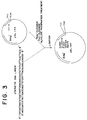
- This plasmid was designated pGL147.
- the process steps for the construction of pGL147 are schematically shown in Fig. 3.
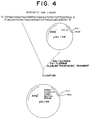
- the synthetic DNA linkers as shown below were connected with the linear pGL144 constructed in Example 1 which was cleaved with restriction enzymes Nde I and Pst I and purified.
- the plasmid was extracted from the resultant transformant in the conventional manner to confirm, using the dideoxy method by Sanger at al., that it had the desired sequence.
- This plasmid was designated pGL149.
- the process steps for the construction of pGL149 are shown in Fig. 4.
- E. coli HMS174(DE3) (available from Novagen, U.S.A.) was transformed separately with pGL147 shown in Example 1 and with pGL149 shown in Example 2 to give a transformant with the capability of producing a human glicentin fused protein.
- the transformant having pGL147 was designated G647, and the transformant having pGL149 was designated G662. These transformants were used to produce a human glicentin fused protein in the following manner.
- the transformants G647 and G662 were respectively incubated in one liter of M9ZB culture medium at 37°C. IPTG (isopropylthiogalactoside) was added to a final concentration of 0.5 mM at a point when the absorbance A 550 reached 0.8 and then incubated for 2.5 hours to produce a human glicentin fused protein.
- the cultured bacteria of G647 and G662 was respectively 5 g by wet weight per liter of culture.
- the chromatogram of HPLC of the human glicentin fused protein is shown in Fig. 5.
- the peak appearing at 15.52 minutes in Fig. 5 identifies the human glicentin fused protein.
- the peak appearing at 12.07 minutes identifies ⁇ -mercaptoethanol added to the sample for inhibiting any non-specific adsorbance of the fused protein on the column.
- the conditions for HPLC were as follows:
- the analytical result of the pure preparation by SDS polyacrylamide gel electrophoresis is shown in Fig. 6.
- the lane 1 in Fig. 6 shows a load with an extract itself, and the lane 3 shows a load with a fused protein purified in the above manner.
- the preparation was found to be a human glicentin fused protein having the desired 10 amino acids connected to the amino terminus of native glicentin.
- the HPLC chromatogram of a human glicentin fused protein is shown in Fig. 7.
- the peak appearing at 15.55 minutes in Fig. 7 identifies the human glicentin fused protein.
- the peak appearing at 12.14 minutes identifies ⁇ -mercaptoethanol added to the sample for inhibiting any non-specific adsorbance of the fused protein on the column.
- the conditions for HPLC were as shown in Example 4.
- the analytical result of the pure preparation by SDS polyacrylamide gel electrophoresis is shown in Fig. 6.
- the lane 2 in Fig. 6 shows a load with an effluent.
- the lane 4 represents a load with the fused protein purified as described above. As shown in Fig. 6, the fused protein was found to be substantially purified only with 2 steps.
- the preparation was found to be a human glicentin fused protein having the desired 10 amino acids connected to the amino terminus of native glicentin.
- a human glicentin fused protein shown in Examples 4 and 5 was digested enzymatically with Cathepsin C under the following reaction conditions. A 50% saturated ammonium sulfate was added to precipitate proteins for a removal of the low molecular substances after enzymatic digestion.
- Leupeptin and bovine cathepsin C used the products manufactured by Boehringer Mannheim Yamanouchi.
- Example 6 The precipitate shown in Example 6 was dissolved in 50 ml of AES buffer and then added to a thiopropylsepharose 6B column (1 cm ⁇ x 3 cm). The passed fractions were combined with the washed fractions, the combined fractions were loaded on a C18 reversed-phase HPLC (the same chromatography conditions as in Example 4), and the fractions of human glicentin were collected to remove contaminant impurities. The fractions of human glicentin were freeze-dried to obtain a pure preparation. An analytical result of the pure preparation by SDS polyacrylamide gel electrophoresis is shown in Fig. 6. The lane 5 is the pure preparation obtained by digesting a fused protein in Example 4.
- the lane 6 is the pure preparation obtained by digesting a fused protein in Example 5.
- the chromatograms of the pure preparation by HPLC are shown in Figs. 8 and 9.
- the analytical conditions were identical with those shown in Example 4.
- Fig. 8 shows a chromatogram of a purified product of human glicentin obtained from the fused protein in Example 4.
- Fig. 9 shows a chromatogram of a purified product of human glicentin obtained from the fused protein in Example 5.
- the human glicentin purified by the process shown in Example 7 was cleaved with lysyl endopeptidase and the 5 peak fragments were collected by a reversed-phase HPLC.
- the G647-derived and the G662-derived fused proteins of a human glicentin which were purified by the procedures mentioned in Examples 4 and 5 were respectively adsorbed on 1 ml of thiopropylsepharose 6B until saturation in GAE buffer, by which it was compared how maximum degree of a fused protein in mg can be adsorbed on 1 ml carrier.
- the adsorbed proteins were respectively eluted in accordance with the procedure described in Example 4 and an amount of a fused protein was calculated from an integrated value by HPLC.
- the results showed an adsorbance of 4.8 mg/ml gel for the G647-derived fused protein and 11.0 mg/ml for the G662-derived fused protein. It was shown that G662 not containing any basic amino acids before and after a cysteine residue had a higher reactivity to cysteine.
Landscapes
- Chemical & Material Sciences (AREA)
- Health & Medical Sciences (AREA)
- Organic Chemistry (AREA)
- Life Sciences & Earth Sciences (AREA)
- Molecular Biology (AREA)
- Medicinal Chemistry (AREA)
- Proteomics, Peptides & Aminoacids (AREA)
- Biochemistry (AREA)
- Biophysics (AREA)
- General Health & Medical Sciences (AREA)
- Genetics & Genomics (AREA)
- Gastroenterology & Hepatology (AREA)
- Toxicology (AREA)
- Zoology (AREA)
- Endocrinology (AREA)
- Analytical Chemistry (AREA)
- Peptides Or Proteins (AREA)
- Preparation Of Compounds By Using Micro-Organisms (AREA)
Claims (5)
- Procédé de préparation de glicentine humaine, ledit procédé comprenant :la production, par génie génétique, d'une protéine de fusion constituée de glicentine humaine ayant un fragment peptidique ajouté à l'extrémité N-terminale ; le fragment peptidique ajouté à l'extrémité N-terminale contenant un résidu de cystéine situé en première et/ou en seconde position par rapport à l'extrémité N-terminale naturelle de la glicentine humaine,la séparation de la protéine de fusion par liaison réversible de la protéine de fusion avec la phase stationnaire d'un dispositif chromatographique au moyen d'un pont disulfure (par l'intermédiaire du résidu de cystéine),la mise en digestion de la protéine de fusion avec de la Cathepsine C pour libérer la glicentine humaine, etl'isolement de la glicentine humaine par élimination de la protéine de fusion non digérée en liant la protéine de fusion à la phase stationnaire d'un dispositif chromatographique au moyen d'un pont disulfure (par l'intermédiaire du résidu de cystéine).
- Procédé selon la revendication 1, dans lequel le fragment peptidique ajouté à l'extrémité N-terminale contient un ou plusieurs résidus d'arginine et/ou de lysine aux positions de nombre impair par rapport à l'extrémité N-terminale naturelle de la glicentine humaine.
- Procédé selon la revendication 1, dans lequel le fragment peptidique ajouté à l'extrémité N-terminale contient de l'arginine ou de la lysine en 5ème position par rapport à l'extrémité N-terminale naturelle de la glicentine humaine.
- Procédé selon l'une quelconque des revendications 1 à 3, dans lequel le fragment peptidique ajouté à l'extrémité N-terminale contient un nombre pair de résidus d'aminoacides.
- Procédé selon l'une quelconque des revendications 1 à 4, dans lequel la phase stationnaire du dispositif chromatographique est du disulfure de 2-pyridyle éther d'hydroxypropyle sepharose.
Applications Claiming Priority (2)
| Application Number | Priority Date | Filing Date | Title |
|---|---|---|---|
| JP5349030A JP2887063B2 (ja) | 1993-12-28 | 1993-12-28 | グリセンチンの製造方法 |
| JP349030/93 | 1993-12-28 |
Publications (2)
| Publication Number | Publication Date |
|---|---|
| EP0662482A1 EP0662482A1 (fr) | 1995-07-12 |
| EP0662482B1 true EP0662482B1 (fr) | 1999-02-24 |
Family
ID=18401020
Family Applications (1)
| Application Number | Title | Priority Date | Filing Date |
|---|---|---|---|
| EP94309675A Expired - Lifetime EP0662482B1 (fr) | 1993-12-28 | 1994-12-22 | Procédé de préparation de la glicentine humaine |
Country Status (6)
| Country | Link |
|---|---|
| US (1) | US5641646A (fr) |
| EP (1) | EP0662482B1 (fr) |
| JP (1) | JP2887063B2 (fr) |
| KR (1) | KR950018050A (fr) |
| CA (1) | CA2139155A1 (fr) |
| DE (1) | DE69416663T2 (fr) |
Families Citing this family (2)
| Publication number | Priority date | Publication date | Assignee | Title |
|---|---|---|---|---|
| US5702922A (en) * | 1994-11-29 | 1997-12-30 | Nisshin Flour Milling Co., Ltd. | Method for the extraction of glicentin or glicentin analogous substances |
| US7666627B2 (en) * | 2002-08-08 | 2010-02-23 | Targetex Kft. | Folded recombinant catalytic fragments of multidomain serine proteases, preparation and uses thereof |
Family Cites Families (6)
| Publication number | Priority date | Publication date | Assignee | Title |
|---|---|---|---|---|
| US5126249A (en) * | 1989-05-09 | 1992-06-30 | Eli Lilly And Company | Enzymatic removal of a protein amino-terminal sequence |
| DE4002636A1 (de) * | 1990-01-30 | 1991-08-01 | Boehringer Mannheim Gmbh | Expression von hiv1- und 2-polypeptiden und deren verwendung |
| JPH04364199A (ja) * | 1990-08-15 | 1992-12-16 | Nisshin Flour Milling Co Ltd | ヒト型グリセンチンの合成遺伝子 |
| JPH05160977A (ja) * | 1991-12-06 | 1993-06-25 | Brother Ind Ltd | 変調装置 |
| US5616558A (en) * | 1992-07-13 | 1997-04-01 | Nisshin Flour Milling Co., Ltd. | Medicaments comprising glicentin as active ingredient |
| JP2961045B2 (ja) * | 1993-02-24 | 1999-10-12 | 日清製粉株式会社 | 腸管粘膜増強促進剤 |
-
1993
- 1993-12-28 JP JP5349030A patent/JP2887063B2/ja not_active Expired - Fee Related
-
1994
- 1994-12-22 DE DE69416663T patent/DE69416663T2/de not_active Expired - Fee Related
- 1994-12-22 EP EP94309675A patent/EP0662482B1/fr not_active Expired - Lifetime
- 1994-12-27 KR KR1019940037122A patent/KR950018050A/ko not_active Withdrawn
- 1994-12-28 US US08/365,109 patent/US5641646A/en not_active Expired - Fee Related
- 1994-12-28 CA CA002139155A patent/CA2139155A1/fr not_active Abandoned
Also Published As
| Publication number | Publication date |
|---|---|
| JPH07184682A (ja) | 1995-07-25 |
| DE69416663D1 (de) | 1999-04-01 |
| EP0662482A1 (fr) | 1995-07-12 |
| US5641646A (en) | 1997-06-24 |
| JP2887063B2 (ja) | 1999-04-26 |
| CA2139155A1 (fr) | 1995-06-29 |
| KR950018050A (ko) | 1995-07-22 |
| DE69416663T2 (de) | 1999-07-29 |
Similar Documents
| Publication | Publication Date | Title |
|---|---|---|
| Kondo et al. | Amino acid sequences of the two polypeptide chains in β1-bungarotoxin from the venom of Bungarus multicinctus | |
| Jekel et al. | Use of endoproteinase Lys-C from Lysobacter enzymogenes in protein sequence analysis | |
| CA1339208C (fr) | Proteines de fusion renfermant une charniere pour faciliter le clivage | |
| US5691169A (en) | Process for preparing a desired protein | |
| JP4975895B2 (ja) | 高圧液体クロマトグラフィーによるインシュリンの単離方法 | |
| CA2016049A1 (fr) | Extraction enzymatique d'une sequence amino terminale d'une proteine | |
| Forsberg et al. | An evaluation of different enzymatic cleavage methods for recombinant fusion proteins, applied on des (1–3) insulin-like growth factor I | |
| Inouye et al. | The Amino Acid Sequence of T4 Phage Lysozyme: IV. DILUTE ACID HYDROLYSIS AND THE ORDER OF TRYPTIC PEPTIDES | |
| JPS6420094A (en) | Production and purification of protein fused to binding protein | |
| Hofmann | The purification and properties of fragments of trypsinogen obtained by cyanogen bromide cleavage | |
| Hermann et al. | Amino acid sequence of two cyanogen bromide fragments of glycogen phosphorylase | |
| KUMAZAKI et al. | Affinity chromatography on immobilized anhydrotrypsin: general utility for selective isolation of C-terminal peptides from protease digests of proteins | |
| Beitle et al. | One-step purification of a model periplasmic protein from inclusion bodies by its fusion to an effective metal-binding peptide | |
| Polyak et al. | Introduction of spacer peptides N-terminal to a cleavage recognition motif in recombinant fusion proteins can improve site-specific cleavage. | |
| US5641646A (en) | Process for preparation of human glicentin | |
| EP0794255B1 (fr) | Procédé de clivage d'une protéine chimérique à l'aide d'un enzyme de traitement | |
| Forsberg et al. | Thrombin and H64A subtilisin cleavage of fusion proteins for preparation of human recombinant parathyroid hormone | |
| Boileau et al. | Characterization of multiple forms of porcine anterior pituitary pro-opiomelanocortin N-terminal glycopeptide | |
| Wakabayashi et al. | Amino Acid Sequences of Two Ferredoxins from Phytolacca esculenta Gene Duplication and Speciation | |
| Crawford et al. | Assignment of the ends of the β-chain of E. coli tryptophan synthase to the F1 and F2 domains | |
| Chen et al. | Primary structure of porcine pepsin. I. Purification and placement of cyanogen bromide fragments and the amino acid sequence of fragment CB5. | |
| EP0635573A2 (fr) | Procédé de préparation de glicentin humaine native | |
| Crabb et al. | Terminal sequences of lysosome solubilized pig liver cytochrome b5 reductase | |
| Kageyama et al. | Monkey Pepsinogens and Pepsins: IV. The Amino Acid Sequence of the Activation Peptide Segment of Japanese Monkey Pepsinogen | |
| Tyler et al. | Semi-preparative high-performance liquid chromatographic purification of a 28-amino acid synthetic parathyroid hormone antagonist |
Legal Events
| Date | Code | Title | Description |
|---|---|---|---|
| PUAI | Public reference made under article 153(3) epc to a published international application that has entered the european phase |
Free format text: ORIGINAL CODE: 0009012 |
|
| 17P | Request for examination filed |
Effective date: 19950107 |
|
| AK | Designated contracting states |
Kind code of ref document: A1 Designated state(s): BE CH DE DK ES FR GB IT LI NL SE |
|
| 17Q | First examination report despatched |
Effective date: 19970211 |
|
| GRAG | Despatch of communication of intention to grant |
Free format text: ORIGINAL CODE: EPIDOS AGRA |
|
| GRAG | Despatch of communication of intention to grant |
Free format text: ORIGINAL CODE: EPIDOS AGRA |
|
| GRAH | Despatch of communication of intention to grant a patent |
Free format text: ORIGINAL CODE: EPIDOS IGRA |
|
| GRAH | Despatch of communication of intention to grant a patent |
Free format text: ORIGINAL CODE: EPIDOS IGRA |
|
| GRAA | (expected) grant |
Free format text: ORIGINAL CODE: 0009210 |
|
| AK | Designated contracting states |
Kind code of ref document: B1 Designated state(s): BE CH DE DK ES FR GB IT LI NL SE |
|
| PG25 | Lapsed in a contracting state [announced via postgrant information from national office to epo] |
Ref country code: SE Free format text: THE PATENT HAS BEEN ANNULLED BY A DECISION OF A NATIONAL AUTHORITY Effective date: 19990224 Ref country code: NL Free format text: LAPSE BECAUSE OF FAILURE TO SUBMIT A TRANSLATION OF THE DESCRIPTION OR TO PAY THE FEE WITHIN THE PRESCRIBED TIME-LIMIT Effective date: 19990224 Ref country code: LI Free format text: LAPSE BECAUSE OF FAILURE TO SUBMIT A TRANSLATION OF THE DESCRIPTION OR TO PAY THE FEE WITHIN THE PRESCRIBED TIME-LIMIT Effective date: 19990224 Ref country code: ES Free format text: THE PATENT HAS BEEN ANNULLED BY A DECISION OF A NATIONAL AUTHORITY Effective date: 19990224 Ref country code: CH Free format text: LAPSE BECAUSE OF FAILURE TO SUBMIT A TRANSLATION OF THE DESCRIPTION OR TO PAY THE FEE WITHIN THE PRESCRIBED TIME-LIMIT Effective date: 19990224 Ref country code: BE Free format text: LAPSE BECAUSE OF FAILURE TO SUBMIT A TRANSLATION OF THE DESCRIPTION OR TO PAY THE FEE WITHIN THE PRESCRIBED TIME-LIMIT Effective date: 19990224 |
|
| REG | Reference to a national code |
Ref country code: CH Ref legal event code: EP |
|
| REF | Corresponds to: |
Ref document number: 69416663 Country of ref document: DE Date of ref document: 19990401 |
|
| ITF | It: translation for a ep patent filed | ||
| PG25 | Lapsed in a contracting state [announced via postgrant information from national office to epo] |
Ref country code: DK Free format text: LAPSE BECAUSE OF FAILURE TO SUBMIT A TRANSLATION OF THE DESCRIPTION OR TO PAY THE FEE WITHIN THE PRESCRIBED TIME-LIMIT Effective date: 19990524 |
|
| ET | Fr: translation filed | ||
| NLV1 | Nl: lapsed or annulled due to failure to fulfill the requirements of art. 29p and 29m of the patents act | ||
| REG | Reference to a national code |
Ref country code: CH Ref legal event code: PL |
|
| PLBE | No opposition filed within time limit |
Free format text: ORIGINAL CODE: 0009261 |
|
| STAA | Information on the status of an ep patent application or granted ep patent |
Free format text: STATUS: NO OPPOSITION FILED WITHIN TIME LIMIT |
|
| 26N | No opposition filed | ||
| REG | Reference to a national code |
Ref country code: GB Ref legal event code: IF02 |
|
| REG | Reference to a national code |
Ref country code: FR Ref legal event code: CD |
|
| PGFP | Annual fee paid to national office [announced via postgrant information from national office to epo] |
Ref country code: FR Payment date: 20051208 Year of fee payment: 12 |
|
| PGFP | Annual fee paid to national office [announced via postgrant information from national office to epo] |
Ref country code: DE Payment date: 20051215 Year of fee payment: 12 |
|
| PGFP | Annual fee paid to national office [announced via postgrant information from national office to epo] |
Ref country code: GB Payment date: 20051221 Year of fee payment: 12 |
|
| PGFP | Annual fee paid to national office [announced via postgrant information from national office to epo] |
Ref country code: IT Payment date: 20061231 Year of fee payment: 13 |
|
| PG25 | Lapsed in a contracting state [announced via postgrant information from national office to epo] |
Ref country code: DE Free format text: LAPSE BECAUSE OF NON-PAYMENT OF DUE FEES Effective date: 20070703 |
|
| GBPC | Gb: european patent ceased through non-payment of renewal fee |
Effective date: 20061222 |
|
| REG | Reference to a national code |
Ref country code: FR Ref legal event code: ST Effective date: 20070831 |
|
| PG25 | Lapsed in a contracting state [announced via postgrant information from national office to epo] |
Ref country code: GB Free format text: LAPSE BECAUSE OF NON-PAYMENT OF DUE FEES Effective date: 20061222 |
|
| PG25 | Lapsed in a contracting state [announced via postgrant information from national office to epo] |
Ref country code: FR Free format text: LAPSE BECAUSE OF NON-PAYMENT OF DUE FEES Effective date: 20070102 |
|
| PG25 | Lapsed in a contracting state [announced via postgrant information from national office to epo] |
Ref country code: IT Free format text: LAPSE BECAUSE OF NON-PAYMENT OF DUE FEES Effective date: 20071222 |