EP0663232B1 - Ionentransportmembrane mit einer dichten Katalysator enthaltenden Schicht - Google Patents
Ionentransportmembrane mit einer dichten Katalysator enthaltenden Schicht Download PDFInfo
- Publication number
- EP0663232B1 EP0663232B1 EP95100306A EP95100306A EP0663232B1 EP 0663232 B1 EP0663232 B1 EP 0663232B1 EP 95100306 A EP95100306 A EP 95100306A EP 95100306 A EP95100306 A EP 95100306A EP 0663232 B1 EP0663232 B1 EP 0663232B1
- Authority
- EP
- European Patent Office
- Prior art keywords
- oxygen
- ion transport
- layer
- dense
- transport membrane
- Prior art date
- Legal status (The legal status is an assumption and is not a legal conclusion. Google has not performed a legal analysis and makes no representation as to the accuracy of the status listed.)
- Expired - Lifetime
Links
- 239000012528 membrane Substances 0.000 title claims description 121
- 230000037427 ion transport Effects 0.000 title claims description 50
- 239000003054 catalyst Substances 0.000 title claims description 38
- 229910052760 oxygen Inorganic materials 0.000 claims description 118
- 239000001301 oxygen Substances 0.000 claims description 118
- 229910044991 metal oxide Inorganic materials 0.000 claims description 34
- 239000011148 porous material Substances 0.000 claims description 34
- 238000000034 method Methods 0.000 claims description 31
- BASFCYQUMIYNBI-UHFFFAOYSA-N platinum Chemical compound [Pt] BASFCYQUMIYNBI-UHFFFAOYSA-N 0.000 claims description 26
- 230000008569 process Effects 0.000 claims description 23
- 239000008246 gaseous mixture Substances 0.000 claims description 21
- -1 oxygen ions Chemical class 0.000 claims description 20
- 229910052751 metal Inorganic materials 0.000 claims description 15
- 239000002184 metal Substances 0.000 claims description 15
- 239000000203 mixture Substances 0.000 claims description 15
- KDLHZDBZIXYQEI-UHFFFAOYSA-N Palladium Chemical compound [Pd] KDLHZDBZIXYQEI-UHFFFAOYSA-N 0.000 claims description 14
- 229910052697 platinum Inorganic materials 0.000 claims description 13
- 229910052788 barium Inorganic materials 0.000 claims description 9
- DSAJWYNOEDNPEQ-UHFFFAOYSA-N barium atom Chemical compound [Ba] DSAJWYNOEDNPEQ-UHFFFAOYSA-N 0.000 claims description 9
- 229910052763 palladium Inorganic materials 0.000 claims description 7
- OYPRJOBELJOOCE-UHFFFAOYSA-N Calcium Chemical compound [Ca] OYPRJOBELJOOCE-UHFFFAOYSA-N 0.000 claims description 6
- 229910002505 Co0.8Fe0.2 Inorganic materials 0.000 claims description 6
- 229910052791 calcium Inorganic materials 0.000 claims description 6
- 239000011575 calcium Substances 0.000 claims description 6
- 229930195733 hydrocarbon Natural products 0.000 claims description 6
- 150000002430 hydrocarbons Chemical class 0.000 claims description 6
- 150000002739 metals Chemical class 0.000 claims description 6
- VNWKTOKETHGBQD-UHFFFAOYSA-N methane Chemical compound C VNWKTOKETHGBQD-UHFFFAOYSA-N 0.000 claims description 6
- 229910052712 strontium Inorganic materials 0.000 claims description 6
- CIOAGBVUUVVLOB-UHFFFAOYSA-N strontium atom Chemical compound [Sr] CIOAGBVUUVVLOB-UHFFFAOYSA-N 0.000 claims description 6
- 150000001875 compounds Chemical class 0.000 claims description 5
- 230000000737 periodic effect Effects 0.000 claims description 5
- IJGRMHOSHXDMSA-UHFFFAOYSA-N Atomic nitrogen Chemical compound N#N IJGRMHOSHXDMSA-UHFFFAOYSA-N 0.000 claims description 4
- BQCADISMDOOEFD-UHFFFAOYSA-N Silver Chemical compound [Ag] BQCADISMDOOEFD-UHFFFAOYSA-N 0.000 claims description 4
- 229910052747 lanthanoid Inorganic materials 0.000 claims description 4
- 150000002602 lanthanoids Chemical class 0.000 claims description 4
- 230000007935 neutral effect Effects 0.000 claims description 4
- 229910052684 Cerium Inorganic materials 0.000 claims description 3
- FYYHWMGAXLPEAU-UHFFFAOYSA-N Magnesium Chemical compound [Mg] FYYHWMGAXLPEAU-UHFFFAOYSA-N 0.000 claims description 3
- ZOKXTWBITQBERF-UHFFFAOYSA-N Molybdenum Chemical compound [Mo] ZOKXTWBITQBERF-UHFFFAOYSA-N 0.000 claims description 3
- 229910052777 Praseodymium Inorganic materials 0.000 claims description 3
- KJTLSVCANCCWHF-UHFFFAOYSA-N Ruthenium Chemical compound [Ru] KJTLSVCANCCWHF-UHFFFAOYSA-N 0.000 claims description 3
- 229910052797 bismuth Inorganic materials 0.000 claims description 3
- JCXGWMGPZLAOME-UHFFFAOYSA-N bismuth atom Chemical compound [Bi] JCXGWMGPZLAOME-UHFFFAOYSA-N 0.000 claims description 3
- ZMIGMASIKSOYAM-UHFFFAOYSA-N cerium Chemical compound [Ce][Ce][Ce][Ce][Ce][Ce][Ce][Ce][Ce][Ce][Ce][Ce][Ce][Ce][Ce][Ce][Ce][Ce][Ce][Ce][Ce][Ce][Ce][Ce][Ce][Ce][Ce][Ce][Ce][Ce][Ce][Ce][Ce][Ce][Ce][Ce][Ce][Ce] ZMIGMASIKSOYAM-UHFFFAOYSA-N 0.000 claims description 3
- 229910017052 cobalt Inorganic materials 0.000 claims description 3
- 239000010941 cobalt Substances 0.000 claims description 3
- GUTLYIVDDKVIGB-UHFFFAOYSA-N cobalt atom Chemical compound [Co] GUTLYIVDDKVIGB-UHFFFAOYSA-N 0.000 claims description 3
- PCHJSUWPFVWCPO-UHFFFAOYSA-N gold Chemical compound [Au] PCHJSUWPFVWCPO-UHFFFAOYSA-N 0.000 claims description 3
- 229910052737 gold Inorganic materials 0.000 claims description 3
- 239000010931 gold Substances 0.000 claims description 3
- 229910052749 magnesium Inorganic materials 0.000 claims description 3
- 239000011777 magnesium Substances 0.000 claims description 3
- 229910052750 molybdenum Inorganic materials 0.000 claims description 3
- 239000011733 molybdenum Substances 0.000 claims description 3
- 150000002894 organic compounds Chemical class 0.000 claims description 3
- PUDIUYLPXJFUGB-UHFFFAOYSA-N praseodymium atom Chemical compound [Pr] PUDIUYLPXJFUGB-UHFFFAOYSA-N 0.000 claims description 3
- 229910052703 rhodium Inorganic materials 0.000 claims description 3
- 239000010948 rhodium Substances 0.000 claims description 3
- MHOVAHRLVXNVSD-UHFFFAOYSA-N rhodium atom Chemical compound [Rh] MHOVAHRLVXNVSD-UHFFFAOYSA-N 0.000 claims description 3
- 229910052707 ruthenium Inorganic materials 0.000 claims description 3
- 229910052709 silver Inorganic materials 0.000 claims description 3
- 239000004332 silver Substances 0.000 claims description 3
- 229910052723 transition metal Inorganic materials 0.000 claims description 3
- 150000003624 transition metals Chemical class 0.000 claims description 3
- 229910052720 vanadium Inorganic materials 0.000 claims description 3
- GPPXJZIENCGNKB-UHFFFAOYSA-N vanadium Chemical compound [V]#[V] GPPXJZIENCGNKB-UHFFFAOYSA-N 0.000 claims description 3
- WPBNNNQJVZRUHP-UHFFFAOYSA-L manganese(2+);methyl n-[[2-(methoxycarbonylcarbamothioylamino)phenyl]carbamothioyl]carbamate;n-[2-(sulfidocarbothioylamino)ethyl]carbamodithioate Chemical compound [Mn+2].[S-]C(=S)NCCNC([S-])=S.COC(=O)NC(=S)NC1=CC=CC=C1NC(=S)NC(=O)OC WPBNNNQJVZRUHP-UHFFFAOYSA-L 0.000 claims description 2
- 229910052757 nitrogen Inorganic materials 0.000 claims description 2
- QVGXLLKOCUKJST-UHFFFAOYSA-N atomic oxygen Chemical compound [O] QVGXLLKOCUKJST-UHFFFAOYSA-N 0.000 claims 5
- MWUXSHHQAYIFBG-UHFFFAOYSA-N Nitric oxide Chemical compound O=[N] MWUXSHHQAYIFBG-UHFFFAOYSA-N 0.000 claims 3
- NINIDFKCEFEMDL-UHFFFAOYSA-N Sulfur Chemical compound [S] NINIDFKCEFEMDL-UHFFFAOYSA-N 0.000 claims 1
- 230000001590 oxidative effect Effects 0.000 claims 1
- 229910052717 sulfur Inorganic materials 0.000 claims 1
- 239000011593 sulfur Substances 0.000 claims 1
- XTQHKBHJIVJGKJ-UHFFFAOYSA-N sulfur monoxide Chemical class S=O XTQHKBHJIVJGKJ-UHFFFAOYSA-N 0.000 claims 1
- 229910052815 sulfur oxide Inorganic materials 0.000 claims 1
- MYMOFIZGZYHOMD-UHFFFAOYSA-N Dioxygen Chemical compound O=O MYMOFIZGZYHOMD-UHFFFAOYSA-N 0.000 description 102
- 239000007789 gas Substances 0.000 description 25
- 239000002131 composite material Substances 0.000 description 23
- 230000004907 flux Effects 0.000 description 11
- 239000000463 material Substances 0.000 description 11
- 239000012466 permeate Substances 0.000 description 10
- 239000007787 solid Substances 0.000 description 10
- CSCPPACGZOOCGX-UHFFFAOYSA-N Acetone Chemical compound CC(C)=O CSCPPACGZOOCGX-UHFFFAOYSA-N 0.000 description 8
- 239000000243 solution Substances 0.000 description 8
- VEJOYRPGKZZTJW-FDGPNNRMSA-N (z)-4-hydroxypent-3-en-2-one;platinum Chemical compound [Pt].C\C(O)=C\C(C)=O.C\C(O)=C\C(C)=O VEJOYRPGKZZTJW-FDGPNNRMSA-N 0.000 description 7
- 238000009792 diffusion process Methods 0.000 description 7
- 239000011248 coating agent Substances 0.000 description 5
- 238000000576 coating method Methods 0.000 description 5
- 239000011533 mixed conductor Substances 0.000 description 5
- 239000000047 product Substances 0.000 description 5
- 239000007784 solid electrolyte Substances 0.000 description 5
- 229910001233 yttria-stabilized zirconia Inorganic materials 0.000 description 5
- CPLXHLVBOLITMK-UHFFFAOYSA-N Magnesium oxide Chemical compound [Mg]=O CPLXHLVBOLITMK-UHFFFAOYSA-N 0.000 description 4
- 238000004519 manufacturing process Methods 0.000 description 4
- 239000002245 particle Substances 0.000 description 4
- 241000196324 Embryophyta Species 0.000 description 3
- 238000006243 chemical reaction Methods 0.000 description 3
- 239000004020 conductor Substances 0.000 description 3
- 150000002500 ions Chemical class 0.000 description 3
- 230000003647 oxidation Effects 0.000 description 3
- 238000007254 oxidation reaction Methods 0.000 description 3
- 239000002904 solvent Substances 0.000 description 3
- 239000000126 substance Substances 0.000 description 3
- 230000032258 transport Effects 0.000 description 3
- CURLTUGMZLYLDI-UHFFFAOYSA-N Carbon dioxide Chemical compound O=C=O CURLTUGMZLYLDI-UHFFFAOYSA-N 0.000 description 2
- VYPSYNLAJGMNEJ-UHFFFAOYSA-N Silicium dioxide Chemical compound O=[Si]=O VYPSYNLAJGMNEJ-UHFFFAOYSA-N 0.000 description 2
- GWEVSGVZZGPLCZ-UHFFFAOYSA-N Titan oxide Chemical compound O=[Ti]=O GWEVSGVZZGPLCZ-UHFFFAOYSA-N 0.000 description 2
- MCMNRKCIXSYSNV-UHFFFAOYSA-N Zirconium dioxide Chemical group O=[Zr]=O MCMNRKCIXSYSNV-UHFFFAOYSA-N 0.000 description 2
- BDOYPFKKGPWJBQ-UHFFFAOYSA-N [N].S=O Chemical group [N].S=O BDOYPFKKGPWJBQ-UHFFFAOYSA-N 0.000 description 2
- 230000008901 benefit Effects 0.000 description 2
- 239000000919 ceramic Substances 0.000 description 2
- 229910010293 ceramic material Inorganic materials 0.000 description 2
- 238000005229 chemical vapour deposition Methods 0.000 description 2
- 238000010960 commercial process Methods 0.000 description 2
- 238000000354 decomposition reaction Methods 0.000 description 2
- 229910001882 dioxygen Inorganic materials 0.000 description 2
- 238000010494 dissociation reaction Methods 0.000 description 2
- 230000005593 dissociations Effects 0.000 description 2
- 239000000395 magnesium oxide Substances 0.000 description 2
- 229910052748 manganese Inorganic materials 0.000 description 2
- 239000011572 manganese Substances 0.000 description 2
- 238000010422 painting Methods 0.000 description 2
- 239000000376 reactant Substances 0.000 description 2
- 230000001105 regulatory effect Effects 0.000 description 2
- 238000007650 screen-printing Methods 0.000 description 2
- 238000000926 separation method Methods 0.000 description 2
- 238000005245 sintering Methods 0.000 description 2
- 238000005507 spraying Methods 0.000 description 2
- 229910002076 stabilized zirconia Inorganic materials 0.000 description 2
- KLFRPGNCEJNEKU-FDGPNNRMSA-L (z)-4-oxopent-2-en-2-olate;platinum(2+) Chemical compound [Pt+2].C\C([O-])=C\C(C)=O.C\C([O-])=C\C(C)=O KLFRPGNCEJNEKU-FDGPNNRMSA-L 0.000 description 1
- ODINCKMPIJJUCX-UHFFFAOYSA-N Calcium oxide Chemical compound [Ca]=O ODINCKMPIJJUCX-UHFFFAOYSA-N 0.000 description 1
- 239000004215 Carbon black (E152) Substances 0.000 description 1
- PWHULOQIROXLJO-UHFFFAOYSA-N Manganese Chemical compound [Mn] PWHULOQIROXLJO-UHFFFAOYSA-N 0.000 description 1
- 235000010627 Phaseolus vulgaris Nutrition 0.000 description 1
- 244000046052 Phaseolus vulgaris Species 0.000 description 1
- 241000968352 Scandia <hydrozoan> Species 0.000 description 1
- PNEYBMLMFCGWSK-UHFFFAOYSA-N aluminium oxide Inorganic materials [O-2].[O-2].[O-2].[Al+3].[Al+3] PNEYBMLMFCGWSK-UHFFFAOYSA-N 0.000 description 1
- 239000011230 binding agent Substances 0.000 description 1
- 229910000416 bismuth oxide Inorganic materials 0.000 description 1
- 239000000292 calcium oxide Substances 0.000 description 1
- 235000012255 calcium oxide Nutrition 0.000 description 1
- 239000001569 carbon dioxide Substances 0.000 description 1
- 229910002092 carbon dioxide Inorganic materials 0.000 description 1
- 239000012159 carrier gas Substances 0.000 description 1
- 230000003197 catalytic effect Effects 0.000 description 1
- CETPSERCERDGAM-UHFFFAOYSA-N ceric oxide Chemical compound O=[Ce]=O CETPSERCERDGAM-UHFFFAOYSA-N 0.000 description 1
- 229910000422 cerium(IV) oxide Inorganic materials 0.000 description 1
- 238000004587 chromatography analysis Methods 0.000 description 1
- 229910052804 chromium Inorganic materials 0.000 description 1
- 230000006835 compression Effects 0.000 description 1
- 238000007906 compression Methods 0.000 description 1
- 238000007796 conventional method Methods 0.000 description 1
- 238000005336 cracking Methods 0.000 description 1
- 238000006356 dehydrogenation reaction Methods 0.000 description 1
- 230000032798 delamination Effects 0.000 description 1
- 238000000151 deposition Methods 0.000 description 1
- TYIXMATWDRGMPF-UHFFFAOYSA-N dibismuth;oxygen(2-) Chemical compound [O-2].[O-2].[O-2].[Bi+3].[Bi+3] TYIXMATWDRGMPF-UHFFFAOYSA-N 0.000 description 1
- 230000003292 diminished effect Effects 0.000 description 1
- 238000003618 dip coating Methods 0.000 description 1
- 230000000694 effects Effects 0.000 description 1
- 238000005516 engineering process Methods 0.000 description 1
- 238000001704 evaporation Methods 0.000 description 1
- 230000008020 evaporation Effects 0.000 description 1
- 238000010285 flame spraying Methods 0.000 description 1
- 238000002309 gasification Methods 0.000 description 1
- 229910052735 hafnium Inorganic materials 0.000 description 1
- 229910052742 iron Inorganic materials 0.000 description 1
- 230000000873 masking effect Effects 0.000 description 1
- 230000007246 mechanism Effects 0.000 description 1
- 229910001092 metal group alloy Inorganic materials 0.000 description 1
- 239000002923 metal particle Substances 0.000 description 1
- VUZPPFZMUPKLLV-UHFFFAOYSA-N methane;hydrate Chemical compound C.O VUZPPFZMUPKLLV-UHFFFAOYSA-N 0.000 description 1
- 229910003455 mixed metal oxide Inorganic materials 0.000 description 1
- HJGMWXTVGKLUAQ-UHFFFAOYSA-N oxygen(2-);scandium(3+) Chemical compound [O-2].[O-2].[O-2].[Sc+3].[Sc+3] HJGMWXTVGKLUAQ-UHFFFAOYSA-N 0.000 description 1
- 238000005192 partition Methods 0.000 description 1
- 238000005240 physical vapour deposition Methods 0.000 description 1
- 238000007750 plasma spraying Methods 0.000 description 1
- 238000011112 process operation Methods 0.000 description 1
- 230000009257 reactivity Effects 0.000 description 1
- 238000011084 recovery Methods 0.000 description 1
- 239000012266 salt solution Substances 0.000 description 1
- 150000003839 salts Chemical class 0.000 description 1
- 239000000377 silicon dioxide Substances 0.000 description 1
- 239000002002 slurry Substances 0.000 description 1
- 238000004544 sputter deposition Methods 0.000 description 1
- 239000000758 substrate Substances 0.000 description 1
- 239000000725 suspension Substances 0.000 description 1
- 150000003505 terpenes Chemical class 0.000 description 1
- 235000007586 terpenes Nutrition 0.000 description 1
- 229910052719 titanium Inorganic materials 0.000 description 1
- XLYOFNOQVPJJNP-UHFFFAOYSA-N water Substances O XLYOFNOQVPJJNP-UHFFFAOYSA-N 0.000 description 1
- RUDFQVOCFDJEEF-UHFFFAOYSA-N yttrium(III) oxide Inorganic materials [O-2].[O-2].[O-2].[Y+3].[Y+3] RUDFQVOCFDJEEF-UHFFFAOYSA-N 0.000 description 1
- 229910052726 zirconium Inorganic materials 0.000 description 1
Images
Classifications
-
- B—PERFORMING OPERATIONS; TRANSPORTING
- B01—PHYSICAL OR CHEMICAL PROCESSES OR APPARATUS IN GENERAL
- B01D—SEPARATION
- B01D71/00—Semi-permeable membranes for separation processes or apparatus characterised by the material; Manufacturing processes specially adapted therefor
- B01D71/02—Inorganic material
-
- B—PERFORMING OPERATIONS; TRANSPORTING
- B01—PHYSICAL OR CHEMICAL PROCESSES OR APPARATUS IN GENERAL
- B01D—SEPARATION
- B01D53/00—Separation of gases or vapours; Recovering vapours of volatile solvents from gases; Chemical or biological purification of waste gases, e.g. engine exhaust gases, smoke, fumes, flue gases, aerosols
- B01D53/22—Separation of gases or vapours; Recovering vapours of volatile solvents from gases; Chemical or biological purification of waste gases, e.g. engine exhaust gases, smoke, fumes, flue gases, aerosols by diffusion
-
- B—PERFORMING OPERATIONS; TRANSPORTING
- B01—PHYSICAL OR CHEMICAL PROCESSES OR APPARATUS IN GENERAL
- B01D—SEPARATION
- B01D53/00—Separation of gases or vapours; Recovering vapours of volatile solvents from gases; Chemical or biological purification of waste gases, e.g. engine exhaust gases, smoke, fumes, flue gases, aerosols
- B01D53/34—Chemical or biological purification of waste gases
- B01D53/74—General processes for purification of waste gases; Apparatus or devices specially adapted therefor
- B01D53/86—Catalytic processes
- B01D53/8603—Removing sulfur compounds
- B01D53/8609—Sulfur oxides
-
- B—PERFORMING OPERATIONS; TRANSPORTING
- B01—PHYSICAL OR CHEMICAL PROCESSES OR APPARATUS IN GENERAL
- B01D—SEPARATION
- B01D53/00—Separation of gases or vapours; Recovering vapours of volatile solvents from gases; Chemical or biological purification of waste gases, e.g. engine exhaust gases, smoke, fumes, flue gases, aerosols
- B01D53/34—Chemical or biological purification of waste gases
- B01D53/74—General processes for purification of waste gases; Apparatus or devices specially adapted therefor
- B01D53/86—Catalytic processes
- B01D53/8621—Removing nitrogen compounds
- B01D53/8625—Nitrogen oxides
-
- B—PERFORMING OPERATIONS; TRANSPORTING
- B01—PHYSICAL OR CHEMICAL PROCESSES OR APPARATUS IN GENERAL
- B01D—SEPARATION
- B01D67/00—Processes specially adapted for manufacturing semi-permeable membranes for separation processes or apparatus
- B01D67/0039—Inorganic membrane manufacture
- B01D67/0072—Inorganic membrane manufacture by deposition from the gaseous phase, e.g. sputtering, CVD, PVD
-
- B—PERFORMING OPERATIONS; TRANSPORTING
- B01—PHYSICAL OR CHEMICAL PROCESSES OR APPARATUS IN GENERAL
- B01J—CHEMICAL OR PHYSICAL PROCESSES, e.g. CATALYSIS OR COLLOID CHEMISTRY; THEIR RELEVANT APPARATUS
- B01J23/00—Catalysts comprising metals or metal oxides or hydroxides, not provided for in group B01J21/00
- B01J23/002—Mixed oxides other than spinels, e.g. perovskite
-
- B—PERFORMING OPERATIONS; TRANSPORTING
- B01—PHYSICAL OR CHEMICAL PROCESSES OR APPARATUS IN GENERAL
- B01J—CHEMICAL OR PHYSICAL PROCESSES, e.g. CATALYSIS OR COLLOID CHEMISTRY; THEIR RELEVANT APPARATUS
- B01J23/00—Catalysts comprising metals or metal oxides or hydroxides, not provided for in group B01J21/00
- B01J23/70—Catalysts comprising metals or metal oxides or hydroxides, not provided for in group B01J21/00 of the iron group metals or copper
- B01J23/76—Catalysts comprising metals or metal oxides or hydroxides, not provided for in group B01J21/00 of the iron group metals or copper combined with metals, oxides or hydroxides provided for in groups B01J23/02 - B01J23/36
- B01J23/78—Catalysts comprising metals or metal oxides or hydroxides, not provided for in group B01J21/00 of the iron group metals or copper combined with metals, oxides or hydroxides provided for in groups B01J23/02 - B01J23/36 with alkali- or alkaline earth metals
-
- B—PERFORMING OPERATIONS; TRANSPORTING
- B01—PHYSICAL OR CHEMICAL PROCESSES OR APPARATUS IN GENERAL
- B01J—CHEMICAL OR PHYSICAL PROCESSES, e.g. CATALYSIS OR COLLOID CHEMISTRY; THEIR RELEVANT APPARATUS
- B01J23/00—Catalysts comprising metals or metal oxides or hydroxides, not provided for in group B01J21/00
- B01J23/70—Catalysts comprising metals or metal oxides or hydroxides, not provided for in group B01J21/00 of the iron group metals or copper
- B01J23/76—Catalysts comprising metals or metal oxides or hydroxides, not provided for in group B01J21/00 of the iron group metals or copper combined with metals, oxides or hydroxides provided for in groups B01J23/02 - B01J23/36
- B01J23/83—Catalysts comprising metals or metal oxides or hydroxides, not provided for in group B01J21/00 of the iron group metals or copper combined with metals, oxides or hydroxides provided for in groups B01J23/02 - B01J23/36 with rare earths or actinides
-
- B—PERFORMING OPERATIONS; TRANSPORTING
- B01—PHYSICAL OR CHEMICAL PROCESSES OR APPARATUS IN GENERAL
- B01J—CHEMICAL OR PHYSICAL PROCESSES, e.g. CATALYSIS OR COLLOID CHEMISTRY; THEIR RELEVANT APPARATUS
- B01J23/00—Catalysts comprising metals or metal oxides or hydroxides, not provided for in group B01J21/00
- B01J23/70—Catalysts comprising metals or metal oxides or hydroxides, not provided for in group B01J21/00 of the iron group metals or copper
- B01J23/89—Catalysts comprising metals or metal oxides or hydroxides, not provided for in group B01J21/00 of the iron group metals or copper combined with noble metals
- B01J23/8933—Catalysts comprising metals or metal oxides or hydroxides, not provided for in group B01J21/00 of the iron group metals or copper combined with noble metals also combined with metals, or metal oxides or hydroxides provided for in groups B01J23/02 - B01J23/36
- B01J23/8946—Catalysts comprising metals or metal oxides or hydroxides, not provided for in group B01J21/00 of the iron group metals or copper combined with noble metals also combined with metals, or metal oxides or hydroxides provided for in groups B01J23/02 - B01J23/36 with alkali or alkaline earth metals
-
- B—PERFORMING OPERATIONS; TRANSPORTING
- B01—PHYSICAL OR CHEMICAL PROCESSES OR APPARATUS IN GENERAL
- B01J—CHEMICAL OR PHYSICAL PROCESSES, e.g. CATALYSIS OR COLLOID CHEMISTRY; THEIR RELEVANT APPARATUS
- B01J37/00—Processes, in general, for preparing catalysts; Processes, in general, for activation of catalysts
- B01J37/02—Impregnation, coating or precipitation
- B01J37/024—Multiple impregnation or coating
- B01J37/0244—Coatings comprising several layers
-
- C—CHEMISTRY; METALLURGY
- C01—INORGANIC CHEMISTRY
- C01B—NON-METALLIC ELEMENTS; COMPOUNDS THEREOF; METALLOIDS OR COMPOUNDS THEREOF NOT COVERED BY SUBCLASS C01C
- C01B13/00—Oxygen; Ozone; Oxides or hydroxides in general
- C01B13/02—Preparation of oxygen
-
- C—CHEMISTRY; METALLURGY
- C01—INORGANIC CHEMISTRY
- C01B—NON-METALLIC ELEMENTS; COMPOUNDS THEREOF; METALLOIDS OR COMPOUNDS THEREOF NOT COVERED BY SUBCLASS C01C
- C01B17/00—Sulfur; Compounds thereof
- C01B17/02—Preparation of sulfur; Purification
- C01B17/04—Preparation of sulfur; Purification from gaseous sulfur compounds including gaseous sulfides
-
- C—CHEMISTRY; METALLURGY
- C01—INORGANIC CHEMISTRY
- C01B—NON-METALLIC ELEMENTS; COMPOUNDS THEREOF; METALLOIDS OR COMPOUNDS THEREOF NOT COVERED BY SUBCLASS C01C
- C01B21/00—Nitrogen; Compounds thereof
- C01B21/02—Preparation of nitrogen
-
- B—PERFORMING OPERATIONS; TRANSPORTING
- B01—PHYSICAL OR CHEMICAL PROCESSES OR APPARATUS IN GENERAL
- B01D—SEPARATION
- B01D2323/00—Details relating to membrane preparation
- B01D2323/08—Specific temperatures applied
- B01D2323/081—Heating
-
- B—PERFORMING OPERATIONS; TRANSPORTING
- B01—PHYSICAL OR CHEMICAL PROCESSES OR APPARATUS IN GENERAL
- B01D—SEPARATION
- B01D2323/00—Details relating to membrane preparation
- B01D2323/08—Specific temperatures applied
- B01D2323/082—Cooling
-
- B—PERFORMING OPERATIONS; TRANSPORTING
- B01—PHYSICAL OR CHEMICAL PROCESSES OR APPARATUS IN GENERAL
- B01D—SEPARATION
- B01D2325/00—Details relating to properties of membranes
- B01D2325/04—Characteristic thickness
-
- B—PERFORMING OPERATIONS; TRANSPORTING
- B01—PHYSICAL OR CHEMICAL PROCESSES OR APPARATUS IN GENERAL
- B01D—SEPARATION
- B01D2325/00—Details relating to properties of membranes
- B01D2325/26—Electrical properties
-
- B—PERFORMING OPERATIONS; TRANSPORTING
- B01—PHYSICAL OR CHEMICAL PROCESSES OR APPARATUS IN GENERAL
- B01J—CHEMICAL OR PHYSICAL PROCESSES, e.g. CATALYSIS OR COLLOID CHEMISTRY; THEIR RELEVANT APPARATUS
- B01J2523/00—Constitutive chemical elements of heterogeneous catalysts
Definitions
- the present invention relates to surface catalyzed composite ion transport membranes formed from mixed conducting oxides which exhibit substantially improved oxygen flux compared to prior art oxygen-ionically conductive membranes.
- the membranes possess a composite structure comprising a dense layer having a first surface and a second surface wherein the first surface of the dense layer is coated with a catalyst.
- the membranes can be used in a wide variety of processes including processes for separating oxygen from oxygen-containing gaseous mixtures.
- Solid Solid state membranes formed from oxygen ionically conductive materials are showing promise for use in commercial processes for separating oxygen from oxygen-containing streams. Envisioned applications range from small scale oxygen pumps for medical use to large scale integrated gasification combined cycle (IGCC) plants.
- This technology encompasses two distinctly different membrane materials, solid electrolytes and mixed conductors. Membranes formed from mixed conductors are sometimes preferred over solid electrolytes in medium- and large-scale processes for separating oxygen from oxygen-containing gaseous mixtures because mixed conductors conduct both oxygen ions and electrons at elevated temperatures and can be operated without external circuitry such as electrodes, interconnects and power-supplies. In contrast, solid electrolytes conduct only oxygen ions and require such external circuitry to be operative.
- Membranes formed from solid electrolytes and mixed conducting oxides are oxygen selective and can transport oxygen ions through dynamically formed oxygen anion vacancies in the solid lattice when such membranes are subjected to temperatures typically above about 500°C.
- solid electrolytes include yttria-stabilized zirconia (YSZ) and bismuth oxide.
- mixed conductors include titania-doped YSZ, praseodymia-modified YSZ, and, more importantly, various mixed metal oxides some of which possess the perovskite structure.
- Membranes formed from mixed conducting oxides which are operated at elevated temperatures can be used to selectively separate oxygen from an oxygen-containing gaseous mixture when a difference in oxygen partial pressures exists on opposite sides of the membrane.
- Oxygen transport occurs as molecular oxygen is dissociated into oxygen ions which ions migrate to the low pressure side of the membrane where the ions recombine to form oxygen molecules while electrons migrate in a direction opposite the oxygen ions to conserve charge.
- the rate at which oxygen permeates through the membrane is mainly controlled by two factors, the diffusion rate within the membrane and the kinetic rate of interfacial oxygen exchange; i.e., the rate at which oxygen molecules in the feed gas are converted to mobile oxygen ions at the surface of the feed side of the membrane and back again to oxygen molecules on the permeate side of the membrane.
- Membranes formed from mixed conducting oxides offer substantially superior oxygen selectivity than polymeric membranes.
- the value of such improved selectivity must be weighed against the higher costs associated with building and operating plants employing membranes formed from mixed conducting oxides because such plants require heat exchangers, high temperature seals and other costly equipment.
- Typical prior art membranes formed from mixed conducting oxides do not exhibit sufficient oxygen permeance to justify their use in commercial gas separation applications.
- the examples state that modest improvements in oxygen anion conductivity can be achieved by impregnating the entire surfaces of such membranes by immersing the sintered membrane bodies into solutions of silver-, palladium- or platinum-containing compounds.
- Solid State Ionics 37, 253-259 (1990) further describes the membranes presented in Japanese patent application 63156516 wherein palladium metal is added to the mixture of metallic oxides prior to sintering the mixture of metallic oxides to form a palladium-containing multicomponent metallic oxide. Sintered samples containing palladium showed a higher "oxygen anion conductivity" than samples which did not contain palladium.
- U.S. Patent 4,791,079 teaches novel mixed ion- and electron-conducting catalytic ceramic membranes consisting of a first layer of impervious mixed ion- and electron-conducting ceramic material and a second layer which is a porous catalyst-containing ion conducting ceramic material.
- a preferred composition for the second layer is zirconia stabilized with 8 to 15 mole% calcia, yttria, scandia, magnesia and/or mixtures thereof.
- the membranes are suitable for use in hydrocarbon oxidation and dehydrogenation processes.
- EP-A-0 438 902 discloses an ion transport membrane comprising a dense layer, a porous layer and a catalyst. No precise arrangement of the three layers is disclosed.
- the porous layer is made from a solely oxygen-ionically conductive material, but not a mixed conducing material.
- US-A-5 276 237 discloses a membrane structure having a membrane which is substantially impervious to non-oxygen gases and permits a selective conveyance of a form of oxygen from the first surface of the membrane towards the second surface thereof.
- the first surface includes an oxygen dissociation catalyst in order to facilitate dissociation of oxygen.
- the membrane structure may comprise and additional catalyst material coated on the second surface of the membrane. This second catalyst material must permit the transport of the oxygen and is therefore required to form a relatively thin discontinuous film or may be used in form of sufficiently porous supported form of a catalyst.
- the present invention relates to novel surface catalyzed composite ion transport membranes as defined in claims 1 to 13 which are suitable for use in a wide variety of process applications.
- the ion transport membranes comprise a dense mixed conducting multicomponent metallic oxide layer having a first surface and a second surface wherein the first surface is coated with a catalyst selected from the group consisting of metals and oxides of metals selected from platinum, palladium, gold, silver, bismuth, barium, vanadium, molybdenum, cerium, ruthenium, manganese, cobalt, rhodium and praseodymium, wherein the second surface is contiguous to a porous layer or plurality of porous layers comprising a mixed conducting mulitcomponent metallic oxide or mixtures thereof, and wherein the dense mixed conducting multicomponent metallic oxide layer is formed one or a mixture of multicomponent metallic oxides represented by the formula A x A x ',A" x" B Y B' Y ,
- the "dense" layer shall be interpreted to possess no connected through porosity.
- the dense layer is formed from a mixed conducting multicomponent metallic oxide selected from the group consisting of La 0.2 Ba 0.8 Co 0.8 Fe 0.2 O 3 - z , Pr 0.2 Ba 0.8 Co 0.8 Fe 0.2 O 3 - z and La 0.2 Ba 0.8 Co 0.6 Cu 0.2 Fe 0.2 O 3 - z and the metal of the catalyst is platinum.
- a mixed conducting multicomponent metallic oxide selected from the group consisting of La 0.2 Ba 0.8 Co 0.8 Fe 0.2 O 3 - z , Pr 0.2 Ba 0.8 Co 0.8 Fe 0.2 O 3 - z and La 0.2 Ba 0.8 Co 0.6 Cu 0.2 Fe 0.2 O 3 - z and the metal of the catalyst is platinum.
- the average pore radius of the porous layer is less than 10 micrometers and the dense layer has a thickness ranging from 0.01 micrometer to 500 micrometers the porous layer having a thickness ranging from 1 micrometers to 2 millimeters.
- the dense mixed conducting multicomponent metallic oxide layer demonstrates an oxygen ionic conductivity ranging from 0.01 ⁇ -1 cm -1 to 100 ⁇ -1 cm -1 and an electronic conductivity ranging from 1 ⁇ -1 cm -1 to 100 ⁇ -1 cm -1 .
- A' or A" of the enumerated formula is preferably a Group 2 metal selected from the group consisting of calcium, strontium, barium and magnesium. More preferably the dense layer is formed from a mixed conducting multicomponent metallic oxide represented by the formula La x A 1-x Co Y Fe 1-Y O 3 - z wherein x is between 0 and 1, y is between 0 and 1 and A is selected from barium, strontium or calcium.
- the porous layer comprises a porous material which does not conduct electrons and oxygen ions at temperatures in excess of 500°C.
- the porous layer has an average pore radius which increases as a function of distance away from the dense layer.
- the surface catalyzed ion transport membranes of the present invention can be incorporated into any process wherein the gaseous reactants or products formed from the same do not unduly impact membrane performance.
- Suitable processes include oxygen production, esp. oxygen recovery from an oxygen containing gas mixture oxidation of organic compounds including hydrocarbons, decomposition of nitrogen- and sulfur-oxides and conversion of methane into higher hydrocarbons and the like.
- oxygen can be separated from an oxygen-containing gaseous mixture by introducing an oxygen-containing gaseous mixture into a first gas compartment which is separated from a second gas compartment by one of Applicants' surface catalyzed ion transport membranes and establishing a positive oxygen partial pressure difference between the first and second gas compartments by producing an excess oxygen partial pressure in the first gas compartment and/or by producing a reduced oxygen partial pressure in the second gas compartment.
- the ion transport membrane is situated such that the oxygen-containing feed gas is contacted with the catalyzed surface of the membrane.
- the oxygen-containing gaseous mixture is contacted with the membrane at a temperature greater than about 500°C to separate the oxygen-containing gaseous mixture into an oxygen permeate stream and an oxygen-depleted gaseous stream and recovering the oxygen permeate stream.
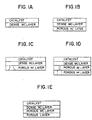
- FIG. 1A presents a prior art surface catalyzed ion transport membrane comprising a single dense mixed conducting (MC) layer having one surface coated with a catalyst.
- MC dense mixed conducting
- FIG. 1B presents a surface catalyzed ion transport membrane comprising a dense MC layer having a first surface which is contiguous to a mixed conducting porous layer and a second surface which is coated with a catalyst.
- FIG. 1C presents a surface catalyzed ion transport membrane comprising a dense MC layer having a first surface which is coated with a catalyst and a second surface which is contiguous to a plurality of individually deposited MC porous layers having successively larger pore radii as a function of distance away from the dense MC layer.
- FIG. 1D presents a surface catalyzed ion transport membrane similar to the embodiment according to FIG. 1C comprising two or more discrete MC porous layers wherein each respective layer has a successively larger average pore radius as a function of distance away from the dense MC layer.
- FIG. 1E presents a surface catalyzed ion transport membrane comprising a dense MC layer having a first surface which is coated with a catalyst and a second surface which is contiguous to a plurality of porous layers wherein one or more of the porous layers not in contact with the dense mixed conducting oxide layer is formed of a material which is not a mixed conductor.
- the present invention relates to novel surface catalyzed ion transport membranes as defined above which membranes are suitable for use in a wide variety of process applications including processes for separating oxygen from oxygen-containing gaseous mixtures.
- the surface catalyzed ion transport membranes have a composite structure comprising a dense multicomponent metallic oxide layer having a first surface and a second surface wherein the first surface is coated with a catalyst.
- FIG. 1A illustrates a dense mixed conducting layer having a single surface which is coated with a catalyst as shall be described in greater detail in this Specification.
- the claimed ion transport membranes comprise a dense layer of one or a mixture of multicomponent metallic oxides having no connected through porosity which are capable of conducting electrons and oxygen ions at operating temperatures.
- the dense layer of the membranes of this invention comprising the multicomponent metallic oxide demonstrates electron conductivity as well as oxygen ion conductivity at temperatures greater than about 500°C. Hence, these materials are commonly referred to as mixed conducting oxides.
- A, A' or A" of the enumerated structure is a Group 2 metal selected from the group consisting of calcium, strontium, barium and magnesium.
- the dense multicomponent metallic oxide layer typically demonstrates an oxygen ionic conductivity ranging from 0.01 ohm -1 cm -1 to 100 ohm -1 cm -1 and an electronic conductivity ranging from about 1 ohm -1 cm -1 to 100 ohm -1 cm -1 .
- Preferred mixed conducting oxides are represented by the formula La x A 1-x Co y Fe 1-y O 3-z wherein x is between 0 and 1, y is between 0 and 1 and A is selected from barium, strontium or calcium.
- the dense layer is formed from a multicomponent metallic oxide selected from the group consisting of La 0.2 Ba 0.8 Co 0.8 Fe 0.2 O 3-z' Pr 0.2 Ba 0.8 Co 0.8 Fe 0.2 O 3-z and La 0.2 Ba 0.8 Co 0.6 Cu 0.2 Fe 0.2 O 3-z .
- Catalysts to be deposited onto the enumerated surface of the dense layer of the ion transport membrane include metals and oxides of metals selected from Groups II, V, VI, VII, VIII, IX, X, XI, XV and the F Block lanthanides of the Periodic Table of the Elements such as platinum, palladium, gold, silver, bismuth, barium, vanadium, molybdenum, cerium, praseodymium, cobalt, ruthenium, rhodium and manganese.
- the catalyst can be applied to the dense mixed conducting layer of the ion transport membrane by any conventional method including painting a suspension of metal particles onto the dense layer of the membrane; spraying a solution of metal salt onto the dense layer surface or dispersing a metal salt solution onto the same.
- suitable methods include screen printing, dip coating, plasma spraying and flame spraying, physical vapor deposition such as electron bean evaporation or sputtering, and chemical vapor deposition.
- any selected pattern of catalyst may be deposited onto the surface of the dense layer of the composite'membrane by screen printing, masking and other techniques. Such patterns can be designed and applied according to currently used techniques which are well known in the art.
- a desired catalyst such as platinum
- platinum ink #6926 which is commercially available from Engelhard Inc., consisting of micron-sized platinum particles suspended in terpene can be applied to the dense layer of the composite catalyst using a brush or roller.
- the ink coating is air dried and the membrane is loaded into an apparatus and slowly heated to a temperature above about 550°C in order to volatilize and burn organic binders and solvents which may be present in the catalyst ink.
- Catalysts may also be applied to the surface of the dense layer by spraying the surface with a solution of the desired catalyst.
- platinum can be applied in this manner using a 0.01 molar solution of platinum acetylacetonate Pt(Acac) 2 which was prepared by dissolving an appropriate amount of Pt(Acac) 2 in acetone.
- This solution is loaded into a chromatography sprayer using nitrogen as a carrier gas.
- the solution is sprayed onto the surface of the dense layer of the composite membrane to yield a 50 nm thick continuous coating of platinum.
- the acetone solvent is evaporated thereby providing a composite membrane whose dense layer was coated with Pt(Acac) 2 .
- the membrane is then loaded into a test apparatus and slowly heated to a temperature greater than about 550°C.
- the temperature should be sufficiently high to decompose the Pt(Acac) 2 to produce the platinum catalyst on the dense layer of the ion transport membrane and organic vapors.
- a desired catalyst may be applied to the surface of the dense layer of a composite membrane by depositing a solution of the desired catalyst in an appropriate solvent.
- a solution of Pt(Acac) 2 in acetone can be transferred or dispersed onto the surface of the dense layer of the composite ion transport membrane.
- the acetone is evaporated leaving the dense layer of the composite membrane coated with Pt(Acac) 2 .
- the membrane is heated to decompose the Pt(Acac) 2 to form the desired coating of platinum catalyst on the surface of the dense layer of the ion transport membrane.
- the surface catalyzed ion transport membranes comprise a dense mixed conducting layer having a first surface contiguous to a porous layer and a second surface which is coated with one or more of the enumerated catalysts.
- This embodiment includes surface catalyzed ion transport membranes comprising a single porous layer formed from one or a mixture of multicomponent metallic oxides referred to in this Specification. Referring to FIG. 1B, the average pore radius of the single porous layer may be constant throughout its cross-section.
- the surface catalyzed ion transport membranes comprise a plurality of porous layers.
- the average pore radius of each respective porous layer may increase with distance from the interface with the dense mixed conducting multicomponent metallic oxide layer as depicted in FIG. 1C., which presents a composite membrane comprising a mixed conducting porous layer which is actually a plurality of individually deposited layers having successively larger pore radii as a function of distance away from the dense mixed conducting oxide layer.
- Any number of layers are used such that the porous layer effectively possesses a pore structure which is funnel-shaped with an average pore radius increasing from 0.5 to about 10 micrometers or more moving away from the interface with the dense mixed conducting oxide layer.
- These layers can be fabricated by starting with a green state formed of a plurality of layers wherein each respective layer comprises successively larger particles.
- a preferred technique for manufacturing ultrathin solid state membranes is presented in United Stated Patent 5 160 618, filed on January 3, 1992, which is assigned to Air Products and Chemicals, Inc., Allentown, PA.
- the ion transport membranes comprise a multicomponent metallic oxide dense layer having a first surface which is coated with an enumerated catalyst and a second surface contiguous to a plurality of mixed conducting porous layers, each respective porous layer having a discrete average pore radius wherein the average pore radius of each respective porous layer is larger than the average pore radius of the preceding porous layer as function of distance from the dense layer.
- Each respective porous layer of the membranes of the embodiment according to FIG. 1D is formed from one or a mixture of mixed conducting multicomponent metallic oxides, an oxygen-ionically conductive material, an electronconducting material or a material which does not conduct electrons or oxygen ions under operating temperatures, wherein at least the porous layer adjacent to the dense mixed conducting multicomponent metallic oxide layer is formed from a mixed conducting multicomponent metallic oxide or mixtures thereof and preferably has an average pore radius of less than about 10 micrometers while the average pore radius of each subsequent porous layer has an average pore radius which progressively increases as a function of distance from the dense layer.
- Any combination of porous layers can be utilized so long as their coefficients of thermal expansion are compatible and chemical reactions are minimized between the respective layers at membrane operating temperatures.
- FIG. 1E illustrates a surface catalyzed ion transport membrane comprising two porous layers, the first which is a mixed conducting porous layer situated contiguous to the dense mixed conducting layer and the second porous layer which is formed of a material which is not mixed conducting under process operation conditions, lying adjacent to the first porous layer.
- Any combination of multicomponent metallic oxides can be used so long as the dense and porous layers are chemically and mechanically compatible under conditions used in the enumerated applications such as in a process for separating oxygen from an oxygen-containing gaseous mixture.
- the thickness of the porous layers of the composite membranes referred to in each of the above-mentioned embodiments can be varied to ensure sufficient mechanical strength of the composite membrane.
- the desired thickness of each porous layer is regulated by the following considerations. First, the porosity and average pore radius of each porous layer should be regulated such that oxygen flux is not impeded while maintaining sufficient mechanical strength. Second, the pores or channels of pores within each porous layer should be wide enough so that oxygen flux is not impeded, but not so wide as to cause pore filling during fabrication or fissure of the dense layer during operation. Third, each porous layer should be compatible with the dense layer in terms of chemical reactivity and adhesion and thermal expansion to reduce problems associated with cracking and delamination.
- the porous layers of the composite membrane are formed from mixed conducting oxides.
- Such porous mixed conducting oxide layers act as a compatible mechanical support for the dense mixed conducting oxide layer and provide two interacting diffusion paths for oxygen; through the pores, and through the solid.
- Surface kinetic rate limitations for gas-solid oxygen exchange are mitigated by the availability of a large "active" surface area in the small pore structure of the support, especially in the vicinity of the dense layer.
- the effect of the small pores in hindering diffusion is mitigated by fast ionic conduction in the solid.
- the thickness of the dense mixed conducting layer typically ranges from 0.01 micrometer to about 500 micrometers although preferably, the dense layer is fabricated as thinly as permitted by structural integrity considerations and has a thickness of less than about 100 micrometers.
- the porous mixed conducting oxide layer in contact with, and contiguous to the dense mixed conducting layer has a thickness ranging from 1 micrometer to about 2 millimeters.
- Porous layers not in contact with the dense mixed conducting layer, whether formed from a mixed conducting oxide or a material which is not a mixed conducting oxide, can be as thick as desired to ensure mechanical strength to the extent that the ultimate thickness does not impede gas diffusion.
- the total thickness of the composite membrane is less than about 5 mm, although membranes having a greater thickness are also contemplated.
- the dense layer has a thickness ranging from 0.01 to about 500 micrometers.
- Surface catalyzed ion transport membranes of this invention which utilize one or more active porous supports formed from mixed conducting oxides provide particularly high oxygen flux because such active porous layers counteract surface kinetic limitations by increasing the active gas-solid interfacial area per unit volume. Therefore, as the average pore radius is reduced while maintaining a given porosity within each porous layer, surface kinetic limitations which reduce oxygen flux can be correspondingly diminished.
- a fairly thin porous mixed conducting oxide layer having an average pore radius ranging from 0.1 to about 10 micrometers, situated contiguous to a dense mixed conducting layer provides increased interfacial area to counteract surface kinetic limitations, but does not cause any significant pressure drop or resistance to mass transfer.
- Thin dense layers of the desired multicomponent metallic oxide of any desired thickness can be deposited onto the enumerated porous layers by known techniques.
- the membrane composites can be manufactured by first forming a porous body from relatively coarse sized particles of the multicomponent metallic oxide. A slurry of finer particles of the same material or a similar, compatible multicomponent metallic oxide may then be coated onto the porous material and cured to the green state, the two layer system then being fired to form the composite membrane.
- the composite membranes of the present invention can be prepared by applying a dense layer of a desired mixed conducting oxide onto the desired porous substrate by conventional chemical vapor deposition techniques followed by sintering to obtain the desired dense layer.
- a smaller average pore radius in the surface of the porous support may be used compared to the average pore radius in the bulk. This may be achieved by using two or more porous layers which differ in properties such as pore radius and porosity.
- the present invention provides surface catalyzed composite membranes which overcome kinetic limitations on oxygen flux associated with very thin dense mixed conducting oxide layers while providing membranes which maintain their structural integrity under the demanding high temperature conditions associated with processes using such membranes.
- the membranes of the present invention can be used to recover oxygen from an oxygen-containing gaseous mixture by delivering the oxygen-containing gaseous mixture into a first gas compartment which is separated from a second gas compartment by the subject membrane, establishing a positive oxygen partial pressure difference between the first and second gas compartments by producing an excess oxygen partial pressure in the first gas compartment and/or by producing a reduced oxygen partial pressure in the second gas compartment; contacting the oxygen-containing gaseous mixture with the catalyzed surface of the enumerated ion transport membranes at a temperature greater than about 500°C to separate the compressed oxygen-containing gaseous mixture into an oxygen permeate stream and an oxygen-depleted gaseous stream and recovering the oxygen permeate stream.
- Any conventional apparatus can be utilized to house the ion transport membranes of the present invention whereby the membrane forms a partition between the first and second gas compartments.
- a representative apparatus is disclosed in U.S. Patent 5,035,727, issued to Air Products and Chemicals, Inc., Allentown, PA.
- the surface catalyzed ion transport membranes are situated in the apparatus such that the oxygen-containing gaseous mixture is contacted with the side of the membrane upon which the catalyst resides.
- the composite membranes of this invention are capable of separating oxygen from oxygen-containing gaseous mixtures containing one or more components selected from carbon dioxide, water and volatile hydrocarbons.
- the amount of oxygen present in such gaseous mixtures typically ranges between about 0.01 vol.% to 50 vol.% oxygen.
- the preferred oxygen-containing gaseous mixture is atmospheric air.
- a difference in oxygen partial pressure between the first and second compartments provides the driving force for effecting the separation when the process temperature is elevated to a sufficient temperature to cause oxygen in the oxygen-containing gaseous mixture residing in the first compartment to adsorb, dissociate and ionize.
- Oxygen is transported through the membrane in the ionic form.
- a pure oxygen product is collected in the second gas compartment wherein oxygen ions are converted into neutral oxygen molecules by the release of electrons and reassociation.
- the second gas compartment resides at lower oxygen partial pressure than the first gas compartment.
- a positive oxygen partial pressure difference between the first and second gas compartments can be created by compressing air in the first compartment to a pressure sufficient to recover the oxygen permeate stream at a pressure of greater than or equal to about one atmosphere. Typical pressures range from about 15 psia to about 250 psia and the optimum pressure will vary depending upon the amount of oxygen in the oxygen-containing gaseous mixture. Conventional compressors can be utilized to achieve the compression required to practice the present step of the process. Alternately, a positive oxygen partial pressure difference between the first and second gas compartments can be achieved by evacuating the second gas compartment to a pressure sufficient to recover the oxygen permeate.
- the final step of the process comprises recovering the oxygen-containing gaseous mixture by storing the substantially pure oxygen in a suitable container or transferring the same to another process.
- the oxygen permeate typically comprises pure oxygen or high purity oxygen defined as a gas generally containing at least about 90 vol.% O 2 , preferably more than about 95 vol% O 2 and especially more than 99 vol.% O 2 .
- the surface catalyzed ion transport membranes of the present invention can be incorporated into any process wherein the gaseous reactants or products formed from the same do not unduly impact membrane performance. Suitable processes include oxygen production, oxidation of organic compounds including hydrocarbons, decomposition of nitrogen- and sulfur-oxides, methane conversion and the like.
Landscapes
- Chemical & Material Sciences (AREA)
- Engineering & Computer Science (AREA)
- Organic Chemistry (AREA)
- Chemical Kinetics & Catalysis (AREA)
- Materials Engineering (AREA)
- Inorganic Chemistry (AREA)
- Environmental & Geological Engineering (AREA)
- General Chemical & Material Sciences (AREA)
- Analytical Chemistry (AREA)
- Oil, Petroleum & Natural Gas (AREA)
- Health & Medical Sciences (AREA)
- Biomedical Technology (AREA)
- Manufacturing & Machinery (AREA)
- Separation Using Semi-Permeable Membranes (AREA)
- Catalysts (AREA)
- Conductive Materials (AREA)
- Fuel Cell (AREA)
- Oxygen, Ozone, And Oxides In General (AREA)
Claims (13)
- Ionentransportmembran, umfassend eine dichte, gemischt leitende Multikomponenten-Metalloxidschicht mit einer ersten Oberfläche und einer zweiten Oberfläche, wobei die erste Oberfläche mit einem Katalysator, ausgewählt aus der aus Metallen und Oxiden von der aus Platin, Gold, Silber, Wismut, Barium, Vanadium, Molybdän, Cer, Ruthenium, Mangan, Cobalt, Rhodium und Praseodym bestehenden Gruppe ausgewählten Metallen, beschichtet ist,
wobei die zweite Oberfläche an eine poröse Schicht oder eine Vielzahl poröser Schichten, welche ein gemischt leitendes Multikomponenten-Metalloxid oder deren Gemische umfasst, angrenzt und wobei
die dichte, gemischt leitende Multikomponenten-Metalloxidschicht aus einem oder einem Gemisch von Multikomponenten-Metalloxiden der Formel AxA'x'A"x"ByB'y'B"y"O3-z hergestellt wird, in der A, A' und A" aus der die Gruppen 1, 2 und 3 und die Block F Lanthanoide umfassenden Gruppe ausgewählt werden und B, B' und B" aus den Block D Übergangsmetallen nach dem Periodensystem der Elemente ausgewählt werden, wobei gilt: 0 < x ≤ 1, 0 ≤ x' ≤ 1, 0 ≤ x" ≤ 1, 0 < y ≤ 1, 0 ≤ y' ≤ 1, 0 ≤ y" ≤ 1, x + x' + x" = 1; y + y' + y" = 1 und z eine Zahl ist, die die Verbindung ladungsneutral macht. - Ionentransportmembran nach Anspruch 1, worin die dichte Schicht aus einem gemischt leitenden Multikomponenten-Metalloxid, ausgewählt aus der aus La0,2Ba0,8Co0,8Fe0,2O3-z, Pr0,2Ba0,8Co0,8Fe0,2O3-z und La0,2Ba0,8Co0,6Cu0,2Fe0,2O3-z bestehenden Gruppe hergestellt wird und das Metall des Katalysators Platin ist.
- Ionentransportmembran nach Anspruch 1 oder 2, in der der durchschnittliche Porenradius der porösen Schicht weniger als 10 µm beträgt, die dichte Schicht eine Dicke im Bereich von 0,01 bis 500 µm aufweist und die poröse Schicht eine Dicke im Bereich von 1 µm bis 2 mm aufweist.
- Ionentransportmembran nach einem der Ansprüche 1 bis 3, in der die dichte gemischt leitende Multikomponenten-Metalloxidschicht eine Leitfähigkeit für Sauerstoffionen im Bereich von 0,01 Ω-1cm-1 bis 100 Ω-1cm-1 und eine Elektronenleitfähigkeit im Bereich von 1 Ω-1cm-1 bis 100 Ω-1cm-1 aufweist.
- Ionentransportmembran nach einem der Ansprüche 1 bis 4, in der A, A' oder A" der genannten Formel ein aus der aus Calcium, Strontium, Barium und Magnesium bestehenden Gruppe ausgewähltes Metall der Gruppe 2 ist.
- Ionentransportmembran nach Anspruch 5, in der die dichte Schicht aus einem gemischt leitenden Multikomponenten-Metalloxid der Formel LaxA1-xCoyFe1-yO3-z hergestellt wird, wobei x zwischen 0 und 1 liegt, y zwischen 0 und 1 liegt und A aus Barium, Strontium oder Calcium ausgewählt wird.
- Ionentransportmembran nach einem der Ansprüche 1 bis 6, in der die poröse Schicht ein poröses Material umfasst, das bei Temperaturen über 500°C keine Elektronen und Sauerstoffionen leitet.
- Ionentransportmembran nach einem der Ansprüche 1 bis 7, in der die poröse Schicht einen durchschnittlichen Porenradius hat, der als Funktion des Abstandes weg von der dichten Schicht zunimmt.
- Verfahren zur Rückgewinnung von Sauerstoff aus einem sauerstoffhaltigen Gasgemisch, bei dem die Ionentransportmembran nach Anspruch 1 verwendet wird.
- Verfahren zur Oxidation einer organischen Verbindung, bei dem die Ionentransportmembran nach Anspruch 1 verwendet wird.
- Verfahren zur Umwandlung von Stickoxid in gasförmigen Stickstoff und Sauerstoff, bei dem die Ionentransportmembran nach Anspruch 1 verwendet wird.
- Verfahren zur Umwandlung von Schwefeloxiden in Schwefel und Sauerstoff, bei dem die Ionentransportmembran nach Anspruch 1 verwendet wird.
- Verfahren zur Umwandlung von Methan zu höheren Kohlenwasserstoffen, bei dem die Ionentransportmembran nach Anspruch 1 verwendet wird.
Applications Claiming Priority (2)
| Application Number | Priority Date | Filing Date | Title |
|---|---|---|---|
| US08/180,582 US5569633A (en) | 1994-01-12 | 1994-01-12 | Ion transport membranes with catalyzed dense layer |
| US180582 | 1994-01-12 |
Publications (3)
| Publication Number | Publication Date |
|---|---|
| EP0663232A2 EP0663232A2 (de) | 1995-07-19 |
| EP0663232A3 EP0663232A3 (de) | 1996-06-19 |
| EP0663232B1 true EP0663232B1 (de) | 2001-12-05 |
Family
ID=22660989
Family Applications (1)
| Application Number | Title | Priority Date | Filing Date |
|---|---|---|---|
| EP95100306A Expired - Lifetime EP0663232B1 (de) | 1994-01-12 | 1995-01-11 | Ionentransportmembrane mit einer dichten Katalysator enthaltenden Schicht |
Country Status (5)
| Country | Link |
|---|---|
| US (1) | US5569633A (de) |
| EP (1) | EP0663232B1 (de) |
| JP (1) | JP3011391B2 (de) |
| CA (1) | CA2139604C (de) |
| DE (1) | DE69524267T2 (de) |
Cited By (1)
| Publication number | Priority date | Publication date | Assignee | Title |
|---|---|---|---|---|
| DE19839382B4 (de) * | 1997-08-29 | 2012-04-19 | Mitsubishi Materials Corp. | Oxid-Ionenleiter und seine Verwendung |
Families Citing this family (64)
| Publication number | Priority date | Publication date | Assignee | Title |
|---|---|---|---|---|
| US5723035A (en) * | 1987-03-13 | 1998-03-03 | The Standard Oil Company | Coated membranes |
| US6165431A (en) * | 1993-12-08 | 2000-12-26 | Eltron Research, Inc. | Methods for separating oxygen from oxygen-containing gases |
| US6355093B1 (en) | 1993-12-08 | 2002-03-12 | Eltron Research, Inc | Two component-three dimensional catalysis |
| US6592782B2 (en) | 1993-12-08 | 2003-07-15 | Eltron Research, Inc. | Materials and methods for the separation of oxygen from air |
| US5681373A (en) * | 1995-03-13 | 1997-10-28 | Air Products And Chemicals, Inc. | Planar solid-state membrane module |
| US5663488A (en) * | 1995-05-31 | 1997-09-02 | Hewlett-Packard Co. | Thermal isolation system in an analytical instrument |
| EP0788828B1 (de) * | 1996-02-09 | 2003-11-12 | Isuzu Motors, Ltd. | NOx-Zersetzungskatalysator und Abgasreiniger unter Verwendung dieses Katalysators |
| JPH10113545A (ja) * | 1996-07-08 | 1998-05-06 | Ngk Insulators Ltd | ガス分離体 |
| US5911860A (en) * | 1996-12-31 | 1999-06-15 | Praxair Technology, Inc. | Solid electrolyte membrane with mechanically-enhancing constituents |
| US5938822A (en) * | 1997-05-02 | 1999-08-17 | Praxair Technology, Inc. | Solid electrolyte membrane with porous catalytically-enhancing constituents |
| ID19327A (id) * | 1996-12-31 | 1998-07-02 | Praxiar Technology Inc | Membran elektrolit padat dengan unsur pokok pemertinggi secara mekanik dan pemertinggi secara katalitik yang bersifat dapat menyerap |
| US5846641A (en) * | 1997-03-20 | 1998-12-08 | Exxon Research And Engineering Company | Multi-layer membrane composites and their use in hydrocarbon partical oxidation |
| US6165553A (en) * | 1998-08-26 | 2000-12-26 | Praxair Technology, Inc. | Method of fabricating ceramic membranes |
| US6136389A (en) * | 1997-12-19 | 2000-10-24 | Amt Holdings, Inc. | Preparation of metal coatings |
| US6426126B1 (en) | 1997-12-19 | 2002-07-30 | Amt Holdings, Inc. | Preparation of metal coatings |
| US6056807A (en) * | 1998-01-26 | 2000-05-02 | Air Products And Chemicals, Inc. | Fluid separation devices capable of operating under high carbon dioxide partial pressures which utilize creep-resistant solid-state membranes formed from a mixed conducting multicomponent metallic oxide |
| US6368383B1 (en) * | 1999-06-08 | 2002-04-09 | Praxair Technology, Inc. | Method of separating oxygen with the use of composite ceramic membranes |
| US6146549A (en) * | 1999-08-04 | 2000-11-14 | Eltron Research, Inc. | Ceramic membranes for catalytic membrane reactors with high ionic conductivities and low expansion properties |
| US6541159B1 (en) * | 1999-08-12 | 2003-04-01 | Reveo, Inc. | Oxygen separation through hydroxide-conductive membrane |
| US6485780B1 (en) * | 1999-08-23 | 2002-11-26 | General Electric Company | Method for applying coatings on substrates |
| EP1095914A3 (de) | 1999-10-25 | 2003-04-16 | Nippon Steel Corporation | Keramische Zusammensetzung, Verbundwerkstoff, Verfahren zur Herstellung eines Verbundwerkstoffs, poröser Körper, Sauerstoffabscheider und chemischer Reaktor |
| DE19959873A1 (de) | 1999-12-10 | 2001-06-13 | Basf Ag | Oxidationsreaktionen unter Verwendung von gemischtleitenden sauerstoffselektiven Membranen |
| AU2001284479B2 (en) * | 2000-09-08 | 2005-05-12 | Nippon Steel Corporation | Ceramic/metal composite article, composite structure for transporting oxide ion, and composite article having sealing property |
| US6514314B2 (en) * | 2000-12-04 | 2003-02-04 | Praxair Technology, Inc. | Ceramic membrane structure and oxygen separation method |
| WO2003033431A1 (en) | 2001-10-15 | 2003-04-24 | Nippon Steel Corporation | Porcelain composition, composite material comprising catalyst and ceramic, film reactor, method for producing synthetic gas, apparatus for producing synthetic gas and method for activating catalyst |
| US7125528B2 (en) * | 2002-05-24 | 2006-10-24 | Bp Corporation North America Inc. | Membrane systems containing an oxygen transport membrane and catalyst |
| US7279027B2 (en) * | 2003-03-21 | 2007-10-09 | Air Products And Chemicals, Inc. | Planar ceramic membrane assembly and oxidation reactor system |
| GB0310281D0 (en) * | 2003-05-03 | 2003-06-11 | Univ Robert Gordon | A membrane apparatus and method of preparing a membrane and a method of producing synthetic gas |
| US7122072B2 (en) * | 2003-11-17 | 2006-10-17 | Air Products And Chemicals, Inc. | Controlled heating and cooling of mixed conducting metal oxide materials |
| JP2005270895A (ja) * | 2004-03-26 | 2005-10-06 | Noritake Co Ltd | 酸化反応装置およびその利用 |
| FR2879185B1 (fr) * | 2004-12-10 | 2007-03-09 | Air Liquide | Reacteur catalytique membranaire |
| US7279025B2 (en) * | 2004-12-21 | 2007-10-09 | Praxair Technology, Inc. | Separation and reaction method utilizing an oxygen ion transport element |
| US7955423B2 (en) | 2005-03-21 | 2011-06-07 | Air Products And Chemicals, Inc. | Solid-state membrane module |
| US7556676B2 (en) * | 2006-08-22 | 2009-07-07 | Praxair Technology, Inc. | Composite oxygen ion transport membrane |
| US7749570B2 (en) * | 2006-12-20 | 2010-07-06 | General Electric Company | Method for depositing a platinum-group-containing layer on a substrate |
| WO2008129671A1 (ja) * | 2007-04-17 | 2008-10-30 | Ibiden Co., Ltd. | 触媒担持ハニカムおよびその製造方法 |
| EP2030674A1 (de) * | 2007-08-31 | 2009-03-04 | The Technical University of Denmark | Membran mit stabiler Mikrostruktur in Nanogröße und Herstellungsverfahren dafür |
| WO2009067171A1 (en) * | 2007-11-20 | 2009-05-28 | Corning Incorporated | Oxygen-ion conducting membrane structure |
| US8323463B2 (en) * | 2010-01-22 | 2012-12-04 | Praxair Technology, Inc. | Catalyst containing oxygen transport membrane |
| US9561476B2 (en) | 2010-12-15 | 2017-02-07 | Praxair Technology, Inc. | Catalyst containing oxygen transport membrane |
| US20130020049A1 (en) | 2011-07-18 | 2013-01-24 | Architectural Applications P.C. | Architectural heat and moisture exchange |
| US9486735B2 (en) | 2011-12-15 | 2016-11-08 | Praxair Technology, Inc. | Composite oxygen transport membrane |
| WO2013089895A1 (en) | 2011-12-15 | 2013-06-20 | Praxair Technology, Inc. | Composite oxygen transport membrane |
| WO2014100376A1 (en) | 2012-12-19 | 2014-06-26 | Praxair Technology, Inc. | Method for sealing an oxygen transport membrane assembly |
| US20140174329A1 (en) * | 2012-12-26 | 2014-06-26 | King Fahd University Of Petroleum And Minerals | Controlled temperature ion transport membrane reactor |
| US9453644B2 (en) | 2012-12-28 | 2016-09-27 | Praxair Technology, Inc. | Oxygen transport membrane based advanced power cycle with low pressure synthesis gas slip stream |
| JP5910539B2 (ja) * | 2013-02-28 | 2016-04-27 | Jfeスチール株式会社 | 二酸化炭素ガスの電気分解方法 |
| US9611144B2 (en) | 2013-04-26 | 2017-04-04 | Praxair Technology, Inc. | Method and system for producing a synthesis gas in an oxygen transport membrane based reforming system that is free of metal dusting corrosion |
| US9212113B2 (en) | 2013-04-26 | 2015-12-15 | Praxair Technology, Inc. | Method and system for producing a synthesis gas using an oxygen transport membrane based reforming system with secondary reforming and auxiliary heat source |
| US9938145B2 (en) | 2013-04-26 | 2018-04-10 | Praxair Technology, Inc. | Method and system for adjusting synthesis gas module in an oxygen transport membrane based reforming system |
| US9296671B2 (en) | 2013-04-26 | 2016-03-29 | Praxair Technology, Inc. | Method and system for producing methanol using an integrated oxygen transport membrane based reforming system |
| EP3055054A2 (de) | 2013-10-07 | 2016-08-17 | Praxair Technology Inc. | Reaktor mit keramischer sauerstofftransportmembrananordnung und reformierungsverfahren |
| RU2661581C2 (ru) | 2013-10-08 | 2018-07-17 | Праксайр Текнолоджи, Инк. | Система и способ регулирования температуры в реакторе на основе кислородпроводящих мембран |
| US9556027B2 (en) | 2013-12-02 | 2017-01-31 | Praxair Technology, Inc. | Method and system for producing hydrogen using an oxygen transport membrane based reforming system with secondary reforming |
| US9067172B1 (en) | 2014-01-28 | 2015-06-30 | Air Products And Chemicals, Inc. | Solid-state membrane module |
| CA2937943A1 (en) | 2014-02-12 | 2015-08-20 | Praxair Technology, Inc. | Oxygen transport membrane reactor based method and system for generating electric power |
| WO2015160609A1 (en) | 2014-04-16 | 2015-10-22 | Praxair Technology, Inc. | Method and system for oxygen transport membrane enhanced integrated gasifier combined cycle (igcc) |
| US9789445B2 (en) | 2014-10-07 | 2017-10-17 | Praxair Technology, Inc. | Composite oxygen ion transport membrane |
| DE202015009384U1 (de) | 2014-10-20 | 2017-05-10 | Architectural Applications P.C. | Regenschutz mit integriertem Wärme- und Feuchtigkeitsaustauscher |
| US10441922B2 (en) | 2015-06-29 | 2019-10-15 | Praxair Technology, Inc. | Dual function composite oxygen transport membrane |
| US10118823B2 (en) | 2015-12-15 | 2018-11-06 | Praxair Technology, Inc. | Method of thermally-stabilizing an oxygen transport membrane-based reforming system |
| US9938146B2 (en) | 2015-12-28 | 2018-04-10 | Praxair Technology, Inc. | High aspect ratio catalytic reactor and catalyst inserts therefor |
| CN109070014A (zh) | 2016-04-01 | 2018-12-21 | 普莱克斯技术有限公司 | 含催化剂的氧气传送膜 |
| EP3797085A1 (de) | 2018-05-21 | 2021-03-31 | Praxair Technology, Inc. | Otm-synthesegaspaneel mit gasbeheiztem reformer |
Citations (1)
| Publication number | Priority date | Publication date | Assignee | Title |
|---|---|---|---|---|
| US4791079A (en) * | 1986-06-09 | 1988-12-13 | Arco Chemical Company | Ceramic membrane for hydrocarbon conversion |
Family Cites Families (8)
| Publication number | Priority date | Publication date | Assignee | Title |
|---|---|---|---|---|
| US4627859A (en) * | 1985-02-15 | 1986-12-09 | Allied Corporation | Facilitated gas enrichment membrane composites and a process for the preparation thereof |
| DE69030651T3 (de) * | 1989-12-27 | 2004-02-26 | The Standard Oil Co., Cleveland | Für Oxydationsreaktionen nützliche elektrochemische Reaktoren und Mehrkomponenten-Membranen |
| US5183788A (en) * | 1991-10-10 | 1993-02-02 | Exxon Research And Engineering Company | Modular surface catalyzed membrane containing a microporous membrane catalyst layer and transport layer |
| US5210059A (en) * | 1991-10-10 | 1993-05-11 | Exxon Research & Engineering Company | Multilayered catalyst for controlled transport of reactant |
| US5276237A (en) * | 1991-12-20 | 1994-01-04 | Amoco Corporation | Membrane and use thereof in oxidative conversion |
| US5261932A (en) * | 1992-09-01 | 1993-11-16 | Air Products And Chemicals, Inc. | Process for recovering oxygen from gaseous mixtures containing water or carbon dioxide which process employs ion transport membranes |
| US5240473A (en) * | 1992-09-01 | 1993-08-31 | Air Products And Chemicals, Inc. | Process for restoring permeance of an oxygen-permeable ion transport membrane utilized to recover oxygen from an oxygen-containing gaseous mixture |
| US5240480A (en) * | 1992-09-15 | 1993-08-31 | Air Products And Chemicals, Inc. | Composite mixed conductor membranes for producing oxygen |
-
1994
- 1994-01-12 US US08/180,582 patent/US5569633A/en not_active Expired - Lifetime
-
1995
- 1995-01-05 CA CA002139604A patent/CA2139604C/en not_active Expired - Fee Related
- 1995-01-11 JP JP7002606A patent/JP3011391B2/ja not_active Expired - Lifetime
- 1995-01-11 EP EP95100306A patent/EP0663232B1/de not_active Expired - Lifetime
- 1995-01-11 DE DE69524267T patent/DE69524267T2/de not_active Expired - Fee Related
Patent Citations (1)
| Publication number | Priority date | Publication date | Assignee | Title |
|---|---|---|---|---|
| US4791079A (en) * | 1986-06-09 | 1988-12-13 | Arco Chemical Company | Ceramic membrane for hydrocarbon conversion |
Cited By (1)
| Publication number | Priority date | Publication date | Assignee | Title |
|---|---|---|---|---|
| DE19839382B4 (de) * | 1997-08-29 | 2012-04-19 | Mitsubishi Materials Corp. | Oxid-Ionenleiter und seine Verwendung |
Also Published As
| Publication number | Publication date |
|---|---|
| DE69524267T2 (de) | 2002-08-08 |
| JPH07240115A (ja) | 1995-09-12 |
| EP0663232A3 (de) | 1996-06-19 |
| DE69524267D1 (de) | 2002-01-17 |
| CA2139604A1 (en) | 1995-07-13 |
| JP3011391B2 (ja) | 2000-02-21 |
| CA2139604C (en) | 1999-03-30 |
| US5569633A (en) | 1996-10-29 |
| EP0663232A2 (de) | 1995-07-19 |
Similar Documents
| Publication | Publication Date | Title |
|---|---|---|
| US5534471A (en) | Ion transport membranes with catalyzed mixed conducting porous layer | |
| US5569633A (en) | Ion transport membranes with catalyzed dense layer | |
| EP0732139B2 (de) | Rohrförmiges monolithisches Membranmodul | |
| CA2105735C (en) | Composite mixed conductor membranes for producing oxygen | |
| US5714091A (en) | Process for the partial oxydation of hydrocarbons | |
| US5723035A (en) | Coated membranes | |
| EP2183043B1 (de) | Membran mit stabiler mikrostruktur in nanogrösse und herstellungsverfahren dafür | |
| US5648304A (en) | Oxygen permeable mixed conductor membranes | |
| EP0732138B1 (de) | Flaches monolithisches Membranmodul | |
| JP3212304B2 (ja) | 新規な固体多成分膜、電気化学的リアクター、並びに酸化反応に対する膜およびリアクターの使用 | |
| EP0345393A1 (de) | Keramische Membran und deren Verwendung für die Umwandlung von Kohlenwasserstoffen | |
| EP0585781A2 (de) | Verfahren zur Sauerstoffgewinnung aus Wasser- oder Kohlendioxid enthaltenden Gasgemischen unter Verwendung von Barium enthaltenden Ionentransportmembranen | |
| EP3313557B1 (de) | Verbundsauerstofftransportmembran mit doppelfunktion | |
| US6488739B1 (en) | Oxygen production process | |
| US7893002B2 (en) | Oxygen conducting membranes, preparation method thereof, and reactor and method using same | |
| US6544404B1 (en) | Oxygen separation process | |
| AU2006201076A1 (en) | Solid-state membrane module | |
| EP0732305B1 (de) | Elektrochemische Membrane auf Basis von Zusammensetzungen mit der Fähigkeit zu funktionieren unter hohen Sauerstoffpartialdrucken zur Verwendung in Feststoffvorrichtungen zur Herstellung von Sauerstoff | |
| CA2215672C (en) | Coated membranes | |
| JPH1192961A (ja) | 被覆膜 | |
| AU3833197A (en) | Coated membranes |
Legal Events
| Date | Code | Title | Description |
|---|---|---|---|
| PUAI | Public reference made under article 153(3) epc to a published international application that has entered the european phase |
Free format text: ORIGINAL CODE: 0009012 |
|
| AK | Designated contracting states |
Kind code of ref document: A2 Designated state(s): DE FR GB NL |
|
| PUAL | Search report despatched |
Free format text: ORIGINAL CODE: 0009013 |
|
| AK | Designated contracting states |
Kind code of ref document: A3 Designated state(s): DE FR GB NL |
|
| 17P | Request for examination filed |
Effective date: 19960725 |
|
| 17Q | First examination report despatched |
Effective date: 19960926 |
|
| GRAG | Despatch of communication of intention to grant |
Free format text: ORIGINAL CODE: EPIDOS AGRA |
|
| RIC1 | Information provided on ipc code assigned before grant |
Free format text: 7B 01D 53/22 A, 7B 01D 71/02 B |
|
| GRAG | Despatch of communication of intention to grant |
Free format text: ORIGINAL CODE: EPIDOS AGRA |
|
| GRAH | Despatch of communication of intention to grant a patent |
Free format text: ORIGINAL CODE: EPIDOS IGRA |
|
| GRAH | Despatch of communication of intention to grant a patent |
Free format text: ORIGINAL CODE: EPIDOS IGRA |
|
| GRAA | (expected) grant |
Free format text: ORIGINAL CODE: 0009210 |
|
| AK | Designated contracting states |
Kind code of ref document: B1 Designated state(s): DE FR GB NL |
|
| REG | Reference to a national code |
Ref country code: GB Ref legal event code: IF02 |
|
| REF | Corresponds to: |
Ref document number: 69524267 Country of ref document: DE Date of ref document: 20020117 |
|
| ET | Fr: translation filed | ||
| PLBE | No opposition filed within time limit |
Free format text: ORIGINAL CODE: 0009261 |
|
| STAA | Information on the status of an ep patent application or granted ep patent |
Free format text: STATUS: NO OPPOSITION FILED WITHIN TIME LIMIT |
|
| 26N | No opposition filed | ||
| PGFP | Annual fee paid to national office [announced via postgrant information from national office to epo] |
Ref country code: GB Payment date: 20071212 Year of fee payment: 14 |
|
| PGFP | Annual fee paid to national office [announced via postgrant information from national office to epo] |
Ref country code: NL Payment date: 20071219 Year of fee payment: 14 Ref country code: DE Payment date: 20080131 Year of fee payment: 14 |
|
| PGFP | Annual fee paid to national office [announced via postgrant information from national office to epo] |
Ref country code: FR Payment date: 20080107 Year of fee payment: 14 |
|
| GBPC | Gb: european patent ceased through non-payment of renewal fee |
Effective date: 20090111 |
|
| NLV4 | Nl: lapsed or anulled due to non-payment of the annual fee |
Effective date: 20090801 |
|
| PG25 | Lapsed in a contracting state [announced via postgrant information from national office to epo] |
Ref country code: DE Free format text: LAPSE BECAUSE OF NON-PAYMENT OF DUE FEES Effective date: 20090801 |
|
| REG | Reference to a national code |
Ref country code: FR Ref legal event code: ST Effective date: 20091030 |
|
| PG25 | Lapsed in a contracting state [announced via postgrant information from national office to epo] |
Ref country code: NL Free format text: LAPSE BECAUSE OF NON-PAYMENT OF DUE FEES Effective date: 20090801 Ref country code: GB Free format text: LAPSE BECAUSE OF NON-PAYMENT OF DUE FEES Effective date: 20090111 |
|
| PG25 | Lapsed in a contracting state [announced via postgrant information from national office to epo] |
Ref country code: FR Free format text: LAPSE BECAUSE OF NON-PAYMENT OF DUE FEES Effective date: 20090202 |