EP0671023B1 - Asymmetrische substituierte fluorene für nicht-lineare optische anwendungen - Google Patents
Asymmetrische substituierte fluorene für nicht-lineare optische anwendungen Download PDFInfo
- Publication number
- EP0671023B1 EP0671023B1 EP94901357A EP94901357A EP0671023B1 EP 0671023 B1 EP0671023 B1 EP 0671023B1 EP 94901357 A EP94901357 A EP 94901357A EP 94901357 A EP94901357 A EP 94901357A EP 0671023 B1 EP0671023 B1 EP 0671023B1
- Authority
- EP
- European Patent Office
- Prior art keywords
- group
- parts
- compound according
- different
- groups
- Prior art date
- Legal status (The legal status is an assumption and is not a legal conclusion. Google has not performed a legal analysis and makes no representation as to the accuracy of the status listed.)
- Expired - Lifetime
Links
- 230000003287 optical effect Effects 0.000 title abstract description 12
- 150000002220 fluorenes Chemical class 0.000 title 1
- 229920000642 polymer Polymers 0.000 claims abstract description 17
- 150000001875 compounds Chemical class 0.000 claims abstract description 16
- 239000000203 mixture Substances 0.000 claims description 30
- 125000000217 alkyl group Chemical group 0.000 claims description 7
- 229920003229 poly(methyl methacrylate) Polymers 0.000 claims description 7
- 239000004926 polymethyl methacrylate Substances 0.000 claims description 7
- 125000004122 cyclic group Chemical group 0.000 claims description 6
- 239000011159 matrix material Substances 0.000 claims description 6
- 238000001816 cooling Methods 0.000 claims description 5
- 229920000193 polymethacrylate Polymers 0.000 claims description 5
- UFWIBTONFRDIAS-UHFFFAOYSA-N Naphthalene Chemical compound C1=CC=CC2=CC=CC=C21 UFWIBTONFRDIAS-UHFFFAOYSA-N 0.000 claims description 4
- 239000004793 Polystyrene Substances 0.000 claims description 3
- 125000003178 carboxy group Chemical group [H]OC(*)=O 0.000 claims description 3
- 125000000843 phenylene group Chemical group C1(=C(C=CC=C1)*)* 0.000 claims description 3
- 229920000515 polycarbonate Polymers 0.000 claims description 3
- 239000004417 polycarbonate Substances 0.000 claims description 3
- 229920002223 polystyrene Polymers 0.000 claims description 3
- 125000005556 thienylene group Chemical group 0.000 claims description 3
- 125000002529 biphenylenyl group Chemical group C1(=CC=CC=2C3=CC=CC=C3C12)* 0.000 claims description 2
- 125000005010 perfluoroalkyl group Chemical group 0.000 claims description 2
- 238000010438 heat treatment Methods 0.000 claims 2
- 238000006116 polymerization reaction Methods 0.000 abstract description 6
- 125000003118 aryl group Chemical group 0.000 abstract description 2
- 239000000047 product Substances 0.000 description 31
- XEKOWRVHYACXOJ-UHFFFAOYSA-N Ethyl acetate Chemical compound CCOC(C)=O XEKOWRVHYACXOJ-UHFFFAOYSA-N 0.000 description 15
- OKKJLVBELUTLKV-UHFFFAOYSA-N Methanol Chemical compound OC OKKJLVBELUTLKV-UHFFFAOYSA-N 0.000 description 15
- VLKZOEOYAKHREP-UHFFFAOYSA-N n-Hexane Chemical compound CCCCCC VLKZOEOYAKHREP-UHFFFAOYSA-N 0.000 description 15
- 238000005160 1H NMR spectroscopy Methods 0.000 description 14
- 238000001644 13C nuclear magnetic resonance spectroscopy Methods 0.000 description 13
- KJIFKLIQANRMOU-UHFFFAOYSA-N oxidanium;4-methylbenzenesulfonate Chemical compound O.CC1=CC=C(S(O)(=O)=O)C=C1 KJIFKLIQANRMOU-UHFFFAOYSA-N 0.000 description 8
- 0 CC(C)(C)NNN*C(C)(C)* Chemical compound CC(C)(C)NNN*C(C)(C)* 0.000 description 7
- 238000002360 preparation method Methods 0.000 description 7
- 230000004044 response Effects 0.000 description 7
- VYPSYNLAJGMNEJ-UHFFFAOYSA-N Silicium dioxide Chemical compound O=[Si]=O VYPSYNLAJGMNEJ-UHFFFAOYSA-N 0.000 description 6
- HEMHJVSKTPXQMS-UHFFFAOYSA-M Sodium hydroxide Chemical compound [OH-].[Na+] HEMHJVSKTPXQMS-UHFFFAOYSA-M 0.000 description 6
- YXFVVABEGXRONW-UHFFFAOYSA-N Toluene Chemical compound CC1=CC=CC=C1 YXFVVABEGXRONW-UHFFFAOYSA-N 0.000 description 6
- 230000000694 effects Effects 0.000 description 6
- 230000005684 electric field Effects 0.000 description 6
- 239000002904 solvent Substances 0.000 description 6
- XLYOFNOQVPJJNP-UHFFFAOYSA-N water Substances O XLYOFNOQVPJJNP-UHFFFAOYSA-N 0.000 description 6
- 239000010408 film Substances 0.000 description 5
- 239000000741 silica gel Substances 0.000 description 5
- 229910002027 silica gel Inorganic materials 0.000 description 5
- RTZKZFJDLAIYFH-UHFFFAOYSA-N Diethyl ether Chemical compound CCOCC RTZKZFJDLAIYFH-UHFFFAOYSA-N 0.000 description 4
- UIIMBOGNXHQVGW-UHFFFAOYSA-M Sodium bicarbonate Chemical compound [Na+].OC([O-])=O UIIMBOGNXHQVGW-UHFFFAOYSA-M 0.000 description 4
- MVPPADPHJFYWMZ-UHFFFAOYSA-N chlorobenzene Chemical compound ClC1=CC=CC=C1 MVPPADPHJFYWMZ-UHFFFAOYSA-N 0.000 description 4
- 239000000463 material Substances 0.000 description 4
- 125000001424 substituent group Chemical group 0.000 description 4
- LYCAIKOWRPUZTN-UHFFFAOYSA-N Ethylene glycol Chemical compound OCCO LYCAIKOWRPUZTN-UHFFFAOYSA-N 0.000 description 3
- 101710095395 Histidine decarboxylase proenzyme Proteins 0.000 description 3
- ZMANZCXQSJIPKH-UHFFFAOYSA-N Triethylamine Chemical compound CCN(CC)CC ZMANZCXQSJIPKH-UHFFFAOYSA-N 0.000 description 3
- XAGFODPZIPBFFR-UHFFFAOYSA-N aluminium Chemical compound [Al] XAGFODPZIPBFFR-UHFFFAOYSA-N 0.000 description 3
- 229910052782 aluminium Inorganic materials 0.000 description 3
- 238000006243 chemical reaction Methods 0.000 description 3
- 230000009477 glass transition Effects 0.000 description 3
- 238000000034 method Methods 0.000 description 3
- 239000000178 monomer Substances 0.000 description 3
- 239000011541 reaction mixture Substances 0.000 description 3
- CSCPPACGZOOCGX-UHFFFAOYSA-N Acetone Chemical compound CC(C)=O CSCPPACGZOOCGX-UHFFFAOYSA-N 0.000 description 2
- PAYRUJLWNCNPSJ-UHFFFAOYSA-N Aniline Chemical compound NC1=CC=CC=C1 PAYRUJLWNCNPSJ-UHFFFAOYSA-N 0.000 description 2
- OKTJSMMVPCPJKN-UHFFFAOYSA-N Carbon Chemical compound [C] OKTJSMMVPCPJKN-UHFFFAOYSA-N 0.000 description 2
- IAZDPXIOMUYVGZ-UHFFFAOYSA-N Dimethylsulphoxide Chemical compound CS(C)=O IAZDPXIOMUYVGZ-UHFFFAOYSA-N 0.000 description 2
- BRLQWZUYTZBJKN-UHFFFAOYSA-N Epichlorohydrin Chemical compound ClCC1CO1 BRLQWZUYTZBJKN-UHFFFAOYSA-N 0.000 description 2
- AFBPFSWMIHJQDM-UHFFFAOYSA-N N-methylaniline Chemical compound CNC1=CC=CC=C1 AFBPFSWMIHJQDM-UHFFFAOYSA-N 0.000 description 2
- KDLHZDBZIXYQEI-UHFFFAOYSA-N Palladium Chemical compound [Pd] KDLHZDBZIXYQEI-UHFFFAOYSA-N 0.000 description 2
- FAPWRFPIFSIZLT-UHFFFAOYSA-M Sodium chloride Chemical compound [Na+].[Cl-] FAPWRFPIFSIZLT-UHFFFAOYSA-M 0.000 description 2
- 239000004809 Teflon Substances 0.000 description 2
- 229920006362 Teflon® Polymers 0.000 description 2
- 229920006125 amorphous polymer Polymers 0.000 description 2
- 239000013078 crystal Substances 0.000 description 2
- 238000010511 deprotection reaction Methods 0.000 description 2
- SBZXBUIDTXKZTM-UHFFFAOYSA-N diglyme Chemical compound COCCOCCOC SBZXBUIDTXKZTM-UHFFFAOYSA-N 0.000 description 2
- NIHNNTQXNPWCJQ-UHFFFAOYSA-N fluorene Chemical compound C1=CC=C2CC3=CC=CC=C3C2=C1 NIHNNTQXNPWCJQ-UHFFFAOYSA-N 0.000 description 2
- 150000008376 fluorenones Chemical class 0.000 description 2
- 238000005259 measurement Methods 0.000 description 2
- BDAGIHXWWSANSR-UHFFFAOYSA-N methanoic acid Natural products OC=O BDAGIHXWWSANSR-UHFFFAOYSA-N 0.000 description 2
- 229920006254 polymer film Polymers 0.000 description 2
- 229910000030 sodium bicarbonate Inorganic materials 0.000 description 2
- 235000017557 sodium bicarbonate Nutrition 0.000 description 2
- 239000007787 solid Substances 0.000 description 2
- 238000003756 stirring Methods 0.000 description 2
- 239000000758 substrate Substances 0.000 description 2
- HDVGAFBXTXDYIB-UHFFFAOYSA-N 2,7-dinitrofluoren-9-one Chemical compound C1=C([N+]([O-])=O)C=C2C(=O)C3=CC([N+](=O)[O-])=CC=C3C2=C1 HDVGAFBXTXDYIB-UHFFFAOYSA-N 0.000 description 1
- OSWFIVFLDKOXQC-UHFFFAOYSA-N 4-(3-methoxyphenyl)aniline Chemical compound COC1=CC=CC(C=2C=CC(N)=CC=2)=C1 OSWFIVFLDKOXQC-UHFFFAOYSA-N 0.000 description 1
- UXVMQQNJUSDDNG-UHFFFAOYSA-L Calcium chloride Chemical compound [Cl-].[Cl-].[Ca+2] UXVMQQNJUSDDNG-UHFFFAOYSA-L 0.000 description 1
- 229910003327 LiNbO3 Inorganic materials 0.000 description 1
- 238000005481 NMR spectroscopy Methods 0.000 description 1
- ISWSIDIOOBJBQZ-UHFFFAOYSA-N Phenol Chemical compound OC1=CC=CC=C1 ISWSIDIOOBJBQZ-UHFFFAOYSA-N 0.000 description 1
- XUIMIQQOPSSXEZ-UHFFFAOYSA-N Silicon Chemical compound [Si] XUIMIQQOPSSXEZ-UHFFFAOYSA-N 0.000 description 1
- 238000002441 X-ray diffraction Methods 0.000 description 1
- 150000001252 acrylic acid derivatives Chemical class 0.000 description 1
- 239000000654 additive Substances 0.000 description 1
- 230000009286 beneficial effect Effects 0.000 description 1
- 239000001110 calcium chloride Substances 0.000 description 1
- 229910001628 calcium chloride Inorganic materials 0.000 description 1
- 125000002915 carbonyl group Chemical group [*:2]C([*:1])=O 0.000 description 1
- 230000008859 change Effects 0.000 description 1
- 238000009833 condensation Methods 0.000 description 1
- 230000005494 condensation Effects 0.000 description 1
- 229920001577 copolymer Polymers 0.000 description 1
- 238000013500 data storage Methods 0.000 description 1
- 230000005672 electromagnetic field Effects 0.000 description 1
- 238000005516 engineering process Methods 0.000 description 1
- 230000002349 favourable effect Effects 0.000 description 1
- 235000019253 formic acid Nutrition 0.000 description 1
- 125000000524 functional group Chemical group 0.000 description 1
- 238000007306 functionalization reaction Methods 0.000 description 1
- 229910052736 halogen Inorganic materials 0.000 description 1
- 150000002367 halogens Chemical class 0.000 description 1
- 230000005764 inhibitory process Effects 0.000 description 1
- 229910010272 inorganic material Inorganic materials 0.000 description 1
- 239000011147 inorganic material Substances 0.000 description 1
- 230000002452 interceptive effect Effects 0.000 description 1
- 230000007774 longterm Effects 0.000 description 1
- 239000000155 melt Substances 0.000 description 1
- 150000002734 metacrylic acid derivatives Chemical class 0.000 description 1
- 239000012046 mixed solvent Substances 0.000 description 1
- 238000002156 mixing Methods 0.000 description 1
- 150000002894 organic compounds Chemical class 0.000 description 1
- 229920000620 organic polymer Polymers 0.000 description 1
- 229910052763 palladium Inorganic materials 0.000 description 1
- 230000010287 polarization Effects 0.000 description 1
- 229920002959 polymer blend Polymers 0.000 description 1
- 239000002861 polymer material Substances 0.000 description 1
- 230000008569 process Effects 0.000 description 1
- 239000010453 quartz Substances 0.000 description 1
- 230000005855 radiation Effects 0.000 description 1
- 229920006395 saturated elastomer Polymers 0.000 description 1
- 229910052710 silicon Inorganic materials 0.000 description 1
- 239000010703 silicon Substances 0.000 description 1
- 239000011780 sodium chloride Substances 0.000 description 1
- 239000012265 solid product Substances 0.000 description 1
- 238000004528 spin coating Methods 0.000 description 1
- 239000007858 starting material Substances 0.000 description 1
- 230000003068 static effect Effects 0.000 description 1
- 239000000126 substance Substances 0.000 description 1
- 238000006467 substitution reaction Methods 0.000 description 1
- 239000010409 thin film Substances 0.000 description 1
- 230000009466 transformation Effects 0.000 description 1
- WVLBCYQITXONBZ-UHFFFAOYSA-N trimethyl phosphate Chemical compound COP(=O)(OC)OC WVLBCYQITXONBZ-UHFFFAOYSA-N 0.000 description 1
Classifications
-
- G—PHYSICS
- G02—OPTICS
- G02F—OPTICAL DEVICES OR ARRANGEMENTS FOR THE CONTROL OF LIGHT BY MODIFICATION OF THE OPTICAL PROPERTIES OF THE MEDIA OF THE ELEMENTS INVOLVED THEREIN; NON-LINEAR OPTICS; FREQUENCY-CHANGING OF LIGHT; OPTICAL LOGIC ELEMENTS; OPTICAL ANALOGUE/DIGITAL CONVERTERS
- G02F1/00—Devices or arrangements for the control of the intensity, colour, phase, polarisation or direction of light arriving from an independent light source, e.g. switching, gating or modulating; Non-linear optics
- G02F1/35—Non-linear optics
- G02F1/355—Non-linear optics characterised by the materials used
- G02F1/361—Organic materials
- G02F1/3615—Organic materials containing polymers
- G02F1/3617—Organic materials containing polymers having the non-linear optical group in a side chain
Definitions
- Organic polymer materials which have large second order non-linear optical (NLO) response are of interest for optical applications including communications, data storage, and computing.
- Important applications include waveguides, interconnects, switches, and the like.
- Their advantages over the conventionally employed inorganic materials, e.g. LiNbO 3 in such applications include fast response time, large electro-optical response over a wide frequency range, low dielectric constant, compatibility with silicon wafer technology and others.
- NLO active polymers known from the prior art suffer from lack of long term stability under working temperature conditions, which limits their practical utility.
- the present invention provides fluorene-based compounds which are highly NLO active through their unsymmetrical substitution at the aromatic rings. Those which have functional groups which permit polymerization can be used for making NLO active polymers with high glass transition temperature; all can be used as additives in host-guest polymer systems. Some can be grown into non-centrosymmetric crystals.
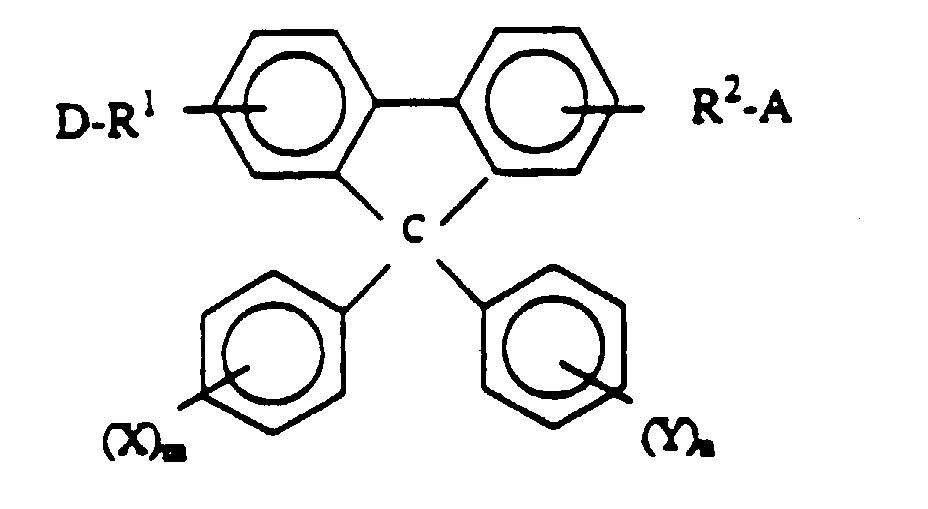
- NLO chromophores compounds of the general formula (I): wherein
- non-linear optical collectively refers to materials characterized by non-linear response of polarization (dipole moment per volume) to applied electric or electromagnetic (optical) fields.
- NLO materials are classified according to the "order" of the nonlinear response.
- Second Order NLO materials respond to the square of the applied fields.
- Second Order NLO phenomena include: second harmonic generation (generation of light at twice the incident frequency); optical rectification (generation of an electric field in response to applied optical radiation); and electro-optic effect (change in optical refractive index in response to applied electric field).
- Third Order NLO materials respond to the cube of an applied electric or electromagnetic field.
- Exemplary Third Order NLO phenomena include: third harmonic generation (generation of light at three times the incident frequency and sum and difference frequency generation (generation of a new optical frequency in the presence of two applied optical frequencies).
- the NLO active chromophores of this invention contain both an electron donating group (designated D in formula (I), above) and an electron accepting group (designated A in formula (I), above), which are connected through ⁇ -chain links. These chromophores can be incorporated into optically clear (generally amorphous) polymers, as by blending, to from optically active compositions, e.g. for forming optically active waveguides. Those of the NLO chromophores which have terminal X and Y groups capable of partaking in polymerization reactions are monomers which can be polymerized (or copolymerized) into optically active clear polymers, which are useful for the same purpose.
- the NLO activity of such chromophores is determined by the electron accepting and electron donating strength of the A and D groups, respectively, and the length of the ⁇ -chain-the longer the ⁇ -chain, the greater the NLO activity, other things being equal.
- the beneficial effect of extension of the ⁇ -chain is offset by the free rotation of a single bond connecting the ⁇ units.
- Structure-related inhibition of rotation around the ⁇ -bond(s) also known as "planarization” in the chromophores of this invention maximizes their NLO activity.
- chromophores Besides high NLO activity, other chemical and physical characteristics are essential for practical utility of such chromophores and the polymeric compositions into which they are incorporated. They should have favorable solubility in spin solvents, and sufficient molecular weight so that they can be applied in thin films by the spin coating procedure; they must be transparent in the desired optical frequency range; and they should have a high glass transition temperature (T g ) to prevent thermal relaxation (deorientation) of "poled" films at working temperature.
- T g glass transition temperature
- the NLO chromophores of formula (I), above have A and D groups spaced apart and connected through a rigid ⁇ -system in monomers of a type known for providing polymers having high temperature stability.
- the active groups for polymerization (the X and Y groups in formula (I), above) and the active groups for NLO activity (the A and D groups in formula (I), above) are independent of each other and non-interfering.
- the resultant polymer composition can be spin coated to obtain NLO active films or waveguides which, upon poling, are EO active.
- chromophores can be provided with active sites for polymerization (in the X and Y groups), and in this form they are suitable as monomers for making NLO active homo- and copolymers.
- these chromophores are NLO active.
- NLO chromophores of formula (I), above in general can be prepared by the three-step procedure described below, starting with known fluorenone derivatives.
- D, A, X, Y, R 1, R 2 , m and n have the meaning given above in connection with the NLO chromophores of general formula (I); terms not previously used will be defined when first used.
- the Z 1 and Z 2 substituents of the product of the first step are replaced with the desired D-R 1 and D-R 2 groups: wherein Z 1 , Z 2 , R 1 , R 2 , D, A and Q have the afore-stated meaning.
- the third step involves deprotection of the 9-carbonyl group and condensation of the carbonyl, and followed by functionalization, if necessary or desirable (as in the case that X and/or Y are other than -OH, -NH 2 , -NHR, -NR 2 , -SH, -CR and -SR) : wherein X' and Y' are H, -OH, -NH 2 , -NHR, -NR 2 , -SH, -OR or -SR (R being as defined above in connection with formula I); m and n are 1 - 4; and A, D, R1 and R2 have the afore-stated meaning.
- steps 1 through 3 are schematically shown below:
- Film-forming compositions for making NLO active films and waveguides incorporating the NLO chromophores of the invention comprise a compound of formula (I), above, together with an optically clear polymer, generally an amorphous polymer, suitably selected from the group consisting of polymethacrylate (PMA), polymethylmethacrylate (PMMA), polystyrene and polycarbonate, wherein the compound of formula (I) comprises from about 1 to about 60 percent by weight of the combined weight of the compound and the polymer.
- PMA polymethacrylate
- PMMA polymethylmethacrylate
- polystyrene polystyrene
- polycarbonate a polycarbonate
- These compositions can be applied to suitable substrates, from the melt or from solution in a suitable solvent, to form a film or a waveguide which is rendered NLO active after poling.
- H's 8.2, 1H; 8.15, 1H; 7.65, 2H; 6.82, 1H; 6.75, lH; 4.42, 4H; 3.0, 6H.
- X-ray crystallographic analysis on the crystalline product confirmed that it was non-centrosymmetric. The product was monoclinic, in the P2 1 /n space group.
- H's 8.20, 1H; 8.12, lH; 7.6, 2H; 7.1, 4H; 6.8, 6H; 4.15, 2H; 3.9, 2H, 3.3, 2H; 3.0, 6H; 2.85, 2H; 2.75, 2H.
- H's 8.20, 1H; 8.12, lH; 7.6, 2H; 7.1, 4H; 6.8, 6H; 4.15, 2H; 3.9, 2H, 3.3, 2H; 3.0, 6H; 2.85, 2H; 2.75, 2H.
- a DC voltage was applied to the electrodes such that the film within the electrode gap regions was subjected to a static electric field strength of 0.5 MV/cm.
- the sample was then permitted to cool to room temperature with the field applied.
- the cooled samples were mounted in a modified Senarmont compensator apparatus, and measurements were made as described by T. Yoshimara, J. Appl. Phys. 62 , 2027 (1987), using an 0.81 micron diode laser. Phase retardation vs. applied voltage showed linear relationship, establishing that the products were non-centrosymmetrically aligned and optically nonlinear.
- the electro-optic coefficients r33 (pm/V) were measured at 632.8, 670 and 810 nm.
- One type of preferred embodiment is represented by compounds which are capable of undergoing polymerization. These are the compounds as defined by formula I wherein X and Y are other than -OR, -SR and -NR 2 .
- the 2 and 4 positions are preferred, with the 2 position being most preferred.
- the 5 and 7 positions are preferred, with the 7 position being most preferred.
- the X substituents are preferably in the 2', 4' and/or 6' position, with the 4' position being preferred if m is 1.
- the Y substitutents are preferably in the 2", 4" and 6" position, with the 4" position being preferred if n is 1.
- R 1 and R 2 are preferably Ar; phenylene and thienylene are specific examples of preferred embodiments.
- A is preferably -NO 2 , -CN, -SO 2 R, -SO 2 R F , or -COOR.
- D is preferably -NR 2 , -SR or OR.
- Preferred X and Y are independently selected from -OH, -NH 2 , -NHR and
Landscapes
- Physics & Mathematics (AREA)
- Nonlinear Science (AREA)
- General Physics & Mathematics (AREA)
- Optics & Photonics (AREA)
- Organic Low-Molecular-Weight Compounds And Preparation Thereof (AREA)
- Heterocyclic Carbon Compounds Containing A Hetero Ring Having Oxygen Or Sulfur (AREA)
- Compositions Of Macromolecular Compounds (AREA)
- Epoxy Compounds (AREA)
Claims (12)
- Verbindungen der allgemeinen Formelworin
- m und n
- unabhängig voneinander für ganze Zahlen von 1 bis 4 stehen;
- R1 und R2,
- die in verschiedenen D-R1- und A-R2-Gruppen gleich oder verschieden sind, unabhängig voneinander für -Ar-, -Ar-CH=CH- oder -Ar-C≡C-, worin Ar eine zweiwertige Brückengruppe aus der Gruppe bestehend aus Phenylen, Biphenylen, Naphthalin und Thienylen bedeutet, stehen;
- A,
- das in verschiedenen -A-R2-Gruppen
gleich oder verschieden ist, für -NO2,
-CN, -SO2R,- SO2RF, - COOR,
-C(CN)=C(CN)2 und -CH=C(CN)2, worin
- RF
- für -CnF2n+1, worin n eine ganze Zahl von 1 bis 10 bedeutet, und
- R
- für geradkettiges, verzweigtes
oder cyclisches
Alkyl mit 1 bis
etwa 10 Kohlenstoffatomen
steht,
steht; - D,
- das in verschiedenen D-R1-Gruppen
gleich oder verschieden ist, für -NH2,
-NHR, -NR2, -OH, -OR, -SH oder -SR,
worin
- R
- für geradkettiges, verzweigtes
oder cyclisches
Alkyl mit 1 bis
etwa 10 Kohlenstoffatomen
steht,
steht und
- X und Y
- unabhängig voneinander aus der Gruppe
bestehend aus H, -NH2, -NHR, -NR2,
-OH, -OR, -SH, -SR, -COOH, -NCO,
und
 worin
worin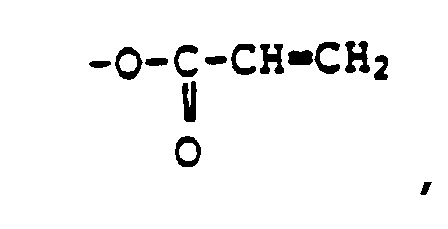
- n
- für eine ganze Zahl von 1 bis etwa 10 und
- R
- für geradkettiges, verzweigtes oder cyclisches Alkyl mit 1 bis etwa 10 Kohlenstoffatomen steht,
- Verbindung nach Anspruch 1, worin X und Y unabhängig voneinander aus der Gruppe bestehend aus -NH2, -NHR, -OH, -SH, -COOH, -NCO,und
 ausgewählt sind.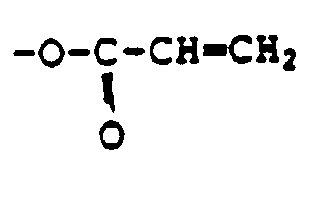
- Verbindung nach Anspruch 1, worin X und Y unabhängig voneinander aus der Gruppe bestehend aus H, -OR, -SR und -NR2 ausgewählt sind.
- Zusammensetzung, enthaltend eine Matrix aus einem optisch klaren Polymer, in der etwa 1 bis etwa 60 Gewichtsprozent einer Verbindung gemäß Anspruch 1 dispergiert sind.
- Zusammensetzung, enthaltend eine Matrix aus einem Polymer aus der Gruppe bestehend aus Polymethacrylat, Polymethylmethacrylat, Polystyrol und Polycarbonat, in der eine Verbindung gemäß Anspruch 1 dispergiert ist.
- Zusammensetzung, enthaltend eine Matrix aus einem Polymer aus der Gruppe bestehend aus Polymethacrylat, Polymethylmethacrylat, Polystyrol und Polycarbonat, in der eine Verbindung gemäß Anspruch 2 dispergiert ist.
- Zusammensetzung nach Anspruch 6, worin die Polymermatrix Polymethacrylat, Polymethylmethacrylat oder Gemische daraus enthält.
- Zusammensetzung nach Anspruch 7, worin die Verbindung gemäß Anspruch 1 aus der Gruppe bestehend aus
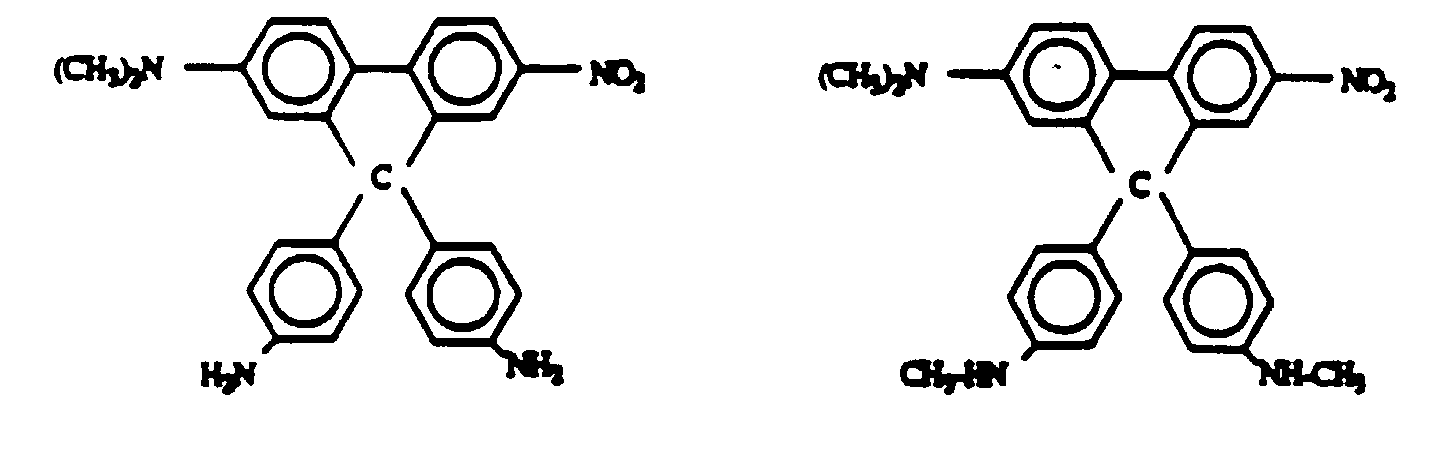 ausgewählt ist.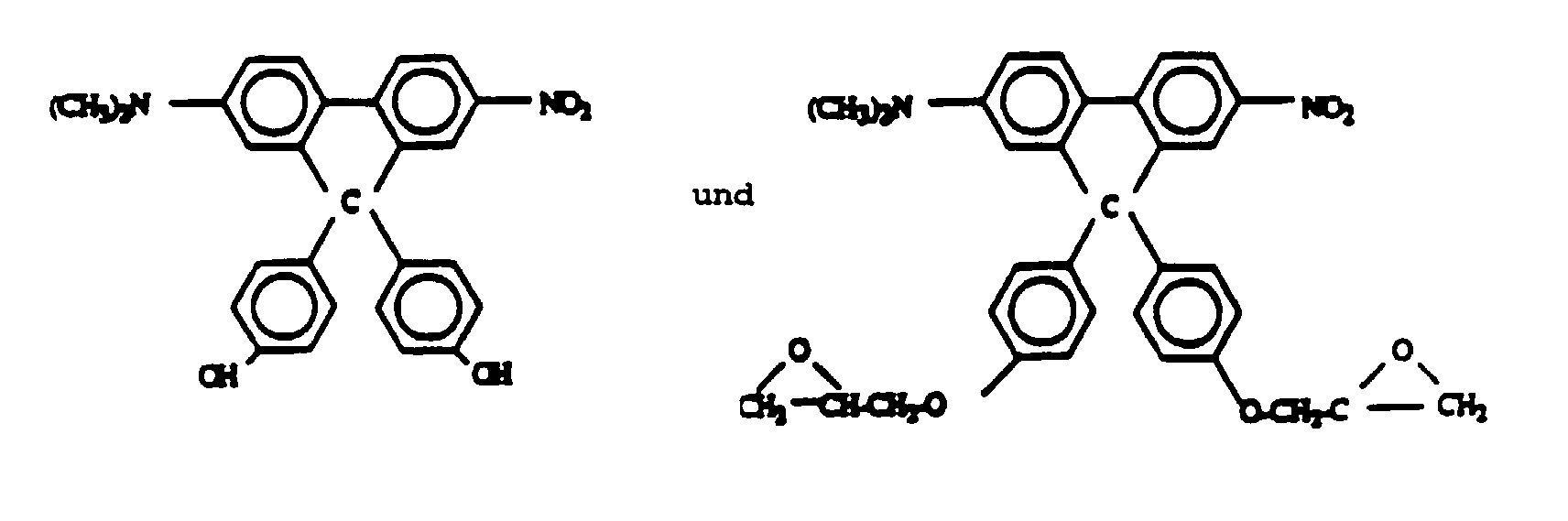
- Zusammensetzung nach Anspruch 8, worin es sich bei der Polymermatrix um Polymethylmethacrylat handelt.
- Zusammensetzung nach Anspruch 5, die durch Erhitzen über ihre Tg in Gegenwart eines angelegten elektrischen Felds und Abkühlen unter Tg in Gegenwart des angelegten Felds gepolt worden ist.
- Zusammensetzung nach Anspruch 7, die durch Erhitzen über ihre Tg in Gegenwart eines angelegten elektrischen Felds und Abkühlen unter Tg in Gegenwart des angelegten Felds gepolt worden ist.
- Lichtmodulator, enthaltend als NLO-aktive Komponente eine Verbindung gemäß Anspruch 1.
Applications Claiming Priority (3)
| Application Number | Priority Date | Filing Date | Title |
|---|---|---|---|
| US983065 | 1992-11-27 | ||
| US07/983,065 US5354511A (en) | 1992-11-27 | 1992-11-27 | Unsymmetrically substituted fluorenes for non-linear optical applications |
| PCT/US1993/010810 WO1994012910A1 (en) | 1992-11-27 | 1993-11-09 | Unsymmetrically substituted fluorenes for non-linear optical applications |
Publications (2)
| Publication Number | Publication Date |
|---|---|
| EP0671023A1 EP0671023A1 (de) | 1995-09-13 |
| EP0671023B1 true EP0671023B1 (de) | 1998-04-08 |
Family
ID=25529774
Family Applications (1)
| Application Number | Title | Priority Date | Filing Date |
|---|---|---|---|
| EP94901357A Expired - Lifetime EP0671023B1 (de) | 1992-11-27 | 1993-11-09 | Asymmetrische substituierte fluorene für nicht-lineare optische anwendungen |
Country Status (7)
| Country | Link |
|---|---|
| US (1) | US5354511A (de) |
| EP (1) | EP0671023B1 (de) |
| JP (1) | JPH08502997A (de) |
| AU (1) | AU5597494A (de) |
| DE (1) | DE69317902T2 (de) |
| TW (1) | TW396205B (de) |
| WO (1) | WO1994012910A1 (de) |
Families Citing this family (17)
| Publication number | Priority date | Publication date | Assignee | Title |
|---|---|---|---|---|
| US5501821A (en) * | 1992-11-16 | 1996-03-26 | Eastman Kodak Company | Optical article exhibiting a large first hyperpolarizability |
| US5670603A (en) * | 1993-03-08 | 1997-09-23 | Alliedsignal Inc. | Polymers exhibiting nonlinear optical properties |
| US6379590B1 (en) * | 1994-12-02 | 2002-04-30 | Alliedsignal Inc. | Method for making unsymmetrically substituted fluorenyl compounds for nonlinear optical applications |
| DE19537969A1 (de) | 1995-10-12 | 1997-04-17 | Hoechst Ag | Verwendung von Spiroverbindungen als Werkstoffe in der nicht-linearen Optik |
| US6187224B1 (en) * | 1996-10-31 | 2001-02-13 | Axiva Gmbh | Optical brightening agent |
| US7001708B1 (en) * | 2001-11-28 | 2006-02-21 | University Of Central Florida Research Foundation, Inc. | Photosensitive polymeric material for worm optical data storage with two-photon fluorescent readout |
| DE10317699B3 (de) * | 2003-04-09 | 2004-11-11 | Institut Für Polymerforschung Dresden E.V. | Kationische Polymer-Chromophor-Komplexe mit nichtlinearoptischen Eigenschaften dritten Ordnung und Verfahren zu ihrer Herstellung |
| US6830834B2 (en) | 2003-04-29 | 2004-12-14 | Canon Kabushiki Kaisha | Organic light emitting devices with host-guest bonding |
| KR101025453B1 (ko) * | 2004-06-01 | 2011-04-04 | 재단법인서울대학교산학협력재단 | 유기 전자발광 장치의 발광 화합물 |
| CN100523789C (zh) * | 2006-03-21 | 2009-08-05 | 中国科学院化学研究所 | 一种用于检测抗氧化剂清除自由基的反应的配合物及其检测方法 |
| KR100970837B1 (ko) * | 2007-02-20 | 2010-07-16 | 주식회사 엘지화학 | 플로렌계 수지 중합체 및 이를 포함하는 네가티브형 감광성수지 조성물 |
| JP5292778B2 (ja) * | 2007-11-26 | 2013-09-18 | 住友化学株式会社 | 化合物及び光学フィルム |
| US8173045B2 (en) | 2008-05-28 | 2012-05-08 | University Of Washington | Diels-Alder crosslinkable dendritic nonlinear optic chromophores and polymer composites |
| JP5913208B2 (ja) * | 2012-09-04 | 2016-04-27 | 信越化学工業株式会社 | 新規フルオレン化合物及びその製造方法 |
| CN106164165A (zh) * | 2014-03-28 | 2016-11-23 | 富士胶片株式会社 | (甲基)丙烯酸系树脂组合物、薄膜、偏振片保护膜、偏振片及液晶显示装置 |
| JP6142075B2 (ja) | 2014-03-28 | 2017-06-07 | 富士フイルム株式会社 | (メタ)アクリル系樹脂組成物、フィルム、偏光板保護フィルム、偏光板及び液晶表示装置 |
| CN119859229B (zh) * | 2025-03-21 | 2025-06-13 | 山东石油化工学院 | 一种用于从气体中脱除有机化合物的多孔材料的制备方法 |
Family Cites Families (9)
| Publication number | Priority date | Publication date | Assignee | Title |
|---|---|---|---|---|
| BE625998A (de) * | 1960-11-08 | 1900-01-01 | ||
| US3546165A (en) * | 1966-02-01 | 1970-12-08 | Du Pont | Soluble high-melting,thermally stable linear polyesters |
| JPS51133795A (en) * | 1975-05-15 | 1976-11-19 | Furukawa Electric Co Ltd:The | Semi-conductive thin sheet |
| US4589804A (en) * | 1983-03-28 | 1986-05-20 | Uniroyal Chemical Company, Inc. | Method for waterproofing surfaces |
| US4684678A (en) * | 1985-05-30 | 1987-08-04 | Minnesota Mining And Manufacturing Company | Epoxy resin curing agent, process, and composition |
| US5176854A (en) * | 1987-11-02 | 1993-01-05 | Hitachi, Ltd. | Non-linear optical device |
| JPH0284472A (ja) * | 1988-09-20 | 1990-03-26 | Nippon Steel Corp | 耐熱性ワニス |
| JPH04345608A (ja) * | 1991-05-23 | 1992-12-01 | Nippon Kayaku Co Ltd | カラーフィルター用材料及びその硬化物 |
| JPH0511115A (ja) * | 1991-07-08 | 1993-01-19 | Sekisui Chem Co Ltd | 位相差補償板 |
-
1992
- 1992-11-27 US US07/983,065 patent/US5354511A/en not_active Expired - Lifetime
-
1993
- 1993-11-09 EP EP94901357A patent/EP0671023B1/de not_active Expired - Lifetime
- 1993-11-09 DE DE69317902T patent/DE69317902T2/de not_active Expired - Fee Related
- 1993-11-09 AU AU55974/94A patent/AU5597494A/en not_active Abandoned
- 1993-11-09 JP JP6513174A patent/JPH08502997A/ja active Pending
- 1993-11-09 WO PCT/US1993/010810 patent/WO1994012910A1/en not_active Ceased
- 1993-12-14 TW TW082110573A patent/TW396205B/zh active
Also Published As
| Publication number | Publication date |
|---|---|
| EP0671023A1 (de) | 1995-09-13 |
| DE69317902D1 (de) | 1998-05-14 |
| JPH08502997A (ja) | 1996-04-02 |
| DE69317902T2 (de) | 1998-08-27 |
| AU5597494A (en) | 1994-06-22 |
| US5354511A (en) | 1994-10-11 |
| WO1994012910A1 (en) | 1994-06-09 |
| TW396205B (en) | 2000-07-01 |
Similar Documents
| Publication | Publication Date | Title |
|---|---|---|
| US5354511A (en) | Unsymmetrically substituted fluorenes for non-linear optical applications | |
| US5679763A (en) | Polyquinoline-based nonlinear optical materials | |
| US4659177A (en) | Organic nonlinear optical media | |
| US6750603B2 (en) | Second order nonlinear optical chromophores and electro-optic devices therefrom | |
| US6652779B1 (en) | Polymers containing polyene-based second-order nonlinear optical chromophores and devices incorporating the same | |
| CA1270257A (en) | High performance nonlinear optical substrates | |
| US5688906A (en) | Highly efficient nonlinear optical polyimides | |
| CA2132870A1 (en) | Novel nonlinear optical arylhydrazones and non linear optical polymers thereof | |
| DE69410250T2 (de) | Polymeren mit nichtlinear optische eigenschaften | |
| US9023248B2 (en) | Diels-Alder crosslinkable dendritic nonlinear optic chromophores and polymer composites | |
| EP0585999A1 (de) | Funktionelle Heteroaromate für NLO Anwendungen | |
| US7019453B2 (en) | Polymers having pendant nonlinear optical chromophores and electro-optic devices therefrom | |
| US4732783A (en) | Organic nonlinear optical media | |
| US4774025A (en) | Nonlinear optical medium of a naphthoquinodimethane compound | |
| US5212269A (en) | Main chain chromophoric polymers with second order nonlinear optical properties | |
| US4640800A (en) | Quinodimethane compositions | |
| JPH04297470A (ja) | 非線形光学特性を有する網状化エポキシ樹脂 | |
| US4773743A (en) | Electrooptic light modulator device | |
| US5371173A (en) | Poled polymeric nonlinear optical materials | |
| US4707305A (en) | Naphthoquinodimethane compositions | |
| KR0169910B1 (ko) | 비선형 광학 폴리이미드, 그의 제조방법 및 전기한 비선형 광학 폴리이미드를 사용한 광도파로형 광소자 | |
| US5144044A (en) | Non-linear optical material and non-linear optical device | |
| US4938896A (en) | High performance nonlinear optical media | |
| US4983325A (en) | High performance nonlinear optical media | |
| KR100226441B1 (ko) | 비선형 광학 색소를 함유한 폴리이미드 화합물 및 그의 제조방법 |
Legal Events
| Date | Code | Title | Description |
|---|---|---|---|
| PUAI | Public reference made under article 153(3) epc to a published international application that has entered the european phase |
Free format text: ORIGINAL CODE: 0009012 |
|
| 17P | Request for examination filed |
Effective date: 19950511 |
|
| AK | Designated contracting states |
Kind code of ref document: A1 Designated state(s): BE DE FR GB NL |
|
| GRAG | Despatch of communication of intention to grant |
Free format text: ORIGINAL CODE: EPIDOS AGRA |
|
| 17Q | First examination report despatched |
Effective date: 19970320 |
|
| GRAG | Despatch of communication of intention to grant |
Free format text: ORIGINAL CODE: EPIDOS AGRA |
|
| GRAH | Despatch of communication of intention to grant a patent |
Free format text: ORIGINAL CODE: EPIDOS IGRA |
|
| GRAH | Despatch of communication of intention to grant a patent |
Free format text: ORIGINAL CODE: EPIDOS IGRA |
|
| GRAA | (expected) grant |
Free format text: ORIGINAL CODE: 0009210 |
|
| AK | Designated contracting states |
Kind code of ref document: B1 Designated state(s): BE DE FR GB NL |
|
| PG25 | Lapsed in a contracting state [announced via postgrant information from national office to epo] |
Ref country code: NL Free format text: LAPSE BECAUSE OF FAILURE TO SUBMIT A TRANSLATION OF THE DESCRIPTION OR TO PAY THE FEE WITHIN THE PRESCRIBED TIME-LIMIT Effective date: 19980408 Ref country code: BE Free format text: LAPSE BECAUSE OF FAILURE TO SUBMIT A TRANSLATION OF THE DESCRIPTION OR TO PAY THE FEE WITHIN THE PRESCRIBED TIME-LIMIT Effective date: 19980408 |
|
| ET | Fr: translation filed | ||
| REF | Corresponds to: |
Ref document number: 69317902 Country of ref document: DE Date of ref document: 19980514 |
|
| NLV1 | Nl: lapsed or annulled due to failure to fulfill the requirements of art. 29p and 29m of the patents act | ||
| PGFP | Annual fee paid to national office [announced via postgrant information from national office to epo] |
Ref country code: GB Payment date: 19981008 Year of fee payment: 6 |
|
| PGFP | Annual fee paid to national office [announced via postgrant information from national office to epo] |
Ref country code: FR Payment date: 19981109 Year of fee payment: 6 |
|
| PGFP | Annual fee paid to national office [announced via postgrant information from national office to epo] |
Ref country code: DE Payment date: 19981125 Year of fee payment: 6 |
|
| PLBE | No opposition filed within time limit |
Free format text: ORIGINAL CODE: 0009261 |
|
| STAA | Information on the status of an ep patent application or granted ep patent |
Free format text: STATUS: NO OPPOSITION FILED WITHIN TIME LIMIT |
|
| 26N | No opposition filed | ||
| PG25 | Lapsed in a contracting state [announced via postgrant information from national office to epo] |
Ref country code: GB Free format text: LAPSE BECAUSE OF NON-PAYMENT OF DUE FEES Effective date: 19991109 |
|
| GBPC | Gb: european patent ceased through non-payment of renewal fee |
Effective date: 19991109 |
|
| PG25 | Lapsed in a contracting state [announced via postgrant information from national office to epo] |
Ref country code: FR Free format text: LAPSE BECAUSE OF NON-PAYMENT OF DUE FEES Effective date: 20000731 |
|
| PG25 | Lapsed in a contracting state [announced via postgrant information from national office to epo] |
Ref country code: DE Free format text: LAPSE BECAUSE OF NON-PAYMENT OF DUE FEES Effective date: 20000901 |
|
| REG | Reference to a national code |
Ref country code: FR Ref legal event code: ST |