EP0671165A2 - Système injectable pour la délivrance d'un médicament à base de collagène et son utilisation - Google Patents
Système injectable pour la délivrance d'un médicament à base de collagène et son utilisation Download PDFInfo
- Publication number
- EP0671165A2 EP0671165A2 EP95101589A EP95101589A EP0671165A2 EP 0671165 A2 EP0671165 A2 EP 0671165A2 EP 95101589 A EP95101589 A EP 95101589A EP 95101589 A EP95101589 A EP 95101589A EP 0671165 A2 EP0671165 A2 EP 0671165A2
- Authority
- EP
- European Patent Office
- Prior art keywords
- collagen
- formulation
- drug
- matrix
- polymer
- Prior art date
- Legal status (The legal status is an assumption and is not a legal conclusion. Google has not performed a legal analysis and makes no representation as to the accuracy of the status listed.)
- Granted
Links
- 108010035532 Collagen Proteins 0.000 title claims abstract description 151
- 102000008186 Collagen Human genes 0.000 title claims abstract description 151
- 229920001436 collagen Polymers 0.000 title claims abstract description 150
- 238000012377 drug delivery Methods 0.000 title claims description 16
- 239000003814 drug Substances 0.000 claims abstract description 97
- 229940079593 drug Drugs 0.000 claims abstract description 95
- 239000011159 matrix material Substances 0.000 claims abstract description 75
- 229920000642 polymer Polymers 0.000 claims abstract description 69
- 239000000203 mixture Substances 0.000 claims abstract description 64
- 239000007972 injectable composition Substances 0.000 claims abstract description 20
- 238000004132 cross linking Methods 0.000 claims abstract description 18
- 239000012530 fluid Substances 0.000 claims abstract description 10
- 238000011065 in-situ storage Methods 0.000 claims abstract description 10
- -1 glutaryl Chemical group 0.000 claims description 39
- 229920005570 flexible polymer Polymers 0.000 claims description 31
- 238000009472 formulation Methods 0.000 claims description 27
- 239000011148 porous material Substances 0.000 claims description 25
- KIUKXJAPPMFGSW-DNGZLQJQSA-N (2S,3S,4S,5R,6R)-6-[(2S,3R,4R,5S,6R)-3-Acetamido-2-[(2S,3S,4R,5R,6R)-6-[(2R,3R,4R,5S,6R)-3-acetamido-2,5-dihydroxy-6-(hydroxymethyl)oxan-4-yl]oxy-2-carboxy-4,5-dihydroxyoxan-3-yl]oxy-5-hydroxy-6-(hydroxymethyl)oxan-4-yl]oxy-3,4,5-trihydroxyoxane-2-carboxylic acid Chemical compound CC(=O)N[C@H]1[C@H](O)O[C@H](CO)[C@@H](O)[C@@H]1O[C@H]1[C@H](O)[C@@H](O)[C@H](O[C@H]2[C@@H]([C@@H](O[C@H]3[C@@H]([C@@H](O)[C@H](O)[C@H](O3)C(O)=O)O)[C@H](O)[C@@H](CO)O2)NC(C)=O)[C@@H](C(O)=O)O1 KIUKXJAPPMFGSW-DNGZLQJQSA-N 0.000 claims description 24
- 229920002674 hyaluronan Polymers 0.000 claims description 24
- 229960003160 hyaluronic acid Drugs 0.000 claims description 24
- 229920001223 polyethylene glycol Polymers 0.000 claims description 24
- 238000000034 method Methods 0.000 claims description 21
- 239000003431 cross linking reagent Substances 0.000 claims description 19
- 239000004971 Cross linker Substances 0.000 claims description 17
- 238000002347 injection Methods 0.000 claims description 12
- 239000007924 injection Substances 0.000 claims description 12
- 229920001477 hydrophilic polymer Polymers 0.000 claims description 11
- 229920002683 Glycosaminoglycan Polymers 0.000 claims description 9
- 238000009792 diffusion process Methods 0.000 claims description 9
- 108060002894 fibrillar collagen Proteins 0.000 claims description 9
- 102000013373 fibrillar collagen Human genes 0.000 claims description 9
- 102000004169 proteins and genes Human genes 0.000 claims description 8
- 108090000623 proteins and genes Proteins 0.000 claims description 8
- 238000013268 sustained release Methods 0.000 claims description 7
- 239000012730 sustained-release form Substances 0.000 claims description 7
- 229920001287 Chondroitin sulfate Polymers 0.000 claims description 6
- 229920002101 Chitin Polymers 0.000 claims description 5
- 150000004676 glycans Chemical class 0.000 claims description 4
- 239000002502 liposome Substances 0.000 claims description 4
- 229920001282 polysaccharide Polymers 0.000 claims description 4
- 239000005017 polysaccharide Substances 0.000 claims description 4
- 108010039209 Blood Coagulation Factors Proteins 0.000 claims description 3
- 102000015081 Blood Coagulation Factors Human genes 0.000 claims description 3
- 229920001661 Chitosan Polymers 0.000 claims description 3
- 102000004127 Cytokines Human genes 0.000 claims description 3
- 108090000695 Cytokines Proteins 0.000 claims description 3
- 108090000790 Enzymes Proteins 0.000 claims description 3
- 102000004190 Enzymes Human genes 0.000 claims description 3
- 102000016359 Fibronectins Human genes 0.000 claims description 3
- 108010067306 Fibronectins Proteins 0.000 claims description 3
- 229920002472 Starch Polymers 0.000 claims description 3
- 239000003114 blood coagulation factor Substances 0.000 claims description 3
- 229920002678 cellulose Polymers 0.000 claims description 3
- 239000001913 cellulose Substances 0.000 claims description 3
- 229940107200 chondroitin sulfates Drugs 0.000 claims description 3
- 239000003102 growth factor Substances 0.000 claims description 3
- 125000003588 lysine group Chemical group [H]N([H])C([H])([H])C([H])([H])C([H])([H])C([H])([H])C([H])(N([H])[H])C(*)=O 0.000 claims description 3
- 235000019698 starch Nutrition 0.000 claims description 3
- 239000008107 starch Substances 0.000 claims description 3
- 108010076282 Factor IX Proteins 0.000 claims description 2
- 102000008100 Human Serum Albumin Human genes 0.000 claims description 2
- 108091006905 Human Serum Albumin Proteins 0.000 claims description 2
- 239000002202 Polyethylene glycol Substances 0.000 claims 8
- 108010049003 Fibrinogen Proteins 0.000 claims 1
- 102000008946 Fibrinogen Human genes 0.000 claims 1
- 102100029880 Glycodelin Human genes 0.000 claims 1
- 229920002527 Glycogen Polymers 0.000 claims 1
- 101000585553 Homo sapiens Glycodelin Proteins 0.000 claims 1
- 108091006006 PEGylated Proteins Proteins 0.000 claims 1
- 102000004887 Transforming Growth Factor beta Human genes 0.000 claims 1
- 108090001012 Transforming Growth Factor beta Proteins 0.000 claims 1
- 229940012952 fibrinogen Drugs 0.000 claims 1
- 229940096919 glycogen Drugs 0.000 claims 1
- 150000002632 lipids Chemical class 0.000 claims 1
- 238000006116 polymerization reaction Methods 0.000 claims 1
- 230000002459 sustained effect Effects 0.000 abstract description 7
- 238000001727 in vivo Methods 0.000 abstract description 6
- 239000000463 material Substances 0.000 description 30
- 239000000243 solution Substances 0.000 description 17
- 239000000499 gel Substances 0.000 description 12
- RTZKZFJDLAIYFH-UHFFFAOYSA-N Diethyl ether Chemical compound CCOCC RTZKZFJDLAIYFH-UHFFFAOYSA-N 0.000 description 11
- 238000002156 mixing Methods 0.000 description 11
- 238000002360 preparation method Methods 0.000 description 10
- 150000001875 compounds Chemical class 0.000 description 7
- 125000002887 hydroxy group Chemical group [H]O* 0.000 description 7
- 235000018102 proteins Nutrition 0.000 description 7
- UHOVQNZJYSORNB-UHFFFAOYSA-N Benzene Chemical compound C1=CC=CC=C1 UHOVQNZJYSORNB-UHFFFAOYSA-N 0.000 description 6
- WSFSSNUMVMOOMR-UHFFFAOYSA-N Formaldehyde Chemical compound O=C WSFSSNUMVMOOMR-UHFFFAOYSA-N 0.000 description 6
- 239000000501 collagen implant Substances 0.000 description 6
- 238000002474 experimental method Methods 0.000 description 6
- 239000000843 powder Substances 0.000 description 6
- 241000894007 species Species 0.000 description 6
- 229920001059 synthetic polymer Polymers 0.000 description 6
- FAPWRFPIFSIZLT-UHFFFAOYSA-M Sodium chloride Chemical compound [Na+].[Cl-] FAPWRFPIFSIZLT-UHFFFAOYSA-M 0.000 description 5
- 125000003277 amino group Chemical group 0.000 description 5
- 238000006243 chemical reaction Methods 0.000 description 5
- 230000000694 effects Effects 0.000 description 5
- 230000002688 persistence Effects 0.000 description 5
- 108090000765 processed proteins & peptides Proteins 0.000 description 5
- HEDRZPFGACZZDS-UHFFFAOYSA-N Chloroform Chemical compound ClC(Cl)Cl HEDRZPFGACZZDS-UHFFFAOYSA-N 0.000 description 4
- 125000003178 carboxy group Chemical group [H]OC(*)=O 0.000 description 4
- 239000000835 fiber Substances 0.000 description 4
- 230000002163 immunogen Effects 0.000 description 4
- 231100000252 nontoxic Toxicity 0.000 description 4
- 230000003000 nontoxic effect Effects 0.000 description 4
- SQDAZGGFXASXDW-UHFFFAOYSA-N 5-bromo-2-(trifluoromethoxy)pyridine Chemical compound FC(F)(F)OC1=CC=C(Br)C=N1 SQDAZGGFXASXDW-UHFFFAOYSA-N 0.000 description 3
- SXRSQZLOMIGNAQ-UHFFFAOYSA-N Glutaraldehyde Chemical compound O=CCCCC=O SXRSQZLOMIGNAQ-UHFFFAOYSA-N 0.000 description 3
- 241001465754 Metazoa Species 0.000 description 3
- 108091005804 Peptidases Proteins 0.000 description 3
- 102000035195 Peptidases Human genes 0.000 description 3
- 229920002125 Sokalan® Polymers 0.000 description 3
- 150000001412 amines Chemical class 0.000 description 3
- 230000000903 blocking effect Effects 0.000 description 3
- 210000000988 bone and bone Anatomy 0.000 description 3
- 150000001720 carbohydrates Chemical class 0.000 description 3
- 210000000845 cartilage Anatomy 0.000 description 3
- 229940059329 chondroitin sulfate Drugs 0.000 description 3
- 230000001276 controlling effect Effects 0.000 description 3
- 150000002148 esters Chemical class 0.000 description 3
- GNBHRKFJIUUOQI-UHFFFAOYSA-N fluorescein Chemical compound O1C(=O)C2=CC=CC=C2C21C1=CC=C(O)C=C1OC1=CC(O)=CC=C21 GNBHRKFJIUUOQI-UHFFFAOYSA-N 0.000 description 3
- VANNPISTIUFMLH-UHFFFAOYSA-N glutaric anhydride Chemical compound O=C1CCCC(=O)O1 VANNPISTIUFMLH-UHFFFAOYSA-N 0.000 description 3
- 239000001257 hydrogen Substances 0.000 description 3
- 229910052739 hydrogen Inorganic materials 0.000 description 3
- 229920002521 macromolecule Polymers 0.000 description 3
- 238000005259 measurement Methods 0.000 description 3
- 102000004196 processed proteins & peptides Human genes 0.000 description 3
- 239000000523 sample Substances 0.000 description 3
- 239000011780 sodium chloride Substances 0.000 description 3
- 239000007787 solid Substances 0.000 description 3
- XLYOFNOQVPJJNP-UHFFFAOYSA-N water Substances O XLYOFNOQVPJJNP-UHFFFAOYSA-N 0.000 description 3
- YBJHBAHKTGYVGT-ZKWXMUAHSA-N (+)-Biotin Chemical compound N1C(=O)N[C@@H]2[C@H](CCCCC(=O)O)SC[C@@H]21 YBJHBAHKTGYVGT-ZKWXMUAHSA-N 0.000 description 2
- IJGRMHOSHXDMSA-UHFFFAOYSA-N Atomic nitrogen Chemical compound N#N IJGRMHOSHXDMSA-UHFFFAOYSA-N 0.000 description 2
- 229920002307 Dextran Polymers 0.000 description 2
- 108010054218 Factor VIII Proteins 0.000 description 2
- 102000001690 Factor VIII Human genes 0.000 description 2
- 102000007651 Macrophage Colony-Stimulating Factor Human genes 0.000 description 2
- 108010046938 Macrophage Colony-Stimulating Factor Proteins 0.000 description 2
- NQTADLQHYWFPDB-UHFFFAOYSA-N N-Hydroxysuccinimide Chemical compound ON1C(=O)CCC1=O NQTADLQHYWFPDB-UHFFFAOYSA-N 0.000 description 2
- OVRNDRQMDRJTHS-UHFFFAOYSA-N N-acelyl-D-glucosamine Natural products CC(=O)NC1C(O)OC(CO)C(O)C1O OVRNDRQMDRJTHS-UHFFFAOYSA-N 0.000 description 2
- OVRNDRQMDRJTHS-FMDGEEDCSA-N N-acetyl-beta-D-glucosamine Chemical compound CC(=O)N[C@H]1[C@H](O)O[C@H](CO)[C@@H](O)[C@@H]1O OVRNDRQMDRJTHS-FMDGEEDCSA-N 0.000 description 2
- MBLBDJOUHNCFQT-LXGUWJNJSA-N N-acetylglucosamine Natural products CC(=O)N[C@@H](C=O)[C@@H](O)[C@H](O)[C@H](O)CO MBLBDJOUHNCFQT-LXGUWJNJSA-N 0.000 description 2
- JUJWROOIHBZHMG-UHFFFAOYSA-N Pyridine Chemical compound C1=CC=NC=C1 JUJWROOIHBZHMG-UHFFFAOYSA-N 0.000 description 2
- 108010006886 Vitrogen Proteins 0.000 description 2
- 239000002253 acid Substances 0.000 description 2
- 150000001299 aldehydes Chemical class 0.000 description 2
- 150000008064 anhydrides Chemical class 0.000 description 2
- 239000003242 anti bacterial agent Substances 0.000 description 2
- 239000011260 aqueous acid Substances 0.000 description 2
- 150000001718 carbodiimides Chemical class 0.000 description 2
- 239000000969 carrier Substances 0.000 description 2
- 210000002808 connective tissue Anatomy 0.000 description 2
- 238000013270 controlled release Methods 0.000 description 2
- 230000001186 cumulative effect Effects 0.000 description 2
- AVJBPWGFOQAPRH-FWMKGIEWSA-L dermatan sulfate Chemical compound CC(=O)N[C@H]1[C@H](O)O[C@H](CO)[C@H](OS([O-])(=O)=O)[C@@H]1O[C@H]1[C@H](O)[C@@H](O)[C@H](O)[C@H](C([O-])=O)O1 AVJBPWGFOQAPRH-FWMKGIEWSA-L 0.000 description 2
- 238000000502 dialysis Methods 0.000 description 2
- 239000006185 dispersion Substances 0.000 description 2
- 238000004090 dissolution Methods 0.000 description 2
- 230000006862 enzymatic digestion Effects 0.000 description 2
- 229940088598 enzyme Drugs 0.000 description 2
- 125000004185 ester group Chemical group 0.000 description 2
- 230000032050 esterification Effects 0.000 description 2
- 238000005886 esterification reaction Methods 0.000 description 2
- 235000019256 formaldehyde Nutrition 0.000 description 2
- 230000002757 inflammatory effect Effects 0.000 description 2
- 230000003993 interaction Effects 0.000 description 2
- 125000005647 linker group Chemical group 0.000 description 2
- 239000007788 liquid Substances 0.000 description 2
- 239000012528 membrane Substances 0.000 description 2
- 230000004048 modification Effects 0.000 description 2
- 238000012986 modification Methods 0.000 description 2
- 229950006780 n-acetylglucosamine Drugs 0.000 description 2
- 230000007935 neutral effect Effects 0.000 description 2
- 239000003208 petroleum Substances 0.000 description 2
- 239000004584 polyacrylic acid Substances 0.000 description 2
- 229920001184 polypeptide Polymers 0.000 description 2
- 238000001556 precipitation Methods 0.000 description 2
- 239000000047 product Substances 0.000 description 2
- 229940024999 proteolytic enzymes for treatment of wounds and ulcers Drugs 0.000 description 2
- 239000001488 sodium phosphate Substances 0.000 description 2
- 229910000162 sodium phosphate Inorganic materials 0.000 description 2
- 229920002994 synthetic fiber Polymers 0.000 description 2
- 238000002560 therapeutic procedure Methods 0.000 description 2
- 210000001519 tissue Anatomy 0.000 description 2
- RYFMWSXOAZQYPI-UHFFFAOYSA-K trisodium phosphate Chemical compound [Na+].[Na+].[Na+].[O-]P([O-])([O-])=O RYFMWSXOAZQYPI-UHFFFAOYSA-K 0.000 description 2
- WSLDOOZREJYCGB-UHFFFAOYSA-N 1,2-Dichloroethane Chemical compound ClCCCl WSLDOOZREJYCGB-UHFFFAOYSA-N 0.000 description 1
- JPSKCQCQZUGWNM-UHFFFAOYSA-N 2,7-Oxepanedione Chemical compound O=C1CCCCC(=O)O1 JPSKCQCQZUGWNM-UHFFFAOYSA-N 0.000 description 1
- FALRKNHUBBKYCC-UHFFFAOYSA-N 2-(chloromethyl)pyridine-3-carbonitrile Chemical compound ClCC1=NC=CC=C1C#N FALRKNHUBBKYCC-UHFFFAOYSA-N 0.000 description 1
- NWAGXLBTAPTCPR-UHFFFAOYSA-N 5-(2,5-dioxopyrrolidin-1-yl)oxy-5-oxopentanoic acid Chemical compound OC(=O)CCCC(=O)ON1C(=O)CCC1=O NWAGXLBTAPTCPR-UHFFFAOYSA-N 0.000 description 1
- 108010088751 Albumins Proteins 0.000 description 1
- 102000009027 Albumins Human genes 0.000 description 1
- 108090001008 Avidin Proteins 0.000 description 1
- 241000894006 Bacteria Species 0.000 description 1
- 241000283690 Bos taurus Species 0.000 description 1
- 102000029816 Collagenase Human genes 0.000 description 1
- 108060005980 Collagenase Proteins 0.000 description 1
- 229920000045 Dermatan sulfate Polymers 0.000 description 1
- QOSSAOTZNIDXMA-UHFFFAOYSA-N Dicylcohexylcarbodiimide Chemical compound C1CCCCC1N=C=NC1CCCCC1 QOSSAOTZNIDXMA-UHFFFAOYSA-N 0.000 description 1
- 238000004435 EPR spectroscopy Methods 0.000 description 1
- 102400001368 Epidermal growth factor Human genes 0.000 description 1
- 101800003838 Epidermal growth factor Proteins 0.000 description 1
- PIICEJLVQHRZGT-UHFFFAOYSA-N Ethylenediamine Chemical class NCCN PIICEJLVQHRZGT-UHFFFAOYSA-N 0.000 description 1
- UFHFLCQGNIYNRP-UHFFFAOYSA-N Hydrogen Chemical compound [H][H] UFHFLCQGNIYNRP-UHFFFAOYSA-N 0.000 description 1
- PMMYEEVYMWASQN-DMTCNVIQSA-N Hydroxyproline Chemical compound O[C@H]1CN[C@H](C(O)=O)C1 PMMYEEVYMWASQN-DMTCNVIQSA-N 0.000 description 1
- ONIBWKKTOPOVIA-BYPYZUCNSA-N L-Proline Chemical compound OC(=O)[C@@H]1CCCN1 ONIBWKKTOPOVIA-BYPYZUCNSA-N 0.000 description 1
- GRSMWKLPSNHDHA-UHFFFAOYSA-N Naphthalic anhydride Chemical compound C1=CC(C(=O)OC2=O)=C3C2=CC=CC3=C1 GRSMWKLPSNHDHA-UHFFFAOYSA-N 0.000 description 1
- 229910019142 PO4 Inorganic materials 0.000 description 1
- 102000057297 Pepsin A Human genes 0.000 description 1
- 108090000284 Pepsin A Proteins 0.000 description 1
- ABLZXFCXXLZCGV-UHFFFAOYSA-N Phosphorous acid Chemical class OP(O)=O ABLZXFCXXLZCGV-UHFFFAOYSA-N 0.000 description 1
- 239000004743 Polypropylene Substances 0.000 description 1
- ONIBWKKTOPOVIA-UHFFFAOYSA-N Proline Natural products OC(=O)C1CCCN1 ONIBWKKTOPOVIA-UHFFFAOYSA-N 0.000 description 1
- 108010059712 Pronase Proteins 0.000 description 1
- 101800004937 Protein C Proteins 0.000 description 1
- 102400000827 Saposin-D Human genes 0.000 description 1
- 101800001700 Saposin-D Proteins 0.000 description 1
- 241000906446 Theraps Species 0.000 description 1
- 108090000631 Trypsin Proteins 0.000 description 1
- 102000004142 Trypsin Human genes 0.000 description 1
- 230000002378 acidificating effect Effects 0.000 description 1
- 230000004913 activation Effects 0.000 description 1
- 239000013543 active substance Substances 0.000 description 1
- 238000012382 advanced drug delivery Methods 0.000 description 1
- IAJILQKETJEXLJ-QTBDOELSSA-N aldehydo-D-glucuronic acid Chemical group O=C[C@H](O)[C@@H](O)[C@H](O)[C@H](O)C(O)=O IAJILQKETJEXLJ-QTBDOELSSA-N 0.000 description 1
- 150000001408 amides Chemical class 0.000 description 1
- QGZKDVFQNNGYKY-UHFFFAOYSA-O ammonium group Chemical group [NH4+] QGZKDVFQNNGYKY-UHFFFAOYSA-O 0.000 description 1
- 238000010171 animal model Methods 0.000 description 1
- 239000002260 anti-inflammatory agent Substances 0.000 description 1
- 229940121363 anti-inflammatory agent Drugs 0.000 description 1
- 230000003110 anti-inflammatory effect Effects 0.000 description 1
- 229940088710 antibiotic agent Drugs 0.000 description 1
- 239000000427 antigen Substances 0.000 description 1
- 102000036639 antigens Human genes 0.000 description 1
- 108091007433 antigens Proteins 0.000 description 1
- 239000007864 aqueous solution Substances 0.000 description 1
- QVGXLLKOCUKJST-UHFFFAOYSA-N atomic oxygen Chemical compound [O] QVGXLLKOCUKJST-UHFFFAOYSA-N 0.000 description 1
- 230000009286 beneficial effect Effects 0.000 description 1
- 230000008901 benefit Effects 0.000 description 1
- 230000004071 biological effect Effects 0.000 description 1
- 229920001222 biopolymer Polymers 0.000 description 1
- 230000015572 biosynthetic process Effects 0.000 description 1
- 229960002685 biotin Drugs 0.000 description 1
- 235000020958 biotin Nutrition 0.000 description 1
- 239000011616 biotin Substances 0.000 description 1
- PFYXSUNOLOJMDX-UHFFFAOYSA-N bis(2,5-dioxopyrrolidin-1-yl) carbonate Chemical compound O=C1CCC(=O)N1OC(=O)ON1C(=O)CCC1=O PFYXSUNOLOJMDX-UHFFFAOYSA-N 0.000 description 1
- OMAHFYGHUQSIEF-UHFFFAOYSA-N bis(2,5-dioxopyrrolidin-1-yl) oxalate Chemical compound O=C1CCC(=O)N1OC(=O)C(=O)ON1C(=O)CCC1=O OMAHFYGHUQSIEF-UHFFFAOYSA-N 0.000 description 1
- 235000014633 carbohydrates Nutrition 0.000 description 1
- 235000010980 cellulose Nutrition 0.000 description 1
- 238000005119 centrifugation Methods 0.000 description 1
- 239000013043 chemical agent Substances 0.000 description 1
- 239000003795 chemical substances by application Substances 0.000 description 1
- KXKPYJOVDUMHGS-OSRGNVMNSA-N chondroitin sulfate Chemical compound CC(=O)N[C@H]1[C@H](O)O[C@H](OS(O)(=O)=O)[C@H](O)[C@@H]1O[C@H]1[C@H](O)[C@@H](O)[C@H](O)[C@@H](C(O)=O)O1 KXKPYJOVDUMHGS-OSRGNVMNSA-N 0.000 description 1
- 229960002424 collagenase Drugs 0.000 description 1
- 210000000795 conjunctiva Anatomy 0.000 description 1
- 229920001577 copolymer Polymers 0.000 description 1
- 230000008878 coupling Effects 0.000 description 1
- 238000010168 coupling process Methods 0.000 description 1
- 238000005859 coupling reaction Methods 0.000 description 1
- 229940051593 dermatan sulfate Drugs 0.000 description 1
- 230000029087 digestion Effects 0.000 description 1
- PMMYEEVYMWASQN-UHFFFAOYSA-N dl-hydroxyproline Natural products OC1C[NH2+]C(C([O-])=O)C1 PMMYEEVYMWASQN-UHFFFAOYSA-N 0.000 description 1
- 239000003937 drug carrier Substances 0.000 description 1
- 238000010828 elution Methods 0.000 description 1
- 239000008393 encapsulating agent Substances 0.000 description 1
- 238000005516 engineering process Methods 0.000 description 1
- 229940116977 epidermal growth factor Drugs 0.000 description 1
- 230000003628 erosive effect Effects 0.000 description 1
- 238000011049 filling Methods 0.000 description 1
- 239000011521 glass Substances 0.000 description 1
- 108010020199 glutaraldehyde-cross-linked collagen Proteins 0.000 description 1
- 239000005556 hormone Substances 0.000 description 1
- 229940088597 hormone Drugs 0.000 description 1
- 230000002209 hydrophobic effect Effects 0.000 description 1
- 125000004356 hydroxy functional group Chemical group O* 0.000 description 1
- 229960002591 hydroxyproline Drugs 0.000 description 1
- 230000001900 immune effect Effects 0.000 description 1
- 230000005847 immunogenicity Effects 0.000 description 1
- 239000007943 implant Substances 0.000 description 1
- 238000002513 implantation Methods 0.000 description 1
- 238000001361 intraarterial administration Methods 0.000 description 1
- 238000007917 intracranial administration Methods 0.000 description 1
- 238000007918 intramuscular administration Methods 0.000 description 1
- 238000001990 intravenous administration Methods 0.000 description 1
- 235000018977 lysine Nutrition 0.000 description 1
- 230000011987 methylation Effects 0.000 description 1
- 238000007069 methylation reaction Methods 0.000 description 1
- 244000005700 microbiome Species 0.000 description 1
- 239000003068 molecular probe Substances 0.000 description 1
- 210000004877 mucosa Anatomy 0.000 description 1
- YTVNOVQHSGMMOV-UHFFFAOYSA-N naphthalenetetracarboxylic dianhydride Chemical compound C1=CC(C(=O)OC2=O)=C3C2=CC=C2C(=O)OC(=O)C1=C32 YTVNOVQHSGMMOV-UHFFFAOYSA-N 0.000 description 1
- 229910052757 nitrogen Inorganic materials 0.000 description 1
- QJGQUHMNIGDVPM-UHFFFAOYSA-N nitrogen group Chemical group [N] QJGQUHMNIGDVPM-UHFFFAOYSA-N 0.000 description 1
- 235000015097 nutrients Nutrition 0.000 description 1
- 239000001301 oxygen Substances 0.000 description 1
- 229910052760 oxygen Inorganic materials 0.000 description 1
- 239000002245 particle Substances 0.000 description 1
- 230000006320 pegylation Effects 0.000 description 1
- 229940111202 pepsin Drugs 0.000 description 1
- 235000021317 phosphate Nutrition 0.000 description 1
- 150000003013 phosphoric acid derivatives Chemical class 0.000 description 1
- 230000000704 physical effect Effects 0.000 description 1
- 229920003213 poly(N-isopropyl acrylamide) Polymers 0.000 description 1
- 229920002401 polyacrylamide Polymers 0.000 description 1
- 229920002338 polyhydroxyethylmethacrylate Polymers 0.000 description 1
- 229920000193 polymethacrylate Polymers 0.000 description 1
- 229920001155 polypropylene Polymers 0.000 description 1
- 229920002689 polyvinyl acetate Polymers 0.000 description 1
- 239000011118 polyvinyl acetate Substances 0.000 description 1
- 229920002451 polyvinyl alcohol Polymers 0.000 description 1
- 230000008092 positive effect Effects 0.000 description 1
- 239000002244 precipitate Substances 0.000 description 1
- 239000003755 preservative agent Substances 0.000 description 1
- 125000002924 primary amino group Chemical group [H]N([H])* 0.000 description 1
- 230000008569 process Effects 0.000 description 1
- 230000002035 prolonged effect Effects 0.000 description 1
- 235000019833 protease Nutrition 0.000 description 1
- 229960000856 protein c Drugs 0.000 description 1
- 235000004252 protein component Nutrition 0.000 description 1
- 230000009145 protein modification Effects 0.000 description 1
- 230000002797 proteolythic effect Effects 0.000 description 1
- UMJSCPRVCHMLSP-UHFFFAOYSA-N pyridine Natural products COC1=CC=CN=C1 UMJSCPRVCHMLSP-UHFFFAOYSA-N 0.000 description 1
- 230000005855 radiation Effects 0.000 description 1
- 238000010188 recombinant method Methods 0.000 description 1
- 238000010992 reflux Methods 0.000 description 1
- 230000003014 reinforcing effect Effects 0.000 description 1
- 238000012552 review Methods 0.000 description 1
- 210000003491 skin Anatomy 0.000 description 1
- 239000002904 solvent Substances 0.000 description 1
- 239000007858 starting material Substances 0.000 description 1
- 210000002784 stomach Anatomy 0.000 description 1
- 238000007920 subcutaneous administration Methods 0.000 description 1
- 239000000126 substance Substances 0.000 description 1
- 239000000758 substrate Substances 0.000 description 1
- KDYFGRWQOYBRFD-UHFFFAOYSA-L succinate(2-) Chemical compound [O-]C(=O)CCC([O-])=O KDYFGRWQOYBRFD-UHFFFAOYSA-L 0.000 description 1
- 229940014800 succinic anhydride Drugs 0.000 description 1
- 230000035322 succinylation Effects 0.000 description 1
- 238000010613 succinylation reaction Methods 0.000 description 1
- 150000003871 sulfonates Chemical class 0.000 description 1
- 239000004094 surface-active agent Substances 0.000 description 1
- 239000000725 suspension Substances 0.000 description 1
- 230000002195 synergetic effect Effects 0.000 description 1
- 238000003786 synthesis reaction Methods 0.000 description 1
- 231100000419 toxicity Toxicity 0.000 description 1
- 230000001988 toxicity Effects 0.000 description 1
- FGMPLJWBKKVCDB-UHFFFAOYSA-N trans-L-hydroxy-proline Natural products ON1CCCC1C(O)=O FGMPLJWBKKVCDB-UHFFFAOYSA-N 0.000 description 1
- 239000012588 trypsin Substances 0.000 description 1
- VBEQCZHXXJYVRD-GACYYNSASA-N uroanthelone Chemical compound C([C@@H](C(=O)N[C@H](C(=O)N[C@@H](CS)C(=O)N[C@@H](CC(N)=O)C(=O)N[C@@H](CS)C(=O)N[C@H](C(=O)N[C@@H]([C@@H](C)CC)C(=O)NCC(=O)N[C@@H](CC=1C=CC(O)=CC=1)C(=O)N[C@@H](CO)C(=O)NCC(=O)N[C@@H](CC(O)=O)C(=O)N[C@@H](CCCNC(N)=N)C(=O)N[C@@H](CS)C(=O)N[C@@H](CCC(N)=O)C(=O)N[C@@H]([C@@H](C)O)C(=O)N[C@@H](CCCNC(N)=N)C(=O)N[C@@H](CC(O)=O)C(=O)N[C@@H](CC(C)C)C(=O)N[C@@H](CCCNC(N)=N)C(=O)N[C@@H](CC=1C2=CC=CC=C2NC=1)C(=O)N[C@@H](CC=1C2=CC=CC=C2NC=1)C(=O)N[C@@H](CCC(O)=O)C(=O)N[C@@H](CC(C)C)C(=O)N[C@@H](CCCNC(N)=N)C(O)=O)C(C)C)[C@@H](C)O)NC(=O)[C@H](CO)NC(=O)[C@H](CC(O)=O)NC(=O)[C@H](CC(C)C)NC(=O)[C@H](CO)NC(=O)[C@H](CCC(O)=O)NC(=O)[C@@H](NC(=O)[C@H](CC=1NC=NC=1)NC(=O)[C@H](CCSC)NC(=O)[C@H](CS)NC(=O)[C@@H](NC(=O)CNC(=O)CNC(=O)[C@H](CC(N)=O)NC(=O)[C@H](CC(C)C)NC(=O)[C@H](CS)NC(=O)[C@H](CC=1C=CC(O)=CC=1)NC(=O)CNC(=O)[C@H](CC(O)=O)NC(=O)[C@H](CC=1C=CC(O)=CC=1)NC(=O)[C@H](CO)NC(=O)[C@H](CO)NC(=O)[C@H]1N(CCC1)C(=O)[C@H](CS)NC(=O)CNC(=O)[C@H]1N(CCC1)C(=O)[C@H](CC=1C=CC(O)=CC=1)NC(=O)[C@H](CO)NC(=O)[C@@H](N)CC(N)=O)C(C)C)[C@@H](C)CC)C1=CC=C(O)C=C1 VBEQCZHXXJYVRD-GACYYNSASA-N 0.000 description 1
- 239000003981 vehicle Substances 0.000 description 1
- 229920002554 vinyl polymer Polymers 0.000 description 1
- 235000013343 vitamin Nutrition 0.000 description 1
- 239000011782 vitamin Substances 0.000 description 1
- 229940088594 vitamin Drugs 0.000 description 1
- 229930003231 vitamin Natural products 0.000 description 1
Images
Classifications
-
- A—HUMAN NECESSITIES
- A61—MEDICAL OR VETERINARY SCIENCE; HYGIENE
- A61K—PREPARATIONS FOR MEDICAL, DENTAL OR TOILETRY PURPOSES
- A61K9/00—Medicinal preparations characterised by special physical form
- A61K9/0012—Galenical forms characterised by the site of application
- A61K9/0019—Injectable compositions; Intramuscular, intravenous, arterial, subcutaneous administration; Compositions to be administered through the skin in an invasive manner
- A61K9/0024—Solid, semi-solid or solidifying implants, which are implanted or injected in body tissue
-
- A—HUMAN NECESSITIES
- A61—MEDICAL OR VETERINARY SCIENCE; HYGIENE
- A61K—PREPARATIONS FOR MEDICAL, DENTAL OR TOILETRY PURPOSES
- A61K9/00—Medicinal preparations characterised by special physical form
- A61K9/20—Pills, tablets, discs, rods
- A61K9/2004—Excipients; Inactive ingredients
- A61K9/2022—Organic macromolecular compounds
- A61K9/205—Polysaccharides, e.g. alginate, gums; Cyclodextrin
-
- A—HUMAN NECESSITIES
- A61—MEDICAL OR VETERINARY SCIENCE; HYGIENE
- A61K—PREPARATIONS FOR MEDICAL, DENTAL OR TOILETRY PURPOSES
- A61K9/00—Medicinal preparations characterised by special physical form
- A61K9/20—Pills, tablets, discs, rods
- A61K9/2004—Excipients; Inactive ingredients
- A61K9/2022—Organic macromolecular compounds
- A61K9/2063—Proteins, e.g. gelatin
Definitions
- This invention concerns a system for sustaining the delivery of drug to a patient. More particularly, it concerns a collagen-based injectable drug delivery system and its use to achieve delivery of drug to a patient at a sustained rate over a prolonged time period.
- These systems for drug delivery can be used in a variety of manners, For example, they can be placed on drug permeable body membranes, such as on the skin or the mucosa of the mouth, in body cavities such as the stomach, lower bowel or conjunctiva of the eye, or can be used in vivo by injection or implantation.
- the present invention concerns a system which is fluid at the time of administration and thus lends itself to injection.
- the drug delivery systems of this invention employ collagen as a component.
- Collagen has been mentioned as a component of drug delivery systems but not, to our knowledge, in the context of the present systems of this invention.
- Collagen is the major protein component of bone, cartilage, skin, and connective tissue in animals.
- Collagen in its native form is typically a rigid, rod-shaped molecule approximately 300 nm long and 1.5 nm in diameter. It is composed of three collagen polypeptides which form a tight triple helix.
- the collagen polypeptides are characterized by a long midsection having the repeating sequence -Gly-X-Y-, where X and Y are often proline or hydroxyproline, bounded at each end by the "telopeptide” regions, which constitute less than about 5% of the molecule.
- the telopeptide regions of the collagen chains are typically responsible for the cross-linking between chains, and for the immunogenicity of the protein.
- Collagen occurs in several "types", having differing physical properties. The most abundant types are types I-III.
- Collagen is typically isolated from natural sources, such as bovine hide, cartilage, or bones. Bones are usually dried, defatted, crushed, and demineralized to extract collagen, while hide and cartilage are usually minced and digested with proteolytic enzymes (other than collagenase). As collagen is resistant to most proteolytic enzymes, this procedure conveniently serves to remove most of the contaminating protein found with collagen.
- Daniels et al United States Patent No. 3,949,073, disclosed the preparation of soluble collagen by dissolving tissue in aqueous acid, followed by enzymatic digestion. The resulting atelopeptide collagen is soluble, and substantially less immunogenic than unmodified collagen.
- This material is now commercially available from Collagen Corporation (Palo Alto, CA) under the tradename Zyderm® Collagen Implant.
- CIS collagen in solution
- an enzyme such as pepsin, trypsin, or Pronase®.
- the enzymatic digestion removes the telopeptide portions of the collagen molecules, providing "atelopeptide" collagen in solution.
- the atelopeptide CIS so produced is substantially non-immunogenic, and is also substantially non-crosslinked due to loss of the primary crosslinking regions.
- the CIS may then be precipitated by dialysis in a moderate shear environment to produce collagen fibers which resemble native collagen fibers.
- the precipitated, reconstituted fibers may additionally be crosslinked using a chemical agent (for example, aldehydes such as formaldehyde and glutaraldehyde), heat, or radiation.
- a chemical agent for example, aldehydes such as formaldehyde and glutaraldehyde
- GX glutaraldehyde crosslinked atelopeptide CIS preparation
- hydrophilic synthetic polymers to chemically conjugate collagen.
- biologically active factors such as epidermal growth factor
- the hydrophilic crosslinking polymer can bind collagen to glycosaminoglycans, chondroitin sulfates, fibronectin and growth factors and that the tethering can provide an effective slow-release drug delivery system.
- drugs can be delivered in a sustained manner from an in vivo depot which is formed from a collagen-based injectable composition.
- the injectable composition is fluid when injected but undergoes crosslinking in situ to form a crosslinked collagen matrix which encloses the drug to be released.
- the composition also includes a flexible chain polymer which is electrostatically or ionically similar in charge to the precrosslinked collagen. This flexible chain polymer is enclosed in the matrix as well and alters the effective porosity of the matrix. The drug diffuses out of the matrix at a rate which depends upon the matrix's effective porosity and rigidity.
- this invention provides an injectable sustained-release drug delivery formulation.
- This formulation includes collagen, a crosslinking agent capable of forming covalent bonds in situ following injection with the collagen, a flexible chain polymer similar in charge to the collagen, and a drug in a pharmaceutically acceptable injectable carrier.
- this invention provides a sustained-release subdermal drug delivery depot.
- This depot may be formed from the above-described injectable formulation.
- the depot includes a drug and a flexible chain polymer entrapped within a porous matrix of crosslinked collagen.
- the flexible chain polymer alters the effective pore size of the matrix of crosslinked collagen to a size which sustains the diffusion of the drug from the matrix into a subdermal environment.
- this invention provides a method for preparing a sustained-release subdermal drug delivery depot.
- This method includes forming a fluid admixture of the drug, collagen, flexible chain polymer and a collagen crosslinking agent in an injectable medium, injecting this fluid admixture into said patient under conditions which limit the immediate dispersion of the admixture and which permit the crosslinking agent to crosslink the collagen and form in situ a matrix from which the drug can diffuse to the patient.
- this invention provides a method for delivering drug to a patient in a sustained and controlled manner over an extended period of time.
- This drug delivery method involves forming a fluid admixture of the drug, collagen, flexible chain polymer and a collagen crosslinking agent in an injectable medium, injecting this fluid admixture into said patient under conditions which limit the immediate dispersion of the admixture and which permit the crosslinking agent to crosslink the collagen and form a matrix and then permitting this matrix to remain in place in the patient over an extended period of time during which the drug can diffuse from the matrix to the patient.
- this invention provides another method for delivering drug to a patient in a sustained and controlled manner over an extended period of time.
- This drug delivery method involves delivering the drug to the patient by diffusion from an in vivo depot, the depot comprising the drug entrapped in a porous matrix of crosslinked collagen, the matrix additionally enclosing a flexible chain polymer and the flexible chain polymer altering the rate at which the drug can diffuse from the matrix to the patient.
- collagen refers to all forms of collagen as are described above in the background section, including those which have been processed or modified.
- the collagen may be of human or animal origin and may be produced by recombinant techniques.
- the present invention can use these and other known types of collagen including natural collagen and various collagen derivatives.
- Preferred collagens are non-immunoreactive, atelopeptide collagen, with types I, II, and III being preferred.
- Collagens may be soluble (for example, commercially available Vitrogen® 100 collagen-in-solution), and may or may not have the telopeptide regions.
- Collagen can be in the form of reconstituted fibrillar atelopeptide collagen, for example Zyderm® Collagen Implant (ZCI) but preferably is nonfibrillar atelopeptide collagen in solution (CIS) such as the Vitrogen material.
- ZCI Zyderm® Collagen Implant
- CIS nonfibrillar atelopeptide collagen in solution
- Various forms of collagen are available commercially, or may be prepared by the processes described in, for example, United States Patent Nos.
- fibrillar collagen or other crosslinked collagen is used as a starting material, it may be of advantage to chop, shred or grind it into a suspendible particulate size so that suitable injectable materials may be prepared from it.
- Collagen (and even previously crosslinked collagen) contains a number of available amino, carboxy and hydroxy groups which may be used as sites for crosslinking. These groups are capable of taking on various charges at different pH conditions. For example, the amine groups can take on a positive charge and become ammonium groups at pHs below amount 8. Similarly, carboxyl groups can be uncharged or negatively charges depending upon whether they are ionized or have lost their acidic hydrogen.
- One aspect of this invention calls for the crosslinked collagen and the flexible chain polymer to be similarly charged so as to mix and be compatible.
- Ways for doing this are well documented in the literature. For example, one can esterify the carboxyl groups to eliminate their ability to take on a negative charge at neutral pH and impart it to the collagen. Methylation of the carboxyl groups is the most common esterification but of course other similar nontoxic blocking groups can be employed if desired.
- the amino groups present in lysines in the collagen can be converted into amides by reaction with an active amide-forming agent. Examples of this step include succinylation and glutarylation of the available amines. Miyata et al. described methods which can be used to alter the net ionic charge of collagen in United States Patent No. 4,165,559. This patent is incorporated by reference.
- grafting species to the collagen which contain sulfonates, phosphonates, phosphates and/or various ionizable amines and the like so as to impart a desired charge to the collagen.
- a carboxyl group may be incorporated for each amine undergoing reaction.
- the preferred materials of this invention additionally include one or more crosslinking agents.
- Suitable crosslinkers should be nontoxic when administered by injection as part of the injectable mixtures of this invention. They also should not be subject to rapid dispersal into the patient's body when injected.
- crosslinking agents known in the art for crosslinking collagen.
- These include simple aldehyde crosslinkers such as formaldehyde and glutaraldehyde, carbodiimides and the succinimydyl active esters.
- polymer-based crosslinkers are employed. These materials are preferred because of their larger molecular size which is reflected in lower toxicity and a lower rate of dispersal upon injection.
- These polymeric crosslinking agents are typically based upon hydrophilic polymers, both naturally occurring and synthetic.
- synthetic hydrophilic polymer refers to a synthetic polymer having an average molecular weight and composition which renders the polymer substantially water-compatible.
- Preferred polymers are highly pure or are purified to a highly pure state such that the polymer is or is treated to become pharmaceutically pure.
- Most hydrophilic polymers can be rendered hydrophilic and even water-soluble by incorporating a sufficient number of oxygen (or less frequently nitrogen) atoms available for forming hydrogen bonds in agueous solutions.
- Preferred polymers are hydrophilic and preferably (but not necessarily) water-soluble.
- Hydrophilic polymers used herein include poly(ethylene glycol) (PEG), poly(oxyethylene), poly(methylene glycol), poly(trimethylene glycol), poly(vinylpyrrolidone), and derivatives thereof with PEG being particularly preferred.
- the polymers can be linear or multiply branched, and will not be substantially crosslinked.
- Other suitable polymers include poly(oxyethylene)-poly(oxypropylene) block polymers and copolymers.
- Poly(oxyethylene)-poly(oxypropylene) block polymers having an ethylene diamine nucleus (and thus having four ends) are also available and may be used in the practice of the invention.
- Naturally occurring polymers such as proteins, starch, cellulose, dextran, and the like while not falling within the definition of "synthetic" hydrophilic polymers, do qualify as “hydrophilic” polymers and are not excluded from use in the practice of this invention. Because of the ease of obtaining pure materials, the synthetic polymers are preferred.
- All suitable polymers will be non-toxic, non-inflammatory, and non-immunogenic when administered subcutaneously, and will preferably be essentially nondegradable in vivo over a period of at least several hours and preferably at least several (i.e. two) days.
- these polymers serve as crosslinking agents for the collagen, they should contain at least two sites capable of reacting with and binding to collagen.
- the collagen molecules contain hydroxyl groups and free amino groups in the form of lysine residues.
- the hydroxyl groups can react to form ether and ester linkages and the free amino groups can form covalent amide bonds in cross-linking reactions with acid or active ester groups present in the polymeric crosslinkers.
- acid or ester groups can be incorporated into the polymeric crosslinkers through ether links which are in turn formed from hydroxyl groups, and particularly activated hydroxyl groups on the hydrophilic polymers although other equivalent sites may be employed.
- Collagen contains a number of available amino and hydroxy groups which may be used as sites to form crosslinks.
- the collagen may be coupled to the crosslinker using a "linking group", as the native hydroxy or amino groups in collagen and in the polymer frequently require activation before they can be linked.
- a linking group as the native hydroxy or amino groups in collagen and in the polymer frequently require activation before they can be linked.
- dicarboxylic anhydrides e.g., glutaric or succinic anhydride
- a polymer derivative e.g., succinate
- a convenient leaving group for example, N-hydroxysuccinimide, N,N'-disuccinimidyl oxalate, N,N'-disuccinimidyl carbonate, and the like.
- Presently preferred dicarboxylic anhydrides that are used to form activated crosslinking polymers include glutaric anhydride, adipic anhydride, 1,8-naphthalene dicarboxylic anhydride, and 1,4,5,8-naphthalenetetracarboxylic dianhydride.
- the polymer thus activated is then allowed to react with the collagen, forming a collagen-polymer crosslinked composition.
- hydrophilic polymer crosslinkers are di- and multifunctional polyethylene glycols (PEG).
- Difunctional PEG may have its two reactive sites at any position along its chain but typically has a reactive hydroxy group at each end, while a polyfunctional material will have additional groups along its chain.
- Difunctional PEG preferably has an average molecular weight of about 400 Da to about 100 kDa, more preferably about 3 kDa to about 10 kDa.
- Multifunctional PEG preferably has an average molecular weight between about 3 kDa and 100 kDa. Similar sizes are preferred for other equivalent crosslinkers, as well.
- molecular weight refers to the average molecular weight of a number of molecules in any given sample, as commonly used in the art.
- a sample of PEG 3,000 might contain a statistical mixture of polymer molecules ranging in weight from, for example, 1.5 to 4.5 kDa with one molecule differing slightly from the next over a range.
- Specification of a range of molecular weight indicates that the average molecular weight may be any value between the limits specified, and may include molecules outside those limits.
- a molecular weight range of about 3 kDa to about 10 kDa indicates an average molecular weight of at least about 3 kDa and ranging up to about 10 kDa.
- compositions of this invention include one or more flexible chain polymers.
- the flexible chain polymers which are present in the compositions of this invention should be biocompatible, non-toxic, non-inflammatory, and non-immunogenic when administered subcutaneously, and will preferably be essentially nondegradable in vivo over the same period as the crosslinking material (several hours and preferably several days).
- the flexible chain polymers should have the same sign charge as the charge on the collagen prior to crosslinking. Both materials can be positively charged, both can be negatively charged or both can be uncharged. Most commonly both materials will be charged. The charge identity allows the two materials to mix intimately without precipitation as might occur between polymers of different charge. Hydrophilic flexible chain polymers are preferred because of their ability to mix with collagen and to pick up water when present in the matrix.
- the flexible chain polymer is characterized by its relative persistence length. It should have a persistence length not greater than 0.1 times the persistence length of the collagen with which it is mixed. Collagen typically has a persistence length on the order of 150 to 250 nM. Flexible chain polymers should have persistence lengths of less than 15 nM and especially less than 10 nM and more especially from 2 to 5 nM. Another characteristic of the flexible chain polymers is that they have a molecular weight on the order of 100 kDa or greater and especially greater than about 500 kDa and more especially greater than about 1000 kDa.
- the flexible chain polymer can be a synthetic material.
- Representative synthetic materials include, for example: poly(acrylic acid) poly(vinyl alcohol) poly(acrylamide) poly(N-isopropylacrylamide) poly(methacrylate) poly(hydroxyethylmethacrylate) poly(vinyl acetate) copolymers and derivatives of these materials and the like.
- the flexible chain polymer can be a naturally occurring material or a derivative of a naturally occurring material such as a glycosaminoglycan, a cellulose or a poly(nucleic acid).
- glycosaminoglycans are complex polysaccharides having repeating units of either the same saccharide subunit or different saccharide subunits.
- Some examples of glycosaminoglycans include hyaluronic acid, the chondroitin sulfates, chitin, chitosan and derivatives of all or any of these materials.
- the glycosaminoglycans are extracted from a natural source, purified and derivatized. However, they may be synthetically produced by microorganisms such as bacteria.
- the compound includes alternating units of 1,4-linked N-acetylglucosamine and glucuronic acid units as shown below.
- Hyaluronic acid is a viscous, high molecular weight mucopolysaccharide found in mammalian fluids and connective tissue.
- Hyaluronic acid typically is obtained with a molecular weight greater than about 1000 kDa and often greater than about 2000 kDa.
- chondroitin sulfate There are three major compounds encompassed by the term "chondroitin sulfate". These are chondroitin sulfate A, dermatan sulfate (also known as chondroitin sulfate B, an isomer of chondroitin sulfate A) and chondroitin sulfate C. The structures of these three compounds are shown below.
- Chitin encompasses polymers comprising repeating units of N-acetylglucosamine. The structure of chitin is shown below.
- the term “chitosan” covers both partially and fully deacetylated chitin, as shown below.
- drug as used herein is defined to encompass not only compounds or species which are themselves inherently pharmacologically or biologically active but also materials which include one or more of these active compounds or species combined with, bonded to, or otherwise associated with other materials such as polymers, carriers, encapsulants and the like.
- the systems of this invention operate on principles of diffusion from a porous matrix.
- the matrix On a molecular scale the matrix consists of a set of intersecting threads which create a mesh-work as opposed to cylindrical tunnels or holes in a solid substrate.
- the matrix pore sizes are on the order of 3 to 30 nanometers in average diameter.
- the pore sizes can be made larger by using a set of larger interconnecting threads to create a more open meshwork.
- Fibrillar collagen-based matrices typically have larger matrices with pore sizes of up to 100 nM or greater. For pore sizes of 3 nanometers, there is minimal diffusion rate control with small or low molecular weight drugs having a molecular weight of a few hundred daltons, say.
- Drugs having a molecular weight (or apparent molecular weight) of at least about 10 kDa and as high as 1000 kDa or higher may be used with matrices having a pore size of 3 to 30 nanometers. From a size point of view such materials have a size which will substantially interact with and be substantially restricted by the cross-linked rigid matrix. This occurs with drugs having a size of, for example at least about 3 nM along their largest axis. Preferred drugs are 4-5 nM or larger along their longest axis.
- These drugs can be molecules which themselves have these desired high weights and large sizes.
- Such materials include clotting factors, growth factors and cytokines to name but three representative classes.
- Clotting factors include Factor 8, Factor 9 and protein C.
- Cytokines include macrophage colony stimulating factor (MCSF) and erythropoetin.
- PEGylating the drug can be carried out on the drug prior to mixing the drug with matrix and in situ crosslinking. This will prevent the drug from being tethered to the matrix, thus ensuring that it can be released from the matrix. PEGylation techniques and their positive effect on drugs are described in Nucci et al., Advanced Drug Delivery Reviews (1991) 6 :133-51, which is incorporated by reference.
- the active species can also be tethered to a polymer or like carrier by ionic bonds or by immunologic (antibody/antigen) binding, using biotin/avidin binding, or by hydrophobic or hydrogen bonding.
- a polymer or like carrier by ionic bonds or by immunologic (antibody/antigen) binding, using biotin/avidin binding, or by hydrophobic or hydrogen bonding.
- multiple units of a small species may be coupled together or grafted onto a polymer backbone to achieve the desired large size drug.
- Carriers for coupling to active pharmaceuticals to increase their size can be of natural or synthetic origin.
- Representative materials include the glycosaminoglycans, as previously described as flexible polymers, proteins, carbohydrates and the like. Examples include starch, dextran, fibronectin, albumin, particularly human albumin, synthetic polymers such as poly (vinyl amine), monofunctional PEG and the like.
- a small active species may be physically engulfed into a liposome or other similar physical structure to give a drug particle of a size suitable for sustained release from the present systems
- Liposomes and the like are often relatively quite large, i.e., several tens of nanometers or even much larger. Such materials often work best with matrices based on fibrillar collagen which can provide pore sizes which will accommodate species of this size.
- Active species may be linked to PEG to increase their molecular weight (Nucci et al. supra) and provide the desired large drugs. Such species may be glycosylated using polysaccharides, again to increase their molecular weight. A small active entity can also be encapsulated into emulsified fat and the like. With all of these possibilities, all of which are well documented in the literature, the system of the present invention can be made to operate and gradually release virtually any drug.
- the term drug is used in its broadest sense, also, to include vitamins, nutrients, promoters, as well as pharmaceutical substances. Examples of suitable drugs include without limitation the above described factors, anti-inflammatories, hormones, antibiotics, and the like.
- the drug delivery system of this invention is especially useful for large, glycosylated drugs.
- the sustained delivery of Factor 8 is another desirable therapy which could be accomplished using this system.
- the injectable compositions provided by this invention are mixtures of materials.
- the proportions of the various materials are as follows: Collagen 0.1 to 10% by weight of the overall injectable composition
- Crosslinker 0.1 to 5% by weight of the overall injectable composition
- Flexible 0.1 to 15% by weight of the overall injectable polymer composition
- Drug 0.001 to 10% by weight of the overall injectable composition
- injectable matrix materials are dispersed (dissolved or suspended) in a suitable injectable carrier, creating an injectable matrix.
- This carrier can range from injectable saline to any other pharmaceutically acceptable aqueous injectable fluid.
- the carrier will be the largest component of the mixtures, commonly ranging from 60% to 99% by weight of the overall composition.
- compositions have the following make ups: Collagen 1 to 5% by weight Crosslinker 0.1 to 1% by weight Flexible polymer 0.5 to 5% by weight Drug 0.01 to 1% by weight Carrier 88 to 99% by weight to reach 100% of the overall injectable composition.
- the weight ratio of flexible polymer to collagen plus crosslinker is from about 0.02:1 to about 5:1. At the low end of this range, the flexible polymer is so minimal that its effect is negligible. At the high end, the flexible polymer begins to dominate the mixture. Preferred ratios are 0.1:1 to 1:1.
- compositions are portrayed in their simplest form. It will be readily appreciated that other components, ranging from preservatives to antibacterial agents to surfactants to tonicity adjusters or the like could be added if desired in the formulation of a finished product.
- the preferred injectable compositions of this invention undergo crosslinking in situ to form a matrix which acts as a drug release depot.
- the depot restricts the release of drug and thus sustains its release over a longer period of time than would be realized if the matrix was not present.
- the drug can be released from a depot which is based on a preformed flexible polymer-containing crosslinked collagen matrix.
- This matrix can be formed from crosslinked collagen into which the drug and flexible polymer have been inserted prior to, during or after crosslinking.
- This matrix can be placed into an environment of use by injection in a suspension in a suitable injectable vehicle or, in the case of a solid body, could be implanted in the environment of use.
- the matrix's mesh or pore size which is the spacing between bars in the cage created by the matrix polymer chains
- the other is the rigidity of the collagen chains making up the matrix
- the collagen matrix in turn has a reinforcing effect on the flexible polymer (by geometrically constraining it), which effectively makes the entwined flexible polymer more rigid.
- This interaction between rigid and flexible polymers has been illustrated in a model system.
- ESR Electron Spin Resonance
- the depots formed from the injectable compositions of this invention is that in order to achieve intimate mixing the rigid and flexible polymers should be like charged; otherwise they may tend to phase separate. Additionally, in the depot, the flexible polymer is preferably hydrophilic so that it will stretch out and entwine with the collagen.
- the matrices of the present invention can have their pore sizes tailored to give desired rates of drug release.
- the largest possible pore sizes, which are achieved with the smallest proportions of flexible polymer, (and which are so large that they generally do not suitably restrict drug release), are 30 nM or so in the case of nonfibrillar-collagen-based matrices and up to 100 nM or 200 nM with fibrillar-collagen-based materials. Pore sizes can be tailored down to about 3 nM or even smaller, if desired, by increasing the collagen concentration or by increasing the proportion of flexible polymer. (See Rosenblatt et al., Proc. Int. Symp. Control. Rel. Bioact. Mater.
- Pore sizes for succinylated collagen matrices at 43 mg/ml are 3 nm and at 5 mg/ml are 30 nm.
- the pore sizes are 3 nm and 30 nm, respectively.
- Fibrillar collagen matrices have much larger pore sizes (approximately 55 nm at 35 mg/ml. (See Rosenblatt et al., J. Controlled Release (1989) 9 :195.)
- Another reference for hyaluronic acid mesh sizes that shows similar values to those above using probe methods is De Smedt et al., Macromolecules 22 :141 (1994).
- This matrix is stable.
- the crosslinking agents described above are capable of providing a matrix which will have a longer life than the desired sustained period of drug release. Typical lives for these matrices are from about 2 days to a year or more, depending upon the condition being treated and the course of therapy desired.
- the matrix encloses the flexible chain polymer.
- This polymer entwines itself around the matrix elements and effectively "chokes down" the matrix pore size to a point that they become restrictive to the diffusion of drug out of the matrix.
- This "new" pore size which results from the interaction of the flexible polymer with the collagen matrix is referred to as the "effective pore size”.
- Effective pore sizes range from about 3 nM to about 100 nM and preferably range from about 10% to about 60%, and especially 10% to about 50% of the pore size which would be obtained if no flexible chain polymer were present.
- the greater the proportion of flexible polymer present in the matrix the greater the shrinking of the effective pore size until the obstructing effect of reduced poresize on diffusion rates is overcome by increasing the flexibility of the pores due to the proportion of flexible polymer present.
- the matrix is crosslinked in situ so that erosion of the matrix is minimized and so the matrix can be implanted percutaneously. Since some modifications of collagen are thermally and/or hydrolytically unstable and sensitive to proteinases, crosslinking will stabilize the collagen and inhibit proteolytic dissolution. Also, since some non-crosslinked, modified collagens are soluble under physiologic conditions, a non-crosslinked, matrix can erode by solublization.
- the injectable compositions of this invention are typically prepared immediately prior to use. This preparation involves mixing the collagen, crosslinker, flexible chain polymer and drug in the injectable medium.
- the collagen and crosslinker will react typically within a few minutes or an hour, for example, 10 minutes to 2 hour. After crosslinking, the composition becomes a solid gel and cannot be easily injected.
- the mixing can be carried out in any convenient manner. Intermixing between syringes or other equivalent manual operations prior to administration give good results.
- the injectable compositions of this invention are injected into the body of the patient being treated.
- This injecting should be done in a manner which allows the injectable composition an opportunity to remain relatively nondispersed while the crosslinking takes place and the depot is formed.
- intravenous or intraarterial injection which would lead to the rapid dispersal of the injectable composition are not preferred manners of delivery.
- Injection into less turbulent environments is preferred, for example subcutaneous, intradermal, intramuscular and intracranial injection are suitable.
- the amount of composition administered should be an amount which will provide an effective dose of the entrapped drug.
- the term "effective amount" refers to the amount of biologically active agent required in order to obtain the effect desired. The actual amount which is determined to be an effective amount will vary depending on factors such as the size, condition, sex and age of the patient and can be more readily determined by the caregiver.
- the rate of delivery desired may easily be determined by routine experimentation, for example by preparing a model composition following the examples below, and assaying the release rate in a suitable animal model.
- the PEG-diglutarate is then dissolved in DMF (200 mL) at 37° C., and N-hydroxysuccinimide (10% molar xs) added. The solution is cooled to 0° C., and an equivalent amount of dicyclohexylcarbodiimide added in DMF solution (10 mL). The mixture is left at room temperature for 24 hours, and then filtered. Cold benzene (100 mL) is then added, and the PEG-di(succinimidyl glutarate) (dPEG-SG) precipitated by adding petroleum ether (200 mL) at 0°C. The precipitate is collected on a sintered glass filter. Dissolution in benzene, followed by precipitation with petroleum ether is repeated three times to provide "activated" dPEG (dPEG*).
- a 20 mg/ml hyaluronic acid-drug solution was prepared by dissolving 100 mg of powdered hyaluronic acid and drug (powder) in 5 ml of PBS.
- drug for drugs in liquid form the liquid could be added to the hyaluronic acid (HA) solution and the volume of drug solution subtracted from the volume of PBS added. In principle there is no reason why the drug could not be added to the collagen solution.
- 400 kDa fluorescein-labeled Ficol hereafter referred to as "Ficol” (Molecular Probes, Inc., Eugene, OR) was used as a model drug compound.
- a matrix with a final composition of 10 mg/ml SC, 10 mg/ml HA and 3 mg/ml Ficol was prepared by mixing 0.75 ml SC with 0.75 ml of HA solution. This 1.5 cc matrix was then mixed with 4.5 mg of powder Ficol. Mixing was accomplished by exchange between 3-cc syringes (100 passes). The mixture was allowed to equilibrate overnight. The mixture was crosslinked by mixing 10 mg of dry dPEG* powder with 1.5 cc of the HA-SC-Ficol solution. Mixing was performed between two 3-cc syringes (50 passes), one of which initially contained only dPEG* powder, the other containing the HA-SC-Ficol solution. The mixture was transferred into a 1-cc syringe and was allowed to cure overnight at room temperature (22°C) during which it formed a firm cylindrical gel.
- Another gel was prepared with a final composition of 16 mg/ml SC, 4 mg/ml HA and 3 mg/ml Ficol by mixing 0.96 ml of 25 mg/ml SC with 0.54 ml of 11.1 mg/ml HA. This 1.5 cc matrix was then mixed with 4.5 mg powder Ficol.
- a gel containing 30 mg/ml SC, 6 mg/ml HA and 3 mg/ml Ficol was prepared by mixing 1 cc of 45 mg/ml SC with 0.5 cc of 18 mg/ml HA. 1.5 cc of HA-SC mixture was mixed with 4.5 mg of dry powder Ficol.
- the Ficol-containing gels prepared in Example 2 were sectioned into cylinders measuring 22 mm in length x 5.5 mm in diameter. All cylinders were trimmed to a mass of 500 mg. The cylinders were placed in 4-ml polypropylene vials and 2 ml of PBS was added such that a cylinder was completely submerged. The cylinders were allowed to sit at 22°C for approximately 1 day. The PBS surrounding the cylinder was then removed and replaced with fresh PBS. The removed PBS was saved for measurement of the amount of Ficol released by fluorescence intensity measurement. The same elution procedure was repeated after another day to obtain a second time point. Release profiles for these gels were tested in duplicate. Gels consisting of Ficol (3 mg/ml) and SC (20 mg/ml) crosslinked with 7.5 mg/ml dPEG* were used as controls. Care was taken not to perturb the vials containing the gels during measurement.
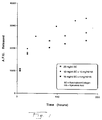
- the fluorescence intensity was read from 200 microliter samples in a model 7620 microplate fluorometer (Cambridge Technologies, Watertown, MA). Results are plotted in Figure 1 as cumulative fluorescence released versus time for 20 mg/ml Succinylated collagen matrices, mixed 10 mg/ml SC-10 mg/ml HA matrices, and 16 mg/ml SC 4 mg/ml HA matrices. The values plotted represent the average of samples from two separate matrices and are expressed in Arbitrary Fluorescence Units or "A.F.U.s". The individual readings in all cases were within 5% of the average.
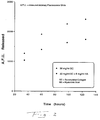
- Example 4 A release experiment similar to that in Example 4 was conducted for matrices comprised of 36 mg/ml SC and mixtures of 30 mg/ml SC and 6 mg/ml HA containing Ficol. Eluting buffer was refreshed at discrete time points and the number of fluorescent units from 200 microliter samples of eluting buffer were removed and read in a fluorometer. Cumulative fluorescent units released versus time are plotted in Figure 2. The values plotted represent the average of samples from two separate matrices. The individual readings in all cases were within 5% of the average.
Landscapes
- Health & Medical Sciences (AREA)
- Chemical & Material Sciences (AREA)
- Medicinal Chemistry (AREA)
- Pharmacology & Pharmacy (AREA)
- Epidemiology (AREA)
- Life Sciences & Earth Sciences (AREA)
- Animal Behavior & Ethology (AREA)
- General Health & Medical Sciences (AREA)
- Public Health (AREA)
- Veterinary Medicine (AREA)
- Engineering & Computer Science (AREA)
- Biomedical Technology (AREA)
- Neurosurgery (AREA)
- Dermatology (AREA)
- Medicinal Preparation (AREA)
- Medicines That Contain Protein Lipid Enzymes And Other Medicines (AREA)
- Materials For Medical Uses (AREA)
Applications Claiming Priority (2)
| Application Number | Priority Date | Filing Date | Title |
|---|---|---|---|
| US19360094A | 1994-02-09 | 1994-02-09 | |
| US193600 | 1994-02-09 |
Publications (3)
| Publication Number | Publication Date |
|---|---|
| EP0671165A2 true EP0671165A2 (fr) | 1995-09-13 |
| EP0671165A3 EP0671165A3 (fr) | 1995-11-22 |
| EP0671165B1 EP0671165B1 (fr) | 2001-04-11 |
Family
ID=22714290
Family Applications (1)
| Application Number | Title | Priority Date | Filing Date |
|---|---|---|---|
| EP95101589A Expired - Lifetime EP0671165B1 (fr) | 1994-02-09 | 1995-02-06 | Système injectable pour la délivrance d'un médicament à base de collagène et son utilisation |
Country Status (6)
| Country | Link |
|---|---|
| US (1) | US5807581A (fr) |
| EP (1) | EP0671165B1 (fr) |
| JP (2) | JPH0834747A (fr) |
| AU (1) | AU701743B2 (fr) |
| CA (1) | CA2140053C (fr) |
| DE (1) | DE69520613T2 (fr) |
Cited By (31)
| Publication number | Priority date | Publication date | Assignee | Title |
|---|---|---|---|---|
| EP0838219A1 (fr) * | 1996-10-09 | 1998-04-29 | Sumitomo Pharmaceuticals Company, Limited | Formulation à libération retardée à base de collagène et de glycosaminoglycan |
| EP0831867A4 (fr) * | 1995-06-06 | 1999-10-20 | Regen Biolog Inc | Matrice d'administration a base de collagene |
| US6197934B1 (en) | 1998-05-22 | 2001-03-06 | Collagenesis, Inc. | Compound delivery using rapidly dissolving collagen film |
| EP1154734A4 (fr) * | 1999-02-12 | 2009-06-24 | Prochon Biotech Ltd | Systeme injectable a base de collagene pour l'administration de cellules ou d'agents therapeutiques |
| EP2033667A3 (fr) * | 1997-04-15 | 2009-06-24 | Abbott Cardiovascular Systems, Inc. | Endoprothèse médicamenteuse poreuse |
| WO2014143943A1 (fr) * | 2013-03-15 | 2014-09-18 | NuTech Spine, Inc. | Préparations contenant un facteur de croissance hépatocytaire et de l'acide hyaluronique et procédés de fabrication et d'utilisation associés |
| US8905963B2 (en) | 2010-08-05 | 2014-12-09 | Forsight Vision4, Inc. | Injector apparatus and method for drug delivery |
| US9180046B2 (en) | 2001-06-12 | 2015-11-10 | The Johns Hopkins University School Of Medicine | Reservoir device for intraocular drug delivery |
| US9393347B2 (en) | 2007-07-03 | 2016-07-19 | Histogenics Corporation | Double-structured tissue implant and a method for preparation and use thereof |
| US9417238B2 (en) | 2009-01-29 | 2016-08-16 | Forsight Vision4, Inc. | Posterior segment drug delivery |
| US9474756B2 (en) | 2014-08-08 | 2016-10-25 | Forsight Vision4, Inc. | Stable and soluble formulations of receptor tyrosine kinase inhibitors, and methods of preparation thereof |
| US9492315B2 (en) | 2010-08-05 | 2016-11-15 | Forsight Vision4, Inc. | Implantable therapeutic device |
| US9526654B2 (en) | 2013-03-28 | 2016-12-27 | Forsight Vision4, Inc. | Ophthalmic implant for delivering therapeutic substances |
| US9883968B2 (en) | 2011-09-16 | 2018-02-06 | Forsight Vision4, Inc. | Fluid exchange apparatus and methods |
| US9968603B2 (en) | 2013-03-14 | 2018-05-15 | Forsight Vision4, Inc. | Systems for sustained intraocular delivery of low solubility compounds from a port delivery system implant |
| US9993326B2 (en) | 2007-07-03 | 2018-06-12 | Histogenics Corporation | Method for use of a double-structured tissue implant for treatment of tissue defects |
| US10010448B2 (en) | 2012-02-03 | 2018-07-03 | Forsight Vision4, Inc. | Insertion and removal methods and apparatus for therapeutic devices |
| US10166142B2 (en) | 2010-01-29 | 2019-01-01 | Forsight Vision4, Inc. | Small molecule delivery with implantable therapeutic device |
| US10258503B2 (en) | 2014-07-15 | 2019-04-16 | Forsight Vision4, Inc. | Ocular implant delivery device and method |
| US10398592B2 (en) | 2011-06-28 | 2019-09-03 | Forsight Vision4, Inc. | Diagnostic methods and apparatus |
| AU2017268636B2 (en) * | 2011-11-04 | 2019-11-14 | Allergan, Inc. | Hyaluronic acid-collagen matrices for dermal filling and volumizing applications |
| US10500091B2 (en) | 2014-11-10 | 2019-12-10 | Forsight Vision4, Inc. | Expandable drug delivery devices and methods of use |
| US10617557B2 (en) | 2010-08-05 | 2020-04-14 | Forsight Vision4, Inc. | Combined drug delivery methods and apparatus |
| EP2892575B1 (fr) * | 2012-09-06 | 2020-07-08 | Allergan, Inc. | Compositions de comblement dermique à base d'acide hyaluronique/collagène et procédés de fabrication associés |
| US10813788B2 (en) | 2009-01-29 | 2020-10-27 | Forsight Vision4, Inc. | Implantable therapeutic device |
| US10874548B2 (en) | 2010-11-19 | 2020-12-29 | Forsight Vision4, Inc. | Therapeutic agent formulations for implanted devices |
| US11419759B2 (en) | 2017-11-21 | 2022-08-23 | Forsight Vision4, Inc. | Fluid exchange apparatus for expandable port delivery system and methods of use |
| US11432959B2 (en) | 2015-11-20 | 2022-09-06 | Forsight Vision4, Inc. | Porous structures for extended release drug delivery devices |
| US11617680B2 (en) | 2016-04-05 | 2023-04-04 | Forsight Vision4, Inc. | Implantable ocular drug delivery devices |
| US11833269B2 (en) | 2011-09-06 | 2023-12-05 | Allergan, Inc. | Hyaluronic acid-collagen matrices for dermal filling and volumizing applications |
| USD1033637S1 (en) | 2022-01-24 | 2024-07-02 | Forsight Vision4, Inc. | Fluid exchange device |
Families Citing this family (86)
| Publication number | Priority date | Publication date | Assignee | Title |
|---|---|---|---|---|
| US5833665A (en) | 1990-06-14 | 1998-11-10 | Integra Lifesciences I, Ltd. | Polyurethane-biopolymer composite |
| US6007843A (en) * | 1995-09-29 | 1999-12-28 | Lam Pharmaceuticals Corp. | Sustained release delivery system |
| US8003705B2 (en) * | 1996-09-23 | 2011-08-23 | Incept Llc | Biocompatible hydrogels made with small molecule precursors |
| WO1998012274A1 (fr) * | 1996-09-23 | 1998-03-26 | Chandrashekar Pathak | Procedes et dispositifs pour preparer des concentres de proteines |
| TW586934B (en) * | 1997-05-19 | 2004-05-11 | Sumitomo Pharma | Immunopotentiating composition |
| EP1004597A4 (fr) * | 1997-05-28 | 2002-06-05 | Tapic Int Co Ltd | Gel au collagene |
| US6375634B1 (en) | 1997-11-19 | 2002-04-23 | Oncology Innovations, Inc. | Apparatus and method to encapsulate, kill and remove malignancies, including selectively increasing absorption of x-rays and increasing free-radical damage to residual tumors targeted by ionizing and non-ionizing radiation therapy |
| US6514534B1 (en) * | 1998-08-14 | 2003-02-04 | Incept Llc | Methods for forming regional tissue adherent barriers and drug delivery systems |
| US6632457B1 (en) * | 1998-08-14 | 2003-10-14 | Incept Llc | Composite hydrogel drug delivery systems |
| JP2002531217A (ja) | 1998-12-04 | 2002-09-24 | チャンドラシェカー ピー. パサック, | 生体適合性架橋ポリマー |
| US9669113B1 (en) | 1998-12-24 | 2017-06-06 | Devicor Medical Products, Inc. | Device and method for safe location and marking of a biopsy cavity |
| US6356782B1 (en) | 1998-12-24 | 2002-03-12 | Vivant Medical, Inc. | Subcutaneous cavity marking device and method |
| US6371904B1 (en) | 1998-12-24 | 2002-04-16 | Vivant Medical, Inc. | Subcutaneous cavity marking device and method |
| US6288043B1 (en) * | 1999-06-18 | 2001-09-11 | Orquest, Inc. | Injectable hyaluronate-sulfated polysaccharide conjugates |
| AU2001264317A1 (en) * | 2000-06-20 | 2002-01-02 | Koken Co., Ltd. | Preparations for oligonucleotide transfer |
| DE10100127A1 (de) * | 2001-01-03 | 2002-10-02 | Henkel Kgaa | Verfahren zur Bestimmung der Homeostase der Haut |
| DE10100121A1 (de) * | 2001-01-03 | 2002-08-01 | Henkel Kgaa | Verfahren zur Bestimmung des Hautstreß oder der Hautalterung in vitro |
| US6579276B2 (en) * | 2001-01-22 | 2003-06-17 | Iomed, Inc. | Ocular iontophoretic device and method for inhibiting vascular endothelial growth factor (VEGF) using the same |
| EP1407787B1 (fr) * | 2001-06-20 | 2009-04-29 | Dainippon Sumitomo Pharma Co., Ltd. | Procede facilitant le transfert d'acides nucleiques |
| EP1425382A4 (fr) * | 2001-08-14 | 2004-10-06 | Lexicon Genetics Inc | Nouvelles proteines collagenes humaines et polynucleotides les codant |
| JP4230135B2 (ja) * | 2001-08-21 | 2009-02-25 | 独立行政法人科学技術振興機構 | 多官能性架橋剤によって架橋したグリコサミノグリカン−コラーゲン複合体の製造法 |
| US20030181371A1 (en) * | 2001-12-28 | 2003-09-25 | Angiotech Pharmaceuticals, Inc. | Compositions and methods of using collajolie |
| WO2003071986A2 (fr) * | 2002-02-22 | 2003-09-04 | Control Delivery Systems, Inc. | Methode de traitement de troubles otiques |
| JP2004173941A (ja) * | 2002-11-27 | 2004-06-24 | Olympus Corp | カルシウム傾斜材料とその製造方法 |
| US7744852B2 (en) | 2003-07-25 | 2010-06-29 | Rubicor Medical, Llc | Methods and systems for marking post biopsy cavity sites |
| US7537788B2 (en) * | 2003-07-25 | 2009-05-26 | Rubicor Medical, Inc. | Post-biopsy cavity treatment implants and methods |
| US20050020899A1 (en) | 2003-07-25 | 2005-01-27 | Rubicor Medical, Inc. | Post-biopsy cavity treatmetn implants and methods |
| US20050037052A1 (en) * | 2003-08-13 | 2005-02-17 | Medtronic Vascular, Inc. | Stent coating with gradient porosity |
| US20050074453A1 (en) * | 2003-10-02 | 2005-04-07 | Ferree Bret A. | Methods of preventing adhesions following laminectomies and other surgical procedures |
| WO2005061717A1 (fr) * | 2003-12-19 | 2005-07-07 | Dainippon Sumitomo Pharma Co., Ltd. | Methode de transfert d'acide nucleique |
| US20050142161A1 (en) * | 2003-12-30 | 2005-06-30 | Freeman Lynetta J. | Collagen matrix for soft tissue augmentation |
| US20060040895A1 (en) * | 2004-08-19 | 2006-02-23 | Kipling Thacker | Aesthetic use of hyaluronan |
| DK1793872T3 (en) | 2004-09-30 | 2016-07-25 | Covalon Tech Inc | NON-ADHESIVE ELASTIC GELATIN Matrices |
| US9707252B2 (en) * | 2005-02-09 | 2017-07-18 | Covidien Lp | Synthetic sealants |
| US20090062184A1 (en) * | 2005-03-24 | 2009-03-05 | Dainippon Sumitomo Pharma Co., Ltd. | Fine particulate preparation comprising complex of nucleic acid molecule and collagen |
| US8974542B2 (en) | 2006-06-27 | 2015-03-10 | University of Pittsburgh—of the Commonwealth System of Higher Education | Biodegradable elastomeric patch for treating cardiac or cardiovascular conditions |
| WO2008045904A2 (fr) * | 2006-10-10 | 2008-04-17 | University Of Pittsburgh-Of The Commonwealth System Of Higher Education | Matière élastomère biodégradable thermosensible |
| US20090227981A1 (en) * | 2007-03-05 | 2009-09-10 | Bennett Steven L | Low-Swelling Biocompatible Hydrogels |
| US20090227689A1 (en) * | 2007-03-05 | 2009-09-10 | Bennett Steven L | Low-Swelling Biocompatible Hydrogels |
| US8067028B2 (en) * | 2007-08-13 | 2011-11-29 | Confluent Surgical Inc. | Drug delivery device |
| US9095404B2 (en) | 2008-05-12 | 2015-08-04 | University Of Utah Research Foundation | Intraocular drug delivery device and associated methods |
| US10064819B2 (en) | 2008-05-12 | 2018-09-04 | University Of Utah Research Foundation | Intraocular drug delivery device and associated methods |
| AU2009246520B2 (en) | 2008-05-12 | 2012-04-19 | University Of Utah Research Foundation | Intraocular drug delivery device and associated methods |
| US9877973B2 (en) | 2008-05-12 | 2018-01-30 | University Of Utah Research Foundation | Intraocular drug delivery device and associated methods |
| JP5890182B2 (ja) | 2009-02-12 | 2016-03-22 | インセプト エルエルシー | ヒドロゲルプラグによる薬物送達 |
| EP2481399B1 (fr) | 2009-08-18 | 2015-11-25 | Tohoku University | Systeme d'administration de medicament a liberation prolongee |
| US8945156B2 (en) | 2010-05-19 | 2015-02-03 | University Of Utah Research Foundation | Tissue fixation |
| US8858577B2 (en) | 2010-05-19 | 2014-10-14 | University Of Utah Research Foundation | Tissue stabilization system |
| US9421307B2 (en) | 2010-08-17 | 2016-08-23 | University of Pittsburgh—of the Commonwealth System of Higher Education | Biohybrid composite scaffold |
| WO2012106317A1 (fr) | 2011-01-31 | 2012-08-09 | Northwestern University | Polyélectrolytes thermosensibles injectables |
| US8852214B2 (en) | 2011-02-04 | 2014-10-07 | University Of Utah Research Foundation | System for tissue fixation to bone |
| US9173919B2 (en) | 2011-02-16 | 2015-11-03 | Purdue Research Foundation | Collagen-targeted nanoparticles |
| US20130116411A1 (en) * | 2011-09-06 | 2013-05-09 | Allergan, Inc. | Methods of making hyaluronic acid/collagen compositions |
| US10226417B2 (en) | 2011-09-16 | 2019-03-12 | Peter Jarrett | Drug delivery systems and applications |
| JP6199883B2 (ja) | 2011-12-05 | 2017-09-20 | インセプト・リミテッド・ライアビリティ・カンパニーIncept,Llc | 医療用オルガノゲルプロセス及び組成物 |
| US9427309B2 (en) | 2012-07-30 | 2016-08-30 | Conextions, Inc. | Soft tissue repair devices, systems, and methods |
| US10390935B2 (en) | 2012-07-30 | 2019-08-27 | Conextions, Inc. | Soft tissue to bone repair devices, systems, and methods |
| US11957334B2 (en) | 2012-07-30 | 2024-04-16 | Conextions, Inc. | Devices, systems, and methods for repairing soft tissue and attaching soft tissue to bone |
| US11944531B2 (en) | 2012-07-30 | 2024-04-02 | Conextions, Inc. | Devices, systems, and methods for repairing soft tissue and attaching soft tissue to bone |
| US10219804B2 (en) | 2012-07-30 | 2019-03-05 | Conextions, Inc. | Devices, systems, and methods for repairing soft tissue and attaching soft tissue to bone |
| US11253252B2 (en) | 2012-07-30 | 2022-02-22 | Conextions, Inc. | Devices, systems, and methods for repairing soft tissue and attaching soft tissue to bone |
| US10835241B2 (en) | 2012-07-30 | 2020-11-17 | Conextions, Inc. | Devices, systems, and methods for repairing soft tissue and attaching soft tissue to bone |
| US9943551B2 (en) | 2012-08-15 | 2018-04-17 | Mimedx Group, Inc. | Tissue grafts composed of micronized placental tissue and methods of making and using the same |
| US9155799B2 (en) * | 2012-11-19 | 2015-10-13 | Mimedx Group, Inc. | Cross-linked collagen with at least one bound antimicrobial agent for in vivo release of the agent |
| US8946163B2 (en) | 2012-11-19 | 2015-02-03 | Mimedx Group, Inc. | Cross-linked collagen comprising metallic anticancer agents |
| US8940684B2 (en) | 2012-11-19 | 2015-01-27 | Mimedx Group, Inc. | Cross-linked collagen comprising an antifungal agent |
| US10206977B1 (en) | 2013-01-18 | 2019-02-19 | Mimedx Group, Inc. | Isolated placental stem cell recruiting factors |
| US9662355B2 (en) | 2013-01-18 | 2017-05-30 | Mimedx Group, Inc. | Methods for treating cardiac conditions |
| EP2964184B1 (fr) | 2013-03-04 | 2018-05-09 | Dermelle, Llc D/b/a Eternogen, LLC | Composition de collagène polymérisable in situ injectable |
| US10029030B2 (en) | 2013-03-15 | 2018-07-24 | Mimedx Group, Inc. | Molded placental tissue compositions and methods of making and using the same |
| US10335433B2 (en) | 2013-04-10 | 2019-07-02 | Mimedx Group, Inc. | NDGA polymers and metal complexes thereof |
| US9446142B2 (en) | 2013-05-28 | 2016-09-20 | Mimedx Group, Inc. | Polymer chelator conjugates |
| JP6756612B2 (ja) | 2013-08-30 | 2020-09-16 | ミメディクス グループ インコーポレイテッド | キレーターを含む微粒子化した胎盤性組成物 |
| WO2015109329A1 (fr) | 2014-01-17 | 2015-07-23 | Mimedx Group, Inc. | Méthode pour induire l'angiogenèse |
| US11583384B2 (en) | 2014-03-12 | 2023-02-21 | Conextions, Inc. | Devices, systems, and methods for repairing soft tissue and attaching soft tissue to bone |
| WO2015138760A1 (fr) | 2014-03-12 | 2015-09-17 | Conextions, Inc. | Dispositifs, systèmes et méthodes de réparation des tissus mous |
| US12508019B2 (en) | 2014-03-12 | 2025-12-30 | Conextions, Inc. | Devices, systems, and methods for repairing soft tissue and attaching soft tissue to bone |
| EP3185922B1 (fr) * | 2014-08-27 | 2025-04-02 | Purdue Research Foundation | Systèmes d'administration thérapeutique à base de collagène |
| US11696822B2 (en) | 2016-09-28 | 2023-07-11 | Conextions, Inc. | Devices, systems, and methods for repairing soft tissue and attaching soft tissue to bone |
| JPWO2018143481A1 (ja) * | 2017-02-01 | 2019-11-21 | 国立大学法人東北大学 | 薬物を再注入可能な持続性薬物徐放デバイスおよび再充填用のインジェクタブルゲル |
| US12102317B2 (en) | 2017-12-20 | 2024-10-01 | Conextions, Inc. | Devices, systems, and methods for repairing soft tissue and attaching soft tissue to bone |
| US11547397B2 (en) | 2017-12-20 | 2023-01-10 | Conextions, Inc. | Devices, systems, and methods for repairing soft tissue and attaching soft tissue to bone |
| JP7781523B2 (ja) | 2018-02-20 | 2025-12-08 | コネクションズ,インク. | 軟質組織を修復し、軟質組織を骨に取り付けるための装置、システム、および方法 |
| WO2023030435A1 (fr) | 2021-09-01 | 2023-03-09 | Shanghai Qisheng Biological Preparation Co., Ltd. | Régénération de cartilage à l'aide de compositions de collagène injectables polymérisables in situ contenant des chondrocytes ou des cellules souches |
| US12304974B2 (en) | 2021-12-28 | 2025-05-20 | Shanghai Qisheng Biological Preparation Co., Ltd. | Hyaluronic acid-collagen copolymer compositions and medical applications thereof |
| US20260061100A1 (en) * | 2024-08-28 | 2026-03-05 | Rochal Technologies Llc | Methods of treating cartilage with pseudoplastic hydrolyzed collagen-containing compositions |
Family Cites Families (31)
| Publication number | Priority date | Publication date | Assignee | Title |
|---|---|---|---|---|
| US4179337A (en) * | 1973-07-20 | 1979-12-18 | Davis Frank F | Non-immunogenic polypeptides |
| US3949073A (en) * | 1974-11-18 | 1976-04-06 | The Board Of Trustees Of Leland Stanford Junior University | Process for augmenting connective mammalian tissue with in situ polymerizable native collagen solution |
| US4488911A (en) * | 1975-10-22 | 1984-12-18 | Luck Edward E | Non-antigenic collagen and articles of manufacture |
| JPS596638B2 (ja) * | 1976-05-15 | 1984-02-13 | 株式会社ニツピ | 固定化酵素 |
| CH625566A5 (fr) * | 1977-02-25 | 1981-09-30 | Slovenska Ved Tech Spolocnost | |
| US4164559A (en) * | 1977-09-21 | 1979-08-14 | Cornell Research Foundation, Inc. | Collagen drug delivery device |
| DE2952115C2 (de) * | 1979-12-22 | 1982-05-06 | A. Nattermann & Cie GmbH, 5000 Köln | Rosmarinsäure-Phospholipid-Komplex |
| US4424208A (en) * | 1982-01-11 | 1984-01-03 | Collagen Corporation | Collagen implant material and method for augmenting soft tissue |
| US4582640A (en) * | 1982-03-08 | 1986-04-15 | Collagen Corporation | Injectable cross-linked collagen implant material |
| US4606865A (en) * | 1982-09-20 | 1986-08-19 | Astra Lakemedel Aktiebolag | Methods for the preparation of α-bromodiethylcarbonate |
| US4925924A (en) * | 1984-03-27 | 1990-05-15 | University Of Medicine And Dentistry Of New Jersey | Biocompatible synthetic and collagen compositions having a dual-type porosity for treatment of wounds and pressure ulcers and therapeutic methods thereof |
| MX163953B (es) * | 1984-03-27 | 1992-07-03 | Univ New Jersey Med | Procedimiento para preparar una matriz biodegradable a base de colageno |
| JPS60231609A (ja) * | 1984-04-28 | 1985-11-18 | Terumo Corp | リポソ−ム製剤 |
| US4557764A (en) * | 1984-09-05 | 1985-12-10 | Collagen Corporation | Process for preparing malleable collagen and the product thereof |
| US4600533A (en) * | 1984-12-24 | 1986-07-15 | Collagen Corporation | Collagen membranes for medical use |
| US4642117A (en) * | 1985-03-22 | 1987-02-10 | Collagen Corporation | Mechanically sheared collagen implant material and method |
| US4861714A (en) * | 1985-04-04 | 1989-08-29 | Verax Corporation | Weighted collagen microsponge for immobilizing bioactive material |
| US4863856A (en) * | 1985-04-04 | 1989-09-05 | Verax Corporation | Weighted collagen microsponge for immobilizing bioactive materials |
| US4997753A (en) * | 1985-04-04 | 1991-03-05 | Verax Corporation | Weighted collagen microsponge for immobilizing bioactive material |
| JP2609851B2 (ja) * | 1986-09-04 | 1997-05-14 | 悦子 柿崎 | 徐放性注射剤 |
| US4938763B1 (en) * | 1988-10-03 | 1995-07-04 | Atrix Lab Inc | Biodegradable in-situ forming implants and method of producing the same |
| US5162430A (en) * | 1988-11-21 | 1992-11-10 | Collagen Corporation | Collagen-polymer conjugates |
| DE3912693A1 (de) * | 1989-04-18 | 1990-10-25 | Bioprotan Handels Gmbh | Verbundmaterial fuer kosmetische zwecke |
| DE4028622C2 (de) * | 1990-09-08 | 1994-01-27 | Suwelack Nachf Dr Otto | Verfahren zum Herstellen von Kollagenschwämmen |
| DK0525132T3 (da) * | 1991-02-14 | 1996-02-05 | Baxter Int | Binding af genkendende stoffer til liposomer |
| DE69113036T2 (de) * | 1991-02-14 | 1996-05-02 | Baxter Int | Verzögerte arzneistoffabgabe durch topische anwendung bioadhäsiver liposomen. |
| DE4111982C2 (de) * | 1991-04-12 | 1998-12-24 | Merz & Co Gmbh & Co | Stabile kleinpartikuläre Liposomenzubereitungen, deren Herstellung und Verwendung |
| US5198465A (en) * | 1991-06-19 | 1993-03-30 | Dioguardi Francesco S | Compositions based on amino acids for preventing and treating precursor deficiencies in the synthesis of collagen |
| WO1993000890A1 (fr) * | 1991-07-09 | 1993-01-21 | Vitaphore Corporation | Compose de liberation controlee d'un medicament a base de collagene |
| US5318780A (en) * | 1991-10-30 | 1994-06-07 | Mediventures Inc. | Medical uses of in situ formed gels |
| AU677789B2 (en) * | 1992-07-02 | 1997-05-08 | Collagen Corporation | Biocompatible polymer conjugates |
-
1995
- 1995-01-11 CA CA002140053A patent/CA2140053C/fr not_active Expired - Lifetime
- 1995-01-19 AU AU10295/95A patent/AU701743B2/en not_active Expired
- 1995-02-06 EP EP95101589A patent/EP0671165B1/fr not_active Expired - Lifetime
- 1995-02-06 DE DE69520613T patent/DE69520613T2/de not_active Expired - Lifetime
- 1995-02-08 JP JP7020798A patent/JPH0834747A/ja not_active Withdrawn
- 1995-09-29 US US08/537,073 patent/US5807581A/en not_active Expired - Lifetime
-
2006
- 2006-02-16 JP JP2006040016A patent/JP2006131648A/ja not_active Withdrawn
Cited By (65)
| Publication number | Priority date | Publication date | Assignee | Title |
|---|---|---|---|---|
| EP0831867A4 (fr) * | 1995-06-06 | 1999-10-20 | Regen Biolog Inc | Matrice d'administration a base de collagene |
| US5922356A (en) * | 1996-10-09 | 1999-07-13 | Sumitomo Pharmaceuticals Company, Limited | Sustained release formulation |
| AU727049B2 (en) * | 1996-10-09 | 2000-11-30 | Dainippon Sumitomo Pharma Co., Ltd. | Sustained release formulation |
| KR100577041B1 (ko) * | 1996-10-09 | 2006-12-04 | 다이닛본 스미토모 세이야꾸 가부시끼가이샤 | 서방성제형 |
| EP0838219A1 (fr) * | 1996-10-09 | 1998-04-29 | Sumitomo Pharmaceuticals Company, Limited | Formulation à libération retardée à base de collagène et de glycosaminoglycan |
| EP2033667A3 (fr) * | 1997-04-15 | 2009-06-24 | Abbott Cardiovascular Systems, Inc. | Endoprothèse médicamenteuse poreuse |
| US6197934B1 (en) | 1998-05-22 | 2001-03-06 | Collagenesis, Inc. | Compound delivery using rapidly dissolving collagen film |
| US6448378B2 (en) | 1998-05-22 | 2002-09-10 | Devore Dale P. | Compound delivery using rapidly dissolving collagen film |
| EP1154734A4 (fr) * | 1999-02-12 | 2009-06-24 | Prochon Biotech Ltd | Systeme injectable a base de collagene pour l'administration de cellules ou d'agents therapeutiques |
| US9180046B2 (en) | 2001-06-12 | 2015-11-10 | The Johns Hopkins University School Of Medicine | Reservoir device for intraocular drug delivery |
| US10470924B2 (en) | 2001-06-12 | 2019-11-12 | The Johns Hopkins University | Reservoir device for intraocular drug delivery |
| US9522082B2 (en) | 2001-06-12 | 2016-12-20 | The Johns Hopkins University | Reservoir device for intraocular drug delivery |
| US10842610B2 (en) | 2007-07-03 | 2020-11-24 | Histogenics Corporation | Method for use of a double-structured tissue implant for treatment of tissue defects |
| US9993326B2 (en) | 2007-07-03 | 2018-06-12 | Histogenics Corporation | Method for use of a double-structured tissue implant for treatment of tissue defects |
| US9393347B2 (en) | 2007-07-03 | 2016-07-19 | Histogenics Corporation | Double-structured tissue implant and a method for preparation and use thereof |
| US9687590B2 (en) | 2007-07-03 | 2017-06-27 | Histogenics Corporation | Double-structured tissue implant and a method for preparation and use thereof |
| US9417238B2 (en) | 2009-01-29 | 2016-08-16 | Forsight Vision4, Inc. | Posterior segment drug delivery |
| US10656152B2 (en) | 2009-01-29 | 2020-05-19 | Forsight Vision4, Inc. | Posterior segment drug delivery |
| US11642310B2 (en) | 2009-01-29 | 2023-05-09 | Forsight Vision4, Inc. | Posterior segment drug delivery |
| US9851351B2 (en) | 2009-01-29 | 2017-12-26 | Forsight Vision4, Inc. | Posterior segment drug delivery |
| US10813788B2 (en) | 2009-01-29 | 2020-10-27 | Forsight Vision4, Inc. | Implantable therapeutic device |
| US10166142B2 (en) | 2010-01-29 | 2019-01-01 | Forsight Vision4, Inc. | Small molecule delivery with implantable therapeutic device |
| US9033911B2 (en) | 2010-08-05 | 2015-05-19 | Forsight Vision4, Inc. | Injector apparatus and method for drug delivery |
| US8905963B2 (en) | 2010-08-05 | 2014-12-09 | Forsight Vision4, Inc. | Injector apparatus and method for drug delivery |
| US9861521B2 (en) | 2010-08-05 | 2018-01-09 | Forsight Vision4, Inc. | Injector apparatus and method for drug delivery |
| US9492315B2 (en) | 2010-08-05 | 2016-11-15 | Forsight Vision4, Inc. | Implantable therapeutic device |
| US11679027B2 (en) | 2010-08-05 | 2023-06-20 | Forsight Vision4, Inc. | Combined drug delivery methods and apparatus |
| US10265215B2 (en) | 2010-08-05 | 2019-04-23 | Forsight Vision4, Inc. | Injector apparatus and method for drug delivery |
| US10617557B2 (en) | 2010-08-05 | 2020-04-14 | Forsight Vision4, Inc. | Combined drug delivery methods and apparatus |
| US11786396B2 (en) | 2010-08-05 | 2023-10-17 | Forsight Vision4, Inc. | Injector apparatus and method for drug delivery |
| US10874548B2 (en) | 2010-11-19 | 2020-12-29 | Forsight Vision4, Inc. | Therapeutic agent formulations for implanted devices |
| US11065151B2 (en) | 2010-11-19 | 2021-07-20 | Forsight Vision4, Inc. | Therapeutic agent formulations for implanted devices |
| US10398592B2 (en) | 2011-06-28 | 2019-09-03 | Forsight Vision4, Inc. | Diagnostic methods and apparatus |
| US11813196B2 (en) | 2011-06-28 | 2023-11-14 | Forsight Vision4, Inc. | Diagnostic methods and apparatus |
| US11833269B2 (en) | 2011-09-06 | 2023-12-05 | Allergan, Inc. | Hyaluronic acid-collagen matrices for dermal filling and volumizing applications |
| US9883968B2 (en) | 2011-09-16 | 2018-02-06 | Forsight Vision4, Inc. | Fluid exchange apparatus and methods |
| US10653554B2 (en) | 2011-09-16 | 2020-05-19 | Forsight Vision4, Inc. | Fluid exchange apparatus and methods |
| AU2017268636B2 (en) * | 2011-11-04 | 2019-11-14 | Allergan, Inc. | Hyaluronic acid-collagen matrices for dermal filling and volumizing applications |
| AU2021258053B2 (en) * | 2011-11-04 | 2025-02-06 | Allergan, Inc. | Hyaluronic acid-collagen matrices for dermal filling and volumizing applications |
| US10603209B2 (en) | 2012-02-03 | 2020-03-31 | Forsight Vision4, Inc. | Insertion and removal methods and apparatus for therapeutic devices |
| US10010448B2 (en) | 2012-02-03 | 2018-07-03 | Forsight Vision4, Inc. | Insertion and removal methods and apparatus for therapeutic devices |
| EP2892575B1 (fr) * | 2012-09-06 | 2020-07-08 | Allergan, Inc. | Compositions de comblement dermique à base d'acide hyaluronique/collagène et procédés de fabrication associés |
| EP3750568A1 (fr) * | 2012-09-06 | 2020-12-16 | Allergan, Inc. | Compositions de remplissage dermique à base d'acide hyaluronique/de collagène et leurs procédés de fabrication |
| US9968603B2 (en) | 2013-03-14 | 2018-05-15 | Forsight Vision4, Inc. | Systems for sustained intraocular delivery of low solubility compounds from a port delivery system implant |
| WO2014143943A1 (fr) * | 2013-03-15 | 2014-09-18 | NuTech Spine, Inc. | Préparations contenant un facteur de croissance hépatocytaire et de l'acide hyaluronique et procédés de fabrication et d'utilisation associés |
| US10398593B2 (en) | 2013-03-28 | 2019-09-03 | Forsight Vision4, Inc. | Ophthalmic implant for delivering therapeutic substances |
| US12115102B2 (en) | 2013-03-28 | 2024-10-15 | Forsight Vision4, Inc. | Ophthalmic implant for delivering therapeutic substances |
| US9526654B2 (en) | 2013-03-28 | 2016-12-27 | Forsight Vision4, Inc. | Ophthalmic implant for delivering therapeutic substances |
| US11510810B2 (en) | 2013-03-28 | 2022-11-29 | Forsight Vision4, Inc. | Ophthalmic implant for delivering therapeutic substances |
| US11337853B2 (en) | 2014-07-15 | 2022-05-24 | Forsight Vision4, Inc. | Ocular implant delivery device and method |
| US10258503B2 (en) | 2014-07-15 | 2019-04-16 | Forsight Vision4, Inc. | Ocular implant delivery device and method |
| US12343283B2 (en) | 2014-07-15 | 2025-07-01 | Forsight Vision4, Inc. | Ocular implant delivery device and method |
| US10765677B2 (en) | 2014-08-08 | 2020-09-08 | Forsight Vision4, Inc. | Stable and soluble formulations of receptor tyrosine kinase inhibitors, and methods of preparation thereof |
| US9474756B2 (en) | 2014-08-08 | 2016-10-25 | Forsight Vision4, Inc. | Stable and soluble formulations of receptor tyrosine kinase inhibitors, and methods of preparation thereof |
| US9895369B2 (en) | 2014-08-08 | 2018-02-20 | Forsight Vision4, Inc | Stable and soluble formulations of receptor tyrosine kinase inhibitors, and methods of preparation thereof |
| US10363255B2 (en) | 2014-08-08 | 2019-07-30 | Forsight Vision4, Inc. | Stable and soluble formulations of receptor tyrosine kinase inhibitors, and methods of preparation thereof |
| US11110001B2 (en) | 2014-11-10 | 2021-09-07 | Forsight Vision4, Inc. | Expandable drug delivery devices and methods of use |
| US12251336B2 (en) | 2014-11-10 | 2025-03-18 | Forsight Vision4, Inc. | Expandable drug delivery devices and methods of use |
| US10500091B2 (en) | 2014-11-10 | 2019-12-10 | Forsight Vision4, Inc. | Expandable drug delivery devices and methods of use |
| US11432959B2 (en) | 2015-11-20 | 2022-09-06 | Forsight Vision4, Inc. | Porous structures for extended release drug delivery devices |
| US12201556B2 (en) | 2015-11-20 | 2025-01-21 | Forsight Vision4, Inc. | Porous structures for extended release drug delivery devices |
| US11617680B2 (en) | 2016-04-05 | 2023-04-04 | Forsight Vision4, Inc. | Implantable ocular drug delivery devices |
| US12102560B2 (en) | 2016-04-05 | 2024-10-01 | Forsight Vision4, Inc. | Implantable ocular drug delivery devices |
| US11419759B2 (en) | 2017-11-21 | 2022-08-23 | Forsight Vision4, Inc. | Fluid exchange apparatus for expandable port delivery system and methods of use |
| USD1033637S1 (en) | 2022-01-24 | 2024-07-02 | Forsight Vision4, Inc. | Fluid exchange device |
Also Published As
| Publication number | Publication date |
|---|---|
| EP0671165A3 (fr) | 1995-11-22 |
| US5807581A (en) | 1998-09-15 |
| AU1029595A (en) | 1995-08-17 |
| JPH0834747A (ja) | 1996-02-06 |
| CA2140053C (fr) | 2000-04-04 |
| EP0671165B1 (fr) | 2001-04-11 |
| JP2006131648A (ja) | 2006-05-25 |
| AU701743B2 (en) | 1999-02-04 |
| CA2140053A1 (fr) | 1995-08-10 |
| DE69520613D1 (de) | 2001-05-17 |
| DE69520613T2 (de) | 2001-09-06 |
Similar Documents
| Publication | Publication Date | Title |
|---|---|---|
| EP0671165B1 (fr) | Système injectable pour la délivrance d'un médicament à base de collagène et son utilisation | |
| US4925677A (en) | Biodegradable hydrogel matrices for the controlled release of pharmacologically active agents | |
| US5041292A (en) | Biodegradable hydrogel matrices for the controlled release of pharmacologically active agents | |
| US5783214A (en) | Bio-erodible matrix for the controlled release of medicinals | |
| US6165489A (en) | Crosslinked collagen compositions for in situ administration | |
| US5550187A (en) | Method of preparing crosslinked biomaterial compositions for use in tissue augmentation | |
| CA1277601C (fr) | Methode de production d'une formule a liberation continue | |
| EP0591392B1 (fr) | Compositions pharmaceutiques de proteines osteogeniques | |
| Chak et al. | A review on collagen based drug delivery systems | |
| JP2505312B2 (ja) | コラ―ゲン―ポリマ―結合物 | |
| KR102010728B1 (ko) | 폴리사카라이드와 가교결합된 단백질의 제조 및/또는 제형화 | |
| US5788959A (en) | Drug delivery device and method for employing the same | |
| US20080206308A1 (en) | Hydrogel Porogents for Fabricating Biodegradable Scaffolds | |
| JPH03504736A (ja) | 移植用骨コラーゲンマトリックス | |
| Sahithi et al. | A review on collagen based drug delivery systems | |
| AU3856400A (en) | Injectable collagen-based system for delivery of cells or therapeutic agents | |
| WO2007080898A1 (fr) | Preparation d’hydrogel a liberation prolongee | |
| EP1564220A1 (fr) | Excipient pour medicament a liberation retardee | |
| Priddy‐Arrington et al. | Characterization and Optimization of Injectable In Situ Crosslinked Chitosan‐Genipin Hydrogels | |
| US20060251613A1 (en) | Biodegradable chitosan-peg compositions, and methods of use | |
| JPWO2004050712A1 (ja) | 薬物徐放担体 | |
| JP3898783B2 (ja) | 生体内分解性ヒアルロン酸架橋ゲル組成物及び生体内分解性ヒアルロン酸架橋ゲル製剤 | |
| CN112807274A (zh) | 一种内源性水凝胶新型给药系统 | |
| CA2409431A1 (fr) | Compositions de polymeres a faible poids moleculaire | |
| Gilbert | Collagen macromolecular drug delivery systems |
Legal Events
| Date | Code | Title | Description |
|---|---|---|---|
| PUAI | Public reference made under article 153(3) epc to a published international application that has entered the european phase |
Free format text: ORIGINAL CODE: 0009012 |
|
| AK | Designated contracting states |
Kind code of ref document: A2 Designated state(s): CH DE FR GB IT LI |
|
| PUAL | Search report despatched |
Free format text: ORIGINAL CODE: 0009013 |
|
| AK | Designated contracting states |
Kind code of ref document: A3 Designated state(s): CH DE FR GB IT LI |
|
| 17P | Request for examination filed |
Effective date: 19960326 |
|
| 17Q | First examination report despatched |
Effective date: 19981215 |
|
| GRAG | Despatch of communication of intention to grant |
Free format text: ORIGINAL CODE: EPIDOS AGRA |
|
| 17Q | First examination report despatched |
Effective date: 19981215 |
|
| GRAG | Despatch of communication of intention to grant |
Free format text: ORIGINAL CODE: EPIDOS AGRA |
|
| GRAH | Despatch of communication of intention to grant a patent |
Free format text: ORIGINAL CODE: EPIDOS IGRA |
|
| GRAH | Despatch of communication of intention to grant a patent |
Free format text: ORIGINAL CODE: EPIDOS IGRA |
|
| RAP1 | Party data changed (applicant data changed or rights of an application transferred) |
Owner name: COHESION TECHNOLOGIES, INC. |
|
| GRAA | (expected) grant |
Free format text: ORIGINAL CODE: 0009210 |
|
| AK | Designated contracting states |
Kind code of ref document: B1 Designated state(s): CH DE FR GB IT LI |
|
| PG25 | Lapsed in a contracting state [announced via postgrant information from national office to epo] |
Ref country code: LI Free format text: LAPSE BECAUSE OF FAILURE TO SUBMIT A TRANSLATION OF THE DESCRIPTION OR TO PAY THE FEE WITHIN THE PRESCRIBED TIME-LIMIT Effective date: 20010411 Ref country code: IT Free format text: LAPSE BECAUSE OF FAILURE TO SUBMIT A TRANSLATION OF THE DESCRIPTION OR TO PAY THE FEE WITHIN THE PRE;WARNING: LAPSES OF ITALIAN PATENTS WITH EFFECTIVE DATE BEFORE 2007 MAY HAVE OCCURRED AT ANY TIME BEFORE 2007. THE CORRECT EFFECTIVE DATE MAY BE DIFFERENT FROM THE ONE RECORDED.SCRIBED TIME-LIMIT Effective date: 20010411 Ref country code: CH Free format text: LAPSE BECAUSE OF FAILURE TO SUBMIT A TRANSLATION OF THE DESCRIPTION OR TO PAY THE FEE WITHIN THE PRESCRIBED TIME-LIMIT Effective date: 20010411 |
|
| REG | Reference to a national code |
Ref country code: CH Ref legal event code: EP |
|
| REF | Corresponds to: |
Ref document number: 69520613 Country of ref document: DE Date of ref document: 20010517 |
|
| ET | Fr: translation filed | ||
| REG | Reference to a national code |
Ref country code: CH Ref legal event code: PL |
|
| REG | Reference to a national code |
Ref country code: GB Ref legal event code: IF02 |
|
| PLBE | No opposition filed within time limit |
Free format text: ORIGINAL CODE: 0009261 |
|
| STAA | Information on the status of an ep patent application or granted ep patent |
Free format text: STATUS: NO OPPOSITION FILED WITHIN TIME LIMIT |
|
| 26N | No opposition filed | ||
| REG | Reference to a national code |
Ref country code: FR Ref legal event code: CD |
|
| REG | Reference to a national code |
Ref country code: GB Ref legal event code: 732E |
|
| REG | Reference to a national code |
Ref country code: GB Ref legal event code: 732E Free format text: REGISTERED BETWEEN 20131205 AND 20131211 |
|
| REG | Reference to a national code |
Ref country code: DE Ref legal event code: R082 Ref document number: 69520613 Country of ref document: DE Representative=s name: WUESTHOFF & WUESTHOFF PATENT- UND RECHTSANWAEL, DE |
|
| REG | Reference to a national code |
Ref country code: DE Ref legal event code: R082 Ref document number: 69520613 Country of ref document: DE Representative=s name: WUESTHOFF & WUESTHOFF, PATENTANWAELTE PARTG MB, DE Effective date: 20140318 Ref country code: DE Ref legal event code: R082 Ref document number: 69520613 Country of ref document: DE Representative=s name: WUESTHOFF & WUESTHOFF PATENT- UND RECHTSANWAEL, DE Effective date: 20140318 Ref country code: DE Ref legal event code: R081 Ref document number: 69520613 Country of ref document: DE Owner name: ANGIOTECH PHARMACEUTICALS, INC., VANCOUVER, CA Free format text: FORMER OWNER: ANGIOTECH PHARMACEUTICALS (US), INC., (N.D.GES.D.STAATES DELAWARE), NORTH BEND, WASH., US Effective date: 20140318 Ref country code: DE Ref legal event code: R081 Ref document number: 69520613 Country of ref document: DE Owner name: ANGIOTECH PHARMACEUTICALS, INC., CA Free format text: FORMER OWNER: ANGIOTECH PHARMACEUTICALS (US), INC., (N.D.GES.D.STAATES DELAWARE), NORTH BEND, US Effective date: 20140318 |
|
| PGFP | Annual fee paid to national office [announced via postgrant information from national office to epo] |
Ref country code: DE Payment date: 20140227 Year of fee payment: 20 |
|
| PGFP | Annual fee paid to national office [announced via postgrant information from national office to epo] |
Ref country code: FR Payment date: 20140220 Year of fee payment: 20 |
|
| PGFP | Annual fee paid to national office [announced via postgrant information from national office to epo] |
Ref country code: GB Payment date: 20140227 Year of fee payment: 20 |
|
| REG | Reference to a national code |
Ref country code: DE Ref legal event code: R071 Ref document number: 69520613 Country of ref document: DE |
|
| REG | Reference to a national code |
Ref country code: GB Ref legal event code: PE20 Expiry date: 20150205 |
|
| PG25 | Lapsed in a contracting state [announced via postgrant information from national office to epo] |
Ref country code: GB Free format text: LAPSE BECAUSE OF EXPIRATION OF PROTECTION Effective date: 20150205 |