EP0676221A1 - Systèmes catalytiques déshydratés pour la décomposition d'hydroperoxydes organiques - Google Patents
Systèmes catalytiques déshydratés pour la décomposition d'hydroperoxydes organiques Download PDFInfo
- Publication number
- EP0676221A1 EP0676221A1 EP95302245A EP95302245A EP0676221A1 EP 0676221 A1 EP0676221 A1 EP 0676221A1 EP 95302245 A EP95302245 A EP 95302245A EP 95302245 A EP95302245 A EP 95302245A EP 0676221 A1 EP0676221 A1 EP 0676221A1
- Authority
- EP
- European Patent Office
- Prior art keywords
- hydroperoxide
- reaction mixture
- solvent
- catalyst
- organic
- Prior art date
- Legal status (The legal status is an assumption and is not a legal conclusion. Google has not performed a legal analysis and makes no representation as to the accuracy of the status listed.)
- Granted
Links
- 150000002432 hydroperoxides Chemical group 0.000 title claims abstract description 23
- 238000000354 decomposition reaction Methods 0.000 title abstract description 63
- 230000003197 catalytic effect Effects 0.000 title description 6
- 239000003054 catalyst Substances 0.000 claims abstract description 57
- 239000011541 reaction mixture Substances 0.000 claims abstract description 55
- MHAJPDPJQMAIIY-UHFFFAOYSA-N Hydrogen peroxide Chemical compound OO MHAJPDPJQMAIIY-UHFFFAOYSA-N 0.000 claims abstract description 49
- 238000001035 drying Methods 0.000 claims abstract description 33
- 239000006184 cosolvent Substances 0.000 claims abstract description 28
- 229910052751 metal Inorganic materials 0.000 claims abstract description 19
- 239000002184 metal Substances 0.000 claims abstract description 19
- 239000003960 organic solvent Substances 0.000 claims abstract description 8
- 239000013110 organic ligand Substances 0.000 claims abstract description 7
- CIHOLLKRGTVIJN-UHFFFAOYSA-N tert‐butyl hydroperoxide Chemical compound CC(C)(C)OO CIHOLLKRGTVIJN-UHFFFAOYSA-N 0.000 claims description 63
- DKGAVHZHDRPRBM-UHFFFAOYSA-N Tert-Butanol Chemical compound CC(C)(C)O DKGAVHZHDRPRBM-UHFFFAOYSA-N 0.000 claims description 53
- 239000002904 solvent Substances 0.000 claims description 51
- XLYOFNOQVPJJNP-UHFFFAOYSA-N water Substances O XLYOFNOQVPJJNP-UHFFFAOYSA-N 0.000 claims description 47
- 238000000034 method Methods 0.000 claims description 30
- 239000000203 mixture Substances 0.000 claims description 26
- XEEYBQQBJWHFJM-UHFFFAOYSA-N Iron Chemical compound [Fe] XEEYBQQBJWHFJM-UHFFFAOYSA-N 0.000 claims description 14
- IYWJIYWFPADQAN-LNTINUHCSA-N (z)-4-hydroxypent-3-en-2-one;ruthenium Chemical compound [Ru].C\C(O)=C\C(C)=O.C\C(O)=C\C(C)=O.C\C(O)=C\C(C)=O IYWJIYWFPADQAN-LNTINUHCSA-N 0.000 claims description 12
- 239000002274 desiccant Substances 0.000 claims description 8
- 239000003446 ligand Substances 0.000 claims description 8
- IEQIEDJGQAUEQZ-UHFFFAOYSA-N phthalocyanine Chemical compound N1C(N=C2C3=CC=CC=C3C(N=C3C4=CC=CC=C4C(=N4)N3)=N2)=C(C=CC=C2)C2=C1N=C1C2=CC=CC=C2C4=N1 IEQIEDJGQAUEQZ-UHFFFAOYSA-N 0.000 claims description 7
- FJDJVBXSSLDNJB-LNTINUHCSA-N cobalt;(z)-4-hydroxypent-3-en-2-one Chemical compound [Co].C\C(O)=C\C(C)=O.C\C(O)=C\C(C)=O.C\C(O)=C\C(C)=O FJDJVBXSSLDNJB-LNTINUHCSA-N 0.000 claims description 6
- 229920003240 metallophthalocyanine polymer Polymers 0.000 claims description 6
- 229910052707 ruthenium Inorganic materials 0.000 claims description 6
- 229910017052 cobalt Inorganic materials 0.000 claims description 5
- 239000010941 cobalt Substances 0.000 claims description 5
- GUTLYIVDDKVIGB-UHFFFAOYSA-N cobalt atom Chemical compound [Co] GUTLYIVDDKVIGB-UHFFFAOYSA-N 0.000 claims description 5
- FGGJBCRKSVGDPO-UHFFFAOYSA-N hydroperoxycyclohexane Chemical compound OOC1CCCCC1 FGGJBCRKSVGDPO-UHFFFAOYSA-N 0.000 claims description 5
- 125000002887 hydroxy group Chemical group [H]O* 0.000 claims description 5
- 150000002576 ketones Chemical class 0.000 claims description 5
- POILWHVDKZOXJZ-ARJAWSKDSA-M (z)-4-oxopent-2-en-2-olate Chemical compound C\C([O-])=C\C(C)=O POILWHVDKZOXJZ-ARJAWSKDSA-M 0.000 claims description 4
- KMHSUNDEGHRBNV-UHFFFAOYSA-N 2,4-dichloropyrimidine-5-carbonitrile Chemical compound ClC1=NC=C(C#N)C(Cl)=N1 KMHSUNDEGHRBNV-UHFFFAOYSA-N 0.000 claims description 4
- VYZAMTAEIAYCRO-UHFFFAOYSA-N Chromium Chemical compound [Cr] VYZAMTAEIAYCRO-UHFFFAOYSA-N 0.000 claims description 4
- 229910052804 chromium Inorganic materials 0.000 claims description 4
- 239000011651 chromium Substances 0.000 claims description 4
- 150000004032 porphyrins Chemical class 0.000 claims description 4
- 239000007787 solid Substances 0.000 claims description 4
- KJTLSVCANCCWHF-UHFFFAOYSA-N Ruthenium Chemical compound [Ru] KJTLSVCANCCWHF-UHFFFAOYSA-N 0.000 claims description 3
- 125000005595 acetylacetonate group Chemical group 0.000 claims description 3
- 125000004093 cyano group Chemical group *C#N 0.000 claims description 3
- HPXRVTGHNJAIIH-UHFFFAOYSA-N cyclohexanol Chemical compound OC1CCCCC1 HPXRVTGHNJAIIH-UHFFFAOYSA-N 0.000 claims description 3
- 229910052736 halogen Inorganic materials 0.000 claims description 3
- 150000002367 halogens Chemical class 0.000 claims description 3
- 229910052742 iron Inorganic materials 0.000 claims description 3
- 125000000449 nitro group Chemical group [O-][N+](*)=O 0.000 claims description 3
- 239000002262 Schiff base Substances 0.000 claims description 2
- 150000004753 Schiff bases Chemical class 0.000 claims description 2
- 125000004429 atom Chemical group 0.000 claims description 2
- 125000004435 hydrogen atom Chemical group [H]* 0.000 claims description 2
- WPBNNNQJVZRUHP-UHFFFAOYSA-L manganese(2+);methyl n-[[2-(methoxycarbonylcarbamothioylamino)phenyl]carbamothioyl]carbamate;n-[2-(sulfidocarbothioylamino)ethyl]carbamodithioate Chemical compound [Mn+2].[S-]C(=S)NCCNC([S-])=S.COC(=O)NC(=S)NC1=CC=CC=C1NC(=S)NC(=O)OC WPBNNNQJVZRUHP-UHFFFAOYSA-L 0.000 claims description 2
- 150000002894 organic compounds Chemical class 0.000 claims description 2
- 238000006243 chemical reaction Methods 0.000 description 37
- CSCPPACGZOOCGX-UHFFFAOYSA-N Acetone Chemical compound CC(C)=O CSCPPACGZOOCGX-UHFFFAOYSA-N 0.000 description 23
- 230000000694 effects Effects 0.000 description 22
- BKFAZDGHFACXKY-UHFFFAOYSA-N cobalt(II) bis(acetylacetonate) Chemical compound [Co+2].CC(=O)[CH-]C(C)=O.CC(=O)[CH-]C(C)=O BKFAZDGHFACXKY-UHFFFAOYSA-N 0.000 description 17
- 230000003647 oxidation Effects 0.000 description 13
- 238000007254 oxidation reaction Methods 0.000 description 13
- 239000000047 product Substances 0.000 description 9
- QVGXLLKOCUKJST-UHFFFAOYSA-N atomic oxygen Chemical compound [O] QVGXLLKOCUKJST-UHFFFAOYSA-N 0.000 description 8
- -1 clays Chemical compound 0.000 description 8
- 239000001301 oxygen Substances 0.000 description 8
- 229910052760 oxygen Inorganic materials 0.000 description 8
- UHOVQNZJYSORNB-UHFFFAOYSA-N Benzene Chemical compound C1=CC=CC=C1 UHOVQNZJYSORNB-UHFFFAOYSA-N 0.000 description 6
- 125000000217 alkyl group Chemical group 0.000 description 6
- 125000004432 carbon atom Chemical group C* 0.000 description 6
- JHIVVAPYMSGYDF-UHFFFAOYSA-N cyclohexanone Chemical compound O=C1CCCCC1 JHIVVAPYMSGYDF-UHFFFAOYSA-N 0.000 description 6
- URGAHOPLAPQHLN-UHFFFAOYSA-N sodium aluminosilicate Chemical compound [Na+].[Al+3].[O-][Si]([O-])=O.[O-][Si]([O-])=O URGAHOPLAPQHLN-UHFFFAOYSA-N 0.000 description 6
- 125000000999 tert-butyl group Chemical group [H]C([H])([H])C(*)(C([H])([H])[H])C([H])([H])[H] 0.000 description 6
- 238000004519 manufacturing process Methods 0.000 description 5
- VEXZGXHMUGYJMC-UHFFFAOYSA-M Chloride anion Chemical compound [Cl-] VEXZGXHMUGYJMC-UHFFFAOYSA-M 0.000 description 4
- HEDRZPFGACZZDS-UHFFFAOYSA-N Chloroform Chemical compound ClC(Cl)Cl HEDRZPFGACZZDS-UHFFFAOYSA-N 0.000 description 4
- XDTMQSROBMDMFD-UHFFFAOYSA-N Cyclohexane Chemical compound C1CCCCC1 XDTMQSROBMDMFD-UHFFFAOYSA-N 0.000 description 4
- 150000001298 alcohols Chemical class 0.000 description 4
- MHAJPDPJQMAIIY-UHFFFAOYSA-M hydroperoxide group Chemical group [O-]O MHAJPDPJQMAIIY-UHFFFAOYSA-M 0.000 description 4
- NNPPMTNAJDCUHE-UHFFFAOYSA-N isobutane Chemical compound CC(C)C NNPPMTNAJDCUHE-UHFFFAOYSA-N 0.000 description 4
- 230000035484 reaction time Effects 0.000 description 4
- PBKONEOXTCPAFI-UHFFFAOYSA-N 1,2,4-trichlorobenzene Chemical compound ClC1=CC=C(Cl)C(Cl)=C1 PBKONEOXTCPAFI-UHFFFAOYSA-N 0.000 description 3
- ZWEHNKRNPOVVGH-UHFFFAOYSA-N 2-Butanone Chemical compound CCC(C)=O ZWEHNKRNPOVVGH-UHFFFAOYSA-N 0.000 description 3
- WEVYAHXRMPXWCK-UHFFFAOYSA-N Acetonitrile Chemical compound CC#N WEVYAHXRMPXWCK-UHFFFAOYSA-N 0.000 description 3
- LFQSCWFLJHTTHZ-UHFFFAOYSA-N Ethanol Chemical compound CCO LFQSCWFLJHTTHZ-UHFFFAOYSA-N 0.000 description 3
- 229910002553 FeIII Inorganic materials 0.000 description 3
- 125000003118 aryl group Chemical group 0.000 description 3
- JFDZBHWFFUWGJE-UHFFFAOYSA-N benzonitrile Chemical compound N#CC1=CC=CC=C1 JFDZBHWFFUWGJE-UHFFFAOYSA-N 0.000 description 3
- 125000000753 cycloalkyl group Chemical group 0.000 description 3
- 238000010981 drying operation Methods 0.000 description 3
- 239000000706 filtrate Substances 0.000 description 3
- RAXXELZNTBOGNW-UHFFFAOYSA-N imidazole Natural products C1=CNC=N1 RAXXELZNTBOGNW-UHFFFAOYSA-N 0.000 description 3
- 239000000463 material Substances 0.000 description 3
- 239000002808 molecular sieve Substances 0.000 description 3
- SPEUIVXLLWOEMJ-UHFFFAOYSA-N 1,1-dimethoxyethane Chemical compound COC(C)OC SPEUIVXLLWOEMJ-UHFFFAOYSA-N 0.000 description 2
- RFFLAFLAYFXFSW-UHFFFAOYSA-N 1,2-dichlorobenzene Chemical compound ClC1=CC=CC=C1Cl RFFLAFLAYFXFSW-UHFFFAOYSA-N 0.000 description 2
- JWHBBWNQEOYLPW-UHFFFAOYSA-N 1-hydroperoxy-3-methylbutane Chemical compound CC(C)CCOO JWHBBWNQEOYLPW-UHFFFAOYSA-N 0.000 description 2
- VZQOBPXGQJXYGY-UHFFFAOYSA-N 2-hydroperoxyethylbenzene Chemical compound OOCCC1=CC=CC=C1 VZQOBPXGQJXYGY-UHFFFAOYSA-N 0.000 description 2
- WRMNZCZEMHIOCP-UHFFFAOYSA-N 2-phenylethanol Chemical compound OCCC1=CC=CC=C1 WRMNZCZEMHIOCP-UHFFFAOYSA-N 0.000 description 2
- KTWAXUVWNHARSQ-UHFFFAOYSA-N 4-tert-butyl-2-benzofuran-1,3-dione Chemical compound CC(C)(C)C1=CC=CC2=C1C(=O)OC2=O KTWAXUVWNHARSQ-UHFFFAOYSA-N 0.000 description 2
- RTZKZFJDLAIYFH-UHFFFAOYSA-N Diethyl ether Chemical compound CCOCC RTZKZFJDLAIYFH-UHFFFAOYSA-N 0.000 description 2
- VTLYFUHAOXGGBS-UHFFFAOYSA-N Fe3+ Chemical compound [Fe+3] VTLYFUHAOXGGBS-UHFFFAOYSA-N 0.000 description 2
- CSNNHWWHGAXBCP-UHFFFAOYSA-L Magnesium sulfate Chemical compound [Mg+2].[O-][S+2]([O-])([O-])[O-] CSNNHWWHGAXBCP-UHFFFAOYSA-L 0.000 description 2
- PXIPVTKHYLBLMZ-UHFFFAOYSA-N Sodium azide Chemical compound [Na+].[N-]=[N+]=[N-] PXIPVTKHYLBLMZ-UHFFFAOYSA-N 0.000 description 2
- WYURNTSHIVDZCO-UHFFFAOYSA-N Tetrahydrofuran Chemical compound C1CCOC1 WYURNTSHIVDZCO-UHFFFAOYSA-N 0.000 description 2
- 125000002877 alkyl aryl group Chemical group 0.000 description 2
- 230000015572 biosynthetic process Effects 0.000 description 2
- 239000007795 chemical reaction product Substances 0.000 description 2
- MVPPADPHJFYWMZ-UHFFFAOYSA-N chlorobenzene Chemical compound ClC1=CC=CC=C1 MVPPADPHJFYWMZ-UHFFFAOYSA-N 0.000 description 2
- YQHLDYVWEZKEOX-UHFFFAOYSA-N cumene hydroperoxide Chemical compound OOC(C)(C)C1=CC=CC=C1 YQHLDYVWEZKEOX-UHFFFAOYSA-N 0.000 description 2
- 229930195733 hydrocarbon Natural products 0.000 description 2
- 150000002430 hydrocarbons Chemical class 0.000 description 2
- 230000006698 induction Effects 0.000 description 2
- 239000001282 iso-butane Substances 0.000 description 2
- 238000002156 mixing Methods 0.000 description 2
- 230000008092 positive effect Effects 0.000 description 2
- 239000002002 slurry Substances 0.000 description 2
- 238000003756 stirring Methods 0.000 description 2
- 238000003786 synthesis reaction Methods 0.000 description 2
- DHKHKXVYLBGOIT-UHFFFAOYSA-N 1,1-Diethoxyethane Chemical compound CCOC(C)OCC DHKHKXVYLBGOIT-UHFFFAOYSA-N 0.000 description 1
- MDAXKAUIABOHTD-UHFFFAOYSA-N 1,4,8,11-tetraazacyclotetradecane Chemical compound C1CNCCNCCCNCCNC1 MDAXKAUIABOHTD-UHFFFAOYSA-N 0.000 description 1
- YAQYQIOWYHHPAK-UHFFFAOYSA-N 1-cyclohexyl-2-hydroperoxybenzene Chemical compound OOC1=CC=CC=C1C1CCCCC1 YAQYQIOWYHHPAK-UHFFFAOYSA-N 0.000 description 1
- UUUYXCLERBDLEO-UHFFFAOYSA-N 1-hydroperoxy-1-methylcyclohexane Chemical compound OOC1(C)CCCCC1 UUUYXCLERBDLEO-UHFFFAOYSA-N 0.000 description 1
- FUHWWEDRJKHMKK-UHFFFAOYSA-N 1-hydroperoxy-2-methylpropane Chemical compound CC(C)COO FUHWWEDRJKHMKK-UHFFFAOYSA-N 0.000 description 1
- BYSUYBCCLCSGPR-UHFFFAOYSA-N 1h-pyrazol-5-yloxyboronic acid Chemical class OB(O)OC1=CC=NN1 BYSUYBCCLCSGPR-UHFFFAOYSA-N 0.000 description 1
- HEWZVZIVELJPQZ-UHFFFAOYSA-N 2,2-dimethoxypropane Chemical compound COC(C)(C)OC HEWZVZIVELJPQZ-UHFFFAOYSA-N 0.000 description 1
- VEUMANXWQDHAJV-UHFFFAOYSA-N 2-[2-[(2-hydroxyphenyl)methylideneamino]ethyliminomethyl]phenol Chemical compound OC1=CC=CC=C1C=NCCN=CC1=CC=CC=C1O VEUMANXWQDHAJV-UHFFFAOYSA-N 0.000 description 1
- XRXANEMIFVRKLN-UHFFFAOYSA-N 2-hydroperoxy-2-methylbutane Chemical compound CCC(C)(C)OO XRXANEMIFVRKLN-UHFFFAOYSA-N 0.000 description 1
- OIGWAXDAPKFNCQ-UHFFFAOYSA-N 4-isopropylbenzyl alcohol Chemical compound CC(C)C1=CC=C(CO)C=C1 OIGWAXDAPKFNCQ-UHFFFAOYSA-N 0.000 description 1
- CPELXLSAUQHCOX-UHFFFAOYSA-M Bromide Chemical compound [Br-] CPELXLSAUQHCOX-UHFFFAOYSA-M 0.000 description 1
- UBTIFVXNQVBIDG-UHFFFAOYSA-N CC1=C(C(=C(C2=C1C1=C(CCCCCCCCCCCCC2)N=NN=N1)C)C)C Chemical compound CC1=C(C(=C(C2=C1C1=C(CCCCCCCCCCCCC2)N=NN=N1)C)C)C UBTIFVXNQVBIDG-UHFFFAOYSA-N 0.000 description 1
- 239000004215 Carbon black (E152) Substances 0.000 description 1
- UFHFLCQGNIYNRP-UHFFFAOYSA-N Hydrogen Chemical compound [H][H] UFHFLCQGNIYNRP-UHFFFAOYSA-N 0.000 description 1
- 229910021578 Iron(III) chloride Inorganic materials 0.000 description 1
- NTIZESTWPVYFNL-UHFFFAOYSA-N Methyl isobutyl ketone Chemical compound CC(C)CC(C)=O NTIZESTWPVYFNL-UHFFFAOYSA-N 0.000 description 1
- UIHCLUNTQKBZGK-UHFFFAOYSA-N Methyl isobutyl ketone Natural products CCC(C)C(C)=O UIHCLUNTQKBZGK-UHFFFAOYSA-N 0.000 description 1
- XBDQKXXYIPTUBI-UHFFFAOYSA-N Propionic acid Chemical class CCC(O)=O XBDQKXXYIPTUBI-UHFFFAOYSA-N 0.000 description 1
- VYPSYNLAJGMNEJ-UHFFFAOYSA-N Silicium dioxide Chemical compound O=[Si]=O VYPSYNLAJGMNEJ-UHFFFAOYSA-N 0.000 description 1
- PMZURENOXWZQFD-UHFFFAOYSA-L Sodium Sulfate Chemical compound [Na+].[Na+].[O-]S([O-])(=O)=O PMZURENOXWZQFD-UHFFFAOYSA-L 0.000 description 1
- XSQUKJJJFZCRTK-UHFFFAOYSA-N Urea Chemical compound NC(N)=O XSQUKJJJFZCRTK-UHFFFAOYSA-N 0.000 description 1
- CUJRVFIICFDLGR-UHFFFAOYSA-N acetylacetonate Chemical compound CC(=O)[CH-]C(C)=O CUJRVFIICFDLGR-UHFFFAOYSA-N 0.000 description 1
- 150000001335 aliphatic alkanes Chemical class 0.000 description 1
- 150000001336 alkenes Chemical class 0.000 description 1
- 125000003545 alkoxy group Chemical group 0.000 description 1
- 125000002947 alkylene group Chemical group 0.000 description 1
- PNEYBMLMFCGWSK-UHFFFAOYSA-N aluminium oxide Inorganic materials [O-2].[O-2].[O-2].[Al+3].[Al+3] PNEYBMLMFCGWSK-UHFFFAOYSA-N 0.000 description 1
- APUPEJJSWDHEBO-UHFFFAOYSA-P ammonium molybdate Chemical compound [NH4+].[NH4+].[O-][Mo]([O-])(=O)=O APUPEJJSWDHEBO-UHFFFAOYSA-P 0.000 description 1
- 235000018660 ammonium molybdate Nutrition 0.000 description 1
- 239000011609 ammonium molybdate Substances 0.000 description 1
- 229940010552 ammonium molybdate Drugs 0.000 description 1
- JPNZKPRONVOMLL-UHFFFAOYSA-N azane;octadecanoic acid Chemical class [NH4+].CCCCCCCCCCCCCCCCCC([O-])=O JPNZKPRONVOMLL-UHFFFAOYSA-N 0.000 description 1
- 238000010533 azeotropic distillation Methods 0.000 description 1
- 230000009286 beneficial effect Effects 0.000 description 1
- 150000001558 benzoic acid derivatives Chemical class 0.000 description 1
- 150000004648 butanoic acid derivatives Chemical class 0.000 description 1
- 239000006227 byproduct Substances 0.000 description 1
- 239000004202 carbamide Substances 0.000 description 1
- 150000001728 carbonyl compounds Chemical class 0.000 description 1
- 150000001875 compounds Chemical class 0.000 description 1
- 238000007796 conventional method Methods 0.000 description 1
- 125000004122 cyclic group Chemical group 0.000 description 1
- 230000003247 decreasing effect Effects 0.000 description 1
- 239000006185 dispersion Substances 0.000 description 1
- 238000004821 distillation Methods 0.000 description 1
- 239000012990 dithiocarbamate Substances 0.000 description 1
- 150000004659 dithiocarbamates Chemical class 0.000 description 1
- HDHOHQHZKXFKOS-UHFFFAOYSA-N ethylbenzene;hydrogen peroxide Chemical compound OO.CCC1=CC=CC=C1 HDHOHQHZKXFKOS-UHFFFAOYSA-N 0.000 description 1
- WBJINCZRORDGAQ-UHFFFAOYSA-N formic acid ethyl ester Natural products CCOC=O WBJINCZRORDGAQ-UHFFFAOYSA-N 0.000 description 1
- 239000011521 glass Substances 0.000 description 1
- 125000005843 halogen group Chemical group 0.000 description 1
- 238000010438 heat treatment Methods 0.000 description 1
- 239000001257 hydrogen Substances 0.000 description 1
- 229910052739 hydrogen Inorganic materials 0.000 description 1
- 238000011065 in-situ storage Methods 0.000 description 1
- 238000002329 infrared spectrum Methods 0.000 description 1
- 230000010354 integration Effects 0.000 description 1
- RBTARNINKXHZNM-UHFFFAOYSA-K iron trichloride Chemical compound Cl[Fe](Cl)Cl RBTARNINKXHZNM-UHFFFAOYSA-K 0.000 description 1
- 229910052943 magnesium sulfate Inorganic materials 0.000 description 1
- 235000019341 magnesium sulphate Nutrition 0.000 description 1
- 229910052748 manganese Inorganic materials 0.000 description 1
- 239000011572 manganese Substances 0.000 description 1
- 238000001819 mass spectrum Methods 0.000 description 1
- 150000002739 metals Chemical class 0.000 description 1
- 229940043265 methyl isobutyl ketone Drugs 0.000 description 1
- 239000013080 microcrystalline material Substances 0.000 description 1
- 239000003607 modifier Substances 0.000 description 1
- 125000002950 monocyclic group Chemical group 0.000 description 1
- 125000005609 naphthenate group Chemical group 0.000 description 1
- JRZJOMJEPLMPRA-UHFFFAOYSA-N olefin Natural products CCCCCCCC=C JRZJOMJEPLMPRA-UHFFFAOYSA-N 0.000 description 1
- 239000011368 organic material Substances 0.000 description 1
- 239000003208 petroleum Substances 0.000 description 1
- 150000005041 phenanthrolines Chemical class 0.000 description 1
- 125000001997 phenyl group Chemical group [H]C1=C([H])C([H])=C(*)C([H])=C1[H] 0.000 description 1
- 125000003367 polycyclic group Chemical group 0.000 description 1
- 150000004033 porphyrin derivatives Chemical class 0.000 description 1
- 238000002360 preparation method Methods 0.000 description 1
- 150000003254 radicals Chemical class 0.000 description 1
- 239000000741 silica gel Substances 0.000 description 1
- 229910002027 silica gel Inorganic materials 0.000 description 1
- 229910052938 sodium sulfate Inorganic materials 0.000 description 1
- 235000011152 sodium sulphate Nutrition 0.000 description 1
- 239000011877 solvent mixture Substances 0.000 description 1
- 238000000527 sonication Methods 0.000 description 1
- 239000012258 stirred mixture Substances 0.000 description 1
- 125000001424 substituent group Chemical group 0.000 description 1
- WMOVHXAZOJBABW-UHFFFAOYSA-N tert-butyl acetate Chemical compound CC(=O)OC(C)(C)C WMOVHXAZOJBABW-UHFFFAOYSA-N 0.000 description 1
- YLQBMQCUIZJEEH-UHFFFAOYSA-N tetrahydrofuran Natural products C=1C=COC=1 YLQBMQCUIZJEEH-UHFFFAOYSA-N 0.000 description 1
- 229910052723 transition metal Inorganic materials 0.000 description 1
- 150000003624 transition metals Chemical class 0.000 description 1
- GKASDNZWUGIAMG-UHFFFAOYSA-N triethyl orthoformate Chemical compound CCOC(OCC)OCC GKASDNZWUGIAMG-UHFFFAOYSA-N 0.000 description 1
- 238000002371 ultraviolet--visible spectrum Methods 0.000 description 1
- 239000012991 xanthate Substances 0.000 description 1
Images


Classifications
-
- C—CHEMISTRY; METALLURGY
- C07—ORGANIC CHEMISTRY
- C07C—ACYCLIC OR CARBOCYCLIC COMPOUNDS
- C07C45/00—Preparation of compounds having >C = O groups bound only to carbon or hydrogen atoms; Preparation of chelates of such compounds
- C07C45/51—Preparation of compounds having >C = O groups bound only to carbon or hydrogen atoms; Preparation of chelates of such compounds by pyrolysis, rearrangement or decomposition
- C07C45/53—Preparation of compounds having >C = O groups bound only to carbon or hydrogen atoms; Preparation of chelates of such compounds by pyrolysis, rearrangement or decomposition of hydroperoxides
-
- A—HUMAN NECESSITIES
- A62—LIFE-SAVING; FIRE-FIGHTING
- A62D—CHEMICAL MEANS FOR EXTINGUISHING FIRES OR FOR COMBATING OR PROTECTING AGAINST HARMFUL CHEMICAL AGENTS; CHEMICAL MATERIALS FOR USE IN BREATHING APPARATUS
- A62D3/00—Processes for making harmful chemical substances harmless or less harmful, by effecting a chemical change in the substances
- A62D3/30—Processes for making harmful chemical substances harmless or less harmful, by effecting a chemical change in the substances by reacting with chemical agents
- A62D3/37—Processes for making harmful chemical substances harmless or less harmful, by effecting a chemical change in the substances by reacting with chemical agents by reduction, e.g. hydrogenation
-
- C—CHEMISTRY; METALLURGY
- C07—ORGANIC CHEMISTRY
- C07C—ACYCLIC OR CARBOCYCLIC COMPOUNDS
- C07C29/00—Preparation of compounds having hydroxy or O-metal groups bound to a carbon atom not belonging to a six-membered aromatic ring
- C07C29/132—Preparation of compounds having hydroxy or O-metal groups bound to a carbon atom not belonging to a six-membered aromatic ring by reduction of an oxygen containing functional group
-
- C—CHEMISTRY; METALLURGY
- C07—ORGANIC CHEMISTRY
- C07C—ACYCLIC OR CARBOCYCLIC COMPOUNDS
- C07C31/00—Saturated compounds having hydroxy or O-metal groups bound to acyclic carbon atoms
- C07C31/02—Monohydroxylic acyclic alcohols
- C07C31/12—Monohydroxylic acyclic alcohols containing four carbon atoms
-
- C—CHEMISTRY; METALLURGY
- C07—ORGANIC CHEMISTRY
- C07C—ACYCLIC OR CARBOCYCLIC COMPOUNDS
- C07C35/00—Compounds having at least one hydroxy or O-metal group bound to a carbon atom of a ring other than a six-membered aromatic ring
- C07C35/02—Compounds having at least one hydroxy or O-metal group bound to a carbon atom of a ring other than a six-membered aromatic ring monocyclic
- C07C35/08—Compounds having at least one hydroxy or O-metal group bound to a carbon atom of a ring other than a six-membered aromatic ring monocyclic containing a six-membered rings
-
- C—CHEMISTRY; METALLURGY
- C07—ORGANIC CHEMISTRY
- C07C—ACYCLIC OR CARBOCYCLIC COMPOUNDS
- C07C407/00—Preparation of peroxy compounds
- C07C407/003—Separation; Purification; Stabilisation; Use of additives
-
- A—HUMAN NECESSITIES
- A62—LIFE-SAVING; FIRE-FIGHTING
- A62D—CHEMICAL MEANS FOR EXTINGUISHING FIRES OR FOR COMBATING OR PROTECTING AGAINST HARMFUL CHEMICAL AGENTS; CHEMICAL MATERIALS FOR USE IN BREATHING APPARATUS
- A62D2101/00—Harmful chemical substances made harmless, or less harmful, by effecting chemical change
- A62D2101/20—Organic substances
- A62D2101/28—Organic substances containing oxygen, sulfur, selenium or tellurium, i.e. chalcogen
-
- C—CHEMISTRY; METALLURGY
- C07—ORGANIC CHEMISTRY
- C07C—ACYCLIC OR CARBOCYCLIC COMPOUNDS
- C07C2601/00—Systems containing only non-condensed rings
- C07C2601/12—Systems containing only non-condensed rings with a six-membered ring
- C07C2601/14—The ring being saturated
Definitions
- Metallophthalocyanine complexes are known catalysts for the decomposition of hydroperoxides.
- Sanderson et al. U.S. Patents 4,912,266 and 4,912,267, issued March 27, 1990; and 4,922,035 and 4,922,036, issued May 1, 1990, disclose decomposition of t-butyl hydroperoxide (TBHP) dissolved in t-butyl alcohol (TBA, t-butanol) over a metallophthalocyanine catalyst modified by imidazole and other modifiers.
- TBHP t-butyl hydroperoxide
- TSA t-butyl alcohol
- Patent 4,992,602 issued February 12, 1991, disclose partial oxidation of isobutane and distillation of the reaction product to obtain a fraction containing 80 to 90% of t-butyl hydroperoxide and 20 to 10% of t-butanol, dissolving that fraction in 3 to 10 parts by weight, based on the weight of the fraction, of benzene, and decomposing the hydroperoxide in the resulting solution with a phthalocyanine decomposition catalyst.
- Taylor et al. U.S. Patent 4,551,553, issued November 5, 1985, disclose use of various metal acetylacetonate catalysts, including ruthenium, chromium, cobalt and manganese acetylacetonates, for decomposition of hydroperoxides in undried reaction systems.
- a catalyst comprising a combination of chromium and ruthenium acetylacetonates was found to have the highest reaction rate in such undried systems.
- the invention comprises a method for decomposition of organic hydroperoxides to hydroxyl compounds such as alcohols which comprises drying a solution of an organic hydroperoxide in an organic solvent for the hydroperoxide, and contacting the dried solution with a metal organic ligand catalyst as subsequently disclosed.
- a dried solution of hydroperoxide in solvent results in an increased decomposition rate of the hydroperoxide, compared with the decomposition rate obtained using a hydroperoxide solution which has not been dried.
- the invention comprises a method for decomposition of organic hydroperoxides to hydroxyl compounds such as alcohols which comprises drying a reaction mixture of an organic hydroperoxide in an organic solvent for the hydroperoxide such that said dried reaction mixture comprises approximately 1 weight percent or less of water, and contacting the dried reaction mixture with a metal organic ligand catalyst.
- Suitable catalysts include cobalt or ruthenium acetylacetonates, metalloporphyrins, metallophthalocyanines and others as subsequently disclosed. Reducing the water content of the reaction mixture to approximately 1 weight percent or less has been found to significantly promote the decomposition rate, compared with the decomposition rate obtained using a hydroperoxide solution which has not been dried to such a degree.
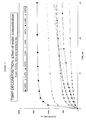
- Figures 1 and 2 show the effect of water concentration on the decomposition of t-butyl hydroperoxide in t-butyl alcohol catalyzed by cobalt acetylacetonate (Co(acac)2), as measured by the amount of O2 evolved (cc) over time (min).
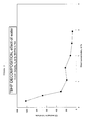
- Figure 3 shows the same effect as measured by the O2 evolved in the first minute of the reaction as a function of the water concentration (in weight percent) in the reaction mixture.
- Figure 3 is an approximate indication of the relative initial reaction rates as a function of water concentration.
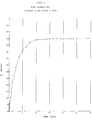
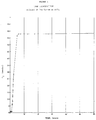
- Figures 4 and 5 together show the effect of water concentration on the decomposition of t-butyl hydroperoxide in t-butyl alcohol catalyzed by ruthenium acetylacetonate (Ru(acac)3) in wet and dry systems, respectively, as measured by the amount of O2 evolved (mmoles) over time (hours).
- Figure 6 shows the decomposition of TBHP catalyzed by the combination of Co(acac)2 and Ru(acac)3 in a dried system.
- the invention comprises a method for decomposition of organic hydroperoxides to hydroxyl compounds such as alcohols which comprises drying a solution of an organic hydroperoxide in at least one organic solvent for the hydroperoxide such that said dried reaction mixture comprises approximately 1 weight percent or less of water, and contacting the dried reaction mixture with a metal organic ligand catalyst.
- Suitable catalysts include cobalt or ruthenium acetylacetonates, metalloporphyrins, metallo-phthalocyanines and others as subsequently disclosed. Reducing the water content of the reaction mixture to approximately 1 weight percent or less has been found to significantly promote the decomposition rate, compared with the decomposition rate obtained using a hydroperoxide solution which has not been dried to such a degree.
- the invention further comprises decomposing reaction mixtures which have been previously dried or which otherwise comprise approximately 1 wt.% or less of water.
- drying means reducing the water content of the hydroperoxide and/or the solvent.
- the hydroperoxide may be dried, then dissolved in the solvent, or the solvent may be dried and the hydroperoxide then dissolved in it, or a solution of hydroperoxide in the solvent may be dried, or dried hydroperoxide and dried solvent may be combined.
- a co-solvent is used as described below, the co-solvent may be dried together with or separately from the other components of the reaction mixture, in generally similar fashion.
- a drying step may also be applied to the solution comprising the catalyst, for example catalyst in acetone.
- the drying step in the method of the invention may be accomplished by any suitable means for removal of water from organic compounds, such as contact with granular solid drying agents, such as molecular sieves, alumina, silica gel, clays, MgSO4 and the like, azeotropic distillation, contact with organic drying agents such as ethyl orthoformate, preferably regenerable organic drying agents such as diethyl acetals or ketals, for example dimethylacetal, diethylacetal, di t-butyl acetate, 2,2-dialkoxypropanes such as 2,2-dimethoxypropane and the like.
- granular solid drying agents such as molecular sieves, alumina, silica gel, clays, MgSO4 and the like
- azeotropic distillation contact with organic drying agents such as ethyl orthoformate, preferably regenerable organic drying agents such as diethyl acetals or ketals, for example dimethylacetal, diethylacetal, di
- any substantial drying of the hydroperoxide and/or solvent or solvents, such as which reduces the water content of the reaction mixture to approximately 1 weight percent or less, is within the scope of the invention.
- the water content is 0.5 wt.% or less, more preferably 0.25 wt.%, and still more preferably 0.1 wt.%.
- the solvent as previously disclosed hereinafter sometimes referred to as the primary solvent
- a co-solvent is a solvent different from the primary solvent, which may be added to the hydroperoxide and primary solvent to form a solution of hydroperoxide in the primary solvent and co-solvent.
- Ketones such as acetone, methylethylketone, methyl-isobutylketone, C6-C12 cyclic ketones e.g.
- cyclohexanone and the like function effectively as co-solvents, resulting in increased rates of decomposition of hydroperoxides, as compared with the use of the primary solvent without a co-solvent, or as compared with the use of either the primary solvent or the co-solvent alone.
- solvents for example ketones
- Various types of solvents are capable of functioning either as primary solvents or as co-solvents.
- the primary solvent and the other the co-solvent are conveniently considered the primary solvent and the other the co-solvent. If they are present in equal amounts, either may be considered the primary solvent.
- the proportions of primary solvent and co-solvent will be in the range from 1 to 100 parts by volume of co-solvent per 100 parts of primary solvent, but this depends upon the solubility characteristics of a particular pair of solvents in relation to a particular hydroperoxide, and the optimum proportions may be determined by a person skilled in the art in the light of the present specification. The use of more than two solvents is within the scope of the invention.
- Hydroperoxides for decomposition according to the invention include compounds having the formula ROOH where R is an organic radical, typically a straight or branched chain alkyl group or cycloalkyl group containing 2 to 15 carbon atoms, an aryl group such as a monocyclic or polycyclic group in which the cyclic groups may optionally be substituted with one or more substituents inert to the decomposition reaction, such as alkyl or alkoxy, containing 1 to 7 carbon atoms, nitro, carboxyl or carboxyl ester containing up to 15 carbon atoms and a halogen atom such as chloride, bromide or an alkylaryl group in which the alkyl chain contains 1 to 15 carbon atoms and the aryl group is as above described.
- R is an organic radical, typically a straight or branched chain alkyl group or cycloalkyl group containing 2 to 15 carbon atoms, an aryl group such as a monocyclic or polycyclic group in which the
- R is an alkyl or cycloalkyl group containing 4 to 12 carbon atoms or an alkylaryl group in which the aromatic moiety is phenyl and the alkyl group is straight or branched chain alkyl or cycloalkyl containing up to 6 carbon atoms.
- hydroperoxides for decomposition according to the invention are t-butyl and isobutyl hydroperoxide, isoamyl hydroperoxide, t-amylhydroperoxide, cyclohexyl hydroperoxide, alpha- and beta-ethylbenzene hydroperoxide, cumyl hydroperoxide, phenethyl hydroperoxide and cyclohexylphenyl hydroperoxide; phenethyl hydroperoxide and cumyl hydroperoxide are converted to phenethyl alcohol and cumyl alcohol respectively.
- alkyl hydroperoxides such as t-butyl hydroperoxide, isoamyl hydroperoxide, and the like
- cycloalkyl hydroperoxides such as cyclohexyl hydroperoxide, methylcyclohexyl hydroperoxide, and the like.
- Hydroperoxide decomposition catalysts for use according to the invention comprise the transition metal complexes of ligands such as phthalocyanines, porphyrins, porphenes, porphycenes, acetylacetonates, 1,3-bis(arylimino)isoindolines such as "BPI", Schiff bases such as salen, saleph and the like, halogenated mono-, bi-, tri- and tetradentate ligand systems such as propanates, butyrates, benzoates, naphthenates, stearates, bipyridines, terpyridines, phenanthrolines, dithiocarbamates, xanthates, salicylaldimines, cyclam, dioxycyclams, pyrazolyl borates and tetraazamacrocycles such as tetramethyltetraazadibenzocycloheptadecane.
- ligands such as phthalocyanines, porphy
- Suitable metals for the catalysts useful in the present invention include chromium, manganese, iron, cobalt and ruthenium.
- the catalysts useful in the process of the present invention may be produced by conventional methods known in the art.
- the process of the present invention results in a surprising and unexpectedly great increase in the decomposition rate of organic hydroperoxides.
- An advantage of the present invention is that inexpensive and readily available compositions, which previously were completely or essentially inactive as catalysts, exhibit enhanced activity when utilized in the present invention.
- catalysts are unsubstituted metallophthalocyanines and the metal acetylacetonates, such as cobalt acetylacetonate (Co(acac)2) and ruthenium acetylacetonate (Ru(acac)3).
- Co(acac)2 has no catalytic activity for decomposition of t-butyl hydroperoxide when the reaction system is contaminated with 5 wt.% water.
- the same composition is a highly active catalyst.
- Figures 1 to 3 illustrate this result.
- the catalyst is a mixture of metallo-phthalocyanine and metal acetylacetonate, for example, iron phthalocyanine (FePc) and Co(acac)2.
- the catalyst is a mixture of ruthenium acetylacetonate and cobalt acetylacetonate; the former appears to produce a higher overall conversion rate while the latter exhibits a shorter induction period and greater initial reaction rate.
- the weight ratio of Ru(acac)3 to Co(acac)2 may be from 0.01:1 to 100:1 (Ru:Co), preferably 0.1:1 to 10:1, more preferably 0.1:1 to 1:1.
- the relative proportion of Co(acac)2 to Ru(acac)3 may be modified to balance reaction rate, conversion rate and catalyst cost. Effecting the desired balance is within the ability of the skilled practitioner in the art.
- the decomposition catalyst may either be dissolved or slurried in the reaction mixture; i.e., in the primary solvent, or if a co-solvent is used, in the co-solvent, or a combination thereof.
- the effectiveness of the catalyst may be improved by stirring the catalyst in the solvent or co-solvent for at least 24, and up to 168 or more hours. This time can be reduced by heating the slurry, sonication or other devices known to accelerate both solution and dispersion phenomena.
- the catalyst slurry may be mixed with a solution of the hydroperoxide in the primary solvent, and the resulting mixture or solution subjected to the reaction temperature as subsequently described. The catalyst may be added incrementally to the reaction mixture.
- the decomposition of hydroperoxides according to the invention is typically carried out in a solution of the hydroperoxide in the solvent or solvent mixture.
- the solution preferably contains from about 5 to about 50 wt.% of hydroperoxide, but may also contain less, for instance 1 wt.% of hydroperoxide.
- Suitable solvents or co-solvents include benzene, chlorobenzene, o-dichlorobenzene, acetonitrile, benzonitrile, hydroxyl or carbonyl compounds such as alcohols or ketones and the like.
- a useful solvent is the alcohol formed by decomposition of the hydroperoxide, for example TBA formed by decomposition of TBHP. Any suitable temperature and pressure may be used.
- the temperature is in the range from about 25° to about 150°C, preferably to 130°C, and the total pressure from 0 to 500 psig; preferably, the partial pressure of the oxygen in the solution is not more than about 50 psig.
- the time of reaction may be relatively short, in view of the rapid reaction rate with the catalysts employed according to the invention, and will typically be in the range from about 0.1 to about 5 hours.
- the drying of the reaction mixture according to the invention may be effected before contacting the hydroperoxide and solvent or solvents with the decomposition catalyst, or it may be effected in situ in the decomposition reaction.
- the drying of the reaction mixture according to the invention is applicable to reaction mixtures which contain one solvent, and to reaction mixtures which contain a primary solvent and one or more co-solvents.
- the use of one or more co-solvents according to the invention is applicable to reaction mixtures which are dried, and to reaction mixtures which are not dried.
- the reaction mixture is dried and contains one or more co-solvents.
- the hydroperoxide which is decomposed according to the invention may have been obtained from any source.
- the hydroperoxide has been prepared by a noncatalytic or catalytic partial oxidation of hydrocarbons
- the decomposition of the hydroperoxide may conveniently be integrated with the previous oxidation.
- the product mixture from the oxidation typically contains unreacted hydrocarbon, hydroperoxide and alcohol products of the partial oxidation, and water, and is typically fractionated to obtain a fraction comprising a water-containing solution of hydroperoxide in the alcohol product of the oxidation.
- the water-containing oxidation product or a water-containing fraction thereof is passed to a drying operation wherein the water content is reduced.
- the product of the drying operation is passed to the decomposition of hydroperoxide according to the invention.
- a drier unit prior to the hydroperoxide decomposition (HPD) unit allows for a substantial increase in HPD reactor throughput due to the increased reaction rate of the process of the invention, possibly as much as an order of magnitude or more.
- the drying operation may be carried out in the decomposition reactor itself, concurrently with the decomposition, rather than in a separate, prior step.
- TBA t-butanol
- TBHP t-butanol
- the TBHP is often reacted in a second step with an olefin to produce an alkylene oxide and TBA as products.
- the invention provides additional options in connection with such operation which may be advantageous in some cases.
- the partial oxidation may be conducted either catalytically or noncatalytically to maximize TBHP production relative to TBA production, and the method of the invention used to convert the TBHP produced to TBA in a manner to maximize the overall production of TBA independently of any other product.
- compositions of matter useful in the methods of the invention, which comprise solutions of an organic hydroperoxide in an organic solvent, prepared by:
- the hydroperoxide-solvent or hydroperoxide-solvent-cosolvent composition of the invention contains less than 50%, and more preferably less than 25%, of the water in the corresponding undried composition, that is, the composition consisting of the same relative portions of the same components in their undried state.
- These compositions also preferably contain approximately 1 weight percent or less, preferably 0.5 wt.% or less, more preferably 0.25 wt.% or less, and still more preferably 0.1 wt.% or less of water.
- typical commercial feeds may contain 2 to 5 wt.% or more of water.
- the undried composition contains 2 wt.% water
- the dried composition contains 0.05 wt.% water
- the dried composition contains (0.05/2)x100, or 2.5%, of the water in the undried composition.
- Table I shows the effect of ketonic co-solvent on the decomposition of TBHP, solubilized in t -butyl alcohol (“TBA”), and catalyzed by metal phthalocyanine.
- TSA t -butyl alcohol
- Table I shows the effect of ketonic co-solvent on the decomposition of TBHP, solubilized in t -butyl alcohol ("TBA"), and catalyzed by metal phthalocyanine.
- TSA t -butyl alcohol
- Example 6 For example, the 1145 cc's of oxygen evolved in the first hour in Example 4 indicates a more effective decomposition than that obtained in Example 3, where the corresponding amount was 440.
- Example 6 using acetone as co-solvent and 57 ppm of Fe III perfluoro ( F ) phthalocyanine (Pc) chloride (Cl) as catalyst, 1365 cc's of oxygen were evolved in the first hour.
- the catalyst was stirred in the acetone co-solvent for 84 hours prior to contacting the TBHP with the catalyst solution. All oxygen evolution had ceased after 0.5 hour of the reaction, at which time 96 % of the TBHP ("RO2H”) had been converted, principally to ROH, where R is t-butyl.
- RO2H 96 % of the TBHP
- Comparison of Examples 4 through 12 with Examples 1 through 3 shows increased oxygen evolution with at least 38 ppm of catalyst and using ketone as co-solvent, compared with Examples 1 and 2 where no co-solvent was used and Example 3 where acetone was used as co-solvent with only 19 ppm of catalyst.
- Table II shows the effect of added acetone on the decomposition of TBHP using 90, 59 and 59 ppm of Fe[ F Pc]Cl, the same catalyst as in Examples 1 to 12, at a temperature of 80°C. and pressure of 200 psig, compared with 80°C. and atmospheric pressure in Examples 1 to 12.
- Table II shows the superiority of the method of the invention, in Examples 14 and 15, using acetone as co-solvent, to Example 13, using no co-solvent.
- Examples 14 and 15 achieved similar results, in terms of % conversion of TBHP, to the results of Example 13, with a smaller catalyst concentration (59 v 90 ppm) and a shorter reaction time 180/195 minutes v 335 minutes).
- Table III shows the effect of water removal on the decomposition of TBHP catalyzed by metal perhaloporphyrins.
- TBA t -butyl alcohol
- the TBHP and the acetone used were wet, as described in footnote b to Table III.
- the TBA, TBHP and acetone were dry, as also described in footnote b to Table III.
- the cc's of oxygen evolved in the first hour were higher than in the corresponding Examples 16, 18 and 20, indicating that drying the components caused an increase in the effectiveness of the reaction system for decomposition of TBHP.
- the initial rate constant data confirm the superiority of Examples 17, 19 and 21 using dried components to Examples 16, 18 and 20 using undried components.
- Table IV shows the effect of drying TBHP on the subsequent decomposition of the TBHP.
- the TBHP added to the reactor was wet, and in Example 25, the TBHP added to the reactor had been dried as described in footnote d to Table IV.
- wet TBHP was added to a reactor which contained in the reaction mixture a solid drying agent, activated molecular sieve (3A). Superior conversion of TBHP in a shorter reaction time was obtained in Example 23, where the reaction mixture contained drying agent, as compared with Example 22, where wet TBHP was added to a reaction mixture containing no drying agent. And superior conversion of TBHP was obtained in Example 25 where the TBHP was dried prior to addition to the reactor, as compared with Example 24 where the TBHP was added wet to the reaction mixture.
- Table V shows the effect of water removal on the decomposition of TBHP catalyzed by metalloporphyrins.
- the catalysts used in these examples were metal complexes of porphyrin derivatives: in Examples 26 and 27, ⁇ -oxo dimer of Fe III meso -tetranitro- beta -octaethylporphyrin, and in Examples 28 and 29, Fe III meso -(pentafluorophenyl- beta -octachloroporphyrin) chloride. More cc's of oxygen were evolved in the first hour in Example 26, where the reaction mixture was dry, compared to Example 27, where the reaction mixture was wet. And more cc's of oxygen were evolved in the first hour in Example 28, where the reaction mixture was dry, compared to Example 29 where the reaction mixture was wet.
- Table VI shows the effect of reaction pressure on TBHP decomposition using iron phthalocyanine chloride catalyst at 80°C. The pressure was varied from 0 to 200 psig in five runs. Examples 30 and 31 show the effect of changing the pressure from 0 to 200 psig under wet conditions. The percent conversion of TBHP was higher at 0 psig than at 200 psig. Examples 32 and 33 show the effect of changing the pressure from 0 to 50 psig under dry conditions. The percent conversion of TBHP was higher at 0 psig than at 50 psig.
- Table I shows the effect of drying on the decomposition of t-butyl hydroperoxide (TBHP), solubilized in t-butyl alcohol (TBA), catalyzed by Co(acac)2 at 80°C and 0 psig.
- TBHP was decomposed in Examples 1 to 4 using Co(acac)2, and the effect of drying was determined by varying the water level in the runs from 4.3 wt.% ("wet" TBHP) to 1.2 and 1.1 wt.% ("lx dried" TBHP) to 0.1 wt.% ("2x dried” TBHP).
- the procedure used was as described in footnotes 1, 2 and 3 to Table I.
- the percent conversion of TBHP was measured after 60 minutes. In Example 5, the decomposition reaction was run with no catalyst.
- Table II shows the effect of drying on the decomposition of t-butyl hydroperoxide (TBHP), solubilized in t-butyl alcohol (TBA) and acetone, catalyzed by iron phthalocyanine (FePc) at 80°C and 0 psig.
- TBHP was decomposed in Examples 6 to 10 using FePc, and the effect of drying was determined by varying the water level in the runs from 3.8 wt.% ("wet" TBHP) to 1.8 wt.% ("1x dried” TBHP) to 0.05 wt.% ("2x dried” TBHP).
- water was added to a twice dried reaction mixture to yield 0.33 wt.% water.
- Example 12 the reaction was run with "wet" TBHP with 2 g of activated molecular sieve drying agent in the reaction system.
- Figures 1 through 6 represent hydroperoxide decomposition by the amount of O2 (in cc's) evolved in the reaction plotted against the reaction time (in minutes). They dramatically show that as water is removed from the reaction mixture, Co(acac)2 becomes an increasingly superior decomposition catalyst. It has been found that Co(acac)2 has little or no catalytic activity under the reaction conditions described herein when the TBHP feed is contaminated with approximately 5 wt.% water (results not shown). In contrast, Figures 1 and 2 show that drying to approximately 1 wt.% or lower of water results in a very active catalyst. The data in Table III further evidence this high catalytic activity of Co(acac)2 for decomposition in dried conditions.
- Figure 3 shows the dramatic increase in the decomposition rate for the Co(acac)2-catalyzed decomposition of TBHP in TBA as water is removed from the reaction mixture.
- the Figure plots the O2 evolved in the first minute of the reaction against the water concentration in the reaction mixture. The data show that the rate begins to rise rapidly as the water concentration is decreased below 1 wt.%. In fact, the initial reaction rate at 0.25 wt.% water in feed is five times greater than at 1 wt.% water in feed.
- Figures 4 and 5 illustrate the effect of drying on TBHP decomposition catalyzed by Ru(acac)3 by showing the results in wet and dried systems, respectively.
- TBHP was solubilized in TBA ; the reaction was run at 80°C; and activity was measured as a function of O2 evolved (in mmoles) and plotted against reaction time (in hours).
- Figure 5 it can be seen that, after a brief induction period, the decomposition reaction was observed to proceed extremely rapidly. The reaction was 98% complete after one hour.
- Figure 6 illustrates the further positive effect that occurs when the combination of Co(acac)2 and Ru(acac)3 is used as the catalyst for TBHP decomposition in a dried system.
- a solution from a concentrated cyclohexane oxidate comprising cyclohexyl hydroperoxide (10%), cyclohexanone (58%) and cyclohexanol (31%) and small amounts of other organic materials including cyclohexane is dried for 72 hours over freshly activated molecular sieve.
- the dried reaction mixture is then catalytically decomposed using Co(acac)2.
- the rate of decomposition of the dried reaction mixture is more than twice that of an identical undried sample.
- a concentrated cyclohexane solution comprising 10.5% cyclohexyl hydroperoxide, 2.5% cyclohexanol, 1% cyclohexanone and 3.5% other oxidation products is generated by non-catalytic oxidation of cyclohexane in a passivated reactor.
- the reaction mixture is dried over 3A molecular sieves.
- the dried reaction mixture is then catalytically decomposed using Co(acac)2. Decomposition of the hydroperoxide in this mixture occurs far more rapidly when the mixture is thoroughly dried over 3A molecular sieves than when the undried material is used.
Landscapes
- Chemical & Material Sciences (AREA)
- Organic Chemistry (AREA)
- Health & Medical Sciences (AREA)
- General Health & Medical Sciences (AREA)
- Toxicology (AREA)
- Chemical Kinetics & Catalysis (AREA)
- General Chemical & Material Sciences (AREA)
- Business, Economics & Management (AREA)
- Emergency Management (AREA)
- Organic Low-Molecular-Weight Compounds And Preparation Thereof (AREA)
- Low-Molecular Organic Synthesis Reactions Using Catalysts (AREA)
- Catalysts (AREA)
Applications Claiming Priority (4)
| Application Number | Priority Date | Filing Date | Title |
|---|---|---|---|
| US223090 | 1994-04-04 | ||
| US08/223,090 US5395988A (en) | 1994-04-04 | 1994-04-04 | Metal-ligand catalyzed decomposition of organic hydroperoxides |
| US398024 | 1995-03-03 | ||
| US08/398,024 US5550301A (en) | 1994-04-04 | 1995-03-03 | Dried catalytic systems for decomposition of organic hydroperoxides |
Publications (2)
| Publication Number | Publication Date |
|---|---|
| EP0676221A1 true EP0676221A1 (fr) | 1995-10-11 |
| EP0676221B1 EP0676221B1 (fr) | 1998-12-23 |
Family
ID=26917435
Family Applications (1)
| Application Number | Title | Priority Date | Filing Date |
|---|---|---|---|
| EP95302245A Expired - Lifetime EP0676221B1 (fr) | 1994-04-04 | 1995-04-04 | Systèmes catalytiques déshydratés pour la décomposition d'hydroperoxydes organiques |
Country Status (5)
| Country | Link |
|---|---|
| US (2) | US5550301A (fr) |
| EP (1) | EP0676221B1 (fr) |
| JP (1) | JPH0848641A (fr) |
| CA (1) | CA2146316A1 (fr) |
| DE (1) | DE69506766T2 (fr) |
Families Citing this family (18)
| Publication number | Priority date | Publication date | Assignee | Title |
|---|---|---|---|---|
| US6124452A (en) * | 1997-12-19 | 2000-09-26 | University Of Nebraska-Lincoln | Octafluoro-meso-tetraarylporphyrins and methods for making these compounds |
| US6387862B2 (en) | 1997-03-07 | 2002-05-14 | The Procter & Gamble Company | Bleach compositions |
| US20030017941A1 (en) | 1997-03-07 | 2003-01-23 | The Procter & Gamble Company | Catalysts and methods for catalytic oxidation |
| WO1998039405A1 (fr) | 1997-03-07 | 1998-09-11 | The Procter & Gamble Company | Compositions de blanchiment contenant un catalyseur de blanchiment metallique et des activateurs de blanchiment et/ou des acides percarboxyliques organiques |
| ES2242996T3 (es) | 1997-03-07 | 2005-11-16 | THE PROCTER & GAMBLE COMPANY | Composiciones de blanqueo. |
| ZA981883B (en) * | 1997-03-07 | 1998-09-01 | Univ Kansas | Catalysts and methods for catalytic oxidation |
| US6218351B1 (en) | 1998-03-06 | 2001-04-17 | The Procter & Gamble Compnay | Bleach compositions |
| US20080125344A1 (en) * | 2006-11-28 | 2008-05-29 | Daryle Hadley Busch | Bleach compositions |
| US6392093B1 (en) * | 1997-11-21 | 2002-05-21 | Council Of Scientific & Industrial Research | Process for the oxidation of cyclohexane to adipic acid |
| BR9913474A (pt) * | 1998-08-26 | 2001-05-22 | Du Pont | Processo aperfeiçoado para a decomposição de um hidroperóxido para formar uma mistura que contém um álcool e uma cetona correspondentes |
| DE60023358T2 (de) | 2000-08-18 | 2006-07-13 | Invista Technologies S.A.R.L., Wilmington | Verbesserter hydroperoxid zersetzungskatalysator |
| US6750373B2 (en) * | 2001-05-18 | 2004-06-15 | Shell Oil Company | One-step production of 1, 3-propanediol from ethylene oxide and syngas with a cobalt-iron catalyst |
| FR2831535B1 (fr) * | 2001-10-30 | 2004-08-13 | Rhodia Polyamide Intermediates | Procede de decomposition catalytique des hydroperoxydes organiques |
| US20050192195A1 (en) * | 2002-08-27 | 2005-09-01 | Busch Daryle H. | Catalysts and methods for catalytic oxidation |
| US20040048763A1 (en) * | 2002-08-27 | 2004-03-11 | The Procter & Gamble Co. | Bleach compositions |
| JP4736368B2 (ja) * | 2004-07-22 | 2011-07-27 | 住友化学株式会社 | シクロアルカノール及び/又はシクロアルカノンの製造方法 |
| JP4704283B2 (ja) * | 2005-06-28 | 2011-06-15 | 住友化学株式会社 | 過酸化物分解触媒 |
| CN113735699B (zh) * | 2021-09-17 | 2024-01-23 | 黑龙江立科新材料有限公司 | 一种苯乙酮的制备方法 |
Citations (3)
| Publication number | Priority date | Publication date | Assignee | Title |
|---|---|---|---|---|
| US4551553A (en) * | 1983-02-22 | 1985-11-05 | Atlantic Richfield Company | Decomposition of hydroperoxides in the presence of homogeneous binary catalysts |
| EP0308101A1 (fr) * | 1987-09-08 | 1989-03-22 | Texaco Development Corporation | Préparation de l'alcool butylique tertiaire |
| EP0522841A2 (fr) * | 1991-07-09 | 1993-01-13 | SUN COMPANY, INC. (R&M) | Décomposition d'hydroperoxydes organiques |
Family Cites Families (8)
| Publication number | Priority date | Publication date | Assignee | Title |
|---|---|---|---|---|
| US3879467A (en) * | 1973-01-05 | 1975-04-22 | Atlantic Richfield Co | Catalytic oxidation of alkanes and alkenes with organic hydroperoxides |
| US4912267A (en) * | 1987-09-08 | 1990-03-27 | Texaco Inc. | Catalytic conversion of tertiary butyl hydroperoxide to tertiary butyl alcohol |
| US4912266A (en) * | 1987-09-08 | 1990-03-27 | Texaco Inc. | Catalytic decomposition of tertiary butyl hydroperoxide |
| US4922035A (en) * | 1987-09-08 | 1990-05-01 | Texaco Inc. | Catalytic preparation of tertiary butyl alcohol by decomposition of tertiary butyl hydroperoxide |
| US4922036A (en) * | 1987-09-08 | 1990-05-01 | Texaco Inc. | Tertiary butyl hydroperoxide decomposition |
| NL8802592A (nl) * | 1988-10-21 | 1990-05-16 | Stamicarbon | Werkwijze voor de bereiding van een k/a-mengsel. |
| US4992602A (en) * | 1990-01-29 | 1991-02-12 | Texaco Chemical Company | Preparation of tertiary butyl alcohol |
| US5395988A (en) * | 1994-04-04 | 1995-03-07 | Sun Company, Inc. (R&M) | Metal-ligand catalyzed decomposition of organic hydroperoxides |
-
1995
- 1995-03-03 US US08/398,024 patent/US5550301A/en not_active Expired - Fee Related
- 1995-04-04 JP JP7101582A patent/JPH0848641A/ja active Pending
- 1995-04-04 DE DE69506766T patent/DE69506766T2/de not_active Expired - Fee Related
- 1995-04-04 CA CA002146316A patent/CA2146316A1/fr not_active Abandoned
- 1995-04-04 EP EP95302245A patent/EP0676221B1/fr not_active Expired - Lifetime
-
1996
- 1996-08-26 US US08/703,423 patent/US5672778A/en not_active Expired - Fee Related
Patent Citations (3)
| Publication number | Priority date | Publication date | Assignee | Title |
|---|---|---|---|---|
| US4551553A (en) * | 1983-02-22 | 1985-11-05 | Atlantic Richfield Company | Decomposition of hydroperoxides in the presence of homogeneous binary catalysts |
| EP0308101A1 (fr) * | 1987-09-08 | 1989-03-22 | Texaco Development Corporation | Préparation de l'alcool butylique tertiaire |
| EP0522841A2 (fr) * | 1991-07-09 | 1993-01-13 | SUN COMPANY, INC. (R&M) | Décomposition d'hydroperoxydes organiques |
Also Published As
| Publication number | Publication date |
|---|---|
| DE69506766T2 (de) | 1999-08-05 |
| US5550301A (en) | 1996-08-27 |
| EP0676221B1 (fr) | 1998-12-23 |
| US5672778A (en) | 1997-09-30 |
| CA2146316A1 (fr) | 1995-10-05 |
| JPH0848641A (ja) | 1996-02-20 |
| DE69506766D1 (de) | 1999-02-04 |
Similar Documents
| Publication | Publication Date | Title |
|---|---|---|
| EP0676221A1 (fr) | Systèmes catalytiques déshydratés pour la décomposition d'hydroperoxydes organiques | |
| Saussine et al. | Cobalt (III) alkylperoxy complexes. Synthesis, X-ray structure, and role in the catalytic decomposition of alkyl hydroperoxides and in the hydroxylation of hydrocarbons | |
| DE3854316T2 (de) | Durch einen halogenierten Liganden enthaltende Eisenkoordinationskomplexe katalisierte Oxidation von Kohlenwasserstoffen. | |
| CA1336188C (fr) | Oxydation d'hydrocarbures catalysee par des complexes de coordination metalliques, actives par des azotures | |
| EP0522841B1 (fr) | Décomposition d'hydroperoxydes organiques | |
| US5571908A (en) | Porphyrins | |
| US5723677A (en) | Method for hydroperoxide decomposition using novel porphyrins synthesized from dipyrromethanes and aldehydes | |
| US5767272A (en) | Method of preparing meso-haloalkylporphyrins | |
| US4922033A (en) | Preparation of tertiary butyl alcohol by the catalytic decomposition of tertiary butyl hydroperoxide | |
| Pietikäinen | Asymmetric Mn (III)-salen catalyzed epoxidation of unfunctionalized alkenes with tetrabutylammonium monopersulfate | |
| US5395988A (en) | Metal-ligand catalyzed decomposition of organic hydroperoxides | |
| DE3750366T2 (de) | Mit azid- oder nitrid-aktivierten Metall-Koordinationskomplexen katalysierte Kohlenwasserstoffoxidation. | |
| EP0704447A1 (fr) | Réactions catalysées par des haloporphyrines | |
| EP0628529A1 (fr) | Décomposition d'hydroperoxides par métalloporphyrines nitrées | |
| EP0781744A2 (fr) | Oxydation catalytique d'alcanes légères en présence d'un base | |
| EP0676238A2 (fr) | Catalyseurs contenant ligand métallique pour l'oxydation des alcènes et la décomposition d'hydropéroxides | |
| JPH03246238A (ja) | ハロゲン化ポルフィリン錯体触媒によるオレフィンの酸素酸化法 | |
| Kanmani et al. | Catalytic oxidation of alkenes with ruthenium (II) perchlorate complexes | |
| CA2242937A1 (fr) | Oxydation catalytique d'olefines cycliques | |
| Goto et al. | Epoxidation of olefin with alkyl hydroperoxide catalyzed by molybdenum complex supported on activated carbon | |
| FR2558826A1 (fr) | Synthese d'alcool tertio-butylique par oxydation catalytique, en phase liquide de l'isobutane par l'oxygene | |
| Kanmani et al. | Oxidation of cyclohexene and styrene catalysed by ruthenium (II) complexes under homogeneous conditions | |
| Battioni et al. | Oxidation of cyclohexane catalyzed by polyhalogenated and perhalogenated manganese porphyrins | |
| Weber et al. | Photocatalytic oxygenation of α-pinene with molecular oxygen activated by niobium and molybdenum porphyrins: Part LXX. Photocatalytic systems | |
| EP0700915A1 (fr) | Haloporphyrines et procédé pour leur préparation |
Legal Events
| Date | Code | Title | Description |
|---|---|---|---|
| PUAI | Public reference made under article 153(3) epc to a published international application that has entered the european phase |
Free format text: ORIGINAL CODE: 0009012 |
|
| AK | Designated contracting states |
Kind code of ref document: A1 Designated state(s): BE DE FR GB IT NL |
|
| 17P | Request for examination filed |
Effective date: 19960409 |
|
| 17Q | First examination report despatched |
Effective date: 19970612 |
|
| GRAG | Despatch of communication of intention to grant |
Free format text: ORIGINAL CODE: EPIDOS AGRA |
|
| GRAG | Despatch of communication of intention to grant |
Free format text: ORIGINAL CODE: EPIDOS AGRA |
|
| GRAH | Despatch of communication of intention to grant a patent |
Free format text: ORIGINAL CODE: EPIDOS IGRA |
|
| GRAH | Despatch of communication of intention to grant a patent |
Free format text: ORIGINAL CODE: EPIDOS IGRA |
|
| GRAA | (expected) grant |
Free format text: ORIGINAL CODE: 0009210 |
|
| AK | Designated contracting states |
Kind code of ref document: B1 Designated state(s): BE DE FR GB IT NL |
|
| REF | Corresponds to: |
Ref document number: 69506766 Country of ref document: DE Date of ref document: 19990204 |
|
| ITF | It: translation for a ep patent filed | ||
| ET | Fr: translation filed | ||
| PLBE | No opposition filed within time limit |
Free format text: ORIGINAL CODE: 0009261 |
|
| STAA | Information on the status of an ep patent application or granted ep patent |
Free format text: STATUS: NO OPPOSITION FILED WITHIN TIME LIMIT |
|
| 26N | No opposition filed | ||
| REG | Reference to a national code |
Ref country code: GB Ref legal event code: IF02 |
|
| PGFP | Annual fee paid to national office [announced via postgrant information from national office to epo] |
Ref country code: GB Payment date: 20030326 Year of fee payment: 9 |
|
| PGFP | Annual fee paid to national office [announced via postgrant information from national office to epo] |
Ref country code: NL Payment date: 20030403 Year of fee payment: 9 |
|
| PGFP | Annual fee paid to national office [announced via postgrant information from national office to epo] |
Ref country code: FR Payment date: 20030418 Year of fee payment: 9 |
|
| PGFP | Annual fee paid to national office [announced via postgrant information from national office to epo] |
Ref country code: DE Payment date: 20030430 Year of fee payment: 9 |
|
| PG25 | Lapsed in a contracting state [announced via postgrant information from national office to epo] |
Ref country code: GB Free format text: LAPSE BECAUSE OF NON-PAYMENT OF DUE FEES Effective date: 20040404 |
|
| PG25 | Lapsed in a contracting state [announced via postgrant information from national office to epo] |
Ref country code: NL Free format text: LAPSE BECAUSE OF NON-PAYMENT OF DUE FEES Effective date: 20041101 |
|
| PG25 | Lapsed in a contracting state [announced via postgrant information from national office to epo] |
Ref country code: DE Free format text: LAPSE BECAUSE OF NON-PAYMENT OF DUE FEES Effective date: 20041103 |
|
| GBPC | Gb: european patent ceased through non-payment of renewal fee | ||
| PG25 | Lapsed in a contracting state [announced via postgrant information from national office to epo] |
Ref country code: FR Free format text: LAPSE BECAUSE OF NON-PAYMENT OF DUE FEES Effective date: 20041231 |
|
| NLV4 | Nl: lapsed or anulled due to non-payment of the annual fee |
Effective date: 20041101 |
|
| REG | Reference to a national code |
Ref country code: FR Ref legal event code: ST |
|
| PG25 | Lapsed in a contracting state [announced via postgrant information from national office to epo] |
Ref country code: IT Free format text: LAPSE BECAUSE OF NON-PAYMENT OF DUE FEES;WARNING: LAPSES OF ITALIAN PATENTS WITH EFFECTIVE DATE BEFORE 2007 MAY HAVE OCCURRED AT ANY TIME BEFORE 2007. THE CORRECT EFFECTIVE DATE MAY BE DIFFERENT FROM THE ONE RECORDED. Effective date: 20050404 |
|
| PGFP | Annual fee paid to national office [announced via postgrant information from national office to epo] |
Ref country code: BE Payment date: 20050520 Year of fee payment: 11 |
|
| PG25 | Lapsed in a contracting state [announced via postgrant information from national office to epo] |
Ref country code: BE Free format text: LAPSE BECAUSE OF NON-PAYMENT OF DUE FEES Effective date: 20060430 |
|
| BERE | Be: lapsed |
Owner name: *SUN CY INC. (R&M) Effective date: 20060430 |