EP0676468A2 - Récepteurs humains de cellules T, leurs utilisations dans la thérapie et le diagnostic du diabète de type I - Google Patents
Récepteurs humains de cellules T, leurs utilisations dans la thérapie et le diagnostic du diabète de type I Download PDFInfo
- Publication number
- EP0676468A2 EP0676468A2 EP95103785A EP95103785A EP0676468A2 EP 0676468 A2 EP0676468 A2 EP 0676468A2 EP 95103785 A EP95103785 A EP 95103785A EP 95103785 A EP95103785 A EP 95103785A EP 0676468 A2 EP0676468 A2 EP 0676468A2
- Authority
- EP
- European Patent Office
- Prior art keywords
- nucleic acid
- cell
- polypeptide
- amino acid
- cell receptor
- Prior art date
- Legal status (The legal status is an assumption and is not a legal conclusion. Google has not performed a legal analysis and makes no representation as to the accuracy of the status listed.)
- Withdrawn
Links
Images


Classifications
-
- C—CHEMISTRY; METALLURGY
- C07—ORGANIC CHEMISTRY
- C07K—PEPTIDES
- C07K14/00—Peptides having more than 20 amino acids; Gastrins; Somatostatins; Melanotropins; Derivatives thereof
- C07K14/435—Peptides having more than 20 amino acids; Gastrins; Somatostatins; Melanotropins; Derivatives thereof from animals; from humans
- C07K14/705—Receptors; Cell surface antigens; Cell surface determinants
- C07K14/70503—Immunoglobulin superfamily
- C07K14/7051—T-cell receptor (TcR)-CD3 complex
-
- A—HUMAN NECESSITIES
- A61—MEDICAL OR VETERINARY SCIENCE; HYGIENE
- A61K—PREPARATIONS FOR MEDICAL, DENTAL OR TOILETRY PURPOSES
- A61K38/00—Medicinal preparations containing peptides
Definitions
- the invention relates to new nucleic acid and amino acid sequences of the human T cell receptor and their use for the diagnosis and therapy of autoimmune type I diabetes mellitus.
- type I diabetes mellitus is an autoimmune disease that is caused by the targeted destruction of the insulin-producing ⁇ cells of the Langerhans Islands in the pancreas. There are indications that this destruction is mediated by autoreactive T-lymphocytes, which react with specific "beta cell self-peptides" (autoantigens).
- T cell receptor The binding of T cells to autoantigens is mediated via the T cell receptor.
- the binding repertoire of T cell receptors is determined by positive and negative selection via a reaction with self-peptides which are bound to molecules of the Major Histocompatibility Complex (MHC) (Davies and Bjorkmann (1988), Nature 334: 395).
- MHC Major Histocompatibility Complex
- a defined TCR repertoire has been found in lymphocytes that infiltrate the organs affected (Oksenberg et al. (1990), Nature 345: 344; Paliard et al. ( 1991), Science 253: 325; Davies et al. (1991), N. Engl. J. Med. 325: 238).
- PBMC peripheral mononuclear blood cells
- T cells are exposed to a number of different autoantigens that occur during the course of the disease.
- An object of the present invention was therefore to provide nucleic acid and amino acid sequences of T cell receptors which react specifically with autoantigens from ⁇ cells of the Langerhans Islands.
- this object was achieved by isolating T cell clones from a patient with type I diabetes, which react specifically with beta cell membrane fragments, and determining the nucleic acid and amino acid sequence of the T cell receptor molecules in these clones.
- CDR-3 regions of the ⁇ and ⁇ chains of the T cell receptors were determined, which is probably the region in the T cell receptor that interacts with the recognized antigen.
- SEQ ID NO. 1-6 shown nucleic acid and amino acid sequences are regions from the CDR3 regions of the T cell receptors from the T cell clones found.
- SEQ ID NO. 1 or SEQ ID NO. 4 come from the ⁇ or ⁇ chain of clone K2.12.
- SEQ ID NO. 2 or SEQ ID NO. 5 come from the ⁇ or ⁇ chain of clone K2.16.
- SEQ ID NO. 3 or SEQ ID NO. 6 come from the ⁇ or ⁇ chain of clone K2.4.
- the present invention also includes those nucleic acid sequences which have at least 80%, preferably at least 90%, homology to one of the above-mentioned sequences.
- the present invention furthermore relates to a nucleic acid which codes for a chain of a human T cell receptor or a functional derivative thereof and which is characterized in that its CDR3 region contains a nucleic acid as defined above.
- This nucleic acid preferably also contains, as CDR1 and CDR2 regions, nucleic acid sequences which code for the amino acid sequences shown in FIG. 2. These nucleic acid sequences can be derived from the amino acid sequences shown in FIG. 2 and the universal genetic code can be easily determined.
- the term "functional derivative of a chain of a human T cell receptor” in the sense of the present invention is to be understood as a polypeptide which together with the complementary chain of the human T cell receptor (or a derivative of such a chain) is a T cell receptor derivative that has an equivalent recognition specificity for a peptide ligand presented by an MHC molecule, such as the underivatized T cell receptor.
- a T cell receptor derivative preferably has a binding constant of at least 10 ⁇ 4 l / mol, preferably 10 ⁇ 4 to 10 ⁇ 5 l / mol, for the peptide ligand presented.
- Functional derivatives of chains of a human T cell receptor can be produced, for example, by deletion, substitution and / or insertion of sections of the gene coding for the respective polypeptide by recombinant DNA techniques.
- the production of recombinant T cell receptor chains is described, for example, by Blank et al. (1993), Eur. J. Immunol. 23, 3057-3065; Lin et al. (1990) Science 249: 677; Gregoire et al. (1991); Proc. Natl. Acad. Sci. USA 88: 8077; Kappes and Tonegawa (1991), Proc. Natl. Acad. Sci. USA 88: 10619 and Ward (1991) Scand. J. Immunol. 34: 215. Reference is hereby expressly made to these references.
- the nucleic acid according to the invention codes for an ⁇ chain of a human T cell receptor or a functional derivative thereof, it preferably contains an expressed V gene segment from the gene families V ⁇ 1, V ⁇ 5 or V ⁇ 12, in particular V ⁇ 1.3a, V ⁇ 5.1 or V ⁇ 12.1 . Furthermore, the nucleic acids according to the invention preferably contain expressed J ⁇ G, J ⁇ AB11 or J ⁇ 08 gene segments.
- the nucleic acid according to the invention for a ⁇ chain of a human T cell receptor or a functional derivative thereof encoded it preferably contains an expressed V gene segment from the V ⁇ 8, V ⁇ 9 or V ⁇ 16 gene families, in particular V ⁇ 8.1, V ⁇ 9.2 or V ⁇ 16.1. It is further preferred that the nucleic acid according to the invention contains an expressed J ⁇ 1.5, J ⁇ 2.4 or J ⁇ 2.3 gene segment.
- the ⁇ chain of the T cell receptor from clone K2.12 was combined from V ⁇ 5.1 and J ⁇ G, that of clone K2.16 from V ⁇ 12.1 and J ⁇ AB11 and that of clone K2.4 from V ⁇ 1.3a and J ⁇ 08 gene segments .
- the ⁇ chain of the T cell clone K2.12 was combined from V ⁇ 8.1 and J ⁇ 1.5, that of clone 2.16 from V ⁇ 16.1 and J ⁇ 2.3 and that of clone K2.4 from V ⁇ 9.2 and J ⁇ 2.4 gene segments .
- Information on the nucleic acid and amino acid sequences for V and J gene segments can be found for V ⁇ 1.3 in Obata and Kashiwagi, in Tsuji et al. (Ed.), HLA 1991, Vol.
- the present invention furthermore relates to a vector which contains at least one copy of a nucleic acid according to the invention.
- the vector can be a prokaryotic vector or a eukaryotic vector.
- prokaryotic vectors are plasmids, cosmids, bacteriophage vectors (Bacteriophage lambda or single-stranded filamentous bacteriophages, for example M13). These vectors are in Sambrook et al., Molecular Cloning. A Laboratory Manual, 2nd Edition (1989), Cold Spring Harbor Laboratory Press, described in detail in Chapters 1 to 4.
- the prokaryotic vector is preferably a plasmid.
- the vector can also be a eukaryotic vector, e.g. a yeast vector, a plant vector (baculovirus) or a mammal vector (SV40, bovine papillomavirus, Epstein-Barr virus).
- a eukaryotic vector e.g. a yeast vector, a plant vector (baculovirus) or a mammal vector (SV40, bovine papillomavirus, Epstein-Barr virus.
- yeast vector e.g. a yeast vector, a plant vector (baculovirus) or a mammal vector (SV40, bovine papillomavirus, Epstein-Barr virus).
- SV40 bovine papillomavirus
- Epstein-Barr virus Epstein-Barr virus
- Another object of the present invention is a cell which is transformed with a nucleic acid according to the invention or with a vector according to the invention.
- the cell can be a prokaryotic cell (e.g. a gram-negative bacterial cell, especially E. coli) or a eukaryotic cell (e.g. a yeast, plant or mammalian cell). Examples of suitable cells and methods for introducing the nucleic acid according to the invention into such cells can be found in the above references.
- Another object of the present invention is a polypeptide which is encoded by a nucleic acid according to the invention.
- the polypeptide is a chain of a human T cell receptor or a functional derivative.
- the polypeptide according to the invention preferably comprises a complete CDR3 region of a chain of a human T cell receptor, which besides those in SEQ ID NO. 1-6 specified sequences additionally additional amino acids and in particular one of the in Fig. 1st contains complete CDR3 amino acid sequences shown.
- the polypeptide particularly preferably also contains one of the CDR1 and / or CDR2 amino acid sequences shown in FIG. 2.
- the invention relates to those described in SEQ ID NO. 1-6 amino acid sequences shown, also those polypeptides that have an amino acid sequence with an equivalent recognition specificity for the peptide component of the T cell receptor ligand.
- An equivalent recognition specificity exists if the proliferation of T cells which carry the corresponding T cell receptor by a beta cell membrane antigen preparation, e.g. is obtainable from rat insulinoma cells, rat island cells, human islet cells or NOD mouse island cells.
- Such a polypeptide preferably has, as a section of the CDR3 region, one of those in SEQ ID NO. 1-6 amino acid sequences shown.
- the polypeptide as a CDR3 region can also be one of those in SEQ ID NO. 1-6 amino acid sequences shown by one or more amino acid exchanges derived sequence.
- These amino acid changes are preferably conservative amino acid changes. Examples of such conservative amino acid exchanges are the exchange of a hydrophobic amino acid for another hydrophobic amino acid (e.g. Leu for Ile or Ala), the exchange of an acidic amino acid for another acidic amino acid (e.g.
- Glu for Asp the exchange of a basic amino acid for another basic amino acid (eg Arg for Lys) or the exchange of a polar amino acid for another polar amino acid (Asn for Gln or Ser for Thr).
- a basic amino acid for another basic amino acid eg Arg for Lys
- a polar amino acid for another polar amino acid e.g. Arg for Lys
- Conservative amino acid exchanges can be found in Dayhoff et al., In Atlas of Protein Sequence and Structure, Vol. 5, Suppl. 3 (ed. M.O. Dayhoff), p. 345, The National Biomedical Research Foundation, Washington, DC (1979).
- Another object of the present invention is a polypeptide, the T cell receptor properties, ie in particular Ability to recognize and bind a peptide ligand presented by an MHC molecule with a binding constant of preferably at least 10 ⁇ 4 l / mol and is built up from two of the above-mentioned polypeptides according to the invention as subunits, a polypeptide subunit being an ⁇ chain of a human T- Is a cell receptor or a functional derivative thereof and the other polypeptide subunit is a ⁇ chain of a human T-cell receptor or a functional derivative thereof.
- polypeptide with T cell receptor properties can be achieved by expressing the ⁇ and ⁇ chain subunits together in a suitable host cell, e.g. a bacterial or a mammalian cell and subsequent isolation of the product from the cell or by separate expression of the individual subunits and recombination in vitro.
- a suitable host cell e.g. a bacterial or a mammalian cell and subsequent isolation of the product from the cell or by separate expression of the individual subunits and recombination in vitro.
- Another object of the present invention is an antibody against a polypeptide according to the invention which is directed against a region of the polypeptide which is responsible for the recognition of the peptide ligand.
- This antibody is preferably a monoclonal antibody or a fragment of a monoclonal antibody (for example a Fab, F (ab) 2, Fab 'or F (ab') 2 fragment).
- the antibody is preferably directed against a CDR3 region of the polypeptide or a region thereof.
- Such antibodies can be obtained by methods known per se by immunizing a test animal with a peptide or polypeptide which contains a CDR3 region according to the invention or a section thereof, and obtaining the resulting antibodies from the test animal.
- Monoclonal antibodies can be obtained by fusing an antibody-producing B cell of the experimental animal with a leukemia cell according to the Köhler and Milstein method or a further development thereof. Specific examples of the production of such antibodies can be found in Choi et al. (1991) Proc. Natl. Acad. Sci. USA 88: 8357 and Zumla et al. (1992) Hum. Immunol. 35: 141.
- T cell which contains a T cell receptor according to the invention.
- T cells can be isolated from patients with type I diabetes.
- the peripheral mononuclear blood cells of a patient can be generated by stimulation with membrane antigens from rat insulinoma cells and subsequent restimulation by an irradiated autologous lymphoblastoid cell line.
- the present invention furthermore relates to a pharmaceutical composition which contains as active component a nucleic acid according to the invention, a polypeptide according to the invention, an antibody according to the invention or a T cell according to the invention as an active ingredient.
- This pharmaceutical composition can preferably be used for the production of a diagnostic and / or therapeutic agent for type I diabetes.
- the antibody of the invention which recognizes the complex of autoantigen and T cell receptor, can be used as a specific immunosuppressive agent, e.g. as a vaccine against autoreactive T cell populations in a type I diabetes patient.
- the polypeptide according to the invention or the T cell according to the invention could be used to produce an immunogen, as a result of which the generation of specific antibodies against the corresponding variable region of the T cell receptor in the recipient can be effected.
- whole T cells are used as immunogen, they should be attenuated, ie no longer able to proliferate. This attenuation is preferably carried out by radiation or / and heat treatment. Examples of T cell vaccination are described, for example, in Cohen and Weiner (1988), Immunology Today 9: 332, Lider et al. (1988) Science 239: 181; Lohse et al. (1989) Science 244: 820 and Mor et al. (1990) J. Clin. Invest. 85: 1594. These techniques are expressly referred to.
- the invention also relates to a complex which comprises a T cell receptor according to the invention and a peptide-presenting HLA molecule of the class DQw1.
- Membrane antigens from rat insulinoma cells 5AHT2 (beta-membrane antigen, BMA), rat island cells, rat spleen from adult Wistar rats, NOD mouse island cells, human islet cells, human CAKI cells (ATCC HTB46) and SW579 cells (ATCC HTB107) were prepared by the method of van Vliet ((1989), Eur. J. Immunol 19: 213).
- the cell lines or tissue homogenates were resuspended in sucrose buffer (0.32 M sucrose, pH 7.4) at 4 ° C., aliquoted and homogenized in a glass vessel using a Teflon rod. The cell disruption was monitored microscopically.
- the suspension of cell fragments was centrifuged at 900 g for 5 minutes. The resulting supernatant was centrifuged again at 13,000 g for 30 minutes to pellet the membranes. These membranes were washed twice in Tris-HCl (50 mM, pH 7.4) with repeated centrifugation for 20 minutes at 27000 g. The pellet was resuspended in Tris-HCl and aliquots were stored at -70 ° C. The protein content was determined by the method of Lowry et al. ((1951), J. Biol. Chem. 193: 265) using bovine serum albumin as the standard.
- T cell growth factor (Lotze et al. (1980), J. Immunol. 124: 2927) and 40 ⁇ g / ml of the BMA preparation prepared in Example 1 was stimulated, a T cell line was obtained. After 24 h, new culture medium with 40 U / ml recombinant IL-2 was added. The T cell line was restimulated weekly by adding irradiated (60 Gy) autologous lymphoblastoid cells (LCL) as antigen presenting cells and 20 ug / ml BMA and kept in culture for 40 days.
- irradiated 60 Gy
- LCL autologous lymphoblastoid cells
- the autologous lymphoblastoid cells were derived from a cell line made by transforming the patient's peripheral blood mononuclear cells with 50% of a supernatant containing Epstein-Barr virus derived from a 12 day culture of a Marmoset cell line (ATCC CRL 1612) and 1% PHA (Difco Co., Detroit) was obtained.
- the cells were then collected and placed in culture medium (RPMI 1640, 2 mM L-glutamine, 2 mM Na pyruvate, 100 U / ml penicillin, 100 ⁇ g / ml streptomycin and 10% fetal calf serum (FCS, BRL Gibco, Freiburg)) Add 50% FCS and 10% dimethyl sulfoxide frozen and stored in liquid nitrogen. From this T cell line, T cell clones were produced by stimulation with BMA for 8 days according to the method described by van Vliet et al., Supra.
- the cells were plated at a concentration of 0.5 cells per well in culture medium with 10% human serum in 96-well flat-bottom microtiter plates, the autologous lymphoblastoid cells (4 x 10⁴ cells / well, irradiated with 60 Gy), a pool of peripheral mononuclear blood cells from 6 donors (8 x 10⁴ cells / hole, irradiated with 40 Gy) and 40 ⁇ g / ml BMA in a total volume of 200 ⁇ l / hole contained. After 2 days, 50 ⁇ l of fresh culture medium with 10% human serum and 40 U / ml recombinant IL-2 were added per well. The growing clones were transferred to 24-well culture plates (Greiner, Frickenhausen, Germany) and restimulated weekly by adding 10 ⁇ g / ml BMA and irradiated autologous lymphoblastoid cells.
- T cell line and the cell clones showed a strong proliferation with membrane antigen preparations from rat insulinoma cells (BMA), rat island cells, human islet cells and NOD mouse island cells, but practically no proliferation with membrane antigen preparations from rat spleen, human SW579 cells and CAKI cells or autologous peripheral mononuclear cells PBMC) and lymphoblastoid cells.
- the proliferation responses are expressed as mean cpm ⁇ SD from triplicate cultures.
- the mean proliferation response of the T cell line and the clones stimulated with antigens alone was 3250 ⁇ 885.
- RNA from the T cell line was enriched using RNAzolB (CINNA / BIOTECX, Houston, TX).
- RNA was determined by AMV reverse transcriptase (Boehringer Mannheim GmbH, Germany) using external primers that are specific for the constant regions of the TCR ⁇ or ⁇ locus (C ⁇ 1 and C ⁇ 1) (Broeren et al. (1991), Eur. J. Immunol. 21: 569), rewritten in cDNA.
- the cDNA was then generated using a range of oligonucleotides consisting of 18 TCR V ⁇ (Davies et al. (1991), N. Engl. J. Med. 325: 238) and 20 V ⁇ families (Choi et al.
- the TCR V ⁇ and V ⁇ repertoire of the BMA-reactive cell line was determined after 8 and 40 days of restimulation with BMA and compared with that of unstimulated PBMC.
- the percentages of certain TCR V ⁇ genes in relation to the total number of V ⁇ gene transcripts varied between PBMC and the BMA-stimulated T cell line at both times.
- FIG. 3 compares the TCR repertoire of unstimulated PBMC (dotted bars) with an 8-day restimulation (hatched bars) and a 40-day restimulation (black bars) of the BMA-specific T cell line. After 8 days of stimulation, the levels of V ⁇ 1, 8, 11 and 12 genes were increased, while after 40 days of stimulation the expression of V ⁇ 1 and especially V ⁇ 12 increased significantly.
- FIG. 3 shows the influence of BMA stimulation on the V ⁇ repertoire. It can be seen that the proportions of the V ⁇ 5.2, 12, 16 and 18 gene segments increase with the duration of the BMA stimulation.
- the clones K2.4, K2.12 and K2.16 were tested in proliferation inhibition tests for HLA-restricted detection of a reaction against BMA using the HLA-specific monoclonal antibodies mentioned above.
- an HLA molecule of the type DQw1 presents the peptide for the T cell receptor of the T cell clones examined.
- the two alleles encoding the DQw1 molecule are DQA1 * 0103 and DQB1 * 0603.
- the HLA-DQw1 nucleotide sequences are described in Marsh and Bodmer (1992), Hum. Immunol. 35: 1. Reference is expressly made to this reference.
- the preparation of cDNA from the T cell clones and the PCR were carried out as described above.
- the TCR ⁇ and ⁇ amplification products were isolated from an agarose gel with QUIAEX (Diagen, Düsseldorf, Germany) and according to the method described by Casanova et al. ((1990), Nucleic Acids Res. 18: 4028) using the internal sequencing primers T-C ⁇ (Davies et al. (1991), supra) and 3'-C ⁇ (Choi et al. (1989), supra) and the enzyme Sequenase 2.0 (USB, Cleveland, Ohio).
- PCR products were obtained only with the primers V ⁇ 1 and V ⁇ 9 for clone K2.4, the primers V ⁇ 5 and V ⁇ 8 for clone K2.12 and the primers V ⁇ 12 and V ⁇ 16 for clone K2.16.
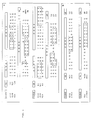
- the connecting regions of the TCR ⁇ and ⁇ chains of clones K2.4, K2.12 and K2.16 including the J gene segments and the 3 ′ region of the V gene segments were sequenced. Each clone expressed a different T cell receptor ( Figure 2).
- the TCR ⁇ chain of clone K2.12 was composed of V ⁇ 5.1 and J ⁇ G, that of clone K2.16 from V ⁇ 12.1 and J ⁇ AB11 and that of clone K2.4 from V ⁇ 1.3A and J ⁇ 08 gene segments.
- the TCR ⁇ chain of clone K2.12 contained V ⁇ 8.1 and J ⁇ 1.5. That of clone K2.16 contained V ⁇ 16.1 and J ⁇ 2.3 and that of clone K2.4 contained V ⁇ 9.2 and J ⁇ 2.4.
- V and J gene segments show the nucleic acid sequence and the deduced amino acid sequence of the TCR ⁇ and ⁇ connection regions between V and J gene segments of the clones examined.
- the names of the expressed V and J gene segments were assigned according to the nomenclature of the XI International Histocompatibility Workshop (Obata and Kashiwagi (1993), supra). Limits of the V and J gene segments are given.
- the amino acids are specified using the single letter code.
- FIG. 2a is an amino acid sequence comparison of the TCR ⁇ and ⁇ -CDR1, CDR2 and CDR3 sequences of clones K2.12, K2.16 and K2.4 shown.
- 2b is an amino acid sequence comparison of the CDR3 ⁇ sequences of clone K2.12 and mouse T cell clone 4-1-E.2 (Nakano et al. (1991), J. Exp. Med. 173: 1091) and an amino acid sequence comparison of the CDR3 ⁇ sequences of the clone K2.4 and the mouse T cell clone 7-10-D.3 (Nakano et al., supra). Both mouse T cell clones were isolated from NOD mice and induced insulitis after transfer into healthy, sublethally irradiated I-E + NOD mice.
Landscapes
- Health & Medical Sciences (AREA)
- Chemical & Material Sciences (AREA)
- Immunology (AREA)
- Life Sciences & Earth Sciences (AREA)
- Organic Chemistry (AREA)
- Biochemistry (AREA)
- Medicinal Chemistry (AREA)
- Zoology (AREA)
- Toxicology (AREA)
- Biophysics (AREA)
- General Health & Medical Sciences (AREA)
- Genetics & Genomics (AREA)
- Gastroenterology & Hepatology (AREA)
- Molecular Biology (AREA)
- Proteomics, Peptides & Aminoacids (AREA)
- Cell Biology (AREA)
- Peptides Or Proteins (AREA)
- Micro-Organisms Or Cultivation Processes Thereof (AREA)
- Medicines That Contain Protein Lipid Enzymes And Other Medicines (AREA)
Applications Claiming Priority (2)
| Application Number | Priority Date | Filing Date | Title |
|---|---|---|---|
| DE19944408999 DE4408999A1 (de) | 1994-03-16 | 1994-03-16 | Humane T-Zellrezeptoren zur diagnostischen sowie therapeutischen Verwendung bei autoimmunem Diabetes mellitus |
| DE4408999 | 1994-03-16 |
Publications (2)
| Publication Number | Publication Date |
|---|---|
| EP0676468A2 true EP0676468A2 (fr) | 1995-10-11 |
| EP0676468A3 EP0676468A3 (fr) | 1999-05-06 |
Family
ID=6512985
Family Applications (1)
| Application Number | Title | Priority Date | Filing Date |
|---|---|---|---|
| EP95103785A Withdrawn EP0676468A3 (fr) | 1994-03-16 | 1995-03-15 | Récepteurs humains de cellules T, leurs utilisations dans la thérapie et le diagnostic du diabète de type I |
Country Status (2)
| Country | Link |
|---|---|
| EP (1) | EP0676468A3 (fr) |
| DE (1) | DE4408999A1 (fr) |
Cited By (1)
| Publication number | Priority date | Publication date | Assignee | Title |
|---|---|---|---|---|
| EP0816496A3 (fr) * | 1996-06-24 | 2002-01-09 | Roche Diagnostics GmbH | Cellules T spécifiques pour le carcinome rénal |
Families Citing this family (6)
| Publication number | Priority date | Publication date | Assignee | Title |
|---|---|---|---|---|
| US7994298B2 (en) | 2004-09-24 | 2011-08-09 | Trustees Of Dartmouth College | Chimeric NK receptor and methods for treating cancer |
| WO2011059836A2 (fr) | 2009-10-29 | 2011-05-19 | Trustees Of Dartmouth College | Compositions de lymphocytes t déficientes en récepteurs de lymphocytes t |
| US9273283B2 (en) | 2009-10-29 | 2016-03-01 | The Trustees Of Dartmouth College | Method of producing T cell receptor-deficient T cells expressing a chimeric receptor |
| US12492376B2 (en) | 2009-10-29 | 2025-12-09 | The Trustees Of Dartmouth College | T-cell receptor-deficient T cell compositions |
| WO2013033626A2 (fr) | 2011-08-31 | 2013-03-07 | Trustees Of Dartmouth College | Produits thérapeutiques ciblant un récepteur nkp30 |
| WO2013169691A1 (fr) | 2012-05-07 | 2013-11-14 | Trustees Of Dartmouth College | Anticorps anti-b7-h6, protéines de fusion, et leurs procédés d'utilisation |
Family Cites Families (1)
| Publication number | Priority date | Publication date | Assignee | Title |
|---|---|---|---|---|
| IL95125A (en) * | 1989-07-19 | 1995-07-31 | Vandenbark Arthur Allen | T cell peptides receive a method for their selection and preparation, and pharmaceutical preparations containing them |
-
1994
- 1994-03-16 DE DE19944408999 patent/DE4408999A1/de not_active Withdrawn
-
1995
- 1995-03-15 EP EP95103785A patent/EP0676468A3/fr not_active Withdrawn
Cited By (1)
| Publication number | Priority date | Publication date | Assignee | Title |
|---|---|---|---|---|
| EP0816496A3 (fr) * | 1996-06-24 | 2002-01-09 | Roche Diagnostics GmbH | Cellules T spécifiques pour le carcinome rénal |
Also Published As
| Publication number | Publication date |
|---|---|
| EP0676468A3 (fr) | 1999-05-06 |
| DE4408999A1 (de) | 1995-09-28 |
Similar Documents
| Publication | Publication Date | Title |
|---|---|---|
| Spitzauer et al. | Molecular characterization of dog albumin as a cross-reactive allergen | |
| DE69006018T2 (de) | Impfung und methoden gegen krankheiten, die von pathologischen reaktionen der spezifischen t-zellen abstammen. | |
| DE68928069T2 (de) | Anti-T-Zell Rezeptordeterminanten zur Behandlung von Autoimmunkrankheiten | |
| DE69617440T2 (de) | Isolierte nukleinsäuremoleküle, peptide die mit hla-a2 moleküle (mhc) komplexe bilden, sowie deren verwendungen | |
| DE69429095T2 (de) | Humanisierte antikoerper | |
| DE69033949T2 (de) | Aus hausstaub isoliertes t-zellreaktives katzenprotein, und dessen verwendungen | |
| DE60133287T2 (de) | Tumorantigen | |
| DE69229428T2 (de) | Therapeutisch nützliche peptide und peptidfragmente | |
| DE69633717T2 (de) | Monoklonale anti-cd6 antikörper zur behandlung und diagnose von psoriasis | |
| DE69737969T2 (de) | Dns-impfung zur einleitung einer suppressiven t-zell-antwort | |
| DE69431301T2 (de) | Verfahren zur diagnose von störungen durch bestimmung der expression von gage-tumorabstossungsantigen-vorläufern | |
| EP0665289B1 (fr) | Peptides dérivés de GAD65, provoquant des réactions autoimmunes | |
| DE69132863T2 (de) | Verwendung eines mbp peptides zur herstellung eines medikamentes für die behandlung von multipler sclerose | |
| WO1995028481A1 (fr) | Sequences receptrices de lymphocytes t conservees | |
| DE68919524T2 (de) | Schnelles Verfahren zur Analyse von Mutationen. | |
| DE69637391T2 (de) | Modifizierte myelin proteinmoleküle | |
| DE69331501T2 (de) | Unterdrückung der Proliferation von T-Zellen mittels Peptidfragmenten des basischen Proteins aus Myelin | |
| CA2110055C (fr) | Utilisation de peptides du recepteur de lymphocytes t contre les maladies du systeme immunitaire | |
| DE69626789T2 (de) | Isolierte und verkürzte nukleinsäuremoleküle kodierend für gage-tumorabstossungsantigen | |
| DE69331813T4 (de) | Verfahren zur Detektion und Behandlung von Individuen mit abnormal hla-a2/tyrosinase-peptidantigenen exprimierenden Zellen | |
| Aki et al. | Cloning and characterization of cDNA coding for a new allergen from the house dust mite, Dermatophagoides farinae | |
| EP0676468A2 (fr) | Récepteurs humains de cellules T, leurs utilisations dans la thérapie et le diagnostic du diabète de type I | |
| DE69029858T2 (de) | Behandlung von einer autoimmun-krankheit | |
| DE3884440T2 (de) | Methode und Mittel zur vorbeugenden Behandlung von Autoimmunkrankheiten. | |
| US6084087A (en) | DNA encoding conserved T-cell receptor sequences |
Legal Events
| Date | Code | Title | Description |
|---|---|---|---|
| PUAI | Public reference made under article 153(3) epc to a published international application that has entered the european phase |
Free format text: ORIGINAL CODE: 0009012 |
|
| AK | Designated contracting states |
Kind code of ref document: A2 Designated state(s): AT BE CH DE DK ES FR GB GR IE IT LI LU MC NL PT SE |
|
| RAX | Requested extension states of the european patent have changed |
Free format text: LT PAYMENT 950315;SI PAYMENT 950315 |
|
| PUAL | Search report despatched |
Free format text: ORIGINAL CODE: 0009013 |
|
| AK | Designated contracting states |
Kind code of ref document: A3 Designated state(s): AT BE CH DE DK ES FR GB GR IE IT LI LU MC NL PT SE |
|
| AX | Request for extension of the european patent |
Free format text: LT PAYMENT 19950315;SI PAYMENT 19950315 |
|
| STAA | Information on the status of an ep patent application or granted ep patent |
Free format text: STATUS: THE APPLICATION IS DEEMED TO BE WITHDRAWN |
|
| 18D | Application deemed to be withdrawn |
Effective date: 19991001 |