EP0680174B1 - Terminal d'ordinateur portable sans fil et procédé pour le contrôle de communications - Google Patents
Terminal d'ordinateur portable sans fil et procédé pour le contrôle de communications Download PDFInfo
- Publication number
- EP0680174B1 EP0680174B1 EP95302452A EP95302452A EP0680174B1 EP 0680174 B1 EP0680174 B1 EP 0680174B1 EP 95302452 A EP95302452 A EP 95302452A EP 95302452 A EP95302452 A EP 95302452A EP 0680174 B1 EP0680174 B1 EP 0680174B1
- Authority
- EP
- European Patent Office
- Prior art keywords
- terminal
- group
- information
- terminals
- section
- Prior art date
- Legal status (The legal status is an assumption and is not a legal conclusion. Google has not performed a legal analysis and makes no representation as to the accuracy of the status listed.)
- Expired - Lifetime
Links
- 230000006854 communication Effects 0.000 title claims description 194
- 238000004891 communication Methods 0.000 title claims description 188
- 238000000034 method Methods 0.000 title claims description 171
- 230000005540 biological transmission Effects 0.000 claims description 40
- 238000012545 processing Methods 0.000 claims description 22
- 230000006870 function Effects 0.000 claims description 21
- 230000008569 process Effects 0.000 description 140
- 238000010586 diagram Methods 0.000 description 31
- 238000012790 confirmation Methods 0.000 description 16
- 230000002093 peripheral effect Effects 0.000 description 16
- 230000008859 change Effects 0.000 description 2
- 238000001514 detection method Methods 0.000 description 2
- 238000012986 modification Methods 0.000 description 2
- 230000004048 modification Effects 0.000 description 2
- 238000003491 array Methods 0.000 description 1
- 238000012937 correction Methods 0.000 description 1
- 230000005684 electric field Effects 0.000 description 1
- 230000037361 pathway Effects 0.000 description 1
- 230000002250 progressing effect Effects 0.000 description 1
- 230000026676 system process Effects 0.000 description 1
Images











Classifications
-
- H—ELECTRICITY
- H04—ELECTRIC COMMUNICATION TECHNIQUE
- H04W—WIRELESS COMMUNICATION NETWORKS
- H04W4/00—Services specially adapted for wireless communication networks; Facilities therefor
- H04W4/06—Selective distribution of broadcast services, e.g. multimedia broadcast multicast service [MBMS]; Services to user groups; One-way selective calling services
- H04W4/08—User group management
Definitions
- the present invention relates to communication control apparatus and method, such as portable information equipment, capable of communicating among plural users when the plural users bring their respective equipment into proximity of each other.
- a base station for switching.
- portable telephones a large number of base stations are respectively set in predetermined areas and a customer can communicate by portable terminal (portable information equipment) through the base station.
- the base station to which the user's own terminal belongs, can only connect to specified terminals. Therefore, the user must previously know which other terminals belong to the base station.
- Each user cannot communicate with many and unspecified other terminals. Then, it is necessary to set the base station per predetermined area. Therefore, its application is limited to a large scale communication service, such as automobile telephones being utilized with a charge account system.
- An example of a method for communicating among a large number of terminals without charge account, is wireless LAN(local area network).
- the wireless LAN has a bandwidth of "100KHz-10MHz".
- a packet signal is transmitted as a burst mode after confirming no other wireless transmission is present.
- a terminal which is located in the receiving area of the packet signal, intercepts the packet signal if the identification number of the receiving terminal is added to the packet signal.
- the wireless LAN can transmit the packet signal through a base station.
- the area in which a user of a terminal can move freely is limited to the receiving area of the packet signal. In short, it is impossible for a user to communicate with many and unspecified opposite terminals without location restriction.
- multipoint-to-multipoint connection(MMC) is appropriate as a communication connection for sharing data among all users.
- each user gains information about terminals and the process on the network.
- the information about process is represented as an identifier which is a number to be controlled by the terminal. Therefore, in the case that a user of a terminal wants to communicate the process, it is difficult for the user to decide the process which he wants to communicate.
- a communication connection is set for each meeting application and data for the meeting are transmitted through the communication connection.
- the user can also request connection to the meeting by using the identifier of the communication connection.
- the identifier of the communication connection is changed whenever the meeting is opened. Accordingly, the user cannot previously know the identifier corresponding to the meeting which he wants to attend. As a result, it is difficult for a user to attend the meeting afterwards.
- a user may not want to disclose the existence of a communication connection (meeting) to others. In this case, the user cannot designate the security degree of the meeting. Therefore, it is impossible to prohibit the disclosure of the presence of the meeting to others.
- the meeting support system it is supposed that a user inputs a meeting name to make a distinction among meetings. Some users do not want to disclose the existence of the meeting or members of the meeting to others. However, others can learn the information through their terminals. Subsequently a user may want to limit the participants of the meeting. In this case, the members of the meeting are previously registered. However, in this method, it is impossible to limit the member of the meeting dynamically.
- EP 05 79 372 relates to a wireless local area network in which the power level of information packets transmitted between stations can be dynamically adjusted in dependence upon the signal path.
- U.S. 4,864,559 discloses a method of multicasting messages in a communication network, which involves identifying a group of nodes connected to the distributing node for the purpose of calculating appropriate pathways for distributing the multicast messages. It is an object of the present invention to provide communication control apparatus and method for communicating among many and unspecified terminals without restriction on location.
- a portable wireless computer terminal comprising means for transmitting signals including identification information, and means for receiving identification signals transmitted by other terminals, characterised by:
- the invention also extends to a method of controlling communication in a portable wireless computer terminal including the steps of transmitting terminal identification information and receiving corresponding identification information from another terminal or terminals, comprising the further steps of:
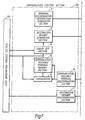
- Fig.1 is a block diagram of communication control apparatus according to a first embodiment.
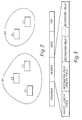
- Fig.2 is an example for use of portable information equipment for use with communication control apparatus.
- Fig.3 is a format of sending-data.
- Fig.4 is a block dragram of another communication control apparatus according to the first embodiment.
- Fig.5 is a block diagram of the communication control section of a first example according to a second embodiment.
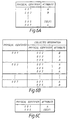
- Fig.6A is a terminal-information management table.
- Fig.6B is a collected-information management table.
- Fig.6C is a restricted-information management table.
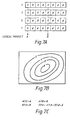
- Fig.7A illustrates terminal arrays for discrimination of a physical identifier.
- Fig.7B illustrates a logical relational chart among attributes.
- Fig.7C illustrates logical equations defining attributes.
- Fig.8 is a block diagram of a communication control section of a second example according to the second embodiment.
- Fig.9 is a block diagram of a communication control section of a third example according to the second embodiment.
- Fig.10 is a table for storing terminal-identifier information.
- Fig.11 is a block diagram of a commnication control section of a fourth example according to the second embodiment.
- Fig.12 is a table for storing group-identifiers and corresponding communication channels.
- Fig.13 is a block diagram of a communication control section of a fifth example according to the second embodiment.
- Fig.14 is a block diagram of a communication control section of a sixth example according to the second embodiment.
- Fig.15 is a block diagram of communication control apparatus according to a third embodiment.
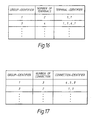
- Fig.16 is a group-management table.
- Fig.17 is a connection-management table.
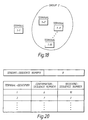
- Fig.18 is an example of a group being formed by plural terminals.
- Fig.19 is a time chart of connection setting for plural terminals.
- Fig.20 is a table for storing a sending-sequence number of a self-terminal and confirmation-sequence number and receiving-sequence number of opposite terminals.
- Fig.21 is a time chart for participation of a new terminal in a group.
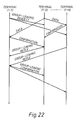
- Fig.22 is time chart for departure of one terminal from the group.
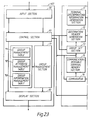
- Fig.23 is a block diagram of communication control apparatus according to a fourth embodiment.
- Fig.24 is a flow chart of processing of the control section in case that a user requests displaying of group-information.
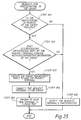
- Fig.25 is a flow chart of the control section for deciding whether a new terminal can participate in a group.
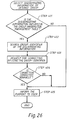
- Fig.26 is a flow chart of the control section for selecting communication-group to connect self-terminal.
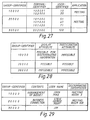
- Fig.27 is a group management table.
- Fig.28 is a group attribute management table.
- Fig.29 is a group information management table.
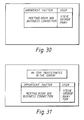
- Fig.30 is a display arrangement of the group-information.
- Fig.31 is a display arrangement in which a new terminal is connected to the group.
- Fig.32 is a block diagram of communication control section of a first example of a fifth embodiment.
- Fig.33 is a block diagram of a communication system according to the first example of the fifth embodiment.
- Fig.34 is a block diagram of a group of communication control sections of a second example according to the fifth embodiment.
- Fig.35 is a block diagram of a communication control section of a third example according to the fifth embodiment.
- Fig.36 is a block diagram of a particular example according to the third example of the fifth embodiment.
- Fig.37 is a block diagram of a communication control section of a fourth example according to the fifth embodiment.
- Fig.1 is a block diagram of a communication control apparatus 100 according to a first embodiment.
- the communication control apparatus is used as portable information equipment and comprise a user information process section 101, a communication control section 102, and a wireless transmission section 103.
- the user information process section 101 executes application-software (user-program).
- the communication control section 102 controls transmission (sending and receiving).
- the wireless transmission section 103 sends information generated from the user information process section 101 and the communication control section 102 by wireless transmission, and receives information sent by other communication control apparatus.
- a terminal discriminating information generation section 11 generates self-terminal discriminating information periodically.
- the self-terminal discriminating information is, for example, an identifier of self-terminal and it is sent to a control channel modulation section 21.
- Sending user information is input from the user information process section 101 to a destination header generation section 12.
- Group designation information which designates a terminal's group to send as sending user information, is simultaneously input from the user information process section 101 to a group set section 13.
- the group set section 13 outputs discriminating information of opposite, i.e.,other, terminals belonging to the group to the destination header generation section 12 in accordance with the group designation information.
- the destination header generation section 12 adds the discriminating information of opposite terminals to the sending user information as a destination header, and outputs the information to the information channel modulation section 22.
- An information channel for sending an information signal and a control channel for sending a control signal are channel-divided by frequency division.
- the information channel modulation section 22 and the control channel modulation section 21 modulate respectively according to each channel.
- Output signals from the information channel modulation section 22 and the control channel modulation section 21 are multiplexed by a multiplexer 23 and frequency-changed to high-frequency by a multiply section 24. Then, the high-frequency signal is amplified to a suitable power level by a power amplifier 25 and sent broadcasted from an antenna 31 through a branching filter 30.
- the receiving user information signal is sent from the information channel demodulation section 29 to a destination header descrimination section 17.
- the destination header discrimination section 17 checks the destination header added to the information and decides whether the information's destination is the self-terminal or not. If the destination is the self-terminal, the information is output to the user information process section 101. If the destination is not the self-terminal, the information is abandoned.
- the discriminating information of the self-terminal is sent and user information among terminals which are set as members of the group is transmitted.
- the terminal discriminating information generated from the terminal discriminating information generation section 11 is periodically sent from the antenna 31 through the wireless transmission section 103.
- the terminal discriminating information sent from other terminals is converted to a base-band signal by the demultiply section 26 through the branching filter 30 and the antenna 31.
- the control channel signal is separated by the separator 27 and sent to the control channel demodulation section 28.
- the terminal descriminating information demodulated by the control channel demodulation section 28 is output to the transmission-possible terminal discrimination section 14.
- the communication-possible terminal discrimination section 14 decides that the other terminal corresponding to the terminal discriminating information is capable of transmitting with the self-terminal.
- the terminal discriminating information is output to the comparator 16 and the communication-possible terminal memory section 15.
- the comparator 16 compares the information from the communication-possible terminal discrimination section 14 with the terminal discriminating information stored in the communication-possible terminal memory section 15. Then, a control signal is output to the communication-possible terminal memory section 15 according to the comparison result. In the case that the comparison result is coincidence, the control signal is not output because it is not necessary that the contents of the communication-possible terminal memory section 15 be updated. On the other hand, in the case that the comparison result is non-coincidence, the control signal is output to update the content of the communication-possible terminal memory section 15.
- the terminal discriminating information periodically sent from each terminal is respectively received by the other terminal and the terminal discriminating information is respectively written to the communication-possible terminal memory section 15.
- the content of the communication-possible terminal memory section 15 is sent to the user information process section 101 and the group set section 13.
- the user information process section 101 displays the terminal corresponding to the content of the communication-possible terminal memory section 15, which is capable of communicating with the self-terminal.
- the user selects one terminal or plural terminals with which he wants to communicate and a setting order signal is output to the group set section 13.
- the group set section 13 creates a correspondence table between the selected terminal and group according to the setting order signal.
- a logical communication link is set among the terminals belonging to the group.
- the logical communication link is that terminals being capable of communicating with each other (user who want to communicate with each other) are set as members of the group, and the terminals of the group are connected based on the situation of communication-possibility without a user's special operation.
- plural groups may be set and the same terminal can be registered in plural groups.
- the user infomation process section 101 can register three terminals (A1,A2,A3) as group B1 and two terminals (A1,A4) as group B2.
- group information B1 or B2 is output to the group set section 13. Therefore, the sending data is multicasted to the terminals belonging to the group.
- the communication-possible terminal discrimination section 14 decides if the terminal discriminating information stored in the communication-possible terminal memory section 15 is continuously received within predetermined intervals. For example, if the terminal discriminating information is not received at all during a predetermined time, the communication-possible terminal discrimination section 14 decides that the other terminal corresponding to the terminal discriminating information is not capable of communicating with the self-terminal and erases the terminal discriminating information from the communication-possible terminal memory section 15.
- the user information process section 101 also decides that the other terminal is not capable of communicating with the self-terminal because the terminal discriminating information is not received from the communication-possible terminal memory section 15.
- each terminal it is possible for each terminal to communicate with each other terminal so long as these terminal's come into proximity of one another.
- the logical communication link is set for desired opposite terminals anywhere, and it is erased automatically when these terminals depart from each other. It is not necessary for a user to previously know the opposite terminal's identifier (address number) and it is possible to connect with terminals of strangers. Multicast-communication (simultaneous connection service) is possible for plural terminals.
- a terminal in the area reached by a wireless transmission is discriminated as a communication-possible terminal. If the area in which wireless transmission is possible is large, transmission throughput goes down because wireless communication media is commonly used between plural groups.
- Fig.2 shows an example of use of portable information equipment including the communication control apparatus 100.
- Group D1 includes terminals (C1,C2,C3) and group D2 includes terminals (C4,C5). Different logical communication links are set among terminals of group D1 and terminals of group D2. However, if these groups are located in the same area in which transmissions reach each other, the same wireless communication media is commonly used among the five terminals. On the other hand, if group D1 and group D2 are located in different areas so that transmissions do not reach each other, different wireless communication media are respectively used by each group.
- group D1 includes terminals (C1,C2,C3).
- the group set section 13 of terminal C1 sets other terminals (C2,C3) as the same group.
- the group set section 13 of terminal C2 sets other terminals (C1,C3) as the same group
- the group set section 13 of terminal C3 sets other terminals (C1,C2) as the same group.
- the data transmission among terminals (C1,C2,C3) is executed as follows.
- Fig.3 shows a format of sending data. In a head portion of a packet, a preamble which indicates start portion of packet is added. As a method for discriminating the preamble, a special bit pattern is assigned to the preamble.
- a spare dummy bit is added to the same pattern.
- a header and data are added.
- a CRC bit for error detection is added.
- the header is comprised of a packet-length field, a destination field-length field and a destination field(one or plural).
- the packet-length field indicates a length of the whole packet.
- the destination field-length field indicates a number of terminals to which this packet is transmitted multicastly. This signal also indicates a boundary between the destination field and the data.
- the destination field stores the terminal discriminating information of the opposite terminals.
- the destination header generation section 12 adds the preamble, the header and CRC according to the group set section 13.
- the destination field-length field stores "2" because the data is multicasted to two other terminals (C2,C3) .
- the destination field stores the terminal discriminating information of terminals (C2,C3) respectively.
- the destination-header discrimination section 17 reads values of the packet-length field and the destination field-length field when the packet header is detected from a receiving signal. Then, the value of the destination field, which is indicated by the destination field-length field, is compared with the discriminating number of the self-terminal. If the discriminating number of the self-terminal coincides with one of the destination fields, the received packet is extracted. The destination-header discrimination section 17 decides whether the received packet includes an error by using CRC, and sends the received packet with the decision result to the user information process section 101. In this case, CRC is used to decide whether the received packet includes error or not. If error is detected in the received packet, the destination-header discrimination section 17 can request sending the received packet again. However, CRC is not necessary in the case of receiving data having a high-confidence degree.
- terminal C1 multicasts data to plural terminals (C2,C3).
- terminal discriminating information of each terminal is used in the destination field for sending multicast-data.
- the group number is commonly set among terminals (C1,C2,C3) and the destination header generation section 12 may write the group number in the destination field.
- the destination field-length field is omitted, and the destination-header discrimination section 17 detects the group number.
- the data is sent multicastly to plural opposite terminals in a one-time transmission. As a result, the data is transmitted smoothly. Therefore, it is convenient for large capacity data, such as an image data.
- sending-power is preferably as small as possible within the limit of communicating among the plural terminals.
- Fig.4 is block diagram including functions mentioned above.
- a wireless transmission section 203 differs from section 103 in that the power amplifier 25 in Fig.1 is replaced by a variable amplifier 41 and a circuit quality supervision section 42 is added.
- the terminal discriminating information is supplied to the communication-possible terminal memory section 15 and the comparator 16.
- the comparator 16 outputs a power control signal to decrease the sending-power to the variable amplifier 41.
- the circuit quality supervision section 42 evaluates the circuit quality by calculating a number of error-bits included in the terminal discriminating information, and sends the circuit quality to the opposite terminal, which sent the terminal discriminating information, through the control channel modulation section 21.
- the circuit quality is quality information for the transmission circuit from the opposite terminal to the self-terminal.
- the opposite terminal sends circuit quality information for the transmission circuit from the self-terminal to the opposite-terminal.
- the circuit quality supervision section 42 receives the circuit quality information for the self-terminal through the control channel demodulation section 28 and the communication-possible terminal discrimination section 14. If the circuit quality is below a predetermined quality, the circuit quality supervision section 42 outputs a control signal to the variable-amplifier 41 to increase the sending-power. In short, circuit quality for the transmission circuit from the self-terminal to the opposite terminal is improved.
- the circuit quality is checked as follows.
- the terminal discriminating information necessitates high reliability in general. Therefore, a CRC bit for error detection is added to the terminal discriminating information.
- the received actual signal terminal discriminating information
- the received actual signal terminal discriminating information
- the CRC bit is first evaluated for error-correction and, second checked for whether error is included or not by the CRC bit. If the circuit quality falls, a number of error-bits on transmission path has increased. However, if an error-bit is not detected by CRC-check, the error-bit on transmission path has already be corrected before the CRC-check. In this case, by comparing the received actual signal with the error-corrected signal, the error-bit on the transmission path is detected. Therefore, the circuit quality information is determined according to a number of the error-bit.
- the terminal discriminating information is sent periodically by each terminal.
- the terminal discriminating information may be sent according to request sent by the opposite terminal.
- the terminal of the user who wants to communicate with other terminals sends a request signal for terminal discriminating information of other terminals.
- the other terminals which receive the request signal, respectively send the terminal discriminating information of each terminal.
- Group-setting is executed by a signal supplied from the user information process section 101.
- a terminal list whose terminals are capable of communicating with the self-terminal is displayed on the self-terminal and the user selects one terminal of plural terminals with which he wants to communicate.
- the terminal discriminating information is a unique binary number being different for each terminal. Therefore, it is convenient that text information, which is possible for rewriting, is added to the terminal discriminating information.
- the text information is added to the terminal discriminating information generated by the terminal discriminating information generation section 11 or the communication-possible terminal information stored in the communication-possible terminal memory section 15.
- the user information process section 101 displays the text information with the communication-possible terminal information. In these ways, the user can easily select the text information (for example, other user's name) displayed on his terminal and the logical communication link is set between his terminal and the other terminal with which the user wants to communicate.
- the wireless transmission section 103 can be replaced by wired transmission.
- the portable information equipment (the communication control apparatus 100) is a communication-possible terminal if it is connected to other terminals with wire.
- Stand-terminal is self-communication control terminal.
- Oler-terminal is any other communication control terminal except for the self-communication control terminal.
- Terminal-name is a discriminating name of each communication control terminal, for example, a physical identifier.
- Attribute is data such as transmission error rate.
- Terminal-information is data of the self-terminal, which is the terminal-name and attribute.
- Cold-information is terminal-information received from other-terminals.
- Terminal-restricted information is information of other-terminal capable of communicating with the self-terminal.
- Information is terminal-information, collected information and terminal-restricted information.
- Fig.5 is a block diagram of a communication control section 110 according to the second embodiment.
- the communication control section 110 corresponds to the communication control section 102 in Fig.1, and includes a self-terminal information control section 111, a collected-information control section 112 and a communication-opposite restriction section 113.
- the self-terminal information control section 111 processes terminal-information, sends the terminal-information to other terminals and has a terminal-information management table for storing physical identifier and attribute data as shown in Fig.6A.
- the collected information control section 112 processes collected information, sends the collected information to other terminal and has a collected-information management table.
- the collected-information management table stores physical identifier and attribute data by unit of other terminal's physical identifier, which is capable of communicating with terminal of corresponding physical identifier in collected-information as shown in Fig.6B.
- the communication-opposite restriction section 113 restricts other terminals being capable of communicating with self-terminal in accordance with the terminal-information and the collected-information.
- the communication-opposite restriction section 113 manages terminal-restricted information, sends the terminal-restricted information to other terminals and stores a restricted-information management table for a storing physical identifier of a restricted-terminal and attribute data as shown in Fig.6C.
- the self-terminal information control section 111 discriminates other terminals being capable of communicating with the self-terminal according to received other terminal's information (identifier) and stores each other terminal's identifier as terminal information (including self-terminal's identifier).
- the collected-information control section 112 updates the collected information according to received collected information from other terminals.
- the communication-opposite restriction section 113 restricts other terminal being capable of communicating with the self-terminal according to the terminal-information stored in the terminal information control section 111 and the collected-information stored in the collected-information control section 112, whenever the collected-information control section 112 updates the collected-information.
- the communication-opposite restriction section 113 stores a list of terminal-restricted information and sends the list to other terminals.
- the terminal-information management table and the collected-information management table store physical identifiers for discrimination.
- the physical identifier of the self-terminal is 5.
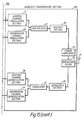
- FIG.8 shows a block diagram of a communication control section 120 of the second example.
- the communication control section 120 includes a self-terminal information control section 121, a collected-information control section 122, a communication-opposite restriction section 123 and a wireless communication process section 124.
- the wireless communication process section 124 sends information received from a wireless network to the self-terminal information control section 121, the collected-information control section 122 and the communication-opposite restriction section 123, and transmits information received from the self-terminal information control section 121, the collected-information control section 122 and the communication-opposite restriction section 123 to the wireless network.
- FIG.9 shows a block diagram of a communication control section 130 of the third example.
- the communication control section 130 includes a self-terminal information control section 131, a collected-information control section 132, a communication-opposite restriction section 133, a wireless communication process section 134 and an identifier set section 135.
- the identifier set section 135 processes as follows (periodically, when the collected-information is updated, or user's instruction is supplied).
- Fig.10 shows a table for storing terminal-identifier information in the identifier set section 135.
- the table stores information as follows.
- group-identifier "01.00.00.00” of the group consisting of three terminals "001", “003”,"007” is set. Then, group-identifier "01.00.02.01” of terminal "001”, group-identifier "01.00.02.02” of terminal “003” and group-identifier "01.00.03.01” of terminal “007” are set respectively. If the user requests setting the group-identifier to two terminals "001,003", the group-identifier "01.00.02.00" and its present name "Sub Group-A" are set.
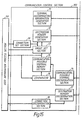
- FIG.11 shows a block diagram of a communication control section 140 of the fourth example.
- the communication control section 140 includes a self-terminal information control section 141, a collected-information control section 142, a communication-opposite restriction section 143, a wireless communication process section 144, an identifier set section 145 and a communication channel set section 146.
- the communication channel set section 146 processes as follows (periodically, when the collected-information is updated, on user's instruction being supplied).
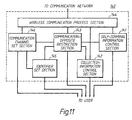
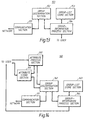
- FIG.13 shows a block diagram of communication control section 150 of the fifth example.
- the communication control section 150 includes a communication section 151, a group discrimination section 152, a group-list store section 153 and a group-information process section 154.
- the communication section 151 sends information from the network to the group discrimination section 152, and sends information generated from the group discrimination section 152 to the network.
- the group discrimination section 152 discriminates other terminals being capable of communicating with the self-terminal as a group. The function is similar to that of examples 1 ⁇ 4 as described above.
- the group-list store section 153 stores group information received from the group discrimination section 152.
- the group-information process section 154 receives the group discrimination information from the group discrimination section 152 and transmits the group discrimination information to the terminal user.
- the processing of the communication control section will be explained in detail.
- FIG.14 shows a block diagram of a communication control section 160 of the sixth example.
- the communication control section 160 includes a communication section 161, a group-discrimination section 162, a group-list store section 163, a group-information process section 164, an attribute process section 165 and an attribute store section 166.
- a different feature of the sixth example compared with the fifth example is that the group discrimination section 162 transfers an attribute to the attribute process section 165 and the attribute store section 166 when the attribute is received, and transfers the attribute to the communication section 161 when a request for transferring the attribute to an other terminal is received from the attribute process section 165.
- the attribute process section 165 processes attribute data which the group discrimination section 162 receives from the communication section 161, and controls the attribute store section 166 to store the attribute (including process result).
- the attribute store section 166 stores the attribute under control of the attribute process section 165.
- the group discrimination section 162 receives the attribute data (application and communication quality), which are used by restricted terminals of the group, from the communication section 161 through the network. Then, the attribute is stored in the attribute store section 166 under control of the attribute process section 165.
- the restricted terminals are updated, a group-identifier and each terminal's identifier in the group are updated if necessary. Then, a request for updating attributes of terminals included in the updated group is sent to the attribute process section 165.
- the attribute process section 165 When the request is received, the attribute process section 165 has the attribute store section 166 store the updated attribute. When the group-list is updated or a request is supplied by user, the attribute process section 165 informs the user of the group-list updated in the attribute memory section 166 and requests transferring the attribute to other terminals of the group discrimination section 162.
- Fig.15 is a block diagram of communication control apparatus 300 corresponding to the communication control apparatus 100 in Fig.1, and like elements are identified by the same reference numerals.
- the user-information process section 101 executes application program.
- a communication control section 302 controls transmission (sending and receiving).
- the wireless transmission section 103 transmits various kind of control information generated from the communication control section 302 and user-information generated from the user-information process section 101 by transmission.
- plural MMCs multipoint-to-multipoint connections
- self-terminal discriminating information is periodically generated by the terminal discriminating information generation section 11.
- the terminal discriminating information is sent to the control channel modulator 21.
- the user-information process section 101 outputs user-information to the destination header generation section 12.
- the user-information process section 101 outputs a group-set order to set a group which receives the user-information to the group set section 13, and outputs connection set information to set communication connection with which the user-information is transmitted to a connection set section 19.
- the connection set section 19 outputs connection discriminating information to the destination header generation section 12 according to the connection set information, and outputs group-set information to the group set section 13.
- the group set section 13 outputs opposite-terminal discriminating information in the group to the destination header generation section 12 according to the group-set information and the group-set order.
- the destination header generation section 12 adds the opposite-terminal discriminating information to the user-information as a destination header, and outputs the destination header to the information channel modulation section 22.
- the information channel for sending information signals and control channel for sending control signals are channel-separated by frequency division.
- the information channel modulation section 22 and the control channel modulation section 21 execute the modulation according to respective channels.
- Output signals from the information channel modulation section 22 and the control channel modulation section 21 are multiplied by the multiplexer 23, converted to high frequency by the multiply section24, amplified to suitable power by the power amplifier 25 and sent multicastly by the antenna 31 through the branching filter30.
- Other terminal's information signal is received by the antenna 31, converted from high frequency to base-band by the demultiply section 26 through branching filter 30, and separated by the separator 27. Then, an output signal is demodulated to receiving-control information by the control channel demodulation section 28 and demodulated to receiving-user information by the information channel demodulation section 29.
- the destination header added to the receiving-user information is checked by the destination header discrimination section 17 to decide whether the destination of the receiving-user information is the self-terminal. If it includes the self-terminal, the receiving-user information is output to the user-information process section 101. If it does not include the self-terminal, the receiving-user information is abandoned.
- the receiving-user information is output from the destination header discrimination section 17 to a connection discrimination section 18.
- the connection discrimination section 18 checks the destination header added to the receiving-user information and outputs discriminating information of a connection belonging to the receiving-user information to the user-information process section 101.
- a particular feature of the third embodiment is connection-setting.
- the user-information process section 101 selects a group being set by the group set section 13 and outputs a connection set signal to the connection set section 19.
- the connection set section 19 creates a correspondence table between group discriminating information and connection discriminating information according to the connection set signal.
- the user-information process section 101 sends a user data
- the user-information is output to the destination header generation section 12 and group-set signal of opposite-terminals is output to the group set section 13. Therefore, the user-information is multicasted to other terminals belonging to the group.
- Fig. 16 shows a group-management table stored in the group set section 13.
- the group-management table is comprised of a group-identifier, a number of terminals of the group, and terminal-identifiers (terminal discriminating information) of the group. Because the group-management table stores the terminal-identifier of each group-identifier, it is convenient for the self-terminal to identify the group which includes particular terminals and to delete a terminal which cannot communicate with the self-terminal.
- Fig. 17 shows a connection-management table stored in the connection set section 19.
- the connection-management table is comprised of a group-identifier, a number of connections (MMC) of the group and connection-identifiers of the group.
- the connection is a kind of network for transmitting one type of media, and the connection identifier is set to each connection. Therefore, the number of connections represents plural kinds of networks, which respectively transmit plural media, such as image data, sound data, text data and so on.
- FIG. 18 shows time chart of connection setting.
- each terminal After setting connection, each terminal creates a table for storing a sending-sequence number of the self-terminal, a confirmation-sequence number and a receiving-sequence number of opposite-terminal as shown in Fig. 20.
- the sending-sequence number is a number which is given to data sent by the self-terminal.
- the sending-sequence number is set as the initial sequence number in the connection set request message sent by terminal (1-2).
- the sending-sequence number is set as the initial sequence number in the connection set reply message being sent by such terminal (1-3 ⁇ 9,11 ⁇ N).
- the sending-sequence number is given to the data and the sending-sequence number is incremented by 1.
- the confirmation sequence number is a sequence number given to data, which the self-terminal sends to other terminal and the other terminal sends receiving-confirmation signal to the self-terminal.
- the confirmation sequence number is initialized as a number smaller by 1 than the initial number in the connection set request message being sent by terminal (1-2) in the case that terminals (1-3 ⁇ 9,11 ⁇ N) creates the table respectively, and the confirmation sequence number is initialized as a number being smaller by 1 than the initial number in the connection set reply message being sent by terminals (1-3 ⁇ 9,11 ⁇ N) in the case that terminal (1-2) creates the table.
- the receiving-sequence number is a sequence number given to data, which the self-terminal receives from an other terminal and the self-terminal sends receiving-confirmation signal to the other terminal.
- the receiving-sequence number is initialized as the initial sequence number in the connection set reply message being sent by terminals (1-3 ⁇ 9,11 ⁇ N) in the case that terminal (1-2) creates the table, and the receiving-sequence number is initialized as the initial sequence number in the connection set message being sent by terminal (1-2) in the case that terminals (1-3 ⁇ 9,11 ⁇ N) create the table respectively.
- the self-terminal When the self-terminal receives data from another terminal, based on which the sequence number of the data coincides with the receiving-sequence number of the other terminal in the list, the self-terminal decides that the data is correct and sends a receiving-confirmation to the other terminal.
- a new terminal participates in the group.
- Fig. 18 it is assumed that terminals (1-2 ⁇ N) form group 2 and connections (1 ⁇ M) are set among the terminals (1-2 ⁇ N) Now, new terminal (1-1) participates in group 2.
- Fig. 21 shows a time chart for new terminal (1-1) participating in group 2.
- FIG. 18 shows a time chart for leaving terminal (1-1) departing from group 2 (terminals (1-2 ⁇ N)).
- management of terminals by unit of group and management of connections by unit of group are separated according to the third embodiment. Therefore, when a new terminal participates in the group, the new terminal can easily connect to all MMC (connections) of the group without connecting to each MMC separately.
- Fig. 23 is a block diagram of communication control apparatus 400 corresponding to the connection control apparatus 100 in Fig. 1, with like elements identified by the same reference numerals.
- a user-information process section 401 executes an application-program.
- the communication control section 102 controls sending and receiving of data.
- the wireless transmission section 103 transmits control information from the communication control section 102 and sending-information from the user-information process section 401 by wireless transmission.
- the communication control section 102 and the wireless transmission section 103 are the same as those of the first embodiment.
- the user-information process section 401 outputs group set order and group-designation information to the group set section 13. In the case that the group set section 13 creates a correspondence table for storing group and terminal discriminating information according to the group set order, a group-identifier is set for each group.
- Fig. 24 is a flow chart of the processing of the control section 60 in the case that the user requests displaying of group-information. It is assumed that there are plural groups which execute meeting-application programs respectively on the network. In this case, the group-information includes meeting name, user-name of the group, and discriminating information of the meeting.
- the control section 60 decides whether there is a communication-group of the meeting or not according to the group management table 71 (step 201). If there is not a communication-group, the control section 60 informs the result (there is no communication-group) to the user (step 206). If there is a communication-group, the control section 60 decides whether the group-information is displayed or not according to the group attribute management table 72 (step 202). If the display attribute of the group is "possible", the control section 60 refers to the group-information management table 13 to search contents, user name and discriminating information of the group (step 203). Then, the group-information is displayed as shown in Fig. 30 (step 204). In this case, display-information is changed according to the display attribute.
- step 205 For example, if the display attribute is "possible for all items", all information of the group information management table 73 is displayed. If the display attribute is "possible for discriminating information only”, the discriminating information is only displayed. If the display attribute is "impossible”, the information is not diplayed.
- the above-described processing is executed for all communication-groups (step 205).
- group-information of all communication-groups is displayed.
- group-information of specified communication-groups may be only displayed. In this case, the user inputs the group-identifier of the specified group.
- Fig. 25 shows a flow chart of the control section 60 for deciding whether a new terminal participates in the group or not when the control section 60 receives the new terminal's request for participating in the group through the communication process section.
- the control section 60 decides whether a participation attribute of the group is "possible” or not according to the group attribute management table 72 (step 301). If the participation attribute is "impossible”, the control section 60 rejects the new terminal's participation in the group (step 306). If the participation attribute is "possible”, the control section 60 decides whether discriminating information of the group sent by the new terminal coincides with the discriminating information of the group information management table 73 or not (step 302).
- control section 60 rejects the new terminal's participation in the group (step 306). If the discriminating information coincides, the control section 60 updates the group management table 71 to add the new terminal's identifier to the group (step 303), and indicates to the communication control section 102 to connect the new terminal in the group (step 304). Then, the control section 60 informs the user that the new terminal is connected to the group through the display section 80 as shown in Fig. 31 (step 305).
- Fig. 26 shows a flow chart of the control section 60 for selecting a communication-group to connect to the self-terminal.
- the user selects discriminating information of the communication-group, in which he wants to participate, through the input section 50.
- the control section 60 receives the discriminating information with the connection request from the input section 50.
- the control section 60 decides whether the discriminating information is included in the group information management table 73 or not (step 401). If the discriminating information is not included, the control section 60 informs the result (there is not the communication - group) to user (step 405). If the discriminating information is included, the control section 60 searches for the p-identifier corresponding to the discriminating information from the group information management table 73 (step 402).
- the control section 60 requests the communication control section 102 that the self-terminal connects to the group by using the group-identifier (step 403).
- the communication control 102 informs the result to the control section 60.
- the control section 60 decides whether the connection to the group is completed normally or not (step 404). If the connection is completed normally, the control -section 60 informs the user through the display section 80 (step 405) that the self-terminal is connected to the group. If the connection is not completed normally, the control section 60 informs the user of failure to connect to the group (step 405).
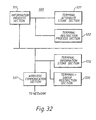
- Fig. 32 is block diagram of a communication control section 500 according to a first example of the fifth embodiment.
- the communication control section 500 includes an information process section 511, a terminal attribute store section 521, a terminal restriction process section 522, a wireless communication section 531, a terminal information store section 532 and a terminal-group restriction section 533.
- the information process section 511 executes user processes and system processes (OS).
- OS system processes
- the information process section 511 is comprised of a calculation section (CPU) and a memory section.
- the information process section 511 requests the terminal restriction process section 522 to search for another terminal capable of executing the program.
- the terminal attribute store section 521 stores information of functions of each terminal restricted by the terminal-group restriction section 533, the self-terminal's situation (for example, loading), and a terminal attribute for communication.
- the terminal restriction process section 522 restricts the terminal identifier of the process-possible terminal according to the request of the information process section 511, and sends the terminal identifier to the information process section 511.
- the terminal information store section 532 stores the attribute which the self-terminal and other terminal exchange. The attribute is sent to the terminal restriction process section 522 of the other terminal through the wireless communication section 531.
- the terminal-group restriction section 533 restricts a group of terminals capable of communicating with the self-terminal according to the attribute stored in the terminal information store section 532. Then, the terminal-group restriction section 533 sets a group-identifier for the group of terminals, and terminal identifier if necessary.
- the wireless communication section 531 transmits information from the information process section 511, the terminal information store section 532, and the terminal-group restriction section 533 to the group of terminals restricted by the terminal-group restriction section 533.
- Fig. 33 shows a block diagram of a communicating system including a computer 623, and peripheral equipments 621,622.
- the communication control terminal (500 in Fig. 32) is provided in the computer 623, and the peripheral equipments 621,622.
- the communication control terminal is comprised of an information process section 611, a terminal attribute store section 612, a terminal restriction process section 613 and a group-wireless communication section 620.
- the group-wireless communication section 620 is comprised of the wireless communication section 531, the terminal informaton store section 532, and the terminal-group restriction section 533 as shown in Fig. 32.
- the group identifier of all group-wireless communication sections 620 is GN-1.
- the terminal identifier of the peripheral equipment 621 is 01
- the terminal identifier of the peripheral equipment 622 is 02
- the terminal identifier of the peripheral epuipment 623 is 03.
- the terminal attribute store section 612 stores the attribute of each peripheral equipment.
- the terminal attribute store section 612 stores the attribute of the peripheral equipment 621, which group identifier is GN-1, terminal identifier is 01, and the process identifier is 008.
- process terminal represents that the terminal can execute the process
- process identifier 008 is transferred from the information process section 611 to the terminal restriction section 613.
- the terminal restriction section 613 restricts the other terminal (peripheral equipment) capable of executing the process 008. In this case, it is decided that the peripheral equipment 621 (terminal identifier 01) can execute the process 008 according to the attribute in the terminal attribute store section 612. Therefore, a request for executing the process 008 is sent from the computer 623 to the peripheral equipment 621.
- the group-wireless communication section 620 transfers change-information to the terminal attribute store section 612 according to communication attribute information being stored and exchanged among the group-wireless communication sections 620. Therefore, the terminal attribute store section 612 always stores the latest attribute of the computer's environment and process-possible terminal being suitable for the latest computer's environment is selected by the terminal restriction section 613.
- the information process section 611 may output the attribute and name of each process-possible terminal through the display and the user may select one process-possible terminal among displayed process-possible terminals.
- FIG. 34 is block diagram of a group consisting of communication control sections (computer and peripheral equipment) according to a second example of the fifth embodiment.
- a peripheral equipment 723 comprises an information process section 711, a terminal attribute store section 712, a terminal restriction process section 713, a group-wireless communication section 714 and a general wireless communication section 715.
- the general wireless communication section 715 can transmit information to the computer 725 having a general wireless communication section 730.
- a specific feature of the second example is that an impossible-process identifier is transferred from the computer 725 to the peripheral equipment server 723 through the general wireless communication section 730, 715 when an impossible-process is generated in the computer 725.
- a request for executing the impossible-process is sent from the computer 725 to the information process section 711 of the peripheral environment server 723 through the general wireless communication sections 730, 715.
- the information process section 711 transfers the impossible-process information to the terminal restriction process section 713.
- the terminal restriction process section 713 restricts other terminal (other computer or other equipment) capable of executing the impossible-process.
- the information process section 711 sends information necessary for executing the impossible-process to a restricted terminal through the group-wireless communication section 714.
- the peripheral equipment server 723 receives an execution result from the restricted terminal, the execution result is sent to the computer 725.
- Fig. 35 is block diagram of communication control section according to a third example of the fifth embodiment.
- the communication control section comprises an information process section 811, a terminal attribute store section 812, a terminal restriction process section 813, a group-wireless communication section 814, a function process section 815 and a wireless communication section 816.
- a specific feature of the third example is providing the function process section 815 and the wireless communication section 816.
- the function process section 815 can execute the process which the information process section 811 can not execute.
- the wireless communication section 816 accesses a communication network different from communication network of the group-wireless communication section 814.
- Fig. 36 is block diagram of the third example, which uses a general purpose computer and a portable TV telephone 921.
- the portable TV telephone 921 includes an information process section 911, a function process section 912, a group-wireless communication section 913 and a wireless communication section 914.
- the general computer 922 includes the group-wireless communication section 913.
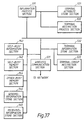
- Fig. 37 is block diagram of a communication control section according to a fourth example of the fifth embodiment.
- the fourth example includes a self-busy information section 940, a self-busy memory section 942, an other-busy memory section 944, a sending-information store section 946 and a receiving-information store section 948 in addition to the first example (Fig. 32).
- the self-busy information section 940 provides the self-busy information, indicating that the self-terminal is busy, to another terminal.
- the self-busy memory section 942 stores the self-busy information.
- the other-busy memory section (944) stores other-busy information which is sent by another terminal (the other terminal that is busy).
- the sending-information store section (946) temporarily stores sending-information to send to the other terminal while other-busy information of the other terminal is stored in the other-busy memory section (944), until the other terminal is released from being busy.
- the receiving-information store section (948) temporarily stores receiving-information being received by the self-terminal while self-busy information is stored in the self-busy memory section (942), until the self-terminal is released from being busy. According to the fifth example, even if the self-terminal or the other terminal is in busy, the self-terminal or the other terminal can execute a next process immediately when it is released from being busy.
Landscapes
- Engineering & Computer Science (AREA)
- Multimedia (AREA)
- Computer Networks & Wireless Communication (AREA)
- Signal Processing (AREA)
- Mobile Radio Communication Systems (AREA)
Claims (27)
- Terminal informatique sans fil portable comprenant :
des moyens (11) destinés à transmettre des signaux comprenant des informations d'identification de terminal, et des moyens (28) destinés à recevoir des signaux d'identification transmis par d'autres terminaux,
caractérisé par :des moyens (14) destinés à détecter d'autres terminaux pouvant être connectés au moyen de leurs informations d'identification reçues ;des moyens (101) destinés à afficher les informations d'identification de terminal des terminaux pouvant être connectés détectés ;des moyens (13) destinés à définir le terminal et au moins un autre terminal pouvant être connecté détecté en tant que terminaux membres d'un groupe ; etdes moyens (12) destinés à envoyer des informations à l'autre ou aux autres terminal (terminaux) membre(s) du groupe. - Terminal informatique sans fil portable selon la revendication 1, comprenant en outre :des moyens de mémoire (15) destinés à enregistrer les informations d'identification de terminal des autres terminaux pouvant être connectés ;des moyens de comparaison (16) destinés à comparer les informations d'identification de terminal précédemment enregistrées dans lesdits moyens de mémoire (15), avec des informations d'identification récentes provenant desdits moyens de détection (14) ; etdes moyens (16) destinés à actualiser les informations d'identification de terminal enregistrées dans lesdits moyens de mémoire (15) devant être conformes aux informations récemment détectées.
- Terminal informatique sans fil portable selon la revendication 1 ou la revendication 2, dans lequel lesdits moyens d'envoi d'informations (12) envoient des informations multidestinataires aux terminaux membres du groupe.
- Terminal informatique sans fil portable selon l'une quelconque des revendications précédentes, dans lequel :lesdits moyens de transmission (11) transmettent des informations supplémentaires conjointement aux informations d'identification du terminal ;lesdits moyens de réception (28) reçoivent des informations supplémentaires provenant des autres terminaux ; etlesdits moyens d'affichage (101) affichent également les informations supplémentaires.
- Terminal informatique sans fil portable selon l'une quelconque des revendications précédentes, comprenant en outre :des moyens de variation de puissance de transmission (41) ; etdes moyens (16) destinés à commander lesdits moyens de variation de puissance de transmission pour réduire la force de la puissance de transmission à l'intérieur d'une plage de limites auxquelles le terminal membre d'un groupe peut être identifié en tant que terminal pouvant être connecté par lesdits moyens de détection (14).
- Terminal informatique sans fil portable selon l'une quelconque des revendications 1 à 5, comprenant en outre :des moyens de variation de puissance de transmission (41) ; etdes moyens (16) destinés à commander lesdits moyens de variation de puissance de transmission pour augmenter la force de la puissance de transmission lorsque le nombre de terminaux détectés par lesdits moyens de détection (14) est inférieur au nombre de terminaux enregistré précédemment dans lesdits moyens de mémoire (15) et lorsqu'au moins un terminal du groupe n'est pas détecté par lesdits moyens de détection (14).
- Terminal informatique sans fil portable selon l'une quelconque des revendications 2 à 6, comprenant en outre :des moyens de transfert d'informations de terminal (111) destinés à transférer les informations d'identification de terminal enregistrées dans lesdits moyens de mémoire (15) vers les autres terminaux ;des moyens de stockage d'informations collectées (112) destinés à stocker les informations d'identification de terminal transférées vers le terminal par les autres terminaux en tant qu'informations collectées ; etdes moyens de restriction de terminal (113) destinés à restreindre le groupe de terminaux capables de communiquer les uns avec les autres selon les informations de terminal détectées et les informations collectées.
- Terminal informatique sans fil portable selon la revendication 7, comprenant en outre :des moyens (135) destinés à définir un dispositif d'identification de chaque terminal restreint par lesdits moyens de restriction de terminal (113), destinés à définir un dispositif d'identification de groupe d'un groupe de terminaux restreints par lesdits moyens de restriction de terminal (113) et à définir un dispositif partiel d'identification de groupe à une partie du groupe.
- Terminal informatique sans fil portable selon la revendication 7, comprenant en outre :des moyens (146) destinés à définir un canal de communication d'utilisation prioritaire de chaque terminal restreint par lesdits moyens de restriction de terminal (113).
- Terminal informatique sans fil portable selon la revendication 7, comprenant en outre :des moyens de discrimination de groupe (152) destinés à discriminer un groupe de terminaux restreints par lesdits moyens de restriction de terminal (113) en tant qu'unité du groupe ;des moyens de stockage de liste de groupe (153) destinés à stocker une liste de groupe comprenant le groupe discriminé par lesdits moyens de discrimination de groupe (152) ; etdes moyens d'actualisation de groupe (154) destinés à actualiser la liste de groupe lorsque le groupe des terminaux discriminés par lesdits moyens de discrimination de groupe (152) est différent du groupe dans la liste de groupe.
- Terminal informatique sans fil portable selon la revendication 10, comprenant en outre :des moyens d'acquisition d'attribut (165) destinés à acquérir un attribut provenant de chaque terminal dans le groupe discriminé par lesdits moyens de discrimination de groupe (152) ; etdes moyens de stockage d'attribut (166) destinés à stocker l'attribut acquis par lesdits moyens d'acquisition d'attribut (165).
- Terminal informatique sans fil portable selon la revendication 1, comprenant en outre :des moyens de définition multipoint-à-multipoint (19) destinés à définir la connexion multipoint-à-multipoint parmi tous les terminaux dans le groupe défini par lesdits moyens de définition de groupe (13).
- Terminal informatique sans fil portable selon la revendication 12, comprenant en outre :des moyens de connexion de terminal (13) destinés à connecter au moins un terminal supplémentaire au groupe ;dans lequel lesdits moyens de définition multipoint-à-multipoint (19) définissent une connexion multipoint-à-multipoint à tous les terminaux du groupe comprenant le terminal supplémentaire.
- Terminal informatique sans fil portable selon la revendication 12 ou la revendication 13, comprenant en outre :des moyens de déconnexion de terminal (13) destinés à déconnecter un terminal quittant le groupe ;dans lequel lesdits moyens de définition multipoint-à-multipoint (19) définissent une connexion multipoint-à-multipoint à tous les terminaux du groupe excluant le terminal supplémentaire.
- Terminal informatique sans fil portable selon la revendication 12, dans lequel :lesdits moyens de définition de groupe (13) définissent plusieurs groupes ; etdans lequel lesdits moyens de définition multipoint-à-multipoint (19) définissent une connexion multipoint-à-multipoint à chaque groupe.
- Terminal informatique sans fil portable selon la revendication 1, comprenant en outre :des moyens de mémoire de dispositif d'identification de groupe (71) destinés à stocker un dispositif d'identification de groupe du groupe défini par lesdits moyens de définition de groupe (13) ;des moyens d'entrée d'informations de discrimination (50) destinés à entrer des informations de discrimination du dispositif d'identification de groupe stockées dans lesdits moyens de mémoire de dispositif d'identification de groupe (71) ;des moyens d'envoi d'informations de discrimination (60) destinés à envoyer les informations de discrimination aux autres terminaux du groupe ;des moyens de stockage d'informations de discrimination (73) destinés à stocker les informations de discrimination envoyées par lesdits moyens d'envoi d'informations de discrimination (60) d'un autre terminal du groupe ;des moyens de demande d'informations de discrimination (50) destinés à demander les informations de discrimination du dispositif d'identification de groupe ; etdes moyens d'affichage (80) destinés à afficher les informations de discrimination du dispositif d'identification de groupe demandées par lesdits moyens de demande d'informations de discrimination (50).
- Terminal informatique sans fil portable selon la revendication 16, comprenant en outre :des moyens d'entrée d'attribut (50) destinés à entrer un attribut de sécurité pour le dispositif d'identification de groupe stocké dans lesdits moyens de mémoire de dispositif d'identification de groupe (71) ;des moyens de mémoire d'attribut (72) destinés à stocker l'attribut de sécurité entré par lesdits moyens d'entrée d'attribut (50) ; etdes moyens de décision (70) destinés à décider un état d'un groupe correspondant au dispositif d'identification de groupe stocké dans lesdits moyens de mémoire d'attribut (72) en se basant sur l'attribut.
- Terminal informatique sans fil portable selon la revendication 17, dans lequel :l'attribut de sécurité est un attribut d'affichage ou de non affichage des informations de discrimination ; etdans lequel lesdits moyens de décision (70) amènent lesdits moyens d'affichage (80) à afficher les informations de discrimination demandées par lesdits moyens de demande d'informations de discrimination (50) lorsque l'attribut de sécurité est l'attribut d'affichage, et amènent lesdits moyens d'affichage (80) à ne pas afficher les informations de discrimination demandées par lesdits moyens de demande d'informations de discrimination (50) lorsque l'attribut de sécurité est l'attribut de non affichage.
- Terminal informatique sans fil portable selon la revendication 18, dans lequel :l'attribut de sécurité est un attribut de participation ou de non participation au groupe ; etdans lequel lesdits moyens de décision (70) amènent lesdits moyens de définition de groupe (13) à définir un terminal supplémentaire faisant une demande de connexion au groupe lorsque l'attribut de sécurité est l'attribut de participation, et amènent lesdits moyens de définition de groupe (13) à ne pas définir le terminal supplémentaire faisant la demande de connexion au groupe lorsque l'attribut de sécurité est l'attribut de non participation.
- Terminal informatique sans fil portable selon la revendication 1, comprenant en outre :des moyens de stockage d'attribut de terminal (521) destinés à stocker des informations fonctionnelles exécutées par le terminal ;des moyens d'échange (511) destinés à échanger les informations de fonction du terminal avec les informations de fonction d'autres terminaux du groupe ;des moyens de restriction de terminal de traitement (522) destinés à restreindre un autre terminal du groupe ayant une fonction que le terminal n'a pas, conformément aux informations fonctionnelles échangées par lesdits moyens d'échange (511) ; etdes moyens de transfert d'informations (531) destinés à transférer des informations à l'autre terminal restreint par lesdits moyens de restriction de terminal de traitement (522), dans lesquels les informations sont nécessaires pour le traitement par la fonction de l'autre terminal.
- Terminal informatique sans fil portable selon la revendication 20, comprenant en outre :des moyens de sélection (101) destinés à afficher un nom et les informations de fonction de terminaux multiples, et à sélectionner l'un des terminaux multiples lorsque lesdits moyens de restriction de terminal de traitement (522) retreignent les terminaux multiples.
- Terminal informatique sans fil portable selon la revendication 21, comprenant en outre :des moyens de notification d'auto-occupation (940) destinés à notifier des informations d'auto-occupation qui signifient que le terminal est en train de réaliser un traitement en direction d'autres terminaux ;des moyens de mémoire d'auto-occupation (942) destinés à stocker les informations d'auto-occupation ;des moyens de mémoire d'occupation différente (944) destinés à stocker des informations d'occupation différente qui signifient que l'autre terminal est en train de réaliser un traitement, dans lesquels les informations d'occupation différente sont transférées au terminal par l'autre terminal ;des moyens de stockage d'informations d'envoi (946) destinés à stocker temporairement des informations jusqu'à ce que l'autre terminal ne soit plus occupé par le traitement, lorsque les informations sont envoyées à l'autre terminal tandis que les informations d'occupation différente sont stockées dans lesdits moyens de mémoire d'occupation différente (944) ; etdes moyens de stockage d'informations de réception (948) destinés à stocker temporairement des informations jusqu'à ce que le terminal ne soit plus occupé par le traitement, lorsque les informations sont reçues depuis l'autre terminal tandis que les informations d'auto-occupation sont stockées dans lesdits moyens de mémoire d'auto-occupation (942).
- Procédé de communication de commande dans un terminal informatique sans fil portable comprenant les étapes consistant à transmettre des informations d'identification de terminal et à recevoir des informations d'identification provenant d'un autre terminal ou d'autres terminaux, comprenant les étapes supplémentaires consistant à :détecter d'autres terminaux pouvant être connectés conformément aux informations d'identification reçues ;afficher les informations d'identification des autres terminaux pouvant être connectés ;définir le terminal et au moins un autre terminal pouvant être connecté détecté en tant que terminaux membres d'un groupe ; etenvoyer des informations à un autre terminal ou à d'autres terminaux membre(s) du groupe.
- Procédé de communication de commande selon la revendication 23, comprenant en outre les étapes consistant à :stocker des informations d'identification de terminal ;identifier d'autres terminaux pouvant être connectés ;transférer les informations d'identification de terminal vers les autres terminaux ;stocker les informations d'identification de terminal transférées au terminal par les autres terminaux en tant qu'informations collectées ; etlimiter les terminaux capables de communiquer les uns avec les autres conformément aux informations d'identification de terminal et aux informations collectées.
- Procédé de communication de commande selon la revendication 23, comprenant en outre les étapes consistant à :définir une connexion multipoint-à-multipoint parmi tous les terminaux dans le groupe défini lors de l'étape de définition.
- Procédé de communication de commande selon la revendication 23, comprenant en outre les étapes consistant à :stocker un dispositif d'identification de groupe du groupe défini lors de l'étape de définition ;entrer des informations de discrimination du dispositif d'identification de groupe stocké lors de l'étape de stockage ;envoyer les informations de discrimination aux autres terminaux du groupe ;stocker les informations de discrimination envoyées lors de l'étape d'envoi par un autre terminal du groupe ;demander les informations de discrimination du dispositif d'identification de groupe ; etafficher les informations de discrimination du dispositif d'identification de groupe demandées lors de l'étape de demande.
- Procédé de communication de commande selon la revendication 23, comprenant en outre les étapes consistant à :stocker des informations de fonction exécutées par le terminal ;échanger les informations de fonction du terminal avec les informations de fonction d'autres terminaux du groupe ;limiter un autre terminal du groupe ayant une fonction que le terminal n'a pas conformément, aux informations de fonction échangées lors de l'étape d'échange ; ettransférer les informations à l'autre terminal restreint lors de l'étape de restriction, où les informations sont nécessaires pour le traitement par la fonction de l'autre terminal.
Applications Claiming Priority (9)
| Application Number | Priority Date | Filing Date | Title |
|---|---|---|---|
| JP75757/94 | 1994-04-14 | ||
| JP7575794 | 1994-04-14 | ||
| JP7575794 | 1994-04-14 | ||
| JP91599/94 | 1994-04-28 | ||
| JP9160094 | 1994-04-28 | ||
| JP9159994 | 1994-04-28 | ||
| JP9159994A JP3441157B2 (ja) | 1994-04-28 | 1994-04-28 | 通信制御装置 |
| JP09160094A JP3616129B2 (ja) | 1994-04-28 | 1994-04-28 | 通信制御装置及び通信制御方法 |
| JP91600/94 | 1994-04-28 |
Publications (3)
| Publication Number | Publication Date |
|---|---|
| EP0680174A2 EP0680174A2 (fr) | 1995-11-02 |
| EP0680174A3 EP0680174A3 (fr) | 1996-05-01 |
| EP0680174B1 true EP0680174B1 (fr) | 2002-08-28 |
Family
ID=27301928
Family Applications (1)
| Application Number | Title | Priority Date | Filing Date |
|---|---|---|---|
| EP95302452A Expired - Lifetime EP0680174B1 (fr) | 1994-04-14 | 1995-04-12 | Terminal d'ordinateur portable sans fil et procédé pour le contrôle de communications |
Country Status (3)
| Country | Link |
|---|---|
| US (1) | US5771352A (fr) |
| EP (1) | EP0680174B1 (fr) |
| DE (1) | DE69527878T2 (fr) |
Families Citing this family (35)
| Publication number | Priority date | Publication date | Assignee | Title |
|---|---|---|---|---|
| JP3017925B2 (ja) | 1994-04-14 | 2000-03-13 | 株式会社東芝 | 移動通信端末と移動通信方法 |
| US6246696B1 (en) * | 1995-09-11 | 2001-06-12 | Kabushiki Kaisha Toshiba | Method of controlling a communication and apparatus for the same |
| US5887252A (en) * | 1996-09-10 | 1999-03-23 | Nokia Mobile Phones Limited | Multicast transmission for DS-CDMA cellular telephones |
| JP3524285B2 (ja) * | 1996-09-11 | 2004-05-10 | 株式会社東芝 | 通信装置及びその通信方法 |
| JP2982728B2 (ja) * | 1996-12-06 | 1999-11-29 | 日本電気株式会社 | アプリケーション共有システム |
| JPH10268959A (ja) * | 1997-03-24 | 1998-10-09 | Canon Inc | 情報処理装置及びその方法 |
| GB9715857D0 (en) * | 1997-07-29 | 1997-10-01 | Philips Electronics Nv | Wireless networked message routing |
| JP3512990B2 (ja) | 1997-09-16 | 2004-03-31 | 株式会社東芝 | 通信ネットワークシステム、通信ネットワークシステムの中継端末およびネットワークシステムの通信制御方法 |
| US6163538A (en) | 1997-10-09 | 2000-12-19 | Monarch Marketing Systems, Inc. | Wireless serial port transceiver |
| US7218663B1 (en) | 1997-12-26 | 2007-05-15 | Canon Kabushiki Kaisha | Communication system in which arbitrary number of communication apparatuses form group to communicate with each other, and the communication apparatus |
| JP4352471B2 (ja) * | 1998-02-19 | 2009-10-28 | ソニー株式会社 | 通信システムおよび通信方法 |
| US6178506B1 (en) * | 1998-10-23 | 2001-01-23 | Qualcomm Inc. | Wireless subscription portability |
| DE60026993T2 (de) * | 1999-05-31 | 2007-03-29 | Sony Corp. | Aufbauverfahren eines funknetzsystems und eines funkübertragungsgerätes |
| US7403510B1 (en) * | 1999-11-10 | 2008-07-22 | Fujifilm Corporation | Communication terminal apparatus, communication method thereof, and connected destination selection method in wireless LAN |
| US8363744B2 (en) | 2001-06-10 | 2013-01-29 | Aloft Media, Llc | Method and system for robust, secure, and high-efficiency voice and packet transmission over ad-hoc, mesh, and MIMO communication networks |
| US6862684B1 (en) * | 2000-07-28 | 2005-03-01 | Sun Microsystems, Inc. | Method and apparatus for securely providing billable multicast data |
| JP3756741B2 (ja) * | 2000-08-21 | 2006-03-15 | 株式会社東芝 | 情報交換装置およびキャッシュレジスタ装置 |
| JP3805610B2 (ja) * | 2000-09-28 | 2006-08-02 | 株式会社日立製作所 | 閉域グループ通信方法および通信端末装置 |
| US7079501B2 (en) * | 2001-01-31 | 2006-07-18 | International Business Machines Corporation | Method and system for efficiently delivering content to multiple requesters |
| US20020158899A1 (en) * | 2001-04-30 | 2002-10-31 | Robert Raymond | Portal system and method for managing resources in a networked computing environment |
| US20020161876A1 (en) * | 2001-04-30 | 2002-10-31 | Robert Raymond | System and method for managing data miner modules in an information network system |
| US7010593B2 (en) * | 2001-04-30 | 2006-03-07 | Hewlett-Packard Development Company, L.P. | Dynamic generation of context-sensitive data and instructions for troubleshooting problem events in a computing environment |
| JP4143277B2 (ja) * | 2001-05-22 | 2008-09-03 | Necインフロンティア株式会社 | 通信システムと、交換機と端末との接続設定方法及び接続設定プログラム |
| JP3707407B2 (ja) | 2001-08-28 | 2005-10-19 | セイコーエプソン株式会社 | パスワードを投写するプロジェクタ |
| JP3785108B2 (ja) | 2002-03-28 | 2006-06-14 | 株式会社東芝 | 通信方法、通信装置、基地局装置及び端末装置 |
| US7184790B2 (en) | 2002-04-02 | 2007-02-27 | Dorenbosch Jheroen P | Method and apparatus for establishing a talk group |
| US7293071B2 (en) * | 2002-05-27 | 2007-11-06 | Seiko Epson Corporation | Image data transmission system, process and program, image data output device and image display device |
| JP2004287160A (ja) | 2003-03-24 | 2004-10-14 | Seiko Epson Corp | 画像表示システム、プロジェクタ、画像表示方法、プロジェクタ制御方法、画像表示プログラムおよびプロジェクタ制御プログラム |
| JP2005208823A (ja) * | 2004-01-21 | 2005-08-04 | Seiko Epson Corp | プロジェクタのネットワークシステム |
| JP4628684B2 (ja) | 2004-02-16 | 2011-02-09 | 三菱電機株式会社 | データ送受信装置及び電子証明書発行方法 |
| JP5040341B2 (ja) | 2006-04-04 | 2012-10-03 | セイコーエプソン株式会社 | プロジェクタシステム |
| WO2008078391A1 (fr) | 2006-12-26 | 2008-07-03 | Fujitsu Limited | Dispositif et procédé de communication |
| KR101515202B1 (ko) * | 2007-06-04 | 2015-05-04 | 소니 주식회사 | 통신시스템, 통신장치 및 통신방법과 컴퓨터·프로그램 |
| US8046016B2 (en) * | 2008-08-27 | 2011-10-25 | Motorola Solutions, Inc. | Indicating availability of RF resources at a peer base station in a two-way peer-to-peer communication system |
| JP5144485B2 (ja) * | 2008-12-12 | 2013-02-13 | オリンパス株式会社 | 無線通信端末 |
Family Cites Families (10)
| Publication number | Priority date | Publication date | Assignee | Title |
|---|---|---|---|---|
| US5109484A (en) * | 1986-04-09 | 1992-04-28 | International Business Machines Corporation | Self configuring terminal which polls loop network and generates list of connected devices for use in selectively downloading control programs |
| US4864559A (en) * | 1988-09-27 | 1989-09-05 | Digital Equipment Corporation | Method of multicast message distribution |
| JPH0727511B2 (ja) * | 1989-04-17 | 1995-03-29 | 株式会社日立製作所 | 情報処理システム |
| US5128981A (en) * | 1989-05-24 | 1992-07-07 | Hitachi, Ltd. | Radio communication system and a portable wireless terminal |
| JPH03235532A (ja) * | 1990-02-13 | 1991-10-21 | Toshiba Corp | コードレス電話装置 |
| US5446897A (en) * | 1990-08-31 | 1995-08-29 | International Business Machines Corporation | Automated address discovery method and apparatus for local area networks |
| GB9214107D0 (en) * | 1992-07-03 | 1992-08-12 | Ncr Int Inc | Power control method in a wireless communication system |
| DE69326656T2 (de) * | 1992-07-17 | 2000-05-31 | Sun Microsystems, Inc. | Verfahren und Gerät zur Selbstorganisation in einem drahtlosen lokalen Netz |
| US5564070A (en) * | 1993-07-30 | 1996-10-08 | Xerox Corporation | Method and system for maintaining processing continuity to mobile computers in a wireless network |
| US5555376A (en) * | 1993-12-03 | 1996-09-10 | Xerox Corporation | Method for granting a user request having locational and contextual attributes consistent with user policies for devices having locational attributes consistent with the user request |
-
1995
- 1995-04-12 US US08/420,851 patent/US5771352A/en not_active Expired - Lifetime
- 1995-04-12 EP EP95302452A patent/EP0680174B1/fr not_active Expired - Lifetime
- 1995-04-12 DE DE69527878T patent/DE69527878T2/de not_active Expired - Lifetime
Also Published As
| Publication number | Publication date |
|---|---|
| DE69527878T2 (de) | 2003-05-08 |
| DE69527878D1 (de) | 2002-10-02 |
| US5771352A (en) | 1998-06-23 |
| EP0680174A2 (fr) | 1995-11-02 |
| EP0680174A3 (fr) | 1996-05-01 |
Similar Documents
| Publication | Publication Date | Title |
|---|---|---|
| US5771352A (en) | Communication control apparatus and method | |
| JP2503189B2 (ja) | 通信ネットワ―ク管理システム及び通信ネットワ―ク管理方法 | |
| US5406643A (en) | Method and apparatus for selecting between a plurality of communication paths | |
| JP2006115505A (ja) | ピアグループ間で通信を確立する方法 | |
| US4905229A (en) | Local area communication network | |
| EP1327328B1 (fr) | Procede permettant de connecter plusieurs bus de communication par des liaisons sans fil | |
| EP2383935A2 (fr) | Système de configuration de réseau sans fil et de distribution de configuration | |
| CN114615674A (zh) | 无线Mesh自组网方法和系统 | |
| JP3564433B2 (ja) | 通信制御装置及び通信制御方法 | |
| US5343466A (en) | Path routing system for communication network | |
| JP3616129B2 (ja) | 通信制御装置及び通信制御方法 | |
| CN101364887A (zh) | 用于在无线网络中提供多播/广播服务的系统及方法 | |
| US20080114895A1 (en) | Method for Balancing Load Among Subsystems in Communication Network System of Bus Network Structure | |
| JP3468993B2 (ja) | 通信制御装置及びその方法 | |
| US6625154B1 (en) | Wireless asynchronous transfer mode communication system and method of controlling broadcast | |
| JP3864562B2 (ja) | ネットワーク管理方法及びネットワークマネージャ選定方法 | |
| EP1391131B1 (fr) | Gestion d'information d'elements de donnees dans un environnement de reseau | |
| JPH0210947A (ja) | 伝送制御方法 | |
| US7421479B2 (en) | Network system, network control method, and signal sender/receiver | |
| JP3502274B2 (ja) | コネクション型通信方式又は該コネクション型通信方式における端末若しくはノード | |
| JP4554295B2 (ja) | 端末、通話方法及び通話プログラム | |
| JP2001156775A (ja) | グループ制御方法及びその装置並びにそのプログラムを記録した媒体 | |
| JPH08213991A (ja) | ネットワークシステム | |
| CN115915153A (zh) | 一种异厂家xn链路互通的优化方法及装置 | |
| US20050129048A1 (en) | Method for transmitting multicast data information |
Legal Events
| Date | Code | Title | Description |
|---|---|---|---|
| PUAI | Public reference made under article 153(3) epc to a published international application that has entered the european phase |
Free format text: ORIGINAL CODE: 0009012 |
|
| 17P | Request for examination filed |
Effective date: 19950502 |
|
| AK | Designated contracting states |
Kind code of ref document: A2 Designated state(s): DE FR GB |
|
| PUAL | Search report despatched |
Free format text: ORIGINAL CODE: 0009013 |
|
| AK | Designated contracting states |
Kind code of ref document: A3 Designated state(s): DE FR GB |
|
| 17Q | First examination report despatched |
Effective date: 19990601 |
|
| RTI1 | Title (correction) |
Free format text: PORTABLE WIRELESS COMPUTER TERMINAL AND METHOD OF CONTROLLING COMMUNICATION |
|
| GRAG | Despatch of communication of intention to grant |
Free format text: ORIGINAL CODE: EPIDOS AGRA |
|
| GRAG | Despatch of communication of intention to grant |
Free format text: ORIGINAL CODE: EPIDOS AGRA |
|
| GRAH | Despatch of communication of intention to grant a patent |
Free format text: ORIGINAL CODE: EPIDOS IGRA |
|
| GRAH | Despatch of communication of intention to grant a patent |
Free format text: ORIGINAL CODE: EPIDOS IGRA |
|
| GRAA | (expected) grant |
Free format text: ORIGINAL CODE: 0009210 |
|
| AK | Designated contracting states |
Kind code of ref document: B1 Designated state(s): DE FR GB |
|
| REG | Reference to a national code |
Ref country code: GB Ref legal event code: FG4D |
|
| REF | Corresponds to: |
Ref document number: 69527878 Country of ref document: DE Date of ref document: 20021002 |
|
| ET | Fr: translation filed | ||
| PLBE | No opposition filed within time limit |
Free format text: ORIGINAL CODE: 0009261 |
|
| STAA | Information on the status of an ep patent application or granted ep patent |
Free format text: STATUS: NO OPPOSITION FILED WITHIN TIME LIMIT |
|
| 26N | No opposition filed |
Effective date: 20030530 |
|
| REG | Reference to a national code |
Ref country code: GB Ref legal event code: 746 Effective date: 20070308 |
|
| PGFP | Annual fee paid to national office [announced via postgrant information from national office to epo] |
Ref country code: FR Payment date: 20110426 Year of fee payment: 17 Ref country code: DE Payment date: 20110406 Year of fee payment: 17 |
|
| PGFP | Annual fee paid to national office [announced via postgrant information from national office to epo] |
Ref country code: GB Payment date: 20110406 Year of fee payment: 17 |
|
| GBPC | Gb: european patent ceased through non-payment of renewal fee |
Effective date: 20120412 |
|
| REG | Reference to a national code |
Ref country code: FR Ref legal event code: ST Effective date: 20121228 |
|
| PG25 | Lapsed in a contracting state [announced via postgrant information from national office to epo] |
Ref country code: GB Free format text: LAPSE BECAUSE OF NON-PAYMENT OF DUE FEES Effective date: 20120412 |
|
| REG | Reference to a national code |
Ref country code: DE Ref legal event code: R119 Ref document number: 69527878 Country of ref document: DE Effective date: 20121101 |
|
| PG25 | Lapsed in a contracting state [announced via postgrant information from national office to epo] |
Ref country code: FR Free format text: LAPSE BECAUSE OF NON-PAYMENT OF DUE FEES Effective date: 20120430 |
|
| PG25 | Lapsed in a contracting state [announced via postgrant information from national office to epo] |
Ref country code: DE Free format text: LAPSE BECAUSE OF NON-PAYMENT OF DUE FEES Effective date: 20121101 |