EP0682708B1 - Composition de variants transdominants de proteines virales pour un effet antiviral - Google Patents
Composition de variants transdominants de proteines virales pour un effet antiviral Download PDFInfo
- Publication number
- EP0682708B1 EP0682708B1 EP95903829A EP95903829A EP0682708B1 EP 0682708 B1 EP0682708 B1 EP 0682708B1 EP 95903829 A EP95903829 A EP 95903829A EP 95903829 A EP95903829 A EP 95903829A EP 0682708 B1 EP0682708 B1 EP 0682708B1
- Authority
- EP
- European Patent Office
- Prior art keywords
- residue
- replaced
- trans
- sequence
- dominant
- Prior art date
- Legal status (The legal status is an assumption and is not a legal conclusion. Google has not performed a legal analysis and makes no representation as to the accuracy of the status listed.)
- Expired - Lifetime
Links
- 239000000203 mixture Substances 0.000 title claims abstract description 17
- 108010067390 Viral Proteins Proteins 0.000 title abstract description 9
- 230000000840 anti-viral effect Effects 0.000 title description 4
- 239000013598 vector Substances 0.000 claims abstract description 93
- 241000700605 Viruses Species 0.000 claims abstract description 26
- 210000003527 eukaryotic cell Anatomy 0.000 claims abstract description 7
- 208000036142 Viral infection Diseases 0.000 claims abstract description 6
- 230000009385 viral infection Effects 0.000 claims abstract description 6
- 239000008194 pharmaceutical composition Substances 0.000 claims abstract description 5
- 239000013066 combination product Substances 0.000 claims abstract description 3
- 229940127555 combination product Drugs 0.000 claims abstract description 3
- 210000004027 cell Anatomy 0.000 claims description 63
- 241000725303 Human immunodeficiency virus Species 0.000 claims description 43
- CKLJMWTZIZZHCS-REOHCLBHSA-N aspartic acid group Chemical group N[C@@H](CC(=O)O)C(=O)O CKLJMWTZIZZHCS-REOHCLBHSA-N 0.000 claims description 31
- 101710150344 Protein Rev Proteins 0.000 claims description 27
- 235000001014 amino acid Nutrition 0.000 claims description 27
- 229940024606 amino acid Drugs 0.000 claims description 27
- 150000001413 amino acids Chemical class 0.000 claims description 27
- COLNVLDHVKWLRT-QMMMGPOBSA-N phenylalanine group Chemical group N[C@@H](CC1=CC=CC=C1)C(=O)O COLNVLDHVKWLRT-QMMMGPOBSA-N 0.000 claims description 27
- 101710149951 Protein Tat Proteins 0.000 claims description 25
- 108091028043 Nucleic acid sequence Proteins 0.000 claims description 14
- 208000015181 infectious disease Diseases 0.000 claims description 14
- 125000001909 leucine group Chemical group [H]N(*)C(C(*)=O)C([H])([H])C(C([H])([H])[H])C([H])([H])[H] 0.000 claims description 13
- 125000003607 serino group Chemical group [H]N([H])[C@]([H])(C(=O)[*])C(O[H])([H])[H] 0.000 claims description 11
- 125000000291 glutamic acid group Chemical group N[C@@H](CCC(O)=O)C(=O)* 0.000 claims description 10
- 125000000404 glutamine group Chemical group N[C@@H](CCC(N)=O)C(=O)* 0.000 claims description 9
- 125000003630 glycyl group Chemical group [H]N([H])C([H])([H])C(*)=O 0.000 claims description 7
- 125000003295 alanine group Chemical group N[C@@H](C)C(=O)* 0.000 claims description 5
- 230000002265 prevention Effects 0.000 claims description 5
- 125000000637 arginyl group Chemical group N[C@@H](CCCNC(N)=N)C(=O)* 0.000 claims description 4
- 125000000741 isoleucyl group Chemical group [H]N([H])C(C(C([H])([H])[H])C([H])([H])C([H])([H])[H])C(=O)O* 0.000 claims description 4
- 125000003588 lysine group Chemical group [H]N([H])C([H])([H])C([H])([H])C([H])([H])C([H])([H])C([H])(N([H])[H])C(*)=O 0.000 claims description 4
- 238000002360 preparation method Methods 0.000 claims description 4
- 125000000341 threoninyl group Chemical group [H]OC([H])(C([H])([H])[H])C([H])(N([H])[H])C(*)=O 0.000 claims description 4
- 125000001493 tyrosinyl group Chemical group [H]OC1=C([H])C([H])=C(C([H])=C1[H])C([H])([H])C([H])(N([H])[H])C(*)=O 0.000 claims description 4
- 241000701161 unidentified adenovirus Species 0.000 claims description 4
- 241001430294 unidentified retrovirus Species 0.000 claims description 4
- 241000702421 Dependoparvovirus Species 0.000 claims 1
- 229940126601 medicinal product Drugs 0.000 claims 1
- 108090000623 proteins and genes Proteins 0.000 description 38
- 239000012634 fragment Substances 0.000 description 32
- ROHFNLRQFUQHCH-YFKPBYRVSA-N L-leucine Chemical compound CC(C)C[C@H](N)C(O)=O ROHFNLRQFUQHCH-YFKPBYRVSA-N 0.000 description 25
- 230000001177 retroviral effect Effects 0.000 description 23
- DHMQDGOQFOQNFH-UHFFFAOYSA-N Glycine Chemical compound NCC(O)=O DHMQDGOQFOQNFH-UHFFFAOYSA-N 0.000 description 21
- RXWNCPJZOCPEPQ-NVWDDTSBSA-N puromycin Chemical compound C1=CC(OC)=CC=C1C[C@H](N)C(=O)N[C@H]1[C@@H](O)[C@H](N2C3=NC=NC(=C3N=C2)N(C)C)O[C@@H]1CO RXWNCPJZOCPEPQ-NVWDDTSBSA-N 0.000 description 18
- 108091034117 Oligonucleotide Proteins 0.000 description 17
- 230000000694 effects Effects 0.000 description 16
- 235000018102 proteins Nutrition 0.000 description 15
- 102000004169 proteins and genes Human genes 0.000 description 15
- 230000003612 virological effect Effects 0.000 description 15
- 102000011755 Phosphoglycerate Kinase Human genes 0.000 description 14
- 101001099217 Thermotoga maritima (strain ATCC 43589 / DSM 3109 / JCM 10099 / NBRC 100826 / MSB8) Triosephosphate isomerase Proteins 0.000 description 14
- 238000010276 construction Methods 0.000 description 14
- 238000000034 method Methods 0.000 description 14
- 239000000047 product Substances 0.000 description 14
- 108020004999 messenger RNA Proteins 0.000 description 12
- 108020004705 Codon Proteins 0.000 description 9
- WHUUTDBJXJRKMK-VKHMYHEASA-N L-glutamic acid Chemical compound OC(=O)[C@@H](N)CCC(O)=O WHUUTDBJXJRKMK-VKHMYHEASA-N 0.000 description 9
- 101150055766 cat gene Proteins 0.000 description 9
- 108020004707 nucleic acids Proteins 0.000 description 9
- 102000039446 nucleic acids Human genes 0.000 description 9
- 150000007523 nucleic acids Chemical class 0.000 description 9
- 229950010131 puromycin Drugs 0.000 description 9
- WHUUTDBJXJRKMK-UHFFFAOYSA-N Glutamic acid Natural products OC(=O)C(N)CCC(O)=O WHUUTDBJXJRKMK-UHFFFAOYSA-N 0.000 description 8
- 241001045988 Neogene Species 0.000 description 8
- 101150091879 neo gene Proteins 0.000 description 8
- 241000713772 Human immunodeficiency virus 1 Species 0.000 description 7
- 241001529936 Murinae Species 0.000 description 7
- 230000000692 anti-sense effect Effects 0.000 description 7
- 239000013604 expression vector Substances 0.000 description 7
- 108700004030 rev Genes Proteins 0.000 description 7
- 241000829100 Macaca mulatta polyomavirus 1 Species 0.000 description 6
- 238000010367 cloning Methods 0.000 description 6
- 210000004698 lymphocyte Anatomy 0.000 description 6
- 231100000350 mutagenesis Toxicity 0.000 description 6
- 238000002703 mutagenesis Methods 0.000 description 6
- 238000003752 polymerase chain reaction Methods 0.000 description 6
- 101150098213 rev gene Proteins 0.000 description 6
- 108010054576 Deoxyribonuclease EcoRI Proteins 0.000 description 5
- 210000000805 cytoplasm Anatomy 0.000 description 5
- 238000001415 gene therapy Methods 0.000 description 5
- 231100000219 mutagenic Toxicity 0.000 description 5
- 230000003505 mutagenic effect Effects 0.000 description 5
- 239000002245 particle Substances 0.000 description 5
- 238000001890 transfection Methods 0.000 description 5
- 108020004414 DNA Proteins 0.000 description 4
- 108010014303 DNA-directed DNA polymerase Proteins 0.000 description 4
- 102000016928 DNA-directed DNA polymerase Human genes 0.000 description 4
- 241000588724 Escherichia coli Species 0.000 description 4
- 108700039691 Genetic Promoter Regions Proteins 0.000 description 4
- 102100034343 Integrase Human genes 0.000 description 4
- 108010092799 RNA-directed DNA polymerase Proteins 0.000 description 4
- 238000012761 co-transfection Methods 0.000 description 4
- 230000004927 fusion Effects 0.000 description 4
- 230000002458 infectious effect Effects 0.000 description 4
- 230000002401 inhibitory effect Effects 0.000 description 4
- 230000005764 inhibitory process Effects 0.000 description 4
- 230000000977 initiatory effect Effects 0.000 description 4
- 239000013612 plasmid Substances 0.000 description 4
- 239000006152 selective media Substances 0.000 description 4
- 108700004027 tat Genes Proteins 0.000 description 4
- 238000003146 transient transfection Methods 0.000 description 4
- 238000013519 translation Methods 0.000 description 4
- MTCFGRXMJLQNBG-REOHCLBHSA-N (2S)-2-Amino-3-hydroxypropansäure Chemical compound OC[C@H](N)C(O)=O MTCFGRXMJLQNBG-REOHCLBHSA-N 0.000 description 3
- FWMNVWWHGCHHJJ-SKKKGAJSSA-N 4-amino-1-[(2r)-6-amino-2-[[(2r)-2-[[(2r)-2-[[(2r)-2-amino-3-phenylpropanoyl]amino]-3-phenylpropanoyl]amino]-4-methylpentanoyl]amino]hexanoyl]piperidine-4-carboxylic acid Chemical compound C([C@H](C(=O)N[C@H](CC(C)C)C(=O)N[C@H](CCCCN)C(=O)N1CCC(N)(CC1)C(O)=O)NC(=O)[C@H](N)CC=1C=CC=CC=1)C1=CC=CC=C1 FWMNVWWHGCHHJJ-SKKKGAJSSA-N 0.000 description 3
- 208000030507 AIDS Diseases 0.000 description 3
- 102000004594 DNA Polymerase I Human genes 0.000 description 3
- 108010017826 DNA Polymerase I Proteins 0.000 description 3
- 239000004471 Glycine Substances 0.000 description 3
- ROHFNLRQFUQHCH-UHFFFAOYSA-N Leucine Natural products CC(C)CC(N)C(O)=O ROHFNLRQFUQHCH-UHFFFAOYSA-N 0.000 description 3
- 241000713883 Myeloproliferative sarcoma virus Species 0.000 description 3
- 229930193140 Neomycin Natural products 0.000 description 3
- 241001080024 Telles Species 0.000 description 3
- 239000002253 acid Substances 0.000 description 3
- 230000029087 digestion Effects 0.000 description 3
- 239000003814 drug Substances 0.000 description 3
- ZDXPYRJPNDTMRX-UHFFFAOYSA-N glutamine Natural products OC(=O)C(N)CCC(N)=O ZDXPYRJPNDTMRX-UHFFFAOYSA-N 0.000 description 3
- 210000005260 human cell Anatomy 0.000 description 3
- 229960004927 neomycin Drugs 0.000 description 3
- 238000004806 packaging method and process Methods 0.000 description 3
- 230000023603 positive regulation of transcription initiation, DNA-dependent Effects 0.000 description 3
- 238000002741 site-directed mutagenesis Methods 0.000 description 3
- 238000003786 synthesis reaction Methods 0.000 description 3
- 101150098170 tat gene Proteins 0.000 description 3
- CABVTRNMFUVUDM-VRHQGPGLSA-N (3S)-3-hydroxy-3-methylglutaryl-CoA Chemical compound O[C@@H]1[C@H](OP(O)(O)=O)[C@@H](COP(O)(=O)OP(O)(=O)OCC(C)(C)[C@@H](O)C(=O)NCCC(=O)NCCSC(=O)C[C@@](O)(CC(O)=O)C)O[C@H]1N1C2=NC=NC(N)=C2N=C1 CABVTRNMFUVUDM-VRHQGPGLSA-N 0.000 description 2
- 241000710188 Encephalomyocarditis virus Species 0.000 description 2
- 108700024394 Exon Proteins 0.000 description 2
- 208000031886 HIV Infections Diseases 0.000 description 2
- 239000012979 RPMI medium Substances 0.000 description 2
- 241000714474 Rous sarcoma virus Species 0.000 description 2
- 108700019146 Transgenes Proteins 0.000 description 2
- 238000012512 characterization method Methods 0.000 description 2
- 239000012228 culture supernatant Substances 0.000 description 2
- 230000001419 dependent effect Effects 0.000 description 2
- 238000004520 electroporation Methods 0.000 description 2
- 108700004025 env Genes Proteins 0.000 description 2
- 238000011156 evaluation Methods 0.000 description 2
- 238000002474 experimental method Methods 0.000 description 2
- 238000000338 in vitro Methods 0.000 description 2
- 238000001727 in vivo Methods 0.000 description 2
- 208000032839 leukemia Diseases 0.000 description 2
- 239000003550 marker Substances 0.000 description 2
- 238000010369 molecular cloning Methods 0.000 description 2
- 230000035772 mutation Effects 0.000 description 2
- 239000002773 nucleotide Substances 0.000 description 2
- 125000003729 nucleotide group Chemical group 0.000 description 2
- 230000008520 organization Effects 0.000 description 2
- 239000013641 positive control Substances 0.000 description 2
- 125000002924 primary amino group Chemical group [H]N([H])* 0.000 description 2
- 230000002829 reductive effect Effects 0.000 description 2
- 230000008439 repair process Effects 0.000 description 2
- 230000010076 replication Effects 0.000 description 2
- 210000002966 serum Anatomy 0.000 description 2
- 210000000130 stem cell Anatomy 0.000 description 2
- 230000001225 therapeutic effect Effects 0.000 description 2
- 238000002560 therapeutic procedure Methods 0.000 description 2
- 238000013518 transcription Methods 0.000 description 2
- 230000035897 transcription Effects 0.000 description 2
- 230000001052 transient effect Effects 0.000 description 2
- 238000011144 upstream manufacturing Methods 0.000 description 2
- 230000029812 viral genome replication Effects 0.000 description 2
- 239000013603 viral vector Substances 0.000 description 2
- 208000029483 Acquired immunodeficiency Diseases 0.000 description 1
- 239000004475 Arginine Substances 0.000 description 1
- 201000006082 Chickenpox Diseases 0.000 description 1
- 108010035563 Chloramphenicol O-acetyltransferase Proteins 0.000 description 1
- 108091026890 Coding region Proteins 0.000 description 1
- 241001524679 Escherichia virus M13 Species 0.000 description 1
- 241000701533 Escherichia virus T4 Species 0.000 description 1
- 102000006481 HIV Receptors Human genes 0.000 description 1
- 108010083930 HIV Receptors Proteins 0.000 description 1
- 208000037357 HIV infectious disease Diseases 0.000 description 1
- 108700010908 HIV-1 proteins Proteins 0.000 description 1
- 108010070875 Human Immunodeficiency Virus tat Gene Products Proteins 0.000 description 1
- 241000598436 Human T-cell lymphotropic virus Species 0.000 description 1
- 241000700588 Human alphaherpesvirus 1 Species 0.000 description 1
- 241000701044 Human gammaherpesvirus 4 Species 0.000 description 1
- XQFRJNBWHJMXHO-RRKCRQDMSA-N IDUR Chemical compound C1[C@H](O)[C@@H](CO)O[C@H]1N1C(=O)NC(=O)C(I)=C1 XQFRJNBWHJMXHO-RRKCRQDMSA-N 0.000 description 1
- QNAYBMKLOCPYGJ-REOHCLBHSA-N L-alanine Chemical compound C[C@H](N)C(O)=O QNAYBMKLOCPYGJ-REOHCLBHSA-N 0.000 description 1
- AGPKZVBTJJNPAG-WHFBIAKZSA-N L-isoleucine Chemical compound CC[C@H](C)[C@H](N)C(O)=O AGPKZVBTJJNPAG-WHFBIAKZSA-N 0.000 description 1
- OUYCCCASQSFEME-QMMMGPOBSA-N L-tyrosine Chemical compound OC(=O)[C@@H](N)CC1=CC=C(O)C=C1 OUYCCCASQSFEME-QMMMGPOBSA-N 0.000 description 1
- 239000004472 Lysine Substances 0.000 description 1
- KDXKERNSBIXSRK-UHFFFAOYSA-N Lysine Natural products NCCCCC(N)C(O)=O KDXKERNSBIXSRK-UHFFFAOYSA-N 0.000 description 1
- 101710149086 Nuclease S1 Proteins 0.000 description 1
- 101710130262 Probable Vpr-like protein Proteins 0.000 description 1
- 108700005075 Regulator Genes Proteins 0.000 description 1
- 108700008625 Reporter Genes Proteins 0.000 description 1
- 239000006146 Roswell Park Memorial Institute medium Substances 0.000 description 1
- 206010039491 Sarcoma Diseases 0.000 description 1
- MTCFGRXMJLQNBG-UHFFFAOYSA-N Serine Natural products OCC(N)C(O)=O MTCFGRXMJLQNBG-UHFFFAOYSA-N 0.000 description 1
- 208000000389 T-cell leukemia Diseases 0.000 description 1
- 208000028530 T-cell lymphoblastic leukemia/lymphoma Diseases 0.000 description 1
- AYFVYJQAPQTCCC-UHFFFAOYSA-N THREONINE Chemical compound CC(O)C(N)C(O)=O AYFVYJQAPQTCCC-UHFFFAOYSA-N 0.000 description 1
- 101150003725 TK gene Proteins 0.000 description 1
- 102000006601 Thymidine Kinase Human genes 0.000 description 1
- 108020004440 Thymidine kinase Proteins 0.000 description 1
- 206010046980 Varicella Diseases 0.000 description 1
- 230000009471 action Effects 0.000 description 1
- 239000002671 adjuvant Substances 0.000 description 1
- 235000004279 alanine Nutrition 0.000 description 1
- 239000003242 anti bacterial agent Substances 0.000 description 1
- 229940088710 antibiotic agent Drugs 0.000 description 1
- 238000013459 approach Methods 0.000 description 1
- ODKSFYDXXFIFQN-UHFFFAOYSA-N arginine Natural products OC(=O)C(N)CCCNC(N)=N ODKSFYDXXFIFQN-UHFFFAOYSA-N 0.000 description 1
- 230000001580 bacterial effect Effects 0.000 description 1
- 230000008901 benefit Effects 0.000 description 1
- 230000008033 biological extinction Effects 0.000 description 1
- 210000004369 blood Anatomy 0.000 description 1
- 239000008280 blood Substances 0.000 description 1
- 210000000988 bone and bone Anatomy 0.000 description 1
- AIYUHDOJVYHVIT-UHFFFAOYSA-M caesium chloride Chemical compound [Cl-].[Cs+] AIYUHDOJVYHVIT-UHFFFAOYSA-M 0.000 description 1
- 229910000389 calcium phosphate Inorganic materials 0.000 description 1
- 239000001506 calcium phosphate Substances 0.000 description 1
- 235000011010 calcium phosphates Nutrition 0.000 description 1
- 244000309466 calf Species 0.000 description 1
- 230000030833 cell death Effects 0.000 description 1
- 239000003795 chemical substances by application Substances 0.000 description 1
- 230000002860 competitive effect Effects 0.000 description 1
- 230000006378 damage Effects 0.000 description 1
- 230000002950 deficient Effects 0.000 description 1
- 238000012217 deletion Methods 0.000 description 1
- 230000037430 deletion Effects 0.000 description 1
- 239000003085 diluting agent Substances 0.000 description 1
- 229940079593 drug Drugs 0.000 description 1
- 101150030339 env gene Proteins 0.000 description 1
- 230000001605 fetal effect Effects 0.000 description 1
- 238000009432 framing Methods 0.000 description 1
- 238000010353 genetic engineering Methods 0.000 description 1
- 230000003394 haemopoietic effect Effects 0.000 description 1
- 210000003958 hematopoietic stem cell Anatomy 0.000 description 1
- 208000033519 human immunodeficiency virus infectious disease Diseases 0.000 description 1
- 238000002649 immunization Methods 0.000 description 1
- 230000003053 immunization Effects 0.000 description 1
- 230000001939 inductive effect Effects 0.000 description 1
- 238000003780 insertion Methods 0.000 description 1
- 230000037431 insertion Effects 0.000 description 1
- 230000003834 intracellular effect Effects 0.000 description 1
- 238000002955 isolation Methods 0.000 description 1
- 229960000310 isoleucine Drugs 0.000 description 1
- AGPKZVBTJJNPAG-UHFFFAOYSA-N isoleucine Natural products CCC(C)C(N)C(O)=O AGPKZVBTJJNPAG-UHFFFAOYSA-N 0.000 description 1
- 230000000670 limiting effect Effects 0.000 description 1
- 230000014759 maintenance of location Effects 0.000 description 1
- 238000005259 measurement Methods 0.000 description 1
- 230000010534 mechanism of action Effects 0.000 description 1
- 239000002609 medium Substances 0.000 description 1
- 238000012986 modification Methods 0.000 description 1
- 230000004048 modification Effects 0.000 description 1
- 229940046166 oligodeoxynucleotide Drugs 0.000 description 1
- 230000007170 pathology Effects 0.000 description 1
- 239000008188 pellet Substances 0.000 description 1
- COLNVLDHVKWLRT-UHFFFAOYSA-N phenylalanine Natural products OC(=O)C(N)CC1=CC=CC=C1 COLNVLDHVKWLRT-UHFFFAOYSA-N 0.000 description 1
- 230000008488 polyadenylation Effects 0.000 description 1
- 230000001124 posttranscriptional effect Effects 0.000 description 1
- 230000000069 prophylactic effect Effects 0.000 description 1
- 230000004853 protein function Effects 0.000 description 1
- 230000001105 regulatory effect Effects 0.000 description 1
- 238000012827 research and development Methods 0.000 description 1
- 230000004044 response Effects 0.000 description 1
- 230000000392 somatic effect Effects 0.000 description 1
- 238000006467 substitution reaction Methods 0.000 description 1
- 239000006228 supernatant Substances 0.000 description 1
- 208000010648 susceptibility to HIV infection Diseases 0.000 description 1
- 208000011580 syndromic disease Diseases 0.000 description 1
- 230000002195 synergetic effect Effects 0.000 description 1
- 229940124597 therapeutic agent Drugs 0.000 description 1
- 210000001519 tissue Anatomy 0.000 description 1
- 230000002103 transcriptional effect Effects 0.000 description 1
- QORWJWZARLRLPR-UHFFFAOYSA-H tricalcium bis(phosphate) Chemical compound [Ca+2].[Ca+2].[Ca+2].[O-]P([O-])([O-])=O.[O-]P([O-])([O-])=O QORWJWZARLRLPR-UHFFFAOYSA-H 0.000 description 1
- OUYCCCASQSFEME-UHFFFAOYSA-N tyrosine Natural products OC(=O)C(N)CC1=CC=C(O)C=C1 OUYCCCASQSFEME-UHFFFAOYSA-N 0.000 description 1
- 238000005406 washing Methods 0.000 description 1
Images



Classifications
-
- C—CHEMISTRY; METALLURGY
- C12—BIOCHEMISTRY; BEER; SPIRITS; WINE; VINEGAR; MICROBIOLOGY; ENZYMOLOGY; MUTATION OR GENETIC ENGINEERING
- C12N—MICROORGANISMS OR ENZYMES; COMPOSITIONS THEREOF; PROPAGATING, PRESERVING, OR MAINTAINING MICROORGANISMS; MUTATION OR GENETIC ENGINEERING; CULTURE MEDIA
- C12N15/00—Mutation or genetic engineering; DNA or RNA concerning genetic engineering, vectors, e.g. plasmids, or their isolation, preparation or purification; Use of hosts therefor
- C12N15/09—Recombinant DNA-technology
- C12N15/63—Introduction of foreign genetic material using vectors; Vectors; Use of hosts therefor; Regulation of expression
- C12N15/79—Vectors or expression systems specially adapted for eukaryotic hosts
- C12N15/85—Vectors or expression systems specially adapted for eukaryotic hosts for animal cells
- C12N15/86—Viral vectors
-
- C—CHEMISTRY; METALLURGY
- C07—ORGANIC CHEMISTRY
- C07K—PEPTIDES
- C07K14/00—Peptides having more than 20 amino acids; Gastrins; Somatostatins; Melanotropins; Derivatives thereof
- C07K14/005—Peptides having more than 20 amino acids; Gastrins; Somatostatins; Melanotropins; Derivatives thereof from viruses
-
- A—HUMAN NECESSITIES
- A61—MEDICAL OR VETERINARY SCIENCE; HYGIENE
- A61K—PREPARATIONS FOR MEDICAL, DENTAL OR TOILETRY PURPOSES
- A61K38/00—Medicinal preparations containing peptides
-
- A—HUMAN NECESSITIES
- A61—MEDICAL OR VETERINARY SCIENCE; HYGIENE
- A61K—PREPARATIONS FOR MEDICAL, DENTAL OR TOILETRY PURPOSES
- A61K48/00—Medicinal preparations containing genetic material which is inserted into cells of the living body to treat genetic diseases; Gene therapy
-
- C—CHEMISTRY; METALLURGY
- C12—BIOCHEMISTRY; BEER; SPIRITS; WINE; VINEGAR; MICROBIOLOGY; ENZYMOLOGY; MUTATION OR GENETIC ENGINEERING
- C12N—MICROORGANISMS OR ENZYMES; COMPOSITIONS THEREOF; PROPAGATING, PRESERVING, OR MAINTAINING MICROORGANISMS; MUTATION OR GENETIC ENGINEERING; CULTURE MEDIA
- C12N2740/00—Reverse transcribing RNA viruses
- C12N2740/00011—Details
- C12N2740/10011—Retroviridae
- C12N2740/13011—Gammaretrovirus, e.g. murine leukeamia virus
- C12N2740/13041—Use of virus, viral particle or viral elements as a vector
- C12N2740/13043—Use of virus, viral particle or viral elements as a vector viral genome or elements thereof as genetic vector
-
- C—CHEMISTRY; METALLURGY
- C12—BIOCHEMISTRY; BEER; SPIRITS; WINE; VINEGAR; MICROBIOLOGY; ENZYMOLOGY; MUTATION OR GENETIC ENGINEERING
- C12N—MICROORGANISMS OR ENZYMES; COMPOSITIONS THEREOF; PROPAGATING, PRESERVING, OR MAINTAINING MICROORGANISMS; MUTATION OR GENETIC ENGINEERING; CULTURE MEDIA
- C12N2740/00—Reverse transcribing RNA viruses
- C12N2740/00011—Details
- C12N2740/10011—Retroviridae
- C12N2740/16011—Human Immunodeficiency Virus, HIV
- C12N2740/16311—Human Immunodeficiency Virus, HIV concerning HIV regulatory proteins
- C12N2740/16322—New viral proteins or individual genes, new structural or functional aspects of known viral proteins or genes
-
- C—CHEMISTRY; METALLURGY
- C12—BIOCHEMISTRY; BEER; SPIRITS; WINE; VINEGAR; MICROBIOLOGY; ENZYMOLOGY; MUTATION OR GENETIC ENGINEERING
- C12N—MICROORGANISMS OR ENZYMES; COMPOSITIONS THEREOF; PROPAGATING, PRESERVING, OR MAINTAINING MICROORGANISMS; MUTATION OR GENETIC ENGINEERING; CULTURE MEDIA
- C12N2830/00—Vector systems having a special element relevant for transcription
- C12N2830/001—Vector systems having a special element relevant for transcription controllable enhancer/promoter combination
- C12N2830/002—Vector systems having a special element relevant for transcription controllable enhancer/promoter combination inducible enhancer/promoter combination, e.g. hypoxia, iron, transcription factor
-
- C—CHEMISTRY; METALLURGY
- C12—BIOCHEMISTRY; BEER; SPIRITS; WINE; VINEGAR; MICROBIOLOGY; ENZYMOLOGY; MUTATION OR GENETIC ENGINEERING
- C12N—MICROORGANISMS OR ENZYMES; COMPOSITIONS THEREOF; PROPAGATING, PRESERVING, OR MAINTAINING MICROORGANISMS; MUTATION OR GENETIC ENGINEERING; CULTURE MEDIA
- C12N2830/00—Vector systems having a special element relevant for transcription
- C12N2830/60—Vector systems having a special element relevant for transcription from viruses
-
- C—CHEMISTRY; METALLURGY
- C12—BIOCHEMISTRY; BEER; SPIRITS; WINE; VINEGAR; MICROBIOLOGY; ENZYMOLOGY; MUTATION OR GENETIC ENGINEERING
- C12N—MICROORGANISMS OR ENZYMES; COMPOSITIONS THEREOF; PROPAGATING, PRESERVING, OR MAINTAINING MICROORGANISMS; MUTATION OR GENETIC ENGINEERING; CULTURE MEDIA
- C12N2840/00—Vectors comprising a special translation-regulating system
- C12N2840/20—Vectors comprising a special translation-regulating system translation of more than one cistron
- C12N2840/203—Vectors comprising a special translation-regulating system translation of more than one cistron having an IRES
Definitions
- the present invention relates to a composition resulting from the combination of trans-dominant variants of two viral proteins from the same virus.
- the combination of these two variants makes it possible to confer resistance to the infection or spread of the virus in question.
- the present invention finds an interesting application in the treatment or prevention of infections with HIV (Human Immunodeficiency Virus) responsible for AIDS (Syndrome of Acquired Immunodeficiency).
- the tat gene codes for a TAT protein which activates the expression of all of the HIV genes (Arya et al., 1985, Science, 229 , 69-73). It seems that TAT intervenes both at a transcriptional and post-transcriptional level. It interacts specifically with a short nucleotide sequence, located at the 5 'end of the genome and of viral transcripts and designated TAR sequence (for Trans-activation Responsive Region) (Rosen et al., 1985, Cell, 41 , 813-823) .
- the REV protein an expression product of the rev gene , promotes the transport of large messenger RNAs (mRNAs) to the cytoplasm, for translation.
- REV specifically recognizes an RRE sequence (for REV responsive element) on mRNAs. This is located near another sequence called CRS ( cis -acting Repression Sequence), involved in the nuclear retention of mRNA carrying it. It is assumed that the binding of the REV protein at its RRE target sequence has the effect of counterbalancing the inhibitory effect of CRS on the passage of large viral mRNAs to the cytoplasm.
- regulatory genes performing a function similar to TAT and / or REV have been identified in the genome of other infectious viruses, such as the HTLV I and II retroviruses (human T-cell leukemia virus) responsible for severe forms of leukemia and viruses herpes (chickenpox, shingles and Epstein Barr virus).
- HTLV I and II retroviruses human T-cell leukemia virus
- herpes chickenpox, shingles and Epstein Barr virus
- the object of the present invention is to make available to the public a particularly effective pharmaceutical composition and therefore safer in view for human use, which inhibits the replication of a virus to different viral cycle levels.
- HIV trans-dominant variant derived, of HIV.
- HAV the different strains and viral isolates of the etiologic AIDS virus.
- trans-dominant mutant is meant a negative and dominant mutant. say a non-functional mutant (unable to exercise protein function native from which it derives) but capable of inhibiting in a competitive and dominant way the function of the latter.
- a trans-dominant variant can be obtained by deletion, substitution and / or addition of one or more amino acids native protein or a functional fragment thereof. The man of profession knows the techniques that allow these modifications to be made as well that regions that need to be modified according to viral proteins considered.
- the first and second variants trans-dominant used in the context of the present invention derive viral proteins involved at an early stage of infection and, in particular, proteins capable of interacting specifically with a sequence determined nucleotide (called target sequence) present in the genome and / or the transcripts of the virus from which it originated.
- target sequence a sequence determined nucleotide
- trans-dominant variant protein HIV TAT (see below).
- the second trans-dominant variant we will use a variant derived from a viral protein involved in another step, preferably early, viral replication, for example in the transport of Viral mRNAs to the cytoplasm of the host cell.
- trans-dominant TAT variant can combine several mutations.
- trans-dominant variants of the REV protein mention may be made of those mentioned in Malim et al. (1989, Cell, 58 , 205-214) and Venkatesh and Chinnadurai (1990, Virology, 178 , 327-330).
- variants modified at the level of three or more amino acids, in particular at the level of the Leu residues in position 75, 78 and 81 may prove to be advantageous.
- the present invention also relates to a composition according to the invention, as a combination product for simultaneous, separate or spread over time, for the treatment or prevention of infections due to virus from which the viral proteins in question originate.
- a composition according to the invention for simultaneous, separate or spread over time, for the treatment or prevention of infections due to virus from which the viral proteins in question originate.
- the use of such composition is more particularly intended for anti-AIDS therapy.
- a first and a second trans-dominant variant can be produced recombinantly in a composition according to the invention, from expression vectors appropriate.
- viral vectors derived from retrovirus, adenovirus or virus associated with adenovirus, into which are inserted at least one DNA sequence coding for a trans-dominant variant in use in the present invention.
- the genome of these viral vectors is, preferably defective for replication. It is indicated that, in the context of the present invention, the retroviral vectors and in particular those derived from the MoMuLV (murine Moloney leukemia virus) are particularly preferred. Of such vectors and their preparation techniques are known to man art.
- DNA sequences encoding a trans-dominant variant of a protein viral can be obtained using conventional biological techniques molecular.
- One of the possible strategies consists, first of all, in isolating the sequence coding for said viral protein of the viral genome, this by cloning or PCR (polymerase chain reaction), then modify it by mutagenesis directed, to generate a desired trans-dominant variant.
- PCR polymerase chain reaction
- DNA sequences coding respectively for a first and second trans-dominant variant used in the present invention can be inserted in the same recombinant vector or in two vectors different.
- these may contain a selection gene which facilitates the isolation of clones transfected with said vectors.
- the first and second DNA sequences are placed under the control of the elements necessary for their expression.
- These elements include in particular the elements for regulating the transcription of a sequence of DNA into mRNA as well as the initiation and termination signals of the translation of mRNA into protein.
- the promoter region is of particular importance.
- a functional promoter region is used in the eukaryotic cells that we want to treat and preferably in cells human.
- a promoter region can be derived from eukaryotic genes or be constitutive or regulable, in particular in response to certain signals tissue-specific and, in particular, lymphocyte-specific cells.
- the promoter regions of the virus SV40 (Simian Virus 40), from the PGK (Phosphoglycerate Kinase) gene, from the gene HMG (Hydroxy Methyl-Glutaryl coenzyme A), from the TK gene (Thymidine Kinase) of HSV-1, LTRs (Long Terminal Repeat) of RSV (Rous Sarcoma Virus), MoMuLV and HIV and the promoters of the E1A, E3 and MLP genes (Major Late Promoter) of adenovirus. It is indicated that these examples are not not limiting.
- the present invention extends to eukaryotic cells into the genome of which are inserted a first and a second sequence implemented in the context of the invention.
- the vector or vectors carrying said sequences can be introduced either in vitro into a cell taken from the patient, or directly in vivo .
- said cell is a human cell and very preferably a stem cell of the hematopoietic line or a lymphocyte.
- the invention also relates to the use of a composition, a vector or of a cell according to the invention for the preparation of a medicament intended for treatment or prevention of viral infections by gene therapy and including HIV infections.
- the invention also relates to a pharmaceutical composition characterized in that that it includes as a therapeutic or prophylactic agent a composition, vector or cell according to the invention, in combination with a pharmaceutically acceptable vehicle.
- Such a pharmaceutical composition according to the invention can be prepared according to techniques commonly used and administered by any route of known administration. For example, we associate the therapeutic agent or prophylactically, in a therapeutically effective amount, to a carrier, a diluent or an acceptable adjuvant.
- the quantity to be administered will be chosen according to different criteria, in particular the route of administration chosen, the pathology concerned, first and second DNA sequences to be expressed or the patient and the desired duration of treatment.
- the invention relates to a method of treatment of viral infections and especially due to HIV, whereby an amount is administered therapeutically effective of a composition, vector or cell according to the invention to a patient in need of such treatment.
- the modalities of this therapeutic protocol may be subject to many variations determined by clinicians.
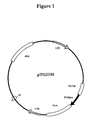
- Figure 1 shows schematically the vector pTG2350 allowing the expression of a trans-dominant variant TAT (Phe 38 ⁇ Asp) of HIV (TAT38), under the control of the retroviral 5 'LTR.
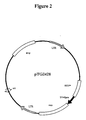
- Figure 2 illustrates the vector pTG2428 allowing the expression of the trans-dominant REV variant (Gln 74 , Leu 75 ⁇ Gly, Ser) (REV *) of HIV under the control of the retroviral 5 'LTR.
- Figure 3 shows the effects of joint expression of trans-dominant variants TAT and REV ( ⁇ ) on the evolution of infection in cells infected with HIV compared to the expression of a trans-dominant variant TAT ( ⁇ ) or that of a trans-dominant REV ( ⁇ ) variant.
- Figure 4 shows schematically the retroviral vector pTG4367 comprising the sequences coding for the trans-dominant variants TAT (Phe 38 ⁇ Asp) and REV (Gln 74 , Leu 75 , Leu 78 , Glu 79 and Leu 81 ⁇ Gly, Ser, Glu, Phe and Asp) indicated below REV **, under the control of the murine PGK promoter (PGKpro) and the retroviral 5 'LTR.
- TAT Phe 38 ⁇ Asp
- REV Gan 74 , Leu 75 , Leu 78 , Glu 79 and Leu 81 ⁇ Gly, Ser, Glu, Phe and Asp
- FIG. 5 illustrates the vector pTG8301 in which the sequences coding for the mutant REV ** and for the TAT (Gln 54 ⁇ STOP) (TAT54) - neo fusion product are placed under the control of the retroviral 5 ′ LTR (LTR) and of the murine PGK promoter (PGK pro) respectively.
- Figure 6 illustrates the vector pTG8313 in which the sequences coding for the mutant REV ** and for the TAT fusion product (Phe 38 ⁇ Asp) - neo are placed under the control of the retroviral LTR 5 '(LTR) and of the PGK promoter murine (PGK pro) respectively.
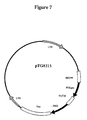
- FIG. 7 illustrates the vector pTG8315 in which the sequences coding, on the one hand, for the mutant REV ** and, on the other hand, for the products TAT38 and neo are placed under the control of the retroviral 5 'LTR (LTR) and the promoter Murine PGK (PGK pro) respectively.
- LTR retroviral 5 'LTR
- PGK pro promoter Murine PGK
- FIG. 8 illustrates the vector pTG8323 in which the sequences coding, on the one hand, for the mutant REV ** and the product Neo and, on the other hand, for the mutant TAT (Gln 54 ⁇ STOP) are placed under the control of the mini HIV LTR and of the retroviral 5 'LTR respectively.
- mutagenesis directed by synthetic oligodeoxynucleotides the protocol described by Zoller and Smith (1982, Nucleic Acids Res., 10 , 6487) is applied or a kit of commercial origin is used according to the manufacturer's recommendations.
- the filling of the protruding ends can be carried out using the Klenow fragment of the DNA polymerase of E. coli and destruction of the protruding 3 ′ ends in the presence of phage T4 DNA polymerase or by treatment with nuclease S1 followed by repair with Klenow.
- PCR techniques are known to those skilled in the art and extensively described in PCR protocols, a guide to methods and applications (Ed: Innis, Gelfand, Sninsky and White, Academic Press Inc.).
- sequence of a TAT or REV trans-dominant variant is aligned with that of the TAT or REV protein of the HIV-1 virus, Lai isolate, as disclosed by Wain-Hobson et al. (1985, Cell, 40 , 9-17).
- the numbering of amino acids in the sequence of a trans-dominant variant will be modeled on that established for the native protein, sequence as shown in the sequence identifiers NO: 1 for the protein TAT and NO: 2 for the REV protein.
- the cell lines are cultivated according to the recommendations of the provider.
- cells are transfected according to the calcium phosphate technique (Maniatis et al., Molecular cloning: a laboratory manual, 1989, Cold Spring Harbor Laboratory), except cells CEM-A3 for which electroporation is used.
- CEM-A3 cells CEM-A3 for which electroporation is used.
- others protocols for introducing a nucleic acid into a cell can also be employed.
- the DNA is purified on cesium chloride gradient.
- EXAMPLE 1 Establishment of a cell line co-expressing the variants trans-dominant TAT and REV.
- a DNA fragment comprising the DNA-copy (cDNA) corresponding to the 2 exons of the tat gene of the HIV-isolate genome Lai (Wain-Hobson et al., 1985, Cell, 40 , 9-17; Sodroski et al., 1985, Science, 229 , 74-77) is modified in order to create a Bam HI site 5 'from the initiating ATG. In addition, a Bam HI site naturally exists 3 ′ of the stop codon.
- the Bam HI fragment of 300 bp comprising the non-mutated tat cDNA is inserted into the vector M13TG130 (Kieny et al., 1983, Gene, 26, 91-99).
- the vector M13TG2306 is obtained.
- M13TG2306 is subjected to site-directed mutagenesis using a commercial kit (Amersham, RPN 1523) and using the oligonucleotide described in the sequence identifier SEQ ID NO: 3, giving M13TG2316.
- the Bam HI fragment isolated from the preceding vector is then transferred into the eukaryotic vector pSG5 (Green et al., 1988, Nucleic Acids Res., 16, 369).
- PTG2332 is obtained, in which the expression of the TAT variant (Phe 38 ⁇ Asp) is under the control of the SV40 promoter.
- the trans-activating activity is determined by transient transfection into HeLa cells (ATCC CCL2) (4x10 5 cells per box) of 1 ⁇ g of the expression vector pTG2332 with 0.5 ⁇ g of the reporter vector LTR-CAT.
- 1 ⁇ g of pHMG-Tat and 0.5 ⁇ g of LTR-CAT, which constitutes the positive trans-activation control (100%) are transfected under the same conditions.
- pHMG-Tat is the expression vector for the native TAT protein and results from the cloning of the Bam HI fragment of M13TG2306 into the Bam HI site of the pHMG vector (Mehtali et al., 1990, Gene, 91 , 179-184).
- the level of expression of the CAT gene is measured on an aliquot of cell extract corresponding to 10 to 20 ⁇ g of proteins according to the technique described in Gorman et al. (1982, Mol. Cell. Biol., 2 , 1044-1051). The protein concentration is determined using a commercial kit following the protocol indicated by the supplier. The percentage of trans-activating activity of the variant is calculated relative to the level measured with the positive control (pHMG-Tat + LTR-CAT), the latter representing 100% of trans-activating activity.
- the capacity of the TAT variant (Phe 38 ⁇ Asp) to inhibit the trans-activating function of the native TAT protein is determined by transient transfection into HeLa cells of the expression vector pTG2332 (10 ⁇ g) with the reporter vector LTR- CAT (0.5 ⁇ g) and the pHMG-Tat vector (1 ⁇ g).
- the expression of the CAT reporter gene is measured on an aliquot of extract corresponding to 10 to 20 ⁇ g of protein.
- the percentage inhibition of the native TAT protein by the TAT variant (Phe 38 ⁇ Asp) is calculated relative to the control resulting from the co-transfection of pHMG-Tat and LTR-CAT which represents 0% inhibitory activity.
- the TAT variant (Phe 38 ⁇ Asp) is an effective trans-dominant mutant since its trans-activating activity is reduced (expression of the CAT gene less than 10% compared to that measured with the native TAT protein) and since it strongly inhibits the activity of the native TAT protein (at least 90% inhibition).
- the Bam HI 300 bp fragment isolated from M13TG2316 is inserted into the Bam HI site of the retroviral vector pLXSP, generating pTG2350 (FIG. 1).
- the vector pLXSP is derived from pLXSN (Miller and Rossman, 1989, Biotechniques, 7, 980-988) after replacement of the neomycin ( neo ) gene by a gene conferring resistance to puromycin and of LTR 3 'MSV (Myelo Sarcoma Virus) by the LTR 3 'MPSV (Myelo Proliferative Sarcoma Virus).
- the vector thus obtained is subjected to a directed mutagenesis by implementing the oligonucleotide OTG4672 reported in the sequence identifier NO: 4, with the aim of substituting the residues Gln and Leu in position 74 and 75 of the native REV protein by Gly and Ser residues.
- the resulting vector is digested with Bgl II and the 390 bp fragment is inserted into the eukaryotic expression vector pSG5 to give the plasmid pTG REV.TD, on which the trans-dominant phenotype of the REV mutant (Gln 74 , Leu 75 ⁇ Gly, Ser).
- mRNAs activity on the transport of mRNAs is determined by transfection transient in the HeLa cell line of pTG REV.TD (1 ⁇ g) and of the vector reporter pTG1335 (0.5 ⁇ g).
- the latter includes the CAT gene placed under the control of the SV40 promoter and the RRE / CRS elements of the HIV1 genome inserted downstream of the CAT gene. So in the absence of a REV protein functional, the CRS element will maintain the mRNA in the nucleus and does not detect an expression product of the CAT gene. However, in the presence of a functional REV protein, this will bind to its target sequence RRE and induce the transport of mRNAs to the cytoplasm and their translation.
- the expression of the CAT gene is determined on an aliquot of cell extract under the same conditions as above.
- the percentage of activity of the REV mutant (Gln 74 Leu 75 ⁇ Gly, Ser) is calculated relative to the level measured with a positive control resulting from the co-transfection of the pHMG-Rev vector allowing the expression of the native REV protein and of the reporter vector pTG1335, representing 100% of REV activity.
- the REV variant (Gln 74 , Leu 75 ⁇ Gly, Ser) appears to be an efficient trans-dominant variant which has practically no activity in the transport of mRNAs to the cytoplasm but which is capable of dominating the native REV function.
- the 390 bp Bgl II fragment carrying the coding sequence for the trans-dominant REV mutant is subcloned into the Bam HI site of pTG5192.
- the latter derives from pLXSN, in which the 3 'LTR from MSV is replaced by the 3' LTR from MPSV.
- the retroviral vector pTG2428 (FIG. 2) is also generated carrying the neomycin selection marker which confers resistance to G418.
- this same Bgl II fragment is also inserted into the retroviral vector pLXSP, to give pTG2430 carrying the puromycin resistance gene.
- CEM-A3 cells 20 ⁇ g of pTG2350 plasmid DNA are electroporated in 2 ⁇ 10 7 CEM-A3 cells (Biorad Pulsed Gene, voltage 210V, capacitance 960 ⁇ F). The cells are then re-cultured in RPMI medium (Gibco-BRL) at 37 ° C. in the presence of 5% CO 2 . Two days later, the cells are placed in a selective medium (puromycin 0.5 ⁇ g / ml) and the resistant clones are isolated (CEM-A3 2350 cells).
- CEM-A3 line is also established of the trans-dominant REV variant by transfection of the vector pTG2430.
- the Puromycin-resistant cells are designated CEM-A3 2430.
- the cells are infected with an HIV preparation with a TCID 50 of between 1 and 1000, and preferably 50 to 100.
- the TCID 50 is determined according to the method described in Reed et al. (1938, Am. J. Hyg., 27, 493-497), on cell lines that can be infected with HIV, such as CEM-A3 cells, and corresponds to the dose at which 50% of the cells are infected and 50% are not. It is checked for each batch of HIV used. The infection is continued for 1 hour at 37 ° C.
- the middle is renewed 2 or 3 times a week.
- the spread of the virus is assessed by measurement of reverse transcriptase activity at regular intervals in the culture supernatant according to the method described in Spire et al. (1985, Lancet i, 188-189).
- the experiment is carried out on aliquots of cultures CEM-A3 2350 and CEM-A3 2430 cell phones under strictly identical. In this case there is a delay in the spread of the virus itself resulting in reduced reverse transcriptase activity for the first 20 growing days, but followed by an increase when growing is continued.
- EXAMPLE 3 Construction of retroviral vectors coexpressing variants trans-dominant TAT and REV and establishment of amphotropic lines corresponding.
- the vector M13TG2309 is subjected to a directed mutagenesis using the oligonucleotide OTG5254 carried over into the sequence identifier NO: 5, which makes it possible to modify the DNA sequence coding for the native REV protein in 5 places to create a trans-dominant REV variant (replacement of codons coding for residues Gln 74 in Gly, Leu 75 in Ser, Leu 78 in Glu, Glu 79 in Phe and Leu 81 in Asp).
- the vector M13TG4303 is obtained.
- the retroviral vector pLXSP is digested with Eco RI- Hpa I.
- An Eco RI- Pst I fragment is isolated carrying the murine PGK promoter described in Adra et al. (1987, Gene, 60 , 65-74), the Pst I site being made blunt by treatment with T4 polymerase.
- the vector thus obtained is deleted from the expression cassette for the puromycin resistance gene. To do this, after digestion with Cla I- Bam HI and treatment with the Klenow fragment of the DNA polymerase, it is religated on itself in order to generate pTG2673.
- the Bam HI fragment isolated from M13TG2316 is introduced into the vector pTG2673 previously digested with Bam HI. Then, the vector obtained is digested with Eco RI and treated with the Klenow fragment of the DNA polymerase. In parallel, M13TG4303 is digested with Bgl II, treated with Klenow then digested with Pvu II. The fragment carrying the sequence coding for the trans-dominant variant REV 5 times mutated is isolated, which is inserted into pTG2673 thus treated. PTG4367 is obtained (FIG. 4) in which the DNA sequence coding for TAT (Phe 38 ⁇ Asp) is placed under the control of the promoter PGK and that coding for trans-dominant REV under the control of the LTR 5 'of the retroviral vector.
- amphotropic line is established from a cell line, called the packaging line, into which is inserted an env gene of an amphotropic retrovirus, for example the line PA317 (Miller et al., 1986, Mol. Cell. Biol. , 6, 2895-2902), or Gp. Approx. Am. 12 (Markowitz et al., 1988, Virology 167 , 400-406).
- the vector pTG4367 and any selection vector are transfected, such as for example a vector comprising the puromycin resistance gene under the control of the SV40 promoter.
- the day after the transfection the cells are placed in a selective medium (puromycin 6 ⁇ g / ml). Resistant cells are isolated, producing amphotropic viral particles capable of infecting human cells.
- trans-dominant variant TAT in which the glutamine residue (Gln) at position 54 of the native protein is replaced by a stop codon, is described in European application EP 0614 980.
- the vector M13TG2306 (Example 1) is subjected to site-directed mutagenesis (Amersham kit) using the oligonucleotide OTG4376 (see SEQ ID NO: 3 of EP 0614 980). M13TG2330 is obtained.
- the latter is again subjected to a directed mutagenesis in order to destroy the STOP codon of the tat gene and to insert into it an arm of three alanine residues corresponding to a Not I site
- the mutagenic oligonucleotide OTG4413 (SEQ ID NO: 6) is used and M13TG2330 * is generated.
- the neo selection gene is amplified by PCR from the vector pAG60 (Colbère-Garapin et al., 1981, J. Mol. Biol., 150 , 1-14). To do this, conventional primers are used provided at their 5 ′ ends with Not I sites. The PCR fragment thus obtained is cloned into M13TG2330 * linearized by Not I to give M13TG6389. After digestion of the latter with Bam HI, the 1.2 kb fragment carrying the fusion gene coding for the TAT hybrid product followed by neo is purified. This is introduced into the Bam HI site of the retroviral vector pTG2673 to give pTG6392.
- the vector M13TG4303 is subjected to a directed mutagenesis in order to create a Bgl II site downstream of the stop codon of the trans-dominant REV, in order to facilitate the subsequent cloning steps.
- the oligonucleotide OTG 4370 (SEQ ID NO: 7) is used for this purpose. Then, the Bgl II fragment (0.38 kb) thus generated is finally inserted into the vector pTG6392. PTG8301 is obtained (FIG.
- the vector M13TG6390 results from the insertion of the Not I fragment of M13TG6389 carrying the neo gene into M13TG2316.
- a Not I site was created in the latter upstream of the STOP codon of the TAT38 mutant using the mutagenic oligonucleotide OTG4413 described above.
- the purified Bam HI fragment (1.2 kb) of M13TG6390 is introduced into the vector pTG2673 previously digested with Bam HI to give pTG8305.
- the 0.38 kb Bgl II fragment comprising the mutated rev gene is cloned into the Eco RI site (treated with Klenow) of the vector obtained in the previous step to generate pTG8313 ( Figure 6).
- the neo gene is then cloned downstream of the IRES in the form of a blunt-ended fragment isolated from pAG60.
- Those skilled in the art know how to generate a straightforward fragment from a plasmid of the prior art. It is introduced into the Acc I site (treated by Klenow) from the previous construction.
- the vectors pTG6399 and pTG6398 are obtained, comprising the bicistronic cassettes TAT (Phe 38 ⁇ Asp) - IRES - neo and TAT (Gln 54 ⁇ STOP) - IRES - neo, respectively .
- the purified Bgl II fragment (0.38 kb) of mutated M13TG4303 is treated with Klenow then inserted into the vector pTG2673 digested with Eco RI and also treated with Klenow.
- the vector thus obtained is finally digested with Xho I in order to clone the Xho I fragment obtained from pTG6399 or from pTG6398.
- the vectors pTG8315 (FIG.
- pTG8316 are thus generated in which the modified rev gene (5 mutations) is under the control of the retroviral 5 ′ LTR and the bicistronic cassette coding for TAT (Phe 38 ⁇ Asp) or TAT (Gln 54 ⁇ STOP) and the product of the neo gene, is under the control of the PGK promoter.
- the Bgl II fragment (0.38 kb) carrying the trans-dominant rev gene is purified from mutated M13TG4303 and subcloned into the Bam HI site of p polyIII-I *.
- the resulting vector is linearized with Sma I and the Eco RI ° -Nco I ° fragment carrying the IRES is introduced therein.
- the neo gene is inserted into the Eco RV site of the vector thus generated in the form of a blunt-ended fragment described above, so as to generate a bicistronic cassette containing the sequences coding for REV (Gln 74 , Leu 75 , Leu 78 , Glu 79 , Leu 81 ⁇ Gly, Ser, Glu, Phe, Asp) and the product of the neo gene whose translation is reinitiated by IRES EMCV.
- This cassette is isolated by Xho I- Xba I digestion followed by treatment with Klenow and inserted into the Bal I site of the vector pTG4347.
- the latter results from the cloning into p polyIII-I * of a fragment comprising the 3 ′ part of the 5 ′ LTR of HIV (Lai isolate), hereinafter designated “mini-LTR”, and the polyadenylation signal of the SV40 virus .
- mini LTR corresponds to the Sca I- Hind III fragment of the 5 'HIV LTR and has the elements ensuring transcription and trans-activation by the native TAT protein.
- the vector thus generated is named pTG8314.
- the Bam HI fragments of M13TG2316 and M13TG2330 comprising the sequences coding for the trans-dominant variants TAT (Phe 38 ⁇ Asp) and TAT (Gln 54 ⁇ STOP) respectively, are inserted into the vector pTG2682, which corresponds to pTG2673 lacking of the PGK promoters.
- the Not I fragment isolated from pTG8314, treated with Klenow is finally introduced into the Xho I site (made blunt by treatment with Klenow) of one and the other of the preceding constructions originating from pTG2682.
- Vectors are obtained in which the respective trans-dominant tat genes are constitutively expressed under the control of the retroviral 5 ′ LTR while the trans-dominant rev gene is inducibly expressed by the native HIV TAT protein under the control of the mini HIV LTR.
- Clones are preferably selected in which the two expression cassettes are in opposite orientation with respect to each other ( Figure 8; pTG8323).
- the trans-dominant activity of the TAT and REV products produced by each of the constructions of Example 3 can be evaluated as above, by co-transfection transient of human cells (e.g. A549 cells ATCC CCL185) with a reporter vector (LTR-CAT dependent on TAT or REV-dependent pTG1335) and a TAT protein expression vector or Wild REVs (pHMG-Tat or pHMG-Rev).
- human cells e.g. A549 cells ATCC CCL185
- a reporter vector LTR-CAT dependent on TAT or REV-dependent pTG1335
- TAT protein expression vector or Wild REVs pHMG-Tat or pHMG-Rev
- Stocks of infectious viral particles can be prepared, each comprising the constructs of Example 3 in a conventional manner. Briefly, the retroviral vectors are transfected into the GP + E 86 ecotropic packaging cells (Markowitz et al., 1988, J. Virol., 62 , 1120-1124). After selection of the cells resistant to neomycin, the culture supernatants are harvested to transduce an amphotropic packaging line, for example the line PA317. The lines thus obtained will constitute the cells producing infectious viral particles, which can be used in the context of anti-AIDS gene therapy. Their capacity to induce resistance to HIV infection can be evaluated in vivo and in vitro as indicated in Example 2.
Landscapes
- Life Sciences & Earth Sciences (AREA)
- Health & Medical Sciences (AREA)
- Genetics & Genomics (AREA)
- Chemical & Material Sciences (AREA)
- Organic Chemistry (AREA)
- Engineering & Computer Science (AREA)
- Wood Science & Technology (AREA)
- Biochemistry (AREA)
- Biotechnology (AREA)
- General Engineering & Computer Science (AREA)
- Molecular Biology (AREA)
- Virology (AREA)
- Bioinformatics & Cheminformatics (AREA)
- General Health & Medical Sciences (AREA)
- Biomedical Technology (AREA)
- Zoology (AREA)
- Biophysics (AREA)
- Physics & Mathematics (AREA)
- Microbiology (AREA)
- Plant Pathology (AREA)
- Gastroenterology & Hepatology (AREA)
- Medicinal Chemistry (AREA)
- Proteomics, Peptides & Aminoacids (AREA)
- Medicines That Contain Protein Lipid Enzymes And Other Medicines (AREA)
- Micro-Organisms Or Cultivation Processes Thereof (AREA)
- Medicines Containing Material From Animals Or Micro-Organisms (AREA)
- Pharmaceuticals Containing Other Organic And Inorganic Compounds (AREA)
- Acyclic And Carbocyclic Compounds In Medicinal Compositions (AREA)
Description
- on effectue un prélèvement de moelle osseuse ou sanguin d'un patient ayant besoin d'un tel traitement ;
- on cultive les cellules prélevées (cellules souches ou lymphocytes) selon les techniques de l'art ;
- on transfecte un vecteur selon l'invention, dans lequel sont insérées les séquences codant pour un premier et un deuxième variant trans-dominant. Cependant, il est également possible de co-transfecter ou, alternativement, de transfecter de manière séparée et étalée dans le temps, chacun des vecteurs permettant l'expression de l'un ou l'autre des variants trans-dominants. On effectue éventuellement une étape supplémentaire de culture en milieu sélectif ; et
- on réinjecte les cellules ainsi modifiées dans le patient.







Claims (17)
- Une composition comprenant au moins :(a) un premier variant trans-dominant de la protéine TAT du virus VIH ; et(b) un deuxième variant trans-dominant de la protéine REV du virus VIH, caractérisée en ce que le variant trans-dominant de la protéine REV a la séquence telle que montrée dans l'identificateur de séquence NO : 2 débutant à l'acide aminé +1 et se terminant à l'acide aminé +116 dans laquelle le résidu glutamine en position +74 est remplacé par un résidu glycine et le résidu leucine en position +75 est remplacé par un résidu sérine.
- Une composition selon la revendication 1, caractérisée en ce que le variant trans-dominant de la protéine REV a en outre le résidu leucine en position +78 remplacé par un résidu acide glutamique, le résidu acide glutamique en position +79 remplacé par un résidu phenylalanine, et le résidu leucine en position +81 remplacé par un résidu acide aspartique.
- Une composition selon la revendication 1 ou 2, caractérisée en ce que le variant trans-dominant de la protéine TAT a la séquence telle que montrée dans l'identificateur de séquence NO: 1 débutant à l'acide aminé +1 et se terminant à l'acide aminé +86 dans laquelle :(1) le résidu phénylalanine en position +38 est remplacé par un résidu acide aspartique ;(2) le résidu thréonine en position +40 est remplacé par un résidu alanine ;(3) le résidu lysine en position +41 est remplacé par un résidu acide glutamique ;(4) le résidu isoleucine en position +45 est remplacé par un résidu serine ; et/ou(5) le résidu tyrosine en position +47 est remplacé par un résidu arginine.
- Une composition selon l'une des revendications 1 à 3, comme produit de combinaison pour une utilisation simultanée, séparée ou étalée dans le temps destinée au traitement ou à la prévention des infections dues au VIH.
- Un vecteur recombinant comprenant :(a) une première séquence d'ADN codant pour un variant trans-dominant de la protéine TAT du virus VIH, placée sous le contrôle des éléments nécessaires à son expression constitutive ; et(b) une deuxième séquence d'ADN codant pour un variant trans-dominant de la protéine REV du virus VIH, ayant la séquence telle que montrée dans l'identificateur de séquence NO : 2 débutant à l'acide aminé +1 et se terminant à l'acide aminé +116 dans laquelle le résidu glutamine en position +74 est remplacé par un résidu glycine et le résidu leucine en position +75 est remplacé par un résidu sérine, placée sous le contrôle des éléments nécessaires à son expression constitutive
- Un vecteur recombinant selon la revendication 5, caractérisé en ce que le variant trans-dominant de la protéine REV a en outre le résidu leucine en position +78 remplacé par un résidu acide glutamique, le résidu acide glutamique en position +79 remplacé par un résidu phenylalanine, et le résidu leucine en position +81 remplacé par un résidu acide aspartique.
- Un vecteur recombinant selon l'une des revendications 5 et 6, caractérisé en ce que le variant trans-dominant de la protéine TAT a la séquence telle que montrée dans l'identificateur de séquence NO : 1 débutant à l'acide aminé +1 et se terminant à l'acide aminé +86 dans laquelle :(1) le résidu phénylalanine en position +38 est remplacé par un résidu acide aspartique ;(2) le résidu thréonine en position +40 est remplacé par un résidu alanine ;(3) le résidu lysine en position +41 est remplacé par un résidu acide glutamique ;(4) le résidu isoleucine en position +45 est remplacé par un résidu serine ; et/ou(5) le résidu tyrosine en position +47 est remplacé par un résidu arginine.
- Un vecteur recombinant selon l'une des revendications 5 à 7, caractérisé en ce que les éléments nécessaire à l'expression constitutive sont le promoteur PGK ou le LTR du virus MoMuLV.
- Un vecteur recombinant selon l'une des revendications 5 à 8, caractérisé en ce qu'il dérive d'un virus sélectionné parmi les rétrovirus, adénovirus et virus associé à l'adénovirus.
- Une cellule eucaryote dans le génome de laquelle sont insérées :(a) une première séquence d'ADN codant pour un variant trans-dominant de la protéine TAT du virus VIH, placée sous le contrôle des éléments nécessaires à son expression constitutive ; et(b) une deuxième séquence d'ADN codant pour un variant trans-dominant de la protéine REV du virus VIH, ayant la séquence telle que montrée dans l'identificateur de séquence NO : 2 débutant à l'acide aminé +1 et se terminant à l'acide aminé +116 dans laquelle le résidu glutamine en position +74 est remplacé par un résidu glycine et le résidu leucine en position +75 est remplacé par un résidu sérine, placée sous le contrôle des éléments nécessaires à son expression constitutive.
- Une cellule eucaryote selon la revendication 10, caractérisée en ce que le variant trans-dominant de la protéine REV a en outre le résidu leucine en position +78 remplacé par un résidu acide glutamique, le résidu acide glutamique en position +79 remplacé par un résidu phenylalanine, et le résidu leucine en position +81 remplacé par un résidu acide aspartique.
- Une cellule eucaryote selon l'une des revendications 10 à 11, caractérisée en ce que le variant trans-dominant de la protéine TAT a la séquence telle que montrée dans l'identificateur de séquence NO : 1 débutant à l'acide aminé +1 et se terminant à l'acide aminé +86 dans laquelle :(1) le résidu phénylalanine en position +38 est remplacé par un résidu acide aspartique ;(2) le résidu thréonine en position +40 est remplacé par un résidu alanine ;(3) le résidu lysine en position +41 est remplacé par un résidu acide glutamique ;(4) le résidu isoleucine en position +45 est remplacé par un résidu serine ; et/ou(5) le résidu tyrosine en position +47 est remplacé par un résidu arginine.
- Une cellule eucaryote selon l'une des revendications 10 à 12, caractérisé en ce que les éléments nécessaires à l'expression constitutive sont le promoteur PGK ou le LTR du virus MoMuLV.
- Usage d'un vecteur recombinant selon l'une des revendications 5 à 9 ou d'une cellule selon l'une des revendications 10 à 13 pour la préparation d'un médicament destiné au traitement ou à la prévention des infections virales dues au VIH.
- Une composition selon l'une des revendications 1 à 3 qui comprend en outre un véhicule acceptable d'un point de vue pharmaceutique.
- Une composition pharmaceutique comprenant un vecteur recombinant selon l'une des revendications 5 à 9 ou une cellule selon l'une des revendications 10 à 13 en association avec un véhicule acceptable d'un point de vue pharmaceutique.
- Un kit comprenantavec des instructions pour leur administration concomitante ou séquentielle.(a) un premier variant trans-dominant d'une protéine TAT du virus VIH, et(b) un deuxième variant trans-dominant de la protéine REV du virus VIH, caractérisé en ce que le variant trans-dominant de la protéine REV a la séquence telle que montrée dans l'identificateur de séquence NO : 2 débutant à l'acide aminé +1 et se terminant à l'acide aminé +116 dans laquelle le résidu glutamine en position +74 est remplacé par un résidu glycine et le résidu leucine en position +75 est remplacé par un résidu sérine ;
Applications Claiming Priority (3)
| Application Number | Priority Date | Filing Date | Title |
|---|---|---|---|
| FR9314914 | 1993-12-13 | ||
| FR9314914A FR2713651B1 (fr) | 1993-12-13 | 1993-12-13 | Nouvelle composition pour un effet antiviral. |
| PCT/FR1994/001457 WO1995016780A1 (fr) | 1993-12-13 | 1994-12-13 | Composition de variants transdominants de proteines virales pour un effet antiviral |
Publications (3)
| Publication Number | Publication Date |
|---|---|
| EP0682708A1 EP0682708A1 (fr) | 1995-11-22 |
| EP0682708B1 true EP0682708B1 (fr) | 2004-09-22 |
| EP0682708B9 EP0682708B9 (fr) | 2005-03-02 |
Family
ID=9453843
Family Applications (1)
| Application Number | Title | Priority Date | Filing Date |
|---|---|---|---|
| EP95903829A Expired - Lifetime EP0682708B9 (fr) | 1993-12-13 | 1994-12-13 | Composition de variants transdominants de proteines virales pour un effet antiviral |
Country Status (8)
| Country | Link |
|---|---|
| EP (1) | EP0682708B9 (fr) |
| AT (1) | ATE277186T1 (fr) |
| AU (1) | AU685560B2 (fr) |
| CA (1) | CA2155844A1 (fr) |
| DE (1) | DE69434019T2 (fr) |
| ES (1) | ES2229232T3 (fr) |
| FR (1) | FR2713651B1 (fr) |
| WO (1) | WO1995016780A1 (fr) |
Families Citing this family (2)
| Publication number | Priority date | Publication date | Assignee | Title |
|---|---|---|---|---|
| JP2002528128A (ja) | 1998-11-02 | 2002-09-03 | ユニバーシティ オブ サスカチュワン | 組換えアデノウイルスベクターの増殖のためのアデノウイルス必須機能を発現するウシ細胞 |
| FR2982277B1 (fr) | 2011-11-08 | 2015-08-21 | Agronomique Inst Nat Rech | Cassette d'expression inductible et ses utilisations |
Family Cites Families (1)
| Publication number | Priority date | Publication date | Assignee | Title |
|---|---|---|---|---|
| DK0406557T3 (da) * | 1989-05-25 | 2002-02-11 | Univ Duke | Multivalent repressor af genfunktion |
-
1993
- 1993-12-13 FR FR9314914A patent/FR2713651B1/fr not_active Expired - Fee Related
-
1994
- 1994-12-13 AU AU12750/95A patent/AU685560B2/en not_active Ceased
- 1994-12-13 WO PCT/FR1994/001457 patent/WO1995016780A1/fr not_active Ceased
- 1994-12-13 AT AT95903829T patent/ATE277186T1/de not_active IP Right Cessation
- 1994-12-13 EP EP95903829A patent/EP0682708B9/fr not_active Expired - Lifetime
- 1994-12-13 ES ES95903829T patent/ES2229232T3/es not_active Expired - Lifetime
- 1994-12-13 DE DE69434019T patent/DE69434019T2/de not_active Expired - Fee Related
- 1994-12-13 CA CA002155844A patent/CA2155844A1/fr not_active Abandoned
Non-Patent Citations (2)
| Title |
|---|
| CELL, vol. 58, pages 215-223, 1992, GREEN M. ET AL. "Mutational analysis of HIV-1 Tat minimal domain peptides: identification of trans-dominant mutants that suppress HIV-LTR-driven gene expression" * |
| HUMAN GENE THERAPY, vol. 4, 1993, pages 625-634, LIEM S.E. ET AL. "The development and testing of retroviral vectors expressing trans-dominant mutants of HIV-1 proteins to confer anti-HIV-1 resistance" * |
Also Published As
| Publication number | Publication date |
|---|---|
| ATE277186T1 (de) | 2004-10-15 |
| EP0682708B9 (fr) | 2005-03-02 |
| EP0682708A1 (fr) | 1995-11-22 |
| DE69434019D1 (de) | 2004-10-28 |
| FR2713651B1 (fr) | 1996-04-19 |
| DE69434019T2 (de) | 2005-09-15 |
| WO1995016780A1 (fr) | 1995-06-22 |
| ES2229232T3 (es) | 2005-04-16 |
| AU1275095A (en) | 1995-07-03 |
| AU685560B2 (en) | 1998-01-22 |
| CA2155844A1 (fr) | 1995-06-22 |
| FR2713651A1 (fr) | 1995-06-16 |
Similar Documents
| Publication | Publication Date | Title |
|---|---|---|
| EP1071804B1 (fr) | Utilisation de sequences d'adn de structure triplex pour le transfert de sequences nucleotidiques | |
| Fomsgaard et al. | A highly divergent proviral DNA clone of SIV from a distinct species of African green monkey | |
| JP4627950B2 (ja) | 変異HIVgag/pol、SIVgagおよびSIVenv遺伝子を持つ分子クローン | |
| EP0682708B1 (fr) | Composition de variants transdominants de proteines virales pour un effet antiviral | |
| FR2713657A1 (fr) | Nouveaux vecteurs pour le traitement du sida. | |
| US5981258A (en) | Composition of trans-dominant variants of viral proteins for obtaining an antiviral effect | |
| CA2254819A1 (fr) | Inhibition de la replication du vih-1 au moyen de l'expression d'arn antisens | |
| US6228369B1 (en) | Composition of trans-dominant variants of viral proteins for obtaining an anti-viral effect | |
| EP0796338A1 (fr) | Lignees cellulaires d'encapsidation pour la transcomplementation de vecteurs retroviraux defectifs | |
| AU2003271326B2 (en) | Use of triplex structure DNA sequences for transferring nucleotide sequences | |
| AU2007216712B2 (en) | Use of Triplex Structure DNA Sequences for Transferring Nucleotide Sequences | |
| JP2016067306A (ja) | ヒト免疫不全ウイルスの感染防御方法 | |
| WO1999000490A2 (fr) | Vaccin comportant le virus attenue de l'immunodeficience humaine | |
| Galla | Retroviral particle-mediated mRNA transfer | |
| Abravaya et al. | Abimiku AG; Franchini G; Aldrich K; Myagkikh M; Markham P; Gard E; Gallo RC; Robert-Guroff M Humoral and cellular immune responses in rhesus macaques infected with human immunodeficiency virus type 2. AIDS Res Hum Retroviruses 11: 383-93 (1995) | |
| HK1034283B (en) | Use of triplex structure dna sequences for transferring nucleotide sequences |
Legal Events
| Date | Code | Title | Description |
|---|---|---|---|
| PUAI | Public reference made under article 153(3) epc to a published international application that has entered the european phase |
Free format text: ORIGINAL CODE: 0009012 |
|
| 17P | Request for examination filed |
Effective date: 19950911 |
|
| AK | Designated contracting states |
Kind code of ref document: A1 Designated state(s): AT BE CH DE DK ES FR GB GR IE IT LI LU MC NL PT SE |
|
| 17Q | First examination report despatched |
Effective date: 20011114 |
|
| GRAP | Despatch of communication of intention to grant a patent |
Free format text: ORIGINAL CODE: EPIDOSNIGR1 |
|
| GRAS | Grant fee paid |
Free format text: ORIGINAL CODE: EPIDOSNIGR3 |
|
| GRAA | (expected) grant |
Free format text: ORIGINAL CODE: 0009210 |
|
| RAP1 | Party data changed (applicant data changed or rights of an application transferred) |
Owner name: TRANSGENE S.A. |
|
| AK | Designated contracting states |
Kind code of ref document: B1 Designated state(s): AT BE CH DE DK ES FR GB GR IE IT LI LU MC NL PT SE |
|
| PG25 | Lapsed in a contracting state [announced via postgrant information from national office to epo] |
Ref country code: AT Free format text: LAPSE BECAUSE OF FAILURE TO SUBMIT A TRANSLATION OF THE DESCRIPTION OR TO PAY THE FEE WITHIN THE PRESCRIBED TIME-LIMIT Effective date: 20040922 |
|
| REG | Reference to a national code |
Ref country code: GB Ref legal event code: FG4D Free format text: NOT ENGLISH |
|
| REG | Reference to a national code |
Ref country code: CH Ref legal event code: EP |
|
| REG | Reference to a national code |
Ref country code: IE Ref legal event code: FG4D Free format text: FRENCH |
|
| REF | Corresponds to: |
Ref document number: 69434019 Country of ref document: DE Date of ref document: 20041028 Kind code of ref document: P |
|
| REG | Reference to a national code |
Ref country code: CH Ref legal event code: NV Representative=s name: MICHELI & CIE INGENIEURS-CONSEILS |
|
| PG25 | Lapsed in a contracting state [announced via postgrant information from national office to epo] |
Ref country code: GR Free format text: LAPSE BECAUSE OF FAILURE TO SUBMIT A TRANSLATION OF THE DESCRIPTION OR TO PAY THE FEE WITHIN THE PRESCRIBED TIME-LIMIT Effective date: 20041222 Ref country code: DK Free format text: LAPSE BECAUSE OF FAILURE TO SUBMIT A TRANSLATION OF THE DESCRIPTION OR TO PAY THE FEE WITHIN THE PRESCRIBED TIME-LIMIT Effective date: 20041222 |
|
| PG25 | Lapsed in a contracting state [announced via postgrant information from national office to epo] |
Ref country code: MC Free format text: LAPSE BECAUSE OF NON-PAYMENT OF DUE FEES Effective date: 20041231 |
|
| REG | Reference to a national code |
Ref country code: SE Ref legal event code: TRGR |
|
| GBT | Gb: translation of ep patent filed (gb section 77(6)(a)/1977) | ||
| REG | Reference to a national code |
Ref country code: ES Ref legal event code: FG2A Ref document number: 2229232 Country of ref document: ES Kind code of ref document: T3 |
|
| PLBE | No opposition filed within time limit |
Free format text: ORIGINAL CODE: 0009261 |
|
| STAA | Information on the status of an ep patent application or granted ep patent |
Free format text: STATUS: NO OPPOSITION FILED WITHIN TIME LIMIT |
|
| 26N | No opposition filed |
Effective date: 20050623 |
|
| PGFP | Annual fee paid to national office [announced via postgrant information from national office to epo] |
Ref country code: IE Payment date: 20061115 Year of fee payment: 13 |
|
| PGFP | Annual fee paid to national office [announced via postgrant information from national office to epo] |
Ref country code: ES Payment date: 20061117 Year of fee payment: 13 |
|
| PGFP | Annual fee paid to national office [announced via postgrant information from national office to epo] |
Ref country code: CH Payment date: 20061127 Year of fee payment: 13 |
|
| PGFP | Annual fee paid to national office [announced via postgrant information from national office to epo] |
Ref country code: BE Payment date: 20061128 Year of fee payment: 13 |
|
| PGFP | Annual fee paid to national office [announced via postgrant information from national office to epo] |
Ref country code: LU Payment date: 20061130 Year of fee payment: 13 |
|
| PGFP | Annual fee paid to national office [announced via postgrant information from national office to epo] |
Ref country code: SE Payment date: 20061204 Year of fee payment: 13 |
|
| PGFP | Annual fee paid to national office [announced via postgrant information from national office to epo] |
Ref country code: GB Payment date: 20061212 Year of fee payment: 13 |
|
| PGFP | Annual fee paid to national office [announced via postgrant information from national office to epo] |
Ref country code: FR Payment date: 20061213 Year of fee payment: 13 |
|
| PGFP | Annual fee paid to national office [announced via postgrant information from national office to epo] |
Ref country code: NL Payment date: 20061229 Year of fee payment: 13 Ref country code: DE Payment date: 20061229 Year of fee payment: 13 |
|
| PGFP | Annual fee paid to national office [announced via postgrant information from national office to epo] |
Ref country code: IT Payment date: 20061231 Year of fee payment: 13 |
|
| PG25 | Lapsed in a contracting state [announced via postgrant information from national office to epo] |
Ref country code: PT Free format text: LAPSE BECAUSE OF NON-PAYMENT OF DUE FEES Effective date: 20050222 |
|
| BERE | Be: lapsed |
Owner name: S.A. *TRANSGENE Effective date: 20071231 |
|
| REG | Reference to a national code |
Ref country code: CH Ref legal event code: PL |
|
| EUG | Se: european patent has lapsed | ||
| GBPC | Gb: european patent ceased through non-payment of renewal fee |
Effective date: 20071213 |
|
| NLV4 | Nl: lapsed or anulled due to non-payment of the annual fee |
Effective date: 20080701 |
|
| REG | Reference to a national code |
Ref country code: IE Ref legal event code: MM4A |
|
| PG25 | Lapsed in a contracting state [announced via postgrant information from national office to epo] |
Ref country code: BE Free format text: LAPSE BECAUSE OF NON-PAYMENT OF DUE FEES Effective date: 20071231 |
|
| PG25 | Lapsed in a contracting state [announced via postgrant information from national office to epo] |
Ref country code: DE Free format text: LAPSE BECAUSE OF NON-PAYMENT OF DUE FEES Effective date: 20080701 Ref country code: CH Free format text: LAPSE BECAUSE OF NON-PAYMENT OF DUE FEES Effective date: 20071231 Ref country code: SE Free format text: LAPSE BECAUSE OF NON-PAYMENT OF DUE FEES Effective date: 20071214 Ref country code: LI Free format text: LAPSE BECAUSE OF NON-PAYMENT OF DUE FEES Effective date: 20071231 Ref country code: IE Free format text: LAPSE BECAUSE OF NON-PAYMENT OF DUE FEES Effective date: 20071213 |
|
| REG | Reference to a national code |
Ref country code: FR Ref legal event code: ST Effective date: 20081020 |
|
| PG25 | Lapsed in a contracting state [announced via postgrant information from national office to epo] |
Ref country code: NL Free format text: LAPSE BECAUSE OF NON-PAYMENT OF DUE FEES Effective date: 20080701 |
|
| PG25 | Lapsed in a contracting state [announced via postgrant information from national office to epo] |
Ref country code: GB Free format text: LAPSE BECAUSE OF NON-PAYMENT OF DUE FEES Effective date: 20071213 |
|
| REG | Reference to a national code |
Ref country code: ES Ref legal event code: FD2A Effective date: 20071214 |
|
| PG25 | Lapsed in a contracting state [announced via postgrant information from national office to epo] |
Ref country code: FR Free format text: LAPSE BECAUSE OF NON-PAYMENT OF DUE FEES Effective date: 20071231 Ref country code: ES Free format text: LAPSE BECAUSE OF NON-PAYMENT OF DUE FEES Effective date: 20071214 |
|
| PG25 | Lapsed in a contracting state [announced via postgrant information from national office to epo] |
Ref country code: LU Free format text: LAPSE BECAUSE OF NON-PAYMENT OF DUE FEES Effective date: 20071213 Ref country code: IT Free format text: LAPSE BECAUSE OF NON-PAYMENT OF DUE FEES Effective date: 20071213 |