EP0683785B1 - Utilisation d'esters d'acide phosphonique aminovinylique comme agents photoprotecteurs et stabilisants pour matieres organiques - Google Patents
Utilisation d'esters d'acide phosphonique aminovinylique comme agents photoprotecteurs et stabilisants pour matieres organiques Download PDFInfo
- Publication number
- EP0683785B1 EP0683785B1 EP94905731A EP94905731A EP0683785B1 EP 0683785 B1 EP0683785 B1 EP 0683785B1 EP 94905731 A EP94905731 A EP 94905731A EP 94905731 A EP94905731 A EP 94905731A EP 0683785 B1 EP0683785 B1 EP 0683785B1
- Authority
- EP
- European Patent Office
- Prior art keywords
- groups
- formula
- alkyl
- aminovinylphosphonic
- ester
- Prior art date
- Legal status (The legal status is an assumption and is not a legal conclusion. Google has not performed a legal analysis and makes no representation as to the accuracy of the status listed.)
- Expired - Lifetime
Links
- 239000011368 organic material Substances 0.000 title claims abstract description 17
- 239000003381 stabilizer Substances 0.000 title claims description 13
- AMRYCYKIMYBRAO-UHFFFAOYSA-N 2-aminoethenylphosphonic acid Chemical class NC=CP(O)(O)=O AMRYCYKIMYBRAO-UHFFFAOYSA-N 0.000 title description 4
- 239000003795 chemical substances by application Substances 0.000 title description 2
- 230000003711 photoprotective effect Effects 0.000 title 1
- -1 C2-C6-alkanoyl Chemical group 0.000 claims abstract description 58
- 150000002148 esters Chemical class 0.000 claims abstract description 21
- 125000001997 phenyl group Chemical group [H]C1=C([H])C([H])=C(*)C([H])=C1[H] 0.000 claims abstract description 19
- 229910052760 oxygen Inorganic materials 0.000 claims abstract description 17
- 239000001301 oxygen Substances 0.000 claims abstract description 17
- QVGXLLKOCUKJST-UHFFFAOYSA-N atomic oxygen Chemical group [O] QVGXLLKOCUKJST-UHFFFAOYSA-N 0.000 claims abstract description 15
- 125000004093 cyano group Chemical group *C#N 0.000 claims abstract description 14
- 229910052739 hydrogen Inorganic materials 0.000 claims abstract description 13
- 239000001257 hydrogen Substances 0.000 claims abstract description 13
- 125000000623 heterocyclic group Chemical group 0.000 claims abstract description 9
- 125000004642 (C1-C12) alkoxy group Chemical group 0.000 claims abstract description 7
- 125000003944 tolyl group Chemical group 0.000 claims abstract description 7
- 125000002485 formyl group Chemical group [H]C(*)=O 0.000 claims abstract description 6
- 150000002431 hydrogen Chemical group 0.000 claims abstract description 6
- 125000001797 benzyl group Chemical group [H]C1=C([H])C([H])=C(C([H])=C1[H])C([H])([H])* 0.000 claims abstract description 5
- 125000000954 2-hydroxyethyl group Chemical group [H]C([*])([H])C([H])([H])O[H] 0.000 claims abstract description 4
- 125000004169 (C1-C6) alkyl group Chemical group 0.000 claims abstract 5
- 125000004400 (C1-C12) alkyl group Chemical group 0.000 claims abstract 4
- 125000003837 (C1-C20) alkyl group Chemical group 0.000 claims abstract 2
- 125000004435 hydrogen atom Chemical group [H]* 0.000 claims abstract 2
- 229920003023 plastic Polymers 0.000 claims description 15
- 239000004033 plastic Substances 0.000 claims description 15
- 239000004611 light stabiliser Substances 0.000 claims description 11
- IJGRMHOSHXDMSA-UHFFFAOYSA-N Atomic nitrogen Chemical compound N#N IJGRMHOSHXDMSA-UHFFFAOYSA-N 0.000 claims description 8
- UFHFLCQGNIYNRP-UHFFFAOYSA-N Hydrogen Chemical compound [H][H] UFHFLCQGNIYNRP-UHFFFAOYSA-N 0.000 claims description 8
- 238000000576 coating method Methods 0.000 claims description 8
- 125000002887 hydroxy group Chemical group [H]O* 0.000 claims description 8
- NINIDFKCEFEMDL-UHFFFAOYSA-N Sulfur Chemical compound [S] NINIDFKCEFEMDL-UHFFFAOYSA-N 0.000 claims description 7
- 229910052717 sulfur Inorganic materials 0.000 claims description 6
- 239000011593 sulfur Substances 0.000 claims description 6
- 125000000229 (C1-C4)alkoxy group Chemical group 0.000 claims description 5
- 125000005843 halogen group Chemical group 0.000 claims description 5
- 229910052757 nitrogen Inorganic materials 0.000 claims description 5
- 125000001309 chloro group Chemical group Cl* 0.000 claims description 4
- 239000011248 coating agent Substances 0.000 claims description 4
- 238000000034 method Methods 0.000 claims description 4
- 125000005842 heteroatom Chemical group 0.000 claims description 3
- 125000004433 nitrogen atom Chemical group N* 0.000 claims description 3
- 230000000087 stabilizing effect Effects 0.000 claims description 3
- 125000000951 phenoxy group Chemical group [H]C1=C([H])C([H])=C(O*)C([H])=C1[H] 0.000 claims description 2
- 125000004178 (C1-C4) alkyl group Chemical group 0.000 claims 2
- 125000004177 diethyl group Chemical group [H]C([H])([H])C([H])([H])* 0.000 claims 1
- ZTWTYVWXUKTLCP-UHFFFAOYSA-L ethenyl-dioxido-oxo-$l^{5}-phosphane Chemical compound [O-]P([O-])(=O)C=C ZTWTYVWXUKTLCP-UHFFFAOYSA-L 0.000 claims 1
- 239000012760 heat stabilizer Substances 0.000 abstract 1
- 150000001875 compounds Chemical class 0.000 description 28
- LFQSCWFLJHTTHZ-UHFFFAOYSA-N Ethanol Chemical compound CCO LFQSCWFLJHTTHZ-UHFFFAOYSA-N 0.000 description 13
- 239000000203 mixture Substances 0.000 description 10
- 239000003973 paint Substances 0.000 description 8
- 229920000642 polymer Polymers 0.000 description 8
- 150000003254 radicals Chemical class 0.000 description 8
- 239000004676 acrylonitrile butadiene styrene Substances 0.000 description 6
- 238000002844 melting Methods 0.000 description 6
- 230000008018 melting Effects 0.000 description 6
- XECAHXYUAAWDEL-UHFFFAOYSA-N acrylonitrile butadiene styrene Chemical compound C=CC=C.C=CC#N.C=CC1=CC=CC=C1 XECAHXYUAAWDEL-UHFFFAOYSA-N 0.000 description 5
- 229920000122 acrylonitrile butadiene styrene Polymers 0.000 description 5
- 150000001412 amines Chemical class 0.000 description 5
- 239000003963 antioxidant agent Substances 0.000 description 5
- 229920001577 copolymer Polymers 0.000 description 5
- 239000013078 crystal Substances 0.000 description 5
- 239000004922 lacquer Substances 0.000 description 5
- 238000000465 moulding Methods 0.000 description 5
- FTVFPPFZRRKJIH-UHFFFAOYSA-N 2,2,6,6-tetramethylpiperidin-4-amine Chemical compound CC1(C)CC(N)CC(C)(C)N1 FTVFPPFZRRKJIH-UHFFFAOYSA-N 0.000 description 4
- KYQCOXFCLRTKLS-UHFFFAOYSA-N Pyrazine Chemical compound C1=CN=CC=N1 KYQCOXFCLRTKLS-UHFFFAOYSA-N 0.000 description 4
- JUJWROOIHBZHMG-UHFFFAOYSA-N Pyridine Chemical compound C1=CC=NC=C1 JUJWROOIHBZHMG-UHFFFAOYSA-N 0.000 description 4
- 125000004453 alkoxycarbonyl group Chemical group 0.000 description 4
- 150000001993 dienes Chemical class 0.000 description 4
- 239000000463 material Substances 0.000 description 4
- 238000004611 spectroscopical analysis Methods 0.000 description 4
- 239000000126 substance Substances 0.000 description 4
- 125000001424 substituent group Chemical group 0.000 description 4
- NIXOWILDQLNWCW-UHFFFAOYSA-N 2-Propenoic acid Natural products OC(=O)C=C NIXOWILDQLNWCW-UHFFFAOYSA-N 0.000 description 3
- 125000006539 C12 alkyl group Chemical group [H]C([H])([H])C([H])([H])C([H])([H])C([H])([H])C([H])([H])C([H])([H])C([H])([H])C([H])([H])C([H])([H])C([H])([H])C([H])([H])C([H])([H])* 0.000 description 3
- 0 CC1CC(C)(C)N(*)C(C)(C)C1 Chemical compound CC1CC(C)(C)N(*)C(C)(C)C1 0.000 description 3
- RTZKZFJDLAIYFH-UHFFFAOYSA-N Diethyl ether Chemical compound CCOCC RTZKZFJDLAIYFH-UHFFFAOYSA-N 0.000 description 3
- LYCAIKOWRPUZTN-UHFFFAOYSA-N Ethylene glycol Chemical compound OCCO LYCAIKOWRPUZTN-UHFFFAOYSA-N 0.000 description 3
- SIKJAQJRHWYJAI-UHFFFAOYSA-N Indole Chemical compound C1=CC=C2NC=CC2=C1 SIKJAQJRHWYJAI-UHFFFAOYSA-N 0.000 description 3
- OAICVXFJPJFONN-UHFFFAOYSA-N Phosphorus Chemical compound [P] OAICVXFJPJFONN-UHFFFAOYSA-N 0.000 description 3
- 239000004952 Polyamide Substances 0.000 description 3
- RWRDLPDLKQPQOW-UHFFFAOYSA-N Pyrrolidine Chemical compound C1CCNC1 RWRDLPDLKQPQOW-UHFFFAOYSA-N 0.000 description 3
- 125000000217 alkyl group Chemical group 0.000 description 3
- 125000003118 aryl group Chemical group 0.000 description 3
- 239000007859 condensation product Substances 0.000 description 3
- MTHSVFCYNBDYFN-UHFFFAOYSA-N diethylene glycol Chemical compound OCCOCCO MTHSVFCYNBDYFN-UHFFFAOYSA-N 0.000 description 3
- RAXXELZNTBOGNW-UHFFFAOYSA-N imidazole Natural products C1=CNC=N1 RAXXELZNTBOGNW-UHFFFAOYSA-N 0.000 description 3
- 238000004519 manufacturing process Methods 0.000 description 3
- 150000005673 monoalkenes Chemical class 0.000 description 3
- 229910052698 phosphorus Inorganic materials 0.000 description 3
- 239000011574 phosphorus Substances 0.000 description 3
- 229920002647 polyamide Polymers 0.000 description 3
- 229920001155 polypropylene Polymers 0.000 description 3
- 238000002360 preparation method Methods 0.000 description 3
- XSCHRSMBECNVNS-UHFFFAOYSA-N quinoxaline Chemical compound N1=CC=NC2=CC=CC=C21 XSCHRSMBECNVNS-UHFFFAOYSA-N 0.000 description 3
- 238000006467 substitution reaction Methods 0.000 description 3
- YLQBMQCUIZJEEH-UHFFFAOYSA-N tetrahydrofuran Natural products C=1C=COC=1 YLQBMQCUIZJEEH-UHFFFAOYSA-N 0.000 description 3
- 238000004383 yellowing Methods 0.000 description 3
- UWYZHKAOTLEWKK-UHFFFAOYSA-N 1,2,3,4-tetrahydroisoquinoline Chemical compound C1=CC=C2CNCCC2=C1 UWYZHKAOTLEWKK-UHFFFAOYSA-N 0.000 description 2
- FKNQCJSGGFJEIZ-UHFFFAOYSA-N 4-methylpyridine Chemical compound CC1=CC=NC=C1 FKNQCJSGGFJEIZ-UHFFFAOYSA-N 0.000 description 2
- MYMOFIZGZYHOMD-UHFFFAOYSA-N Dioxygen Chemical compound O=O MYMOFIZGZYHOMD-UHFFFAOYSA-N 0.000 description 2
- VEXZGXHMUGYJMC-UHFFFAOYSA-N Hydrochloric acid Chemical compound Cl VEXZGXHMUGYJMC-UHFFFAOYSA-N 0.000 description 2
- YNAVUWVOSKDBBP-UHFFFAOYSA-N Morpholine Chemical compound C1COCCN1 YNAVUWVOSKDBBP-UHFFFAOYSA-N 0.000 description 2
- LRHPLDYGYMQRHN-UHFFFAOYSA-N N-Butanol Chemical compound CCCCO LRHPLDYGYMQRHN-UHFFFAOYSA-N 0.000 description 2
- PCNDJXKNXGMECE-UHFFFAOYSA-N Phenazine Natural products C1=CC=CC2=NC3=CC=CC=C3N=C21 PCNDJXKNXGMECE-UHFFFAOYSA-N 0.000 description 2
- NQRYJNQNLNOLGT-UHFFFAOYSA-N Piperidine Chemical compound C1CCNCC1 NQRYJNQNLNOLGT-UHFFFAOYSA-N 0.000 description 2
- 239000004743 Polypropylene Substances 0.000 description 2
- 239000004793 Polystyrene Substances 0.000 description 2
- CZPWVGJYEJSRLH-UHFFFAOYSA-N Pyrimidine Chemical compound C1=CN=CN=C1 CZPWVGJYEJSRLH-UHFFFAOYSA-N 0.000 description 2
- KAESVJOAVNADME-UHFFFAOYSA-N Pyrrole Chemical compound C=1C=CNC=1 KAESVJOAVNADME-UHFFFAOYSA-N 0.000 description 2
- SMWDFEZZVXVKRB-UHFFFAOYSA-N Quinoline Chemical compound N1=CC=CC2=CC=CC=C21 SMWDFEZZVXVKRB-UHFFFAOYSA-N 0.000 description 2
- PPBRXRYQALVLMV-UHFFFAOYSA-N Styrene Chemical compound C=CC1=CC=CC=C1 PPBRXRYQALVLMV-UHFFFAOYSA-N 0.000 description 2
- WYURNTSHIVDZCO-UHFFFAOYSA-N Tetrahydrofuran Chemical compound C1CCOC1 WYURNTSHIVDZCO-UHFFFAOYSA-N 0.000 description 2
- YTPLMLYBLZKORZ-UHFFFAOYSA-N Thiophene Chemical compound C=1C=CSC=1 YTPLMLYBLZKORZ-UHFFFAOYSA-N 0.000 description 2
- ZMXDDKWLCZADIW-UHFFFAOYSA-N Vilsmeier-Haack reagent Natural products CN(C)C=O ZMXDDKWLCZADIW-UHFFFAOYSA-N 0.000 description 2
- 125000002777 acetyl group Chemical group [H]C([H])([H])C(*)=O 0.000 description 2
- 239000000654 additive Substances 0.000 description 2
- 125000001769 aryl amino group Chemical group 0.000 description 2
- 238000006243 chemical reaction Methods 0.000 description 2
- 230000006378 damage Effects 0.000 description 2
- 125000001495 ethyl group Chemical group [H]C([H])([H])C([H])([H])* 0.000 description 2
- FMVJYQGSRWVMQV-UHFFFAOYSA-N ethyl propiolate Chemical compound CCOC(=O)C#C FMVJYQGSRWVMQV-UHFFFAOYSA-N 0.000 description 2
- 125000004051 hexyl group Chemical group [H]C([H])([H])C([H])([H])C([H])([H])C([H])([H])C([H])([H])C([H])([H])* 0.000 description 2
- ZFSLODLOARCGLH-UHFFFAOYSA-N isocyanuric acid Chemical compound OC1=NC(O)=NC(O)=N1 ZFSLODLOARCGLH-UHFFFAOYSA-N 0.000 description 2
- AWJUIBRHMBBTKR-UHFFFAOYSA-N isoquinoline Chemical compound C1=NC=CC2=CC=CC=C21 AWJUIBRHMBBTKR-UHFFFAOYSA-N 0.000 description 2
- 239000006078 metal deactivator Substances 0.000 description 2
- 125000002496 methyl group Chemical group [H]C([H])([H])* 0.000 description 2
- RZXMPPFPUUCRFN-UHFFFAOYSA-N p-toluidine Chemical compound CC1=CC=C(N)C=C1 RZXMPPFPUUCRFN-UHFFFAOYSA-N 0.000 description 2
- NFHFRUOZVGFOOS-UHFFFAOYSA-N palladium;triphenylphosphane Chemical compound [Pd].C1=CC=CC=C1P(C=1C=CC=CC=1)C1=CC=CC=C1.C1=CC=CC=C1P(C=1C=CC=CC=1)C1=CC=CC=C1.C1=CC=CC=C1P(C=1C=CC=CC=1)C1=CC=CC=C1.C1=CC=CC=C1P(C=1C=CC=CC=1)C1=CC=CC=C1 NFHFRUOZVGFOOS-UHFFFAOYSA-N 0.000 description 2
- 229920000728 polyester Polymers 0.000 description 2
- 229920002223 polystyrene Polymers 0.000 description 2
- 229920002635 polyurethane Polymers 0.000 description 2
- 239000004814 polyurethane Substances 0.000 description 2
- 239000002244 precipitate Substances 0.000 description 2
- 239000000047 product Substances 0.000 description 2
- BDERNNFJNOPAEC-UHFFFAOYSA-N propan-1-ol Chemical compound CCCO BDERNNFJNOPAEC-UHFFFAOYSA-N 0.000 description 2
- UORVCLMRJXCDCP-UHFFFAOYSA-N propynoic acid Chemical class OC(=O)C#C UORVCLMRJXCDCP-UHFFFAOYSA-N 0.000 description 2
- PBMFSQRYOILNGV-UHFFFAOYSA-N pyridazine Chemical compound C1=CC=NN=C1 PBMFSQRYOILNGV-UHFFFAOYSA-N 0.000 description 2
- UMJSCPRVCHMLSP-UHFFFAOYSA-N pyridine Natural products COC1=CC=CN=C1 UMJSCPRVCHMLSP-UHFFFAOYSA-N 0.000 description 2
- 239000002904 solvent Substances 0.000 description 2
- 230000006641 stabilisation Effects 0.000 description 2
- 238000011105 stabilization Methods 0.000 description 2
- GKASDNZWUGIAMG-UHFFFAOYSA-N triethyl orthoformate Chemical compound CCOC(OCC)OCC GKASDNZWUGIAMG-UHFFFAOYSA-N 0.000 description 2
- PYOKUURKVVELLB-UHFFFAOYSA-N trimethyl orthoformate Chemical compound COC(OC)OC PYOKUURKVVELLB-UHFFFAOYSA-N 0.000 description 2
- 125000000391 vinyl group Chemical group [H]C([*])=C([H])[H] 0.000 description 2
- WEXKMBZQRXRWGX-UHFFFAOYSA-N (2,2,6,6-tetramethylpiperidin-1-yl) 2-[bis[2-oxo-2-(2,2,6,6-tetramethylpiperidin-1-yl)oxyethyl]amino]acetate Chemical compound CC1(C)CCCC(C)(C)N1OC(=O)CN(CC(=O)ON1C(CCCC1(C)C)(C)C)CC(=O)ON1C(C)(C)CCCC1(C)C WEXKMBZQRXRWGX-UHFFFAOYSA-N 0.000 description 1
- HJIAMFHSAAEUKR-UHFFFAOYSA-N (2-hydroxyphenyl)-phenylmethanone Chemical class OC1=CC=CC=C1C(=O)C1=CC=CC=C1 HJIAMFHSAAEUKR-UHFFFAOYSA-N 0.000 description 1
- CDUQMGQIHYISOP-RMKNXTFCSA-N (e)-2-cyano-3-phenylprop-2-enoic acid Chemical class OC(=O)C(\C#N)=C\C1=CC=CC=C1 CDUQMGQIHYISOP-RMKNXTFCSA-N 0.000 description 1
- OWQPOVKKUWUEKE-UHFFFAOYSA-N 1,2,3-benzotriazine Chemical compound N1=NN=CC2=CC=CC=C21 OWQPOVKKUWUEKE-UHFFFAOYSA-N 0.000 description 1
- UUZJJNBYJDFQHL-UHFFFAOYSA-N 1,2,3-triazolidine Chemical compound C1CNNN1 UUZJJNBYJDFQHL-UHFFFAOYSA-N 0.000 description 1
- FYADHXFMURLYQI-UHFFFAOYSA-N 1,2,4-triazine Chemical compound C1=CN=NC=N1 FYADHXFMURLYQI-UHFFFAOYSA-N 0.000 description 1
- WTPCCFHCHCMJIT-UHFFFAOYSA-N 1,2,5-oxathiazine Chemical compound O1SC=CN=C1 WTPCCFHCHCMJIT-UHFFFAOYSA-N 0.000 description 1
- JIHQDMXYYFUGFV-UHFFFAOYSA-N 1,3,5-triazine Chemical compound C1=NC=NC=N1 JIHQDMXYYFUGFV-UHFFFAOYSA-N 0.000 description 1
- VNQNXQYZMPJLQX-UHFFFAOYSA-N 1,3,5-tris[(3,5-ditert-butyl-4-hydroxyphenyl)methyl]-1,3,5-triazinane-2,4,6-trione Chemical compound CC(C)(C)C1=C(O)C(C(C)(C)C)=CC(CN2C(N(CC=3C=C(C(O)=C(C=3)C(C)(C)C)C(C)(C)C)C(=O)N(CC=3C=C(C(O)=C(C=3)C(C)(C)C)C(C)(C)C)C2=O)=O)=C1 VNQNXQYZMPJLQX-UHFFFAOYSA-N 0.000 description 1
- BCMCBBGGLRIHSE-UHFFFAOYSA-N 1,3-benzoxazole Chemical compound C1=CC=C2OC=NC2=C1 BCMCBBGGLRIHSE-UHFFFAOYSA-N 0.000 description 1
- RYHBNJHYFVUHQT-UHFFFAOYSA-N 1,4-Dioxane Chemical compound C1COCCO1 RYHBNJHYFVUHQT-UHFFFAOYSA-N 0.000 description 1
- FCEHBMOGCRZNNI-UHFFFAOYSA-N 1-benzothiophene Chemical compound C1=CC=C2SC=CC2=C1 FCEHBMOGCRZNNI-UHFFFAOYSA-N 0.000 description 1
- IHBLBMDDUQOYLA-UHFFFAOYSA-N 1-octadecyl-3-[4-[[4-(octadecylcarbamoylamino)phenyl]methyl]phenyl]urea Chemical compound C1=CC(NC(=O)NCCCCCCCCCCCCCCCCCC)=CC=C1CC1=CC=C(NC(=O)NCCCCCCCCCCCCCCCCCC)C=C1 IHBLBMDDUQOYLA-UHFFFAOYSA-N 0.000 description 1
- 125000004343 1-phenylethyl group Chemical group [H]C1=C([H])C([H])=C(C([H])=C1[H])C([H])(*)C([H])([H])[H] 0.000 description 1
- HYZJCKYKOHLVJF-UHFFFAOYSA-N 1H-benzimidazole Chemical compound C1=CC=C2NC=NC2=C1 HYZJCKYKOHLVJF-UHFFFAOYSA-N 0.000 description 1
- BAXOFTOLAUCFNW-UHFFFAOYSA-N 1H-indazole Chemical compound C1=CC=C2C=NNC2=C1 BAXOFTOLAUCFNW-UHFFFAOYSA-N 0.000 description 1
- VEUMBMHMMCOFAG-UHFFFAOYSA-N 2,3-dihydrooxadiazole Chemical compound N1NC=CO1 VEUMBMHMMCOFAG-UHFFFAOYSA-N 0.000 description 1
- SYOANZBNGDEJFH-UHFFFAOYSA-N 2,5-dihydro-1h-triazole Chemical compound C1NNN=C1 SYOANZBNGDEJFH-UHFFFAOYSA-N 0.000 description 1
- SMZOUWXMTYCWNB-UHFFFAOYSA-N 2-(2-methoxy-5-methylphenyl)ethanamine Chemical compound COC1=CC=C(C)C=C1CCN SMZOUWXMTYCWNB-UHFFFAOYSA-N 0.000 description 1
- FJGQBLRYBUAASW-UHFFFAOYSA-N 2-(benzotriazol-2-yl)phenol Chemical class OC1=CC=CC=C1N1N=C2C=CC=CC2=N1 FJGQBLRYBUAASW-UHFFFAOYSA-N 0.000 description 1
- XNWFRZJHXBZDAG-UHFFFAOYSA-N 2-METHOXYETHANOL Chemical compound COCCO XNWFRZJHXBZDAG-UHFFFAOYSA-N 0.000 description 1
- OIKFTUJSRZYFQD-UHFFFAOYSA-N 2-diethoxyphosphoryl-3-(dimethylamino)prop-2-enenitrile Chemical compound CCOP(=O)(OCC)C(=CN(C)C)C#N OIKFTUJSRZYFQD-UHFFFAOYSA-N 0.000 description 1
- FFODZTFGFDDGQQ-UHFFFAOYSA-N 2-methylprop-2-enoic acid;5-phenylpenta-2,4-dienenitrile Chemical compound CC(=C)C(O)=O.N#CC=CC=CC1=CC=CC=C1 FFODZTFGFDDGQQ-UHFFFAOYSA-N 0.000 description 1
- RSAIIBFKUJGUQI-UHFFFAOYSA-N 2-methylpyridine Chemical compound [CH2]C1=CC=CC=N1 RSAIIBFKUJGUQI-UHFFFAOYSA-N 0.000 description 1
- 125000000094 2-phenylethyl group Chemical group [H]C1=C([H])C([H])=C(C([H])=C1[H])C([H])([H])C([H])([H])* 0.000 description 1
- RSEBUVRVKCANEP-UHFFFAOYSA-N 2-pyrroline Chemical compound C1CC=CN1 RSEBUVRVKCANEP-UHFFFAOYSA-N 0.000 description 1
- MGADZUXDNSDTHW-UHFFFAOYSA-N 2H-pyran Chemical compound C1OC=CC=C1 MGADZUXDNSDTHW-UHFFFAOYSA-N 0.000 description 1
- GUCMKIKYKIHUTM-UHFFFAOYSA-N 3,3,5,5-tetramethyl-1-[2-(3,3,5,5-tetramethyl-2-oxopiperazin-1-yl)ethyl]piperazin-2-one Chemical compound O=C1C(C)(C)NC(C)(C)CN1CCN1C(=O)C(C)(C)NC(C)(C)C1 GUCMKIKYKIHUTM-UHFFFAOYSA-N 0.000 description 1
- AIBRSVLEQRWAEG-UHFFFAOYSA-N 3,9-bis(2,4-ditert-butylphenoxy)-2,4,8,10-tetraoxa-3,9-diphosphaspiro[5.5]undecane Chemical compound CC(C)(C)C1=CC(C(C)(C)C)=CC=C1OP1OCC2(COP(OC=3C(=CC(=CC=3)C(C)(C)C)C(C)(C)C)OC2)CO1 AIBRSVLEQRWAEG-UHFFFAOYSA-N 0.000 description 1
- PZRWFKGUFWPFID-UHFFFAOYSA-N 3,9-dioctadecoxy-2,4,8,10-tetraoxa-3,9-diphosphaspiro[5.5]undecane Chemical compound C1OP(OCCCCCCCCCCCCCCCCCC)OCC21COP(OCCCCCCCCCCCCCCCCCC)OC2 PZRWFKGUFWPFID-UHFFFAOYSA-N 0.000 description 1
- BOFHBGBJFUZFDT-UHFFFAOYSA-N 3-cyanopentan-3-ylphosphonic acid Chemical compound CCC(CC)(C#N)P(O)(O)=O BOFHBGBJFUZFDT-UHFFFAOYSA-N 0.000 description 1
- AUCGNAJVFOZTHS-UHFFFAOYSA-N 3-methylpyridine Chemical compound CC1=CC=C=N[CH]1 AUCGNAJVFOZTHS-UHFFFAOYSA-N 0.000 description 1
- 125000006201 3-phenylpropyl group Chemical group [H]C1=C([H])C([H])=C(C([H])=C1[H])C([H])([H])C([H])([H])C([H])([H])* 0.000 description 1
- HPFWYRKGZUGGPB-UHFFFAOYSA-N 4,6-dichloro-n-(2,4,4-trimethylpentan-2-yl)-1,3,5-triazin-2-amine Chemical compound CC(C)(C)CC(C)(C)NC1=NC(Cl)=NC(Cl)=N1 HPFWYRKGZUGGPB-UHFFFAOYSA-N 0.000 description 1
- PRWJPWSKLXYEPD-UHFFFAOYSA-N 4-[4,4-bis(5-tert-butyl-4-hydroxy-2-methylphenyl)butan-2-yl]-2-tert-butyl-5-methylphenol Chemical compound C=1C(C(C)(C)C)=C(O)C=C(C)C=1C(C)CC(C=1C(=CC(O)=C(C=1)C(C)(C)C)C)C1=CC(C(C)(C)C)=C(O)C=C1C PRWJPWSKLXYEPD-UHFFFAOYSA-N 0.000 description 1
- VSAWBBYYMBQKIK-UHFFFAOYSA-N 4-[[3,5-bis[(3,5-ditert-butyl-4-hydroxyphenyl)methyl]-2,4,6-trimethylphenyl]methyl]-2,6-ditert-butylphenol Chemical compound CC1=C(CC=2C=C(C(O)=C(C=2)C(C)(C)C)C(C)(C)C)C(C)=C(CC=2C=C(C(O)=C(C=2)C(C)(C)C)C(C)(C)C)C(C)=C1CC1=CC(C(C)(C)C)=C(O)C(C(C)(C)C)=C1 VSAWBBYYMBQKIK-UHFFFAOYSA-N 0.000 description 1
- NSPMIYGKQJPBQR-UHFFFAOYSA-N 4H-1,2,4-triazole Chemical compound C=1N=CNN=1 NSPMIYGKQJPBQR-UHFFFAOYSA-N 0.000 description 1
- JCIDEANDDNSHQC-UHFFFAOYSA-N 4H-chromene Chemical compound C1=CC=C2CC=COC2=C1 JCIDEANDDNSHQC-UHFFFAOYSA-N 0.000 description 1
- MRUWJENAYHTDQG-UHFFFAOYSA-N 4H-pyran Chemical compound C1C=COC=C1 MRUWJENAYHTDQG-UHFFFAOYSA-N 0.000 description 1
- WKBOTKDWSSQWDR-UHFFFAOYSA-N Bromine atom Chemical compound [Br] WKBOTKDWSSQWDR-UHFFFAOYSA-N 0.000 description 1
- NLZUEZXRPGMBCV-UHFFFAOYSA-N Butylhydroxytoluene Chemical compound CC1=CC(C(C)(C)C)=C(O)C(C(C)(C)C)=C1 NLZUEZXRPGMBCV-UHFFFAOYSA-N 0.000 description 1
- UHRASWZLCRHSJE-UHFFFAOYSA-N CC1(NC(CC(C1)C(C(C(C(C(=O)O)(C1CC(NC(C1)(C)C)(C)C)C1CC(NC(C1)(C)C)(C)C)C(=O)O)C(=O)O)(C(=O)O)C1CC(NC(C1)(C)C)(C)C)(C)C)C Chemical compound CC1(NC(CC(C1)C(C(C(C(C(=O)O)(C1CC(NC(C1)(C)C)(C)C)C1CC(NC(C1)(C)C)(C)C)C(=O)O)C(=O)O)(C(=O)O)C1CC(NC(C1)(C)C)(C)C)(C)C)C UHRASWZLCRHSJE-UHFFFAOYSA-N 0.000 description 1
- BHTWZSYCSNDTCC-UHFFFAOYSA-N CN(C)C=C(C#N)P(O)(O)=O Chemical class CN(C)C=C(C#N)P(O)(O)=O BHTWZSYCSNDTCC-UHFFFAOYSA-N 0.000 description 1
- ZAMOUSCENKQFHK-UHFFFAOYSA-N Chlorine atom Chemical compound [Cl] ZAMOUSCENKQFHK-UHFFFAOYSA-N 0.000 description 1
- GHKOFFNLGXMVNJ-UHFFFAOYSA-N Didodecyl thiobispropanoate Chemical compound CCCCCCCCCCCCOC(=O)CCSCCC(=O)OCCCCCCCCCCCC GHKOFFNLGXMVNJ-UHFFFAOYSA-N 0.000 description 1
- BUDQDWGNQVEFAC-UHFFFAOYSA-N Dihydropyran Chemical compound C1COC=CC1 BUDQDWGNQVEFAC-UHFFFAOYSA-N 0.000 description 1
- 239000003508 Dilauryl thiodipropionate Substances 0.000 description 1
- 239000002656 Distearyl thiodipropionate Substances 0.000 description 1
- VGGSQFUCUMXWEO-UHFFFAOYSA-N Ethene Chemical compound C=C VGGSQFUCUMXWEO-UHFFFAOYSA-N 0.000 description 1
- 239000005977 Ethylene Substances 0.000 description 1
- PXGOKWXKJXAPGV-UHFFFAOYSA-N Fluorine Chemical compound FF PXGOKWXKJXAPGV-UHFFFAOYSA-N 0.000 description 1
- 239000002841 Lewis acid Substances 0.000 description 1
- 229920009204 Methacrylate-butadiene-styrene Polymers 0.000 description 1
- ZCQWOFVYLHDMMC-UHFFFAOYSA-N Oxazole Chemical compound C1=COC=N1 ZCQWOFVYLHDMMC-UHFFFAOYSA-N 0.000 description 1
- 239000002033 PVDF binder Substances 0.000 description 1
- JKIJEFPNVSHHEI-UHFFFAOYSA-N Phenol, 2,4-bis(1,1-dimethylethyl)-, phosphite (3:1) Chemical compound CC(C)(C)C1=CC(C(C)(C)C)=CC=C1OP(OC=1C(=CC(=CC=1)C(C)(C)C)C(C)(C)C)OC1=CC=C(C(C)(C)C)C=C1C(C)(C)C JKIJEFPNVSHHEI-UHFFFAOYSA-N 0.000 description 1
- 239000005062 Polybutadiene Substances 0.000 description 1
- 229920002396 Polyurea Polymers 0.000 description 1
- 239000004372 Polyvinyl alcohol Substances 0.000 description 1
- XBDQKXXYIPTUBI-UHFFFAOYSA-M Propionate Chemical compound CCC([O-])=O XBDQKXXYIPTUBI-UHFFFAOYSA-M 0.000 description 1
- WTKZEGDFNFYCGP-UHFFFAOYSA-N Pyrazole Chemical compound C=1C=NNC=1 WTKZEGDFNFYCGP-UHFFFAOYSA-N 0.000 description 1
- 239000002174 Styrene-butadiene Substances 0.000 description 1
- KDYFGRWQOYBRFD-UHFFFAOYSA-N Succinic acid Natural products OC(=O)CCC(O)=O KDYFGRWQOYBRFD-UHFFFAOYSA-N 0.000 description 1
- DHXVGJBLRPWPCS-UHFFFAOYSA-N Tetrahydropyran Chemical compound C1CCOCC1 DHXVGJBLRPWPCS-UHFFFAOYSA-N 0.000 description 1
- FZWLAAWBMGSTSO-UHFFFAOYSA-N Thiazole Chemical compound C1=CSC=N1 FZWLAAWBMGSTSO-UHFFFAOYSA-N 0.000 description 1
- 239000007983 Tris buffer Substances 0.000 description 1
- 229910007926 ZrCl Inorganic materials 0.000 description 1
- DHKHKXVYLBGOIT-UHFFFAOYSA-N acetaldehyde Diethyl Acetal Natural products CCOC(C)OCC DHKHKXVYLBGOIT-UHFFFAOYSA-N 0.000 description 1
- 239000002253 acid Substances 0.000 description 1
- 150000007513 acids Chemical class 0.000 description 1
- 125000005396 acrylic acid ester group Chemical group 0.000 description 1
- 229920000800 acrylic rubber Polymers 0.000 description 1
- 150000001298 alcohols Chemical class 0.000 description 1
- XYLMUPLGERFSHI-UHFFFAOYSA-N alpha-Methylstyrene Chemical compound CC(=C)C1=CC=CC=C1 XYLMUPLGERFSHI-UHFFFAOYSA-N 0.000 description 1
- BSKHPKMHTQYZBB-UHFFFAOYSA-N alpha-methylpyridine Natural products CC1=CC=CC=N1 BSKHPKMHTQYZBB-UHFFFAOYSA-N 0.000 description 1
- 125000002490 anilino group Chemical group [H]N(*)C1=C([H])C([H])=C([H])C([H])=C1[H] 0.000 description 1
- 239000002216 antistatic agent Substances 0.000 description 1
- 125000003710 aryl alkyl group Chemical group 0.000 description 1
- 150000007860 aryl ester derivatives Chemical class 0.000 description 1
- RFRXIWQYSOIBDI-UHFFFAOYSA-N benzarone Chemical compound CCC=1OC2=CC=CC=C2C=1C(=O)C1=CC=C(O)C=C1 RFRXIWQYSOIBDI-UHFFFAOYSA-N 0.000 description 1
- ITQTTZVARXURQS-UHFFFAOYSA-N beta-methylpyridine Natural products CC1=CC=CN=C1 ITQTTZVARXURQS-UHFFFAOYSA-N 0.000 description 1
- 230000015572 biosynthetic process Effects 0.000 description 1
- SMISHRXKWQZCCQ-UHFFFAOYSA-N bis(1,2,2,6,6-pentamethylpiperidin-3-yl) decanedioate Chemical compound CC1(C)N(C)C(C)(C)CCC1OC(=O)CCCCCCCCC(=O)OC1C(C)(C)N(C)C(C)(C)CC1 SMISHRXKWQZCCQ-UHFFFAOYSA-N 0.000 description 1
- YWDBZVIHZORXHG-UHFFFAOYSA-N bis(2,2,6,6-tetramethylpiperidin-1-yl) decanedioate Chemical compound CC1(C)CCCC(C)(C)N1OC(=O)CCCCCCCCC(=O)ON1C(C)(C)CCCC1(C)C YWDBZVIHZORXHG-UHFFFAOYSA-N 0.000 description 1
- KGBXLFKZBHKPEV-UHFFFAOYSA-N boric acid Chemical compound OB(O)O KGBXLFKZBHKPEV-UHFFFAOYSA-N 0.000 description 1
- 239000004327 boric acid Substances 0.000 description 1
- GDTBXPJZTBHREO-UHFFFAOYSA-N bromine Substances BrBr GDTBXPJZTBHREO-UHFFFAOYSA-N 0.000 description 1
- 229910052794 bromium Inorganic materials 0.000 description 1
- NZOUSWWZFYETEV-UHFFFAOYSA-N buta-1,3-diene;ethyl prop-2-enoate;styrene Chemical compound C=CC=C.CCOC(=O)C=C.C=CC1=CC=CC=C1 NZOUSWWZFYETEV-UHFFFAOYSA-N 0.000 description 1
- WWNGFHNQODFIEX-UHFFFAOYSA-N buta-1,3-diene;methyl 2-methylprop-2-enoate;styrene Chemical compound C=CC=C.COC(=O)C(C)=C.C=CC1=CC=CC=C1 WWNGFHNQODFIEX-UHFFFAOYSA-N 0.000 description 1
- MTAZNLWOLGHBHU-UHFFFAOYSA-N butadiene-styrene rubber Chemical compound C=CC=C.C=CC1=CC=CC=C1 MTAZNLWOLGHBHU-UHFFFAOYSA-N 0.000 description 1
- KDYFGRWQOYBRFD-NUQCWPJISA-N butanedioic acid Chemical compound O[14C](=O)CC[14C](O)=O KDYFGRWQOYBRFD-NUQCWPJISA-N 0.000 description 1
- 235000010354 butylated hydroxytoluene Nutrition 0.000 description 1
- YTIVTFGABIZHHX-UHFFFAOYSA-N butynedioic acid Chemical class OC(=O)C#CC(O)=O YTIVTFGABIZHHX-UHFFFAOYSA-N 0.000 description 1
- 125000004063 butyryl group Chemical group O=C([*])C([H])([H])C([H])([H])C([H])([H])[H] 0.000 description 1
- 125000004432 carbon atom Chemical group C* 0.000 description 1
- 150000001732 carboxylic acid derivatives Chemical class 0.000 description 1
- 230000015556 catabolic process Effects 0.000 description 1
- 239000003054 catalyst Substances 0.000 description 1
- 239000003153 chemical reaction reagent Substances 0.000 description 1
- 239000000460 chlorine Substances 0.000 description 1
- 229910052801 chlorine Inorganic materials 0.000 description 1
- VZWXIQHBIQLMPN-UHFFFAOYSA-N chromane Chemical compound C1=CC=C2CCCOC2=C1 VZWXIQHBIQLMPN-UHFFFAOYSA-N 0.000 description 1
- WCZVZNOTHYJIEI-UHFFFAOYSA-N cinnoline Chemical compound N1=NC=CC2=CC=CC=C21 WCZVZNOTHYJIEI-UHFFFAOYSA-N 0.000 description 1
- 239000002537 cosmetic Substances 0.000 description 1
- 238000005336 cracking Methods 0.000 description 1
- SAFQZYRQIXIKDC-UHFFFAOYSA-N cyanomethylphosphonic acid Chemical class OP(O)(=O)CC#N SAFQZYRQIXIKDC-UHFFFAOYSA-N 0.000 description 1
- 125000000753 cycloalkyl group Chemical group 0.000 description 1
- 125000000582 cycloheptyl group Chemical group [H]C1([H])C([H])([H])C([H])([H])C([H])([H])C([H])(*)C([H])([H])C1([H])[H] 0.000 description 1
- HPXRVTGHNJAIIH-UHFFFAOYSA-N cyclohexanol Chemical compound OC1CCCCC1 HPXRVTGHNJAIIH-UHFFFAOYSA-N 0.000 description 1
- 125000000113 cyclohexyl group Chemical group [H]C1([H])C([H])([H])C([H])([H])C([H])(*)C([H])([H])C1([H])[H] 0.000 description 1
- 125000002933 cyclohexyloxy group Chemical group C1(CCCCC1)O* 0.000 description 1
- 125000000640 cyclooctyl group Chemical group [H]C1([H])C([H])([H])C([H])([H])C([H])([H])C([H])(*)C([H])([H])C([H])([H])C1([H])[H] 0.000 description 1
- 125000001511 cyclopentyl group Chemical group [H]C1([H])C([H])([H])C([H])([H])C([H])(*)C1([H])[H] 0.000 description 1
- 125000001887 cyclopentyloxy group Chemical group C1(CCCC1)O* 0.000 description 1
- 238000006731 degradation reaction Methods 0.000 description 1
- 210000003298 dental enamel Anatomy 0.000 description 1
- LXCYSACZTOKNNS-UHFFFAOYSA-N diethoxy(oxo)phosphanium Chemical compound CCO[P+](=O)OCC LXCYSACZTOKNNS-UHFFFAOYSA-N 0.000 description 1
- 235000019304 dilauryl thiodipropionate Nutrition 0.000 description 1
- 125000005982 diphenylmethyl group Chemical group [H]C1=C([H])C([H])=C(C([H])=C1[H])C([H])(*)C1=C([H])C([H])=C([H])C([H])=C1[H] 0.000 description 1
- 238000002845 discoloration Methods 0.000 description 1
- PWWSSIYVTQUJQQ-UHFFFAOYSA-N distearyl thiodipropionate Chemical compound CCCCCCCCCCCCCCCCCCOC(=O)CCSCCC(=O)OCCCCCCCCCCCCCCCCCC PWWSSIYVTQUJQQ-UHFFFAOYSA-N 0.000 description 1
- 235000019305 distearyl thiodipropionate Nutrition 0.000 description 1
- 239000000839 emulsion Substances 0.000 description 1
- 125000003754 ethoxycarbonyl group Chemical group C(=O)(OCC)* 0.000 description 1
- QBKVWLAQSQPTNL-UHFFFAOYSA-N ethyl 2-methylprop-2-enoate;styrene Chemical compound CCOC(=O)C(C)=C.C=CC1=CC=CC=C1 QBKVWLAQSQPTNL-UHFFFAOYSA-N 0.000 description 1
- 229920006242 ethylene acrylic acid copolymer Polymers 0.000 description 1
- 238000001125 extrusion Methods 0.000 description 1
- 239000000835 fiber Substances 0.000 description 1
- 239000000945 filler Substances 0.000 description 1
- 239000003063 flame retardant Substances 0.000 description 1
- 229910052731 fluorine Inorganic materials 0.000 description 1
- 239000011737 fluorine Substances 0.000 description 1
- JKFAIQOWCVVSKC-UHFFFAOYSA-N furazan Chemical compound C=1C=NON=1 JKFAIQOWCVVSKC-UHFFFAOYSA-N 0.000 description 1
- 239000008187 granular material Substances 0.000 description 1
- 229910052736 halogen Inorganic materials 0.000 description 1
- 150000002367 halogens Chemical class 0.000 description 1
- 125000003104 hexanoyl group Chemical group O=C([*])C([H])([H])C([H])([H])C([H])([H])C([H])([H])C([H])([H])[H] 0.000 description 1
- 229920001903 high density polyethylene Polymers 0.000 description 1
- 239000004700 high-density polyethylene Substances 0.000 description 1
- 150000005165 hydroxybenzoic acids Chemical class 0.000 description 1
- MTNDZQHUAFNZQY-UHFFFAOYSA-N imidazoline Chemical compound C1CN=CN1 MTNDZQHUAFNZQY-UHFFFAOYSA-N 0.000 description 1
- PZOUSPYUWWUPPK-UHFFFAOYSA-N indole Natural products CC1=CC=CC2=C1C=CN2 PZOUSPYUWWUPPK-UHFFFAOYSA-N 0.000 description 1
- RKJUIXBNRJVNHR-UHFFFAOYSA-N indolenine Natural products C1=CC=C2CC=NC2=C1 RKJUIXBNRJVNHR-UHFFFAOYSA-N 0.000 description 1
- PNDPGZBMCMUPRI-UHFFFAOYSA-N iodine Chemical compound II PNDPGZBMCMUPRI-UHFFFAOYSA-N 0.000 description 1
- 125000000959 isobutyl group Chemical group [H]C([H])([H])C([H])(C([H])([H])[H])C([H])([H])* 0.000 description 1
- HEBMCVBCEDMUOF-UHFFFAOYSA-N isochromane Chemical compound C1=CC=C2COCCC2=C1 HEBMCVBCEDMUOF-UHFFFAOYSA-N 0.000 description 1
- GWVMLCQWXVFZCN-UHFFFAOYSA-N isoindoline Chemical compound C1=CC=C2CNCC2=C1 GWVMLCQWXVFZCN-UHFFFAOYSA-N 0.000 description 1
- 125000001972 isopentyl group Chemical group [H]C([H])([H])C([H])(C([H])([H])[H])C([H])([H])C([H])([H])* 0.000 description 1
- 125000001449 isopropyl group Chemical group [H]C([H])([H])C([H])(*)C([H])([H])[H] 0.000 description 1
- CTAPFRYPJLPFDF-UHFFFAOYSA-N isoxazole Chemical compound C=1C=NOC=1 CTAPFRYPJLPFDF-UHFFFAOYSA-N 0.000 description 1
- 150000007517 lewis acids Chemical class 0.000 description 1
- 239000007788 liquid Substances 0.000 description 1
- 239000006210 lotion Substances 0.000 description 1
- 229920001684 low density polyethylene Polymers 0.000 description 1
- 239000004702 low-density polyethylene Substances 0.000 description 1
- 239000000155 melt Substances 0.000 description 1
- 125000001160 methoxycarbonyl group Chemical group [H]C([H])([H])OC(*)=O 0.000 description 1
- 125000006178 methyl benzyl group Chemical group 0.000 description 1
- 238000002156 mixing Methods 0.000 description 1
- 239000000178 monomer Substances 0.000 description 1
- QITVMFSGIKQAFH-UHFFFAOYSA-N n'-(2,2,6,6-tetramethylpiperidin-1-yl)hexane-1,6-diamine Chemical compound CC1(C)CCCC(C)(C)N1NCCCCCCN QITVMFSGIKQAFH-UHFFFAOYSA-N 0.000 description 1
- FTWUXYZHDFCGSV-UHFFFAOYSA-N n,n'-diphenyloxamide Chemical class C=1C=CC=CC=1NC(=O)C(=O)NC1=CC=CC=C1 FTWUXYZHDFCGSV-UHFFFAOYSA-N 0.000 description 1
- 125000004108 n-butyl group Chemical group [H]C([H])([H])C([H])([H])C([H])([H])C([H])([H])* 0.000 description 1
- 125000003136 n-heptyl group Chemical group [H]C([H])([H])C([H])([H])C([H])([H])C([H])([H])C([H])([H])C([H])([H])C([H])([H])* 0.000 description 1
- 125000001280 n-hexyl group Chemical group C(CCCCC)* 0.000 description 1
- XOZHJGPWRAFSMY-UHFFFAOYSA-N n-phenyl-1h-benzimidazole-2-carboxamide Chemical class N=1C2=CC=CC=C2NC=1C(=O)NC1=CC=CC=C1 XOZHJGPWRAFSMY-UHFFFAOYSA-N 0.000 description 1
- 125000004123 n-propyl group Chemical group [H]C([H])([H])C([H])([H])C([H])([H])* 0.000 description 1
- 125000004923 naphthylmethyl group Chemical group C1(=CC=CC2=CC=CC=C12)C* 0.000 description 1
- 125000001971 neopentyl group Chemical group [H]C([*])([H])C(C([H])([H])[H])(C([H])([H])[H])C([H])([H])[H] 0.000 description 1
- 150000002816 nickel compounds Chemical class 0.000 description 1
- XZXGYKWFGJVFCS-UHFFFAOYSA-N o-[3-nonanethioyloxy-2,2-bis(nonanethioyloxymethyl)propyl] nonanethioate Chemical compound CCCCCCCCC(=S)OCC(COC(=S)CCCCCCCC)(COC(=S)CCCCCCCC)COC(=S)CCCCCCCC XZXGYKWFGJVFCS-UHFFFAOYSA-N 0.000 description 1
- XKIVKIIBCJIWNU-UHFFFAOYSA-N o-[3-pentadecanethioyloxy-2,2-bis(pentadecanethioyloxymethyl)propyl] pentadecanethioate Chemical compound CCCCCCCCCCCCCCC(=S)OCC(COC(=S)CCCCCCCCCCCCCC)(COC(=S)CCCCCCCCCCCCCC)COC(=S)CCCCCCCCCCCCCC XKIVKIIBCJIWNU-UHFFFAOYSA-N 0.000 description 1
- SSDSCDGVMJFTEQ-UHFFFAOYSA-N octadecyl 3-(3,5-ditert-butyl-4-hydroxyphenyl)propanoate Chemical compound CCCCCCCCCCCCCCCCCCOC(=O)CCC1=CC(C(C)(C)C)=C(O)C(C(C)(C)C)=C1 SSDSCDGVMJFTEQ-UHFFFAOYSA-N 0.000 description 1
- 239000002674 ointment Substances 0.000 description 1
- 125000001037 p-tolyl group Chemical group [H]C1=C([H])C(=C([H])C([H])=C1*)C([H])([H])[H] 0.000 description 1
- WXZMFSXDPGVJKK-UHFFFAOYSA-N pentaerythritol Chemical compound OCC(CO)(CO)CO WXZMFSXDPGVJKK-UHFFFAOYSA-N 0.000 description 1
- 239000008194 pharmaceutical composition Substances 0.000 description 1
- 239000002530 phenolic antioxidant Substances 0.000 description 1
- 150000002989 phenols Chemical class 0.000 description 1
- XUYJLQHKOGNDPB-UHFFFAOYSA-N phosphonoacetic acid Chemical class OC(=O)CP(O)(O)=O XUYJLQHKOGNDPB-UHFFFAOYSA-N 0.000 description 1
- LFSXCDWNBUNEEM-UHFFFAOYSA-N phthalazine Chemical compound C1=NN=CC2=CC=CC=C21 LFSXCDWNBUNEEM-UHFFFAOYSA-N 0.000 description 1
- 239000000049 pigment Substances 0.000 description 1
- 239000006187 pill Substances 0.000 description 1
- 239000003495 polar organic solvent Substances 0.000 description 1
- 229920001643 poly(ether ketone) Polymers 0.000 description 1
- 229920001200 poly(ethylene-vinyl acetate) Polymers 0.000 description 1
- 229920002492 poly(sulfone) Polymers 0.000 description 1
- 229920002401 polyacrylamide Polymers 0.000 description 1
- 229920000058 polyacrylate Polymers 0.000 description 1
- 229920002239 polyacrylonitrile Polymers 0.000 description 1
- 229920002857 polybutadiene Polymers 0.000 description 1
- 229920001748 polybutylene Polymers 0.000 description 1
- 229920000515 polycarbonate Polymers 0.000 description 1
- 239000004417 polycarbonate Substances 0.000 description 1
- 229920006393 polyether sulfone Polymers 0.000 description 1
- 229920000573 polyethylene Polymers 0.000 description 1
- 229920001195 polyisoprene Polymers 0.000 description 1
- 229920000193 polymethacrylate Polymers 0.000 description 1
- 229920000098 polyolefin Polymers 0.000 description 1
- 239000011118 polyvinyl acetate Substances 0.000 description 1
- 229920002689 polyvinyl acetate Polymers 0.000 description 1
- 229920002451 polyvinyl alcohol Polymers 0.000 description 1
- 239000004800 polyvinyl chloride Substances 0.000 description 1
- 229920000915 polyvinyl chloride Polymers 0.000 description 1
- 229920002620 polyvinyl fluoride Polymers 0.000 description 1
- 229920002981 polyvinylidene fluoride Polymers 0.000 description 1
- 239000002243 precursor Substances 0.000 description 1
- SCUZVMOVTVSBLE-UHFFFAOYSA-N prop-2-enenitrile;styrene Chemical compound C=CC#N.C=CC1=CC=CC=C1 SCUZVMOVTVSBLE-UHFFFAOYSA-N 0.000 description 1
- 125000001501 propionyl group Chemical group O=C([*])C([H])([H])C([H])([H])[H] 0.000 description 1
- 230000001681 protective effect Effects 0.000 description 1
- ZVJHJDDKYZXRJI-UHFFFAOYSA-N pyrroline Natural products C1CC=NC1 ZVJHJDDKYZXRJI-UHFFFAOYSA-N 0.000 description 1
- JWVCLYRUEFBMGU-UHFFFAOYSA-N quinazoline Chemical compound N1=CN=CC2=CC=CC=C21 JWVCLYRUEFBMGU-UHFFFAOYSA-N 0.000 description 1
- 230000035484 reaction time Effects 0.000 description 1
- 238000010992 reflux Methods 0.000 description 1
- 125000002914 sec-butyl group Chemical group [H]C([H])([H])C([H])([H])C([H])(*)C([H])([H])[H] 0.000 description 1
- 239000007787 solid Substances 0.000 description 1
- 239000007858 starting material Substances 0.000 description 1
- 229920000638 styrene acrylonitrile Polymers 0.000 description 1
- 239000011145 styrene acrylonitrile resin Substances 0.000 description 1
- 239000011115 styrene butadiene Substances 0.000 description 1
- 229920003048 styrene butadiene rubber Polymers 0.000 description 1
- 239000000829 suppository Substances 0.000 description 1
- 239000000725 suspension Substances 0.000 description 1
- 238000003786 synthesis reaction Methods 0.000 description 1
- 125000000999 tert-butyl group Chemical group [H]C([H])([H])C(*)(C([H])([H])[H])C([H])([H])[H] 0.000 description 1
- LVEOKSIILWWVEO-UHFFFAOYSA-N tetradecyl 3-(3-oxo-3-tetradecoxypropyl)sulfanylpropanoate Chemical compound CCCCCCCCCCCCCCOC(=O)CCSCCC(=O)OCCCCCCCCCCCCCC LVEOKSIILWWVEO-UHFFFAOYSA-N 0.000 description 1
- RAOIDOHSFRTOEL-UHFFFAOYSA-N tetrahydrothiophene Chemical compound C1CCSC1 RAOIDOHSFRTOEL-UHFFFAOYSA-N 0.000 description 1
- 238000005979 thermal decomposition reaction Methods 0.000 description 1
- 229930192474 thiophene Natural products 0.000 description 1
- WGKLOLBTFWFKOD-UHFFFAOYSA-N tris(2-nonylphenyl) phosphite Chemical compound CCCCCCCCCC1=CC=CC=C1OP(OC=1C(=CC=CC=1)CCCCCCCCC)OC1=CC=CC=C1CCCCCCCCC WGKLOLBTFWFKOD-UHFFFAOYSA-N 0.000 description 1
- HBYRZSMDBQVSHO-UHFFFAOYSA-N tris(2-tert-butyl-4-methylphenyl) phosphite Chemical compound CC(C)(C)C1=CC(C)=CC=C1OP(OC=1C(=CC(C)=CC=1)C(C)(C)C)OC1=CC=C(C)C=C1C(C)(C)C HBYRZSMDBQVSHO-UHFFFAOYSA-N 0.000 description 1
- 125000003774 valeryl group Chemical group O=C([*])C([H])([H])C([H])([H])C([H])([H])C([H])([H])[H] 0.000 description 1
- 229920002554 vinyl polymer Polymers 0.000 description 1
Classifications
-
- C—CHEMISTRY; METALLURGY
- C07—ORGANIC CHEMISTRY
- C07F—ACYCLIC, CARBOCYCLIC OR HETEROCYCLIC COMPOUNDS CONTAINING ELEMENTS OTHER THAN CARBON, HYDROGEN, HALOGEN, OXYGEN, NITROGEN, SULFUR, SELENIUM OR TELLURIUM
- C07F9/00—Compounds containing elements of Groups 5 or 15 of the Periodic Table
- C07F9/02—Phosphorus compounds
- C07F9/28—Phosphorus compounds with one or more P—C bonds
- C07F9/38—Phosphonic acids [RP(=O)(OH)2]; Thiophosphonic acids ; [RP(=X1)(X2H)2(X1, X2 are each independently O, S or Se)]
- C07F9/40—Esters thereof
-
- C—CHEMISTRY; METALLURGY
- C09—DYES; PAINTS; POLISHES; NATURAL RESINS; ADHESIVES; COMPOSITIONS NOT OTHERWISE PROVIDED FOR; APPLICATIONS OF MATERIALS NOT OTHERWISE PROVIDED FOR
- C09K—MATERIALS FOR MISCELLANEOUS APPLICATIONS, NOT PROVIDED FOR ELSEWHERE
- C09K15/00—Anti-oxidant compositions; Compositions inhibiting chemical change
- C09K15/04—Anti-oxidant compositions; Compositions inhibiting chemical change containing organic compounds
- C09K15/32—Anti-oxidant compositions; Compositions inhibiting chemical change containing organic compounds containing two or more of boron, silicon, phosphorus, selenium, tellurium or a metal
-
- C—CHEMISTRY; METALLURGY
- C07—ORGANIC CHEMISTRY
- C07F—ACYCLIC, CARBOCYCLIC OR HETEROCYCLIC COMPOUNDS CONTAINING ELEMENTS OTHER THAN CARBON, HYDROGEN, HALOGEN, OXYGEN, NITROGEN, SULFUR, SELENIUM OR TELLURIUM
- C07F9/00—Compounds containing elements of Groups 5 or 15 of the Periodic Table
- C07F9/02—Phosphorus compounds
- C07F9/28—Phosphorus compounds with one or more P—C bonds
- C07F9/38—Phosphonic acids [RP(=O)(OH)2]; Thiophosphonic acids ; [RP(=X1)(X2H)2(X1, X2 are each independently O, S or Se)]
- C07F9/40—Esters thereof
- C07F9/4003—Esters thereof the acid moiety containing a substituent or a structure which is considered as characteristic
- C07F9/4015—Esters of acyclic unsaturated acids
-
- C—CHEMISTRY; METALLURGY
- C07—ORGANIC CHEMISTRY
- C07F—ACYCLIC, CARBOCYCLIC OR HETEROCYCLIC COMPOUNDS CONTAINING ELEMENTS OTHER THAN CARBON, HYDROGEN, HALOGEN, OXYGEN, NITROGEN, SULFUR, SELENIUM OR TELLURIUM
- C07F9/00—Compounds containing elements of Groups 5 or 15 of the Periodic Table
- C07F9/02—Phosphorus compounds
- C07F9/547—Heterocyclic compounds, e.g. containing phosphorus as a ring hetero atom
- C07F9/553—Heterocyclic compounds, e.g. containing phosphorus as a ring hetero atom having one nitrogen atom as the only ring hetero atom
- C07F9/576—Six-membered rings
- C07F9/58—Pyridine rings
-
- C—CHEMISTRY; METALLURGY
- C07—ORGANIC CHEMISTRY
- C07F—ACYCLIC, CARBOCYCLIC OR HETEROCYCLIC COMPOUNDS CONTAINING ELEMENTS OTHER THAN CARBON, HYDROGEN, HALOGEN, OXYGEN, NITROGEN, SULFUR, SELENIUM OR TELLURIUM
- C07F9/00—Compounds containing elements of Groups 5 or 15 of the Periodic Table
- C07F9/02—Phosphorus compounds
- C07F9/547—Heterocyclic compounds, e.g. containing phosphorus as a ring hetero atom
- C07F9/553—Heterocyclic compounds, e.g. containing phosphorus as a ring hetero atom having one nitrogen atom as the only ring hetero atom
- C07F9/576—Six-membered rings
- C07F9/59—Hydrogenated pyridine rings
-
- C—CHEMISTRY; METALLURGY
- C08—ORGANIC MACROMOLECULAR COMPOUNDS; THEIR PREPARATION OR CHEMICAL WORKING-UP; COMPOSITIONS BASED THEREON
- C08K—Use of inorganic or non-macromolecular organic substances as compounding ingredients
- C08K5/00—Use of organic ingredients
- C08K5/49—Phosphorus-containing compounds
- C08K5/51—Phosphorus bound to oxygen
- C08K5/53—Phosphorus bound to oxygen bound to oxygen and to carbon only
- C08K5/5317—Phosphonic compounds, e.g. R—P(:O)(OR')2
- C08K5/5333—Esters of phosphonic acids
- C08K5/5353—Esters of phosphonic acids containing also nitrogen
-
- C—CHEMISTRY; METALLURGY
- C08—ORGANIC MACROMOLECULAR COMPOUNDS; THEIR PREPARATION OR CHEMICAL WORKING-UP; COMPOSITIONS BASED THEREON
- C08K—Use of inorganic or non-macromolecular organic substances as compounding ingredients
- C08K5/00—Use of organic ingredients
- C08K5/49—Phosphorus-containing compounds
- C08K5/51—Phosphorus bound to oxygen
- C08K5/53—Phosphorus bound to oxygen bound to oxygen and to carbon only
- C08K5/5317—Phosphonic compounds, e.g. R—P(:O)(OR')2
- C08K5/5333—Esters of phosphonic acids
- C08K5/5373—Esters of phosphonic acids containing heterocyclic rings not representing cyclic esters of phosphonic acids
-
- C—CHEMISTRY; METALLURGY
- C09—DYES; PAINTS; POLISHES; NATURAL RESINS; ADHESIVES; COMPOSITIONS NOT OTHERWISE PROVIDED FOR; APPLICATIONS OF MATERIALS NOT OTHERWISE PROVIDED FOR
- C09D—COATING COMPOSITIONS, e.g. PAINTS, VARNISHES OR LACQUERS; FILLING PASTES; CHEMICAL PAINT OR INK REMOVERS; INKS; CORRECTING FLUIDS; WOODSTAINS; PASTES OR SOLIDS FOR COLOURING OR PRINTING; USE OF MATERIALS THEREFOR
- C09D7/00—Features of coating compositions, not provided for in group C09D5/00; Processes for incorporating ingredients in coating compositions
- C09D7/40—Additives
- C09D7/48—Stabilisers against degradation by oxygen, light or heat
-
- C—CHEMISTRY; METALLURGY
- C08—ORGANIC MACROMOLECULAR COMPOUNDS; THEIR PREPARATION OR CHEMICAL WORKING-UP; COMPOSITIONS BASED THEREON
- C08K—Use of inorganic or non-macromolecular organic substances as compounding ingredients
- C08K5/00—Use of organic ingredients
- C08K5/0008—Organic ingredients according to more than one of the "one dot" groups of C08K5/01 - C08K5/59
- C08K5/005—Stabilisers against oxidation, heat, light, ozone
-
- C—CHEMISTRY; METALLURGY
- C08—ORGANIC MACROMOLECULAR COMPOUNDS; THEIR PREPARATION OR CHEMICAL WORKING-UP; COMPOSITIONS BASED THEREON
- C08K—Use of inorganic or non-macromolecular organic substances as compounding ingredients
- C08K5/00—Use of organic ingredients
- C08K5/49—Phosphorus-containing compounds
- C08K5/51—Phosphorus bound to oxygen
- C08K5/53—Phosphorus bound to oxygen bound to oxygen and to carbon only
Definitions
- the invention also relates to these new substances.
- the invention relates to the compounds I organic material stabilized against the action of light, oxygen and heat, in particular stabilized plastics and paints.
- US Pat. No. 3,079,366 (1) describes alkyl 3- (arylamino) -2-cyanoacrylic acid and alkyl 3- (arylamino) -2- (alkoxycarbonyl) acrylic acid as light stabilizers for plastics.
- DE-OS 19 11 768 (2) describes substituted aminovinylphosphonic esters which, inter alia, can carry a lower alkoxycarbonyl group on the N atom aryl groups having 6 to 7 C atoms and on the ⁇ -C atom of the vinyl group.
- This Compounds are recommended as reagents for aldehyde synthesis, especially for formyl olefinization. From the literature reference Phosphorus and Sulfur, 1987, Vol. 31, pp. 231-243 (3) the compound ⁇ -cyano- ⁇ - (phenylamino) vinyl diethylphosphonate is known. However, neither in (2) nor in (3) gives an indication of the use as a light stabilizer or stabilizer.
- the object of the present invention was therefore to provide light stabilizers or stabilizers which provide more effective protection for organic material.
- R 2 , R 3, R 5 to R 8 as substituents on the phenyl nucleus and on heterocyclic rings and as an alcohol radical in alkoxycarbonyl groups, which are C 1 - to C 6 -, C 1 - to C 12 - and C 1 - to C 20 -alkyl radicals are addressed, for example methyl, ethyl, n-propyl, iso-propyl, n-butyl, iso-butyl, sec-butyl, tert-butyl, n-amyl, iso- Amyl, sec.-amyl, tert.-amyl, neopentyl, n-hexyl, n-heptyl, n-octyl, 2-ethylhexyl, n-nonyl, iso-nonyl, n-decyl, n-undecy
- Suitable straight-chain or branched C 2 - to C 6 -alkanoyl for R 7 are especially acetyl, but also propionyl, butyryl, isobutyryl, pentanoyl and hexanoyl.
- Suitable straight-chain or branched C 1 - to C 12 -alkoxy groups for R 7 and as substituents on the phenyl nucleus and on heterocyclic rings are especially C 1 - to C 4 -alkoxy groups such as methoxy, ethoxy, n-propoxy, iso-propoxy, n -Butoxy, iso-butoxy, sec.-butoxy and tert.-butoxy, but also n-pentoxy, n-hexoxy, iso-hexoxy, n-heptoxy, iso-heptoxy, n-octoxy, 2-ethylhexoxy, iso- Octoxy, n-nonoxy, n-decoxy, n-undecoxy and n-dodecoxy.
- C 5 - to C 6 -CYcloalkoxy groups for R 7 are especially cyclopentoxy and cyclohexoxy.
- R 8 is preferably C 1 -C 4 -alkoxycarbonyl, such as especially methoxycarbonyl and ethoxycarbonyl or in particular hydrogen.
- C 5 - to C 8 -cycloalkyl radicals for R 2 , R 3 and R 6 there are especially C 5 - to C 6 -cycloalkyl such as cyclopentyl and cyclohexyl, in addition also cycloheptyl, cyclooctyl, methylcyclopentyl, dimethylcyclopentyl, methylcyclohexyl, ethylcyclohexyl and dimethylcyclohexyl into consideration.
- Suitable C 7 -C 18 aralkyl radicals for R 2, R 3 and R 6 are, for example, naphthylmethyl, diphenylmethyl or methylbenzyl, but especially C 7 -C 18 -phenylalkyl such as 1-phenylethyl, 2-phenylethyl, 1-phenylpropyl, 2-phenylpropyl, 3-phenylpropyl, 2-phenylprop-2-yl, 4-phenylbutyl, 2,2-dimethyl-2-phenylethyl, 5-phenylamyl, 10-phenyldecyl, 12-phenyldodecyl or especially benzyl.
- C 7 -C 18 aralkyl radicals for R 2, R 3 and R 6 are, for example, naphthylmethyl, diphenylmethyl or methylbenzyl, but especially C 7 -C 18 -phenylalkyl such as 1-phenylethyl, 2-phenylethyl, 1-pheny
- Suitable tolyl radicals are ortho-, meta and especially para-tolyl.
- Halogen atoms are to be understood as fluorine, iodine, but especially bromine and especially chlorine.
- substituted phenyl radicals occur as radicals R 4 , the preferred degree of substitution is 2 or in particular 1.
- Monosubstituted phenyl radicals are ortho, meta or preferably parasubstituted, doubly substituted phenyl radicals often have a 2,4-substitution pattern and triple-substituted phenyl radicals often a 2, 4,6 substitution pattern. If two or three substituents appear, these may be the same or different.
- the structure I comprises both the respective E and the Z isomers. Mixtures of both isomers can of course also occur.
- a preferred embodiment is the use of aminovinylphosphonic esters I in which R 1 denotes cyano or C 1 - to C 12 -alkoxycarbonyl.
- Another preferred embodiment is the use of aminovinylphosphonic acid esters I in which R 2 and R 3 are C 1 -C 6 -alkyl.
- R 4 is phenyl, which is substituted by one or two C 1 to C 4 alkyl groups, C 1 to C 4 alkoxy groups, chlorine atoms, cyano groups, hydroxyl groups or C 1 - to C 4 -alkoxycarbonyl groups, a six-membered unsaturated or saturated heterocyclic ring with up to three nitrogen atoms, which is additionally benzanellated and by one or two C 1 - to C 4 -alkyl groups, C 1 - to C 4 -alkoxy groups, chlorine atoms, Cyano groups, hydroxy groups or C 1 - to C 4 -alkoxycarbonyl groups can be substituted, or a grouping of the formula designated and R 5 is hydrogen.
- heterocyclic rings for R 4 are pyridine, 2-, 3- and 4-methylpyridine, pyrimidine, pyridazine, pyrazine and 1,3,5-triazine.
- the aminovinylphosphonic esters I used according to the invention can be prepared by methods known per se.
- the preparation can be carried out, for example, by reacting cyanomethanephosphonic acid esters or phosphonoacetic acid esters with trialkyl orthoformate, in particular triethyl orthoformate or trimethyl orthoformate, and aromatic or heterocyclic amines.
- the compounds I can be reacted with dimethylaminomethylenecyanomethanephosphonic acid esters or dimethylaminomethylenephosphonoacetic esters with aliphatic amines, e.g. Triacetone diamine.
- the reaction is conveniently carried out in a suitable polar organic solvent such as an alcohol, e.g. n-propanol, n-butanol, ethylene glycol, diethylene glycol, ethylene glycol monomethyl ether, cyclohexanol or similar compounds.
- a suitable polar organic solvent such as an alcohol, e.g. n-propanol, n-butanol, ethylene glycol, diethylene glycol, ethylene glycol monomethyl ether, cyclohexanol or similar compounds.
- Carboxylic acid amides such as N, N-dimethyl formate or excess trialkyl orthoformate are also suitable as solvents. If the starting compounds used already form a liquid mixture, an additional solvent can be dispensed with.
- Lewis acids such as boric acid, AlCl 3 , ZrCl 4 , TiCl 4 or, above all, znCl 2 can also be used as catalysts for the reaction in the amounts customary for this.
- compounds I in which R 7 is hydrogen are advantageously prepared with acetylenecarboxylic acid derivatives such as propiolic acid esters or acetylenedicarboxylic acid esters to prepare such compounds implemented.
- the compounds I used according to the invention are outstandingly suitable for stabilizing organic material against the action of light, oxygen and heat. They are also effective as metal deactivators. They are added to the organic material to be stabilized in a concentration of 0.01 to 5% by weight, preferably 0.02 to 2% by weight, based on the organic material, before, during or after its production.
- Organic material includes, for example, cosmetic preparations such as ointments and lotions, pharmaceutical formulations such as pills and suppositories, photographic recording materials, in particular photographic emulsions, or precursors for plastics and paints, but especially plastics and paints themselves.
- the present invention also relates to organic material, in particular plastics and lacquers, which is stabilized against the action of light, oxygen and heat and which contains the compounds I in the concentrations indicated above.
- the organic material stabilized by the compounds I used according to the invention may optionally contain further additives, e.g. Antioxidants, light stabilizers, metal deactivators, antistatic agents, flame retardants, pigments and fillers.
- further additives e.g. Antioxidants, light stabilizers, metal deactivators, antistatic agents, flame retardants, pigments and fillers.
- Antioxidants and light stabilizers which can be added in addition to the compounds I used according to the invention are e.g. Compounds based on sterically hindered phenols or costabilizers containing sulfur or phosphorus.
- phenolic antioxidants examples include 2,6-di-tert-butyl-4-methylphenol, n-octadecyl- ⁇ - (3,5-di-tert-butyl-4-hydroxyphenyl) propionate, 1,1,3- Tris (2-methyl-4-hydroxy-5-tert-butylphenyl) butane, 1,3,5-trimethyl-2,4,6-tris (3,5-di-tert-butyl-4 -hydroxybenzyl) -benzene, 1,3,5-tris- (3,5-di-tert-butyl-4-hydroxybenzyl) -isocyanurate, 1,3,5-tris- [ ⁇ - (3,5-di -tert.-butyl-4-hydroxybenzyl) propionylethyl] isocyanurate, 1,3,5-tris (2,6-dimethyl-3-hydroxy-4-tert.-butylbenzyl) isocyanurate and pentaerythri
- phosphorus-containing antioxidants examples include tris (nonylphenyl) phosphite, distearylpentaerythritol diphosphite, tris (2,4-di-tert-butylphenyl) phosphite, tris (2-tert-butyl-4-methylphenyl) phosphite , Bis (2,4-di-tert-butylphenyl) pentaerythritol diphosphite and tetrakis (2,4-di-tert-butylphenyl) -4,4'-biphenylene diphosphite.
- sulfur-containing antioxidants are dilaurylthiodipropionate, dimyristylthiodipropionate, distearylthiodipropionate, pentaerythritol tetrakis ( ⁇ -laurylthiopropionate) and pentaerythritol tetrakis ( ⁇ -hexylthiopropionate).
- antioxidants and light stabilizers which can be used together with the compounds I are e.g. 2- (2'-hydroxyphenyl) benzotriazoles, 2-hydroxybenzophenones, aryl esters of hydroxybenzoic acids, ⁇ -cyanocinnamic acid derivatives, benzimidazole carboxylic acid anilides, nickel compounds or oxalic acid dianilides.
- a particularly good stabilization is obtained if at least one further light stabilizer from the class of sterically hindered amines is added to the compounds I in the usual concentration.
- sterically hindered amines include considered: bis- (2,2,6,6-tetramethylpiperidyl) sebacate, bis- (1,2,2,6,6-pentamethylpiperidyl) sebacate, the condensation product of l-hydroxyethyl-2,2,6, 6-tetramethyl-4-hydroxypiperidine with succinic acid, the condensation product of N, N '- (2,2,6,6-tetramethylpiperidyl) -hexamethylenediamine with 4-tert-octylamino-2,6-dichloro-1,3,5 triazine, tris (2,2,6,6-tetramethylpiperidyl) nitrilotriacetate, tetrakis (2,2,6,6-tetramethyl-4-piperidyl) -1,2,3,4-butane-tetracarboxylic acid, 1 , 1 '- (1,2-ethanediyl) -bis- (3,3,5,5-tetramethylpipe
- plastics which can be stabilized by the compounds I used according to the invention are:
- Polymers of mono- and diolefins e.g. Low or high density polyethylene, polypropylene, linear polybutene-1, polyisoprene, polybutadiene and copolymers of mono- or diolefins or mixtures of the polymers mentioned;
- Copolymers of mono- or diolefins with other vinyl monomers e.g. Ethylene-alkyl acrylate copolymers, ethylene-alkyl methacrylate copolymers, ethylene-vinyl acetate copolymers or ethylene-acrylic acid copolymers;
- Polystyrene and copolymers of styrene or ⁇ -methylstyrene with dienes and / or acrylic derivatives such as styrene-butadiene, styrene-acrylonitrile (SAN), styrene-ethyl methacrylate, styrene-butadiene-ethyl acrylate, styrene-acrylonitrile-methacrylate, acrylonitrile-butadiene-styrene (ABS) or methyl methacrylate-butadiene-styrene (MBS); Halogen-containing polymers, such as polyvinyl chloride, polyvinyl fluoride, polyvinylidene fluoride and their copolymers;
- Polymers derived from ⁇ , ⁇ -unsaturated acids and their derivatives such as polyacrylates, polymethacrylates, polyacrylamides and polyacrylonitriles;
- Polymers derived from unsaturated alcohols and amines or from their acrylic derivatives or acetals e.g. Polyvinyl alcohol and polyvinyl acetate;
- Polyurethanes Polyamides, polyureas, polyesters, polycarbonates, polysulfones, polyether sulfones and polyether ketones.
- lacquer coatings can be stabilized with the compounds I used according to the invention, for. B. Industrial paints.
- stove enamels in particular vehicle paints, preferably two-coat paints, are particularly noteworthy.
- the compounds I used according to the invention can be added to the lacquer in solid or dissolved form. Their good solubility in coating systems is of particular advantage.
- the compounds I used in accordance with the invention are preferably used to stabilize polyurethanes, polyesters, polystyrene, polyolefins such as ethylene or propylene polymers, polyamides and ABS and SAN polymers, in particular molding compositions thereof, and of lacquer coatings, in particular from acid-curing lacquers.
- Another preferred area of application is the stabilization of fibers made of polypropylene and polyamide.
- the compounds I used according to the invention are notable for good compatibility with the customary types of plastics and for good solubility and excellent compatibility in the customary coating systems. As a rule, they have no or only a very slight intrinsic color, are stable at the usual plastic and paint processing temperatures and are non-volatile and, above all, ensure that the materials treated with them have a long protection period.
- the present invention also relates to aminovinyl phosphonic acid esters of the general formula I. except for ⁇ -cyano- ⁇ (phenylamino) diethylphosphonate, in which the variables have the meanings given above.
- the invention is further illustrated by the examples below.
- the manufacturing conditions have not been optimized.
- Example 1 Analogously to Example 1, the products listed in Table 1 were prepared from diethylphosphonacetonitrile using the corresponding aromatic or heterocyclic amines. The melting points and the spectroscopic data of the products are also given in Table 1.
- the moldings were tested for light and weather resistance in a Xenotest® 1200 rapid weathering device.
- ABS moldings without stabilizer and ABS moldings with a mixture of the sterically hindered amine IV and the cyanoacrylic acid ester V known from (1) were used for comparison.
- Table 2 YI values after rapid weathering (Xenotest® 1200) Stabilizer mixture 0 h after 600 h according to the invention 0.5 wt% IV + 0.5% by weight of Example 1 43 25th 0.5 wt% IV + 0.5% by weight of example 2 42 28 0.5 wt% IV + 0.5% by weight of example 3 41 26 for comparison: without stabilizer 38 52 for comparison: 0.5 wt% IV + 0.5 wt% V 43 29
Landscapes
- Chemical & Material Sciences (AREA)
- Organic Chemistry (AREA)
- Health & Medical Sciences (AREA)
- Life Sciences & Earth Sciences (AREA)
- Biochemistry (AREA)
- Molecular Biology (AREA)
- General Health & Medical Sciences (AREA)
- Polymers & Plastics (AREA)
- Medicinal Chemistry (AREA)
- Chemical Kinetics & Catalysis (AREA)
- Engineering & Computer Science (AREA)
- Materials Engineering (AREA)
- Wood Science & Technology (AREA)
- Compositions Of Macromolecular Compounds (AREA)
- Anti-Oxidant Or Stabilizer Compositions (AREA)
- Organic Low-Molecular-Weight Compounds And Preparation Thereof (AREA)
- Paints Or Removers (AREA)
- Hydrogenated Pyridines (AREA)
Claims (11)
- Utilisation d'esters d'acides aminovinylphosphoniques de formule générale I
 R1 est un groupe cyano, un radical de formule -CO-OR6 ou un groupement de formule
 R2, R3 et R6 sont des groupes alkyle en C1 à C20, cycloalkyle en C5 à C8, aralkyle en C7 à C18, phényle ou tolyleR4 est un groupe phényle, qui peut être substitué une à trois fois par des groupes alkyle en C1 à C12, des groupes alcoxy en C1 à C12, des atomes d'halogène, des groupes cyano, des groupes hydroxyle, des groupes phényle ou des groupes de formule -CO-OR6, -C-R6, -C-NHR6, -O-C-R6 ou -NH-C-R6 ; un noyau hétérocyclique saturé ou insaturé ayant cinq ou six chaînons, avec jusqu'à trois hétéroatomes choisis dans le groupe comprenant l'azote, l'oxygène et le soufre, et qui peut être en outre benzo-condensé et être substitué une à trois fois par des groupes alkyle en C1 à C12, des groupes alcoxy en C1 à C12, des atomes d'halogène, des groupes cyano, des groupes hydroxyle, des groupes phényle, des groupes phénoxy ou des groupes (alcoxy en C1 à C12)carbonyle ; ou encore un groupement de formule
 R5 est un hydrogène ou un groupe alkyle en C1 à C12,R7 est un hydrogène ou un groupe alkyle en C1 à C6, formyle, alcanoyle en C2 à C6, alcoxy en C1 à C12, cycloalcoxy en C5 à C6, cyanométhyle, 2-hydroxyéthyle, benzyle, ou encore un radical de formule -CR8=CH-CO-OR6, oùR8 est un hydrogène ou un groupe alkyle en C1 à C6 ou un radical de formule -CO-OR6, etX est un oxygène ou NH,en tant qu'agents de protection contre la lumière et stabilisants pour un matériau organique.
- Utilisation d'esters d'acides aminovinylphosphoniques selon la revendication 1, dans lesquels R1 est le groupe cyano ou un groupe (alcoxy en C1 à C2) carbonyle.
- Utilisation d'esters d'acides aminovinylphosphoniques selon la revendication 1 ou 2, dans lesquels R2 et R3 sont des groupes alkyle en C1 à C6.
- Utilisation d'esters d'acides aminovinylphosphoniques selon les revendications 1 à 3, dans lesquels R4 est un groupe phényle pouvant être substitué une à deux fois par des groupes alkyle en C1 à C4, des groupes alcoxy en C1 à C4, des atomes de chlore, des groupes cyano, des groupes hydroxyle ou des groupes (alcoxy en C1 à C4)-carbonyle ; un noyau hétérocyclique saturé ou insaturé à six chaînons ayant jusqu'à trois atomes d'azote, qui peut en outre être benzo-condensé et être substitué par un ou deux groupes alkyle en C1 à C4, groupes alcoxy en C1 à C4, atomes de chlore, groupes cyano, groupes hydroxyle ou groupes (alcoxy en C1 à C4)carbonyle ; ou encore un groupement de formule
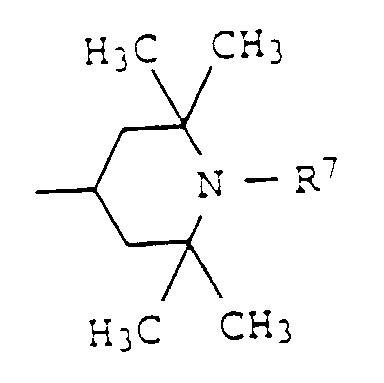
- Utilisation d'esters d'acides aminovinylphosphoniques I selon les revendications 1 à 4 en tant qu'agents de protection contre la lumière et stabilisants pour plastiques et vernis.
- Procédé pour stabiliser un matériau organique contre l'action de la lumière, de l'oxygène et de la chaleur, caractérisé en ce qu'on utilise dans ce but des esters d'acides aminovinylphosphoniques I selon les revendications 1 à 4.
- Procédé pour stabiliser des plastiques et des vernis contre l'action de la lumière, de l'oxygène et de la chaleur, caractérisé en ce qu'on utilise dans ce but des esters d'acides aminovinylphosphoniques I selon les revendications 1 à 4.
- Matériau organique stabilisé contre l'action de la lumière, de l'oxygène et de la chaleur, contenant de 0,01 à 5 % en poids, par rapport à la quantité du matériau organique, d'un ou plusieurs esters d'acides aminovinylphosphoniques I selon les revendications 1 à 4.
- Plastiques et vernis stabilisés contre l'action de la lumière, de l'oxygène et de la chaleur, contenant de 0,01 à 5 % en poids, par rapport à la quantité des plastiques et vernis, d'un ou plusieurs esters d'acides aminovinylphosphoniques I selon les revendications 1 à 4.
- Esters d'acides aminovinylphosphoniques de formule générale I selon la revendication 1, à l'exception des phosphonates de diéthyle et d'α-cyano-β-(phénylamino) vinyl.
- Esters d'acides aminovinylphosphoniques selon la revendication 10, dans lesquelsR1 est un radical de formule -C-R6 ou un groupement de formule
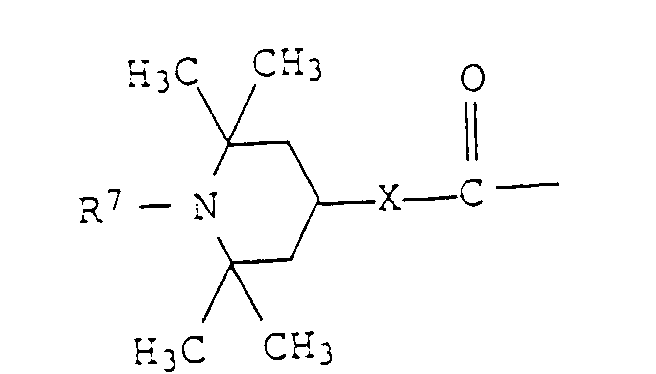 R4 est le groupe phényle ou tolyle.
Applications Claiming Priority (3)
| Application Number | Priority Date | Filing Date | Title |
|---|---|---|---|
| DE4303648 | 1993-02-09 | ||
| DE4303648A DE4303648A1 (de) | 1993-02-09 | 1993-02-09 | Verwendung von Aminovinylphosphonsäureestern als Lichtschutzmittel und Stabilisatoren für organisches Material |
| PCT/EP1994/000254 WO1994018210A1 (fr) | 1993-02-09 | 1994-01-29 | Utilisation d'esters d'acide phosphonique aminovinylique comme agents photoprotecteurs et stabilisants pour matieres organiques |
Publications (2)
| Publication Number | Publication Date |
|---|---|
| EP0683785A1 EP0683785A1 (fr) | 1995-11-29 |
| EP0683785B1 true EP0683785B1 (fr) | 1997-09-17 |
Family
ID=6479923
Family Applications (1)
| Application Number | Title | Priority Date | Filing Date |
|---|---|---|---|
| EP94905731A Expired - Lifetime EP0683785B1 (fr) | 1993-02-09 | 1994-01-29 | Utilisation d'esters d'acide phosphonique aminovinylique comme agents photoprotecteurs et stabilisants pour matieres organiques |
Country Status (9)
| Country | Link |
|---|---|
| US (1) | US5610210A (fr) |
| EP (1) | EP0683785B1 (fr) |
| JP (1) | JPH08506365A (fr) |
| KR (1) | KR960701070A (fr) |
| AT (1) | ATE158296T1 (fr) |
| DE (2) | DE4303648A1 (fr) |
| DK (1) | DK0683785T3 (fr) |
| ES (1) | ES2107810T3 (fr) |
| WO (1) | WO1994018210A1 (fr) |
Families Citing this family (6)
| Publication number | Priority date | Publication date | Assignee | Title |
|---|---|---|---|---|
| DE4140304A1 (de) * | 1991-12-06 | 1993-06-09 | Basf Ag, 6700 Ludwigshafen, De | N-((beta)-carbonyl- und (beta)-cyanovinyl)-2,2,6,6- tetramethylpiperidin-derivate |
| CZ297264B6 (cs) | 1998-09-09 | 2006-10-11 | Metabasis Therapeutics, Inc. | Nové heteroaromatické inhibitory fruktóza-1,6-bisfosfatázy |
| CN1740182A (zh) * | 1999-12-22 | 2006-03-01 | 症变治疗公司 | 新的双氨基化膦酸酯前药 |
| US7563774B2 (en) * | 2000-06-29 | 2009-07-21 | Metabasis Therapeutics, Inc. | Combination of FBPase inhibitors and antidiabetic agents useful for the treatment of diabetes |
| EP1778250A2 (fr) * | 2004-08-18 | 2007-05-02 | Metabasis Therapeutics, Inc. | Nouveaux inhibiteurs thiazole de la fructose 1,6-bisphosphatase |
| JP7508811B2 (ja) * | 2020-03-09 | 2024-07-02 | コニカミノルタ株式会社 | 有機リン化合物、熱可塑性樹脂組成物及び電子機器 |
Family Cites Families (6)
| Publication number | Priority date | Publication date | Assignee | Title |
|---|---|---|---|---|
| NL279734A (fr) * | 1961-06-26 | |||
| US3462439A (en) * | 1966-06-16 | 1969-08-19 | Pennsalt Chemicals Corp | Esters of heterocyclic-vinyl-phosphonates |
| US3673284A (en) * | 1968-03-07 | 1972-06-27 | Shionogi & Co | 2-hydrocarbyl aminovinyl phosphonates or phosphinates |
| GB1429004A (en) * | 1972-03-30 | 1976-03-24 | Hooker Chemicals Plastics Corp | Phosphonate esters useful as fire retardant additives |
| DE3001894A1 (de) * | 1980-01-19 | 1981-07-23 | Hoechst Ag, 6000 Frankfurt | Verfahren zur herstellung von vinyphophonsaeurederivaten |
| US5260286A (en) * | 1992-10-16 | 1993-11-09 | Japan Tobacco, Inc. | 2-piperidinecarboxylic acid derivatives useful as NMDA receptor antagonists |
-
1993
- 1993-02-09 DE DE4303648A patent/DE4303648A1/de not_active Withdrawn
-
1994
- 1994-01-29 KR KR1019950703291A patent/KR960701070A/ko not_active Withdrawn
- 1994-01-29 DK DK94905731.9T patent/DK0683785T3/da active
- 1994-01-29 EP EP94905731A patent/EP0683785B1/fr not_active Expired - Lifetime
- 1994-01-29 AT AT94905731T patent/ATE158296T1/de active
- 1994-01-29 WO PCT/EP1994/000254 patent/WO1994018210A1/fr not_active Ceased
- 1994-01-29 ES ES94905731T patent/ES2107810T3/es not_active Expired - Lifetime
- 1994-01-29 DE DE59404097T patent/DE59404097D1/de not_active Expired - Lifetime
- 1994-01-29 US US08/495,581 patent/US5610210A/en not_active Expired - Fee Related
- 1994-01-29 JP JP6517416A patent/JPH08506365A/ja active Pending
Also Published As
| Publication number | Publication date |
|---|---|
| DK0683785T3 (da) | 1997-10-13 |
| JPH08506365A (ja) | 1996-07-09 |
| DE59404097D1 (de) | 1997-10-23 |
| ATE158296T1 (de) | 1997-10-15 |
| ES2107810T3 (es) | 1997-12-01 |
| KR960701070A (ko) | 1996-02-24 |
| DE4303648A1 (de) | 1994-08-11 |
| WO1994018210A1 (fr) | 1994-08-18 |
| US5610210A (en) | 1997-03-11 |
| EP0683785A1 (fr) | 1995-11-29 |
Similar Documents
| Publication | Publication Date | Title |
|---|---|---|
| EP0213570B1 (fr) | Dérivés de glycolurile et leur utilisation comme stabilisants pour polymères | |
| DE3738736A1 (de) | 4-formylaminopiperidinderivate und deren verwendung als stabilisatoren | |
| EP0325974B1 (fr) | Hétérocycles à base de pipérazinopipérazine et leur utilisation | |
| DE4303648A1 (de) | Verwendung von Aminovinylphosphonsäureestern als Lichtschutzmittel und Stabilisatoren für organisches Material | |
| EP0349862B1 (fr) | 2,6 polyalkyl pipéridine-4-amides, leur application comme stabilisateurs, en particulier pour matériaux synthétiques aussi bien que le matériau organique les contenant | |
| EP0635005A1 (fr) | Derives de l'acide acetique et de l'acide amino-3-acrylique contenant des groupes polyalkylpiperidine | |
| EP0593541B1 (fr) | Esters et amides de l'acide aminomethylenecyanacetique | |
| EP0272590B1 (fr) | Dérivés de glycolurile et leur utilisation comme stabilisants pour polymères | |
| WO1993011111A1 (fr) | DERIVES D'ESTERS DE L'ACIDE β-AMINOACRYLIQUE CONTENANT DES GROUPES POLYALKYLPIPERIDINE | |
| EP0741703A1 (fr) | Procede de preparation de composes bis-tetramethylpiperidinyle a ponts n, n' | |
| EP0682668B1 (fr) | Derives de glycolurile contenant des groupes n-vinyl et leur utilisation comme agents photoprotecteurs et comme stabilisants pour des materiaux organiques | |
| EP0272588B1 (fr) | Dérivés d'acétylène diurée et leur utilisation pour stabiliser des résines synthétiques | |
| EP0422492A1 (fr) | Amides cycliques | |
| EP0272591A2 (fr) | Dérivés d'acétylenediurée et leur application pour stabiliser les matières plastiques | |
| DE4136656A1 (de) | Verwendung von 3-amino-2-(benzoylamino)acrylsaeureestern als stabilisatoren fuer organische materialien | |
| EP0355663A2 (fr) | Bislactames substituées par 2,6-polyalkylpipéridinyle et leur utilisation pour la stabilisation de matériaux organique, en particulier, plastiques et matériaux stabilisés | |
| EP0505802A1 (fr) | Esters polyalkylpipéridinyliques des acides bêta-cétocarboxyliques cycliques | |
| CH669195A5 (de) | Furan-3-carbonsaeurederivate und deren verwendung als lichtschutzmittel ausserhalb der textilindustrie. | |
| DE3743279A1 (de) | Heterocyclische bicyclo-(3.3.1)nonanderivate und deren verwendung | |
| EP0373437A2 (fr) | Lactames substitués par des polyalcoylpipéridines et leur utilisation comme stabilisants pour polymères | |
| DE3628079A1 (de) | Furan-3-carbonsaeurederivate |
Legal Events
| Date | Code | Title | Description |
|---|---|---|---|
| PUAI | Public reference made under article 153(3) epc to a published international application that has entered the european phase |
Free format text: ORIGINAL CODE: 0009012 |
|
| 17P | Request for examination filed |
Effective date: 19950704 |
|
| AK | Designated contracting states |
Kind code of ref document: A1 Designated state(s): AT BE CH DE DK ES FR GB IT LI NL SE |
|
| 17Q | First examination report despatched |
Effective date: 19960404 |
|
| GRAG | Despatch of communication of intention to grant |
Free format text: ORIGINAL CODE: EPIDOS AGRA |
|
| GRAH | Despatch of communication of intention to grant a patent |
Free format text: ORIGINAL CODE: EPIDOS IGRA |
|
| GRAH | Despatch of communication of intention to grant a patent |
Free format text: ORIGINAL CODE: EPIDOS IGRA |
|
| GRAA | (expected) grant |
Free format text: ORIGINAL CODE: 0009210 |
|
| AK | Designated contracting states |
Kind code of ref document: B1 Designated state(s): AT BE CH DE DK ES FR GB IT LI NL SE |
|
| REF | Corresponds to: |
Ref document number: 158296 Country of ref document: AT Date of ref document: 19971015 Kind code of ref document: T |
|
| REG | Reference to a national code |
Ref country code: CH Ref legal event code: EP |
|
| REG | Reference to a national code |
Ref country code: DK Ref legal event code: T3 |
|
| REF | Corresponds to: |
Ref document number: 59404097 Country of ref document: DE Date of ref document: 19971023 |
|
| ITF | It: translation for a ep patent filed | ||
| GBT | Gb: translation of ep patent filed (gb section 77(6)(a)/1977) |
Effective date: 19971104 |
|
| REG | Reference to a national code |
Ref country code: ES Ref legal event code: FG2A Ref document number: 2107810 Country of ref document: ES Kind code of ref document: T3 |
|
| PGFP | Annual fee paid to national office [announced via postgrant information from national office to epo] |
Ref country code: FR Payment date: 19971210 Year of fee payment: 5 |
|
| PGFP | Annual fee paid to national office [announced via postgrant information from national office to epo] |
Ref country code: SE Payment date: 19971211 Year of fee payment: 5 |
|
| PGFP | Annual fee paid to national office [announced via postgrant information from national office to epo] |
Ref country code: DK Payment date: 19971218 Year of fee payment: 5 |
|
| PGFP | Annual fee paid to national office [announced via postgrant information from national office to epo] |
Ref country code: CH Payment date: 19971219 Year of fee payment: 5 |
|
| PGFP | Annual fee paid to national office [announced via postgrant information from national office to epo] |
Ref country code: NL Payment date: 19971222 Year of fee payment: 5 Ref country code: AT Payment date: 19971222 Year of fee payment: 5 |
|
| PGFP | Annual fee paid to national office [announced via postgrant information from national office to epo] |
Ref country code: BE Payment date: 19980108 Year of fee payment: 5 |
|
| PGFP | Annual fee paid to national office [announced via postgrant information from national office to epo] |
Ref country code: GB Payment date: 19980115 Year of fee payment: 5 Ref country code: ES Payment date: 19980115 Year of fee payment: 5 |
|
| PGFP | Annual fee paid to national office [announced via postgrant information from national office to epo] |
Ref country code: DE Payment date: 19980123 Year of fee payment: 5 |
|
| ET | Fr: translation filed | ||
| PLBE | No opposition filed within time limit |
Free format text: ORIGINAL CODE: 0009261 |
|
| STAA | Information on the status of an ep patent application or granted ep patent |
Free format text: STATUS: NO OPPOSITION FILED WITHIN TIME LIMIT |
|
| 26N | No opposition filed | ||
| PG25 | Lapsed in a contracting state [announced via postgrant information from national office to epo] |
Ref country code: GB Free format text: LAPSE BECAUSE OF NON-PAYMENT OF DUE FEES Effective date: 19990129 Ref country code: DE Free format text: LAPSE BECAUSE OF THE APPLICANT RENOUNCES Effective date: 19990129 Ref country code: AT Free format text: LAPSE BECAUSE OF NON-PAYMENT OF DUE FEES Effective date: 19990129 |
|
| PG25 | Lapsed in a contracting state [announced via postgrant information from national office to epo] |
Ref country code: SE Free format text: LAPSE BECAUSE OF NON-PAYMENT OF DUE FEES Effective date: 19990130 Ref country code: ES Free format text: LAPSE BECAUSE OF NON-PAYMENT OF DUE FEES Effective date: 19990130 |
|
| PG25 | Lapsed in a contracting state [announced via postgrant information from national office to epo] |
Ref country code: LI Free format text: LAPSE BECAUSE OF NON-PAYMENT OF DUE FEES Effective date: 19990131 Ref country code: CH Free format text: LAPSE BECAUSE OF NON-PAYMENT OF DUE FEES Effective date: 19990131 Ref country code: BE Free format text: LAPSE BECAUSE OF NON-PAYMENT OF DUE FEES Effective date: 19990131 |
|
| PG25 | Lapsed in a contracting state [announced via postgrant information from national office to epo] |
Ref country code: DK Free format text: LAPSE BECAUSE OF NON-PAYMENT OF DUE FEES Effective date: 19990202 |
|
| BERE | Be: lapsed |
Owner name: BASF A.G. Effective date: 19990131 |
|
| PG25 | Lapsed in a contracting state [announced via postgrant information from national office to epo] |
Ref country code: NL Free format text: LAPSE BECAUSE OF NON-PAYMENT OF DUE FEES Effective date: 19990801 |
|
| GBPC | Gb: european patent ceased through non-payment of renewal fee |
Effective date: 19990129 |
|
| REG | Reference to a national code |
Ref country code: CH Ref legal event code: PL |
|
| PG25 | Lapsed in a contracting state [announced via postgrant information from national office to epo] |
Ref country code: FR Free format text: LAPSE BECAUSE OF NON-PAYMENT OF DUE FEES Effective date: 19990930 |
|
| REG | Reference to a national code |
Ref country code: FR Ref legal event code: ST |
|
| REG | Reference to a national code |
Ref country code: DK Ref legal event code: EBP |
|
| REG | Reference to a national code |
Ref country code: ES Ref legal event code: FD2A Effective date: 20010503 |
|
| PG25 | Lapsed in a contracting state [announced via postgrant information from national office to epo] |
Ref country code: IT Free format text: LAPSE BECAUSE OF NON-PAYMENT OF DUE FEES;WARNING: LAPSES OF ITALIAN PATENTS WITH EFFECTIVE DATE BEFORE 2007 MAY HAVE OCCURRED AT ANY TIME BEFORE 2007. THE CORRECT EFFECTIVE DATE MAY BE DIFFERENT FROM THE ONE RECORDED. Effective date: 20050129 |