EP0689155B1 - Zeichenerkennungsgerät und Verfahren zur Steuerung desselben - Google Patents
Zeichenerkennungsgerät und Verfahren zur Steuerung desselben Download PDFInfo
- Publication number
- EP0689155B1 EP0689155B1 EP95304294A EP95304294A EP0689155B1 EP 0689155 B1 EP0689155 B1 EP 0689155B1 EP 95304294 A EP95304294 A EP 95304294A EP 95304294 A EP95304294 A EP 95304294A EP 0689155 B1 EP0689155 B1 EP 0689155B1
- Authority
- EP
- European Patent Office
- Prior art keywords
- recognition
- character
- handwritten
- character recognition
- input
- Prior art date
- Legal status (The legal status is an assumption and is not a legal conclusion. Google has not performed a legal analysis and makes no representation as to the accuracy of the status listed.)
- Expired - Lifetime
Links
Images






Classifications
-
- G—PHYSICS
- G06—COMPUTING OR CALCULATING; COUNTING
- G06V—IMAGE OR VIDEO RECOGNITION OR UNDERSTANDING
- G06V10/00—Arrangements for image or video recognition or understanding
- G06V10/10—Image acquisition
-
- G—PHYSICS
- G06—COMPUTING OR CALCULATING; COUNTING
- G06V—IMAGE OR VIDEO RECOGNITION OR UNDERSTANDING
- G06V10/00—Arrangements for image or video recognition or understanding
- G06V10/70—Arrangements for image or video recognition or understanding using pattern recognition or machine learning
- G06V10/74—Image or video pattern matching; Proximity measures in feature spaces
- G06V10/75—Organisation of the matching processes, e.g. simultaneous or sequential comparisons of image or video features; Coarse-fine approaches, e.g. multi-scale approaches; using context analysis; Selection of dictionaries
Definitions
- the present invention relates to an information equipment having a handwritten character recognition function as an input means and, more particularly, to a character recognizing apparatus connected to a line such as a network and capable of exchanging handwritten characters, and a method of controlling the same.
- Fig. 13 is a view showing the configuration of conventional character input software. Processing associated with character input is incorporated in the system as a front-end processor (FEP) 100 for integrally processing characters regardless of keyboard input or handwriting, which can be commonly used for all applications.
- An input unit 101 receives input information.
- An edit unit 102 performs "copy”, “move”, “delete”, “insert”, and the like.
- KANA Japanese syllabary
- KANA-KANJI conversion unit 103 converts the character into a KANJI (chinese character) character.
- a recognition unit 104 converts handwritten input information into character code information.
- the recognition unit 104 is constituted by a recognition engine 105, a basic dictionary 106, a registration application 107 for individually customizing recognition, and a personal dictionary 108 prepared by the registration application 107.
- An OS 109 is constituted by basic software such as "Windows” or "UNIX” and performs part of communication control in addition to file or memory management.
- An application 110 uses the above functions.
- a pen computer is used for outdoor data acquisition or sales because of portability as one of its features. For this reason, data communication between an office and a visiting destination increases its importance to make a communication function essential.
- a computer having a pen input function including a pen computer, has been used as a terminal for information exchange.
- application software called online KJ editor an idea obtained from one's thought is input from a computer terminal.
- a host terminal can observe all ideas written at the terminals and perform editing such as rearrangement or arrangement. Since handwritten character information cannot be subjected to secondary processing, character recognition must be performed to arrange the pieces of transferred handwritten character information.
- the handwritten character data transferred through the network can be recognized by a computer having an online handwritten character recognition function.
- handwritten characters has features largely depending on peculiarities in handwriting, as described above. For this reason, with only a basic dictionary, a satisfactory character recognition result cannot be obtained.
- the personal dictionary is prepared depending on the recognition algorithm.
- character recognition software applications at the terminals are often of different types or versions, so the data cannot be easily exchanged.
- US-A-4 180 798 describes a system with plural terminals for inputting document images, and plural OCR units having different recognition capabilities, connected to each other through a network.
- the plurality of recognition units jointly recognise in complementary relationship characters of documents delivered from plural terminals.
- US-A-5008948 describes a system for recognizing handwritten letters wherein a plurality of reading units share a single handwritten letter recognition unit.
- the read information is then compressed and transmitted to the recognition unit which then expands the compressed information, recognizes the information, compresses the recognized information and then transmits the compressed recognized information to the reading unit.
- a character recognizing apparatus as defined in claim 1.
- An embodiment of the present invention provides a character recognizing apparatus for controlling information such that received handwritten character information to be recognized can be recognized in accordance with the recognition environment of a sender, i.e., a person who has handwritten the received characters, thereby allowing recognition depending on different individuals and improving a character recognition rate, and a method of controlling the same.
- handwritten characters can be recognized by a recognizing method optimized in accordance with the features of characters handwritten by a specific person. Even when data communication by handwritten characters is generated, optimal recognition can be performed, thereby improving the recognition rate.
- the recognition control means is arranged between the conventional FEP and the recognition engine, the application can execute character recognition, as in a recognition operation in the main body, without managing the recognition process.
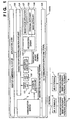
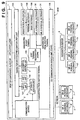
- Fig. 1 is a view showing the software configuration of a terminal device having a handwritten character recognition function in accordance with the present invention. The entire flow will be described with reference to Fig. 1.
- the same reference numerals as in the prior art of Fig. 13 denote the same parts in Fig. 1.
- a terminal 1000 serving as a host for acquiring data from the remaining terminals is connected to a terminal 5 used by Mr. A and a terminal 7 used by Mr. B through a network 111. These terminals have the same configuration except for personal resources. Note that the terminal 1000 serving as a host is referred to as a host terminal.
- an application 1 is application software (to be simply referred to as an application hereinafter) such as a desktop conference, a video conference, telewriting, or a KJ editor, which is held by exchanging information including handwritten character information with at least one of the remaining terminals.
- a communication service unit 2 provides a service for properly transferring an application command or information to terminals which are connected at multiple points or receiving information and transferring it to the application.
- An attribute addition unit 3 adds an attribute for identifying a sender to the received information.
- the received information is transferred to the application 1 through an input unit 101 and a FEP 100 as in input from the host terminal.
- the application 1 inputs the received information to a window for partner or a window for edition in accordance with a command or mode from the partner.
- the current communication partners of the terminal 1000 are the terminal 5 of Mr. A and the terminal 7 of Mr. B, which are connected to the terminal 1000 through the network.
- the same application as in the host terminal 1000 runs in both the terminals 5 and 7.
- Recognition engines/basic dictionaries 6 for terminal 5 and 8 for terminal 7 may be the same as that of the host terminal or different from that of the host terminal.
- Personal dictionaries are different depending on individuals, as a matter of course.
- the recognition engine uses the basic and personal dictionaries, thereby performing character recognition by a known technique.
- the recognizing methods may be different in the respective terminals.
- a recognition unit 104 When handwritten character information recognition is designated by a user operation, a recognition unit 104 is conventionally accessed through the FEP 100 for performing input/output control from the application 1. For the terminal of this embodiment, however, a recognition control unit 4 for controlling a recognition operation is interposed between the FEP 100 and the recognition unit 104. The recognition control unit 4 checks attributes of data to be recognized, and separates the data according to the attributes a name of describer, a terminal ID, and the like are included as the attributes. Characters described by the operator of the terminal 1000 are recognized by the recognition unit 104. As for a description by Mr.
- handwritten data from the terminal 5 is sent to the terminal 5, and handwritten data from the terminal 7 is sent to the terminal 7, together with a recognition request message through the communication service such that these data can be recognized at the respective terminals through the network 111.
- Each handwritten character data is recognized at the terminal where the data is input by using a registered dictionary and a recognition engine.
- the recognition result is returned through the network 111 again, and all the data from the operator of terminal 1000, Mr. A, and Mr. B are collectively returned to the FEP 100 by the recognition control unit 4.
- recognition using a personal dictionary suitable for the describer can be performed, thereby improving the recognition rate.
- the application 1 need not manage whether the result is a recognition result from the recognition unit 104 in the host terminal or a result of recognition from the terminal connected by network 111.
- the handwritten character data is returned to the terminal of the person who has handwritten the character data to use the resource in the terminal of this describer.
- Fig. 12 is a view showing its example.
- the recognition server 9 is a server having a recognition engine (algorithm), a basic dictionary, and a personal dictionary, which correspond to each operator on the network, and also having a function of performing recognition in accordance with a request from each operator and sending back candidates.
- the recognition server 9 has three recognition engines, i.e., a recognition unit 10 for Mr. A, a recognition unit 11 for Mr.
- Messrs. C and D respectively have personal dictionaries 13 and 14. Therefore, terminals where handwritten characters are actually described are not always necessary for recognition if a server capable of performing recognition as in these terminals is available. This server can be effectively used even if written characters are to be recognized after a conference, and the terminals 5 and 7 of Messrs. A and B are already turned off. Note that, in a network having a recognition server a, each terminal need not have a recognition engine. In this case, handwritten characters input from each terminal are always sent to the recognition server 9 and recognized.
- Such a system need to have only one recognition engine and one basic dictionary.
- a dictionary for each individual who uses the system is additionally provided, handwritten character recognition can be performed.
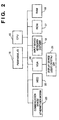
- Fig. 2 is a view showing the typical hardware configuration of a terminal.
- a CPU 15 is a processor such as an "Intel 486" or RISC processor, which performs control/calculation of the entire terminal.
- a peripheral I/O 16 is a chip set in which functions for controlling the peripheral I/O are integrated.
- a ROM 17 stores a BIOS or permanent information.
- a RAM 18 is a memory used for programs or as a work area.
- An input device 19 is a user input device at least including coordinate input device such as a mouse or a digitizer.
- a VGA 20 is a display controller for controlling the liquid crystal display (LCD) or CRT of a display device 21.
- An HDD 22 is a hard disk serving as a device for storing programs and user data.
- a communication device 23 is a means for performing data transfer with another terminal when an application, e.g., a video conference shown in this embodiment is to be executed, and is compatible with Ethernet or ISDN.
- an application e.g., a video conference shown in this embodiment is to be executed
- Ethernet or ISDN an application that is to be executed
- the above arrangement exemplifies a personal computer, it may also be a system close to a workstation or a system specialized to telewriting.
- Figs. 3A and 3B are views showing displayed windows by an online KJ editor as an application.
- a conventional method is applied to a teleconference, in which individuals write their ideas on cards, and a host classifies and arranges the cards, thereby proceeding a discussion.
- the host terminal 1000 as a host can edit the cards described by all participants through their terminals.
- Fig. 3A is a view showing a state wherein the operators of terminals describe their ideas in windows corresponding to cards, and these data are received and displayed by the terminal 1000 as handwritten characters.
- a command input window 35 is arranged at the lower left corner while an edit window 34 is arranged on the right side.
- Handwritten characters input from the terminal 5 are displayed in a window 31
- handwritten characters input from the terminal 7 are displayed in a window 32
- handwritten characters input from the terminal 1000 itself are displayed in a window 33.
- Fig. 3B shows a state wherein the operator of the terminal 1000 cuts out description contents associated with each other from the windows of the respective terminals and pastes them to the edit window 34 (cut and paste).
- Mr. B two ideas are presented by Mr. B although the cards are not illustrated.
- a character string in the edit window 34 is selected, and character recognition is designated in the command window 35.
- character recognition is requested to the corresponding terminal or a recognition server having the same function as that of the terminal such that recognition is performed in accordance with the attribute of the describer of the character string by the corresponding recognizing method.
- Fig. 4B character strings according to recognition results are displayed. Since the character strings are displayed through the FEP 100 of the host terminal, the user cannot know where character recognition has been performed. Upon occurrence of an error in a recognition result, when a character which cannot be recognized correctly is designated, the next candidates are displayed, and a character can be selected therefrom.
- a recognition command is input to the command window 35.
- it may also be selected from a menu, or command may also be input with a pen gesture as in a pen computer.
- An edit unit 102 can edit both handwritten characters before recognition and recognized characters.
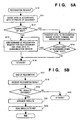
- Figs. 5A and 5B are flow charts showing procedure of the recognition control unit 4 of the host terminal 1000. These procedure can be realized by executing programs in the RAM 18 or the ROM 17 by the CPU 15 shown in Fig. 2.
- Fig. 5A is a flow chart showing a sequence for requesting character recognition to each terminal.
- step S10 Upon generation of a recognition command, recognition is requested to the recognition control unit 4 through the FEP 100 (step S10). At this time, necessary parameters including the attributes such as terminal id or describer name, or pointers of data to be recognized are transferred to the recognition control unit 4.
- step S11 the data to be recognized are classified on the basis of the attributes added to the data. In the example of Figs. 3A and 3B, three attributes such as "Mr. A”, “Mr. B", and "host” are added to classify the describers. "Host” is an attribute added to data input using the host terminal 1000.
- step S12 it is determined whether the characters of "host", i.e., characters input from the terminal 1000 are included in the data to be recognized. If YES in step S12, recognition is requested to the recognition engine 104 in step S13 such that the data of "host” is recognized using a recognition engine 105 and dictionaries 106 and 107 of "host” itself. In step S14, it is determined whether data other than that of "host” is present in the data to be recognized. If YES in step S14, in step S15, recognition is requested to the terminal of the corresponding describer or a terminal capable of recognizing the data using the same recognizing method as that of the describer.
- Recognition is requested by sending the describer data, the recognition request command, and the pointer of the data to be recognized to the communication service unit 2 as a message.
- the communication service unit 2 transmits the message in a transfer data format to the target terminal.
- step S16 a standby mode for waiting the recognition result is set. In multitasking processing, the task is queued.
- step S17 the recognition result is received from the terminal to which character recognition is requested.
- the character recognition result from the host terminal itself is obtained when the recognition engine 105 generates the event of recognition completion.
- Arrival of a result from another requested terminal is detected when the communication service unit 2 interprets arrival of the recognition result and generates the event of recognition completion.
- step S19 it is determined whether all requested recognition results are obtained. If NO in step S19, the processing further waits (step S20). If YES in step S19, e.g., the recognition results are rearranged in the order of data to be recognized in step S21.
- step S22 the processing result or designating the pointer including the processing result in step S21 is returned to the FEP 100, thereby ending the processing.
- Fig. 6A is a flow chart of processing when recognition is requested from another terminal.
- the communication service unit 2 receives communication data including recognition request, the data is interpreted, and the recognition request is sent to the recognition control unit 4 (step S23).
- the recognition control unit 4 receives communication data including recognition request, the data is interpreted, and the recognition request is sent to the recognition control unit 4 (step S23).
- step S24 the pointer of data to be recognized and the like are transferred to the recognition engine as in a normal recognition operation, and a standby mode is set in step S25.
- Fig. 6B the event of recognition completion is received in step S26 upon obtaining a recognition result.
- the recognition result is transferred to the FEP 100.
- the result is transferred to the communication service unit 2 in step S27, and the result is returned to the terminal which has requested recognition.
- Character information to be transferred in accordance with the recognition request may be stroke information including the writing position/time information.
- the identification number e.g., card number
- position information representing a portion in the data group e.g., a rectrangular enclosing the data ot be recognized
- the requested terminal may determine the portion in the stroke information in the memory area, which is to be recognized, from the number and the position information of the requested terminal, thereby performing recognition. With this operation, since the stroke information itself need not be sent, the transmission time can be saved.
- the recognition control unit 4 is arranged between the normal FEP 100 and the recognition engine 105. Therefore, the application need not manage whether character recognition is performed in the main body of its own or performed by another terminal. At the same time, recognition can be performed using a recognizing method most suitable for the describer who has written characters to be recognized.
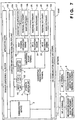
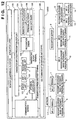
- Fig. 7 is a view showing the software configuration of the host terminal 2000.
- a recognition engine 24 is a A's recognition engine for recognizing characters written by Mr. A, which is accompanied with a basic dictionary 25 and a personal dictionary 26. Similarly, B's recognition engine 27, a basic dictionary 28, and a personal dictionary 29 are also mounted in the host terminal. This can be achieved by exchanging the recognizing methods of individuals at the start of an application.
- the engines and dictionaries sent from the terminals are compiled in the terminal 2000 and set in an executable form. This processing is performed on an assumption that all recognition engines and dictionaries are described in a high-level language (e.g., C language). When all engines and dictionaries are described in an interpretable language, porting is facilitated.
- Figs. 8A and 8B are flow charts of control of a recognition control unit 4 at this time.
- step S28 data to be recognized are separated in units of describers.
- step S29 information of the data to be recognized is transferred to the recognition engine of each describer, thereby requesting recognition.
- the recognition engine may perform multitasking or single-tasking.
- the recognition result is received in step S30.
- step S31 it is determined whether all results are obtained. If YES in step S30, the results are arranged in step S32, as in the above embodiment.
- step S33 the results are transferred to a FEP 100.
- Fig. 9 is a view showing the software configuration.
- two methods are available.
- personal dictionaries are transferred to a host terminal 3000 at the start of an application or as needed, thereby arranging the dictionaries under the recognition engine.
- a Mr. A's personal dictionary 30 and a Mr. B's personal dictionary 31 are arranged.
- a basic dictionary 106 is commonly used, as a matter of course.
- the personal dictionaries of terminals are used as if they are arranged under the recognition engine.
- personal dictionaries 6', 8', 10', 11', 13, and 14 are respectively arranged in the terminals.
- Either the terminals or the recognition server may have these personal dictionaries.
- Fig. 10 is a flow chart of a control sequence of a recognition control unit 4 of the terminal 3000 of this embodiment.
- step S35 it is determined whether data to be recognized is present (the data is present first, as a matter of course). If YES in step S35, one of the describers of data to be recognized is selected in step S36, the corresponding personal recognition dictionary is designated, and recognition is requested in step S37. Upon generation of an event of recognition completion, the recognition result is received in step S38. It is determined in step S35 whether the next data to be recognized is present. In this manner, recognition of all data to be recognized is performed while replacing the personal dictionary. If it is determined that no data to be recognized is present, the flow advances to step S39 to arrange the results.
- step S40 the results are sent to the FEP.
- the recognition engine cannot be multiplexed, and recognition is performed while switching dictionaries.
- a recognition engine which can be multiplexed may be used, and the personal dictionaries may be set to the corresponding recognition engine modules, respectively, thereby performing multitasking processing.
- dictionary data on the network can be read/written as in an incorporated disk through a communication service unit 2 and an OS 109 in step S36. Therefore, the same flow chart can be used.
- the recognizing methods for the describers who have written characters to be recognized have been described. In this embodiment, the operations of these methods will be described.
- the above embodiments cannot always be applied to all communication terminals.
- the suitable method changes depending on the recognizing method of a terminal.
- the first embodiment can be applied to recognition between terminals while the second embodiment can be applied to recognition in a certain terminal.
- the recognizing method When recognition is to be executed after an application is completed, and a terminal to which recognition is to be requested is already turned off or removed from the network, the recognizing method must be replaced depending on a change in status although the terminal is most suitable for receiving a recognition request during execution of the application.
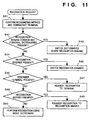
- Fig. 11 is a flow chart for optimally performing this operation. This processing is executed by a recognition control unit 4.
- step S41 Upon reception of a character recognition request from a FEP 100, or upon connection of terminals at the start of an application, the recognizing method of each terminal is confirmed, and the current connection state of the terminals is checked in step S41. If it is determined in step S42 that the recognition engine is common to all the terminals, the method of the third embodiment in which only the personal dictionaries are used is selected, and the personal dictionaries are transferred. If the personal dictionaries can be observed, the method in which the personal dictionaries are switched is used in step S43 (the method in third embodiment).
- step S44 If it is determined in step S44 that recognition engines corresponding to the recognizing methods are present in the host terminal, character recognition is executed by switching the recognition engines in step S45 (the method in second embodiment).
- step S46 If it is determined in step S46 that the terminal of the describer of handwritten characters is present on the network, recognition is requested to the terminal in step S47. If it is determined in step S48 that a recognition server is present, recognition is requested to the recognition server in step S49 (the method in first embodiment).
- the actual recognition method is replaced depending a method of selecting priority defined by the order of determination or depending on the types of terminals.
- the above-described priority is an example. Top priority may also be given to recognition request to a terminal.
- recognition using the recognizing method of a describer himself has been described above. If none of these methods can be executed depending on a given situation, recognition must be performed using only the basic dictionary, as in step S50. To avoid such a situation, it is preferable that the personal dictionaries or recognition engines are exchanged in advance such that recognition can be executed even after the application is completed.
- the present invention may be applied to a system constituted by a plurality of devices or an apparatus constituted by one device. As is apparent, the present invention can also be applied to a case wherein the above-described function is realized by supplying programs to the system or apparatus.
- the terminal of this embodiment can recognize handwritten characters by a recognition engine and a dictionary, which are optimized in accordance with the features of characters of the describer. Even when data communication by handwritten characters is generated, optimal recognition can be performed, thereby improving the recognition rate.
- the recognition control unit is arranged between the conventional FEP and the recognition engine, the application can execute character recognition, as in a recognition operation in the main body, without managing the recognition process.
Landscapes
- Engineering & Computer Science (AREA)
- Theoretical Computer Science (AREA)
- Computer Vision & Pattern Recognition (AREA)
- Multimedia (AREA)
- General Physics & Mathematics (AREA)
- Physics & Mathematics (AREA)
- Computing Systems (AREA)
- General Health & Medical Sciences (AREA)
- Medical Informatics (AREA)
- Software Systems (AREA)
- Evolutionary Computation (AREA)
- Databases & Information Systems (AREA)
- Artificial Intelligence (AREA)
- Health & Medical Sciences (AREA)
- Character Discrimination (AREA)
- Computer And Data Communications (AREA)
- Document Processing Apparatus (AREA)
Claims (14)
- Zeichenerkennungsgerät zur Erkennung handgeschriebener Zeichen, die von einem Anwender eines einer Vielzahl von Anschlüssen erzeugt werden, die mit einem Netzwerk verbunden sind, mit:einer Eingabeeinrichtung (100, 101) zur Eingabe handgeschriebener Zeicheninformationen und zur Eingabe von Eigenschafteninformationen, die dem Anwender zugeordnet sind, der die handgeschriebenen Zeicheninformationen eingibt,einer Speichereinrichtung (18) zur Speicherung handgeschriebener Zeicheninformationen und der zugeordneten Eigenschafteninformationen,einer Vielzahl von Zeichenerkennungseinrichtungen zur Erkennung eingegebener, handgeschriebener Zeicheninformationen, wobei jede der Zeichenerkennungseinrichtungen an die Handschrift eines unterschiedlichen, speziellen Anwenders angepaßt ist,einer Bestimmungseinrichtung (4) zur Identifizierung des Anwenders, der die handgeschriebenen Zeicheninformationen eingibt, anhand der Eigenschafteninformationen, die von der Eingabeeinrichtung empfangen werden, undeiner Erkennungssteuereinrichtung (4) zur Steuerung der Vielzahl der Zeichenerkennungseinrichtungen, um zu bewirken, daß die eine der Vielzahl der Zeichenerkennungseinrichtungen verwendet wird, die dem durch die Bestimmungseinrichtung bestimmten Anwender eigen ist, um die handgeschriebenen Zeicheninformationen zu erkennen.
- Gerät nach Anspruch 1, das als einen der Anschlüsse einen Anschluß mit einer Einrichtung zum Verwalten handgeschriebener Zeicheninformationen aufweist, die bei den Anschlüssen eingegeben werden.
- Gerät nach Anspruch 1 oder 2, wobei die Vielzahl der Zeichenerkennungseinrichtungen zwischen den Anschlüssen verteilt ist, und die Erkennungssteuereinrichtung dazu angeordnet ist, die Vielzahl der Erkennungseinrichtungen zu steuern, um zu bewirken, daß die handgeschriebenen Zeicheninformationen durch die Zeichenerkennungseinrichtung an dem Anschluß erkannt wird, bei dem die handgeschriebenen Zeicheninformationen eingegeben wurden.
- Gerät nach Anspruch 1 mit einem Erkennungsserver, der einen der Anschlüsse bildet und die Vielzahl der Zeichenerkennungseinrichtungen aufweist, von denen jede einem jeweiligen Anschluß entspricht.
- Gerät nach einem der vorstehenden Ansprüche, wobei die Vielzahl der Zeichenerkennungseinrichtungen eine Zeichenerkennungseinheit zum Durchführen der Zeichenerkennung durch ein vorbestimmtes Verfahren und eine Vielzahl persönlicher Wörterbücher (108,30,31) aufweist, von denen jedes Merkmale einer Handschrift eines Anwenders für eine Bezugnahme durch die Zeichenerkennungseinheit enthält.
- Gerät nach Anspruch 3, wobei die Zeichenerkennungseinrichtungen dazu angeordnet sind, eine Zeichenerkennung durch eine Vielzahl unterschiedlicher Verfahren unter Verwendung einer Vielzahl persönlicher Wörterbücher mit Merkmalen der handgeschriebenen Zeichen eines Wörterbuchbesitzers zur Bezugnahme durch die Vielzahl der Zeichenerkennungseinrichtungen durchzuführen, und der Erkennungsserver die Vielzahl der Zeichenerkennungseinheiten und die Vielzahl der persönlichen Wörterbücher aufweist.
- Gerät nach einem der vorstehenden Ansprüche, ferner mit einer Editiereinrichtung zum Editieren eines handgeschriebenen Zeichens, das durch die Eingabeeinrichtung eingegeben wird, oder der Zeichen, die von der Zeichenerkennungseinrichtung erkannt werden.
- Verfahren zum Steuern eines Zeichenerkennungsgerätes zum Erkennen handgeschriebener Zeichen, die von einem Anwender eines einer Vielzahl von Anschlüssen erzeugt werden, die mit einem Netzwerk verbunden sind, mit den Schritten:Eingeben handgeschriebener Zeicheninformationen und Eigenschafteninformationen, die dem Anwender zugeordnet sind, der die handgeschriebenen Zeicheninformationen zuführt,Bestimmen des Anwenders, der die handgeschriebenen Zeicheninformationen eingab, anhand der Eigenschafteninformationen, undSteuern einer Vielzahl von Zeichenerkennungseinrichtungen, um zu bewirken, daß die eingegebenen, handgeschriebenen Zeicheninformationen von der einen der Vielzahl der Zeichenerkennungseinrichtungen erkannt wird, die dem bestimmten Anwender entspricht.
- Verfahren nach Anspruch 8, das ein Verwalten der handgeschriebenen Zeicheninformationen unter Verwendung eines der Vielzahl der Anschlüsse zur Eingabe der handgeschriebenen Zeicheninformationen aufweist.
- Verfahren nach Anspruch 8, wobei die Vielzahl der Zeichenerkennungseinrichtungen den Anschlüssen zugeteilt ist, und die Vielzahl der Erkennungseinrichtungen dazu gesteuert wird, zu bewirken, daß die handgeschriebenen Zeicheninformationen von der Zeichenerkennungseinrichtung erkannt werden, die dem Anschluß zugeteilt ist, bei dem die zu erkennenden, handgeschriebenen Informationen eingegeben werden.
- Verfahren nach Anspruch 8, 9 oder 10, wobei einer der Anschlüsse für einen Erkennungsserver verwendet wird, der die Vielzahl der Zeichenerkennungseinrichtungen aufweist, von denen jede einem jeweiligen Anschluß entspricht.
- Verfahren nach Anspruch 8, 9, 10 oder 11, wobei für die Vielzahl der Zeichenerkennungseinrichtungen Zeichenerkennungseinrichtungen mit einer Zeichenerkennungseinheit verwendet werden, die die Zeichenerkennung durch ein vorbestimmtes Verfahren durchführt und auf eine Vielzahl persönlicher Wörterbücher mit Merkmalen der handgeschriebenen Zeichen des Wörterbuchbesitzers Bezug nimmt.
- Verfahren nach einem der Ansprüche 8 bis 10, wobei eine Vielzahl von Zeichenerkennungseinrichtungen verwendet wird, die unterschiedliche Zeichenerkennungsverfahren und eine Vielzahl persönlicher Wörterbücher verwenden, von denen jedes die Merkmale der handgeschriebenen Zeichen des Besitzers aufweist.
- Verfahren nach einem der Ansprüche 8 bis 13, ferner mit dem Schritt eines Editierens eingegebener handgeschriebener Zeichen oder von Zeichen, die durch die Vielzahl von Zeichenerkennungseinrichtungen erkannt werden.
Applications Claiming Priority (3)
| Application Number | Priority Date | Filing Date | Title |
|---|---|---|---|
| JP13858194 | 1994-06-21 | ||
| JP13858194A JP3423413B2 (ja) | 1994-06-21 | 1994-06-21 | 手書き情報認識装置及び方法 |
| JP138581/94 | 1994-06-21 |
Publications (3)
| Publication Number | Publication Date |
|---|---|
| EP0689155A2 EP0689155A2 (de) | 1995-12-27 |
| EP0689155A3 EP0689155A3 (de) | 1996-07-17 |
| EP0689155B1 true EP0689155B1 (de) | 1999-09-01 |
Family
ID=15225469
Family Applications (1)
| Application Number | Title | Priority Date | Filing Date |
|---|---|---|---|
| EP95304294A Expired - Lifetime EP0689155B1 (de) | 1994-06-21 | 1995-06-20 | Zeichenerkennungsgerät und Verfahren zur Steuerung desselben |
Country Status (5)
| Country | Link |
|---|---|
| US (1) | US5982928A (de) |
| EP (1) | EP0689155B1 (de) |
| JP (1) | JP3423413B2 (de) |
| KR (1) | KR100238608B1 (de) |
| DE (1) | DE69511786T2 (de) |
Families Citing this family (52)
| Publication number | Priority date | Publication date | Assignee | Title |
|---|---|---|---|---|
| US8352400B2 (en) | 1991-12-23 | 2013-01-08 | Hoffberg Steven M | Adaptive pattern recognition based controller apparatus and method and human-factored interface therefore |
| TW274135B (de) * | 1994-09-14 | 1996-04-11 | Hitachi Seisakusyo Kk | |
| IL125352A (en) * | 1996-11-15 | 2005-09-25 | Toho Business Man Ct | Business management system |
| US6606662B2 (en) * | 1997-06-11 | 2003-08-12 | Canon Kabushiki Kaisha | Portable terminal apparatus and communication method thereof |
| US6891972B2 (en) * | 1997-12-19 | 2005-05-10 | Canon Kabushiki Kaisha | Communication system and control method thereof, and computer-readable memory |
| JPH11215126A (ja) * | 1998-01-28 | 1999-08-06 | Sharp Corp | 情報処理装置 |
| US6233641B1 (en) * | 1998-06-08 | 2001-05-15 | International Business Machines Corporation | Apparatus and method of PCI routing in a bridge configuration |
| US6345389B1 (en) * | 1998-10-21 | 2002-02-05 | Opentv, Inc. | Interactive television system and method for converting non-textual information to textual information by a remote server |
| US7904187B2 (en) | 1999-02-01 | 2011-03-08 | Hoffberg Steven M | Internet appliance system and method |
| US7721948B1 (en) * | 1999-05-25 | 2010-05-25 | Silverbrook Research Pty Ltd | Method and system for online payments |
| US7177473B2 (en) * | 2000-12-12 | 2007-02-13 | Nuance Communications, Inc. | Handwriting data input device with multiple character sets |
| JP2002279349A (ja) * | 2001-03-21 | 2002-09-27 | Ricoh Co Ltd | 自動文字認識に用いる辞書の提供方法 |
| AUPR399601A0 (en) * | 2001-03-27 | 2001-04-26 | Silverbrook Research Pty. Ltd. | An apparatus and method(ART108) |
| KR100562421B1 (ko) * | 2001-03-28 | 2006-03-22 | 주식회사 디오텍 | 전자 잉크 방식을 이용한 잉크 에디터 시스템의 잉크 데이터 처리 방법 |
| JP2005010863A (ja) * | 2003-06-16 | 2005-01-13 | Toho Business Kanri Center:Kk | 端末装置、表示システム、表示方法、プログラム、及び記録媒体 |
| US20060277159A1 (en) * | 2003-08-15 | 2006-12-07 | Napper Jonathon L | Accuracy in searching digital ink |
| EP1519299A1 (de) * | 2003-09-29 | 2005-03-30 | Alcatel | Verfahren, System, Benutzer, Anbieter und Computerprogrammprodukt zur verteilten Handschrifterkennung |
| US7634720B2 (en) * | 2003-10-24 | 2009-12-15 | Microsoft Corporation | System and method for providing context to an input method |
| US20050256872A1 (en) * | 2003-11-14 | 2005-11-17 | Childs Michael J | Child safety ID software-data collection and data distribution program |
| US7707039B2 (en) | 2004-02-15 | 2010-04-27 | Exbiblio B.V. | Automatic modification of web pages |
| US8442331B2 (en) | 2004-02-15 | 2013-05-14 | Google Inc. | Capturing text from rendered documents using supplemental information |
| US20060041484A1 (en) | 2004-04-01 | 2006-02-23 | King Martin T | Methods and systems for initiating application processes by data capture from rendered documents |
| US7812860B2 (en) | 2004-04-01 | 2010-10-12 | Exbiblio B.V. | Handheld device for capturing text from both a document printed on paper and a document displayed on a dynamic display device |
| US10635723B2 (en) | 2004-02-15 | 2020-04-28 | Google Llc | Search engines and systems with handheld document data capture devices |
| US9116890B2 (en) | 2004-04-01 | 2015-08-25 | Google Inc. | Triggering actions in response to optically or acoustically capturing keywords from a rendered document |
| US8146156B2 (en) | 2004-04-01 | 2012-03-27 | Google Inc. | Archive of text captures from rendered documents |
| US8621349B2 (en) | 2004-04-01 | 2013-12-31 | Google Inc. | Publishing techniques for adding value to a rendered document |
| US7990556B2 (en) | 2004-12-03 | 2011-08-02 | Google Inc. | Association of a portable scanner with input/output and storage devices |
| US8793162B2 (en) | 2004-04-01 | 2014-07-29 | Google Inc. | Adding information or functionality to a rendered document via association with an electronic counterpart |
| US9143638B2 (en) | 2004-04-01 | 2015-09-22 | Google Inc. | Data capture from rendered documents using handheld device |
| US7894670B2 (en) | 2004-04-01 | 2011-02-22 | Exbiblio B.V. | Triggering actions in response to optically or acoustically capturing keywords from a rendered document |
| US20060081714A1 (en) | 2004-08-23 | 2006-04-20 | King Martin T | Portable scanning device |
| US20080313172A1 (en) | 2004-12-03 | 2008-12-18 | King Martin T | Determining actions involving captured information and electronic content associated with rendered documents |
| US20060098900A1 (en) | 2004-09-27 | 2006-05-11 | King Martin T | Secure data gathering from rendered documents |
| US8620083B2 (en) | 2004-12-03 | 2013-12-31 | Google Inc. | Method and system for character recognition |
| US9460346B2 (en) | 2004-04-19 | 2016-10-04 | Google Inc. | Handheld device for capturing text from both a document printed on paper and a document displayed on a dynamic display device |
| US8874504B2 (en) | 2004-12-03 | 2014-10-28 | Google Inc. | Processing techniques for visual capture data from a rendered document |
| US8489624B2 (en) | 2004-05-17 | 2013-07-16 | Google, Inc. | Processing techniques for text capture from a rendered document |
| US8346620B2 (en) | 2004-07-19 | 2013-01-01 | Google Inc. | Automatic modification of web pages |
| US8849034B2 (en) | 2004-12-09 | 2014-09-30 | Hewlett-Packard Development Company, L.P. | System, method, and apparatus for triggering recognition of a handwritten shape |
| JP4681870B2 (ja) * | 2004-12-17 | 2011-05-11 | キヤノン株式会社 | 画像処理装置、画像処理方法、コンピュータプログラム |
| US7720316B2 (en) * | 2006-09-05 | 2010-05-18 | Microsoft Corporation | Constraint-based correction of handwriting recognition errors |
| EP2067119A2 (de) | 2006-09-08 | 2009-06-10 | Exbiblio B.V. | Optische scanner, zum beispiel tragbare optische scanner |
| US8010465B2 (en) | 2008-02-26 | 2011-08-30 | Microsoft Corporation | Predicting candidates using input scopes |
| JP5177751B2 (ja) | 2008-09-29 | 2013-04-10 | ルネサスエレクトロニクス株式会社 | 表示駆動回路 |
| WO2010096193A2 (en) | 2009-02-18 | 2010-08-26 | Exbiblio B.V. | Identifying a document by performing spectral analysis on the contents of the document |
| US8447066B2 (en) | 2009-03-12 | 2013-05-21 | Google Inc. | Performing actions based on capturing information from rendered documents, such as documents under copyright |
| EP2406767A4 (de) | 2009-03-12 | 2016-03-16 | Google Inc | Automatische bereitstellung von mit erfassten informationen, z. b. in echtzeit erfassten informationen, assoziierten inhalten |
| US9081799B2 (en) | 2009-12-04 | 2015-07-14 | Google Inc. | Using gestalt information to identify locations in printed information |
| US9323784B2 (en) | 2009-12-09 | 2016-04-26 | Google Inc. | Image search using text-based elements within the contents of images |
| JP2012190296A (ja) * | 2011-03-11 | 2012-10-04 | Hitachi Solutions Ltd | 手書き文字変換サービス構成システムおよび手書き文字変換システム |
| JP6059113B2 (ja) * | 2013-08-27 | 2017-01-11 | 株式会社Nttドコモ | 通信端末、プログラム |
Family Cites Families (11)
| Publication number | Priority date | Publication date | Assignee | Title |
|---|---|---|---|---|
| JPS5398739A (en) * | 1977-02-09 | 1978-08-29 | Nippon Telegr & Teleph Corp <Ntt> | Communication system with character recognition |
| JPS55134483A (en) * | 1979-04-05 | 1980-10-20 | Fujitsu Ltd | Character recognition system |
| JPS60105367A (ja) * | 1983-11-11 | 1985-06-10 | Murata Giken Kk | フアクシミリ通信方式 |
| JPS63311583A (ja) * | 1987-06-15 | 1988-12-20 | Fuji Xerox Co Ltd | 手書き文字認識システム |
| US5191622A (en) * | 1987-07-17 | 1993-03-02 | Hitachi, Ltd. | Hand-written character recognition apparatus with a personal dictionary preparation function |
| US5265174A (en) * | 1989-03-03 | 1993-11-23 | Canon Kabushiki Kaisha | Pattern recognition apparatus |
| JPH05346970A (ja) * | 1991-04-04 | 1993-12-27 | Fuji Xerox Co Ltd | 文書認識装置 |
| EP0585944B1 (de) * | 1992-09-04 | 2002-12-11 | Canon Kabushiki Kaisha | Verfahren und Vorrichtung zur Anzeige von Zeichen |
| US5644653A (en) * | 1993-05-07 | 1997-07-01 | Canon Kabushiki Kaisha | Information processing apparatus and control method thereof having user character recognition |
| US5530907A (en) * | 1993-08-23 | 1996-06-25 | Tcsi Corporation | Modular networked image processing system and method therefor |
| US5546538A (en) * | 1993-12-14 | 1996-08-13 | Intel Corporation | System for processing handwriting written by user of portable computer by server or processing by the computer when the computer no longer communicate with server |
-
1994
- 1994-06-21 JP JP13858194A patent/JP3423413B2/ja not_active Expired - Fee Related
-
1995
- 1995-06-19 US US08/492,419 patent/US5982928A/en not_active Expired - Lifetime
- 1995-06-20 KR KR1019950016370A patent/KR100238608B1/ko not_active Expired - Fee Related
- 1995-06-20 EP EP95304294A patent/EP0689155B1/de not_active Expired - Lifetime
- 1995-06-20 DE DE69511786T patent/DE69511786T2/de not_active Expired - Lifetime
Also Published As
| Publication number | Publication date |
|---|---|
| DE69511786T2 (de) | 1999-12-30 |
| JPH087032A (ja) | 1996-01-12 |
| EP0689155A3 (de) | 1996-07-17 |
| JP3423413B2 (ja) | 2003-07-07 |
| KR100238608B1 (ko) | 2000-01-15 |
| KR960002069A (ko) | 1996-01-26 |
| EP0689155A2 (de) | 1995-12-27 |
| US5982928A (en) | 1999-11-09 |
| DE69511786D1 (de) | 1999-10-07 |
Similar Documents
| Publication | Publication Date | Title |
|---|---|---|
| US5982928A (en) | Character recognizing apparatus and method of controlling the same | |
| US6396598B1 (en) | Method and apparatus for electronic memo processing for integrally managing document including paper document and electronic memo added to the document | |
| US5907835A (en) | Electronic filing system using different application program for processing drawing commands for printing | |
| US7966352B2 (en) | Context harvesting from selected content | |
| US6157935A (en) | Remote data access and management system | |
| US7715630B2 (en) | Interfacing with ink | |
| US20040181711A1 (en) | Change request form annotation | |
| US10567590B2 (en) | Apparatus, system, and method of conference assistance | |
| EP0744692A1 (de) | Rechnersystem | |
| JP4702705B2 (ja) | 情報表示処理システム、クライアント端末、管理サーバ、プログラム | |
| US20130297289A1 (en) | Multiple input language selection | |
| US20050212763A1 (en) | Information processing apparatus and method | |
| US20030214531A1 (en) | Ink input mechanisms | |
| JPH07200724A (ja) | スタイラス入力認識訂正マネージャ | |
| US20020026323A1 (en) | Method and system for annotating a window shared by remote hosts | |
| US20110119616A1 (en) | Displayable-Information Management System and Program | |
| AU2002327333B2 (en) | System and method for collaborative handwriting input | |
| AU2002327333A1 (en) | System and method for collaborative handwriting input | |
| US20040228532A1 (en) | Instant messaging ink and formats | |
| US8306949B2 (en) | Method and system for copying a file using a portable electronic device | |
| US6930789B1 (en) | Image processing method, apparatus, system and storage medium | |
| JPH04507309A (ja) | ウィンドーソースよりのイメージを利用した文書注釈及び操作装置 | |
| JP2004240597A (ja) | 表示制御方法、情報表示処理システム、クライアント端末、管理サーバ、プログラム | |
| JPH05216932A (ja) | 情報管理システム | |
| JP2002024761A (ja) | 画像処理装置及び画像処理方法並びに記憶媒体 |
Legal Events
| Date | Code | Title | Description |
|---|---|---|---|
| PUAI | Public reference made under article 153(3) epc to a published international application that has entered the european phase |
Free format text: ORIGINAL CODE: 0009012 |
|
| AK | Designated contracting states |
Kind code of ref document: A2 Designated state(s): DE FR GB IT NL |
|
| PUAL | Search report despatched |
Free format text: ORIGINAL CODE: 0009013 |
|
| AK | Designated contracting states |
Kind code of ref document: A3 Designated state(s): DE FR GB IT NL |
|
| 17P | Request for examination filed |
Effective date: 19961128 |
|
| 17Q | First examination report despatched |
Effective date: 19970211 |
|
| GRAG | Despatch of communication of intention to grant |
Free format text: ORIGINAL CODE: EPIDOS AGRA |
|
| GRAG | Despatch of communication of intention to grant |
Free format text: ORIGINAL CODE: EPIDOS AGRA |
|
| GRAG | Despatch of communication of intention to grant |
Free format text: ORIGINAL CODE: EPIDOS AGRA |
|
| GRAH | Despatch of communication of intention to grant a patent |
Free format text: ORIGINAL CODE: EPIDOS IGRA |
|
| GRAH | Despatch of communication of intention to grant a patent |
Free format text: ORIGINAL CODE: EPIDOS IGRA |
|
| GRAA | (expected) grant |
Free format text: ORIGINAL CODE: 0009210 |
|
| AK | Designated contracting states |
Kind code of ref document: B1 Designated state(s): DE FR GB IT NL |
|
| PG25 | Lapsed in a contracting state [announced via postgrant information from national office to epo] |
Ref country code: NL Free format text: LAPSE BECAUSE OF FAILURE TO SUBMIT A TRANSLATION OF THE DESCRIPTION OR TO PAY THE FEE WITHIN THE PRESCRIBED TIME-LIMIT Effective date: 19990901 |
|
| REF | Corresponds to: |
Ref document number: 69511786 Country of ref document: DE Date of ref document: 19991007 |
|
| ET | Fr: translation filed | ||
| ITF | It: translation for a ep patent filed | ||
| NLV1 | Nl: lapsed or annulled due to failure to fulfill the requirements of art. 29p and 29m of the patents act | ||
| PLBE | No opposition filed within time limit |
Free format text: ORIGINAL CODE: 0009261 |
|
| STAA | Information on the status of an ep patent application or granted ep patent |
Free format text: STATUS: NO OPPOSITION FILED WITHIN TIME LIMIT |
|
| 26N | No opposition filed | ||
| REG | Reference to a national code |
Ref country code: GB Ref legal event code: IF02 |
|
| PGFP | Annual fee paid to national office [announced via postgrant information from national office to epo] |
Ref country code: GB Payment date: 20130624 Year of fee payment: 19 Ref country code: DE Payment date: 20130630 Year of fee payment: 19 |
|
| PGFP | Annual fee paid to national office [announced via postgrant information from national office to epo] |
Ref country code: IT Payment date: 20130606 Year of fee payment: 19 |
|
| PGFP | Annual fee paid to national office [announced via postgrant information from national office to epo] |
Ref country code: FR Payment date: 20130718 Year of fee payment: 19 |
|
| REG | Reference to a national code |
Ref country code: DE Ref legal event code: R119 Ref document number: 69511786 Country of ref document: DE |
|
| GBPC | Gb: european patent ceased through non-payment of renewal fee |
Effective date: 20140620 |
|
| REG | Reference to a national code |
Ref country code: FR Ref legal event code: ST Effective date: 20150227 |
|
| REG | Reference to a national code |
Ref country code: DE Ref legal event code: R119 Ref document number: 69511786 Country of ref document: DE Effective date: 20150101 |
|
| PG25 | Lapsed in a contracting state [announced via postgrant information from national office to epo] |
Ref country code: DE Free format text: LAPSE BECAUSE OF NON-PAYMENT OF DUE FEES Effective date: 20150101 Ref country code: IT Free format text: LAPSE BECAUSE OF NON-PAYMENT OF DUE FEES Effective date: 20140620 |
|
| PG25 | Lapsed in a contracting state [announced via postgrant information from national office to epo] |
Ref country code: GB Free format text: LAPSE BECAUSE OF NON-PAYMENT OF DUE FEES Effective date: 20140620 Ref country code: FR Free format text: LAPSE BECAUSE OF NON-PAYMENT OF DUE FEES Effective date: 20140630 |