EP0702398A2 - Méthode de fabrication d'un dispositif semi-conducteur à l'aide de l'épitaxie - Google Patents
Méthode de fabrication d'un dispositif semi-conducteur à l'aide de l'épitaxie Download PDFInfo
- Publication number
- EP0702398A2 EP0702398A2 EP95113995A EP95113995A EP0702398A2 EP 0702398 A2 EP0702398 A2 EP 0702398A2 EP 95113995 A EP95113995 A EP 95113995A EP 95113995 A EP95113995 A EP 95113995A EP 0702398 A2 EP0702398 A2 EP 0702398A2
- Authority
- EP
- European Patent Office
- Prior art keywords
- layer
- fluorine
- doped
- semiconductor device
- impurity
- Prior art date
- Legal status (The legal status is an assumption and is not a legal conclusion. Google has not performed a legal analysis and makes no representation as to the accuracy of the status listed.)
- Ceased
Links
Images



Classifications
-
- H—ELECTRICITY
- H10—SEMICONDUCTOR DEVICES; ELECTRIC SOLID-STATE DEVICES NOT OTHERWISE PROVIDED FOR
- H10D—INORGANIC ELECTRIC SEMICONDUCTOR DEVICES
- H10D30/00—Field-effect transistors [FET]
- H10D30/01—Manufacture or treatment
- H10D30/015—Manufacture or treatment of FETs having heterojunction interface channels or heterojunction gate electrodes, e.g. HEMT
-
- H—ELECTRICITY
- H10—SEMICONDUCTOR DEVICES; ELECTRIC SOLID-STATE DEVICES NOT OTHERWISE PROVIDED FOR
- H10P—GENERIC PROCESSES OR APPARATUS FOR THE MANUFACTURE OR TREATMENT OF DEVICES COVERED BY CLASS H10
- H10P95/00—Generic processes or apparatus for manufacture or treatments not covered by the other groups of this subclass
- H10P95/90—Thermal treatments, e.g. annealing or sintering
-
- H—ELECTRICITY
- H10—SEMICONDUCTOR DEVICES; ELECTRIC SOLID-STATE DEVICES NOT OTHERWISE PROVIDED FOR
- H10D—INORGANIC ELECTRIC SEMICONDUCTOR DEVICES
- H10D64/00—Electrodes of devices having potential barriers
- H10D64/01—Manufacture or treatment
- H10D64/012—Manufacture or treatment of electrodes comprising a Schottky barrier to a semiconductor
- H10D64/0124—Manufacture or treatment of electrodes comprising a Schottky barrier to a semiconductor to Group III-V semiconductors
- H10D64/0125—Manufacture or treatment of electrodes comprising a Schottky barrier to a semiconductor to Group III-V semiconductors characterised by the sectional shape, e.g. T or inverted T
-
- H—ELECTRICITY
- H10—SEMICONDUCTOR DEVICES; ELECTRIC SOLID-STATE DEVICES NOT OTHERWISE PROVIDED FOR
- H10P—GENERIC PROCESSES OR APPARATUS FOR THE MANUFACTURE OR TREATMENT OF DEVICES COVERED BY CLASS H10
- H10P95/00—Generic processes or apparatus for manufacture or treatments not covered by the other groups of this subclass
- H10P95/90—Thermal treatments, e.g. annealing or sintering
- H10P95/904—Thermal treatments, e.g. annealing or sintering of Group III-V semiconductors
Definitions
- the present invention relates to a method of fabricating a semiconductor device for improving reliability of a semiconductor device, and a semiconductor device fabricated thereby.
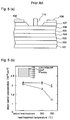
- Figures 5(a)-5(b) were shown in Extended Abstract WC2 pp497-500 of Fifth International Conference on Indium Phosphide and Related Materials, held from April 19 to 22, 1993 in Paris, France.
- Figure 5(a) is a cross-sectional view illustrating a structure of a prior art HEMT (high electron mobility transistor) which has an n type InAlAs carrier supply layer on an InP substrate and a Schottky formation layer on the n type InAlAs carrier supply layer.
- Figure 5(b) is a graph for explaining deterioration of electrical characteristics of the HEMT due to heat.
- reference numeral 101 designates a semi-insulating (abbreviated as S.I.- hereinafter) InP substrate
- reference numeral 102 designates an undoped InP layer of about 10 nm thickness
- reference numeral 103 designates an undoped InGaAs channel layer of about 20 nm thickness
- reference numeral 104 designates an undoped InAlAs spacer layer of about 3 nm thickness
- reference numeral 105 designates an n+ type InAlAs electron supply layer of about 15 nm thickness and to 3 x 1018 cm ⁇ 3 dopant impurity concentration
- reference numeral 106 designates a Schottky formation layer of about 10 nm thickness comprising materials such as undoped In 0.75 Ga 0.25 P
- reference numeral 107 designates an n+ type InGaAs ohmic layer of about 20 nm thickness and to 5 x 1018 cm ⁇ 3 dopant impurity concentration
- reference numeral 108 designates a source electrode
- abscissa represents heat treatment temperature (unit: °C) and ordinate represents sheet carrier concentration (unit: x 1012 cm ⁇ 3) of two-dimensional electron gas formed at the interface of the undoped InGaAs channel layer 103 to the undoped InAlAs spacer layer 104 side.
- circles, triangles, and squares represent cases where the Schottky formation layer 106 comprises In 0.75 Ga 0.25 P, InP, or InAlAs, respectively.
- Figure 6 illustrates a semiconductor layer structure used in the study by the inventors of the present invention and figure 7 illustrates the result obtained from this study.
- reference numeral 111 designates an S.I.-InP substrate
- reference numeral 112 designates an intrinsic (abbreviated as i- hereinafter) AlInAs buffer layer of 5000 ⁇ thickness
- reference numeral 113 designates an i-InGaAs channel layer of 2500 ⁇ thickness
- reference numeral 114 designates an AlInAs carrier supply layer of 340 ⁇ thickness in which a planar doping with Si is performed at 20 ⁇ elevation from the channel layer 113.
- a layer portion of the carrier supply layer 114 from the channel layer 113 to where the Si planar doping is performed is designated as a spacer layer 115.
- Reference numeral 116 designates two-dimensional electron gas formed in the vicinity of the interface of the i-GaInAs channel layer 113 to the InAlAs electron supply layer 114 side.
- abscissa represents heat treatment temperature (unit: °C) and ordinate represents a ratio of sheet carrier concentration N s after the heat treatment to that before the heat treatment N s0 , i.e., N s /N s0 .
- the semiconductor layer structure having the similar structure as an HEMT comprising the InAlAs electron supply layer 114 which was planar-doped with Si and was formed on the i-GaInAs channel layer 113 was heat-treated for fifteen minutes at different temperatures under a nitrogen environment. Then the sheet carrier concentration of the two-dimensional electron gas layer 116 formed in the vicinity of the interface of the i-GaInAs channel layer 113 to the electron supply layer 114 side was measured by Hall measurement. As illustrated in figure 7, even in the semiconductor layer structure such as this, the sheet carrier concentration decreases due to heat treatment and, by including a heat treatment process, an HEMT whose electrical characteristics are deteriorated is formed.
- a semiconductor device having an InAlAs layer doped with an impurity such as a prior art HEMT
- heat treatment is performed under an environment including carrier gas such as nitrogen gas or hydrogen gas
- carrier gas such as nitrogen gas or hydrogen gas
- the deterioration of electrical characteristics such as the decrease in the sheet carrier concentration occurs.
- a method of confirming changes of the characteristics in a lapse of time is used, in which the semiconductor device is operated under a high temperature environment in which the characteristics of the semiconductor device are likely to be deteriorated.
- the prior art semiconductor device when a reliability test including heat treatment such as this is conducted, the decrease in the sheet carrier concentration occurs and satisfactory results cannot be obtained. As a result, a semiconductor device of high reliability cannot be obtained.
- a method of fabricating a semiconductor device comprises forming a layer comprising Al, In, and As and doped with an impurity; infiltrating fluorine into the layer comprising Al, In, and As and doped with an impurity by performing heat treatment to this layer; and removing the fluorine from the layer comprising Al, In, and As and doped with an impurity by performing reheat treatment after the heat treatment.
- the layer comprising Al, In, and As can be recovered from a state of electrically deteriorated characteristics.
- the layer comprising Al, In, As and doped with an impurity having desired electrical characteristics can be obtained and re-deterioration of this layer can be prevented.
- the reheat treatment for removing the fluorine from the layer comprising Al, In, and As and doped with an impurity is performed either in vacuum or under any one environment selected from a group consisting of an environment supplied with nitrogen gas, an environment supplied with hydrogen gas, and an environment supplied with both nitrogen gas and hydrogen gas. Therefore, by removing the fluorine from the layer comprising Al, In, and As and doped with an impurity, this layer can be recovered from a state of electrically deteriorated characteristics caused by heat.
- the semiconductor device in the method of fabricating the semiconductor device described as the first aspect of the present invention, is a high electron mobility transistor; and the layer comprising Al, In, and As and doped with an impurity is a carrier supply layer of the high electron mobility transistor. Therefore, the carrier supply layer whose electrical characteristics are hard to be deteriorated can be obtained.
- a method of fabricating a semiconductor device comprises preparing a semi-insulating substrate; forming an undoped channel layer on the semi-insulating substrate; forming a carrier supply layer which comprises a layer comprising Al, In, and As and doped with an impurity on the channel layer; forming an ohmic layer on the carrier supply layer; forming a source electrode and a drain electrode on the ohmic layer; forming an opening by etching a portion of the ohmic layer between the source electrode and the drain electrode so that the carrier supply layer is exposed; infiltrating fluorine into the carrier supply layer by performing heat treatment to this carrier supply layer; removing the fluorine from the carrier supply layer by performing reheat treatment after the heat treatment; and forming a recess on the portion of the carrier supply layer exposed in the opening and, then, forming a gate electrode on the bottom of the recess. Therefore, the carrier supply layer whose electrical characteristics are hard to be deteriorated can be obtained.
- a semiconductor device has a layer comprising Al, In, and As and doped with an impurity wherein the layer comprising Al, In, and As and doped with an impurity is heat-treated so that fluorine is infiltrated into this layer and, then, reheat-treated so that the fluorine is removed from this layer. Therefore, a semiconductor device having a layer comprising Al, In, and As and doped with an impurity which has desired electrical characteristics, this electrical characteristics being hard to be deteriorated, can be obtained.
- Figure 1 is a cross-sectional view illustrating a semiconductor layer structure for describing a method of fabricating a semiconductor device according to a first embodiment of the present invention.
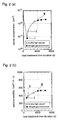
- Figures 2(a)-2(b) are graphs for describing the method of fabricating the semiconductor device according to the first embodiment of the present invention.
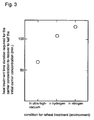
- Figure 3 is a graph for describing a method of fabricating a semiconductor device according to a second embodiment of the present invention.
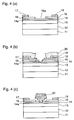
- Figures 4(a)-4(c) are cross-sectional process views illustrating a method of fabricating an HEMT according to a third embodiment of the present invention.
- Figure 5(a) is a cross-sectional view illustrating a structure of an HEMT as an example of a prior art semiconductor device
- figure 5(b) is a graph illustrating a deterioration of electrical characteristics occurred due to heat treatment of the prior art HEMT.
- Figure 6 is a cross-sectional view illustrating a semiconductor layer structure for describing a deterioration of electrical characteristics of a semiconductor which occurs due to a heat treatment process in a method of fabricating a prior art semiconductor device.
- Figure 7 is a graph illustrating a relationship between a sheet carrier concentration and a heat treatment temperature for describing a deterioration of electrical characteristics of a semiconductor device which occurs due to a heat treatment process in a method of fabricating a prior art semiconductor device.
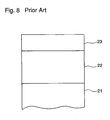
- Figure 8 is a cross-sectional view for describing a deterioration of electrical characteristics of a semiconductor device which occurs due to a heat treatment process in a method of fabricating a prior art semiconductor device.
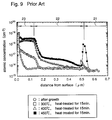
- Figure 9 is a graph illustrating a fluorine profile for describing a deterioration of electrical characteristics of a semiconductor device which occurs due to a heat treatment process in a method of fabricating a prior art semiconductor device.
- Figure 10 is a graph illustrating a deterioration of electrical characteristics of a semiconductor device which occurs due to a heat treatment process at 200°C in a method of fabricating a prior art semiconductor device.
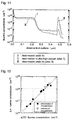
- Figure 11 is a graph illustrating a fluorine profile for describing a method of fabricating the semiconductor device according to the first embodiment of the present invention.
- Figure 12 is a graph illustrating a relationship between a change in fluorine concentration and a change in carrier concentration for describing a method of fabricating the semiconductor device according to the first embodiment of the present invention.
- Figure 8 is a cross-sectional view illustrating a semiconductor layer structure used in a study in search for causes of the deterioration of electrical characteristics of the prior art semiconductor device due to heat.
- reference numeral 21 designates an S.I.-InP substrate
- reference numeral 22 designates an i-AlInAs layer of about 4000 ⁇ thickness
- reference numeral 23 designates an AlInAs layer doped with Si as an impurity and of about 1300 ⁇ thickness.
- abscissa represents a distance (unit: ⁇ m) from the surface of the semiconductor layer structure and ordinate represents an atomic concentration (unit: cm ⁇ 3) of fluorine.
- white circles represent a fluorine profile (distribution) of the semiconductor layer structure before the heat treatment, and white squares, white triangles, and black squares represent fluorine profiles for heat treatment temperatures of 300°C, 400°C, and 450°C, respectively.
- 19F fluorine infiltrates the semiconductor layer structure due to the heat treatment.
- the amount of 19F increases with the heat treatment temperatures.
- the infiltration amount of 19F is prominent in the Si-doped layer, and finally, 19F accumulates at the interface between the epitaxial layer and the substrate as well.
- the first fact above is based on the result obtained by detection of a mass number 19, checking for the entire mass of the impurity during SIMS measurement.
- the fluorine in the atmosphere sticks to and infiltrates the AlInAs layer 23 doped with Si because of the heat treatment and the change in profile due to the heat treatment is not observed for other elements, it is considered that the deterioration of electrical characteristics of a semiconductor device is caused by the phenomenon that the fluorine sticks to and infiltrates the semiconductor layer structure because of the heat treatment.
- Figure 10 is a graph illustrating a relationship between the carrier concentration of the Si-doped AlInAs layer 23 and the time duration of maintaining temperature when the semiconductor layer structure of figure 8 is heat-treated at a temperature of 200°C.
- ordinate represents the carrier concentration (unit: cm ⁇ 3)
- abscissa represents the time duration of maintaining temperature (hr).
- Figure 1 is a cross-sectional view for describing the main process of a method of fabricating a semiconductor device according to a first embodiment of the present invention.
- the method of fabricating the semiconductor device according to the first embodiment includes a process where reheat treatment is performed to an impurity-doped AlInAs layer which is deteriorated by fluorine infiltration due to the initial heat treatment, so that the fluorine in the impurity-doped AlInAs layer is removed and quality of the semiconductor device is recovered.
- reference numeral 1 designates an S.I.-InP substrate
- reference numeral 2 designates an i-AlInAs layer of about 2500 ⁇ thickness
- reference numeral 3 designates an Si-doped AlInAs layer of about 2500 ⁇ thickness.
- Figures 2(a)-2(b) are graphs illustrating results of Hall measurement of the semiconductor layer structure illustrated in figure 1 which is formed through the main process of the method of fabricating the semiconductor device of the first embodiment.
- Figure 2(a) indicates a relationship between a heat treatment duration (unit: second) for the semiconductor layer structure illustrated in figure 1 and a carrier concentration n (unit: cm ⁇ 3) and figure 2(b) indicates a relationship between the heat treatment duration (unit: second) and the electron mobility ⁇ (unit: cm2/Vs).
- circles with slashed lines represent a state before the heat treatment
- black circles represent a case where heat treatment is performed under an environment supplied with nitrogen gas
- white circles represent a case where heat treatment is performed in ultra-high vacuum.
- ordinate represents fluorine concentration (unit: cm ⁇ 3)
- abscissa represents a distance from the surface (unit: ⁇ m)
- a solid line represents the profile of step I in figures 2(a)-2(b)
- a dashed line represents the profile of step II
- an alternate long and short dashed line represents the profile of step III. Therefore, it can be said that if the fluorine concentration decreases, the carrier concentration n and the electron mobility ⁇ recover.
- a semiconductor device having desired electrical characteristics in a method of fabricating a semiconductor device including a process of infiltrating fluorine into the Si-doped AlInAs layer 3 by heat treatment, by having a process of removing the fluorine in the Si-doped AlInAs layer 3 by further heat treatment in the ultra-high vacuum after the initial heat treatment, a semiconductor device having desired electrical characteristics can be obtained.
- the Si-doped AlInAs layer 3 becomes hard to be deteriorated again and a highly-reliable semiconductor device which is hard to be deteriorated can be obtained.
- the method of fabricating the semiconductor device includes a process of infiltrating the fluorine into the Si-doped AlInAs layer 3 by the heat treatment under the nitrogen environment after the Si-doped AlInAs layer 23 is made to contact with the atmosphere and a process of removing the fluorine in the Si-doped AlInAs layer 3 by further heat treatment in the ultra-high vacuum after the initial heat treatment, a highly-reliable semiconductor device which is hard to be deteriorated again and has desired electrical characteristics can be obtained.
- this invention can be applied to the case where the impurity doped into the AlInAs layer is other impurities such as Sn (tin) and the similar effect as in the first embodiment can be obtained in this case.
- this invention can be applied to a case where this heat treatment is performed under environments supplied with other carrier gases such as hydrogen and the similar effect as in the first embodiment can be obtained in this case.
- Figure 3 is for describing a method of fabricating a semiconductor device according to a second embodiment of the present invention. While, in the first embodiment, the case where the reheat treatment for removing the fluorine which infiltrated into the impurity-doped AlInAs layer due to the initial heat treatment is performed in the ultra-high vacuum, this reheat treatment in the second embodiment is performed under an environment supplied with hydrogen gas or nitrogen gas.
- Figure 3 shows the time duration of the reheat treatment (unit: minute) required for the carrier concentration of the Si-doped AlInAs layer 3 of the semiconductor layer structure shown in figure 1 which was deteriorated by heat to recover to half the carrier concentration before the deterioration by heat for the cases where the reheat treatment environments are the environments supplied with hydrogen gas or nitrogen gas, or the ultra-high vacuum environment.
- the treatment temperature of the reheat treatment is 400°C.
- the carrier concentration recovers. Therefore, it can be seen that even when the reheat treatment under the environments such as these is performed, the semiconductor layer structure can be recovered from the deteriorated state caused by heat and a semiconductor device which has less deterioration of electrical characteristics due to heat is obtained.
- the figure also shows that the reheat treatment in the ultra-high vacuum takes least time for the recovery from the deterioration and the reheat treatment under the nitrogen gas environment takes the most time for the recovery.
- the method of fabricating the semiconductor device of the second embodiment since there is no need to use the ultra-high vacuum state, it is possible to perform a heat treatment process of removing the fluorine by using, for example, a nitrogen vessel of simple construction equipped with a means for heating up and a means for continuously supplying nitrogen, and a semiconductor device having desired characteristics can be obtained at low cost.
- the heat treatment is performed under the environment supplied with either hydrogen gas or nitrogen gas
- the heat treatment can also be performed under the environment supplied with the mixture of the hydrogen gas and the nitrogen gas in this invention, and the similar effect as in the second embodiment can be obtained in this case.
- Figures 4(a)-4(c) are cross-sectional views illustrating a method of fabricating an HEMT according to a third embodiment of the present invention using the method of fabricating the semiconductor device described in the first embodiment.
- reference numeral 11 designates an S.I.-InP substrate
- reference numeral 12 designates an AlInAs buffer layer of about 2500 ⁇ thickness
- reference numeral 13 designates an undoped InGaAs channel layer of about 500 ⁇ thickness
- reference numeral 14 designates an AlInAs carrier supply layer of about 340 ⁇ thickness in which an impurity such as Si is planar-doped (14a) at the elevation of 20 ⁇ from the InGaAs channel layer 13.
- Reference numeral 16 designates an n type InGaAs ohmic layer of about 500 ⁇ thickness
- reference numeral 16a designates an opening formed on the n type InGaAs ohmic layer
- reference numeral 17 designates a source electrode
- reference numeral 18 designates a drain electrode
- reference numeral 19 designates an EB (electron beam) resist used to form a recess groove
- reference numeral 20 is a photoresist used to form a gate electrode 24.
- the AlInAs layer 12 and the InGaAs channel layer 13 are successively formed on the InP substrate 11 inside an MBE (molecular beam epitaxy) chamber. Then the AlInAs layer of about 20 ⁇ thickness is formed, and after the Si planar doping 14a is performed, the AlInAs layer of about 320 ⁇ thickness is formed, thereby forming the AlInAs carrier supply layer 14. Then the n type InGaAs ohmic layer 16 is disposed and the semiconductor layer structure is obtained.
- MBE molecular beam epitaxy
- the semiconductor layer structure is taken out from the MBE chamber and the source electrode 17 and the drain electrode 18 are formed by evaporation and lift-off.
- an EB resist (not shown in the figures) is formed on the surface of the semiconductor layer structure and patterning is performed with an EB (electron beam) exposure.
- EB electron beam
- a portion of the n type InGaAs ohmic layer 16 between the source electrode 17 and the drain electrode 18 is removed by selective etching using an etchant comprising water added with hydrogen peroxide (H2O2) and organic acid, thereby forming the opening 16a.
- the EB resist is then removed (figure 4(a)).
- the AlInAs carrier supply layer 14 is exposed through the opening and fluorine sticks to the surface of the AlInAs carrier supply layer 14.
- the fluorine stuck to the surface of the AlInAs carrier supply layer 14 is infiltrated into the AlInAs carrier supply layer 14, and then heat treatment in the ultra-high vacuum is performed to remove the fluorine.
- the EB resist 19 and the photoresist 20 are formed on the surface of the semiconductor layer structure, and stepper light exposure is performed on the photoresist 20 so that a portion of the photoresist 20 between the source electrode 17 and the drain electrode 18 is removed to form an opening.
- EB exposure is performed on a portion of the EB resist 19 over the opening 16a within the opening of the photoresist 20, thereby forming an opening in the EB resist 19.
- etching is performed on the AlInAs carrier supply layer 14 using an etchant comprising water added with hydrogen peroxide and phosphoric acid (H3PO4) to form a recess (figure 4(b)).
- a gate metal is formed on the surface of the semiconductor layer structure by evaporation.
- the EB resist 19 and the photoresist 20 are then removed and the gate electrode 24 is formed by lifting off the unnecessary gate metal, thereby obtaining the HEMT illustrated in figure 4(c).
- the HEMT according to the third embodiment is a transistor which makes the high speed operation possible by the two-dimensional electron gas of high electron mobility generated at the interface of the InGaAs channel layer 13 to the AlInAs carrier supply layer 14 side by joining the AlInAs carrier supply layer 14 onto the InGaAs channel layer 13. Since the prior art method of fabrication does not include the heat treatment process described in the first embodiment after the process illustrated in figure 4(a), the fluorine stuck to the surface of the AlInAs carrier supply layer 14 infiltrates the carrier supply layer. Consequently, the carrier supply layer 14 becomes deteriorated during the operation of the HEMT. The sheet carrier concentration of the two-dimensional electron gas also decreases and the HEMT having desired characteristics cannot be obtained.
- MTTF mean time to failure
- the opening 16a for forming the recess is formed in the n type InGaAs ohmic layer 16, and the AlInAs carrier supply layer 14 is made to contact with the atmosphere. And then by performing the heat treatment as described in the first embodiment, the fluorine is infiltrated into the AlInAs carrier supply layer 14. By further adding a process of removing the fluorine in the ultra-high vacuum, the AlInAs carrier supply layer 14 can be made hard to be deteriorated, and the highly-reliable HEMT can be obtained.
- the HEMT having MTTF of more than 106 hours at 170°C which is an improvement by three digits from a prior art HEMT, can be obtained.
- the method of fabrication includes a process of infiltrating fluorine into the AlInAs carrier supply layer planar-doped with Si and a process of removing the fluorine by heat treatment in the ultra-high vacuum. Therefore, the highly-reliable HEMT can be provided.
- the heat treatment for removing the fluorine is performed in the ultra-high vacuum
- the heat treatment can be performed under the nitrogen gas environment or the hydrogen gas environment in this invention as described in the second embodiment, and the similar effect can be obtained as in the third embodiment.
- the opening is formed in the n type InGaAs ohmic layer 16 to form the recess and the AlInAs carrier supply layer 14 is made to contact with the atmosphere. Then the heat treatment for infiltrating in and removing the fluorine is performed.
- the AlInAs carrier supply layer 14 is formed, a process of making the AlInAs carrier supply layer 14 to contact with the atmosphere and then performing the heat treatment can be performed at any step, and the similar effect as in the third embodiment can be obtained.
Landscapes
- Junction Field-Effect Transistors (AREA)
- Physical Deposition Of Substances That Are Components Of Semiconductor Devices (AREA)
Applications Claiming Priority (2)
| Application Number | Priority Date | Filing Date | Title |
|---|---|---|---|
| JP215843/94 | 1994-09-09 | ||
| JP6215843A JPH0883902A (ja) | 1994-09-09 | 1994-09-09 | 半導体装置の製造方法、及び半導体装置 |
Publications (2)
| Publication Number | Publication Date |
|---|---|
| EP0702398A2 true EP0702398A2 (fr) | 1996-03-20 |
| EP0702398A3 EP0702398A3 (fr) | 1996-12-18 |
Family
ID=16679195
Family Applications (1)
| Application Number | Title | Priority Date | Filing Date |
|---|---|---|---|
| EP95113995A Ceased EP0702398A3 (fr) | 1994-09-09 | 1995-09-06 | Méthode de fabrication d'un dispositif semi-conducteur à l'aide de l'épitaxie |
Country Status (5)
| Country | Link |
|---|---|
| US (1) | US5682045A (fr) |
| EP (1) | EP0702398A3 (fr) |
| JP (1) | JPH0883902A (fr) |
| KR (1) | KR0171114B1 (fr) |
| TW (1) | TW369685B (fr) |
Cited By (1)
| Publication number | Priority date | Publication date | Assignee | Title |
|---|---|---|---|---|
| EP0774775A1 (fr) * | 1995-11-16 | 1997-05-21 | Mitsubishi Denki Kabushiki Kaisha | Méthode de fabrication d'un dispositif semi-conducteur et dispositif semi-conducteur fabriqué selon ce procédé |
Families Citing this family (6)
| Publication number | Priority date | Publication date | Assignee | Title |
|---|---|---|---|---|
| JPH10125901A (ja) * | 1996-10-17 | 1998-05-15 | Mitsubishi Electric Corp | 電界効果トランジスタ,及びその製造方法 |
| JPH10144912A (ja) * | 1996-11-12 | 1998-05-29 | Mitsubishi Electric Corp | 電界効果トランジスタ,及びその製造方法 |
| JP4530627B2 (ja) * | 2003-07-09 | 2010-08-25 | Okiセミコンダクタ株式会社 | 半導体装置の製造方法 |
| KR100810264B1 (ko) * | 2006-07-20 | 2008-03-07 | 삼성전자주식회사 | 로킹 해제 장치를 구비하는 휴대용 단말기 |
| US7682857B2 (en) | 2007-04-16 | 2010-03-23 | Mitsubishi Electric Corporation | Method for manufacturing semiconductor optical device |
| JP2017168768A (ja) * | 2016-03-18 | 2017-09-21 | 三菱電機株式会社 | 電界効果トランジスタおよびその製造方法 |
Family Cites Families (5)
| Publication number | Priority date | Publication date | Assignee | Title |
|---|---|---|---|---|
| US4246296A (en) * | 1979-02-14 | 1981-01-20 | Bell Telephone Laboratories, Incorporated | Controlling the properties of native films using selective growth chemistry |
| US5258631A (en) * | 1987-01-30 | 1993-11-02 | Hitachi, Ltd. | Semiconductor device having a two-dimensional electron gas as an active layer |
| JPH01296672A (ja) * | 1988-05-25 | 1989-11-30 | Agency Of Ind Science & Technol | Hemtの製造方法 |
| US4945065A (en) * | 1988-06-02 | 1990-07-31 | Mobil Solar Energy Corporation | Method of passivating crystalline substrates |
| US5047369A (en) * | 1989-05-01 | 1991-09-10 | At&T Bell Laboratories | Fabrication of semiconductor devices using phosphosilicate glasses |
-
1994
- 1994-09-09 JP JP6215843A patent/JPH0883902A/ja active Pending
-
1995
- 1995-08-31 TW TW084109094A patent/TW369685B/zh active
- 1995-09-06 EP EP95113995A patent/EP0702398A3/fr not_active Ceased
- 1995-09-07 KR KR1019950029437A patent/KR0171114B1/ko not_active Expired - Fee Related
- 1995-09-08 US US08/525,175 patent/US5682045A/en not_active Expired - Fee Related
Non-Patent Citations (1)
| Title |
|---|
| None |
Cited By (2)
| Publication number | Priority date | Publication date | Assignee | Title |
|---|---|---|---|---|
| EP0774775A1 (fr) * | 1995-11-16 | 1997-05-21 | Mitsubishi Denki Kabushiki Kaisha | Méthode de fabrication d'un dispositif semi-conducteur et dispositif semi-conducteur fabriqué selon ce procédé |
| US5796127A (en) * | 1995-11-16 | 1998-08-18 | Mitsubishi Denki Kabushiki Kaisha | High electron mobility transistor |
Also Published As
| Publication number | Publication date |
|---|---|
| KR960012378A (ko) | 1996-04-20 |
| US5682045A (en) | 1997-10-28 |
| EP0702398A3 (fr) | 1996-12-18 |
| KR0171114B1 (ko) | 1999-03-30 |
| TW369685B (en) | 1999-09-11 |
| JPH0883902A (ja) | 1996-03-26 |
Similar Documents
| Publication | Publication Date | Title |
|---|---|---|
| EP0774775A1 (fr) | Méthode de fabrication d'un dispositif semi-conducteur et dispositif semi-conducteur fabriqué selon ce procédé | |
| Murakami et al. | Microstructure studies of AuNiGe Ohmic contacts to n‐type GaAs | |
| DE112015003970B4 (de) | Halbleitervorrichtung und Herstellungsverfahren | |
| Stall et al. | A study of Ge/GaAs interfaces grown by molecular beam epitaxy | |
| EP0199435B1 (fr) | Dispositif semi-conducteur à effet de champ | |
| Eizenberg et al. | Barrier heights and electrical properties of intimate metal‐AlGaAs junctions | |
| US5682045A (en) | Method of fabricating semiconductor device and semiconductor device fabricated thereby | |
| JP2760531B2 (ja) | 赤外線検出用集積回路の製造方法 | |
| Zolper et al. | Evidence of a thermally stable carbon-nitrogen deep level in carbon-doped, nitrogen-implanted, GaAs and AIGaAs | |
| Morkoç et al. | Chromium and tellurium redistribution in GaAs and Al0. 3Ga0. 7As grown by molecular beam epitaxy | |
| US5874753A (en) | Field effect transistor | |
| Leech et al. | Specific contact resistance of indium ohmic contacts to n‐type Hg1− x Cd x Te | |
| Katz et al. | Ohmic contacts to heavily carbon‐doped p‐Al x Ga1− x As | |
| Han et al. | Nonspiking ohmic contact to p‐GaAs by solid‐phase regrowth | |
| Bulman et al. | Low Resistance Ti/Pt/Au Ohmic Contacts to GaAs/Al x Ga1− x As Heterostructures Using Open‐Tube Zn Diffusion | |
| WO2001080294A2 (fr) | Tampon higfet a mode ameliore, etire par depot en phase gazeuse de melanges organo-metalliques | |
| US6902992B2 (en) | Method of fabricating semiconductor device having semiconductor resistance element | |
| Iliadis et al. | Lateral diffusion effects in AuGe based source-drain contacts to AllnAs/InGaAs/InP doped channel MODFETs | |
| US6444552B1 (en) | Method of reducing the conductivity of a semiconductor and devices made thereby | |
| JPH0786572A (ja) | 電界効果トランジスタ | |
| JPH05275444A (ja) | ヘテロ接合バイポーラ・トランジスタの製造方法 | |
| Lee et al. | Au/Ge-based ohmic contact to an AlGaAs/InGaAs pseudomorphic high electron mobility transistor with an undoped cap layer | |
| Vawter et al. | Application of thin silicon films to closed‐tube Si and Zn diffusion in GaAs and Al x Ga1− x As | |
| Ikossi | InAs device process development and characterization | |
| Gualtieri et al. | Metal‐p+‐n Enhanced Schottky Barriers on (100) InP Formed by an Open Tube Diffusion Technique |
Legal Events
| Date | Code | Title | Description |
|---|---|---|---|
| PUAI | Public reference made under article 153(3) epc to a published international application that has entered the european phase |
Free format text: ORIGINAL CODE: 0009012 |
|
| AK | Designated contracting states |
Kind code of ref document: A2 Designated state(s): DE FR GB |
|
| PUAL | Search report despatched |
Free format text: ORIGINAL CODE: 0009013 |
|
| AK | Designated contracting states |
Kind code of ref document: A3 Designated state(s): DE FR GB |
|
| 17P | Request for examination filed |
Effective date: 19970109 |
|
| 17Q | First examination report despatched |
Effective date: 19981028 |
|
| GRAG | Despatch of communication of intention to grant |
Free format text: ORIGINAL CODE: EPIDOS AGRA |
|
| STAA | Information on the status of an ep patent application or granted ep patent |
Free format text: STATUS: THE APPLICATION HAS BEEN REFUSED |
|
| 18R | Application refused |
Effective date: 20011022 |