EP0703210B1 - Verfahren zur Herstellung von 2,6-Di-tert-alkylcyclohexanol - Google Patents
Verfahren zur Herstellung von 2,6-Di-tert-alkylcyclohexanol Download PDFInfo
- Publication number
- EP0703210B1 EP0703210B1 EP19950114795 EP95114795A EP0703210B1 EP 0703210 B1 EP0703210 B1 EP 0703210B1 EP 19950114795 EP19950114795 EP 19950114795 EP 95114795 A EP95114795 A EP 95114795A EP 0703210 B1 EP0703210 B1 EP 0703210B1
- Authority
- EP
- European Patent Office
- Prior art keywords
- group
- carbon atoms
- tert
- heterocyclic
- aryl
- Prior art date
- Legal status (The legal status is an assumption and is not a legal conclusion. Google has not performed a legal analysis and makes no representation as to the accuracy of the status listed.)
- Expired - Lifetime
Links
- 238000000034 method Methods 0.000 title claims description 23
- -1 carbamoyloxy group Chemical group 0.000 claims description 63
- 125000004432 carbon atom Chemical group C* 0.000 claims description 62
- 125000001424 substituent group Chemical group 0.000 claims description 21
- 239000003054 catalyst Substances 0.000 claims description 20
- 125000000623 heterocyclic group Chemical group 0.000 claims description 15
- 229910052703 rhodium Inorganic materials 0.000 claims description 15
- 239000010948 rhodium Substances 0.000 claims description 15
- 125000000217 alkyl group Chemical group 0.000 claims description 14
- 238000009903 catalytic hydrogenation reaction Methods 0.000 claims description 14
- 125000003118 aryl group Chemical group 0.000 claims description 13
- 239000002904 solvent Substances 0.000 claims description 13
- 229910052707 ruthenium Inorganic materials 0.000 claims description 11
- UFHFLCQGNIYNRP-UHFFFAOYSA-N Hydrogen Chemical compound [H][H] UFHFLCQGNIYNRP-UHFFFAOYSA-N 0.000 claims description 9
- KJTLSVCANCCWHF-UHFFFAOYSA-N Ruthenium Chemical compound [Ru] KJTLSVCANCCWHF-UHFFFAOYSA-N 0.000 claims description 9
- 125000003710 aryl alkyl group Chemical group 0.000 claims description 9
- 125000000753 cycloalkyl group Chemical group 0.000 claims description 9
- 229910052739 hydrogen Inorganic materials 0.000 claims description 9
- 239000001257 hydrogen Substances 0.000 claims description 9
- 125000002887 hydroxy group Chemical group [H]O* 0.000 claims description 8
- MHOVAHRLVXNVSD-UHFFFAOYSA-N rhodium atom Chemical compound [Rh] MHOVAHRLVXNVSD-UHFFFAOYSA-N 0.000 claims description 8
- 125000002496 methyl group Chemical group [H]C([H])([H])* 0.000 claims description 7
- 125000001997 phenyl group Chemical group [H]C1=C([H])C([H])=C(*)C([H])=C1[H] 0.000 claims description 5
- 125000000999 tert-butyl group Chemical group [H]C([H])([H])C(*)(C([H])([H])[H])C([H])([H])[H] 0.000 claims description 5
- 125000000113 cyclohexyl group Chemical group [H]C1([H])C([H])([H])C([H])([H])C([H])(*)C([H])([H])C1([H])[H] 0.000 claims description 4
- 125000001495 ethyl group Chemical group [H]C([H])([H])C([H])([H])* 0.000 claims description 4
- 125000001449 isopropyl group Chemical group [H]C([H])([H])C([H])(*)C([H])([H])[H] 0.000 claims description 4
- 125000002252 acyl group Chemical group 0.000 claims description 3
- 125000001931 aliphatic group Chemical group 0.000 claims description 3
- 125000003917 carbamoyl group Chemical group [H]N([H])C(*)=O 0.000 claims description 3
- 125000003178 carboxy group Chemical group [H]OC(*)=O 0.000 claims description 3
- 125000002485 formyl group Chemical group [H]C(*)=O 0.000 claims description 3
- 125000004108 n-butyl group Chemical group [H]C([H])([H])C([H])([H])C([H])([H])C([H])([H])* 0.000 claims description 3
- 125000004123 n-propyl group Chemical group [H]C([H])([H])C([H])([H])C([H])([H])* 0.000 claims description 3
- 125000005740 oxycarbonyl group Chemical group [*:1]OC([*:2])=O 0.000 claims description 3
- 125000002914 sec-butyl group Chemical group [H]C([H])([H])C([H])([H])C([H])(*)C([H])([H])[H] 0.000 claims description 3
- 125000004442 acylamino group Chemical group 0.000 claims description 2
- 125000004423 acyloxy group Chemical group 0.000 claims description 2
- 125000003302 alkenyloxy group Chemical group 0.000 claims description 2
- 125000003545 alkoxy group Chemical group 0.000 claims description 2
- 125000003282 alkyl amino group Chemical group 0.000 claims description 2
- 125000003277 amino group Chemical group 0.000 claims description 2
- 125000001769 aryl amino group Chemical group 0.000 claims description 2
- 125000004104 aryloxy group Chemical group 0.000 claims description 2
- 125000003943 azolyl group Chemical group 0.000 claims description 2
- 125000004093 cyano group Chemical group *C#N 0.000 claims description 2
- 125000005843 halogen group Chemical group 0.000 claims description 2
- 125000005462 imide group Chemical group 0.000 claims description 2
- 125000000449 nitro group Chemical group [O-][N+](*)=O 0.000 claims description 2
- 125000001820 oxy group Chemical group [*:1]O[*:2] 0.000 claims description 2
- 125000005499 phosphonyl group Chemical group 0.000 claims description 2
- 125000004469 siloxy group Chemical group [SiH3]O* 0.000 claims description 2
- 125000004453 alkoxycarbonyl group Chemical group 0.000 claims 2
- 125000005257 alkyl acyl group Chemical group 0.000 claims 2
- 125000005251 aryl acyl group Chemical group 0.000 claims 2
- 125000005161 aryl oxy carbonyl group Chemical group 0.000 claims 2
- 125000004466 alkoxycarbonylamino group Chemical group 0.000 claims 1
- 125000001951 carbamoylamino group Chemical group C(N)(=O)N* 0.000 claims 1
- 238000006243 chemical reaction Methods 0.000 description 15
- 239000002994 raw material Substances 0.000 description 12
- OKTJSMMVPCPJKN-UHFFFAOYSA-N Carbon Chemical compound [C] OKTJSMMVPCPJKN-UHFFFAOYSA-N 0.000 description 10
- PNEYBMLMFCGWSK-UHFFFAOYSA-N aluminium oxide Inorganic materials [O-2].[O-2].[O-2].[Al+3].[Al+3] PNEYBMLMFCGWSK-UHFFFAOYSA-N 0.000 description 9
- 239000000843 powder Substances 0.000 description 9
- 0 CC1(CCCCC1)C(CC(*)C1)C(O)=C1C1(C)CCCCC1 Chemical compound CC1(CCCCC1)C(CC(*)C1)C(O)=C1C1(C)CCCCC1 0.000 description 7
- LFQSCWFLJHTTHZ-UHFFFAOYSA-N Ethanol Chemical compound CCO LFQSCWFLJHTTHZ-UHFFFAOYSA-N 0.000 description 6
- 150000001875 compounds Chemical class 0.000 description 5
- HPXRVTGHNJAIIH-UHFFFAOYSA-N cyclohexanol Chemical compound OC1CCCCC1 HPXRVTGHNJAIIH-UHFFFAOYSA-N 0.000 description 5
- 239000000126 substance Substances 0.000 description 5
- PXHVJJICTQNCMI-UHFFFAOYSA-N Nickel Chemical compound [Ni] PXHVJJICTQNCMI-UHFFFAOYSA-N 0.000 description 4
- 239000000047 product Substances 0.000 description 4
- QTBSBXVTEAMEQO-UHFFFAOYSA-N Acetic acid Chemical compound CC(O)=O QTBSBXVTEAMEQO-UHFFFAOYSA-N 0.000 description 3
- XEKOWRVHYACXOJ-UHFFFAOYSA-N Ethyl acetate Chemical compound CCOC(C)=O XEKOWRVHYACXOJ-UHFFFAOYSA-N 0.000 description 3
- OKKJLVBELUTLKV-UHFFFAOYSA-N Methanol Chemical compound OC OKKJLVBELUTLKV-UHFFFAOYSA-N 0.000 description 3
- KDLHZDBZIXYQEI-UHFFFAOYSA-N Palladium Chemical compound [Pd] KDLHZDBZIXYQEI-UHFFFAOYSA-N 0.000 description 3
- 125000004435 hydrogen atom Chemical group [H]* 0.000 description 3
- BASFCYQUMIYNBI-UHFFFAOYSA-N platinum Chemical compound [Pt] BASFCYQUMIYNBI-UHFFFAOYSA-N 0.000 description 3
- 230000002194 synthesizing effect Effects 0.000 description 3
- DLFVBJFMPXGRIB-UHFFFAOYSA-N Acetamide Chemical compound CC(N)=O DLFVBJFMPXGRIB-UHFFFAOYSA-N 0.000 description 2
- KXDAEFPNCMNJSK-UHFFFAOYSA-N Benzamide Chemical compound NC(=O)C1=CC=CC=C1 KXDAEFPNCMNJSK-UHFFFAOYSA-N 0.000 description 2
- XDTMQSROBMDMFD-UHFFFAOYSA-N Cyclohexane Chemical compound C1CCCCC1 XDTMQSROBMDMFD-UHFFFAOYSA-N 0.000 description 2
- KFZMGEQAYNKOFK-UHFFFAOYSA-N Isopropanol Chemical compound CC(C)O KFZMGEQAYNKOFK-UHFFFAOYSA-N 0.000 description 2
- ISWSIDIOOBJBQZ-UHFFFAOYSA-N Phenol Chemical compound OC1=CC=CC=C1 ISWSIDIOOBJBQZ-UHFFFAOYSA-N 0.000 description 2
- WYURNTSHIVDZCO-UHFFFAOYSA-N Tetrahydrofuran Chemical compound C1CCOC1 WYURNTSHIVDZCO-UHFFFAOYSA-N 0.000 description 2
- YKIOKAURTKXMSB-UHFFFAOYSA-N adams's catalyst Chemical compound O=[Pt]=O YKIOKAURTKXMSB-UHFFFAOYSA-N 0.000 description 2
- 125000004122 cyclic group Chemical group 0.000 description 2
- JHIVVAPYMSGYDF-UHFFFAOYSA-N cyclohexanone Chemical compound O=C1CCCCC1 JHIVVAPYMSGYDF-UHFFFAOYSA-N 0.000 description 2
- ILRSCQWREDREME-UHFFFAOYSA-N dodecanamide Chemical compound CCCCCCCCCCCC(N)=O ILRSCQWREDREME-UHFFFAOYSA-N 0.000 description 2
- 239000000975 dye Substances 0.000 description 2
- 238000005984 hydrogenation reaction Methods 0.000 description 2
- 229910052751 metal Inorganic materials 0.000 description 2
- 239000002184 metal Substances 0.000 description 2
- 239000000203 mixture Substances 0.000 description 2
- 229910052763 palladium Inorganic materials 0.000 description 2
- 229910052697 platinum Inorganic materials 0.000 description 2
- 230000036632 reaction speed Effects 0.000 description 2
- ZMLQVXILYPDTDA-UHFFFAOYSA-N 13-methyltetradecanamide Chemical compound CC(C)CCCCCCCCCCCC(N)=O ZMLQVXILYPDTDA-UHFFFAOYSA-N 0.000 description 1
- DKCPKDPYUFEZCP-UHFFFAOYSA-N 2,6-di-tert-butylphenol Chemical compound CC(C)(C)C1=CC=CC(C(C)(C)C)=C1O DKCPKDPYUFEZCP-UHFFFAOYSA-N 0.000 description 1
- LDPDMUPXRDWOPE-UHFFFAOYSA-N 2,6-ditert-butyl-4-methylcyclohexan-1-one Chemical compound CC1CC(C(C)(C)C)C(=O)C(C(C)(C)C)C1 LDPDMUPXRDWOPE-UHFFFAOYSA-N 0.000 description 1
- XDQARPYYXMPTPY-UHFFFAOYSA-N 2,6-ditert-butylcyclohexan-1-ol Chemical compound CC(C)(C)C1CCCC(C(C)(C)C)C1O XDQARPYYXMPTPY-UHFFFAOYSA-N 0.000 description 1
- RGVFYVXMBGSVCJ-UHFFFAOYSA-N 2-[2,4-bis(2-methylbutan-2-yl)phenoxy]acetamide Chemical compound CCC(C)(C)C1=CC=C(OCC(N)=O)C(C(C)(C)CC)=C1 RGVFYVXMBGSVCJ-UHFFFAOYSA-N 0.000 description 1
- KCZVLCXXYXIDDK-UHFFFAOYSA-N 2-[2,4-bis(2-methylbutan-2-yl)phenoxy]butanamide Chemical compound CCC(C(N)=O)OC1=CC=C(C(C)(C)CC)C=C1C(C)(C)CC KCZVLCXXYXIDDK-UHFFFAOYSA-N 0.000 description 1
- 125000002941 2-furyl group Chemical group O1C([*])=C([H])C([H])=C1[H] 0.000 description 1
- 125000004105 2-pyridyl group Chemical group N1=C([*])C([H])=C([H])C([H])=C1[H] 0.000 description 1
- AZPVYDDUIKAUGT-UHFFFAOYSA-N 3-octadec-1-enylpyrrolidine-2,5-dione Chemical compound CCCCCCCCCCCCCCCCC=CC1CC(=O)NC1=O AZPVYDDUIKAUGT-UHFFFAOYSA-N 0.000 description 1
- 125000003349 3-pyridyl group Chemical group N1=C([H])C([*])=C([H])C([H])=C1[H] 0.000 description 1
- YWCINDFPQMVFMH-UHFFFAOYSA-N 4-(3-tert-butyl-4-hydroxyphenoxy)butanamide Chemical compound CC(C)(C)C1=CC(OCCCC(N)=O)=CC=C1O YWCINDFPQMVFMH-UHFFFAOYSA-N 0.000 description 1
- NLZUEZXRPGMBCV-UHFFFAOYSA-N Butylhydroxytoluene Chemical compound CC1=CC(C(C)(C)C)=C(O)C(C(C)(C)C)=C1 NLZUEZXRPGMBCV-UHFFFAOYSA-N 0.000 description 1
- PYBYSGDQLCNHAH-UHFFFAOYSA-N CCC(CC(CC1C2(C)CCCCC2)C=C)C1O Chemical compound CCC(CC(CC1C2(C)CCCCC2)C=C)C1O PYBYSGDQLCNHAH-UHFFFAOYSA-N 0.000 description 1
- 150000007945 N-acyl ureas Chemical group 0.000 description 1
- 229910019020 PtO2 Inorganic materials 0.000 description 1
- 239000007868 Raney catalyst Substances 0.000 description 1
- NPXOKRUENSOPAO-UHFFFAOYSA-N Raney nickel Chemical compound [Al].[Ni] NPXOKRUENSOPAO-UHFFFAOYSA-N 0.000 description 1
- 229910000564 Raney nickel Inorganic materials 0.000 description 1
- 125000002777 acetyl group Chemical group [H]C([H])([H])C(*)=O 0.000 description 1
- 125000003668 acetyloxy group Chemical group [H]C([H])([H])C(=O)O[*] 0.000 description 1
- 239000003905 agrochemical Substances 0.000 description 1
- 150000001298 alcohols Chemical class 0.000 description 1
- 125000003342 alkenyl group Chemical group 0.000 description 1
- 125000002490 anilino group Chemical group [H]N(*)C1=C([H])C([H])=C([H])C([H])=C1[H] 0.000 description 1
- 125000003236 benzoyl group Chemical group [H]C1=C([H])C([H])=C(C([H])=C1[H])C(*)=O 0.000 description 1
- 238000009835 boiling Methods 0.000 description 1
- 235000010354 butylated hydroxytoluene Nutrition 0.000 description 1
- 125000004744 butyloxycarbonyl group Chemical group 0.000 description 1
- 150000001721 carbon Chemical group 0.000 description 1
- 229910052799 carbon Inorganic materials 0.000 description 1
- 230000003197 catalytic effect Effects 0.000 description 1
- UOCJDOLVGGIYIQ-PBFPGSCMSA-N cefatrizine Chemical group S([C@@H]1[C@@H](C(N1C=1C(O)=O)=O)NC(=O)[C@H](N)C=2C=CC(O)=CC=2)CC=1CSC=1C=NNN=1 UOCJDOLVGGIYIQ-PBFPGSCMSA-N 0.000 description 1
- 239000007795 chemical reaction product Substances 0.000 description 1
- 229910052801 chlorine Inorganic materials 0.000 description 1
- 125000001309 chloro group Chemical group Cl* 0.000 description 1
- 239000000084 colloidal system Substances 0.000 description 1
- 238000010276 construction Methods 0.000 description 1
- 238000001816 cooling Methods 0.000 description 1
- 230000001808 coupling effect Effects 0.000 description 1
- 125000000392 cycloalkenyl group Chemical group 0.000 description 1
- 125000001511 cyclopentyl group Chemical group [H]C1([H])C([H])([H])C([H])([H])C([H])(*)C1([H])[H] 0.000 description 1
- 239000003814 drug Substances 0.000 description 1
- 229940079593 drug Drugs 0.000 description 1
- 150000002148 esters Chemical class 0.000 description 1
- 150000002170 ethers Chemical class 0.000 description 1
- 238000004817 gas chromatography Methods 0.000 description 1
- 238000010438 heat treatment Methods 0.000 description 1
- 125000002883 imidazolyl group Chemical group 0.000 description 1
- 238000004519 manufacturing process Methods 0.000 description 1
- 239000000463 material Substances 0.000 description 1
- 238000002844 melting Methods 0.000 description 1
- 230000008018 melting Effects 0.000 description 1
- 125000001160 methoxycarbonyl group Chemical group [H]C([H])([H])OC(*)=O 0.000 description 1
- QEALYLRSRQDCRA-UHFFFAOYSA-N myristamide Chemical compound CCCCCCCCCCCCCC(N)=O QEALYLRSRQDCRA-UHFFFAOYSA-N 0.000 description 1
- 125000001624 naphthyl group Chemical group 0.000 description 1
- 229910052759 nickel Inorganic materials 0.000 description 1
- 238000000655 nuclear magnetic resonance spectrum Methods 0.000 description 1
- 150000002989 phenols Chemical class 0.000 description 1
- 125000001436 propyl group Chemical group [H]C([*])([H])C([H])([H])C([H])([H])[H] 0.000 description 1
- 125000003226 pyrazolyl group Chemical group 0.000 description 1
- 125000000246 pyrimidin-2-yl group Chemical group [H]C1=NC(*)=NC([H])=C1[H] 0.000 description 1
- 229910052709 silver Inorganic materials 0.000 description 1
- 239000004332 silver Substances 0.000 description 1
- 239000007787 solid Substances 0.000 description 1
- 238000003756 stirring Methods 0.000 description 1
- 229960002317 succinimide Drugs 0.000 description 1
- YLQBMQCUIZJEEH-UHFFFAOYSA-N tetrahydrofuran Natural products C=1C=COC=1 YLQBMQCUIZJEEH-UHFFFAOYSA-N 0.000 description 1
- 125000001425 triazolyl group Chemical group 0.000 description 1
- 125000002889 tridecyl group Chemical group [H]C([*])([H])C([H])([H])C([H])([H])C([H])([H])C([H])([H])C([H])([H])C([H])([H])C([H])([H])C([H])([H])C([H])([H])C([H])([H])C([H])([H])C([H])([H])[H] 0.000 description 1
- 125000002023 trifluoromethyl group Chemical group FC(F)(F)* 0.000 description 1
- XLYOFNOQVPJJNP-UHFFFAOYSA-N water Substances O XLYOFNOQVPJJNP-UHFFFAOYSA-N 0.000 description 1
Classifications
-
- C—CHEMISTRY; METALLURGY
- C07—ORGANIC CHEMISTRY
- C07C—ACYCLIC OR CARBOCYCLIC COMPOUNDS
- C07C35/00—Compounds having at least one hydroxy or O-metal group bound to a carbon atom of a ring other than a six-membered aromatic ring
- C07C35/02—Compounds having at least one hydroxy or O-metal group bound to a carbon atom of a ring other than a six-membered aromatic ring monocyclic
- C07C35/08—Compounds having at least one hydroxy or O-metal group bound to a carbon atom of a ring other than a six-membered aromatic ring monocyclic containing a six-membered rings
-
- C—CHEMISTRY; METALLURGY
- C07—ORGANIC CHEMISTRY
- C07C—ACYCLIC OR CARBOCYCLIC COMPOUNDS
- C07C29/00—Preparation of compounds having hydroxy or O-metal groups bound to a carbon atom not belonging to a six-membered aromatic ring
- C07C29/17—Preparation of compounds having hydroxy or O-metal groups bound to a carbon atom not belonging to a six-membered aromatic ring by hydrogenation of carbon-to-carbon double or triple bonds
- C07C29/19—Preparation of compounds having hydroxy or O-metal groups bound to a carbon atom not belonging to a six-membered aromatic ring by hydrogenation of carbon-to-carbon double or triple bonds in six-membered aromatic rings
- C07C29/20—Preparation of compounds having hydroxy or O-metal groups bound to a carbon atom not belonging to a six-membered aromatic ring by hydrogenation of carbon-to-carbon double or triple bonds in six-membered aromatic rings in a non-condensed rings substituted with hydroxy groups
-
- C—CHEMISTRY; METALLURGY
- C07—ORGANIC CHEMISTRY
- C07C—ACYCLIC OR CARBOCYCLIC COMPOUNDS
- C07C2601/00—Systems containing only non-condensed rings
- C07C2601/12—Systems containing only non-condensed rings with a six-membered ring
- C07C2601/14—The ring being saturated
Definitions
- This invention relates to a process for producing a 2,6-di-tert-alkylcyclohexanol which is applicable to an element for photographing such as a synthetic intermediate of coupler for color photographing and a dispersing medium for photographing, a solvent and a dye intermediate, as well as a synthetic intermediate for medicines and agricultural chemicals.
- a coupler for use in a silver halide color photographic material has been required to possess very high performances. For example, it is required to have good color tone, a high coupling activity, a high stability to components of a fixer for formed dyes or a blixer, a little variation of color forming density even if the compositions of these processing solutions are varied, and a good balance of excellent color image fastness after processing (fastness at a low density region and fastness at a high density region), etc.
- the inventors have studied intensively in order to attain such a object, and have found that a pyroloazole coupler in which a cycloalkoxycarbonyl group possessing bulky substituents in both ortho positions is incorporated excels in the above-mentioned performances.
- the pyroloazole coupler in which a cycloalkoxycarbonyl group possessing bulky substituents in both ortho positions is incorporated is produced from a cyclic alcohol possessing bulky substituents in both ortho positions as a raw material.
- An example of the cyclic alcohol possessing bulky substituents in both ortho includes a 2,6-di-tert-alkylcyclohexanol.
- a process which comprises catalytically hydrogenating 2,6-di-tert-butylphenol in the presence of a nickel catalyst to obtain 2,6-di-tert-butylhexanone, and further reducing it with aluminum lithium hydride to obtain 2,6-di-tert-butylcyclohexanol is described in Journal of American Chemical Society, Vol. 79, pp 5019-5023 (1957).
- an alkyl-substituted phenol can be generally derived to a corresponding cyclohexanol by catalytic hydrogenation with a catalyst such as nickel, but in the case of a phenol in which both of the 2- and 6-positions are substituted by tert-alkyl groups as shown in formula (I), this process dose not give a cyclohexanol but gives a cyclohexanone.
- An object of the present invention is to provide a process which can produce a large amount of a 2,6-di-tert-alkylcyclohexanol from a 2,6-di-tert-phenol in a high yield at one stage.
- the present inventors have made a various studies of the catalytic hydrogenation of 2,6-di-tert-alkylcyclohexanol and, as a result, have accomplished the present invention.
- X represents a substituent except for a hydrogen atom.
- X include aliphatic groups (e.g. those having 1 to 36 carbon atoms such as straight or branched chain alkyl groups, aralkyl groups, alkenyl groups, cycloalkyl groups, and cycloalkenyl groups having 1 to 36 carbon atoms; more specifically, such as methyl, ethyl, propyl, isopropyl, t-butyl, tridecyl, cyclohexyl, 4-pentadecyloxybenzyl, hexadecyloxycarbonylethyl, 2-ethoxytridecyl, trifluoromethyl, cyclopentyl, and 3-(2,4-di-t-amylphenoxy)propyl), aryl groups (preferably those having 6 to 36 carbon atoms such as phenyl, naphthyl, 4-t-butylphen
- X is preferably a straight or branched chain alkyl group having 1 to 15 carbon atoms, more preferably having 1 to 8 carbon atoms; an aralkyl group having 7 to 15 carbon atoms, more preferably having 7 or 8 carbon atoms; a cycloalkyl group having 3 to 15 carbon atoms, more preferably having 5 to 8 carbon atoms; or an aryl group having 6 to 15 carbon atoms, more preferably having 6 to 8 carbon atoms.
- X is preferably methyl group, ethyl group, n- propyl group, i-propyl group, n-butyl group, s-butyl group, t-amyl group, t-octyl group, phenyl group, or cyclohexyl group, and most preferably X is methyl group.
- n is preferably 0 or 1, and when n is 1, X preferably exists on the para-position to the hydroxyl group of formulae (I) and (II).
- R and R' are independently represented by formula (III). wherein R 1 , R 2 , and R 3 are independently a substituent except for a hydrogen atom.
- the substituents which can be mentioned herein are the substituents listed in X provided that it can be connected by a carbon atom.
- R 1 , R 2 , and R 3 each is preferably a straight or branched chain alkyl group having 1 to 15 carbon atoms, more preferably having 1 to 8 carbon atoms; an aralkyl group having 7 to 15 carbon atoms, more preferably having 7 or 8 carbon atoms; a cycloalkyl group having 3 to 15 carbon atoms, more preferably having 5 to 8 carbon atoms; or an aryl group having 6 to 15 carbon atoms, more preferably having 6 to 8 carbon atoms.
- a straight or branched chain alkyl group having 1 to 4 carbon atoms is preferred as R 1 , R 2 , and R 3 , with methyl group being most preferable.
- R 1 , R 2 , and R 3 may be the same or different from each other and may be connected to each other to form a ring.
- R and R' include tert-butyl group, tert-amyl group, tert-octyl group, 1-methylcyclohexyl group, and tert-butyl group is most preferred as R and R'.
- R and R' existing on both of the ortho positions relative to the hydroxy group of formulae (I) and (II) may be the same or different from each other, but it is more preferable that the two substituents are the same.
- n is an integer of from 0 to 3.
- X may be the same or different and a plurality of X may be connected to each other to form a ring.
- the substituent in (II) may become a substituent different from that in formula (I).
- n is preferably 1.
- Preferable compounds represented by formula (I) or (II) according to the present invention are those in which R 1 , R 2 and R 3 in formula (III) are independently an alkyl group having 1 to 15 carbon atoms, an aralkyl group having 7 to 15 carbon atoms, a cycloalkyl group having 3 to 15 carbon atoms, or an aryl group having 6 to 15 carbon atoms;
- X is an alkyl group having 1 to 15 carbon atoms, an aralkyl group having 7 to 15 carbon atoms, a cycloalkyl group having 3 to 15 carbon atoms, or an aryl group having 6 to 15 carbon atoms;
- n is 1; and X exists on the para position to the hydroxyl group of formulae (I) and (II).
- More preferable compounds of formula (I) or (II) are those in which both of R and R' are tert-butyl group, tert-amyl group, tert-octyl group or 1-methylcyclohexyl group;
- X is methyl group, ethyl group, n-propyl group, iso-propyl group, n-butyl group, sec-butyl group, tert-amyl group, tert-octyl group, phenyl group or cyclohexyl group;
- n is 1; and X exists on the para position to the hydroxyl group of formulae (I) and (II).
- compounds in which X is methyl group are preferable.
- a rhodium or ruthenium catalyst which is used in the present invention may be metal themselves or compounds thereof, and a metal in a fine powder or colloid form carried on a carrier is preferably used.
- Types of carrier are not specifically restricted, but activated carbon or alumina is preferably used.
- a suitable amount of rhodium or ruthenium carried on a carrier is generally 0.5 to 20% by weight based on the amount of the catalyst, but is not restricted thereto.
- the rhodium and ruthenium catalyst used in the present invention are available from N.E.CHEMCAT CORPORATION or Aldrich Chemical Company, Inc.
- the amount of the catalyst is preferably 0.5 to 200% by weight, more preferably 1 to 150% by weight based on the raw material, but it is needless to say that the amount is varied depending upon the content of rhodium or ruthenium in the catalyst.
- solvents which can be used for the catalytic hydrogeneration reaction include alcohols such as methanol, ethanol and isopropanol, esters such as ethyl acetate, ethers such as tetrahydrofuran, acetic acid, and water. A mixture of these solvent may be used, but it is most preferable to carry out the reaction without solvent. Even if the raw material is solid under the normal temperature and normal pressure, the reaction can be carried out without solvent by melting the raw material under the reaction conditions described in some of the existing patents.
- the reaction to a cyclohexanol only proceeds under the condition in the absence of solvent, and if a solvent is added, the reaction is stopped when a cyclohexanol is formed.
- the reaction in the absence of solvent since the amount to be put in an autoclave as a raw material is large in comparison with the case of using a solvent in the same autoclave having the same volume, it is suitable for producing a product in a large amount.
- the reaction in the absence of solvent is also advantageous in that no solvent cost is required and a post-treatment can be simplified.
- the raw material and the above-mentioned rhodium or ruthenium catalyst are incorporated in a pressure vessel, and the raw material is reacted with hydrogen under a hydrogen pressure by heating and stirring the system.
- the higher the reaction temperature faster the reaction speed is, which shortens the period of completing the reaction.
- the alcohol formed is further decomposed by the hydrogenation to decrease the yield.
- the reaction temperature is, therefore, preferably from 50°C to 300°C, more preferably from 60°C to 250°C, and particularly from 80°C to 240°C.
- the hydrogen pressure in the vessel is not specifically restricted, but a high hydrogen pressure is preferable.
- the hydrogen pressure is preferably from 10 kg/m 2 to 250 kg/m 2 , and more preferably from 15 kg/m 2 to 200 kg/m 2 , but is not specifically restricted thereto.
- 2,6-di-tert-alkylcyclohexanol of formula (II) can be synthesized by catalytically hydrogenating 2,6-di-tert-alkylphenol of formula (I) with high effectiveness using rhodium or ruthenium as a catalyst.
- a 2,6-di-tert-alkylcyclohexanol can be effectively synthesized.
Landscapes
- Chemical & Material Sciences (AREA)
- Organic Chemistry (AREA)
- Organic Low-Molecular-Weight Compounds And Preparation Thereof (AREA)
- Low-Molecular Organic Synthesis Reactions Using Catalysts (AREA)
Claims (11)
- Verfahren zur Herstellung eines 2,6-Di-tert-alkylcyclohexanols der Formel (II), umfassend die katalytische Hydrierung eines 2,6-Di-tert-alkylphenols der Formel (I) in Gegenwart eines Rhodium- oder Ruteniumkatalysators:
 worin R und R' unabhängig voneinander durch die Formel (III) repräsentiert werden:
 worin R1, R2 und R3 identisch oder voneinander verschieden sind und einen Substituenten repräsentieren, die unter Bildung eines Ringes miteinander verbunden sein können, X repräsentiert einen Substituenten und n ist eine ganze Zahl von 0 bis 3.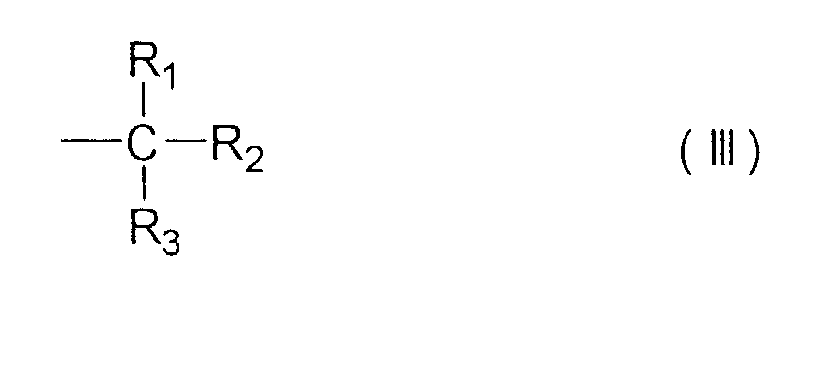
- Verfahren gemäss Anspruch 1, worin die katalytische Hydrierungsreaktion in Abwesenheit jeglichen Lösungsmittels durchgeführt wird.
- Verfahren gemäss Anspruch 1 oder 2, worin die katalytische Hydrierungsreaktion bei einer Temperatur von 80 bis 240°C durchgeführt wird.
- Verfahren gemäss einem der Ansprüche 1 bis 3, worin die katalytische Hydrierungsreaktion in einem Reaktor bei einem Wasserstoffdruck von 15 bis 200 kg/cm2 durchgeführt wird.
- Verfahren gemäss mindestens einem der Ansprüche 1 bis 4, worin X eine aliphatische Gruppe, eine Arylgruppe, eine heterocyclische Gruppe, eine Alkoxygruppe, eine Aryloxygruppe, eine heterocyclische Oxygruppe, eine Alkylacyloxygruppe, eine Arylacyloxygruppe, eine heterocyclische Acyloxygruppe, eine Carbamoyloxygruppe, eine Silyloxygruppe, eine Acylaminogruppe, eine Alkylaminogruppe, eine Arylaminogruppe, eine Ureidogruppe, eine Alkenyloxygruppe, eine Formylgruppe, eine Alkylacylgruppe, eine Arylacylgruppe, eine heterocyclische Acylgruppe, eine Alkoxycarbonylgruppe, eine Aryloxycarbonylgruppe, eine heterocyclische Oxycarbonylgruppe, eine Alkyloxycarbonylaminogruppe, eine Aryloxycarbonylaminogruppe, eine heterocyclische Oxycarbonylaminogruppe, eine Carbamoylgruppe, eine Phosphonylgruppe, eine Imidgruppe, eine Azolylgruppe, ein Halogenatom, eine Hydroxygruppe, eine Cyanogruppe, eine Carboxygruppe, eine Nitrogruppe oder eine unsubstituierte Aminogruppe repräsentiert.
- Verfahren gemäss mindestens einem der Ansprüche 1 bis 5, worin R1, R2 und R3 unabhängig voneinander eine aliphatische Gruppe, eine Arylgruppe, eine heterocyclische Gruppe, eine Formylgruppe, eine Alkylacylgruppe, eine Arylacylgruppe, eine heterocyclische Acylgruppe, eine Alkoxycarbonylgruppe, eine Aryloxycarbonylgruppe, eine heterocyclische Oxycarbonylgruppe, eine Carbamoylgruppe oder eine Carboxylgruppe darstellen.
- Verfahren gemäss Anspruch 6, worin R1, R2 und R3 unabhängig voneinander eine verzweigte oder unverzweigte Alkylgruppe mit 1 bis 15 Kohlenstoffatomen, eine Aralkylgruppe mit 7 bis 15 Kohlenstoffatomen, eine Cycloalkylgruppe mit 3 bis 15 Kohlenstoffatomen oder eine Arylgruppe mit 6 bis 15 Kohlenstoffatomen sind.
- Verfahren gemäss Anspruch 7, worin R1, R2 und R3 unabhängig voneinander eine unverzweigte oder verzweigte Alkylgruppe mit 1 bis 8 Kohlenstoffatomen, eine Aralkylgruppe mit 7 oder 8 Kohlenstoffatomen, eine Cycloalkylgruppe mit 5 bis 8 Kohlenstoffatomen oder eine Arylgruppe mit 6 bis 8 Kohlenstoffatomen darstellen.
- Verfahren gemäss mindestens einem der Ansprüche 1 bis 8, worin n 1 ist.
- Verfahren gemäss Anspruch 6, worin R1, R2 und R3 unabhängig voneinander eine Alkylgruppe mit 1 bis 15 Kohlenstoffatomen, eine Aralkylgruppe mit 7 bis 15 Kohlenstoffatomen, eine Cycloalkylgruppe mit 3 bis 15 Kohlenstoffatomen oder eine Arylgruppe mit 6 bis 12 Kohlenstoffatomen sind; X ist eine Alkylgruppe mit 1 bis 15 Kohlenstoffatomen, eine Aralkylgruppe mit 7 bis 15 Kohlenstoffatomen, eine Cycloalkylgruppe mit 3 bis 15 Kohlenstoffatomen oder eine Arylgruppe mit 6 bis 15 Kohlenstoffatomen; n ist 1; und X befindet sich in der para-Position zu der Hydroxylgruppe der Formeln (I) und (II).
- Verfahren gemäss Anspruch 1, worin R und R' beide eine tert-Butylgruppe, eine tert-Amylgruppe, eine tert-Octylgruppe oder eine 1-Methylcyclohexylgruppe sind; X ist eine Methylgruppe, eine Ethylgruppe, eine n-Propylgruppe, eine Isopropylgruppe, eine n-Butylgruppe, eine sek-Butylgruppe, eine tert-Amylgruppe, eine tert-Octylgruppe, eine Phenylgruppe oder eine Cyclohexylgruppe; n ist 1; und X befindet sich in der para-Position zu der Hydroxylgruppe der Formeln (I) und (II).
Applications Claiming Priority (2)
| Application Number | Priority Date | Filing Date | Title |
|---|---|---|---|
| JP22486494A JP3571376B2 (ja) | 1994-09-20 | 1994-09-20 | 2,6−ジ−tert−アルキルシクロヘキサノール類の製造方法 |
| JP224864/94 | 1994-09-20 |
Publications (2)
| Publication Number | Publication Date |
|---|---|
| EP0703210A1 EP0703210A1 (de) | 1996-03-27 |
| EP0703210B1 true EP0703210B1 (de) | 1999-03-31 |
Family
ID=16820367
Family Applications (1)
| Application Number | Title | Priority Date | Filing Date |
|---|---|---|---|
| EP19950114795 Expired - Lifetime EP0703210B1 (de) | 1994-09-20 | 1995-09-20 | Verfahren zur Herstellung von 2,6-Di-tert-alkylcyclohexanol |
Country Status (3)
| Country | Link |
|---|---|
| EP (1) | EP0703210B1 (de) |
| JP (1) | JP3571376B2 (de) |
| DE (1) | DE69508683T2 (de) |
Families Citing this family (7)
| Publication number | Priority date | Publication date | Assignee | Title |
|---|---|---|---|---|
| FR2947545B1 (fr) | 2009-07-03 | 2011-06-10 | Aet Group | Procede continu d'hydrogenation de composes aromatiques |
| CN109704918B (zh) * | 2017-10-25 | 2022-07-26 | 中国石油化工股份有限公司 | 连续催化制备2,6-二叔丁基-4-甲基环己醇的方法 |
| CN109704932B (zh) * | 2017-10-25 | 2022-07-26 | 中国石油化工股份有限公司 | 催化加氢制备2,6-二叔丁基-4-甲基环己醇的方法 |
| CN110526799A (zh) * | 2018-05-24 | 2019-12-03 | 中国石油化工股份有限公司 | 一种制备2,6-二叔丁基-4-甲基环己醇的反应工艺 |
| CN109896937B (zh) * | 2019-03-18 | 2022-06-24 | 厦门中坤化学有限公司 | 一种由间甲酚制备3-甲基环己酮的合成方法 |
| CN111348986A (zh) * | 2020-04-15 | 2020-06-30 | 沈阳感光化工研究院有限公司 | 一种2,6-二叔丁基-4-甲基环己醇化合物的合成方法 |
| CN111662157B (zh) * | 2020-06-18 | 2023-07-07 | 西安工程大学 | 一种钴催化合成2,6-二叔丁基-4-甲基环己醇的方法 |
Family Cites Families (4)
| Publication number | Priority date | Publication date | Assignee | Title |
|---|---|---|---|---|
| US2840599A (en) * | 1957-01-28 | 1958-06-24 | Ameringen Haebler Inc Van | Lower alkanoic acid esters of para tertiary butyl cyclohexanol |
| JPS54122253A (en) * | 1978-03-13 | 1979-09-21 | Shin Etsu Chem Co Ltd | Preparation of cis-alkylcyclohexanol |
| DE3401343A1 (de) * | 1983-10-22 | 1985-05-09 | Chemische Werke Hüls AG, 4370 Marl | Verfahren zur herstellung von 2- und 4-tert.-butylcyclohexanol mit hohen anteilen an cis-isomeren durch katalytische hydrierung der entsprechenden tert.-butylphenole |
| DE3629605A1 (de) * | 1986-08-30 | 1988-03-03 | Basf Ag | Verwendung von 2-tert.-butyl-4-methyl-cyclohexanol als riechstoff sowie als bestandteil von riechstoffkompositionen |
-
1994
- 1994-09-20 JP JP22486494A patent/JP3571376B2/ja not_active Expired - Fee Related
-
1995
- 1995-09-20 DE DE69508683T patent/DE69508683T2/de not_active Expired - Fee Related
- 1995-09-20 EP EP19950114795 patent/EP0703210B1/de not_active Expired - Lifetime
Also Published As
| Publication number | Publication date |
|---|---|
| JP3571376B2 (ja) | 2004-09-29 |
| DE69508683D1 (de) | 1999-05-06 |
| EP0703210A1 (de) | 1996-03-27 |
| JPH0892141A (ja) | 1996-04-09 |
| DE69508683T2 (de) | 1999-09-09 |
Similar Documents
| Publication | Publication Date | Title |
|---|---|---|
| EP0703210B1 (de) | Verfahren zur Herstellung von 2,6-Di-tert-alkylcyclohexanol | |
| US2511028A (en) | 4-[(para-aminophenyl) alkyl] cyclo-hexylamine | |
| US3134811A (en) | Aminophenyl hydroquinones | |
| US2273564A (en) | Diamino benzyl alcohols and process for making same | |
| US4731320A (en) | Silver halide photographic material | |
| US4587210A (en) | Color photographic silver halide light-sensitive material consisting of a specified hydroquinone derivative | |
| EP0228064B1 (de) | Photographische Elemente mit sterisch gehinderten photographischen Kupplerlösemitteln | |
| US20120172632A1 (en) | Continuous method for the hydrogenation of aromatic compounds | |
| JPH02275A (ja) | ビタミンaの調製法 | |
| US3488380A (en) | Carbamate esters and their method of preparation | |
| EP0011048B1 (de) | Verfahren zur Herstellung von im wesentlichen reinen 3-Amino-4-alkoxy-acylaniliden aus 2,4-Dinitrochlorbenzol | |
| US5349107A (en) | Process for producing optically active γ-hydroxyketones | |
| JPH09255601A (ja) | 2,6−ジ−tert−アルキルシクロヘキサノール類の製造方法 | |
| EP0457723B1 (de) | Verfahren zum Stabilisieren von Magentakupplern und den entsprechenden Bildfarbstoffen in photographischen Materialien | |
| JPS60123430A (ja) | 塩素化されたエチレン系誘導体類の製造方法 | |
| US5756863A (en) | Process for preparing optically active cyclohexanol derivatives | |
| JPS61100551A (ja) | シクロアルキルアミノフエノ−ル誘導体の製造法 | |
| DE2451602A1 (de) | Verfahren zur herstellung von 3-anilino-5-pyrazolonen | |
| JP3615567B2 (ja) | 2,6−ジ−tert−ブチル−4−メチルシクロヘキサノールからなる写真用カプラーの合成中間体 | |
| Baumann et al. | Synthesis of long-chain alkyl and alkenyl bromides | |
| JP3505228B2 (ja) | 2,6−ジ−tert−アルキル−4−アルキルシクロヘキサノール類 | |
| US3419600A (en) | Novel nitro- and amino-arylalkoxy-hydroquinones | |
| DE4142132C1 (de) | ||
| US2628980A (en) | Beta-phenyl-gamma-nitroaldehydes | |
| JP2004300163A (ja) | 2,6−ジ−tert−ブチル−4−メチルシクロヘキサノール |
Legal Events
| Date | Code | Title | Description |
|---|---|---|---|
| PUAI | Public reference made under article 153(3) epc to a published international application that has entered the european phase |
Free format text: ORIGINAL CODE: 0009012 |
|
| AK | Designated contracting states |
Kind code of ref document: A1 Designated state(s): CH DE GB LI NL |
|
| 17P | Request for examination filed |
Effective date: 19960503 |
|
| 17Q | First examination report despatched |
Effective date: 19970502 |
|
| GRAG | Despatch of communication of intention to grant |
Free format text: ORIGINAL CODE: EPIDOS AGRA |
|
| GRAG | Despatch of communication of intention to grant |
Free format text: ORIGINAL CODE: EPIDOS AGRA |
|
| GRAH | Despatch of communication of intention to grant a patent |
Free format text: ORIGINAL CODE: EPIDOS IGRA |
|
| GRAH | Despatch of communication of intention to grant a patent |
Free format text: ORIGINAL CODE: EPIDOS IGRA |
|
| GRAA | (expected) grant |
Free format text: ORIGINAL CODE: 0009210 |
|
| AK | Designated contracting states |
Kind code of ref document: B1 Designated state(s): CH DE GB LI NL |
|
| PG25 | Lapsed in a contracting state [announced via postgrant information from national office to epo] |
Ref country code: NL Free format text: LAPSE BECAUSE OF FAILURE TO SUBMIT A TRANSLATION OF THE DESCRIPTION OR TO PAY THE FEE WITHIN THE PRESCRIBED TIME-LIMIT Effective date: 19990331 |
|
| REG | Reference to a national code |
Ref country code: CH Ref legal event code: EP |
|
| REF | Corresponds to: |
Ref document number: 69508683 Country of ref document: DE Date of ref document: 19990506 |
|
| REG | Reference to a national code |
Ref country code: CH Ref legal event code: NV Representative=s name: BOVARD AG PATENTANWAELTE |
|
| NLV1 | Nl: lapsed or annulled due to failure to fulfill the requirements of art. 29p and 29m of the patents act | ||
| PLBE | No opposition filed within time limit |
Free format text: ORIGINAL CODE: 0009261 |
|
| STAA | Information on the status of an ep patent application or granted ep patent |
Free format text: STATUS: NO OPPOSITION FILED WITHIN TIME LIMIT |
|
| 26N | No opposition filed | ||
| REG | Reference to a national code |
Ref country code: GB Ref legal event code: IF02 |
|
| REG | Reference to a national code |
Ref country code: GB Ref legal event code: 732E |
|
| PGFP | Annual fee paid to national office [announced via postgrant information from national office to epo] |
Ref country code: GB Payment date: 20080924 Year of fee payment: 14 |
|
| PGFP | Annual fee paid to national office [announced via postgrant information from national office to epo] |
Ref country code: DE Payment date: 20081002 Year of fee payment: 14 Ref country code: CH Payment date: 20081016 Year of fee payment: 14 |
|
| REG | Reference to a national code |
Ref country code: CH Ref legal event code: PL |
|
| GBPC | Gb: european patent ceased through non-payment of renewal fee |
Effective date: 20090920 |
|
| PG25 | Lapsed in a contracting state [announced via postgrant information from national office to epo] |
Ref country code: DE Free format text: LAPSE BECAUSE OF NON-PAYMENT OF DUE FEES Effective date: 20100401 |
|
| PG25 | Lapsed in a contracting state [announced via postgrant information from national office to epo] |
Ref country code: LI Free format text: LAPSE BECAUSE OF NON-PAYMENT OF DUE FEES Effective date: 20090930 Ref country code: CH Free format text: LAPSE BECAUSE OF NON-PAYMENT OF DUE FEES Effective date: 20090930 |
|
| PG25 | Lapsed in a contracting state [announced via postgrant information from national office to epo] |
Ref country code: GB Free format text: LAPSE BECAUSE OF NON-PAYMENT OF DUE FEES Effective date: 20090920 |