EP0708126B1 - Verfahren zur Herstellung von fogging-armen Polyurethan-Schaumstoffen und hierfür verwendbare spezielle Polyoxyalkylen-polyole - Google Patents
Verfahren zur Herstellung von fogging-armen Polyurethan-Schaumstoffen und hierfür verwendbare spezielle Polyoxyalkylen-polyole Download PDFInfo
- Publication number
- EP0708126B1 EP0708126B1 EP95116222A EP95116222A EP0708126B1 EP 0708126 B1 EP0708126 B1 EP 0708126B1 EP 95116222 A EP95116222 A EP 95116222A EP 95116222 A EP95116222 A EP 95116222A EP 0708126 B1 EP0708126 B1 EP 0708126B1
- Authority
- EP
- European Patent Office
- Prior art keywords
- und
- bis
- weight
- oder
- von
- Prior art date
- Legal status (The legal status is an assumption and is not a legal conclusion. Google has not performed a legal analysis and makes no representation as to the accuracy of the status listed.)
- Expired - Lifetime
Links
Classifications
-
- C—CHEMISTRY; METALLURGY
- C08—ORGANIC MACROMOLECULAR COMPOUNDS; THEIR PREPARATION OR CHEMICAL WORKING-UP; COMPOSITIONS BASED THEREON
- C08G—MACROMOLECULAR COMPOUNDS OBTAINED OTHERWISE THAN BY REACTIONS ONLY INVOLVING UNSATURATED CARBON-TO-CARBON BONDS
- C08G18/00—Polymeric products of isocyanates or isothiocyanates
- C08G18/06—Polymeric products of isocyanates or isothiocyanates with compounds having active hydrogen
- C08G18/28—Polymeric products of isocyanates or isothiocyanates with compounds having active hydrogen characterised by the compounds used containing active hydrogen
- C08G18/40—High-molecular-weight compounds
- C08G18/48—Polyethers
- C08G18/50—Polyethers having heteroatoms other than oxygen
- C08G18/5021—Polyethers having heteroatoms other than oxygen having nitrogen
-
- C—CHEMISTRY; METALLURGY
- C08—ORGANIC MACROMOLECULAR COMPOUNDS; THEIR PREPARATION OR CHEMICAL WORKING-UP; COMPOSITIONS BASED THEREON
- C08G—MACROMOLECULAR COMPOUNDS OBTAINED OTHERWISE THAN BY REACTIONS ONLY INVOLVING UNSATURATED CARBON-TO-CARBON BONDS
- C08G65/00—Macromolecular compounds obtained by reactions forming an ether link in the main chain of the macromolecule
- C08G65/02—Macromolecular compounds obtained by reactions forming an ether link in the main chain of the macromolecule from cyclic ethers by opening of the heterocyclic ring
- C08G65/26—Macromolecular compounds obtained by reactions forming an ether link in the main chain of the macromolecule from cyclic ethers by opening of the heterocyclic ring from cyclic ethers and other compounds
- C08G65/2618—Macromolecular compounds obtained by reactions forming an ether link in the main chain of the macromolecule from cyclic ethers by opening of the heterocyclic ring from cyclic ethers and other compounds the other compounds containing nitrogen
- C08G65/2621—Macromolecular compounds obtained by reactions forming an ether link in the main chain of the macromolecule from cyclic ethers by opening of the heterocyclic ring from cyclic ethers and other compounds the other compounds containing nitrogen containing amine groups
- C08G65/2624—Macromolecular compounds obtained by reactions forming an ether link in the main chain of the macromolecule from cyclic ethers by opening of the heterocyclic ring from cyclic ethers and other compounds the other compounds containing nitrogen containing amine groups containing aliphatic amine groups
-
- C—CHEMISTRY; METALLURGY
- C08—ORGANIC MACROMOLECULAR COMPOUNDS; THEIR PREPARATION OR CHEMICAL WORKING-UP; COMPOSITIONS BASED THEREON
- C08J—WORKING-UP; GENERAL PROCESSES OF COMPOUNDING; AFTER-TREATMENT NOT COVERED BY SUBCLASSES C08B, C08C, C08F, C08G or C08H
- C08J9/00—Working-up of macromolecular substances to porous or cellular articles or materials; After-treatment thereof
- C08J9/04—Working-up of macromolecular substances to porous or cellular articles or materials; After-treatment thereof using blowing gases generated by a previously added blowing agent
- C08J9/12—Working-up of macromolecular substances to porous or cellular articles or materials; After-treatment thereof using blowing gases generated by a previously added blowing agent by a physical blowing agent
- C08J9/125—Water, e.g. hydrated salts
-
- C—CHEMISTRY; METALLURGY
- C08—ORGANIC MACROMOLECULAR COMPOUNDS; THEIR PREPARATION OR CHEMICAL WORKING-UP; COMPOSITIONS BASED THEREON
- C08G—MACROMOLECULAR COMPOUNDS OBTAINED OTHERWISE THAN BY REACTIONS ONLY INVOLVING UNSATURATED CARBON-TO-CARBON BONDS
- C08G2110/00—Foam properties
- C08G2110/0016—Foam properties semi-rigid
-
- C—CHEMISTRY; METALLURGY
- C08—ORGANIC MACROMOLECULAR COMPOUNDS; THEIR PREPARATION OR CHEMICAL WORKING-UP; COMPOSITIONS BASED THEREON
- C08G—MACROMOLECULAR COMPOUNDS OBTAINED OTHERWISE THAN BY REACTIONS ONLY INVOLVING UNSATURATED CARBON-TO-CARBON BONDS
- C08G2110/00—Foam properties
- C08G2110/0025—Foam properties rigid
-
- C—CHEMISTRY; METALLURGY
- C08—ORGANIC MACROMOLECULAR COMPOUNDS; THEIR PREPARATION OR CHEMICAL WORKING-UP; COMPOSITIONS BASED THEREON
- C08G—MACROMOLECULAR COMPOUNDS OBTAINED OTHERWISE THAN BY REACTIONS ONLY INVOLVING UNSATURATED CARBON-TO-CARBON BONDS
- C08G2110/00—Foam properties
- C08G2110/0033—Foam properties having integral skins
-
- C—CHEMISTRY; METALLURGY
- C08—ORGANIC MACROMOLECULAR COMPOUNDS; THEIR PREPARATION OR CHEMICAL WORKING-UP; COMPOSITIONS BASED THEREON
- C08G—MACROMOLECULAR COMPOUNDS OBTAINED OTHERWISE THAN BY REACTIONS ONLY INVOLVING UNSATURATED CARBON-TO-CARBON BONDS
- C08G2110/00—Foam properties
- C08G2110/0041—Foam properties having specified density
-
- C—CHEMISTRY; METALLURGY
- C08—ORGANIC MACROMOLECULAR COMPOUNDS; THEIR PREPARATION OR CHEMICAL WORKING-UP; COMPOSITIONS BASED THEREON
- C08G—MACROMOLECULAR COMPOUNDS OBTAINED OTHERWISE THAN BY REACTIONS ONLY INVOLVING UNSATURATED CARBON-TO-CARBON BONDS
- C08G2110/00—Foam properties
- C08G2110/0083—Foam properties prepared using water as the sole blowing agent
-
- C—CHEMISTRY; METALLURGY
- C08—ORGANIC MACROMOLECULAR COMPOUNDS; THEIR PREPARATION OR CHEMICAL WORKING-UP; COMPOSITIONS BASED THEREON
- C08G—MACROMOLECULAR COMPOUNDS OBTAINED OTHERWISE THAN BY REACTIONS ONLY INVOLVING UNSATURATED CARBON-TO-CARBON BONDS
- C08G2115/00—Oligomerisation
- C08G2115/02—Oligomerisation to isocyanurate groups
Definitions
- the invention relates to a method for producing polyurethane foams, hereinafter also abbreviated PU foams called, preferably PU semi-rigid or rigid PU foams, with an improved foam structure that shows good aging values and are low in fogging and have a very good flow behavior the foamable reaction mixture, by reacting organic Polyisocyanates (a) with polyhydroxyl compounds (b) and optionally chain extenders and / or crosslinking agents (c) in the presence of blowing agents (d) and optionally Catalysts (e) and additives (f), according to the invention as polyhydroxyl compounds (b) polyoxyalkylene polyols (b1) with a hydroxyl number of 30 to 500 can be used are obtainable by polyaddition of at least one alkylene oxide, preferably ethylene oxide and / or 1,2-propylene oxide at least a starter molecule from the group N, N'-bis (3-aminopropyl) ethylene diamine, Tripropylene tetramine and
- the invention further relates to those which can be used according to the invention new tertiary amino groups as bridge members containing polyoxyalkylene polyols (B1).
- PU semi-rigid foams are also known by the prepolymer process, usually based on Toluylene diisocyanate (TDI) prepolymers, and of PU semi-hard and Rigid PU foams using the one-shot process, advantageously using mixtures of diphenylmethane diisocyanates (MDI) and polyphenyl polymethylene polyisocyanates, so-called Raw MDI, as polyisocyanates.
- MDI diphenylmethane diisocyanates
- Raw MDI so-called Raw MDI
- PU semirigid foams can also without the use of water after Frothing process with the addition of dichlorodifluoromethane as Propellants are produced.
- the polyaddition reaction can be activated by organic Tin connections (plastic manual, volume VII, polyurethanes, 2nd edition, 1983, published by D. G. Oertel, Carl Hanser Verlag, Kunststoff, Vienna).
- Composite elements which exist are described in EP-A-0 490 145 from at least one cover layer made of polyvinyl chloride or a polyvinyl chloride-containing polymer mixture and a PU foam, preferably a PU semi-rigid or rigid foam.
- PU foams are expediently added with tertiary Amines are produced as catalysts as these both the reaction between the hydroxyl groups of the polyhydroxyl compounds and the NCO groups of the polyisocyanates, the urethane formation, as also the reaction between water and NCO groups with formation of amino groups and carbon dioxide as propellant, the propellant reaction, accelerate, especially with the one shot process the speeds of the reactions running side by side must be precisely coordinated.
- the propellant reaction accelerate, especially with the one shot process the speeds of the reactions running side by side must be precisely coordinated.
- the biuret and cyanurate structures must be able to run off Catalysts a synchronous sequence of these different types Ensure implementations.
- the catalysts must not through an early installation in the polyurethane structure, its catalytic Losing effectiveness, still hydrolytic decay accelerate the PU foam produced.
- a disadvantage is the unpleasant smell of many in practice Tertiary amine catalyst used, which is based on the produced PU foams transfer and their use for certain Applications can adversely affect.
- DE-A-23 21 884 (GB-A-1 344 038) are therefore used for the production of PU foams produced with a tertiary amine as a catalyst Polyether polyols in combination with an acid and a Silicone oil used.
- Highly reactive, tertiary amino groups are also known to be bound containing polyoxyalkylene polyols, which according to the EP-A-0 539 819 can be prepared by oxalkylation of a Starter molecule that has at least two reactive hydrogen atoms and at least one, via a spacer bridge of at least three Contains bound tertiary amino group bound methylene, with at least one alkylene oxide.
- the highly reactive polyoxyalkylene polyols which preferably have a functionality of 2 or 3 and have a molecular weight of 2,800 to 6,200 and below Use of N, N-dimethyl-diaminobutane-1,4, N, N-dimethyl-diaminopropane-1,3 and N, N-dimethyl-dipropylene-triamine as starter molecules are used to manufacture of compact or cellular, preferably flexible polyisocyanate polyaddition products.
- Have polyoxyalkylene polyols of this type high catalyst activity in PU formulations Manufacture of flexible PU and semi-rigid PU foams.
- the object of the present invention was the synchronous Sequence of different reactions in the PU foam, preferably PU semi-hard and PU rigid foam production, to be ensured while avoiding odors in the foaming process and through the foam produced.
- the tendency to form voids in the PU foam should be reduced and thereby the reject rate for the back foaming of Dashboards and other composite elements, e.g. such with Cover layers made of polyvinyl chloride or other polyvinyl chloride Polymer mixtures can be drastically reduced.
- the improvement of the PU foam structure should improve the mechanical property level increased and standardized over the entire molded PU body become.
- the flow behavior of the foamable Reaction mixture increased and the processing area in with regard to the foaming devices and conditions, e.g. the temperature conditions are expanded.
- PU foams preferably the PU semi-rigid and rigid PU foams should, if possible be completely fogging-free.
- the invention further relates to polyoxyalkylene polyols a hydroxyl number from 30 to 500, obtainable by polyaddition of at least one alkylene oxide to a starter molecule from the Group N, N'-bis (3-aminopropyl) ethylene diamine, tripropylene tetramine and tetrapropylene pentamine and on technical mixtures of these starter molecules.
- the tertiary amino groups which can be used according to the invention are bound Containing polyoxyalkylene polyols are catalytically active and accelerate, especially in combination with carboxylic acids that Polyaddition reaction of organic polyisocyanates and polyhydroxyl compounds. Their addition in PU reaction mixtures can a considerable shortening of the Effect mold life in the production of PU molded foams. This technical advantage, which is also reflected in a lowering the production cost pays out, especially in manufacturing of PU rigid foam molded articles of considerable importance.
- the polyoxyalkylene polyols according to the invention are excellent Solvents for certain blowing agents, e.g.
- the PU foams in particular PU semi-rigid foams, have excellent aging values and show no elimination volatile compounds.
- Reaction mixtures for the production of the PU foams are very easy to flow and unlike e.g. with ethylenediamine started polyoxyalkylene polyols, the foaming times disadvantageous.
- the odorless PU foams produced according to the invention can reduce the mechanical Properties are improved.
- Ratio of water equivalent to equivalent NCO group in Range advantageously 0.5 to 5: 1, preferably 0.7 to 0.95: 1 and especially 0.75 to 0.85: 1.
- Ratio of water equivalent to equivalent NCO group in Range advantageously 0.5 to 5: 1, preferably 0.7 to 0.95: 1 and especially 0.75 to 0.85: 1.
- isocyanurate groups e.g. a ratio of NCO: OH groups from 2 to 25: 1, preferably 2 to 10: 1 and in particular 2 to 5: 1 proven.
- the PU foams are expediently by the one shot process produced by mixing two components A and B, where usually the starting components (b) and (d) and optionally (c), (e) and (f) to the so-called A component united and as a B component the organic and / or modified organic polyisocyanates (a) optionally in a mixture be used with inert, physically acting blowing agents.
- the A and B components must be made before the PU foams are made only be mixed intensively.
- the reaction mixture can be foamed in open or closed molds and let it harden. Furthermore, pre-made Cover materials for molded parts are foamed.
- the method according to the invention is also particularly suitable for Manufacture of molded PU foams.
- the reaction mixture is for this purpose at a temperature of 15 to 80 ° C, preferably 30 to 65 ° C in a suitably metallic, heatable mold brought in.
- the mold temperature is usually 20 to 90 ° C, preferably 35 to 70 ° C.
- the reaction mixture is usually left without pressure or with compression e.g. with degrees of compaction from 1.1 to 8, preferably from 2 to 6 and in particular 2.2 to 4 in the closed mold Harden.
- the PU foams produced by the process according to the invention usually have densities of 0.025 to 0.25 g / cm 3 , preferably 0.035 to 0.08 g / cm 3 , the molded foams, for example those with a cellular core and a compressed edge zone, depending on the degree of compaction used, densities of 0.08 to 0.75 g / cm 3 , preferably 0.2 to 0.6 g / cm 3 , may also be present.
- the PU foams produced by the process according to the invention are essentially odorless, have a uniform, essentially void-free cell structure and have a uniformly high level of mechanical properties.
- the PU foams are suitable as insulating materials, e.g. as insulating shells for pipes or heating. she are also used as wall cladding, housing parts, upholstery materials, armrests, headrests, sun visors, storage containers or compartments and safety covers as well as Glove box and center console.
- B component mixture of diphenylmethane diisocyanate isomers and polyphenyl polymethylene polyisocyanates with an NCO content of 31.3% by weight and a diphenylmethane diisocyanate isomer content of 39 wt .-%, based on the total weight.
- a Hennecke foaming apparatus with a was used for this Mixing head MQ of throttle setting 5, nozzles with a diameter 1.3 mm for the A component and 0.8 mm for the B component and a discharge rate of 223 g / seconds.
- the Shot time was 4.2 to 5.05 seconds, which is a discharge rate from 920 g to 1,126 g.
- the cover film was removed to foam the dashboard PVC / ABS in a metal mold at 40 to 43 ° C inserted, the mold closed, the A and B components with a temperature of 30 ° C and a pressure of 200 bar mixed in a weight ratio of 100:43, the reaction mixture in the closed mold is injected and foamed there calmly.
- the instrument panel obtained was removed from the mold after 3.5 minutes and then stored at 80 ° C for 1 hour. There were no sink marks be determined. After 24 hours, the molded article showed an excellent one Adhesion between the PU semi-rigid foam and PVC / ABS film.
- the reaction mixture had a setting time of 70 seconds and a rise time of 105 seconds
- the PU foam had one Density, free foamed, from 76 g / l.
- the molded part was produced analogously to the information from the Example 1, but with the A and B components in weight ratio 100: 41.66 were mixed.
- the reaction mixture had a setting time of 78 seconds and a rise time of 108 seconds.
- the PU foam had one Density, free foamed, from 66 g / l.
- the dashboard demolded after 2.5 minutes showed no sink marks or blowholes in PU semi-rigid foam.
- the reaction mixture had a setting time of 77 seconds and a rise time of 115 seconds.
- the PU foam had one Density, free foamed, from 79 g / l.
- a component analogous to Example 2, but instead of 1 part by weight of that started with technical tripropylene tetramine Polyoxypropylene-polyols 1 part by weight of one containing N, N'-bis (3-aminopropyl) ethylenediamine started with polyoxypropylene polyols a hydroxyl number of 352 was used.
- the production of the molded part was analogous to the information in the example 1 performed, however, the A and B components in Weight ratio 100: 44 were mixed.
- the reaction mixture had a setting time of 76 seconds and a rise time of 110 seconds.
- the PU foam had one Density, free foamed, from 76 g / l.
- the fogging value after DIN 75 201, method B was 0.03 mg.
- the A and B components were used to produce a shaped body mixed in the weight ratio 100: 147.14, the reaction mixture filled into a metal mold and foamed and allowed to harden.
- the molded part made of rigid PU foam after 3 minutes was brittle and technically unusable.
- the reaction mixture had a start time of 14 seconds, one Setting time of 54 seconds and a rise time of 72 seconds.
- the PU foam had a density, free foam, of 25.4 g / l on.
- the production of the molded part was carried out analogously to the information from Comparative example carried out, however, the A and B components were mixed in a weight ratio of 100: 151.16.
- the non-brittle rigid PU foam of the demolded after 3 minutes, technically usable molded part was extremely fine-celled.
- the reaction mixture had a start time of 8 seconds, one Setting time of 23 seconds and a rise time of 37 seconds.
- the PU foam had a density, free foam, of 25.8 g / l on.
Landscapes
- Chemical & Material Sciences (AREA)
- Health & Medical Sciences (AREA)
- Chemical Kinetics & Catalysis (AREA)
- Medicinal Chemistry (AREA)
- Polymers & Plastics (AREA)
- Organic Chemistry (AREA)
- Engineering & Computer Science (AREA)
- Materials Engineering (AREA)
- Polyurethanes Or Polyureas (AREA)
Description
- d) Treibmitteln sowie gegebenenfalls
- e) Katalysatoren und
- f) Zusatzstoffen,


- R1 und R2
- gleiche oder verschiedene, lineare oder verzweigte
C1- bis C4-Alkylreste,
beide Reste gemeinsam einen C4- bis C6-Cycloalkylenrest, der anstelle einer Methylengruppe ein -O- oder -NR5-Brückenglied enthalten kann, in dem R5 ein C1- bis C4-Alkylrest ist, oder
gleiche oder verschiedene Dialkylaminoalkylreste der Formelin der R6 und R7 gleiche oder verschiedene, lineare oder verzweigte C1- bis C4-Alkylreste oder beide Reste gemeinsam ein C4- bis C6-Cycloalkylenrest sind, der anstelle einer Methylengruppe ein -O- oder -NR5- Brückenglied gebunden enthalten kann und X eine ganze Zahl von mindestens 3 ist,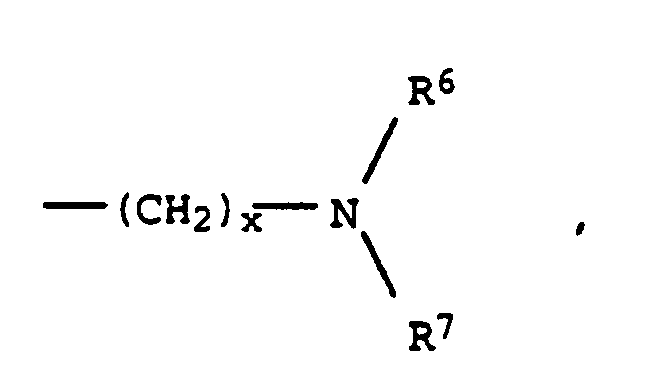
- z
- eine ganze Zahl von mindestens 3,
- R3
- eine C2- bis C4-Alkylengruppe,
- y
- null oder eine Zahl von 1 bis 3 und
- R4
- Wasserstoff oder einen C1- bis C4-Alkylrest mit der Maßgabe, daß für y gleich null R4 Wasserstoff ist.
- 33,85 Gew.-Teilen
- eines Blockpolyoxypropylen-polyoxyethylen-polyols mit einer Hydroxylzahl von 30 und einem Gehalt an endständig gebundenen Ethylenoxideinheiten von 5,9 Gew.-%, bezogen auf das Gewicht der Propylenoxideinheiten, erhalten durch Alkoxylierung einer Startermolekülmischung aus Glycerin und Wasser im Gewichtsverhältnis 1:0,98,
- 0,25 Gew.-Teilen
- eines mit Glycerin gestarteten Polyoxyethylen (62,5 Gew.-%)-polyoxypropylen(27,5 Gew.-%)-polyoxyethylen(10 Gew.-%)-polyols mit einer Hydroxylzahl von 42,
- 35,00 Gew.-Teilen
- eines mit 1,2-Propylen-glykol gestarteten Polyoxypropylen(81,5 Gew.-%)-polyoxyethylen (18,5 Gew.-%)-glykols mit einer Hydroxylzahl von 29,
- 6,00 Gew.-Teilen
- eines mit N,N'-Bis-(3-aminopropyl)-ethylendiamin gestarteten Polyoxypropylen-polyols mit der Hydroxylzahl von 393,
- 1,6 Gew.-Teilen
- Ricinolsäure,
- 20,0 Gew.-Teilen
- eines Di-(C9- bis C11-alkyl)phthalats,
- 2,2 Gew.-Teilen
- Wasser,
- 0,45 Gew.-Teilen
- einer 40 gew.-%igen Kaliumacetatlösung in Ethylenglykol,
- 0,40 Gew.-Teilen
- Schwarzpaste und
- 1,0 Gew.-Teilen
- eines sterisch gehinderten Amins als Antioxidans (Naugard® 445).
- 47,50 Gew.-Teilen
- eines Blockpolyoxypropylen-polyoxyethylen-polyols mit einer Hydroxylzahl von 30 und einem Gehalt an endständig gebundenen Ethylenoxideinheiten von 5,9 Gew.-%, bezogen auf das Gewicht der Propylenoxideinheiten, erhalten durch Alkoxylierung einer Startermolekülmischung aus Glycerin und Wasser im Gewichtsverhältnis 1:0,98,
- 1,50 Gew.-Teilen
- eines mit Glycerin gestarteten Polyoxyethylen (62,5 Gew.-%)-polyoxypropylen(27,5 Gew.-%)-polyoxyethylen(10 Gew.-%)-polyols mit einer Hydroxylzahl von 42,
- 42,3 Gew.-Teilen
- eines mit Glycerin gestarteten Polyoxypropylen(86 Gew.-%)-polyoxyethylen (14 Gew.-%)-polyols mit der Hydroxylzahl von 28,
- 1,00 Gew.-Teilen
- eines mit technischem Tripropylen-tetramin gestarteten Polyoxypropylen-polyols mit einer Hydroxyzahl von 394,
- 5,00 Gew.-Teilen
- eines mit N,N-Dimethyl-diaminopropan-1,3 gestarteten Polyoxypropylen-polyols mit der Hydroxylzahl von 250,
- 0,5 Gew.-Teilen
- Ricinolsäure,
- 2,2 Gew.-Teilen
- Wasser und
- 1,0 Gew.-Teilen
- eines sterisch gehinderten Amins als Antioxidans (Naugard® 445).
- 42,6 Gew.-Teilen
- eines Blockpolyoxypropylen-polyoxyethylen-polyols mit einer Hydroxylzahl von 30 und einem Gehalt an endständig gebundenen Ethylenoxideinheiten von 5,9 Gew.-%, bezogen auf das Gewicht der Propylenoxideinheiten, erhalten durch Alkoxylierung einer Startermolekülmischung aus Glycerin und Wasser im Gewichtsverhältnis 1:0,98,
- 43,95 Gew.-Teilen
- eines mit N,N-Dimethyldipropylen-triamin gestarteten Polyoxypropylen(86,5 Gew.-%)-polyoxyethylen(13,5 Gew.-%)-polyols mit der Hydroxylzahl 35,
- 3,3 Gew.-Teilen
- eines Pfropfpolyether-polyols mit der Hydroxylzahl von 28, hergestellt durch eine radikalische, in situ Polymerisation aus einem mit Glycerin gestarteten Polyoxypropylen-polyoxyethylen-polyol als Pfropfgrundlage und einer Mischung aus Styrol und Acrylnitril im Gewichtsverhältnis 3:2 zur Bildung der Pfropfauflage (Lupranol® 4100 der BASF Aktiengesellschaft),
- 4,0 Gew.-Teilen
- eines mit Glycerin gestarteten Polyoxyethylenpolyols mit einer Hydroxylzahl von 525 und einem Kaliumionengehalt von 470 ppm,
- 2,0 Gew.-Teilen
- eines mit technischem Tetrapropylen-pentamin gestarteten Polyoxypropylen-polyols mit einer Hydroxylzahl von 386,
- 1,6 Gew.-Teilen
- Ricinolsäure,
- 2,0 Gew.-Teilen
- Wasser,
- 0,15 Gew.-Teilen
- Schwarzpaste und
- 1,0 Gew.-Teilen
- eines sterisch gehinderten Amins als Antioxidans (Naugard® 445).
- 82,4 Gew.-Teilen
- eines Polyoxypropylen-polyols mit einer Hydroxylzahl von 400, hergestellt unter Verwendung einer Startermolekülmischung aus Sucrose und Wasser,
- 3,6 Gew.-Teilen
- Wasser,
- 10,9 Gew.-Teilen
- Cyclopentan,
- 2,3 Gew.-Teilen
- Dimethylaminocyclohexylamin und
- 0,8 Gew.-Teilen
- eines Schaumstabilisators auf Silikonbasis (Tegostab® 8409 der Goldschmidt AG).
- 84,7 Gew.-Teilen
- eines mit N,N'-Bis-(3-aminopropyl)-ethylendiamin gestarteten Polyoxypropylen-polyols mit einer Hydroxylzahl von 407,
- 3,6 Gew.-Teilen
- Wasser,
- 10,9 Gew.-Teilen
- Cyclopentan und
- 0,8 Gew.-Teilen
- eines Schaumstabilisators auf Silikonbasis (Tegostab® 8409 der Goldschmidt AG).
Claims (9)
- Verfahren zur Herstellung von Polyurethan-Schaumstoffen durch Umsetzung vonin Gegenwart vona) mindestens einem organischen Polyisocyanat mitb) mindestens einer höhermolekularen Polyhydroxylverbindung mit mindestens zwei reaktiven Wasserstoffatomen undc) gegebenenfalls niedermolekularen Kettenverlängerungsund/oder Vernetzungsmittelndadurch gekennzeichnet, daß man als Polyhydroxylverbindungen (b) Polyoxyalkylen-polyol (b1) mit einer Hydroxylzahl von 30 bis 500 verwendet, erhältlich durch Alkoxylierung mindestens eines Startermoleküls aus der Gruppe N,N'-Bis(3-aminopropyl)-ethylen-diamin, Tripropylen-tetramin und Tetrapropylen-pentamin mit mindestens einem Alkylenoxid.d) Treibmitteln,
- Verfahren nach Anspruch 1, dadurch gekennzeichnet, daß man als Tripropylen-tetramin eine technische Tripropylen-tetraminmischung verwendet, die enthält

- Verfahren nach Anspruch 1, dadurch gekennzeichnet, daß man als Tetrapropylen-pentamin eine technische Tetrapropylen-pentamin-Mischung verwendet, die enthält


- Verfahren nach Anspruch 1, dadurch gekennzeichnet, daß man als Alkylenoxide Ethylenoxid oder 1,2-Propylenoxid oder Ethylenoxid und 1,2-Propylenoxid verwendet.
- Verfahren nach Anspruch 1, dadurch gekennzeichnet, daß man als Polyhydroxylverbindungen Mischungen verwendet, die enthaltenb1) mindestens ein Polyoxyalkylen-polyol mit einer Hydroxylzahl von 30 bis 500, erhältlich durch Alkoxylierung mindestens eines Startermoleküls aus der Gruppe N,N'-Bis-(3-aminopropyl)ethylen-diamin, Tripropylen-tetramin und Tetrapropylen-pentamin oder ihren technischen Mischungen mit mindestens einem Alkylenoxid undb2) mindestens eine Polyhydroxylverbindung mit einer Funktionalität von 2 bis 8 und einer Hydroxylzahl von 15 bis 500, wobei Polyoxyalkylen-polyole gemäß (b1) ausgenommen sind.
- Verfahren nach Anspruch 1, dadurch gekennzeichnet, daß man als Polyhydroxylverbindungen Mischungen verwendet, die enthalten, bezogen auf das Gesamtgewicht von (b1) und (b2),b1) 0,1 bis 50 Gew.-% mindestens eines Polyoxyalkylen-polyols mit einer Hydroxylzahl von 30 bis 500, erhältlich durch Alkoxylierung mindestens eines Startermoleküls aus der Gruppe N,N'-Bis-(3-aminopropyl)ethylen-diamin, Tripropylen-tetramin und Tetrapropylen-pentamin oder ihren technischen Mischungen mit mindestens einem Alkylenoxid undb2) 99,9 bis 50 Gew.-% mindestens einer Polyhydroxylverbindung mit einer Funktionalität von 2 bis 8 und einer Hydroxylzahl von 15 bis 500, wobei Polyoxyalkylen-polyole gemäß (b1) ausgenommen sind.
- Verfahren nach Anspruch 1, dadurch gekennzeichnet, daß man als Treibmittel Wasser verwendet.
- Verfahren nach Anspruch 1, dadurch gekennzeichnet, daß man zur Herstellung der Polyurethan-Schaumstoffemitverwendet.e) Katalysatoren undf) Zusatzstoffe
- Verfahren nach Anspruch 1, dadurch gekennzeichnet, daß man zur Herstellung der Polyurethan-Schaumstoffe als Zusatzstoffe Ricinolsäure, Hydroxyfettsäuren und/oder Dialkylphthalate mit 4 bis 20 Kohlenstoffatomen im Alkylrest mitverwendet.
Applications Claiming Priority (2)
| Application Number | Priority Date | Filing Date | Title |
|---|---|---|---|
| DE4437878 | 1994-10-22 | ||
| DE4437878A DE4437878A1 (de) | 1994-10-22 | 1994-10-22 | Verfahren zur Herstellung von fogging-armen Polyurethan-Schaumstoffen und hierfür verwendbare spezielle Polyoxyalkylen-polyole |
Publications (3)
| Publication Number | Publication Date |
|---|---|
| EP0708126A2 EP0708126A2 (de) | 1996-04-24 |
| EP0708126A3 EP0708126A3 (de) | 1997-01-15 |
| EP0708126B1 true EP0708126B1 (de) | 2002-08-07 |
Family
ID=6531502
Family Applications (1)
| Application Number | Title | Priority Date | Filing Date |
|---|---|---|---|
| EP95116222A Expired - Lifetime EP0708126B1 (de) | 1994-10-22 | 1995-10-14 | Verfahren zur Herstellung von fogging-armen Polyurethan-Schaumstoffen und hierfür verwendbare spezielle Polyoxyalkylen-polyole |
Country Status (9)
| Country | Link |
|---|---|
| US (1) | US5672636A (de) |
| EP (1) | EP0708126B1 (de) |
| JP (1) | JPH08208797A (de) |
| KR (1) | KR960014188A (de) |
| CN (1) | CN1070506C (de) |
| AT (1) | ATE221903T1 (de) |
| CA (1) | CA2161064C (de) |
| DE (2) | DE4437878A1 (de) |
| ES (1) | ES2181738T3 (de) |
Families Citing this family (37)
| Publication number | Priority date | Publication date | Assignee | Title |
|---|---|---|---|---|
| DE19706452C2 (de) * | 1997-02-19 | 2002-01-24 | Basf Ag | Verwendung von Fettsäuren zur Herstellung von thermoplastischen Polyisocyanat-Polyadditionsprodukten |
| US6262134B1 (en) | 1999-06-03 | 2001-07-17 | Gaska Tape, Inc. | Low volatility cellular foam |
| CN1138831C (zh) | 1999-07-26 | 2004-02-18 | 亨茨曼国际有限公司 | 制备冷固化软质泡沫的方法,用于该方法的多元醇组合物和反应体系,及由此获得的泡沫 |
| US6762274B2 (en) * | 2000-02-10 | 2004-07-13 | Dow Global Technologies Inc. | Low emission polyurethane polymers made with autocatalytic polyols |
| KR100848190B1 (ko) * | 2000-09-13 | 2008-07-24 | 다우 글로벌 테크놀로지스 인크. | 자체촉매적 특징을 갖는 폴리올 및 이로부터 제조된폴리우레탄 생성물 |
| KR100394710B1 (ko) * | 2000-11-16 | 2003-08-14 | 기아자동차주식회사 | 운전교습차량의 보조 브레이크 장치 |
| TW592813B (en) * | 2001-08-15 | 2004-06-21 | Dow Global Technologies Inc | Process to manufacture polyurethane products |
| US6924321B2 (en) * | 2001-08-16 | 2005-08-02 | Dow Global Technologies Inc. | Polyols with autocatalytic characteristics and polyurethane products made therefrom |
| US20050043421A1 (en) * | 2001-08-29 | 2005-02-24 | Van Der Wal Hanno R | Process to manufacture polyurethane products using polymer polyols in which the carrier polyol is a tertiary amone based polyol |
| CN1633454A (zh) * | 2001-10-01 | 2005-06-29 | 陶氏环球技术公司 | 具有凝胶化特性的自催化多元醇及由其制备的聚氨酯产物 |
| US20050131095A1 (en) * | 2002-08-02 | 2005-06-16 | Jianming Yu | Novel polyols |
| CN1805987A (zh) * | 2003-06-13 | 2006-07-19 | 陶氏环球技术公司 | 用于得到具有良好耐水解性的聚氨酯产物的催化剂组合物 |
| CA2528962A1 (en) * | 2003-06-13 | 2005-01-06 | Dow Global Technologies Inc. | Fusible catalysts and polyurethane products made therefrom |
| DE10337319A1 (de) * | 2003-08-12 | 2005-03-17 | Basf Ag | Verfahren zur Herstellung von Polyetheralkoholen |
| US7078443B2 (en) * | 2003-10-22 | 2006-07-18 | Intellectual Property Holdings, Llc | Viscoelastic foam layer and composition |
| EP1679327A4 (de) * | 2003-10-28 | 2009-04-29 | Mitsui Chemicals Polyurethanes | Polyurethan-weichschaumstoff und verwendung davon |
| CA2548321A1 (en) * | 2003-12-23 | 2005-07-14 | Dow Global Technologies Inc. | Process for producing polyurethane products autocatalytic using tertiary amine capped polyether polyols |
| EP1699840B1 (de) * | 2003-12-23 | 2014-01-22 | Dow Global Technologies LLC | Nichtflüchtige katalysatoren mit iminbindungen und tertiären aminen und daraus hergestellte polyurethanprodukte |
| DE102004017294A1 (de) * | 2004-04-05 | 2005-10-20 | Basf Ag | Verfahren zur Herstellung von Polyurethan-Schaumstoffen |
| MXPA06012518A (es) * | 2004-04-30 | 2007-01-31 | Dow Global Technologies Inc | Co-catalisis de polioles autocataliticos para espumas de poliuretano de baja densidad con caracteristicas de envejecimiento mejoradas. |
| DE102004041299A1 (de) * | 2004-08-25 | 2006-03-09 | Basf Ag | Verfahren zur Herstellung von Polyurethan-Weichschaumstoffen |
| DE102006003033A1 (de) * | 2006-01-20 | 2007-08-02 | Bayer Materialscience Ag | Schotterkörper sowie Verfahren zur Herstellung von Schotterkörpern |
| RU2435793C2 (ru) * | 2006-03-23 | 2011-12-10 | ДАУ ГЛОБАЛ ТЕКНОЛОДЖИЗ ЭлЭлСи | Полиолы на основе природных масел с собственными поверхностно-активными свойствами для вспенивания полиуретанов |
| ES2399843T3 (es) * | 2006-09-25 | 2013-04-03 | Dow Global Technologies Llc | Espumas de poliuretano hechas de poliéster polioles que contienen hidroximetilo y polioles que contienen amina terciaria |
| US20080125507A1 (en) * | 2006-11-28 | 2008-05-29 | Bayer Materialscience Llc | Reduction of VOC emissions from low density cavity filling NVH polyurethane foams |
| EP2104696B1 (de) | 2006-12-21 | 2013-09-11 | Dow Global Technologies LLC | Auf einer kombination aus autokatalytischem polyol und harnstoff basierte polyurethankatalyse |
| CN101743263A (zh) * | 2007-05-15 | 2010-06-16 | 陶氏环球技术公司 | 高回弹性泡沫体 |
| JP5412433B2 (ja) * | 2007-08-27 | 2014-02-12 | ダウ グローバル テクノロジーズ エルエルシー | ビスマス化合物を用いる天然油系軟質ポリウレタンフォームの触媒 |
| EP2268692B1 (de) * | 2008-04-17 | 2017-08-16 | Dow Global Technologies LLC | Polyurethan-elastomere aus erneuerbaren ressourcen |
| US9415572B2 (en) * | 2011-07-29 | 2016-08-16 | Covestro Deutschland Ag | Composite elements composed from thermoplastic polymers and polyurethanes, and process for production thereof |
| SG11201408103XA (en) * | 2012-06-06 | 2015-01-29 | Grace W R & Co | Polyurethane-based waterproofing composition for the water-proofing of concrete structures |
| WO2017104608A1 (ja) * | 2015-12-16 | 2017-06-22 | 株式会社ブリヂストン | 軟質ポリウレタンフォーム、及びシート用パッド |
| EP3330308A1 (de) * | 2016-12-05 | 2018-06-06 | Covestro Deutschland AG | Verfahren zur herstellung von tdi-basierten polyurethanweichschaumstoffen enthaltend organische säureanhydride und/oder organische säurechloride |
| JP6917341B2 (ja) * | 2017-11-15 | 2021-08-11 | 株式会社エフコンサルタント | 被覆材 |
| US20220235168A1 (en) * | 2021-01-22 | 2022-07-28 | Covestro Llc | Processes for making molded flexible foams and flexible foams produced thereby |
| US11738487B2 (en) * | 2021-01-22 | 2023-08-29 | Covestro Llc | Processes for making molded flexible foams and flexible foams produced thereby |
| WO2026035457A1 (en) * | 2024-08-08 | 2026-02-12 | Icl-Ip America Inc. | Heat resistant semi-rigid polyurethane foams |
Citations (3)
| Publication number | Priority date | Publication date | Assignee | Title |
|---|---|---|---|---|
| US5130402A (en) * | 1988-07-01 | 1992-07-14 | Sanyo Chemical Industries, Ltd. | Coating composition and plastisol composition, and articles coated therewith |
| US5336278A (en) * | 1993-05-13 | 1994-08-09 | The Lubrizol Corporation | Fuel composition containing an aromatic amide detergent |
| EP0632123A1 (de) * | 1993-06-30 | 1995-01-04 | The Lubrizol Corporation | Dieselkraftstoffzusammensetzungen |
Family Cites Families (6)
| Publication number | Priority date | Publication date | Assignee | Title |
|---|---|---|---|---|
| US4230824A (en) * | 1978-06-12 | 1980-10-28 | Mobay Chemical Corporation | Sucrose based polyether polyols |
| US4368137A (en) * | 1981-05-18 | 1983-01-11 | Petrolite Corporation | Polymers of oxyalkylated piperazines and uses thereof |
| US4555531A (en) * | 1985-01-14 | 1985-11-26 | Basf Wyandotte Corporation | Rigid polyurethane foams employing alkylene oxide adducts of alkanolamines |
| DD235878B5 (de) * | 1985-04-02 | 1994-04-28 | Basf Schwarzheide Gmbh | Verfahren zur Herstellung autokatalytisch wirkender Polyetheralkohole |
| JP2876018B2 (ja) * | 1988-12-28 | 1999-03-31 | 三井化学株式会社 | ウレタン発泡体の製造方法 |
| DE4135588A1 (de) * | 1991-10-29 | 1993-05-06 | Basf Ag, 6700 Ludwigshafen, De | Hochreaktive, tertiaere aminogruppen gebunden enthaltende polyoxyalkylenpolyole, verfahren zu ihrer herstellung und ihre verwendung zur herstellung von polyisocyanat-polyadditionsprodukten |
-
1994
- 1994-10-22 DE DE4437878A patent/DE4437878A1/de not_active Withdrawn
-
1995
- 1995-10-14 ES ES95116222T patent/ES2181738T3/es not_active Expired - Lifetime
- 1995-10-14 DE DE59510310T patent/DE59510310D1/de not_active Expired - Lifetime
- 1995-10-14 EP EP95116222A patent/EP0708126B1/de not_active Expired - Lifetime
- 1995-10-14 AT AT95116222T patent/ATE221903T1/de not_active IP Right Cessation
- 1995-10-16 US US08/565,208 patent/US5672636A/en not_active Expired - Lifetime
- 1995-10-19 JP JP7270943A patent/JPH08208797A/ja not_active Withdrawn
- 1995-10-20 CA CA002161064A patent/CA2161064C/en not_active Expired - Fee Related
- 1995-10-20 KR KR1019950036819A patent/KR960014188A/ko not_active Withdrawn
- 1995-10-21 CN CN95120289A patent/CN1070506C/zh not_active Expired - Fee Related
Patent Citations (3)
| Publication number | Priority date | Publication date | Assignee | Title |
|---|---|---|---|---|
| US5130402A (en) * | 1988-07-01 | 1992-07-14 | Sanyo Chemical Industries, Ltd. | Coating composition and plastisol composition, and articles coated therewith |
| US5336278A (en) * | 1993-05-13 | 1994-08-09 | The Lubrizol Corporation | Fuel composition containing an aromatic amide detergent |
| EP0632123A1 (de) * | 1993-06-30 | 1995-01-04 | The Lubrizol Corporation | Dieselkraftstoffzusammensetzungen |
Also Published As
| Publication number | Publication date |
|---|---|
| DE59510310D1 (de) | 2002-09-12 |
| CA2161064C (en) | 2006-09-12 |
| EP0708126A3 (de) | 1997-01-15 |
| US5672636A (en) | 1997-09-30 |
| KR960014188A (ko) | 1996-05-22 |
| CN1130196A (zh) | 1996-09-04 |
| JPH08208797A (ja) | 1996-08-13 |
| EP0708126A2 (de) | 1996-04-24 |
| ATE221903T1 (de) | 2002-08-15 |
| CA2161064A1 (en) | 1996-04-23 |
| CN1070506C (zh) | 2001-09-05 |
| ES2181738T3 (es) | 2003-03-01 |
| DE4437878A1 (de) | 1996-04-25 |
Similar Documents
| Publication | Publication Date | Title |
|---|---|---|
| EP0708126A2 (de) | Verfahren zur Herstellung von fogging-armen Polyurethan-Schaumstoffen und hierfür verwendbare spezielle Polyoxyalkylen-polyole | |
| EP0624611B1 (de) | Verfahren zur Herstellung von Polyurethan-Schaumstoffen | |
| DE19506671C2 (de) | Verfahren zur Herstellung von Polyurethan-Schaumstoffen | |
| EP0555742B1 (de) | Verfahren zur Herstellung von Fluorchlorkohlenwasserstoff freien Polyurethan-Weichschaumstoffen unter Verwendung von Urethangruppen enthaltenden Polyisocyanatmischungen auf Diphenylmethan-diisocyanatbasis sowie derartige modifizierte Polyisocyanatmischungen | |
| EP0910596B1 (de) | Verfahren zur herstellung von zelligen polyurethan-elastomeren und hierfür geeignete isocyanatprepolymere | |
| EP0433878B1 (de) | Verfahren zur Herstellung von flexiblen Polyurethan-Weichschaumstoffen mit viskoelastischen, körperschalldämpfenden Eigenschaften und hierzu verwendbare Polyoxyalkylen-polyol-Mischungen | |
| EP0557792B1 (de) | Verfahren zur Herstellung von Fluorchlorkohlenwasserstoff freien, niedrigdichten Polyurethan Weichschaumstoffen und weichelastischen Polyurethan-Formschaumstoffen sowie hierfür verwendbare, mit Urethangruppen modifizierte Polyisocyanatmischungen auf Diphenylmethan-diisocyanatbasis | |
| EP0433889B1 (de) | Verfahren zur Herstellung von Polyurethan-Weichschaumstoffen mit geringer Stauchhärte und hierfür verwendbare Blockpolyoxypropylen-polyoxyethylen-polyolgemische | |
| EP0676434B1 (de) | Verfahren zur Herstellung von fluorchlorkohlenwasserstoff freien, hochelastischen Polyurethan-Weichschaumstoffen und hierfür verwendbare, mit Urethangruppen modifizierte Polyisocyanatmischungen auf Diphenylmethan-diisocyanatbasis | |
| EP0677540B1 (de) | Verfahren zur Herstellung von Polyurethan-Schaumstoffen in Gegenwart von Aminoalkyl- oder Aminophenyl-imidazolen als Katalysator sowie die Verwendung dieser Katalysatoren zur Herstellung von Polyisocyanat-polyadditionsprodukten | |
| US6060531A (en) | Production of low-fogging polyurethane foams, and specific polyoxyalkylene-polyols which can be used for this purpose | |
| EP0056122B1 (de) | Verfahren zur Herstellung von flexiblen Polyurethan-Weichschaumstoffen mit verbesserter Hydrolysebeständigkeit und guter Stanzbarkeit | |
| EP0004879B1 (de) | Verfahren zur Herstellung von Polyurethan-Weichschaumstoffen unter Verwendung einer urethanmodifizierten Mischung aus Diphenylmethan-diisocyanaten und Polyphenyl-polymethylen-polyisocyanaten mit einem Diphenylmethan-diisocyanat-Isomerengehalt von 55 bis 85 Gewichtsprozent als Polyisocyanat | |
| EP0476337A1 (de) | Verfahren zur Herstellung von Urethangruppen oder Urethan- und Isocyanuratgruppen enthaltenden Hartschaumstoffen | |
| EP0490145B1 (de) | Polyvinylchlorid-Polyurethanschaumstoff-Verbundelemente, Verfahren zu ihrer Herstellung und zur Herstellung des Polyurethanschaumstoffs verwendbare flüssige, Urethangruppen enthaltende Polyisocyanatmischungen | |
| DE3131203A1 (de) | Verfahren zur herstellung von polyurethanen und polyurethanisocyanuraten | |
| EP0761727A1 (de) | Verfahren zur Herstellung von Polyurethan-Hart- oder -Halbhartschaumstoffen und derartige Polyurethan-Schaumstoffe enthaltende Verbundelemente | |
| DE3844049A1 (de) | Verfahren zur herstellung von flammwidrigen, elastischen polyurethan-weichschaumstoffen und niedrigviskose melamin-polyether-polyoldispersionen hierfuer | |
| DE4001044C2 (de) | Verfahren zur Herstellung von viskoelastischen Polyurethan-Weichschaumstoffen mit einem verbesserten Schallabsorptionsvermögen sowie hierzu verwendbare Polyether-polyol-Polyester-polyol-Mischungen | |
| DE4005373C2 (de) | Verfahren zur Herstellung von flammwidrigen Polyurethan-Schaumstoffen mit einer gegebenenfalls im wesentlichen zellfreien Randzone und niedrigviskose Flammschutzmittelgemisch-Polyether-polyoldispersionen hierfür | |
| EP0657482A1 (de) | Verfahren zur Herstellung von kompakten oder zelligen Polyurethanen, hierfür verwendbare Urethangruppen enthaltende Polyisocyanatzusammensetzungen und deren Verwendung | |
| DE2425448A1 (de) | Verfahren zur herstellung von polyurethanschaumstoffen | |
| EP0906926B1 (de) | Verfahren zur Herstellung von Polyurethan-Weichschaumstoffen | |
| EP0910597B1 (de) | Verfahren zur herstellung von zelligen polyurethan-elastomeren auf basis von 3,3'-dimethoxy-4,4'-diisocyanato-diphenyl und/oder 4,4'-stilbendiisocyanat | |
| DE4140644A1 (de) | Verfahren zur herstellung von polyurethan-schaumstoffen und hierfuer verwendbare polyoxyalkylen-polyole |
Legal Events
| Date | Code | Title | Description |
|---|---|---|---|
| PUAI | Public reference made under article 153(3) epc to a published international application that has entered the european phase |
Free format text: ORIGINAL CODE: 0009012 |
|
| AK | Designated contracting states |
Kind code of ref document: A2 Designated state(s): AT BE CH DE DK ES FR GB GR IT LI NL PT SE |
|
| PUAL | Search report despatched |
Free format text: ORIGINAL CODE: 0009013 |
|
| AK | Designated contracting states |
Kind code of ref document: A3 Designated state(s): AT BE CH DE DK ES FR GB GR IT LI NL PT SE |
|
| 17P | Request for examination filed |
Effective date: 19961211 |
|
| 17Q | First examination report despatched |
Effective date: 20000331 |
|
| GRAG | Despatch of communication of intention to grant |
Free format text: ORIGINAL CODE: EPIDOS AGRA |
|
| GRAG | Despatch of communication of intention to grant |
Free format text: ORIGINAL CODE: EPIDOS AGRA |
|
| GRAH | Despatch of communication of intention to grant a patent |
Free format text: ORIGINAL CODE: EPIDOS IGRA |
|
| GRAH | Despatch of communication of intention to grant a patent |
Free format text: ORIGINAL CODE: EPIDOS IGRA |
|
| GRAA | (expected) grant |
Free format text: ORIGINAL CODE: 0009210 |
|
| AK | Designated contracting states |
Kind code of ref document: B1 Designated state(s): AT BE CH DE DK ES FR GB GR IT LI NL PT SE |
|
| PG25 | Lapsed in a contracting state [announced via postgrant information from national office to epo] |
Ref country code: NL Free format text: LAPSE BECAUSE OF FAILURE TO SUBMIT A TRANSLATION OF THE DESCRIPTION OR TO PAY THE FEE WITHIN THE PRESCRIBED TIME-LIMIT Effective date: 20020807 Ref country code: GR Free format text: LAPSE BECAUSE OF FAILURE TO SUBMIT A TRANSLATION OF THE DESCRIPTION OR TO PAY THE FEE WITHIN THE PRESCRIBED TIME-LIMIT Effective date: 20020807 |
|
| REF | Corresponds to: |
Ref document number: 221903 Country of ref document: AT Date of ref document: 20020815 Kind code of ref document: T |
|
| REG | Reference to a national code |
Ref country code: GB Ref legal event code: FG4D Free format text: NOT ENGLISH |
|
| REG | Reference to a national code |
Ref country code: CH Ref legal event code: EP |
|
| REF | Corresponds to: |
Ref document number: 59510310 Country of ref document: DE Date of ref document: 20020912 |
|
| GBT | Gb: translation of ep patent filed (gb section 77(6)(a)/1977) |
Effective date: 20020902 |
|
| PG25 | Lapsed in a contracting state [announced via postgrant information from national office to epo] |
Ref country code: AT Free format text: LAPSE BECAUSE OF NON-PAYMENT OF DUE FEES Effective date: 20021014 |
|
| PG25 | Lapsed in a contracting state [announced via postgrant information from national office to epo] |
Ref country code: LI Free format text: LAPSE BECAUSE OF NON-PAYMENT OF DUE FEES Effective date: 20021031 Ref country code: CH Free format text: LAPSE BECAUSE OF NON-PAYMENT OF DUE FEES Effective date: 20021031 |
|
| PG25 | Lapsed in a contracting state [announced via postgrant information from national office to epo] |
Ref country code: SE Free format text: LAPSE BECAUSE OF FAILURE TO SUBMIT A TRANSLATION OF THE DESCRIPTION OR TO PAY THE FEE WITHIN THE PRESCRIBED TIME-LIMIT Effective date: 20021107 Ref country code: DK Free format text: LAPSE BECAUSE OF FAILURE TO SUBMIT A TRANSLATION OF THE DESCRIPTION OR TO PAY THE FEE WITHIN THE PRESCRIBED TIME-LIMIT Effective date: 20021107 |
|
| PG25 | Lapsed in a contracting state [announced via postgrant information from national office to epo] |
Ref country code: PT Free format text: LAPSE BECAUSE OF FAILURE TO SUBMIT A TRANSLATION OF THE DESCRIPTION OR TO PAY THE FEE WITHIN THE PRESCRIBED TIME-LIMIT Effective date: 20021122 |
|
| NLV1 | Nl: lapsed or annulled due to failure to fulfill the requirements of art. 29p and 29m of the patents act | ||
| PG25 | Lapsed in a contracting state [announced via postgrant information from national office to epo] |
Ref country code: FR Free format text: LAPSE BECAUSE OF FAILURE TO SUBMIT A TRANSLATION OF THE DESCRIPTION OR TO PAY THE FEE WITHIN THE PRESCRIBED TIME-LIMIT Effective date: 20030221 |
|
| REG | Reference to a national code |
Ref country code: ES Ref legal event code: FG2A Ref document number: 2181738 Country of ref document: ES Kind code of ref document: T3 |
|
| ET | Fr: translation filed | ||
| PLBE | No opposition filed within time limit |
Free format text: ORIGINAL CODE: 0009261 |
|
| REG | Reference to a national code |
Ref country code: CH Ref legal event code: PL |
|
| STAA | Information on the status of an ep patent application or granted ep patent |
Free format text: STATUS: NO OPPOSITION FILED WITHIN TIME LIMIT |
|
| 26N | No opposition filed |
Effective date: 20030508 |
|
| PGFP | Annual fee paid to national office [announced via postgrant information from national office to epo] |
Ref country code: GB Payment date: 20061011 Year of fee payment: 12 |
|
| PGFP | Annual fee paid to national office [announced via postgrant information from national office to epo] |
Ref country code: IT Payment date: 20061031 Year of fee payment: 12 |
|
| PGFP | Annual fee paid to national office [announced via postgrant information from national office to epo] |
Ref country code: ES Payment date: 20061124 Year of fee payment: 12 |
|
| PGFP | Annual fee paid to national office [announced via postgrant information from national office to epo] |
Ref country code: BE Payment date: 20061213 Year of fee payment: 12 |
|
| BERE | Be: lapsed |
Owner name: *BASF A.G. Effective date: 20071031 |
|
| GBPC | Gb: european patent ceased through non-payment of renewal fee |
Effective date: 20071014 |
|
| PG25 | Lapsed in a contracting state [announced via postgrant information from national office to epo] |
Ref country code: BE Free format text: LAPSE BECAUSE OF NON-PAYMENT OF DUE FEES Effective date: 20071031 |
|
| PG25 | Lapsed in a contracting state [announced via postgrant information from national office to epo] |
Ref country code: GB Free format text: LAPSE BECAUSE OF NON-PAYMENT OF DUE FEES Effective date: 20071014 |
|
| REG | Reference to a national code |
Ref country code: ES Ref legal event code: FD2A Effective date: 20071015 |
|
| PG25 | Lapsed in a contracting state [announced via postgrant information from national office to epo] |
Ref country code: ES Free format text: LAPSE BECAUSE OF NON-PAYMENT OF DUE FEES Effective date: 20071015 |
|
| PGFP | Annual fee paid to national office [announced via postgrant information from national office to epo] |
Ref country code: FR Payment date: 20081014 Year of fee payment: 14 |
|
| PG25 | Lapsed in a contracting state [announced via postgrant information from national office to epo] |
Ref country code: IT Free format text: LAPSE BECAUSE OF NON-PAYMENT OF DUE FEES Effective date: 20071014 |
|
| PGFP | Annual fee paid to national office [announced via postgrant information from national office to epo] |
Ref country code: DE Payment date: 20091008 Year of fee payment: 15 |
|
| REG | Reference to a national code |
Ref country code: FR Ref legal event code: ST Effective date: 20100630 |
|
| REG | Reference to a national code |
Ref country code: DE Ref legal event code: R119 Ref document number: 59510310 Country of ref document: DE Effective date: 20110502 |
|
| PG25 | Lapsed in a contracting state [announced via postgrant information from national office to epo] |
Ref country code: DE Free format text: LAPSE BECAUSE OF NON-PAYMENT OF DUE FEES Effective date: 20110502 |
|
| PG25 | Lapsed in a contracting state [announced via postgrant information from national office to epo] |
Ref country code: FR Free format text: LAPSE BECAUSE OF FAILURE TO SUBMIT A TRANSLATION OF THE DESCRIPTION OR TO PAY THE FEE WITHIN THE PRESCRIBED TIME-LIMIT Effective date: 20091031 |