EP0708176A2 - Procédé de culture de tétrahyménidies et utilisation de substances produites par ces tétrahyménidies - Google Patents
Procédé de culture de tétrahyménidies et utilisation de substances produites par ces tétrahyménidies Download PDFInfo
- Publication number
- EP0708176A2 EP0708176A2 EP95116245A EP95116245A EP0708176A2 EP 0708176 A2 EP0708176 A2 EP 0708176A2 EP 95116245 A EP95116245 A EP 95116245A EP 95116245 A EP95116245 A EP 95116245A EP 0708176 A2 EP0708176 A2 EP 0708176A2
- Authority
- EP
- European Patent Office
- Prior art keywords
- lipid
- dependent
- enzymes
- tetrahymenids
- medium
- Prior art date
- Legal status (The legal status is an assumption and is not a legal conclusion. Google has not performed a legal analysis and makes no representation as to the accuracy of the status listed.)
- Granted
Links
Images

Classifications
-
- C—CHEMISTRY; METALLURGY
- C12—BIOCHEMISTRY; BEER; SPIRITS; WINE; VINEGAR; MICROBIOLOGY; ENZYMOLOGY; MUTATION OR GENETIC ENGINEERING
- C12N—MICROORGANISMS OR ENZYMES; COMPOSITIONS THEREOF; PROPAGATING, PRESERVING, OR MAINTAINING MICROORGANISMS; MUTATION OR GENETIC ENGINEERING; CULTURE MEDIA
- C12N1/00—Microorganisms; Compositions thereof; Processes of propagating, maintaining or preserving microorganisms or compositions thereof; Processes of preparing or isolating a composition containing a microorganism; Culture media therefor
- C12N1/10—Protozoa; Culture media therefor
-
- C—CHEMISTRY; METALLURGY
- C12—BIOCHEMISTRY; BEER; SPIRITS; WINE; VINEGAR; MICROBIOLOGY; ENZYMOLOGY; MUTATION OR GENETIC ENGINEERING
- C12N—MICROORGANISMS OR ENZYMES; COMPOSITIONS THEREOF; PROPAGATING, PRESERVING, OR MAINTAINING MICROORGANISMS; MUTATION OR GENETIC ENGINEERING; CULTURE MEDIA
- C12N9/00—Enzymes; Proenzymes; Compositions thereof; Processes for preparing, activating, inhibiting, separating or purifying enzymes
- C12N9/14—Hydrolases (3)
- C12N9/24—Hydrolases (3) acting on glycosyl compounds (3.2)
- C12N9/2402—Hydrolases (3) acting on glycosyl compounds (3.2) hydrolysing O- and S- glycosyl compounds (3.2.1)
Definitions
- the present invention relates to a process for the cultivation of lipid-dependent tetrahymenides, so-called lipid requirer or fastidious species, in particular Tetrahymena setosa, and a process for the production of biogenic valuable substances from lipid-dependent tetrahymenides, in particular enzymes which are secreted into the surrounding medium by the lipid-dependent tetrahymenids , of such enzymes that are cell-associated and of polyunsaturated fatty acids.
- Tetrahymena pyriformis secretes the lysosomal enzymes ⁇ -N-acetylhexosaminidase, acid phosphatase, ⁇ - and ⁇ -glucosidase, amylase, proteinase, deoxyribonuclease and ribonuclease into the surrounding medium (M. Müller, 1972, J. Cell Biol., 52, 478). Blum (JJ Blum, 1975, J. Cell.
- Phospholipase C and phospholipase A 1 were also identified as secretory enzymes by T. thermophila (J. Florin-Christensen et al., 1986, Comp. Biochem. Physiol., 85B, 149; J. Florin-Christensen et al., 1986, Comp Biochem. Physiol., 85B, 143).
- ⁇ -galactosidases can e.g. B. for the breakdown of milk sugar (lactose) and in the ⁇ -galactosidase-catalyzed transglycosidation - z. B ⁇ for the production of ⁇ -galacto-, arabino- and fucopyranosides - can be used.
- the phosphatases can be used, for example, to reduce the phosphate content in foods.
- ⁇ -glucosidases can be used for the synthesis of glucosaccharides.
- the proteases can be used for peptide synthesis using the acyltransferase reaction.
- ⁇ -linolenic acid was isolated from T. termophila cells and melanin precursors were isolated from the culture supernatant of T. thermophila pigment mutants (T. Kiy & A. Tiedtke, 1993, BioEng., 5, 22).
- T. pyriformis complex The two species mentioned at the beginning belong to the so-called T. pyriformis complex and are relatively easy to grow on simple, inexpensive nutrient media. Simple axenic culture media are therefore also suitable for mass cultivation of the species of the Pyriformis complex (K. Keenan et al., 1978, J. Protozool., 25, 385). Culture media for the mass cultivation of these representatives of the Pyriformis complex include the so-called TGMM-2 medium (K. Keenan et al., 1978, J.
- Protozool., 25, 385) consisting of 0.3 g per 100 ml of water Brewer's yeast, 1 mg soy lecithin and 0.1 mg skimmed milk powder, and more recently a so-called skimmed milk medium (T. Kiy & A. Tiedtke, 1992, Appl. Microbiol. Biotechnol., 37, 576), consisting of skimmed milk powder, yeast extract and glucose, suggested.
- lipid-dependent tetrahymenides lipid requirer
- lipid requirer lipid-dependent tetrahymenides
- simple culture media from which secreted or cell-associated , biogenic resources, especially enzymes and unsaturated fatty acids, can be obtained.
- the object is accordingly achieved according to the invention by a process for the cultivation of lipid-dependent tetrahymenides (lipid requirer), which is characterized in that the lipid-dependent tetrahymenids cultivated on a medium that 5 to 100 g / l skimmed milk powder or cottonseed flour, 1 to 20 g / l yeast extract, 0.03 g / l iron in the form of complexed iron ions and Contains 0 to 100 g / l glucose.
- lipid requirer lipid requirer
- the medium preferably contains 20 g / l skimmed milk powder, 5 g / l yeast extract, 0.03 g / l iron in the form of complexed iron ions and 10 g / l glucose.
- 10 ml / l soybean oil can optionally be added to the medium.
- Iron ions in the form of the iron-ethylenediaminetetraacetate complex are suitable as complexed iron ions.
- the iron can also be added to the culture medium in the form of iron citrate.
- the cultivation can also be carried out continuously with cell retention using membranes.
- the preferred lipid-dependent tetrahymenide is Tetrahymena rostrata, Tetrahymena patula or Tetrahymena setosa, particularly preferably Tetrahymena rostrata ATCC 30770, Tetrahymena patula CCAP 1630/2 or Tetrahymena setosa ATCC 30782, their mutants or their variants are used.
- the object stated at the outset is also achieved by a process for the production of biogenic valuable substances from lipid-dependent tetrahymenides (lipid requirer), characterized in that the lipid-dependent tetrahymenids are cultivated by means of the process described above and the biogenic valuable substances are isolated by known methods.
- lipid-dependent tetrahymenides lipid requirer
- Enzymes which are secreted into the surrounding medium by lipid-dependent tetrahymenids can preferably be prepared by culturing the lipid-dependent tetrahymenids using the method described above until the secreted enzymes have accumulated in the culture medium, and then the enzymes isolated from the cell-free culture supernatant by known methods and separated from one another by chromatographic methods.
- Cell-associated enzymes from lipid-dependent tetrahymenides are preferably obtained by cultivating the lipid-dependent tetrahymenids using the method described above, homogenizing the cells, separating the enzyme-containing solution from the disrupted cells by centrifugation or filtration and separating the enzymes from one another by chromatographic methods .
- the process can also be used to obtain polyunsaturated fatty acids in particular.
- lipid-dependent tetrahymenids lipid requirer
- T. setosa T. rostrata or T. patula
- T. patula lipid requirer
- the following enzyme activities can be detected in the cell-free supernatant and in the cell homogenate of these cultures: alkaline phosphatase, esterase (C4), esterase lipase (C8), phosphodiesterase, arylamidase, trypsin, chymotrypsin, acid phosphatase, naphthol-AS-BI-phosphohydrolase, ⁇ - Galactosidase, ⁇ - and ⁇ -glucosidase, N-acetyl- ⁇ -glucosaminidase, ⁇ - and ⁇ -mannosidase and ⁇ -fucosidase.
- alkaline phosphatase esterase
- esterase lipase C8
- phosphodiesterase phosphodiesterase
- arylamidase trypsin
- chymotrypsin acid phosphatase
- naphthol-AS-BI-phosphohydrolase ⁇ - Galactosidase,
- Tetrahymena patula CCAP 1630/2 was from the Culture Collection of Algae and Protozoa, Freshwater Biological Association, The Ferry House, Ambleside, Cumbria LA220LP, UK, Tetrahymena setosa ATCC 30782 and Tetrahymena rostrata ATCC 30770 were from the American Type Culture Collection (ATCC) , 12301 Parklawn Drive, Rockville, Maryland, USA.
- ATCC American Type Culture Collection
- T. patula CCAP 1630/2 T. setosa ATGC 30782 and T. rostrata ATCC 30770
- mutants and variants can also be used, provided that they still have the enzymatic activities mentioned.
- Such mutants can e.g. B. using the method described for T. thermophila (P. Hünseler et al., 1987, J. Cell Sci., 88, 47) using N-methyl-N'-nitro-N'-nitrosoguanidine.
- T. setosa was successfully cultivated in bulk for the first time in accordance with the method of the present invention on skim milk medium and on Pharmamedia® medium consisting essentially of cottonseed flour. It was found that the growth on these media is significantly better compared to the previously known TGMM-2 medium.
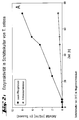
- T. setosa is grown in batch culture (shaking culture, 25 ° C) on the previously used TGMM-2 medium (American Type Culture Collection Catalog, Algae & Protozoa, 18th edition, 1993, Medium 986), this is achieved after 28 h a cell density of 155,000 cells / ml.
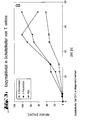
- the cell density is 23 times higher in skim milk medium (3,500,000 cells / ml), 39 times higher in Pharmamedia without soybean oil (6,000,000 cells / ml) and 32 times higher in Pharmamedia + soybean oil (5,000,000 cells / ml) (Fig .1).
- T. setosa, T. patula and T. rostrata are peptones, tryptones, meat extracts or flours and other ground seeds (e.g. maize, oat, wheat, soybean and bean seeds) .
- the nutrient solution can also contain sources of lipids (e.g. asolectin).
- the lipid-dependent tetrahymenids are grown aerobically, for example submerged with shaking or stirring in shake flasks or fermenters, if appropriate with the introduction of air or oxygen.
- PH regulation can also be carried out.
- the cultivation can take place in a temperature range from 18 to 37 ° C., but preferably between 23 and 33 ° C.
- T. setosa is cultivated under the conditions mentioned until the enzymes accumulate in the culture.
- the fermentation such as already shown using T. thermophila (T. Kiy & A. Tiedtke, 1992, Appl. Microbiol. Biotechnol. 38, 141), can be carried out continuously. In this case, the product-containing culture medium is continuously harvested.
- Cultivation is preferably carried out in several stages, i. H. a pre-culture is inoculated from a stock culture, with the production medium already being used. After about 24 to 72 h, the main culture is inoculated with the preculture, for example in a volume ratio of 1:10.
- the fermentation can be monitored by determining the biomass or the cell concentration.
- the product concentration can be followed by determining the volume activity of the enzymes.
- the enzymes can be isolated either from the cell-free supernatant or from the cell homogenate.
- the cells must be separated from the culture medium. This can e.g. B. via cell immobilization (T. Kiy & A. Tiedtke, 1991, Appl. Microbiol. Biotechnol., 35, 18) or by using membrane or spin filter bioreactors already during fermentation, or via tangential filtration or centrifugation after termination fermentation.
- the cells must first be homogenized. Ultrasound or ultraturrax devices are particularly suitable in this context, but simple freezing is also sufficient to unlock the cells. After homogenization, particulate material can be separated from the supernatant by centrifugation or filtration.
- the enzymes are separated and purified using chromatographic methods.
- the enzyme-containing sample can, for. B. first on a Apply the anion exchange column (e.g. Q-Sepharose®, Mono Q). Elution is carried out using an ascending salt gradient. Alternatively, a chromatofocusing column (Mono P) can be used, eluting with a descending pH gradient.
- the use of gel filtration e.g. Superose®, Superdex® has proven to be useful for separating the enzymes from small molecules.
- Affinity chromatography media can be used for the targeted purification of individual enzymes.
- Substrate analogs, inhibitors or specific antibodies directed against the enzyme are preferably used here as ligands.
Landscapes
- Life Sciences & Earth Sciences (AREA)
- Chemical & Material Sciences (AREA)
- Health & Medical Sciences (AREA)
- Engineering & Computer Science (AREA)
- Genetics & Genomics (AREA)
- Organic Chemistry (AREA)
- Zoology (AREA)
- Bioinformatics & Cheminformatics (AREA)
- Wood Science & Technology (AREA)
- Biotechnology (AREA)
- Medicinal Chemistry (AREA)
- Microbiology (AREA)
- Biomedical Technology (AREA)
- Biochemistry (AREA)
- General Engineering & Computer Science (AREA)
- General Health & Medical Sciences (AREA)
- Virology (AREA)
- Tropical Medicine & Parasitology (AREA)
- Molecular Biology (AREA)
- Preparation Of Compounds By Using Micro-Organisms (AREA)
- Micro-Organisms Or Cultivation Processes Thereof (AREA)
- Enzymes And Modification Thereof (AREA)
- Organic Low-Molecular-Weight Compounds And Preparation Thereof (AREA)
Applications Claiming Priority (2)
| Application Number | Priority Date | Filing Date | Title |
|---|---|---|---|
| DE4437615 | 1994-10-21 | ||
| DE4437615 | 1994-10-21 |
Publications (3)
| Publication Number | Publication Date |
|---|---|
| EP0708176A2 true EP0708176A2 (fr) | 1996-04-24 |
| EP0708176A3 EP0708176A3 (fr) | 1998-09-16 |
| EP0708176B1 EP0708176B1 (fr) | 2004-10-06 |
Family
ID=6531328
Family Applications (1)
| Application Number | Title | Priority Date | Filing Date |
|---|---|---|---|
| EP95116245A Expired - Lifetime EP0708176B1 (fr) | 1994-10-21 | 1995-10-16 | Procédé de culture de tétrahyménidies et utilisation de substances produites par ces tétrahyménidies |
Country Status (4)
| Country | Link |
|---|---|
| EP (1) | EP0708176B1 (fr) |
| JP (1) | JPH08228763A (fr) |
| AT (1) | ATE278772T1 (fr) |
| DE (1) | DE59510951D1 (fr) |
Cited By (2)
| Publication number | Priority date | Publication date | Assignee | Title |
|---|---|---|---|---|
| DE19626564A1 (de) * | 1996-07-03 | 1998-01-08 | Hoechst Ag | Genetische Transformation von Ciliatenzellen durch Microcarrier-Bombardement mit DNA beladenen Goldpartikeln |
| EP1024199A3 (fr) * | 1999-01-27 | 2002-03-06 | Celanese Ventures GmbH | Procédé d'obtention d'acide gamma-linolenique de protozoaires du genre Colpidium |
Families Citing this family (2)
| Publication number | Priority date | Publication date | Assignee | Title |
|---|---|---|---|---|
| JP3149958B2 (ja) * | 1996-08-30 | 2001-03-26 | ノボ ノルディスク アクティーゼルスカブ | Glp―1誘導体 |
| DE19741489A1 (de) * | 1997-09-19 | 1999-03-25 | Hoechst Ag | Fermentationsverfahren mit kontinuierlicher Massenkultivierung von Ciliaten (Protozoa) zur Produktion biogener Wertstoffe |
Family Cites Families (2)
| Publication number | Priority date | Publication date | Assignee | Title |
|---|---|---|---|---|
| FR2574089B1 (fr) * | 1984-12-03 | 1987-04-10 | Inst Nat Sante Rech Med | Procede de production d'acides gras, en particulier d'acide g-linoleique a partir de tetrahymena, produits obtenus et preparation medicamenteuse ou alimentaire contenant de l'acide g-linolenique ou ses derives en tant qu'agent anti-agregation plaquettaire |
| DE4238842A1 (de) * | 1992-11-17 | 1994-05-19 | Arno Prof Dr Tiedtke | Hochzelldichte Fermentation von Ciliaten zur Gewinnung von Naturstoffen |
-
1995
- 1995-10-16 AT AT95116245T patent/ATE278772T1/de not_active IP Right Cessation
- 1995-10-16 EP EP95116245A patent/EP0708176B1/fr not_active Expired - Lifetime
- 1995-10-16 DE DE59510951T patent/DE59510951D1/de not_active Expired - Lifetime
- 1995-10-20 JP JP7272157A patent/JPH08228763A/ja not_active Abandoned
Cited By (2)
| Publication number | Priority date | Publication date | Assignee | Title |
|---|---|---|---|---|
| DE19626564A1 (de) * | 1996-07-03 | 1998-01-08 | Hoechst Ag | Genetische Transformation von Ciliatenzellen durch Microcarrier-Bombardement mit DNA beladenen Goldpartikeln |
| EP1024199A3 (fr) * | 1999-01-27 | 2002-03-06 | Celanese Ventures GmbH | Procédé d'obtention d'acide gamma-linolenique de protozoaires du genre Colpidium |
Also Published As
| Publication number | Publication date |
|---|---|
| EP0708176A3 (fr) | 1998-09-16 |
| ATE278772T1 (de) | 2004-10-15 |
| JPH08228763A (ja) | 1996-09-10 |
| EP0708176B1 (fr) | 2004-10-06 |
| DE59510951D1 (de) | 2004-11-11 |
Similar Documents
| Publication | Publication Date | Title |
|---|---|---|
| DE69332217T2 (de) | Phospholipase A1, Verfahren zu seiner Herstellung und Anwendung | |
| DE60126269T2 (de) | Isolierte beta-galactosidase von bifidobacterium | |
| DE69621663T2 (de) | Verfahren zur Herstellung von Arachidonsäure | |
| DE60036647T2 (de) | Klonierung und expression einer extrazellulären säurebeständigen lipase aus yarrowia lipolytica | |
| EP0599159B1 (fr) | Mélange de protéines hétérogènes, avec une activité alpha-L-rhamnosidase, procédé de préparation et d'utilisation. | |
| EP0897977A2 (fr) | Complexe enzymatique | |
| DE1932981C3 (de) | Verfahren zur biotechnischen Herstel lung eines Enzyms Lipase | |
| DE69633873T2 (de) | Alkalische cellulase und verfahren zu deren herstellung | |
| DE2631048B2 (de) | Verfahren zur Herstellung von D-Phenylglycin | |
| EP0708176B1 (fr) | Procédé de culture de tétrahyménidies et utilisation de substances produites par ces tétrahyménidies | |
| DE3629242C2 (de) | Verfahren zur Herstellung von L-Aminosäuren | |
| DE69033770T2 (de) | Dna-zusammensetzung und modifizierte hefe | |
| DE2167078B1 (de) | Verfahren zur Herstellung einer Amylase und deren Verwendung zur Gewinnung von Maltose aus Staerke | |
| DE2912660A1 (de) | Verfahren zur herstellung von collagenase | |
| EP0502525A1 (fr) | Procédé biotechnologique pour la production de S-(+)-2,2-diméthylcyclopropanecarboxamide et acide R-(-)-2,2-diméthylcyclopropanecarboxylique | |
| DE2164018C3 (de) | Verfahren zur biotechnischen Her stellung von Uncase | |
| DE3527649A1 (de) | Mikroorganismus einer neuen art der gattung streptomyces | |
| EP1012246B1 (fr) | Procede de fermentation avec mise en culture de masse continue de cilies (protozoaires) pour la production de substances biogenes valorisables | |
| DE4238842A1 (de) | Hochzelldichte Fermentation von Ciliaten zur Gewinnung von Naturstoffen | |
| DE69115556T2 (de) | Wärmebeständige Beta-Galactosyltransferase, ihr Herstellungsverfahren und ihre Verwendung | |
| DE69422298T2 (de) | Enzym und dessen verwendung zur herstellung von (s)-pipecolinsäure | |
| WO1993002180A1 (fr) | Procede pour la lipolyse selective, melange de lipase adequat, ainsi que micro-organisme | |
| DE3150336C2 (fr) | ||
| DE2346335A1 (de) | Auf mikrobiellem weg hergestellte lipase, sowie verfahren zu deren herstellung | |
| KR100523528B1 (ko) | 키티나아제를 생산하는 신규한 셀룰로모나스 gm13 속 균주 |
Legal Events
| Date | Code | Title | Description |
|---|---|---|---|
| PUAI | Public reference made under article 153(3) epc to a published international application that has entered the european phase |
Free format text: ORIGINAL CODE: 0009012 |
|
| AK | Designated contracting states |
Kind code of ref document: A2 Designated state(s): AT BE CH DE DK ES FR GB GR IE IT LI LU NL PT SE |
|
| PUAL | Search report despatched |
Free format text: ORIGINAL CODE: 0009013 |
|
| AK | Designated contracting states |
Kind code of ref document: A3 Designated state(s): AT BE CH DE DK ES FR GB GR IE IT LI LU NL PT SE |
|
| 17P | Request for examination filed |
Effective date: 19990316 |
|
| RAP1 | Party data changed (applicant data changed or rights of an application transferred) |
Owner name: AVENTIS RESEARCH & TECHNOLOGIES GMBH & CO. KG |
|
| RAP1 | Party data changed (applicant data changed or rights of an application transferred) |
Owner name: AXIVA GMBH |
|
| RAP1 | Party data changed (applicant data changed or rights of an application transferred) |
Owner name: CELANESE VENTURES GMBH |
|
| 17Q | First examination report despatched |
Effective date: 20011120 |
|
| RAP1 | Party data changed (applicant data changed or rights of an application transferred) |
Owner name: NUTRINOVA NUTRITION SPECIALTIES & FOOD INGREDIENTS |
|
| GRAP | Despatch of communication of intention to grant a patent |
Free format text: ORIGINAL CODE: EPIDOSNIGR1 |
|
| GRAS | Grant fee paid |
Free format text: ORIGINAL CODE: EPIDOSNIGR3 |
|
| GRAA | (expected) grant |
Free format text: ORIGINAL CODE: 0009210 |
|
| AK | Designated contracting states |
Kind code of ref document: B1 Designated state(s): AT BE CH DE DK ES FR GB GR IE IT LI LU NL PT SE |
|
| PG25 | Lapsed in a contracting state [announced via postgrant information from national office to epo] |
Ref country code: SE Free format text: LAPSE BECAUSE OF FAILURE TO SUBMIT A TRANSLATION OF THE DESCRIPTION OR TO PAY THE FEE WITHIN THE PRESCRIBED TIME-LIMIT Effective date: 20041006 Ref country code: NL Free format text: LAPSE BECAUSE OF FAILURE TO SUBMIT A TRANSLATION OF THE DESCRIPTION OR TO PAY THE FEE WITHIN THE PRESCRIBED TIME-LIMIT Effective date: 20041006 Ref country code: IT Free format text: LAPSE BECAUSE OF FAILURE TO SUBMIT A TRANSLATION OF THE DESCRIPTION OR TO PAY THE FEE WITHIN THE PRE;WARNING: LAPSES OF ITALIAN PATENTS WITH EFFECTIVE DATE BEFORE 2007 MAY HAVE OCCURRED AT ANY TIME BEFORE 2007. THE CORRECT EFFECTIVE DATE MAY BE DIFFERENT FROM THE ONE RECORDED.SCRIBED TIME-LIMIT Effective date: 20041006 Ref country code: IE Free format text: LAPSE BECAUSE OF FAILURE TO SUBMIT A TRANSLATION OF THE DESCRIPTION OR TO PAY THE FEE WITHIN THE PRESCRIBED TIME-LIMIT Effective date: 20041006 |
|
| REG | Reference to a national code |
Ref country code: GB Ref legal event code: FG4D Free format text: NOT ENGLISH |
|
| REG | Reference to a national code |
Ref country code: CH Ref legal event code: EP |
|
| PG25 | Lapsed in a contracting state [announced via postgrant information from national office to epo] |
Ref country code: LU Free format text: LAPSE BECAUSE OF NON-PAYMENT OF DUE FEES Effective date: 20041016 Ref country code: AT Free format text: LAPSE BECAUSE OF NON-PAYMENT OF DUE FEES Effective date: 20041016 |
|
| PG25 | Lapsed in a contracting state [announced via postgrant information from national office to epo] |
Ref country code: LI Free format text: LAPSE BECAUSE OF NON-PAYMENT OF DUE FEES Effective date: 20041031 Ref country code: CH Free format text: LAPSE BECAUSE OF NON-PAYMENT OF DUE FEES Effective date: 20041031 Ref country code: BE Free format text: LAPSE BECAUSE OF NON-PAYMENT OF DUE FEES Effective date: 20041031 |
|
| REG | Reference to a national code |
Ref country code: IE Ref legal event code: FG4D Free format text: GERMAN |
|
| REF | Corresponds to: |
Ref document number: 59510951 Country of ref document: DE Date of ref document: 20041111 Kind code of ref document: P |
|
| PG25 | Lapsed in a contracting state [announced via postgrant information from national office to epo] |
Ref country code: GR Free format text: LAPSE BECAUSE OF FAILURE TO SUBMIT A TRANSLATION OF THE DESCRIPTION OR TO PAY THE FEE WITHIN THE PRESCRIBED TIME-LIMIT Effective date: 20050106 Ref country code: DK Free format text: LAPSE BECAUSE OF FAILURE TO SUBMIT A TRANSLATION OF THE DESCRIPTION OR TO PAY THE FEE WITHIN THE PRESCRIBED TIME-LIMIT Effective date: 20050106 |
|
| PG25 | Lapsed in a contracting state [announced via postgrant information from national office to epo] |
Ref country code: ES Free format text: LAPSE BECAUSE OF FAILURE TO SUBMIT A TRANSLATION OF THE DESCRIPTION OR TO PAY THE FEE WITHIN THE PRESCRIBED TIME-LIMIT Effective date: 20050117 |
|
| GBT | Gb: translation of ep patent filed (gb section 77(6)(a)/1977) |
Effective date: 20050201 |
|
| NLV1 | Nl: lapsed or annulled due to failure to fulfill the requirements of art. 29p and 29m of the patents act | ||
| BERE | Be: lapsed |
Owner name: NUTRINOVA NUTRITION SPECIALTIES & FOOD INGREDIENTS Effective date: 20041031 |
|
| REG | Reference to a national code |
Ref country code: IE Ref legal event code: FD4D |
|
| REG | Reference to a national code |
Ref country code: CH Ref legal event code: PL |
|
| PLBE | No opposition filed within time limit |
Free format text: ORIGINAL CODE: 0009261 |
|
| STAA | Information on the status of an ep patent application or granted ep patent |
Free format text: STATUS: NO OPPOSITION FILED WITHIN TIME LIMIT |
|
| ET | Fr: translation filed | ||
| 26N | No opposition filed |
Effective date: 20050707 |
|
| BERE | Be: lapsed |
Owner name: *NUTRINOVA NUTRITION SPECIALTIES & FOOD INGREDIENT Effective date: 20041031 |
|
| PG25 | Lapsed in a contracting state [announced via postgrant information from national office to epo] |
Ref country code: PT Free format text: LAPSE BECAUSE OF NON-PAYMENT OF DUE FEES Effective date: 20050306 |
|
| PGFP | Annual fee paid to national office [announced via postgrant information from national office to epo] |
Ref country code: GB Payment date: 20100823 Year of fee payment: 16 |
|
| PGFP | Annual fee paid to national office [announced via postgrant information from national office to epo] |
Ref country code: DE Payment date: 20100823 Year of fee payment: 16 |
|
| PGFP | Annual fee paid to national office [announced via postgrant information from national office to epo] |
Ref country code: FR Payment date: 20111103 Year of fee payment: 17 |
|
| GBPC | Gb: european patent ceased through non-payment of renewal fee |
Effective date: 20121016 |
|
| REG | Reference to a national code |
Ref country code: FR Ref legal event code: ST Effective date: 20130628 |
|
| PG25 | Lapsed in a contracting state [announced via postgrant information from national office to epo] |
Ref country code: DE Free format text: LAPSE BECAUSE OF NON-PAYMENT OF DUE FEES Effective date: 20130501 Ref country code: GB Free format text: LAPSE BECAUSE OF NON-PAYMENT OF DUE FEES Effective date: 20121016 |
|
| REG | Reference to a national code |
Ref country code: DE Ref legal event code: R119 Ref document number: 59510951 Country of ref document: DE Effective date: 20130501 |
|
| PG25 | Lapsed in a contracting state [announced via postgrant information from national office to epo] |
Ref country code: FR Free format text: LAPSE BECAUSE OF NON-PAYMENT OF DUE FEES Effective date: 20121031 |