EP0708379A2 - Agent de véhiculation magnétique pour électrophotographie - Google Patents
Agent de véhiculation magnétique pour électrophotographie Download PDFInfo
- Publication number
- EP0708379A2 EP0708379A2 EP95307044A EP95307044A EP0708379A2 EP 0708379 A2 EP0708379 A2 EP 0708379A2 EP 95307044 A EP95307044 A EP 95307044A EP 95307044 A EP95307044 A EP 95307044A EP 0708379 A2 EP0708379 A2 EP 0708379A2
- Authority
- EP
- European Patent Office
- Prior art keywords
- particles
- metal oxide
- magnetic metal
- oxide particles
- iron compound
- Prior art date
- Legal status (The legal status is an assumption and is not a legal conclusion. Google has not performed a legal analysis and makes no representation as to the accuracy of the status listed.)
- Granted
Links
- 230000005291 magnetic effect Effects 0.000 title claims abstract description 126
- 239000002245 particle Substances 0.000 claims abstract description 332
- 239000011246 composite particle Substances 0.000 claims abstract description 118
- 229910044991 metal oxide Inorganic materials 0.000 claims abstract description 102
- 150000004706 metal oxides Chemical class 0.000 claims abstract description 102
- 229920005989 resin Polymers 0.000 claims abstract description 94
- 239000011347 resin Substances 0.000 claims abstract description 94
- 230000005294 ferromagnetic effect Effects 0.000 claims abstract description 90
- 150000002506 iron compounds Chemical class 0.000 claims abstract description 82
- ISWSIDIOOBJBQZ-UHFFFAOYSA-N Phenol Chemical compound OC1=CC=CC=C1 ISWSIDIOOBJBQZ-UHFFFAOYSA-N 0.000 claims abstract description 40
- 239000011230 binding agent Substances 0.000 claims abstract description 17
- 239000011247 coating layer Substances 0.000 claims description 38
- 230000005484 gravity Effects 0.000 claims description 37
- 230000005415 magnetization Effects 0.000 claims description 32
- 239000007771 core particle Substances 0.000 claims description 30
- 239000011019 hematite Substances 0.000 claims description 15
- 229910052595 hematite Inorganic materials 0.000 claims description 15
- LIKBJVNGSGBSGK-UHFFFAOYSA-N iron(3+);oxygen(2-) Chemical compound [O-2].[O-2].[O-2].[Fe+3].[Fe+3] LIKBJVNGSGBSGK-UHFFFAOYSA-N 0.000 claims description 15
- XLOMVQKBTHCTTD-UHFFFAOYSA-N Zinc monoxide Chemical compound [Zn]=O XLOMVQKBTHCTTD-UHFFFAOYSA-N 0.000 claims description 14
- XEEYBQQBJWHFJM-UHFFFAOYSA-N Iron Chemical compound [Fe] XEEYBQQBJWHFJM-UHFFFAOYSA-N 0.000 claims description 11
- GWEVSGVZZGPLCZ-UHFFFAOYSA-N Titan oxide Chemical compound O=[Ti]=O GWEVSGVZZGPLCZ-UHFFFAOYSA-N 0.000 claims description 7
- 229920005992 thermoplastic resin Polymers 0.000 claims description 7
- OGIDPMRJRNCKJF-UHFFFAOYSA-N titanium oxide Inorganic materials [Ti]=O OGIDPMRJRNCKJF-UHFFFAOYSA-N 0.000 claims description 7
- 239000011787 zinc oxide Substances 0.000 claims description 7
- UQSXHKLRYXJYBZ-UHFFFAOYSA-N Iron oxide Chemical compound [Fe]=O UQSXHKLRYXJYBZ-UHFFFAOYSA-N 0.000 claims description 6
- VYPSYNLAJGMNEJ-UHFFFAOYSA-N Silicium dioxide Chemical compound O=[Si]=O VYPSYNLAJGMNEJ-UHFFFAOYSA-N 0.000 claims description 6
- 229910000859 α-Fe Inorganic materials 0.000 claims description 6
- PNEYBMLMFCGWSK-UHFFFAOYSA-N aluminium oxide Inorganic materials [O-2].[O-2].[O-2].[Al+3].[Al+3] PNEYBMLMFCGWSK-UHFFFAOYSA-N 0.000 claims description 4
- 229910052598 goethite Inorganic materials 0.000 claims description 4
- AEIXRCIKZIZYPM-UHFFFAOYSA-M hydroxy(oxo)iron Chemical compound [O][Fe]O AEIXRCIKZIZYPM-UHFFFAOYSA-M 0.000 claims description 4
- 229910052742 iron Inorganic materials 0.000 claims description 4
- YDZQQRWRVYGNER-UHFFFAOYSA-N iron;titanium;trihydrate Chemical compound O.O.O.[Ti].[Fe] YDZQQRWRVYGNER-UHFFFAOYSA-N 0.000 claims description 4
- 239000000395 magnesium oxide Substances 0.000 claims description 4
- CPLXHLVBOLITMK-UHFFFAOYSA-N magnesium oxide Inorganic materials [Mg]=O CPLXHLVBOLITMK-UHFFFAOYSA-N 0.000 claims description 4
- AXZKOIWUVFPNLO-UHFFFAOYSA-N magnesium;oxygen(2-) Chemical compound [O-2].[Mg+2] AXZKOIWUVFPNLO-UHFFFAOYSA-N 0.000 claims description 4
- 229910000640 Fe alloy Inorganic materials 0.000 claims description 2
- 229910052751 metal Inorganic materials 0.000 claims description 2
- 239000002184 metal Substances 0.000 claims description 2
- 239000011029 spinel Substances 0.000 claims description 2
- 229910052596 spinel Inorganic materials 0.000 claims description 2
- 238000004381 surface treatment Methods 0.000 claims description 2
- 239000002344 surface layer Substances 0.000 claims 1
- 239000004634 thermosetting polymer Substances 0.000 claims 1
- WSFSSNUMVMOOMR-UHFFFAOYSA-N Formaldehyde Chemical compound O=C WSFSSNUMVMOOMR-UHFFFAOYSA-N 0.000 description 24
- 239000002131 composite material Substances 0.000 description 22
- XLYOFNOQVPJJNP-UHFFFAOYSA-N water Substances O XLYOFNOQVPJJNP-UHFFFAOYSA-N 0.000 description 20
- 238000000034 method Methods 0.000 description 19
- PPBRXRYQALVLMV-UHFFFAOYSA-N Styrene Chemical compound C=CC1=CC=CC=C1 PPBRXRYQALVLMV-UHFFFAOYSA-N 0.000 description 12
- 238000006243 chemical reaction Methods 0.000 description 12
- 239000007822 coupling agent Substances 0.000 description 10
- 239000000203 mixture Substances 0.000 description 10
- 238000001878 scanning electron micrograph Methods 0.000 description 10
- 238000003756 stirring Methods 0.000 description 10
- 239000010954 inorganic particle Substances 0.000 description 9
- SZVJSHCCFOBDDC-UHFFFAOYSA-N iron(II,III) oxide Inorganic materials O=[Fe]O[Fe]O[Fe]=O SZVJSHCCFOBDDC-UHFFFAOYSA-N 0.000 description 9
- 229920001187 thermosetting polymer Polymers 0.000 description 9
- 239000003054 catalyst Substances 0.000 description 8
- 239000005011 phenolic resin Substances 0.000 description 8
- VHUUQVKOLVNVRT-UHFFFAOYSA-N Ammonium hydroxide Chemical compound [NH4+].[OH-] VHUUQVKOLVNVRT-UHFFFAOYSA-N 0.000 description 7
- 235000011114 ammonium hydroxide Nutrition 0.000 description 7
- 239000006185 dispersion Substances 0.000 description 7
- 230000001965 increasing effect Effects 0.000 description 7
- 150000002989 phenols Chemical class 0.000 description 7
- 239000000126 substance Substances 0.000 description 7
- BLRPTPMANUNPDV-UHFFFAOYSA-N Silane Chemical compound [SiH4] BLRPTPMANUNPDV-UHFFFAOYSA-N 0.000 description 6
- 150000001299 aldehydes Chemical class 0.000 description 6
- 239000012736 aqueous medium Substances 0.000 description 6
- 108091008695 photoreceptors Proteins 0.000 description 6
- 229910000077 silane Inorganic materials 0.000 description 6
- 239000008187 granular material Substances 0.000 description 5
- 229910052809 inorganic oxide Inorganic materials 0.000 description 5
- 239000000843 powder Substances 0.000 description 5
- 239000004094 surface-active agent Substances 0.000 description 5
- -1 dimethylamine Chemical class 0.000 description 4
- 238000004519 manufacturing process Methods 0.000 description 4
- 239000000463 material Substances 0.000 description 4
- 238000002156 mixing Methods 0.000 description 4
- 239000002244 precipitate Substances 0.000 description 4
- 238000012545 processing Methods 0.000 description 4
- 239000011541 reaction mixture Substances 0.000 description 4
- 238000000926 separation method Methods 0.000 description 4
- 239000006228 supernatant Substances 0.000 description 4
- 239000006087 Silane Coupling Agent Substances 0.000 description 3
- RTAQQCXQSZGOHL-UHFFFAOYSA-N Titanium Chemical compound [Ti] RTAQQCXQSZGOHL-UHFFFAOYSA-N 0.000 description 3
- 125000003277 amino group Chemical group 0.000 description 3
- 230000015572 biosynthetic process Effects 0.000 description 3
- 239000000969 carrier Substances 0.000 description 3
- 230000000052 comparative effect Effects 0.000 description 3
- 229920001577 copolymer Polymers 0.000 description 3
- 230000007547 defect Effects 0.000 description 3
- 125000003700 epoxy group Chemical group 0.000 description 3
- 239000006249 magnetic particle Substances 0.000 description 3
- 239000011369 resultant mixture Substances 0.000 description 3
- 239000007787 solid Substances 0.000 description 3
- 239000012798 spherical particle Substances 0.000 description 3
- XKRFYHLGVUSROY-UHFFFAOYSA-N Argon Chemical compound [Ar] XKRFYHLGVUSROY-UHFFFAOYSA-N 0.000 description 2
- IJGRMHOSHXDMSA-UHFFFAOYSA-N Atomic nitrogen Chemical compound N#N IJGRMHOSHXDMSA-UHFFFAOYSA-N 0.000 description 2
- SOGAXMICEFXMKE-UHFFFAOYSA-N Butylmethacrylate Chemical compound CCCCOC(=O)C(C)=C SOGAXMICEFXMKE-UHFFFAOYSA-N 0.000 description 2
- ROSDSFDQCJNGOL-UHFFFAOYSA-N Dimethylamine Chemical compound CNC ROSDSFDQCJNGOL-UHFFFAOYSA-N 0.000 description 2
- 239000004593 Epoxy Substances 0.000 description 2
- YCKRFDGAMUMZLT-UHFFFAOYSA-N Fluorine atom Chemical compound [F] YCKRFDGAMUMZLT-UHFFFAOYSA-N 0.000 description 2
- 229920000877 Melamine resin Polymers 0.000 description 2
- BAPJBEWLBFYGME-UHFFFAOYSA-N Methyl acrylate Chemical compound COC(=O)C=C BAPJBEWLBFYGME-UHFFFAOYSA-N 0.000 description 2
- XTXRWKRVRITETP-UHFFFAOYSA-N Vinyl acetate Chemical compound CC(=O)OC=C XTXRWKRVRITETP-UHFFFAOYSA-N 0.000 description 2
- 238000005054 agglomeration Methods 0.000 description 2
- 230000002776 aggregation Effects 0.000 description 2
- IISBACLAFKSPIT-UHFFFAOYSA-N bisphenol A Chemical compound C=1C=C(O)C=CC=1C(C)(C)C1=CC=C(O)C=C1 IISBACLAFKSPIT-UHFFFAOYSA-N 0.000 description 2
- WUKWITHWXAAZEY-UHFFFAOYSA-L calcium difluoride Chemical compound [F-].[F-].[Ca+2] WUKWITHWXAAZEY-UHFFFAOYSA-L 0.000 description 2
- 229910001634 calcium fluoride Inorganic materials 0.000 description 2
- 239000007795 chemical reaction product Substances 0.000 description 2
- 239000003086 colorant Substances 0.000 description 2
- XCJYREBRNVKWGJ-UHFFFAOYSA-N copper(II) phthalocyanine Chemical compound [Cu+2].C12=CC=CC=C2C(N=C2[N-]C(C3=CC=CC=C32)=N2)=NC1=NC([C]1C=CC=CC1=1)=NC=1N=C1[C]3C=CC=CC3=C2[N-]1 XCJYREBRNVKWGJ-UHFFFAOYSA-N 0.000 description 2
- 239000003822 epoxy resin Substances 0.000 description 2
- FJKIXWOMBXYWOQ-UHFFFAOYSA-N ethenoxyethane Chemical compound CCOC=C FJKIXWOMBXYWOQ-UHFFFAOYSA-N 0.000 description 2
- 238000001914 filtration Methods 0.000 description 2
- 239000010419 fine particle Substances 0.000 description 2
- 239000011737 fluorine Substances 0.000 description 2
- 229910052731 fluorine Inorganic materials 0.000 description 2
- HYBBIBNJHNGZAN-UHFFFAOYSA-N furfural Chemical compound O=CC1=CC=CO1 HYBBIBNJHNGZAN-UHFFFAOYSA-N 0.000 description 2
- VKYKSIONXSXAKP-UHFFFAOYSA-N hexamethylenetetramine Chemical compound C1N(C2)CN3CN1CN2C3 VKYKSIONXSXAKP-UHFFFAOYSA-N 0.000 description 2
- 125000001165 hydrophobic group Chemical group 0.000 description 2
- 125000002887 hydroxy group Chemical group [H]O* 0.000 description 2
- PBOSTUDLECTMNL-UHFFFAOYSA-N lauryl acrylate Chemical compound CCCCCCCCCCCCOC(=O)C=C PBOSTUDLECTMNL-UHFFFAOYSA-N 0.000 description 2
- 239000007788 liquid Substances 0.000 description 2
- RLSSMJSEOOYNOY-UHFFFAOYSA-N m-cresol Chemical compound CC1=CC=CC(O)=C1 RLSSMJSEOOYNOY-UHFFFAOYSA-N 0.000 description 2
- JDSHMPZPIAZGSV-UHFFFAOYSA-N melamine Chemical compound NC1=NC(N)=NC(N)=N1 JDSHMPZPIAZGSV-UHFFFAOYSA-N 0.000 description 2
- 239000012299 nitrogen atmosphere Substances 0.000 description 2
- 229920002647 polyamide Polymers 0.000 description 2
- 229920000647 polyepoxide Polymers 0.000 description 2
- 229920001225 polyester resin Polymers 0.000 description 2
- 230000000379 polymerizing effect Effects 0.000 description 2
- 230000008569 process Effects 0.000 description 2
- GHMLBKRAJCXXBS-UHFFFAOYSA-N resorcinol Chemical compound OC1=CC=CC(O)=C1 GHMLBKRAJCXXBS-UHFFFAOYSA-N 0.000 description 2
- 230000035939 shock Effects 0.000 description 2
- 239000000377 silicon dioxide Substances 0.000 description 2
- 229920002050 silicone resin Polymers 0.000 description 2
- 238000002791 soaking Methods 0.000 description 2
- 239000000243 solution Substances 0.000 description 2
- 239000000725 suspension Substances 0.000 description 2
- BPSIOYPQMFLKFR-UHFFFAOYSA-N trimethoxy-[3-(oxiran-2-ylmethoxy)propyl]silane Chemical compound CO[Si](OC)(OC)CCCOCC1CO1 BPSIOYPQMFLKFR-UHFFFAOYSA-N 0.000 description 2
- 125000000391 vinyl group Chemical group [H]C([*])=C([H])[H] 0.000 description 2
- SNOYUTZWILESAI-UHFFFAOYSA-N vinyl isopropyl ketone Natural products CC(C)C(=O)C=C SNOYUTZWILESAI-UHFFFAOYSA-N 0.000 description 2
- UZKWTJUDCOPSNM-UHFFFAOYSA-N 1-ethenoxybutane Chemical compound CCCCOC=C UZKWTJUDCOPSNM-UHFFFAOYSA-N 0.000 description 1
- IEKHISJGRIEHRE-UHFFFAOYSA-N 16-methylheptadecanoic acid;propan-2-ol;titanium Chemical compound [Ti].CC(C)O.CC(C)CCCCCCCCCCCCCCC(O)=O.CC(C)CCCCCCCCCCCCCCC(O)=O.CC(C)CCCCCCCCCCCCCCC(O)=O IEKHISJGRIEHRE-UHFFFAOYSA-N 0.000 description 1
- SBYMUDUGTIKLCR-UHFFFAOYSA-N 2-chloroethenylbenzene Chemical compound ClC=CC1=CC=CC=C1 SBYMUDUGTIKLCR-UHFFFAOYSA-N 0.000 description 1
- KKOHCQAVIJDYAF-UHFFFAOYSA-N 2-dodecylbenzenesulfonic acid;propan-2-ol;titanium Chemical compound [Ti].CC(C)O.CCCCCCCCCCCCC1=CC=CC=C1S(O)(=O)=O.CCCCCCCCCCCCC1=CC=CC=C1S(O)(=O)=O.CCCCCCCCCCCCC1=CC=CC=C1S(O)(=O)=O KKOHCQAVIJDYAF-UHFFFAOYSA-N 0.000 description 1
- LCHYEKKJCUJAKN-UHFFFAOYSA-N 2-propylphenol Chemical compound CCCC1=CC=CC=C1O LCHYEKKJCUJAKN-UHFFFAOYSA-N 0.000 description 1
- QHPQWRBYOIRBIT-UHFFFAOYSA-N 4-tert-butylphenol Chemical compound CC(C)(C)C1=CC=C(O)C=C1 QHPQWRBYOIRBIT-UHFFFAOYSA-N 0.000 description 1
- RSWGJHLUYNHPMX-UHFFFAOYSA-N Abietic-Saeure Natural products C12CCC(C(C)C)=CC2=CCC2C1(C)CCCC2(C)C(O)=O RSWGJHLUYNHPMX-UHFFFAOYSA-N 0.000 description 1
- WKBOTKDWSSQWDR-UHFFFAOYSA-N Bromine atom Chemical group [Br] WKBOTKDWSSQWDR-UHFFFAOYSA-N 0.000 description 1
- OKTJSMMVPCPJKN-UHFFFAOYSA-N Carbon Chemical compound [C] OKTJSMMVPCPJKN-UHFFFAOYSA-N 0.000 description 1
- 229920002134 Carboxymethyl cellulose Polymers 0.000 description 1
- JIGUQPWFLRLWPJ-UHFFFAOYSA-N Ethyl acrylate Chemical compound CCOC(=O)C=C JIGUQPWFLRLWPJ-UHFFFAOYSA-N 0.000 description 1
- UFHFLCQGNIYNRP-UHFFFAOYSA-N Hydrogen Chemical compound [H][H] UFHFLCQGNIYNRP-UHFFFAOYSA-N 0.000 description 1
- VQTUBCCKSQIDNK-UHFFFAOYSA-N Isobutene Chemical group CC(C)=C VQTUBCCKSQIDNK-UHFFFAOYSA-N 0.000 description 1
- 229920006369 KF polymer Polymers 0.000 description 1
- VVQNEPGJFQJSBK-UHFFFAOYSA-N Methyl methacrylate Chemical compound COC(=O)C(C)=C VVQNEPGJFQJSBK-UHFFFAOYSA-N 0.000 description 1
- 239000004952 Polyamide Substances 0.000 description 1
- 239000004698 Polyethylene Substances 0.000 description 1
- 229920002873 Polyethylenimine Polymers 0.000 description 1
- 239000004743 Polypropylene Substances 0.000 description 1
- 239000004793 Polystyrene Substances 0.000 description 1
- 239000004372 Polyvinyl alcohol Substances 0.000 description 1
- OFOBLEOULBTSOW-UHFFFAOYSA-N Propanedioic acid Natural products OC(=O)CC(O)=O OFOBLEOULBTSOW-UHFFFAOYSA-N 0.000 description 1
- 229920000297 Rayon Polymers 0.000 description 1
- 241000220317 Rosa Species 0.000 description 1
- KHPCPRHQVVSZAH-HUOMCSJISA-N Rosin Natural products O(C/C=C/c1ccccc1)[C@H]1[C@H](O)[C@@H](O)[C@@H](O)[C@@H](CO)O1 KHPCPRHQVVSZAH-HUOMCSJISA-N 0.000 description 1
- BUGBHKTXTAQXES-UHFFFAOYSA-N Selenium Chemical compound [Se] BUGBHKTXTAQXES-UHFFFAOYSA-N 0.000 description 1
- XUIMIQQOPSSXEZ-UHFFFAOYSA-N Silicon Chemical compound [Si] XUIMIQQOPSSXEZ-UHFFFAOYSA-N 0.000 description 1
- 239000007983 Tris buffer Substances 0.000 description 1
- QYKIQEUNHZKYBP-UHFFFAOYSA-N Vinyl ether Chemical class C=COC=C QYKIQEUNHZKYBP-UHFFFAOYSA-N 0.000 description 1
- UMHKOAYRTRADAT-UHFFFAOYSA-N [hydroxy(octoxy)phosphoryl] octyl hydrogen phosphate Chemical compound CCCCCCCCOP(O)(=O)OP(O)(=O)OCCCCCCCC UMHKOAYRTRADAT-UHFFFAOYSA-N 0.000 description 1
- 238000010521 absorption reaction Methods 0.000 description 1
- NIXOWILDQLNWCW-UHFFFAOYSA-N acrylic acid group Chemical group C(C=C)(=O)O NIXOWILDQLNWCW-UHFFFAOYSA-N 0.000 description 1
- 229920000800 acrylic rubber Polymers 0.000 description 1
- 239000002671 adjuvant Substances 0.000 description 1
- 150000003973 alkyl amines Chemical class 0.000 description 1
- 125000000217 alkyl group Chemical group 0.000 description 1
- 229910021417 amorphous silicon Inorganic materials 0.000 description 1
- 239000003945 anionic surfactant Substances 0.000 description 1
- 229910052786 argon Inorganic materials 0.000 description 1
- 239000012298 atmosphere Substances 0.000 description 1
- IRERQBUNZFJFGC-UHFFFAOYSA-L azure blue Chemical compound [Na+].[Na+].[Na+].[Na+].[Na+].[Na+].[Na+].[Na+].[Al+3].[Al+3].[Al+3].[Al+3].[Al+3].[Al+3].[S-]S[S-].[O-][Si]([O-])([O-])[O-].[O-][Si]([O-])([O-])[O-].[O-][Si]([O-])([O-])[O-].[O-][Si]([O-])([O-])[O-].[O-][Si]([O-])([O-])[O-].[O-][Si]([O-])([O-])[O-] IRERQBUNZFJFGC-UHFFFAOYSA-L 0.000 description 1
- 150000001555 benzenes Chemical class 0.000 description 1
- 238000007664 blowing Methods 0.000 description 1
- CQEYYJKEWSMYFG-UHFFFAOYSA-N butyl acrylate Chemical compound CCCCOC(=O)C=C CQEYYJKEWSMYFG-UHFFFAOYSA-N 0.000 description 1
- 239000002775 capsule Substances 0.000 description 1
- 239000006229 carbon black Substances 0.000 description 1
- 239000001768 carboxy methyl cellulose Substances 0.000 description 1
- 235000010948 carboxy methyl cellulose Nutrition 0.000 description 1
- 239000008112 carboxymethyl-cellulose Substances 0.000 description 1
- 125000002091 cationic group Chemical group 0.000 description 1
- 239000003093 cationic surfactant Substances 0.000 description 1
- 230000008859 change Effects 0.000 description 1
- 229910052801 chlorine Inorganic materials 0.000 description 1
- 125000001309 chloro group Chemical group Cl* 0.000 description 1
- 238000004140 cleaning Methods 0.000 description 1
- 239000000805 composite resin Substances 0.000 description 1
- 150000001875 compounds Chemical class 0.000 description 1
- 229910052802 copper Inorganic materials 0.000 description 1
- 239000010949 copper Substances 0.000 description 1
- 230000006866 deterioration Effects 0.000 description 1
- 238000011161 development Methods 0.000 description 1
- 238000009826 distribution Methods 0.000 description 1
- 238000001035 drying Methods 0.000 description 1
- 230000000694 effects Effects 0.000 description 1
- 230000002708 enhancing effect Effects 0.000 description 1
- UIWXSTHGICQLQT-UHFFFAOYSA-N ethenyl propanoate Chemical compound CCC(=O)OC=C UIWXSTHGICQLQT-UHFFFAOYSA-N 0.000 description 1
- FWDBOZPQNFPOLF-UHFFFAOYSA-N ethenyl(triethoxy)silane Chemical compound CCO[Si](OCC)(OCC)C=C FWDBOZPQNFPOLF-UHFFFAOYSA-N 0.000 description 1
- SUPCQIBBMFXVTL-UHFFFAOYSA-N ethyl 2-methylprop-2-enoate Chemical compound CCOC(=O)C(C)=C SUPCQIBBMFXVTL-UHFFFAOYSA-N 0.000 description 1
- 230000001747 exhibiting effect Effects 0.000 description 1
- 230000002349 favourable effect Effects 0.000 description 1
- 150000002222 fluorine compounds Chemical class 0.000 description 1
- 125000000524 functional group Chemical group 0.000 description 1
- 238000010438 heat treatment Methods 0.000 description 1
- 239000001307 helium Substances 0.000 description 1
- 229910052734 helium Inorganic materials 0.000 description 1
- SWQJXJOGLNCZEY-UHFFFAOYSA-N helium atom Chemical compound [He] SWQJXJOGLNCZEY-UHFFFAOYSA-N 0.000 description 1
- PBZROIMXDZTJDF-UHFFFAOYSA-N hepta-1,6-dien-4-one Chemical compound C=CCC(=O)CC=C PBZROIMXDZTJDF-UHFFFAOYSA-N 0.000 description 1
- 239000004312 hexamethylene tetramine Substances 0.000 description 1
- 235000010299 hexamethylene tetramine Nutrition 0.000 description 1
- 229920001519 homopolymer Polymers 0.000 description 1
- 239000001257 hydrogen Substances 0.000 description 1
- 229910052739 hydrogen Inorganic materials 0.000 description 1
- 239000011261 inert gas Substances 0.000 description 1
- 238000002347 injection Methods 0.000 description 1
- 239000007924 injection Substances 0.000 description 1
- 239000012212 insulator Substances 0.000 description 1
- JEIPFZHSYJVQDO-UHFFFAOYSA-N iron(III) oxide Inorganic materials O=[Fe]O[Fe]=O JEIPFZHSYJVQDO-UHFFFAOYSA-N 0.000 description 1
- 230000001788 irregular Effects 0.000 description 1
- 239000006233 lamp black Substances 0.000 description 1
- 239000010410 layer Substances 0.000 description 1
- MOUPNEIJQCETIW-UHFFFAOYSA-N lead chromate Chemical compound [Pb+2].[O-][Cr]([O-])(=O)=O MOUPNEIJQCETIW-UHFFFAOYSA-N 0.000 description 1
- 235000010187 litholrubine BK Nutrition 0.000 description 1
- 230000007774 longterm Effects 0.000 description 1
- 229910052749 magnesium Inorganic materials 0.000 description 1
- 239000011777 magnesium Substances 0.000 description 1
- 239000000696 magnetic material Substances 0.000 description 1
- 239000006247 magnetic powder Substances 0.000 description 1
- 230000005389 magnetism Effects 0.000 description 1
- 229940002712 malachite green oxalate Drugs 0.000 description 1
- 239000011976 maleic acid Substances 0.000 description 1
- 229910052748 manganese Inorganic materials 0.000 description 1
- 239000011572 manganese Substances 0.000 description 1
- 239000011159 matrix material Substances 0.000 description 1
- 229960004011 methenamine Drugs 0.000 description 1
- XJRBAMWJDBPFIM-UHFFFAOYSA-N methyl vinyl ether Chemical compound COC=C XJRBAMWJDBPFIM-UHFFFAOYSA-N 0.000 description 1
- CXKWCBBOMKCUKX-UHFFFAOYSA-M methylene blue Chemical compound [Cl-].C1=CC(N(C)C)=CC2=[S+]C3=CC(N(C)C)=CC=C3N=C21 CXKWCBBOMKCUKX-UHFFFAOYSA-M 0.000 description 1
- 238000012986 modification Methods 0.000 description 1
- 230000004048 modification Effects 0.000 description 1
- 150000005673 monoalkenes Chemical class 0.000 description 1
- KBJFYLLAMSZSOG-UHFFFAOYSA-N n-(3-trimethoxysilylpropyl)aniline Chemical compound CO[Si](OC)(OC)CCCNC1=CC=CC=C1 KBJFYLLAMSZSOG-UHFFFAOYSA-N 0.000 description 1
- 229910052759 nickel Inorganic materials 0.000 description 1
- PXHVJJICTQNCMI-UHFFFAOYSA-N nickel Substances [Ni] PXHVJJICTQNCMI-UHFFFAOYSA-N 0.000 description 1
- 229910052757 nitrogen Inorganic materials 0.000 description 1
- HILCQVNWWOARMT-UHFFFAOYSA-N non-1-en-3-one Chemical compound CCCCCCC(=O)C=C HILCQVNWWOARMT-UHFFFAOYSA-N 0.000 description 1
- 229940065472 octyl acrylate Drugs 0.000 description 1
- ANISOHQJBAQUQP-UHFFFAOYSA-N octyl prop-2-enoate Chemical compound CCCCCCCCOC(=O)C=C ANISOHQJBAQUQP-UHFFFAOYSA-N 0.000 description 1
- 239000003921 oil Substances 0.000 description 1
- 150000002894 organic compounds Chemical class 0.000 description 1
- 238000007254 oxidation reaction Methods 0.000 description 1
- AJCDFVKYMIUXCR-UHFFFAOYSA-N oxobarium;oxo(oxoferriooxy)iron Chemical compound [Ba]=O.O=[Fe]O[Fe]=O.O=[Fe]O[Fe]=O.O=[Fe]O[Fe]=O.O=[Fe]O[Fe]=O.O=[Fe]O[Fe]=O.O=[Fe]O[Fe]=O AJCDFVKYMIUXCR-UHFFFAOYSA-N 0.000 description 1
- 239000012188 paraffin wax Substances 0.000 description 1
- SQYNKIJPMDEDEG-UHFFFAOYSA-N paraldehyde Chemical compound CC1OC(C)OC(C)O1 SQYNKIJPMDEDEG-UHFFFAOYSA-N 0.000 description 1
- 229960003868 paraldehyde Drugs 0.000 description 1
- UCUUFSAXZMGPGH-UHFFFAOYSA-N penta-1,4-dien-3-one Chemical class C=CC(=O)C=C UCUUFSAXZMGPGH-UHFFFAOYSA-N 0.000 description 1
- PNJWIWWMYCMZRO-UHFFFAOYSA-N pent‐4‐en‐2‐one Natural products CC(=O)CC=C PNJWIWWMYCMZRO-UHFFFAOYSA-N 0.000 description 1
- WRAQQYDMVSCOTE-UHFFFAOYSA-N phenyl prop-2-enoate Chemical compound C=CC(=O)OC1=CC=CC=C1 WRAQQYDMVSCOTE-UHFFFAOYSA-N 0.000 description 1
- 239000000049 pigment Substances 0.000 description 1
- 229940099800 pigment red 48 Drugs 0.000 description 1
- 229920002285 poly(styrene-co-acrylonitrile) Polymers 0.000 description 1
- 229920000728 polyester Polymers 0.000 description 1
- 239000004645 polyester resin Substances 0.000 description 1
- 229920000573 polyethylene Polymers 0.000 description 1
- 229920000642 polymer Polymers 0.000 description 1
- 229920001155 polypropylene Polymers 0.000 description 1
- 229920002223 polystyrene Polymers 0.000 description 1
- 239000004814 polyurethane Substances 0.000 description 1
- 229920002635 polyurethane Polymers 0.000 description 1
- 229920002451 polyvinyl alcohol Polymers 0.000 description 1
- 239000000047 product Substances 0.000 description 1
- 235000012752 quinoline yellow Nutrition 0.000 description 1
- 229940051201 quinoline yellow Drugs 0.000 description 1
- IZMJMCDDWKSTTK-UHFFFAOYSA-N quinoline yellow Chemical compound C1=CC=CC2=NC(C3C(C4=CC=CC=C4C3=O)=O)=CC=C21 IZMJMCDDWKSTTK-UHFFFAOYSA-N 0.000 description 1
- 239000004172 quinoline yellow Substances 0.000 description 1
- 239000002994 raw material Substances 0.000 description 1
- 239000002964 rayon Substances 0.000 description 1
- 229920003987 resole Polymers 0.000 description 1
- 230000000630 rising effect Effects 0.000 description 1
- 229910052711 selenium Inorganic materials 0.000 description 1
- 239000011669 selenium Substances 0.000 description 1
- 239000004065 semiconductor Substances 0.000 description 1
- 239000010703 silicon Substances 0.000 description 1
- 229910052710 silicon Inorganic materials 0.000 description 1
- 239000007921 spray Substances 0.000 description 1
- 239000003381 stabilizer Substances 0.000 description 1
- 229920003048 styrene butadiene rubber Polymers 0.000 description 1
- 150000003440 styrenes Chemical class 0.000 description 1
- 238000012360 testing method Methods 0.000 description 1
- VZCYOOQTPOCHFL-UHFFFAOYSA-N trans-butenedioic acid Natural products OC(=O)C=CC(O)=O VZCYOOQTPOCHFL-UHFFFAOYSA-N 0.000 description 1
- KHPCPRHQVVSZAH-UHFFFAOYSA-N trans-cinnamyl beta-D-glucopyranoside Natural products OC1C(O)C(O)C(CO)OC1OCC=CC1=CC=CC=C1 KHPCPRHQVVSZAH-UHFFFAOYSA-N 0.000 description 1
- GQIUQDDJKHLHTB-UHFFFAOYSA-N trichloro(ethenyl)silane Chemical compound Cl[Si](Cl)(Cl)C=C GQIUQDDJKHLHTB-UHFFFAOYSA-N 0.000 description 1
- PZJJKWKADRNWSW-UHFFFAOYSA-N trimethoxysilicon Chemical compound CO[Si](OC)OC PZJJKWKADRNWSW-UHFFFAOYSA-N 0.000 description 1
- 235000013799 ultramarine blue Nutrition 0.000 description 1
- KOZCZZVUFDCZGG-UHFFFAOYSA-N vinyl benzoate Chemical compound C=COC(=O)C1=CC=CC=C1 KOZCZZVUFDCZGG-UHFFFAOYSA-N 0.000 description 1
- 229920001567 vinyl ester resin Polymers 0.000 description 1
- FUSUHKVFWTUUBE-UHFFFAOYSA-N vinyl methyl ketone Natural products CC(=O)C=C FUSUHKVFWTUUBE-UHFFFAOYSA-N 0.000 description 1
- 229920002554 vinyl polymer Polymers 0.000 description 1
- 239000005050 vinyl trichlorosilane Substances 0.000 description 1
- XOSXWYQMOYSSKB-LDKJGXKFSA-L water blue Chemical compound CC1=CC(/C(\C(C=C2)=CC=C2NC(C=C2)=CC=C2S([O-])(=O)=O)=C(\C=C2)/C=C/C\2=N\C(C=C2)=CC=C2S([O-])(=O)=O)=CC(S(O)(=O)=O)=C1N.[Na+].[Na+] XOSXWYQMOYSSKB-LDKJGXKFSA-L 0.000 description 1
- 229910052725 zinc Inorganic materials 0.000 description 1
- 239000011701 zinc Substances 0.000 description 1
Images


Classifications
-
- G—PHYSICS
- G03—PHOTOGRAPHY; CINEMATOGRAPHY; ANALOGOUS TECHNIQUES USING WAVES OTHER THAN OPTICAL WAVES; ELECTROGRAPHY; HOLOGRAPHY
- G03G—ELECTROGRAPHY; ELECTROPHOTOGRAPHY; MAGNETOGRAPHY
- G03G9/00—Developers
- G03G9/08—Developers with toner particles
- G03G9/10—Developers with toner particles characterised by carrier particles
- G03G9/113—Developers with toner particles characterised by carrier particles having coatings applied thereto
- G03G9/1132—Macromolecular components of coatings
- G03G9/1133—Macromolecular components of coatings obtained by reactions only involving carbon-to-carbon unsaturated bonds
-
- G—PHYSICS
- G03—PHOTOGRAPHY; CINEMATOGRAPHY; ANALOGOUS TECHNIQUES USING WAVES OTHER THAN OPTICAL WAVES; ELECTROGRAPHY; HOLOGRAPHY
- G03G—ELECTROGRAPHY; ELECTROPHOTOGRAPHY; MAGNETOGRAPHY
- G03G9/00—Developers
- G03G9/08—Developers with toner particles
- G03G9/10—Developers with toner particles characterised by carrier particles
- G03G9/107—Developers with toner particles characterised by carrier particles having magnetic components
- G03G9/1075—Structural characteristics of the carrier particles, e.g. shape or crystallographic structure
-
- G—PHYSICS
- G03—PHOTOGRAPHY; CINEMATOGRAPHY; ANALOGOUS TECHNIQUES USING WAVES OTHER THAN OPTICAL WAVES; ELECTROGRAPHY; HOLOGRAPHY
- G03G—ELECTROGRAPHY; ELECTROPHOTOGRAPHY; MAGNETOGRAPHY
- G03G9/00—Developers
- G03G9/08—Developers with toner particles
- G03G9/10—Developers with toner particles characterised by carrier particles
- G03G9/107—Developers with toner particles characterised by carrier particles having magnetic components
- G03G9/108—Ferrite carrier, e.g. magnetite
- G03G9/1085—Ferrite carrier, e.g. magnetite with non-ferrous metal oxide, e.g. MgO-Fe2O3
-
- G—PHYSICS
- G03—PHOTOGRAPHY; CINEMATOGRAPHY; ANALOGOUS TECHNIQUES USING WAVES OTHER THAN OPTICAL WAVES; ELECTROGRAPHY; HOLOGRAPHY
- G03G—ELECTROGRAPHY; ELECTROPHOTOGRAPHY; MAGNETOGRAPHY
- G03G9/00—Developers
- G03G9/08—Developers with toner particles
- G03G9/10—Developers with toner particles characterised by carrier particles
- G03G9/107—Developers with toner particles characterised by carrier particles having magnetic components
- G03G9/1088—Binder-type carrier
- G03G9/10882—Binder is obtained by reactions only involving carbon-carbon unsaturated bonds
-
- G—PHYSICS
- G03—PHOTOGRAPHY; CINEMATOGRAPHY; ANALOGOUS TECHNIQUES USING WAVES OTHER THAN OPTICAL WAVES; ELECTROGRAPHY; HOLOGRAPHY
- G03G—ELECTROGRAPHY; ELECTROPHOTOGRAPHY; MAGNETOGRAPHY
- G03G9/00—Developers
- G03G9/08—Developers with toner particles
- G03G9/10—Developers with toner particles characterised by carrier particles
- G03G9/107—Developers with toner particles characterised by carrier particles having magnetic components
- G03G9/1088—Binder-type carrier
- G03G9/10884—Binder is obtained other than by reactions only involving carbon-carbon unsaturated bonds
-
- G—PHYSICS
- G03—PHOTOGRAPHY; CINEMATOGRAPHY; ANALOGOUS TECHNIQUES USING WAVES OTHER THAN OPTICAL WAVES; ELECTROGRAPHY; HOLOGRAPHY
- G03G—ELECTROGRAPHY; ELECTROPHOTOGRAPHY; MAGNETOGRAPHY
- G03G9/00—Developers
- G03G9/08—Developers with toner particles
- G03G9/10—Developers with toner particles characterised by carrier particles
- G03G9/113—Developers with toner particles characterised by carrier particles having coatings applied thereto
- G03G9/1132—Macromolecular components of coatings
- G03G9/1137—Macromolecular components of coatings being crosslinked
-
- G—PHYSICS
- G03—PHOTOGRAPHY; CINEMATOGRAPHY; ANALOGOUS TECHNIQUES USING WAVES OTHER THAN OPTICAL WAVES; ELECTROGRAPHY; HOLOGRAPHY
- G03G—ELECTROGRAPHY; ELECTROPHOTOGRAPHY; MAGNETOGRAPHY
- G03G9/00—Developers
- G03G9/08—Developers with toner particles
- G03G9/10—Developers with toner particles characterised by carrier particles
- G03G9/113—Developers with toner particles characterised by carrier particles having coatings applied thereto
- G03G9/1139—Inorganic components of coatings
Definitions
- the present invention relates to a magnetic carrier for electrophotography, and more particularly, to a magnetic carrier for electrophotography composed of spherical composite particles which have a small bulk density, an excellent fluidity, an appropriate saturation magnetization, especially a saturation magnetization of about 20 to 90 emu/g, an appropriate specific gravity (i.e., true specific gravity), especially a specific gravity of about 2.5 to 5.2, and a comparatively high electric resistance, especially an electric resistance of about 1010 to 1014 ⁇ cm.
- a photoconductive material such as selenium, OPC (organic semiconductor) and a-Si is used for a photoreceptor
- an electrostatic latent image is formed by various means, and toner electrified to the opposite polarity to the polarity of the latent image is adhered to the latent image by an electrostatic force by magnetic brush development or the like so as to develop the image.
- particles so called a carrier In the developing process, particles so called a carrier is used.
- the carrier provides a toner with an appropriate amount of positive or negative electric charge by frictional electrification and carries the toner, by utilizing a magnetic force, to a developing area in the vicinity of the surface of a photoreceptor with the latent image formed thereon, through a developing sleeve which accommodates a magnet.
- Electrophotography With the increasingly wide use of electrophotography in copying machines, printers, etc., electrophotography has recently been required to deal with various objects such as fine lines, small letters, photograph and colored manuscripts. Electrophotography is also required to improve the picture quality, to enhance the dignity, to increase the speed of the copying and to enable continuous processing of the copying. There requests are expected to be increasing more and more.
- iron powder carrier As a carrier, iron powder carrier, ferrite carrier, binder-type carrier (composite particles of fine magnetic particles dispersed in a resin), etc. have conventionally been developed and put to practical use.
- An iron powder carrier which has a shape of flakes, sponges or spheres have a specific gravity of about 7 to 8 and a bulk density as large as 3 to 4 g/cm3, so that it requires a large driving force when stirred in a developing machine, which is apt to lead to much mechanical wear, exhaustion of the toner, deterioration in the electrification property of the carrier itself, and a damage in the photoreceptor.
- a ferrite carrier is composed of spherical particles, and has a specific gravity of about 4.5 to 5.5 and a bulk density of about 2 to 3 g/cm3, so that it can solve the problem of a heavy weight which is suffered from by an iron powder carrier, to a certain degree but it is still insufficient.
- a binder-type carrier has a bulk density as small as not more than 2.5 g/cm, and since it is comparatively easy to form spherical particles therefrom which has little distortion in shape and a high particle strength, it has an excellent fluidability. In addition, it is possible to control the particle size of the binder-type carrier in a wide range.
- the binder-type carrier is thus expected most as a carrier for a developing sleeve, a high-speed copying machine in which the number of revolutions of the magnet in a developing sleeve is large, a high-speed laser beam printer of a general-purpose computer, etc.
- thermoplastic resins such as vinyl-based resins, styrene-based resins and acrylic-based resins
- thermosetting resins such as phenol-based resins, melamine-based resins and epoxy-based resins.
- Thermoplastic resins which are easy to granulate are generally used and thermosetting resins are considered to have a problem in practical use because it is difficult to form spherical particles therefrom.
- thermosetting resins are superior in the durability, the shock resistance and the heat resistance to thermoplastic resins
- a binder-type carrier composite particles composed of inorganic particles and a thermosetting resin having these merits is strongly demanded, and composite particles using a phenol resin as a thermosetting resin and ferromagnetic particles as inorganic particles is known (Japanese Patent Application Laid-Open (KOKAI) Nos. 2-220068/1990 and 4-100850/1992).
- KOKKAI Japanese Patent Application Laid-Open
- a carrier is firstly required to have an appropriate saturation magnetization, especially a saturation magnetization of about 20 to 90 emu/g.
- an appropriate saturation magnetization especially a saturation magnetization of about 20 to 90 emu/g.
- the saturation magnetization is in the range of 20 to 90 emu/g, it is possible to obtain a good image.
- the saturation magnetization is not less than 20 emu/g, there is little possibility of exhibiting a carrier adherence phenomenon which is a phenomenon of a carrier forming what is called an "ear" of a magnet brush on a sleeve leaving from the ear and flying and adhering to the photoreceptor due to a lower magnetic force.
- saturation magnetization is not more than 90 emu/g, it is possible to lower the mechanical strength applied to a magnetic toner, thereby preventing the magnetic toner from crushing.
- a carrier is therefore required to have a saturation magnetization in the range of 20 to 90 emu/g.
- a carrier is secondly required to electrify a toner quickly.
- a carrier is required to have an appropriate specific gravity, especially, a specific gravity of about 2.5 to 5.2. If a carrier has a large specific gravity, it is mixed well with a toner. But in order to prevent a carrier from doing damage to the toner, for example, to prevent exhaustion of the toner, and to reduce the size and the weight of a developing machine, a carrier having a small specific gravity is desirable. Therefore, a carrier is required to have a specific gravity of about 2.5 to 5.2.
- a carrier is thirdly required to have a comparatively high electric resistance, especially an electric resistance of about 1010 to 1014 ⁇ cm. If a carrier has a volume intrinsic resistance as low as not more than 106 ⁇ cm, the carrier adheres to the image portion of the photoreceptor by injection of charge from the sleeve, or the charge releases from the latent image, which leads to a disturbance in the latent image or a defect of the image.
- a binder-type carrier having an appropriate electric resistance.
- a magnetic powder dispersion-type carrier with a fine inorganic oxide powder adhered to the surfaces of at least a part thereof by adding the fine inorganic oxide powder to the carrier in advance Japanese Patent Application Laid-Open (KOKAI) No. 4-124677/1992
- magnetic particles dispersion-type carrier with fine conductive particles having a volume resistance of not more than 101 ⁇ cm added to the surfaces thereof Japanese Patent Application Laid-Open (KOKAI) No. 5-273789/1993
- the binder-type carriers composed of spherical phenol resin composite particles containing ferromagnetic particles described in Japanese Patent Application Laid-Open (KOKAI) Nos. 2-220068/1990 and 4-100850/1992 are not aimed at the control of the electric resistance due to the ratio of the particle diameters of the ferromagnetic particles and the non-magnetic particles.
- the electric resistances of these carriers are less than 1010 ⁇ cm, which is beyond the range described above.
- Each of these carriers described in Japanese Patent Application Laid-Open (KOKAI) Nos. 4-124677/1992 and 5-273789/1993 is produced by adhering a fine inorganic oxide powder to the surfaces of the composite particles containing ferromagnetic particles, and since the carrier does not have a coating layer of the fine inorganic oxide powder uniformly dispersed in a resin matrix, the fine inorganic oxide powder is easily peeled off by a mechanical shock.
- a magnetic carrier composed of spherical composite particles which has a small bulk density, an excellent fluidity, and which satisfies all of the conditions of an appropriate saturation magnetization, especially a saturation magnetization of about 20 to 90 emu/g, an appropriate specific gravity, especially a specific gravity of about 2.5 to 5.2, and a comparatively high electric resistance, especially an electric resistance of about 1010 to 1014 ⁇ cm is now demanded.
- the obtained spherical composite particles are useful as a magnetic carrier for electrophotography which is capable of realizing high picture quality, high dignity, high speed of the copying and continuous processing of the copying.
- the present invention has been achieved on the basis of this finding.
- a magnetic carrier for electrophotography comprising spherical composite particles having a number-average particle diameter of 1 to 1000 ⁇ m, and comprising ferromagnetic iron compound particles, non-magnetic metal oxide particles and a phenol-based resin as a binder resin, wherein the total amount of the ferromagnetic iron compound particles and the non-magnetic metal oxide particles is 80 to 99 wt%, and the ratio (r b /r a ) of the number-average particle diameter (r b ) of the non-magnetic metal oxide particles and the number-average particle diameter (r a ) of the ferromagnetic iron compound particles is more than 1.0.
- a magnetic carrier for electrophotography comprising spherical composite particles having a number-average particle diameter of 1 to 1000 ⁇ m and a coating layer composed of at least one selected from the group consisting of a thermosetting resin and a thermoplastic resin formed on the surfaces thereof, wherein the spherical composite particles are composed of ferromagnetic iron compound particles, non-magnetic metal oxide particles and a phenol-based resin as a binder for binding the ferromagnetic iron compound particles and the non-magnetic metal oxide particles, the total amount of the ferromagnetic iron compound particles and the non-magnetic metal oxide particles is 80 to 99 wt%, and the ratio (r b /r a ) of the number-average particle diameter (r b ) of the non-magnetic metal oxide particles and the number-average particle diameter (r a ) of the ferromagnetic iron compound particles is more than 1.0.
- a magnetic carrier for electrophotography comprising spherical composite particles having a number-average particle diameter of 1 to 1000 ⁇ m and a coating layer composed of at least one selected from the group consisting of a thermosetting resin and a thermoplastic resin, and non-magnetic metal oxide particles, formed on the surfaces of the spherical composite particles, wherein the spherical composite particles are composed of ferromagnetic iron compound particles, non-magnetic metal oxide particles and a phenol-based resin as a binder for binding the ferromagnetic iron compound particles and the non-magnetic metal oxide particles, the total amount of the ferromagnetic iron compound particles and the non-magnetic metal oxide particles in the spherical composite particles is 80 to 99 wt%, and the ratio (r b /r a ) of the number-average particle diameter (r b ) of the non-magnetic metal oxide particles and the number-average particle diameter (r a ) of
- a developer for electrophotography comprising a carrier define in the first aspect and a toner.
- a developer for electrophotography comprising a carrier define in the second aspect and a toner.
- a developer for electrophotography comprising a carrier define in the third aspect and a toner.
- the spherical composite particles used in the present invention will first be described.
- the spherical composite particles used in the present invention have a number-average particle diameter of 1 to 1000 ⁇ m.
- the particles having a number-average particle diameter of less than 1 ⁇ m have a tendency of secondary agglomeration.
- the particles having a number-average particle diameter of more than 1000 ⁇ m have a low mechanical strength and make it impossible to produce a clear image.
- the preferable number-average particle diameter of the spherical composite particles is 20 to 200 ⁇ m, more preferably 30 to 100 ⁇ m.
- the spherical composite particles in the present invention include ferromagnetic iron compound particles and non-magnetic metal oxide particles, and the total sum of the ferromagnetic iron compound particles and the non-magnetic metal oxide particles is 80 to 99 wt%, preferably 80 to 97 wt%. If the total sum is less than 80 wt%, since the amount of the resin increases, it is impossible to obtain an appropriate specific gravity. If the total sum exceeds 99 wt%, it is impossible to obtain composite particles having an adequate strength due to a shortage of the binder.
- the content of the non-magnetic metal oxide particles is in the range of 5 to 70 wt% based on the total amount of the ferromagnetic iron compound particles and the non-magnetic metal oxide particles (total amount of inorganic particles).
- the content of the non-magnetic metal oxide particles is preferably 10 to 70 wt%, more preferably 20 to 60 wt% based on the total amount of inorganic particles. If the content of the non-magnetic metal oxide particles is less than 5 wt% based on the total amount of inorganic particles, it is impossible to obtain an appropriately high electric resistance. On the other hand, if the content exceeds 70 wt% based on the total amount of inorganic particles, it is impossible to obtain an adequate magnetization.
- the spherical composite particles used in the present invention have preferably a sphericity of 1.0 to 1.4, more preferably 1.0 to 1.2.
- the spherical composite particles used in the present invention have preferably a bulk density of less than about 2.5 g/cm3.
- the ratio (r b /r a ) of the number-average particle diameter (r b ) of the non-magnetic metal oxide particles and the number-average particle diameter (r a ) of the ferromagnetic iron compound particles which constitute the spherical composite particles of the present invention is more than 1.0, preferably 1.2 to 5.0, more preferably 0.2 to 4.0. If the ratio is not more than 1.0, since the size of the ferromagnetic iron compound particles is the same as that of the non-magnetic metal oxide particles, or the ferromagnetic iron compound particles rather become relatively large, the ratio of the ferromagnetic iron compound particles occupying the surfaces of the composite particles increases.
- ferromagnetic iron compound particles are exposed to the surfaces of the composite particles than the non-magnetic metal oxide particles, and the exposure ratio of the ferromagnetic iron compound particles is increased.
- the ferromagnetic iron compound particles easily come into contact with each other, so that the electric resistance on the surfaces of the composite particles may be lowered to less than 1010 ⁇ cm.
- the ratio (r b /r a ) is more than 1, i.e., the exposure ratio of the non-magnetic metal oxide particles on the surfaces of the composite particles is high, so that the non-magnetic metal oxide particles easily come into contact with each other and it is possible to obtain an electric resistance of not less than 1010 ⁇ cm.
- the ratio (r b /r a ) is preferably not more than 5.0.
- the spherical composite particles used in the present invention have a saturation magnetization of 20 to 90 emu/g, preferably 30 to 75 emu/g. If the saturation magnetization exceeds 90 emu/g, the carrying properties of the carrier due to the magnetism increases so much that there is a fear of a magnetic toner being crushed. On the other hand, if the saturation magnetization is less than 20 emu/g, the carrier separates from the surface of the developing sleeve and adheres to the surface of a photoreceptor, and produces a defect in the image.
- the specific gravity of the spherical composite particles in the present invention is 2.5 to 5.2, preferably 2.5 to 4.5.
- the spherical composite particles in the present invention has an electric resistance of 1010 to 1014 ⁇ cm. If the electric resistance is less than 1010 ⁇ cm, the charge on the electrostatic latent image is apt to be flown through the carrier, which may lead to a disturbance or defect of the image. If it exceeds 1014 ⁇ cm, the carrier charge is unlikely to leak and the charge of the toner is increased, which leads to a problem such as a very thin density in the center portion of a uniformly black part having a large area.
- the ferromagnetic iron compound particles usable in the present invention are ferromagnetic iron oxide particles such as magnetite particles and maghemite particles; spinel ferrite particles containing at least one metal (e.g., Mn, Ni, Zn, Mg and Cu) other than iron; magnetoplumbite ferrite particles such as barium ferrite particles; and fine iron or iron alloy particles having an oxide film on the surfaces thereof.
- ferromagnetic iron oxide particles such as magnetite particles are preferable.
- the number-average particle diameter of the ferromagnetic iron compound particles is preferably 0.02 to 5 ⁇ m, more preferably 0.05 to 3 ⁇ m with the dispersion of the ferromagnetic iron compound particles in an aqueous medium and the strength of the spherical composite particles produced taken into consideration.
- the shape of the ferromagnetic iron compound particles may be any of a granular shape, a spherical shape, a spindle shape and an acicular shape.
- the electric resistance of the non-magnetic metal oxide particles used in the present invention is not less than 1010 ⁇ cm, preferably not less than 101 ⁇ cm.
- the non-magnetic metal oxide particles are fine particles of titanium oxide, silica, alumina, zinc oxide, magnesium oxide, hematite, goethite and ilmenite. If the difference in the specific gravity between the ferromagnetic iron compound particles and the non-magnetic metal oxide particles is considered, hematite, zinc oxide, titanium oxide, etc. are preferable.
- the number-average particle diameter of the non-magnetic metal oxide particles is preferably 0.05 to 10 ⁇ m, more preferably 0.1 to 5 ⁇ m with the dispersion of the non-magnetic metal oxide particles in an aqueous medium and the strength of the spherical composite particles produced taken into consideration.
- the shape of the ferromagnetic iron compound particles may be any of a granular shape, a spherical shape, a spindle shape and an acicular shape.
- the spherical composite particles having a coating layer on the surface thereof are preferred.
- the coating layer on the surfaces of the spherical composite particles of the present invention is preferably 0.1 to 50 parts by weight, more preferably 0.5 to 20 parts by weight based on 100 parts by weight of the spherical composite particles.
- the amount of the resin in the coating layer is 0.1 to 50 parts by weight based on 100 parts by weight of the spherical composite core particles
- the amount of the fine non-magnetic metal oxide particles contained in the coating layer are 0.1 to 10 parts by weight based on 100 parts by weight of the spherical composite core particles
- the amount of the coating layer is 0.2 to 50 parts by weight based on 100 parts by weight of the spherical composite core particles.
- the amount of the resin in the coating layer is 0.5 to 20 parts by weight based on 100 parts by weight of the spherical composite core particles
- the amount of the fine non-magnetic metal oxide particles contained in the coating layer are 0.2 to 5 parts by weight based on 100 parts by weight of the spherical composite core particles
- the amount of the coating layer is 0.7 to 20 parts by weight based on 100 parts by weight of the spherical composite core particles. If the coating layer exceeds 50 parts by weight, the electric resistance unfavorably becomes too high.
- the ratio (r b /r a ) of the number-average particle diameter (r b ) of the non-magnetic metal oxide particles and the number-average particle diameter (r a ) of the ferromagnetic iron compound particles in the spherical composite particles is not more than 1.0, as seen from the afore-mentioned disclosure, since the size of the ferromagnetic iron compound particles is the same as that of the non-magnetic metal oxide particles, or the ferromagnetic iron compound particles rather become relatively large, the ratio of the ferromagnetic iron compound particles occupying the surfaces of the composite particles increases. Since the electric resistance of the spherical composite particles before forming the coating layer of a resin is lowered to less than 1010 ⁇ cm, it is necessary to increase the thickness of the coating layer of a resin in order to obtain a comparatively high electric resistance.
- the particle diameter of the fine non-magnetic metal oxide particles contained in the coating layer is preferably not more than 1 ⁇ m, more preferably 0.02 to 0.5 ⁇ m with the thickness of the coating layer taken into consideration.
- the shape of the non-magnetic metal oxide particles may be any of a granular shape, a spherical shape, a spindle shape and an acicular shape.
- the fine non-magnetic metal oxide particles usable in the coating layer preferably have an electric resistance of not less than 1010 ⁇ cm, more preferably not less than 101 ⁇ cm.
- the fine non-magnetic metal oxide particles are fine particles of titanium oxide, silica, alumina, zinc oxide, magnesium oxide, hematite, goethite and ilmenite. Among these, hematite, zinc oxide, titanium oxide, etc. are preferable because the specific gravity thereof is little different from that of the ferromagnetic iron compound particles.
- phenols constituting a phenol-based resin as a binder resin in the present invention compounds having a phenolic hydroxyl group such as phenol, an alkylphenol including m-cresol, p-tert-butylphenol, o-propylphenol, resorcinol and bisphenol A, and halogenited phenols obtained by substituting all or a part of hydrogen in the benzene nucleus or the alkyl group by a chlorine atom or a bromine atom may be cited, but a phenol is the most preferable.
- a resin other than the phenol-based resin it is difficult to produce particles or even if particles are produced, they are sometimes irregular.
- aldehyde used in the present invention is exemplified by formaldehyde and furfural in the form of formalin or paraldehyde. Among these, formaldehyde is especially preferable.
- the molar ratio of the aldehydes to the phenols is preferably 1 to 4, more preferably 1.2 to 3. If the molar ratio of the aldehydes to the phenols is less than 1, it is difficult to produce particles or even if particles are produced, since the curing of the resin is slow in progress, it is often the case that the particles produced have a low strength. On the other hand, if the molar ratio of the aldehyde to the phenol is more than 4, there is a tendency of the unreacted aldehyde remaining in an aqueous medium after the reaction increasing.
- catalysts which are used for the production of an ordinary resol resin are usable. They are, for example, ammonia water, hexamethylene tetramine, and alkylamines such as dimethylamine, diethyltriamine and polyethyleneimine.
- the molar ratio of the basis catalyst to the phenols is preferably 0.02 to 0.3.
- the amount of the ferromagnetic iron compound particles and the non-magnetic metal oxide particles coexisting during the reaction of the phenols and the aldehyde in the presence of the basic catalyst is preferably 0.5 to 200 times by weight that of the phenol.
- the amount of the ferromagnetic iron compound particles and the non-magnetic metal oxide particles is more preferably 4 to 100 times by weight that of the phenols.
- the ferromagnetic iron compound particles and the non-magnetic metal oxide particles in the present invention are usable as they are without any surface treatment, they may be lipophilic-treated in advance.
- a hydrophilic organic compound such as carboxymethylcellulose and polyvinyl alcohol or a fluorine compound such as calcium fluoride thereto as a suspension stabilizer.
- a lipophilic-treatment there are a method of mixing a coupling agent such as a silane-based coupling agent and a titanate-based coupling agent with the ferromagnetic iron compound particles and the non-magnetic metal oxide particles so as to coat the particles, and a method of dispersing the ferromagnetic iron compound particles and the non-magnetic metal oxide particles in an aqueous medium containing a surfactant so that the surfactant is absorbed to the surfaces of the particles.
- a coupling agent such as a silane-based coupling agent and a titanate-based coupling agent
- Such a lipophilic-treatment may be applied either simultaneously or separately to the ferromagnetic iron compound particles and the non-magnetic metal oxide particles.
- the treatment may be applied only to either of the ferromagnetic iron compound particles and the non-magnetic metal oxide particles.
- silane-based coupling agent one having a hydrophobic group, an amino group or an epoxy group may be cited.
- examples of the silane-based coupling agent having a hydrophobic group are vinyltrichlorosilane, vinyltriethoxysilane and vinyl-tris( ⁇ -methoxy)silane.
- silane-based coupling agent having an amino group examples include y-aminopropyltriethoxysilane, N- ⁇ -(aminoethyl)- ⁇ -aminopropyltrimethoxysilane, N- ⁇ -(aminoethyl)- ⁇ -aminopropylmethyldimethoxysilane and N-phenyl-y-aminopropyltrimethoxysilane.
- silane-based coupling agent having an epoxy group examples include y-glycidoxypropylmethyldiethoxysilane, ⁇ -glycidoxypropyltrimethoxysilane and ⁇ -(3,4-epoxycyclohexyl)trimethoxysilane,
- titanate-based coupling agent are usable isopropyltriisostearoyl titanate, isopropyltridodecylbenzenesulfonyl titanate, isopropyltris(dioctylpyrophosphate) titanate, etc.
- surfactant commercially available surfactants are usable.
- a surfactant having a functional group which can bond with the ferromagnetic iron compound particles, the non-magnetic metal oxide particles or the hydroxyl group on the surfaces of these particles is preferable, and a cationic or anionic surfactant is preferable.
- a treatment using a silane coupling agent having an amino group or an epoxy group is preferable from the point of view of the adhesion of the particles to the phenol-based resin.
- the reaction in the present invention is carried out in an aqueous medium.
- the total amount of the ferromagnetic iron compound particles and the non-magnetic metal oxide particles charged into the aqueous medium is preferably 30 to 95 wt%, more preferably 60 to 90 wt% in total solids in the total raw material.
- the reaction is carried out in the following manner. Phenol, formalin, water, ferromagnetic iron compound particles and non-magnetic metal oxide particles are charged into a reaction vessel, and after the mixture is adequately agitated, a basic catalyst is added and the temperature is raised to 70 to 90°C while stirring the resultant mixture, thereby curing the phenol-based resin. At this time, it is preferable to raise the temperature gradually in order to obtain spherical composite particles having a high sphericity.
- the temperature rising rate is preferably 0.5 to 1.5°C/min, more preferably 0.8 to 1.2°C/min.
- the cured reaction product is cooled to not higher than 40°C to obtain a water dispersion, and after the solid-liquid separation of the water dispersion by an ordinary method such as filtering and centrifugal separation, the solid content is washed and dried, thereby obtaining the spherical composite particles composed of the ferromagnetic iron compound particles and the non-magnetic metal oxide particles bound by a phenol-based resin as a binder.
- the resin used for the formation of the coating layer in the present invention is at least one selected from the group consisting of a thermosetting resin and a thermoplastic resin. More specifically, it is at least one selected from the group consisting of phenol-based resin, epoxy-based resin, melamine-based resin, polyamide-based resin, polyester-based resin, styrene-based resin, siliconbased resin and fluorine-based resin. Among these, a phenol-based resin is preferable from the point of view of adhesion because the spherical composite particles use a phenol-based resin as a binder.
- the coating layer is formed from a resin by any method such as a method of blowing the resin to the spherical composite particles by using a spray drier, a method of mixing the spherical composite particles and the resin in a dry process using a Henschel mixer, a high-speed mixer or the like, and a method of soaking the spherical composite particles in a solution containing the resin.
- the formation of the coating layer composed of a phenol-based resin on the surfaces of the spherical composite core particles by the method of soaking the spherical composite core particles in a solution containing the phenol-based resin will be explained in more detail.
- Phenol, formalin, water and spherical composite particles are charged into a reaction vessel, and after the mixture is adequately agitated, a basic catalyst is added and the temperature is adjusted to 70 to 90°C while stirring the mixture, thereby curing the phenol-based resin.
- the cured reaction product is cooled to not higher than 40°C to obtain a water dispersion, and after the solid-liquid separation of the water dispersion by an ordinary method such as filtering and centrifugal separation, the obtained solid content is washed and dried, thereby obtaining the spherical composite particles with coating layers of the phenol-based resin formed on the surfaces thereof.
- the coating layer composed of a phenol-based resin and non-magnetic metal oxide particles is formed in the same way as in the formation of a coating layer from a phenol-based resin except for adding the non-magnetic metal oxide particles together with the phenol-based resin. In this manner, the spherical composite particles with coating layers of the phenol-based resin and the non-magnetic metal oxide particles formed on the surfaces thereof are obtained.
- the non-magnetic metal oxide particles may be subjected to a lipophilic-treatment in advance.
- thermosetting resin When the spherical composite particles are coated with a thermosetting resin, a heat-treatment, for example, adequate curing of the resin at a temperature of 100 to 350°C is necessary.
- a heat-treatment for example, adequate curing of the resin at a temperature of 100 to 350°C is necessary.
- it is preferable to treat the resin in an inactive atmosphere for example, while flowing an inert gas such as helium, argon and nitrogen.
- an inert gas such as helium, argon and nitrogen.
- a heat-treating furnace any one such as a fixed furnace and a rotary furnace may be used, but a rotary furnace is preferable in order to prevent agglomeration of particles.
- toner in the present invention all electrifying toners which are produced by dispersing a coloring agent in a binder resin and which are used in ordinary electrophotography are usable without special limitation.
- binder resin used for the production of a toner examples include homopolymers or copolymers, e.g., styrenes such as styrene and chlorostyrene; monoolefins such as ethylene, propylene, butylene and isobutylene; vinyl esters such as vinyl acetate, vinyl propionate, vinyl benzoate and vinyl acetate; ⁇ -methylene aliphatic monocarboxylates such as methyl acrylate, ethyl acrylate, butyl acrylate, dodecyl acrylate, octyl acrylate, phenyl acrylate, methyl methacrylate, ethyl methacrylate, butyl methacrylate and dodecyl acrylate; vinyl ethers such as vinylmethyl ether, vinylethyl ether and vinylbutyl ether; and vinylketones such as vinylmethylketone, vinylhexylketone and vinylisopropy
- binder resins are polystyrene, styrene- alkyl acrylate copolymer, styrene-alkyl methacrylate copolymer, styrene-acrylonitrile copolymer, styrene-butadiene copolymer, styrene-anhydrous maleic acid copolymer, polyethylene and polypropylene.
- polyester, polyurethane, epoxy resin, silicon resin, polyamide, denatured rosin, and paraffin wax are also usable.
- a coloring agent for a toner may be cited carbon black, nigrosine dye, aniline blue, chalcoile blue, chrome yellow, ultramarine blue, Du Pont Oil Red, quinoline yellow, methylene blue chloride, phthalocyanine blue, malachite green oxalate, lamp black, Rose sengale, C.I.Pigment-Red 48:1, C.I.Pig-Red 122, C.I.Pigment-Red 57:1, C.I.Pig.Yellow 97, C.I.Pig-Yellow 12, C.I.Pigment.Blue 15:1 and C.I.Pigment-Blue 15:3.
- the toner used in the present invention may be a magnetic toner containing a magnetic material, or a capsule toner, or a polymer toner produced by a suspension polymerizing method or a dispersion polymerizing method, etc.
- the toner particles in the present invention have a number-average particle diameter of not more than about 30 ⁇ m, preferably 3 to 20 ⁇ m.
- the surfaces of carrier particles are conventionally covered with a resin so as to stabilize the frictional electrification property.
- a binder-type carrier generally has a high electric resistance, if the surfaces are further covered with an insulating resin, the electric resistance of the carrier exceeds 1014 ⁇ cm, and the carrier charge is unlikely to leak. In addition, the charge of the toner is increased and as a result, the density of the image obtained becomes very low.
- the present inventors selected ferromagnetic iron compound particles and non-magnetic metal oxide particles so that the ratio (r b /r a ) of the number-average particle diameter (r b ) of the non-magnetic metal oxide particles and the number-average particle diameter (r a ) of the ferromagnetic iron compound particles is more than 1.0 in order to increase the ratio in which the non-magnetic metal oxide particles having a relatively large particle diameter are exposed to the outermost surface of the spherical composite particles produced by blending the ferromagnetic iron compound particles and the non-magnetic metal oxide particles with a phenol-based resin as a binder, and to control the electric resistance of the spherical composite particles in the range of 1010 to 1013 ⁇ cm.
- coating layers were formed on the surfaces of the composite core particles so as to control the electric resistance of the spherical composite particles in the range of 1010 to 1014 ⁇ cm.
- the ratio (r b /r a ) of the number-average particle diameter (r b ) of the non-magnetic metal oxide particles and the number-average particle diameter (r a ) of the ferromagnetic iron compound particles is more than 1.0 in order to control the electric resistance of the spherical composite particles in the range of 1010 to 1013 ⁇ cm.
- the ratio (r b /r a ) is not more than 1.0, since the size of the ferromagnetic iron compound particles is the same as that of the non-magnetic metal oxide particles, or the ferromagnetic iron compound particles rather become relatively large, the ratio of the ferromagnetic iron compound particles occupying the surfaces of the composite particles increases, so that the electric resistance on the surfaces of the particles is lowered to less than 1010 ⁇ cm.
- the ferromagnetic iron compound particles and the non-magnetic metal oxide particles so that the ratio (r b /r a ) of the number-average particle diameter (r b ) of the non-magnetic metal oxide particles and the number-average particle diameter (r a ) of the ferromagnetic iron compound particles exceeds 1.0, it is easily possible to control the electric resistance of the spherical composite particles in the range of 1010 to 1013 ⁇ cm.
- the electric resistance of the spherical composite core particles By enhancing the electric resistance of the spherical composite core particles to about 1010 to 1013 ⁇ cm, in case of forming a coating layer composed of (i) a resin, or (ii) a resin and fine non-magnetic metal oxide particles on the surfaces of the spherical composite core particles, it is possible to control the electric resistance of the spherical composite particles to a comparatively high value, i.e., in the range of 101 to 1014 ⁇ cm.
- a coating layer composed of a resin and fine non-magnetic metal oxide particles it is possible to provide a carrier having not only a controlled electric remittance but also a small change in the moisture absorption and an excellent environment stability with respect to the electrification property due to the presence of the fine non-magnetic metal oxide particles contained in the coating layer.
- hematite, zinc oxide, titanium oxide, etc. as fine non-magnetic metal oxide particles, the specific gravity of which is little different from that of the ferromagnetic iron compound particles, it is possible to maintain a constant specific gravity even if the magnetization and the electric resistance are controlled.
- the spherical composite particles of the present invention are capable of satisfying all the conditions of an appropriate saturation magnetization, especially a saturation magnetization of about 20 to 90 emu/g, an appropriate specific gravity, especially a specific gravity of about 2.5 to 5.2, and a comparatively high electric resistance, especially an electric resistance of about 1010 to 1013 ⁇ cm, so that the spherical composite particles are optimum as the magnetic carrier for electrophotography which can improve the picture quality, enhance the dignity, increase the speed and enable continuous processing of the copying.
- the spherical composite particles are coated with a resin, since they have a higher electric resistance, especially an electric resistance of about 101 to 1014 ⁇ cm in addition to the appropriate saturation magnetization and specific gravity, they are optimum as the magnetic carrier for electrophotography which can improve the picture quality, enhance the dignity, increase the speed and enable continuous processing.
- the spherical composite particles of the present invention having the above-described properties are used for a carrier, they are well mixed with a toner, thereby increasing the electrification speed of the toner.
- control of magnetization in accordance with a developing machine is easy.
- a developer according to the present invention is, therefore, capable of maintaining an excellent charge exchangeability and a high electrification speed, so that it is possible to form a copy image having a high picture quality at a high speed over a long term.
- the average particle size diameter of the spherical composite particles in the examples and comparative examples are expressed by the values measured by a laser diffraction-type particle size distribution meter (manufactured by Horiba Seisakusho Ltd.), and the configurations of the particles were observed by a scanning electron microscope (S-800, manufactured by Hitachi Ltd.)
- the bulk density was measured in accordance with a method of JIS K5101.
- the ratio (r b /r a ) of the average particle diameter (r b ) of the non-magnetic metal oxide particles and the average particle diameter (ra) of the ferromagnetic iron compound particles in the spherical composite particles was calculated from the average particle diameter of the ferromagnetic iron compound particles and the average particle diameter (R b ) of the non-magnetic metal oxide particles used.
- the saturation magnetization is expressed by the value measured under an external magnetic field of 10 KOe by an vibration sample magnetometer VSM-3S-15 (manufactured by Toei Kogyo, Co., Ltd.) .
- a true specific gravity is expressed by the value measured by a multivolume densimeter (manufactured by Michromeritics Corp.).
- the electric resistance is expressed by the value measured by High resistance meter 4329A (manufactured by Yokokawa Hewlett Packard Corp.).
- the content of the ferromagnetic iron compound particles , the content of the non-magnetic metal oxide particles and the content of the resin in each of the spherical composite core particles and the spherical composite particles were calculated from the measured specific weight and the saturation value of each of the spherical composite core particles and the spherical composite particles.
- the specific weight of the ferromagnetic iron compound particles is represented by p
- the specific weight of the non-magnetic metal oxide particles is represented by q
- the specific weight of the resin is represented by r
- the contents thereof in the spherical composite core particles are represented by x, y and z (wt%), respectively
- the contents thereof in the spherical composite particles are represented by X, Y and Z (wt%), respectively
- the saturation magnetization of the ferromagnetic iron compound particles is represented by ⁇
- the saturation magnetization of the spherical composite core particles is represented by ⁇ p
- the saturation magnetization of the spherical composite particles represents by ⁇ p
- the content (x) of the ferromagnetic iron compound particles in the spherical composite core particles is represented by ⁇ p/ ⁇ x 100
- D 100/[(X/p) + (Y/q) + (100 - X - Y)/r]
- the contents of the ferromagnetic iron compound particles and the non-magnetic metal oxide particles were added as the contents of the inorganic particles.
- spherical composite particles A composed of the spherical magnetite particles and the granular hematite particles bound by a phenol resin as a binder.
- the spherical composite particles A obtained had an average particle diameter of 40.1 ⁇ m and a spherical shape approximate to a complete sphere, as shown in the scanning electron micrograph (x 1500) in Fig. 1.
- the properties of the spherical composite particles A are shown in Table 2.
- spherical magnetite particles 160 g were charged into a 500-ml flask, and after sufficient stirring, 1.2 g of a silane coupling agent (KBM-602, produced by Shin-etsu Chemical Industry Co., Ltd.) was added. The temperature was raised to about 100°C and the materials were adequately stirred and mixed for 30 minutes, thereby obtaining the spherical magnetite particles coated with the coupling agent.
- a silane coupling agent KBM-602, produced by Shin-etsu Chemical Industry Co., Ltd.
- the supernatant was removed, and the precipitate in the lower layer was washed with water and air-dried.
- the precipitate was then dried at 150 to 160°C under a reduced pressure (not more than 5 mmHg), thereby obtaining spherical composite particles B composed of the spherical magnetite particles and the granular hematite particles bound by a phenol resin as a binder.
- the spherical composite particles B obtained had an average particle diameter of 38.5 ⁇ m and a spherical shape approximate to a complete sphere.
- the properties of the spherical composite particles B are shown in Table 2.
- Spherical composite particles C to H were obtained by the same reaction, curing and post-treatment as in Example 1 except that the kind, the amount and the lipophilic-treatment or non-lipophilic-treatment of the ferromagnetic iron compound particles and non-magnetic metal oxide particles, the amounts of phenol, formalin, ammonia water as a basic catalyst and water were varied as shown in Table 1, and that the spherical magnetite particles and the non-magnetic metal oxide particles were subjected to the lipophilic-treatment simultaneously or separately from each other.
- the temperature of the contents of the flask was lowered to 30°C and 0.5 litre of water was added to the reaction mixture.
- the supernatant was removed, and the granular material was washed with water and air-dried.
- the granular material was then dried at 150 to 160°C under a reduced pressure (not more than 5 mmHg), thereby obtaining spherical composite particles I coated with a phenol resin.
- the spherical composite particles I obtained had an average particle diameter of 41.9 ⁇ m and a spherical shape approximate to a complete sphere, as shown in the scanning electron micrograph (x 1500) in Fig. 2.
- the content of the non-magnetic metal oxide particles in the spherical composite particles I was 19.9 wt% in the total amount of the ferromagnetic iron compound particles and the non-magnetic metal oxide particles as a result of calculation from the measured magnetization and the measured specific gravity.
- the content of the phenol resin was 13.1 wt% in the total amount.
- the properties of the spherical composite particles I are shown in Table 4.
- the temperature of the contents of the flask was lowered to 30°C and 0.5 1 of water was added to the reaction mixture.
- the supernatant was removed, and the granular material was washed with water and air-dried.
- the granular material was then dried at 150 to 160°C under a reduced pressure (not more than 5 mmHg), thereby obtaining spherical composite particles J coated with a phenol resin.
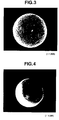
- the spherical composite particles J obtained had an average particle diameter of 41.1 ⁇ m and a spherical shape approximate to a complete sphere, as shown in the scanning electron micrograph (x 2000) in Fig. 3.
- the content of the non-magnetic metal oxide in the spherical composite particles J was 60.4 wt% in the total amount of the ferromagnetic iron compound particles and the non-magnetic metal oxide particles as a result of calculation from the measured magnetization and the measured specific gravity.
- the content of the phenol resin was 15.6 wt% in the total amount.
- the properties of the spherical composite particles J are shown in Table 4.
- Spherical composite particles K to N were obtained by the same reaction and curing as in Example 8 or 9 except that the presence or absence, the kind and the amount of the non-magnetic metal oxide particles, the amounts of phenol, formalin, ammonia water as a basic catalyst and water were varied as shown in Table 3. The properties of the spherical composite particles K to N obtained are shown in Table 4.
- spherical composite particles O 1 kg of the spherical composite particles A as the core particles, and 20 g of a styrene resin (Himer-SB-75, produced by Sanyo Chemical Industries Co., Ltd.) were charged into a Henschel mixer, and the temperature was raised to 120°C while stirring the mixture in a nitrogen atmosphere and the temperature of 120°C was kept for 1 hour while stirring the mixture in a nitrogen atmosphere, thereby obtaining spherical composite particles O coated with the styrene resin.
- the spherical composite particles O obtained had an average particle diameter of 40.8 ⁇ m and a spherical shape approximate to a complete sphere, as shown in the scanning electron micrograph (x 1000) in Fig.
- Coating layers were produced and the spherical composite particles P to T were obtained in the same way as in Example 10 except that the kind of the spherical composite core particles, and the kind and the amount of the resin were varied.
- the producing conditions are shown in Table 5 and the properties of the spherical composite particles P to T obtained are shown in Table 6.
- the obtained spherical composite particles P were mixed with a toner for using in a full-color laser copying machine CLC-200 (manufactured by Canon Inc.) to obtain a developer.
- the picture-forming test of the obtained developer was carried out by using the full-color laser copying machine CLC-200 (manufactured by Canon Inc.). As the result, a distinct picture in which an image portion had sufficiently high density and a non-image portion had no fog, was obtained.
Landscapes
- Physics & Mathematics (AREA)
- General Physics & Mathematics (AREA)
- Chemical & Material Sciences (AREA)
- Chemical Kinetics & Catalysis (AREA)
- Spectroscopy & Molecular Physics (AREA)
- Crystallography & Structural Chemistry (AREA)
- Inorganic Chemistry (AREA)
- Developing Agents For Electrophotography (AREA)
Applications Claiming Priority (6)
| Application Number | Priority Date | Filing Date | Title |
|---|---|---|---|
| JP26624894A JP3259749B2 (ja) | 1994-10-05 | 1994-10-05 | 電子写真用磁性キャリア |
| JP26624894 | 1994-10-05 | ||
| JP26624994 | 1994-10-05 | ||
| JP266249/94 | 1994-10-05 | ||
| JP266248/94 | 1994-10-05 | ||
| JP26624994A JP3257578B2 (ja) | 1994-10-05 | 1994-10-05 | 電子写真用磁性キャリア |
Publications (3)
| Publication Number | Publication Date |
|---|---|
| EP0708379A2 true EP0708379A2 (fr) | 1996-04-24 |
| EP0708379A3 EP0708379A3 (fr) | 1996-05-01 |
| EP0708379B1 EP0708379B1 (fr) | 1999-08-04 |
Family
ID=26547361
Family Applications (1)
| Application Number | Title | Priority Date | Filing Date |
|---|---|---|---|
| EP95307044A Expired - Lifetime EP0708379B1 (fr) | 1994-10-05 | 1995-10-04 | Agent de véhiculation magnétique pour électrophotographie |
Country Status (3)
| Country | Link |
|---|---|
| US (1) | US5654120A (fr) |
| EP (1) | EP0708379B1 (fr) |
| DE (1) | DE69511209T2 (fr) |
Cited By (14)
| Publication number | Priority date | Publication date | Assignee | Title |
|---|---|---|---|---|
| EP0801335A1 (fr) * | 1996-04-08 | 1997-10-15 | Canon Kabushiki Kaisha | Particules de support magnétiques revêtues, révélateur du type à deux composants et procédé de développement |
| EP0867779A3 (fr) * | 1997-03-27 | 1998-12-30 | Toda Kogyo Corp. | Particules sphériques composites et agent de véhiculation magnétique électrophotographique |
| EP0889369A1 (fr) * | 1997-07-04 | 1999-01-07 | Toda Kogyo Corporation | Agent de véhiculation magnétique électrophotographique et procédé pour sa fabrication |
| EP0974873A3 (fr) * | 1998-07-22 | 2000-04-19 | Canon Kabushiki Kaisha | Agent de véhiculation magnétique, révélateur à deux composants, procédé de production d' images |
| EP0999478A1 (fr) * | 1998-11-06 | 2000-05-10 | Canon Kabushiki Kaisha | Agent de développement à deux composants et méthode de production d' images |
| EP0999477A1 (fr) * | 1998-11-06 | 2000-05-10 | Toda Kogyo Corporation | Agent de véhiculation magnétique électrophotographique |
| US6165663A (en) * | 1996-04-08 | 2000-12-26 | Canon Kabushiki Kaisha | Magnetic coated carrier two-component type developer and developing method |
| EP1156376A1 (fr) * | 2000-05-17 | 2001-11-21 | Heidelberger Druckmaschinen Aktiengesellschaft | Particules de support magnétiques |
| EP1158546A1 (fr) * | 2000-05-25 | 2001-11-28 | National Institute of Advanced Industrial Science and Technology | Particules d'oxyde magnétiques contenant de l'étain et procédé de production |
| EP1156375A3 (fr) * | 2000-05-17 | 2002-08-21 | Heidelberger Druckmaschinen Aktiengesellschaft | Méthode électrophotograhique utilisant des particules de support contenant un matériau magnétique dur |
| EP1065571A3 (fr) * | 1999-06-30 | 2003-04-23 | Canon Kabushiki Kaisha | Véhiculeur pour électrophotographique révélateur du type à deux composants et procédé de formation d'images |
| EP1315046A3 (fr) * | 2001-11-26 | 2003-09-03 | Ricoh Company, Ltd. | Dispositif de développement pour la supression de variations dans la densité de masse de l' agent de développement, ainsi qu' un appareil de production d' images comprenant un tel dispositif de développement |
| US6723481B2 (en) | 2000-05-17 | 2004-04-20 | Heidelberger Druckmaschinen Ag | Method for using hard magnetic carriers in an electrographic process |
| EP1220044A3 (fr) * | 2000-12-26 | 2005-11-16 | Eastman Kodak Company | Systèmes de développement pour toners magnétiques et toners à teneur réduite en matériau magnétique |
Families Citing this family (7)
| Publication number | Priority date | Publication date | Assignee | Title |
|---|---|---|---|---|
| US6010811A (en) * | 1994-10-05 | 2000-01-04 | Canon Kabushiki Kaisha | Two-component type developer, developing method and image forming method |
| JPH10301337A (ja) * | 1996-12-24 | 1998-11-13 | Fuji Xerox Co Ltd | 静電潜像現像剤用キャリア、静電潜像現像剤、画像形成方法、および画像形成装置 |
| JP2002214846A (ja) * | 2001-01-17 | 2002-07-31 | Fuji Xerox Co Ltd | 静電潜像現像用キャリア、静電潜像現像剤及び画像形成方法 |
| EP2439593B1 (fr) | 2009-06-04 | 2016-08-24 | Toda Kogyo Corporation | Porteur magnétique pour révélateurs électrographiques, procédé de production associé, et révélateurs à deux composants |
| JP5760599B2 (ja) * | 2011-03-31 | 2015-08-12 | 戸田工業株式会社 | 磁性酸化鉄粒子粉末 |
| JP6569173B2 (ja) * | 2015-01-28 | 2019-09-04 | パウダーテック株式会社 | 外殻構造を有するフェライト粒子 |
| JP6225400B2 (ja) * | 2015-01-28 | 2017-11-08 | パウダーテック株式会社 | 外殻構造を有する触媒担持体用フェライト粒子 |
Citations (6)
| Publication number | Priority date | Publication date | Assignee | Title |
|---|---|---|---|---|
| JPS4713954A (fr) | 1971-01-06 | 1972-07-26 | ||
| JPS57660A (en) | 1980-06-02 | 1982-01-05 | Konishiroku Photo Ind Co Ltd | Carrier for developing electrostatic charge image |
| JPH02220068A (ja) | 1989-02-21 | 1990-09-03 | Unitika Ltd | 電子写真用磁性キヤリア及びその製造方法 |
| JPH04100850A (ja) | 1990-08-21 | 1992-04-02 | Toda Kogyo Corp | 球形を呈した無機物粒子含有フェノール樹脂複合物粉体及びその製造法 |
| JPH04124677A (ja) | 1990-09-17 | 1992-04-24 | Fuji Xerox Co Ltd | 静電荷像用現像剤 |
| JPH05273789A (ja) | 1991-03-28 | 1993-10-22 | Fuji Xerox Co Ltd | 電子写真用現像剤 |
Family Cites Families (7)
| Publication number | Priority date | Publication date | Assignee | Title |
|---|---|---|---|---|
| JP2590962B2 (ja) * | 1987-11-10 | 1997-03-19 | ミノルタ株式会社 | 静電荷像現像用キャリア |
| EP0317667B1 (fr) * | 1987-11-24 | 1993-02-17 | Agfa-Gevaert N.V. | Particules de support magnétiques |
| US5108862A (en) * | 1989-02-21 | 1992-04-28 | Toda Kogyo Corp. | Composite carrier particles for electrophotography and process for producing the same |
| US5422216A (en) * | 1994-03-01 | 1995-06-06 | Steward | Developer composition and method of preparing the same |
| JP3238006B2 (ja) * | 1994-06-07 | 2001-12-10 | パウダーテック株式会社 | 電子写真現像剤用フェライトキャリアおよび該キャリアを用いた現像剤 |
| US5500320A (en) * | 1994-08-29 | 1996-03-19 | Eastman Kodak Company | High speed developer compositions with ferrite carriers |
| JPH1124868A (ja) * | 1997-07-03 | 1999-01-29 | Ricoh Co Ltd | プリンタのデバッグ方式 |
-
1995
- 1995-10-04 EP EP95307044A patent/EP0708379B1/fr not_active Expired - Lifetime
- 1995-10-04 DE DE69511209T patent/DE69511209T2/de not_active Expired - Fee Related
- 1995-10-04 US US08/538,951 patent/US5654120A/en not_active Expired - Fee Related
Patent Citations (6)
| Publication number | Priority date | Publication date | Assignee | Title |
|---|---|---|---|---|
| JPS4713954A (fr) | 1971-01-06 | 1972-07-26 | ||
| JPS57660A (en) | 1980-06-02 | 1982-01-05 | Konishiroku Photo Ind Co Ltd | Carrier for developing electrostatic charge image |
| JPH02220068A (ja) | 1989-02-21 | 1990-09-03 | Unitika Ltd | 電子写真用磁性キヤリア及びその製造方法 |
| JPH04100850A (ja) | 1990-08-21 | 1992-04-02 | Toda Kogyo Corp | 球形を呈した無機物粒子含有フェノール樹脂複合物粉体及びその製造法 |
| JPH04124677A (ja) | 1990-09-17 | 1992-04-24 | Fuji Xerox Co Ltd | 静電荷像用現像剤 |
| JPH05273789A (ja) | 1991-03-28 | 1993-10-22 | Fuji Xerox Co Ltd | 電子写真用現像剤 |
Cited By (22)
| Publication number | Priority date | Publication date | Assignee | Title |
|---|---|---|---|---|
| EP0801335A1 (fr) * | 1996-04-08 | 1997-10-15 | Canon Kabushiki Kaisha | Particules de support magnétiques revêtues, révélateur du type à deux composants et procédé de développement |
| US6165663A (en) * | 1996-04-08 | 2000-12-26 | Canon Kabushiki Kaisha | Magnetic coated carrier two-component type developer and developing method |
| EP0867779A3 (fr) * | 1997-03-27 | 1998-12-30 | Toda Kogyo Corp. | Particules sphériques composites et agent de véhiculation magnétique électrophotographique |
| US6017667A (en) * | 1997-03-27 | 2000-01-25 | Toda Kogyo Corporation | Spherical-like composite particles and electrophotographic magnetic carrier |
| EP0889369A1 (fr) * | 1997-07-04 | 1999-01-07 | Toda Kogyo Corporation | Agent de véhiculation magnétique électrophotographique et procédé pour sa fabrication |
| US6042982A (en) * | 1997-07-04 | 2000-03-28 | Toda Kogyo Corporation | Electrophotographic magnetic carrier and process for producing the same |
| US6124067A (en) * | 1998-07-22 | 2000-09-26 | Canon Kabushiki Kaisha | Magnetic carrier, two-component developer and image forming method |
| EP0974873A3 (fr) * | 1998-07-22 | 2000-04-19 | Canon Kabushiki Kaisha | Agent de véhiculation magnétique, révélateur à deux composants, procédé de production d' images |
| US6312862B1 (en) | 1998-11-06 | 2001-11-06 | Canon Kabushiki Kaisha | Two-component type developer and image forming method |
| US6506531B1 (en) | 1998-11-06 | 2003-01-14 | Canon Kabushiki Kaisha | Magnetic carrier |
| EP0999478A1 (fr) * | 1998-11-06 | 2000-05-10 | Canon Kabushiki Kaisha | Agent de développement à deux composants et méthode de production d' images |
| EP0999477A1 (fr) * | 1998-11-06 | 2000-05-10 | Toda Kogyo Corporation | Agent de véhiculation magnétique électrophotographique |
| EP1065571A3 (fr) * | 1999-06-30 | 2003-04-23 | Canon Kabushiki Kaisha | Véhiculeur pour électrophotographique révélateur du type à deux composants et procédé de formation d'images |
| US6723481B2 (en) | 2000-05-17 | 2004-04-20 | Heidelberger Druckmaschinen Ag | Method for using hard magnetic carriers in an electrographic process |
| EP1156375A3 (fr) * | 2000-05-17 | 2002-08-21 | Heidelberger Druckmaschinen Aktiengesellschaft | Méthode électrophotograhique utilisant des particules de support contenant un matériau magnétique dur |
| EP1156376A1 (fr) * | 2000-05-17 | 2001-11-21 | Heidelberger Druckmaschinen Aktiengesellschaft | Particules de support magnétiques |
| EP1158546A1 (fr) * | 2000-05-25 | 2001-11-28 | National Institute of Advanced Industrial Science and Technology | Particules d'oxyde magnétiques contenant de l'étain et procédé de production |
| US6596255B2 (en) | 2000-05-25 | 2003-07-22 | National Institute Of Advanced Industrial Science And Technology | Tin-containing granular magnetic oxide particles and process for producing the same |
| EP1220044A3 (fr) * | 2000-12-26 | 2005-11-16 | Eastman Kodak Company | Systèmes de développement pour toners magnétiques et toners à teneur réduite en matériau magnétique |
| EP1315046A3 (fr) * | 2001-11-26 | 2003-09-03 | Ricoh Company, Ltd. | Dispositif de développement pour la supression de variations dans la densité de masse de l' agent de développement, ainsi qu' un appareil de production d' images comprenant un tel dispositif de développement |
| US6904244B2 (en) | 2001-11-26 | 2005-06-07 | Ricoh Company, Ltd | Developing device for suppressing variations in bulk density of developer, and an image forming apparatus including the developing device |
| US7003235B2 (en) | 2001-11-26 | 2006-02-21 | Ricoh Company, Ltd. | Developing device for suppressing variations in bulk density of developer, and an image forming apparatus including the developing device |
Also Published As
| Publication number | Publication date |
|---|---|
| EP0708379A3 (fr) | 1996-05-01 |
| EP0708379B1 (fr) | 1999-08-04 |
| DE69511209T2 (de) | 1999-11-25 |
| US5654120A (en) | 1997-08-05 |
| DE69511209D1 (de) | 1999-09-09 |
Similar Documents
| Publication | Publication Date | Title |
|---|---|---|
| EP0708379B1 (fr) | Agent de véhiculation magnétique pour électrophotographie | |
| JP3397229B2 (ja) | 球状複合体粒子粉末及び該粒子粉末からなる電子写真用磁性キャリア | |
| CN102804079B (zh) | 电子照相显影剂用磁性载体及其制造方法、以及双组分系显影剂 | |
| CN104350429B (zh) | 电子照相显影剂用磁性载体及其制造方法和双组分显影剂 | |
| EP0384697A2 (fr) | Particule véhiculante à structure composée pour électrophotographie et procédé pour sa préparation | |
| EP0999477B1 (fr) | Agent de véhiculation magnétique électrophotographique | |
| JP2738734B2 (ja) | 電子写真用磁性キヤリア及びその製造方法 | |
| US6042982A (en) | Electrophotographic magnetic carrier and process for producing the same | |
| JP2000199985A (ja) | 磁性キャリア | |
| JP3259749B2 (ja) | 電子写真用磁性キャリア | |
| EP0410788B1 (fr) | Particules magnétiques utilisées dans des développateurs d'images latentes électrostatiques et procédé pour leur fabrication | |
| JP3006657B2 (ja) | 電子写真用磁性キャリア及びその製造法 | |
| JP6382238B2 (ja) | 電子写真現像剤用磁性キャリア及びその製造方法、並びに二成分系現像剤 | |
| EP0242712B1 (fr) | Matériau de support pour développeurs électrophotographiques | |
| JP3257578B2 (ja) | 電子写真用磁性キャリア | |
| JP3407547B2 (ja) | 電子写真現像剤用キャリア及びその製造法 | |
| JP3405383B2 (ja) | 電子写真現像剤用キャリア及びその製造法 | |
| JP3334735B2 (ja) | 電子写真用磁性キャリア | |
| JP3407542B2 (ja) | 電子写真現像剤用キャリア及びその製造法 | |
| JP3405384B2 (ja) | 電子写真現像剤用キャリア及びその製造法 | |
| JP2005338349A (ja) | 画像形成方法 | |
| JP2000137352A (ja) | 現像方法 | |
| JP2005084457A (ja) | 磁性キャリア及び二成分系現像剤 | |
| JP2767063B2 (ja) | 静電潜像現像剤用磁性粉体及びその製造法 | |
| JPH09281807A (ja) | 画像形成方法 |
Legal Events
| Date | Code | Title | Description |
|---|---|---|---|
| PUAI | Public reference made under article 153(3) epc to a published international application that has entered the european phase |
Free format text: ORIGINAL CODE: 0009012 |
|
| PUAL | Search report despatched |
Free format text: ORIGINAL CODE: 0009013 |
|
| AK | Designated contracting states |
Kind code of ref document: A2 Designated state(s): DE FR GB NL |
|
| AK | Designated contracting states |
Kind code of ref document: A3 Designated state(s): DE FR GB NL |
|
| RHK1 | Main classification (correction) |
Ipc: G03G 9/107 |
|
| 17P | Request for examination filed |
Effective date: 19961010 |
|
| GRAG | Despatch of communication of intention to grant |
Free format text: ORIGINAL CODE: EPIDOS AGRA |
|
| 17Q | First examination report despatched |
Effective date: 19980706 |
|
| GRAG | Despatch of communication of intention to grant |
Free format text: ORIGINAL CODE: EPIDOS AGRA |
|
| GRAG | Despatch of communication of intention to grant |
Free format text: ORIGINAL CODE: EPIDOS AGRA |
|
| GRAH | Despatch of communication of intention to grant a patent |
Free format text: ORIGINAL CODE: EPIDOS IGRA |
|
| GRAH | Despatch of communication of intention to grant a patent |
Free format text: ORIGINAL CODE: EPIDOS IGRA |
|
| GRAA | (expected) grant |
Free format text: ORIGINAL CODE: 0009210 |
|
| AK | Designated contracting states |
Kind code of ref document: B1 Designated state(s): DE FR GB NL |
|
| REF | Corresponds to: |
Ref document number: 69511209 Country of ref document: DE Date of ref document: 19990909 |
|
| ET | Fr: translation filed | ||
| PLBE | No opposition filed within time limit |
Free format text: ORIGINAL CODE: 0009261 |
|
| STAA | Information on the status of an ep patent application or granted ep patent |
Free format text: STATUS: NO OPPOSITION FILED WITHIN TIME LIMIT |
|
| 26N | No opposition filed | ||
| REG | Reference to a national code |
Ref country code: GB Ref legal event code: IF02 |
|
| PGFP | Annual fee paid to national office [announced via postgrant information from national office to epo] |
Ref country code: NL Payment date: 20051003 Year of fee payment: 11 |
|
| PGFP | Annual fee paid to national office [announced via postgrant information from national office to epo] |
Ref country code: GB Payment date: 20051005 Year of fee payment: 11 |
|
| PGFP | Annual fee paid to national office [announced via postgrant information from national office to epo] |
Ref country code: FR Payment date: 20051010 Year of fee payment: 11 |
|
| PG25 | Lapsed in a contracting state [announced via postgrant information from national office to epo] |
Ref country code: NL Free format text: LAPSE BECAUSE OF NON-PAYMENT OF DUE FEES Effective date: 20070501 |
|
| GBPC | Gb: european patent ceased through non-payment of renewal fee |
Effective date: 20061004 |
|
| NLV4 | Nl: lapsed or anulled due to non-payment of the annual fee |
Effective date: 20070501 |
|
| REG | Reference to a national code |
Ref country code: FR Ref legal event code: ST Effective date: 20070629 |
|
| PG25 | Lapsed in a contracting state [announced via postgrant information from national office to epo] |
Ref country code: GB Free format text: LAPSE BECAUSE OF NON-PAYMENT OF DUE FEES Effective date: 20061004 |
|
| PG25 | Lapsed in a contracting state [announced via postgrant information from national office to epo] |
Ref country code: FR Free format text: LAPSE BECAUSE OF NON-PAYMENT OF DUE FEES Effective date: 20061031 |
|
| PGFP | Annual fee paid to national office [announced via postgrant information from national office to epo] |
Ref country code: DE Payment date: 20081014 Year of fee payment: 14 |
|
| PG25 | Lapsed in a contracting state [announced via postgrant information from national office to epo] |
Ref country code: DE Free format text: LAPSE BECAUSE OF NON-PAYMENT OF DUE FEES Effective date: 20100501 |