EP0712031A1 - Vorrichtung und Verfahren zum Vorführen von Filmbildern - Google Patents
Vorrichtung und Verfahren zum Vorführen von Filmbildern Download PDFInfo
- Publication number
- EP0712031A1 EP0712031A1 EP95420294A EP95420294A EP0712031A1 EP 0712031 A1 EP0712031 A1 EP 0712031A1 EP 95420294 A EP95420294 A EP 95420294A EP 95420294 A EP95420294 A EP 95420294A EP 0712031 A1 EP0712031 A1 EP 0712031A1
- Authority
- EP
- European Patent Office
- Prior art keywords
- film
- sequence
- frame
- determined
- user
- Prior art date
- Legal status (The legal status is an assumption and is not a legal conclusion. Google has not performed a legal analysis and makes no representation as to the accuracy of the status listed.)
- Ceased
Links
- 238000000034 method Methods 0.000 title claims abstract description 21
- 238000012163 sequencing technique Methods 0.000 description 5
- 238000010586 diagram Methods 0.000 description 3
- 230000008569 process Effects 0.000 description 3
- 230000008859 change Effects 0.000 description 2
- 230000007246 mechanism Effects 0.000 description 2
- 230000003287 optical effect Effects 0.000 description 2
- 230000008901 benefit Effects 0.000 description 1
- 238000006243 chemical reaction Methods 0.000 description 1
- 238000010276 construction Methods 0.000 description 1
- 230000006870 function Effects 0.000 description 1
- 238000003384 imaging method Methods 0.000 description 1
- 239000004973 liquid crystal related substance Substances 0.000 description 1
- 230000001050 lubricating effect Effects 0.000 description 1
- 238000012986 modification Methods 0.000 description 1
- 230000004048 modification Effects 0.000 description 1
Images


Classifications
-
- G—PHYSICS
- G03—PHOTOGRAPHY; CINEMATOGRAPHY; ANALOGOUS TECHNIQUES USING WAVES OTHER THAN OPTICAL WAVES; ELECTROGRAPHY; HOLOGRAPHY
- G03B—APPARATUS OR ARRANGEMENTS FOR TAKING PHOTOGRAPHS OR FOR PROJECTING OR VIEWING THEM; APPARATUS OR ARRANGEMENTS EMPLOYING ANALOGOUS TECHNIQUES USING WAVES OTHER THAN OPTICAL WAVES; ACCESSORIES THEREFOR
- G03B21/00—Projectors or projection-type viewers; Accessories therefor
- G03B21/10—Projectors with built-in or built-on screen
- G03B21/11—Projectors with built-in or built-on screen for microfilm reading
- G03B21/111—Projectors with built-in or built-on screen for microfilm reading of roll films
- G03B21/113—Handling roll films
-
- G—PHYSICS
- G03—PHOTOGRAPHY; CINEMATOGRAPHY; ANALOGOUS TECHNIQUES USING WAVES OTHER THAN OPTICAL WAVES; ELECTROGRAPHY; HOLOGRAPHY
- G03B—APPARATUS OR ARRANGEMENTS FOR TAKING PHOTOGRAPHS OR FOR PROJECTING OR VIEWING THEM; APPARATUS OR ARRANGEMENTS EMPLOYING ANALOGOUS TECHNIQUES USING WAVES OTHER THAN OPTICAL WAVES; ACCESSORIES THEREFOR
- G03B23/00—Devices for changing pictures in viewing apparatus or projectors
- G03B23/08—Devices for changing pictures in viewing apparatus or projectors in which pictures are attached to a movable carrier
- G03B23/12—Devices for changing pictures in viewing apparatus or projectors in which pictures are attached to a movable carrier linear strip carrier
-
- G—PHYSICS
- G03—PHOTOGRAPHY; CINEMATOGRAPHY; ANALOGOUS TECHNIQUES USING WAVES OTHER THAN OPTICAL WAVES; ELECTROGRAPHY; HOLOGRAPHY
- G03B—APPARATUS OR ARRANGEMENTS FOR TAKING PHOTOGRAPHS OR FOR PROJECTING OR VIEWING THEM; APPARATUS OR ARRANGEMENTS EMPLOYING ANALOGOUS TECHNIQUES USING WAVES OTHER THAN OPTICAL WAVES; ACCESSORIES THEREFOR
- G03B2217/00—Details of cameras or camera bodies; Accessories therefor
- G03B2217/24—Details of cameras or camera bodies; Accessories therefor with means for separately producing marks on the film
- G03B2217/246—Details of the markings
Definitions
- the invention relates to displaying of photographic film image frames and more particularly to apparatus and method for displaying such image frames in a predetermined sequence established by a user which is different from the sequence of image frames as they appear on the film.
- film image display apparatus for displaying image frames on photographic film stored within a film cartridge, the film having a magnetic recording layer formed thereon, and the frames occurring in chronological sequential order on the film.
- the apparatus comprises a display station for receiving said cartridge and sequentially displaying images from the frames on the photographic film and magnetic read means for reading data recorded on the film magnetic layer representative of a pre-determined frame viewing sequence other than the chronological sequential order.
- the apparatus further includes film advance control means responsive to the recorded data for periodically advancing the film to the display station for display of the image frames in the pre-determined frame viewing sequence.
- the apparatus further includes user-operated means for inputting user-determined image frame number viewing sequence data and sound information; and magnetic write means for recording the user-determined sequence data and sound information on the film magnetic layer.
- a method of operating a film image display apparatus to display a plurality of film images, from image frames occurring in a chronological sequence on film stored in a cartridge, in a pre-determined, non-chronological frame viewing sequence, the film having a magnetic recording layer therein wherein the method comprises the steps of inserting the film cartridge into the film image display apparatus; reading, with a magnetic read head, data recorded on the film magnetic layer representative of the pre-determined frame viewing sequence; and utilizing the read data to control the film image display apparatus to display the film images in the pre-determined viewing sequence as indicated by the recorded sequence data.
- the method preferably also includes periodically inputting frame viewing sequence data and sound information; and recording the inputted sequence data and sound information on the film magnetic layer.
- FIG. 1 is a side schematic view of a strip of photographic film bearing a magnetic layer.
- FIG. 2 is a plan view of the FIG. 1 film strip illustrating a track recording format which is useful for data recording in the present invention.
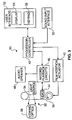
- FIG. 3 is a schematic block diagram of apparatus for sequencing and displaying image frames on color reversal film in accordance with the invention.
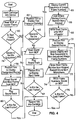
- FIG. 4 is a program flow chart illustrating how the processor controller of the invention apparatus can be programmed to perform the sequencing and display functions according to the invention.
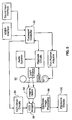
- FIG. 5 is a schematic block diagram of an alternative embodiment of the FIG. 3 apparatus adapted to sequence and display image frames on negative color film.
- FIG. 6 is a diagram of a data recording format useful in recording of data on the film magnetic layer according to the invention.
- a strip 10 of color film includes a base 13, a plurality of well known photochemical layers 12 on one side of the base 13 and a virtually transparent magnetic layer 14 on the other side.
- An anti-static and lubricating layer 15 covers the magnetic layer.
- a presently preferred form of film strip 10 includes perforations 19 intermittently spaced along the film edge at regular intervals matching the pitch of a metering mechanism in a camera adapted to use the film strip 10.
- Data is recorded on the film magnetic layer in track locations C1-C2 and P1-P2 along the marginal areas of the film outside of the regions of the image frames 20.
- data may also be recorded in additional track locations within the regions of the image frames 20. It is contemplated that marginal tracks C1 and C2 are to be used by the camera to record data at the time of picture taking while the remaining two tracks P1 and P2 are to be reserved for recording of data by apparatus separate from the camera, such as by photofinishing equipment, an order entry station or the like.
- a data field is recorded indicating the frame number of each image frame region on the film. It is further contemplated that a complete film strip, after photo processing, will be returned intact to the user rewound in a film cartridge, typically the original cartridge in which the unexposed film was purchased. This would be the case for positive, i.e. color reversal, film which previously would be returned mounted in slides, as well as negative film which is used to make positive prints and previously returned as cut film strips.
- a display station shown generally at 32, includes a light source 34 for projecting light through an image frame on a color reversal film strip 36 onto viewing optics 38.
- Optics 38 may be a projector lens for projection onto a separate screen or it may be part of a self-contained backlit desktop projection system.
- Film advance control means includes a film position actuator 40 controlled from a central processor/controller 42 for periodically advancing film strip 36 to the image display station 32 in a desired sequence as will be described in more detail below.
- a read/write magnetic head 44 is provided to read and record magnetic data on one of the data tracks on the film magnetic layer.
- Record/playback circuit 46 is coupled to head 44 and is operative to drive head 44 to record data supplied from processor/controller 42 and to receive and pass to the processor/controller 42 data read by head 44 from the film magnetic layer.
- An audio speaker 48 is coupled to record/playback circuit 46 for optional playback of audio which may be recorded on the film magnetic layer. Recording of sound information on a film magnetic layer is described more fully in commonly assigned U.S. Patents 4,965,627, the disclosure of which is incorporated herein by reference.
- the audio may be recorded on the film in the camera at the time of a picture taking event or, alternatively, it may recorded in apparatus 30 by the viewer from sound input through a sound input interface 50, e.g. microphone or tape recorder.
- a user operated interface 52 includes an alpha-numeric display 54 and a keypad 56 operated by the viewer to input film sequencing information to be recorded on the film magnetic layer to be used in controlling the sequence at which the image frames on the film strip 34 are viewed.
- the interface 52 may also be used to actuate the apparatus 30 during viewing to cause the film position actuator 40 to select the viewing sequence of the film frames in accordance with the sequence data recorded on the film magnetic layer.
- FIG. 3 apparatus The operation of the FIG. 3 apparatus will be described in connection with the program flow chart of FIG. 4 which show how the processor/controller 42 may be programmed to allow the user to operate the apparatus 30 to create and record on the film magnetic layer a desired viewing sequence for the image frames on the film strip.
- the user inserts the film cartridge into a film track assembly, not shown, with the film spool engaged by actuator 40.
- the film is thrust out of the cartridge past read/write head and the appropriate track, e.g. track C2 on the film leader L located adjacent an imaginary Frame 0, is read.
- the controller determines at query 60 whether or not sequencing data in the form of a start frame number is recorded on the leader and, if not, the film is advanced by instruction 62 to place the first image frame in the optical path of the display station 32.
- Query 63 determines whether the user has indicated via the keypad 56 a desire to create a particular viewing sequence. If not, the controller causes the image frames to be viewed in the normal sequence in which they appear on the film. If the film has a sound track recorded for the image frames, the sound data is read into memory in the record/playback circuits 46 as the film is moved into position and is played out via speaker 48 while the frame is being displayed. This sequence is repeated for each successive image frame on the film until query 64 determines that the last frame has been displayed at which time the program ends. The program then commands the controller to cause the film to be rewound into the cartridge for storage purposes.
- step 65 causes the current sequence of image frame numbers to be presented on display 54.
- step 66 a starting frame number is inserted by the user via keypad 56. Suitable prompts for this operation may be shown in the display 54.
- step 68 the instruction causes the film to be returned to the leader (L) for writing of the start frame number in the appropriate leader track.
- the program may cause the start frame number to be stored temporarily in memory to be read out and recorded on the film leader after all of the sequenced frame numbers are determined.
- step 70 positions the film for display of the selected image frame.
- the display 54 is updated in step 71 to show the newly selected sequence.
- the display may also retain the previous sequence, as well as frames not yet selected, for user convenience.
- the user is prompted to enter the next desired frame number and, optionally, to record sound, e.g. via a microphone, associated with the selected frame.
- Step 74 then records the next frame number in the designated track, e.g. track C2, associated with the selected frame. If sound has been input, it is recorded on the magnetic layer, e.g. in tracks within the associated image frame.
- This recording can be accomplished during or just prior to positioning the next selected image frame in the display station. Storing the sound integrally with the image avoids the necessity for additional sound and image synchronization. This process is repeated until the user indicates via the keypad that no further image frames are to be selected, as sensed by query 75, at which time the program ends. It will be appreciated that with this process, the user has complete freedom to establish which frame are to be displayed and which are to be ignored and also in which order or sequence the frames are to be displayed. The user can see on display 54 a list of frame numbers not yet resequenced. Moreover, by recording the sequence data on the film, the image display sequence is readily accessible each time the film display is performed.
- the program moves to query 76 to determine if the user wants to create a viewing sequence. This allows the user the flexibility to edit and change a prior sequence setting at any time. This is a further advantage of the invention in recording the sequence data on the magnetic layer of the film. If no changes are desired, the program moves into the viewing mode in which the sequence of display of the image frames is determined by the frame number sequence data recorded on the film. Initially, the film is moved at 78 to the frame designated by the data on the leader track. The next frame number is read and, if present, any sound information.
- the film After playing of the sound, and following an appropriate viewing interval, the film is moved to the next designated frame for display.
- the viewing interval may be established by the user by setting an internal timer, or the user may randomly advance the film using a "next frame" button on the keypad.
- the frame-by-frame viewing process is repeated until all designated frames have been displayed as determined by query 80.
- query 60 may also determine if a start frame number has been inserted via the keypad 56 which a user might do if the desire is to create and record a viewing sequence or to change an existing recorded sequence. If the keypad entered start frame number is sensed, the program would move directly to step 68 causing the start frame number to be recorded on the film leader after which the viewing sequence would be created and recorded as previously described.
- Apparatus 30 of FIG. 3 is adapted for direct display of color reversal film similar to the display of sorted color slides in a projector.
- the invention is equally suited for custom sequence viewing of image frames on negative film in display apparatus 90 as seen in FIG. 5.
- Display apparatus 90 is similar to display apparatus 30 of FIG. 3 except for provision electronic image scanning and display features appropriate to converting the negative images on the film into viewable positive images.
- the image light is projected by imaging optics 92 onto a charge coupled device (CCD) imager 96 which is operated by CCD driver circuits 94 under the control of controller 42 to convert the optical image into a digital signal.
- the digital signal is then applied to electronic image processing circuits of known design for conversion of the negative image signal into positive signals suitable for application to an electronic display such as a cathode ray tube or liquid crystal display of known construction and operation.
- CCD charge coupled device
- FIG. 6 shows a camera data block 110 as might be recorded in camera track C2 by either of the previously described display apparatus.
- Block 110 includes two identification bytes ID1 and ID2 which indicate the type of data stored in the block 110.
- a start sentinel SS and an end sentinel ES indicate the beginning and end of the data block and a length code LNG indicates the length of the block.
- An LRC code is included for error checking purposes.
- the actual data fields are recorded in an area DF. Two of the data fields are used to record frame number information, specifically one field can be allocated to recording of the previous frame number (PFN) in the viewing sequence and the other for recording of the next frame number (NFN) in the sequence.
- PPN previous frame number
- NFN next frame number
- the current frame number is already recorded at another data block and does not need to be re-recorded in the data block devoted to recording of the viewing sequence data although it would be a simple matter to include a data field for this purpose.
- recording of the previous frame number (PFN) is done at step 74 of the program at the same time that the next frame number (NFN) is recorded and is of value in sequence viewing to allow the user to go back to previously displayed frames using a "previous frame" button on the keypad.
- the area DF further comprises a time field read by the controller 42. Said information is used to control the time period during which the corresponding image is displayed. After said period the next frame is displayed during a period determined by the information registered in the corresponding time field of the area DF.
Landscapes
- Physics & Mathematics (AREA)
- General Physics & Mathematics (AREA)
- Projection-Type Copiers In General (AREA)
- Facsimiles In General (AREA)
- Camera Data Copying Or Recording (AREA)
Applications Claiming Priority (2)
| Application Number | Priority Date | Filing Date | Title |
|---|---|---|---|
| US08/336,441 US5609403A (en) | 1994-11-09 | 1994-11-09 | Film image display apparatus and method |
| US336441 | 1994-11-09 |
Publications (1)
| Publication Number | Publication Date |
|---|---|
| EP0712031A1 true EP0712031A1 (de) | 1996-05-15 |
Family
ID=23316111
Family Applications (1)
| Application Number | Title | Priority Date | Filing Date |
|---|---|---|---|
| EP95420294A Ceased EP0712031A1 (de) | 1994-11-09 | 1995-10-26 | Vorrichtung und Verfahren zum Vorführen von Filmbildern |
Country Status (3)
| Country | Link |
|---|---|
| US (1) | US5609403A (de) |
| EP (1) | EP0712031A1 (de) |
| JP (1) | JPH08234318A (de) |
Cited By (2)
| Publication number | Priority date | Publication date | Assignee | Title |
|---|---|---|---|---|
| EP0828369A3 (de) * | 1996-09-04 | 1998-04-15 | Eastman Kodak Company | Vorrichtung zum Anzeigen von Bildern auf einem fotographischen Film |
| AT407094B (de) * | 1998-02-18 | 2000-12-27 | Bauer Fritz | Einrichtung zur synchronisierung von tonfilmaufnahmen |
Families Citing this family (5)
| Publication number | Priority date | Publication date | Assignee | Title |
|---|---|---|---|---|
| US5897230A (en) * | 1997-03-24 | 1999-04-27 | Eastman Kodak Company | Sound still camera and film cassette classifier system |
| US5934777A (en) * | 1997-05-08 | 1999-08-10 | Eastman Kodak Company | Method for sequencing film image presentations and film image sequencer |
| US6781724B1 (en) * | 2000-06-13 | 2004-08-24 | Eastman Kodak Company | Image processing and manipulation system |
| CA2347181A1 (en) | 2000-06-13 | 2001-12-13 | Eastman Kodak Company | Plurality of picture appearance choices from a color photographic recording material intended for scanning |
| US8434232B2 (en) * | 2009-06-26 | 2013-05-07 | Weyerhaeuser Nr Company | Method for constructing a truss from selected components |
Citations (5)
| Publication number | Priority date | Publication date | Assignee | Title |
|---|---|---|---|---|
| FR2153513A5 (de) * | 1971-09-13 | 1973-05-04 | Delplanque Jean | |
| US4053215A (en) * | 1974-12-26 | 1977-10-11 | Microform Data Systems, Inc. | Film strip handling apparatus and method |
| US4965627A (en) | 1988-10-07 | 1990-10-23 | Eastman Kodak Company | Film information exchange system using dedicated magnetic tracks on film with virtual data indentifiers |
| US5229810A (en) | 1988-10-07 | 1993-07-20 | Eastman Kodak Company | Film information exchange system using dedicated magnetic tracks on film |
| US5276472A (en) | 1991-11-19 | 1994-01-04 | Eastman Kodak Company | Photographic film still camera system with audio recording |
Family Cites Families (12)
| Publication number | Priority date | Publication date | Assignee | Title |
|---|---|---|---|---|
| US3290987A (en) * | 1964-01-16 | 1966-12-13 | Eastman Kodak Co | Automatic searching film reader |
| US4005530A (en) * | 1973-01-08 | 1977-02-01 | Fuji Photo Film Co., Ltd. | Audio-visual training device with selective branching |
| US3981570A (en) * | 1973-06-08 | 1976-09-21 | Canon Kabushiki Kaisha | Motion picture projector device as audio-visual aid and audio-visual system using the same |
| US4068945A (en) * | 1975-09-08 | 1978-01-17 | Spence Bate | Microform editors |
| US4122613A (en) * | 1977-01-24 | 1978-10-31 | Bell & Howell Company | Operator responsive audio-visual teaching apparatus |
| JPS61235981A (ja) * | 1985-04-12 | 1986-10-21 | Toshiba Corp | プレゼンテ−シヨン装置 |
| US5021820A (en) * | 1988-10-07 | 1991-06-04 | Eastman Kodak Company | Order entry process for magnetically encodable film with dedicated magnetic tracks |
| US4974096A (en) * | 1988-10-07 | 1990-11-27 | Eastman Kodak Company | Photofinishing process with film-to-video printer using dedicated magnetic tracks on film |
| JPH0373987A (ja) * | 1989-08-15 | 1991-03-28 | Sony Corp | 音声学習装置 |
| JP2719015B2 (ja) * | 1989-12-05 | 1998-02-25 | 富士写真フイルム株式会社 | 写真フイルム取扱い及びプリント方法並びに収納容器 |
| US5080479A (en) * | 1990-07-30 | 1992-01-14 | Rosenberg Stanley L | Automatic implanting of identification data in any recorded medium |
| US5424790A (en) * | 1992-07-20 | 1995-06-13 | Olympus Optical Co., Ltd. | Projection apparatus |
-
1994
- 1994-11-09 US US08/336,441 patent/US5609403A/en not_active Expired - Fee Related
-
1995
- 1995-10-24 JP JP7275515A patent/JPH08234318A/ja active Pending
- 1995-10-26 EP EP95420294A patent/EP0712031A1/de not_active Ceased
Patent Citations (5)
| Publication number | Priority date | Publication date | Assignee | Title |
|---|---|---|---|---|
| FR2153513A5 (de) * | 1971-09-13 | 1973-05-04 | Delplanque Jean | |
| US4053215A (en) * | 1974-12-26 | 1977-10-11 | Microform Data Systems, Inc. | Film strip handling apparatus and method |
| US4965627A (en) | 1988-10-07 | 1990-10-23 | Eastman Kodak Company | Film information exchange system using dedicated magnetic tracks on film with virtual data indentifiers |
| US5229810A (en) | 1988-10-07 | 1993-07-20 | Eastman Kodak Company | Film information exchange system using dedicated magnetic tracks on film |
| US5276472A (en) | 1991-11-19 | 1994-01-04 | Eastman Kodak Company | Photographic film still camera system with audio recording |
Cited By (2)
| Publication number | Priority date | Publication date | Assignee | Title |
|---|---|---|---|---|
| EP0828369A3 (de) * | 1996-09-04 | 1998-04-15 | Eastman Kodak Company | Vorrichtung zum Anzeigen von Bildern auf einem fotographischen Film |
| AT407094B (de) * | 1998-02-18 | 2000-12-27 | Bauer Fritz | Einrichtung zur synchronisierung von tonfilmaufnahmen |
Also Published As
| Publication number | Publication date |
|---|---|
| US5609403A (en) | 1997-03-11 |
| JPH08234318A (ja) | 1996-09-13 |
Similar Documents
| Publication | Publication Date | Title |
|---|---|---|
| US5758216A (en) | Pre-recorded MOF layer information processing system | |
| EP0424972B1 (de) | Filmtransporteinrichtung mit magnetischer Informationsaufzeichnung | |
| US5521663A (en) | Sound system for still film photography | |
| US5555098A (en) | Method and apparatus for providing multiple programmed audio/still image presentations from a digital disc image player | |
| US5587752A (en) | Camera, system and method for producing composite photographic image | |
| US4635136A (en) | Method and apparatus for storing a massive inventory of labeled images | |
| EP0699941B1 (de) | Photoapparat mit einer Spracherkennungsvorrichtung | |
| EP0651892B1 (de) | Duales video/film Portrait-Kamerasystem mit Verwendung der Magnetspuren auf photographischem Film | |
| EP0699940A1 (de) | Sprach- und optische Zeichenerkennungsvorrichtung von aufgezeichneten Nachrichten für ein photographisches Kopiergerät | |
| EP0246799A1 (de) | Alphanumerisch digital codiertes Diapositiv und Systeme zu dessen Verwendung | |
| US5530501A (en) | Photographic camera with data recording on film | |
| US6397184B1 (en) | System and method for associating pre-recorded audio snippets with still photographic images | |
| US5609403A (en) | Film image display apparatus and method | |
| US5363157A (en) | Camera utilizing variable audio film frame for optical encoding of audio information | |
| US5363158A (en) | Camera including optical encoding of audio information | |
| US5122821A (en) | Dual film and still video studio portrait system using parallel dedicated magnetic tracks on film | |
| US5601956A (en) | Film unit with lens and development method thereof | |
| US5797051A (en) | Non-photographic strip having a base layer similar to a photographic filmstrip and a magnetic recording layer | |
| EP0883021A1 (de) | Verfahren und Gerät zur Sequenzierung von Filmbildvorführungen | |
| US5983036A (en) | Non-photographic strip having a base layer similar to a photographic filmstrip and a magnetic recording layer | |
| US6160577A (en) | Method for expanding memory capacity for photo film and a film player | |
| US6961096B1 (en) | Apparatus for and method of converting location information, and computer program product that is used therefor | |
| US6400909B1 (en) | Apparatus adapted to photographic film having magnetic recording part | |
| US5754359A (en) | Audiovisual filmstrip image display apparatus and method using film carried magnetic signals | |
| JP3601546B2 (ja) | 磁気情報の記録方法 |
Legal Events
| Date | Code | Title | Description |
|---|---|---|---|
| PUAI | Public reference made under article 153(3) epc to a published international application that has entered the european phase |
Free format text: ORIGINAL CODE: 0009012 |
|
| AK | Designated contracting states |
Kind code of ref document: A1 Designated state(s): DE FR GB |
|
| 17P | Request for examination filed |
Effective date: 19961025 |
|
| 17Q | First examination report despatched |
Effective date: 20000120 |
|
| GRAG | Despatch of communication of intention to grant |
Free format text: ORIGINAL CODE: EPIDOS AGRA |
|
| STAA | Information on the status of an ep patent application or granted ep patent |
Free format text: STATUS: THE APPLICATION HAS BEEN REFUSED |
|
| 18R | Application refused |
Effective date: 20010510 |