EP0712808A2 - Procédé pour la décomposition de polluants et pour l'assainissement du milieu par les microorganismes et microorganisme utilisé - Google Patents
Procédé pour la décomposition de polluants et pour l'assainissement du milieu par les microorganismes et microorganisme utilisé Download PDFInfo
- Publication number
- EP0712808A2 EP0712808A2 EP95308329A EP95308329A EP0712808A2 EP 0712808 A2 EP0712808 A2 EP 0712808A2 EP 95308329 A EP95308329 A EP 95308329A EP 95308329 A EP95308329 A EP 95308329A EP 0712808 A2 EP0712808 A2 EP 0712808A2
- Authority
- EP
- European Patent Office
- Prior art keywords
- microorganism
- acid
- halogenated organic
- strain
- organic acid
- Prior art date
- Legal status (The legal status is an assumption and is not a legal conclusion. Google has not performed a legal analysis and makes no representation as to the accuracy of the status listed.)
- Granted
Links
Images



Classifications
-
- C—CHEMISTRY; METALLURGY
- C12—BIOCHEMISTRY; BEER; SPIRITS; WINE; VINEGAR; MICROBIOLOGY; ENZYMOLOGY; MUTATION OR GENETIC ENGINEERING
- C12N—MICROORGANISMS OR ENZYMES; COMPOSITIONS THEREOF; PROPAGATING, PRESERVING, OR MAINTAINING MICROORGANISMS; MUTATION OR GENETIC ENGINEERING; CULTURE MEDIA
- C12N1/00—Microorganisms; Compositions thereof; Processes of propagating, maintaining or preserving microorganisms or compositions thereof; Processes of preparing or isolating a composition containing a microorganism; Culture media therefor
- C12N1/20—Bacteria; Culture media therefor
- C12N1/205—Bacterial isolates
-
- A—HUMAN NECESSITIES
- A62—LIFE-SAVING; FIRE-FIGHTING
- A62D—CHEMICAL MEANS FOR EXTINGUISHING FIRES OR FOR COMBATING OR PROTECTING AGAINST HARMFUL CHEMICAL AGENTS; CHEMICAL MATERIALS FOR USE IN BREATHING APPARATUS
- A62D3/00—Processes for making harmful chemical substances harmless or less harmful, by effecting a chemical change in the substances
- A62D3/02—Processes for making harmful chemical substances harmless or less harmful, by effecting a chemical change in the substances by biological methods, i.e. processes using enzymes or microorganisms
-
- B—PERFORMING OPERATIONS; TRANSPORTING
- B09—DISPOSAL OF SOLID WASTE; RECLAMATION OF CONTAMINATED SOIL
- B09C—RECLAMATION OF CONTAMINATED SOIL
- B09C1/00—Reclamation of contaminated soil
- B09C1/10—Reclamation of contaminated soil microbiologically, biologically or by using enzymes
-
- C—CHEMISTRY; METALLURGY
- C02—TREATMENT OF WATER, WASTE WATER, SEWAGE, OR SLUDGE
- C02F—TREATMENT OF WATER, WASTE WATER, SEWAGE, OR SLUDGE
- C02F3/00—Biological treatment of water, waste water, or sewage
- C02F3/34—Biological treatment of water, waste water, or sewage characterised by the microorganisms used
-
- C—CHEMISTRY; METALLURGY
- C02—TREATMENT OF WATER, WASTE WATER, SEWAGE, OR SLUDGE
- C02F—TREATMENT OF WATER, WASTE WATER, SEWAGE, OR SLUDGE
- C02F3/00—Biological treatment of water, waste water, or sewage
- C02F3/34—Biological treatment of water, waste water, or sewage characterised by the microorganisms used
- C02F3/342—Biological treatment of water, waste water, or sewage characterised by the microorganisms used characterised by the enzymes used
-
- C—CHEMISTRY; METALLURGY
- C12—BIOCHEMISTRY; BEER; SPIRITS; WINE; VINEGAR; MICROBIOLOGY; ENZYMOLOGY; MUTATION OR GENETIC ENGINEERING
- C12P—FERMENTATION OR ENZYME-USING PROCESSES TO SYNTHESISE A DESIRED CHEMICAL COMPOUND OR COMPOSITION OR TO SEPARATE OPTICAL ISOMERS FROM A RACEMIC MIXTURE
- C12P1/00—Preparation of compounds or compositions, not provided for in groups C12P3/00 - C12P39/00, by using microorganisms or enzymes
- C12P1/04—Preparation of compounds or compositions, not provided for in groups C12P3/00 - C12P39/00, by using microorganisms or enzymes by using bacteria
-
- A—HUMAN NECESSITIES
- A62—LIFE-SAVING; FIRE-FIGHTING
- A62D—CHEMICAL MEANS FOR EXTINGUISHING FIRES OR FOR COMBATING OR PROTECTING AGAINST HARMFUL CHEMICAL AGENTS; CHEMICAL MATERIALS FOR USE IN BREATHING APPARATUS
- A62D2101/00—Harmful chemical substances made harmless, or less harmful, by effecting chemical change
- A62D2101/20—Organic substances
- A62D2101/22—Organic substances containing halogen
-
- C—CHEMISTRY; METALLURGY
- C02—TREATMENT OF WATER, WASTE WATER, SEWAGE, OR SLUDGE
- C02F—TREATMENT OF WATER, WASTE WATER, SEWAGE, OR SLUDGE
- C02F2101/00—Nature of the contaminant
- C02F2101/30—Organic compounds
- C02F2101/36—Organic compounds containing halogen
-
- C—CHEMISTRY; METALLURGY
- C12—BIOCHEMISTRY; BEER; SPIRITS; WINE; VINEGAR; MICROBIOLOGY; ENZYMOLOGY; MUTATION OR GENETIC ENGINEERING
- C12R—INDEXING SCHEME ASSOCIATED WITH SUBCLASSES C12C - C12Q, RELATING TO MICROORGANISMS
- C12R2001/00—Microorganisms ; Processes using microorganisms
- C12R2001/01—Bacteria or Actinomycetales ; using bacteria or Actinomycetales
-
- Y—GENERAL TAGGING OF NEW TECHNOLOGICAL DEVELOPMENTS; GENERAL TAGGING OF CROSS-SECTIONAL TECHNOLOGIES SPANNING OVER SEVERAL SECTIONS OF THE IPC; TECHNICAL SUBJECTS COVERED BY FORMER USPC CROSS-REFERENCE ART COLLECTIONS [XRACs] AND DIGESTS
- Y10—TECHNICAL SUBJECTS COVERED BY FORMER USPC
- Y10S—TECHNICAL SUBJECTS COVERED BY FORMER USPC CROSS-REFERENCE ART COLLECTIONS [XRACs] AND DIGESTS
- Y10S435/00—Chemistry: molecular biology and microbiology
- Y10S435/8215—Microorganisms
- Y10S435/822—Microorganisms using bacteria or actinomycetales
-
- Y—GENERAL TAGGING OF NEW TECHNOLOGICAL DEVELOPMENTS; GENERAL TAGGING OF CROSS-SECTIONAL TECHNOLOGIES SPANNING OVER SEVERAL SECTIONS OF THE IPC; TECHNICAL SUBJECTS COVERED BY FORMER USPC CROSS-REFERENCE ART COLLECTIONS [XRACs] AND DIGESTS
- Y10—TECHNICAL SUBJECTS COVERED BY FORMER USPC
- Y10S—TECHNICAL SUBJECTS COVERED BY FORMER USPC CROSS-REFERENCE ART COLLECTIONS [XRACs] AND DIGESTS
- Y10S435/00—Chemistry: molecular biology and microbiology
- Y10S435/8215—Microorganisms
- Y10S435/822—Microorganisms using bacteria or actinomycetales
- Y10S435/843—Corynebacterium
-
- Y—GENERAL TAGGING OF NEW TECHNOLOGICAL DEVELOPMENTS; GENERAL TAGGING OF CROSS-SECTIONAL TECHNOLOGIES SPANNING OVER SEVERAL SECTIONS OF THE IPC; TECHNICAL SUBJECTS COVERED BY FORMER USPC CROSS-REFERENCE ART COLLECTIONS [XRACs] AND DIGESTS
- Y10—TECHNICAL SUBJECTS COVERED BY FORMER USPC
- Y10S—TECHNICAL SUBJECTS COVERED BY FORMER USPC CROSS-REFERENCE ART COLLECTIONS [XRACs] AND DIGESTS
- Y10S435/00—Chemistry: molecular biology and microbiology
- Y10S435/8215—Microorganisms
- Y10S435/822—Microorganisms using bacteria or actinomycetales
- Y10S435/874—Pseudomonas
Definitions
- This invention relates to a process for decomposing a pollutant using a microorganism, particularly a process for decomposing a halogenated organic compound using a microorganism which has an activity to decompose the halogenated organic compound, to a process for environment remediation, which can decompose a pollutant in the environment, such as ground water, soil and so on, and to a microorganism capable of decomposing a pollutant and being used in the decomposition and remediation processes.
- biodegradation treatment such as a bioreactor is very useful because it can be conducted under mild conditions and is relatively low in cost.
- Microorganisms having a decomposing activity of halogenated organic acids have been studied, for example, molds such as Trichoderma , Acrostalagmus , Penicillium and Clonostachys , and bacteria such as Pseudomonas , Arthrobacter , Rhizobium , Agrobacterium , Bacillus , Alcaligenes , Nocardia , Micrococcus, Achromobacter and Moraxella (Protein, Nucleic Acid and Enzyme (1984), vol.29, p.101-110).
- molds such as Trichoderma , Acrostalagmus , Penicillium and Clonostachys
- bacteria such as Pseudomonas , Arthrobacter , Rhizobium , Agrobacterium , Bacillus , Alcaligenes , Nocardia , Micrococcus, Achromobacter and Moraxella (Protein, Nucleic Acid and Enzyme (1984), vol.29,
- Adachi reported that an unidentified strain OS-2 has an enzyme which can decompose chloroacetic acid, bromoacetic acid and iodoacetic acid to about the same extent, and OS-2 can also decompose dichloroacetic acid though to the half extent of the above compounds (Proceedings of Osaka Prefectural Institute of Public Health, "Public Health” No. 30, p.89 (1992)). Furthermore, decomposition of halogenated organic acids having two to six carbons was studied using dehalogenase extracted from Pseudomonas putida NCIMB 12018 and immobilized on carboxymethyl cellulose or thioglycolic acid. (European Patent No. 179603).
- Japanese Patent Laid-Open Application No. 4-64544 discloses that dehalogenase extracted from Pseudomonas which decomposes D- and L-chloropropionic acid into lactic acid. This is, however, also a study at the enzyme level.
- the present invention has been made to solve the above mentioned problems and provides a biodegradation process of halogenated organic acids and a process for remedying environment using the process.
- Another object of the present invention is to provide a biodegradation process giving substantially complete decomposition of aliphatic organochlorine compounds and a process for remedying environment using the process.
- Another object of the present invention is to provide a new microbial strain which is suitably used in the biodegradation process of halogenated organic acids and aliphatic organochlorine compounds and in the environment remediation using the process.
- Fig. 1 is a graph showing the decomposition of dichloroacetic acid by strain AC.
- Fig. 2 is a graph showing the decomposition of chloroacetic acid by strain AC.
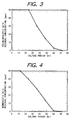
- Fig. 3 is a graph showing the decomposition of trichloroacetic acid by strain AC.
- Fig. 4 is a graph showing the decomposition of bromoacetic acid by strain AC.
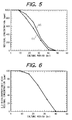
- Fig. 5 is a graph showing the decomposition of chloropropionic acid by strain AC.
- Fig. 6 is a graph showing the decomposition of 2, 2 - dichloropropionic acid by strain AC.
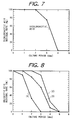
- Fig. 7 is a graph showing the decomposition of dichloroacetic acid in soil by strain AC.
- Fig. 8 is a graph showing the decomposition of halogenated acetic acids in soil by strain AC.
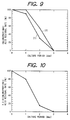
- Fig. 9 is a graph showing the decomposition of chloropropionic acids in soil by strain AC.
- Fig. 10 is a graph showing the decomposition of 2, 2 - dichloropropionic acid in soil by strain AC.
- Fig. 11 is a graph showing the results of Example 10.
- Fig. 12 is a graph showing the results of Comparative Example 1.
- Fig. 13 is a graph showing the results of Example 11.
- Fig. 14 is a graph showing the results of Comparative Example 2.
- Fig. 15 is a graph showing the results of Example 12.
- Fig. 16 is a graph showing the results of Comparative Example 3.
- the present inventors obtained a new microbial strain which can decompose a high concentration of halogenated organic acids, from the soil of Kanto loam layer in Japan.
- the present inventors have found a process for decomposing halogenated organic acids in aqueous medium by exposing it to the above strain.
- microbiological characteristics of the new strain of the present invention are as follows (identification criteria : according to Bergey's Manual (1984)).
- the present strain has an excellent activity to decompose halogenated organic acids. Since strains capable of decomposing halogenated organic acids had not been known in Renobacter species, the present strain was acknowledged as a new strain, and named Renobacter sp. AC. It was deposited in National Institute of Bioscience and Human-Technology, Agency of Industrial Science and Technology (Deposition No.: FERM P - 14641).
- Strain AC is very unique in its growth style in addition to the cell shape (S-shaped). It grows forming cell aggregates secreting a certain kind of polymeric material(s) not identified yet. From the microscopic viewpoint, this characteristic allows strain AC to rapidly form its own habitat and to become a prior species in drainage, liquid wastes, rivers and lakes where various kinds of microorganisms exist and be advantageously used for decomposing halogenated organic acids in such places.
- the present strain can be cultured in a natural complete medium such as 2YT and LB, it can also be cultured in an inorganic salt medium, for example M9, supplemented with a small amount of yeast extract as a nutrient.
- a natural complete medium such as 2YT and LB
- an inorganic salt medium for example M9
- yeast extract as a nutrient.
- composition of M9 is as follows: Na2HPO4 6.2 g KH2PO4 3.0 g NaCl 0.5 g NH4Cl 1.0 g in 1 litre of medium (pH 7.0).
- Culture can be carried out under aerobic conditions and in either liquid or solid medium.
- the temperature for culture is preferably about 30°C.
- any mutant spontaneously or artificially derived from the present strain is included in the scope of the present invention so long as it has a good decomposing activity for halogenated organic acids. Accordingly, examples using such a mutant are also included in the scope of the present invention.
- decomposition of halogenated organic acids can be carried out by bringing in contact the above Renobacter sp. AC with halogenated organic acids in an aqueous medium such as liquid wastes and the like. It can be carried out by culturing the microorganism in the aqueous medium containing halogenated organic acids, or by adding the aqueous medium to the culture of the microorganism, using various methods such as a batch method, a semi-continuous method and a continuous method.
- the microorganism may be in a state semi-immobilized or full-immobilized to a suitable carrier.
- the present strain can be easily and advantageously immobilized because it grows into a mass secreting a polymeric material(s) by itself.
- decomposition of halogenated organic acids can be carried out by bringing in contact Renobacter sp. AC with halogenated organic acids in soil. It can be conducted by culturing the strain in the soil containing halogenated organic acids or by mixing the polluted soil into the culture of the strain.
- This process can be used for remedying soil both in the closed system and the open system, and the process is carried out by various methods such as batch method, semi-continuous method and continuous method.
- the microorganism may be in a state semi-immobilized or full-immobilized to a suitable carrier.
- the present strain can be easily and advantageously immobilized because it grows into a mass secreting a polymeric material(s) by itself.
- the present inventors also found a process for decomposing aliphatic organochlorine compounds, for example, trichloroethylene (hereafter referred to as TCE) into substances naturally existing in nature and a process for remedying environment using the above process, applying the above-mentioned process for decomposing halogenated organic acids.
- TCE trichloroethylene
- organochlorine compounds such as tetrachloroethylene (PCE), trichloroethylene (TCE) and dichloroethylene (DCE), and the pollution is expanding in a wide range.
- organochlorine compounds were detected by environmental researches and reported frequently. It is said that these aliphatic organochlorine compounds in soil is dissolved in the rain water to flow into the groundwater, thus the pollution expands to the surrounding area. These compounds are suspected of carcinogenicity, and very stable in environment. Accordingly it has been a serious social problem that ground water, which is utilized as a source of drinking water, is polluted with such compounds.
- epoxidized TCE by an oxygenase-type enzyme as listed above is further decomposed biologically or non-biologically, and glyoxylic acid and dichloroacetic acid are produced by the protonization of TCE epoxide at this stage.
- TCE decomposition by a microorganism containing an oxygenase-type enzyme necessarily produces dichloroacetic acid at a certain ratio. Accordingly, by treating the resulting dichloroacetic acid with a microorganism capable of decomposing halogenated organic acids, TCE can be finally decomposed into substances originally present in the natural world.
- the detailed process of the present invention is: TCE-polluted ground water or soil is simultaneously or successively treated with two kinds of microorganisms, one of which aerobically converts TCE into TCE epoxide and another one decomposes dichloroacetic acid generated at a certain ratio by the above reaction, into carbon dioxide, water and chloride ion, thus decomposing the soil and water polluting TCE into harmless substances.
- the microorganism used for decomposing TCE in the present invention can be any microorganism so long as it decomposes TCE through epoxidation of TCE; therefore all of the above mentioned TCE-decomposing strains can be used.
- those unidentified microorganisms, unisolated microorganisms, a group of symbiotic microorganisms and newly isolated and identified microorganisms can be also used so long as they have such a characteristic or activity as mentioned above.
- microorganisms having such a characteristic or activity and applicable to the present invention include bacteria of genus Pseudomonas , Acinetobactor , Xanthobacter and Corynebacterium , particularly advantageously used are Pseudomonas cepacia , Pseudomonas putida , Pseudomonas fluorescence and Pseudomonas aeruginosa .
- strain J01 Pseudomonas cepacia KK01 (FERM BP - 4235; hereafter referred to as strain KK01) which is isolated from the intestine of Nasutitermes takasagoensis or Corynebacterium sp. strain J1 (FERM P - 14332; hereafter referred to as strain J1).
- any microorganism can be used so long as they decompose halogenated organic acids, for example, halogenated acetic acids, particularly dichloroacetic acid into substances originally present in the natural world, such as carbon dioxide, water and chloride ion; therefore the above-mentioned bacteria which decompose dichloroacetic acid can be used.
- halogenated acetic acids particularly dichloroacetic acid into substances originally present in the natural world, such as carbon dioxide, water and chloride ion; therefore the above-mentioned bacteria which decompose dichloroacetic acid can be used.
- those unidentified microorganisms, unisolated microorganisms, a group of symbiotic microorganisms and newly isolated and identified microorganisms can be also used so long as they have such a characteristic or activity as mentioned above.
- microorganisms having such a characteristic or activity and applicable to the present invention include bacteria of genus Pseudomonas , Acinetobactor , Xanthobacter and Renobacter , particularly advantageously used are Pseudomonas putida , Pseudomonas dehalogenns , and Xanthobacter autotrophicus .
- Renobacter sp. strain AC (FERM P - 14641; hereafter referred to as strain AC) which is isolated from the Kanto loam soil in Japan, is suitably used in view of its decomposing activity to halogenated organic acids.
- TCE-decomposing process of the present invention is applicable to any TCE-polluted materials so long as the microorganism can survive.
- the cleaning process of the present invention is also applicable to various products, for example, textiles, paper goods and leather goods which can stand the treatment of relatively short period using an aqueous medium, since this process uses the microorganism in an aqueous medium.
- An example for decomposing TCE in soil or ground water and remedying the soil or ground water, to which the present invention is preferably applicable will now be explained.
- TCE is brought into contact with the above-mentioned bacteria capable of decomposing TCE to form dichloroacetic acid
- the resulting dichloroacetic acid is brought in touch with the above-mentioned bacteria capable of decomposing dichloroacetic acid.
- TCE-decomposing bacteria and TCE can be conducted by culturing the microorganism in an aqueous medium containing TCE or adding the aqueous medium and soil to a culture of the microorganism.
- Contact between the bacteria capable of decomposing dichloroacetic acid and dichloroacetic acid can be conducted by culturing the microorganism in an aqueous medium in which TCE has already been decomposed by TCE-decomposing bacteria, or adding the aqueous medium and soil to the culture of the microorganism.
- Various methods such as batch method, semi-continuous method, continuous method and the like can be employed for this process.
- the microorganism may be used in a half immobilized or fully immobilized state to a suitable carrier.
- the process of the present invention is applicable to treating disposal water, soil etc. in both closed system and open system.
- the microorganism can be used in an immobilized state on a carrier, or other various methods to promoting microbial growth can be concomitantly used.
- a colony of strain AC grown on the agar medium was inoculated into 100 ml of M9 medium containing 0.1% of yeast extract in a 200 ml Sakaguchi flask (a flat bottom flask with shoulder), and cultured with shaking at 30°C for 48 hours.
- the cells of strain AC grew in an aggregated form until about 30 hours, and then started to disintegrate.
- Example Nos. 1 - 10 Ten samples (Sample Nos. 1 - 10) were prepared by inoculating 1 ml of the above culture solution into 50 ml of M9 medium containing dichloroacetic acid at 200 ppm, followed by shaking culture at 30°C. From Sample No. 1, one milliliter sample was collected after eight hours-culture and cells was removed by centrifugation, then the supernatant was adjusted to pH 2 or less with dilute sulfuric acid. Then the dichloroacetic acid concentration was measured by HPLC. From Sample No. 2 after 16 hours, from Sample No. 3 after 24 hours and so on, samples were also taken in the same manner to determine the dichloroacetic acid concentration every eight hours, to measure the change of dichloroacetic acid concentration with time.
- Chloroacetic acid 200 ppm
- trichloroacetic acid 50 ppm
- bromoacetic acid 50 ppm
- the relations between culture period and the concentration of each residual compound are shown in Figs. 2, 3 and 4 respectively.
- 2,2-dichloropropionic acid was decomposed using strain AC in the same manner as in EXAMPLE 1. Concentration of the compound was 100 ppm. The relations between culture period and the residual concentration of the compound are shown in Fig. 6.
- 2,2-dichloropropionic acid (100 ppm) was completely decomposed within 48 hours.
- pyruvic acid was detected, thus confirming the participation of dehalogenase in decomposition.
- Pyruvic acid was completely decomposed into carbon dioxide and water in the end.
- a colony of strain AC grown on an agar medium was inoculated into 100 ml of M9 medium containing 0.1% yeast extract in a 200 ml Sakaguchi flask, and cultured with shaking at 30°C for 48 hours.
- the cells of strain AC grew in an aggregated form for about 30 hours, and then started to disintegrate.
- Decomposition began 2 days after and 50 ppm of dichloroacetic acid was completely decomposed after 4 days.
- Chloroacetic acid was completely decomposed by the third day and trichloroacetic acid and bromoacetic acid by the fifth day of the experiment.
- the compound was completely decomposed by the third day.
- M9 medium used in Examples 10 - 13 and Comparative Examples 1 - 3 has the following composition.
- M9 culture medium composition (per one liter) Na2HPO4 6.2 g KH2PO4 3.0 g NaCl 0.5 g NH4Cl 1.0 g water (pH 7.0) to 1 liter
- TCE concentration was all done by head space gas chromatography. Specifically, 5 ml of M9 medium containing a certain concentration of TCE and 100 ⁇ l of cell suspension were put in a 20 ml serum bottle and then the bottle was sealed by a rubber stopper and an aluminum cap, and incubated with shaking at 30°C for a certain period of time, then 0.1 ml of the gas phase was sampled and measured by gas chromatography. In the examples using soil also, the measurement of TCE concentration was done according to the above method. Dichloroacetic acid was determined as follows: the reaction mixture was adjusted to pH 2 or lower with dilute sulfuric acid and centrifuged.
- the supernatant was extracted with diethylether and ethyl acetate, and the extract was dried to solid using a rotary evaporator and redissolved in demineralized water.
- measurement of dichloroacetic acid was also carried out in the same manner as above except that the soil was directly extracted with diethylether and ethyl acetate.
- TCE-decomposing strains KK01 and J1 have oxygenase, because they produce 2-hydroxymuconic acid semialdehyde which has maximum absorption at 375 nm as an intermediate product of phenol decomposition. It have been confirmed that this oxygenase participates in decomposition of TCE.
- a colony of strain AC grown on an agar medium was inoculated into 100 ml of M9 medium containing 0.1% of yeast extract in a 200 ml Sakaguchi flask, and cultured with shaking at 30°C for 48 hours. Then a colony of strain KK01 on an agar medium was inoculated into 100 ml of M9 medium containing 0.1% of yeast extract and 200 ppm of phenol in another 200 ml Sakaguchi flask, and cultured with shaking at 30°C for 18 hours.
- Fig. 12 The results are shown in Fig. 12.
- the numeral (1) indicates residual concentration of TCE and the numeral (2) indicates that of dichloroacetic acid.
- Dichloroacetic acid was formed accompanying the decomposition of TCE which was completely decomposed in 16 hours, and completely decomposed within 30 hours.
- the concentrations of TCE and dichloroacetic acid were measured in the same manner as in Example 10 except that only strain J1 was used.
- Fig. 14 The results are shown in Fig. 14.
- the numeral (1) indicates residual concentration of TCE and the numeral (2) indicates that of dichloroacetic acid.
- TCE aqueous solution was added to make the TCE concentration 10 mg TCE / g wet soil. Then the cell suspensions of strain J1 and strain AC prepared in EXAMPLE 11 were inoculated into the soil to each cell concentration of 6 - 8 ⁇ 108 cells / g wet soil, and the bottle was sealed with an aluminum cap and incubated at 30°C. The daily change of TCE concentration was determined in the same manner as above.
- the concentrations of TCE and dichloroacetic acid were measured in the same manner as in Example 12 except that only strain J1 was used. The results are shown in Fig. 16.
- the numeral (1) indicates residual concentration of TCE and the numeral (2) indicates that of dichloroacetic acid.
- the present invention provides a new microbial strain capable of decomposing halogenated organic acids and a process for decomposing halogenated organic acids which is one of the current problems, thus enabling the efficient microbial treatment of the liquid wastes containing halogenated organic acids as well as the soil polluted with halogenated organic acids.
- aliphatic organochlorine compounds particularly trichloroethylene
- soil polluted with aliphatic organochlorine compounds can be remedied well.
Landscapes
- Life Sciences & Earth Sciences (AREA)
- Chemical & Material Sciences (AREA)
- Engineering & Computer Science (AREA)
- Microbiology (AREA)
- Health & Medical Sciences (AREA)
- Organic Chemistry (AREA)
- Wood Science & Technology (AREA)
- Zoology (AREA)
- General Health & Medical Sciences (AREA)
- Biotechnology (AREA)
- Genetics & Genomics (AREA)
- Environmental & Geological Engineering (AREA)
- Biochemistry (AREA)
- Biomedical Technology (AREA)
- Bioinformatics & Cheminformatics (AREA)
- General Chemical & Material Sciences (AREA)
- Biodiversity & Conservation Biology (AREA)
- General Engineering & Computer Science (AREA)
- Chemical Kinetics & Catalysis (AREA)
- Hydrology & Water Resources (AREA)
- Mycology (AREA)
- Water Supply & Treatment (AREA)
- Molecular Biology (AREA)
- Tropical Medicine & Parasitology (AREA)
- Virology (AREA)
- Medicinal Chemistry (AREA)
- Soil Sciences (AREA)
- Toxicology (AREA)
- Emergency Management (AREA)
- Business, Economics & Management (AREA)
- Processing Of Solid Wastes (AREA)
- Purification Treatments By Anaerobic Or Anaerobic And Aerobic Bacteria Or Animals (AREA)
- Micro-Organisms Or Cultivation Processes Thereof (AREA)
Applications Claiming Priority (9)
| Application Number | Priority Date | Filing Date | Title |
|---|---|---|---|
| JP28623594A JP3382393B2 (ja) | 1994-11-21 | 1994-11-21 | トリクロロエチレンの生物分解浄化法 |
| JP286234/94 | 1994-11-21 | ||
| JP28623594 | 1994-11-21 | ||
| JP28623494A JP3507151B2 (ja) | 1994-11-21 | 1994-11-21 | ハロゲン置換有機酸の生物分解方法及びそれに用いる新規な微生物 |
| JP28623494 | 1994-11-21 | ||
| JP286235/94 | 1994-11-21 | ||
| JP28830094A JP3332618B2 (ja) | 1994-11-22 | 1994-11-22 | 土壌修復方法 |
| JP288300/94 | 1994-11-22 | ||
| JP28830094 | 1994-11-22 |
Publications (3)
| Publication Number | Publication Date |
|---|---|
| EP0712808A2 true EP0712808A2 (fr) | 1996-05-22 |
| EP0712808A3 EP0712808A3 (fr) | 1996-08-21 |
| EP0712808B1 EP0712808B1 (fr) | 2000-05-03 |
Family
ID=27337242
Family Applications (1)
| Application Number | Title | Priority Date | Filing Date |
|---|---|---|---|
| EP95308329A Expired - Lifetime EP0712808B1 (fr) | 1994-11-21 | 1995-11-21 | Procédé pour la décomposition de polluants et pour l'assainissement du milieu par les microorganismes et microorganisme utilisé |
Country Status (3)
| Country | Link |
|---|---|
| US (2) | US5679568A (fr) |
| EP (1) | EP0712808B1 (fr) |
| DE (1) | DE69516637T2 (fr) |
Cited By (1)
| Publication number | Priority date | Publication date | Assignee | Title |
|---|---|---|---|---|
| CN103304043A (zh) * | 2013-07-08 | 2013-09-18 | 湖南农业大学 | 池塘健康养殖用微生态净水剂 |
Families Citing this family (27)
| Publication number | Priority date | Publication date | Assignee | Title |
|---|---|---|---|---|
| JP3086182B2 (ja) * | 1995-12-19 | 2000-09-11 | ライト工業株式会社 | 土壌浄化方法 |
| EP0694611B1 (fr) * | 1994-05-30 | 2000-02-02 | Canon Kabushiki Kaisha | Corynebacterium sp. J1, procédé pour la biodégradation des composés aromatiques et/ou des composés organiques chlorés, et procédé pour la décontamination de l'environnement en utilisant celui-ci |
| JP3347596B2 (ja) * | 1996-08-01 | 2002-11-20 | キヤノン株式会社 | 新規微生物、芳香族化合物及び/或いは有機塩素化合物の生分解方法、及び媒体の浄化方法 |
| JP3323746B2 (ja) * | 1996-08-01 | 2002-09-09 | キヤノン株式会社 | 新規微生物、有機化合物の生分解方法及び環境修復方法 |
| US6719902B1 (en) * | 1997-04-25 | 2004-04-13 | The University Of Iowa Research Foundation | Fe(o)-based bioremediation of aquifers contaminated with mixed wastes |
| EP1005881B1 (fr) * | 1998-11-30 | 2005-01-19 | Canon Kabushiki Kaisha | Procédé et dispositif pour la décomposition des composés halogénés aliphatiques et aromatiques |
| FI106042B (fi) * | 1999-07-12 | 2000-11-15 | Tekno Forest Oy | Vedenpuhdistusmenetelmä, siihen soveltuvia bakteereja ja niiden käyttö |
| DE10045787C1 (de) * | 2000-09-07 | 2002-06-20 | Ufz Leipzighalle Gmbh | Verfahren zur in situ-Biodegradation von Chlorkohlenwasserstoffen in Böden und Wässern |
| JP4429105B2 (ja) * | 2003-08-19 | 2010-03-10 | キヤノン株式会社 | 有機物固定化構造体及びその製造方法、ペプチド及びdna |
| JP2005204609A (ja) | 2004-01-26 | 2005-08-04 | Canon Inc | 有機物固定化用キット、有機物固定化構造体及びその製造方法 |
| CN101921340A (zh) * | 2004-03-31 | 2010-12-22 | 佳能株式会社 | 一种蛋白质 |
| JP2006204255A (ja) * | 2005-01-31 | 2006-08-10 | Canon Inc | アセチル−CoAアシルトランスフェラーゼ遺伝子破壊ポリヒドロキシアルカノエート生産菌、またこれを利用したポリヒドロキシアルカノエート生産方法 |
| JP2006204258A (ja) * | 2005-01-31 | 2006-08-10 | Canon Inc | 新規ポリヒドロキシアルカノエート合成微生物及びそれを用いたポリヒドロキシアルカノエートの製造方法 |
| JP2006204257A (ja) | 2005-01-31 | 2006-08-10 | Canon Inc | ポリヒドロキシアルカノエート合成酵素遺伝子の破壊されたポリヒドロキシアルカノエート生産菌の同質遺伝子系統、またこれを利用したポリヒドロキシアルカノエート生産方法 |
| JP5142458B2 (ja) * | 2005-06-30 | 2013-02-13 | キヤノン株式会社 | 標的物質捕捉分子、標的物質捕捉用の素子、これらを用いた標的物質検出用の装置及びキット、並びに、標的物質の検出方法 |
| WO2007026972A2 (fr) * | 2005-09-01 | 2007-03-08 | Canon Kabushiki Kaisha | Molecule de proteine de liaison |
| JP2007163185A (ja) * | 2005-12-09 | 2007-06-28 | Canon Inc | 酵素電極 |
| JP2007163268A (ja) * | 2005-12-13 | 2007-06-28 | Canon Inc | 酵素電極 |
| JP5164411B2 (ja) * | 2006-03-31 | 2013-03-21 | キヤノン株式会社 | 標的物質検出方法および標的物質検出キット |
| JP2007278748A (ja) * | 2006-04-04 | 2007-10-25 | Canon Inc | 標的物質検出素子、検出材料、及び検出キット |
| US7811829B2 (en) | 2006-06-08 | 2010-10-12 | Canon Kabushiki Kaisha | Measuring probe and production process thereof |
| JP5247106B2 (ja) * | 2006-10-13 | 2013-07-24 | キヤノン株式会社 | タンパク質、タンパク質の固定方法、構造体、バイオセンサー、核酸、ベクター及び標的物質検出用キット |
| US8093060B2 (en) * | 2008-02-28 | 2012-01-10 | Canon Kabushiki Kaisha | Multisite phosphorylated peptide (protein) recognizing compound and detection method, imaging method, alzheimer's disease diagnosing method and reagent kit using the same |
| US8329455B2 (en) | 2011-07-08 | 2012-12-11 | Aikan North America, Inc. | Systems and methods for digestion of solid waste |
| AU2012304640A1 (en) * | 2011-09-07 | 2014-03-13 | Embro Corporation | Use of moss to reduce disinfection by-products in water treated with disinfectants |
| US9751788B2 (en) * | 2014-05-02 | 2017-09-05 | Baker Hughes Incorporated | Bacterial additives for biological and/or chemical contaminants within water-based fluids |
| CN118002615A (zh) * | 2024-02-23 | 2024-05-10 | 北京市科学技术研究院资源环境研究所(北京市土地修复工程技术研究中心) | 用于1,2,3-三氯丙烷降解的联合制剂及其用于降解1,2,3-三氯丙烷的方法与应用 |
Citations (2)
| Publication number | Priority date | Publication date | Assignee | Title |
|---|---|---|---|---|
| EP0179603A2 (fr) | 1984-10-25 | 1986-04-30 | Imperial Chemical Industries Plc | Enzymes |
| JPH0464544A (ja) | 1990-07-03 | 1992-02-28 | Canon Inc | シート給送装置 |
Family Cites Families (9)
| Publication number | Priority date | Publication date | Assignee | Title |
|---|---|---|---|---|
| GB2045748A (en) * | 1979-03-09 | 1980-11-05 | Ici Ltd | Biotransformations using methane-utilizing bacteria |
| US4535061A (en) * | 1981-12-28 | 1985-08-13 | University Of Illinois Foundation | Bacteria capable of dissimilation of environmentally persistent chemical compounds |
| EP0481963A3 (en) * | 1986-07-03 | 1992-06-03 | Occidental Chemical Corporation | Microorganisms for degrading toxic waste materials |
| US4804629A (en) * | 1986-08-04 | 1989-02-14 | Louisiana State University | Detoxification of chlorinated aromatic compounds by organism NRRL B-18087 |
| US4816403A (en) * | 1986-08-04 | 1989-03-28 | Louisiana State University | Detoxification of chlorinated aromatic compounds by organism NRRL B-18086 |
| US4959315A (en) * | 1987-04-30 | 1990-09-25 | The United States Of America As Represented By The Administrator Of The Environmental Protection Agency | Biodegradation of chloroethylene compounds |
| US5578474A (en) * | 1987-07-17 | 1996-11-26 | The Regents Of The University Of California | Process for culturing recombinant microorganisms |
| CA2066378C (fr) * | 1991-04-24 | 2000-09-19 | David J. Hardman | Deshalogenation de composes organohalogenes |
| FR2723105B1 (fr) * | 1994-07-27 | 1996-09-27 | Rhone Poulenc Chimie | Procede biologique d'elimination des traces dihalgenoacides, des solutions aqueuses d'amino-acides |
-
1995
- 1995-11-21 DE DE69516637T patent/DE69516637T2/de not_active Expired - Lifetime
- 1995-11-21 EP EP95308329A patent/EP0712808B1/fr not_active Expired - Lifetime
- 1995-11-21 US US08/561,237 patent/US5679568A/en not_active Expired - Lifetime
-
1997
- 1997-06-04 US US08/868,951 patent/US6017746A/en not_active Expired - Lifetime
Patent Citations (2)
| Publication number | Priority date | Publication date | Assignee | Title |
|---|---|---|---|---|
| EP0179603A2 (fr) | 1984-10-25 | 1986-04-30 | Imperial Chemical Industries Plc | Enzymes |
| JPH0464544A (ja) | 1990-07-03 | 1992-02-28 | Canon Inc | シート給送装置 |
Non-Patent Citations (19)
| Title |
|---|
| "Proceedings of the 23rd Seminar of Water Environment Society of Japan", November 1993, INCORPORATED ASSOCIATION OF WATER ENVIRONMENT SOCIETY OF JAPAN, article "Analytical Methods for Revised Standards of Water Quality and Environment", pages: 55 - 64 |
| AGRIC. BIOL. CHEM., vol. 53, 1989, pages 2903 |
| AM. CHEM. SOC. NATL. MEET. DEV. ENVIRON. MICROBIOL., vol. 29, 1989, pages 365 |
| APPL. BIOCHEM. BIOTECHNOL., vol. 28, 1991, pages 877 |
| APPL. BIOCHEM. BIOTECHNOL., vol. 40, 1993, pages 158 AND - 165 |
| APPL. ENVIRON. MICROBIOL., vol. 52, 1986, pages 383 |
| APPL. ENVIRON. MICROBIOL., vol. 53, 1987, pages 949 |
| APPL. ENVIRON. MICROBIOL., vol. 54, 1989, pages 951,1703 - AND 2578 |
| APPL. ENVIRON. MICROBIOL., vol. 55, 1989, pages 3155 |
| APPL. ENVIRON. MICROBIOL., vol. 56, 1990, pages 279 AND - 1169 |
| APPL. ENVIRON. MICROBIOL., vol. 57, 1991, pages 193 |
| BIO/TECHNOL., vol. 7, 1989, pages 282 |
| BIOL. CHEM. HOPPE-SEYLER, vol. 374, 1993, pages 489 |
| BIOSCI. BIOTECH. BIOCHEM., vol. 56, 1992, pages 486 AND - 736 |
| J. BIOCHEM., vol. 284, 1992, pages 87 |
| J. GEN. MICROBIOL., vol. 138, 1992, pages 675 |
| JOURNAL OF SEWERAGE ACSSOCIATION, vol. 24, 1987, pages 27 |
| PROTEIN, NUCLEIC ACID AND ENZYME, vol. 29, 1984, pages 101 - 110 |
| PUBLIC HEALTH, no. 30, 1992, pages 89 |
Cited By (1)
| Publication number | Priority date | Publication date | Assignee | Title |
|---|---|---|---|---|
| CN103304043A (zh) * | 2013-07-08 | 2013-09-18 | 湖南农业大学 | 池塘健康养殖用微生态净水剂 |
Also Published As
| Publication number | Publication date |
|---|---|
| DE69516637T2 (de) | 2000-09-21 |
| EP0712808B1 (fr) | 2000-05-03 |
| DE69516637D1 (de) | 2000-06-08 |
| US5679568A (en) | 1997-10-21 |
| EP0712808A3 (fr) | 1996-08-21 |
| US6017746A (en) | 2000-01-25 |
Similar Documents
| Publication | Publication Date | Title |
|---|---|---|
| EP0712808B1 (fr) | Procédé pour la décomposition de polluants et pour l'assainissement du milieu par les microorganismes et microorganisme utilisé | |
| US4493895A (en) | Microbial degradation of obnoxious organic wastes into innocuous materials | |
| Parales et al. | Degradation of 1, 4-dioxane by an actinomycete in pure culture | |
| US4477570A (en) | Microbial degradation of obnoxious organic wastes into innocucous materials | |
| US5807736A (en) | Method for biodegradation of aromatic and chlorinated compounds using microorganism strain FERM BP-5102 | |
| US5962305A (en) | Microbial strain, method for biodegrading organic compounds and method for environmental remediation | |
| US5945331A (en) | Microorganisms, and method for biodegradation of organic compounds and method for environmental remediation | |
| CA2229754C (fr) | Methode pour cultiver un microorganisme, methode de biosynthese d'un compose organique, methode pour maintenir la capacite de decomposition d'une substance polluante par un microorganisme, methode pour decomposer un polluant, methode pour remettre en etat un milieu | |
| US6096530A (en) | Pseudomonas cepacia strain isolated from termite intestines that degrades trichlorethylene and furan compounds | |
| JP2001037469A (ja) | エピクロロヒドリンの微生物分解 | |
| JP3208092B2 (ja) | ポリ塩化ビフェニルの分解法と新規微生物 | |
| EP0567102B1 (fr) | Procédé de décomposition biologique de composés phénolique ou furanique avec des microorganismes | |
| US5578474A (en) | Process for culturing recombinant microorganisms | |
| JPH0622769A (ja) | フェノール性化合物の生物分解方法およびそれに用い得る新規菌株、ならびにフェノール性化合物分解能を有する微生物の取得方法。 | |
| JP2566708B2 (ja) | フラン化合物の生物分解方法および2−フランカルボン酸の製造方法 | |
| JP2655564B2 (ja) | 新規微生物 | |
| Barik et al. | Bacterial degradation of three dithioate pesticides | |
| JP3507151B2 (ja) | ハロゲン置換有機酸の生物分解方法及びそれに用いる新規な微生物 | |
| Barik et al. | Enzymatic hydrolysis of malathion and other dithioate pesticides | |
| JPH11514532A (ja) | 新規微生物とそれを利用した環境浄化方法 | |
| JP3332618B2 (ja) | 土壌修復方法 | |
| JP3382393B2 (ja) | トリクロロエチレンの生物分解浄化法 | |
| JP3578482B2 (ja) | 微生物と、その培養方法 | |
| JP4122422B2 (ja) | 新規微生物及び塩素化ダイオキシン類の分解方法 | |
| JPH10295366A (ja) | 新規な過酸化水素耐性微生物、その取得方法及びそれを用いた汚染媒体の修復方法 |
Legal Events
| Date | Code | Title | Description |
|---|---|---|---|
| PUAI | Public reference made under article 153(3) epc to a published international application that has entered the european phase |
Free format text: ORIGINAL CODE: 0009012 |
|
| AK | Designated contracting states |
Kind code of ref document: A2 Designated state(s): BE DE FR GB NL |
|
| PUAL | Search report despatched |
Free format text: ORIGINAL CODE: 0009013 |
|
| AK | Designated contracting states |
Kind code of ref document: A3 Designated state(s): BE DE FR GB NL |
|
| 17P | Request for examination filed |
Effective date: 19970108 |
|
| 17Q | First examination report despatched |
Effective date: 19981116 |
|
| GRAG | Despatch of communication of intention to grant |
Free format text: ORIGINAL CODE: EPIDOS AGRA |
|
| GRAG | Despatch of communication of intention to grant |
Free format text: ORIGINAL CODE: EPIDOS AGRA |
|
| GRAH | Despatch of communication of intention to grant a patent |
Free format text: ORIGINAL CODE: EPIDOS IGRA |
|
| GRAH | Despatch of communication of intention to grant a patent |
Free format text: ORIGINAL CODE: EPIDOS IGRA |
|
| GRAA | (expected) grant |
Free format text: ORIGINAL CODE: 0009210 |
|
| AK | Designated contracting states |
Kind code of ref document: B1 Designated state(s): BE DE FR GB NL |
|
| REF | Corresponds to: |
Ref document number: 69516637 Country of ref document: DE Date of ref document: 20000608 |
|
| ET | Fr: translation filed | ||
| PLBE | No opposition filed within time limit |
Free format text: ORIGINAL CODE: 0009261 |
|
| STAA | Information on the status of an ep patent application or granted ep patent |
Free format text: STATUS: NO OPPOSITION FILED WITHIN TIME LIMIT |
|
| 26N | No opposition filed | ||
| REG | Reference to a national code |
Ref country code: GB Ref legal event code: IF02 |
|
| PGFP | Annual fee paid to national office [announced via postgrant information from national office to epo] |
Ref country code: NL Payment date: 20081118 Year of fee payment: 14 |
|
| PGFP | Annual fee paid to national office [announced via postgrant information from national office to epo] |
Ref country code: BE Payment date: 20081027 Year of fee payment: 14 |
|
| PGFP | Annual fee paid to national office [announced via postgrant information from national office to epo] |
Ref country code: FR Payment date: 20081124 Year of fee payment: 14 |
|
| BERE | Be: lapsed |
Owner name: *CANON K.K. Effective date: 20091130 |
|
| REG | Reference to a national code |
Ref country code: NL Ref legal event code: V1 Effective date: 20100601 |
|
| REG | Reference to a national code |
Ref country code: FR Ref legal event code: ST Effective date: 20100730 |
|
| PG25 | Lapsed in a contracting state [announced via postgrant information from national office to epo] |
Ref country code: NL Free format text: LAPSE BECAUSE OF NON-PAYMENT OF DUE FEES Effective date: 20100601 Ref country code: FR Free format text: LAPSE BECAUSE OF NON-PAYMENT OF DUE FEES Effective date: 20091130 Ref country code: BE Free format text: LAPSE BECAUSE OF NON-PAYMENT OF DUE FEES Effective date: 20091130 |
|
| PGFP | Annual fee paid to national office [announced via postgrant information from national office to epo] |
Ref country code: GB Payment date: 20131119 Year of fee payment: 19 Ref country code: DE Payment date: 20131130 Year of fee payment: 19 |
|
| REG | Reference to a national code |
Ref country code: DE Ref legal event code: R119 Ref document number: 69516637 Country of ref document: DE |
|
| GBPC | Gb: european patent ceased through non-payment of renewal fee |
Effective date: 20141121 |
|
| PG25 | Lapsed in a contracting state [announced via postgrant information from national office to epo] |
Ref country code: DE Free format text: LAPSE BECAUSE OF NON-PAYMENT OF DUE FEES Effective date: 20150602 Ref country code: GB Free format text: LAPSE BECAUSE OF NON-PAYMENT OF DUE FEES Effective date: 20141121 |