EP0713460B1 - Dispositif de blocage du demarrage d'un vehicule automobile - Google Patents
Dispositif de blocage du demarrage d'un vehicule automobile Download PDFInfo
- Publication number
- EP0713460B1 EP0713460B1 EP94922228A EP94922228A EP0713460B1 EP 0713460 B1 EP0713460 B1 EP 0713460B1 EP 94922228 A EP94922228 A EP 94922228A EP 94922228 A EP94922228 A EP 94922228A EP 0713460 B1 EP0713460 B1 EP 0713460B1
- Authority
- EP
- European Patent Office
- Prior art keywords
- control devices
- test unit
- identification code
- motor vehicle
- code words
- Prior art date
- Legal status (The legal status is an assumption and is not a legal conclusion. Google has not performed a legal analysis and makes no representation as to the accuracy of the status listed.)
- Expired - Lifetime
Links
Images
Classifications
-
- B—PERFORMING OPERATIONS; TRANSPORTING
- B60—VEHICLES IN GENERAL
- B60R—VEHICLES, VEHICLE FITTINGS, OR VEHICLE PARTS, NOT OTHERWISE PROVIDED FOR
- B60R25/00—Fittings or systems for preventing or indicating unauthorised use or theft of vehicles
- B60R25/01—Fittings or systems for preventing or indicating unauthorised use or theft of vehicles operating on vehicle systems or fittings, e.g. on doors, seats or windscreens
- B60R25/04—Fittings or systems for preventing or indicating unauthorised use or theft of vehicles operating on vehicle systems or fittings, e.g. on doors, seats or windscreens operating on the propulsion system, e.g. engine or drive motor
-
- B—PERFORMING OPERATIONS; TRANSPORTING
- B60—VEHICLES IN GENERAL
- B60R—VEHICLES, VEHICLE FITTINGS, OR VEHICLE PARTS, NOT OTHERWISE PROVIDED FOR
- B60R21/00—Arrangements or fittings on vehicles for protecting or preventing injuries to occupants or pedestrians in case of accidents or other traffic risks
- B60R21/02—Occupant safety arrangements or fittings, e.g. crash pads
- B60R21/16—Inflatable occupant restraints or confinements designed to inflate upon impact or impending impact, e.g. air bags
Definitions
- the invention relates to an immobilizer, as is known for example from WO-A- / 05987.
- An immobilizer is a control unit that secures a motor vehicle against unauthorized use.
- a user code is sent from the ignition key with a transponder or from a portable transponder in the form of a chip card to the immobilizer.
- the motor vehicle can only be started if the user is authorized. If the user code matches an authorization code, the motor control is activated, for example. However, trying to do this with unauthorized keys, transponders or by bridging the immobilizer does not enable the engine control.
- the motor vehicle By replacing the engine control unit and bridging the immobilizer, the motor vehicle can still be used in the long term.
- the invention is based on the problem of providing an immobilizer which offers maximum security against unauthorized use of a motor vehicle - even when control units are replaced, the availability of the motor vehicle being intended to be guaranteed.
- control devices for example for controlling the amount of air, the fuel injection, the Ignition, the transmission, an airbag or the central locking system, each have an identification code that is sent to a test unit via a data line when requested by the immobilizer and compared there with a target code. If at least a predetermined number of control units does not respond with their identification code or does not respond at all, then all or part of the control units remain in an inactive state, so that the motor vehicle cannot be started or driven.
- the test unit can be accommodated in a control unit.
- the control units or exchanged control units can be initialized with an identification code transmitter.
- this immobilizer it is temporarily tolerated that control units which are not absolutely necessary for the operation of the motor vehicle have failed, but they must be replaced after a period of time, since otherwise the motor vehicle is brought into an inactive state by the test unit.
- This has the advantage that the motor vehicle can still be started and taken to a workshop if a control unit - and that one that is not absolutely necessary for operation - or the test unit itself is defective and has to be replaced.
- the test unit can be an independent control device that is absolutely necessary for the operation of the motor vehicle. However, it can also be accommodated in an existing control unit.
- the number of starts can be added up using a counter.
- the test unit puts the motor vehicle in an inactive state if the meter reading is not out of time is currently reset to zero by an external and authorized RESET unit.
- An immobilizer for a motor vehicle can prevent the intended use of a motor vehicle by an unauthorized user.
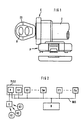
- a test unit P (FIG. 1) of the immobilizer can be arranged in a housing on the ignition lock Z of the vehicle. As soon as an ignition key ZS is inserted in the lock and actuated, the immobilizer checks the user's authorization in the test unit P.
- a user code word (hereinafter referred to as user code) is transmitted wirelessly from a transponder G (user code transmitter), which is connected to the ignition key, to a transmitting and receiving antenna E of the immobilizer. If several users are to be authorized, they all have their own ignition key ZS, each with its own user code.
- the test unit P compares the user code with an authorization code word stored in the test unit P (hereinafter referred to as an authorization code). If they match, the vehicle can be released for its intended use.
- the engine control unit which is locked in the unchecked state, can be unlocked so that the engine can be started.
- the immobilizer is a security system consisting of the test unit P with its transmitter and receiver unit E, the control units S i and F j , which are connected to the test unit P via the data line BUS, and several portable user code transmitters.
- an identification code word (hereinafter referred to as an identification code) is stored, which is queried by the test unit P in order to prevent control units S i and F j provided with an identification code from being illegally exchanged for non-coded control units become. If the identification codes are checked and all are authorized, the motor vehicle can be started by activating at least one operationally relevant control unit S i .
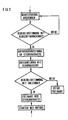
- the immobilizer and the method for operating it are explained in more detail with reference to FIGS. 2 and 3.
- a dialogue must take place between the immobilizer and the user code transmitter G k .
- the dialog can be triggered, for example, by turning the ignition key ZS in the ignition lock Z. It is checked whether the user code transmitter G k is authorized to start the vehicle. For this purpose, the user code is compared with the authorization code in the test unit P.
- a request signal is sent in sequence over the data line BUS to all or only a part of the connected control devices S i and F j . These receive the request signal and are thereby caused to respond with their identification code. It is then registered in the test unit P whether and with which identification code the control units S i and F j have responded. For this purpose, the identification codes received are compared with target code words (target codes). If all control units S i and F j have answered correctly, a control signal P sends an enable signal to the control unit or control units S i , which enables the motor vehicle to be started. Otherwise, the control devices S i remain in an inactive state.
- the operationally relevant control devices S i ie the control devices which are absolutely necessary for the operation of the motor vehicle, are put into an inactive state when the motor vehicle is parked.
- the control unit P which is also locked when the motor vehicle is in the idle state, also belongs to the operationally relevant control units.
- the inactive state can only be canceled by an authorized user.
- one of the control units F j which is not absolutely necessary for operating the motor vehicle, is defective and has to be replaced, it cannot respond to the request signal at all or just reply with an incorrect ID code. This is recognized by the test unit P.
- the driver is warned by an optical or acoustic display and is advised of the need for the motor vehicle to be in operation only for a short duration, for example for a specific route, a predetermined period of time or a number of starting processes.
- the motor vehicle can thus be brought home from vacation, for example, so that it can be repaired in the home workshop and the defective control unit F j exchanged. If the defective control unit F j is not replaced, the motor vehicle is shut down by the test unit P after the duration has expired.
- the test unit P leaves at least one control unit S i in an inactive state, so that starting or driving of the motor vehicle is prevented. Accordingly, the deactivated control device S i must be an operationally relevant control device, since otherwise the immobilizer would not be effective.
- New control devices S i and F j are initially in a basic state (new mode). The new mode is recognized by the test unit P. If all or most of the control units S i and F j are in new mode, all control units S i and F j are provided with an identification code and the user code transmitters G k with a user code (initialization). This can be done, for example, after the manufacture of the motor vehicle, that is to say at the end of the line at the automobile manufacturer, with the aid of an authorized identification code transmitter (not shown). The identification codes of all control devices S i and F j present in the motor vehicle are stored in this. During the initialization, the test unit P determines which control devices S i and F j are to be tested by the immobilizer at all.
- control units S i and F j go into an operating mode.
- the motor vehicle can only be started in the operating mode if the start was triggered by an authorized user code transmitter G k and a minimum number of control units S i and F j are connected to the test unit P via the data line BUS.
- New control units S i and F j exchanged for defective control units S i and F j are also initially in new mode. This is recognized by the test unit P. In this case, only the new control device S i or F j can be initialized for the first time (re-initialization) if it is recognized by the test unit P that the remaining control devices S i and F j respond with their identification code and at least one authorized user code transmitter G k is available.
- the initialization and the re-initialization can also be carried out via a diagnostic interface D, which is present in the motor vehicle anyway and is connected to the data line BUS.
- the individual control devices S i and F j can be provided with the identification codes, for example, if this is authorized by an authorized identification code transmitter.
- New control units S i and F j are always in new mode.
- the new mode is recognized both during the initialization and during the reinitialization. When reinitializing, it must be ruled out that an unauthorized user exchanges only one control unit S i or F j and then reinitializes all control units S i and F j of the motor vehicle.
- test units P can also be integrated in the immobilizer. A second test unit P can then take over the function of the first test unit P if it is defective and this is ascertained during the first start attempt.
- the identification codes and the user codes can be stored in at least one further test unit P, in a central computer located at the manufacturer, in a control device S i or F j or in each user code transmitter G k , from where they can be used for authorized reinitialization of the control devices S i and F j can be read out if the test unit P should ever fail.
- the authorization to re-initialize can be verified by a transponder that is located in the vehicle registration document.
- the test unit P need not necessarily be designed as a separate device. It can be accommodated in a control device S i (indicated by P / S1 and the dashed line in FIG. 2) and use components of the control device S i , such as a microprocessor or memory elements, which are already present in the control device.
- the immobilizer can be designed so that, for example, the number of engine starts or the distance traveled is recorded by a counter in the test unit P or in several counters in the respective control units S i and F j by incrementing or decrementing .
- the motor vehicle is shut down if the counter has not previously been reset to zero by an external and separate RESET unit.
- a RESET can only be carried out using a RESET code stored centrally at the manufacturer or in a separate transponder that is attached to the vehicle registration document.
- the RESET unit can be located in the garage at home, for example. It can influence the meter reading by radio.
- the RESET can also be carried out at an authorized workshop by presenting the vehicle registration certificate at every inspection.
- a counter can also be present in the user code transmitter G k . Each time the user code transmitter G k is actuated, the counter is increased or decreased by one. The user code transmitter G k can only be used up to a predetermined counter reading. Therefore, the counter must be reset to zero from time to time.
- the identification codes, user codes and the like can be so-called fixed codes, which are each permanently stored in storage units. They can also change constantly (so-called change codes).
- the codes are calculated using a mathematical algorithm, for the determination of which data are stored in the respective storage units. The code is changed after each query. This serves eavesdropping security.
- the immobilizer works with fixed codes or with change codes.
- change codes all the data used to calculate the codes are stored in the relevant unit, such as test unit P or control unit, and the codes are stored in the case of the fixed codes.
- the request signal can be sent out every time the vehicle is started. In addition, request signals can be generated continuously at certain time intervals. All the control devices S i and F j connected to the data line BUS can be queried or only a part of the control devices S i and F j previously determined, for example at random. The query can also change so that one part, for example the first three of the control units S i and F j, is queried for its identification code and another part, namely the next three control units S i and F j , in the next query process. The immobilizer is thus secure against the exchange of individual control devices S i and F j .
Landscapes
- Engineering & Computer Science (AREA)
- Mechanical Engineering (AREA)
- Lock And Its Accessories (AREA)
- Combined Controls Of Internal Combustion Engines (AREA)
Abstract
Claims (9)
- Dispositif de blocage du démarrage pour un véhicule automobile caractérisé en ce- que le véhicule automobile comporte des appareils de commande (Si, Fj), dans lesquels un mot de code caractéristique est mémorisé respectivement ou est produit à l'aide d'un algorithme,- que le véhicule automobile comporte au moins une unité de contrôle (P) qui est reliée aux appareils de commande (Si, Fj) par l'intermédiaire d'une ligne commune de transmission de données (BUS), et- que des mots de code de consigne identifiant les appareils de commande (Si, Fj) sont mémorisés dans l'unité de contrôle (P) ou sont calculés à l'aide d'un algorithme,- l'unité de commande (P) envoyant, au moins lors de chaque opération de démarrage du moteur, un signal de demande par l'intermédiaire des lignes de transmission de données (BUS) à l'ensemble ou à une partie des appareils de commande (Si, Fi), pour amener ces derniers à délivrer leurs mots de code caractéristiques,- les mots de code caractéristiques renvoyés étant comparés, dans l'unité de contrôle (P), aux mots de code de consigne et l'unité de contrôle (P) laissant au moins un appareil de commande (Si) dans un état inactif de sorte que le démarrage ou le déplacement du véhicule automobile est empêché, dans le cas où lors de l'interrogation des mots de code caractéristiques, un nombre d'appareils de commande (Si, Fj) inférieur à un nombre prédéterminé répondent avec leurs mots de code caractéristiques, et libérant tous les appareils de commande (Si, Fj) dans le cas où, lors de l'interrogation, au moins le nombre prédéterminé d'appareils de commande (Si, Fj) répondent avec leurs mots de code caractéristiques.
- Dispositif de blocage du démarrage selon la revendication 1, caractérisé en ce que l'unité de contrôle (P) forme avec un appareil de commande (Si) une seule unité de construction (P/S1) .
- Dispositif de blocage du démarrage selon la revendication 1, caractérisé en ce que les mots de code caractéristiques ou l'algorithme pour le calcul du mot de code caractéristique sont mémorisés dans au moins l'un des appareils de commande (Si, Fj) ou dans un moins un générateur portable de code d'utilisateur (Gk).
- Dispositif de blocage du démarrage selon la revendication 1, caractérisé en ce qu'un mot de code d'utilisateur est mémorisé dans le générateur de code d'utilisateur (Gk) ou est produit à l'aide de l'algorithme, qui est transmis sans fil à l'unité de contrôle (P) par l'actionnement d'un moyen de déclenchement et que de ce fait le signal de demande est déclenché lorsque le mot de code d'utilisateur coïncide avec un mot de code d'autorisation qui est mémorisé dans l'unité de contrôle (P).
- Dispositif de blocage du démarrage selon la revendication 1, caractérisé en ce qu'il comporte un générateur de code caractéristique fixe, dans lequel sont mémorisés tous les mots de code caractéristiques et à l'aide duquel tous les appareils de commande (Si, Fj) ou seuls les appareils de commande remplaçant des appareils de commande défectueux sont réinitialisés.
- Procédé pour faire fonctionner un dispositif de blocage du démarrage selon l'une des revendications précédentes, caractérisé en ce que l'unité de contrôle (P) envoie, au moins lors de chaque opération de démarrage du moteur, un signal de demande, à la totalité ou à une partie des appareils de commande (Si, Fj) par l'intermédiaire de la ligne de transmission de données (BUS), ce qui amène ces appareils à envoyer leurs mots de code caractéristiques, et les mots de code caractéristiques renvoyés sont comparés à des mots de code de consigne dans l'unité de contrôle (P), l'unité de contrôle (P) laissant au moins un appareil de commande (Si) à l'état inactif de sorte que le démarrage ou le déplacement du véhicule automobile est empêché dans le cas où lors de l'interrogation des mots de code caractéristiques, un nombre d'appareils de commande (Si, Fj) inférieur à un nombre prédéterminé répondent avec leurs mots de code caractéristiques, et libérant tous les appareils de commande (Si, Fj) dans le cas où, lors de l'interrogation, au moins le nombre prédéterminé des appareils de commande (Si, Fj) répondent avec leur mot de code caractéristique.
- Procédé selon la revendication 6, caractérisé en ce qu'au bout d'un intervalle de temps prédéterminé, l'unité de contrôle (P) place au moins un appareil de commande (Si) dans un état inactif, lorsque lors de l'interrogation des mots de code caractéristiques, un nombre d'appareils de commande (Si, Fj) supérieur au nombre prédéterminé, mais pas tous les appareils de commande (Si, Fj) répondent avec leur mot de code caractéristique.
- Procédé selon la revendication 6, caractérisé en ce que l'unité de contrôle (P) exécute une première initialisation lorsqu'elle identifie que la totalité ou une majeure partie des appareils de commande (Si, Fj) qui sont reliés à la ligne de transmission de données (BUS), sont situés dans un état de base et que l'unité de contrôle (P) exécute une réinitialisation dans le cas de l'identification du fait qu'au moins un appareil de commande (Si, Fj) est situé dans l'état de base et que les autres appareils de commande (Si, Fj) ainsi qu'au moins un générateur de code d'utilisateur (Gk) sont associés, comme étant autorisés, au dispositif de blocage du démarrage.
- Procédé selon la revendication 6, caractérisé en ce que l'unité de contrôle (P) ou le générateur de code d'utilisateur (Gk) détecte le nombre des processus de démarrage du moteur à l'aide d'un ou de plusieurs compteurs et place le véhicule automobile, au bout d'un nombre prédéterminé de processus de démarrage du moteur, dans un état inactif de sorte que le véhicule automobile ne peut plus être déplacé, dans le cas où le compteur n'est pas ramené à zéro par l'unité externe de remise à l'état initial.
Applications Claiming Priority (5)
| Application Number | Priority Date | Filing Date | Title |
|---|---|---|---|
| DE9312504U DE9312504U1 (de) | 1993-08-20 | 1993-08-20 | Wegfahrsperre für ein Fahrzeug |
| DE9312504U | 1993-08-20 | ||
| DE4333474A DE4333474C2 (de) | 1993-08-20 | 1993-09-30 | Wegfahrsperre für ein Kraftfahrzeug |
| DE4333474 | 1993-09-30 | ||
| PCT/DE1994/000917 WO1995005958A1 (fr) | 1993-08-20 | 1994-08-09 | Dispositif de blocage du demarrage d'un vehicule automobile |
Publications (2)
| Publication Number | Publication Date |
|---|---|
| EP0713460A1 EP0713460A1 (fr) | 1996-05-29 |
| EP0713460B1 true EP0713460B1 (fr) | 1996-12-11 |
Family
ID=25930085
Family Applications (1)
| Application Number | Title | Priority Date | Filing Date |
|---|---|---|---|
| EP94922228A Expired - Lifetime EP0713460B1 (fr) | 1993-08-20 | 1994-08-09 | Dispositif de blocage du demarrage d'un vehicule automobile |
Country Status (3)
| Country | Link |
|---|---|
| EP (1) | EP0713460B1 (fr) |
| DE (2) | DE4333474C2 (fr) |
| WO (1) | WO1995005958A1 (fr) |
Cited By (1)
| Publication number | Priority date | Publication date | Assignee | Title |
|---|---|---|---|---|
| DE19850454A1 (de) * | 1998-11-02 | 2000-05-11 | Siemens Ag | Verfahren zum Betreiben eines Kraftfahrzeug-Steuersystems, und entsprechend ausgestattetes Kraftfahrzeug-Steuersystem |
Families Citing this family (40)
| Publication number | Priority date | Publication date | Assignee | Title |
|---|---|---|---|---|
| DE4338033C2 (de) * | 1993-11-08 | 2000-05-18 | Telefunken Microelectron | Diebstahlsicherungssystem für motorangetriebene Fahrzeuge |
| JP3073904B2 (ja) * | 1995-02-17 | 2000-08-07 | 本田技研工業株式会社 | 車両用データ処理装置 |
| JP3226744B2 (ja) * | 1995-03-02 | 2001-11-05 | 三菱電機株式会社 | 自動車用エンジン制御装置 |
| JP3191607B2 (ja) * | 1995-03-28 | 2001-07-23 | トヨタ自動車株式会社 | 車両盗難防止装置 |
| DE19520505A1 (de) * | 1995-06-03 | 1996-12-05 | Bosch Gmbh Robert | Wegfahrsperre |
| DE19526530C1 (de) * | 1995-07-20 | 1996-08-14 | Siemens Ag | Verfahren zum Initialisieren einer Wegfahrsperre und Wegfahrsperre |
| DE19528093A1 (de) * | 1995-07-31 | 1997-02-13 | Siemens Ag | Diebstahlschutzsystem für ein Kraftfahrzeug |
| DE19529666C1 (de) * | 1995-08-11 | 1996-12-05 | Siemens Ag | Verfahren zum Initialisieren eines Diebstahlschutzsystems für ein Kraftfahrzeug |
| JPH0958414A (ja) * | 1995-08-23 | 1997-03-04 | Toyota Motor Corp | 車両用盗難防止装置 |
| DE19532067C1 (de) * | 1995-08-31 | 1996-10-24 | Daimler Benz Ag | Verfahren und Einrichtung zur Einprogrammierung von Betriebsdaten in Fahrzeugbauteile |
| DE19544495A1 (de) * | 1995-11-29 | 1997-06-05 | Licentia Gmbh | Verfahren zur Erkennung einer unbefugten Benutzung eines Fahrzeugs und Anordnung zur Durchführung eines solchen Verfahrens |
| DE19606265C2 (de) * | 1996-02-21 | 1999-09-30 | Opel Adam Ag | Diebstahlsicherungseinrichtung für Kraftfahrzeuge sowie Verfahren zur Diebstahlsicherung |
| DE19612026B4 (de) * | 1996-03-27 | 2005-12-01 | Marquardt Gmbh | Kraftfahrzeug mit wenigstens einem programmierbaren elektronischen Schlüssel |
| DE19630747C1 (de) * | 1996-07-30 | 1997-09-25 | Siemens Ag | Diebstahlschutzsystem für ein Kraftfahrzeug |
| JP3405095B2 (ja) * | 1996-10-22 | 2003-05-12 | 日産自動車株式会社 | 車両用防盗装置 |
| DE19646026A1 (de) * | 1996-11-08 | 1998-05-14 | Bosch Gmbh Robert | Sicherheitssystem für Fahrzeuginsassen |
| DE19721286C1 (de) | 1997-05-21 | 1998-09-17 | Siemens Ag | Verfahren zum Initialisieren eines Diebstahlschutzsystems eines Kraftfahrzeugs |
| DE19752217B4 (de) * | 1997-11-25 | 2004-02-05 | Siemens Ag | Diebstahlschutzsystem für ein Kraftfahrzeug |
| DE19805969C1 (de) * | 1998-02-13 | 1999-08-19 | Siemens Ag | Diebstahlschutzsystem für ein Kraftfahrzeug und Verfahren zum Initialisieren des Diebstahlschutzsystems |
| FR2775372B1 (fr) * | 1998-02-26 | 2001-10-19 | Peugeot | Procede de verification de la coherence d'informations telechargees dans un calculateur |
| DE19822322C2 (de) * | 1998-05-19 | 2001-09-13 | Bosch Gmbh Robert | Elektronische Wegfahrsperre |
| DE19852016C1 (de) * | 1998-11-11 | 2000-04-20 | Siemens Ag | Vorrichtung zur Sicherung eines Kraftfahrzeugs vor unbefugter Benutzung |
| DE19955545A1 (de) * | 1999-11-18 | 2001-05-23 | Volkswagen Ag | Steuersystem für ein Kraftfahrzeug |
| DE10021811A1 (de) * | 2000-05-04 | 2001-11-15 | Daimler Chrysler Ag | Ausbausicherung für elektronische Komponenten bei einem Kraftfahrzeug |
| DE10039778B4 (de) * | 2000-08-16 | 2005-01-27 | Daimlerchrysler Ag | Kraftfahrzeug mit elektronischem Betriebssystem |
| DE10101311C2 (de) * | 2001-01-12 | 2002-12-12 | Bosch Gmbh Robert | Fahrzeugsteuergerät sowie Steuerungsverfahren |
| DE10111286B4 (de) * | 2001-03-09 | 2005-04-21 | Audi Ag | Steuerungssystem und Verfahren zur Steuerung von Kraftfahrzeugkomponenten |
| DE10203462A1 (de) * | 2002-01-28 | 2003-07-31 | Kostal Leopold Gmbh & Co Kg | Elektronische Steuereinrichtung |
| DE10236747A1 (de) * | 2002-08-10 | 2004-02-19 | Adam Opel Ag | Vorrichtung zur Sicherung der Signalübertragung in einem Kraftfahrzeug |
| JP5144947B2 (ja) * | 2006-07-07 | 2013-02-13 | ヤマハ発動機株式会社 | 車両の盗難防止システム、及び、盗難防止システムを搭載した車両 |
| DE102006039584A1 (de) * | 2006-08-23 | 2008-03-06 | Robert Bosch Gmbh | Steuergerät für ein Kraftfahrzeug und Verfahren zum Betrieb eines Steuergeräts für ein Kraftfahrzeug |
| DE102008024979B4 (de) | 2008-05-23 | 2022-03-10 | Bayerische Motoren Werke Aktiengesellschaft | Bordnetz-System eines Kraftfahrzeugs und ein Verfahren zum Betrieb des Bordnetz-Systems |
| DE102009005613A1 (de) * | 2009-01-22 | 2010-06-24 | Continental Automotive Gmbh | Anordnung zur Steuerung von Fahrzeugfunktionen |
| DE102009046434A1 (de) * | 2009-11-05 | 2011-06-01 | Robert Bosch Gmbh | Verfahren, Steuergerät und Aktuator zur Sicherung eines Kraftfahrzeugs |
| US9685013B2 (en) * | 2013-10-25 | 2017-06-20 | Nxp B.V. | System and method for authenticating components of a vehicle |
| DE102014014339B4 (de) * | 2014-09-27 | 2020-12-03 | Audi Ag | Betriebsverfahren für eine Wegfahrsperre |
| DE102018222864B3 (de) | 2018-12-21 | 2020-02-20 | Volkswagen Aktiengesellschaft | Verfahren zum Deaktivieren eines Kraftfahrzeugs, Deaktivierungssystem für ein Kraftfahrzeug und Kraftfahrzeug |
| DE102019000976A1 (de) * | 2019-02-11 | 2020-08-13 | Giesecke+Devrient Mobile Security Gmbh | Sicherheitsmodus bei ersetzten ECUs |
| DE102020103901A1 (de) | 2020-02-14 | 2021-08-19 | Bayerische Motoren Werke Aktiengesellschaft | Verfahren und System zum Diebstahlschutz einer Fahrzeugkomponente |
| DE102020124056A1 (de) * | 2020-09-15 | 2022-03-17 | Bayerische Motoren Werke Aktiengesellschaft | Verfahren und Steuergerät zum Schutz vor unautorisiertem Verbau einer pyrotechnischen Komponente |
Family Cites Families (4)
| Publication number | Priority date | Publication date | Assignee | Title |
|---|---|---|---|---|
| IT1227400B (it) * | 1988-11-15 | 1991-04-08 | Delta Elettronica Spa | Impianto antifurto. |
| US5229648A (en) * | 1989-08-10 | 1993-07-20 | Autosafe International, Inc. | Multi element security system |
| DE69216644T2 (de) * | 1991-09-17 | 1997-04-24 | Ford Werke Ag | Kraftfahrzeugsicherheitsystem |
| DE4232435C1 (de) * | 1992-09-28 | 1993-11-25 | Telefunken Microelectron | Verfahren zum Betrieb einer Alarmanlage für Kraftfahrzeuge |
-
1993
- 1993-09-30 DE DE4333474A patent/DE4333474C2/de not_active Revoked
-
1994
- 1994-08-09 DE DE59401281T patent/DE59401281D1/de not_active Expired - Lifetime
- 1994-08-09 WO PCT/DE1994/000917 patent/WO1995005958A1/fr not_active Ceased
- 1994-08-09 EP EP94922228A patent/EP0713460B1/fr not_active Expired - Lifetime
Cited By (2)
| Publication number | Priority date | Publication date | Assignee | Title |
|---|---|---|---|---|
| DE19850454A1 (de) * | 1998-11-02 | 2000-05-11 | Siemens Ag | Verfahren zum Betreiben eines Kraftfahrzeug-Steuersystems, und entsprechend ausgestattetes Kraftfahrzeug-Steuersystem |
| DE19850454C2 (de) * | 1998-11-02 | 2003-08-07 | Siemens Ag | Verfahren zum Betreiben eines Kraftfahrzeug-Steuersystems, und entsprechend ausgestattetes Kraftfahrzeug-Steuersystem |
Also Published As
| Publication number | Publication date |
|---|---|
| WO1995005958A1 (fr) | 1995-03-02 |
| EP0713460A1 (fr) | 1996-05-29 |
| DE4333474A1 (de) | 1995-02-23 |
| DE59401281D1 (de) | 1997-01-23 |
| DE4333474C2 (de) | 1995-09-21 |
Similar Documents
| Publication | Publication Date | Title |
|---|---|---|
| DE4333474C2 (de) | Wegfahrsperre für ein Kraftfahrzeug | |
| EP0792223B1 (fr) | Systeme antivol structural pour automobiles | |
| DE19746039C2 (de) | Fahrzeug-Diebstahlschutzsystem sowie Schlüssel und Verfahren hierzu | |
| DE19502373C2 (de) | Verfahren zur Diebstahlsicherung motorangetriebener Kraftfahrzeuge | |
| DE19721286C1 (de) | Verfahren zum Initialisieren eines Diebstahlschutzsystems eines Kraftfahrzeugs | |
| DE102005000999A1 (de) | Verfahren und System zum Fahrzeugkomponentenmanagement, Verfahren und System zum Aktualisieren von Fahrzeugkomponentenmanagementdaten, und Fahrzeugkomponentenmanagementcenter | |
| DE112007001608T5 (de) | Kontrolle von Flottenfahrzeugen mit üblichen Transmittern | |
| EP1118514B1 (fr) | Véhicule avec une pluralité de composants | |
| EP1302374A2 (fr) | Procédé d'initialisation d'un système de contrôle d'accès avec plusieurs clées electroniques et plusieurs objéts | |
| DE4338033C2 (de) | Diebstahlsicherungssystem für motorangetriebene Fahrzeuge | |
| EP1656289A2 (fr) | Procede et dispositif de securisation d'un vehicule contre le vol | |
| WO1998012084A1 (fr) | Dispositif servant a empecher le vol d'un vehicule | |
| EP0741651B1 (fr) | Dispositif interdisant l'utilisation d'un vehicule et permettant un entretien aise des unites fonctionnelles du moteur | |
| DE4433499A1 (de) | Elektronisches Diebstahlschutzsystem für ein Kraftfahrzeug | |
| EP0642959B1 (fr) | Dispositif antivol pour véhicule automobile | |
| DE19707058C1 (de) | Diebstahlschutzsystem für ein Kraftfahrzeug | |
| EP1595043A1 (fr) | Systeme de fermeture con u en particulier pour un vehicule automobile | |
| DE19606265C2 (de) | Diebstahlsicherungseinrichtung für Kraftfahrzeuge sowie Verfahren zur Diebstahlsicherung | |
| EP1191487A2 (fr) | Système de verrouillage, notamment pour véhicule à moteur | |
| EP0830273B1 (fr) | Dispositif antivol | |
| EP0846821B1 (fr) | Dispositif pour vérifier l'autorisation de contrôle d'accès | |
| EP1619094B1 (fr) | Dispositif anti-vol éléctronique | |
| DE102009057926B4 (de) | Verfahren und Vorrichtung zum Schutz eines Fahrzeugs vor Diebstahl | |
| DE10337424B4 (de) | Verfahren zur Sicherung eines Fahrzeuges gegen Diebstahl | |
| DE102007005068B3 (de) | Diebstahlsicherungssystem |
Legal Events
| Date | Code | Title | Description |
|---|---|---|---|
| PUAI | Public reference made under article 153(3) epc to a published international application that has entered the european phase |
Free format text: ORIGINAL CODE: 0009012 |
|
| GRAG | Despatch of communication of intention to grant |
Free format text: ORIGINAL CODE: EPIDOS AGRA |
|
| 17P | Request for examination filed |
Effective date: 19951218 |
|
| AK | Designated contracting states |
Kind code of ref document: A1 Designated state(s): DE FR GB |
|
| GRAH | Despatch of communication of intention to grant a patent |
Free format text: ORIGINAL CODE: EPIDOS IGRA |
|
| 17Q | First examination report despatched |
Effective date: 19960530 |
|
| GRAH | Despatch of communication of intention to grant a patent |
Free format text: ORIGINAL CODE: EPIDOS IGRA |
|
| GRAA | (expected) grant |
Free format text: ORIGINAL CODE: 0009210 |
|
| AK | Designated contracting states |
Kind code of ref document: B1 Designated state(s): DE FR GB |
|
| REF | Corresponds to: |
Ref document number: 59401281 Country of ref document: DE Date of ref document: 19970123 |
|
| ET | Fr: translation filed | ||
| GBT | Gb: translation of ep patent filed (gb section 77(6)(a)/1977) |
Effective date: 19970217 |
|
| PLBQ | Unpublished change to opponent data |
Free format text: ORIGINAL CODE: EPIDOS OPPO |
|
| PLBI | Opposition filed |
Free format text: ORIGINAL CODE: 0009260 |
|
| PLBF | Reply of patent proprietor to notice(s) of opposition |
Free format text: ORIGINAL CODE: EPIDOS OBSO |
|
| 26 | Opposition filed |
Opponent name: MANNESMANN VDO AG Effective date: 19970825 |
|
| PLBF | Reply of patent proprietor to notice(s) of opposition |
Free format text: ORIGINAL CODE: EPIDOS OBSO |
|
| PLBO | Opposition rejected |
Free format text: ORIGINAL CODE: EPIDOS REJO |
|
| PLBN | Opposition rejected |
Free format text: ORIGINAL CODE: 0009273 |
|
| STAA | Information on the status of an ep patent application or granted ep patent |
Free format text: STATUS: OPPOSITION REJECTED |
|
| 27O | Opposition rejected |
Effective date: 19991120 |
|
| REG | Reference to a national code |
Ref country code: GB Ref legal event code: IF02 |
|
| PGFP | Annual fee paid to national office [announced via postgrant information from national office to epo] |
Ref country code: GB Payment date: 20080821 Year of fee payment: 15 |
|
| GBPC | Gb: european patent ceased through non-payment of renewal fee |
Effective date: 20090809 |
|
| PG25 | Lapsed in a contracting state [announced via postgrant information from national office to epo] |
Ref country code: GB Free format text: LAPSE BECAUSE OF NON-PAYMENT OF DUE FEES Effective date: 20090809 |
|
| REG | Reference to a national code |
Ref country code: FR Ref legal event code: TP |
|
| PGFP | Annual fee paid to national office [announced via postgrant information from national office to epo] |
Ref country code: FR Payment date: 20110901 Year of fee payment: 18 |
|
| PGFP | Annual fee paid to national office [announced via postgrant information from national office to epo] |
Ref country code: DE Payment date: 20120831 Year of fee payment: 19 |
|
| REG | Reference to a national code |
Ref country code: FR Ref legal event code: ST Effective date: 20130430 |
|
| PG25 | Lapsed in a contracting state [announced via postgrant information from national office to epo] |
Ref country code: FR Free format text: LAPSE BECAUSE OF NON-PAYMENT OF DUE FEES Effective date: 20120831 |
|
| PG25 | Lapsed in a contracting state [announced via postgrant information from national office to epo] |
Ref country code: DE Free format text: LAPSE BECAUSE OF NON-PAYMENT OF DUE FEES Effective date: 20140301 |
|
| REG | Reference to a national code |
Ref country code: DE Ref legal event code: R119 Ref document number: 59401281 Country of ref document: DE Effective date: 20140301 |